
3D Printing Medical Devices Market Overview
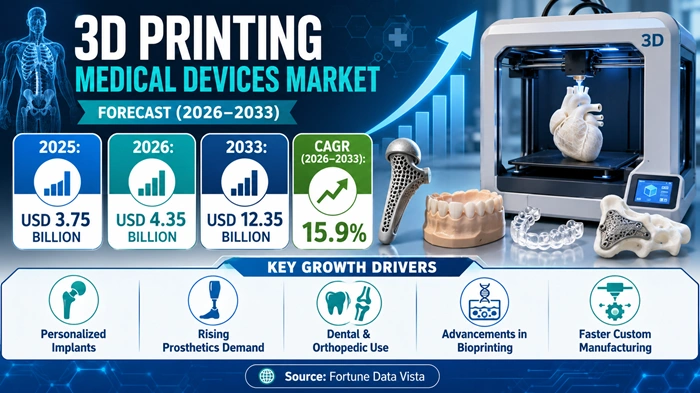
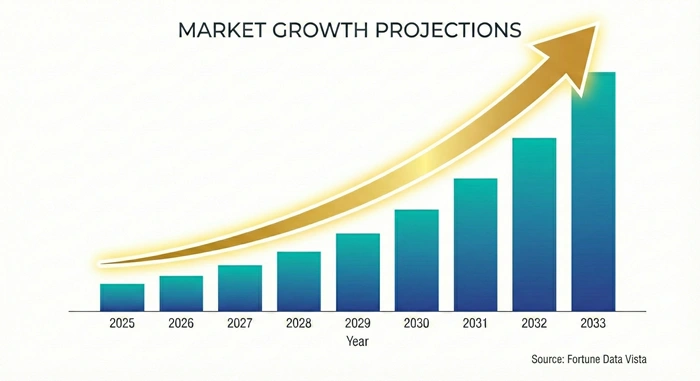
The global 3D printing medical devices market size is valued at USD 3.75 billion in 2025 and is predicted to increase from USD 4.35 billion in 2026 to approximately USD 12.35 billion by 2033, growing at a CAGR of 15.9% from 2026 to 2033.
Additive manufacturing has moved from the engineering workshop into the operating room — and the results are transforming patient care in ways that traditional manufacturing simply cannot match. The ability to produce patient-specific implants, anatomical surgical models, custom prosthetics, and precision dental devices from digital patient imaging data is reshaping how surgeons plan procedures, how implants fit the human body, and how quickly life-changing devices can reach patients in need. The 3D printing medical devices market is expanding rapidly as healthcare systems globally recognize that the combination of customization precision, design flexibility, and supply chain efficiency offered by additive manufacturing creates both clinical and commercial advantages that position this technology as a permanent pillar of next-generation medical device manufacturing.
AI Impact on the 3D Printing Medical Devices Industry
Artificial Intelligence Is Supercharging the 3D Printing Medical Devices Market — Enabling AI-Driven Design Automation, Predictive Material Performance Modeling, and Real-Time Quality Assurance That Compress the Path from Patient Scan to Implanted Device
Artificial intelligence is integrating with additive manufacturing workflows across the 3D printing medical devices market in ways that are dramatically improving speed, precision, and clinical outcomes. AI-powered design software can now automatically generate optimized implant geometries from CT and MRI scan data, translating complex patient anatomy directly into print-ready device designs without requiring hours of manual engineering input — compressing the design-to-print timeline for patient-specific implants from days to hours. Generative design algorithms trained on biomechanical performance data can simultaneously evaluate millions of potential implant configurations to identify the design that best balances strength, weight, osseointegration potential, and compatibility with the patient's specific bone density and loading conditions — producing implant designs that exceed what human engineers can develop through conventional trial-and-error design processes.
Machine learning models applied to 3D printer process monitoring are enabling real-time quality control in medical device additive manufacturing — continuously analyzing sensor data from laser sintering, stereolithography, and metal printing processes to detect micro-level defects, material inconsistencies, and dimensional deviations before they compromise device integrity. This capability is particularly critical for the 3D printing medical devices market because the consequences of a defective load-bearing spinal implant, hip replacement, or surgical instrument are potentially catastrophic — and traditional post-print inspection methods lack the resolution and comprehensiveness to catch all quality deviations reliably. Companies including Stratasys, 3D Systems, and Materialise are actively integrating AI quality monitoring systems into their medical-grade printing platforms, building the closed-loop quality assurance capabilities that regulators increasingly expect as part of validated medical device additive manufacturing processes.
Growth Factors
Rising Demand for Patient-Specific Implants and Prosthetics, Expanding Dental 3D Printing Adoption, and the Clinical Validation of Additive Manufacturing for Complex Surgical Applications Are the Primary Structural Growth Engines of the 3D Printing Medical Devices Market
The most powerful commercial driver of the 3D printing medical devices market is the escalating clinical demand for patient-specific, anatomically precise devices that standard mass-manufactured implants and prosthetics simply cannot deliver. Conventional implants come in limited size variants that require surgeons to select the closest standard size and work around the fit discrepancy — a compromise that can result in suboptimal surgical outcomes, longer recovery times, increased revision surgery rates, and patient dissatisfaction. Additive manufacturing eliminates this compromise by enabling implants manufactured from each patient's unique imaging data to fit with millimeter precision, reduce surgical adjustment time, improve osseointegration outcomes for porous metal implants, and ultimately deliver better long-term clinical results that are driving hospital procurement decisions in favor of 3D-printed solutions. The growing body of clinical evidence demonstrating superior outcomes for patient-specific 3D-printed orthopedic, spinal, cranial, and maxillofacial implants is strengthening the commercial case for additive manufacturing investment at hospitals, surgical groups, and device manufacturers across the 3D printing medical devices market.
The dental sector represents one of the most commercially mature and rapidly growing application segments within the broader 3D printing medical devices market, as dental 3D printing has achieved a level of clinical validation, material availability, and workflow integration that is driving mass adoption across dental laboratories, dental clinics, and dental device manufacturers globally. Digital dentistry workflows — combining intraoral scanning, CAD/CAM design software, and chairside or laboratory 3D printing — are enabling same-day crown, bridge, aligner, and denture production that dramatically improves patient experience, reduces laboratory turnaround times, and lowers the per-unit cost of dental prosthetics compared to traditional casting and milling processes. Companies including Align Technology (Invisalign), Dentsply Sirona, and Envista Holdings are deploying dental 3D printing at extraordinary scale — Align Technology manufactures over 400,000 custom clear aligner stages per day through an automated additive manufacturing process — validating the industrial-scale commercial viability of medical 3D printing and providing the market confidence that is accelerating adoption across adjacent medical device categories.
Market Outlook
The 3D Printing Medical Devices Market Is Approaching Its Commercial Inflection Point — Where Bioprinting of Living Tissues, Point-of-Care Device Manufacturing, and AI-Optimized Patient-Specific Implant Design Will Redefine the Boundaries of What Medical Device Manufacturing Can Achieve
The medium-term outlook for the 3D printing medical devices market is characterized by progressive expansion of additive manufacturing adoption across both established applications — orthopedic implants, dental devices, surgical instruments — and emerging high-growth frontiers including bioprinting, drug delivery device manufacturing, and point-of-care printing. The convergence of improving material science (biocompatible polymers, osseointegration-optimized metal powders, resorbable materials, and cell-compatible bioinks), advancing regulatory frameworks for 3D-printed medical devices (with the FDA's CDRH providing increasingly clear guidance for additive manufacturing validation), and falling printer hardware and material costs is creating a market environment where 3D-printed medical device adoption is accelerating across hospital systems, dental practices, surgical centers, and device manufacturers of every scale globally.
By 2033, the 3D printing medical devices market will be profoundly shaped by the commercial maturation of bioprinting — the direct printing of living cells, tissues, and eventually functional organ structures that represents the most transformative long-term application of additive manufacturing in medicine. Companies including CELLINK (BICO Group), Organovo, and Cyfuse Biomedical are actively advancing bioprinting technology toward clinical applications including skin grafts for burn patients, cartilage repair constructs, and vascularized tissue patches — applications where the ability to create patient-matched biological structures through printing will eventually address the catastrophic global shortage of transplantable tissues and organs. While full organ bioprinting remains beyond the 2033 horizon, tissue constructs and drug testing models generated through bioprinting are expected to achieve significant commercial scale within the forecast period, adding a compelling new growth dimension to the 3D printing medical devices market.
Expert Speaks
-
"Stryker's investment in additive manufacturing for orthopedic implants — particularly our Tritanium porous metal technology printed on our internal printer fleet — has been one of the most commercially successful technology investments in our history, delivering implants with superior biological fixation and clinical outcomes that surgeons strongly prefer over conventional alternatives. The 3D printing medical devices market is still in the early phases of its commercial development, and we believe the applications of additive manufacturing in orthopedics, trauma, spine, and surgical robotics will continue to expand significantly through the decade ahead." — Kevin Lobo, Chairman & CEO, Stryker Corporation
-
"Zimmer Biomet's commitment to additive manufacturing is grounded in the clinical evidence — 3D-printed porous titanium implants demonstrate consistently superior osseointegration compared to traditionally manufactured alternatives, and patient-specific instruments generated from preoperative imaging are measurably improving surgical precision and reducing operative time for our surgeon customers. The 3D printing medical devices market represents one of the most important manufacturing technology transitions in the history of orthopedic devices, and our investments in printing capability, design software, and materials science are designed to ensure we lead this transition rather than follow it." — Ivan Tornos, President & CEO, Zimmer Biomet Holdings, Inc.
-
"Medtronic's additive manufacturing programs span spinal implants, cranial reconstruction devices, and procedural planning models — and the common theme across all of these applications is that 3D printing enables us to deliver solutions that are clinically better for patients and more commercially valuable to surgeons and hospitals than anything conventional manufacturing can produce at comparable cost. As the regulatory frameworks around 3D-printed medical devices mature and our internal manufacturing capability deepens, the 3D printing medical devices market will become an increasingly central component of Medtronic's innovation and revenue growth strategy." — Geoff Martha, Chairman & CEO, Medtronic plc
Key Report Takeaways
-
North America dominates the global 3D printing medical devices market, holding approximately 40% of total revenue in 2025, anchored by the United States' advanced medical device industry, the world's highest concentration of orthopedic and spinal surgery volume, strong FDA regulatory framework for 3D-printed devices, and the presence of leading additive manufacturing companies including 3D Systems, Stratasys, and major orthopedic device manufacturers including Stryker, Zimmer Biomet, and DePuy Synthes who are deploying additive manufacturing at industrial scale for implant production.
-
Asia Pacific is the fastest growing regional market for 3D printing in medical devices, driven by China's rapidly expanding medical device manufacturing sector and government investment in additive manufacturing technology, Japan's precision engineering culture and advanced dental 3D printing adoption, India's growing medical tourism infrastructure requiring sophisticated implant solutions, and the expanding healthcare capital equipment investment across South Korea, Australia, and Southeast Asian markets.
-
Prosthetics and implants represent the largest application segment, contributing approximately 31% of total 3D printing medical devices market revenue in 2025 as hospitals, surgical centers, and device manufacturers worldwide adopt additive manufacturing for patient-specific orthopedic, spinal, cranial, and maxillofacial implants that deliver superior clinical outcomes, better anatomical fit, and reduced revision surgery rates compared to standard mass-manufactured implants across high-volume surgical specialties globally.
-
Selective Laser Sintering (SLS) and Direct Metal Laser Sintering (DMLS) are the dominant printing technologies for load-bearing implant applications, valued for their ability to produce high-strength, complex-geometry metal implants with engineered porosity structures that promote bone ingrowth — a combination of capabilities that mass-manufacturing processes including casting and CNC machining cannot replicate and that delivers the clinical performance advantages that are driving strong surgeon preference for 3D-printed metal implants in orthopedic and spinal surgery.
-
Hospitals and surgical centers are the leading end-user segment, accounting for approximately 42% of market revenue in 2025 as the primary consumers of 3D-printed implants, surgical planning models, and custom surgical instruments — a segment whose adoption of additive manufacturing is accelerating as in-hospital 3D printing laboratory capabilities expand, enabling hospitals to produce anatomical models for complex surgical planning cases on-site and on demand.
-
Bioprinting is the fastest growing application segment, projected to grow at a CAGR exceeding 23% through 2033 as advances in bioink formulation, multi-material printing capability, and vascularization techniques progressively expand the range of clinically relevant tissue constructs achievable through bioprinting — creating a new and commercially significant market segment that is attracting major investment from pharmaceutical companies (for drug testing tissue models), academic medical centers, and regenerative medicine specialists.
Market Scope
| Parameter | Details |
|---|---|
| Market Size by 2033 | USD 12.35 Billion | Market Size by 2026 | USD 4.35 Billion | Market Size by 2025 | USD 3.75 Billion | Market Growth Rate from 2026 to 2033 | CAGR of 15.9% | Dominating Region | North America | Fastest Growing Region | Asia Pacific | Segments Covered | Component, Technology, Application, End User | Regions Covered | North America, Europe, Asia Pacific, Latin America, Middle East & Africa |
Market Dynamics
Drivers Impact Analysis
Mounting Clinical Evidence for Superior 3D-Printed Implant Outcomes, Expanding FDA and CE Mark Regulatory Pathways for Additive Manufacturing, and the Dramatic Reduction of Patient-Specific Device Production Cost and Lead Time Are Building an Exceptionally Strong Growth Foundation for the 3D Printing Medical Devices Market
| Driver | ≈ % Impact on CAGR Forecast | Geographic Relevance | Impact Timeline |
|---|---|---|---|
| Rising demand for patient-specific implants, prosthetics, and surgical models | ~36% | Global — especially North America, Europe, Asia Pacific | Short to Long Term |
| Expanding FDA and international regulatory clarity for additive manufacturing validation | ~28% | North America, Europe | Short to Medium Term |
| Falling 3D printer hardware and biocompatible material costs enabling broader adoption | ~22% | Global | Short to Long Term |
| Growing clinical evidence supporting 3D-printed device superiority in key surgical applications | ~14% | North America, Europe | Short to Long Term |
The progressive establishment of clear regulatory pathways for 3D-printed medical devices is one of the most commercially consequential developments in the 3D printing medical devices market, as regulatory uncertainty had historically been a significant barrier to adoption by manufacturers and hospital systems concerned about compliance risk. The U.S. FDA's Center for Devices and Radiological Health (CDRH) has published comprehensive technical considerations for additive manufacturing validation, and is actively working with manufacturers to develop standardized testing and quality system requirements for 3D-printed devices across different printing technologies and material classes. This regulatory clarity — combined with the growing body of cleared and approved 3D-printed devices including cranial plates, spinal cages, acetabular cups, and titanium orthopedic implants — is giving manufacturers and healthcare procurement teams the regulatory confidence needed to accelerate additive manufacturing adoption across the full range of applicable medical device categories.
The financial case for additive manufacturing investment in medical device production is becoming increasingly compelling as printing technology matures, material costs decline, and the per-unit economics of 3D-printed implants approach and in high-complexity cases undercut those of conventionally manufactured alternatives. For manufacturers producing small-batch, high-complexity patient-specific devices — cranial implants, maxillofacial reconstruction plates, custom surgical cutting guides — additive manufacturing already provides clear cost advantages over CNC machining due to its elimination of expensive tooling, fixture development, and material waste. As printing speeds increase, powder recycling efficiencies improve, and the range of validated biocompatible materials expands, the cost economics of 3D-printed medical devices across a progressively wider range of application and volume combinations is becoming favorable — and the resulting acceleration of adoption by both device manufacturers and hospital-based printing laboratories is clearly visible in the 3D printing medical devices market growth data.
Restraints Impact Analysis
High Capital Equipment Costs for Medical-Grade 3D Printers, Stringent Material Biocompatibility and Sterilization Validation Requirements, and Reimbursement Coding Gaps for Patient-Specific 3D-Printed Devices Are the Primary Barriers to Faster Market Growth
| Restraint | ≈ % Impact on CAGR Forecast | Geographic Relevance | Impact Timeline |
|---|---|---|---|
| High capital cost of medical-grade metal and bioprinting systems limiting hospital adoption | ~40% | Global — especially emerging markets and smaller healthcare providers | Short to Medium Term |
| Complex material biocompatibility and sterilization validation requirements adding development time and cost | ~34% | Global | Short to Long Term |
| Reimbursement coding gaps for patient-specific 3D-printed devices limiting surgeon ordering frequency | ~26% | North America, Europe | Short to Medium Term |
The capital cost of industrial-grade medical 3D printing systems — particularly metal powder bed fusion systems used for titanium and cobalt-chrome implant production that can cost USD 500,000 to USD 1.5 million per printer unit, plus associated post-processing, quality testing, and validation infrastructure — creates a significant financial barrier to adoption for smaller hospitals, regional medical centers, and mid-tier device manufacturers who cannot spread these costs across sufficient print volume to achieve acceptable unit economics. This capital intensity restricts in-hospital additive manufacturing capability to large academic medical centers and major hospital systems with the volume, technical staff, and capital budget to justify the investment — limiting the democratization of point-of-care 3D printing across the broader healthcare system despite its clear clinical benefits. The emergence of medical 3D printing service bureaus — companies including Materialise, Anatomics, and Stryker's manufacturing network that provide printing services on a per-case or contracted basis — is partially addressing this barrier by enabling hospitals to access 3D-printed device benefits without the capital investment of in-house printing.
Insurance and healthcare payer reimbursement represents one of the most practically limiting constraints on the 3D printing medical devices market's near-term growth, as the U.S. Centers for Medicare & Medicaid Services (CMS) and private insurance payers have been slow to establish specific reimbursement codes and coverage policies for patient-specific 3D-printed implants and surgical planning models. Without dedicated reimbursement, hospitals and surgeons must absorb the premium cost of 3D-printed solutions as an operational expense — or pass costs to patients — creating an economic friction that limits prescription frequency even when the clinical case for 3D-printed solutions is strong. The gradual progress on reimbursement coding development by CMS and major private payers, combined with the growing clinical outcome evidence base that strengthens the health-economic argument for 3D-printed device coverage, suggests this restraint will progressively ease over the forecast period — but its resolution timeline remains uncertain and continues to constrain market growth in the near term.
Opportunities Impact Analysis
Point-of-Care 3D Printing in Hospital Settings, Bioprinting of Functional Tissue Constructs for Drug Testing and Regenerative Medicine, and 3D-Printed Drug Delivery Devices Represent the Three Highest-Value Emerging Opportunities in the 3D Printing Medical Devices Market
| Opportunity | ≈ % Impact on CAGR Forecast | Geographic Relevance | Impact Timeline |
|---|---|---|---|
| Point-of-care hospital 3D printing laboratory development | ~38% | North America, Europe, advanced Asia Pacific | Short to Long Term |
| Bioprinting commercialization for drug testing tissue models and regenerative medicine | ~36% | North America, Europe | Medium to Long Term |
| 3D-printed drug delivery devices enabling personalized dosage forms and controlled release | ~26% | North America, Europe | Medium to Long Term |
The development of in-hospital point-of-care 3D printing capabilities — where hospitals establish dedicated additive manufacturing facilities that produce surgical planning models, custom cutting guides, and patient-matched implants on-site from their own medical imaging data — represents one of the most commercially significant expansion opportunities for the 3D printing medical devices market. Major academic medical centers including the Mayo Clinic, Cleveland Clinic, Hospital for Special Surgery, and leading European university hospitals have already established functional 3D printing laboratories and are demonstrating the clinical value — improved surgical planning, reduced operative time, better surgeon-patient communication, and improved patient outcomes — that is building the evidence base for broader hospital adoption. As point-of-care printing hardware becomes more accessible, material certification processes simplify, and hospital staff expertise accumulates, the model of decentralized additive manufacturing where the device is produced as close as possible to the patient and the procedure is expected to become a mainstream component of major hospital operational infrastructure within the forecast horizon.
Bioprinting represents the most transformative long-term commercial opportunity in the 3D printing medical devices market — a category still in clinical development phases but advancing rapidly toward early commercial applications that could generate substantial revenue within the 2033 forecast horizon. Pharmaceutical companies are the most immediate commercial bioprinting customers, adopting 3D-bioprinted human tissue models — liver constructs, cardiac tissue, intestinal epithelium — for drug toxicity testing and efficacy screening that are more physiologically representative than traditional two-dimensional cell culture systems and more ethically acceptable and cost-effective than animal testing models. The FDA's Modernization Act 2.0, passed in the U.S. in 2022, explicitly removed the mandatory animal testing requirement for drug approval submissions — creating direct regulatory incentive for pharmaceutical companies to invest in bioprinted tissue model development and adoption that is accelerating commercial demand for bioprinting systems and bioink materials within the broader 3D printing medical devices market.
Segment Analysis
By Technology
Selective Laser Sintering and Metal Printing Technologies Lead the 3D Printing Medical Devices Market Today While Stereolithography and PolyJet Are Driving the Fastest Growth in Dental and Surgical Model Applications
Selective Laser Sintering (SLS) and Direct Metal Laser Sintering (DMLS) represent the dominant technology segments in the 3D printing medical devices market, collectively accounting for approximately 38% of total revenue in 2025 and growing at a CAGR of approximately 15.2% through 2033, driven by their position as the premier additive manufacturing technologies for producing the high-strength, complex-geometry titanium and cobalt-chrome implants that represent the highest clinical value and revenue density applications in medical 3D printing. North America leads DMLS adoption, anchored by the major orthopedic device manufacturers including Stryker, Zimmer Biomet, and DePuy Synthes who have invested in industrial DMLS printer fleets for producing porous metal orthopedic and spinal implants at production volumes — a segment where the clinical superiority of 3D-printed porous titanium over cast alternatives is now well established through multi-year clinical follow-up studies. EOS GmbH, SLM Solutions (Nikon), GE Additive, and Renishaw are the leading DMLS system providers for medical device manufacturing, offering printer platforms that meet the stringent process control, traceability, and validation requirements demanded by medical device quality management systems compliant with ISO 13485 and FDA 21 CFR Part 820 standards.
Stereolithography (SLA) is the most commercially mature technology for producing anatomical planning models and surgical guides within the 3D printing medical devices market, accounting for approximately 22% of total revenue in 2025 and growing at a CAGR of approximately 14.8% through 2033. SLA's combination of high dimensional accuracy, smooth surface quality, fine feature resolution, and compatibility with a broad range of medical-grade photopolymer resins makes it the preferred technology for producing patient-specific surgical planning models from CT and MRI imaging data at the workflow speeds — typically 12–24 hours from imaging data to completed model — that clinical planning timelines require. Europe has strong SLA medical adoption, driven by Materialise NV (Belgium) — the world's leading medical 3D printing software and service company — whose software platform processes hundreds of thousands of medical scans annually for planning model and patient-specific implant guide production, and whose regulatory expertise and quality system infrastructure have made Materialise a trusted partner for hospitals and device manufacturers across the full European healthcare landscape. PolyJet technology is gaining rapid traction in surgical education and simulation model production due to its unique ability to print multi-material, multi-color models that accurately represent the different tissue types — bone, cartilage, soft tissue, vasculature — encountered in complex surgeries, creating training models of unprecedented realism that are driving strong adoption among surgical training programs and medical simulation companies.
By Application
Prosthetics and Implants Lead Application Revenue While Bioprinting and Dental 3D Printing Are the Fastest Growing Segments Reshaping the 3D Printing Medical Devices Market
Prosthetics and implants represent the dominant application segment in the 3D printing medical devices market, accounting for approximately 31% of revenue in 2025 and growing at a CAGR of approximately 16.4% through 2033, reflecting the extraordinary clinical and commercial value of patient-specific orthopedic, spinal, cranial, and maxillofacial implants produced through additive manufacturing. This segment's strong growth is driven by the increasing adoption of 3D-printed titanium implants across the high-volume surgical specialties — hip and knee arthroplasty, spinal fusion, cranial reconstruction, and mandibular reconstruction — where clinical outcomes data consistently demonstrates the advantages of additive manufacturing's ability to engineer implant porosity, reproduce patient-specific anatomy, and produce complex internal geometries that improve biological fixation and longevity. North America leads this segment with Stryker (Tritanium), Zimmer Biomet (Trabecular Metal), and Smith+Nephew (Conceloc) commercially manufacturing 3D-printed porous implants at industrial scale with strong and growing clinical adoption — while European companies including Materialise, Lima Corporate, and Adler Ortho are building significant positions in the patient-specific implant segment, particularly for complex revision cases where standard implants cannot accommodate the anatomical challenges presented by prior surgical history.
Dental products represent the second largest application segment at approximately 25% of total 3D printing medical devices market revenue in 2025, growing at a CAGR of approximately 17.8% through 2033, driven by the mass market adoption of digital dentistry workflows that have transformed dental prosthetics manufacturing from a predominantly artisanal laboratory process into a digitally automated, high-volume additive manufacturing operation. The dental 3D printing market is the most commercially developed segment of medical additive manufacturing — with a mature ecosystem of validated dental-specific printing materials (resins, ceramic-filled composites, titanium alloys), established digital workflow software platforms, and a large and growing installed base of desktop and benchtop dental printers deployed in dental laboratories and chairside clinic settings globally. Key companies including Align Technology (clear aligner printing at over 400,000 units/day), Stratasys (dental resin printing), Formlabs (dental benchtop SLA), Carbon (digital light synthesis dental printing), and Dentsply Sirona (digital dental workflows) are collectively making dental the highest-volume production application of additive manufacturing in healthcare — and the continued expansion of clear aligner therapy, same-day crown production, and AI-designed dental prosthetics is sustaining the segment's strong double-digit growth momentum within the 3D printing medical devices market.
Regional Insights
North America
North America Leads the Global 3D Printing Medical Devices Market — Powered by the World's Largest Orthopedic Device Industry, the FDA's Progressive Additive Manufacturing Regulatory Framework, and Unparalleled Medical Technology Innovation Infrastructure
Stryker, Zimmer Biomet, and Materialise's U.S. Operations Are Setting Global Standards for the Industrial-Scale Production and Clinical Deployment of 3D-Printed Medical Devices
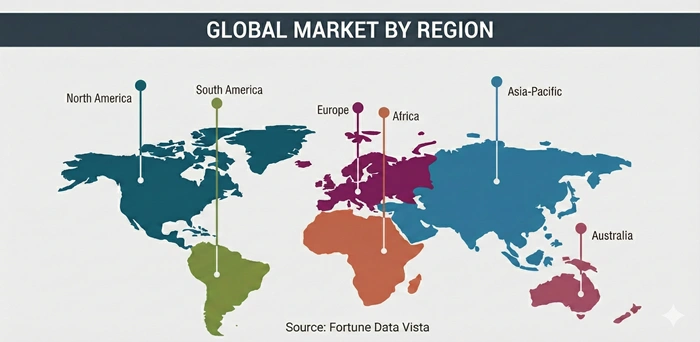
North America holds approximately 40% of global 3D printing medical devices market revenue in 2025, a dominant position built on the United States' position as the world's largest medical device market, highest-volume orthopedic and spinal surgery environment, most commercially developed medical additive manufacturing ecosystem, and most progressive regulatory framework for 3D-printed device development and approval. The region is projected to grow at a CAGR of approximately 15.4% from 2026 to 2033, sustained by continued expansion of 3D-printed implant adoption in orthopedics and spine, rapid growth of dental 3D printing, expanding hospital point-of-care printing capability, and the commercialization of bioprinting applications in pharmaceutical drug testing. Key North American players including 3D Systems (Rock Hill, SC), Stratasys (Eden Prairie, MN), Stryker (Kalamazoo, MI), Zimmer Biomet (Warsaw, IN), and Align Technology (Tempe, AZ) collectively represent the world's deepest concentration of medical 3D printing commercial expertise — supported by a dense network of academic medical center printing laboratories, FDA-cleared material suppliers, and medical device design software companies that together constitute the most complete medical additive manufacturing ecosystem in the world.
Canada contributes a growing component to North America's 3D printing medical devices market, with academic medical centers including Toronto General Hospital, Montreal General Hospital, and Vancouver General Hospital developing in-house 3D printing capabilities for complex surgical case planning and custom device production. The U.S. market's strong reimbursement environment for orthopedic and spinal surgery — despite current gaps for patient-specific device coding — provides the commercial foundation for continued strong additive manufacturing adoption, and the FDA's increasingly structured approach to additive manufacturing device validation is providing manufacturers with the regulatory predictability needed to invest confidently in expanding their 3D-printed product portfolios.
Asia Pacific
Asia Pacific Is the Fastest Growing Region in the Global 3D Printing Medical Devices Market — Driven by China's Additive Manufacturing Investment Policy, Japan's Precision Medical Device Engineering Culture, and India's Rapidly Developing Surgical Infrastructure
Shukla Medical, Sinocare's 3D Division, and Growing Academic Medical Center Printing Labs Across Japan and South Korea Are Making Asia Pacific the Market's Most Dynamic Regional Growth Story
Asia Pacific is the fastest growing regional market in the 3D printing medical devices market, with a projected CAGR of approximately 18.7% from 2026 to 2033, and currently holds approximately 22% of global market revenue in 2025. China is the dominant country within the region — supported by the National Additive Manufacturing Industry Development Action Plan and significant government investment in medical device additive manufacturing capability — with Chinese device manufacturers including Medprin, Kanghui Holdings (Smith+Nephew subsidiary), and a growing number of domestic metal printing companies developing DMLS and SLM capabilities for orthopedic and spinal implant production. Japan's advanced precision manufacturing culture and strong dental 3D printing adoption — driven by major dental companies including Kuraray Noritake, GC Corporation, and the strong installed base of Formlabs, Stratasys, and 3Shape dental systems in Japanese dental laboratories — make Japan a significant contributor to the region's additive manufacturing medical device revenue. South Korea's strong medical device manufacturing sector, India's rapidly expanding surgical infrastructure and orthopedic market growth, and the increasing healthcare capital equipment investment across Australia, Singapore, and Southeast Asian markets are all contributing to the region's exceptional growth momentum in the 3D printing medical devices market.
India represents the most compelling emerging market opportunity in the Asia Pacific 3D printing medical devices market, combining a rapidly growing orthopedic surgery volume driven by an aging population and increasing arthritis and trauma rates, a strong domestic medical device manufacturing ambition supported by the Production Linked Incentive (PLI) scheme for medical devices, and a cost-sensitive healthcare environment where additive manufacturing's ability to produce patient-specific devices at lower cost than importing standard Western implants creates a compelling localization opportunity. Indian additive manufacturing companies including Wipro 3D (aerospace and medical), Anatomiz3D Medtech, and academic institutions including IIT Bombay and IIT Madras are actively developing 3D-printed medical device capabilities — supported by increasing collaboration with international device manufacturers seeking to establish cost-competitive Indian production capacity for both domestic and export markets.
Report Customization Available by Region and Country
Access Precisely Targeted 3D Printing Medical Devices Market Intelligence Through Fully Customized Region-Wise and Country-Wise Reports — Tailored to the Specific Regulatory, Clinical, and Competitive Dynamics of Every Major Medical Device Market Globally
This report is fully customizable by region and country, enabling medical device manufacturers, healthcare systems, additive manufacturing technology companies, regulatory affairs professionals, investment firms, and research institutions to access 3D printing medical devices market intelligence specifically tailored to the clinical adoption dynamics, regulatory framework, competitive landscape, and growth opportunity profile of their target geographies. Customized reports deliver country-level market sizing, technology adoption benchmarking, regulatory pathway analysis, competitive device manufacturer profiling, and identification of the highest-value 3D printing medical device application opportunities in each selected market.
Customized 3D printing medical devices market reports are available for all of the following regions and countries, offering detailed market analysis, technology adoption benchmarking, regulatory environment assessment, competitive device manufacturer profiling, and strategic growth opportunity mapping tailored to each specific geography:
North America
-
U.S. — Stryker, Zimmer Biomet, and 3D Systems additive manufacturing revenue analysis; FDA CDRH additive manufacturing regulatory pathway status; hospital point-of-care printing laboratory development benchmarking; CMS reimbursement coding development tracker; and U.S. dental 3D printing adoption metrics
-
Canada — Health Canada regulatory framework for 3D-printed medical devices, Canadian academic medical center printing program development, orthopedic device market analysis, and cross-border manufacturing supply chain dynamics
-
Mexico — COFEPRIS medical device regulatory environment, Mexican medical device manufacturing sector 3D printing adoption, medical tourism implications for patient-specific device demand, and PLI-equivalent program analysis
Europe
-
U.K. — MHRA additive manufacturing guidance, NHS point-of-care printing program development, Renishaw and Materialise UK operations, post-Brexit CE mark to UKCA transition implications for 3D-printed devices, and U.K. orthopedic 3D printing adoption
-
Germany — German Notified Body regulatory pathway for additive manufacturing, EOS GmbH home market analysis, German orthopedic and dental 3D printing adoption, BfArM regulatory development, and German medical device manufacturer additive manufacturing investment benchmarking
-
France — French National Agency for Medicines and Health Products (ANSM) additive manufacturing regulatory guidance, Assistance Publique-Hôpitaux de Paris 3D printing program, French dental 3D printing adoption, and key French medical device manufacturer profiles
-
Italy — AIFA and ISS regulatory environment for 3D-printed devices, Italian medical device manufacturing sector additive manufacturing adoption, orthopedic and maxillofacial 3D printing application development, and Italian dental laboratory 3D printing adoption
-
Rest of Europe — Nordic academic medical center printing programs, Eastern European medical 3D printing market development, Benelux regulatory harmonization analysis, and pan-European ISO 13485 additive manufacturing compliance benchmarking
Asia Pacific
-
China — NMPA regulatory framework for 3D-printed medical devices, government additive manufacturing investment programs, domestic device manufacturer competitive analysis, and Chinese orthopedic and dental 3D printing market development
-
India — CDSCO regulatory pathway for 3D-printed devices, PLI scheme medical device additive manufacturing investment, Indian orthopedic market growth implications, domestic 3D printing company profiles, and academic institution printing capability development
-
Japan — PMDA regulatory framework for additive manufacturing, Japanese dental 3D printing market leadership, precision manufacturing sector medical device crossover, and leading Japanese medical 3D printing company analysis
-
South Korea — MFDS regulatory environment, Korean medical device manufacturer additive manufacturing adoption, dental 3D printing adoption benchmarking, and K-Medtech startup ecosystem analysis
-
Australia — TGA regulatory pathway for 3D-printed devices, Australian academic medical center printing program development, dental 3D printing adoption metrics, and orthopedic market 3D printing penetration analysis
-
Rest of Asia Pacific — Singapore medical device hub 3D printing development, Taiwan medical device manufacturing additive manufacturing adoption, Southeast Asian market emerging adoption, and regional medical tourism implication for patient-specific device demand
Latin America
-
Brazil — ANVISA regulatory framework for 3D-printed medical devices, Brazilian medical device manufacturing sector analysis, orthopedic 3D printing adoption, and academic institution capability development across major Brazilian medical universities
-
Argentina — ANMAT regulatory environment, Argentine medical device market 3D printing development, cost sensitivity implications for additive manufacturing adoption, and key Argentine medical device manufacturer profiles
-
Rest of Latin America — Colombian, Chilean, and Mexican medical device regulatory analysis, Latin American orthopedic market 3D printing penetration, and regional distributor network for medical 3D printing systems
Middle East & Africa (MEA)
-
UAE — Dubai Health Authority and DOH Abu Dhabi regulatory environment, UAE medical tourism 3D printing implications, Cleveland Clinic Abu Dhabi and Mediclinic Middle East 3D printing program development, and UAE medical device market competitiveness
-
Saudi Arabia — SFDA regulatory framework for additive manufacturing medical devices, Saudi Vision 2030 healthcare infrastructure investment implications, King Faisal Specialist Hospital 3D printing program, and Saudi medical device localization opportunity
-
Rest of MEA — South African medical device 3D printing development, Egyptian and North African market emergence, Israeli medical technology 3D printing innovation, and Sub-Saharan African prosthetics 3D printing humanitarian applications
Top Key Players
-
3D Systems Corporation (United States)
-
Stratasys Ltd. (United States / Israel)
-
Materialise NV (Belgium)
-
EOS GmbH Electro Optical Systems (Germany)
-
Stryker Corporation (United States)
-
Zimmer Biomet Holdings, Inc. (United States)
-
Medtronic plc (Ireland / United States)
-
Renishaw plc (United Kingdom)
-
Align Technology, Inc. (United States)
-
GE Additive (Colibrium Additive) (United States)
-
Formlabs Inc. (United States)
-
CELLINK (BICO Group AB) (Sweden)
Recent Developments
-
In 2025, Stratasys launched the H350 V1.5 medical additive manufacturing system featuring enhanced HighDef printing resolution capabilities specifically designed for producing patient-specific anatomical models and surgical planning guides with the surface quality and dimensional accuracy that clinical planning applications require — while simultaneously expanding its validated medical material portfolio with the P3 Silicone 25A biocompatible flexible material that enables new categories of soft-tissue simulation model and custom device production previously not achievable through additive manufacturing.
-
In 2025, 3D Systems strengthened its healthcare additive manufacturing portfolio through the commercial launch of advanced SLA and SLS printer platforms specifically validated for medical device applications — reporting significant adoption among U.S. and European hospital-based 3D printing laboratories and device manufacturers producing surgical planning models, patient-specific instruments, and orthopedic components, while simultaneously advancing its VSP (Virtual Surgical Planning) service business through new partnerships with major hospital systems seeking AI-assisted surgical planning model production capabilities.
-
In 2024, Materialise NV achieved a significant commercial milestone with the approval of its Mimics software platform as an FDA-cleared Class II medical device for surgical planning applications — a regulatory achievement that strengthens Materialise's position as the world's leading medical 3D printing software and service company and enables hospital customers to deploy Materialise's planning and printing workflow under an FDA-cleared quality framework, reducing the regulatory burden of hospital-based 3D printing laboratory validation programs.
-
In 2025, Zimmer Biomet expanded its Persona IQ smart knee implant — which incorporates a microelectronic sensor printed directly into the tibial base plate using additive manufacturing — to additional international markets following strong U.S. commercial performance, demonstrating the convergence of additive manufacturing precision with embedded digital health sensing technology that represents one of the most commercially exciting developments at the intersection of 3D printing and connected medical devices within the 3D printing medical devices market.
-
In 2024, EOS GmbH announced a strategic partnership with a leading European academic medical center to develop and validate next-generation titanium powder formulations specifically optimized for spinal implant additive manufacturing — combining EOS's industrial DMLS system expertise with clinical research data on osseointegration performance to develop a validated titanium-alloy printing process that achieves superior biological fixation outcomes compared to existing commercially validated metal printing materials, targeting regulatory submission for CE mark and FDA 510(k) clearance within the forecast period.
Market Trends
Point-of-Care Hospital 3D Printing and the Convergence of Additive Manufacturing with AI-Powered Design Automation Are the Two Defining Commercial Trends Reshaping the Competitive Landscape of the 3D Printing Medical Devices Market
From Materialise's FDA-Cleared Planning Software to Stryker's Industrial Titanium Implant Printing and CELLINK's Bioprinting Advances, the 3D Printing Medical Devices Market Is Entering Its Most Commercially Consequential Growth Phase
The most commercially significant structural trend in the 3D printing medical devices market is the progressive establishment of in-hospital 3D printing laboratories at major academic medical centers and large hospital systems globally — transforming 3D printing from a technology used primarily by device manufacturers into a point-of-care clinical capability that allows hospitals to produce the specific device or model they need, when they need it, on-site. This decentralization of medical device additive manufacturing is being enabled by the improving accessibility of hospital-grade printing systems, the availability of FDA-cleared hospital printing workflows (including Materialise Mimics and equivalent European software platforms), and the growing institutional recognition that on-site anatomical model production for complex surgical cases — cardiovascular, neurosurgical, pediatric — delivers measurable clinical value and patient safety improvements that justify the infrastructure investment. As regulatory frameworks for hospital-based printing mature and the range of validated materials and quality system templates available to hospital printing programs expands, the point-of-care printing trend will progressively expand the 3D printing medical devices market beyond the traditional device manufacturer customer base to encompass hundreds of thousands of hospitals globally.
The convergence of AI-powered computational design with additive manufacturing is creating a new paradigm for medical device development where the optimal device design for each patient is generated algorithmically from their imaging data — rather than selected from a catalog of standard sizes — and produced automatically within hours of the computational design process completing. Companies including nTopology, Hexagon, and Autodesk are building AI-powered generative design platforms specifically for medical device applications that combine finite element analysis, topology optimization, and biological performance simulation to produce implant designs that maximize mechanical performance while minimizing material volume and enabling the complex porosity architectures that promote osseointegration. The integration of these AI design tools with validated DMLS printing workflows — creating an end-to-end pipeline from patient imaging data to optimized 3D-printed implant — is reducing the time, engineering cost, and design risk of patient-specific medical device development in ways that will progressively expand the clinical applications and commercial scale of the 3D printing medical devices market through 2033 and beyond.
Segments Covered in the Report
-
By Component
-
3D Printers (Hardware Systems)
-
Materials (Metal Powders, Photopolymer Resins, Biocompatible Polymers, Bioinks, Ceramics)
-
Software (Design, Simulation, Slicing, Quality Management)
-
Services (Contract Manufacturing, Design Services, Maintenance and Support)
-
-
By Technology
-
Fused Deposition Modeling (FDM)
-
Stereolithography (SLA)
-
Selective Laser Sintering (SLS)
-
Direct Metal Laser Sintering (DMLS) / Selective Laser Melting (SLM)
-
PolyJet and Multi Jet Fusion (MJF)
-
Bioprinting Technologies
-
Others (Binder Jetting, Electron Beam Melting)
-
-
By Application
-
Prosthetics and Patient-Specific Implants (Orthopedic, Spinal, Cranial, Maxillofacial)
-
Surgical Planning Models and Custom Surgical Instruments
-
Dental Products (Crowns, Bridges, Aligners, Dentures, Surgical Guides)
-
Bioprinting and Tissue Engineering (Tissue Constructs, Drug Testing Models, Organoids)
-
Drug Delivery Devices
-
Others (Hearing Aids, Medical Equipment Components)
-
-
By End User
-
Hospitals and Surgical Centers
-
Dental Clinics and Dental Laboratories
-
Pharmaceutical and Biotechnology Companies
-
Research and Academic Institutions
-
Others (Contract Manufacturing Organizations, Rehabilitation Centers)
-
-
By Region
-
North America (U.S., Canada, Mexico)
-
Europe (U.K., Germany, France, Italy, Rest of Europe)
-
Asia Pacific (China, India, Japan, South Korea, Australia, Rest of Asia Pacific)
-
Latin America (Brazil, Argentina, Rest of Latin America)
-
Middle East & Africa (UAE, Saudi Arabia, Rest of MEA)
-
❝ Built for Every Level — From Startups to Industry Giants ❞
Here Is Exactly How This Report Works for You
-
For Tier 1 global medical device manufacturers, orthopedic and dental device companies, institutional healthcare investors, and private equity firms evaluating medical additive manufacturing acquisition opportunities, this report delivers a comprehensive competitive revenue analysis — including segment-by-segment market share breakdown by technology, application, and geography; additive manufacturing investment-to-revenue-return benchmarking by device category; and a detailed assessment of how geopolitical factors including U.S.-China medical device technology export controls, EU MDR and IVDR compliance requirements for 3D-printed devices, and national healthcare reimbursement policy divergence are reshaping the competitive positioning and capital allocation strategy of the world's leading medical device manufacturers in the 3D printing medical devices market through 2033.
-
For Tier 2 and Tier 3 regional medical device companies, hospital system technology procurement teams, medical 3D printing service bureau operators, and additive manufacturing system distributors focused on healthcare, the supply-demand dynamics section identifies the specific clinical application categories and geographic markets where unmet demand for 3D-printed medical device solutions is largest, maps the regulatory validation pathways and quality system requirements for entering each application segment, and provides competitor revenue source analysis that reveals where the most commercially attractive market entry and expansion opportunities exist within the global 3D printing medical devices market for organizations without the capital scale of the largest industry participants.
-
For bioprinting and medical material startups, venture capital investors evaluating medical additive manufacturing opportunities, and strategic decision-makers at healthcare systems planning hospital 3D printing laboratory development programs, this report provides a technology readiness timeline for each 3D printing medical device application category, a regulatory approval pathway complexity assessment by application and geography, a competitive patent landscape analysis highlighting white-space innovation opportunities, and a forward-looking market sizing model that quantifies the revenue potential of emerging high-growth segments including bioprinting, point-of-care printing, and AI-optimized implant design — enabling evidence-based investment and strategic planning decisions within the 3D printing medical devices market through 2033.
Frequently Asked Questions:
Answer: The global 3D printing medical devices market was valued at USD 3.75 billion in 2025 and is projected to reach approximately USD 12.35 billion by 2033. The market is expected to grow at a CAGR of 15.9% from 2026 to 2033, driven by rising demand for patient-specific implants, expanding dental 3D printing adoption, and progressive regulatory clarity for additive manufacturing medical device validation.
Answer: North America dominates the global 3D printing medical devices market with approximately 40% of total revenue in 2025, anchored by the United States' large orthopedic surgery volume, world-leading medical device manufacturer base, and progressive FDA additive manufacturing regulatory framework. Asia Pacific is the fastest growing regional market, projected to grow at a CAGR of approximately 18.7% from 2026 to 2033, driven by China's additive manufacturing investment programs and India's rapidly expanding surgical infrastructure.
Answer: The 3D printing medical devices market serves a wide range of clinical applications including patient-specific orthopedic and spinal implants, cranial and maxillofacial reconstruction plates, custom surgical planning models and cutting guides, dental prosthetics and clear aligners, hearing aid shells, and bioprinted tissue constructs for drug testing and regenerative medicine. Prosthetics and implants represent the largest single application segment, while bioprinting and dental 3D printing are the fastest growing application categories within the market.
Answer: Artificial intelligence is transforming the 3D printing medical devices market by enabling automated computational design of patient-specific implants directly from medical imaging data, dramatically reducing the engineering time required to create print-ready device designs while simultaneously optimizing implant geometry for superior biomechanical performance. AI is also being applied to real-time quality monitoring of additive manufacturing processes — detecting micro-level defects and material inconsistencies during printing that traditional post-print inspection cannot reliably identify — improving the consistency and regulatory compliance of 3D-printed medical device production.
Answer: The primary challenges limiting faster growth of the 3D printing medical devices market include the high capital cost of industrial-grade metal printing systems that restricts hospital adoption to large academic medical centers, the complex biocompatibility and sterilization validation requirements for medical-grade printing materials that add significant development time and cost, and the absence of dedicated reimbursement codes for patient-specific 3D-printed devices in many healthcare markets. Regulatory complexity for novel 3D-printed device categories — particularly bioprinted constructs and point-of-care printed devices — and the shortage of trained additive manufacturing engineers with both medical device quality system knowledge and printing process expertise are additional barriers that the industry is progressively addressing through training programs, regulatory guidance development, and automated design software.