
Accounting Software Market Overview
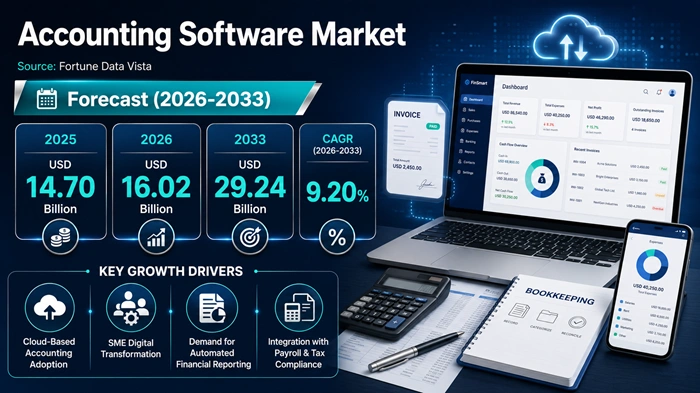
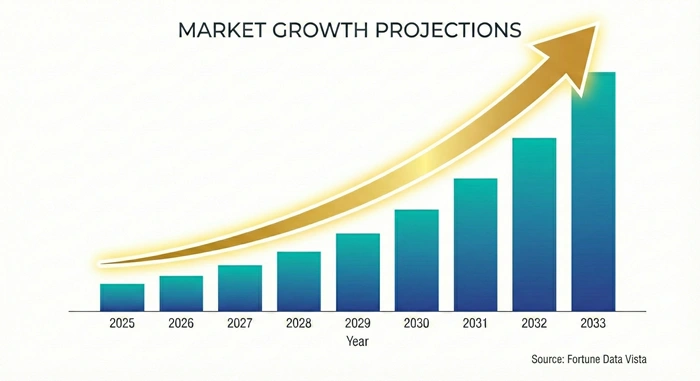
The global accounting software market size is valued at USD 14.70 billion in 2025 and is predicted to increase from USD 16.02 billion in 2026 to approximately USD 29.24 billion by 2033, growing at a CAGR of 9.20% from 2026 to 2033.
This robust growth trajectory is being fueled by rapid adoption of cloud-based accounting platforms, growing integration of artificial intelligence into financial workflows, and rising demand from small and medium enterprises seeking affordable, scalable bookkeeping solutions. As businesses across nearly every industry look to automate manual accounting tasks and gain real-time visibility into their financial health, both established software vendors and emerging cloud-native providers continue expanding their product offerings to capture this growing demand.
AI Impact on the Accounting Software Industry
Artificial Intelligence Is Automating Routine Bookkeeping, Powering Predictive Financial Insights, and Redefining Fraud Detection Across the Accounting Software Landscape — Fundamentally Changing How Businesses Manage Their Finances
Artificial intelligence has moved from a novelty feature to a core capability within modern accounting software, with platforms now automatically categorizing transactions, reconciling bank statements, and flagging anomalies that might indicate errors or fraudulent activity without requiring constant manual oversight. This shift is proving particularly valuable for small business owners who previously had to rely on outside bookkeepers for routine data entry tasks, since AI-powered categorization engines can now handle much of that work automatically and with increasing accuracy over time. Vendors that have invested heavily in these AI capabilities are seeing strong customer retention, since the time savings translate directly into lower operational costs for their business customers.
Beyond basic automation, AI is also enabling more sophisticated predictive financial analysis, allowing accounting software to forecast cash flow trends, flag potential late payments, and suggest optimal timing for major expenditures based on historical financial patterns. Larger enterprises are increasingly drawn to accounting platforms offering these predictive capabilities, particularly when integrated with broader enterprise resource planning systems that provide a unified view of operational and financial data. As AI-driven features continue maturing, they are becoming a genuine competitive differentiator across the accounting software market, pushing vendors to accelerate development of increasingly intelligent financial management tools.
Growth Factors
Rising Cloud Adoption and Growing Small Business Demand Continue Fueling Sustained Market Expansion
The most significant growth factor supporting the accounting software market is the accelerating shift toward cloud-based deployment models, which allow businesses to access financial data from anywhere while eliminating the need for costly on-premise infrastructure and dedicated IT support staff. This transition has been especially impactful for small and medium enterprises that previously found traditional accounting software prohibitively expensive or complex to maintain, since cloud subscription pricing models have made professional-grade accounting tools accessible to businesses of nearly any size. As more companies recognize the operational efficiency gains from real-time financial visibility, cloud adoption continues expanding steadily across both developed and emerging markets.
A second important growth factor is the growing complexity of regulatory compliance requirements across industries like banking, healthcare, and retail, which has pushed businesses to adopt more sophisticated accounting platforms capable of automatically handling tax calculations, financial reporting standards, and audit trail documentation. Companies operating across multiple jurisdictions face particularly acute compliance pressure, driving demand for accounting software that can adapt to varying regional tax codes and reporting requirements without requiring extensive manual configuration. This combination of cloud accessibility and compliance automation continues to expand the addressable customer base for the broader accounting software market.
Market Outlook
Deeper AI Integration and Expanding SME Adoption Are Expected to Define the Next Phase of Growth Through 2033
Looking ahead through the forecast period, the accounting software industry is expected to see continued deepening of AI integration, with vendors moving beyond basic automation toward genuinely autonomous financial management capabilities that can handle increasingly complex accounting decisions with minimal human intervention. This evolution is likely to reshape how businesses think about the role of accounting staff, shifting focus away from repetitive data entry toward higher-value financial strategy and analysis work that AI tools cannot easily replicate.
At the same time, expanding adoption among small and medium enterprises in emerging economies is expected to become an increasingly important growth engine, as improving internet infrastructure and rising smartphone penetration make cloud-based accounting tools accessible to businesses that previously operated with minimal digital financial management. Vendors that successfully localize their products for regional tax regulations and payment systems while keeping pricing accessible are well positioned to capture this expanding customer base. Companies balancing continued AI innovation with strong SME market penetration are likely to lead growth within the broader accounting software market through 2033.
Expert Speaks
-
"Agentic AI is fundamentally changing what small business owners can expect from their financial software, moving well beyond simple bookkeeping toward genuine business advisory capability." — CEO, Intuit Inc
-
"Our customers increasingly expect their financial systems to work autonomously in the background, surfacing insights rather than requiring them to hunt for answers." — CEO, Oracle Corporation
-
"Cloud-native financial platforms are no longer a nice-to-have for growing businesses, they have become essential infrastructure for staying competitive." — CEO, SAP SE
Key Report Takeaways
-
North America leads the global accounting software market, holding approximately 35% market share in 2025, supported by high digital adoption, mature IT infrastructure, and strong enterprise demand for cloud and AI-enabled financial solutions
-
Asia Pacific is the fastest-growing region, projected to expand at a CAGR near 9.9% through 2033, driven by rapid digitalization, rising SME adoption, and growing demand for cloud-based accounting tools
-
Small and medium enterprises represent the fastest-growing customer base, increasingly adopting affordable cloud accounting platforms as digital financial management becomes more accessible
-
BFSI applications contribute the most to overall demand, given the sector's complex financial operations, high transaction volumes, and strict regulatory compliance requirements
-
Cloud-based deployment remains the most widely adopted delivery model, valued for its accessibility, lower upfront costs, and ability to support remote and distributed teams
-
Custom accounting software will grow the fastest among product type segments, holding a meaningful share with a CAGR near 10% through the forecast period, driven by demand for industry-specific workflow customization
Market Scope
| Parameter | Details |
|---|---|
| Market Size by 2033 | USD 29.24 Billion | Market Size by 2026 | USD 16.02 Billion | Market Size by 2025 | USD 14.70 Billion | Market Growth Rate from 2026 to 2033 | CAGR of 9.20% | Dominating Region | North America | Fastest Growing Region | Asia Pacific | Segments Covered | Component, Deployment Mode, Enterprise Size, End-Use Industry, Region | Regions Covered | North America, Europe, Asia Pacific, Latin America, Middle East & Africa |
Market Dynamics
Drivers Impact Analysis
Cloud Migration and Regulatory Compliance Pressure Remain the Two Strongest Forces Behind Sustained Market Growth
| Driver | (≈) % Impact on CAGR Forecast | Geographic Relevance | Impact Timeline |
|---|---|---|---|
| Accelerating shift toward cloud-based accounting deployment | ~34% | Global | Short to long-term |
| Rising regulatory compliance complexity across industries | ~27% | North America, Europe, growing in Asia Pacific | Medium to long-term |
| Growing SME demand for affordable financial management tools | ~22% | Global, strongest in Asia Pacific | Short to medium-term |
| Increasing integration of AI-driven automation features | ~17% | Global | Medium-term |
The accelerating shift toward cloud-based deployment continues to serve as the single most powerful driver behind sustained growth in the accounting software market, as businesses of all sizes increasingly prioritize real-time financial visibility and remote accessibility over traditional on-premise systems that require dedicated IT infrastructure. This transition has fundamentally changed how vendors price and package their products, favoring subscription-based models that lower the barrier to entry for smaller businesses while generating more predictable recurring revenue for software providers.
Rising regulatory compliance complexity represents the second major driver, particularly as businesses operating across multiple jurisdictions face growing pressure to accurately handle varying tax codes, financial reporting standards, and audit documentation requirements. This compliance burden has made accounting software an operational necessity rather than a discretionary purchase for many businesses, especially within heavily regulated sectors like banking and healthcare, further reinforcing steady demand growth across the broader accounting software market.
Restraints Impact Analysis
Data Security Concerns and High Implementation Costs Continue to Moderate Adoption Among Certain Buyer Segments
| Restraint | (≈) % Impact on CAGR Forecast | Geographic Relevance | Impact Timeline |
|---|---|---|---|
| Data security and privacy concerns around cloud-based financial data | ~36% | Global | Ongoing |
| High implementation and customization costs for large enterprises | ~30% | North America, Europe | Short to medium-term |
| Resistance to migration from legacy on-premise systems | ~20% | Global, notable in older established enterprises | Medium-term |
| Limited digital infrastructure in some emerging markets | ~14% | Parts of Africa, Latin America | Long-term |
Data security and privacy concerns represent the most persistent restraint facing the accounting software market, since financial data is among the most sensitive information any business handles, and any perceived vulnerability in cloud-based storage can discourage adoption among risk-conscious organizations. Vendors must continually invest in robust encryption, compliance certifications, and transparent security practices to maintain customer trust, which adds meaningful cost pressure to product development.
High implementation and customization costs present a second significant restraint, particularly for large enterprises seeking accounting platforms that integrate deeply with existing enterprise resource planning systems and industry-specific workflows. Combined with lingering resistance among some established organizations to migrate away from familiar legacy on-premise systems, these restraints continue moderating how quickly certain buyer segments transition to newer cloud-based accounting solutions across the broader accounting software market.
Opportunities Impact Analysis
Expanding SME Digitalization and Deepening AI Capability Represent the Clearest Paths to Sustained Growth
| Opportunity | (≈) % Impact on CAGR Forecast | Geographic Relevance | Impact Timeline |
|---|---|---|---|
| Expanding digitalization among SMEs in emerging economies | ~38% | Asia Pacific, Latin America, Middle East & Africa | Medium to long-term |
| Deeper integration of AI-driven predictive financial insights | ~33% | Global | Short to medium-term |
| Growing demand for industry-specific custom accounting solutions | ~29% | Global | Long-term |
Expanding digitalization among small and medium enterprises in emerging economies represents one of the most substantial opportunities within the accounting software market, as improving internet access and growing smartphone penetration make cloud-based financial tools newly accessible to businesses that previously relied on manual bookkeeping methods. Vendors that successfully localize pricing and functionality for these markets stand to capture meaningful new customer volume over the coming years.
Deeper integration of AI-driven predictive financial insights offers a second substantial opportunity, as businesses increasingly seek accounting platforms capable of forecasting cash flow and flagging financial risks proactively rather than simply recording historical transactions. Growing demand for industry-specific custom accounting solutions, tailored to unique workflow and compliance needs across sectors like construction, healthcare, and manufacturing, further broadens the opportunity landscape for vendors willing to invest in specialized product development. Companies pursuing these parallel opportunities are well positioned to capture growing demand within the broader accounting software market through the forecast period.
Segment Analysis
By Deployment Mode: Cloud-Based Accounting Software
Cloud-Based Deployment Continues to Anchor the Market Landscape, Driven by Accessibility and Lower Total Cost of Ownership
Cloud-based deployment holds a substantial and growing share within the deployment mode segment of the accounting software market, reflecting its clear advantages in accessibility, scalability, and reduced upfront infrastructure investment compared to traditional on-premise alternatives. Businesses increasingly favor cloud platforms because they allow finance teams to access real-time data from any location, support seamless software updates without disrupting operations, and typically follow predictable subscription pricing that simplifies budgeting for growing companies. In markets like the United States and the United Kingdom, cloud adoption has become the default choice for new software purchases across nearly every business size category. Leading vendors such as Intuit, Xero, and Zoho continue to dominate this segment through continuous feature expansion and strong customer support ecosystems.
Growth within this segment remains particularly strong in Asia Pacific, where expanding internet infrastructure and rising smartphone penetration continue to make cloud accounting tools accessible to a rapidly growing base of small and medium enterprises. Countries like India and Indonesia have seen significant growth in cloud accounting adoption as local vendors and international players alike introduce affordable, localized products suited to regional tax requirements and payment systems. As businesses across emerging markets continue digitalizing their financial operations, cloud-based deployment is expected to further strengthen its leading position within the broader accounting software market throughout the forecast period.
By End-Use Industry: BFSI
BFSI Remains the Dominant End-Use Segment, Reflecting the Sector's Complex Financial Operations and Strict Compliance Demands
The BFSI sector accounts for the largest share of end-use industry revenue within the accounting software market, driven by the sheer complexity of financial operations, high transaction volumes, and stringent regulatory compliance requirements that banking and financial services organizations must navigate continuously. Financial institutions rely heavily on sophisticated accounting platforms capable of handling large-scale reconciliation, detailed audit trails, and real-time regulatory reporting, making this sector a consistently high-value customer segment for accounting software vendors. This demand pattern has remained stable even as newer, smaller competitors enter the broader software market, since BFSI organizations generally prioritize proven reliability and compliance capability over cost savings.
Growth in this end-use segment remains especially strong in North America and parts of Europe, where established financial institutions continue investing in upgraded accounting infrastructure to support digital transformation initiatives and evolving regulatory requirements. Companies like Oracle and SAP maintain particularly strong positions within this segment, offering enterprise-grade platforms that integrate accounting functions with broader financial risk management and compliance systems. As financial services organizations continue prioritizing digital modernization, the BFSI segment is expected to remain a cornerstone contributor to overall demand within the broader accounting software market.
Regional Insights
North America
High Digital Maturity and Strong Enterprise Demand Keep North America Firmly in the Lead
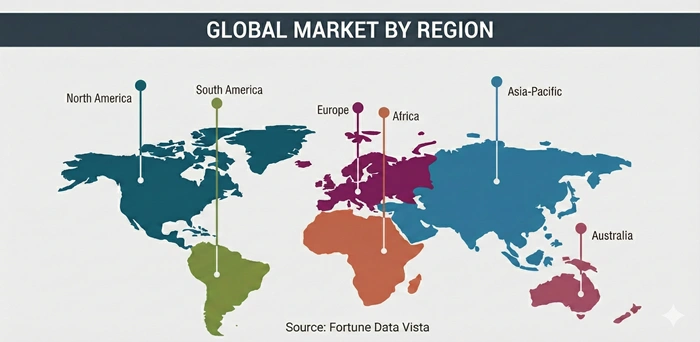
North America commands the leading position in the global accounting software market, holding approximately 35% share in 2025, supported by high digital adoption rates, mature IT infrastructure, and strong enterprise demand for cloud and AI-enabled financial solutions. The United States drives the overwhelming majority of regional demand, backed by a dense concentration of both established software giants and innovative cloud-native startups competing to serve businesses ranging from solo entrepreneurs to large multinational corporations. Companies with strong regional presence include Intuit, Microsoft, Oracle, and SAP, each maintaining deep relationships with enterprise and small business customers across the country.
Canada also contributes meaningfully to regional demand, supported by a growing base of small and medium enterprises increasingly adopting cloud-based financial management tools to streamline operations. The region's combination of high technology adoption, strong vendor presence, and mature enterprise IT budgets ensures North America's leadership position within the accounting software market remains firmly intact through the remainder of the forecast period.
Asia Pacific
Rapid Digitalization and Expanding SME Adoption Position Asia Pacific as the Fastest-Growing Region
Asia Pacific is projected to register the fastest CAGR within the global accounting software market through 2033, expanding at a rate near 9.9% as rapid digitalization, rising SME adoption, and growing demand for cloud-based financial solutions create substantial new demand across the region. China and India lead this growth, supported by expanding internet infrastructure and a massive base of small and medium enterprises increasingly transitioning away from manual bookkeeping toward affordable cloud accounting platforms. Regional and international vendors alike have expanded local operations to serve this growing demand, often localizing products for regional tax codes and payment systems.
Japan and South Korea contribute further depth to regional growth, both bringing mature enterprise software markets that increasingly favor AI-enabled accounting platforms for larger corporate customers. Rising government support for digital transformation initiatives across several Asia Pacific countries continues to accelerate adoption among small businesses that previously lacked access to affordable financial management technology. This combination of digital infrastructure expansion, growing SME demand, and rising enterprise investment positions Asia Pacific as the clear growth leader within the broader accounting software market through the forecast period.
Customization Available for This Report
Region-Specific and Country-Specific Versions of This Report Are Available to Deliver a Sharper, More Localized View of Market Dynamics
This report can be tailored on a region-by-region and country-by-country basis, providing localized market sizing, competitive mapping, and adoption trend analysis that a global overview alone cannot fully capture.
Clients seeking a more focused breakdown can request a customized version covering any of the following regions and countries, complete with demand forecasting, competitor landscape review, and adoption trend analysis tied specifically to the accounting software keyword focus:
North America
-
U.S. — Detailed review of enterprise cloud adoption trends and competitive vendor positioning
-
Canada — Coverage of SME digitalization patterns and regional distribution channels
-
Mexico — Analysis of emerging small business software adoption trends
Europe
-
U.K. — Review of regulatory compliance requirements and cloud accounting adoption
-
Germany — Coverage of enterprise resource planning integration trends
-
France — Insights into SME accounting software adoption patterns
-
Italy — Analysis of regional digital transformation initiatives
-
Rest of Europe — Country-level view of emerging demand across Eastern Europe and the Nordics
Asia Pacific
-
China — Coverage of expanding digital infrastructure and SME adoption growth
-
India — Analysis of rapid cloud accounting adoption among small businesses
-
Japan — Review of enterprise software modernization trends
-
South Korea — Assessment of AI-enabled accounting platform adoption
-
Australia — Insights into cloud migration trends among mid-sized businesses
-
Rest of Asia Pacific — Country-level breakdown covering Thailand, Vietnam, Indonesia, and Malaysia
Latin America
-
Brazil — Coverage of expanding SME digitalization and fintech integration trends
-
Argentina — Analysis of emerging cloud accounting adoption patterns
-
Rest of Latin America — Country-level sizing across Colombia, Peru, and Chile
Middle East & Africa
-
UAE — Review of enterprise digital transformation and compliance-driven adoption
-
Saudi Arabia — Coverage of expanding business digitalization initiatives
-
Rest of MEA — Country-level view of Sub-Saharan Africa digital finance infrastructure growth
Top Key Players
-
Intuit Inc (United States)
-
Microsoft Corporation (United States)
-
Oracle Corporation (United States)
-
SAP SE (Germany)
-
The Sage Group plc (United Kingdom)
-
Xero Ltd (New Zealand)
-
Zoho Corporation Pvt Ltd (India)
-
FreshBooks (Canada)
-
Wave Financial Inc (Canada)
-
MYOB Group Pty Ltd (Australia)
-
Infor Inc (United States)
-
Epicor Software Corporation (United States)
Recent Developments
-
In 2025, Intuit rolled out agentic AI capabilities and expanded financial management tools within its Enterprise Suite, helping mid-market businesses automate routine workflows and make faster, data-backed decisions
-
In 2025, Oracle introduced its AI Agent Studio for Fusion Applications, giving enterprise finance teams the ability to build and manage AI agents directly within accounting and financial reporting processes
-
In 2025, Xero deepened its integration ecosystem through new banking and payment partnerships designed to improve real-time transaction reconciliation for small business users
-
In 2026, Zoho strengthened AI-powered automation across its accounting suite, targeting small and medium enterprises looking for simpler, more intuitive financial management tools
-
In 2025, Sage expanded its cloud accounting footprint across European markets through new regional partnerships focused on improving localized tax compliance support
Market Trends
AI-Driven Automation and Deepening SME Digitalization Are Reshaping Category Competition
One of the clearest trends shaping the accounting software market is the accelerating shift toward AI-powered autonomous financial management, as vendors move beyond simple automation toward platforms capable of proactively identifying financial risks, forecasting cash flow, and even suggesting strategic financial decisions with minimal human input. This trend is pushing established vendors to continuously expand their AI capabilities to remain competitive against newer entrants building AI-first accounting products from the ground up.
A second significant trend is the deepening digitalization of small and medium enterprises across emerging markets, as improving internet infrastructure and increasingly affordable cloud subscription pricing make professional-grade accounting tools accessible to businesses that previously relied entirely on manual bookkeeping. This expanding SME customer base is reshaping competitive dynamics within the broader accounting software market, rewarding vendors who can successfully balance affordability with genuine functional depth.
Segments Covered in the Report
By Component
-
Software
-
Services
By Deployment Mode
-
Cloud-Based
-
On-Premise
By Enterprise Size
-
Large Enterprises
-
Small and Medium Enterprises
By Type
-
Spreadsheets
-
ERP
-
Custom Accounting Software
-
Tax Management Software
By End-Use Industry
-
BFSI
-
IT and Telecommunication
-
Government and Public Sector
-
Retail and Consumer Goods
-
Manufacturing
-
Healthcare
-
Construction and Real Estate
By Region
-
North America (U.S., Canada, Mexico)
-
Europe (U.K., Germany, France, Italy, Rest of Europe)
-
Asia Pacific (China, India, Japan, South Korea, Australia, Rest of Asia Pacific)
-
Latin America (Brazil, Argentina, Rest of Latin America)
-
Middle East & Africa (UAE, Saudi Arabia, Rest of MEA)
❝ Built for Every Level — From Startups to Industry Giants ❞
Here Is Exactly How This Report Works for You
-
For tier 1 companies, investors, and established market leaders, this report delivers detailed competitor revenue analysis, cloud adoption trend mapping, and geopolitical risk context that support confident decisions around product expansion, pricing strategy, and long-term positioning within the accounting software space
-
For tier 2 and tier 3 companies, startups, and mid-sized vendors, this report highlights the most commercially promising underserved segments and regional opportunities, giving you a practical framework to compete against larger established players without overextending limited resources
-
For every decision maker across the value chain, this report explains exactly how AI adoption trends, regulatory shifts, and competitor product launches are shaping market direction through 2033, equipping you to plan investment and go-to-market decisions with genuine confidence
Frequently Asked Questions:
Answer: The global accounting software market was valued at USD 14.70 billion in 2025 and is projected to reach USD 29.24 billion by 2033. This growth is driven largely by cloud adoption and expanding AI integration across financial workflows.
Answer: Growth in the accounting software market is being driven by accelerating cloud migration and rising regulatory compliance complexity across industries. Growing SME demand for affordable financial management tools is further reinforcing this expansion.
Answer: North America currently leads the accounting software market with roughly 35% share, supported by high digital maturity and strong enterprise demand. Asia Pacific is growing the fastest, driven by rapid digitalization and rising SME adoption.
Answer: Cloud-based deployment generates the largest share of revenue in the accounting software market, valued for its accessibility and lower total cost of ownership. The BFSI sector also remains the dominant end-use industry due to its complex compliance needs.
Answer: Leading companies in the accounting software market include Intuit, Microsoft, Oracle, SAP, and Sage. These companies compete through continuous AI innovation, expanding cloud capabilities, and growing focus on SME accessibility.