
ADAS Simulation Market Overview
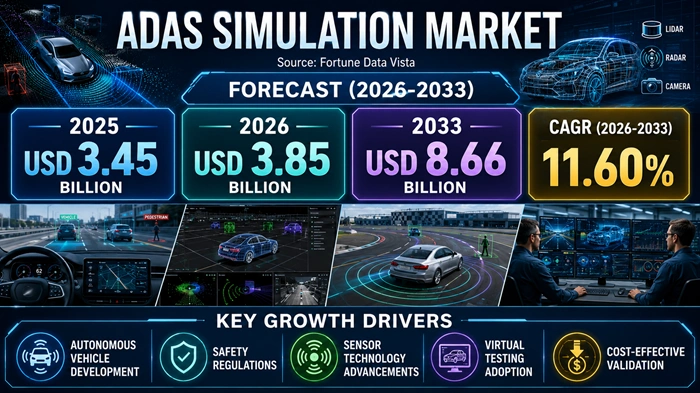
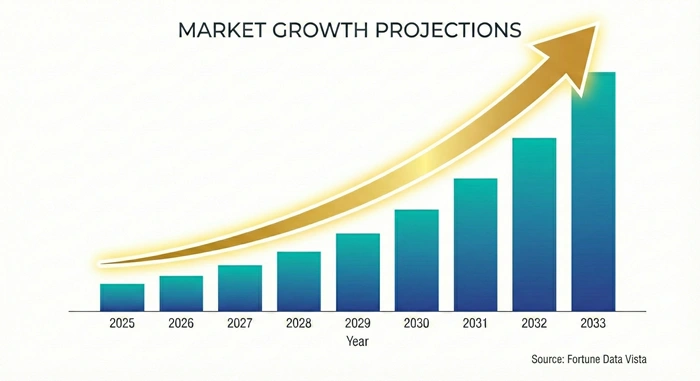
The global ADAS simulation market size is valued at USD 3.45 billion in 2025 and is predicted to increase from USD 3.85 billion in 2026 to approximately USD 8.66 billion by 2033, growing at a CAGR of 11.60% from 2026 to 2033.
This strong expansion reflects the rising need for automakers and technology suppliers to validate advanced driver assistance systems virtually before deploying them on real roads. Growing demand for autonomous vehicle testing, tighter safety regulations, and the increasing complexity of sensor systems are together pushing adoption of ADAS simulation tools across both established automotive markets and emerging manufacturing hubs.
AI Impact on the ADAS Simulation Industry
Artificial Intelligence Is Quietly Transforming How Automakers Test and Validate Driver Assistance Systems
Artificial intelligence is beginning to play a meaningful role in reshaping how ADAS simulation platforms generate and evaluate test scenarios. Machine learning algorithms embedded in simulation software are now capable of automatically creating thousands of rare and complex driving situations, such as sudden pedestrian crossings or unpredictable weather changes, that would be difficult and expensive to recreate on physical test tracks. This capability is significantly shortening validation cycles for automakers racing to bring semi-autonomous features to market faster.
Beyond scenario generation, AI is improving the accuracy of sensor modeling within simulation environments. Camera, radar, and LiDAR simulation models trained on real-world data now replicate sensor behavior with far greater realism, helping engineers catch potential system failures before physical prototypes are built. The broader integration of generative AI into simulation workflows also supports continuous, automated regression testing, which strengthens confidence in software updates delivered to vehicles already on the road, an area that has become central to over-the-air update strategies at major automakers.
Growth Factors
Rising Autonomous Vehicle Development, Regulatory Pressure, and Cost Efficiency Are Converging to Accelerate Simulation Adoption
The primary engine driving the ADAS simulation market forward is the rapid pace of autonomous and semi-autonomous vehicle development across the automotive industry. Carmakers are under constant pressure to bring new driver assistance features to market quickly while proving these systems are safe under a huge range of driving conditions, creating strong demand for virtual testing tools that can validate software long before physical trials begin. This urgency is especially visible in electric vehicle programs, where software-defined architectures depend heavily on simulation for continuous validation.
At the same time, stricter vehicle safety regulations around the world are pushing automakers and Tier-1 suppliers to adopt standardized simulation practices that meet functional safety requirements such as ISO 26262. The widespread adoption of software-in-the-loop and hardware-in-the-loop testing methods, the development of cloud-based simulation platforms that allow massive parallel scenario testing, and the emergence of digital twin technology are all expanding the addressable market. Government-backed autonomous vehicle research programs in countries like Germany, the United States, and China are further driving institutional investment in advanced simulation infrastructure.
Market Outlook
Expanding Compute Capacity, Cloud Adoption, and Emerging Market Investment Are Setting the Stage for Sustained Long-Term Growth
The ADAS simulation industry is positioned for sustained long-term growth driven by several converging technological and regulatory factors. As vehicles become more software-defined and reliant on complex sensor fusion, automakers are shifting a growing share of their validation budgets away from physical road testing and toward virtual simulation environments that offer faster iteration and lower per-test cost. This structural shift represents a significant and durable source of demand for simulation software vendors and cloud computing partners.
Emerging markets will be an important battleground for growth through 2033. Countries across Asia Pacific, including China and India, are investing heavily in domestic automotive technology capabilities, including simulation infrastructure needed to support growing electric and connected vehicle production. International collaboration between automakers and simulation software providers continues to expand access to high-fidelity testing environments in these developing markets. Companies that invest early in scalable, AI-enhanced simulation platforms suited for both established and emerging automotive hubs are likely to capture a disproportionate share of this expanding demand.
Expert Speaks
-
"Simulation has become the backbone of how we validate driver assistance features before a single physical prototype hits the road. The ability to test millions of scenarios virtually is fundamentally changing how quickly we can bring safer vehicles to market." — CEO, Siemens AG
-
"As vehicles become more autonomous, the complexity of sensor validation grows exponentially, and physical testing alone simply cannot keep pace. Investment in high-fidelity simulation is no longer optional for any serious automotive safety program." — CEO, Ansys Inc.
-
"Our simulation platforms are helping automakers reduce validation timelines dramatically while improving confidence in system safety. This is one of the fastest-growing areas of investment across our automotive client base." — CEO, Dassault Systèmes
Key Report Takeaways
-
Asia Pacific leads the global ADAS simulation market, holding approximately 42% market share in 2025, supported by dense automotive and semiconductor manufacturing ecosystems across China, Japan, and South Korea
-
North America is a key growth region, driven by strong Tier-1 supplier investment and early regulatory mandates around autonomous vehicle safety validation
-
Automotive OEMs and Tier-1 suppliers are the dominant customer base, relying heavily on ADAS simulation platforms to meet functional safety standards before vehicle launch
-
Passenger vehicle applications contribute the most to overall demand, reflecting the rapid rollout of driver assistance features across mainstream vehicle segments
-
Hardware-in-the-loop simulation remains the most popular testing process, prized for delivering deployment-grade closed-loop validation of production-ready electronic control units and sensors
-
Cloud-based simulation services will grow the fastest among offering segments, holding close to 30% market share with a CAGR near 16% through the forecast period, driven by demand for scalable, cost-efficient parallel scenario testing
Market Scope
| Parameter | Details |
|---|---|
| Market Size by 2033 | USD 8.66 Billion | Market Size by 2026 | USD 3.85 Billion | Market Size by 2025 | USD 3.45 Billion | Market Growth Rate from 2026 to 2033 | CAGR of 11.60% | Dominating Region | Asia Pacific | Fastest Growing Region | North America | Segments Covered | Offering, Simulation Type, Vehicle Type, Level of Autonomy, Application, End User, Region | Regions Covered | North America, Europe, Asia Pacific, Latin America, Middle East & Africa |
Market Dynamics
Drivers Impact Analysis
Autonomous Vehicle Validation Demand and Regulatory Compliance Are Emerging as the Two Most Powerful Forces Propelling This Market Forward
| Driver | (≈) % Impact on CAGR Forecast | Geographic Relevance | Impact Timeline |
|---|---|---|---|
| Rising autonomous and semi-autonomous vehicle development | ~35% | Global, strongest in Asia Pacific, North America | Short to long-term |
| Stricter vehicle safety and functional safety regulations | ~28% | Europe, North America | Medium to long-term |
| Growth of software-defined vehicle architectures | ~20% | Global | Short to medium-term |
| Expansion of cloud-based scalable simulation infrastructure | ~17% | Global | Medium to long-term |
The rapid global development of autonomous and semi-autonomous vehicle technology is without question the single most powerful demand driver in the ADAS simulation market. Automakers now need to validate an enormous number of driving scenarios, including rare edge cases involving unpredictable pedestrian behavior or adverse weather, that would be nearly impossible and prohibitively expensive to test exclusively on physical roads. This growing testing burden is pushing automakers and suppliers to rely increasingly on virtual environments capable of running millions of scenario variations efficiently.
Regulatory pressure is the second critical driver. Functional safety standards such as ISO 26262 and growing regional mandates around autonomous vehicle certification are requiring automakers to demonstrate rigorous, repeatable validation processes before vehicles reach production. This matters commercially because simulation offers a standardized, auditable way to prove compliance across multiple safety scenarios. As regulatory bodies in Europe, North America, and Asia Pacific tighten certification requirements, procurement of advanced ADAS simulation platforms is accelerating across both established automakers and emerging electric vehicle startups.
| Parameter | Details |
|---|---|
| Market Size by 2033 | USD 8.66 Billion | Market Size by 2026 | USD 3.85 Billion | Market Size by 2025 | USD 3.45 Billion | Market Growth Rate from 2026 to 2033 | CAGR of 11.60% | Dominating Region | Asia Pacific | Fastest Growing Region | North America | Segments Covered | Offering, Simulation Type, Vehicle Type, Level of Autonomy, Application, End User, Region | Regions Covered | North America, Europe, Asia Pacific, Latin America, Middle East & Africa |
Restraints Impact Analysis
High Computational Costs and Model Validation Complexity Continue to Present Real-World Barriers to Full Market Penetration
| Restraint | (≈) % Impact on CAGR Forecast | Geographic Relevance | Impact Timeline |
|---|---|---|---|
| High computational resource and infrastructure costs | ~38% | Global, notable barrier for smaller players | Short to medium-term |
| Complexity of validating simulation accuracy against real-world data | ~30% | Global | Short to long-term |
| Shortage of specialized simulation engineering talent | ~20% | Global, notable in emerging markets | Medium-term |
| Integration challenges with legacy vehicle testing workflows | ~12% | Global | Short-term |
The most significant structural restraint in the ADAS simulation market is the high cost of the computational infrastructure required to run large-scale, high-fidelity simulations. Massive parallel scenario testing demands significant cloud computing or on-premise GPU resources, which can place a heavy financial burden on smaller Tier-2 suppliers and automotive startups trying to compete with well-funded incumbents. This creates a gap where smaller players struggle to access the same depth of virtual testing capability as larger, better-capitalized competitors.
Ensuring that simulation results accurately reflect real-world vehicle behavior remains a persistent technical challenge. Sensor models must be continuously validated against physical test data to avoid a gap between simulated performance and actual on-road behavior, a process that requires specialized engineering expertise that is currently in short supply. While cloud-native and AI-enhanced platforms are helping reduce some cost barriers, the combination of high compute demand and validation complexity still limits universal adoption among resource-constrained automotive suppliers.
Opportunities Impact Analysis
Cloud-Native Platforms and AI-Generated Scenario Testing Represent the Most Commercially Significant Growth Opportunities
| Opportunity | (≈) % Impact on CAGR Forecast | Geographic Relevance | Impact Timeline |
|---|---|---|---|
| Growth of cloud-native, AI-enhanced simulation platforms | ~40% | Global, led by North America, Asia Pacific | Medium to long-term |
| Expansion of simulation adoption among smaller Tier-2 suppliers and startups | ~35% | Global | Short to medium-term |
| Integration of digital twin technology across vehicle programs | ~25% | Global | Long-term |
The growth of cloud-native, AI-enhanced simulation platforms represents one of the most commercially attractive opportunities in the ADAS simulation sector. These platforms allow automakers to scale testing dynamically without investing in expensive on-premise infrastructure, and companies offering flexible, subscription-based access to high-fidelity scenario libraries stand to capture a growing share of budget-conscious customers. As agile simulation startups introduce cost-efficient validation tools, adoption is expected to broaden significantly across vehicle segments that previously found simulation too expensive.
Expansion into smaller Tier-2 suppliers and automotive startups is opening entirely new customer segments that established simulation vendors have historically underserved. These smaller players increasingly need access to affordable, scalable validation tools as regulatory requirements tighten across the entire supply chain, not just for major OEMs. Companies that can deliver simplified, cost-effective simulation solutions tailored to smaller engineering teams will find significant commercial opportunity as the market matures.
Segment Analysis
By Offering: Software
Software Solutions Lead the Offering Landscape, Driven by Expanding Platform Sophistication and Licensing Demand
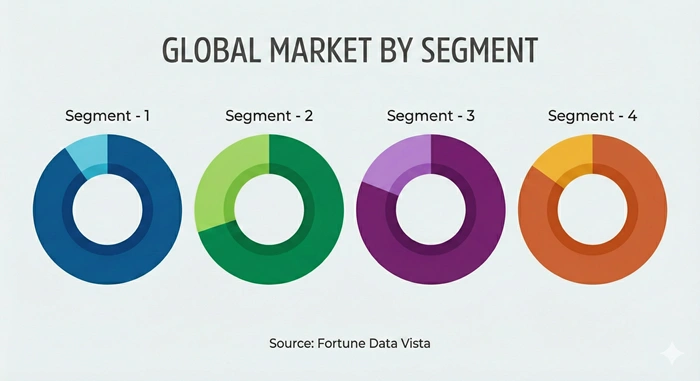
The software segment holds the dominant position in the ADAS simulation market, accounting for approximately 65% of the total offering segment in 2025. This dominance is deeply rooted in the growing sophistication of simulation platforms, which now combine scenario generation, sensor modeling, and digital twin capabilities within unified software suites. In high-income markets like Germany, the United States, and Japan, automakers and Tier-1 suppliers have standardized their validation workflows around leading simulation software platforms, creating stable, recurring licensing revenue. Leading companies such as Siemens, Ansys, and dSPACE continue to dominate procurement in these markets through well-established product ecosystems and long-standing OEM relationships.
Asia Pacific is emerging as a strong growth region for simulation software adoption, expanding steadily as automotive and semiconductor manufacturing ecosystems in China, Japan, and South Korea invest in advanced vehicle testing capabilities. The region's rapidly growing electric and connected vehicle production, combined with active government investment in autonomous vehicle research, is generating significant institutional demand for ADAS simulation software platforms. Applied Intuition and NVIDIA have strengthened their regional presence through partnerships with domestic automakers and semiconductor firms. The broader shift toward cloud-native, subscription-based software licensing is also being led by this segment, with AI-driven scenario generation gaining traction among engineering teams focused on faster validation cycles.
By Simulation Type: Hardware-in-the-Loop
Hardware-in-the-Loop Testing Commands Strong Adoption, Delivering Deployment-Grade Validation Across the ADAS Simulation Market
Hardware-in-the-loop simulation holds a leading position within the simulation type segment, prized for its ability to deliver deployment-grade closed-loop validation of production-ready electronic control units and sensors. This approach allows engineers to test actual vehicle hardware against simulated driving environments, bridging the gap between purely virtual software testing and full physical road trials. Companies operating in Germany's dense automotive engineering ecosystem have built particularly strong expertise in this segment, supported by decades of experience in real-time testing platforms compliant with functional safety standards.
Europe remains a key growth region for hardware-in-the-loop adoption, supported by Germany's deep automotive engineering base and strict regulatory requirements around functional safety certification. dSPACE holds a particularly strong position in this segment, commanding a substantial share of the global hardware-in-the-loop market through its real-time testing platforms used widely across the German automotive industry. North America is also seeing growing hardware-in-the-loop adoption as domestic automakers and electric vehicle startups scale up validation infrastructure to support faster product development cycles.
Regional Insights
Asia Pacific
Asia Pacific's Dense Automotive Ecosystem and Rapid Vehicle Technology Adoption Make It the Global Market Leader
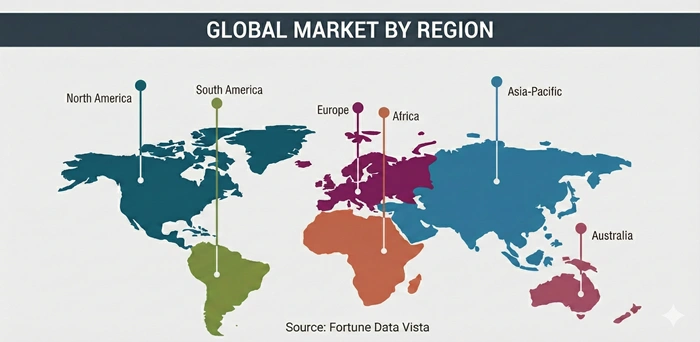
Asia Pacific holds the dominant position in the global ADAS simulation market with approximately 42% market share in 2025 and continues to expand steadily through 2033. China drives much of the regional demand, supported by its enormous automotive manufacturing base, aggressive electric vehicle production targets, and strong government backing for autonomous vehicle research programs. Key companies with strong Asia Pacific market presence include NVIDIA, Applied Intuition, and various regional simulation specialists, all of which have expanded partnerships with domestic automakers and semiconductor firms to serve rapidly growing local demand.
Japan and South Korea also contribute meaningfully to regional growth, both bringing deep expertise in automotive electronics and sensor manufacturing that complements simulation software adoption. Automakers across the region are increasingly adopting cloud-based, AI-enhanced simulation platforms to accelerate validation of new driver assistance features rolled out across a growing range of vehicle price points. The combination of dense manufacturing infrastructure, strong semiconductor supply chains, and expanding electric vehicle production ensures Asia Pacific's leadership position in the ADAS simulation market remains firmly intact through 2033.
North America
North America's Strong Tier-1 Supplier Base and Early Regulatory Action Drive Rapid Market Expansion
North America represents a critical growth region in the global ADAS simulation market, supported by a strong concentration of Tier-1 suppliers, technology companies, and autonomous vehicle startups investing heavily in virtual validation infrastructure. The United States drives the majority of regional demand, backed by significant private investment in autonomous vehicle research and growing regulatory attention toward driver assistance system safety standards. Companies like NVIDIA, Applied Intuition, and MathWorks maintain strong North American operations, offering advanced simulation platforms tailored to both established automakers and emerging electric vehicle companies.
The United States and Canada represent the two markets most closely watched within the region, given the concentration of autonomous vehicle technology development happening domestically. The U.S. has seen strong growth in cloud-based simulation adoption among startups seeking cost-efficient alternatives to building proprietary testing infrastructure. Canada's market, while smaller, is benefiting from growing investment in automotive technology research hubs that support broader North American supply chains feeding into the ADAS simulation market.
Customization Available for This Report
Region-Wise and Country-Wise Customization Ensures Every Client Gets Insights Tailored to Their Exact Market Focus
This report offers comprehensive region-wise and country-wise customization, providing tailored market insights, trends, competitive analysis, and opportunity assessments specific to your geography of interest.
Our team can deliver a fully customized version of this report for any of the following regions and countries, providing deep-dive market analysis, demand forecasting, regulatory landscape review, and competitive intelligence specific to the selected market and ADAS simulation keyword combination:
North America
-
U.S. — Detailed analysis of autonomous vehicle R&D investment, Tier-1 supplier adoption, and cloud simulation trends
-
Canada — Insights into automotive technology research hubs and simulation infrastructure investment
-
Mexico — Manufacturing hub integration and simulation adoption among regional automotive suppliers
Europe
-
U.K. — Autonomous vehicle regulatory landscape and simulation software adoption among engineering firms
-
Germany — Advanced hardware-in-the-loop testing ecosystem, functional safety standards, and Tier-1 supplier dominance
-
France — Automotive R&D investment and simulation platform adoption among domestic OEMs
-
Italy — Growing simulation demand in automotive engineering and design validation
-
Rest of Europe — Emerging simulation markets across Eastern Europe and the Baltics
Asia Pacific
-
China — Electric vehicle production scale, government-funded autonomous vehicle research, and domestic simulation vendor growth
-
India — Growing automotive technology adoption and simulation infrastructure investment
-
Japan — Advanced sensor and automotive electronics ecosystem supporting simulation adoption
-
South Korea — Semiconductor and automotive technology integration driving simulation demand
-
Australia — Emerging autonomous vehicle testing initiatives and simulation infrastructure investment
-
Rest of Asia Pacific — Country-level analysis covering Thailand, Vietnam, Indonesia, and Malaysia
Latin America
-
Brazil — Growing automotive manufacturing base and emerging simulation adoption
-
Argentina — Early-stage simulation market development
-
Rest of Latin America — Colombia, Mexico, Peru, and Chile country-level ADAS simulation market sizing
Middle East & Africa
-
UAE — Emerging autonomous vehicle testing initiatives and technology investment
-
Saudi Arabia — Industrial modernization and automotive technology procurement
-
Rest of MEA — Sub-Saharan Africa automotive technology access expansion and procurement channels
Top Key Players
-
Siemens AG (Germany)
-
Ansys Inc (United States)
-
NVIDIA Corporation (United States)
-
dSPACE GmbH (Germany)
-
IPG Automotive GmbH (Germany)
-
Applied Intuition Inc (United States)
-
The MathWorks Inc (United States)
-
Vector Informatik GmbH (Germany)
-
Keysight Technologies Inc (United States)
-
Dassault Systèmes SE (France)
-
rFpro Ltd (United Kingdom)
-
AVL List GmbH (Austria)
-
Cognata Ltd (Israel)
-
Hexagon AB (Sweden)
-
Foretellix Ltd (Israel)
Recent Developments
-
In 2025, NVIDIA expanded its DRIVE simulation platform with new GPU acceleration features aimed at improving real-time high-fidelity sensor modeling for autonomous vehicle validation
-
In 2026, Siemens announced enhancements to its digital twin simulation portfolio, targeting faster validation cycles for electric and software-defined vehicle programs
-
In 2025, dSPACE strengthened its SCALEXIO real-time testing platform with new hardware-in-the-loop capabilities to support expanding ISO 26262 functional safety validation requirements
-
In 2026, Ansys introduced updates to its VRXPERIENCE platform, improving sensor modeling accuracy for camera and LiDAR systems under challenging environmental conditions
-
In 2025, Applied Intuition expanded its partnerships with several major automakers to deploy cloud-native, AI-based scenario generation tools across global vehicle testing programs
Market Trends
The ADAS Simulation Market Is Rapidly Shifting Toward Cloud-Native Platforms and AI-Generated Scenario Testing That Match the Growing Complexity of Autonomous Systems
Two of the most consequential trends reshaping the ADAS simulation landscape are the move toward cloud-native, scalable testing infrastructure and the mainstreaming of AI-generated driving scenarios. Cloud-based platforms are replacing traditional on-premise simulation setups in many engineering organizations, allowing automakers and suppliers to run massive parallel scenario tests without investing heavily in dedicated hardware. This trend is reducing per-test costs, improving validation speed, and enabling smaller Tier-2 suppliers to access simulation capabilities that were previously reserved for large, well-funded OEMs.
The second major trend is the growing use of generative AI to automatically create rare and complex driving scenarios that would be difficult to capture through manual scenario design alone. This is opening entirely new possibilities for comprehensive safety validation, allowing engineering teams to test edge cases involving unpredictable pedestrian behavior, adverse weather, or sensor degradation far more efficiently than before. At the same time, the integration of digital twin technology into simulation workflows is creating a new layer of continuous validation capability that connects virtual testing directly to real-world vehicle performance data.
Segments Covered in the Report
By Offering
-
Software
-
Scenario Generation Tools
-
Sensor Modeling Platforms
-
Services
-
Consulting and Integration Services
-
Managed Simulation Services
By Simulation Type
-
Software-in-the-Loop
-
Hardware-in-the-Loop
-
Vehicle-in-the-Loop
-
Model-in-the-Loop
By Vehicle Type
-
Passenger Vehicles
-
Commercial Vehicles
By Level of Autonomy
-
Level 1 and Level 2 Systems
-
Level 3 Systems
-
Level 4 and Level 5 Systems
By Application
-
Adaptive Cruise Control Testing
-
Automatic Emergency Braking Validation
-
Lane Keeping and Departure Warning Testing
-
Parking Assistance Simulation
By End User
-
Automotive OEMs
-
Tier-1 Suppliers
-
Research and Engineering Institutes
By Region
-
North America (U.S., Canada, Mexico)
-
Europe (U.K., Germany, France, Italy, Rest of Europe)
-
Asia Pacific (China, India, Japan, South Korea, Australia, Rest of Asia Pacific)
-
Latin America (Brazil, Argentina, Rest of Latin America)
-
Middle East & Africa (UAE, Saudi Arabia, Rest of MEA)
❝ Built for Every Level — From Startups to Industry Giants ❞
Here Is Exactly How This Report Works for You
-
For tier 1 enterprises, investors, and high-level decision-makers, this report delivers competitor revenue analysis, detailed revenue source breakdowns, geopolitical risk assessments, and supply-demand dynamics that enable confident capital allocation, M&A targeting, and strategic market entry or expansion decisions in the ADAS simulation space
-
For tier 2 and tier 3 companies, mid-level businesses, and startups, this report provides a practical roadmap of the most commercially viable segments, regional opportunities, and technology investment priorities, helping you compete effectively against established players and identify white spaces before they become crowded
-
For all decision-makers across the value chain, this report explains exactly how regulatory shifts, computational cost trends, semiconductor supply dynamics, and competitor positioning are converging to shape market direction through 2033, giving you the intelligence framework to make proactive, evidence-based decisions rather than reactive ones
Frequently Asked Questions:
Answer: The global ADAS simulation market was valued at USD 3.45 billion in 2025 and is projected to reach USD 8.66 billion by 2033. This growth is driven by expanding autonomous vehicle development and rising demand for virtual safety validation.
Answer: The primary drivers of the ADAS simulation market include rapid autonomous vehicle development and stricter functional safety regulations worldwide. Growing adoption of cloud-based and AI-enhanced simulation platforms is further accelerating market expansion.
Answer: Asia Pacific currently dominates the ADAS simulation market with approximately 42% market share, supported by dense automotive manufacturing ecosystems. North America remains a strong growth region, driven by Tier-1 supplier investment and regulatory attention.
Answer: The software segment accounts for approximately 65% of the offering segment, reflecting growing platform sophistication. Hardware-in-the-loop testing also remains a significant contributor due to its deployment-grade validation capabilities.
Answer: Leading players in the ADAS simulation market include Siemens, Ansys, NVIDIA, dSPACE, and Applied Intuition. These companies compete through advanced simulation platforms, strong OEM relationships, and continuous investment in AI-enhanced testing technology.