
Aesthetic Medicine Market Overview
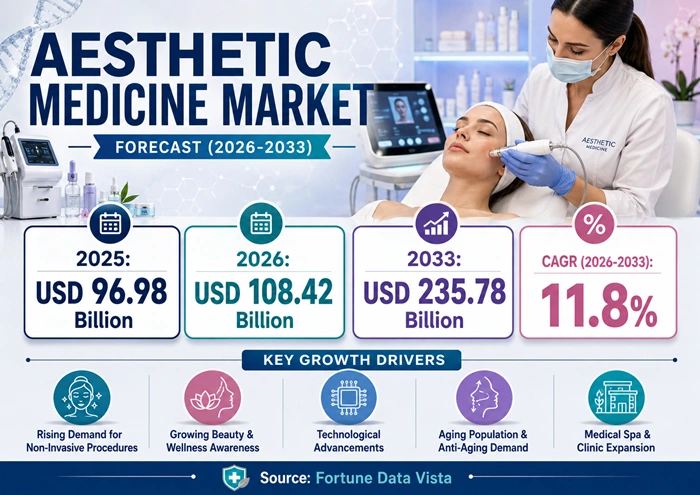
The global aesthetic medicine market size is valued at USD 96.98 billion in 2025 and is predicted to increase from USD 108.42 billion in 2026 to approximately USD 235.78 billion by 2033, growing at a CAGR of 11.8% from 2026 to 2033.
Aesthetic medicine encompasses a broad and rapidly expanding spectrum of medical procedures, devices, products, and services designed to enhance the physical appearance of patients through both surgical and non-surgical interventions. The field spans invasive surgical procedures such as rhinoplasty, liposuction, breast augmentation, and eyelid surgery — as well as the rapidly growing category of minimally invasive and non-invasive treatments including botulinum toxin injections, hyaluronic acid dermal fillers, laser skin resurfacing, radiofrequency body contouring, HIFU (high-intensity focused ultrasound), chemical peels, and cryolipolysis. The aesthetic medicine market has moved well beyond its origins as a niche elective specialty for high-income consumers — driven by a powerful combination of improving treatment affordability, growing societal acceptance of cosmetic enhancement, expanding access through medspas and community aesthetic clinics, and the rise of social media culture that normalizes discussion and visible sharing of aesthetic treatment outcomes. From the emergence of preventative Botox among younger demographics to rising male patient participation and the global expansion of medical tourism in cosmetic procedures, the modern aesthetic medicine landscape is broader, more diverse, and faster-growing than at any point in its history.
AI Impact on the Aesthetic Medicine Industry
Artificial intelligence is transforming aesthetic medicine from a discipline relying primarily on practitioner experience and subjective visual assessment to a data-driven, precision-guided specialty where AI-powered facial analysis, outcome simulation, personalized treatment planning, and practice management automation are elevating both the clinical quality and commercial efficiency of aesthetic care delivery at scale
Artificial intelligence is making transformative contributions to patient consultation and treatment planning within the aesthetic medicine market. AI-powered facial analysis platforms — such as those developed by Allergan Aesthetics (AbbVie), Revian, and VISIA by Canfield Scientific — can now analyze facial anatomy, skin quality, symmetry, volume distribution, and aging characteristics from patient photographs with a precision that goes beyond what the human eye reliably achieves in a clinical consultation environment. These AI diagnostic systems generate quantitative baseline assessments, identify specific areas of concern, and suggest personalized injection placement maps and energy device protocol parameters — enabling practitioners to deliver more consistent, evidence-based treatment outcomes while simultaneously creating visualization tools that help patients clearly understand recommended treatment plans. For practitioner education and training applications, AI simulation platforms that demonstrate predicted post-treatment outcomes in realistic before-and-after visualizations are improving treatment consultation conversion rates and managing patient expectations more effectively than traditional verbal description alone.
At the practice operations level, AI-powered business management tools are dramatically improving the efficiency and profitability of aesthetic clinics and medspas — the two fastest-growing provider settings in the aesthetic medicine market. AI scheduling optimization, patient communication automation, treatment protocol personalization engines, and predictive analytics tools that forecast patient retention, identify lapse-of-care risk patients, and model optimal promotional timing are enabling aesthetic practice operators to grow revenue and improve patient lifetime value with substantially less manual management effort. Companies including Nextech, PatientNow, Aesthetic Record, and Boulevard are developing AI-enhanced practice management platforms specifically designed for the aesthetic medicine setting — with features including AI-powered before-and-after photography analysis, automated post-treatment follow-up communications, and treatment journey personalization based on patient history and preference profiles. As AI capabilities in both clinical decision support and practice management continue to mature, they will become an increasingly central competitive differentiator between high-performance aesthetic practices and those relying on purely manual approaches to patient care and business management.
Growth Factors
The global social media-fueled normalization of aesthetic procedures among younger and male demographics, declining treatment costs enabling broader consumer access, the rapid expansion of medspa and aesthetic clinic channels democratizing cosmetic care delivery, a rich pipeline of novel injectable and energy device approvals, and rising consumer investment in preventative anti-aging medicine are collectively generating the powerful and sustained commercial growth momentum that defines the aesthetic medicine market's trajectory through 2033
The most powerful structural growth driver for the aesthetic medicine market is the fundamental cultural shift — accelerated significantly by social media platforms including Instagram, TikTok, and Snapchat — that has normalized and destigmatized cosmetic aesthetic treatment across demographics that historically represented minor segments of the patient population. Millennials and Gen Z consumers — who have grown up documenting their appearance through high-definition front-facing cameras and consuming aspirational lifestyle content featuring aesthetic enhancement outcomes — have developed both greater awareness of and comfort with non-invasive cosmetic treatments than any prior generation. This generational shift is driving strong growth in preventative Botox treatments among consumers in their 20s and 30s who view neuromodulator therapy as a proactive anti-aging investment rather than a corrective last resort — creating a dramatically earlier and longer individual treatment journey that expands lifetime patient value for providers and drives growing per-year neuromodulator and filler injection volumes. The rising participation of male patients — now representing approximately 15–20% of non-invasive aesthetic treatment volumes globally and growing faster than female participation — further expands the total addressable market for the aesthetic medicine industry.
The democratization of aesthetic treatment access through the explosive growth of medical spas — which combine clinical credentialing with a retail wellness consumer experience at price points more accessible than traditional plastic surgery or dermatology clinic settings — is simultaneously expanding both the geographic reach and the consumer demographic breadth of the aesthetic medicine market. The U.S. medspa industry alone has grown to over 10,000 establishments — roughly double the number operating in 2018 — reflecting a retail aesthetics expansion that is being replicated across Europe, Asia Pacific, and emerging markets globally as entrepreneurs recognize the high-margin, high-demand commercial opportunity of accessible aesthetic treatment. The growing integration of aesthetic services into dental practices, primary care clinics, and general practitioners' offices — particularly for injectable neuromodulator and filler treatments — is further expanding the treatment access network and total patient volume in markets where traditional aesthetic specialist access was limited. These structural channel expansions are creating a durable demand growth platform that will sustain the aesthetic medicine market's double-digit CAGR through 2033.
Market Outlook
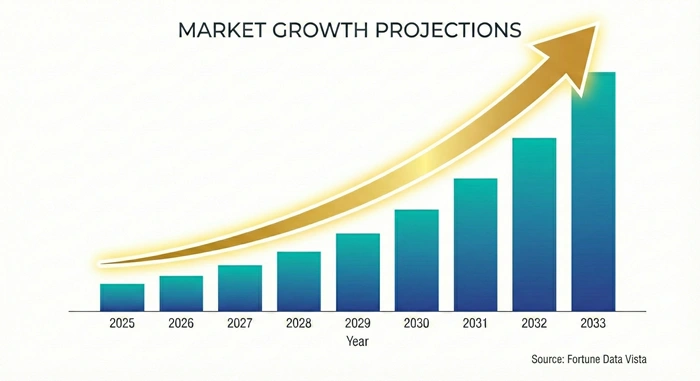
With a trajectory toward USD 235.78 billion by 2033 at a CAGR of 11.8%, the aesthetic medicine market is entering its most commercially expansive phase — driven by injectable innovation with next-generation neuromodulators and regenerative fillers, the energy device technology revolution including HIFU, radiofrequency, and body contouring platforms, and the rapid expansion of aesthetic care channels into medspas, dental clinics, and digital-first patient acquisition ecosystems
The medium-to-long-term commercial outlook for the aesthetic medicine market is exceptionally strong and broadly diversified across procedure types, geographic regions, provider settings, and patient demographics. Non-invasive procedures now account for the majority of total aesthetic medicine revenue — and their dominance will grow stronger through 2033 as treatment technology improvements continue to narrow the outcomes gap between non-invasive and surgical alternatives for many cosmetic indications. Energy-based devices including HIFU, monopolar and bipolar radiofrequency, high-intensity electromagnetic (HIFEM) muscle stimulation, and next-generation laser platforms are delivering facial lifting, body contouring, and skin rejuvenation outcomes that increasingly satisfy consumer expectations without the recovery time, surgical risk, and high procedural cost of traditional surgery — expanding the total addressable patient population and driving strong device capital expenditure and treatment session revenue across clinic and medspa settings globally.
The injectable segment — dominated by botulinum toxin neuromodulators and hyaluronic acid dermal fillers — will sustain its role as the single largest and most consistently growing revenue category within the aesthetic medicine market through 2033. New entrant neuromodulators including Revance Therapeutics' RHA Collection and daxxify (daxibotulinumtoxinA-lanm), Evolus' Jeuveau, and Hugel's Letybo are expanding the competitive landscape beyond AbbVie's Botox dominance — creating pricing competition that is improving treatment affordability and growing total injection volumes. The regenerative filler category — including biostimulators such as Sculptra (poly-L-lactic acid) and Radiesse (calcium hydroxylapatite) that stimulate natural collagen production rather than simply volumizing — is growing strongly as providers and patients seek longer-lasting, more natural-appearing results from injectable aesthetic treatments. Asia Pacific will be the fastest-growing region through 2033, while North America maintains revenue leadership — together accounting for the majority of the global aesthetic medicine market's commercial growth.
Expert Speaks
-
"The aesthetic medicine market is growing at a pace that fundamentally reflects changing consumer attitudes toward self-investment and wellness — and we are investing aggressively in both our injectable and device portfolios to capture the full breadth of that growth opportunity. The expansion of our neuromodulator and filler innovation pipeline, combined with our investment in practitioner training and digital patient engagement tools, positions us to grow our revenue and market share across every major aesthetic treatment category and geography through this decade." — CEO perspective, leading global pharmaceutical company with the world's largest botulinum toxin and dermal filler aesthetic product portfolio
-
"We see the medspa channel as one of the most transformative commercial forces reshaping the aesthetic medicine market — bringing high-quality aesthetic treatment to a much broader patient population than traditional plastic surgery or dermatology clinic settings ever could. Our company's strategy centers on supporting medspa operators with the technology platforms, training, and treatment protocols that enable them to deliver consistent, superior outcomes at accessible price points — because when aesthetic treatment results are excellent and experiences are positive, patient retention and referrals create the durable commercial growth that both providers and our business depend on." — CEO perspective, leading aesthetic device and technology company with major energy-based device portfolio for body contouring and skin rejuvenation
-
"The convergence of aesthetic medicine with digital health — through AI treatment planning, connected practice management, patient engagement platforms, and before-and-after outcome tracking — is creating a new standard for what exceptional aesthetic care looks like. Patients today expect personalized treatment recommendations, transparent outcome expectations, and seamless digital communication throughout their aesthetic care journey — and the practices and technology companies that meet these expectations most consistently will capture disproportionate growth in the aesthetic medicine market over the next decade." — CEO perspective, leading aesthetic skincare and professional treatment technology company with broad global practitioner network
Key Report Takeaways
-
North America leads the global aesthetic medicine market, holding approximately 38.6% of total global revenue share in 2025, anchored by the world's highest per-capita aesthetic treatment spending, the most mature and commercially developed medspa channel with over 10,000 establishments in the U.S. alone, the dominant commercial presence of AbbVie (Allergan Aesthetics), Revance Therapeutics, Sientra, InVivo Therapeutics, and other leading procedure companies, and a deeply established cultural acceptance of cosmetic enhancement spanning multiple patient generations.
-
Asia Pacific is the fastest-growing regional market, expected to register the highest CAGR through 2033, driven by South Korea's globally influential K-beauty and cosmetic surgery culture, China's rapidly expanding urban middle class investing in aesthetic enhancement, India's fastest-growing aesthetic medicine adoption trajectory, and the growing influence of social media across Southeast Asia creating awareness of and demand for cosmetic aesthetic treatments among rapidly expanding consumer demographics.
-
Non-invasive procedures represent the largest and fastest-growing procedure type segment, accounting for approximately 52.3% of global aesthetic medicine market revenue in 2025, as botulinum toxin injections, dermal fillers, laser treatments, chemical peels, HIFU, and radiofrequency body contouring collectively dominate treatment volumes through their combination of minimal downtime, lower procedural risk, more accessible price points, and increasingly competitive clinical outcomes relative to surgical alternatives across facial rejuvenation, body contouring, and skin quality improvement indications.
-
Botulinum toxin injections (neuromodulators) are the largest individual procedure sub-segment, contributing approximately 24.7% of global aesthetic medicine market revenue in 2025, as Botox and its competitors including Dysport, Xeomin, Jeuveau, Letybo, and daxxify collectively generate the highest aggregate treatment volumes of any individual aesthetic procedure globally — driven by the combination of established clinical safety profile, rapid onset, temporary nature that encourages repeat treatment, and proven efficacy in facial anti-aging and preventative cosmetic enhancement applications.
-
Aesthetic clinics and dermatology centers are the largest end-user segment, contributing approximately 44.8% of global revenue in 2025, as dedicated aesthetic specialty practices combining physician expertise with full treatment portfolios generate the highest average revenue per patient visit and the most comprehensive injectable, device, and skincare treatment combinations — though medspas are the fastest-growing provider setting, expanding at a CAGR exceeding 14.2% through 2033 driven by accessible pricing, consumer wellness positioning, and rapid channel expansion across North America and Asia Pacific.
-
Female patients represent the largest gender segment, contributing approximately 85.3% of global aesthetic medicine market revenue in 2025, though male aesthetic treatment is the fastest-growing demographic segment, growing at a CAGR exceeding 13.9% through 2033 as social media normalization of male grooming and aesthetic investment, growing acceptance among younger male demographics, and expansion of male-specific marketing by major injectable brands drive rapid penetration of an historically underdeveloped patient population.
-
Energy-based devices are the fastest-growing product type segment, expected to grow at a CAGR exceeding 14.6% through 2033, driven by rapidly advancing technology capabilities in radiofrequency, HIFU, electromagnetic body contouring, fractional laser, and photobiomodulation platforms — with devices delivering improving facial lifting, body sculpting, and skin rejuvenation outcomes that meet growing consumer demand for surgery-free alternatives with meaningful visible results and acceptable treatment convenience profiles.
Market Scope
| Parameter | Details |
|---|---|
| Market Size by 2033 | USD 235.78 Billion | Market Size by 2026 | USD 108.42 Billion | Market Size by 2025 | USD 96.98 Billion | Market Growth Rate from 2026 to 2033 | CAGR of 11.8% | Dominating Region | North America | Fastest Growing Region | Asia Pacific | Segments Covered | Procedure Type, Product Type, End User, Gender | Regions Covered | North America, Europe, Asia Pacific, Latin America, Middle East & Africa |
Market Dynamics
Drivers Impact Analysis
Social media-accelerated normalization of cosmetic procedures, growing prevention-oriented aesthetic medicine investment among younger demographics, medspa channel democratization of treatment access, injectable product innovation pipeline expansion, and rising male patient participation are collectively generating an exceptionally powerful and sustained commercial momentum engine driving the aesthetic medicine market through 2033
| Driver | ≈ % Impact on CAGR Forecast | Geographic Relevance | Impact Timeline |
|---|---|---|---|
| Social media normalization driving younger consumer adoption and preventative treatment demand | ~27% | Global | Short to Long Term |
| Medspa channel expansion democratizing aesthetic treatment access and broadening patient demographics | ~24% | North America, Asia Pacific, Europe | Short to Long Term |
| Injectable product innovation — neuromodulators and regenerative fillers — expanding treatment options | ~22% | North America, Europe, Asia Pacific | Short to Long Term |
| Energy-based device technology advances delivering surgery-competitive outcomes non-invasively | ~18% | North America, Asia Pacific | Short to Long Term |
| Rising male patient participation expanding total addressable consumer market | ~9% | North America, Europe, Asia Pacific | Short to Long Term |
Social media's role in driving the aesthetic medicine market's exceptional growth rate cannot be understated — as platforms including Instagram, TikTok, YouTube, and Snapchat have fundamentally transformed how consumers across all age groups discover, evaluate, and normalize cosmetic aesthetic treatments. Before social media, awareness of aesthetic procedures was primarily driven by word-of-mouth through personal networks — limiting treatment discovery to social circles where cosmetic enhancement was already culturally practiced. Social media democratized this information flow — enabling millions of consumers to see authentic before-and-after treatment results, follow influencers and practitioners who share treatment experiences transparently, and build both knowledge of available treatments and personal comfort with the idea of pursuing them. The Zoom effect of the COVID-19 pandemic — where widespread video conferencing on high-definition screens created massive new consumer awareness of facial appearance among people who had rarely seen themselves in video format — is widely credited with triggering a significant surge in aesthetic consultation demand that has sustained well beyond the pandemic period itself. This social media and digital culture driver represents a structural, generational shift in consumer behavior rather than a cyclical trend — ensuring that new patient cohorts entering the aesthetic medicine market will continue to grow consistently through 2033 and beyond.
The explosive expansion of the medspa channel is simultaneously transforming the aesthetic medicine market's commercial structure by creating a large, rapidly growing, accessible provider segment that reaches consumer demographics and geographic markets that traditional plastic surgery and dermatology specialty settings could not efficiently serve. Medspas combine the clinical credibility of supervised medical treatment — with a supervising physician or nurse practitioner overseeing injectable and device protocols — with the comfort, accessibility, and lifestyle branding of a premium wellness or beauty retail experience. This hybrid positioning allows medspas to attract first-time aesthetic treatment consumers who might be hesitant to visit a clinical plastic surgery or dermatology setting but feel comfortable in a consumer wellness environment. The medspa model is highly scalable — with franchise and membership-based chains including Ideal Image, Ever/Body, SkinSpirit, and Restore enabling rapid multi-location expansion — and its membership-based recurring revenue model creates strong patient retention economics that sustain consistent treatment volume growth. As medspa operators refine their business models, expand their treatment menus to include energy device and skincare services alongside injectables, and invest in patient experience innovation, they will increasingly capture share from both surgical and non-surgical treatment channels within the aesthetic medicine market.
Restraints Impact Analysis
High procedural costs limiting access in price-sensitive markets, adverse event and practitioner qualification concerns creating reputational risk, regulatory variability across markets complicating global product launches, and economic sensitivity of cosmetic discretionary spending creating cyclical revenue vulnerability are creating meaningful commercial headwinds moderating the aesthetic medicine market's growth pace
| Restraint | ≈ % Impact on CAGR Forecast | Geographic Relevance | Impact Timeline |
|---|---|---|---|
| High treatment costs limiting participation in price-sensitive consumer segments and emerging markets | ~40% | Latin America, MEA, Asia Pacific emerging markets | Short to Long Term |
| Adverse event risk from undertrained practitioners and unregulated treatment settings eroding consumer trust | ~35% | Global, especially Asia Pacific and Latin America | Short to Long Term |
| Regulatory and approval pathway variability across markets complicating international product launches | ~25% | Asia Pacific, Latin America, MEA | Short to Medium Term |
Despite its strong overall growth trajectory, the aesthetic medicine market faces a meaningful access and affordability restraint that limits its penetration across lower-income consumer segments and emerging market geographies. Non-invasive injectable treatments — including Botox and hyaluronic acid fillers — typically cost USD 300–800 per session in North American and Western European markets, placing them beyond the routine discretionary spending budget of lower-middle-income consumer populations. Surgical aesthetic procedures such as breast augmentation, rhinoplasty, and liposuction command total procedural costs of USD 5,000–20,000 in developed markets — restricting their accessibility to upper-middle-income and high-income consumers in most geographies globally. While medspa channel expansion and increasing generic competition in the injectable market have progressively lowered treatment costs over time, significant affordability barriers remain that constrain total market penetration in emerging markets across Latin America, Southeast Asia, the Middle East, and Africa — moderating the otherwise powerful volume expansion potential of the aesthetic medicine market in these high-population, rapidly urbanizing geographies.
The safety and practitioner qualification concern is a second commercially significant restraint — one that creates both clinical risk and reputational damage potential that can suppress consumer confidence and trigger regulatory responses limiting market access. The rapid growth of the medspa channel and the expansion of injectable treatment into non-specialist settings including dental practices, gyms, and beauty salons has created a provider qualification heterogeneity challenge — where the clinical training and competency of practitioners performing botulinum toxin and dermal filler injections varies enormously, from board-certified dermatologists and plastic surgeons to minimally trained aestheticians and unlicensed practitioners in unregulated settings. High-profile adverse event cases — including vascular occlusion causing tissue necrosis from poorly administered filler injections, drooping eyelid from Botox misplacement, and blindness from intravascular filler injection — receive extensive media coverage that creates disproportionate consumer concern relative to the actual incidence rate of serious complications. These adverse event concerns motivate regulatory tightening in multiple markets — including the UK's 2022 Botox regulation restricting injectable treatments to qualified healthcare professionals — which while appropriate for patient safety reasons create compliance costs and access restrictions that moderate market growth.
Opportunities Impact Analysis
The massive underpenetrated male aesthetic treatment market, medical tourism expansion enabling premium aesthetic procedures at globally competitive pricing, the regenerative medicine convergence bringing exosome and stem cell aesthetic treatments to commercial reality, and digital health integration enabling AI-personalized treatment journeys represent four commercially transformative opportunity vectors defining the aesthetic medicine market's highest-growth frontiers through 2033
| Opportunity | ≈ % Impact on CAGR Forecast | Geographic Relevance | Impact Timeline |
|---|---|---|---|
| Male aesthetic treatment market underpenetration creating large-scale demographic expansion opportunity | ~34% | North America, Europe, Asia Pacific | Short to Long Term |
| Medical tourism in aesthetic surgery creating high-value cross-border patient flows | ~28% | Latin America, Asia Pacific, MEA | Short to Long Term |
| Regenerative aesthetic medicine — exosomes, PRP, biostimulators — creating premium new treatment categories | ~26% | North America, Europe, Asia Pacific | Medium to Long Term |
| AI-personalized treatment planning and digital patient engagement improving conversion and retention | ~12% | North America, Europe, Asia Pacific | Short to Medium Term |
The male aesthetic treatment market represents one of the most commercially compelling underpenetrated opportunities in the aesthetic medicine market — because men currently account for only approximately 15% of total global aesthetic treatment volumes despite representing 50% of the potential consumer population. The cultural and psychological barriers to male aesthetic treatment engagement — including traditional masculine identity constraints around discussing appearance and appearance-related investment — are rapidly eroding across younger male cohorts, particularly in North America, South Korea, Japan, and urban European markets where male grooming investment is growing strongly and social influencer culture normalizes aesthetic enhancement. Botulinum toxin treatments for forehead lines, crow's feet, and jawline contouring, hair restoration procedures, body contouring for gynecomastia and abdominal definition, and non-surgical rhinoplasty are among the fastest-growing male aesthetic treatment categories — driven by both increasing personal appearance investment and the growing professional recognition that a refreshed, energetic appearance correlates with career success and competitive advantage. Major injectable brands including AbbVie and Revance are investing in male-specific marketing campaigns and practitioner training programs that address the unique anatomical and aesthetic goals of male patients — creating commercial momentum in this demographically large and rapidly growing segment of the aesthetic medicine market.
Medical tourism — where consumers travel internationally to access high-quality aesthetic procedures at substantially lower cost than in their domestic markets — represents a second major commercial opportunity that is increasingly structuring specialized international patient flow networks serving the aesthetic medicine market. South Korea has built a globally recognized aesthetic surgery tourism ecosystem — attracting patients from China, Japan, Southeast Asia, and increasingly from Western markets for complex rhinoplasty, facial bone contouring, and double eyelid surgery procedures performed by highly experienced board-certified surgeons at costs 30–70% below equivalent Western procedure fees. Thailand, Brazil, Mexico, Colombia, and Turkey have similarly established strong reputations for specific aesthetic surgery procedures that attract international medical tourists — creating destination clinic networks and specialized medical tourism intermediary businesses that collectively generate billions of dollars in aesthetic procedure revenue annually. As international travel continues to recover and expand, and as online platforms make cross-border aesthetic procedure research, provider comparison, and booking increasingly accessible, medical tourism patient flows will grow into an increasingly significant commercial driver for the leading aesthetic medicine destination markets through 2033.
Segment Analysis
By Procedure Type: Non-Invasive Procedures
Non-invasive aesthetic procedures have achieved majority revenue dominance in the aesthetic medicine market by delivering increasingly competitive clinical outcomes without surgical risk, recovery time, or high procedural cost — attracting a generation of consumers who view regular cosmetic enhancement as an accessible, manageable component of personal wellness investment rather than a major elective medical commitment
Non-invasive procedures represent the largest segment in the aesthetic medicine market, contributing approximately 52.3% of global revenue in 2025 and growing at a CAGR of approximately 12.4% through 2033. This segment encompasses the broadest range of treatments — from the high-volume injectable categories of botulinum toxin and hyaluronic acid dermal fillers that individually represent tens of millions of annual treatments, to energy device procedures including HIFU, radiofrequency, laser treatments, CoolSculpting, and HIFEM body contouring, to topical chemical peels and microdermabrasion that form the foundation of medical skincare treatment menus across clinics and medspas globally. The fundamental commercial appeal of non-invasive aesthetics is the minimal disruption to patient life and work schedules — with most injectable treatments requiring 30–60 minutes of clinic time and no meaningful recovery, and most energy device treatments requiring 1–3 hours with temporary redness or swelling as the maximum side effect profile. North America is the largest non-invasive procedure market, accounting for approximately 40% of global non-invasive procedure revenue in 2025, driven by the world's highest per-capita injectable treatment rates and the most developed medspa treatment delivery ecosystem — with leading companies including AbbVie (Allergan Aesthetics), Revance Therapeutics, Evolus, Galderma, InVivo Therapeutics, and Cynosure collectively driving strong commercial growth.
Asia Pacific is the fastest-growing region for non-invasive aesthetic procedures, expanding at a regional CAGR exceeding 14.8% through 2033, as K-beauty-influenced demand in South Korea, rapidly growing aesthetic treatment adoption in China's expanding urban middle class, and rising awareness across Southeast Asia collectively drive non-invasive treatment volume growth at rates exceeding any other world region. The Asia Pacific market has unique demand characteristics — with a particular cultural emphasis on facial skin quality improvement, pore minimization, brightening treatments, and jawline contouring that have driven the adoption of specific device technologies and injection techniques — including the V-line jaw Botox and skin boosters — that represent significant commercial opportunities for companies capable of serving Asian aesthetic preferences. Key companies active in Asia Pacific non-invasive aesthetics include Allergan Aesthetics (AbbVie), Galderma, Hugel, Medytox, Bloomage Biotech, and regional medspa chains including Botox Medical Aesthetic Clinics and Dermaster — each competing in a rapidly growing and highly competitive market where innovation in treatment technique and patient experience is the primary commercial differentiator within the aesthetic medicine market.
By Product Type: Injectables (Botulinum Toxin and Dermal Fillers)
Injectable aesthetic products — particularly botulinum toxin neuromodulators and hyaluronic acid dermal fillers — form the dominant commercial foundation of the aesthetic medicine market, generating the most consistent and highest-volume revenue through their unique combination of proven safety profiles, established clinical efficacy, short treatment sessions, compelling patient value, and the inherently recurring treatment demand structure created by their temporary duration of effect
Injectables represent the largest product type segment in the aesthetic medicine market, accounting for approximately 43.6% of global product revenue in 2025 and growing at a CAGR of approximately 12.1% through 2033. Botulinum toxin products — primarily AbbVie's Botox, Ipsen's Dysport, Merz's Xeomin, Evolus' Jeuveau, Revance's daxxify, and Hugel's Letybo — generate approximately 55% of the injectable segment revenue, with global injection volumes estimated at over 9 million treatments per year and growing at approximately 10–12% annually as new patient demographics enter the market and treatment frequency increases among existing patients. Hyaluronic acid dermal fillers — including the Juvederm Collection (AbbVie), Restylane Collection (Galderma), Revanesse (Prollenium), and RHA Collection (Revance) — generate the remaining injectable segment revenue, with facial volumization, lip enhancement, nasal contouring, and hand rejuvenation representing the most commercially significant treatment applications. North America dominates injectable product revenue globally — accounting for approximately 41% of global injectable aesthetic revenue in 2025 — supported by the world's highest per-patient injectable spending, the most competitive brand landscape encouraging both innovation and price competition, and the most extensive practitioner training and treatment protocol infrastructure among any regional aesthetic medicine market.
Europe is the second-largest injectable aesthetic market — with Germany, France, UK, and Italy among the most commercially significant individual country markets — driven by high practitioner expertise in advanced injection techniques, strong patient demand for natural-appearing rejuvenation outcomes, and growing medspa channel development expanding treatment access beyond specialist clinic settings. Biostimulator injectables — including Sculptra (poly-L-lactic acid, Galderma) and Radiesse (calcium hydroxylapatite, Merz) — represent the fastest-growing injectable sub-category, expanding at a CAGR exceeding 16.3% through 2033 as patient and practitioner interest in regenerative approaches that stimulate natural collagen production for longer-lasting, more natural-appearing facial rejuvenation grows rapidly. Companies including Galderma, AbbVie, Merz Aesthetics, Revance Therapeutics, Evolus, and Hugel are the leading commercial competitors in the injectable product segment of the aesthetic medicine market — investing heavily in clinical evidence generation, practitioner education, and brand differentiation strategies that sustain their competitive positions in an increasingly crowded and competitive global injectable landscape.
Regional Insights
North America
North America's unrivaled per-capita aesthetic treatment spending, the world's most commercially developed medspa and aesthetic clinic ecosystem, the dominant home market presence of the leading injectable and device companies, and deeply embedded cultural norms around cosmetic enhancement make it the undisputed revenue leader of the global aesthetic medicine market
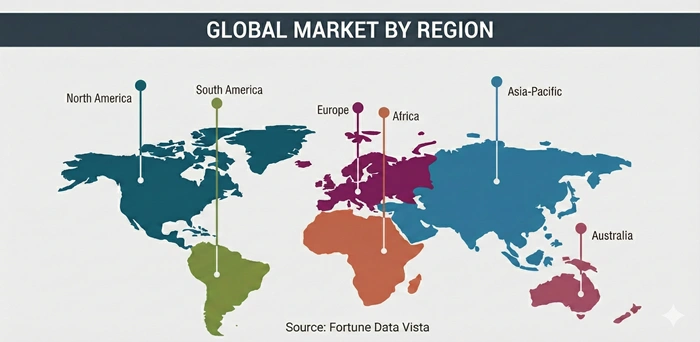
North America leads the aesthetic medicine market, accounting for approximately 38.6% of global revenue in 2025, with a regional CAGR of approximately 11.4% projected through 2033. The United States drives the overwhelming majority of regional revenue — with Americans spending more per capita on aesthetic treatments than any other national population globally, and the U.S. medspa channel having grown to encompass over 10,000 establishments that collectively deliver the majority of national non-invasive aesthetic treatment volumes. The home market concentration of the world's leading aesthetic companies — AbbVie (Allergan Aesthetics), Revance Therapeutics, Evolus, Sientra, InVivo Therapeutics, Cutera, Cynosure, and Zeltiq (a Coolsculpting company) — creates a powerful commercial ecosystem of product innovation, practitioner training investment, and direct-to-consumer marketing that continuously drives both new patient acquisition and treatment frequency growth among existing patients. Canada contributes meaningful regional revenue through its established medspa market, high consumer spending on injectables and energy device treatments, and a practitioner training culture closely aligned with U.S. protocols and product preferences.
North America is also the leading market for the emerging technologies that will define the next commercial frontier of the aesthetic medicine market — including exosome and stem cell aesthetic treatments, AI-powered treatment planning platforms, connected energy device systems, and FDA-regulated prescription skincare technologies that are being developed and commercially validated in the U.S. market before global rollout. The FDA's strong framework for combination product and device approval — while creating compliance costs — also creates commercial advantages for companies that successfully complete the approval pathway, as FDA clearance establishes clinical credibility that supports premium pricing and international regulatory submissions. North America's market leadership is expected to be sustained through 2033 — driven by continued medspa channel expansion, strong injectable treatment repeat rates, growing male patient participation, and the continued commercial innovation leadership of its domestic aesthetic medicine company ecosystem.
Asia Pacific
Asia Pacific's extraordinary pace of middle-class expansion, the globally influential K-beauty and aesthetic surgery culture emanating from South Korea, rapidly growing Chinese and Indian consumer investment in appearance enhancement, and the region's unique aesthetic preferences driving demand for specialized procedures and products are establishing Asia Pacific as the most commercially dynamic and fastest-growing region in the global aesthetic medicine market
Asia Pacific is the fastest-growing region in the aesthetic medicine market, expected to grow at a regional CAGR of approximately 13.6% through 2033, driven by a convergence of rising disposable incomes, social media influence, evolving beauty standards, and rapidly expanding aesthetic treatment infrastructure across the region's most commercially significant markets. South Korea is the most globally influential aesthetic market in Asia Pacific — generating a K-beauty culture that has normalized surgical and non-invasive cosmetic enhancement to a degree matched by virtually no other national culture, driving both domestic treatment volumes and a massive inbound medical tourism industry that attracts patients from China, Japan, Southeast Asia, and increasingly from Western markets. China represents the largest individual country growth opportunity in the region — with an urban middle-class population of hundreds of millions of consumers rapidly increasing their personal appearance investment, a government healthcare policy environment progressively opening to aesthetic treatment innovation, and domestic companies including Bloomage Biotech and Fosun International developing competitive injectable and device product portfolios that are gaining market share in the world's fastest-growing aesthetic consumer market. Key companies competing in Asia Pacific's aesthetic medicine market include AbbVie, Galderma, Hugel, Medytox, Bloomage Biotech, Merz Aesthetics, Cynosure, and regional medspa chains that are actively expanding their treatment networks across China, South Korea, India, Thailand, and Southeast Asia.
India represents the single fastest-growing national market within Asia Pacific — with the Indian aesthetic medicine market expanding at a CAGR exceeding 15% through 2033 as rising disposable incomes among the country's rapidly expanding professional urban middle class, growing social media-driven awareness, and increasing availability of international brand treatments through expanding clinic and medspa networks collectively drive aesthetic treatment adoption at rates unmatched globally. Japan contributes high-value mature market revenue — with Japanese consumers among the highest per-capita spenders on non-surgical skincare and aesthetic treatments in the region, showing particular preference for skin quality improvement treatments including fractional laser, chemical peels, and brightening injectable procedures. Australia contributes meaningful revenue through its developed aesthetic dermatology and plastic surgery ecosystem, high consumer spending on cosmetic treatments, and strong cultural alignment with Western aesthetic trends that drives adoption of leading international injectable and device brands within its well-regulated aesthetic medicine market.
Report Customization Available
Get a Fully Customized Aesthetic Medicine Market Report for Your Target Region or Country
Our aesthetic medicine market report is available with complete region-specific and country-level customization designed to meet your precise commercial intelligence and strategic planning requirements. Each customized report delivers in-depth market sizing, procedure segment demand analysis, product category growth profiling, end-user channel landscape review, regulatory and practitioner qualification environment assessment, competitive landscape profiling of regional and global aesthetic companies, and growth opportunity mapping — all calibrated to the specific commercial dynamics, cultural beauty standards, healthcare regulatory framework, and competitive structure of your chosen geography.
Customized aesthetic medicine market reports are available for the following regions and countries:
North America
-
United States – Detailed FDA regulatory framework for injectable and energy device approvals, medspa channel competitive landscape, leading vendor positions including AbbVie, Revance, Evolus, Cynosure, and Cutera, male aesthetic market growth analysis, membership-based aesthetic practice economics, and consumer demographic trends driving treatment volume growth
-
Canada – Health Canada product approval dynamics, Canadian medspa market development, provincial healthcare and aesthetic service regulatory framework, consumer spending on injectables and energy devices, and domestic versus international brand competitive dynamics
-
Mexico – COFEPRIS regulatory environment, Mexican aesthetic surgery medical tourism destination competitiveness, domestic market treatment adoption trends, international brand penetration, and emerging medspa channel development
Europe
-
United Kingdom – UK aesthetic regulation post-2022 non-surgical cosmetic treatment legislation, MHRA product approval framework, British aesthetic market consumer trends, domestic medspa expansion, and leading vendors including Allergan, Galderma, and Merz Aesthetics commercial positions
-
Germany – BfArM regulatory framework for aesthetic injectables and devices, German clinical aesthetic market dynamics, hospital and aesthetic clinic treatment volumes, domestic premium skincare and aesthetic technology industry, and German consumer aesthetic spending trends
-
France – ANSM regulatory environment, French consumer cultural preferences in aesthetic medicine, leading luxury aesthetic brand positioning, medical spa market development, and pharmaceutical aesthetic innovation investment from French companies
-
Italy – AIFA regulatory framework, Italian aesthetic medicine cultural adoption patterns, Milan and Rome luxury aesthetic clinic market, domestic medical device and injectable supplier landscape, and international brand market penetration strategies
-
Rest of Europe – Coverage of Spain, Netherlands, Sweden, Switzerland, and Poland regarding aesthetic treatment market development, regulatory environment, consumer spending trends, medspa channel growth, and international versus domestic brand competitive dynamics
Asia Pacific
-
China – NMPA injectable and device regulatory framework, domestic company competitive landscape including Bloomage Biotech and Fosun International, state healthcare policy toward aesthetic medicine, social media-driven consumer demand, and international brand localization strategies
-
India – CDSCO regulatory environment, India's fastest-growing aesthetic market consumer dynamics, urban middle-class aesthetic spending growth, domestic brand emergence, and international company market entry and expansion strategies
-
Japan – PMDA regulatory framework, Japanese consumer aesthetic preferences, skin quality treatment dominance, domestic aesthetic dermatology and clinic market structure, and international brand market access and distribution strategies
-
South Korea – MFDS regulatory environment, K-beauty cultural influence on global aesthetic trends, domestic aesthetic surgery and non-invasive treatment market leadership, medical tourism ecosystem competitive analysis, and domestic injectable and device manufacturer competitive positions
-
Australia – TGA regulatory framework, Australian consumer aesthetic spending patterns, domestic dermatology and plastic surgery aesthetic market structure, international brand market penetration, and medspa channel development
-
Rest of Asia Pacific – Coverage of Thailand, Singapore, Indonesia, Malaysia, and Vietnam regarding medical tourism in aesthetic surgery, growing domestic aesthetic treatment markets, social media-driven demand, and international brand expansion strategies
Latin America
-
Brazil – ANVISA regulatory framework, Brazilian aesthetic surgery market global leadership position, domestic plastic surgery training excellence, medical tourism competitiveness, and growing non-invasive aesthetic treatment adoption among Brazil's urban middle class
-
Argentina – ANMAT regulatory environment, Argentine aesthetic medicine market dynamics, economic environment impact on consumer aesthetic spending, domestic practitioner community, and international brand market access
-
Rest of Latin America – Coverage of Colombia, Chile, and Mexico regarding aesthetic surgery medical tourism, growing non-invasive treatment adoption, regulatory frameworks, and international company commercial expansion strategies
Middle East & Africa
-
UAE – MOH regulatory framework, Dubai and Abu Dhabi luxury aesthetic medicine market leadership, medical tourism in aesthetic procedures, high per-capita aesthetic spending among UAE nationals and expatriates, and international brand commercial presence in GCC aesthetic markets
-
Saudi Arabia – SFDA regulatory environment, Vision 2030 healthcare and wellness investment impact, growing female aesthetic treatment adoption, cultural dynamics shaping procedure preferences, and international company market access and commercial partnership strategies
-
Rest of MEA – Coverage of Kuwait, Qatar, Turkey, South Africa, and Egypt regarding aesthetic medicine market development, cultural acceptance dynamics, medical tourism roles, international brand penetration, and domestic aesthetic clinic market growth trajectories
Top Key Players
-
AbbVie Inc. (Allergan Aesthetics) (United States)
-
Galderma S.A. (Switzerland)
-
Merz Aesthetics (Germany)
-
Revance Therapeutics, Inc. (United States)
-
Evolus, Inc. (United States)
-
Cynosure (a Hologic company) (United States)
-
Cutera, Inc. (United States)
-
InMode Ltd. (Israel)
-
Sientra, Inc. (United States)
-
Bausch Health Companies Inc. (Canada)
-
Lumenis Ltd. (Israel)
-
Hugel, Inc. (South Korea)
-
Bloomage Biotech Co., Ltd. (China)
-
Fosun International Ltd. (China)
-
Candela Medical (United States)
Recent Developments
-
In January 2025, AbbVie Inc. (Allergan Aesthetics) announced the U.S. commercial launch of Botox Cosmetic's new Masseter Reduction indication — expanding the approved cosmetic use of botulinum toxin to jawline contouring and facial slimming applications that have been among the most popular off-label aesthetic injection procedures globally. The expanded indication formalized a major treatment category within the U.S. aesthetic medicine market, supporting practitioner training investment and branded consumer education campaigns that AbbVie estimated would access an additional several-million patient treatment opportunity annually across the U.S. aesthetic injectable market.
-
In September 2024, Galderma S.A. completed its initial public offering on the SIX Swiss Exchange — raising approximately CHF 2.3 billion in Europe's largest healthcare IPO of 2024 — providing the company with capital to accelerate its injectable product pipeline innovation, expand its Restylane and Sculptra biostimulator portfolio globally, and invest in digital patient engagement and practice management technology platforms that support its aesthetic practitioner network globally. The IPO reinforced Galderma's position as the world's second-largest pure-play aesthetic medicine company and demonstrated strong institutional investor confidence in the aesthetic medicine market's long-term commercial growth trajectory.
-
In March 2025, InMode Ltd. received FDA 510(k) clearance for its Morpheus8 Body RF microneedling platform's expanded body application indications — broadening the platform's approved treatment areas to include inner arms, inner thighs, and abdomen for subdermal adipose tissue remodeling and skin contraction. The clearance expanded InMode's commercial opportunity in the body contouring and skin tightening segment of the aesthetic medicine market, where demand for non-surgical alternatives delivering meaningful body sculpting outcomes is growing at above-market rates among both new and existing aesthetic treatment consumers.
-
In November 2024, Revance Therapeutics, Inc. announced positive Phase 3 clinical trial results for its RHA Collection of dynamic hyaluronic acid fillers in the lip augmentation indication — demonstrating superior natural-appearing results in dynamic movement compared to conventional cross-linked hyaluronic acid fillers, and supporting a supplemental BLA submission to FDA for label expansion. The results reinforced Revance's differentiated product positioning within the competitive dermal filler market and supported its commercial strategy of building a comprehensive portfolio of next-generation injectable products competing with established Allergan and Galderma offerings across the full range of facial aesthetic treatment applications.
-
In April 2025, Cynosure (a Hologic company) launched its PicoSure Pro Elite platform — a next-generation picosecond laser system featuring enhanced power output, a broader wavelength range, and an expanded treatment indication menu covering tattoo removal, pigmented lesion treatment, skin revitalization, and acne scar improvement. The platform launch reinforced Cynosure's leadership position in the energy-based aesthetic device segment and directly targeted the growing demand among aesthetic clinics and medspas for versatile, high-performance laser platforms capable of addressing multiple patient treatment needs across both skin quality improvement and lesion removal applications within the aesthetic medicine market.
Market Trends
The convergence of regenerative aesthetics — driven by exosome therapies, PRP collagen biostimulation, and next-generation filler innovations — with personalized AI treatment planning and the explosive growth of male and younger-demographic patient segments are defining the most commercially transformative trends reshaping the aesthetic medicine market's product innovation, consumer engagement, and treatment delivery landscapes through 2033
The most commercially significant technology trend reshaping the aesthetic medicine market is the rise of regenerative aesthetics — a category of treatments that work with the body's natural biological processes to restore tissue quality, stimulate collagen production, and reverse the cellular aging process rather than simply adding volume or temporarily paralyzing muscles. Platelet-rich plasma (PRP) treatments, exosome-based skin rejuvenation protocols, polydioxanone (PDO) thread lifting, and biostimulating injectables including Sculptra and Radiesse represent the current commercial frontier of regenerative aesthetic medicine — delivering longer-lasting, more natural-appearing outcomes than traditional fillers and neuromodulators by fundamentally improving tissue quality rather than masking aging signs. The emerging category of exosome aesthetic treatments — where extracellular vesicles derived from mesenchymal stem cells are applied topically or injected to stimulate skin cell renewal and collagen synthesis — is attracting significant research investment and early commercial adoption, particularly in South Korea, Japan, and the United States where clinical evidence programs are most advanced. As the scientific evidence base for regenerative aesthetic treatments strengthens and clinical protocols become standardized, this category will grow into a major commercial segment of the aesthetic medicine market through 2033, commanding premium price points and driving significant new practitioner investment in advanced treatment capabilities.
The personalization revolution — enabled by AI diagnostic tools, genetic skin analysis, connected treatment tracking platforms, and patient outcome data analytics — represents the second defining trend transforming how aesthetic medicine is delivered and experienced by patients. Leading aesthetic medicine practices are progressively moving from standardized treatment protocols applied uniformly across patient populations to individualized treatment programs built on comprehensive skin analysis, patient anatomy assessment, lifestyle factor review, and treatment history data — delivering outcomes that are more consistently aligned with individual patient goals and generating the patient satisfaction that drives long-term retention and referral. This personalization capability is simultaneously becoming a key competitive differentiator between premium aesthetic practices that invest in AI-enabled tools and data-driven treatment personalization, and commodity-service operators that compete primarily on price and location convenience. The growing availability of consumer-grade facial analysis AI through smartphone apps is also creating a new patient education and pre-consultation engagement pathway — enabling prospective aesthetic patients to explore treatment options, visualize potential outcomes, and identify specific aesthetic concerns before their first clinic visit, reducing the consultation-to-treatment conversion timeline and lowering practitioner education burden in the aesthetic medicine market.
Segments Covered in the Report
-
By Procedure Type
-
Invasive Procedures
-
Breast Augmentation
-
Liposuction
-
Rhinoplasty (Nose Reshaping)
-
Eyelid Surgery (Blepharoplasty)
-
Abdominoplasty (Tummy Tuck)
-
Facelift (Rhytidectomy)
-
Others (Brow Lift, Ear Surgery, Chin Augmentation)
-
-
Non-Invasive Procedures
-
Botulinum Toxin Injections
-
Dermal Fillers (Hyaluronic Acid, Biostimulators)
-
Chemical Peels
-
Laser Hair Removal
-
Microdermabrasion
-
HIFU and Radiofrequency Treatments
-
CoolSculpting / Cryolipolysis
-
Others (PRP, Exosome Treatments, Microneedling)
-
-
-
By Product Type
-
Energy-Based Devices (Laser, RF, HIFU, HIFEM, IPL)
-
Injectables
-
Botulinum Toxin (Neuromodulators)
-
Dermal Fillers
-
Biostimulators
-
-
Implants (Breast, Chin, Cheek)
-
Skincare and Topical Products (Medical-Grade Skincare, Chemical Peel Solutions)
-
-
By End User
-
Hospitals
-
Aesthetic Clinics and Dermatology Centers
-
Medspas
-
Dental Clinics
-
Home Care Settings
-
-
Frequently Asked Questions:
Answer: The global aesthetic medicine market was valued at USD 96.98 billion in 2025 and is projected to reach approximately USD 235.78 billion by 2033, growing at a CAGR of 11.8% from 2026 to 2033. This strong growth is powered by the social media-driven normalization of cosmetic procedures, the rapid expansion of medspas and accessible treatment channels, injectable innovation, and rising participation from younger and male consumer demographics globally.
Answer: Non-invasive procedures dominate the aesthetic medicine market, accounting for approximately 52.3% of global revenue in 2025, led by botulinum toxin injections and hyaluronic acid dermal fillers as the most widely performed aesthetic treatments globally. Energy-based devices are the fastest-growing product type at a CAGR exceeding 14.6% through 2033, as platforms including HIFU, radiofrequency, and HIFEM body contouring deliver surgery-competitive outcomes without recovery time — attracting a rapidly growing patient base seeking non-invasive alternatives to surgical procedures.
Answer: The medspa channel is transforming the aesthetic medicine market by democratizing treatment access — combining clinical credibility with an accessible consumer wellness experience at price points that attract patient demographics previously excluded by the cost and formality of traditional plastic surgery or dermatology specialty settings. The U.S. medspa industry has grown to over 10,000 establishments, and the channel is expanding rapidly across Europe and Asia Pacific, with franchise and membership-based chains including Ideal Image, Ever/Body, and SkinSpirit driving standardized quality and scale that are progressively capturing aesthetic treatment market share from traditional clinical channels.
Answer: North America leads the aesthetic medicine market with approximately 38.6% of global revenue share in 2025, underpinned by the world's highest per-capita aesthetic treatment spending, the most developed medspa and injectable treatment ecosystem, and the home market concentration of AbbVie, Revance, Galderma, and other leading aesthetic companies. Asia Pacific is the fastest-growing region at a projected CAGR of approximately 13.6% through 2033, driven by South Korea's globally influential K-beauty culture, China's rapidly growing urban middle-class aesthetic investment, and India emerging as the fastest-growing individual country market within the global aesthetic medicine market.
Answer: Regenerative medicine is emerging as one of the most commercially exciting and clinically differentiated frontiers within the aesthetic medicine market — with biostimulating injectables like Sculptra and Radiesse, PRP treatments, exosome-based protocols, and PDO thread lifting delivering longer-lasting, more natural-appearing outcomes by stimulating the body's own collagen and tissue regeneration processes. As clinical evidence for exosome and advanced biostimulator treatments strengthens and treatment protocols become standardized, the regenerative aesthetics category is expected to grow into a major premium segment of the aesthetic medicine market through 2033 — attracting significant new product investment from leading injectable companies and creating high-value commercial opportunities for specialized regenerative aesthetic technology providers.