
Agricultural Films Market Overview
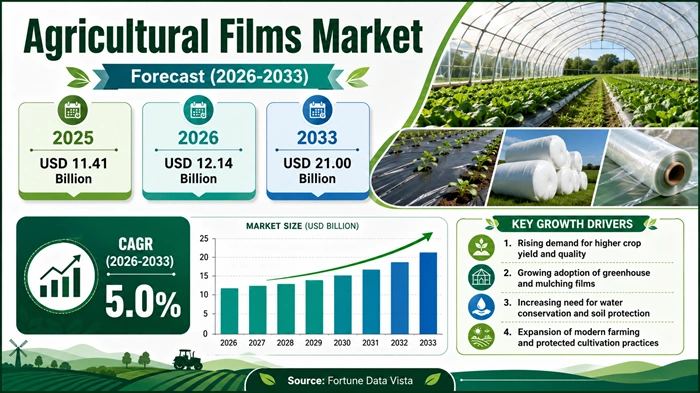
The global agricultural films market size is valued at USD 11.41 billion in 2025 and is predicted to increase from USD 12.14 billion in 2026 to approximately USD 21.00 billion by 2033, growing at a CAGR of 5.0% from 2026 to 2033.
This steady and durable growth reflects the essential role that plastic and biodegradable films play in modern farming — helping growers protect crops, conserve soil moisture, suppress weeds, extend growing seasons, and improve yield productivity across a wide range of crops and climate conditions. As food security concerns intensify globally and agricultural land productivity becomes increasingly critical, the demand for soil mulching films, greenhouse covers, and silage protection solutions is expanding across both established agricultural markets and rapidly developing farming economies.
AI Impact on the Agricultural Films Industry
Artificial Intelligence Is Enabling Precision Farming Applications, Smart Film Performance Monitoring, AI-Optimized Biodegradable Polymer Formulation, and Automated Greenhouse Climate Management That Are Transforming How Agricultural Films Are Used and Developed Globally*
Artificial intelligence is beginning to influence both the development and the field application of agricultural films in ways that are improving crop outcomes and reducing input waste. On the manufacturing side, AI-powered material science platforms are accelerating the formulation of next-generation biodegradable agricultural film compounds — analyzing vast combinatorial spaces of polymer blend compositions, plasticizer concentrations, and compatibilizer combinations to identify formulations that achieve the right balance of mechanical strength, UV degradation timeline, and soil biodegradation rate for specific crop and climate applications. Companies including BASF, Novamont, and Corbion are leveraging computational polymer design tools to compress the development timeline for new biodegradable mulch film grades from years to months — enabling faster regulatory approval and faster market introduction of films that meet tightening agricultural plastic waste regulations in Europe and increasingly in Asia.
In the field, AI-powered precision agriculture platforms are transforming how greenhouse films and mulch films are used in practice — integrating sensor networks, drone imagery, and machine learning-based crop health monitoring systems that give farm managers real-time visibility into soil temperature, moisture levels, and crop growth status beneath and within film-covered growing environments. AI-enabled irrigation management systems that interface with mulch film-covered drip irrigation systems are optimizing water application timing and volume based on real-time soil moisture sensor data and weather forecasts — maximizing the water conservation benefit of mulch films while minimizing irrigation over-application. In greenhouse cultivation, AI-based climate control systems that manage ventilation, heating, and shading in film-covered greenhouse structures are improving the precision of temperature and humidity management — directly improving crop yield quality and consistency for vegetable, flower, and fruit growers using polyethylene and EVA greenhouse films as their primary protected cultivation infrastructure.
Growth Factors
Global Food Security Pressures, Climate Stress on Agricultural Productivity, Expanding Protected Cultivation Adoption, Growing Biodegradable Film Regulatory Requirements, and Increasing Smallholder Farmer Awareness Are the Key Structural Drivers of the Agricultural Films Market*
The most fundamental driver of the agricultural films market is the growing global demand for food — which is pushing farmers to intensify productivity per unit of agricultural land as the world's population approaches 10 billion while arable land availability remains constrained. Mulch films, greenhouse covers, and row covers directly address the core productivity challenge facing modern farmers by improving soil moisture retention, suppressing competitive weed growth, moderating soil temperature for optimal root development, and extending the effective growing season in temperate and cooler climates — enabling farmers to produce more food per hectare with less water, less labor, and more consistent quality than open-field cultivation without plastic films. The FAO's data consistently demonstrates that the use of plastic mulch films in vegetable production increases yields by 20–50% compared to unmulched cultivation in many crops and climates — a yield improvement that translates directly into farmer income and regional food supply, creating a compelling economic incentive for continued and expanding agricultural film adoption globally.
Climate change is increasingly becoming a direct growth driver for the agricultural films market — as shifting rainfall patterns, more frequent drought events, rising temperature extremes, and earlier or later frost dates are increasing the value of tools that give farmers more control over the growing environment. Mulch films help buffer soil from temperature extremes and reduce evaporative water loss during drought periods — making them particularly valuable as water scarcity worsens in Mediterranean Europe, the Middle East, South Asia, and parts of East Asia. Greenhouse films allow farmers to extend growing seasons in regions where climate warming is shortening ideal outdoor growing windows, and to create stable production environments in areas experiencing more erratic weather patterns. The growing adoption of protected cultivation — using plastic greenhouse and tunnel structures — in China, Spain, the Netherlands, India, and Morocco is expanding the addressable market for the agricultural films market's greenhouse film segment, as farmers in these regions invest in the infrastructure needed to maintain stable, high-quality crop production in the face of climate variability.
Market Outlook
Asia Pacific's Dominant Agricultural Film Usage, Europe's Biodegradable Film Regulation Driving Material Innovation, and North America's Expanding Protected Cultivation Market Are the Three Regional Dynamics Shaping the Agricultural Films Market Through 2033*
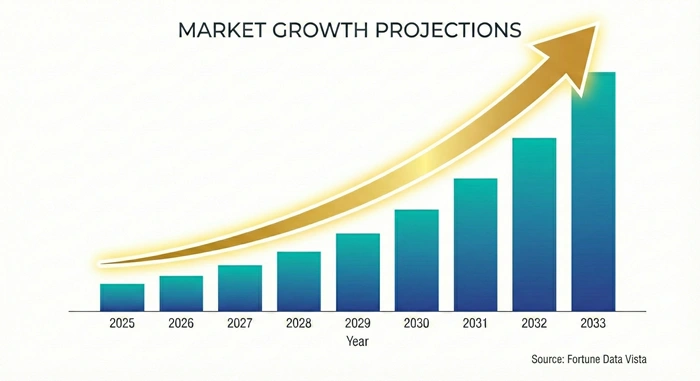
The long-term outlook for the agricultural films market is positive and structurally underpinned by the irreversible global intensification of agriculture — where more food needs to be produced on less land with less water, and where plastic films remain among the most cost-effective and practically proven tools available to farmers for yield improvement and input efficiency. Asia Pacific is the dominant regional market, accounting for approximately 47.6% of global revenue in 2025, anchored by China's enormous vegetable production sector that uses mulch films on an estimated 20 million hectares — the single largest national application of agricultural plastic films in the world — and by rapidly expanding greenhouse and protected cultivation in India, South Korea, and Japan that is driving growing demand for greenhouse film products. China's domestic agricultural film industry is supported by major players including Tiandijian, Xinjiang Tianye, and Well Plastics, while international companies including BASF, Dow Chemical, and Berry Global maintain growing presence across the Asia Pacific region's agricultural film supply chains.
Europe represents the most technically innovative and regulatory-active region in the agricultural films market — where the EU's Plastics Strategy and Farm to Fork initiative are creating the most demanding regulatory environment for agricultural plastic waste management of any global region. EU regulations are pushing member states to mandate the use of biodegradable mulch films in specific applications — particularly for soil-incorporated mulch films where collection before plowing is impractical — creating a powerful demand pull for biodegradable film solutions based on PLA, PBAT, and PBS materials that can replace conventional LDPE mulch films without requiring field collection. Spain, Italy, and France are the largest European agricultural film consuming nations — each with substantial greenhouse and tunnel cultivation sectors in addition to extensive open-field mulch film use — and European film producers including Armando Álvarez Group, Trioplast, and RKW Group are investing heavily in biodegradable and compostable film technologies to serve the regulatory-driven demand transition in their home markets. North America is the third major regional market, where the growth of specialty crop production, cannabis cultivation, berry farming, and precision vegetable growing is generating expanding demand for premium mulch film, fumigation film, and greenhouse film products from U.S. and Canadian commercial farm operations.
Expert Speaks
-
"BASF's commitment to the agricultural films market is driven by our belief that the transition to biodegradable and compostable mulch film solutions represents one of the most important sustainability transitions in modern agriculture — and that BASF's ecovio biopolymer platform is uniquely positioned to lead this transition by providing farmers with biodegradable films that deliver the same agronomic performance as conventional PE mulch while eliminating the plastic waste challenge that conventional films create. We are seeing accelerating demand for biodegradable agricultural film solutions from across Europe, Asia, and North America as regulations tighten and farmer awareness of plastic waste management responsibilities grows — and we are investing in continued material innovation, production capacity expansion, and farmer education to ensure that BASF is the supplier of choice for the growing global market for sustainable agricultural film solutions." — Markus Kamieth, CEO, BASF SE
-
"Dow's agricultural films business reflects our broader commitment to supporting the global food system with the highest-performing polyethylene materials available for mulch film, greenhouse film, and silage film applications — delivering the yield-enhancing, crop-protecting performance that farmers depend on to maintain their productivity and profitability in an increasingly challenging agricultural environment. The agricultural films market is growing consistently across emerging economies as smallholder farmers in Asia and Africa adopt plastic film cultivation techniques that larger commercial farmers in North America and Europe have relied on for decades — and Dow's global polyethylene supply network and technical agronomic support capabilities position us well to serve this expanding global customer base. We are simultaneously investing in recyclable and circular economy film solutions for the developed markets where end-of-life film management is becoming a regulatory and commercial priority." — Jim Fitterling, Executive Chairman, Dow Inc.
-
"Berry Global's agricultural packaging and film business serves farmers across the full spectrum of protective cultivation applications — from polyethylene mulch and greenhouse films for high-value vegetable and fruit production to silage stretch films for forage preservation in the livestock sector. The agricultural films market continues to grow as food production intensity increases globally, and Berry is responding by expanding our product range in both standard and specialty film applications — including UV-stabilized films for high-light environments, anti-drip films for greenhouse condensation management, and biodegradable alternatives for markets where regulatory requirements mandate their use. Our manufacturing footprint across North America, Europe, and Asia positions Berry Global to serve agricultural film customers in every major growing region with the responsive supply and technical service they need to maintain their production operations." — **Kevin Kwilinski, CEO, Berry Global Group Inc.*
Key Report Takeaways
-
Asia Pacific dominates the global agricultural films market with approximately 47.6% of global revenue in 2025, driven by China's world-leading mulch film usage across an estimated 20 million hectares of vegetable cultivation, the rapidly expanding greenhouse and tunnel film adoption in India and South Korea, and Japan's technologically advanced protected horticulture sector — with regional leaders including Tiandijian, Xinjiang Tianye, Well Plastics, and Dow Chemical serving the region's enormous and diverse agricultural film demand base.
-
Asia Pacific is also the fastest-growing regional market in the agricultural films market, projected to expand at a CAGR of approximately 5.6% from 2026 to 2033, as India's rapidly expanding commercial vegetable and fruit production sector adopts plastic mulch and greenhouse film technologies, Southeast Asian food export markets intensify productivity through protected cultivation investment, and China's agricultural modernization programs continue to drive advanced film technology adoption across the country's regional farming sectors.
-
Mulch films are the dominant product type in the agricultural films market, accounting for approximately 51.3% of global revenue in 2025, as they are used on the largest total planted area globally — suppressing weeds, conserving moisture, moderating soil temperature, and improving crop yield quality in vegetable, fruit, grain, and specialty crop production across all major agricultural regions from China and India to Spain, the United States, and Mexico.
-
Vegetable and fruit crop applications contribute the most to the agricultural films market, generating approximately 58.2% of global application revenue in 2025, as high-value fruit and vegetable crops represent the most economically justified application for premium plastic film investment — where the yield improvement, quality enhancement, and labor savings from mulch film and greenhouse film adoption generate a favorable and measurable return on film investment for commercial and smallholder vegetable and fruit growers globally.
-
Biodegradable agricultural films are the fastest-growing material segment, expected to expand at a CAGR of approximately 9.3% from 2026 to 2033, driven by EU mandatory biodegradable mulch film regulations, growing government incentive programs for sustainable agriculture in North America and Asia, and improving cost competitiveness of PBAT and PLA-based biodegradable films as production scale increases and biopolymer feedstock costs decrease — positioning biodegradable films to capture a progressively larger share of the global mulch film market through the forecast period.
Market Scope
| Parameter | Details |
|---|---|
| Market Size by 2033 | USD 21.00 Billion | Market Size by 2026 | USD 12.14 Billion | Market Size by 2025 | USD 11.41 Billion | Market Growth Rate from 2026 to 2033 | CAGR of 5.0% | Dominating Region | Asia Pacific | Fastest Growing Region | North America | Segments Covered | By Film Type, By Crop Type, By Material, By Application, By End User | Regions Covered | North America, Europe, Asia Pacific, Latin America, Middle East & Africa |
Market Dynamics
Drivers Impact Analysis
Global Food Demand Growth, Climate Stress on Agricultural Productivity, Expanding Protected Cultivation, Emerging Market Adoption, and Water Scarcity Driving Moisture Conservation Are the Five Core Demand Drivers Sustaining the Agricultural Films Market*
| Driver | ≈ % Impact on CAGR Forecast | Geographic Relevance | Impact Timeline |
|---|---|---|---|
| Rising global food demand requiring intensified per-hectare productivity | ~30% | Global | Short to Long Term |
| Climate change increasing value of soil moisture and temperature management | ~25% | Asia Pacific, Mediterranean Europe, MEA | Short to Long Term |
| Expanding greenhouse and protected cultivation infrastructure investment | ~22% | Asia Pacific, Europe, North America | Short to Long Term |
| Emerging market smallholder adoption of mulch film cultivation techniques | ~16% | Asia Pacific, Latin America, MEA | Short to Medium Term |
| Water scarcity driving adoption of moisture-conserving mulch film systems | ~7% | Middle East, South Asia, Mediterranean | Short to Long Term |
The global demand for food is the most fundamental and enduring demand driver in the agricultural films market — as the world's growing population and rising living standards in emerging economies demand more food per unit of agricultural land than traditional cultivation methods can consistently deliver. In staple vegetable, fruit, and specialty crop production across China, India, Southeast Asia, Mediterranean Europe, and Latin America, plastic mulch films are among the most widely adopted and economically proven yield-enhancement tools available to farmers — delivering reliable yield improvements of 20–50% in vegetable production, significant water savings through reduced soil evaporation, and meaningful labor reductions through effective weed suppression. This direct agronomic and economic value of agricultural films means that growing food demand translates reliably and predictably into growing agricultural film demand — as more farmers adopt film-based cultivation to improve their productivity, and as existing film users expand their cultivated area with film-assisted techniques. The agricultural films market's growth is therefore closely correlated with the long-term structural trend of global agricultural intensification that is expected to continue for decades as the global food system adapts to feeding a larger and more affluent world population.
The expansion of protected cultivation — encompassing plastic greenhouse structures, low tunnels, high tunnels, and shade nets — is the second major structural driver that is generating growing demand in the agricultural films market, particularly in the greenhouse film segment. Protected cultivation allows farmers to grow high-value vegetables, fruits, and flowers in climate-controlled or modified environments that extend the growing season, improve quality consistency, protect crops from pest pressure and extreme weather events, and enable production of premium crops in regions where open-field conditions are not suitable. The global installed base of agricultural greenhouse structures — dominated by polyethylene-covered greenhouses in China, Spain, the Netherlands, Turkey, and Morocco — is expanding consistently year over year, driven by growing commercial farm investment in protected horticulture and by rising demand for out-of-season and premium-quality fresh produce in supermarket supply chains globally. Each new hectare of greenhouse or tunnel structure added to the global agricultural inventory requires an ongoing supply of greenhouse film replacement material — as greenhouse films require replacement every two to five years depending on UV stabilization quality — creating a large and growing recurring demand stream within the agricultural films market.
Restraints Impact Analysis
Agricultural Plastic Waste Management Challenges, Regulatory Pressure on Single-Use Agricultural Films, High Cost of Biodegradable Alternatives, and Smallholder Affordability Constraints Are the Primary Barriers Facing the Agricultural Films Market*
| Restraint | ≈ % Impact on CAGR Forecast | Geographic Relevance | Impact Timeline |
|---|---|---|---|
| Agricultural plastic waste management and collection infrastructure deficit | ~36% | Asia Pacific, Latin America, MEA | Short to Long Term |
| Tightening EU and national regulations on single-use agricultural plastic films | ~27% | Europe, increasingly global | Short to Long Term |
| High cost premium of biodegradable films compared to conventional PE films | ~23% | Emerging markets, cost-sensitive farmers | Short to Long Term |
| Limited smallholder farmer access to credit and agricultural inputs | ~14% | South Asia, Africa, Southeast Asia | Short to Medium Term |
Agricultural plastic waste management is the most widely recognized environmental challenge facing the agricultural films market globally — and a growing regulatory and reputational constraint that is affecting both the adoption trajectory of conventional agricultural films and the investment dynamics of the market's key stakeholders. Conventional polyethylene mulch films are typically collected from fields after their seasonal use and either sent for recycling or, in many parts of the world, burned or buried in situ — creating significant plastic pollution of agricultural soils, water bodies, and rural environments in major film-using regions including China, India, Southeast Asia, and Latin America. China's agricultural soil research has documented microplastic accumulation in intensively mulch-film-cultivated soils at levels that are beginning to raise concerns about soil health and crop safety — creating regulatory pressure for improved film collection, enhanced recyclability, and accelerated transition to biodegradable film alternatives that are already being mandated in some European jurisdictions.
The cost premium of biodegradable agricultural films — which typically cost 30–80% more per unit area than equivalent conventional PE films — is a meaningful adoption barrier in cost-sensitive emerging markets where smallholder farmers operate on narrow margins and price-sensitive procurement decisions. Biodegradable PBAT and PLA-based mulch films require specialized manufacturing processes and more expensive bio-based feedstocks than petroleum-derived PE films — a cost structure that has historically limited their commercial competitiveness to premium applications in European markets where regulatory pressure or quality premium pricing can absorb the cost differential. While production scale increases and technology improvements are progressively reducing the biodegradable film cost premium — and government subsidy programs in countries including Italy, France, and China are helping offset the price difference for qualifying farmers — the cost gap remains a real restraint on the agricultural films market's transition toward sustainable materials in the majority of global growing regions.
Opportunities Impact Analysis
Biodegradable Film Regulatory Mandates Creating New Premium Market, Smart Agriculture Film Integration, Emerging Market Greenhouse Adoption, and Crop Protection Film Innovation Are Generating Major Growth Opportunities*
| Opportunity | ≈ % Impact on CAGR Forecast | Geographic Relevance | Impact Timeline |
|---|---|---|---|
| EU biodegradable film regulatory mandates creating large premium segment | ~34% | Europe, progressively global | Short to Long Term |
| Emerging market greenhouse infrastructure investment driving film demand | ~27% | Asia Pacific, Latin America, MEA | Short to Long Term |
| Smart and functional film development — UV-selective, anti-drip, reflective | ~23% | North America, Europe, Asia Pacific | Medium to Long Term |
| Africa and South Asia's untapped agricultural intensification potential | ~16% | Sub-Saharan Africa, South Asia | Medium to Long Term |
The European Union's progressive regulatory tightening around agricultural plastic waste management — including national regulations in Italy, France, Germany, and Spain that are mandating or incentivizing the transition to certified biodegradable mulch films in specific applications — is creating the world's largest and most commercially developed market for biodegradable agricultural films, and a regulatory template that is progressively being adopted in other major agricultural markets globally. For manufacturers including Novamont, BASF (ecovio), TotalEnergies Corbion, and NatureWorks who have invested in biodegradable agricultural film material development, the European regulatory environment represents a sustained, high-value market development opportunity that justifies continued material innovation and production scale investment — and early leadership positions in EU biodegradable agricultural films are expected to translate directly into competitive advantage in global markets as similar regulations are implemented beyond Europe. This regulatory opportunity is arguably the most strategically important near-term commercial development in the agricultural films market for companies positioned in the biodegradable material segment.
The vast untapped potential of agricultural film adoption in Sub-Saharan Africa and South Asia represents a major long-term structural growth opportunity for the agricultural films market — where low per-hectare film usage rates contrast sharply with the regions' substantial and growing need for agricultural productivity improvement. Africa's 600 million smallholder farmers and India's 120 million smallholder farming households represent an enormous potential market for basic mulch film and crop cover products that could significantly improve their yields and input efficiency — but are currently largely underserved due to inadequate agricultural input supply chains, limited farmer financing access, and insufficient technical extension services. Development organization programs, microfinance agricultural lending initiatives, and government agricultural productivity schemes in Kenya, Ethiopia, Nigeria, Bangladesh, and India are progressively improving smallholder farmers' access to plastic mulch film and greenhouse film inputs — creating a slowly but steadily developing demand base that will contribute meaningfully to the agricultural films market's long-term growth trajectory in these underserved regions.
Segment Analysis
By Film Type: Mulch Films
Mulch Films Are the Dominant and Highest-Volume Product in the Agricultural Films Market, Used on Hundreds of Millions of Hectares Globally to Suppress Weeds, Conserve Soil Moisture, and Improve Crop Yield Across All Major Agricultural Regions*
Mulch films hold the commanding position in the agricultural films market by film type, accounting for approximately 51.3% of global revenue in 2025 and growing at a CAGR of approximately 4.8% from 2026 to 2033. The market for plastic mulch films spans the full spectrum from basic black PE mulch for weed suppression in staple vegetable production to specialized UV-reflective silver films that repel aphids and insect vectors in high-value fruit crops, photo-selective colored films that modify light spectrum for root development optimization, and certified biodegradable films for soil-incorporated applications. Asia Pacific leads the mulch film segment with approximately 52.8% of global segment revenue in 2025 — anchored by China's massive mulch film usage across vegetables, cotton, and corn production — where government-supported programs have actively promoted plastic mulch film adoption across China's northern farming regions for decades, creating a vast and well-established mulch film consumption base that continues to grow as more crop types and regions adopt the technology. Key companies serving the Asia Pacific mulch film market include Tiandijian, Xinjiang Tianye, and Well Plastics in China alongside multinational suppliers including Dow, Berry Global, and BASF who supply both conventional and biodegradable mulch film materials to the region's growers.
Europe is the most dynamically innovative regional market for mulch films within the agricultural films market — where regulatory pressure for biodegradable alternatives is driving a material transition that is creating significant new product development and market share opportunity for companies with strong biodegradable film capabilities. Spain, Italy, and France — the three largest European mulch film consuming nations — all have active national regulatory programs or subsidies promoting biodegradable mulch film adoption in specific crop applications, and the European mulch film market is progressively transitioning from predominantly conventional LDPE films toward certified biodegradable PBAT and PLA-based alternatives that can be tilled directly into soil after crop harvest, eliminating the need for film collection. Companies including Novamont, Armando Álvarez, and Trioplast are leading this European mulch film sustainability transition — supplying certified biodegradable mulch films that comply with EN 17033 standards and are accepted by organic and conventional farming programs across the European Union's major agricultural markets.
By Material: Polyethylene (PE)
Polyethylene Remains the Dominant Material in the Agricultural Films Market, Offering the Most Cost-Effective and Functionally Versatile Platform for the Full Range of Mulch, Greenhouse, and Silage Film Applications Across All Global Agricultural Markets*
Polyethylene — encompassing LDPE, LLDPE, and HDPE grades — holds the dominant material position in the agricultural films market, contributing approximately 62.7% of global material revenue in 2025 and growing at a CAGR of approximately 4.5% from 2026 to 2033. Polyethylene's dominance in agricultural film applications is built on decades of proven field performance, manufacturing maturity, wide material availability, established recycling infrastructure, and the flexibility of PE formulation to deliver the specific performance characteristics — UV stabilization level, tensile strength, elongation, puncture resistance, and optical properties — required by each agricultural film application. LLDPE is the most widely used PE grade in mulch film and greenhouse film applications, valued for its superior tear resistance and elongation properties that allow films to be stretched and installed over irregular soil surfaces and greenhouse frame structures without tearing. North America is an important and growing market for high-performance LLDPE and LDPE agricultural films — where specialty crop producers including strawberry farmers in California and Florida, vegetable growers in the Southeast, and berry growers in the Pacific Northwest are significant consumers of premium UV-stabilized and functional mulch film products. Leading PE material suppliers including Dow, LyondellBasell, and Borealis supply the majority of the PE resin used in agricultural film manufacturing globally — and are investing in recyclable and mechanically enhanced PE grades that extend film service life and improve end-of-life recyclability.
Asia Pacific is the largest regional market for PE agricultural films, accounting for approximately 51.4% of global PE film segment revenue in 2025, as China and India remain overwhelmingly dependent on conventional LDPE and LLDPE films for their large-scale mulch and greenhouse film applications — where the cost efficiency, proven performance, and established supply chain of conventional PE films make them the default choice for the vast majority of commercial and smallholder farmers. In China, domestic PE agricultural film manufacturers including Tiandijian and Well Plastics produce at enormous scale — supplying the millions of tons of mulch film consumed annually in China's vegetable and field crop sectors — while multinational PE resin suppliers including Dow and LyondellBasell supply premium resin grades to higher-specification greenhouse and silage film applications in the region. The PE agricultural film segment is facing a gradual but accelerating competitive challenge from biodegradable alternatives in regulatory-active European markets — but in Asia, Latin America, North America, and the Middle East, polyethylene remains firmly dominant and is expected to retain its market leadership in the agricultural films market through the full 2026–2033 forecast period while biodegradable alternatives remain cost-prohibitive for the majority of price-sensitive global farming markets.
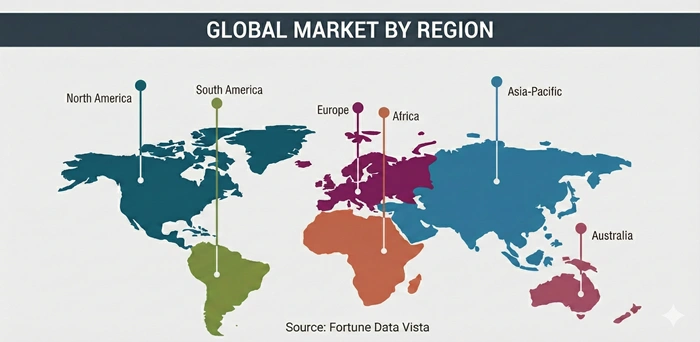
Regional Insights
Asia Pacific: The Global Leader in the Agricultural Films Market
Asia Pacific Dominates the Agricultural Films Market With the World's Largest Mulch Film Application Base, the Fastest-Growing Protected Cultivation Infrastructure, and Both the Highest Production and Consumption of Agricultural Films of Any Global Region*
Asia Pacific holds the commanding position in the global agricultural films market, accounting for approximately 47.6% of global revenue in 2025 and maintaining a strong CAGR of approximately 5.6% through 2033. China is by far the dominant individual country market — using plastic mulch films on an estimated 20 million hectares of vegetable, cotton, and field crop production — the largest national agricultural film application in the world — while simultaneously hosting the world's largest concentration of PE and biodegradable agricultural film manufacturing capacity. Key regional players including Tiandijian, Xinjiang Tianye, Well Plastics, and Jiangsu Sinopont Specialty Chemicals serve the enormous domestic demand base, while multinational firms including Dow, BASF, and Berry Global maintain growing commercial presence through their regional manufacturing and distribution operations.
India is the most dynamic emerging market contributor to Asia Pacific's agricultural films market growth — where the rapid commercial expansion of vegetable, fruit, and floriculture production under polyethylene mulch film and low-tunnel protection is driving double-digit growth in film demand in key horticultural states including Maharashtra, Karnataka, Gujarat, and Rajasthan. South Korea and Japan maintain advanced agricultural film markets with high per-hectare film technology intensity — where high-value greenhouse vegetable and flower production drives demand for premium multi-layer greenhouse films, UV-selective light-modifying films, and functional anti-drip covers — and where domestic manufacturers including SK Functional Polymer and Dainippon Ink and Chemicals serve sophisticated domestic agricultural film requirements. Southeast Asian agricultural film markets in Vietnam, Thailand, Indonesia, and the Philippines are at an earlier stage of film technology adoption but growing rapidly — as commercial vegetable and fruit export industries in these countries intensify production practices that increasingly rely on plastic mulch and crop protection film inputs.
Europe: A Key Innovation Hub for Sustainable Agricultural Films
Europe Is Driving the Global Transition to Biodegradable Agricultural Films Through Regulatory Mandates and Is the World's Most Technically Advanced and Sustainability-Focused Major Market for Agricultural Film Products*
Europe accounts for approximately 21.3% of global agricultural films market revenue in 2025 and is expected to grow at a CAGR of approximately 4.7% through 2033 — with above-average growth driven specifically by the regulatory-mandated biodegradable film transition that is creating a premium product mix shift in European agricultural film procurement. Spain is the single largest European market — where the Almería region alone hosts approximately 30000 hectares of plastic greenhouse structures representing the highest density of greenhouse cultivation in the world — followed by Italy's extensive southern vegetable and fruit growing regions, France's berry and vegetable production zones, and the Netherlands' world-leading high-tech greenhouse horticulture sector. Key European agricultural film companies including Armando Álvarez Group (Spain), Trioplast (Sweden), RKW Group (Germany), Novamont (Italy), and LINPAC Group (UK) collectively serve the majority of the European market for PE and biodegradable agricultural film products.
The European agricultural films market is unique globally in its progressive, regulation-driven transition from conventional PE mulch films to certified biodegradable alternatives — with the Italian MPS (Minimum Environmental Criteria) standards, French national organic farming regulations, and German agricultural sustainability guidelines all pushing commercial farmers toward biodegradable mulch film adoption in specific applications. This regulatory transition is creating a major commercial opportunity for companies including Novamont (Mater-Bi), BASF (ecovio), TotalEnergies Corbion (Luminy PLA), and NatureWorks (Ingeo PLA) who supply the biopolymer resins used in biodegradable agricultural film manufacturing — and for film processors who are investing in biodegradable film extrusion capacity to serve the growing European demand for certified compostable agricultural film products that comply with EN 17033 biodegradability standards.
Top Key Players
-
BASF SE (Germany)
-
Dow Inc. (United States)
-
Berry Global Group Inc. (United States)
-
Armando Álvarez Group (Spain)
-
Trioplast AB (Sweden)
-
RKW Group (Germany)
-
Novamont S.p.A. (Italy)
-
Tiandijian (China)
-
Xinjiang Tianye Group (China)
-
LyondellBasell Industries (Netherlands / United States)
-
Plastika Kritis S.A. (Greece)
-
Coveris Holdings S.A. (United Kingdom / Austria)
Recent Developments
-
In March 2026, BASF announced a significant expansion of its ecovio biodegradable polymer production capacity at its Ludwigshafen facility in Germany — increasing annual output of its PBAT-based biopolymer blend by 40% to meet rapidly growing demand from European agricultural film manufacturers transitioning to certified biodegradable mulch film products under new EU and national sustainability regulations, with BASF citing confirmed supply agreements with multiple major European agricultural film processors as the commercial basis for the capacity investment.
-
In January 2026, Berry Global completed the acquisition of a regional European agricultural film processor — strengthening Berry's presence in the Mediterranean agricultural film market, particularly in Spain and Italy where greenhouse and mulch film demand is growing, and adding specialized biodegradable film processing capability to Berry's European agricultural film portfolio that complements its existing conventional PE film manufacturing operations across the continent.
-
In November 2025, Novamont received official EU certification for its Mater-Bi next-generation biodegradable mulch film grade under the revised EN 17033 standard — a certification that qualifies the film for mandatory use in Italian and French government-subsidized agricultural programs promoting biodegradable mulch film adoption, and positions Novamont's Mater-Bi as the leading certified biodegradable mulch film material brand in the European agricultural films market.
-
In September 2025, Trioplast launched a new range of high-strength LLDPE greenhouse films under its FiberFilm brand — featuring enhanced UV stabilization rated for 5-year outdoor service life, improved anti-drip performance for humidity control in fruit and vegetable greenhouses, and a new proprietary light-diffusion additive system that improves light distribution uniformity within greenhouse structures to enhance crop growth consistency — with the product range initially targeted at the Nordic and Central European greenhouse cultivation markets.
-
In February 2026, Dow announced a strategic partnership with a leading global agricultural cooperative to jointly develop advanced mulch film recyclability programs — creating closed-loop collection, cleaning, and mechanical recycling systems for used LLDPE mulch films in U.S. specialty crop production regions, with pilot programs in California's strawberry growing region and Florida's vegetable production areas designed to establish scalable mulch film recovery infrastructure that can reduce agricultural plastic waste while enabling recycled PE content to be incorporated back into new agricultural film production.
Market Trends
The Accelerating Biodegradable Film Material Transition in Europe and the Growing Adoption of Multi-Layer Functional Films in Premium Agricultural Applications Are the Two Defining Technology and Commercial Trends Reshaping the Agricultural Films Market*
The most consequential trend reshaping the agricultural films market is the accelerating transition from conventional single-polymer PE films toward multi-functional, multi-layer film structures that deliver enhanced performance characteristics tailored to specific crop and climate applications — including UV-selective light modifying films, anti-drip greenhouse covers, reflective insect-repelling mulch films, and thermic films that retain radiant heat at night in tunnel and greenhouse structures. The development of co-extruded multi-layer agricultural films incorporating multiple PE grades, EVA layers, and functional additive packages allows film manufacturers to engineer performance properties — infrared transmission, UV spectrum selectivity, mechanical strength, elongation, and optical clarity — that single-layer films cannot achieve, creating a premium product segment within the agricultural films market that commands significantly higher margins and is growing faster than the commodity PE film base. Companies including Armando Álvarez, Plastika Kritis, Coveris, and RKW Group are investing in multi-layer agricultural film co-extrusion capacity to serve the growing demand for high-specification functional films in Europe, the Middle East, and Asia Pacific's most advanced protected cultivation markets.
The second defining trend is the progressive regulatory and commercial transition toward sustainable and circular economy approaches to agricultural film management — encompassing biodegradable film adoption, enhanced film recyclability programs, and the development of agricultural film take-back and recovery schemes in major film-using regions. In Europe, the momentum behind biodegradable mulch film regulations is building consistently — with Italy, France, and Spain all implementing or actively developing mandates or strong incentives for biodegradable film use in qualifying applications — while recycling programs for conventional agricultural films are expanding in North America and Northern Europe under Extended Producer Responsibility frameworks that are requiring film manufacturers and distributors to fund collection and recycling infrastructure. This sustainability transition is creating both commercial pressure and commercial opportunity in the agricultural films market — pressuring conventional PE film producers to invest in recyclability and bio-based alternatives while rewarding innovators including Novamont, BASF, and TotalEnergies Corbion who have built biodegradable film material portfolios that are directly aligned with the regulatory direction of the world's most demanding agricultural sustainability markets.
Segments Covered in the Report
-
By Film Type:
-
Mulch Films
-
Black Mulch Films
-
Colored Mulch Films
-
Biodegradable Mulch Films
-
Reflective Mulch Films
-
-
Greenhouse Films
-
Polyethylene Greenhouse Films
-
EVA Greenhouse Films
-
Multi-Layer Greenhouse Films
-
-
Silage Films
-
Silage Stretch Films
-
Silage Bale Wrap Films
-
-
Protective Films
-
Row Covers
-
Insect-Proof Nets
-
-
Other Film Types
-
-
By Crop Type:
-
Fruits & Vegetables
-
Cereals & Grains
-
Oilseeds & Pulses
-
Herbs & Spices
-
Floriculture
-
Other Crop Types
-
-
By Material:
-
Polyethylene (LDPE, LLDPE, HDPE)
-
Ethylene Vinyl Acetate (EVA)
-
Polyvinyl Chloride (PVC)
-
Biodegradable Plastics (PLA, PBAT, PBS)
-
Other Materials
-
-
By Application:
-
Soil Mulching
-
Greenhouse Cultivation
-
Silage Protection
-
Crop Protection
-
Soil Fumigation
-
Other Applications
-
-
By End User:
-
Commercial Farms & Agri-Businesses
-
Small & Medium Farms
-
Government Agricultural Programs
-
Research & Academic Institutions
-
-
By Region:
-
North America (U.S., Canada, Mexico)
-
Europe (Germany, France, Spain, Italy, Netherlands, Rest of Europe)
-
Asia Pacific (China, India, Japan, South Korea, Rest of Asia Pacific)
-
Latin America (Brazil, Argentina, Rest of Latin America)
-
Middle East & Africa (Turkey, Saudi Arabia, Egypt, Rest of MEA)
-
"Built for Every Level — From Startups to Industry Giants"
Here Is Exactly How This Report Works for You
-
For Tier 1 global chemical and polymer companies, Fortune 500 agricultural input conglomerates, major private equity investors in agri-business and agricultural materials, multinational farm supply distributors, and senior R&D and corporate strategy executives, this report delivers detailed competitor revenue analysis by film type, material, application, and geography; granular intelligence on how geopolitical factors — including EU biodegradable plastics regulations and the competitive response of PE film manufacturers, China's agricultural film waste management regulatory enforcement, U.S.-China trade policy impacts on PE resin supply chains, and emerging market government subsidy programs for agricultural plastic film adoption — are reshaping market dynamics, investment priorities, and competitive positioning in the global agricultural films market, providing the strategic intelligence foundation for confident decisions on capacity investment, acquisition targeting, new product development prioritization, and market entry strategy.
-
For Tier 2 and Tier 3 regional agricultural film processors, specialty film additive manufacturers, biodegradable film material compounders, agricultural film distributors and cooperatives, and mid-market agri-input businesses, this report provides granular demand forecasts by film type and application, regional adoption velocity analysis, competitive pricing intelligence, and supply-demand balance assessment across key global markets — enabling targeted investment in capacity, product mix, and distribution channel development that is precisely aligned with where the agricultural films market's fastest-growing and most commercially accessible demand is concentrated across the 2026–2033 forecast period.
-
For startup agri-film innovators developing novel biodegradable or functional film technologies, agricultural technology investors evaluating the film segment, new market entrants exploring the agricultural plastics opportunity, and research-stage material science companies, this report delivers actionable competitive white space analysis identifying underserved crop type applications, material performance gaps, and geographic markets where innovative new entrants can build differentiated positions; detailed profiling of the revenue models and go-to-market strategies of established leaders; regulatory landscape roadmap for biodegradable film certification and compliance across key target markets; and forward-looking scenario analysis of how the biodegradable film transition will reshape the competitive hierarchy in the global agricultural films market — providing the market intelligence needed to build fundable, high-impact agricultural film business strategies.
Frequently Asked Questions:
Answer: The global agricultural films market is valued at USD 11.41 billion in 2025 and is projected to reach USD 21.00 billion by 2033, growing at a CAGR of 5.0% from 2026 to 2033. This growth is driven by rising global food demand, expanding protected cultivation adoption, climate-driven moisture conservation needs, and the accelerating biodegradable film regulatory transition in Europe.
Answer: Mulch films are the dominant product type in the agricultural films market, accounting for approximately 51.3% of global revenue in 2025, as they are used on the largest total planted area globally for weed suppression, soil moisture conservation, and temperature management. Greenhouse films represent the second-largest and fastest-growing film type category, driven by the global expansion of protected horticulture infrastructure.
Answer: The agricultural films market is primarily served by polyethylene (PE) materials including LDPE and LLDPE, which account for approximately 62.7% of global material revenue due to their proven field performance and cost efficiency. Biodegradable agricultural films based on PBAT, PLA, and PBS materials are the fastest-growing material segment, expanding at approximately 9.3% CAGR driven by EU regulatory mandates and growing farmer sustainability adoption.
Answer: Asia Pacific dominates the agricultural films market with approximately 47.6% of global revenue in 2025, anchored by China's world-leading mulch film consumption across an estimated 20 million hectares of vegetable and field crop production, and by rapidly expanding greenhouse film demand across India, South Korea, and Southeast Asia. Asia Pacific is also the fastest-growing region, expanding at approximately 5.6% CAGR through 2033 as agricultural intensification programs and protected cultivation investment accelerate across the region's major farming economies.
Answer: The biodegradable agricultural film trend is one of the most important structural shifts in the agricultural films market — driven by EU regulatory mandates for certified biodegradable mulch films in specific applications across Italy, France, Germany, and Spain, which are progressively shifting procurement away from conventional PE films toward certified PBAT and PLA-based alternatives that can be soil-incorporated without collection. Biodegradable film segment CAGR of approximately 9.3% from 2026 to 2033 is significantly above the overall market average — creating major commercial opportunity for biodegradable material innovators including Novamont, BASF, and TotalEnergies Corbion who are investing in scale and regulatory compliance to lead this market transition globally.