
AI for Healthcare Payer Market Overview
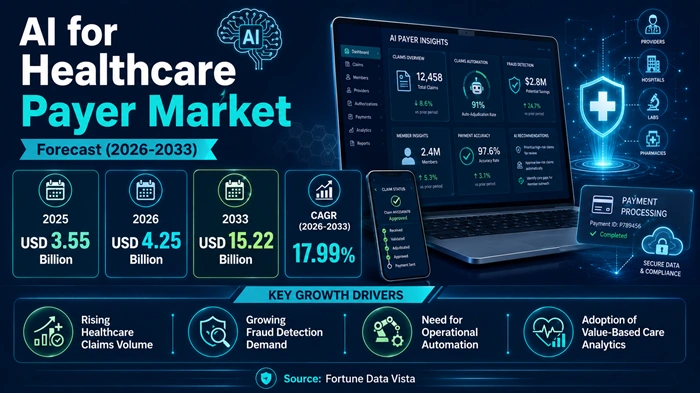
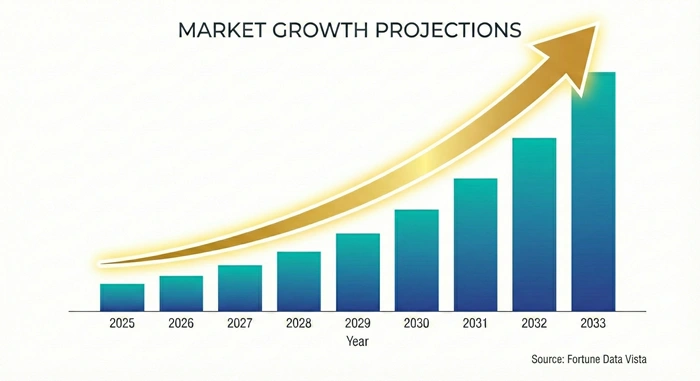
The global AI for healthcare payer market size is valued at USD 3.55 billion in 2025 and is predicted to increase from USD 4.25 billion in 2026 to approximately USD 15.22 billion by 2033, growing at a CAGR of 17.99% from 2026 to 2033.
This exceptional growth pace reflects rapid adoption of artificial intelligence across claims processing, fraud detection, and member engagement functions within health insurance organizations worldwide. As payers face mounting pressure to control administrative costs while improving member outcomes, AI-powered platforms are becoming central to how insurers manage everything from prior authorization to risk stratification.
AI Impact on the AI for Healthcare Payer Industry
Artificial Intelligence Is Transforming Claims Adjudication, Fraud Detection, and Member Risk Prediction Across the Healthcare Payer Landscape — Fundamentally Changing How Insurers Manage Cost and Care Quality
Artificial intelligence has become deeply embedded within the operational fabric of health insurance organizations, with payers increasingly deploying machine learning models to automate claims adjudication processes that once required extensive manual review by trained staff. These AI systems can now evaluate claims against policy rules, flag inconsistencies, and approve routine claims within seconds, dramatically reducing processing times while freeing human reviewers to focus on complex or contested cases that genuinely require judgment. This shift is proving especially valuable for large national insurers processing millions of claims monthly, where even small efficiency gains translate into meaningful cost savings.
Beyond claims processing, AI is reshaping how payers approach fraud detection and risk stratification, using pattern recognition across massive datasets to identify suspicious billing patterns or predict which members are likely to develop costly chronic conditions before those conditions fully manifest. This predictive capability allows insurers to intervene earlier with targeted care management programs, potentially improving health outcomes while controlling long-term costs. As these AI-driven capabilities continue maturing, they are becoming a genuine competitive differentiator across the broader AI for healthcare payer market, pushing insurers to accelerate their technology investments considerably.
Growth Factors
Rising Administrative Costs and Growing Demand for Predictive Risk Management Continue Driving Sustained Adoption
The most significant growth factor supporting the AI for healthcare payer market is the persistent pressure insurers face to control administrative overhead, which historically consumes a substantial share of premium revenue through manual claims processing, member service operations, and compliance documentation. AI-powered automation tools have demonstrated measurable ability to reduce these administrative burdens, making technology investment an increasingly obvious choice for payers seeking to improve operating margins without sacrificing service quality. This cost pressure has become particularly acute as healthcare costs continue rising faster than general inflation across most developed markets.
A second important growth factor is the growing emphasis on predictive risk management, as payers increasingly recognize that identifying high-risk members early allows for more effective care coordination interventions that can meaningfully improve outcomes while controlling downstream costs. Health insurers are investing heavily in AI platforms capable of analyzing claims history, clinical data, and social determinants of health to build more accurate risk profiles for their member populations. This expanding focus on proactive population health management continues to broaden the range of use cases driving adoption across the AI for healthcare payer market.
Market Outlook
Generative AI Integration and Expanding Value-Based Care Models Point Toward Accelerating Growth Through 2033
Looking ahead through the forecast period, the AI for healthcare payer industry is expected to see substantial growth in generative AI applications, as insurers explore how large language models can improve member communication, automate prior authorization documentation, and support customer service representatives handling complex inquiries. This next wave of AI adoption is likely to extend automation capabilities well beyond structured claims data into more nuanced, conversation-based interactions that have traditionally required human judgment.
At the same time, the continued expansion of value-based care arrangements is expected to drive deeper AI adoption, as payers participating in these outcome-linked contracts need sophisticated analytics capabilities to accurately measure quality metrics and manage financial risk. Insurers that successfully integrate AI across claims, risk management, and member engagement functions are likely to gain meaningful competitive advantages in a market where operational efficiency increasingly determines profitability. Companies balancing rapid AI innovation with careful regulatory compliance are best positioned to capture growth within the broader AI for healthcare payer market through 2033.
Expert Speaks
-
"AI is no longer an experimental technology for payers, it has become core infrastructure for managing claims accuracy and member risk at scale." — CEO, UnitedHealth Group
-
"Our investment in predictive analytics is fundamentally changing how we identify and support members before health issues become costly complications." — CEO, Cigna Group
-
"Generative AI is opening entirely new possibilities for how we communicate with members and streamline administrative processes that have long frustrated both patients and providers." — CEO, Elevance Health Inc
Key Report Takeaways
-
North America leads the global AI for healthcare payer market, holding approximately 42% market share in 2025, supported by high technology adoption among large insurers, mature healthcare IT infrastructure, and strong regulatory push toward administrative efficiency
-
Asia Pacific is the fastest-growing region, projected to expand at a CAGR near 21% through 2033, driven by expanding health insurance penetration and growing digital health infrastructure investment
-
Large national and regional health insurers represent the dominant customer base, relying on AI platforms to manage claims volume, fraud detection, and member risk assessment at scale
-
Claims management applications contribute the most to overall demand, reflecting the sheer volume and cost impact of claims processing within payer operations
-
Machine learning-based fraud detection remains the most widely adopted technology type, valued for its ability to identify suspicious billing patterns across massive transaction volumes
-
Generative AI-based solutions will grow the fastest among technology segments, holding close to 22% market share with a CAGR near 24% through the forecast period, driven by expanding use in member communication and documentation automation
Market Scope
| Parameter | Details |
|---|---|
| Market Size by 2033 | USD 15.22 Billion | Market Size by 2026 | USD 4.25 Billion | Market Size by 2025 | USD 3.55 Billion | Market Growth Rate from 2026 to 2033 | CAGR of 17.99% | Dominating Region | North America | Fastest Growing Region | Asia Pacific | Segments Covered | Technology, Application, End User, Region | Regions Covered | North America, Europe, Asia Pacific, Latin America, Middle East & Africa |
Market Dynamics
Drivers Impact Analysis
Rising Administrative Cost Pressure and Expanding Fraud Detection Needs Remain the Two Strongest Forces Behind Market Momentum
| Driver | (≈) % Impact on CAGR Forecast | Geographic Relevance | Impact Timeline |
|---|---|---|---|
| Growing need to reduce claims processing and administrative costs | ~35% | Global, strongest in North America | Short to long-term |
| Rising demand for AI-driven fraud detection and risk management | ~28% | North America, Europe | Medium to long-term |
| Expanding adoption of value-based care and outcome-linked contracts | ~21% | North America, growing in Europe | Medium-term |
| Increasing member expectations for digital engagement and support | ~16% | Global | Short to medium-term |
Growing need to reduce claims processing and administrative costs continues to serve as the primary engine behind sustained expansion in the AI for healthcare payer market, as insurers face persistent pressure to improve operating margins while healthcare costs climb steadily across most major markets. AI-powered automation has demonstrated clear ability to accelerate claims turnaround while reducing error rates, making this a compelling investment case for payers of nearly every size.
Rising demand for AI-driven fraud detection represents the second major driver, as insurers increasingly recognize that fraudulent and abusive billing practices cost the industry substantial sums annually, and AI pattern recognition capabilities have proven far more effective at identifying suspicious activity than traditional rules-based systems. This growing reliance on intelligent fraud detection tools, combined with expanding value-based care participation requiring sophisticated outcome tracking, continues reinforcing steady demand growth across the broader AI for healthcare payer market.
Restraints Impact Analysis
Data Privacy Concerns and Legacy System Integration Challenges Continue Moderating Adoption Speed
| Restraint | (≈) % Impact on CAGR Forecast | Geographic Relevance | Impact Timeline |
|---|---|---|---|
| Data privacy and regulatory compliance concerns around patient data | ~37% | Global, strictest in North America, Europe | Ongoing |
| High cost and complexity of integrating AI with legacy payer systems | ~31% | Global | Short to medium-term |
| Limited AI talent and technical expertise within payer organizations | ~19% | Global, notable in smaller regional insurers | Medium-term |
| Resistance to algorithmic decision-making in coverage determinations | ~13% | North America | Long-term |
Data privacy and regulatory compliance concerns represent the most significant restraint facing the AI for healthcare payer market, since health insurers handle extraordinarily sensitive patient information subject to strict regulations like HIPAA in the United States, and any AI system handling this data must meet rigorous security and auditability standards. This compliance burden adds meaningful cost and complexity to AI deployment, particularly for smaller regional insurers with limited compliance infrastructure.
High cost and complexity of integrating AI with legacy payer systems presents a second substantial restraint, as many established insurers still operate on decades-old core administrative platforms that were never designed to interface with modern AI tools. Combined with limited availability of specialized AI talent within many payer organizations, these restraints continue moderating how quickly AI adoption spreads beyond the largest, best-resourced insurers across the broader AI for healthcare payer market.
Opportunities Impact Analysis
Generative AI Expansion and Growing International Health Insurance Penetration Represent the Clearest Paths to Growth
| Opportunity | (≈) % Impact on CAGR Forecast | Geographic Relevance | Impact Timeline |
|---|---|---|---|
| Expanding generative AI applications for member communication and documentation | ~39% | Global | Short to medium-term |
| Growing health insurance penetration across emerging economies | ~33% | Asia Pacific, Latin America | Medium to long-term |
| Deeper AI integration supporting value-based care outcome measurement | ~28% | North America, Europe | Long-term |
Expanding generative AI applications represent one of the most promising opportunities within the AI for healthcare payer market, as insurers explore how large language models can transform member communication, automate documentation for prior authorization requests, and support customer service teams handling increasingly complex inquiries. Payers that successfully deploy these capabilities stand to capture significant efficiency gains while improving member satisfaction simultaneously.
Growing health insurance penetration across emerging economies offers a second substantial opportunity, as expanding middle-class populations in Asia Pacific and Latin America increasingly gain access to health coverage, creating new demand for the administrative infrastructure needed to manage growing member bases efficiently. Deeper AI integration supporting value-based care outcome measurement further broadens the opportunity landscape for vendors serving payers navigating this shift toward outcome-linked reimbursement models. Companies pursuing these parallel opportunities are well positioned to capture meaningful growth within the broader AI for healthcare payer market through the forecast period.
Segment Analysis
By Application: Claims Management
Claims Management Continues to Anchor the Application Landscape, Reflecting the Sheer Scale and Cost Impact of Claims Operations
Claims management holds the largest share within the application segment of the AI for healthcare payer market, accounting for approximately 34% of total segment revenue in 2025. This dominance reflects the sheer operational scale of claims processing within payer organizations, where even modest efficiency improvements translate into substantial cost savings given the enormous transaction volumes large insurers handle daily. AI-powered claims adjudication tools can automatically verify coverage, check for coding errors, and approve routine claims within seconds, dramatically reducing the manual workload that traditionally consumed significant administrative resources. Leading vendors such as Optum, IBM Watson Health, and Cognizant continue to dominate this segment through deep integration capabilities with existing payer administrative systems.
Growth within this segment remains particularly strong in North America, where large national insurers continue investing heavily in claims automation to manage massive transaction volumes while controlling rising administrative costs. The region's mature health insurance market and strong regulatory push toward processing transparency have made claims management AI an operational necessity rather than a discretionary investment for major payers. As claims volumes continue growing alongside expanding health coverage globally, claims management is expected to remain the leading application segment within the broader AI for healthcare payer market throughout the forecast period.
By End User: Large Health Insurance Providers
Large Health Insurance Providers Remain the Dominant End-User Segment, Driven by Scale Advantages and Technology Investment Capacity
Large health insurance providers account for a substantial majority of end-user revenue within the AI for healthcare payer market, reflecting their greater financial capacity to invest in sophisticated AI infrastructure and their correspondingly larger transaction volumes that generate meaningful returns on technology investment. These major insurers process millions of claims and manage enormous member populations, creating strong incentives to deploy AI across claims processing, fraud detection, and risk management functions where scale amplifies efficiency gains considerably. This consistent, high-value demand has made large insurers the primary revenue driver for most established AI vendors serving this market.
Growth among large insurance providers remains especially strong in North America and parts of Europe, where established payers continue expanding their AI capabilities to maintain competitive positioning against increasingly tech-savvy rivals and new market entrants. Companies like UnitedHealth Group and Elevance Health have built substantial internal AI capabilities alongside partnerships with specialized technology vendors, setting a competitive benchmark that smaller regional insurers increasingly feel pressure to match. As large insurers continue expanding their AI deployment across additional operational functions, this end-user segment is expected to remain the primary demand driver within the broader AI for healthcare payer market.
Regional Insights
North America
Mature Healthcare IT Infrastructure and High Insurer Technology Investment Keep North America Firmly in the Lead
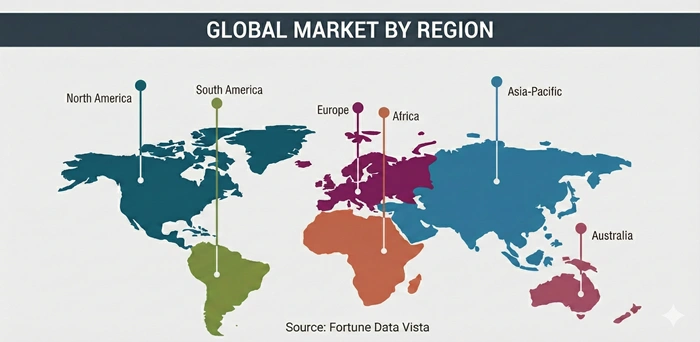
North America commands the leading position in the global AI for healthcare payer market, holding approximately 42% share in 2025, supported by mature healthcare IT infrastructure, high technology investment capacity among large insurers, and strong regulatory emphasis on administrative efficiency and fraud prevention. The United States drives the overwhelming majority of regional demand, backed by a highly competitive health insurance landscape where major payers continuously invest in AI capabilities to differentiate their offerings and control costs. Companies with strong regional presence include UnitedHealth Group, Cigna Group, Elevance Health, and Humana, each maintaining substantial internal AI development capabilities alongside vendor partnerships.
Canada also contributes meaningfully to regional demand, supported by a growing emphasis on healthcare system efficiency and expanding digital health infrastructure investment. The region's combination of strong technology investment capacity, competitive market dynamics, and mature healthcare IT ecosystems ensures North America's leadership position within the AI for healthcare payer market remains firmly intact through the remainder of the forecast period.
Asia Pacific
Expanding Health Insurance Penetration and Growing Digital Health Investment Position Asia Pacific as the Fastest-Growing Region
Asia Pacific is projected to register the fastest CAGR within the global AI for healthcare payer market through 2033, expanding at a rate near 21% as expanding health insurance penetration and growing digital health infrastructure investment create substantial new demand across the region. China and India lead this growth, supported by rapidly expanding middle-class populations gaining access to health coverage for the first time and government initiatives promoting digital health transformation across the insurance sector. Regional and international technology vendors alike have expanded their presence to serve this growing institutional demand, often developing localized solutions suited to regional regulatory requirements.
Japan and South Korea contribute further depth to regional growth, both bringing established health insurance markets that increasingly favor AI-enabled platforms to manage aging population healthcare costs more efficiently. Rising government investment in digital health infrastructure across several Asia Pacific countries continues to accelerate AI adoption among insurers that previously operated with more limited technology capabilities. This combination of expanding coverage, growing digital investment, and rising efficiency pressure positions Asia Pacific as the clear growth leader within the broader AI for healthcare payer market through the forecast period.
Customization Available for This Report
Region-Specific and Country-Specific Versions of This Report Are Available to Deliver a Sharper, More Localized View of Market Dynamics
This report can be tailored on a region-by-region and country-by-country basis, providing localized market sizing, competitive mapping, and adoption trend analysis that a global overview alone cannot fully capture.
Clients seeking a more focused breakdown can request a customized version covering any of the following regions and countries, complete with demand forecasting, competitor landscape review, and adoption trend analysis tied specifically to the AI for healthcare payer keyword focus:
North America
-
U.S. — Detailed review of payer AI investment trends and regulatory compliance dynamics
-
Canada — Coverage of digital health infrastructure investment and adoption patterns
-
Mexico — Analysis of emerging health insurance technology modernization trends
Europe
-
U.K. — Review of NHS-adjacent payer technology adoption and compliance requirements
-
Germany — Coverage of statutory health insurance digitalization trends
-
France — Insights into payer AI adoption and administrative automation patterns
-
Italy — Analysis of regional health insurance technology investment
-
Rest of Europe — Country-level view of emerging demand across Eastern Europe and the Nordics
Asia Pacific
-
China — Coverage of expanding health insurance penetration and digital health investment
-
India — Analysis of growing health coverage adoption and AI platform demand
-
Japan — Review of aging population healthcare cost management technology trends
-
South Korea — Assessment of digital health insurance infrastructure investment
-
Australia — Insights into payer technology modernization trends
-
Rest of Asia Pacific — Country-level breakdown covering Thailand, Vietnam, Indonesia, and Malaysia
Latin America
-
Brazil — Coverage of expanding private health insurance technology adoption
-
Argentina — Analysis of emerging digital health infrastructure investment trends
-
Rest of Latin America — Country-level sizing across Colombia, Peru, and Chile
Middle East & Africa
-
UAE — Review of digital health transformation and payer technology investment
-
Saudi Arabia — Coverage of expanding health insurance modernization initiatives
-
Rest of MEA — Country-level view of Sub-Saharan Africa health coverage technology expansion
Top Key Players
-
UnitedHealth Group Incorporated (United States)
-
Cigna Group (United States)
-
Elevance Health Inc (United States)
-
Humana Inc (United States)
-
IBM Corporation (United States)
-
Optum Inc (United States)
-
Cognizant Technology Solutions Corporation (United States)
-
Microsoft Corporation (United States)
-
Oracle Corporation (United States)
-
Accenture plc (Ireland)
-
Change Healthcare Inc (United States)
-
Deloitte Touche Tohmatsu Limited (United Kingdom)
Recent Developments
-
In 2025, UnitedHealth Group expanded its Optum AI capabilities, strengthening predictive risk modeling and claims automation across its national provider and payer network to improve processing accuracy
-
In 2025, Cigna Group partnered with a leading generative AI technology provider to enhance member communication tools and streamline documentation for prior authorization requests
-
In 2026, Elevance Health introduced new AI-powered fraud detection capabilities designed to identify suspicious billing patterns more effectively across its growing member base
-
In 2025, IBM strengthened its Watson Health payer solutions through expanded partnerships aimed at delivering AI-driven claims analytics tools to mid-sized regional insurers
-
In 2026, Cognizant broadened its healthcare AI consulting practice to help payers accelerate legacy system modernization and smoother AI integration across core administrative platforms
Market Trends
Generative AI Expansion and Deepening Predictive Analytics Adoption Are Reshaping Payer Technology Priorities
One of the clearest trends shaping the AI for healthcare payer market is the rapid expansion of generative AI applications beyond simple chatbot functions into more sophisticated documentation automation, member communication, and clinical summary generation tasks. This trend is pushing established technology vendors to accelerate development of generative AI capabilities tailored specifically to the complex regulatory and clinical context that payer operations require.
A second significant trend is the deepening adoption of predictive analytics for population health management, as payers increasingly seek to identify high-risk members earlier and intervene with targeted care coordination before conditions become costly. This growing emphasis on proactive risk management is reshaping how insurers allocate technology budgets, with predictive analytics capabilities increasingly viewed as essential rather than optional within the broader AI for healthcare payer market.
Segments Covered in the Report
By Technology
-
Machine Learning
-
Natural Language Processing
-
Generative AI
-
Robotic Process Automation
By Application
-
Claims Management
-
Fraud Detection and Prevention
-
Risk and Care Management
-
Customer Service and Member Engagement
-
Prior Authorization
By End User
-
Large Health Insurance Providers
-
Regional and Mid-Sized Insurers
-
Third-Party Administrators
-
Government Health Programs
By Region
-
North America (U.S., Canada, Mexico)
-
Europe (U.K., Germany, France, Italy, Rest of Europe)
-
Asia Pacific (China, India, Japan, South Korea, Australia, Rest of Asia Pacific)
-
Latin America (Brazil, Argentina, Rest of Latin America)
-
Middle East & Africa (UAE, Saudi Arabia, Rest of MEA)
❝ Built for Every Level — From Startups to Industry Giants ❞
Here Is Exactly How This Report Works for You
-
For tier 1 companies, investors, and established market leaders, this report delivers detailed competitor revenue analysis, AI investment trend mapping, and geopolitical risk context that support confident decisions around technology partnerships, pricing strategy, and long-term positioning within the AI for healthcare payer space
-
For tier 2 and tier 3 companies, startups, and mid-sized technology vendors, this report highlights the most commercially promising application areas and underserved regional opportunities, giving you a practical framework to compete against larger established players without overextending limited resources
-
For every decision maker across the value chain, this report explains exactly how regulatory shifts, payer technology budgets, and competitor product launches are shaping market direction through 2033, equipping you to plan investment and go-to-market decisions with genuine confidence
Frequently Asked Questions:
Answer: The global AI for healthcare payer market was valued at USD 3.55 billion in 2025 and is projected to reach USD 15.22 billion by 2033. This rapid growth is driven largely by rising administrative cost pressure and expanding generative AI adoption.
Answer: Growth in the AI for healthcare payer market is being driven by growing demand to reduce claims processing costs and expanding fraud detection needs. Rising adoption of value-based care contracts is further reinforcing this expansion.
Answer: North America currently leads the AI for healthcare payer market with roughly 42% share, supported by mature healthcare IT infrastructure and high insurer technology investment. Asia Pacific is growing the fastest, driven by expanding health insurance penetration.
Answer: Claims management generates the largest share of revenue in the AI for healthcare payer market, reflecting the scale and cost impact of claims operations. Large health insurance providers also remain the dominant end-user segment.
Answer: Leading companies in the AI for healthcare payer market include UnitedHealth Group, Cigna Group, Elevance Health, IBM, and Optum. These companies compete through continuous AI innovation, expanding generative AI capabilities, and deepening predictive analytics investment.