
Application Processor Market Overview
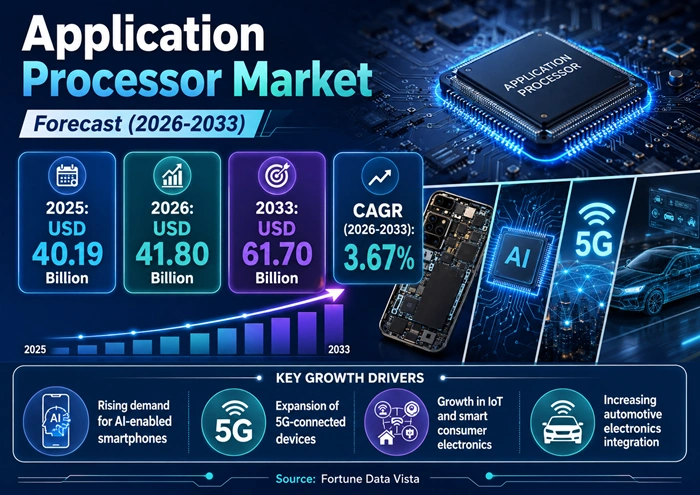
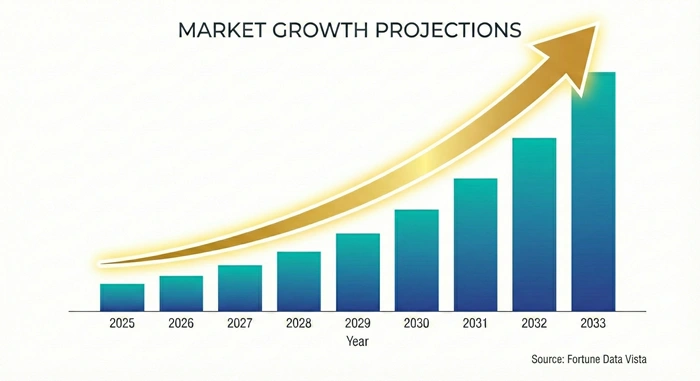
The global application processor market size is valued at USD 40.19 billion in 2025 and is predicted to increase from USD 41.80 billion in 2026 to approximately USD 61.70 billion by 2033, growing at a CAGR of 3.67% from 2026 to 2033. The steady expansion is driven by the rising adoption of AI-enabled smartphones, growing automotive electronics demand, and the rapid proliferation of smart wearables and IoT devices across global markets. With semiconductor manufacturers pushing into 3nm and 5nm process nodes, the demand for high-efficiency, multi-core processors continues to accelerate.
AI Impact on the Application Processor Industry
Artificial Intelligence Is Rewriting the Rules of Processor Design — And the Entire Semiconductor Industry Is Racing to Keep Up*
Artificial intelligence has fundamentally changed what is expected from application processors. Modern chipmakers are no longer just building fast chips — they are building smart chips. Companies like Qualcomm, Apple, and MediaTek have embedded dedicated AI accelerators directly into their SoC architectures, enabling on-device machine learning tasks such as real-time language translation, computational photography, and predictive health monitoring. This on-device AI processing reduces latency, improves privacy, and cuts dependence on cloud infrastructure, making high-performing application processors a critical component of next-generation consumer electronics.
The rise of edge AI is also pushing the application processor industry into non-traditional sectors. In automotive, for example, processors now handle sensor fusion, object recognition, and real-time decision-making for advanced driver-assistance systems. In industrial environments, smart edge processors are embedded in robotics and factory automation systems. The convergence of AI inference capabilities with energy-efficient chip architectures has opened entirely new design paradigms, and manufacturers that can balance performance, power, and cost will define the next decade of chip innovation.
Growth Factors
From 5G Rollouts to Smart Wearables — Multiple Tailwinds Are Accelerating Demand Across the Application Processor Market*
Several structural growth drivers are pushing the application processor market forward. The global rollout of 5G networks remains one of the most powerful catalysts, compelling device manufacturers to upgrade chipsets with modem-integrated processors that support high-speed data processing. Consumers are increasingly replacing their mid-range devices with 5G-capable smartphones, creating a consistent refresh cycle that benefits processor vendors. At the same time, the explosion of smart wearables — from fitness trackers to advanced health monitors — is opening a new category of low-power, compact processor demand that did not exist at meaningful scale a decade ago.
Government-backed semiconductor investment is also playing an important role. In the United States, the CHIPS Act has funneled billions into domestic fab construction, with TSMC, Intel, and GlobalFoundries all building or expanding manufacturing capacity. This is not only reducing supply chain fragility but also stimulating further R&D investment in advanced node processors. Emerging markets in Southeast Asia, India, and Latin America are experiencing rapid smartphone adoption, and local governments are actively incentivizing electronics manufacturing — creating new demand pockets that global processor vendors are now beginning to address with region-specific product strategies.
Market Outlook
The Application Processor Market Stands at a Critical Inflection Point, Balancing Innovation Momentum with Supply Chain and Design Complexity Challenges*
Looking ahead, the application processor market is expected to evolve significantly in both architecture and application scope. The transition to chiplet-based designs — where multiple smaller chips are packaged together rather than built as a single monolithic die — is gaining traction as a way to manage the cost and complexity of advanced node manufacturing. This approach allows processor vendors to mix and match functional blocks, improving customization and yield rates. Companies like Qualcomm and MediaTek are already experimenting with heterogeneous computing architectures that combine high-performance cores with energy-efficient cores for smarter workload distribution.
From a demand perspective, the automotive segment is emerging as one of the most exciting growth areas over the next seven years. The shift toward electric vehicles and software-defined cars is creating demand for processors that can handle not just infotainment but also real-time ADAS processing and over-the-air software updates. Meanwhile, the IoT space is fragmenting into thousands of vertical use cases — from smart city infrastructure to precision agriculture — each requiring specialized processor configurations. The long-term outlook for the application processor market remains constructive, supported by sustained innovation, expanding end-use diversity, and continued investment in semiconductor supply chain resilience.
Expert Speaks
-
"The integration of on-device AI into every processor we build is no longer optional — it is the baseline expectation from our customers and the foundation of our roadmap." — CEO, Qualcomm Technologies
-
"We believe the future of computing is built on chips that do more with less power. Our chip architecture investments today are defining what devices will look like five years from now." — CEO, Apple Inc.
-
"Automotive-grade processors are the fastest-growing part of our business, and the pace of software-defined vehicle adoption globally is accelerating far faster than most people anticipated." — CEO, NVIDIA Corporation
Key Report Takeaways
-
Asia Pacific leads the application processor market with approximately 44.3% market share, driven by the presence of major semiconductor manufacturers, high smartphone penetration, and strong consumer electronics demand in China, South Korea, Taiwan, and India
-
Asia Pacific is also the fastest-growing region, projected to register the highest CAGR throughout the 2026–2033 forecast period, fueled by rising local chip production under India's PLI scheme, government support for semiconductors, and rapid 5G rollout across the region
-
Consumer electronics is the dominant end-use industry, accounting for approximately 82.5% share of the application processor market, driven by global smartphone demand and the expanding universe of smart home, wearable, and portable computing devices
-
Mobile phones represent the leading device type segment, holding a 60.8% market share, reflecting the immense volume of global smartphone shipments and the regular chipset upgrade cycles driven by 5G, AI, and camera innovations
-
Octa-core processors dominate the core type segment with approximately 48.1% share and are projected to achieve the fastest CAGR within their category, driven by adoption across flagship smartphones, tablets, and increasingly mid-range devices
-
Smart wearables are the fastest-growing device type segment, expected to post the highest CAGR from 2026 to 2033, with a market share projected to grow meaningfully as AI-powered fitness trackers, health monitors, and smartwatches gain mass-market adoption
-
The automotive segment is the fastest-growing industry vertical, anticipated to expand at an impressive pace through 2033, driven by EV proliferation, ADAS deployment, and the transition to software-defined vehicles — representing one of the most transformative new demand pools for application processors
Market Scope
| Parameter | Details |
|---|---|
| Market Size by 2033 | USD 61.70 Billion | Market Size by 2026 | USD 41.80 Billion | Market Size by 2025 | USD 40.19 Billion | Market Growth Rate from 2026 to 2033 | CAGR of 3.67% | Dominating Region | Asia Pacific | Fastest Growing Region | Asia Pacific | Segments Covered | Device Type, Core Type, Industry, Region | Regions Covered | North America, Europe, Asia Pacific, Latin America, Middle East & Africa |
Market Dynamics
Drivers Impact Analysis
Accelerating Demand for Intelligent, Connected Devices Is the Most Powerful Force Reshaping the Application Processor Market Today*
| Driver | ≈ % Impact on CAGR Forecast | Geographic Relevance | Impact Timeline |
|---|---|---|---|
| Rising demand for AI-enabled smart devices | ~35% | Global, especially Asia Pacific & North America | Near to long-term |
| 5G network rollout & smartphone refresh cycles | ~28% | Asia Pacific, North America, Europe | Near to mid-term |
| Growth of automotive electronics & ADAS | ~20% | North America, Europe, Asia Pacific | Mid to long-term |
| Expansion of IoT and edge computing applications | ~17% | Global, especially emerging markets | Mid to long-term |
The most significant driver for the application processor market today is the surging global demand for smart, connected devices that require on-device intelligence. Smartphones with AI-powered cameras, real-time translation, and predictive features are pushing consumers and OEMs alike to demand more powerful, efficient SoCs. Chipmakers such as Qualcomm and Apple have responded by integrating dedicated neural processing units (NPUs) directly into their application processors, making AI acceleration a standard feature rather than a premium add-on.
Additionally, 5G connectivity continues to act as a powerful multiplier for processor upgrades. As mobile operators expand 5G coverage in emerging markets, the demand for 5G-compatible application processors in mid-range smartphones is rising sharply. Device manufacturers are racing to release affordable 5G handsets powered by cost-effective yet capable processors, and chipmakers such as MediaTek are capturing this volume opportunity with their Dimensity series. This 5G-driven refresh wave is expected to sustain healthy volume growth in the application processor market through the mid-term forecast period.
Restraints Impact Analysis
Design Complexity and Geopolitical Supply Risks Continue to Create Meaningful Headwinds for the Application Processor Industry*
| Restraint | ≈ % Impact on CAGR Forecast | Geographic Relevance | Impact Timeline |
|---|---|---|---|
| Rising processor design & integration complexity | ~40% | Global | Near to mid-term |
| Geopolitical risks & supply chain concentration | ~35% | China, Taiwan, South Korea | Mid to long-term |
| High development costs for advanced node chips | ~25% | North America, Europe | Long-term |
The increasing complexity of modern application processor design is one of the most serious structural restraints in the market. As manufacturers push into sub-5nm nodes and integrate more features — including AI cores, advanced graphics, and 5G modems — the cost and time required to design and validate a new chip generation has grown substantially. Mismatches between processor capabilities and device software optimization can introduce performance variability, leading to longer product development cycles and increasing pressure on design teams.
Geopolitical tensions, particularly around Taiwan — home to TSMC, the world's leading advanced foundry — represent a systemic supply chain risk. Export controls, trade restrictions, and the concentration of cutting-edge chip production in a small number of geographic locations create real vulnerabilities. Any disruption at TSMC or Samsung's foundry operations would have immediate ripple effects across the application processor market. Chipmakers and governments are actively working to diversify production, but building new advanced fabs is a multi-year, multi-billion-dollar undertaking with no immediate solution.
Opportunities Impact Analysis
Automotive Electrification and Emerging Market Growth Represent the Two Biggest Untapped Opportunities in the Application Processor Market*
| Opportunity | ≈ % Impact on CAGR Forecast | Geographic Relevance | Impact Timeline |
|---|---|---|---|
| Automotive EV/ADAS processor demand | ~38% | North America, Europe, China | Mid to long-term |
| Emerging market smartphone expansion | ~32% | India, Southeast Asia, Latin America | Near to mid-term |
| Industrial IoT & Industry 4.0 adoption | ~30% | Global | Mid to long-term |
The automotive sector represents arguably the most transformative new opportunity for the application processor market over the next decade. The shift from mechanically controlled to software-defined vehicles is creating demand for chips that can process massive streams of sensor data in real time. Platforms like NVIDIA DRIVE and Tesla's Full Self-Driving (FSD) computer demonstrate how capable high-performance application processors have become critical safety and operational components in modern EVs. Automakers are committing to multi-year chip supply agreements as they invest heavily in autonomous and semi-autonomous driving capabilities.
Emerging markets offer a complementary near-term opportunity. Countries like India, Indonesia, Vietnam, and Brazil are experiencing rapid digital adoption, with hundreds of millions of consumers purchasing their first smartphones. This price-sensitive but volume-rich segment is ideal for mid-range application processors from vendors like MediaTek and Qualcomm. At the same time, local governments in these markets are incentivizing domestic electronics manufacturing, which could eventually create new regional application processor supply chains, further expanding market access.
Segment Analysis
By Device Type
Mobile Phones Dominate Device Type Adoption, While Smart Wearables Drive the Application Processor Market's Fastest Growth Trajectory*
The mobile phones segment has consistently held the largest share within the application processor market, accounting for approximately 60.8% in the most recent base year. This dominance reflects the sheer scale of global smartphone shipments and the relentless pace of chipset innovation driving annual upgrade cycles. The application processor embedded in a smartphone is arguably the most competitive product in the entire semiconductor industry, with Apple, Qualcomm, MediaTek, and Samsung all investing heavily in new chip architectures each year. In Asia Pacific — particularly in China, India, and South Korea — the mobile phone segment is registering both the highest volume and the most intense competitive activity, with local OEMs demanding custom processor configurations to differentiate their products. The Qualcomm Snapdragon 8 Elite and Apple's A18 Pro represent the pinnacle of current mobile processor design, while MediaTek's Dimensity platform continues to expand in the mid-range tier.
Smart wearables represent the application processor segment with the highest projected CAGR through 2033. The rapid adoption of fitness trackers, smartwatches, and health monitoring wearables is creating sustained demand for compact, ultra-low-power processors with integrated AI capabilities. Chipmakers are investing in dedicated wearable-class processor designs that balance rich feature sets with multi-day battery life — a combination that was technically challenging just a few years ago but is now becoming the competitive standard. The Asia Pacific region leads wearable processor adoption, driven by consumer affinity for connected health technology in China, Japan, and South Korea, as well as strong export activity from these countries' electronics manufacturers. Companies such as Apple, Samsung, and Huawei are among the top players releasing new wearable processor generations, while specialized chipmakers like Ambiq are targeting the ultra-low-power IoT wearable space.
By Industry
Consumer Electronics Continues to Command the Application Processor Market, but Automotive Electronics Is Rapidly Emerging as the Highest-Growth Vertical*
Consumer electronics holds a commanding 82.5% share of the application processor market, a position built on decades of smartphone growth, tablet adoption, and more recently the expansion of smart home devices and connected entertainment platforms. The breadth of this segment is staggering — from flagship iPhones carrying Apple's custom A-series chips to affordable Android tablets powered by MediaTek's Helio series. Within Asia Pacific, the consumer electronics industry vertical for application processors is growing at a consistent pace, supported by strong domestic demand in China and India and by the export-oriented electronics manufacturing ecosystems in South Korea and Taiwan. Qualcomm, Apple, and MediaTek are the dominant companies in this space, continuously raising the performance bar with each new chipset generation.
The automotive industry vertical is projected to deliver the highest CAGR within the application processor market through 2033. The integration of advanced ADAS, vehicle-to-everything (V2X) communication, and sophisticated infotainment platforms is transforming automobiles into rolling computing platforms. Processors used in automotive environments must meet stringent safety certifications such as ISO 26262, adding additional design and validation complexity. North America and Europe lead automotive application processor adoption, with companies like NVIDIA, NXP Semiconductors, Qualcomm, and Renesas Electronics all positioning themselves as strategic partners to global automakers. The rise of Chinese EV brands is also creating a significant demand center in Asia Pacific, with domestic chip designers developing competitive automotive-grade processors as part of China's broader semiconductor self-sufficiency strategy.
Regional Insights
Asia Pacific — The Dominant Force in the Global Application Processor Market
Asia Pacific's Combination of Manufacturing Scale, Consumer Volume, and Rapid Digital Adoption Makes It the World's Most Influential Application Processor Region*
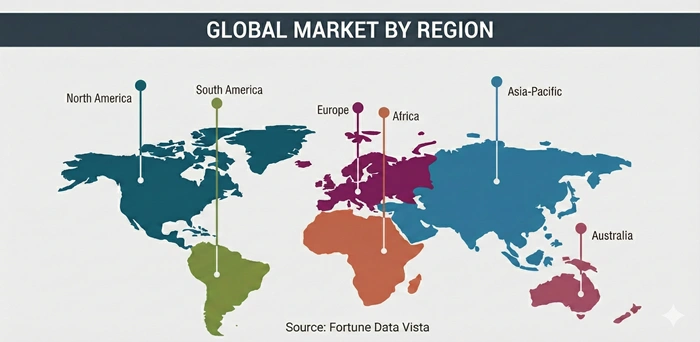
Asia Pacific dominates the global application processor market with an estimated 44.3% market share, and the region is simultaneously the fastest-growing market on a CAGR basis through 2033. This dual status — both largest and fastest-growing — reflects the unique concentration of semiconductor manufacturing, consumer electronics production, and large-scale smartphone adoption that characterizes the region. Countries like China, South Korea, Taiwan, and India serve as both production hubs and consumption centers, creating a self-reinforcing growth dynamic. Taiwan's TSMC manufactures the world's most advanced processor nodes, South Korea's Samsung produces both chips and the devices that use them, and China's vast electronics manufacturing base ships hundreds of millions of units annually. Key players active across the Asia Pacific application processor landscape include MediaTek (Taiwan), Samsung Electronics (South Korea), Huawei HiSilicon (China), Rockchip (China), and Allwinner Technology (China).
India deserves specific mention as one of the most exciting emerging demand centers within Asia Pacific. The country's smartphone penetration is still expanding rapidly, with hundreds of millions of consumers upgrading from entry-level to mid-range devices annually. Government initiatives such as "Make in India" and the PLI (Production-Linked Incentive) scheme for semiconductors are drawing global chipmakers to establish local supply chains. While India is not yet a significant application processor manufacturer, its role as a consumption market and future assembly hub makes it strategically important. The compound annual growth rate for the application processor market specifically in India is projected to outpace the regional average through 2033, making it a critical growth pillar for vendors like Qualcomm and MediaTek.
North America — A Technology Innovation Leader with Robust Application Processor Market Presence
North America's Strength in Semiconductor Design, Government Support, and Automotive Electronics Creates a Durable Foundation for Long-Term Application Processor Growth*
North America is the second-largest regional market for application processors, underpinned by the presence of world-class chip design houses including Qualcomm (headquartered in San Diego), Apple (Cupertino), NVIDIA (Santa Clara), and AMD (Santa Clara). The region benefits from a strong IP ecosystem, deep R&D investment, and increasingly favorable government policy following the passage of the CHIPS and Science Act, which has committed over USD 52 billion to domestic semiconductor manufacturing and research. While North America relies on TSMC and Samsung for advanced node fabrication, new domestic fabs are now under construction and will begin contributing capacity through the late 2020s, gradually reducing import dependence. The North American application processor market is projected to grow at a healthy CAGR through 2033, supported by AI device proliferation, 5G infrastructure expansion, and rapidly rising automotive chip demand.
The United States specifically is a key battleground for premium-tier application processor competition, with Apple's A-series and Qualcomm's Snapdragon platforms dominating the high-end smartphone and tablet space. The U.S. is also the epicenter of automotive AI processor development, with companies like NVIDIA and Qualcomm competing for design wins at Ford, GM, and a growing roster of EV startups. Government export restrictions on advanced semiconductors have also reshaped supply relationships, pushing some North American chip designers to build more regionally self-sufficient supply chains. The combination of design excellence, government investment, and the automotive technology shift positions North America as a long-term structural growth market for the application processor industry.
Top Key Players
-
Apple Inc. (United States)
-
Qualcomm Technologies Inc. (United States)
-
Samsung Electronics Co., Ltd. (South Korea)
-
MediaTek Inc. (Taiwan)
-
Intel Corporation (United States)
-
HiSilicon Technologies Co., Ltd. (Huawei) (China)
-
NVIDIA Corporation (United States)
-
Broadcom Inc. (United States)
-
NXP Semiconductors N.V. (Netherlands)
-
Texas Instruments Incorporated (United States)
-
UNISOC (Spreadtrum Communications) (China)
-
Rockchip Electronics Co., Ltd. (China)
-
Allwinner Technology Co., Ltd. (China)
-
Marvell Technology Inc. (United States)
-
Ambarella Inc. (United States)
-
Renesas Electronics Corporation (Japan)
Recent Developments
-
In May 2024, Apple unveiled its M4 chip, integrating a 10-core CPU and significantly enhanced Neural Engine for on-device AI tasks, powering the latest iPad Pro and subsequently the MacBook Pro and MacBook Air lineups with major performance-per-watt improvements.
-
In October 2024, Qualcomm launched the Snapdragon 8 Elite processor, built on a 3nm process node and featuring the world's fastest mobile CPU at that time, designed to power flagship Android smartphones from Samsung, Xiaomi, and other major OEMs through 2025.
-
In 2024, NVIDIA expanded its automotive processor business by securing new design win agreements with major global automakers for its DRIVE Thor platform, a single chip solution capable of handling both ADAS and in-vehicle infotainment workloads, reinforcing NVIDIA's position as a leading automotive SoC supplier.
-
In 2025, MediaTek announced the Dimensity 9400 series, featuring a next-generation AI processing engine and significant improvements in 5G modem efficiency, targeting flagship-tier Android smartphones and strengthening MediaTek's competitive position against Qualcomm in the premium segment.
-
In 2024, Samsung Electronics expanded its Exynos 2500 chip development program and deepened its foundry partnership with major fabless designers, simultaneously announcing capacity investments at its Taylor, Texas semiconductor fab to capitalize on U.S. CHIPS Act funding and expand its North American manufacturing footprint.
Market Trends
The Application Processor Market Is Being Reshaped by AI Integration, Advanced Process Nodes, and a Fundamental Shift Toward Heterogeneous Computing Architectures*
The most defining trend in the application processor market today is the deep integration of artificial intelligence at the silicon level. Every leading chipmaker has moved from treating AI acceleration as an optional add-on to making it a foundational element of processor architecture. The race to deliver the most efficient NPU (neural processing unit) has become as competitive as the CPU and GPU performance battle of earlier generations. This shift is enabling smartphones to run sophisticated generative AI models locally, without cloud connectivity, which is fundamentally changing user experiences and creating new differentiation opportunities for device brands. As a result, processor vendors are competing not just on raw performance benchmarks but on AI workload efficiency, expressed in tasks per watt.
A second critical trend is the industry's progression toward sub-3nm process nodes and the exploration of chiplet-based architectures. Traditional monolithic chip designs are becoming increasingly expensive to develop and manufacture at leading-edge nodes, prompting companies to explore packaging multiple smaller chiplets together to achieve better yield rates and greater design flexibility. TSMC's advanced packaging technologies like CoWoS and InFO are enabling chipmakers to integrate high-bandwidth memory directly with processor dies, dramatically improving data throughput for AI workloads. This architectural evolution is making the application processor market increasingly capital-intensive and technically complex, raising barriers to entry for new competitors while rewarding established players with the scale and expertise to navigate these transitions.
Segments Covered in the Report
-
By Device Type
-
Mobile Phones
-
PC Tablets & E-Readers
-
Smart Wearables
-
Automotive ADAS & Infotainment Devices
-
-
By Core Type
-
Single-Core
-
Dual-Core
-
Quad-Core
-
Hexa-Core
-
Octa-Core
-
-
By Industry
-
Consumer Electronics
-
Automotive
-
-
By Region
-
North America
-
U.S.
-
Canada
-
Mexico
-
-
Europe
-
Germany
-
France
-
UK
-
Italy
-
Spain
-
Rest of Europe
-
-
Asia Pacific
-
China
-
India
-
Japan
-
South Korea
-
Taiwan
-
Rest of Asia Pacific
-
-
Latin America
-
Brazil
-
Argentina
-
Rest of Latin America
-
-
Middle East & Africa
-
UAE
-
Saudi Arabia
-
South Africa
-
Rest of Middle East & Africa
-
-
"Built for Every Level — From Startups to Industry Giants"
Here Is Exactly How This Report Works for You
-
This report gives decision-makers at every level — from startups evaluating entry points to Tier 1 semiconductor and electronics giants optimizing competitive strategy — precise market sizing, segment-level CAGR data, and regional demand breakdowns that make investment and product roadmap decisions more defensible and data-driven; the full version includes competitor revenue analysis, revenue source breakdowns, and detailed company profiles that reveal where rivals are gaining share and how to respond.
-
Supply and demand dynamics across the application processor value chain are explained in detail in the complete report, covering foundry capacity constraints, substrate and advanced packaging bottlenecks, and inventory cycle trends — information that directly helps procurement teams, investors, and strategy executives anticipate market inflections before they happen.
-
Geopolitical risk factors — including U.S.-China export control implications, Taiwan supply chain vulnerability, and regional government incentive programs — are analyzed with actionable intelligence so that your leadership team can make confident decisions about supply chain restructuring, regional market entry, and partnership strategy even in uncertain global conditions.
Frequently Asked Questions:
Answer: The global application processor market is valued at USD 40.19 billion in 2025 and is projected to grow at a CAGR of 3.67% from 2026 to 2033. By 2033, the market is expected to reach approximately USD 61.70 billion, driven by AI device demand and automotive electronics growth.
Answer: Asia Pacific leads the application processor market with approximately 44.3% market share, supported by the concentration of major semiconductor manufacturers and high smartphone volumes in China, South Korea, Taiwan, and India. The region is also the fastest growing, driven by 5G expansion and rising digital consumption.
Answer: The primary drivers include rising demand for AI-enabled smartphones and IoT devices, the global rollout of 5G networks, and the rapid adoption of automotive electronics in EV and ADAS applications. Government semiconductor investment programs, especially in the U.S. and India, are further supporting long-term application processor market expansion.
Answer: Mobile phones represent the dominant device type in the application processor market with approximately 60.8% share, reflecting the enormous scale of global smartphone shipments. Smart wearables, however, are projected to be the fastest-growing device type through 2033.
Answer: The top companies in the application processor market include Qualcomm Technologies, Apple Inc., Samsung Electronics, MediaTek Inc., and NVIDIA Corporation, among others. These companies compete on processor performance, AI capabilities, energy efficiency, and compatibility with the latest manufacturing nodes.