
Aquaculture Vaccines Market Overview
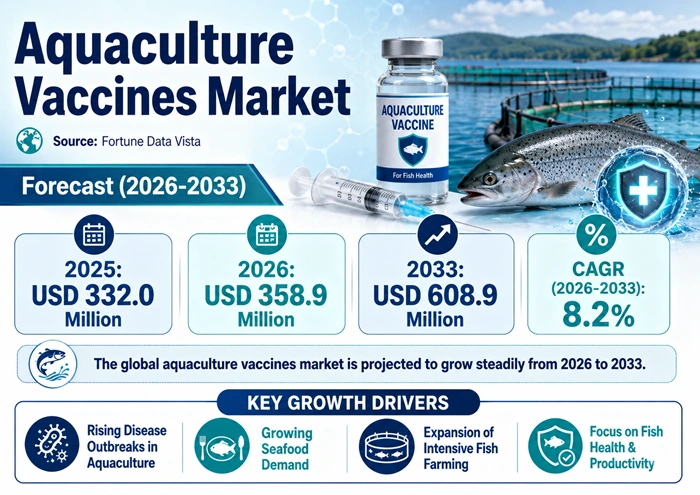
The global aquaculture vaccines market size is valued at USD 332.0 million in 2025 and is predicted to increase from USD 358.9 million in 2026 to approximately USD 608.9 million by 2033, growing at a CAGR of 8.2% from 2026 to 2033.
Fish disease outbreaks are responsible for over 30% of total aquaculture production losses in countries like China, India, and Vietnam, making disease prevention a top operational priority for fish farming businesses worldwide. Aquaculture vaccines — including inactivated, live-attenuated, DNA, and recombinant formulations — have emerged as the most effective and sustainable tools for protecting farmed fish populations against bacterial, viral, and parasitic infections. As global demand for seafood rises and antibiotic use in farming comes under increasing regulatory scrutiny, the aquaculture vaccines market is gaining strong commercial momentum across all major producing regions.
AI Impact on the Aquaculture Vaccines Industry
AI-powered disease surveillance, precision vaccine delivery, and smart fish health monitoring systems are fundamentally transforming how aquaculture producers prevent and manage disease across large-scale farming operations
Artificial intelligence is beginning to play a meaningful role in reshaping how aquaculture health management is approached at every level of the value chain. AI-driven disease surveillance platforms use image recognition and underwater sensor data to detect early signs of infection — such as behavioral changes, abnormal swimming patterns, and lesion development — before they escalate into full-blown outbreaks. These early warning systems allow fish farmers to initiate targeted vaccination and biosecurity protocols significantly faster than traditional observation-based approaches. For large-scale salmon, tilapia, and shrimp farms, this capability translates directly into reduced mortality rates, lower treatment costs, and more efficient use of vaccine inventory.
Beyond health monitoring, AI is also accelerating the research and development of next-generation aquatic vaccines. Machine learning algorithms are being applied to antigen discovery, immunogenicity prediction, and vaccine formulation optimization, drastically reducing the time and cost associated with bringing new products to market. In an industry where disease profiles vary significantly by species, geography, and season, AI-enabled customization of vaccine composition is giving manufacturers the ability to develop more targeted and effective solutions. These advances are strengthening the overall competitiveness of the aquaculture vaccines market and building a pipeline of innovation that is expected to sustain growth well into the 2033 forecast horizon.
Growth Factors
Rising disease burdens in intensive fish farming, the global push to reduce antibiotic dependency, and rapid technological advancements in biological vaccine platforms are the three most powerful forces propelling the aquaculture vaccines market forward
The single most significant driver of the aquaculture vaccines market is the growing frequency and severity of disease outbreaks in commercially farmed fish populations. As aquaculture operations shift toward higher-density farming to meet global seafood demand, the risk of contagious bacterial and viral infections increases proportionally. Diseases like Infectious Salmon Anaemia (ISA), Viral Nervous Necrosis (VNN), furunculosis, and vibriosis cause widespread mortality and impose enormous financial losses on producers. Unlike antibiotic treatments — which are increasingly restricted by regulators worldwide due to antimicrobial resistance concerns — vaccines provide a preventive, cost-effective, and environmentally safer solution. This fundamental shift from treatment to prevention is creating sustained structural demand across the fish health management sector.
Simultaneously, technological innovation in vaccine development is opening up new commercial opportunities that simply did not exist a decade ago. Recombinant DNA techniques, yeast expression platforms, and multivalent vaccine formulations now allow manufacturers to design products that protect against multiple pathogens in a single dose, reducing handling stress on fish and lowering labor costs for farmers. Oral and immersion delivery methods are gaining traction as alternatives to injection-based vaccination, making mass immunization of juvenile fish and shrimp commercially viable for the first time. Government programs supporting sustainable aquaculture in countries like Canada, India, Norway, and Japan are also accelerating vaccine adoption by funding R&D, streamlining regulatory approvals, and incentivizing the replacement of antibiotics with biological alternatives.
Market Outlook
Strong CAGR growth, expanding species coverage, and a global regulatory environment increasingly favorable to vaccination over antibiotic use are setting the aquaculture vaccines market up for durable, broad-based expansion through 2033
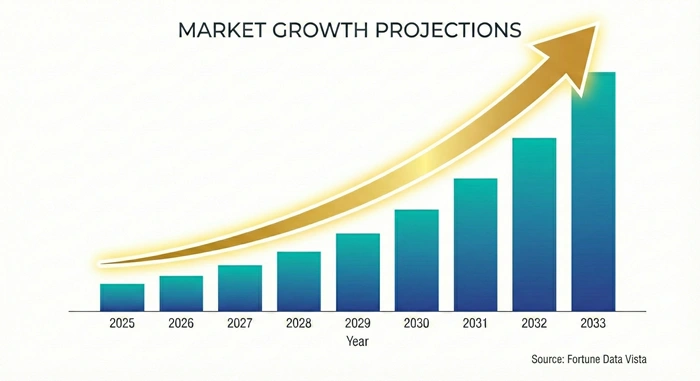
The outlook for the aquaculture vaccines market through 2033 is strongly positive. With a projected CAGR of 8.2%, the market is on track to nearly double in value from its 2026 base, adding approximately USD 250 million in new revenue over the forecast period. Asia Pacific is expected to emerge as the most dynamic growth region, driven by the massive scale of fish and shrimp farming across China, India, Vietnam, Indonesia, and Thailand. In these markets, rising incomes, growing middle-class demand for quality seafood, and government programs targeting antibiotic reduction are combining to create a highly favorable demand environment for fish health biologics. Europe will remain the revenue-dominant region, supported by Norway's globally leading salmon industry and its well-established culture of preventive veterinary medicine.
Looking further ahead, the pipeline of next-generation vaccines — including DNA vaccines against sea lice, mRNA-based formulations, and edible nano-vaccines — represents a wave of innovation that is still in its early commercial stages. As these products clear regulatory hurdles and reach commercial scale, they are expected to expand the addressable market significantly by offering solutions for diseases that currently have no licensed vaccine. The entry of major global animal health corporations into the aquaculture segment, combined with targeted acquisitions and R&D partnerships, signals strong industry confidence in the long-term trajectory of this market. Decision-makers who position early in this space — whether as producers, investors, or suppliers — stand to benefit substantially from the growth expected between 2026 and 2033.
Expert Speaks
-
"The convergence of biotechnology and sustainable aquaculture practices is creating remarkable opportunities. Preventive health solutions, particularly vaccines, are becoming the cornerstone of responsible fish farming, and we are committed to investing further in this space to help producers reduce their reliance on antibiotics and improve fish welfare outcomes across all major species." — CEO perspective, global animal health company (Fortune 500 sector)
-
"Disease outbreaks remain the single largest threat to aquaculture profitability worldwide. We see increasing demand from salmon and tilapia producers for multi-disease protection delivered in a single dose — and our investment in next-generation recombinant and DNA vaccine platforms reflects our confidence that the aquaculture health market will continue to grow well beyond 2030." — CEO perspective, multinational pharmaceutical and biologics company
-
"Regulatory environments globally are moving decisively in favor of vaccination over antibiotics in food-producing animals. For aquaculture operators, this creates both a compliance imperative and a business opportunity. Companies that invest now in building robust fish health management protocols — centered on preventive vaccination — will have a significant competitive advantage as sustainability standards tighten." — CEO perspective, integrated seafood and aquaculture company
Key Report Takeaways
-
North America leads the global aquaculture vaccines market, holding approximately 38% of total revenue share in 2025, driven by advanced fish health infrastructure, strong regulatory oversight from the U.S. FDA and Canada's CFIA, and high adoption rates of DNA and recombinant vaccine technologies among commercial salmon and trout producers.
-
Asia Pacific is the fastest-growing region, expected to register the highest CAGR through 2033, supported by rapidly expanding fish and shrimp farming in China, India, Vietnam, Thailand, and Indonesia, where disease prevention through vaccination is increasingly replacing antibiotic-based approaches under new government mandates.
-
The bacterial infection application segment is the largest contributor to the aquaculture vaccines market, accounting for over 45% of revenue in 2025, as bacterial pathogens like Aeromonas, Vibrio, and Edwardsiella remain the most widespread cause of mortality and economic losses in farmed fish populations globally.
-
The injection route of administration dominates, holding approximately 61% of market revenue in 2025, due to its proven efficacy, precise dosing capability, and long-lasting immune protection — making it the preferred choice for high-value species such as Atlantic salmon and rainbow trout.
-
The attenuated live vaccine product segment holds the largest share at approximately 49.9%, owing to its superior ability to generate robust, long-lasting immunity in fish by mimicking natural infections — making it particularly effective for disease prevention in large-scale commercial salmon and trout farms.
-
The oral vaccines segment is the fastest-growing delivery route, projected to achieve the highest CAGR in the market through 2033, as its ease of mass administration through feed makes it the most practical option for immunizing juvenile fish and high-density shrimp populations at commercial scale.
-
The salmon species segment is the fastest-growing species category, with significant CAGR driven by premium market value, high susceptibility to diseases like ISA and sea lice, and ongoing R&D breakthroughs in multivalent and DNA vaccines specifically designed for Atlantic salmon farming.
Market Scope
| Parameter | Details |
|---|---|
| Market Size by 2033 | USD 608.9 Million | Market Size by 2026 | USD 358.9 Million | Market Size by 2025 | USD 332.0 Million | Market Growth Rate from 2026 to 2033 | CAGR of 8.2% | Dominating Region | North America | Fastest Growing Region | Asia Pacific | Segments Covered | Product, Route of Administration, Application, Species, Distribution Channel | Regions Covered | North America, Europe, Asia Pacific, Latin America, Middle East & Africa |
Market Dynamics
Drivers Impact Analysis
Escalating disease incidence, tightening antibiotic regulations, and surging global seafood demand are forming a powerful multi-dimensional growth engine for the aquaculture vaccines market that shows no signs of slowing through 2033
| Driver | ≈ % Impact on CAGR Forecast | Geographic Relevance | Impact Timeline |
|---|---|---|---|
| Rising disease outbreaks in intensive fish farming operations | ~38% | Global, especially Asia Pacific & Europe | Short to Long Term |
| Regulatory restrictions on antibiotic use in aquaculture | ~28% | North America, Europe, Asia Pacific | Medium to Long Term |
| Government support for sustainable aquaculture and biosecurity | ~18% | Asia Pacific, North America, Europe | Short to Medium Term |
| Advances in recombinant, DNA, and multivalent vaccine platforms | ~10% | Europe, North America | Medium to Long Term |
| Growing global seafood consumption and high-density farming | ~6% | Asia Pacific, Latin America, MEA | Medium to Long Term |
The most powerful driver sustaining growth in the aquaculture vaccines market is the rising frequency and economic impact of disease outbreaks in commercially farmed fish populations. As fish and shrimp farming becomes more intensive to meet global protein demand, higher stocking densities create the ideal conditions for rapid pathogen spread. Bacterial diseases like vibriosis and furunculosis, viral infections such as ISA and VNN, and parasitic infestations like sea lice collectively cost the global aquaculture industry billions of dollars in annual losses. For producers operating on thin margins, vaccination has become the most cost-effective and operationally practical disease prevention strategy — a position that is reinforced year after year by advancing vaccine efficacy and expanding product portfolios from major animal health companies.
Regulatory pressure to reduce antibiotic use in food-producing animal systems is the second critical driver reshaping market dynamics. In Europe, Norway's dramatic reduction in antibiotic use through salmon vaccination programs since the 1990s has become a global model. The European Medicines Agency and national regulators across Asia Pacific are now pushing similar frameworks, restricting antibiotic prophylactic use and mandating biosecurity-based alternatives. This regulatory environment is effectively converting vaccine adoption from a voluntary best practice into a compliance requirement for licensed aquaculture operations. For manufacturers, this shift is creating a highly visible and predictable demand signal that is supporting increased R&D investment and product pipeline development across the sector.
Restraints Impact Analysis
Limited immunological knowledge of aquatic species, complex cold-chain requirements, and highly variable regulatory frameworks are creating operational and commercial friction that is slowing the full realization of the aquaculture vaccines market's growth potential
| Restraint | ≈ % Impact on CAGR Forecast | Geographic Relevance | Impact Timeline |
|---|---|---|---|
| Limited scientific understanding of fish immune systems | ~40% | Global | Medium to Long Term |
| Complex regulatory approval processes across multiple jurisdictions | ~35% | Asia Pacific, Latin America, MEA | Short to Medium Term |
| Cold-chain logistics and storage challenges in developing regions | ~25% | Africa, Southeast Asia, Latin America | Short to Medium Term |
The most significant technical restraint facing the aquaculture vaccines market is the still-incomplete understanding of the immune biology of fish and other aquatic species. Unlike mammals, fish possess immune systems that vary considerably by species, developmental stage, water temperature, and environmental conditions. This complexity makes it difficult to design universally effective vaccines and predict immune responses reliably, especially for oral and immersion-based delivery formats. Developing effective mucosal vaccines for fish, for example, remains a major scientific challenge, as the mechanisms of mucosal immunity in teleost fish are poorly understood compared to their mammalian counterparts. Until these gaps in immunological knowledge are bridged, certain vaccine categories — particularly those targeting viral pathogens and parasites — will continue to show suboptimal or variable efficacy in field conditions.
The regulatory landscape presents a parallel challenge. Aquaculture vaccine approvals are governed by different agencies and standards in each market — the USDA and FDA in the U.S., EMA in Europe, CFIA in Canada, and a patchwork of national authorities across Asia, Latin America, and Africa. Each jurisdiction has its own requirements for clinical trials, field efficacy data, environmental safety assessments, and manufacturing standards, which significantly increases the time and cost of bringing new products to market globally. For smaller biotech firms and regional producers, navigating this multi-market regulatory maze is often prohibitively expensive, limiting competition and slowing the introduction of innovative products in emerging markets where disease burdens are often highest.
Opportunities Impact Analysis
Next-generation vaccine platforms, expanding shrimp aquaculture, and untapped emerging markets in Asia and Africa are creating a rich opportunity landscape for the aquaculture vaccines market that is expected to intensify through 2033
| Opportunity | ≈ % Impact on CAGR Forecast | Geographic Relevance | Impact Timeline |
|---|---|---|---|
| Development of oral and immersion vaccines for mass immunization | ~35% | Asia Pacific, Latin America | Medium to Long Term |
| DNA and mRNA vaccine platforms for previously unvaccinable diseases | ~30% | Europe, North America | Medium to Long Term |
| Expanding shrimp farming creating demand for new vaccine categories | ~22% | Asia Pacific, MEA | Short to Medium Term |
| Academic-industry partnerships generating novel vaccine technologies | ~13% | Global | Long Term |
One of the most commercially exciting opportunities in the aquaculture vaccines market is the development and commercialization of oral vaccines for mass immunization. Currently, injection remains the dominant delivery route for high-value species, but it is labor-intensive and impractical for large juvenile fish populations and shrimp. Oral vaccine delivery through medicated feed eliminates the need for individual fish handling, reduces labor costs dramatically, and is far better suited to the operational realities of large-scale farming in Asia and Latin America. Companies that can successfully develop oral vaccines with proven, consistent efficacy across diverse species and environmental conditions are well positioned to capture significant market share in the highest-growth regions during the forecast period.
The emergence of DNA and mRNA vaccine platforms represents the most transformative long-term opportunity in the sector. Researchers at institutions like the University of Bergen are making meaningful progress toward the world's first licensed DNA vaccine against sea lice — one of the most economically damaging parasites in salmon farming. If successfully commercialized, this technology would address a disease that currently costs the global salmon industry an estimated USD 1 billion per year. More broadly, mRNA vaccine technology — validated at scale during the COVID-19 pandemic — holds strong potential for adaptation to aquatic species, allowing rapid development of vaccines against newly emerging pathogens. These innovations could fundamentally expand the addressable market size beyond current estimates by creating entirely new product categories.
Segment Analysis
By Product: Attenuated Live Vaccines
Superior immunogenicity, long-lasting protection, and broad commercial validation across multiple fish species have made attenuated live vaccines the dominant and most trusted product category in the aquaculture vaccines market today
The attenuated live vaccines segment is the largest product category in the aquaculture vaccines market, accounting for approximately 49.9% of total market revenue in 2025. These vaccines contain weakened but living pathogens that replicate in the host fish and stimulate both humoral and cellular immune responses — closely mimicking a natural infection while eliminating the risk of actual disease. The result is a stronger, longer-lasting, and broader immune response compared to inactivated alternatives, often requiring fewer booster doses and less frequent re-vaccination schedules. This cost-efficiency advantage is particularly valuable in large-scale salmon and trout farming operations, where the cost of managing vaccination programs across millions of fish is a major operational consideration. The segment is growing at a CAGR of approximately 8.5% through 2033, with Europe — particularly Norway, Scotland, and Chile — remaining the dominant geographic market. Key players active in this segment include Zoetis (through PHARMAQ), MSD Animal Health (formerly Merck Animal Health), and HIPRA, all of which maintain strong portfolios of species-specific live-attenuated products backed by decades of field data.
Recent advances in genetic engineering are further strengthening the commercial position of this segment by addressing its primary historical limitation — the theoretical risk of reversion to virulence. Modern recombinant attenuation techniques allow manufacturers to engineer pathogens with precise genetic deletions that eliminate this risk while preserving immunogenicity. This has improved regulatory acceptance of live vaccines in markets previously cautious about their use, including parts of Asia Pacific and Latin America. In the Asia Pacific region, where intensive tilapia and shrimp farming is driving rapid demand growth, attenuated live vaccines for bacterial diseases like columnaris and edwardsiellosis are gaining commercial traction. Indian Immunologicals Limited and emerging biotech startups in India and Vietnam are developing locally adapted live vaccine formulations for freshwater species, positioning the region as an important future growth contributor to this segment's overall global revenue.
By Route of Administration: Injection Vaccines
Precise dosing, proven long-term efficacy, and widespread adoption in high-value salmon and trout farming operations make injection vaccines the clear revenue leader in the aquaculture vaccines market by route of administration
The injection vaccines segment held the largest revenue share by route of administration in the aquaculture vaccines market in 2025, contributing over 61% of total segment revenue. Intraperitoneal injection delivers a controlled and precise dose of antigens directly into the fish's body cavity, generating a robust and highly consistent immune response that is reproducible across large populations. For high-value species like Atlantic salmon, sea bass, and rainbow trout — where each fish represents a significant economic investment — the higher labor cost associated with individual injection is easily justified by the superior protection offered. Norway and Chile are the two largest markets for injection-based aquaculture vaccination, collectively representing a substantial share of global salmon production. In these markets, major companies like Zoetis (PHARMAQ), MSD Animal Health, and Elanco compete aggressively on product innovation, adjuvant technology, and multivalent formulations that protect against multiple pathogens in a single injection event.
The segment is projected to maintain its dominant position through 2033, growing steadily at a CAGR of around 7.8%, as the global salmon farming industry continues to expand and new species — including yellowtail, sea bream, and barramundi — are increasingly being vaccinated through injectable protocols. Asia Pacific is an emerging growth geography for this segment, as Japan, Australia, and South Korea expand their high-value fish farming sectors. In Japan, Kyoritsu Seiyaku's 2025 launch of the world's first trivalent oil-adjuvant vaccine for yellowtail lactococcosis highlights how injection-based vaccine innovation is actively extending into new species and disease targets across the region. This ongoing product diversification is a key reason the injection segment is expected to retain its market leadership well beyond the 2026–2033 forecast window.
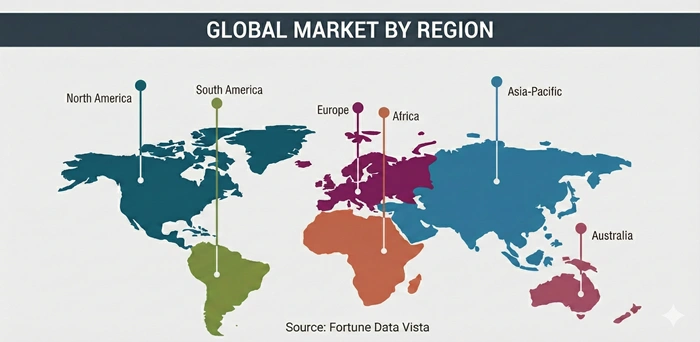
Regional Insights
North America
North America's combination of advanced vaccine technology adoption, strong regulatory frameworks, and high-value salmon and trout farming sectors makes it the commanding revenue leader in the global aquaculture vaccines market
North America holds the largest regional share in the aquaculture vaccines market, accounting for approximately 38% of global revenue in 2025. The region benefits from a mature aquaculture industry, particularly in Canada and the U.S., where Atlantic salmon, rainbow trout, tilapia, and catfish farming are well-established commercial sectors with sophisticated health management protocols. The regulatory environment — overseen by the U.S. FDA Center for Veterinary Medicine and the Canadian Food Inspection Agency — is rigorous but supportive of innovation, with streamlined approval pathways for novel vaccine technologies accelerating product introductions. Key players with strong regional presence include Zoetis, MSD Animal Health, and PHARMAQ, which collectively dominate the premium vaccine supply for salmon and trout farms across British Columbia, Atlantic Canada, and the U.S. Pacific Northwest. The region is expected to grow at a CAGR of approximately 7.5% from 2026 to 2033.
The U.S. market in particular is witnessing a surge of activity, with the 2025 entry of AquaTactics (Bimeda's Washington-based aquaculture division) into the autogenous fish vaccine market following USDA approval — signaling growing commercial interest in customized, farm-specific vaccine solutions. Consumer demand for antibiotic-free, sustainably raised seafood continues to drive producers toward vaccination-centric health management. Canada's government investment of over USD 3.5 million in clean technology projects for aquaculture sustainability is further encouraging the adoption of preventive biologics over chemical treatments. These dynamics position North America as both the revenue anchor and a continuing innovation hub for the aquaculture vaccines market through the 2033 forecast period.
Asia Pacific
Asia Pacific's enormous fish and shrimp farming scale, strong government backing for disease prevention, and rising consumer demand for quality seafood are driving the region toward the fastest CAGR in the global aquaculture vaccines market
Asia Pacific is the fastest-growing region in the aquaculture vaccines market, expected to register the highest regional CAGR through 2033. The region accounts for the overwhelming majority of global aquaculture output — with China, India, Vietnam, Indonesia, and Thailand collectively producing more farmed fish and shrimp than all other regions combined. This immense production volume creates proportionally large exposure to disease risks, and the economic consequences of outbreaks are increasingly motivating both private producers and government agencies to invest in vaccination programs. China's large-scale battery of freshwater and marine fish farms, India's rapidly growing shrimp export sector, and Japan's high-value yellowtail and sea bream farming operations all represent distinct and fast-expanding demand pools for specialized vaccine products. Key companies advancing in this region include Indian Immunologicals Limited, Kyoritsu Seiyaku (Japan), and Nisseiken Co., Ltd. (Japan), alongside global players like Zoetis and MSD Animal Health deepening their regional distribution networks.
India is emerging as one of the most strategically important markets within Asia Pacific, driven by its position as the world's third-largest fish producer and its government's active push to develop domestic aquatic vaccine capabilities. The ICAR-CIBA collaboration for VNN vaccine development, the CIBA-Nodavac-R launch for nervous necrosis control, and Indian Immunologicals' growing freshwater fish vaccine portfolio all reflect a maturing domestic biotech ecosystem that is reducing dependence on imported vaccine products. The Indian government's Marine & Aquaculture Biotechnology (MAB) program is providing structural support for fish vaccine R&D, ensuring that India will become an increasingly self-sufficient and competitive market for aquaculture health biologics. As Asia Pacific's regulatory environments progressively align with international biosecurity standards, the region's share of global aquaculture vaccines market revenue is projected to rise meaningfully through the forecast period.
Report Customization Available
Get a Customized Aquaculture Vaccines Market Report Tailored to Your Region or Country
Our aquaculture vaccines market report is fully customizable to align with your specific geographic research needs — whether you require deep-dive country-level insights or a comprehensive multi-region overview. Each customized version delivers targeted market analysis, species-specific demand trends, regulatory environment details, competitive landscapes, investment opportunities, and growth projections tailored specifically to the geography you select.
Customized aquaculture vaccines market reports are available for the following regions and countries:
North America
-
United States – Detailed coverage of FDA regulatory landscape, autogenous vaccine market, salmon and trout species demand, key company profiles, and antibiotic restriction policy impact on vaccine adoption
-
Canada – Insights on Atlantic salmon vaccine market, CFIA approval processes, government sustainability funding, and British Columbia and Atlantic Canada production trends
-
Mexico – Analysis of tilapia and shrimp vaccine demand, growth of export-oriented aquaculture, and competitive landscape for domestic and imported vaccines
Europe
-
United Kingdom – Coverage of salmon, sea trout, and halibut vaccine demand, regulatory environment, and sea lice vaccine R&D developments
-
Germany – Analysis of trout and carp farming vaccine use, pharmaceutical industry involvement, and regulatory standards under EMA guidelines
-
France – Insights on sea bass, sea bream, and oyster disease prevention, government aquaculture support programs, and vaccine product availability
-
Italy – Coverage of Mediterranean fish species vaccine demand, including sea bream and sea bass, and regional distributor landscape
-
Rest of Europe – Aggregated analysis covering Norway, Spain, Denmark, Sweden, Poland, and other European aquaculture-producing markets, with particular focus on Norway's globally leading salmon vaccine adoption
Asia Pacific
-
China – In-depth analysis of freshwater and marine fish vaccine demand, key domestic producers, government biosecurity policy, and antibiotic replacement initiatives
-
India – Coverage of shrimp and freshwater fish vaccine growth, ICAR R&D programs, domestic manufacturer profiles, and export-linked demand drivers
-
Japan – Analysis of high-value species vaccine innovation, Kyoritsu Seiyaku and Nisseiken market presence, and regulatory environment for novel vaccine types
-
South Korea – Insights on flounder and yellowtail vaccine demand, biosecurity investment, and competitive supplier landscape
-
Australia – Coverage of salmon vaccine market in Tasmania, regulatory frameworks, and sustainable aquaculture policy impacts
-
Rest of Asia Pacific – Market analysis for Vietnam, Indonesia, Thailand, and the Philippines, with focus on shrimp vaccine demand and disease management challenges
Latin America
-
Brazil – Detailed analysis of tilapia and shrimp vaccine demand, MAPA regulatory requirements, export aquaculture growth, and competitive landscape
-
Argentina – Coverage of freshwater fish farming vaccine adoption, biosecurity investment, and market dynamics
-
Rest of Latin America – Overview of Chile's highly significant salmon vaccine market, Mexico's shrimp sector, and emerging demand across Colombia and Peru
Middle East & Africa
-
UAE – Insights on government-led aquaculture expansion, food security initiatives, and vaccine adoption in emerging marine fish farming operations
-
Saudi Arabia – Analysis of Vision 2030 aquaculture investment programs, tilapia and shrimp vaccine demand, and regulatory developments
-
Rest of MEA – Coverage of South Africa, Egypt, Kenya, and other emerging aquaculture markets with growing appetite for sustainable disease prevention solutions
Top Key Players
-
Zoetis Inc. (United States)
-
Merck & Co., Inc. (MSD Animal Health) (United States)
-
Elanco Animal Health (United States)
-
HIPRA (Spain)
-
PHARMAQ (Norway)
-
Vaxxinova International BV (Netherlands)
-
Phibro Animal Health Corporation (United States)
-
CAVAC (France)
-
KBNP Inc. (South Korea)
-
Kyoto Biken Laboratories, Inc. (Japan)
-
Nisseiken Co., Ltd. (Japan)
-
Indian Immunologicals Limited (India)
-
Virbac (France)
-
Tecnovax (Argentina)
-
Veterquimica S.A. (Chile)
Recent Developments
-
In February 2025, MSD Animal Health completed the acquisition of Elanco's aquaculture business, significantly expanding its aquatic vaccine and therapeutics portfolio with facilities across Canada, Vietnam, and Chile. This strategic acquisition positions MSD Animal Health as one of the most comprehensive aquaculture health companies globally, with a broadened pipeline covering multiple high-value fish species across key producing regions.
-
In March 2025, AquaTactics, Bimeda's Washington-based aquaculture division, entered the autogenous fish vaccine market following USDA approval. The company began offering customized autogenous vaccine development, veterinary consulting services, and comprehensive fish health management protocols, targeting commercial aquaculture producers across U.S. freshwater and marine farming operations.
-
In March 2025, Aquatreck Animal Health, backed by strategic investors including SAIC, advanced its proprietary yeast-based sea lice vaccine program, successfully creating recombinant proteins designed to trigger a targeted immune response in farmed salmon. The company's technology aims to provide a non-chemical, welfare-friendly alternative to current sea lice treatment methods widely used in Norwegian and Chilean salmon farming.
-
In July 2025, FHF (Norwegian Seafood Research Fund) and the University of Bergen announced significant progress in the development of a DNA vaccine against sea lice — the first of its kind for any parasite in aquaculture. This breakthrough, if successfully commercialized, would address one of the most costly unresolved disease challenges in the global salmon farming industry, with potential annual savings estimated in the hundreds of millions of dollars.
-
In October 2025, Kyoritsu Seiyaku (Japan) launched the world's first trivalent oil-adjuvant vaccine targeting all serotypes of alpha-hemolytic lactococcosis in yellowtail. The vaccine, which protects against the newly identified Type III strain, represents a significant advancement in preventive aquaculture medicine for high-value marine species in Japan and neighboring Asian markets.
Market Trends
Accelerating demand for oral and immersion delivery formats, the rise of DNA and mRNA vaccine platforms, and a structural industry shift away from antibiotics toward biologics are the three defining trends shaping the competitive landscape of the aquaculture vaccines market through 2033
The most commercially significant trend reshaping the aquaculture vaccines market is the push toward non-invasive mass vaccination methods — particularly oral and immersion delivery. As the global aquaculture industry scales up production and manages fish populations of hundreds of millions, the injection approach — while still dominant in revenue terms — is increasingly seen as operationally impractical for small juvenile fish, shrimp, and large freshwater species farmed in pond systems. Oral vaccines delivered through medicated feed offer a transformative alternative that eliminates handling stress, reduces labor requirements, and makes mass immunization of entire populations practically achievable in a single feeding cycle. The commercial viability of this approach is improving steadily as formulation technology advances and companies develop better encapsulation methods to protect vaccine antigens from degradation in the fish gut.
The second major trend is the rapid advancement of next-generation biological platforms — including DNA vaccines, mRNA vaccines, and recombinant subunit vaccines — that are beginning to move from academic research into commercial pipeline stages. University research programs in Norway, the U.S., India, and Japan are producing meaningful breakthroughs in vaccine design for pathogens that previously had no licensed preventive solution — most notably sea lice, Viral Nervous Necrosis, and Infectious Pancreatic Necrosis. As regulatory agencies in key markets develop clearer approval pathways for DNA and mRNA-based veterinary biologics — partly informed by the regulatory frameworks developed during the human COVID-19 vaccine rollout — the commercial timeline for these innovative products is shortening. This innovation wave is expected to generate a new generation of premium-priced products that will expand per-unit revenue across the aquaculture vaccines market significantly by the later years of the 2026–2033 forecast period.
Segments Covered in the Report
-
By Product
-
Attenuated Live Vaccines
-
Inactivated Vaccines
-
DNA Vaccines
-
Recombinant/Subunit Vaccines
-
Other Vaccines (mRNA, Peptide-based, Edible/Nano-vaccines)
-
-
By Route of Administration
-
Injection Vaccines
-
Immersion/Spray Vaccines
-
Oral Vaccines
-
-
By Application
-
Bacterial Infection
-
Viral Infection
-
Parasitic Infection
-
Other Infections
-
-
By Species
-
Salmon
-
Trout
-
Tilapia
-
Shrimp
-
Other Species (Yellowtail, Sea Bream, Sea Bass, Carp, Barramundi)
-
-
By Distribution Channel
-
Hospital/Clinic Pharmacy
-
Retail
-
E-Commerce
-
-
By Region
-
North America (U.S., Canada, Mexico)
-
Europe (U.K., Germany, France, Italy, Norway, Spain, Rest of Europe)
-
Asia Pacific (China, India, Japan, South Korea, Australia, Thailand, Rest of Asia Pacific)
-
Latin America (Brazil, Argentina, Rest of Latin America)
-
Middle East & Africa (UAE, Saudi Arabia, South Africa, Rest of MEA)
-
❝ Built for Every Level — From Startups to Industry Giants ❞
Here Is Exactly How This Report Works for You
-
For Tier 1 enterprises, high-level investors, and Fortune 500 animal health companies: This report delivers a granular competitor revenue analysis — covering revenue sources by product segment, species, delivery route, and geography — for all major players including Zoetis, MSD Animal Health, and HIPRA. It also maps how geopolitical factors such as antibiotic trade restrictions, fishery policy reforms, and cross-border biosecurity regulations are reshaping competitive dynamics and supply chains across North America, Europe, and Asia Pacific — giving you the strategic intelligence to stay ahead in an increasingly regulated and competitive global market.
-
For Tier 2 and Tier 3 companies, mid-level producers, and aquaculture service providers: The report provides a clear view of supply-demand imbalances across all five regions — identifying exactly which species, disease segments, and geographic markets are underserved by current vaccine supply and where new entrants have the best near-term opportunity to grow. You will gain a detailed picture of pricing dynamics, distributor landscape, and product positioning strategies that can guide your market entry or expansion decisions with precision.
-
For startups, biotech innovators, and emerging market investors: This report maps the fastest-growing niches — oral vaccines, DNA/mRNA platforms, shrimp vaccines, and emerging market disease prevention — alongside funding trends, partnership activity, and regulatory developments that are defining the competitive frontier. It tells you not just where the market is today, but where the next wave of growth capital and commercial opportunity will emerge between 2026 and 2033, giving you the actionable foundation to build, pitch, or invest with confidence.
Frequently Asked Questions:
Answer: The global aquaculture vaccines market was valued at USD 332.0 million in 2025 and is expected to reach USD 608.9 million by 2033. The market is projected to grow at a CAGR of 8.2% from 2026 to 2033, driven by rising disease incidence, regulatory restrictions on antibiotics, and technological advances in vaccine development.
Answer: North America currently dominates the aquaculture vaccines market with approximately 38% of global revenue share in 2025, driven by advanced salmon and trout farming sectors. Asia Pacific is the fastest-growing region, registering the highest CAGR through 2033 due to the rapid expansion of fish and shrimp farming in China, India, and Southeast Asia.
Answer: The major product types in the aquaculture vaccines market include attenuated live vaccines, inactivated vaccines, DNA vaccines, and recombinant/subunit vaccines. The attenuated live vaccines segment leads with approximately 49.9% market share in 2025, due to its superior immunogenicity and long-lasting protection in commercially farmed fish.
Answer: The primary challenges in the aquaculture vaccines market include limited scientific understanding of fish immune systems, which complicates vaccine development, and complex multi-jurisdictional regulatory approval processes that slow product launches. Cold-chain logistics in developing aquaculture regions and the high cost of clinical trials for new vaccine platforms also constrain market expansion.
Answer: The leading companies in the aquaculture vaccines market include Zoetis, MSD Animal Health, HIPRA, PHARMAQ, and Elanco, which collectively hold a significant share of global market revenue. These players compete primarily through R&D investment in next-generation vaccine platforms, strategic acquisitions, and expanding regional distribution partnerships in high-growth markets across Asia Pacific and Latin America.