
Artificial Intelligence (AI) in Oil and Gas Market Overview
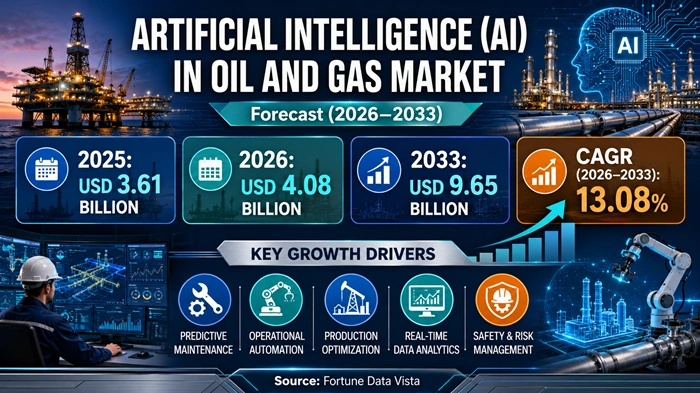
The global Artificial Intelligence (AI) in Oil and Gas market size is valued at USD 3.61 billion in 2025 and is predicted to increase from USD 4.08 billion in 2026 to approximately USD 9.65 billion by 2033, growing at a CAGR of 13.08% from 2026 to 2033. The market's rapid expansion reflects the oil and gas industry's accelerating shift toward intelligent automation, data-driven decision-making, and cost-efficient operations across upstream, midstream, and downstream segments.
AI Impact on the Oil and Gas Industry
Transforming a Century-Old Industry Through Data Intelligence, Automation, and Real-Time Operational Insight
Artificial intelligence has fundamentally changed the way oil and gas companies explore reserves, manage production, and maintain infrastructure. Operators are now using machine learning models and predictive analytics to analyze seismic data with far greater speed and precision than traditional methods ever allowed. This shift is reducing the cost of exploration dramatically while improving the accuracy of resource estimation, giving companies a competitive edge in increasingly volatile energy markets.
Beyond exploration, AI-driven automation is streamlining everything from pipeline monitoring to refinery operations. Intelligent systems can detect equipment faults before they cause costly shutdowns, helping operators reduce unplanned downtime by significant margins. Digital twin technology — which creates virtual replicas of physical assets — is allowing engineers to simulate operational scenarios, test new strategies, and optimize performance in real time without interrupting actual production. These capabilities are making the AI in oil and gas sector one of the most strategically important investment areas in the energy industry today.
Growth Factors
Operational Efficiency Demands, Rising Energy Complexity, and the Digital Transformation of Oilfields Are Together Fueling Market Expansion
Several powerful forces are propelling the growth of AI adoption in the oil and gas sector. As global energy demand continues to rise and accessible reserves become harder to find, companies are under pressure to extract more value from existing assets. AI-powered reservoir modeling, drilling optimization algorithms, and autonomous inspection drones are giving operators the tools to do exactly that — cutting operational costs while boosting output. The growing availability of massive operational datasets from connected oilfield equipment further enables these intelligent systems to learn and improve continuously.
Regulatory pressure around worker safety and environmental compliance is also pushing companies toward AI-enabled monitoring systems. Offshore and remote onshore operations are inherently dangerous, and real-time AI surveillance of pipelines, pressure systems, and refinery equipment can prevent accidents before they happen. Additionally, the ongoing expansion of smart oilfield initiatives and the integration of AI with Internet of Things (IoT) platforms are creating a new generation of fully connected, self-optimizing energy facilities. These drivers collectively explain why the artificial intelligence in oil and gas market is on such a strong growth trajectory heading toward 2033.
Market Outlook
Sustained Double-Digit Growth Expected Through 2033 as AI Becomes Central to Energy Sector Strategy
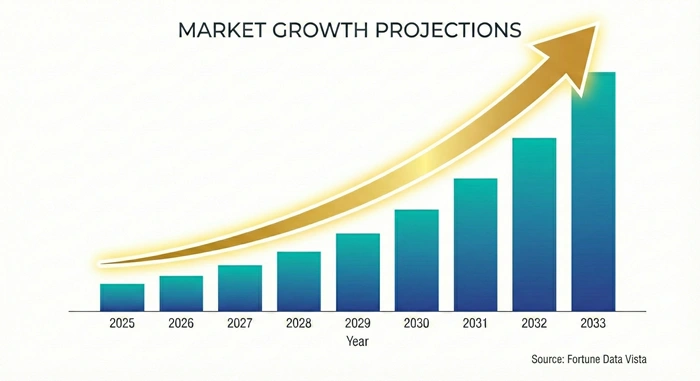
The medium-to-long-term outlook for AI in oil and gas remains strongly positive. Investments are flowing into AI software platforms, cloud-based data infrastructure, and sector-specific machine learning solutions. North America continues to lead in adoption, supported by a dense network of technology vendors, established digital infrastructure, and a culture of early technology adoption among major operators. However, the Middle East and Asia Pacific regions are catching up fast, driven by large-scale national energy programs and increasing private-sector digitization investments.
Looking toward 2033, AI in oil and gas applications are expected to expand well beyond predictive maintenance into areas like autonomous drilling systems, AI-powered contract management, and generative AI for geological interpretation. The convergence of cloud computing, edge AI, and advanced robotics will further accelerate capability development. Companies that invest early in building AI competency across their operations stand to gain a decisive long-term advantage in efficiency, safety, and profitability.
Expert Speaks
-
"Artificial intelligence is no longer a future consideration for the energy industry — it is a present-day operational necessity. At SLB, we are embedding AI across our entire workflow, from subsurface modeling to real-time drilling decisions, and the productivity gains we are seeing are substantial." — Olivier Le Peuch, CEO, SLB (Schlumberger)
-
"The integration of machine learning and advanced analytics into Baker Hughes' core service offerings has opened a new chapter in how we help our clients manage assets more safely and efficiently. Digital transformation in oil and gas is happening now, and AI is at the center of it." — Lorenzo Simonelli, CEO, Baker Hughes
-
"Halliburton is committed to deploying AI technologies that give our customers real-time visibility into their operations. In an environment where every dollar of capital expenditure must deliver maximum return, AI-driven insights are proving to be transformational." — Jeff Miller, CEO, Halliburton
Key Report Takeaways
-
North America dominates the global AI in oil and gas market, holding the largest regional share of approximately 35–38%, driven by the concentration of major technology providers, early digital adoption by operators like ExxonMobil and Chevron, and a well-developed data infrastructure ecosystem across the U.S. and Canada.
-
Asia Pacific is the fastest-growing region, with countries like China, India, and Australia accelerating national energy digitization programs and investing heavily in AI platforms for upstream and midstream applications, driven by rising domestic energy demand.
-
Large integrated oil companies (IOCs) and national oil companies (NOCs) are the heaviest users of AI in oil and gas, leveraging machine learning and automation to manage multi-billion-dollar assets more efficiently, particularly in upstream exploration and production segments.
-
Predictive maintenance and process optimization collectively represent the leading application segment, accounting for a significant portion of total market revenue, as operators prioritize reducing unplanned downtime and extending asset life across aging infrastructure.
-
Machine learning (ML) and deep learning are the most widely deployed AI technologies within the sector, enabling real-time decision support, autonomous drilling optimization, and seismic data interpretation at scale.
-
The cloud-based deployment segment is projected to grow at a notably higher CAGR than on-premise solutions through 2033, capturing over 60% market share by the end of the forecast period, as operators transition to scalable, cost-flexible digital infrastructure with remote accessibility.
Market Scope
| Parameter | Details |
|---|---|
| Market Size by 2033 | USD 9.65 Billion | Market Size by 2026 | USD 4.08 Billion | Market Size by 2025 | USD 3.61 Billion | Market Growth Rate from 2026 to 2033 | CAGR of 13.08% | Dominating Region | North America | Fastest Growing Region | Asia Pacific | Segments Covered | By Component, By Technology, By Application, By Deployment, By End User, By Region | Regions Covered | North America, Europe, Asia Pacific, Latin America, Middle East & Africa |
Market Dynamics
Drivers Impact Analysis
Rising Operational Complexity, the Relentless Push for Cost Efficiency, and the Urgent Need for Real-Time Decision-Making Are the Core Forces Accelerating AI Adoption Across Global Oil and Gas Operations
| Driver | ≈ % Impact on CAGR Forecast | Geographic Relevance | Impact Timeline |
|---|---|---|---|
| Demand for predictive maintenance and reduced downtime | ~28% | North America, Europe | Near-term (2026–2028) |
| Growth of smart oilfields and IoT integration | ~22% | Middle East, Asia Pacific | Medium-term (2027–2030) |
| Need for real-time drilling optimization | ~20% | North America, Middle East | Near-term (2026–2027) |
| Rising oil price volatility driving cost efficiency | ~18% | Global | Ongoing |
| Expansion of offshore exploration activities | ~12% | Europe, Asia Pacific | Long-term (2029–2033) |
The push for operational cost reduction remains the single most powerful driver of the AI in oil and gas market. Oil and gas producers face significant margin pressure during periods of price volatility, and AI offers a direct pathway to reducing lifting costs, minimizing equipment failures, and optimizing fuel consumption across facilities. Predictive maintenance systems powered by machine learning are already proving their value by detecting early-stage equipment degradation that human inspectors would miss, translating directly into fewer unplanned shutdowns and lower maintenance spending.
Simultaneously, the emergence of fully connected smart oilfields — where sensors, IoT devices, and AI platforms work together — is pushing operators to invest at scale in intelligent data infrastructure. The ability to make drilling decisions, adjust production parameters, and reroute pipeline flows in real time using AI-generated insights is rapidly becoming a standard operational requirement. As more companies in the Middle East and Asia Pacific launch national digitization programs for their energy sectors, driver influence from these regions is expected to grow substantially over the forecast period.
Restraints Impact Analysis
High Implementation Costs, Data Security Concerns, and the Shortage of Specialized AI Talent Within the Energy Sector Are Creating Real Barriers to Widespread Adoption
| Restraint | ≈ % Impact on CAGR Forecast | Geographic Relevance | Impact Timeline |
|---|---|---|---|
| High cost of AI implementation and integration | ~30% | Developing markets, SMEs | Near-to-medium term |
| Shortage of skilled AI and data science talent in energy | ~25% | Global | Ongoing |
| Legacy infrastructure incompatibility | ~22% | Europe, Latin America | Medium-term |
| Cybersecurity and data privacy concerns | ~15% | Global | Ongoing |
| Regulatory uncertainty in some markets | ~8% | Middle East, Africa | Long-term |
Despite strong growth momentum, the artificial intelligence in oil and gas market faces meaningful headwinds. Integrating AI platforms with decades-old operational technology (OT) infrastructure is both technically challenging and expensive. Many mid-size and smaller operators lack the capital and technical expertise needed to migrate from legacy systems to modern AI-enabled architectures. This creates a significant adoption gap between large integrated companies with deep resources and smaller independent operators who stand to benefit equally from these technologies.
Data security represents an additional and growing concern. Oil and gas facilities are critical national infrastructure, making them high-value targets for cyberattacks. Connecting operational systems to AI platforms through cloud-based networks increases the potential attack surface significantly. Companies must invest heavily in cybersecurity measures alongside their AI deployments, which adds to total cost of ownership and can slow decision-making around adoption, particularly in markets where data privacy regulations are rapidly evolving.
Opportunities Impact Analysis
Generative AI, Autonomous Drilling Systems, and AI-Enhanced Carbon Management Represent the Next Frontier of Value Creation in This Market
| Opportunity | ≈ % Impact on CAGR Forecast | Geographic Relevance | Impact Timeline |
|---|---|---|---|
| Generative AI for geological and seismic interpretation | ~30% | North America, Middle East | Medium-term (2027–2030) |
| AI-driven carbon capture and emissions monitoring | ~25% | Europe, North America | Near-to-medium term |
| Autonomous drilling and robotics deployment | ~22% | Offshore globally | Long-term (2029–2033) |
| AI integration with renewable energy transitions | ~15% | Europe, Asia Pacific | Medium-to-long term |
| Cloud-native AI platforms for NOC digitization | ~8% | Middle East, Africa | Near-term |
The emergence of generative AI represents one of the most exciting near-term opportunities for the AI in oil and gas market. Generative models can synthesize and interpret complex geological data at unprecedented speed, helping exploration teams identify prospective drilling targets more accurately and with fewer resources. This capability is particularly valuable for deepwater and frontier exploration where data complexity is highest.
Carbon management is rapidly becoming another major growth avenue. As oil and gas companies face increasing pressure from regulators and investors to reduce Scope 1 and Scope 2 emissions, AI-powered environmental monitoring, flaring reduction systems, and carbon capture optimization tools are attracting significant R&D investment. Companies that can offer credible, AI-verified emissions reduction solutions will gain a distinct commercial advantage in markets where environmental performance is directly tied to license to operate and investor relations.
Segment Analysis
By Application
Predictive Maintenance and Drilling Optimization Are Reshaping Asset Management and Well Delivery Across All Major Geographies in the AI-Driven Energy Market
Predictive maintenance stands as the dominant application segment within the AI in oil and gas market, representing an estimated 28–32% of total market revenue in 2026. This application is growing at a robust CAGR of approximately 14% through 2033, supported by the widespread deployment of IoT sensors across upstream and midstream assets. In North America, the segment is particularly strong, driven by companies like IBM, Microsoft, and C3.ai offering specialized maintenance AI platforms tailored to oilfield equipment. Operators in the U.S. and Canada have been early adopters, integrating these systems into compressors, pumps, heat exchangers, and rotating equipment across both onshore and offshore facilities. The financial case is compelling — reducing unplanned downtime by even a small percentage can translate into tens of millions of dollars in annual savings for a mid-size operator.
Drilling optimization is the second major application, gaining momentum rapidly as operators seek to reduce well construction costs and improve completion quality in complex geological formations. This segment accounts for roughly 22–25% of total market revenue and is growing fastest in the Middle East, where national oil companies like Saudi Aramco and ADNOC are investing heavily in AI-assisted drilling management systems. Baker Hughes and Halliburton are the dominant players in this space, embedding AI algorithms directly into their drilling service offerings. By analyzing real-time downhole data, surface parameters, and historical well performance simultaneously, these systems reduce drilling time, minimize nonproductive time, and improve wellbore quality — directly improving project economics in a capital-intensive industry.
By Component
Software Solutions Are Outpacing Services and Hardware, Becoming the Revenue Engine of the AI in Oil and Gas Market Through 2033
The software segment currently leads in terms of revenue contribution, holding approximately 45–48% of total market share in 2026, and is forecast to maintain this dominance through the end of the forecast period at a CAGR of approximately 13.5%. Software includes machine learning platforms, AI-powered analytics suites, digital twin applications, and natural language processing tools used across the oil and gas value chain. North America accounts for the largest share of this segment's revenue, with Silicon Valley and Houston emerging as twin hubs for energy-focused AI software development. Companies like C3.ai, Palantir Technologies, and Schlumberger's digital subsidiary Delfi are at the forefront, offering cloud-native platforms that integrate with existing operational systems. The segment's growth is further supported by the rapid maturation of cloud infrastructure, which has dramatically lowered the cost of deploying sophisticated AI models at scale.
AI-related services — including consulting, system integration, and managed services — represent the fastest-growing component, reflecting the industry's growing need for expert guidance in deploying and managing AI systems. Many operators, especially in emerging markets across Asia Pacific and the Middle East, prefer to engage service providers who can handle the complexity of AI implementation rather than building in-house capabilities. This has created strong demand for specialized energy AI service providers and systems integrators. Companies like Accenture, IBM Global Services, and regional firms in Saudi Arabia and India are capturing this demand, offering end-to-end digital transformation programs that combine AI software deployment with workforce training and long-term managed service agreements.
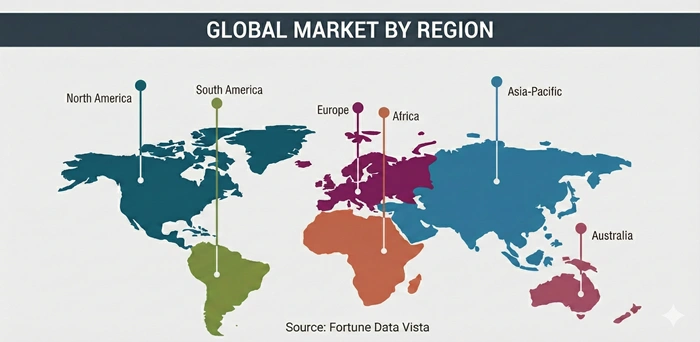
Regional Insights
From North America's Technology Leadership to Asia Pacific's Explosive Digital Ambition, Regional Dynamics Are Shaping the Future Geography of AI Adoption in Oil and Gas
North America
North America Holds the Commanding Lead in AI Adoption Across the Energy Sector, Backed by Mature Digital Infrastructure, Strong Venture Capital, and Operator Willingness to Embrace Technology
North America dominates the global artificial intelligence in oil and gas market, accounting for approximately 36–38% of total market revenue in 2026, with the U.S. contributing the lion's share at around 28–30% on its own. The region benefits from a unique combination of factors: a concentration of world-class AI technology companies, a dense network of independent and integrated oil producers willing to experiment with new technologies, and a highly developed regulatory framework that encourages innovation while maintaining safety standards. The region is expected to sustain a CAGR of approximately 13.5% through 2033. Key players driving North American leadership include IBM Corporation, Microsoft Corporation, C3.ai, Palantir Technologies, Halliburton, and Baker Hughes — all of which are headquartered in the U.S. and actively expanding their AI service portfolios for oil and gas clients.
The U.S. shale industry has been a particularly strong catalyst for AI adoption in the region. The low-cost, data-intensive nature of shale production makes it ideally suited for machine learning optimization, and operators like ExxonMobil, Chevron, and ConocoPhillips have made significant capital commitments to AI and digital programs in recent years. Canada contributes meaningfully as well, particularly through AI applications in oil sands operations, where intelligent optimization of extraction and upgrading processes can have an outsized impact on energy efficiency and emissions performance. The combination of oil and gas activity scale, technology provider proximity, and capital availability ensures North America's market leadership will continue through the forecast period.
Asia Pacific
Asia Pacific Is Surging Forward as the Most Dynamically Growing Region for AI in Energy, Powered by China's Industrial Ambition, India's Digital Agenda, and National Oil Company Modernization Across the Region
Asia Pacific is positioned as the fastest-growing regional market for AI in oil and gas, projected to achieve a CAGR of approximately 15–16% from 2026 to 2033 — outpacing the global average by a meaningful margin. China leads growth within the region, driven by aggressive national AI investment programs, the digitization initiatives of CNOOC, Sinopec, and PetroChina, and strong government support for technology-driven energy sector transformation. India is not far behind, with Oil and Natural Gas Corporation (ONGC) and Reliance Industries actively deploying AI solutions for reservoir management and refinery optimization. The region currently holds approximately 18–22% of global market share and is rapidly closing the gap with Western markets as digital infrastructure matures.
Japan, South Korea, and Australia are also important contributors within the Asia Pacific market, particularly in the liquefied natural gas (LNG) sector, where AI optimization of liquefaction trains and shipping logistics is delivering measurable efficiency gains. Japanese companies like JXTG Nippon Oil and Inpex Corporation are partnering with global AI vendors to upgrade their operational technology systems. The relatively younger digital infrastructure in parts of Southeast Asia and Oceania is actually an advantage in some respects — companies can build cloud-native AI architectures from the ground up rather than retrofitting aging legacy systems, potentially allowing them to leapfrog older technology approaches common in more mature markets.
Report Customization Available by Region and Country
Tailored Market Intelligence for Every Geography — Because a One-Size-Fits-All Analysis Rarely Serves the Strategic Needs of Decision-Makers Operating in Specific Regional Contexts
This report on the AI in oil and gas market can be fully customized to deliver region-specific and country-specific insights, offering detailed market data, competitive analysis, demand trends, growth opportunities, and regulatory landscapes tailored to your target geography. Whether you are an operator, investor, technology provider, or policy researcher, a customized report gives you the precise intelligence you need to make confident decisions in your market.
-
Customized reports are available for the following regions and countries:
North America
-
United States – Detailed AI adoption analysis across shale, offshore, and refinery sectors; technology vendor landscape; regulatory environment
-
Canada – Oil sands digitization, smart pipeline monitoring, and AI in LNG applications
-
Mexico – Pemex digital transformation initiatives, upstream AI adoption opportunities
Europe
-
United Kingdom – North Sea AI applications, energy transition AI use cases, offshore maintenance automation
-
Germany – Industrial AI integration in refinery operations, midstream optimization
-
France – TotalEnergies AI programs, European regulatory landscape for energy AI
-
Italy – Eni's digital exploration platforms, AI in Mediterranean basin operations
-
Rest of Europe – Country-level insights for Norway, Netherlands, and other oil-producing nations
Asia Pacific
-
China – CNOOC, Sinopec, and PetroChina digital programs; national AI energy policy; market size and growth
-
India – ONGC and Reliance AI initiatives; smart field development; upstream and downstream applications
-
Japan – LNG AI optimization, JXTG and Inpex technology programs
-
South Korea – Refinery AI and petrochemical optimization market
-
Australia – LNG sector AI adoption, offshore monitoring technologies
-
Rest of Asia Pacific – Southeast Asia and Oceania country-specific market intelligence
Latin America
-
Brazil – Petrobras deep-water AI applications, subsalt reservoir modeling
-
Argentina – Vaca Muerta shale digitization, YPF technology initiatives
-
Rest of Latin America – Country-level intelligence for Colombia, Ecuador, and other producing nations
Middle East & Africa
-
UAE – ADNOC smart oilfield programs, AI investment landscape
-
Saudi Arabia – Saudi Aramco's Intelligent Enterprise strategy, vendor ecosystem
-
Rest of MEA – Opportunities in Kuwait, Iraq, Nigeria, and emerging African energy markets
Top Key Players
-
IBM Corporation (United States)
-
Microsoft Corporation (United States)
-
Google LLC (Alphabet Inc.) (United States)
-
SLB (Schlumberger Limited) (United States / France)
-
Halliburton Company (United States)
-
Baker Hughes Company (United States)
-
Accenture plc (Ireland)
-
Oracle Corporation (United States)
-
C3.ai, Inc. (United States)
-
Cisco Systems, Inc. (United States)
-
SparkCognition Inc. (United States)
-
Palantir Technologies Inc. (United States)
-
NVIDIA Corporation (United States)
-
Tachyus Corporation (United States)
-
Emerson Electric Co. (United States)
Recent Developments
-
In 2025, Baker Hughes and C3.ai expanded their strategic partnership to deploy AI-powered predictive maintenance and production optimization solutions across Baker Hughes' global oilfield services customer base, targeting large-scale deployment in the Middle East and North America.
-
In early 2026, SLB (Schlumberger) announced a significant upgrade to its Delfi digital platform, integrating generative AI capabilities for real-time geological interpretation and automated well planning, making it one of the most advanced AI-native platforms in the energy sector.
-
In 2025, Saudi Aramco and IBM deepened their existing technology collaboration, with IBM providing advanced AI and hybrid cloud infrastructure to support Aramco's ambitious goal of becoming the world's most technologically advanced national oil company, with specific AI applications across drilling and reservoir management.
-
In late 2025, Shell and Equinor combined their U.K. offshore oil and gas assets to form the North Sea's largest independent producer, with both companies committed to deploying joint AI-enabled asset monitoring and predictive maintenance systems across the combined portfolio.
-
In 2025, Microsoft expanded its partnership with several major oil and gas operators across the Asia Pacific region, providing Azure AI cloud services for oilfield data analytics, safety monitoring, and environmental compliance tracking — significantly growing its energy sector client base in China and Australia.
Market Trends
Digital Twins, Generative AI, and Autonomous Field Operations Are Defining the Next Wave of Technology Adoption in the Global Energy Industry
The most significant trend reshaping the AI in oil and gas market is the rapid adoption of digital twin technology paired with generative AI. Digital twins — real-time virtual models of physical assets — are now being combined with generative AI engines that can simulate failure scenarios, recommend operational adjustments, and predict future asset states with remarkable accuracy. This combination is moving the industry from reactive maintenance toward fully proactive and even predictive operations, where problems are solved before they manifest in the physical world. Companies like SLB, Baker Hughes, and NVIDIA are heavily investing in this space, and the trend is expected to accelerate significantly through 2033 as computing costs decline and data availability improves.
A second powerful trend is the integration of AI with sustainability and emissions management frameworks. Regulatory pressure and investor expectations are pushing oil and gas companies to quantify and reduce their carbon footprint with credible, auditable data — and AI is uniquely capable of providing this. From AI-powered flare monitoring systems that can identify and quantify methane leaks in real time to machine learning models that optimize energy consumption in refineries, the intersection of AI and environmental performance is becoming a major market driver. This trend is particularly strong in Europe and North America, where environmental regulations are tightest, but it is gaining momentum globally as ESG reporting standards become increasingly harmonized.
Segments Covered in the Report
-
By Component
-
Software
-
Services
-
Hardware
-
-
By Technology
-
Machine Learning (ML)
-
Natural Language Processing (NLP)
-
Computer Vision
-
Context-Aware Computing
-
Others
-
-
By Application
-
Predictive Maintenance
-
Drilling Optimization
-
Reservoir Modeling and Management
-
Production Optimization
-
Pipeline and Asset Monitoring
-
Supply Chain Optimization
-
Safety and Risk Management
-
Others
-
-
By Deployment
-
Cloud-Based
-
On-Premise
-
Hybrid
-
-
By End User
-
Upstream (Exploration & Production)
-
Midstream (Transportation & Storage)
-
Downstream (Refining & Distribution)
-
-
By Region
-
North America (U.S., Canada, Mexico)
-
Europe (U.K., Germany, France, Italy, Rest of Europe)
-
Asia Pacific (China, India, Japan, South Korea, Australia, Rest of Asia Pacific)
-
Latin America (Brazil, Argentina, Rest of Latin America)
-
Middle East & Africa (UAE, Saudi Arabia, Rest of MEA)
-
❝ Built for Every Level — From Startups to Industry Giants ❞
Here Is Exactly How This Report Works for You
-
For Tier 1 majors, integrated oil companies, and institutional investors, this report provides deep competitive revenue benchmarking, technology adoption roadmaps, and geopolitical risk analysis — giving you the data foundation to defend major capital allocation decisions and identify acquisition targets before competitors do.
-
For Tier 2 and Tier 3 operators, mid-level companies, and technology startups, this report maps unmet demand pockets by geography and application, reveals where supply is outpacing demand and where gaps remain, and profiles key competitor revenue sources — giving you the intelligence to position your product or service where it will win.
-
For decision-makers navigating geopolitical uncertainty, this report details how tariff changes, regional regulatory shifts, energy policy transitions, and supply-demand imbalances across North America, the Middle East, and Asia Pacific directly affect vendor selection, procurement cycles, and investment ROI — giving you the scenario intelligence to act confidently rather than reactively.
Frequently Asked Questions:
Answer: The global Artificial Intelligence (AI) in Oil and Gas market is valued at USD 3.61 billion in 2025 and is projected to reach approximately USD 9.65 billion by 2033. This growth reflects a compound annual growth rate of 13.08% from 2026 to 2033, driven by rising demand for operational efficiency and predictive analytics.
Answer: The primary drivers include the need for cost reduction through predictive maintenance, the expansion of smart oilfield initiatives, and real-time drilling optimization. Growing volumes of operational data from connected field equipment are also enabling more sophisticated AI applications across upstream and downstream operations.
Answer: North America currently holds the dominant position in the AI in oil and gas market, accounting for approximately 36–38% of global revenue. The region's leadership is supported by a strong technology vendor ecosystem, active operator investment, and well-established digital infrastructure in the United States and Canada.
Answer: High upfront implementation costs and the difficulty of integrating AI with legacy operational technology systems are the most significant barriers. A shortage of specialized AI talent with deep domain knowledge of oil and gas processes further slows adoption, particularly among mid-size and smaller operators.
Answer: Key players include IBM Corporation, Microsoft Corporation, SLB (Schlumberger), Baker Hughes, Halliburton, C3.ai, Accenture, Google LLC, Oracle Corporation, and NVIDIA Corporation. These companies offer a range of AI software platforms, analytics solutions, and integrated digital services tailored to the specific needs of oil and gas operations.