
Athleisure Market Overview
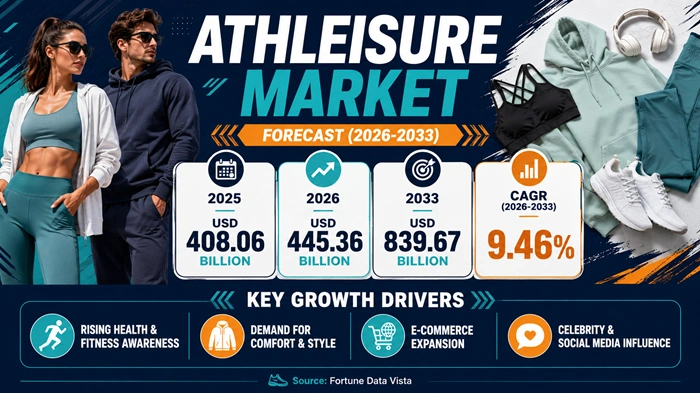
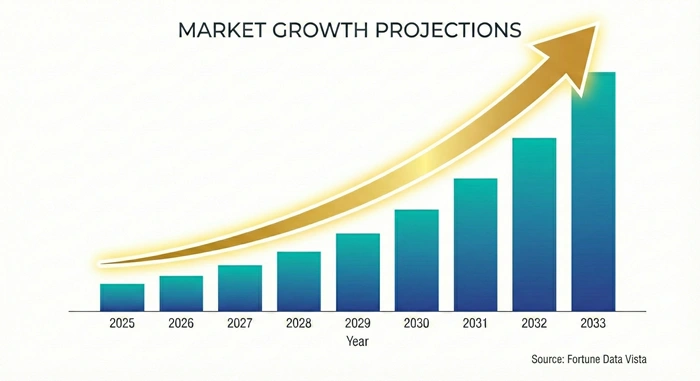
The global athleisure market size is valued at USD 408.06 billion in 2025 and is predicted to increase from USD 445.36 billion in 2026 to approximately USD 839.67 billion by 2033, growing at a CAGR of 9.46% from 2026 to 2033.
This strong growth reflects the lasting shift in consumer wardrobes toward comfortable, versatile clothing that moves seamlessly between workouts, remote work, and casual social outings without requiring a change of outfit. As hybrid work schedules remain the norm and health-conscious lifestyles continue gaining ground worldwide, demand for stylish performance apparel keeps expanding across footwear, topwear, and bottomwear categories in both mature and emerging fashion markets.
AI Impact on the Athleisure Industry
Artificial Intelligence Is Personalizing Style Recommendations, Optimizing Inventory Forecasting, and Strengthening Virtual Fit Technology Across the Athleisure Landscape — Fundamentally Changing How Brands Connect With Comfort-Driven Shoppers
Artificial intelligence has become an increasingly valuable tool for personalizing style recommendations, with recommendation engines now capable of analyzing browsing behavior, past purchases, and body measurements to suggest athleisure pieces that fit both a shopper's size and personal aesthetic preferences far more accurately than generic catalog browsing ever could. This precision matters considerably in a category where fit and fabric feel drive repeat purchases, and AI-assisted styling tools are helping online retailers reduce the return rates that have long plagued apparel e-commerce. Brands building AI-driven personalization directly into their shopping platforms are increasingly differentiating themselves through stronger customer loyalty and higher conversion rates.
Beyond personalization, AI is also improving inventory forecasting accuracy for athleisure retailers, with demand prediction models now able to analyze seasonal trends, social media buzz, and regional weather patterns to anticipate which styles and sizes will sell fastest at specific store locations. This capability has proven valuable for brands managing complex omnichannel supply chains, since better forecasting reduces both costly overstock and frustrating stockouts of popular items. As these AI-driven personalization and forecasting tools continue maturing, they are becoming an increasingly important factor shaping competitive positioning across the broader athleisure market.
Growth Factors
Rising Health Consciousness and Continued Hybrid Work Culture Continue Driving Sustained Demand
The most significant growth factor supporting the athleisure market is the steadily rising global focus on fitness and wellness, as consumers across age groups increasingly incorporate yoga, running, and gym routines into daily life, creating consistent demand for apparel that performs well during exercise while also looking presentable afterward. With wellness spending continuing to climb across both developed and emerging economies, this fitness-driven demand has become an increasingly important growth driver for brands spanning both athletic specialists and mainstream fashion labels.
A second important growth factor is the continued normalization of hybrid and remote work arrangements, as professionals who spend part of their week at home increasingly favor comfortable, presentable clothing over traditional formal office attire for video calls and casual commutes alike. This growing comfort-first mindset, combined with expanding social media influence that celebrates athletic-inspired everyday style, has broadened the addressable market for athleisure considerably. This combination of rising health consciousness and continued hybrid work culture continues to strengthen demand across the athleisure market.
Market Outlook
Sustainable Fabric Innovation and Expanding Emerging Market Retail Presence Point Toward Sustained Growth Through 2033
Looking ahead through the forecast period, the athleisure industry is expected to benefit substantially from continued advancement in sustainable and recycled performance fabrics, as environmentally conscious consumers increasingly favor brands that can demonstrate genuine progress on reducing synthetic fiber waste without sacrificing comfort or durability. This sustainability shift is likely to reshape competitive positioning considerably as more shoppers factor environmental credentials into their purchasing decisions.
At the same time, continued expansion of organized retail and e-commerce infrastructure across emerging markets is expected to create substantial new demand, as rising disposable incomes in countries across Asia Pacific and Latin America bring athleisure brands within reach of a rapidly growing middle-class consumer base. Companies that can deliver both fashionable design and accessible pricing across diverse markets are increasingly well positioned to capture this growth. Brands combining strong digital retail presence with genuine performance credibility are likely to lead growth within the broader athleisure market through 2033.
Expert Speaks
-
"Our continued investment in performance fabric innovation reflects our commitment to giving consumers apparel that moves fluidly between their workouts and everyday lives." — CEO, Nike Inc
-
"As comfort-driven dressing continues reshaping consumer wardrobes, our athleisure portfolio remains focused on delivering both style and genuine athletic performance." — CEO, lululemon athletica inc
-
"We remain dedicated to advancing sustainable materials and versatile designs that reflect how our customers actually live their busy, active lives." — CEO, Adidas AG
Key Report Takeaways
-
North America leads the global athleisure market, holding approximately 34% market share in 2025, supported by strong brand penetration and well-established fitness and wellness culture
-
Asia Pacific is the fastest-growing region, projected to expand at a CAGR near 11.6% through 2033, driven by rising disposable incomes and rapidly expanding organized retail infrastructure across China and India
-
Millennial and Gen Z consumers use athleisure the most, accounting for roughly 52% share, given their strong preference for comfort-driven, versatile everyday clothing
-
Bottomwear applications contribute the most to overall demand, reflecting the widespread popularity of leggings and joggers across both fitness and casual settings
-
Direct-to-consumer e-commerce remains the most popular distribution process, valued for its ability to offer personalized shopping experiences and exclusive product drops
-
Footwear segments will grow the fastest among product categories, holding close to 29% market share with a CAGR near 10.8% through the forecast period, driven by rising demand for versatile sneakers suited to both athletic and lifestyle use
Market Scope
| Parameter | Details |
|---|---|
| Market Size by 2033 | USD 839.67 Billion | Market Size by 2026 | USD 445.36 Billion | Market Size by 2025 | USD 408.06 Billion | Market Growth Rate from 2026 to 2033 | CAGR of 9.46% | Dominating Region | North America | Fastest Growing Region | Asia Pacific | Segments Covered | Product Type, Distribution Channel, Consumer Group, Region | Regions Covered | North America, Europe, Asia Pacific, Latin America, Middle East & Africa |
Market Dynamics
Drivers Impact Analysis
Rising Health Consciousness and Continued Hybrid Work Adoption Remain the Two Strongest Forces Behind Market Momentum
| Driver | (≈) % Impact on CAGR Forecast | Geographic Relevance | Impact Timeline |
|---|---|---|---|
| Rising global fitness and wellness consciousness among consumers | ~33% | Global | Short to long-term |
| Continued normalization of hybrid and remote work arrangements | ~27% | North America, Europe | Medium-term |
| Growing social media influence promoting athletic-inspired everyday style | ~25% | Global | Short to medium-term |
| Expanding e-commerce infrastructure supporting direct brand access | ~15% | Asia Pacific, Latin America | Medium to long-term |
Rising global fitness and wellness consciousness continues to serve as the primary engine behind sustained growth in the athleisure market, as consumers across nearly every age group increasingly build exercise routines into daily life and demand apparel that performs during workouts while remaining presentable afterward. This wellness-driven momentum has translated directly into rising sales across both dedicated athletic brands and mainstream fashion labels expanding into performance-inspired categories.
Continued normalization of hybrid and remote work arrangements represents the second major driver, as professionals splitting time between home and office increasingly favor comfortable, versatile clothing over traditional formal attire. This comfort-driven demand, combined with growing social media influence celebrating athletic-inspired style, continues reinforcing steady momentum across the broader athleisure market.
Restraints Impact Analysis
Intense Brand Competition and Rising Raw Material Costs Continue to Moderate Broader Margin Growth
| Restraint | (≈) % Impact on CAGR Forecast | Geographic Relevance | Impact Timeline |
|---|---|---|---|
| Intense competition among established and fast-fashion athleisure brands | ~36% | Global | Short to medium-term |
| Rising costs of performance fabrics and sustainable raw materials | ~27% | Global | Medium-term |
| Market saturation in mature athleisure categories across developed regions | ~23% | North America, Europe | Medium to long-term |
| Counterfeit product proliferation affecting established brand value | ~14% | Asia Pacific | Short to medium-term |
The most persistent restraint facing the athleisure market is the intense competition among both established athletic brands and fast-fashion retailers rushing to capture comfort-focused consumer spending, which continues compressing margins and pressuring brands to differentiate through design, sustainability, or exclusive collaborations. This competitive pressure remains particularly pronounced in developed markets where shelf space and digital ad space for athleisure products has grown increasingly crowded.
Rising costs of performance fabrics and sustainable raw materials represent a second significant restraint, since brands committed to reducing synthetic fiber use often face higher input costs that squeeze profitability without corresponding price increases that price-sensitive consumers will readily accept. Combined with growing market saturation in mature categories across North America and Europe, these restraints continue moderating how quickly broader margin expansion occurs across the global athleisure market.
Opportunities Impact Analysis
Sustainable Material Innovation and Expanding Emerging Market Retail Represent the Clearest Paths to Growth
| Opportunity | (≈) % Impact on CAGR Forecast | Geographic Relevance | Impact Timeline |
|---|---|---|---|
| Developing recycled and sustainable performance fabric technologies | ~38% | North America, Europe | Medium to long-term |
| Expanding organized retail and e-commerce presence across emerging markets | ~33% | Asia Pacific, Latin America | Short to medium-term |
| Growing plus-size and inclusive sizing product line expansion | ~29% | Global | Medium-term |
Developing recycled and sustainable performance fabric technologies represents one of the most substantial opportunities within the athleisure market, as brands creating genuinely eco-friendly materials stand to capture significant share from environmentally conscious shoppers willing to pay a premium for demonstrated sustainability credentials. This material innovation is expected to meaningfully reshape competitive positioning among leading brands over the coming years.
Expanding organized retail and e-commerce presence across emerging markets presents a second substantial opportunity, as rising disposable incomes across Asia Pacific and Latin America bring international athleisure brands within reach of a rapidly growing middle-class consumer base. Growing investment in plus-size and inclusive sizing further broadens the opportunity landscape, particularly for brands able to serve previously underserved body types with genuine performance quality. Companies pursuing these parallel opportunities are well positioned to capture meaningful growth within the broader athleisure market through the forecast period.
Segment Analysis
By Product Type: Bottomwear
Bottomwear Continues to Anchor the Product Landscape, Reflecting the Enduring Popularity of Leggings and Joggers
Bottomwear holds the largest share within the product type segment of the athleisure market, accounting for approximately 38% of total segment revenue in 2025. This dominance reflects the widespread everyday adoption of leggings, joggers, and performance shorts, which consumers increasingly wear well beyond the gym for errands, travel, and casual social occasions where comfort takes priority over traditional denim or tailored trousers. In markets like the United States and the United Kingdom, shoppers increasingly favor bottomwear pieces engineered with moisture-wicking and four-way stretch fabric technology that performs equally well in a workout class or a coffee run. Leading brands such as lululemon, Nike, and Adidas continue to dominate this segment through continuous fabric innovation and expanded size-inclusive product lines.
Growth within this segment remains particularly strong in North America, where strong brand penetration and deep-rooted fitness culture continue driving consistent bottomwear replacement purchases across a broad consumer base. The region's combination of established retail infrastructure and strong direct-to-consumer digital channels has helped bottomwear maintain its leading position despite growing interest in footwear and outerwear alternatives. As comfort-first dressing continues shaping everyday wardrobes, bottomwear is expected to remain the dominant category within the broader athleisure market throughout the forecast period.
By Product Type: Footwear
Footwear Represents the Fastest-Growing Product Segment, Reflecting Rising Demand for Versatile Lifestyle Sneakers
Footwear represents the fastest-growing product segment within the athleisure market, holding close to 29% share in 2025 with a projected CAGR near 10.8% through the forecast period as consumers increasingly seek sneakers that transition effortlessly between gym sessions, office commutes, and weekend outings. Unlike traditional formal footwear categories that serve narrow use cases, athleisure-focused sneakers combine genuine athletic performance technology with design details that make them acceptable for casual workplace environments and social settings alike. This versatility-driven appeal has generated substantial interest among fashion-conscious consumers who increasingly view sneakers as a core wardrobe staple rather than purely exercise gear.
Growth in this segment remains especially strong in Asia Pacific, where rapidly expanding sneaker culture and rising youth disposable incomes across China, Japan, and South Korea continue driving strong demand for premium and limited-edition athleisure footwear releases. Companies like Nike and Adidas have expanded their footwear product lines significantly to serve this growing regional demand, often launching region-specific colorways and collaborations to capture local cultural trends. As lifestyle sneaker culture continues strengthening globally, this product segment is expected to remain the fastest-growing category within the broader athleisure market.
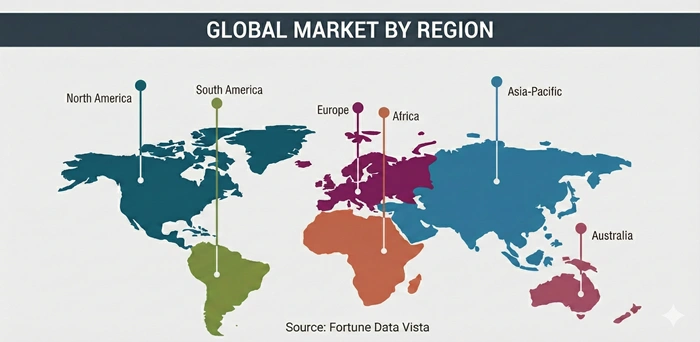
Regional Insights
North America
Strong Brand Penetration and Deep-Rooted Fitness Culture Keep North America Firmly in the Lead
North America commands the leading position in the global athleisure market, holding approximately 34% share in 2025, supported by strong brand penetration, deep-rooted fitness and wellness culture, and a dense concentration of leading athletic apparel companies. The United States drives the overwhelming majority of regional demand, backed by well-established gym membership culture and strong consumer willingness to spend on premium performance apparel across both online and physical retail channels. Companies with strong regional presence include Nike, lululemon, Under Armour, and Gap Inc's Athleta, each maintaining deep brand loyalty among American consumers.
Canada also contributes meaningfully to regional demand, supported by growing outdoor recreation culture and expanding premium athleisure retail presence across major metropolitan markets. The region's combination of established retail infrastructure, strong digital commerce capability, and continuous product innovation ensures North America's leadership position within the athleisure market remains firmly intact through the remainder of the forecast period.
Asia Pacific
Rising Disposable Incomes and Expanding Retail Infrastructure Position Asia Pacific as the Fastest-Growing Region
Asia Pacific is projected to register the fastest CAGR within the global athleisure market through 2033, expanding at a rate near 11.6% as rising disposable incomes and rapidly expanding organized retail infrastructure create substantial new demand across the region. China and India lead much of this regional growth, supported by a rapidly growing middle-class consumer base increasingly exposed to global fitness trends and international athleisure brands through both physical retail expansion and social media influence. Regional and international brands alike have expanded their presence to serve this growing demand, often establishing localized product lines that reflect regional fit preferences and climate considerations.
Japan and South Korea contribute further depth to regional growth, both bringing strong sneaker culture and growing consumer appetite for premium athleisure collaborations among younger, trend-conscious demographics. Growing e-commerce penetration across several Asia Pacific markets continues to accelerate brand accessibility among expanding urban consumer bases alike. This combination of rising disposable incomes, expanding retail infrastructure, and growing digital brand access positions Asia Pacific as the clear growth leader within the broader athleisure market through the forecast period.
Customization Available for This Report
Region-Specific and Country-Specific Versions of This Report Are Available to Deliver a Sharper, More Localized View of Market Dynamics
This report can be tailored on a region-by-region and country-by-country basis, providing localized market sizing, competitive mapping, and consumer behavior trend analysis that a global overview alone cannot fully capture.
Clients seeking a more focused breakdown can request a customized version covering any of the following regions and countries, complete with demand forecasting, competitor landscape review, and adoption trend analysis tied specifically to the athleisure keyword focus:
North America
-
U.S. — Detailed review of brand penetration and premium athleisure spending trends
-
Canada — Coverage of outdoor recreation culture and retail expansion patterns
-
Mexico — Analysis of emerging middle-class athleisure adoption trends
Europe
-
U.K. — Review of athleisure retail trends and digital shopping behavior
-
Germany — Coverage of sustainable fabric adoption among leading brands
-
France — Insights into premium athleisure and fashion crossover patterns
-
Italy — Analysis of regional athleisure brand investment trends
-
Rest of Europe — Country-level view of emerging demand across Eastern Europe and the Nordics
Asia Pacific
-
China — Coverage of expanding middle-class consumer spending and brand access
-
India — Analysis of growing organized retail and athleisure adoption
-
Japan — Review of established sneaker culture and lifestyle brand trends
-
South Korea — Assessment of athleisure fashion trend adoption
-
Australia — Insights into outdoor lifestyle and athleisure retail trends
-
Rest of Asia Pacific — Country-level breakdown covering Thailand, Vietnam, Indonesia, and Malaysia
Latin America
-
Brazil — Coverage of expanding athleisure retail access and adoption
-
Argentina — Analysis of early-stage athleisure brand penetration trends
-
Rest of Latin America — Country-level sizing across Colombia, Peru, and Chile
Middle East & Africa
-
UAE — Review of premium athleisure retail investment and adoption trends
-
Saudi Arabia — Coverage of expanding fitness culture and retail modernization initiatives
-
Rest of MEA — Country-level view of Sub-Saharan Africa retail infrastructure expansion
Top Key Players
-
Nike Inc (United States)
-
Adidas AG (Germany)
-
lululemon athletica inc (Canada)
-
Under Armour Inc (United States)
-
Puma SE (Germany)
-
Gap Inc (United States)
-
VF Corporation (United States)
-
ASICS Corporation (Japan)
-
Columbia Sportswear Company (United States)
-
Fabletics Inc (United States)
-
Anta Sports Products Limited (China)
-
New Balance Athletics Inc (United States)
Recent Developments
-
In 2025, Nike expanded its lifestyle sneaker collaborations targeting broader crossover appeal between athletic performance and everyday casual wear
-
In 2025, lululemon strengthened its footwear category with new product launches aimed at capturing wallet share beyond its established apparel base
-
In 2026, Adidas advanced its recycled material sourcing initiatives across multiple product lines to strengthen sustainability positioning
-
In 2025, Under Armour deepened its direct-to-consumer digital strategy to improve margin performance amid intense competitive pressure
-
In 2025, Puma broadened its inclusive sizing offerings across core athleisure categories to serve a wider range of body types
Market Trends
Sustainable Fabric Innovation and Expanding Lifestyle Sneaker Culture Are Reshaping Product Development Priorities
One of the clearest trends shaping the athleisure market is the accelerating adoption of recycled and sustainable performance fabrics, as environmentally conscious consumers increasingly favor brands that can demonstrate genuine progress toward reducing synthetic fiber waste and carbon footprint without compromising comfort or durability. Brands are investing heavily in material innovation research, recognizing that sustainability credentials have become an increasingly important competitive differentiator as younger consumers factor environmental impact into purchasing decisions.
A second significant trend is the growing crossover between athletic performance footwear and everyday lifestyle fashion, as sneakers increasingly serve as core wardrobe staples rather than purely exercise gear across a widening range of social and professional settings. This trend toward versatile, all-purpose footwear is particularly meaningful for brands targeting younger, trend-conscious demographics, continuing to support steady expansion across the broader athleisure market as lifestyle sneaker culture deepens globally.
Segments Covered in the Report
By Product Type
-
Topwear
-
Bottomwear
-
Footwear
-
Outerwear
-
Accessories
By Distribution Channel
-
Online Retail
-
Specialty Stores
-
Supermarkets and Hypermarkets
-
Brand-Owned Outlets
By Consumer Group
-
Men
-
Women
-
Kids
By Region
-
North America (U.S., Canada, Mexico)
-
Europe (U.K., Germany, France, Italy, Rest of Europe)
-
Asia Pacific (China, India, Japan, South Korea, Australia, Rest of Asia Pacific)
-
Latin America (Brazil, Argentina, Rest of Latin America)
-
Middle East & Africa (UAE, Saudi Arabia, Rest of MEA)
❝ Built for Every Level — From Startups to Industry Giants ❞
Here Is Exactly How This Report Works for You
-
For tier 1 companies, investors, and established market leaders, this report delivers detailed competitor revenue analysis, brand positioning trend mapping, and geopolitical risk context that support confident decisions around product expansion, pricing strategy, and long-term positioning within the athleisure space
-
For tier 2 and tier 3 companies, startups, and mid-sized brands, this report highlights the most commercially promising product categories and underserved regional opportunities, giving you a practical framework to compete against larger established players without overextending limited resources
-
For every decision maker across the value chain, this report explains exactly how consumer spending trends, sustainability regulation, and competitor product launches are shaping market direction through 2033, equipping you to plan investment and go-to-market decisions with genuine confidence
Frequently Asked Questions:
Answer: The global athleisure market was valued at USD 408.06 billion in 2025 and is projected to reach USD 839.67 billion by 2033. This growth is driven largely by rising health consciousness and continued hybrid work culture.
Answer: Growth in the athleisure market is being driven by rising fitness and wellness consciousness alongside continued hybrid work adoption. Growing social media influence promoting athletic-inspired style is further reinforcing this expansion.
Answer: North America currently leads the athleisure market with roughly 34% share, supported by strong brand penetration and fitness culture. Asia Pacific is growing the fastest, driven by rising disposable incomes and expanding retail infrastructure.
Answer: Bottomwear generates the largest share of revenue in the athleisure market, reflecting the enduring popularity of leggings and joggers. Footwear remains the fastest-growing product segment.
Answer: Leading companies in the athleisure market include Nike, Adidas, lululemon, Under Armour, and Puma. These companies compete through continuous innovation in sustainable materials and lifestyle sneaker design.