
Automotive Hypervisor Market Overview
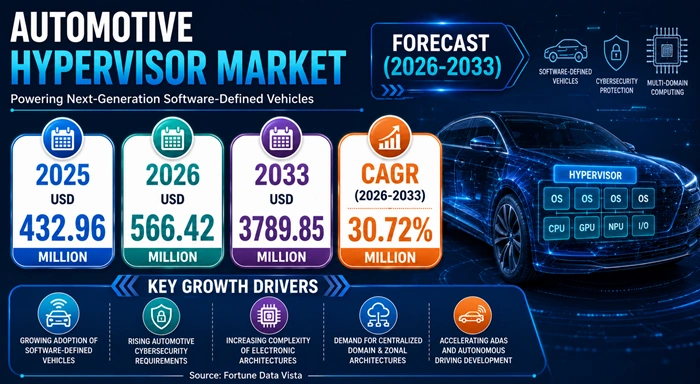
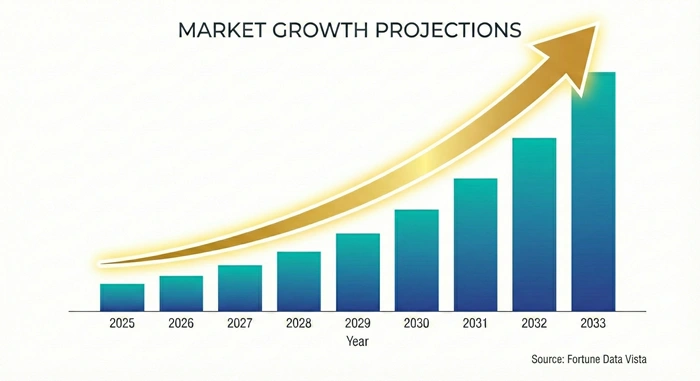
The global automotive hypervisor market size is valued at USD 432.96 million in 2025 and is predicted to increase from USD 566.42 million in 2026 to approximately USD 3789.85 million by 2033, growing at a CAGR of 30.72% from 2026 to 2033.
This rapid growth reflects the automotive industry's accelerating shift toward software-defined vehicle architectures, where automakers increasingly consolidate multiple electronic control unit functions onto centralized domain controllers. As vehicles become more connected and autonomous, hypervisor technology has become essential infrastructure for securely running safety-critical and infotainment workloads on shared hardware.
AI Impact on the Automotive Hypervisor Industry
Artificial Intelligence Integration Is Driving Demand for Higher-Performance Virtualization, Enabling Real-Time ADAS Processing, and Reshaping Domain Controller Architecture Across the Automotive Hypervisor Landscape — Fundamentally Changing How Vehicles Manage Safety-Critical Computing
The growing sophistication of AI-powered advanced driver assistance systems has become one of the most significant forces reshaping automotive hypervisor requirements, since running multiple AI inference workloads alongside traditional safety-critical functions demands virtualization platforms capable of guaranteeing strict real-time performance and fault isolation. Automakers deploying increasingly capable ADAS and autonomous driving features must ensure that AI perception models running on shared domain controllers never compromise the reliability of core vehicle safety functions, pushing hypervisor vendors to develop increasingly sophisticated partitioning and resource allocation capabilities. This demand has made hypervisor selection a critical architectural decision for OEMs building next-generation software-defined vehicle platforms.
Beyond enabling AI workloads themselves, hypervisor platforms are increasingly incorporating intelligent resource management capabilities that dynamically allocate computing power based on real-time driving conditions and workload priority. This adaptive approach helps ensure that safety-critical AI functions receive guaranteed processing resources even as infotainment and connectivity applications compete for the same underlying hardware. As AI continues expanding its footprint within vehicle computing architecture, this capability is becoming an increasingly important differentiator for hypervisor providers competing within the broader automotive hypervisor market.
Growth Factors
Software-Defined Vehicle Adoption and Rising Cybersecurity Regulation Continue Driving Sustained Demand
The most significant growth factor supporting the automotive hypervisor market is the industry-wide shift toward software-defined vehicle architectures, where automakers consolidate what were once dozens of separate electronic control units into centralized domain controllers running multiple applications simultaneously. This architectural transformation fundamentally requires hypervisor technology to safely partition and isolate different vehicle functions running on shared hardware, making hypervisors a foundational requirement rather than an optional add-on for automakers pursuing this consolidation strategy. Leading manufacturers including Tesla, BMW, and Volkswagen have been particularly aggressive in advancing these centralized architectures across their vehicle lineups.
A second important growth factor is the tightening regulatory landscape around vehicle cybersecurity, with standards like UNECE R155 and ISO/SAE 21434 compelling manufacturers to strengthen isolation between safety-critical systems and increasingly connected vehicle functionalities. These regulations have made robust hypervisor-based security architectures a compliance necessity rather than simply a technical preference, accelerating adoption timelines across automakers that might otherwise have delayed this transition. This combination of architectural consolidation and regulatory pressure continues to expand demand across the automotive hypervisor market.
Market Outlook
Domain Controller Expansion and Growing Autonomous Vehicle Testing Point Toward Accelerating Growth Through 2033
Looking ahead through the forecast period, the automotive hypervisor industry is expected to benefit substantially from continued expansion of domain controller-based vehicle architectures, as more automakers move away from traditional distributed ECU designs toward centralized computing platforms that require sophisticated virtualization to manage multiple mixed-criticality applications safely. This architectural shift is likely to become the dominant vehicle electronics design approach across the industry, creating durable long-term demand for hypervisor technology well beyond the current forecast period.
At the same time, expanding autonomous vehicle testing and deployment programs are expected to drive substantial additional demand, as self-driving systems require hypervisor platforms capable of managing enormous computing workloads while maintaining strict safety certification standards. Companies that can deliver hypervisor solutions supporting multiple ASIL safety ratings on shared hardware while integrating smoothly with semiconductor partners are increasingly well positioned to capture this growth. Businesses combining deep automotive safety expertise with modern virtualization technology are likely to lead growth within the broader automotive hypervisor market through 2033.
Expert Speaks
-
"The transition to software-defined vehicles depends fundamentally on secure virtualization, and we continue investing heavily in hypervisor technology that automakers can trust for their most safety-critical systems." — CEO, Qualcomm Incorporated
-
"As vehicle architectures consolidate around centralized computing, our embedded software solutions are increasingly central to how our automotive partners build reliable, connected platforms." — CEO, NXP Semiconductors
-
"Cybersecurity regulation is reshaping how the entire industry approaches vehicle software architecture, and robust isolation between critical systems is now a foundational requirement." — CEO, Continental AG
Key Report Takeaways
-
Asia Pacific leads the global automotive hypervisor market, holding approximately 36% market share in 2025, supported by rapid adoption of software-defined vehicle platforms and growing automotive semiconductor localization in China
-
North America is the fastest-growing region, projected to expand at a CAGR near 33% through 2033, driven by expanding autonomous vehicle testing initiatives and stronger vehicle data security focus
-
Passenger cars represent the largest vehicle type segment, given their high production volumes and rapid adoption of connected infotainment and ADAS features
-
ADAS applications contribute the most to overall demand, reflecting the critical need for reliable, isolated processing of safety functions
-
Type 1 bare-metal hypervisors remain the most widely adopted technology type, valued for their superior performance and lower latency compared to hosted alternatives
-
Autonomous and semi-autonomous vehicle applications will grow the fastest among mode-of-operation segments, holding close to 40% market share with a CAGR near 35% through the forecast period, driven by accelerating self-driving technology deployment
Market Scope
| Parameter | Details |
|---|---|
| Market Size by 2033 | USD 3789.85 Million | Market Size by 2026 | USD 566.42 Million | Market Size by 2025 | USD 432.96 Million | Market Growth Rate from 2026 to 2033 | CAGR of 30.72% | Dominating Region | Asia Pacific | Fastest Growing Region | North America | Segments Covered | Type, Vehicle Type, Mode of Operation, Application, Region | Regions Covered | North America, Europe, Asia Pacific, Latin America, Middle East & Africa |
Market Dynamics
Drivers Impact Analysis
Software-Defined Vehicle Consolidation and Cybersecurity Regulation Remain the Two Strongest Forces Behind Market Momentum
| Driver | (≈) % Impact on CAGR Forecast | Geographic Relevance | Impact Timeline |
|---|---|---|---|
| Shift toward centralized domain controller vehicle architectures | ~37% | Global, strongest in Asia Pacific, North America | Short to long-term |
| Tightening automotive cybersecurity regulations like UNECE R155 and ISO SAE 21434 | ~28% | Europe, Asia Pacific, growing in North America | Medium to long-term |
| Rising complexity of ADAS and autonomous driving systems | ~22% | Global | Short to medium-term |
| Growing demand to reduce vehicle wiring complexity and weight | ~13% | Global | Medium-term |
Shift toward centralized domain controller vehicle architectures continues to serve as the primary engine behind sustained growth in the automotive hypervisor market, as automakers increasingly consolidate previously separate electronic control unit functions onto shared hardware platforms that require robust virtualization to operate safely. This architectural transformation has translated directly into rising hypervisor adoption across nearly every major vehicle manufacturer pursuing next-generation electrical and electronic platform designs.
Tightening automotive cybersecurity regulations represent the second major driver, as standards like UNECE R155 compel manufacturers to strengthen isolation between safety-critical and connected vehicle functions running on shared computing platforms. This regulatory pressure, combined with rapidly rising ADAS system complexity, continues reinforcing steady demand growth across the broader automotive hypervisor market.
Restraints Impact Analysis
Skilled Talent Shortages and Legacy Infrastructure Compatibility Continue to Moderate Broader Adoption
| Restraint | (≈) % Impact on CAGR Forecast | Geographic Relevance | Impact Timeline |
|---|---|---|---|
| Shortage of certified automotive virtualization engineering talent | ~35% | Global | Short to medium-term |
| Compatibility challenges with outdated legacy ECU infrastructure | ~30% | Global, notable in emerging markets | Medium-term |
| High integration costs for domain controller architecture transitions | ~22% | Global | Short to medium-term |
| Extended certification timelines for safety-critical automotive software | ~13% | Global | Long-term |
The most persistent restraint facing the automotive hypervisor market is the shortage of engineers with specialized certification in automotive virtualization technology, which can slow how quickly manufacturers can design, validate, and deploy new hypervisor-based architectures across their vehicle lineups. This talent gap has become an increasingly visible bottleneck as demand for centralized computing architectures accelerates faster than the specialized workforce needed to support it.
Compatibility challenges with outdated legacy ECU infrastructure represent a second significant restraint, since many automakers must manage a difficult transition period where newer centralized architectures must coexist with existing distributed systems still present across current vehicle platforms. Combined with the high integration costs associated with this architectural transition, these restraints continue moderating how quickly full-scale adoption spreads across the global automotive hypervisor market.
Opportunities Impact Analysis
Autonomous Vehicle Expansion and Semiconductor Partnership Growth Represent the Clearest Paths to Growth
| Opportunity | (≈) % Impact on CAGR Forecast | Geographic Relevance | Impact Timeline |
|---|---|---|---|
| Expanding autonomous and semi-autonomous vehicle testing and deployment | ~40% | North America, Asia Pacific | Medium to long-term |
| Growing semiconductor and software integration partnerships | ~32% | Global | Short to medium-term |
| Rising electric vehicle production requiring simplified electronic architectures | ~28% | Global | Medium-term |
Expanding autonomous and semi-autonomous vehicle testing represents one of the most substantial opportunities within the automotive hypervisor market, as self-driving systems require increasingly sophisticated virtualization platforms capable of managing multiple safety-critical and perception workloads on shared computing hardware. Hypervisor vendors supporting these advanced autonomous programs stand to capture meaningful share as testing programs scale toward broader commercial deployment.
Growing semiconductor and software integration partnerships present a second substantial opportunity, exemplified by deals like Qualcomm's virtualization asset acquisitions, which underscore the industry's growing emphasis on combining chip-level performance with software-level security. Rising electric vehicle production further broadens the opportunity landscape, since EV manufacturers particularly benefit from simplified, centralized electronic architectures that reduce wiring complexity and vehicle weight. Companies pursuing these parallel opportunities are well positioned to capture meaningful growth within the broader automotive hypervisor market through the forecast period.
Segment Analysis
By Vehicle Type: Passenger Cars
Passenger Cars Continue to Anchor the Vehicle Type Landscape, Reflecting High Production Volumes and Rapid Feature Adoption
Passenger cars hold the largest share within the vehicle type segment of the automotive hypervisor market, accounting for approximately 58% of total segment revenue in 2025. This dominance reflects the sheer production volume of passenger vehicles worldwide combined with rapid consumer demand for advanced infotainment, connectivity, and driver assistance features that require robust virtualization to manage safely alongside core vehicle functions. In markets like China, Germany, and the United States, passenger car manufacturers are aggressively pursuing centralized domain controller architectures to differentiate their vehicles through software capabilities. Leading technology providers such as BlackBerry QNX, Green Hills Software, and Elektrobit continue to dominate this segment through continuous expansion of their automotive-grade hypervisor platforms.
Growth within this segment remains particularly strong in Asia Pacific, where Chinese automakers are rapidly localizing automotive semiconductor and virtualization technology to support their expanding software-defined vehicle ambitions. The region's combination of massive production scale and aggressive technology adoption has helped passenger cars maintain their leading position despite growing hypervisor demand from commercial vehicle segments. As software-defined vehicle architectures continue proliferating across mainstream passenger vehicle lineups, this vehicle type is expected to remain the dominant segment within the broader automotive hypervisor market throughout the forecast period.
By Application: Advanced Driver Assistance Systems
ADAS Applications Remain the Leading Demand Driver, Reflecting Critical Safety-Isolation Requirements
Advanced driver assistance system applications account for approximately 34% of application-based revenue within the automotive hypervisor market, reflecting the critical need to run safety-rated ADAS functions in strict isolation from other vehicle applications sharing the same computing hardware. Automakers increasingly rely on hypervisor platforms to guarantee that perception and collision-avoidance systems receive dedicated, uninterrupted processing resources regardless of what other applications happen to be running on the same domain controller. This safety-critical reliability requirement has made ADAS one of the most demanding and closely scrutinized application areas for hypervisor certification and validation.
Growth in this application segment remains especially strong in North America, where expanding autonomous vehicle testing programs and heightened regulatory scrutiny around vehicle safety continue driving demand for rigorously certified hypervisor platforms. Companies like Green Hills Software and Wind River have expanded their ADAS-focused hypervisor offerings significantly to support this growing safety certification demand, often working closely with semiconductor partners to optimize performance. As ADAS systems continue growing in complexity and autonomous capability, this application segment is expected to remain a key demand driver within the broader automotive hypervisor market.
Regional Insights
Asia Pacific
Rapid Software-Defined Vehicle Adoption and Semiconductor Localization Keep Asia Pacific Firmly in the Lead
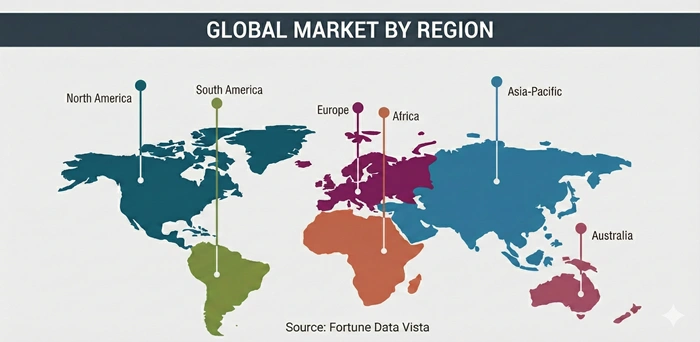
Asia Pacific commands the leading position in the global automotive hypervisor market, holding approximately 36% share in 2025, supported by the swift adoption of software-defined vehicle platforms and increasing localization of automotive semiconductor technologies across China. Chinese automakers are progressively incorporating domain controller architectures and localized virtualization software to strengthen vehicle cybersecurity and performance, driving substantial regional demand growth. Companies with strong regional presence include KPIT Technologies, Renesas Electronics, and various domestic Chinese semiconductor and software providers building localized hypervisor ecosystems.
Japan and South Korea also contribute meaningfully to regional demand, supported by established automotive manufacturing bases increasingly incorporating centralized computing architectures into next-generation vehicle platforms. The region's combination of massive vehicle production scale, aggressive semiconductor localization efforts, and strong government support for domestic technology development ensures Asia Pacific's leadership position within the automotive hypervisor market remains firmly intact through the remainder of the forecast period.
North America
Expanding Autonomous Vehicle Testing and Data Security Focus Position North America as the Fastest-Growing Region
North America is projected to register the fastest CAGR within the global automotive hypervisor market through 2033, expanding at a rate near 33% as expanding autonomous vehicle testing initiatives and heightened focus on secure vehicle data management create substantial new demand across the region. The United States leads this growth, supported by extensive autonomous driving testing programs and growing efforts among original equipment manufacturers to reduce reliance on foreign telematics components by partnering with domestic and allied software developers. Companies like BlackBerry QNX, Qualcomm, and Aptiv have expanded their presence significantly to serve this growing demand for secure, domestically developed hypervisor platforms.
Canada also contributes to regional growth, supported by growing automotive technology research investment and expanding partnerships between semiconductor firms and vehicle manufacturers. Growing regulatory emphasis on vehicle cybersecurity and data sovereignty across the region continues accelerating hypervisor adoption among automakers seeking to strengthen their software supply chain security. This combination of autonomous vehicle testing expansion, data security prioritization, and domestic technology partnership growth positions North America as the clear growth leader within the broader automotive hypervisor market through the forecast period.
Customization Available for This Report
Region-Specific and Country-Specific Versions of This Report Are Available to Deliver a Sharper, More Localized View of Market Dynamics
This report can be tailored on a region-by-region and country-by-country basis, providing localized market sizing, competitive mapping, and technology adoption trend analysis that a global overview alone cannot fully capture.
Clients seeking a more focused breakdown can request a customized version covering any of the following regions and countries, complete with demand forecasting, competitor landscape review, and adoption trend analysis tied specifically to the automotive hypervisor keyword focus:
North America
-
U.S. — Detailed review of autonomous vehicle testing programs and domestic technology partnership trends
-
Canada — Coverage of automotive research investment and semiconductor collaboration patterns
-
Mexico — Analysis of emerging automotive manufacturing technology modernization trends
Europe
-
U.K. — Review of automotive cybersecurity regulation compliance and technology adoption
-
Germany — Coverage of domain controller architecture investment among leading automakers
-
France — Insights into vehicle electronics modernization and hypervisor adoption patterns
-
Italy — Analysis of regional automotive technology investment trends
-
Rest of Europe — Country-level view of emerging demand across Eastern Europe and the Nordics
Asia Pacific
-
China — Coverage of expanding semiconductor localization and software-defined vehicle investment
-
India — Analysis of growing automotive technology adoption and manufacturing modernization
-
Japan — Review of established automotive manufacturing technology adoption trends
-
South Korea — Assessment of vehicle architecture modernization and hypervisor investment
-
Australia — Insights into automotive technology funding and adoption trends
-
Rest of Asia Pacific — Country-level breakdown covering Thailand, Vietnam, Indonesia, and Malaysia
Latin America
-
Brazil — Coverage of expanding automotive manufacturing technology investment and adoption
-
Argentina — Analysis of early-stage automotive technology modernization trends
-
Rest of Latin America — Country-level sizing across Colombia, Peru, and Chile
Middle East & Africa
-
UAE — Review of automotive technology investment and adoption trends
-
Saudi Arabia — Coverage of expanding automotive manufacturing modernization initiatives
-
Rest of MEA — Country-level view of Sub-Saharan Africa automotive technology expansion
Top Key Players
-
BlackBerry QNX (Canada)
-
Green Hills Software (United States)
-
Wind River Systems (United States)
-
Continental AG (Germany)
-
Elektrobit Automotive GmbH (Germany)
-
Vector Informatik GmbH (Germany)
-
Renesas Electronics Corporation (Japan)
-
NXP Semiconductors N.V. (Netherlands)
-
LYNX Software Technologies (United States)
-
Real-Time Systems GmbH (Germany)
-
Bosch ETAS GmbH (Germany)
-
KPIT Technologies Limited (India)
Recent Developments
-
In 2026, Qualcomm expanded its virtualization technology capabilities through strategic acquisitions, strengthening its automotive hypervisor and semiconductor integration offerings for software-defined vehicle platforms
-
In 2025, BlackBerry QNX advanced its hypervisor platform with enhanced support for mixed-criticality workloads, enabling automakers to safely run ADAS and infotainment functions on shared domain controllers
-
In 2025, Wind River strengthened its automotive virtualization portfolio through expanded partnerships with semiconductor providers to support next-generation centralized vehicle computing architectures
-
In 2026, Elektrobit deepened its collaboration with automotive OEMs to accelerate deployment of domain controller-based architectures compliant with UNECE R155 cybersecurity standards
-
In 2025, Green Hills Software expanded its safety-certified hypervisor offerings to support growing autonomous vehicle testing programs across North American and European markets
Market Trends
Domain Controller Consolidation and Cybersecurity Standard Adoption Are Reshaping Vehicle Architecture Standards
One of the clearest trends shaping the automotive hypervisor market is the accelerating shift from traditional distributed ECU architectures toward centralized domain controller designs, as automakers seek to simplify vehicle wiring, reduce manufacturing complexity, and improve overall electrical and electronic system efficiency. This architectural transformation is pushing hypervisor vendors to develop increasingly sophisticated platforms capable of safely managing multiple mixed-criticality applications on shared hardware without compromising safety certification requirements.
A second significant trend is the growing adoption of automotive cybersecurity standards like ISO/SAE 21434 and UNECE R155/R156, which are driving greater implementation of hypervisor-based vehicle architectures across the industry. These regulations compel manufacturers to strengthen isolation between safety-critical and connected vehicle functions, continuing to reinforce steady expansion across the broader automotive hypervisor market as compliance deadlines approach across major automotive markets.
Segments Covered in the Report
By Type
-
Type 1 Bare-Metal Hypervisor
-
Type 2 Hosted Hypervisor
By Vehicle Type
-
Passenger Cars
-
Light Commercial Vehicles
-
Medium and Heavy Commercial Vehicles
By Mode of Operation
-
Autonomous Vehicles
-
Semi-Autonomous Vehicles
By Application
-
Advanced Driver Assistance Systems
-
Infotainment Systems
-
Connectivity and Telematics
-
Powertrain and Engine Control Systems
By Region
-
North America (U.S., Canada, Mexico)
-
Europe (U.K., Germany, France, Italy, Rest of Europe)
-
Asia Pacific (China, India, Japan, South Korea, Australia, Rest of Asia Pacific)
-
Latin America (Brazil, Argentina, Rest of Latin America)
-
Middle East & Africa (UAE, Saudi Arabia, Rest of MEA)
❝ Built for Every Level — From Startups to Industry Giants ❞
Here Is Exactly How This Report Works for You
-
For tier 1 companies, investors, and established market leaders, this report delivers detailed competitor revenue analysis, technology adoption trend mapping, and geopolitical risk context that support confident decisions around product expansion, pricing strategy, and long-term positioning within the automotive hypervisor space
-
For tier 2 and tier 3 companies, startups, and mid-sized software providers, this report highlights the most commercially promising application categories and underserved regional opportunities, giving you a practical framework to compete against larger established players without overextending limited resources
-
For every decision maker across the value chain, this report explains exactly how cybersecurity regulation developments, semiconductor partnerships, and competitor technology launches are shaping market direction through 2033, equipping you to plan investment and go-to-market decisions with genuine confidence
Frequently Asked Questions:
Answer: The global automotive hypervisor market was valued at USD 432.96 million in 2025 and is projected to reach USD 3789.85 million by 2033. This rapid growth is driven largely by software-defined vehicle adoption and tightening cybersecurity regulations.
Answer: Growth in the automotive hypervisor market is being driven by the industry shift toward centralized domain controller architectures and rising automotive cybersecurity regulation. Expanding ADAS complexity is further reinforcing this expansion.
Answer: Asia Pacific currently leads the automotive hypervisor market with roughly 36% share, supported by rapid software-defined vehicle adoption and semiconductor localization. North America is growing the fastest, driven by expanding autonomous vehicle testing programs.
Answer: Advanced driver assistance system applications generate the largest share of revenue in the automotive hypervisor market, reflecting critical safety-isolation requirements. Passenger cars also remain the dominant vehicle type segment.
Answer: Leading companies in the automotive hypervisor market include BlackBerry QNX, Green Hills Software, Wind River, Continental, and Elektrobit. These companies compete through continuous innovation in mixed-criticality virtualization and safety-certified platforms.