
Autonomous Farm Equipment Market Overview
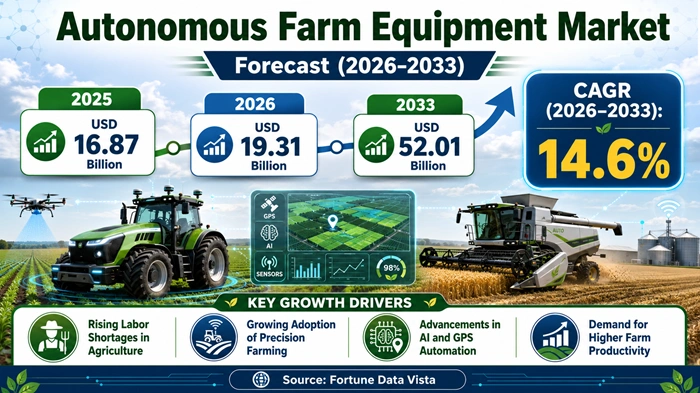
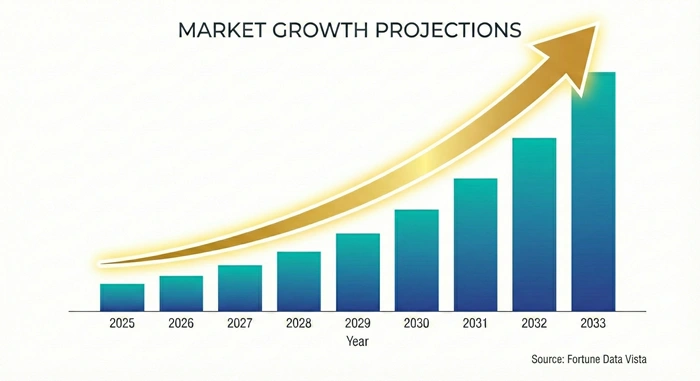
The global autonomous farm equipment market size is valued at USD 16.87 billion in 2025 and is predicted to increase from USD 19.31 billion in 2026 to approximately USD 52.01 billion by 2033, growing at a CAGR of 14.6% from 2026 to 2033.
Autonomous farm equipment encompasses self-operating agricultural machinery — including driverless tractors, robotic harvesters, autonomous sprayers, and AI-guided seeding systems — that perform field operations with minimal or zero direct human intervention. As the global agriculture sector confronts a deepening labor crisis, rising input costs, and the imperative to produce more food with fewer resources, the adoption of self-driving and robotic farming technology is accelerating rapidly across all major agricultural economies. The sector is moving from experimental pilot programs to large-scale commercial deployment at a pace that few adjacent technology markets have matched in recent years.
AI Impact on the Autonomous Farm Equipment Industry
Artificial Intelligence Is the Core Technology Enabling Autonomous Farm Equipment to Make Real-Time Field Decisions, Optimize Resource Application, and Operate Continuously at Scale — Fundamentally Redefining What Agricultural Productivity Means
Artificial intelligence sits at the technological heart of the autonomous farm equipment industry. Modern autonomous agricultural machines are powered by AI systems that process data streams from GPS receivers, LiDAR sensors, multispectral cameras, and soil sensors simultaneously — enabling them to navigate field boundaries, avoid obstacles, identify crop health variations, and adjust operational parameters in real time without any human instruction. The quality and capability of these AI algorithms have advanced dramatically over the past five years, moving from rule-based automation toward machine learning systems that continuously improve their field performance with each operating hour, adapting to varying crop conditions, terrain types, and weather patterns with increasing sophistication.
Beyond navigation and obstacle avoidance, AI is enabling autonomous equipment to perform complex agronomic decision-making that was previously the exclusive domain of experienced farm managers. AI-driven variable-rate application systems can analyze field-level soil composition and crop stress data to precisely calibrate the amount of fertilizer, pesticide, or irrigation applied at each specific point within a field — dramatically reducing input waste while improving yield outcomes. Computer vision algorithms trained on millions of crop images can now identify early signs of disease, pest infestation, and nutrient deficiency at a per-plant level during routine field passes, generating actionable alerts for farm managers and enabling targeted treatment rather than blanket application across entire fields.
Growth Factors
Acute Agricultural Labor Shortages, the Urgent Global Need to Increase Food Production Efficiency, and the Rapid Maturation of GPS, Sensor, and AI Technologies Are the Three Most Powerful Forces Driving Growth in the Autonomous Farm Equipment Market
The most immediate and commercially compelling driver of the autonomous farm equipment market is the intensifying shortage of agricultural labor across all major farming regions. In North America, Europe, Australia, and Japan, the farm labor workforce is aging rapidly, rural-to-urban migration continues to reduce available seasonal labor pools, and immigration policy constraints are limiting access to the migrant workers that many large farming operations have historically depended upon. For commercial farm operators, autonomous equipment is no longer a futuristic option but an operational necessity — the only practical means of completing time-sensitive field operations such as planting windows, harvest campaigns, and crop protection applications when adequate human labor simply is not available.
The imperative to substantially increase global food production adds a separate but equally urgent driver. The world population is projected to reach 10 billion by 2050, and the Food and Agriculture Organization estimates that agricultural output will need to increase by approximately 70% from current levels to meet that demand. Yet arable land per capita is declining, water resources are under increasing stress, and climate variability is making farming more unpredictable. Autonomous equipment directly addresses this productivity challenge by enabling farm operations to run 24 hours a day across optimal weather windows, executing field tasks with precision accuracy that reduces input waste and improves per-acre yield outcomes — delivering more agricultural output per unit of land, water, and input than conventional human-operated equipment can achieve.
Market Outlook
The Autonomous Farm Equipment Market Is Entering Its Most Consequential Growth Phase, as Commercial-Scale Deployments Replace Pilot Programs and Major Equipment Manufacturers Integrate Full Autonomy Into Their Mainstream Product Portfolios
The transition from pilot-scale testing to full commercial deployment is the defining characteristic of the autonomous farm equipment market's current phase. Where a few years ago autonomous farming technology was largely the domain of early-adopter large farms and technology demonstration programs, today the world's largest agricultural equipment manufacturers — including John Deere, CNH Industrial, and AGCO — have embedded autonomous and semi-autonomous capabilities directly into their standard commercial product lines. This mainstreaming of autonomous features makes the technology accessible to a far broader range of farm operators without requiring specialized technical procurement expertise, and it removes the premium barrier that previously prevented mid-scale farmers from engaging with these capabilities.
Looking at the broader forecast horizon, the combination of technology cost reduction, expanding connectivity infrastructure in rural areas, and the growing body of proven commercial performance data is expected to drive autonomous equipment adoption beyond the large-scale commercial farm segment into mid-size and smaller farming operations. The introduction of robotics-as-a-service (RaaS) and equipment subscription financing models by both manufacturers and specialist agri-tech startups is further lowering the capital access barrier for smaller operators, potentially unlocking an enormous secondary market tier. Government programs supporting agricultural digitization — particularly in India, China, the EU, and the United States — are providing direct financial incentives that accelerate the economics of autonomous equipment adoption for farm businesses at every scale.
Expert Speaks
-
"John Deere's autonomous equipment portfolio is no longer about showcasing what technology can do — it's about delivering operational solutions that real farmers can use today to address real challenges. The labor shortage is driving adoption at a pace we frankly did not anticipate even three years ago, and we are scaling our production and support capabilities to meet it." — John C. May, CEO, Deere and Company
-
"AGCO's investment in autonomy and precision agriculture reflects our understanding that the future of farming is fundamentally about doing more with less. Autonomous equipment is the most powerful tool available to the global farming community for achieving the productivity and sustainability improvements that feeding a growing world will require." — Eric Hansotia, CEO, AGCO Corporation
-
"CNH Industrial has made autonomous and connected agriculture central to our long-term product strategy because our customers are telling us this is what they need. Farm labor availability is a crisis in many of our key markets, and autonomous machinery is the most practical near-term solution for operators who cannot find or afford adequate workforce capacity." — Gerrit Marx, CEO, CNH Industrial NV
Key Report Takeaways
-
North America leads the autonomous farm equipment market with approximately 38% of total global revenue in 2026, driven by extensive large-scale commercial farming operations, acute labor shortage pressures, advanced GPS and satellite navigation infrastructure, and the dominant commercial presence of Deere and Company and CNH Industrial — two companies that have commercialized full-field autonomous tractor systems at scale.
-
Asia Pacific is the fastest-growing region, expanding at a CAGR exceeding 16% from 2026 to 2033, powered by aggressive agricultural modernization programs in China and India, government subsidies for farm automation technology, and the increasing mechanization of large-scale commodity crop production in countries where farm labor costs and availability are deteriorating rapidly.
-
Large farms are the primary end-user segment for autonomous farm equipment, accounting for approximately 65% of total market revenue in 2026, as the economics of autonomous technology investment — including high upfront capital costs and the labor savings justification — are most compelling for operations managing hundreds to thousands of acres of commodity crop production.
-
Field farming is the dominant application segment, representing approximately 68% of total application-based market revenue in 2026, reflecting the concentration of autonomous equipment deployment in large-scale grain, oilseed, and forage crop production systems where consistent terrain, large field sizes, and high machinery utilization rates make autonomous operation both practical and economically compelling.
-
Autonomous tractors are the most widely deployed product type, commanding approximately 52% of total product segment revenue in 2026, as the tractor serves as the foundational workhorse platform for core field operations including tillage, planting, and spraying — making it the natural priority target for autonomous technology integration by all major equipment manufacturers.
-
Fully autonomous equipment is the fastest-growing autonomy level segment, projected to capture approximately 40% market share by 2033 at a CAGR of approximately 15.9% from 2026 to 2033, as AI algorithm maturation, sensor cost reductions, and regulatory framework development collectively remove the remaining technical and commercial barriers to unrestricted 24/7 fully driverless field operation.
Market Scope
| Parameter | Details |
|---|---|
| Market Size by 2033 | USD 52.01 Billion | Market Size by 2026 | USD 19.31 Billion | Market Size by 2025 | USD 16.87 Billion | Market Growth Rate from 2026 to 2033 | CAGR of 14.6% | Dominating Region | North America | Fastest Growing Region | Asia Pacific | Segments Covered | Product Type, Autonomy Level, Power Output, Application, End User | Regions Covered | North America, Europe, Asia Pacific, Latin America, Middle East and Africa |
Market Dynamics
Drivers Impact Analysis
Agricultural Labor Scarcity, the Global Food Production Imperative, and the Rapid Commercial Maturation of AI and Sensor Technologies Are the Three Most Consequential Drivers Propelling the Autonomous Farm Equipment Market Through Its Strongest Expansion Phase
| Driver | ≈ % Impact on CAGR Forecast | Geographic Relevance | Impact Timeline |
|---|---|---|---|
| Acute and worsening agricultural labor shortages | ~30% | North America, Europe, Japan, Australia | Short to Long-Term |
| Global food production efficiency imperative | ~24% | Global | Medium to Long-Term |
| Rapid advancement of AI, GPS, and sensor technology | ~20% | Global | Short to Long-Term |
| Government subsidies and precision agriculture programs | ~12% | Asia Pacific, Europe, North America | Medium-Term |
| Rising farm input costs and profitability pressure | ~8% | North America, Europe, Latin America | Short to Medium-Term |
| Growth of large-scale corporate farming operations | ~6% | North America, Latin America, Europe | Long-Term |
The critical shortage of agricultural labor is the single most immediate commercial driver in the autonomous farm equipment market today. Across North America, Europe, and Japan, the average age of the farming workforce is now above 55, farm labor wages have risen sharply due to competition from non-agricultural employment sectors, and immigration constraints have reduced seasonal labor availability precisely during peak demand periods. For commercial farm operators managing thousands of acres — where a single day of delayed planting or harvest can cost tens of thousands of dollars in yield loss — autonomous machinery is not a technology preference but a practical operational requirement. The consistency, speed, and round-the-clock availability of autonomous equipment directly addresses this pain point in a way that no other available solution can match.
Governments in major agricultural economies are amplifying this market driver through direct financial support for autonomous and precision farming technology adoption. The European Union's Common Agricultural Policy (CAP) includes provisions incentivizing sustainable precision agriculture investments, including autonomous machinery. India has allocated significant funds under its Agricultural Infrastructure Fund specifically to encourage farm automation and digital farming technology. The United States Farm Bill includes provisions supporting precision agriculture research and development. These policy frameworks reduce the total cost of ownership for autonomous equipment adoption, accelerate the payback period calculation for farm operators evaluating investment decisions, and signal government commitment to agricultural technology that encourages equipment manufacturer investment in product development and distribution network expansion.
Restraints Impact Analysis
The High Capital Investment Required for Autonomous Equipment, Combined With Connectivity Infrastructure Gaps in Rural Areas and Regulatory Uncertainty Around Fully Driverless Operations, Continue to Slow the Broader Adoption of Farm Automation Globally
| Restraint | ≈ % Impact on CAGR Forecast | Geographic Relevance | Impact Timeline |
|---|---|---|---|
| High upfront capital cost of autonomous systems | ~-32% | Small and mid-size farms globally | Short to Medium-Term |
| Limited rural connectivity and GPS infrastructure | ~-22% | Developing economies, remote regions | Medium to Long-Term |
| Regulatory uncertainty for fully driverless machinery | ~-18% | Global — varies by country | Medium-Term |
| Data security and farm data privacy concerns | ~-14% | North America, Europe | Short to Medium-Term |
| Limited technical skills among small farm operators | ~-14% | Developing economies | Long-Term |
The high upfront capital cost of fully autonomous agricultural machinery remains the most significant barrier to broader market penetration. A fully autonomous tractor system from a major manufacturer can cost two to three times the price of a comparable conventionally operated machine, and the total investment including guidance systems, sensor arrays, software subscriptions, and connectivity infrastructure can exceed USD 500000 for a single large-format autonomous unit. For the tens of millions of small and medium-sized farm operations that collectively produce a significant proportion of global food supply — particularly in Asia, Africa, and Latin America — this capital requirement is simply not accessible without substantial financing support or business model innovation that dramatically restructures the ownership economics.
Connectivity gaps in rural agricultural areas present a separate but equally material constraint. Autonomous farm equipment systems depend on reliable high-speed internet connectivity and precise GPS positioning to function safely and effectively. In many of the world's most important agricultural regions — including significant portions of rural India, Sub-Saharan Africa, parts of Brazil, and even remote areas of North America and Australia — the connectivity infrastructure required to support full autonomous operation is either unavailable, unreliable, or prohibitively expensive to access. Until rural broadband coverage reaches the coverage depths and reliability standards that autonomous agricultural machinery demands, these connectivity gaps will continue to exclude large portions of the global agricultural land base from practical autonomous equipment deployment.
Opportunities Impact Analysis
The Rise of Robotics-as-a-Service Models, the Expansion Into Specialty Crop Farming, and the Electrification of Farm Machinery Are Creating Powerful New Revenue Streams and Market Entry Points Within the Autonomous Farm Equipment Market
| Opportunity | ≈ % Impact on CAGR Forecast | Geographic Relevance | Impact Timeline |
|---|---|---|---|
| Robotics-as-a-Service (RaaS) financing models | ~27% | Global — highest in North America | Short to Long-Term |
| Specialty crop and orchard automation | ~22% | North America, Europe, Australia | Short to Medium-Term |
| Electrification of autonomous farming equipment | ~20% | Global | Medium to Long-Term |
| Emerging market agricultural modernization | ~16% | Asia Pacific, Latin America, Africa | Long-Term |
| Integration with farm management software platforms | ~15% | North America, Europe | Short to Medium-Term |
The robotics-as-a-service model is emerging as one of the most transformative commercial innovations in the autonomous farm equipment industry. Rather than requiring farmers to purchase expensive autonomous machinery outright, RaaS providers deploy autonomous equipment on a per-acre or per-season fee basis — eliminating the capital barrier that prevents smaller and mid-scale operations from accessing autonomous technology. Companies like Carbon Robotics, Naïo Technologies, and FarmWise are pioneering this model, and several major equipment manufacturers have begun exploring subscription-based deployment options for their autonomous systems. If RaaS becomes mainstream within the industry — as it already has in other sectors — it could unlock a vast tier of the global farming market that is currently excluded from the autonomous equipment category entirely.
The specialty crop sector — encompassing fruits, vegetables, orchards, vineyards, and nurseries — represents another major opportunity that the autonomous farm equipment market has only partially addressed to date. Specialty crop farms face among the most acute labor challenges of any agricultural segment, with hand-harvesting, precise pruning, and targeted pest management operations requiring enormous volumes of skilled seasonal labor. The economic value of specialty crops on a per-acre basis is substantially higher than commodity crops, making the return-on-investment case for autonomous technology investment particularly compelling. Companies including Abundant Robotics, Tortuga AgTech, and Agrobot are developing autonomous harvesting and precision care systems specifically for specialty crop environments, targeting a high-value segment that traditional autonomous equipment manufacturers have not yet fully captured.
Segment Analysis
By Product Type: Autonomous Tractors
Autonomous Tractors Dominate the Autonomous Farm Equipment Market as the Universal Field Workhorse Platform That Every Major Equipment Manufacturer Has Prioritized for Autonomous Technology Integration
Autonomous tractors represent the leading product segment within the autonomous farm equipment market, accounting for approximately 52% of total product segment revenue in 2026. As the foundational machinery platform for tillage, planting, spraying, and crop care operations across virtually every farming system globally, the tractor is the natural priority target for autonomous technology development and commercialization — and every major manufacturer has allocated its most significant R&D investment to this category. John Deere's 8R autonomous tractor, commercially available since 2022, demonstrated that fully driverless tractor operation across commercial field conditions was achievable at scale — validating the market and accelerating investment by competitors. The autonomous tractor segment is projected to grow at a CAGR of approximately 15.2% from 2026 to 2033, sustained by ongoing new product launches, continuous software capability upgrades, and expanding global distribution network coverage that is making commercial autonomous tractors accessible to farm operators far beyond the North American early-adopter base. In North America, the dominant players include John Deere (USA), CNH Industrial — Case IH and New Holland brands (USA/UK), and AGCO — Fendt brand (Germany/USA), which collectively account for the majority of commercial autonomous tractor deployments across the United States, Canada, and Australia.
Asia Pacific is the fastest-growing geography for autonomous tractor deployment, with China, India, and Japan each experiencing significant acceleration in adoption driven by distinct but complementary factors. In China, the government's commitment to agricultural modernization and its substantial subsidies for precision agriculture machinery are creating rapid market growth for autonomous tractors among large-scale state-associated farming enterprises and private agribusinesses. In India, the government's precision farming program and rising farm labor costs are pushing commercial adoption, with domestic manufacturers like Mahindra and Mahindra (India) launching electric and autonomous tractor variants that combine labor cost savings with government subsidy eligibility. In Japan, the severe aging of the farming workforce is driving autonomous tractor adoption at a rate that is making the country one of the highest per-acre autonomous equipment density markets in the world — with Kubota Corporation (Japan) and Yanmar Co. (Japan) playing leading roles in both domestic and broader Asia Pacific market development.
By Autonomy Level: Partially Autonomous Equipment
Partially Autonomous Equipment Holds the Largest Current Market Share Within the Autonomous Farm Equipment Market as It Represents the Most Practical and Commercially Accessible Entry Point Into Farm Automation for the Broadest Range of Farm Operators
Partially autonomous equipment — which provides automated guidance, precision steering, variable-rate application, and task-specific automation while retaining a human operator in or near the machine — currently holds the largest share within the autonomy level segment, accounting for approximately 63% of total autonomy-based market revenue in 2026. This category encompasses a vast range of products, from GPS-guided autosteer tractors with row guidance to semi-autonomous harvesters with automated header adjustment and combine management — all of which reduce operator workload, improve field accuracy, and deliver measurable yield and input efficiency benefits without requiring the complete elimination of the human operator. The accessibility and lower risk profile of partial autonomy makes it the preferred starting point for farm operators exploring automation for the first time, and the installed base of partially autonomous equipment globally is enormous — creating both a revenue foundation and a conversion opportunity toward full autonomy as farmer confidence and technology capability mature. The partially autonomous segment is projected to maintain a CAGR of approximately 13.8% from 2026 to 2033 within the broader autonomous farm equipment market. Key companies leading this segment include Trimble Agriculture (USA), Topcon Positioning Systems (Japan), and Hexagon Agriculture (Sweden), which supply precision guidance and automation technology across multiple equipment brands and platforms.
North America dominates partially autonomous equipment adoption globally, with a well-established installed base of GPS-guided machinery across the large-scale commodity crop farming regions of the U.S. Midwest, Canadian Prairies, and Australian Grain Belt. The progressive upgrade path — where operators who have experienced the productivity and efficiency benefits of precision guidance systems naturally advance toward higher levels of automation — is creating a well-established commercial pipeline from partial toward full autonomy that equipment manufacturers and software providers are actively cultivating. Europe is a strong secondary market, with major farming operations in Germany, France, the Netherlands, and the UK investing heavily in partially autonomous equipment as part of their compliance with environmental regulations requiring precise input application documentation — a requirement that autonomous precision application systems fulfill inherently as part of their normal data logging functions.
Regional Insights
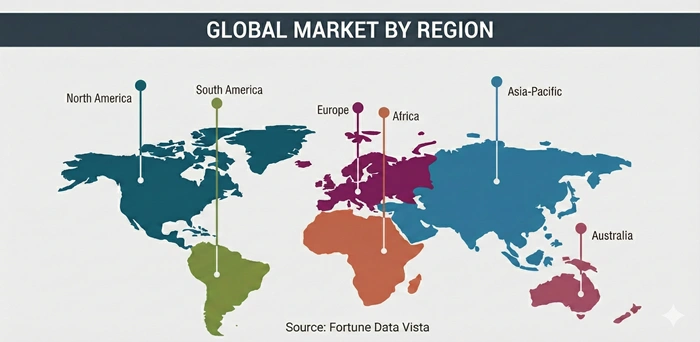
North America: The Dominating Region
North America Leads the Global Autonomous Farm Equipment Market Through a Combination of Large-Scale Commercial Farming Operations, Acute Labor Scarcity, World-Class Agricultural Technology Infrastructure, and the Commercial Presence of the Industry's Two Largest Equipment Manufacturers
North America commands the largest share of the global autonomous farm equipment market, contributing approximately 38% of total global revenue in 2026, with a regional CAGR of approximately 14.2% from 2026 to 2033. The United States is the single largest national market, characterized by millions of acres of large-scale commodity crop production where the economics of autonomous equipment investment are most compelling and the agricultural technology ecosystem — including precision GPS networks, high-speed rural broadband, and established dealer service infrastructure — is most mature. The acute shortage of farm labor across the U.S. Midwest and Great Plains creates a recurring and growing procurement imperative for autonomous machinery among commercial grain and oilseed producers. Key companies driving the North American market include John Deere (USA) — which commercialized the first fully autonomous production tractor — CNH Industrial — Case IH (USA), AGCO Corporation (USA), and emerging technology players like Bear Flag Robotics (acquired by John Deere) and Monarch Tractor (USA).
Canada adds meaningful volume to the North American market, particularly across the Prairie Provinces where large canola and wheat operations have been among the world's earliest and most enthusiastic adopters of precision guidance and autonomous crop care technologies. Mexico represents an emerging growth opportunity, particularly in its expanding commercial export agriculture sector in the northern and western states. The North American autonomous farm equipment market benefits from a deep and active venture capital and corporate investment ecosystem that is continuously funding new entrants in autonomous agriculture — maintaining a strong innovation pipeline that positions the region to sustain its global leadership through the full forecast period and beyond.
Asia Pacific: The Fastest Growing Region
Asia Pacific Is the Fastest Growing Region in the Autonomous Farm Equipment Market, Powered by Government-Backed Agricultural Modernization Programs, Rising Farm Labor Costs, and the World's Most Ambitious Agricultural Automation Investment Pipelines in China and India
Asia Pacific is the fastest-growing regional segment within the autonomous farm equipment market, projected to expand at a CAGR of approximately 16.4% from 2026 to 2033 — the highest rate among all global regions. China is the single largest contributor to regional growth, with the Chinese government having designated agricultural automation as a strategic national priority and deploying multi-billion yuan programs to subsidize the adoption of autonomous and precision agriculture machinery across its vast agricultural base. The Chinese Ministry of Agriculture and Rural Affairs has set explicit targets for mechanization of major crop production systems, creating strong institutional demand for autonomous equipment that domestic manufacturers like YTO Group Corporation (China) and multinational players like John Deere China and CNH Industrial China are actively supplying. India is the second major growth engine in the region, driven by the government's precision farming promotion programs, rising rural labor wages, and the growing commercial scale of farming operations in its mechanically advanced states like Punjab, Haryana, and Maharashtra.
Japan and South Korea — while smaller in absolute market size — are among the highest per-capita adoption intensity markets for autonomous farm equipment within Asia Pacific, driven by the most severe agricultural labor aging crises among all major farming nations globally. In Japan, the proportion of farmers over the age of 65 has surpassed 70% — creating an existential automation imperative that is driving some of the fastest commercial adoption of autonomous farm machinery anywhere in the world. Kubota Corporation (Japan), Yanmar Co. (Japan), and Iseki and Co. (Japan) are the leading domestic players developing and deploying autonomous rice and specialty crop equipment for Japanese farm operators. Australia completes the picture as a strong Asia Pacific market contributor, where vast grain and livestock operations have been early commercial adopters of autonomous guidance and machinery management technologies.
Top Key Players
-
Deere and Company — John Deere (United States)
-
CNH Industrial NV — Case IH and New Holland (United States and United Kingdom)
-
AGCO Corporation — Fendt (United States and Germany)
-
Kubota Corporation (Japan)
-
Yanmar Co. Ltd. (Japan)
-
Trimble Inc. — Trimble Agriculture (United States)
-
Mahindra and Mahindra Ltd. (India)
-
Autonomous Solutions Inc. (ASI) (United States)
-
Monarch Tractor Inc. (United States)
-
Naïo Technologies (France)
-
Carbon Robotics Inc. (United States)
-
Agrobot S.L. (Spain)
Recent Developments
-
In 2025, Deere and Company announced the commercial launch of its next-generation autonomous tractor platform featuring an upgraded AI vision system capable of operating in low-visibility conditions and expanded geofencing capabilities — extending the operational envelope of its autonomous 8R system to cover a broader range of field conditions and crop types across North American and Australian commercial markets.
-
In 2025, CNH Industrial completed the full commercial integration of its Raven Industries autonomous guidance technology into the Case IH Magnum and New Holland T8 autonomous-ready tractor lines, making factory-installed autonomous capability available as a standard option across its high-horsepower product range for the first time — significantly reducing the aftermarket modification cost for operators seeking autonomous operation capability.
-
In 2026, AGCO Corporation launched its Fendt 900 Vario autonomous tractor variant in the European market, combining the Fendt brand's premium drivetrain technology with AGCO's Precision Planting and Fuse connectivity platform to deliver a fully integrated autonomous field operation system targeted at large-scale grain producers in Germany, France, and the United Kingdom.
-
In 2025, Kubota Corporation announced a strategic investment and technology partnership with a Japanese agricultural robotics startup to accelerate the development of autonomous rice transplanting and paddy field management systems — addressing the most critical labor shortage points in Japan's rapidly aging rice farming sector and targeting commercialization across Southeast Asian paddy farming markets.
-
In 2026, Carbon Robotics secured a significant Series D funding round to scale production of its AI-powered autonomous LaserWeeder system, which uses computer vision and precision laser technology to eliminate weeds without herbicides — announcing expanded distribution partnerships with major farm supply distributors across the United States and Canada to accelerate deployment among large-scale vegetable and specialty crop producers.
Market Trends
The Electrification of Autonomous Farm Machinery and the Deep Integration of Autonomous Equipment With Cloud-Based Farm Management Software Platforms Are the Two Most Transformative Trends Shaping the Next Phase of Growth in the Autonomous Farm Equipment Market
The electrification of farm machinery is converging powerfully with the autonomous equipment trend to create a new generation of electric autonomous farm machines that deliver labor cost savings, fuel cost reduction, and carbon emissions improvement simultaneously. Electric autonomous tractors — including Monarch Tractor's MK-V and Mahindra's e-Kaali platform — have demonstrated that battery electric powertrains are commercially viable for a range of farm operations, and the combination of lower operating costs, government emissions incentives, and simpler powertrain architectures that are easier to integrate with autonomous control systems is creating strong market momentum for electric autonomous farm machinery. As battery energy density improves and charging infrastructure on farms develops, electric autonomous equipment is expected to account for a growing share of new autonomous farm equipment deployments through the forecast period.
The integration of autonomous equipment with cloud-based farm management platforms is the second transformative trend, enabling farm operators to plan, deploy, monitor, and analyze autonomous field operations from a single digital management environment. John Deere's Operations Center, CNH Industrial's AFS Connect, and AGCO's Fuse platform are all evolving rapidly to provide operators with real-time visibility into autonomous machinery performance, automated data logging for regulatory compliance, yield mapping integration, and AI-driven field planning recommendations. This software layer is becoming as commercially important as the machinery itself — creating recurring subscription revenue for equipment manufacturers while deepening platform lock-in and data relationships that strengthen long-term customer loyalty in ways that pure hardware sales historically could not achieve.
Segments Covered in the Report
By Product Type:
-
Autonomous Tractors
-
Autonomous Harvesters
-
Autonomous Sprayers
-
Autonomous Seeding Machines
-
Drones and UAVs
-
Others
By Autonomy Level:
-
Fully Autonomous
-
Partially Autonomous
By Power Output:
-
Below 70 HP
-
71–130 HP
-
131–250 HP
-
Above 250 HP
By Application:
-
Field Farming
-
Greenhouse Farming
-
Livestock Management
-
Others
By End User:
-
Large Farms
-
Small and Medium Farms
-
Agricultural Cooperatives
By Region:
-
North America (U.S., Canada, Mexico)
-
Europe (Germany, U.K., France, Italy, Rest of Europe)
-
Asia Pacific (China, India, Japan, South Korea, Rest of Asia Pacific)
-
Latin America (Brazil, Argentina, Rest of Latin America)
-
Middle East and Africa (UAE, Saudi Arabia, Rest of MEA)
❝ Built for Every Level — From Startups to Industry Giants ❞
Here Is Exactly How This Report Works for You
-
Whether you are a large-scale commercial farm operator evaluating autonomous equipment investment, an agricultural equipment manufacturer planning your next product line, or an institutional investor assessing the long-term commercial potential of farm automation technology, this report delivers granular revenue forecasts by product type, autonomy level, and region — along with competitor revenue breakdowns and market entry strategies that enable precise, confident business and investment decisions across the autonomous farm equipment market.
-
This report comprehensively maps the supply-demand dynamics of the farm automation industry — including technology readiness levels by equipment category, connectivity and GPS infrastructure availability by region, regulatory landscape for autonomous machinery operation, and how geopolitical factors including trade tariffs, agricultural subsidy policies, and cross-border technology transfer restrictions are influencing equipment manufacturer strategies and market access pathways globally.
-
The full version provides detailed competitor revenue analysis, product portfolio assessments, partnership and acquisition strategy profiles, RaaS business model economics, and a forward-looking technology investment roadmap covering AI, electrification, and precision sensing — equipping executives at every company level with the actionable intelligence they need to win market share, identify high-growth partnerships, and position their business for long-term leadership in one of agriculture's most consequential technology markets.
Frequently Asked Questions:
Answer: The autonomous farm equipment market is valued at USD 16.87 billion in 2025 and is projected to grow to USD 52.01 billion by 2033. The market will expand at a CAGR of 14.6% from 2026 to 2033, driven by agricultural labor shortages, rising food production demands, and the rapid commercialization of AI-powered farming machinery.
Answer: North America holds the largest share of the autonomous farm equipment market at approximately 38% of total global revenue in 2026. This dominance is driven by large-scale commercial farming operations, severe labor shortages, advanced GPS infrastructure, and the commercial leadership of John Deere and CNH Industrial in deploying fully autonomous tractor systems at commercial scale.
Answer: Autonomous tractors are the dominant product type, commanding approximately 52% of total product segment revenue in 2026, as the tractor serves as the foundational machinery for the widest range of agricultural field operations. Partially autonomous systems — including GPS autosteer and precision guidance platforms — represent the largest autonomy level segment, offering an accessible entry point for farm operators beginning their automation journey.
Answer: The most significant constraint is the high upfront capital cost of fully autonomous systems, which restricts adoption primarily to large commercial farms that can generate sufficient labor cost savings to justify the investment. Gaps in rural broadband and GPS connectivity infrastructure in key agricultural regions of Asia, Africa, and Latin America also limit practical deployment of autonomous machinery in a large proportion of the world's farmland.
Answer: The autonomous farm equipment market is increasingly converging with the electrification trend, with electric autonomous tractors from companies like Monarch Tractor and Mahindra demonstrating commercial viability across a growing range of field operations. Cloud-based farm management software platforms are simultaneously transforming how autonomous machinery is planned, monitored, and optimized — creating a data and software layer that is becoming as commercially valuable as the hardware itself for leading equipment manufacturers.