
Beeswax Market Overview
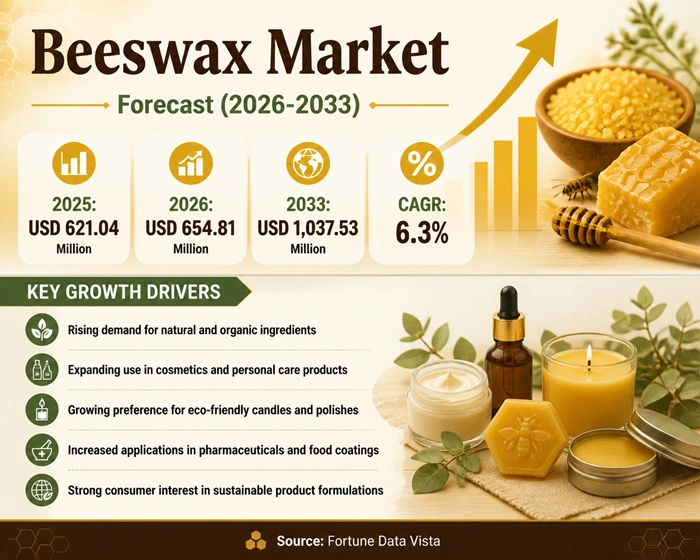
The global beeswax market size is valued at USD 621.04 million in 2025 and is predicted to increase from USD 654.81 million in 2026 to approximately USD 1,037.53 million by 2033, growing at a CAGR of 6.3% from 2026 to 2033.
The beeswax market represents a thriving sector within the natural ingredients industry, driven by consumer preference for sustainable and eco-friendly products. Natural wax derived from honeybee hives has become an essential ingredient across multiple sectors including cosmetics, pharmaceuticals, food packaging, and industrial applications. Growing awareness about environmental impact and health benefits has positioned this natural product as a preferred alternative to synthetic waxes and petroleum-based materials. The industry continues to expand as manufacturers seek clean-label ingredients that align with organic certification standards and green manufacturing practices.
AI Impact on the Beeswax Industry
Revolutionizing Production Efficiency Through Smart Beekeeping and Supply Chain Optimization
Artificial intelligence is transforming the beeswax market by introducing advanced monitoring systems that track bee colony health, optimize hive conditions, and predict wax production yields with remarkable accuracy. Smart sensors equipped with machine learning algorithms help beekeepers detect diseases early, monitor temperature fluctuations, and analyze behavioral patterns that directly influence wax output. These technological innovations reduce colony losses by up to 25% while simultaneously increasing production efficiency, ensuring consistent supply to meet growing market demands. AI-powered predictive analytics also enable manufacturers to forecast raw material availability, optimize inventory management, and streamline distribution networks across global markets.
Digital transformation extends beyond production into quality control and authentication processes within the beeswax market ecosystem. Computer vision systems now identify adulteration and verify product purity through spectral analysis, protecting consumers from synthetic substitutes and maintaining premium pricing for authentic natural wax. Automated quality assessment reduces testing time from hours to minutes while improving accuracy rates above 98%. Additionally, AI-driven formulation software helps cosmetic and pharmaceutical companies optimize beeswax concentrations in product development, reducing R&D costs and accelerating time-to-market for new applications that expand industry growth potential.
Growth Factors
Consumer Shift Toward Natural Ingredients Fuels Market Expansion Across Multiple Industries
The beeswax market experiences robust growth propelled by increasing consumer demand for natural and organic products across cosmetics, personal care, and food packaging applications. Rising awareness about harmful chemicals in synthetic alternatives drives brands to reformulate products with clean-label ingredients that appeal to health-conscious consumers. The beauty industry particularly values beeswax for its moisturizing properties, emulsifying capabilities, and protective barrier functions in formulations ranging from lip balms to premium skincare products. Pharmaceutical applications also expand as researchers discover new therapeutic uses for this natural ingredient with antibacterial and anti-inflammatory characteristics. Sustainable packaging trends further boost demand as consumers embrace reusable beeswax wraps that replace single-use plastics in food storage applications.
Environmental concerns and regulatory pressures create additional momentum within the beeswax market as governments worldwide implement policies favoring biodegradable materials over petroleum-based alternatives. The European Union's Green Deal and similar initiatives across North America allocate substantial resources toward sustainable agriculture and natural product development, creating favorable conditions for industry expansion. Growing investment in beekeeping infrastructure, particularly across developing economies in Asia-Pacific regions, ensures steady supply growth to support market needs. Furthermore, innovation in extraction and refining technologies improves product quality while reducing production costs, making natural wax more competitive against synthetic substitutes. E-commerce platforms also democratize access, enabling small-scale producers to reach global consumers and expanding market participation beyond traditional industrial channels.
Market Outlook
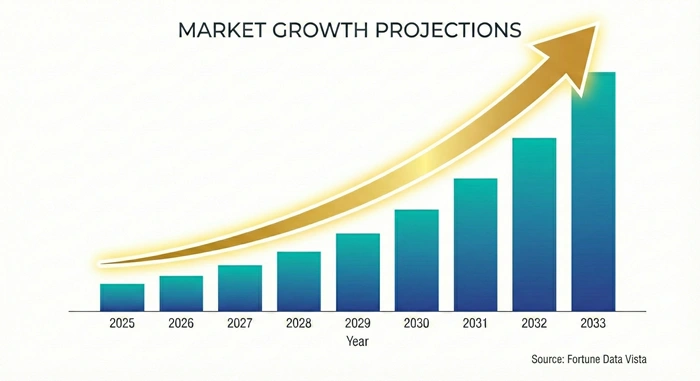
Strategic Industry Positioning Anticipates Continued Growth Through 2033 Forecast Period
The beeswax market demonstrates promising future prospects as sustainability becomes a non-negotiable requirement rather than a premium feature across consumer goods industries. Major brands increasingly commit to natural ingredient sourcing as part of corporate social responsibility initiatives, creating stable long-term demand that supports producer confidence and investment in capacity expansion. Industry consolidation through strategic partnerships between beekeepers, processors, and end-user manufacturers establishes integrated supply chains that improve quality control and traceability. Premium positioning of organic certified products commands higher margins, encouraging producers to adopt sustainable beekeeping practices that enhance both profitability and environmental outcomes. Market participants also explore value-added applications including nutraceuticals, specialty candles, and industrial lubricants that diversify revenue streams beyond traditional cosmetic applications.
Challenges including climate change impacts on bee populations and competition from plant-based vegan alternatives require adaptive strategies within the beeswax market landscape. Rising awareness of colony collapse disorder motivates collaborative efforts between government agencies, research institutions, and industry stakeholders to implement bee conservation programs that protect long-term supply security. Investment in pollinator-friendly agriculture and habitat restoration initiatives demonstrates industry commitment to sustainability beyond product marketing. Technological innovations in synthetic biology may eventually produce lab-grown alternatives, but consumer preference for authentic natural products suggests strong market resilience through the forecast period. Geographic diversification of production across emerging markets in Latin America and Africa reduces supply concentration risks while supporting rural economic development in regions with favorable beekeeping conditions.
Expert Speaks
-
Marc Pritchard, Chief Brand Officer at Procter & Gamble emphasized the company's commitment to natural ingredients, stating that consumer demand for transparent, sustainable beauty products continues to reshape formulation strategies across the personal care industry, with natural waxes playing increasingly critical roles in product performance and brand positioning.
-
Fabian Garcia, CEO of Revlon highlighted that natural ingredient sourcing has become a competitive necessity rather than a marketing advantage, with beeswax representing an essential component in meeting both regulatory requirements and consumer expectations for clean beauty products that deliver superior moisturizing benefits.
-
Jean-Paul Agon, former Chairman and CEO of L'Oréal noted that the beauty industry's transition toward sustainable ingredients accelerates year after year, with natural waxes like beeswax demonstrating exceptional versatility in formulations while supporting the industry's environmental commitments and responding to changing consumer values worldwide.
Key Report Takeaways
-
North America leads the beeswax market with the largest revenue share, driven by established cosmetics industries, strong consumer preference for organic products, and mature beekeeping infrastructure supporting consistent high-quality supply to major manufacturing centers.
-
Asia-Pacific emerges as the fastest-growing region with projected growth rates exceeding 7.1% CAGR through 2033, fueled by expanding middle-class populations, increasing disposable incomes, growing awareness of natural product benefits, and traditional cultural uses in Chinese medicine and beauty applications.
-
Cosmetics and personal care applications dominate consumption patterns accounting for over 60% of market share, with beeswax serving as an essential ingredient in lip balms, lotions, moisturizers, and premium skincare formulations valued for emollient and protective properties.
-
Organic beeswax commands premium positioning representing approximately 93% of the market by volume, driven by consumer preference for pesticide-free, sustainably sourced ingredients that align with clean beauty trends and organic certification requirements across multiple industries.
-
Pharmaceutical applications demonstrate strong growth potential expanding at robust rates as research reveals new therapeutic applications for natural wax with antibacterial, anti-inflammatory, and biocompatible characteristics suitable for medical ointments, drug delivery systems, and wound care products.
-
The direct distribution channel maintains market leadership enabling producers to establish closer relationships with industrial buyers, ensure quality control throughout the supply chain, and capture higher margins by eliminating intermediary markups in business-to-business transactions.
Market Scope
| Parameter | Details |
|---|---|
| Market Size by 2033 | USD 1,037.53 Million | Market Size by 2026 | USD 654.81 Million | Market Size by 2025 | USD 621.04 Million | Market Growth Rate from 2026 to 2033 | CAGR of 6.3% | Dominating Region | North America | Fastest Growing Region | Asia-Pacific | Segments Covered | Product Type, Application Type, Distribution Channel, Region | Regions Covered | North America, Europe, Asia-Pacific, Latin America, Middle East and Africa |
Market Dynamics
Drivers Impact Analysis
Accelerating Consumer Preference for Natural and Sustainable Products Drives Market Expansion
| Category | Details |
|---|---|
| ≈ % Impact on CAGR Forecast | High Impact (+2.5% to +3.0%) |
| Geographic Relevance | Global, with strongest impact in North America and Europe |
| Impact Timeline | Immediate and sustained through 2033 |
The beeswax market benefits tremendously from the global shift toward natural and organic products across consumer goods industries, particularly within cosmetics, personal care, and food sectors. Modern consumers increasingly scrutinize ingredient labels and actively seek products free from synthetic chemicals, artificial preservatives, and petroleum-derived components that raise health and environmental concerns. This behavioral change stems from growing awareness about skin sensitivity, allergic reactions, and long-term health implications associated with synthetic ingredients commonly found in conventional beauty products. Beeswax addresses these concerns perfectly as a natural emulsifier and moisturizer with proven safety profiles spanning centuries of human use. The ingredient's multifunctional properties allow formulators to replace multiple synthetic components with a single natural alternative, simplifying ingredient lists and meeting clean beauty standards that resonate with conscious consumers.
Regulatory frameworks increasingly favor natural ingredients through initiatives promoting sustainable agriculture, organic certification programs, and restrictions on certain synthetic chemicals in consumer products. The European Union's REACH regulations, along with similar frameworks in North America and Asia-Pacific regions, create compliance pressures that encourage manufacturers to reformulate products using approved natural ingredients. Government funding for sustainable beekeeping practices and pollinator conservation programs indirectly supports the beeswax market by ensuring stable supply chains and promoting environmental stewardship. Social media amplifies consumer education about ingredient benefits, with influencers and beauty experts advocating for natural alternatives that drive purchasing decisions across demographic segments. Premium positioning of beeswax-based products in the market commands higher price points, demonstrating consumer willingness to pay for perceived quality and sustainability benefits that validate brand repositioning strategies focused on natural ingredient storytelling.
Restraints Impact Analysis
Supply Volatility and Competition from Synthetic Alternatives Present Market Challenges
| Category | Details |
|---|---|
| ≈ % Impact on CAGR Forecast | Moderate Negative Impact (-1.0% to -1.5%) |
| Geographic Relevance | Global, particularly affecting regions with declining bee populations |
| Impact Timeline | Ongoing concern with potential intensification |
The beeswax market faces significant challenges from fluctuating honeybee populations affected by colony collapse disorder, habitat loss, pesticide exposure, and climate change impacts that disrupt natural pollination cycles. These environmental stressors create supply uncertainty that manifests in price volatility and inconsistent product availability for manufacturers relying on steady natural wax supplies for production planning. Beekeepers struggle with increasing operational costs related to disease management, supplemental feeding, and protective measures necessary to maintain colony health in degraded environments. Weather pattern changes directly impact flowering seasons and nectar availability, which influences honey production and consequently affects beeswax yields as byproducts of honey harvesting operations. Supply constraints particularly impact smaller manufacturers lacking diversified sourcing strategies or financial resources to absorb raw material price fluctuations.
Competition from synthetic waxes and plant-based vegan alternatives poses another restraint within the beeswax market, especially as technological advances improve the performance characteristics of laboratory-produced substitutes. Carnauba wax, candelilla wax, and synthetic petroleum-based alternatives offer price advantages and consistent supply that appeal to cost-sensitive manufacturers prioritizing production predictability over natural ingredient claims. The growing vegan consumer segment actively seeks alternatives to animal-derived ingredients, creating market pressure for brands to develop beeswax-free formulations that accommodate ethical consumption preferences. Regulatory requirements for product testing and quality certification add compliance costs that disproportionately burden small-scale producers compared to large industrial operations with established quality management systems. Additionally, lack of standardization in beeswax grading across different regions creates quality inconsistencies that complicate international trade and limit market transparency for buyers evaluating supplier options.
Opportunities Impact Analysis
Innovation and Market Expansion Create New Growth Avenues Across Applications
| Category | Details |
|---|---|
| ≈ % Impact on CAGR Forecast | High Positive Impact (+1.5% to +2.0%) |
| Geographic Relevance | Strong potential in Asia-Pacific and emerging markets |
| Impact Timeline | Mid to long-term realization through 2030-2033 |
The beeswax market discovers substantial growth opportunities through pharmaceutical applications where natural ingredients gain traction in drug delivery systems, wound care products, and therapeutic formulations. Research continues uncovering beneficial properties including antimicrobial activity, anti-inflammatory effects, and biocompatibility that position beeswax as a valuable excipient in medical applications beyond traditional uses. Expanding pharmaceutical industries in emerging markets create new demand sources as healthcare infrastructure develops and populations gain access to advanced treatment options incorporating natural ingredients. Nutraceutical applications also emerge as consumers seek dietary supplements and functional foods containing natural waxes for digestive health and nutritional benefits, opening additional revenue streams for producers willing to invest in food-grade processing capabilities and certification requirements.
Sustainable packaging represents another significant opportunity within the beeswax market as global initiatives to reduce plastic waste drive innovation in alternative materials. Beeswax wraps and coatings for food packaging gain consumer acceptance as practical replacements for single-use plastics, supported by favorable regulatory environments and corporate sustainability commitments across the food industry. Geographic expansion into underpenetrated markets in Africa and Latin America offers growth potential as rising incomes and urbanization increase demand for personal care products, cosmetics, and processed foods that utilize natural waxes. Technology advancements in beekeeping including precision hive monitoring, selective breeding programs for disease-resistant colonies, and improved extraction methods promise to enhance production efficiency and product quality. Strategic partnerships between producers, research institutions, and consumer brands accelerate innovation in application development, creating differentiated products that command premium positioning and expand overall market value beyond commodity pricing pressures.
Segment Analysis
Product Type Analysis
Organic Beeswax Dominates Market Share Through Premium Positioning and Consumer Preference
Organic beeswax commands the dominant position within the beeswax market, capturing approximately 93% of total volume as consumers and manufacturers prioritize pesticide-free, sustainably sourced ingredients that align with clean beauty and natural product trends. This product type commands premium pricing that reflects certification costs, sustainable beekeeping practices, and quality assurance systems verifying organic standards throughout production and processing stages. The organic segment grows particularly strongly in North America and Europe where regulatory frameworks support organic agriculture and consumers demonstrate willingness to pay price premiums for certified products. Major cosmetics manufacturers including L'Oréal, Estée Lauder Companies, and Beiersdorf AG increasingly specify organic beeswax in premium skincare lines targeting environmentally conscious consumers seeking transparency in ingredient sourcing. The segment benefits from stricter quality controls that ensure purity levels and absence of chemical residues, making organic beeswax preferred for sensitive skin formulations and pharmaceutical applications where contamination risks cannot be tolerated.
Asia-Pacific emerges as a high-growth region for organic beeswax as expanding middle-class populations embrace natural beauty products and traditional medicine applications that historically utilized pure wax in Chinese and Ayurvedic practices. Countries including Japan, South Korea, and Australia demonstrate particularly strong demand growth exceeding 8% annually as K-beauty trends emphasize natural ingredient formulations and regulatory bodies implement stricter cosmetic safety standards. Leading regional producers such as Chengdu Feng's Apiculture Co. and New Zealand Beeswax Ltd. invest heavily in organic certification to access premium export markets and supply multinational brands establishing manufacturing presence in Asia-Pacific regions. The organic segment also benefits from e-commerce growth enabling small-scale artisan producers to reach global consumers directly, creating diverse supply networks that support market resilience against supply chain disruptions affecting conventional industrial channels. Conventional beeswax maintains relevance in price-sensitive applications including industrial lubricants, candle manufacturing, and wood finishing where organic certification provides limited value proposition compared to cost considerations driving purchasing decisions.
Application Type Analysis
Cosmetics and Personal Care Applications Lead Market Consumption Across Global Regions
The cosmetics and personal care segment dominates the beeswax market with over 60% share, driven by the ingredient's multifunctional properties as an emulsifier, thickening agent, and moisturizer in formulations ranging from lip balms to premium anti-aging creams. Beeswax creates protective barriers on skin surfaces that lock in moisture while allowing breathability, making it ideal for products targeting dry skin conditions and harsh environmental exposure. The segment grows robustly across all regions as beauty brands reformulate conventional products to meet clean beauty standards and respond to consumer demand for recognizable natural ingredients replacing complex synthetic chemicals. North American brands including Burt's Bees built entire product lines centered on beeswax, demonstrating commercial viability of natural ingredient positioning that influenced industry-wide reformulation trends. European luxury cosmetics manufacturers also increasingly incorporate certified organic beeswax in premium skincare collections targeting affluent consumers willing to pay substantial premiums for natural efficacy and sustainability credentials.
The pharmaceutical application segment demonstrates strong growth potential with CAGR approaching 7.5% as research validates therapeutic properties and regulatory approvals expand medical uses beyond traditional ointment bases. Beeswax serves critical functions in controlled-release drug delivery systems, wound dressings, and topical treatments leveraging natural antimicrobial properties for infection prevention. Companies including GlaxoSmithKline, Pfizer, and Johnson & Johnson explore natural excipients meeting biocompatibility requirements while addressing consumer preferences for natural medicine alternatives. Asia-Pacific pharmaceutical markets grow particularly rapidly as traditional medicine practitioners increasingly adopt modern quality standards incorporating certified natural ingredients. Food and beverage applications also expand as beeswax coatings extend produce shelf life and edible wax glazes enhance product appearance while meeting organic certification requirements for natural food processing. Industrial applications including wood preservation, leather treatment, and metal casting maintain stable demand supporting market diversity across end-use segments that buffer volatility in consumer-facing categories.
Regional Insights
North America
Established Market Leadership Through Mature Industry Infrastructure and Premium Positioning
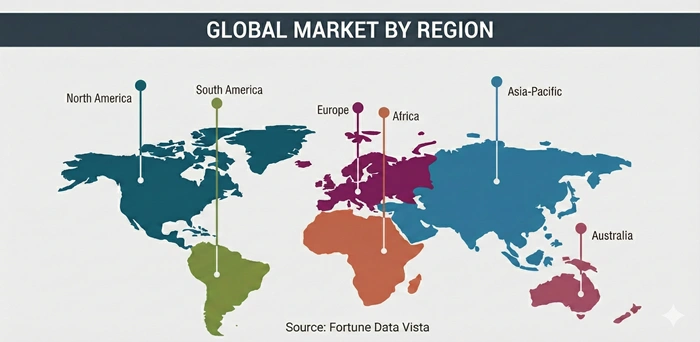
North America maintains its position as the leading region in the beeswax market, accounting for approximately 38% of global revenue with market valuation reaching USD 236 million in 2026 and projected to grow at a CAGR of 5.8% through 2033. The region's dominance stems from well-established cosmetics and personal care industries concentrated in the United States and Canada, where major multinational corporations including Procter & Gamble, Estée Lauder Companies, Revlon, and Coty Inc. maintain significant manufacturing operations and research facilities driving natural ingredient adoption. Strong consumer awareness about clean beauty, organic certification, and sustainable sourcing creates robust demand for premium beeswax products that command higher margins compared to conventional alternatives. Established beekeeping industries across North American agricultural regions ensure reliable supply chains supporting consistent product availability for industrial users requiring stringent quality specifications and traceability documentation.
The United States specifically drives regional growth through favorable regulatory environments supporting organic agriculture, natural product standards, and small business initiatives that encourage artisan producer participation in specialty markets. Companies such as Koster Keunen, Strahl & Pitsch Inc., and Bulk Apothecary dominate the supply landscape while innovative startups develop niche applications in sustainable packaging and specialty formulations. Canada contributes significantly through pristine environmental conditions producing high-purity beeswax commanding premium export pricing in international markets. Retail distribution through specialty stores, natural product chains, and e-commerce platforms provides diverse market access supporting both established brands and emerging artisan producers. The region faces challenges from declining bee populations and climate impacts, prompting industry investments in bee conservation programs and sustainable beekeeping practices that ensure long-term supply security while addressing environmental concerns that resonate with socially conscious consumers driving purchasing decisions.
Asia-Pacific
Fastest-Growing Regional Market Fueled by Rising Incomes and Cultural Heritage
Asia-Pacific represents the fastest-growing region within the beeswax market, expanding at a CAGR exceeding 7.1% through the forecast period as rising disposable incomes, urbanization, and growing middle-class populations drive demand for natural cosmetics and traditional medicine applications. China dominates regional production and consumption, serving as both a major exporter of raw beeswax and an expanding consumer market for finished products as domestic brands adopt natural ingredient formulations competing with international players. Traditional uses in Chinese medicine and beauty practices dating back centuries create cultural acceptance and established knowledge about beeswax benefits that accelerate modern product adoption when presented through contemporary marketing and packaging. Companies including Chengdu Feng's Apiculture Co. and Shandong Bokang Apiculture Co. lead domestic production while investing in quality improvements and organic certification to access premium segments and international export opportunities.
Japan, South Korea, and Australia represent high-value markets within the Asia-Pacific region where sophisticated consumers demand premium natural beauty products and regulatory standards enforce strict safety and quality requirements. K-beauty trends originating from South Korea emphasize natural ingredients and innovative formulations that spread globally through social media influence and export success of Korean cosmetics brands. India demonstrates significant growth potential as economic development expands consumer product access across increasingly affluent urban populations while traditional Ayurvedic medicine practices create established frameworks for natural ingredient acceptance. Southeast Asian nations including Thailand, Vietnam, and Indonesia develop beekeeping industries supporting both domestic consumption and export markets, diversifying global supply chains beyond traditional Chinese dominance. Regional growth faces challenges from variable quality standards, fragmented supply chains, and competition among numerous small-scale producers, creating opportunities for consolidation and quality improvement initiatives supported by government agricultural development programs promoting value-added processing and export competitiveness.
Top Key Players
-
Koster Keunen (United States)
-
Strahl & Pitsch Inc. (United States)
-
British Wax Refining Co. Ltd. (United Kingdom)
-
New Zealand Beeswax Ltd. (New Zealand)
-
Paramold Manufacturing LLC (United States)
-
Chengdu Feng's Apiculture Co. (China)
-
Shandong Bokang Apiculture Co. (China)
-
Bulk Apothecary (United States)
-
Dabur India Ltd. (India)
-
Frank B Ross Co. (United States)
-
Glenn Apiaries (United States)
-
Jedwards International Inc. (United States)
-
Roger A Reed Inc. (United States)
-
Gustav Heess GmbH (Germany)
-
Aroma Natural Inc. (United States)
Recent Developments
-
Koster Keunen expanded its manufacturing facility in Connecticut in 2024, investing USD 8 million in advanced processing equipment to increase organic beeswax production capacity by 40% and meet growing demand from premium cosmetics brands requiring certified natural ingredients for clean beauty formulations.
-
British Wax Refining Co. Ltd. acquired a specialty wax processing company in 2024, strengthening its European market position and adding pharmaceutical-grade beeswax production capabilities that enable entry into medical device and drug delivery system applications with strict regulatory requirements.
-
Dabur India Ltd. launched a new organic personal care line in 2025 featuring beeswax as a primary ingredient, leveraging its Ayurvedic heritage and natural product positioning to capture growing demand among Indian consumers seeking traditional ingredients presented through modern formulations and packaging.
-
New Zealand Beeswax Ltd. achieved carbon-neutral certification in 2025, becoming the first major producer to offset its entire supply chain emissions through renewable energy investments and sustainable beekeeping practices, creating differentiation in premium export markets prioritizing environmental credentials.
-
Chengdu Feng's Apiculture Co. partnered with a major Chinese e-commerce platform in 2024, launching direct-to-consumer beeswax products including skincare formulations and sustainable food wraps that generated USD 15 million in first-year sales demonstrating strong domestic market potential.
Market Trends
Sustainability and Innovation Drive Industry Evolution Toward Value-Added Applications
The beeswax market experiences transformative trends as sustainability becomes a fundamental requirement rather than optional premium feature across consumer goods industries. Major brands commit to science-based sustainability targets including carbon neutrality, plastic reduction, and regenerative agriculture support that position natural ingredients as essential components of corporate environmental strategies. Blockchain technology gains adoption for supply chain traceability, enabling consumers to verify product origins and beekeeping practices through smartphone apps that scan product packaging and access detailed sourcing information. This transparency addresses authenticity concerns and combats adulteration problems that historically plagued natural ingredient markets, building consumer trust that supports premium pricing strategies. Circular economy principles also influence product development as brands design refillable containers, take-back programs, and end-of-life recycling systems that align with zero-waste initiatives gaining traction among environmentally conscious consumers driving purchasing decisions.
Innovation extends beyond sustainability into functional performance as research laboratories discover new applications and optimize formulations that enhance natural ingredient efficacy. Microencapsulation technologies enable controlled release of active compounds within beeswax matrices, creating time-release moisturizers and pharmaceutical delivery systems that compete with synthetic alternatives on performance metrics. Hybrid formulations combining beeswax with other natural waxes including carnauba, candelilla, and plant-based alternatives create customized properties meeting specific application requirements while maintaining clean ingredient profiles. The rise of personalized beauty drives demand for customizable formulations where consumers select preferred natural ingredients including beeswax based on skin type, climate conditions, and personal values, creating opportunities for direct-to-consumer brands offering personalization platforms. Social commerce through Instagram, TikTok, and YouTube accelerates product discovery and brand building for artisan producers leveraging storytelling about beekeeping practices, ingredient benefits, and sustainable values that resonate with digitally native consumers influencing mainstream market trends.
Segments Covered in the Report
By Product Type
-
Organic Beeswax
-
Conventional Beeswax
By Application Type
-
Cosmetics and Personal Care
-
Pharmaceuticals
-
Food and Beverages
-
Industrial and Manufacturing
-
Candles
-
Others
By Distribution Channel
-
Direct Distribution
-
Indirect Distribution
-
Specialty Stores
-
Online Retail
-
Supermarkets and Hypermarkets
-
Others
-
By Region
-
North America
-
United States
-
Canada
-
Mexico
-
-
Europe
-
Germany
-
United Kingdom
-
France
-
Italy
-
Spain
-
Rest of Europe
-
-
Asia-Pacific
-
China
-
Japan
-
India
-
South Korea
-
Australia
-
Southeast Asia
-
Rest of Asia-Pacific
-
-
Latin America
-
Brazil
-
Argentina
-
Rest of Latin America
-
-
Middle East and Africa
-
GCC Countries
-
South Africa
-
Rest of Middle East and Africa
-
Frequently Asked Questions:
Answer: The global beeswax market size reaches USD 654.81 million in 2026 and is projected to grow to USD 1,037.53 million by 2033 at a CAGR of 6.3%. Strong demand from cosmetics and pharmaceutical sectors drives this steady expansion across global regions.
Answer: North America leads the beeswax market with approximately 38% global share, supported by mature cosmetics industries and strong consumer preference for organic natural products. The region maintains leadership through established supply chains and premium product positioning strategies.
Answer: Cosmetics and personal care applications account for over 60% of beeswax market consumption, utilizing the natural ingredient in lip balms, moisturizers, and skincare formulations. Pharmaceutical applications also demonstrate strong growth as research validates therapeutic properties for medical uses.
Answer: Organic beeswax represents 93% of market volume, commanding premium pricing through pesticide-free certification and sustainable production practices. Conventional beeswax serves price-sensitive industrial applications where organic certification provides limited value compared to cost considerations.
Answer: Fluctuating honeybee populations due to colony collapse disorder and climate change create supply volatility that restrains beeswax market growth. Competition from synthetic waxes and plant-based vegan alternatives also challenges natural wax positioning in cost-sensitive application segments.