
Cellular Health Screening Market Overview
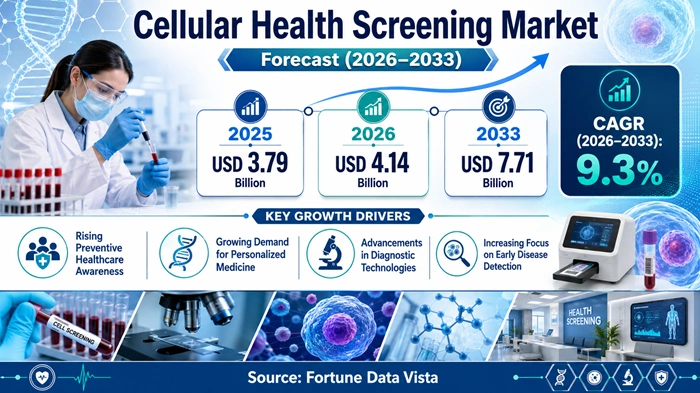
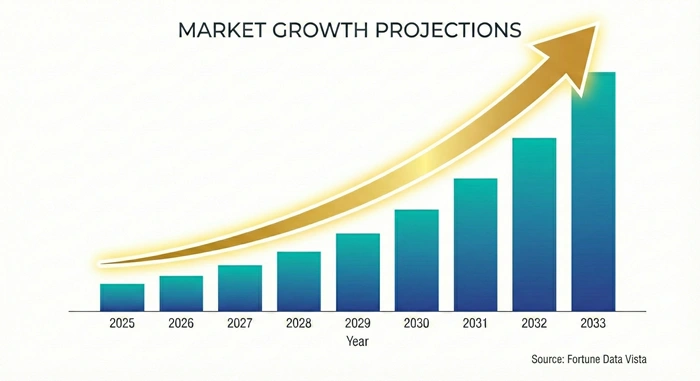
The global cellular health screening market size is valued at USD 3.79 billion in 2025 and is predicted to increase from USD 4.14 billion in 2026 to approximately USD 7.71 billion by 2033, growing at a CAGR of 9.3% from 2026 to 2033.
Cellular health screening refers to a specialized category of diagnostic testing that evaluates the functional status, vitality, and biological age of cells by measuring key biomarkers such as telomere length, micronutrient levels, oxidative stress markers, heavy metal concentrations, and immune cell function. As the global healthcare ecosystem shifts decisively toward prevention and early disease detection, these advanced cellular diagnostics are gaining significant traction among both clinicians and health-conscious consumers seeking deeper, more personalized insight into their biological health beyond what conventional blood panels can provide.
AI Impact on the Cellular Health Screening Industry
Artificial Intelligence Is Accelerating Biomarker Discovery, Enhancing Diagnostic Accuracy, and Enabling Truly Personalized Preventive Health Protocols That Are Fundamentally Transforming the Way Cellular Health Screening Is Delivered and Interpreted
Artificial intelligence is making a substantive impact on the cellular health screening industry, primarily by improving the speed and depth at which complex biomarker datasets can be analyzed and translated into clinically actionable insights. Traditional cellular health tests generate vast amounts of molecular data — from genomic sequences to proteomics profiles — that historically required significant specialist expertise to interpret. AI-powered data analysis platforms can now process these datasets in real time, identifying subtle patterns and correlations across hundreds of biomarkers simultaneously to generate personalized health risk assessments, biological age scores, and early disease probability signals with a level of sophistication that was previously available only in advanced research settings.
Beyond diagnostics, AI is reshaping the consumer-facing side of cellular health testing through intelligent digital health platforms that translate complex test results into simple, actionable lifestyle and clinical recommendations. AI algorithms trained on longitudinal health data can assess how an individual's cellular markers change over time in response to diet, exercise, supplementation, or medical intervention — turning cellular health screening from a one-time diagnostic event into a continuous, personalized health monitoring journey. This capability is particularly compelling for the direct-to-consumer segment, where technology platforms like Viome and Function Health are using AI to build ongoing member relationships anchored around iterative cellular health data rather than single-event testing.
Growth Factors
The Global Shift Toward Preventive and Personalized Healthcare, the Rising Burden of Chronic Disease Among Aging Populations, and Rapid Innovation in Biomarker Testing Technologies Are the Core Forces Driving Sustained Growth in the Cellular Health Screening Market
The most fundamental driver of the cellular health screening market is the global realignment of healthcare from reactive treatment to proactive prevention. As healthcare systems worldwide grapple with the unsustainable costs of managing late-stage chronic diseases — including cardiovascular disease, diabetes, cancer, and neurodegenerative conditions — there is growing recognition that early detection and intervention at the cellular level offers the most cost-effective path to better health outcomes and lower long-term healthcare expenditure. Governments, insurers, and healthcare providers are increasingly supporting preventive screening programs, and consumers themselves are demonstrating greater willingness to invest in advanced diagnostic services that give them a window into their cellular health before symptoms emerge.
The accelerating aging of the global population is a closely related structural driver. According to the World Health Organization, the proportion of people over 60 is growing faster than any other age group globally — and older adults are at substantially higher risk of cellular degradation, mitochondrial dysfunction, and the cumulative oxidative damage that underlies most age-related diseases. Cellular health screening tests — particularly telomere length analysis and mitochondrial function assessment — are uniquely suited to capturing the biological aging process in measurable terms, enabling clinicians to identify individuals whose biological age significantly exceeds their chronological age and who may benefit from early intervention. This alignment between an aging demographic and a diagnostic category specifically designed to assess aging-related cellular processes creates a natural and growing demand base for the industry through the full forecast period.
Market Outlook
The Cellular Health Screening Market Is Positioned for Strong Decade-Long Expansion as Converging Trends in Personalized Medicine, Direct-to-Consumer Health Testing, and Wearable Biomonitoring Create a Broad and Diversified Growth Foundation
The long-term outlook for the cellular health screening market is robustly positive. The broader personalized medicine megatrend — in which diagnosis, treatment, and prevention are tailored to the specific molecular profile of each individual patient — is creating sustained institutional and consumer demand for the kind of deep cellular biomarker data that this market provides. As genomics, proteomics, and metabolomics testing become progressively more affordable and accessible through both clinical and direct-to-consumer channels, the role of cellular health diagnostics in mainstream preventive healthcare is set to expand significantly beyond its current early-adopter and high-income consumer base.
The rapid growth of the direct-to-consumer (DTC) health testing segment is one of the most exciting structural developments shaping the market's forward trajectory. Companies offering at-home cellular health test kits — where consumers collect a simple blood or saliva sample and receive comprehensive cellular vitality reports within days — are removing the traditional clinical access barriers that previously limited this category to patients referred by physicians. Combined with integration into digital health platforms, membership-based wellness programs, and employer-sponsored preventive health benefit packages, DTC cellular health testing is broadening the addressable market substantially. Industry analysts project the global DTC diagnostics segment to surpass USD 20 billion by 2030, indicating that the demand infrastructure for cellular health screening growth is not only intact but actively expanding.
Expert Speaks
-
"Roche's investment in next-generation cellular and molecular diagnostics reflects our fundamental conviction that healthcare's future lies in prevention and early detection. The ability to read cellular health signals before disease manifests is the most powerful opportunity in diagnostics today, and the market adoption we are seeing validates that conviction." — Thomas Schinecker, CEO, Roche Holding AG
-
"Quest Diagnostics exists to provide actionable health insights that improve lives — and cellular health screening represents exactly that kind of high-value, clinically meaningful diagnostic service. We are seeing sustained and growing physician and consumer interest in advanced cellular biomarker panels, and we are expanding our capabilities to meet that demand at scale." — Jim Davis, CEO, Quest Diagnostics Incorporated
-
"Abbott's vision for diagnostics has always been to make complex science accessible to more people, in more places. The cellular health screening space is entering a pivotal phase where technology costs are declining, clinical evidence is strengthening, and consumer awareness is accelerating — a combination that creates a genuinely compelling commercial opportunity for diagnostics leaders." — Robert Ford, CEO, Abbott Laboratories
Key Report Takeaways
-
North America dominates the cellular health screening market, holding approximately 47% of total global revenue in 2026, driven by high consumer health awareness, a mature preventive care culture, significant investment in personalized medicine infrastructure, and the strong presence of leading diagnostic companies including Quest Diagnostics and Labcorp in the region.
-
Asia Pacific is the fastest-growing regional market, expanding at a CAGR above 11% from 2026 to 2033, powered by rising disposable incomes, growing awareness of preventive healthcare among urban populations in China, India, Japan, and South Korea, and increasing government investment in healthcare infrastructure and digital health initiatives across the region.
-
Multi test panels are the most widely used test type, accounting for approximately 63% of total market revenue in 2026, as healthcare providers and consumers increasingly prefer comprehensive cellular biomarker assessments that evaluate multiple health parameters simultaneously rather than single-analyte tests.
-
Hospitals and clinics represent the largest site-of-collection segment, contributing approximately 45% of total market revenue in 2026, due to physician referral patterns, insurance billing infrastructure, and the trusted clinical environment that complex cellular health assessments typically require for proper patient counseling and follow-up.
-
Blood-based sample testing is the predominant sample type across cellular health screening globally, holding approximately 58% of market share in 2026, owing to the broad range of cellular biomarkers accessible through blood samples and the established logistics infrastructure for blood sample collection and laboratory processing worldwide.
-
The home-based collection segment is the fastest-growing site-of-collection category, projected to capture approximately 28% of total market share by 2033 at a CAGR of approximately 13.5% from 2026 to 2033, as direct-to-consumer cellular health testing platforms gain consumer acceptance and regulatory frameworks for home diagnostic kits become more clearly defined globally.
Market Scope
| Parameter | Details |
|---|---|
| Market Size by 2033 | USD 7.71 Billion | Market Size by 2026 | USD 4.14 Billion | Market Size by 2025 | USD 3.79 Billion | Market Growth Rate from 2026 to 2033 | CAGR of 9.3% | Dominating Region | North America | Fastest Growing Region | Asia Pacific | Segments Covered | Test Type, Sample Type, Site of Collection, Application, End User | Regions Covered | North America, Europe, Asia Pacific, Latin America, Middle East and Africa |
Market Dynamics
Drivers Impact Analysis
Growing Global Adoption of Preventive Healthcare, the Increasing Prevalence of Chronic and Age-Related Diseases, and Rapid Technological Advances in Biomarker Testing Are the Primary Engines Propelling the Cellular Health Screening Market Forward
| Driver | ≈ % Impact on CAGR Forecast | Geographic Relevance | Impact Timeline |
|---|---|---|---|
| Shift toward preventive and personalized healthcare | ~28% | Global — highest in North America and Europe | Short to Long-Term |
| Rising chronic disease burden in aging populations | ~24% | North America, Europe, Asia Pacific | Medium to Long-Term |
| Technological advances in biomarker testing | ~20% | Global | Short to Long-Term |
| Growing direct-to-consumer health testing adoption | ~14% | North America, Europe | Short to Medium-Term |
| Increased physician awareness and prescription of cellular panels | ~8% | North America, Europe | Medium-Term |
| Government support for preventive health programs | ~6% | Asia Pacific, Europe | Long-Term |
The cellular health screening market is fundamentally driven by a generational shift in how both healthcare professionals and consumers think about disease prevention. Where previous generations sought medical care primarily when symptoms appeared, today's health-conscious consumers — particularly those in the 35–65 age group — actively seek comprehensive biomarker data to understand their biological health status and take proactive action before disease develops. This behavioral shift is being reinforced by an enormous amount of consumer-facing content from wellness influencers, longevity researchers, and health technology companies that are normalizing the concept of tracking cellular health metrics as a routine part of an informed, preventive health strategy. The result is a growing and self-reinforcing consumer demand for exactly the kind of advanced cellular diagnostics that this market specializes in delivering.
Technology advancement is playing a critical enabling role by continuously lowering the cost and expanding the range of cellular health markers that can be measured accurately, rapidly, and at scale. The convergence of next-generation sequencing, high-sensitivity immunoassay platforms, and liquid biopsy technologies has dramatically broadened the biomarker landscape accessible to cellular health screening providers. As testing costs decline and laboratory automation improves, the economics of offering comprehensive multi-marker cellular health panels are becoming viable for a much broader range of clinical and commercial testing environments — from major hospital systems to small independent wellness clinics and direct-to-consumer testing platforms — driving significant market expansion through increased accessibility and volume.
Restraints Impact Analysis
Limited Insurance Reimbursement, a Lack of Standardized Clinical Guidelines for Cellular Health Tests, and the High Complexity of Test Interpretation Continue to Constrain the Broader Adoption of Cellular Health Screening Across All Market Geographies
| Restraint | ≈ % Impact on CAGR Forecast | Geographic Relevance | Impact Timeline |
|---|---|---|---|
| Limited insurance and public health reimbursement | ~-33% | Global — highest in North America and Europe | Short to Medium-Term |
| Lack of standardized clinical guidelines | ~-24% | Global | Medium to Long-Term |
| High complexity of test result interpretation | ~-18% | Developing economies, general practice settings | Medium-Term |
| Consumer skepticism about clinical value of new tests | ~-14% | General consumer market globally | Short-Term |
| Regulatory uncertainty for direct-to-consumer testing | ~-11% | North America, Europe | Medium-Term |
The most significant constraint on market growth is the limited coverage of advanced cellular health tests by insurance providers and public health systems. In the United States, most cellular health screening tests — including telomere length analysis, comprehensive micronutrient panels, and oxidative stress assessments — fall outside the scope of standard insurance reimbursement, requiring patients to pay entirely out of pocket. This out-of-pocket cost burden restricts access to higher-income consumer segments and corporate wellness program participants, limiting the total addressable market far below what underlying health demand would theoretically support. Industry bodies including the American Clinical Laboratory Association have raised concerns about ongoing Medicare reimbursement cuts to diagnostic tests that risk further constraining laboratory investment in new cellular health testing capabilities.
The absence of universally accepted clinical guidelines for when and how cellular health screening should be prescribed represents a separate but equally material obstacle. Without established protocols from major medical societies like the American College of Preventive Medicine or equivalent bodies in Europe, primary care physicians lack the clinical framework to confidently recommend or interpret cellular health tests for their patients. This creates a knowledge and confidence gap at the point of care that results in underutilization of available tests even when patients express interest and willingness to pay. Addressing this gap through clinical education, peer-reviewed evidence generation, and the development of evidence-based screening protocols is one of the industry's most important medium-term priorities.
Opportunities Impact Analysis
The Rapid Expansion of Direct-to-Consumer Cellular Testing, Integration With Digital Health and Wearable Platforms, and Growing Employer and Insurer Interest in Preventive Health Benefits Are Creating Compelling New Revenue Streams for Cellular Health Screening Participants
| Opportunity | ≈ % Impact on CAGR Forecast | Geographic Relevance | Impact Timeline |
|---|---|---|---|
| Direct-to-consumer cellular health testing platforms | ~28% | North America, Europe | Short to Long-Term |
| Integration with wearables and digital health ecosystems | ~24% | Global | Short to Medium-Term |
| Employer-sponsored preventive wellness programs | ~20% | North America, Europe | Short to Medium-Term |
| Growing longevity medicine and anti-aging sector | ~16% | North America, Europe, Asia Pacific | Medium to Long-Term |
| Emerging market healthcare infrastructure development | ~12% | Asia Pacific, Middle East | Long-Term |
The direct-to-consumer cellular health testing model is among the most powerful growth opportunities available to companies in this space. As consumer awareness of cellular aging, mitochondrial health, and oxidative stress grows — driven by a booming longevity wellness movement that has produced bestselling books, popular podcasts, and globally followed wellness influencers — demand for accessible, affordable, and comprehensive cellular health assessments is accelerating rapidly. Companies like Viome Life Sciences, Function Health, and InsideTracker are building membership-based health platforms that offer regular cellular biomarker testing combined with personalized AI-driven lifestyle recommendations, creating subscription revenue models that are fundamentally more scalable and financially predictable than one-time clinical test referrals.
The integration of cellular health biomarker data with wearable devices and digital health monitoring platforms represents another major near-term opportunity. As wearable technology advances to the point of enabling non-invasive or minimally invasive continuous monitoring of specific cellular health proxies — including heart rate variability as a proxy for autonomic cellular stress, continuous glucose monitoring for metabolic cellular health, and emerging biosensor technologies for real-time inflammatory marker detection — the boundary between periodic cellular health screening and continuous cellular health monitoring is beginning to blur. Companies that successfully bridge these two worlds — combining episodic deep biomarker testing with continuous digital health monitoring — will be positioned to define the next generation of personalized preventive health services.
Segment Analysis
By Test Type: Multi Test Panels
Multi Test Panels Dominate the Cellular Health Screening Market Because They Deliver a Comprehensive and Clinically Meaningful Picture of Cellular Vitality Across Multiple Biological Systems in a Single Patient Engagement
Multi test panels represent the dominant test type segment within the cellular health screening market, accounting for approximately 63% of total market revenue in 2026. These comprehensive panels simultaneously assess multiple cellular health dimensions — such as telomere length, essential and conditionally essential micronutrient levels, oxidative stress and antioxidant capacity, heavy metal exposure, immune cell subsets, and mitochondrial function markers — providing both clinicians and individual consumers with a holistic view of their cellular health status that single-analyte tests cannot replicate. The clinical and commercial logic of multi-panel testing is compelling: a single patient visit or home sample collection event yields a breadth of health intelligence that would previously have required multiple separate tests, simplifying the patient experience while delivering higher revenue per transaction for testing laboratories. The multi test panel segment is projected to grow at a CAGR of approximately 9.8% from 2026 to 2033, driven by physician preference for comprehensive data and consumer demand for value-dense testing products. In North America, leading providers offering multi-panel cellular health assessments include SpectraCell Laboratories, Genova Diagnostics, and Vibrant America — all of which have built significant clinician networks around their comprehensive cellular biomarker panel offerings.
Asia Pacific is an increasingly important growth region for multi test panels within the cellular health screening market, particularly in Japan, South Korea, and Australia — countries with highly health-conscious consumer cultures and well-developed preventive medicine sectors. In Japan, the concept of regular and comprehensive health screening (known locally as "ningen dock") is deeply embedded in corporate and individual health practice, creating a natural adoption pathway for advanced cellular health multi-panels as an upgrade to existing annual screening programs. South Korea's highly sophisticated consumer healthcare market — characterized by a strong emphasis on evidence-based wellness, premium health supplements, and regular laboratory health monitoring — is similarly receptive to multi-parameter cellular health assessments. Companies including Samsung Medical Center's diagnostic division in South Korea and SRL Diagnostics in Japan are among the regional players building capabilities in comprehensive cellular health testing to serve these engaged consumer bases.
By Application: Telomere Analysis
Telomere Analysis Is the Most Widely Recognized Application in the Cellular Health Screening Market and Serves as the Foundational Scientific Driver of Consumer Interest in Biological Age Measurement and Longevity Medicine
Telomere analysis is the flagship application segment within the cellular health screening market, holding approximately 25% of total application revenue in 2026 and carrying significant symbolic importance as the most widely understood and communicated marker of cellular biological aging. Telomeres — the protective caps at the ends of chromosomes — shorten progressively with each cell division and under oxidative and inflammatory stress, and their measured length serves as a scientifically validated proxy for biological aging rate and cumulative cellular damage. The concept of measuring telomere length as a health and longevity biomarker has achieved remarkable mainstream consumer awareness, driven by Nobel Prize recognition of the underlying science and extensive coverage in popular health media — making telomere testing both the most clinically credible and most commercially marketable entry point for cellular health screening among new consumers. The telomere analysis segment is projected to grow at a CAGR of approximately 10.2% from 2026 to 2033, sustained by its position at the intersection of evidence-based diagnostics and the booming longevity medicine movement. Key companies specializing in telomere measurement services include Telomere Diagnostics Inc. (now Repeat Diagnostics), Titanovo Inc., and Life Length — all of which have invested in both clinical validation research and consumer-facing direct-to-test platforms.
North America leads telomere analysis adoption globally, accounting for the majority of commercial telomere testing volume, driven by the concentration of longevity-focused healthcare practitioners, biohacking communities, and high-income consumers willing to invest in premium biological age assessment services. The longevity medicine sector — encompassing clinics, wellness centers, and executive health programs that use biological age as a core metric for personalized anti-aging protocols — is particularly active in major U.S. cities including New York, Los Angeles, Miami, and San Francisco, where consumers are investing significantly in regular telomere length monitoring as part of comprehensive longevity health programs. Europe is a strong secondary market, with Germany, Switzerland, and the United Kingdom hosting active longevity medicine clinics that incorporate telomere analysis into standard biological age assessment protocols for their high-end clientele.
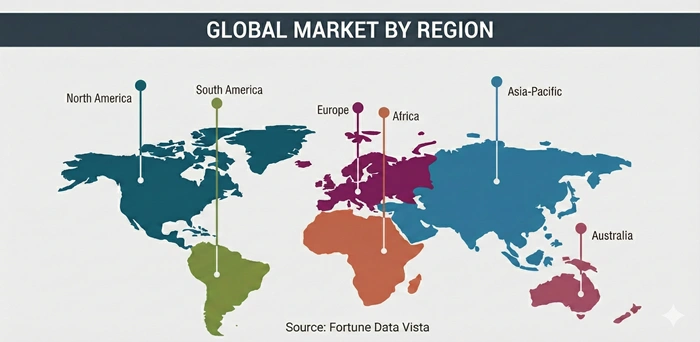
Regional Insights
North America: The Dominating Region
North America Leads the Global Cellular Health Screening Market Through a Combination of High Consumer Health Awareness, a Mature Preventive Medicine Ecosystem, and the Strong Commercial Presence of the World's Leading Diagnostic Testing Organizations
North America commands the largest share of the global cellular health screening market, accounting for approximately 47% of total global revenue in 2026, with a regional CAGR of approximately 8.8% from 2026 to 2033. The United States is the dominant national market within the region, where a deeply embedded culture of proactive health management — reinforced by employer wellness programs, executive health check programs, and the explosive growth of the longevity medicine sector — creates consistently strong and growing demand for advanced cellular biomarker testing. The region benefits from the presence of the world's largest and most sophisticated clinical laboratory networks, including Quest Diagnostics (USA), Laboratory Corporation of America — Labcorp (USA), and SpectraCell Laboratories (USA), which collectively provide the testing infrastructure, physician outreach, and insurance billing frameworks that enable the market to scale beyond niche health-enthusiast consumers to broader clinical populations.
Canada adds meaningful volume to the North American regional market, particularly through its publicly funded healthcare system's growing interest in preventive diagnostics and the strong presence of research-intensive academic medical centers that are advancing the clinical evidence base for cellular health biomarkers. The United States remains the epicenter of direct-to-consumer cellular health testing innovation, with companies including Viome Life Sciences (USA), InsideTracker (USA), and Function Health (USA) driving consumer adoption of subscription-based cellular biomarker monitoring at a scale that is attracting significant venture capital investment and accelerating the normalization of regular cellular health assessment across mainstream consumer demographics.
Asia Pacific: The Fastest Growing Region
Asia Pacific Is Rapidly Emerging as the World's Fastest Growing Regional Market for Cellular Health Screening, Driven by Rising Health Consciousness, Expanding Healthcare Infrastructure, and Strong Government Support for Preventive Medicine Across the Region
Asia Pacific is the fastest-growing regional segment within the cellular health screening market, projected to expand at a CAGR of approximately 11.2% from 2026 to 2033 — significantly outpacing the global average. Japan and South Korea are the most mature and commercially active markets within the region, both characterized by culturally embedded annual health screening practices, sophisticated laboratory infrastructure, and health-conscious consumer demographics that are actively receptive to premium biomarker-based health assessments. Japan's well-established "ningen dock" corporate health screening tradition provides a natural institutional channel for introducing advanced cellular health panel upgrades to millions of working adults who already undergo regular comprehensive health checks. Key regional players including SRL Diagnostics (Japan), LSI Medience (Japan), and Green Cross Laboratories (South Korea) are actively developing and marketing expanded cellular health panels to capitalize on this receptive institutional customer base.
China and India represent the most exciting long-term growth opportunities within the Asia Pacific cellular health screening market, despite being at earlier stages of adoption compared to Japan and South Korea. In China, the expansion of private healthcare and premium wellness services in Tier 1 cities — combined with growing government investment in "Healthy China 2030" initiatives emphasizing preventive care — is creating a rapidly growing addressable market for advanced cellular diagnostics. In India, the combination of a large and increasingly affluent urban professional class, rapid expansion of private diagnostic laboratory networks like Dr Lal PathLabs (India) and Metropolis Healthcare (India), and growing awareness of personalized medicine among urban consumers is laying the foundation for what could become one of the world's most significant cellular health screening markets over the longer term.
Top Key Players
-
Quest Diagnostics Incorporated (United States)
-
Laboratory Corporation of America Holdings — Labcorp (United States)
-
SpectraCell Laboratories Inc. (United States)
-
Genova Diagnostics Inc. (United States)
-
Telomere Diagnostics Inc. (Repeat Diagnostics) (United States)
-
Cell Science Systems Corporation (United States)
-
Viome Life Sciences Inc. (United States)
-
OPKO Health Inc. (United States)
-
Immundiagnostik AG (Germany)
-
Titanovo Inc. (United States)
-
Dr Lal PathLabs Ltd. (India)
-
Metropolis Healthcare Ltd. (India)
-
SRL Diagnostics (Japan)
Recent Developments
-
In 2025, Roche Diagnostics agreed to a potential USD 200 million investment in Freenome Holdings, a liquid biopsy and multi-cancer early detection company whose technology platform incorporates cellular and molecular health biomarkers — marking one of the largest single investments in cellular diagnostics innovation by a major global diagnostics company in recent years.
-
In 2025, Quest Diagnostics expanded its advanced wellness testing portfolio through an enhanced partnership with Vibrant America, broadening the range of specialized cellular health panels available through the Quest physician ordering platform across all major U.S. markets — increasing physician and consumer access to micronutrient, immune function, and cellular stress biomarker testing.
-
In 2026, Labcorp launched its enhanced Longevity Panel — a comprehensive multi-marker cellular health assessment combining telomere length, mitochondrial function markers, oxidative stress indicators, and biological age scoring — as a premium direct-to-physician offering targeting the rapidly growing executive and longevity medicine segments in North America and select European markets.
-
In 2025, Viome Life Sciences secured a significant Series D funding round to expand its AI-driven gut microbiome and cellular health testing platform globally, with planned expansion into the United Kingdom, Germany, Australia, and the UAE — accelerating its transition from a U.S.-centric direct-to-consumer business to a global precision wellness platform.
-
In 2026, Genova Diagnostics completed an integration upgrade connecting its comprehensive cellular health test panel results to major electronic health record (EHR) platforms used by functional medicine practitioners across North America, significantly improving test ordering workflow and result interpretation support for the clinical practitioners who are the company's primary customer base.
Market Trends
The Rise of Longevity Medicine and Biological Age Testing, Combined With the Growing Integration of Cellular Biomarker Data Into Wearable and Digital Health Platforms, Are the Two Most Transformative Trends Reshaping the Cellular Health Screening Market Through 2033
The most significant trend reshaping consumer engagement with cellular health screening is the rise of the longevity medicine movement — a growing medical and wellness philosophy centered on the idea that biological aging is itself a modifiable process that can be measured, tracked, and actively managed through lifestyle, supplementation, and targeted medical interventions. Leading academic researchers, popular science communicators, and a growing network of longevity-focused clinical practices are drawing mainstream consumer attention to biological age biomarkers — particularly telomere length, mitochondrial efficiency, and senescent cell burden — as meaningful and actionable indicators of health trajectory. This intellectual and cultural momentum is directly driving consumer willingness to seek and pay for advanced cellular health assessments, making the market's consumer demand base progressively broader, more educated, and more engaged with repeat testing.
The second defining trend is the integration of cellular health test data with the broader digital health ecosystem. As wearable devices, smartphone health applications, and continuous monitoring platforms become standard tools in health-conscious consumers' daily routines, demand is growing for cellular health screening services that can connect their laboratory biomarker results into these digital environments — providing a unified personal health dashboard that spans both real-time physiological monitoring and periodic deep cellular assessment. Companies that are successfully building these integrated platforms — where a consumer's cellular health test results sit alongside their continuous heart rate variability, sleep quality, activity, and nutrition data — are creating compelling and sticky user experiences that support high retention rates, recurring testing revenue, and premium subscription pricing that far exceeds what single-use test sales can generate.
Segments Covered in the Report
By Test Type:
-
Single Test Panels
-
Multi Test Panels
By Sample Type:
-
Blood
-
Saliva
-
Urine
-
Others
By Site of Collection:
-
Home
-
Hospitals and Clinics
-
Diagnostic Laboratories
-
Others
By Application:
-
Telomere Analysis
-
Micronutrient Testing
-
Oxidative Stress Analysis
-
Heavy Metal Testing
-
Immune Function Testing
-
Others
By End User:
-
Individuals
-
Healthcare Providers
-
Research Institutions
-
Others
By Region:
-
North America (U.S., Canada, Mexico)
-
Europe (Germany, U.K., France, Italy, Rest of Europe)
-
Asia Pacific (China, India, Japan, South Korea, Rest of Asia Pacific)
-
Latin America (Brazil, Argentina, Rest of Latin America)
-
Middle East and Africa (UAE, Saudi Arabia, Rest of MEA)
❝ Built for Every Level — From Startups to Industry Giants ❞
Here Is Exactly How This Report Works for You
-
Whether you are a diagnostic laboratory looking to expand your cellular health test menu, a digital health startup building a longevity platform, or an institutional investor evaluating the commercial potential of preventive diagnostics, this report delivers segment-by-segment revenue forecasts, competitor revenue breakdowns, and market entry strategy intelligence that enables precise, well-informed capital and business decisions across the cellular health screening market.
-
This report comprehensively maps the supply-demand dynamics of the cellular diagnostics industry — including reimbursement landscape evolution, regulatory changes for direct-to-consumer testing, clinical evidence generation trends, and how geopolitical factors such as healthcare investment priorities and cross-border data regulations are shaping operator strategies and market access pathways in key growth geographies globally.
-
The full version of this report provides detailed competitor revenue analysis, revenue source breakdowns by test type and geography, technology investment priorities, partnership and distribution strategy profiles, and a forward-looking assessment of how AI-driven diagnostics and wearable integration will reshape business model economics — giving decision-makers at every company level the tools they need to compete effectively and grow profitably in one of healthcare's fastest-expanding preventive diagnostics segments.
Frequently Asked Questions:
Answer: The cellular health screening market is valued at USD 3.79 billion in 2025 and is projected to reach USD 7.71 billion by 2033. The market is expected to grow at a CAGR of 9.3% from 2026 to 2033, driven by the global shift toward preventive healthcare, rising chronic disease burden, and growing consumer demand for personalized biomarker testing.
Answer: North America is the dominant region in the cellular health screening market, holding approximately 47% of total global revenue in 2026. This leadership is driven by high consumer health awareness, advanced diagnostic infrastructure, and the strong commercial presence of leading laboratory companies including Quest Diagnostics and Labcorp.
Answer: Multi test panels are the most widely used test type in the cellular health screening market, accounting for approximately 63% of total revenue in 2026. These comprehensive panels assess multiple cellular biomarkers simultaneously — including telomere length, micronutrient levels, and oxidative stress markers — delivering a complete picture of cellular vitality in a single patient engagement.
Answer: The most significant challenge is the limited insurance reimbursement for advanced cellular health tests, which forces most patients to pay out of pocket and restricts broader access. The lack of standardized clinical guidelines for when and how to prescribe cellular health tests also limits physician adoption and consumer confidence in the clinical value of these screenings.
Answer: Direct-to-consumer platforms are significantly expanding the addressable market for cellular health screening by removing the traditional requirement for a physician referral and making advanced biomarker testing accessible to a much broader consumer base. Companies offering at-home cellular health test kits with AI-powered result interpretation are building subscription-based health monitoring relationships that generate recurring revenue and drive high consumer engagement with ongoing cellular health management.