
Ceramic Tiles Market Overview
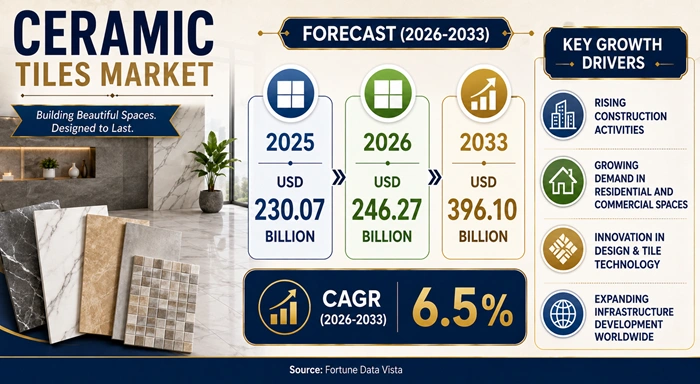
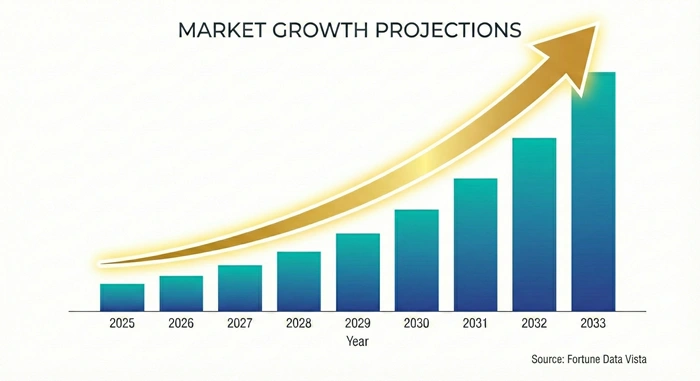
The global ceramic tiles market size is valued at USD 230.07 billion in 2025 and is predicted to increase from USD 246.27 billion in 2026 to approximately USD 396.10 billion by 2033, growing at a CAGR of 6.5% from 2026 to 2033.
Ceramic tiles — encompassing a wide range of products from standard wall tiles and glazed floor tiles to advanced porcelain slabs, mosaic collections, and large-format architectural panels — are a foundational material in the global construction and interior design industry. Driven by accelerating urbanization in Asia and Africa, a sustained global housing construction cycle, the premiumization of interior design across residential and commercial property sectors, and continuous technological innovation in tile manufacturing and surface design, the ceramic tile industry is in one of its most dynamic and sustained growth phases in decades.
AI Impact on the Ceramic Tiles Industry
Artificial Intelligence Is Transforming Ceramic Tile Design, Manufacturing Efficiency, and Digital Showroom Experiences — Enabling Faster Innovation Cycles, Reduced Production Waste, and Immersive Consumer Discovery That Is Reshaping How Tiles Are Created and Sold Globally
Artificial intelligence is arriving in the ceramic tiles industry with practical and commercially significant impact across both manufacturing and consumer-facing applications. On the production side, AI-powered quality control systems using high-resolution computer vision cameras can inspect thousands of tiles per minute for surface defects, color inconsistencies, dimensional variation, and micro-crack formation — detecting quality issues at a speed and accuracy that far exceeds human visual inspection. This capability reduces the proportion of finished tiles that fail quality standards, cuts material waste, and enables more consistent batch quality across high-volume production runs — directly improving the profitability of tile manufacturing operations and reducing the environmental footprint of factories that are already energy-intensive by nature.
In design and sales, AI is enabling transformative digital consumer experiences that are reshaping how homeowners, architects, and interior designers discover, visualize, and select ceramic tile products. Augmented reality visualization tools — now widely deployed by major tile brands through mobile apps and website integrations — allow customers to digitally overlay any tile product onto a photograph of their actual room, visualizing exactly how a given product will look in their specific space before making a purchase commitment. AI recommendation engines trained on interior design preference data, room typology, and complementary product selections are further improving the discovery experience on digital tile retail platforms, reducing selection anxiety and increasing average basket size for online tile retailers in ways that are compressing the traditionally lengthy tile specification cycle.
Growth Factors
Accelerating Urbanization and Housing Construction Activity Across Asia Pacific and Africa, Combined With the Growing Consumer Preference for Premium Tile Formats in Residential and Commercial Renovation, Are the Most Powerful Forces Driving Sustained Growth in the Ceramic Tiles Market
The most foundational driver of the ceramic tiles market is the extraordinary scale and pace of urbanization and construction activity across Asia Pacific, the Middle East, and Africa. The United Nations projects that approximately 2.5 billion people will be added to the world's urban population by 2050 — and virtually every urban dwelling, commercial building, public infrastructure facility, and hospitality development constructed during that process requires significant volumes of ceramic and porcelain tile for floors, walls, bathrooms, kitchens, and façades. China alone accounts for approximately 50% of global ceramic tile production and a major share of global consumption, and India's accelerating residential construction market — driven by government-backed affordable housing programs and a growing urban middle class — is adding rapidly to the demand base for standard and mid-tier ceramic tile products.
The renovation and remodeling sector adds a separate and increasingly important demand layer in developed economies where new construction growth is more moderate. In North America, Europe, and mature Asia Pacific markets such as Japan and Australia, homeowners and commercial property managers are investing heavily in ceramic tile renovation as part of broader interior upgrade cycles driven by changing design preferences, the influence of social media home design content, and the significant equity appreciation in existing residential properties over the past decade. Porcelain and large-format ceramic tile panels in particular have benefited from this renovation spending surge, as consumers seek sophisticated, low-maintenance, and visually impactful flooring and wall solutions that were previously only accessible at luxury price points but have become increasingly affordable through manufacturing technology improvements and intensifying product competition.
Market Outlook
The Ceramic Tiles Market Is Set for Sustained Above-Average Growth Through 2033, Driven by Large-Format Porcelain Innovation, Digitally Printed Surface Design, the Expansion of Green Building Standards, and the Enormous Untapped Demand of Africa's Emerging Construction Sector
The long-term outlook for the ceramic tiles market is strongly positive, supported by diverse and geographically distributed demand drivers that create resilience against regional economic downturns. The industry's structural growth story is most powerful in emerging markets — particularly India, Southeast Asia, the Middle East, and Sub-Saharan Africa — where the combination of young and rapidly urbanizing populations, expanding middle classes with rising aspirations for quality interior living environments, and ambitious government infrastructure and housing programs is creating a new global demand center that will sustain the industry's growth trajectory well beyond the near-term forecast horizon.
Technology-driven product innovation is simultaneously expanding the ceramic tile industry's addressable market by enabling tile products to compete credibly in application areas previously dominated by natural stone, wood flooring, and other surface materials. Large-format porcelain panels — some measuring over 3 meters in length with thicknesses as low as 3 millimeters — can replicate the aesthetic of marble, granite, concrete, or wood with greater consistency, lower weight, superior stain and scratch resistance, and significantly lower maintenance requirements. Digital inkjet printing technology has given tile manufacturers the ability to reproduce virtually any surface texture, color, or pattern at high resolution and at production-line speed — enabling an almost unlimited range of design options that give ceramic tiles a compelling aesthetic proposition against any competing surface material in both residential and commercial specification contexts.
Expert Speaks
-
"Mohawk Industries' ceramic and porcelain tile business is performing strongly because consumers globally are investing more in their living environments — and the combination of design versatility, durability, and sustainability that ceramic tile offers is resonating particularly powerfully in a market where homeowners want premium aesthetics without premium maintenance requirements." — Jeff Lorberbaum, CEO, Mohawk Industries Inc.
-
"RAK Ceramics continues to see robust demand across our key markets in the Middle East, Europe, and South Asia. The urbanization megatrend is creating a structural demand floor for ceramic tiles that we expect to sustain for decades, and our investment in large-format porcelain and digitally printed collections is positioning us to capture the premium end of that growing market." — Abdallah Massaad, CEO, RAK Ceramics PJSC
-
"Kajaria Ceramics is well positioned to capture India's extraordinary construction growth cycle — which we believe is still in its early innings. The formalization of housing construction, rising consumer expectations for quality interior surfaces, and the increasing awareness of porcelain as a superior flooring alternative are all working in our favor as the country's leading tile manufacturer." — Ashok Kajaria, Chairman and CEO, Kajaria Ceramics Ltd.
Key Report Takeaways
-
Asia Pacific dominates the global ceramic tiles market, accounting for approximately 65% of total global revenue in 2026, with China alone representing the single largest national producer and consumer of ceramic and porcelain tile in the world — a position underpinned by massive domestic construction activity, enormous manufacturing infrastructure, and significant export market penetration across Africa, the Middle East, and Latin America.
-
Middle East and Africa is the fastest-growing regional market, expanding at a CAGR of approximately 8.5% from 2026 to 2033, driven by accelerating residential and commercial construction activity, ambitious infrastructure development programs across Saudi Arabia, the UAE, and Sub-Saharan Africa, and rapidly increasing consumer aspirations for premium interior surfaces in new and renovated residential properties.
-
Residential end-use is the dominant demand segment, contributing approximately 55% of total market revenue in 2026, reflecting the enormous and consistent demand generated by housing construction and renovation activity globally — with India, China, Brazil, and the United States collectively representing the largest national residential ceramic tile demand markets.
-
Floor tiles are the leading application segment, accounting for approximately 60% of total application-based revenue in 2026, driven by the universal requirement for durable, easy-to-clean floor surfaces across all residential, commercial, and public infrastructure building typologies globally — and the growing preference for large-format porcelain flooring tiles that deliver premium aesthetics with excellent long-term performance.
-
Porcelain tiles are the dominant product type, commanding approximately 55% of total product-based market revenue in 2026, owing to their superior mechanical strength, water absorption resistance, and surface hardness compared to standard glazed ceramic tiles — making them the preferred specification for both floor and wall applications across residential, commercial, and exterior use cases.
-
The online retail distribution channel is the fastest-growing channel segment, projected to capture approximately 18% of total channel revenue by 2033 at a CAGR of approximately 12% from 2026 to 2033, driven by the rapid growth of digital home renovation platforms, e-commerce building materials marketplaces, and AR-enabled virtual tile visualization tools that are making online ceramic tile purchasing increasingly practical and confident for consumers.
Market Scope
| Parameter | Details |
|---|---|
| Market Size by 2033 | USD 396.10 Billion | Market Size by 2026 | USD 246.27 Billion | Market Size by 2025 | USD 230.07 Billion | Market Growth Rate from 2026 to 2033 | CAGR of 6.5% | Dominating Region | Asia Pacific | Fastest Growing Region | Middle East and Africa | Segments Covered | Product Type, Application, End-Use, Distribution Channel | Regions Covered | North America, Europe, Asia Pacific, Latin America, Middle East and Africa |
Market Dynamics
Drivers Impact Analysis
Rapid Urbanization and Housing Demand Across Emerging Economies, the Renovation Boom in Developed Markets, and the Growing Consumer Preference for Porcelain and Large-Format Tile Are the Three Core Forces Sustaining the Ceramic Tiles Market's Strong Growth Trajectory
| Driver | ≈ % Impact on CAGR Forecast | Geographic Relevance | Impact Timeline |
|---|---|---|---|
| Rapid urbanization and new housing construction | ~32% | Asia Pacific, Middle East, Africa, Latin America | Short to Long-Term |
| Residential and commercial renovation spending growth | ~24% | North America, Europe, mature Asia Pacific | Medium to Long-Term |
| Growing preference for premium porcelain and large-format tiles | ~18% | Global — highest in North America, Europe | Short to Long-Term |
| Green building certifications driving tile specification | ~10% | Europe, North America, Middle East | Medium to Long-Term |
| Rising digital printing design innovation expanding addressable markets | ~9% | Global | Short to Medium-Term |
| Infrastructure development and commercial construction activity | ~7% | Middle East, Africa, Asia Pacific | Long-Term |
The urbanization and housing construction driver is the most structurally powerful force in the ceramic tiles market, and it is most visibly active in Asia Pacific, the Middle East, and Sub-Saharan Africa — regions where urban population growth, household formation, and construction activity rates are all significantly above the global average. India's Pradhan Mantri Awas Yojana affordable housing program alone is constructing millions of new urban housing units annually, each of which represents direct demand for ceramic and vitrified tile across bathroom, kitchen, and living area applications. The scale of this demand generation is qualitatively different from the renovation-led demand that characterizes more mature markets — it is baseline infrastructure demand that will persist as long as urbanization and household income growth continue, creating a structural growth floor that is essentially independent of consumer sentiment cycles.
The renovation and remodeling driver in developed markets operates through a complementary but distinct mechanism, where aging housing stock, evolving design preferences, and the growing influence of home design social media content create recurring upgrade cycles that generate consistent ceramic tile replacement demand even in markets where new construction growth is limited. In the United States, approximately 80% of the existing housing stock is more than 20 years old — a demographic profile that creates enormous latent renovation demand that kitchen and bathroom remodeling campaigns consistently unlock. Europe's highly mature housing stock shows similar characteristics, and the growing availability of home equity financing at competitive rates in both North America and Europe is keeping renovation project volumes high even through broader economic uncertainty periods.
Restraints Impact Analysis
Volatile Energy and Raw Material Costs, Intense Price Competition From Chinese Tile Imports in Global Export Markets, and the Regulatory Complexity of Sustainability Compliance Are the Most Significant Constraints Facing Participants in the Ceramic Tiles Market
| Restraint | ≈ % Impact on CAGR Forecast | Geographic Relevance | Impact Timeline |
|---|---|---|---|
| High energy intensity of ceramic tile manufacturing | ~-28% | Global — highest in Europe, developing economies | Medium to Long-Term |
| Intense price competition from Chinese and low-cost producers | ~-24% | Global | Short to Long-Term |
| Cyclicality of construction and real estate markets | ~-20% | North America, Europe | Short to Medium-Term |
| Heavy freight costs limiting export competitiveness | ~-14% | Global — import/export markets | Short to Medium-Term |
| Environmental regulations on kiln emissions and effluent | ~-14% | Europe, North America, China | Long-Term |
Ceramic tile manufacturing is among the most energy-intensive processes in the building materials industry, with large-format kilns requiring continuous high-temperature firing — typically between 1100°C and 1250°C — that consumes enormous volumes of natural gas and electricity. Energy cost volatility, amplified by the geopolitical disruptions that have affected global natural gas supply since 2022, has created severe margin pressure for European and some Asian tile manufacturers who face both high energy input costs and intense price competition from Chinese producers operating with lower baseline energy cost structures. This energy cost challenge is driving significant investment in kiln efficiency improvement, waste heat recovery, and the adoption of alternative energy sources — including hydrogen and biomass — but these transitions take years and substantial capital to implement, creating a medium-term profitability constraint for manufacturers in high-energy-cost geographies.
The dominance of Chinese tile manufacturers in global export markets creates structural price competition that is particularly challenging for tile producers in southern Europe — historically major exporters — and in emerging market manufacturers attempting to establish themselves in regional export markets. China's massive production scale, vertically integrated raw material access, and government-supported manufacturing infrastructure give Chinese tile producers cost structures that are difficult for most international competitors to match on standard and mid-tier tile formats. Antidumping duties imposed by the European Union and the United States on Chinese tile imports have provided some protection for domestic manufacturers in these regions, but tariff circumvention through third-country transshipment and the ongoing challenge of enforcement mean that competitive pressure from low-cost import supply remains a persistent market dynamic.
Opportunities Impact Analysis
The Growing Adoption of Large-Format Porcelain Panels, the Expansion Into Sustainable and Recycled-Content Tile Products, and the Rapid Formalization of Africa's Construction Market Are Creating High-Value New Revenue Opportunities Within the Ceramic Tiles Market
| Opportunity | ≈ % Impact on CAGR Forecast | Geographic Relevance | Impact Timeline |
|---|---|---|---|
| Large-format porcelain panel market expansion | ~28% | Europe, North America, Asia Pacific | Short to Long-Term |
| Sustainable and recycled-content tile product development | ~22% | Europe, North America | Short to Medium-Term |
| Africa's construction market formalization | ~20% | Sub-Saharan Africa, North Africa | Long-Term |
| Digital printing enabling custom and on-demand tile design | ~16% | Global | Short to Medium-Term |
| Outdoor and façade tile application expansion | ~14% | Global — highest in Middle East, Europe | Medium-Term |
Large-format porcelain panels — sometimes marketed under the category names "porcelain slabs" or "ultra-compact surfaces" — represent one of the most exciting revenue expansion opportunities in the contemporary ceramic tiles market. These products, typically measuring 120×240 centimeters or larger with thicknesses as low as 3–6 millimeters, can span entire floor areas, kitchen countertop surfaces, bathroom walls, and building façades with minimal grout lines — delivering a visually dramatic and extremely practical surface solution that has attracted enormous enthusiasm from architects, interior designers, and high-end residential consumers globally. The premium pricing that large-format porcelain commands — often two to four times the price per square meter of standard tile formats — combined with the growing consumer willingness to invest in premium interior surfaces makes this the highest-margin growth segment in the global tile industry, and major manufacturers including Mohawk Industries, Florim, and Concorde have made substantial production capacity investments to capitalize on it.
The African construction market represents the most significant long-term untapped opportunity in the global ceramic tile industry. With Sub-Saharan Africa projected to add over 800 million people to its urban population by 2050 and with formal housing construction activity accelerating significantly across Nigeria, Ethiopia, Kenya, Tanzania, and South Africa — among many other markets — the demand for affordable and mid-tier ceramic tile products will scale enormously over the coming decades. Tile manufacturers in China, India, and the UAE are already investing in distribution partnerships and local production joint ventures across African markets to capture this growing demand, and manufacturers who establish early market presence, trusted distribution relationships, and appropriate product portfolios for African construction specifications will be positioned to build durable competitive advantages in a market that is structurally in the early stages of a multi-decade growth cycle.
Segment Analysis
By Product Type: Porcelain Tiles
Porcelain Tiles Lead the Ceramic Tiles Market as the Dominant Product Type, Driven by Their Superior Technical Performance, Wide Design Versatility, and the Growing Consumer Preference for Premium and Large-Format Tile Solutions in Both Residential and Commercial Applications
Porcelain tiles hold the dominant position within the ceramic tiles market by product type, accounting for approximately 55% of total product segment revenue in 2026. Manufactured from denser, more refined clay bodies and fired at higher temperatures than standard glazed ceramic tiles, porcelain tiles deliver superior mechanical strength, near-zero water absorption, excellent resistance to staining and scratching, and the dimensional stability required for large-format production — characteristics that make them the preferred specification for floor applications across virtually all building typologies globally. The shift in consumer preference from standard ceramic to porcelain tiles — and more recently toward large-format porcelain panels — is driving consistent mix improvement within the overall tile market, with higher average selling prices and margins per square meter sold. The porcelain tile segment within the ceramic tiles market is projected to grow at a CAGR of approximately 7.2% from 2026 to 2033, outpacing the overall market growth rate and increasingly displacing both standard ceramic tiles and natural stone alternatives in premium specification contexts. In Europe, the world's most technically advanced tile market, leading companies including Florim Ceramiche (Italy), Iris Ceramica Group (Italy), and Porcelanosa Group (Spain) have built global market recognition around large-format porcelain innovation that continues to set the technical and aesthetic standards for the global industry.
Asia Pacific is the largest and fastest-growing regional market for porcelain tiles, driven by both the scale of Chinese domestic production and consumption and the rapidly rising specification standards in India's commercial construction sector. In India, the shift from vitrified tiles — a product category unique to the Indian market — toward true porcelain tile formats is being driven by commercial builders, hospitality operators, and premium residential developers who seek international-standard technical performance. Indian manufacturers including Kajaria Ceramics (India), Somany Ceramics (India), and Asian Granito India (India) are all investing in porcelain tile production capacity expansion to serve this growing domestic premiumization demand while also building export capabilities to serve Middle Eastern and African construction markets from their competitively positioned Indian production bases.
By Application: Floor Tiles
Floor Tiles Are the Dominant Application Segment in the Ceramic Tiles Market, Accounting for the Largest Revenue Share Across All Building Types and Geographic Markets Due to the Universal Functional Requirement for Durable, Cleanable, and Aesthetically Versatile Floor Surfaces
Floor tiles represent the leading application segment within the ceramic tiles market, accounting for approximately 60% of total application-based revenue in 2026. Every category of building — from entry-level residential housing to luxury hospitality developments, industrial facilities, and public infrastructure — requires floor tiling that can withstand heavy daily foot traffic, frequent cleaning, moisture exposure, and decades of service life without significant performance degradation. The physical durability and low long-term maintenance cost of ceramic and porcelain floor tiles — relative to wood, carpet, vinyl, or polished stone alternatives — makes them the specification of choice across an enormous range of building and climate contexts globally. The floor tile segment is projected to maintain a CAGR of approximately 6.7% from 2026 to 2033 within the broader ceramic tiles market, sustained by housing construction and renovation demand globally and by the progressive shift toward larger format floor tiles that command higher per-square-meter revenues for manufacturers and retailers. In North America, major floor tile producers and distributors including Mohawk Industries (USA), Daltile — a Mohawk company (USA), and Florida Tile Inc. (USA) dominate the residential and commercial floor tile specification market through extensive builder and architect relationship networks and broad retail and wholesale distribution channels.
Asia Pacific is the largest floor tile market globally, with China, India, and the wider Southeast Asian construction market collectively generating the majority of global floor tile demand by volume. The Chinese floor tile market is characterized by its enormous domestic consumption of standard and mid-tier vitrified floor tiles for residential construction, alongside a rapidly growing premium porcelain floor tile segment serving commercial, hospitality, and luxury residential applications. In India, the government's infrastructure and housing programs — including the Smart Cities Mission and the rural PMAY housing scheme — are driving consistent specification of ceramic and vitrified floor tiles across millions of new housing units annually, making India one of the highest-volume and highest-growth national floor tile markets in the world. Regional companies including RAK Ceramics (UAE), Pamesa Ceramics (Spain), and SCG Ceramics (Thailand) are significant regional floor tile suppliers serving Southeast Asian, Middle Eastern, and African construction markets respectively.
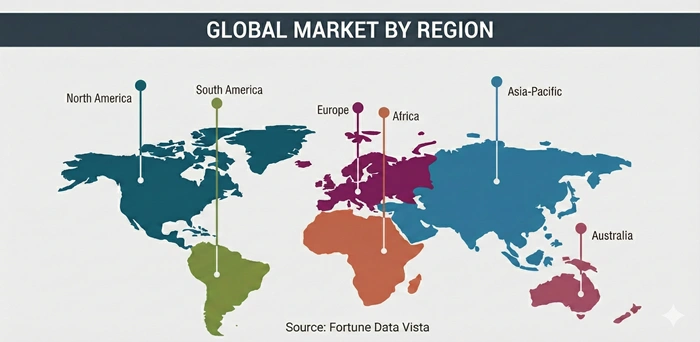
Regional Insights
Asia Pacific: The Dominating Region
Asia Pacific Dominates the Global Ceramic Tiles Market Through China's Unmatched Production Scale and Domestic Consumption, India's Explosive Housing Construction Pipeline, and the Broad Construction Expansion Underway Across Southeast Asia and the Wider Region
Asia Pacific holds the largest share of the global ceramic tiles market, accounting for approximately 65% of total global revenue in 2026, with a regional CAGR of approximately 6.2% from 2026 to 2033. China is the foundational pillar of this regional dominance, with domestic ceramic tile production accounting for roughly half of global output and domestic consumption representing by far the largest single national market for tile products globally. Despite some moderation in Chinese residential construction activity related to the real estate sector's ongoing adjustment, the underlying structural demand from urbanization, infrastructure investment, and commercial construction in lower-tier Chinese cities remains substantial. Key Chinese tile manufacturers including Monalisa Group Co. Ltd. (China), Marco Polo Ceramics (China), and Guangdong Dongpeng Holdings (China) are among the world's highest-volume tile producers, supplying both domestic construction demand and significant export volumes to African, Middle Eastern, and Southeast Asian markets.
India is the most exciting growth engine within the Asia Pacific ceramic tiles market, with a rapidly expanding domestic construction market, a young and growing urban population, rising aspirational spending on home interiors, and government housing programs that are collectively creating demand growth rates among the highest of any major national tile market globally. India's tile market is projected to grow at a regional CAGR of approximately 8% from 2026 to 2033 — significantly above the Asia Pacific average — creating major opportunities for both domestic Indian tile manufacturers scaling capacity and for international brands seeking to establish premium positioning in a market transitioning rapidly from standard to mid-tier and premium tile formats. The strength of domestic companies including Kajaria Ceramics (India), Somany Ceramics (India), and Orient Bell Limited (India) reflects the maturity and competitiveness of the Indian tile manufacturing sector.
Middle East and Africa: The Fastest Growing Region
The Middle East and Africa Is the Fastest Growing Regional Market for Ceramic Tiles, Propelled by Saudi Arabia's Vision 2030 Megaproject Construction Program, the UAE's Luxury Real Estate Expansion, and Africa's Rapidly Accelerating Formal Housing and Infrastructure Construction Activity
The Middle East and Africa is the fastest-growing regional segment within the ceramic tiles market, projected to expand at a CAGR of approximately 8.5% from 2026 to 2033. The Middle East component is driven most powerfully by Saudi Arabia's Vision 2030 program, which is generating an unprecedented wave of giga-project construction — including NEOM, the Red Sea Project, and Diriyah Gate — that requires enormous volumes of premium and ultra-premium ceramic and porcelain tile for interior and exterior applications across hospitality, residential, and public building typologies. The UAE continues to generate strong tile demand through its sustained luxury real estate development pipeline in Dubai and Abu Dhabi, where premium Italian and Spanish tile brands are consistently specified for high-end residential, hotel, and mixed-use developments. Key players serving the Middle East market include RAK Ceramics (UAE) — the region's leading domestic manufacturer — alongside European premium brands distributed by major regional partners.
The African component of this regional market is structurally in the early stages of what is expected to become one of the world's most important construction markets over the coming decades. Nigeria, Ethiopia, Kenya, Egypt, and South Africa are the largest current African tile markets, and all are experiencing significant growth in formal construction activity driven by urbanization, infrastructure investment, and the growth of an aspirational urban middle class. The African ceramic tile market is currently served primarily by Chinese and Indian tile imports, complemented by a small number of regional manufacturers — but as market scale grows, investment in local production is expected to increase, creating both a competitive dynamic and a growth opportunity for companies positioning themselves early in Africa's building materials market development.
Top Key Players
-
Mohawk Industries Inc. (United States)
-
RAK Ceramics PJSC (United Arab Emirates)
-
Kajaria Ceramics Ltd. (India)
-
Grupo Lamosa (Mexico)
-
Porcelanosa Group (Spain)
-
Florim Ceramiche SpA (Italy)
-
Iris Ceramica Group (Italy)
-
SCG Ceramics PCL (Thailand)
-
Pamesa Ceramics SL (Spain)
-
Guangdong Dongpeng Holdings Co. Ltd. (China)
-
Somany Ceramics Ltd. (India)
-
Monalisa Group Co. Ltd. (China)
Recent Developments
-
In 2025, Mohawk Industries launched its next-generation Daltile large-format porcelain panel collection — the Revolt series — featuring digitally printed stone and concrete surface designs in panels measuring up to 120×240 centimeters, targeting the premium U.S. residential kitchen, bathroom, and commercial flooring market with enhanced surface hardness specifications that exceed standard porcelain performance benchmarks.
-
In 2025, RAK Ceramics announced a significant capacity expansion program at its Ras Al Khaimah manufacturing complex, adding two new large-format porcelain production lines with a combined additional annual capacity of approximately 8 million square meters — positioning the company to meet growing premium tile demand from Saudi Arabia's giga-project construction pipeline and the UAE's sustained luxury real estate development activity.
-
In 2026, Kajaria Ceramics completed the commissioning of a new state-of-the-art manufacturing facility in Rajasthan, India, incorporating digital inkjet printing technology capable of producing large-format porcelain floor tiles at competitive production costs — making Kajaria the first Indian tile manufacturer to achieve full domestic large-format porcelain production capability without reliance on imported equipment processes.
-
In 2025, Grupo Lamosa announced the acquisition of a Mexican ceramic tile distributor network covering 12 states, consolidating its direct-to-retail distribution presence across Mexico and strengthening its competitive position against imports from Chinese and Spanish tile producers in the Mexican residential and commercial construction market.
-
In 2026, Florim Ceramiche launched its fully carbon-neutral production certification program, becoming the first major Italian ceramic tile manufacturer to achieve third-party verified net-zero carbon status for its entire manufacturing operation — a milestone that positions the company to capture growing architect and developer demand for certified sustainable building materials across European and North American premium specification markets.
Market Trends
The Rise of Large-Format Porcelain Panels and the Growing Integration of Sustainable Manufacturing Practices and Recycled Material Content Are the Two Most Consequential Trends Reshaping the Global Ceramic Tiles Market Through 2033
Large-format porcelain panels are fundamentally changing the aesthetic and functional vocabulary of ceramic tile design, and their growing market penetration is reshaping the competitive landscape of the ceramic tiles industry. Products ranging from 90×90 centimeters to the newest 160×320 centimeter slab formats are enabling architects and interior designers to create seamless, visually expansive surfaces for floors, walls, countertops, and façades that were previously achievable only with natural stone at significantly higher cost and maintenance burden. The growing consumer accessibility of these premium formats — driven by production efficiency improvements at leading Italian, Spanish, and increasingly Indian and Chinese manufacturers — is establishing large-format porcelain as a mainstream commercial and residential specification rather than an exclusive luxury product, expanding the total revenue opportunity of this premium segment considerably.
Sustainability has become a front-line competitive issue in the global ceramic tiles market, driven by the increasing weight that architects, property developers, and large commercial construction specifiers place on documented environmental product credentials including life cycle assessment data, recycled material content, factory emissions certifications, and sustainable raw material sourcing. Leading manufacturers are responding by investing in kiln efficiency upgrades, integrating post-industrial and post-consumer recycled ceramic content into their production streams, transitioning to renewable energy sources for firing and plant operations, and obtaining internationally recognized environmental certifications such as LEED contribution documentation and Cradle to Cradle certification. Companies that can combine premium design credentials with credible and verified sustainability performance are positioned to command specification preference in the growing number of green building projects that explicitly require sustainable building material documentation.
Segments Covered in the Report
By Product Type:
-
Porcelain Tiles
-
Non-Porcelain Tiles
-
Glass Tiles
-
Mosaic Tiles
-
Others
By Application:
-
Floor Tiles
-
Wall Tiles
-
Countertop Tiles
-
Others
By End-Use:
-
Residential
-
Commercial
-
Industrial
By Distribution Channel:
-
Direct Sales
-
Retail Stores
-
Online Retail
-
Others
By Region:
-
North America (U.S., Canada, Mexico)
-
Europe (Germany, Italy, Spain, U.K., Rest of Europe)
-
Asia Pacific (China, India, Japan, South Korea, Rest of Asia Pacific)
-
Latin America (Brazil, Argentina, Rest of Latin America)
-
Middle East and Africa (UAE, Saudi Arabia, Rest of MEA)
❝ Built for Every Level — From Startups to Industry Giants ❞
Here Is Exactly How This Report Works for You
-
Whether you are a ceramic tile manufacturer evaluating capacity expansion priorities, a construction materials distributor assessing new product range investments, or an institutional investor analyzing the long-term commercial opportunity in the global ceramic tiles market, this report delivers granular revenue forecasts by product type, application, end-use, and region — combined with competitor revenue analysis and market entry strategy intelligence that enables confident, data-driven business and investment decisions.
-
This report comprehensively maps the supply-demand dynamics of the global tile industry — including raw material availability and cost trends, energy cost landscape evolution by region, regulatory impacts on manufacturing emissions, and how geopolitical factors such as antidumping trade measures, Chinese export policy, and regional construction investment programs are shaping competitive dynamics and market access strategies for tile manufacturers and distributors globally.
-
The full version provides detailed competitor revenue breakdowns, production capacity and utilization analysis, product innovation pipeline assessments, distribution channel economics, and a forward-looking evaluation of large-format porcelain, sustainable tile materials, and Africa market entry opportunities — equipping decision-makers at every company tier with the strategic intelligence they need to grow market share, optimize product mix, and build durable competitive advantages in one of the world's most enduring and expanding building materials categories.
Frequently Asked Questions:
Answer: The ceramic tiles market is valued at USD 230.07 billion in 2025 and is projected to reach USD 396.10 billion by 2033. The market is expected to grow at a CAGR of 6.5% from 2026 to 2033, driven by rapid urbanization across Asia and Africa, the renovation boom in developed economies, and the growing consumer preference for premium porcelain and large-format tile products.
Answer: Asia Pacific holds the dominant position in the ceramic tiles market, accounting for approximately 65% of total global revenue in 2026, with China representing the world's largest single producer and consumer of ceramic tile. India is the fastest-growing national market within the region, supported by government housing programs, rising urban construction activity, and growing consumer aspirations for premium interior surfaces.
Answer: The primary growth drivers include rapid urbanization and housing construction in Asia Pacific, the Middle East, and Africa, along with strong renovation spending in developed markets. The growing consumer preference for porcelain and large-format tiles, continuous innovation in digital printing surface design, and the adoption of ceramic tiles in green building specifications are all contributing to sustained market growth.
Answer: Porcelain tiles hold the leading product type position in the ceramic tiles market, commanding approximately 55% of total product segment revenue in 2026, owing to their superior technical performance in high-traffic and moisture-exposed applications. Their growing availability in large-format slab dimensions with digitally printed marble, stone, and concrete designs is further accelerating their specification across premium residential and commercial building applications globally.
Answer: Sustainability is becoming a competitive differentiator in the ceramic tiles market, with major manufacturers investing in kiln efficiency improvements, renewable energy adoption, and recycled material content integration to meet growing demand for green building certified tile products. Companies that achieve third-party verified environmental certifications and provide transparent life cycle assessment data are increasingly preferred by architects and developers working on LEED and BREEAM certified construction projects globally.