
Cheek Augmentation Market Overview
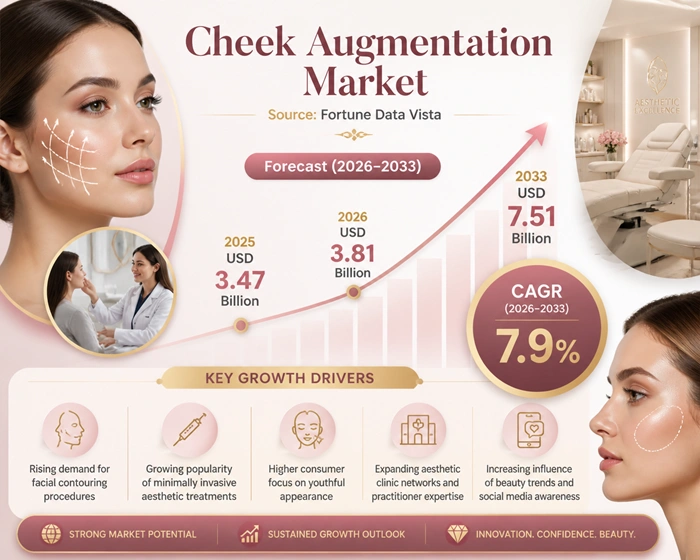
The global cheek augmentation market size is valued at USD 3.47 billion in 2025 and is predicted to increase from USD 3.81 billion in 2026 to approximately USD 7.51 billion by 2033, growing at a CAGR of 7.9% from 2026 to 2033.
This sustained growth reflects a powerful convergence of social, demographic, and technological factors. Growing consumer interest in facial aesthetics, the mainstreaming of cosmetic procedures across age groups and genders, rapid innovation in injectable filler formulations, and the rising acceptance of both surgical and non-surgical facial enhancement are collectively driving consistent demand for cheek contouring and malar augmentation procedures worldwide.
AI Impact on the Cheek Augmentation Industry
Artificial Intelligence Is Transforming Patient Consultation, Treatment Planning, Outcome Simulation, and Product Innovation Across Every Dimension of the Cheek Augmentation Market*
Artificial intelligence is reshaping how aesthetic practitioners plan, personalize, and deliver cheek augmentation procedures. AI-powered facial analysis platforms now assess facial proportions, symmetry, volume deficits, and soft tissue structure with a precision that was previously achievable only through experienced clinical judgment. These tools enable injectors and surgeons to objectively identify the optimal placement zones, volume quantities, and product types for each patient's unique anatomy — significantly improving treatment consistency and reducing the risk of asymmetric or overfilled outcomes that commonly drive patient dissatisfaction. Platforms such as Allergan Aesthetics' Allē app ecosystem and Galderma's Restylane treatment simulation tools are early examples of AI-assisted consultation tools that are rapidly becoming standard in premium aesthetic practice settings.
Beyond procedure planning, AI is accelerating product development in dermal fillers and cheek implant biomaterials. Machine learning models are being used to screen novel polymer combinations, predict rheological properties relevant to injectability and tissue integration, and model long-term filler behavior in soft tissue environments — compressing development timelines for next-generation filler formulations. For surgical implant manufacturers, AI-assisted 3D design tools are enabling the development of patient-specific custom cheek implants with unprecedented anatomical precision, reducing surgical time, improving patient outcomes, and expanding the commercial case for custom implant options at accessible price points. These innovations are gradually broadening the addressable market for premium cheek augmentation products.
Growth Factors
Rising Social Media Influence on Aesthetic Standards, Growing Acceptance of Cosmetic Procedures Among Men, and Continued Innovation in Non-Surgical Filler Technology Are the Primary Drivers Sustaining Growth in the Cheek Augmentation Market*
The most influential growth driver in the cheek augmentation market is the transformative impact of social media on beauty standards and cosmetic procedure adoption. Platforms such as Instagram, TikTok, and YouTube have fundamentally shifted consumer attitudes toward facial aesthetics — normalizing cheekbone enhancement, midface volume restoration, and sculpted malar contours as aspirational yet achievable goals. The rise of high-definition video communication, selfie culture, and virtual appearance in online professional settings has made facial symmetry and defined facial structure visible priorities for a broader and younger demographic than previously drove cosmetic procedure demand. This cultural shift has directly accelerated the frequency of consultation and treatment uptake for both injectable cheek enhancement and surgical cheek implants across North America, Europe, and increasingly across Asia Pacific.
A second powerful growth driver is the progressive broadening of the consumer base for cheek augmentation procedures. Male aesthetic medicine is one of the fastest-growing segments within the broader medical aesthetics industry — with men increasingly seeking defined cheekbones, sharper midface structure, and improved facial proportions through both injectable and surgical approaches. The aging population represents another expanding demand driver, as midface volume loss — one of the earliest and most visually significant signs of facial aging — is driving demand for restorative cheek augmentation among patients in the 40–65 age group seeking natural, rejuvenated appearance without the tell-tale signs of traditional facelift surgery. The combination of these two demographic expansions — younger men seeking enhancement and older adults seeking restoration — is significantly broadening the total addressable market for cheek augmentation products and procedures globally.
Market Outlook
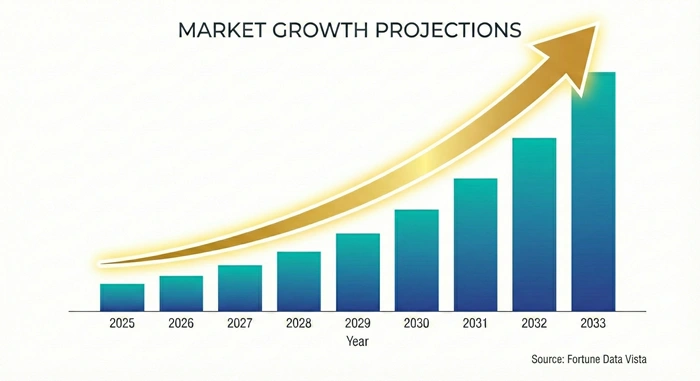
Minimaally Invasive Innovation, Premiumization of Filler Technology, Rising Medical Tourism, and Geographic Expansion Into Emerging Markets Are Positioning the Cheek Augmentation Market for Robust Long-Term Growth Through 2033*
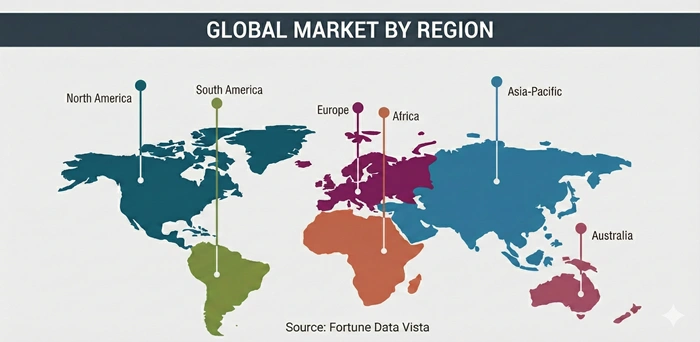
The long-term outlook for the cheek augmentation market is consistently positive and supported by durable structural trends. North America currently leads the global market, benefiting from high per-capita cosmetic procedure volumes, widespread clinical acceptance of hyaluronic acid (HA) fillers for midface augmentation, and a sophisticated network of aesthetic clinics with access to premium product portfolios. Europe is the second-largest market, anchored by strong aesthetic medicine cultures in Germany, France, Italy, the UK, and the Benelux region. Asia Pacific is the fastest-growing region, propelled by beauty-conscious consumer cultures in South Korea, China, Japan, and India, rapidly growing medical tourism industries, and increasing availability of trained aesthetic practitioners outside the major metropolitan centers.
The ongoing shift toward non-surgical cheek augmentation — particularly HA filler-based treatments — is expected to sustain above-average growth in the injectable segment through 2033. Next-generation cross-linked HA formulations with improved lifting capacity, longer duration, and more natural tissue integration are gaining rapid clinical adoption and are commanding premium price points. The introduction of biostimulating fillers — including poly-L-lactic acid (PLLA) and calcium hydroxylapatite (CaHA) — for cheek augmentation is also broadening the treatment menu available to practitioners. Manufacturers who continue to invest in clinical evidence generation, practitioner education programs, and digital patient engagement platforms will be best positioned to capture premium market share in an increasingly competitive and consumer-educated cheek augmentation market.
Expert Speaks
-
"Allergan Aesthetics is committed to advancing the science of facial aesthetics to deliver outcomes that are natural, personalized, and lasting. The cheek and midface region represents one of the most important aesthetic zones, and our portfolio of products — from JUVÉDERM VOLUMA to our surgical implant offerings — reflects our deep investment in meeting the evolving expectations of both patients and practitioners in this dynamic category." — Robert Michael, CEO, AbbVie (Allergan Aesthetics Parent)
-
"Galderma's focus on aesthetic medicine innovation is centered on delivering clinically differentiated products that respect each patient's natural anatomy. The demand for cheek contouring and midface restoration is growing across all demographics, and we continue to invest in the science of facial volumization to ensure our Restylane and Sculptra portfolios remain the practitioner's first choice for defining and restoring the cheek region." — Flemming Ørnskov, CEO, Galderma SA
-
"At Stryker, we see significant opportunity in the surgical facial aesthetics space, where demand for precise, durable, and customizable cheek implants is growing alongside greater consumer awareness of the long-term advantages of surgical augmentation over repeat injectable treatments. Our craniomaxillofacial portfolio positions us strongly to serve the most demanding aesthetic and reconstructive applications in this category." — Kevin Lobo, CEO, Stryker Corporation
Key Report Takeaways
-
North America leads the global cheek augmentation market with approximately 38.2% of global revenue share in 2026, driven by the world's highest density of board-certified plastic surgeons, dermatologists, and aesthetic medicine practitioners, a well-established culture of cosmetic procedure adoption, and the presence of all major product manufacturers including Allergan Aesthetics, Galderma, Merz Aesthetics, and Stryker CMF within the region.
-
Asia Pacific is the fastest-growing regional market, projected to expand at a CAGR of approximately 10.4% from 2026 to 2033, fueled by South Korea's global leadership in medical aesthetics and K-beauty influence, rapidly expanding cosmetic clinic infrastructure in China and India, a strong medical tourism industry in Thailand and Singapore, and growing adoption of minimally invasive aesthetic procedures among the region's young and beauty-conscious population.
-
Injectable Fillers are the dominant product segment, accounting for approximately 63.5% of global cheek augmentation market revenue in 2025, reflecting the overwhelming consumer preference for non-surgical, minimal-downtime cheek enhancement procedures using HA-based fillers, CaHA, and PLLA formulations over surgical implant approaches.
-
Non-Surgical Cheek Augmentation is the dominant and fastest-growing procedure category, holding approximately 68.3% of market share in 2025 and expected to grow at a CAGR of 9.2% from 2026 to 2033, driven by improving filler technology, consumer preference for reversible and minimally invasive procedures, and the growing number of trained aesthetic practitioners offering injectable cheek augmentation outside traditional hospital settings.
-
Specialty Aesthetic & Dermatology Clinics are the largest end-user segment, contributing approximately 46.8% of global market revenue in 2025, as the majority of injectable cheek augmentation procedures are performed in outpatient aesthetic clinic settings rather than traditional hospital surgical environments.
-
The Male Gender segment is the fastest-growing consumer category, expected to grow at a CAGR of approximately 11.3% from 2026 to 2033, as male aesthetics becomes a mainstream and rapidly growing segment of the broader medical aesthetics market globally, with defined cheekbones and midface structure increasingly sought by younger male patients across North America, Europe, and Asia Pacific.
-
The 36–55 Years age group holds the largest demographic share, accounting for approximately 48.6% of procedure volume, as patients in this age range seek both aesthetic enhancement and age-related volume restoration in the midface and cheek region simultaneously.
Market Scope
| Parameter | Details |
|---|---|
| Market Size by 2033 | USD 7.51 Billion | Market Size by 2026 | USD 3.81 Billion | Market Size by 2025 | USD 3.47 Billion | Market Growth Rate from 2026 to 2033 | CAGR of 7.9% | Dominating Region | North America | Fastest Growing Region | Asia Pacific | Segments Covered | By Product, By Procedure, By End User, By Gender, By Age Group, By Distribution Channel | Regions Covered | North America, Europe, Asia Pacific, Latin America, Middle East & Africa |
Market Dynamics
Drivers Impact Analysis
Social Media Beauty Influence, Demographic Broadening of Cosmetic Procedure Adoption, and Rapid Filler Technology Innovation Are the Core Structural Forces Accelerating Growth in the Cheek Augmentation Market*
| Driver | ≈ % Impact on CAGR Forecast | Geographic Relevance | Impact Timeline |
|---|---|---|---|
| Social media & digital culture driving facial aesthetics demand | ~32% | Global — especially North America, Asia Pacific | Short to Long Term |
| Aging population driving midface volume restoration demand | ~25% | North America, Europe, Japan | Short to Long Term |
| Continuous innovation in injectable filler formulations | ~22% | Global | Short to Medium Term |
| Growing male aesthetics market | ~12% | North America, Europe, Asia Pacific | Medium to Long Term |
| Medical tourism expansion in Asia Pacific & Latin America | ~9% | Thailand, South Korea, India, Brazil | Medium to Long Term |
The most foundational driver sustaining growth in the cheek augmentation market is the global cultural shift toward facial aesthetics, accelerated dramatically by social media and digital communication norms. High-definition video calls, social media filters, and the widespread sharing of before-and-after cosmetic treatment content have collectively created a generation of consumers who are both aware of and comfortable with facial enhancement procedures. Cheek augmentation — whether through injectable fillers or surgical implants — is now openly discussed, aspirationally presented, and actively marketed through digital channels, reducing the social stigma that historically suppressed cosmetic procedure demand. This normalization is particularly pronounced among millennials and Gen Z consumers in North America and Asia Pacific, whose comfort with cosmetic enhancement is consistently above that of older generations and is expected to sustain long-term demand growth.
The aging global population represents the second pillar of structural demand growth. As men and women in the 40–65 age demographic experience progressive midface volume loss — characterized by flattening of the malar eminence, deepening of the nasolabial folds, and descent of midface soft tissues — cheek augmentation offers a targeted, effective solution that addresses these changes without the invasiveness and recovery requirements of surgical facelifts. The global population aged 60 and above is expected to reach 2.1 billion by 2030, and as this demographic group embraces aesthetic medicine at increasing rates, the demand for medically validated, natural-appearing cheek volume restoration procedures will continue to expand significantly across all major global markets.
Restraints Impact Analysis
High Procedure Costs, Complication Risks Associated With Cheek Implants, Regulatory Stringency on Filler Approvals, and Market Sensitivity to Economic Conditions Are the Primary Constraints on Faster Market Growth*
| Restraint | ≈ % Impact on CAGR Forecast | Geographic Relevance | Impact Timeline |
|---|---|---|---|
| High cost of premium filler products & surgical procedures | ~38% | Emerging markets, cost-sensitive consumers | Short to Long Term |
| Complication risks and surgical revision requirements | ~28% | Global | Short to Medium Term |
| Regulatory approval complexity for new filler formulations | ~20% | EU, US | Short to Medium Term |
| Economic sensitivity of elective cosmetic spending | ~14% | Global | Short to Medium Term |
The high cost of cheek augmentation procedures — particularly premium hyaluronic acid filler treatments and surgical cheek implant procedures — represents the most significant barrier limiting broader market penetration. In North America and Western Europe, a single HA filler treatment session for midface augmentation typically costs between USD 800 and USD 2500 per session, while surgical cheek implant procedures can range from USD 3000 to USD 8000 or more when combined with anesthesia and facility fees. For consumers in emerging markets and among lower-income demographics in developed countries, these cost levels render cheek augmentation financially inaccessible — limiting the growth opportunity in price-sensitive markets and preventing the market from achieving the full penetration its demographic fundamentals would otherwise support.
Complication risks associated with both injectable and surgical cheek augmentation procedures represent a meaningful clinical and commercial restraint. Injectable complications — including vascular occlusion, asymmetry, migration, and granuloma formation — can result in serious adverse outcomes when procedures are performed by inadequately trained practitioners. The proliferation of unlicensed or undertrained injectors in unregulated markets is a growing concern that creates patient safety risks, generates negative media coverage, and can dampen consumer confidence in the category. For surgical cheek implants, risks including infection, implant displacement, nerve injury, and the need for revision surgery impose significant barriers to patient acceptance. Regulatory scrutiny of HA fillers in major markets such as the EU — where the MDR has tightened classification and post-market surveillance requirements for dermal fillers — is also adding compliance costs and approval timelines for manufacturers seeking to introduce new formulations.
Opportunities Impact Analysis
Rising Male Aesthetics Demand, 3D-Printed Custom Implant Innovation, Medical Tourism Expansion, and Combination Treatment Protocols Are Creating High-Value Growth Pathways for the Cheek Augmentation Market*
| Opportunity | ≈ % Impact on CAGR Forecast | Geographic Relevance | Impact Timeline |
|---|---|---|---|
| Male aesthetics and gender-neutral cosmetic procedure growth | ~33% | North America, Europe, Asia Pacific | Short to Medium Term |
| 3D-printed custom cheek implant development & adoption | ~27% | North America, Europe | Medium to Long Term |
| Medical tourism expansion in Asia Pacific & Latin America | ~22% | South Korea, Thailand, India, Brazil | Short to Medium Term |
| Combination aesthetic treatment protocols (fillers + energy devices) | ~18% | Global | Short to Medium Term |
The rapidly expanding male aesthetics market represents one of the most compelling near-term growth opportunities in the cheek augmentation industry. Men are increasingly seeking defined facial structure — particularly prominent cheekbones, a more angular midface profile, and improved facial balance — both for aesthetic confidence and professional image management. The American Society of Plastic Surgeons (ASPS) has documented consistent year-over-year growth in male cosmetic procedures, with facial implants and injectable cheek treatments among the fastest-growing categories in male patients. Brands and manufacturers that develop product formulations, marketing communications, and clinical protocols specifically tailored to male facial anatomy and aesthetic goals will be best positioned to capture this fast-growing consumer segment.
The development and commercialization of 3D-printed patient-specific cheek implants represents a transformative technological opportunity for surgical augmentation. Custom implants designed from CT scan data with computer-aided design software offer superior anatomical fit, reduced surgical time, improved symmetry, and better long-term patient satisfaction compared to off-the-shelf implant shapes — addressing many of the complications and revision surgery rates associated with standard implant designs. As the costs of medical 3D printing continue to decline and clinical workflows for digital implant design become more standardized, the economic case for custom cheek implants is strengthening rapidly. Manufacturers including Stryker CMF, Implantech, and emerging digital surgery companies are investing actively in this space, creating a new competitive frontier within the broader cheek augmentation market.
Segment Analysis
By Product: Injectable Fillers
Injectable Fillers Are the Dominant Product Category in the Global Cheek Augmentation Market, Reflecting Overwhelming Consumer Preference for Non-Surgical, Minimal-Downtime Midface Volume Enhancement Procedures*
Injectable fillers hold the commanding lead in the cheek augmentation market by product, accounting for approximately 63.5% of global revenue in 2025. This dominance is driven by the clear consumer preference for non-surgical facial enhancement procedures that deliver immediate, visible, and reversible results with minimal downtime compared to surgical cheek implant approaches. Hyaluronic acid-based fillers — particularly high-viscosity, cohesive gel formulations such as Allergan's JUVÉDERM VOLUMA XC and Galderma's Restylane Lyft — are the most widely used products in this segment, valued for their reliable lifting and volumizing performance, strong safety profile, and reversibility through hyaluronidase dissolution. North America accounts for approximately 40% of global injectable cheek filler revenue, with Allergan Aesthetics, Galderma, Merz Aesthetics, and Revance Therapeutics holding the most significant market positions in the U.S. and Canadian markets.
Asia Pacific is the fastest-growing region for injectable cheek augmentation, expanding at a CAGR of approximately 11.2% from 2026 to 2033, driven by South Korea's world-leading aesthetic medicine culture, rapidly expanding cosmetic clinic networks in China and India, and the cost-effective availability of premium filler treatments through organized medical tourism programs in Thailand and Singapore. The injectable filler segment is projected to grow at a CAGR of 9.2% from 2026 to 2033 globally, with the biostimulator sub-segment — including PLLA (Sculptra) and CaHA (Radiesse) formulations — expected to outgrow traditional HA fillers as patients and practitioners increasingly seek longer-lasting results and collagen-stimulating biological effects alongside volumization. Galderma, Sinclair Pharma, and Merz Aesthetics are key players expanding aggressively in this biostimulator sub-segment across multiple global markets.
By Procedure: Non-Surgical Cheek Augmentation
Non-Surgical Cheek Augmentation Dominates Both Market Share and Growth Rate, Driven by Consumer Demand for Accessible, Reversible, and Minimally Invasive Facial Contouring Alternatives to Implant Surgery*
The non-surgical procedure segment holds the largest and fastest-growing position in the cheek augmentation market, contributing approximately 68.3% of global procedure revenue in 2025. This dominance reflects a fundamental shift in consumer preference toward facial enhancement approaches that do not require general anesthesia, surgical incisions, or extended recovery periods. Non-surgical cheek augmentation — delivered primarily through injectable filler treatments — offers immediate visible results, same-day return to normal activities, and an adjustable, reversible outcome profile that appeals broadly to first-time cosmetic patients who are not yet ready for permanent surgical commitment. The growing experience and skill level of injectable aesthetic practitioners globally has also improved outcome quality and safety, building consumer confidence in non-surgical approaches. Key providers in this segment include specialized aesthetic medicine clinics, dermatology practices, and medical spas staffed by trained injectors using products from Allergan, Galderma, Merz, and Ipsen Aesthetics.
Europe represents a particularly important market for non-surgical cheek augmentation, where a strong tradition of conservative aesthetic medicine, high consumer awareness of filler product quality, and strict regulatory oversight under EU MDR create a premium market environment where leading HA filler brands command strong loyalty among experienced practitioners. The non-surgical segment is projected to grow at a CAGR of 9.2% from 2026 to 2033, consistently outpacing the surgical segment throughout the forecast period. The development of hybrid treatment protocols — combining HA filler cheek volumization with energy-based skin tightening, PDO thread lifting, and collagen biostimulator treatments — is creating incremental procedure revenue opportunities and further entrenching the role of non-surgical cheek enhancement in comprehensive facial rejuvenation treatment planning.
Regional Insights
North America: The Global Market Leader in Cheek Augmentation
North America Leads the Global Cheek Augmentation Market with the Largest Revenue Share, Driven by the World's Highest Cosmetic Procedure Volumes, a Sophisticated Aesthetic Medicine Ecosystem, and the Presence of Every Major Global Product Manufacturer*
North America holds the dominant position in the global cheek augmentation market, commanding approximately 38.2% of global revenue in 2026 and expected to grow at a CAGR of 7.4% through 2033. The United States accounts for the majority of North American demand, where the American Society of Plastic Surgeons consistently reports facial fillers and facial implants among the most-performed cosmetic procedures nationwide. All major market leaders — including AbbVie (Allergan Aesthetics), Galderma, Merz Aesthetics, Revance Therapeutics, Stryker CMF, and Implantech — maintain their primary commercial operations in North America and use the U.S. market as the first-to-market platform for new product launches. The region benefits from a mature, deeply networked professional aesthetic medicine community with robust continuing education infrastructure, strong practitioner demand for clinical training, and high consumer willingness to invest in premium facial aesthetics.
Canada contributes meaningfully to North American cheek augmentation demand, with a well-developed cosmetic medicine sector in Toronto, Vancouver, and Montreal. The region's leadership is further reinforced by the strong marketing and patient engagement capabilities of leading brands — including Allergan's Allē loyalty platform and Galderma's ASPIRE Galderma Rewards program — which create consistent repeat-treatment incentive structures that sustain high procedure frequency among existing patients. North America is also a leading adopter of combination treatment protocols, with practitioners increasingly combining injectable cheek augmentation with neurotoxin treatments, energy-based devices, and PDO thread procedures to deliver comprehensive midface rejuvenation outcomes that command significantly higher per-visit revenue than single-modality treatments.
Asia Pacific: The Fastest-Growing Region in Cheek Augmentation
Asia Pacific Is Emerging as the Fastest-Growing Global Market for Cheek Augmentation, Fueled by South Korea's Aesthetic Medicine Leadership, Rapidly Expanding Middle-Class Beauty Spending, and a Vibrant Medical Tourism Economy Across China, India, and Southeast Asia*
Asia Pacific is the fastest-growing regional market in the cheek augmentation industry, projected to expand at a CAGR of approximately 10.4% from 2026 to 2033, outpacing all other global regions significantly. The region currently accounts for approximately 24.6% of global market revenue in 2026 and is expected to substantially increase its share over the forecast period. South Korea is the dominant force within the region — and arguably the global capital of aesthetic medicine innovation — with a highly competitive and price-efficient cosmetic industry that serves both domestic patients and a massive international medical tourism clientele. Korean aesthetic medicine brands including Hugel, Medytox, and Croma-Pharma's Korean distribution partnerships contribute meaningfully to the regional filler market, while the Korean aesthetic surgery community drives innovation in surgical cheek augmentation techniques.
China is the fastest-growing individual country market within Asia Pacific, supported by a rapidly expanding urban middle class with increasing disposable income, a beauty and skincare culture with strong positive attitudes toward cosmetic enhancement, and a growing national network of aesthetic dermatology and plastic surgery clinics in major cities. India, Thailand, Singapore, Japan, and Australia all represent important and growing national markets with distinct demand profiles and regulatory environments. Thermo Fisher-distributed Allergan products, Galderma's regional distribution partnerships, and locally developed Korean and Chinese filler brands are the primary competitive forces serving the Asia Pacific cheek augmentation market, with increasing M&A activity as global players seek to strengthen regional distribution and manufacturing positions in this fast-growing geography.
Top Key Players
-
AbbVie Inc. (Allergan Aesthetics) (United States)
-
Galderma SA (Switzerland)
-
Merz Aesthetics GmbH (Germany)
-
Stryker Corporation (CMF Division) (United States)
-
Implantech Associates Inc. (United States)
-
Revance Therapeutics Inc. (United States)
-
Ipsen S.A. (France)
-
Sinclair Pharma Ltd. (United Kingdom)
-
Hugel Inc. (South Korea)
-
Medytox Inc. (South Korea)
-
Croma-Pharma GmbH (Austria)
-
Solta Medical (Bausch Health) (United States)
-
Polytech Health & Aesthetics GmbH (Germany)
-
Zimmer Biomet Holdings Inc. (United States)
Recent Developments
-
In March 2026, Galderma SA successfully completed its initial public offering on the Swiss Exchange (SIX), raising approximately CHF 2.3 billion and confirming its position as the world's largest pure-play aesthetics company, with proceeds earmarked for continued R&D investment in its injectable cheek augmentation and biostimulator product portfolio, including next-generation Sculptra and Restylane formulations.
-
In November 2025, AbbVie (Allergan Aesthetics) announced FDA clearance of a new extended-duration JUVÉDERM VOLUMA XC formulation with enhanced lifting performance, designed specifically for high-volume midface augmentation in patients with significant malar volume deficiency — a product development directly addressing the growing demand for longer-lasting, single-session cheek restoration procedures.
-
In September 2025, Merz Aesthetics launched its next-generation Belotero Volume Plus filler in major European markets, specifically formulated for deep cheek volumization with improved integration into malar soft tissue and a clinically demonstrated 18-month duration of effect — extending Merz's competitive position in the premium non-surgical cheek augmentation segment.
-
In June 2025, Stryker CMF expanded its facial implant portfolio with the commercial launch of its next-generation Porous Polyethylene (PPE) cheek implant series, featuring seven new anatomical shapes designed to address a broader spectrum of malar augmentation requirements, including male-specific volume distributions and greater submalar extension options for aging patients.
-
In February 2025, Hugel Inc. received European CE Mark approval for its HA filler Neuramis Volume Lidocaine for malar and cheek augmentation indications — a significant regulatory milestone that opens the European market for Hugel's cost-competitive Korean-manufactured filler portfolio and signals the brand's accelerating international expansion strategy in the aesthetic medicine market.
Market Trends
Biostimulator Filler Adoption, Male Aesthetics Growth, and the Integration of AI-Powered Facial Assessment Tools Are the Three Defining Trends Reshaping the Cheek Augmentation Market Through 2033*
One of the most significant trends reshaping the cheek augmentation market is the rapid commercial growth of biostimulating injectable treatments — particularly poly-L-lactic acid (PLLA) formulations such as Sculptra and calcium hydroxylapatite (CaHA) products such as Radiesse — as alternatives or complements to traditional hyaluronic acid volume fillers. Unlike HA fillers that provide immediate volumization through physical gel expansion, biostimulators work by triggering the patient's own collagen production over weeks to months, delivering a gradual, natural-looking improvement in cheek volume and skin quality. The growing demand for outcomes that look naturally progressive rather than immediately dramatic — particularly among first-time patients and male consumers — is accelerating the adoption of biostimulators for cheek augmentation, creating new protocol opportunities and premium revenue streams for aesthetic practitioners worldwide.
A second defining trend is the increasing convergence of digital technology and facial aesthetics practice, with AI-powered consultation and treatment planning tools becoming a meaningful differentiator among leading aesthetic clinics and brand ecosystems. Practitioners who leverage AI-assisted facial proportional analysis, 3D treatment simulation, and outcome prediction tools are able to demonstrate treatment value more convincingly, improve patient satisfaction, and differentiate their clinical practice in an increasingly competitive marketplace. This technology integration is also enabling more sophisticated product mix recommendations — identifying patients who are better suited to combination cheek augmentation approaches (for example, a biostimulator session followed by a targeted HA filler touch-up) rather than single-product treatments, driving higher per-patient revenue and improved clinical outcomes across the cheek augmentation market.
Segments Covered in the Report
-
By Product:
-
Cheek Implants
-
Silicone Implants
-
Porous Polyethylene (PPE) Implants
-
PTFE (Polytetrafluoroethylene) Implants
-
Custom 3D-Printed Implants
-
-
Injectable Fillers
-
Hyaluronic Acid (HA)-Based Fillers
-
Calcium Hydroxylapatite (CaHA)
-
Poly-L-Lactic Acid (PLLA)
-
Polymethylmethacrylate (PMMA) Fillers
-
-
Fat Transfer / Autologous Fat Grafting
-
Others
-
-
By Procedure:
-
Surgical Cheek Augmentation
-
Non-Surgical Cheek Augmentation
-
-
By End User:
-
Hospitals & Surgical Centers
-
Specialty Aesthetic & Dermatology Clinics
-
Medical Spas & Cosmetic Centers
-
Academic & Research Institutes
-
-
By Gender:
-
Female
-
Male
-
-
By Age Group:
-
18–35 Years
-
36–55 Years
-
56 Years and Above
-
-
By Distribution Channel:
-
Direct Sales to Clinics & Hospitals
-
Medical Distributors & Dealers
-
Online Channels
-
-
By Region:
-
North America (U.S., Canada, Mexico)
-
Europe (Germany, UK, France, Italy, Spain, Rest of Europe)
-
Asia Pacific (China, India, Japan, South Korea, Australia, Rest of Asia Pacific)
-
Latin America (Brazil, Argentina, Rest of Latin America)
-
Middle East & Africa (GCC Countries, South Africa, Rest of MEA)
-
"Built for Every Level — From Startups to Industry Giants"
Here Is Exactly How This Report Works for You
-
For Tier 1 aesthetics companies, global investors, and senior executives at leading medical device and pharmaceutical firms, this report delivers detailed competitor revenue analysis, product-level revenue source breakdowns, and a rigorous assessment of how geopolitical factors — including EU MDR filler reclassification impacts, Asian market regulatory evolution, and the U.S. premium aesthetics market's competitive dynamics — are reshaping strategy and supply chain decisions in the cheek augmentation market, enabling your leadership team to make confident capital allocation and market positioning decisions backed by verified data.
-
For Tier 2 and Tier 3 aesthetics product manufacturers, regional distributors, mid-market clinic chains, and specialty medical device companies, this report provides granular segment-level demand forecasts, technology adoption trend data, and supply-demand balance analysis that clearly reveal where the highest-margin and fastest-growing product and procedure opportunities exist in cheek augmentation — helping you align product development investments, distribution strategies, and clinical education programs with the most commercially compelling market pockets.
-
For startups developing new filler technologies, custom implant companies, aesthetic clinic entrepreneurs, and new market entrants, this report delivers actionable regulatory intelligence across major markets, a clear competitive positioning map of existing players across product categories and geographies, and identification of underserved demographic segments and geographic markets — providing the strategic foundation to attract investment, secure early commercial partnerships, and build a differentiated and sustainable position in the rapidly growing cheek augmentation market.
Frequently Asked Questions:
Answer: The global cheek augmentation market is valued at USD 3.47 billion in 2025 and is projected to reach USD 7.51 billion by 2033. It is expected to grow at a CAGR of 7.9% from 2026 to 2033, driven by rising consumer demand for facial contouring procedures and ongoing innovation in injectable filler technology.
Answer: Key growth drivers include the strong influence of social media on facial aesthetic standards, the aging population's demand for midface volume restoration, and continuous innovation in HA and biostimulator filler formulations. The expanding male aesthetics market and the increasing acceptance of cosmetic procedures across age groups are also contributing meaningfully to sustained demand growth.
Answer: North America leads the cheek augmentation market with approximately 38.2% revenue share in 2026, supported by high cosmetic procedure volumes and the presence of all major product manufacturers. Asia Pacific is the fastest-growing region at a CAGR of approximately 10.4% from 2026 to 2033, led by South Korea, China, and a rapidly expanding medical tourism industry across the region.
Answer: Injectable fillers dominate with approximately 63.5% of global cheek augmentation market revenue in 2025, reflecting strong consumer preference for non-surgical, reversible midface enhancement procedures. Hyaluronic acid-based fillers from Allergan, Galderma, and Merz Aesthetics are the most widely used products, with biostimulators representing the fastest-growing sub-segment.
Answer: Key players include AbbVie (Allergan Aesthetics), Galderma SA, Merz Aesthetics, Stryker CMF, Implantech, Revance Therapeutics, Hugel, Medytox, Sinclair Pharma, and Croma-Pharma. These companies compete on product innovation, clinical evidence, practitioner education programs, regulatory approvals, and geographic distribution strength across global aesthetic medicine markets.