
Clear Aligners Market Overview
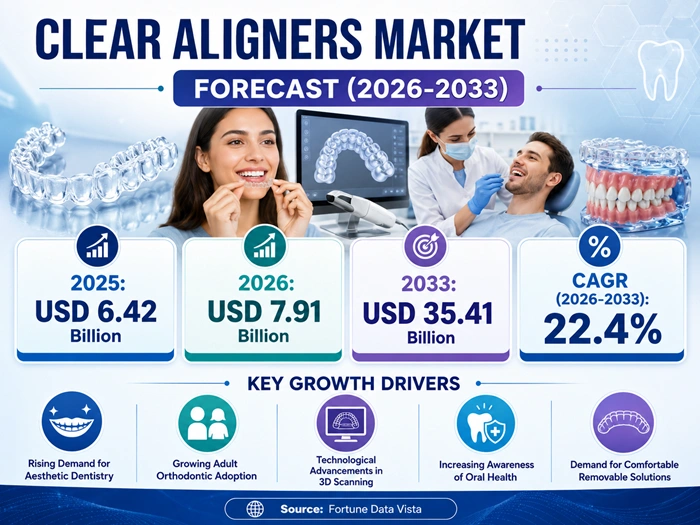
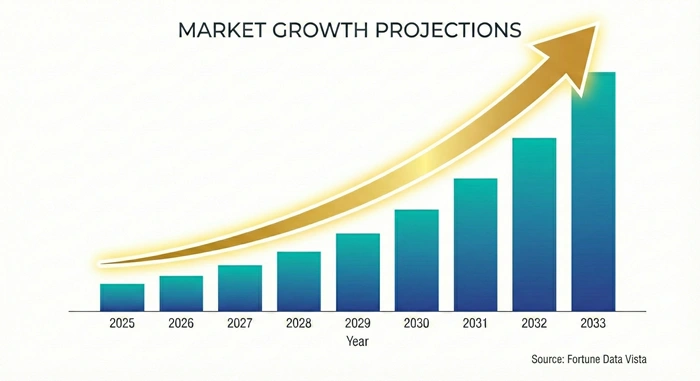
The global clear aligners market size is valued at USD 6.42 billion in 2025 and is predicted to increase from USD 7.91 billion in 2026 to approximately USD 35.41 billion by 2033, growing at a CAGR of 22.4% from 2026 to 2033.
Clear aligners have fundamentally transformed orthodontic treatment by offering patients a discreet, comfortable, and removable alternative to traditional metal braces. As aesthetic dental care becomes a mainstream priority among adults and teenagers alike, the demand for invisible orthodontic solutions is expanding rapidly across developed and developing markets. The integration of digital scanning, 3D printing, and AI-driven treatment planning technology has also accelerated product innovation, shortened treatment timelines, and made clear aligners more accessible than ever before — driving an exceptional growth trajectory that makes this one of the most dynamic segments in the global dental device industry.
AI Impact on the Clear Aligners Industry
Artificial Intelligence Is Reshaping Every Stage of Clear Aligner Treatment — from Initial Diagnosis and 3D Treatment Planning to Patient Monitoring and Outcome Prediction
Artificial intelligence is transforming the clear aligners industry at a pace that few medical device categories can match. AI-powered intraoral scanners and facial analysis tools can now capture a patient's complete dental anatomy in minutes, replacing traditional plaster impressions and dramatically improving the accuracy of the initial treatment planning process. Leading platforms use AI algorithms to generate optimized aligner movement sequences that predict tooth movement across dozens of incremental steps — a process that previously required hours of manual orthodontist review but now takes minutes with significantly improved precision. This digital planning efficiency is reducing treatment time, improving patient satisfaction scores, and enabling general dentists to offer clear aligner treatment with the same clinical confidence as specialist orthodontists.
Beyond treatment planning, AI is beginning to reshape how patient progress is monitored between clinic visits. Several platforms now offer smartphone-based scanning apps that allow patients to submit photos or scans of their teeth from home, with AI algorithms assessing aligner fit and tooth movement progress against the planned trajectory. This remote monitoring capability reduces unnecessary in-person visits, catches compliance issues early, and gives clinicians data-driven confidence in progressing to the next aligner stage. The combination of AI treatment planning, remote patient monitoring, and predictive outcome modeling is creating a significantly higher-value clinical proposition for clear aligners compared to traditional orthodontic approaches — reinforcing the segment's strong growth momentum.
Growth Factors
Rising Aesthetic Dental Awareness, Adult Orthodontic Treatment Adoption, and Digital Dentistry Integration Are the Three Most Powerful Growth Catalysts in the Clear Aligners Market
The dominant growth driver of the clear aligners market is the profound shift in consumer attitudes toward dental aesthetics. Unlike previous generations, today's adult population — empowered by social media, video communication, and a heightened focus on personal appearance — increasingly views straighter teeth not as a luxury but as a social and professional necessity. This cultural shift has dramatically expanded the orthodontic treatment addressable market beyond the traditional teenage demographic to include working adults in their twenties, thirties, forties, and beyond who either never received orthodontic treatment as children or have experienced dental relapse after earlier treatment. Clear aligners are the preferred solution for this adult market because they are virtually invisible during wear, removable for eating and social occasions, and generally associated with shorter and more comfortable treatment than metal braces.
The democratization of clear aligner access through digital-direct and teledentistry platforms is the second major growth driver. Companies pioneered a model of at-home impression kits and remote orthodontic oversight that significantly reduced the cost barrier for patients. Subsequent platforms have refined this model with improved clinical protocols and integration with in-person dental networks, making clear aligner treatment accessible at a wide range of price points and clinical complexity levels. Simultaneously, the reduction in manufacturing costs enabled by advances in 3D printing and automated aligner fabrication is enabling more competitors to enter the market with credible, clinically effective products — expanding patient choice and further broadening market access.
Market Outlook
The Clear Aligners Market Is on an Exceptional Growth Trajectory Driven by Digital Dentistry Innovation, Growing Global Demand for Aesthetic Orthodontic Solutions, and Expanding Emerging Market Penetration
The long-term outlook for the clear aligners market is one of exceptional growth — a CAGR of 22.4% is among the highest of any established medical device segment globally, reflecting both the large untapped orthodontic treatment pool and the powerful consumer and clinical tailwinds supporting adoption. The global orthodontic treatment addressable population — those with malocclusion or misalignment issues that could benefit from treatment — is estimated in the hundreds of millions, with a significant majority still untreated or underserved. As income levels rise across Asia Pacific, Latin America, and the Middle East, and as the cost of clear aligner treatment continues to decline relative to traditional orthodontics, the conversion of untreated patients into active treatment cases represents a multi-decade growth runway that is still in its early stages in most markets outside North America.
From a competitive and innovation standpoint, the market is becoming richer and more dynamic. Align Technology's Invisalign system remains the clear market leader, but a growing cohort of well-funded competitors — including Dentsply Sirona, Institut Straumann AG, 3M Oral Care, and multiple Asia Pacific-based manufacturers — are developing competitive products with clinically compelling differentiation. The introduction of next-generation aligner materials with improved force delivery characteristics, the integration of biomarker-sensing smart aligners capable of monitoring oral health parameters, and the expansion of clear aligner treatment into previously unsuitable complex malocclusion cases are all extending the market's clinical reach and value proposition. The combination of innovation, democratization, and demographic tailwinds makes the clear aligners market one of the most compelling growth stories in the global medical device landscape through 2033.
Expert Speaks
-
"Invisalign and the Align Digital Platform continue to set the standard for precision, predictability, and clinical outcomes in orthodontic treatment. We are focused on expanding the addressable market by training more general dentists to deliver Invisalign treatment confidently and by developing AI-powered tools that make excellent outcomes achievable across a broader spectrum of case complexity," — Joseph Hogan, President & CEO, Align Technology, Inc.
-
"Clear aligner technology represents one of the most important growth opportunities across our entire dental portfolio. At Dentsply Sirona, we are investing in digital workflow integration that connects intraoral scanning, AI treatment planning, and aligner fabrication into a single seamless system — making it easier for every dental practice to offer patients a high-quality, aesthetically superior orthodontic experience," — Simon Campion, CEO, Dentsply Sirona Inc.
-
"The clear aligners market in Asia Pacific is at an inflection point. Rising household incomes, growing awareness of dental aesthetics, and the expansion of digital dental clinics across China, India, and Southeast Asia are creating a patient base for clear aligners that could eventually rival or surpass North America in absolute volume," — Guillaume Daniellot, CEO, Institut Straumann AG.
Key Report Takeaways
-
North America leads the global clear aligners market, accounting for approximately 38–42% of total global revenue in 2025, driven by high consumer awareness of dental aesthetics, strong insurance reimbursement for orthodontic procedures in the United States, the presence of leading manufacturers like Align Technology, and a well-developed network of orthodontists and general dentists trained in clear aligner therapy.
-
Asia Pacific is the fastest-growing region in the clear aligners market, projected to register a CAGR of approximately 25–28% from 2026 to 2033, fueled by rapidly rising disposable incomes, growing dental tourism, expanding private dental clinic networks, increasing social media influence on aesthetic dental choices, and the emergence of locally manufactured, cost-competitive aligner products in China, India, and South Korea.
-
Adult patients are the largest end-user group, accounting for approximately 70–75% of total clear aligner treatment volume globally, as aesthetic concerns, professional lifestyle considerations, and the desire to avoid the visual stigma of metal braces make transparent aligners the orthodontic treatment of choice for the working-age adult population across all major markets.
-
The dental clinics and offices distribution channel represents the largest revenue contributor, accounting for over 65–68% of market revenue in 2025, as the majority of clinically supervised clear aligner treatment is initiated and managed through in-person dental and orthodontic practice settings, where practitioners prescribe, fit, and monitor treatment progression for their patients.
-
Comprehensive treatment is the dominant treatment type, capturing approximately 55–60% of market revenue, as a significant proportion of patients requiring clear aligners present with moderate to complex malocclusion that necessitates full-course treatment spanning twelve to twenty-four months, generating high per-patient revenue for both manufacturers and treating clinicians.
-
The online and direct-to-consumer (DTC) distribution channel is the fastest-growing segment, projected to grow at a CAGR of approximately 28–30% from 2026 to 2033, with a current market share of approximately 20–25%, as improved remote assessment technology, teleorthodontics platforms, and growing consumer comfort with digital health services drive adoption of at-home aligner programs that bypass traditional clinical visits for eligible mild-to-moderate cases.
Market Scope
| Parameter | Details |
|---|---|
| Market Size by 2033 | USD 35.41 Billion | Market Size by 2026 | USD 7.91 Billion | Market Size by 2025 | USD 6.42 Billion | Market Growth Rate from 2026 to 2033 | CAGR of 22.4% | Dominating Region | North America | Fastest Growing Region | Asia Pacific | Segments Covered | Product Type, Material, Age Group, Treatment Type, Distribution Channel, End-User | Regions Covered | North America, Europe, Asia Pacific, Latin America, Middle East & Africa |
Market Dynamics
Drivers Impact Analysis
Aesthetic Dental Awareness, the Adult Orthodontic Treatment Boom, and Digital Dentistry Technology Convergence Are Collectively Creating the Strongest Growth Environment in the History of the Clear Aligners Market
| Driver | ≈ % Impact on CAGR Forecast | Geographic Relevance | Impact Timeline |
|---|---|---|---|
| Rising consumer demand for aesthetic and discreet orthodontic treatment | ~32% | Global, Dominant in North America & Europe | Ongoing through 2033 |
| Expansion of adult orthodontic treatment market | ~25% | North America, Europe, Asia Pacific | Ongoing |
| Digital dentistry and AI-driven treatment planning adoption | ~20% | North America, Europe, Asia Pacific | Near to Long-Term |
| Growth of teledentistry and DTC aligner platforms | ~15% | North America, Asia Pacific | Near to Medium-Term |
| Increasing accessibility through declining manufacturing costs | ~8% | Global, Fastest in Emerging Markets | Near to Long-Term |
The aesthetic dental care revolution is the single most powerful structural driver of the clear aligners market. The explosion of video conferencing, social media platforms, and digital-first professional and personal interactions has made people acutely aware of their smile and dental appearance to a degree that was never true in previous generations. This awareness is converting a large segment of the adult population — people who previously dismissed orthodontic treatment as something only children needed or as too expensive and inconvenient — into active treatment seekers who specifically request clear aligners because of their near-invisible appearance. Orthodontists and general dentists across North America, Europe, and increasingly Asia Pacific report that adult patient inquiries about clear aligners now account for the majority of their new orthodontic consultations, a fundamental shift from the pediatric-dominated orthodontic market of the early 2000s.
Digital technology is amplifying this consumer-driven growth from the supply side. The integration of intraoral digital scanning, AI treatment planning software, and high-speed 3D printing into a coherent digital workflow has fundamentally changed the economics of clear aligner production. What once required expensive laboratory processes and lengthy lead times can now be completed faster and with higher precision in a digital workflow — reducing per-aligner production costs, shortening treatment timelines, and enabling more dental practices to offer clear aligner treatment profitably. Align Technology's iTero scanner and ClinCheck software ecosystem, Dentsply Sirona's SureSmile platform, and a growing number of digital dental workflow providers are all competing to be the preferred digital treatment planning system for the world's dental clinicians, creating a virtuous cycle of technology improvement, clinical adoption, and market growth.
Restraints Impact Analysis
High Treatment Cost, Limited Insurance Coverage, Patient Compliance Challenges, and Case Complexity Limitations Are the Primary Factors Constraining the Full Growth Potential of the Clear Aligners Market
| Restraint | ≈ % Impact on CAGR Forecast | Geographic Relevance | Impact Timeline |
|---|---|---|---|
| High treatment cost relative to traditional braces | ~38% | Developing Markets, Cost-Sensitive Segments | Ongoing |
| Limited or absent dental insurance coverage for orthodontics | ~28% | Developing Markets, Some Developed Markets | Ongoing |
| Patient compliance requirements and risk of non-adherence | ~20% | Global | Ongoing |
| Clinical limitation for complex and severe malocclusion cases | ~14% | Global | Near to Medium-Term |
The most significant restraint on clear aligner market growth is the cost gap between aligner therapy and conventional metal braces. Comprehensive clear aligner treatment with premium brands like Invisalign can cost two to three times more than traditional braces in many markets, creating a meaningful affordability barrier for large segments of the potential patient population — particularly in developing economies where out-of-pocket dental expenditure is the norm. Even in high-income markets, orthodontic treatment is often only partially covered by dental insurance, leaving patients with significant out-of-pocket expenses that can deter treatment initiation despite interest in the aesthetic benefits. While the emergence of lower-cost aligner brands and DTC platforms has partially addressed this affordability gap for mild cases, the cost restraint remains a real constraint on market penetration at the mass level.
Patient compliance is an inherent challenge in clear aligner therapy that does not exist to the same degree with fixed braces. Aligners must be worn for 20 to 22 hours per day to achieve the planned tooth movement — a requirement that relies entirely on patient discipline and motivation. Studies consistently show that a significant proportion of patients, particularly teenagers, fail to achieve adequate wear time, compromising clinical outcomes and extending treatment duration. This compliance risk makes prescribing orthodontists cautious about recommending clear aligners for all patient profiles and introduces uncertainty in treatment outcome predictability that traditional fixed appliances do not share. Improving compliance tracking through connected aligner technology and remote monitoring is an active area of product development, but compliance remains a genuine clinical and commercial challenge for the industry.
Opportunities Impact Analysis
Emerging Market Penetration, Next-Generation Smart Aligner Technology, and Expanded Clinical Indications Are Opening High-Value New Growth Pathways for the Clear Aligners Market
| Opportunity | ≈ % Impact on CAGR Forecast | Geographic Relevance | Impact Timeline |
|---|---|---|---|
| Emerging market middle-class dental care spending expansion | ~35% | Asia Pacific, Latin America, MEA | Near to Long-Term |
| Smart and connected aligner technology development | ~30% | North America, Europe, Asia Pacific | Medium to Long-Term |
| Expansion into complex and surgical orthodontic indications | ~20% | North America, Europe | Medium to Long-Term |
| Teledentistry and remote monitoring platform integration | ~15% | North America, Asia Pacific | Near to Medium-Term |
The most expansive growth opportunity for the clear aligners market is the untapped patient pool in emerging economies across Asia Pacific, Latin America, and the Middle East and Africa. In countries like India, Indonesia, Brazil, Mexico, and the Gulf states, the combination of a young and growing middle class, rising disposable income, and rapidly increasing dental awareness is creating a first-generation demand for aesthetic orthodontic solutions at scale. Local manufacturers in China and India are already developing market-specific clear aligner solutions at significantly lower price points than premium international brands — and as these products gain clinical validation and regulatory clearance, they will unlock a massive tier of the addressable market that has historically been priced out of clear aligner treatment.
The development of smart and bioactive clear aligners represents a significant long-term opportunity to expand the clinical value of the product beyond tooth movement. Researchers and several technology companies are actively working on next-generation aligners embedded with sensors capable of monitoring bite force, tooth pressure, and oral temperature — providing clinicians with objective, real-time data on treatment progress. Other development tracks include aligners with drug-eluting capabilities for localized anti-inflammatory or whitening agents, and aligners with enhanced force profiles that can address more complex tooth movement challenges currently outside the clinical envelope of standard thermoplastic aligners. These innovations, as they achieve regulatory approval and commercial scale, have the potential to significantly expand the range of orthodontic cases suitable for clear aligner treatment.
Segment Analysis
By Treatment Type
Comprehensive Treatment Dominates the Clear Aligners Market While Minor and Moderate Treatment Solutions Are Growing Rapidly Through DTC and Teledentistry Channels
The comprehensive treatment segment holds the largest share of the global clear aligners market, capturing approximately 55–60% of total revenue in 2025 and growing at a CAGR of approximately 20.5% from 2026 to 2033. This segment covers full-course orthodontic treatment for moderate to complex cases, typically involving twenty to forty or more individual aligner sets worn over twelve to twenty-four months. North America dominates this segment, where a well-established orthodontic referral network, high consumer willingness to invest in premium treatment, and strong brand awareness of Invisalign's comprehensive product line sustains very high average treatment values. Key companies leading in comprehensive treatment include Align Technology, Inc. (US), Dentsply Sirona (US), and Institut Straumann AG's ClearCorrect division (Switzerland), all of which offer tiered comprehensive treatment systems supported by clinical education programs and advanced digital planning tools.
Europe is the second-largest market for comprehensive clear aligner treatment, where countries like Germany, the UK, France, and the Nordics have high rates of adult orthodontic treatment adoption and strong clinical infrastructure for delivering full-course aligner therapy. The Asia Pacific region is growing the fastest within this segment, driven by China and India where a large and growing middle class is increasingly seeking comprehensive orthodontic treatment as awareness of dental aesthetics rises. The clear aligners market in this treatment tier benefits enormously from high per-patient treatment revenue — comprehensive cases can generate between USD 3000 and USD 8000 or more per patient in developed markets — making this segment not only the largest by revenue but also the most commercially attractive for manufacturer margin generation.
By Distribution Channel
Dental Clinics Lead Distribution While Online and DTC Channels Represent the Fastest-Growing Pathway in the Clear Aligners Market
The dental clinics and orthodontic offices distribution channel is the dominant pathway for the global clear aligners market, accounting for approximately 65–68% of total revenue in 2025 and growing at a CAGR of roughly 21.0% through 2033. This channel's leadership reflects the clinical complexity of most clear aligner prescriptions, which require in-person examination, digital scanning, clinical treatment planning, and periodic progress monitoring that can only be appropriately delivered within a supervised dental care setting. North America dominates dental clinic-based aligner distribution, where Align Technology's extensive network of trained Invisalign providers — spanning tens of thousands of orthodontists and general dentists across the US and Canada — gives it a structural distribution advantage that competitors find very difficult to replicate. Companies like Dentsply Sirona, 3M Oral Care, and Henry Schein are also significant suppliers to the dental clinic channel through their respective distribution and clinical support programs.
The online and direct-to-consumer distribution channel is the fastest-growing pathway in the clear aligners market, expected to register a CAGR of approximately 28–30% from 2026 to 2033, as teledentistry platforms, at-home impression kit services, and digitally supervised aligner programs expand access to orthodontic treatment for patients with mild misalignment who prefer a lower-cost, lower-inconvenience treatment pathway. Asia Pacific — particularly China, India, and South Korea — is the fastest-growing geography for online aligner distribution, driven by a digitally fluent younger consumer base that is comfortable initiating healthcare interactions online and by a growing ecosystem of licensed teledentistry platforms that provide remote clinical oversight at competitive price points. While the online channel serves a different clinical population than traditional dental clinic treatment, its rapid growth is meaningfully expanding the total number of patients entering clear aligner therapy globally.
Regional Insights
North America
North America Leads the Global Clear Aligners Market with Unmatched Brand Awareness, Established Clinical Infrastructure, and the World's Largest Adult Orthodontic Treatment Consumer Base
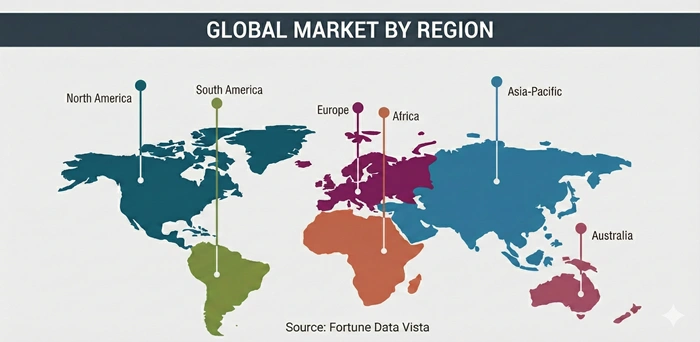
North America holds the largest share of the global clear aligners market, accounting for approximately 38–42% of total global revenue in 2025 and projected to sustain strong growth at a CAGR of approximately 20.5–22% from 2026 to 2033. The United States is the dominant national market globally — not only because it is home to Align Technology, the inventor and global market leader in clear aligner therapy, but also because of its uniquely large and mature consumer orthodontic market where adults have been receiving Invisalign treatment for over two decades. The US benefits from the world's largest network of Invisalign-certified orthodontists and general dentists, a significant dental insurance and dental savings plan infrastructure that offsets treatment costs for many patients, and an exceptionally high baseline of dental aesthetic awareness driven by consumer media and pop culture. Key players with dominant North American positions include Align Technology, Inc. (US), Dentsply Sirona (US), 3M Oral Care (US), and Byte (US).
Canada contributes meaningfully to the North American market, with its high-income urban population showing strong adoption of clear aligner treatment and a well-developed private dental care network. Mexico is an emerging market within the region, where medical tourism including dental tourism from US residents seeking lower-cost clear aligner treatment is driving growing demand among both domestic and international patients. North America's regional market is expected to exceed USD 14 billion by 2033, maintaining its global revenue leadership position throughout the forecast period even as Asia Pacific closes the gap in terms of growth rate.
Asia Pacific
Asia Pacific Is the World's Fastest-Growing Regional Market for Clear Aligners, Powered by a Rising Middle Class, Digital Dental Innovation, and Exceptional Demographic Scale
Asia Pacific is the fastest-growing regional market in the global clear aligners market, projected to expand at a CAGR of approximately 25–28% from 2026 to 2033, and currently accounts for approximately 28–32% of global revenue in 2025. China is the single most important growth driver within the region — with a population of over 1.4 billion, rapidly rising middle-class dental spending, a thriving domestic clear aligner manufacturing sector, and significant government investment in healthcare digitalization, China is on a trajectory to become the world's largest national clear aligner market by absolute volume within this decade. Domestic brands including Angelalign Technology (China) and EZ Ortho (China) are competing directly with Align Technology's Invisalign in the Chinese market on price and increasingly on clinical performance. India is the second-fastest-growing market in the region, where a young and digitally engaged population, rapidly expanding private dental clinic chains, and growing medical tourism in cities like Mumbai, Bangalore, and Delhi are driving accelerating adoption.
Japan and South Korea maintain highly sophisticated clear aligner markets characterized by premium consumer demand, advanced digital dental clinic networks, and strong clinical adoption of imported international brands alongside competitive domestic products. Australia's market is notable for high per-capita clear aligner treatment rates among adults, supported by partial private health insurance coverage for orthodontic treatment. The Asia Pacific clear aligners market is expected to be the fastest-growing region through 2033, fueled by the region's combination of demographic scale, rising income, and the growing cultural premium placed on dental aesthetics across East Asian and South Asian societies.
Report Customization: Region-Wise and Country-Wise Insights
This Report Is Available with Full Geographic Customization — Delivering Precise, Country-Level Clear Aligners Market Intelligence Tailored to the Specific Strategic and Commercial Priorities of Your Organization
This report on the clear aligners market is available with complete region-wise and country-wise customization, enabling dental device manufacturers, orthodontic clinic groups, investors, distributors, and healthcare technology companies to access precisely targeted market intelligence for their geographies of interest. Whether the objective is to evaluate regulatory clearance requirements for a new aligner product in a specific country, benchmark competitive pricing strategies across European markets, or assess the scale of untapped adult orthodontic treatment demand in an emerging Asian economy, our research team delivers fully tailored analysis built around your target market and business focus.
Customized reports are available for the following regions and countries, each offering in-depth market sizing, patient demand analysis by treatment type, competitive landscape, distribution channel intelligence, regulatory environment review, and growth opportunity identification specific to that geography and the clear aligners market:
North America
-
U.S. — Align Technology competitive dominance analysis, Invisalign provider network mapping, dental insurance coverage for orthodontics, and DTC platform competitive dynamics
-
Canada — Private dental care market orthodontic spending, provincial insurance framework, and key dental group procurement analysis
-
Mexico — Dental tourism market analysis, growing domestic clear aligner demand, and regulatory pathway for imported aligner systems
Europe
-
U.K. — NHS and private orthodontic market dynamics, adult aligner adoption rates, ClearCorrect and Invisalign competitive positioning, and digital dental workflow adoption
-
Germany — Statutory health insurance orthodontic coverage, digital dentistry adoption rate, and leading clinical research institutions' influence on treatment standards
-
France — Consumer aesthetic dental awareness, clear aligner treatment adoption among adults, and dental distribution network analysis
-
Italy — Dental cosmetics market growth, premium aligner brand demand, and Italian dental association treatment guideline influence
-
Rest of Europe — Nordic, Eastern European, and Benelux clear aligner market dynamics and DTC channel expansion
Asia Pacific
-
China — Angelalign and domestic competitor analysis, Align Technology market penetration strategy, digital dental clinic expansion, and government healthcare policy impact on orthodontics
-
India — Growing dental tourism, urban private clinic network expansion, teledentistry platform growth, and Invisalign and ClearCorrect market entry analysis
-
Japan — Premium aligner market, digital dental adoption, aging population dental care trends, and competitive domestic vs. imported aligner landscape
-
South Korea — K-beauty-driven dental aesthetic demand, advanced digital dentistry adoption, and domestic aligner brand competitive analysis
-
Australia — Private health insurance orthodontic coverage, adult clear aligner adoption, and key clinic network distribution
-
Rest of Asia Pacific — Southeast Asian emerging market dental access analysis, Vietnam, Indonesia, and Thailand aligner demand growth
Latin America
-
Brazil — Dental care market scale, orthodontic treatment adoption rates, dental tourism, and leading distribution network analysis
-
Argentina — Private dental market growth, clear aligner affordability dynamics, and regulatory environment for imported devices
-
Rest of Latin America — Regional dental spending growth, Colombia and Chile aligner market development, and medical tourism dynamics
Middle East & Africa
-
UAE — Medical tourism hub for dental aesthetics, premium aligner brand demand, and digital dental clinic expansion analysis
-
Saudi Arabia — Vision 2030 healthcare investment, private dental market growth, and growing adult orthodontic awareness
-
Rest of MEA — South African and North African orthodontic market development and clear aligner accessibility trends
Top Key Players
-
Align Technology, Inc. (United States)
-
Dentsply Sirona Inc. (United States)
-
Institut Straumann AG (ClearCorrect) (Switzerland)
-
3M Oral Care (United States)
-
Henry Schein, Inc. (United States)
-
Angelalign Technology Inc. (China)
-
Ormco Corporation (Envista Holdings) (United States)
-
Great Lakes Dental Technologies (United States)
-
TP Orthodontics, Inc. (United States)
-
Argen Corporation (United States)
-
EZ Ortho (Qingdao Zhengya Dental Equipment Co., Ltd.) (China)
-
Dentway (India)
-
LightForce Orthodontics (United States)
-
Candid Co. (United States)
-
Byte (Dentsply Sirona) (United States)
Recent Developments
-
2025 — Align Technology, Inc. launched the next generation of its Invisalign system powered by its proprietary Luminate AI™ platform, which uses machine learning models trained on millions of treated cases to generate more precise and predictable tooth movement plans, reducing the need for refinement aligners and shortening average total treatment time for both comprehensive and moderate case types.
-
2024 — Dentsply Sirona completed the integration of its Byte at-home clear aligner business into its broader SureSmile digital orthodontic ecosystem, creating a unified in-office and at-home clear aligner offering that provides dental practices with greater flexibility in serving patients across the full spectrum of orthodontic treatment complexity and price sensitivity.
-
2025 — Institut Straumann AG expanded its ClearCorrect clear aligner platform into five new markets across Asia Pacific and Latin America, supported by new regional manufacturing partnerships that reduce delivery times and support local competitive pricing — a key part of the company's strategy to challenge Align Technology's dominance in high-growth emerging markets.
-
2024 — Angelalign Technology Inc. reported record revenue growth driven by accelerating domestic demand in China and its first significant export volumes to Southeast Asian and Middle Eastern markets, as the company's strategy of offering clinically validated, locally manufactured aligners at significantly lower price points than international premium brands gained commercial traction outside of China.
-
2024–2025 — LightForce Orthodontics raised significant Series C funding to accelerate the commercial rollout of its AI-driven, fully custom 3D-printed bracket and aligner combination system, attracting significant attention from orthodontic practices across the United States seeking differentiated digital treatment options that combine the precision of custom bracket systems with the aesthetics of clear aligner technology.
Market Trends
The Convergence of AI Treatment Planning, Remote Patient Monitoring, and Direct-to-Consumer Orthodontic Access Are the Three Technology and Commercial Trends Most Fundamentally Reshaping the Clear Aligners Market Today
The most impactful trend reshaping the clear aligners market is the maturation of AI-powered digital treatment planning from a competitive differentiator into an industry baseline expectation. As virtually every major aligner platform now incorporates AI-assisted tooth movement planning, the competition is shifting from whether AI is available to how good the AI is — measured by accuracy of treatment outcome prediction, reduction in refinement rates, and ability to handle progressively more complex cases that were previously unsuitable for aligner therapy. This trend is raising clinical outcomes standards across the industry and rewarding companies with the largest proprietary datasets — giving established leaders like Align Technology a durable data moat while motivating newer entrants to invest aggressively in AI capability development.
The second defining trend is the rise of subscription-based and outcome-linked business models in the clear aligners market. Traditional aligner sales were structured as one-time laboratory fee transactions — a clinician orders aligners and pays per case. Newer digital platforms are experimenting with subscription models where dental practices pay a monthly fee for access to planning software, unlimited case submissions within a case volume tier, and ongoing clinical support — converting the revenue model from transactional to recurring and deepening the platform relationship between aligner companies and their clinical customers. This model shift mirrors successful software-as-a-service transitions in other healthcare technology sectors and is creating more predictable revenue streams for aligner companies while incentivizing practices to shift more of their orthodontic volume onto a single preferred platform.
Segments Covered in the Report
-
By Product Type
-
Removable Aligners
-
Fixed Aligners
-
-
By Material
-
Polyurethane
-
Polyethylene Terephthalate Glycol (PETG)
-
Others
-
-
By Age Group
-
Adults
-
Teenagers
-
Children
-
-
By Treatment Type
-
Comprehensive Treatment
-
Moderate Treatment
-
Minor Treatment
-
-
By Distribution Channel
-
Dental Clinics and Orthodontic Offices
-
Hospitals and Dental Departments
-
Online and Direct-to-Consumer Platforms
-
Retail Pharmacies and Consumer Health Chains
-
-
By End-User
-
Adults
-
Teenagers
-
Children
-
-
By Region
-
North America (U.S., Canada, Mexico)
-
Europe (U.K., Germany, France, Italy, Rest of Europe)
-
Asia Pacific (China, India, Japan, South Korea, Australia, Rest of Asia Pacific)
-
Latin America (Brazil, Argentina, Rest of Latin America)
-
Middle East & Africa (UAE, Saudi Arabia, Rest of MEA)
-
❝ Built for Every Level — From Startups to Industry Giants ❞
Here Is Exactly How This Report Works for You
-
Tier 1 clear aligner manufacturers, large orthodontic group practices, and institutional investors will find precise competitor revenue benchmarks, market share movement data by product type and geography, and an in-depth analysis of how AI platform investments and digital workflow control strategies are determining which companies are winning and losing in the clear aligners market — intelligence that directly informs capital allocation, partnership prioritization, and competitive positioning decisions.
-
For mid-level dental distributors, emerging aligner brands, and regional dental clinic groups, this report maps the real-world impact of global supply chain dynamics, raw material cost pressures for aligner thermoplastics, and evolving regulatory requirements across key markets — along with a granular look at how geopolitical trade tensions affecting Chinese aligner manufacturing exports are creating both risks and strategic opportunities for non-Chinese producers looking to gain market share.
-
Startups in orthodontic technology, teledentistry platforms, and smart aligner development will gain from our detailed analysis of the clinical adoption curve for emerging aligner modalities, the investment appetite of leading strategic acquirers in the dental space, and the regulatory pathway requirements in priority markets — the roadmap needed to position a new product, attract investor interest, and build a commercial presence in one of the fastest-growing segments in the global medical device industry.
Frequently Asked Questions:
Answer: The global clear aligners market was valued at USD 6.42 billion in 2025 and is expected to reach USD 35.41 billion by 2033, growing at a CAGR of 22.4% from 2026 to 2033. This exceptional growth rate reflects the expanding adult orthodontic treatment market, rising consumer aesthetic dental awareness, and the rapid adoption of digital dentistry technology worldwide.
Answer: The primary growth drivers of the clear aligners market include rising consumer demand for discreet and aesthetic orthodontic treatment, the growing adoption of aligner therapy among adults who prefer the visual and lifestyle advantages of clear aligners over traditional metal braces, and the rapid advancement of AI treatment planning and digital dentistry technology. The expansion of direct-to-consumer and teledentistry aligner platforms is further broadening market access and accelerating patient adoption globally.
Answer: North America currently dominates the clear aligners market with approximately 38–42% of global revenue in 2025, supported by strong brand awareness, a large adult orthodontic treatment market, and the presence of Align Technology's global headquarters and distribution network. Asia Pacific is the fastest-growing region, projected to grow at a CAGR of 25–28% from 2026 to 2033, driven by rising middle-class dental spending and local manufacturer competition in China and India.
Answer: Align Technology, Inc. remains the dominant leader in the clear aligners market with its Invisalign brand commanding the largest global market share, supported by its proprietary AI platform and the world's largest network of trained provider clinicians. Key competitors include Dentsply Sirona, Institut Straumann AG (ClearCorrect), Angelalign Technology, Ormco Corporation, and a growing cohort of digital-first and DTC aligner platforms competing on price, technology, and channel innovation.
Answer: AI is transforming the clear aligners market by enabling significantly more precise tooth movement planning, reducing the frequency of treatment refinements, and expanding the clinical range of cases that can be effectively treated with aligner therapy. Remote monitoring AI platforms that analyze patient-submitted photos and 3D scans are also improving compliance management and enabling more efficient between-visit care, reducing the burden on both patients and treating clinicians.