
Cold Plasma Market Overview
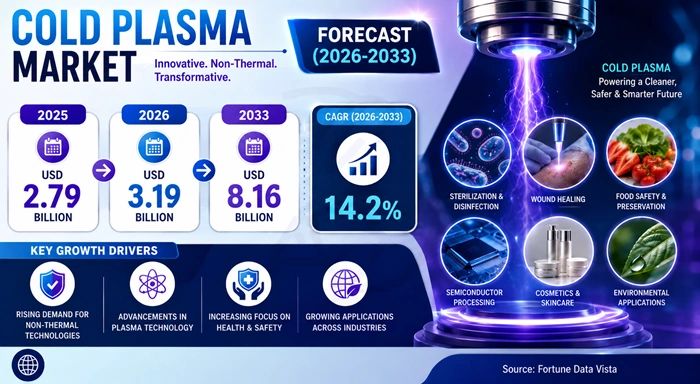
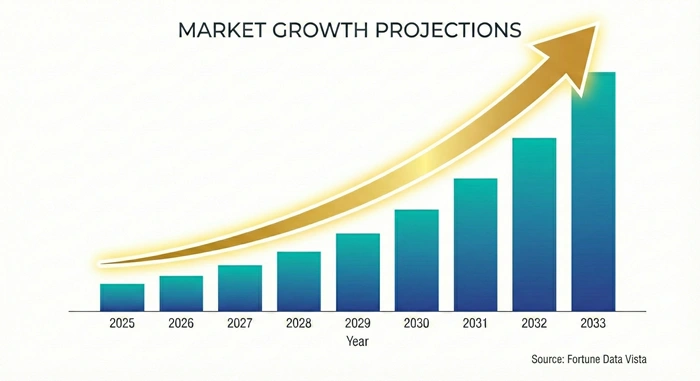
The global cold plasma market size is valued at USD 2.79 billion in 2025 and is predicted to increase from USD 3.19 billion in 2026 to approximately USD 8.16 billion by 2033, growing at a CAGR of 14.2% from 2026 to 2033.
This rapid growth reflects expanding adoption of non-thermal plasma technology across medical sterilization, wound healing, food safety, and semiconductor surface treatment applications where traditional heat-based processes simply cannot be used. As industries increasingly recognize the ability of cold plasma to modify surfaces, kill pathogens, and treat sensitive materials without generating damaging heat, demand for cold plasma systems continues expanding across healthcare, industrial manufacturing, and agricultural processing sectors alike.
AI Impact on the Cold Plasma Industry
Artificial Intelligence Is Optimizing Plasma Parameter Control, Enhancing Predictive Equipment Maintenance, and Strengthening Treatment Outcome Modeling Across the Cold Plasma Landscape — Fundamentally Changing How Manufacturers and Clinicians Deploy This Emerging Technology
Artificial intelligence has become an increasingly valuable tool for optimizing plasma parameter control, with machine learning algorithms now capable of analyzing real-time data on voltage, gas flow, and treatment duration to automatically adjust plasma generation for consistent, repeatable results across different materials and applications. This precision matters considerably in medical and industrial settings where even small variations in plasma intensity can affect sterilization effectiveness or wound healing outcomes, and AI-assisted control systems are helping standardize performance across different operating environments. Companies building AI-driven parameter optimization directly into their cold plasma equipment are increasingly differentiating themselves through more consistent and reliable treatment results.
Beyond parameter control, AI is also improving predictive maintenance capabilities for cold plasma generation equipment, with sensor-driven analytics now able to detect early signs of electrode wear or gas delivery inconsistency before they cause treatment failures or costly downtime. This capability has proven valuable for healthcare facilities and industrial manufacturers relying on continuous plasma treatment operations, since predictive maintenance reduces unplanned equipment failures considerably. As these AI-driven monitoring and optimization tools continue maturing, they are becoming an increasingly important factor shaping equipment reliability across the broader cold plasma market.
Growth Factors
Rising Adoption in Wound Care Applications and Growing Demand for Chemical-Free Sterilization Continue Driving Sustained Demand
The most significant growth factor supporting the cold plasma market is the accelerating clinical adoption of plasma-based wound healing therapies, as healthcare providers increasingly recognize the technology's ability to reduce bacterial load and stimulate tissue regeneration without antibiotics or heat that could damage delicate skin tissue. With chronic wound prevalence rising alongside aging populations worldwide, this therapeutic application has become an increasingly important growth driver for equipment manufacturers serving hospitals and specialized wound care clinics.
A second important growth factor is the growing preference for chemical-free sterilization methods across food packaging and medical device manufacturing, as regulatory bodies and consumers alike push back against traditional chemical sterilants that can leave residues or require lengthy aeration periods. This growing demand for residue-free, rapid sterilization alternatives, combined with expanding use in semiconductor surface treatment where heat-sensitive materials require gentler processing methods, has broadened the addressable market for cold plasma technology considerably. This combination of rising wound care adoption and growing chemical-free sterilization demand continues to strengthen momentum across the cold plasma market.
Market Outlook
Expanding Medical Device Integration and Growing Food Safety Applications Point Toward Sustained Growth Through 2033
Looking ahead through the forecast period, the cold plasma industry is expected to benefit substantially from continued integration of plasma technology into portable and handheld medical devices, as manufacturers develop smaller, more affordable systems suited for outpatient clinics and even home care settings rather than requiring dedicated hospital equipment rooms. This miniaturization trend is likely to reshape accessibility considerably as more point-of-care applications become commercially viable.
At the same time, growing adoption across food safety and agricultural processing applications is expected to create substantial new demand, as food producers seek non-thermal decontamination methods that preserve nutritional quality and extend shelf life better than traditional heat treatment. Companies that can deliver both clinically validated performance and cost-effective scalable equipment are increasingly well positioned to capture this growth. Manufacturers combining strong research partnerships with practical commercial applications are likely to lead growth within the broader cold plasma market through 2033.
Expert Speaks
-
"Our continued investment in plasma-based wound care technology reflects our commitment to giving clinicians tools that genuinely improve healing outcomes for patients with chronic wounds." — CEO, Stryker Corporation
-
"As non-thermal sterilization gains recognition across healthcare and food safety applications, our plasma technology portfolio remains focused on delivering measurable, repeatable results." — CEO, 3M Company
-
"We remain dedicated to advancing plasma surface treatment solutions that support both manufacturing precision and emerging medical applications." — CEO, Honeywell International Inc
Key Report Takeaways
-
North America leads the global cold plasma market, holding approximately 36% market share in 2025, supported by strong medical device innovation and early clinical adoption of plasma wound therapies
-
Asia Pacific is the fastest-growing region, projected to expand at a CAGR near 16.8% through 2033, driven by expanding semiconductor manufacturing and growing healthcare infrastructure investment across China and Japan
-
Hospitals and clinics represent the dominant end-user segment, accounting for roughly 41% share, given the concentrated adoption of plasma wound care and sterilization equipment in clinical settings
-
Medical application segments contribute the most to overall demand, reflecting strong momentum in wound healing, sterilization, and dental treatment use cases
-
Dielectric barrier discharge remains the most widely adopted plasma generation process, valued for its ability to operate efficiently at atmospheric pressure without vacuum equipment
-
Food and agriculture application segments will grow the fastest among application categories, holding close to 17% market share with a CAGR near 18.4% through the forecast period, driven by rising demand for non-thermal decontamination methods
Market Scope
| Parameter | Details |
|---|---|
| Market Size by 2033 | USD 8.16 Billion | Market Size by 2026 | USD 3.19 Billion | Market Size by 2025 | USD 2.79 Billion | Market Growth Rate from 2026 to 2033 | CAGR of 14.2% | Dominating Region | North America | Fastest Growing Region | Asia Pacific | Segments Covered | Product Type, Application, End User, Region | Regions Covered | North America, Europe, Asia Pacific, Latin America, Middle East & Africa |
Market Dynamics
Drivers Impact Analysis
Rising Medical Adoption and Growing Chemical-Free Sterilization Demand Remain the Two Strongest Forces Behind Market Momentum
| Driver | (≈) % Impact on CAGR Forecast | Geographic Relevance | Impact Timeline |
|---|---|---|---|
| Accelerating clinical adoption of plasma-based wound healing therapies | ~35% | North America, Europe | Short to medium-term |
| Growing preference for chemical-free, residue-free sterilization methods | ~27% | Global | Medium to long-term |
| Expanding semiconductor and electronics surface treatment applications | ~24% | Asia Pacific | Medium-term |
| Rising demand for non-thermal food decontamination processes | ~14% | Global | Short to medium-term |
Accelerating clinical adoption of plasma-based wound healing therapies continues to serve as the primary engine behind sustained growth in the cold plasma market, as healthcare providers increasingly recognize the technology's ability to reduce bacterial load and support tissue regeneration without antibiotics. This clinical momentum has translated directly into rising equipment purchases across hospitals and specialized wound care centers throughout developed healthcare markets.
Growing preference for chemical-free sterilization represents the second major driver, as regulatory pressure and consumer demand push medical device manufacturers and food producers toward residue-free alternatives that avoid the drawbacks of traditional chemical sterilants. This sterilization-driven demand, combined with expanding semiconductor surface treatment applications, continues reinforcing steady momentum across the broader cold plasma market.
Restraints Impact Analysis
High Equipment Costs and Limited Standardization Continue to Moderate Broader Adoption
| Restraint | (≈) % Impact on CAGR Forecast | Geographic Relevance | Impact Timeline |
|---|---|---|---|
| High upfront cost of cold plasma generation equipment and installation | ~36% | Global, particularly emerging markets | Short to medium-term |
| Limited regulatory standardization across different plasma treatment applications | ~28% | Global | Medium to long-term |
| Requirement for specialized technical training to operate plasma systems | ~22% | Emerging markets | Short to medium-term |
| Slower adoption in price-sensitive industrial and agricultural applications | ~14% | Emerging markets | Medium-term |
The most persistent restraint facing the cold plasma market is the high upfront cost associated with plasma generation equipment and facility installation, which can create significant barriers for smaller clinics, food processors, and manufacturers considering the technology despite its long-term operational benefits. This cost sensitivity remains particularly pronounced in emerging markets where capital budgets for new equipment adoption remain constrained.
Limited regulatory standardization across different plasma treatment applications represents a second significant restraint, since inconsistent approval pathways and clinical validation requirements across countries can delay market entry for new medical and industrial applications. Combined with the specialized technical training required to properly operate plasma systems, these restraints continue moderating how quickly broader adoption spreads across the global cold plasma market.
Opportunities Impact Analysis
Portable Device Innovation and Expanding Food Safety Applications Represent the Clearest Paths to Growth
| Opportunity | (≈) % Impact on CAGR Forecast | Geographic Relevance | Impact Timeline |
|---|---|---|---|
| Developing portable and handheld cold plasma devices for outpatient use | ~37% | North America, Europe | Short to medium-term |
| Expanding food safety and agricultural decontamination applications | ~34% | Asia Pacific, Latin America | Medium to long-term |
| Growing dental and cosmetic plasma treatment adoption | ~29% | Global | Medium-term |
Developing portable and handheld cold plasma devices represents one of the most substantial opportunities within the cold plasma market, as manufacturers creating smaller, more affordable systems suited for outpatient clinics stand to capture significant share from providers seeking accessible point-of-care treatment options. This miniaturization innovation is expected to meaningfully reshape competitive positioning among leading equipment manufacturers over the coming years.
Expanding food safety and agricultural decontamination applications presents a second substantial opportunity, as food producers across Asia Pacific and Latin America increasingly seek non-thermal methods that preserve nutritional quality while meeting stricter safety standards. Growing dental and cosmetic treatment adoption further broadens the opportunity landscape, particularly as plasma-based approaches gain recognition for their gentle yet effective disinfection properties. Companies pursuing these parallel opportunities are well positioned to capture meaningful growth within the broader cold plasma market through the forecast period.
Segment Analysis
By Application: Medical Applications
Medical Applications Continue to Anchor the Application Landscape, Reflecting Strong Clinical Momentum Behind Wound Care and Sterilization
Medical applications hold the largest share within the application segment of the cold plasma market, accounting for approximately 44% of total segment revenue in 2025. This dominance reflects the growing clinical adoption of plasma technology across wound healing, dental treatment, and medical device sterilization, where the ability to kill pathogens without generating damaging heat provides a distinct advantage over conventional treatment methods. In markets like the United States and Germany, hospitals and specialized wound care clinics increasingly favor plasma-based therapies for chronic wounds that have not responded well to traditional antibiotic treatment approaches. Leading suppliers such as Apyx Medical, US Medical Innovations, and Stryker Corporation continue to dominate this segment through continuous clinical research partnerships and expanded product certifications.
Growth within this segment remains particularly strong in North America, where strong medical device innovation infrastructure and early regulatory approval pathways continue driving broad clinical access to plasma-based wound care and sterilization equipment. The region's combination of established hospital networks and deep clinical trial infrastructure has helped medical applications maintain their leading position despite growing interest in industrial and food safety alternatives. As clinical validation studies continue expanding, medical applications are expected to remain the dominant category within the broader cold plasma market throughout the forecast period.
By Application: Food and Agriculture
Food and Agriculture Applications Represent the Fastest-Growing Segment, Reflecting Rising Demand for Non-Thermal Decontamination
Food and agriculture applications represent the fastest-growing segment within the cold plasma market, holding close to 17% share in 2025 with a projected CAGR near 18.4% through the forecast period as food producers increasingly adopt non-thermal decontamination methods that preserve nutritional quality better than heat-based processing. Unlike traditional pasteurization or chemical treatment methods, cold plasma technology can inactivate harmful pathogens and extend shelf life on fresh produce and packaged goods without compromising taste, texture, or vitamin content. This preservation-focused advantage has generated substantial interest among food safety regulators and producers alike, particularly as consumer demand for minimally processed food continues rising globally.
Growth in this segment remains especially strong in Asia Pacific, where expanding food processing infrastructure and rising food safety regulation continue driving adoption of advanced decontamination technology across China, Japan, and South Korea. Companies like Nordson Corporation and specialized plasma technology providers have expanded their food safety application portfolios significantly to serve this growing regional demand, often partnering directly with food processing facilities on pilot decontamination programs. As consumer demand for minimally processed, chemical-free food continues strengthening, this application segment is expected to remain the fastest-growing category within the broader cold plasma market.
Regional Insights
North America
Strong Medical Device Innovation and Early Clinical Adoption Keep North America Firmly in the Lead
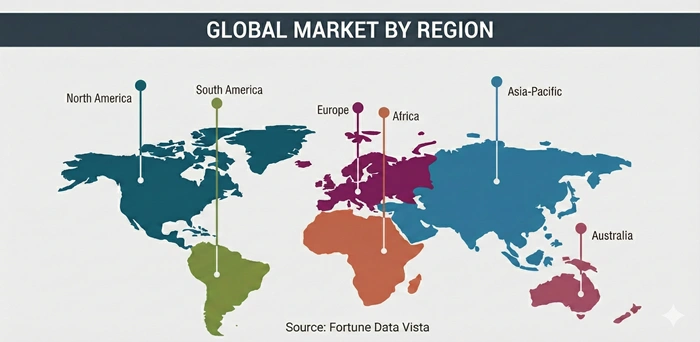
North America commands the leading position in the global cold plasma market, holding approximately 36% share in 2025, supported by strong medical device innovation infrastructure, early clinical adoption of plasma wound therapies, and a dense concentration of leading equipment manufacturers. The United States drives the overwhelming majority of regional demand, backed by well-established hospital networks and specialized wound care clinics actively integrating plasma-based treatment protocols. Companies with strong regional presence include Apyx Medical, US Medical Innovations, Stryker, and 3M, each maintaining deep relationships with healthcare providers and research institutions across the country.
Canada also contributes meaningfully to regional demand, supported by growing academic research partnerships and expanding clinical trial activity around plasma-based medical applications. The region's combination of strong regulatory infrastructure, deep clinical research networks, and continuous technology innovation ensures North America's leadership position within the cold plasma market remains firmly intact through the remainder of the forecast period.
Asia Pacific
Expanding Semiconductor Manufacturing and Healthcare Investment Position Asia Pacific as the Fastest-Growing Region
Asia Pacific is projected to register the fastest CAGR within the global cold plasma market through 2033, expanding at a rate near 16.8% as expanding semiconductor manufacturing and growing healthcare infrastructure investment create substantial new demand across the region. China and Japan lead much of this regional growth, supported by rapidly expanding electronics manufacturing that requires precise, low-temperature surface treatment technology for delicate semiconductor components. Regional and international equipment manufacturers alike have expanded their presence to serve this growing industrial demand, often establishing local production facilities to better serve nearby customers.
South Korea and India contribute further depth to regional growth, both bringing expanding healthcare infrastructure and growing food processing sectors that increasingly incorporate plasma-based sterilization and decontamination technology into standard operations. Growing government investment in advanced manufacturing and healthcare modernization across several Asia Pacific countries continues to accelerate technology adoption among expanding industrial and clinical bases alike. This combination of rising semiconductor investment, expanding healthcare infrastructure, and growing food safety focus positions Asia Pacific as the clear growth leader within the broader cold plasma market through the forecast period.
Customization Available for This Report
Region-Specific and Country-Specific Versions of This Report Are Available to Deliver a Sharper, More Localized View of Market Dynamics
This report can be tailored on a region-by-region and country-by-country basis, providing localized market sizing, competitive mapping, and technology adoption trend analysis that a global overview alone cannot fully capture.
Clients seeking a more focused breakdown can request a customized version covering any of the following regions and countries, complete with demand forecasting, competitor landscape review, and adoption trend analysis tied specifically to the cold plasma keyword focus:
North America
-
U.S. — Detailed review of clinical adoption and medical device innovation trends
-
Canada — Coverage of academic research partnerships and clinical trial activity
-
Mexico — Analysis of emerging industrial and food safety application trends
Europe
-
U.K. — Review of cold plasma regulation and clinical treatment access trends
-
Germany — Coverage of clinical investment among leading medical device manufacturers
-
France — Insights into wound care and sterilization adoption patterns
-
Italy — Analysis of regional cold plasma investment trends
-
Rest of Europe — Country-level view of emerging demand across Eastern Europe and the Nordics
Asia Pacific
-
China — Coverage of expanding semiconductor manufacturing and technology adoption
-
India — Analysis of growing healthcare infrastructure and food safety demand
-
Japan — Review of established electronics manufacturing and healthcare trends
-
South Korea — Assessment of cold plasma technology investment and adoption
-
Australia — Insights into food processing and healthcare adoption trends
-
Rest of Asia Pacific — Country-level breakdown covering Thailand, Vietnam, Indonesia, and Malaysia
Latin America
-
Brazil — Coverage of expanding food safety application access and adoption
-
Argentina — Analysis of early-stage industrial technology modernization trends
-
Rest of Latin America — Country-level sizing across Colombia, Peru, and Chile
Middle East & Africa
-
UAE — Review of healthcare infrastructure investment and technology adoption trends
-
Saudi Arabia — Coverage of expanding medical technology modernization initiatives
-
Rest of MEA — Country-level view of Sub-Saharan Africa healthcare infrastructure expansion
Top Key Players
-
Apyx Medical Corporation (United States)
-
US Medical Innovations LLC (United States)
-
Nordson Corporation (United States)
-
Stryker Corporation (United States)
-
3M Company (United States)
-
Neoplas Med GmbH (Germany)
-
terraplasma medical GmbH (Germany)
-
Adtec Plasma Technology Co Ltd (Japan)
-
Europlasma NV (Belgium)
-
CINOGY System GmbH (Germany)
-
P2i Ltd (United Kingdom)
-
Plasmatreat GmbH (Germany)
Recent Developments
-
In 2025, Apyx Medical expanded its plasma-based wound care product line with new formulations designed to improve chronic wound healing outcomes
-
In 2025, Nordson Corporation strengthened its surface treatment portfolio through continued investment in semiconductor-grade plasma equipment technology
-
In 2026, terraplasma medical advanced its clinical research partnerships to support broader regulatory approval of its plasma wound therapy devices
-
In 2025, 3M deepened its investment in plasma-based sterilization technology targeting expanded medical device manufacturing applications
-
In 2025, Plasmatreat GmbH broadened its industrial surface treatment product range to address rising demand across automotive and electronics manufacturing
Market Trends
Portable Device Innovation and Food Safety Application Growth Are Reshaping Technology Development Priorities
One of the clearest trends shaping the cold plasma market is the accelerating development of portable and handheld plasma devices, as manufacturers work to bring this once lab-confined technology into outpatient clinics and smaller treatment facilities that previously lacked access to dedicated plasma generation rooms. Companies are investing heavily in miniaturization research, recognizing that device portability has become an increasingly important competitive differentiator as point-of-care treatment demand continues rising.
A second significant trend is the growing adoption of cold plasma technology across food safety and agricultural decontamination applications, as producers seek non-thermal alternatives that preserve nutritional quality while meeting increasingly strict safety standards. This trend toward gentler, chemical-free processing is particularly meaningful for producers targeting health-conscious consumers, continuing to support steady expansion across the broader cold plasma market as adoption spreads beyond its traditional medical and industrial roots.
Segments Covered in the Report
By Product Type
-
Cold Plasma Jets
-
Dielectric Barrier Discharge Systems
-
Plasma Needles
-
Other Product Types
By Application
-
Medical Applications
-
Food and Agriculture
-
Semiconductor and Electronics
-
Textile Treatment
-
Other Applications
By End User
-
Hospitals and Clinics
-
Industrial Manufacturers
-
Food Processing Companies
-
Research and Academic Institutes
By Region
-
North America (U.S., Canada, Mexico)
-
Europe (U.K., Germany, France, Italy, Rest of Europe)
-
Asia Pacific (China, India, Japan, South Korea, Australia, Rest of Asia Pacific)
-
Latin America (Brazil, Argentina, Rest of Latin America)
-
Middle East & Africa (UAE, Saudi Arabia, Rest of MEA)
❝ Built for Every Level — From Startups to Industry Giants ❞
Here Is Exactly How This Report Works for You
-
For tier 1 companies, investors, and established market leaders, this report delivers detailed competitor revenue analysis, technology innovation trend mapping, and geopolitical risk context that support confident decisions around product expansion, pricing strategy, and long-term positioning within the cold plasma space
-
For tier 2 and tier 3 companies, startups, and mid-sized suppliers, this report highlights the most commercially promising application categories and underserved regional opportunities, giving you a practical framework to compete against larger established players without overextending limited resources
-
For every decision maker across the value chain, this report explains exactly how clinical adoption trends, regulatory developments, and competitor product launches are shaping market direction through 2033, equipping you to plan investment and go-to-market decisions with genuine confidence
Frequently Asked Questions:
Answer: The global cold plasma market was valued at USD 2.79 billion in 2025 and is projected to reach USD 8.16 billion by 2033. This growth is driven largely by rising medical adoption and growing chemical-free sterilization demand.
Answer: Growth in the cold plasma market is being driven by accelerating clinical adoption of wound healing therapies and rising demand for chemical-free sterilization. Expanding semiconductor surface treatment applications are further reinforcing this expansion.
Answer: North America currently leads the cold plasma market with roughly 36% share, supported by strong medical device innovation. Asia Pacific is growing the fastest, driven by expanding semiconductor manufacturing and healthcare investment.
Answer: Medical applications generate the largest share of revenue in the cold plasma market, reflecting strong momentum in wound care and sterilization. Food and agriculture applications remain the fastest-growing segment.
Answer: Leading companies in the cold plasma market include Apyx Medical, US Medical Innovations, Nordson, Stryker, and 3M. These companies compete through continuous innovation in portable devices and expanded clinical applications.