
Competitive Intelligence Tools Market Overview
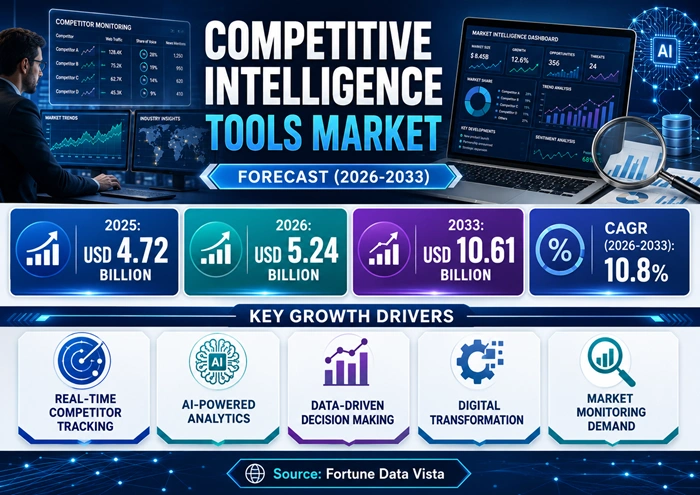
The global competitive intelligence tools market size is valued at USD 4.72 billion in 2025 and is predicted to increase from USD 5.24 billion in 2026 to approximately USD 10.61 billion by 2033, growing at a CAGR of 10.8% from 2026 to 2033.
Competitive intelligence tools are software platforms and data services that help businesses systematically monitor, collect, analyze, and act on information about competitors, market conditions, customer sentiment, industry trends, and emerging opportunities. These tools aggregate data from a wide range of sources — including websites, social media channels, news feeds, patent filings, job postings, financial disclosures, pricing databases, and customer reviews — and transform raw signals into structured, actionable intelligence that informs strategic decisions across sales, marketing, product development, and executive leadership functions. The competitive intelligence tools market has evolved significantly from its origins in manual research and spreadsheet-based tracking toward AI-powered, real-time intelligence platforms capable of continuously monitoring thousands of competitor signals and surfacing meaningful insights automatically. As digital business ecosystems grow more complex, competitive dynamics accelerate, and the speed of strategic response increasingly determines market outcomes, investing in robust competitive intelligence infrastructure has shifted from an optional advantage to an operational necessity across industries and company sizes globally.
AI Impact on the Competitive Intelligence Tools Industry
Artificial intelligence is fundamentally transforming competitive intelligence tools from periodic research and reporting systems into continuously learning, real-time strategic intelligence platforms — enabling businesses to anticipate competitor moves, detect market shifts, and identify emerging opportunities with a speed and accuracy that manual monitoring and traditional analytics cannot match
Artificial intelligence is the single most disruptive and commercially consequential technology transformation reshaping the competitive intelligence tools industry. Large language models (LLMs) and natural language processing (NLP) algorithms embedded within modern CI platforms can now automatically ingest, classify, and extract meaning from unstructured text sources — press releases, earnings call transcripts, patent filings, job postings, review platforms, social media conversations, and regulatory submissions — at a scale and processing speed that removes the human bottleneck from intelligence collection workflows. Platforms including Crayon, Klue, Battlecards, and Semrush have integrated AI-powered summarization, signal classification, and insight generation features that automatically surface the most strategically relevant competitor intelligence from millions of daily data signals — enabling business users to receive curated, actionable intelligence briefings without requiring dedicated analyst teams to manually process raw data. This AI productivity leverage is dramatically lowering the operational cost of running comprehensive competitive intelligence programs — making enterprise-grade CI capabilities accessible to mid-market and SME companies that previously lacked the analyst resources to operate sustained intelligence programs.
Predictive analytics is the frontier where AI is delivering the most transformative competitive intelligence value. By training machine learning models on historical competitor behavior patterns — pricing changes, product launch timelines, hiring surges signaling strategic pivots, patent filing clusters indicating R&D focus areas, and content marketing volume shifts — AI-powered CI platforms can now forecast likely competitor actions before they become public announcements. For sales teams, AI-generated competitive battlecards that dynamically update in real time as new competitor intelligence arrives are replacing static, manually maintained comparison documents — ensuring that sales representatives always have access to current, accurate competitive positioning information at the point of customer engagement. As generative AI capabilities mature and integrate more deeply into competitive intelligence workflows — including the ability to generate structured competitive analysis reports, SWOT assessments, and win/loss attribution analyses automatically from raw intelligence signals — the commercial value proposition of AI-native CI platforms will expand significantly, driving continued market growth through 2033.
Growth Factors
Accelerating digital business complexity increasing the competitive monitoring challenge, the rapid adoption of AI-powered intelligence automation, the irreversible shift toward data-driven strategy across enterprise and mid-market organizations, and the explosion of digital data sources requiring automated aggregation and analysis are generating sustained and multi-dimensional commercial growth across the competitive intelligence tools market through 2033
The most fundamental driver of commercial growth in the competitive intelligence tools market is the steadily increasing complexity and speed of competitive dynamics in digital business environments — which is making it commercially impractical to manage competitor monitoring through manual research processes. As businesses operate across more digital channels, launch products more frequently, adjust pricing dynamically, and communicate continuously through content and social media, the volume of competitor signals that must be monitored to maintain current and comprehensive competitive awareness has grown beyond the capacity of even large dedicated analyst teams. Automated CI platforms that continuously monitor thousands of data sources and surfaces relevant changes in real time are the only scalable solution to this monitoring complexity challenge — creating a structural demand driver that grows proportionally with the increasing pace and complexity of digital competition. The transition of most business competition to digital channels — where every move leaves a traceable digital footprint — is making competitive intelligence monitoring both more technically feasible through web scraping and API data aggregation, and more commercially necessary as the information advantage delivered by CI tools translates directly into competitive positioning and revenue outcomes.
The rapid growth of revenue operations (RevOps) and product-led growth (PLG) business models is simultaneously creating a new and expanding demand driver for competitive intelligence tools that are deeply integrated into sales, marketing, and product workflows. In high-velocity B2B SaaS environments — where sales cycles are short, competitive differentiation conversations are frequent, and win/loss outcomes directly drive growth — the availability of accurate, current competitive intelligence at the point of customer engagement is a material sales performance variable. Organizations adopting RevOps frameworks increasingly deploy CI tools as core components of their go-to-market technology stack — alongside CRM, marketing automation, and sales engagement platforms — embedding competitive intelligence into daily sales and marketing workflows rather than treating it as a periodic research activity. The growing integration of CI tools with Salesforce, HubSpot, Microsoft Dynamics, and Slack through native APIs and workflow connectors is making this workflow embedding increasingly seamless — accelerating adoption among B2B sales organizations globally and sustaining the competitive intelligence tools market's strong growth trajectory.
Market Outlook
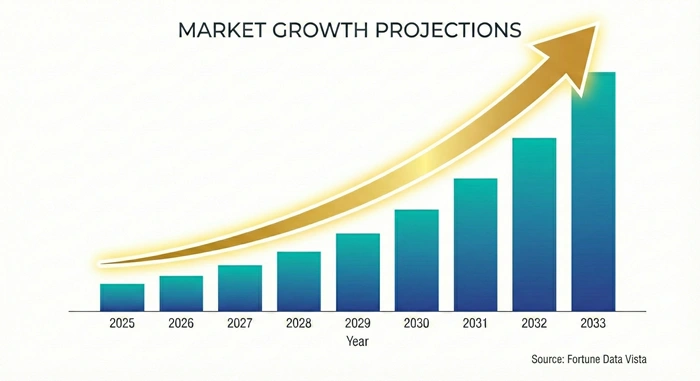
With a trajectory toward USD 10.61 billion by 2033 at a CAGR of 10.8%, the competitive intelligence tools market is entering its most commercially dynamic and competitively intense phase — driven by AI-native platform innovation, expanding mid-market adoption, deeper enterprise workflow integration, and the growing recognition across all industries that systematic competitive intelligence is a strategic imperative rather than a discretionary investment
The medium-to-long-term commercial outlook for the competitive intelligence tools market is strongly positive and well-supported across technology, enterprise size, and geographic dimensions. The SaaS delivery model that dominates the CI tools landscape creates inherently scalable, recurring revenue businesses — with subscription-based pricing aligned to company size, user count, or monitored competitor volume ensuring that vendor revenue grows proportionally with customer success and expansion. The most commercially sophisticated CI platforms are developing platform ecosystems that move beyond standalone competitive monitoring to deliver integrated market intelligence environments — combining competitor tracking, customer review analytics, social listening, SEO competitive analysis, and market trend monitoring in unified data environments that increase switching costs and expand revenue per customer account. Platforms including Crayon, Klue, Contify, and Brandwatch are leading this platform consolidation trend — building broad competitive intelligence ecosystems that serve as the operating system for a company's entire market intelligence function. This platform consolidation dynamic is creating both growth opportunities for broad-platform vendors and differentiation opportunities for specialized niche players focused on specific intelligence categories such as patent intelligence, pricing intelligence, or social listening.
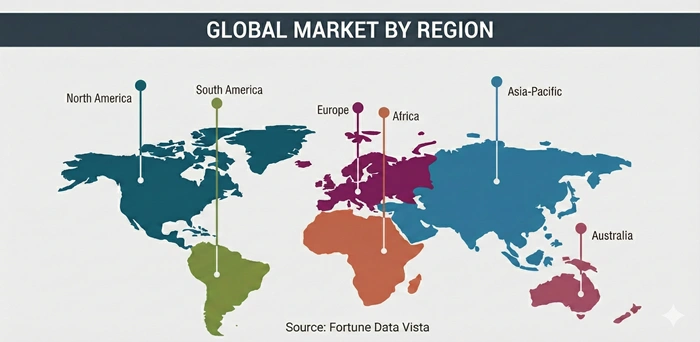
North America will maintain its dominant market position through 2033, driven by the most advanced and mature enterprise software procurement culture globally, the highest concentration of high-growth B2B technology companies that generate intense competitive intelligence demand, and the home market presence of the leading CI platform vendors — Crayon, Klue, Semrush, Similarweb, and Meltwater. Asia Pacific will be the fastest-growing region, driven by rapidly digitizing business ecosystems across China, India, South Korea, and Southeast Asia, explosive growth of tech-enabled SME sectors generating demand for affordable cloud-based CI tools, and growing enterprise investment in structured competitive strategy processes among large corporations in these markets. Europe will contribute steady and growing market revenue, supported by GDPR-compliant CI platform adoption, active enterprise investment in digital strategy intelligence, and a strong academic tradition of structured competitive analysis across business and consulting communities.
Expert Speaks
-
"The ability to act on competitive intelligence in real time — not in weekly briefings or quarterly reports — is what separates market leaders from followers in today's business environment. We have integrated AI-powered competitive monitoring directly into our sales and product workflows, and the result is that our teams respond to competitive moves faster and with better-informed positioning than at any point in our company's history. The competitive intelligence tools market is genuinely delivering measurable business impact, and investment in this space will only accelerate as AI capabilities mature." — CEO perspective, leading global enterprise SaaS company with major CRM and marketing technology platform
-
"Competitive intelligence is no longer a staff function that reports to strategy — it is a real-time operational capability embedded in how sales teams sell, how marketing teams position, and how product teams prioritize their roadmaps. We are investing in AI-powered competitive intelligence infrastructure because we believe the businesses that know their competitive environment most deeply and respond most quickly will consistently outperform those that rely on intuition and periodic research. The data is increasingly clear that competitive intelligence tools deliver measurable win rate improvements and faster strategic response cycles." — CEO perspective, leading enterprise software and business intelligence platform company
-
"The convergence of AI with competitive intelligence tools is creating a new category of strategic decision-making infrastructure that is fundamentally changing how leadership teams use market information. We are seeing our customers use CI platforms not just to track competitors but to model market scenarios, anticipate customer switching triggers, and identify white-space opportunities that their competitors are missing. This elevated use of competitive intelligence for proactive strategy development — rather than just reactive monitoring — is driving expanding platform value and growing investment across every market segment we serve." — CEO perspective, leading market intelligence and competitive analytics platform company
Key Report Takeaways
-
North America dominates the global competitive intelligence tools market, holding approximately 41% of total revenue share in 2025, anchored by the highest concentration of high-growth B2B technology and SaaS companies generating intense competitive intelligence demand, a deeply developed enterprise software procurement culture favoring structured CI investments, and the home market presence of leading platform vendors including Crayon, Klue, Semrush, Similarweb, Meltwater, and Brandwatch that continuously drive product innovation and commercial ecosystem development.
-
Asia Pacific is the fastest-growing regional market, expected to register the highest CAGR through 2033, fueled by rapid digital transformation across China, India, South Korea, and Southeast Asia, explosive growth of tech-enabled startups and SMEs generating demand for cloud-based CI tools, and increasing enterprise investment in structured competitive strategy processes as regional businesses compete more intensely in globally connected digital markets.
-
Cloud-based deployment is the dominant and fastest-growing model, accounting for approximately 71.4% of global market revenue in 2025, as SaaS-delivered CI platforms offer continuous data updates, easy integration with CRM and marketing tools, scalable pricing aligned to company size, and zero infrastructure management requirements — making them the overwhelming choice for both enterprise and SME buyers globally.
-
Marketing intelligence is the largest application segment, contributing approximately 31.7% of global competitive intelligence tools market revenue in 2025, as tracking competitor digital marketing strategies, content production, SEO positioning, social media engagement, and advertising spend remains the highest-frequency and most broadly adopted use case for CI tools across both B2B and B2C organizations globally.
-
Large enterprises represent the largest end-user segment by revenue, accounting for approximately 62.8% of global market revenue in 2025, given their higher CI platform budgets, more complex multi-market competitive monitoring requirements, larger teams of sales and marketing professionals benefiting from daily CI tool access, and greater need for enterprise-grade integrations with Salesforce, Microsoft, and HubSpot systems.
-
IT and telecom is the largest end-user industry, contributing approximately 24.3% of market revenue in 2025, as the software, cloud services, and telecommunications sectors are characterized by the most intense, fast-moving competitive dynamics of any industry — requiring continuous, real-time competitor monitoring across pricing, product features, marketing positioning, talent acquisition, and partnership activity.
-
Sales intelligence is the fastest-growing application sub-segment, expected to grow at a CAGR exceeding 13.6% through 2033, as AI-powered sales intelligence platforms that deliver real-time competitive battlecards, win/loss analysis, and prospect-level competitive context directly within CRM workflows become a standard component of high-performing B2B sales operations globally — driving strong and expanding demand for CI tools specifically designed to support frontline sales teams.
Market Scope
| Parameter | Details |
|---|---|
| Market Size by 2033 | USD 10.61 Billion | Market Size by 2026 | USD 5.24 Billion | Market Size by 2025 | USD 4.72 Billion | Market Growth Rate from 2026 to 2033 | CAGR of 10.8% | Dominating Region | North America | Fastest Growing Region | Asia Pacific | Segments Covered | Tool Type, Deployment, Application, Enterprise Size, End User | Regions Covered | North America, Europe, Asia Pacific, Latin America, Middle East & Africa |
Market Dynamics
Drivers Impact Analysis
The accelerating pace of digital business competition, AI-powered CI automation lowering the barrier to entry for mid-market adoption, the integration of competitive intelligence into core revenue operations workflows, and the explosion of digital data sources requiring automated aggregation are generating compounding commercial growth drivers sustaining the competitive intelligence tools market through 2033
| Driver | ≈ % Impact on CAGR Forecast | Geographic Relevance | Impact Timeline |
|---|---|---|---|
| Increasing digital competitive complexity driving demand for automated CI monitoring | ~29% | Global | Short to Long Term |
| AI and NLP automation reducing CI operational cost and expanding mid-market adoption | ~27% | North America, Europe | Short to Long Term |
| RevOps and sales workflow integration embedding CI tools as operational necessities | ~23% | North America, Asia Pacific | Short to Medium Term |
| Growing SME awareness of CI value accelerating cloud platform adoption | ~15% | Asia Pacific, Latin America | Short to Medium Term |
| Expansion of digital data sources increasing CI tool data coverage value | ~6% | Global | Medium to Long Term |
The increasing complexity of digital business competition is the most durable and broadly applicable commercial driver for the competitive intelligence tools market — because it creates a structural demand imperative that grows proportionally with digital market activity. As competitors publish more content, adjust pricing more frequently, launch product updates more rapidly, and communicate through more digital channels simultaneously, the intelligence monitoring challenge grows exponentially relative to what manual processes can manage. CI tools that automate data collection, normalize signals from disparate sources, apply AI classification to identify strategically significant changes, and deliver curated intelligence to decision-makers are the only commercially viable solution to this monitoring scale challenge. The COVID-19 pandemic accelerated this driver by forcing an irreversible shift of virtually all business competition, customer interaction, and strategic signaling to digital channels — permanently expanding the digital footprint that CI tools can monitor and substantially increasing the competitive intelligence value available from automated digital monitoring programs.
The integration of AI automation into CI platform workflows is simultaneously creating a powerful second-order demand driver by dramatically lowering the analyst resource requirements for operating a comprehensive CI program. Before AI-powered CI platforms, maintaining real-time monitoring of even a handful of competitors required a dedicated team of research analysts continuously processing raw data from multiple sources. AI-powered platforms now perform the heavy lifting of data aggregation, noise filtering, and intelligence classification automatically — enabling a single CI analyst to manage programs that previously required teams of five to ten researchers. This productivity leverage makes comprehensive competitive intelligence programs economically viable for mid-market companies that previously could not justify the headcount required, substantially expanding the addressable buyer universe beyond the enterprise segment. As AI capabilities continue to mature and the AI-powered features of leading CI platforms become more sophisticated — including automatic generation of competitive analysis reports, predictive competitor behavior modeling, and AI-generated sales battlecard updates — the commercial value premium of AI-native CI platforms will grow, driving both new adoption and platform upgrade investment that sustains strong revenue growth in the competitive intelligence tools market.
Restraints Impact Analysis
Data privacy regulations creating legal uncertainty around web data collection, cybersecurity concerns about third-party platform data access, integration complexity with existing enterprise technology stacks, and the ongoing challenge of data accuracy and source reliability are creating meaningful commercial friction moderating the competitive intelligence tools market's growth pace
| Restraint | ≈ % Impact on CAGR Forecast | Geographic Relevance | Impact Timeline |
|---|---|---|---|
| Data privacy regulation uncertainty around web scraping and data collection legality | ~42% | Europe, North America | Short to Long Term |
| Data accuracy and reliability concerns reducing confidence in CI tool outputs | ~32% | Global | Short to Long Term |
| Integration complexity with existing enterprise CRM and marketing technology stacks | ~26% | Global | Short to Medium Term |
Data privacy regulation creates one of the most complex and commercially significant restraints in the competitive intelligence tools market — because CI platforms fundamentally rely on collecting, aggregating, and analyzing information from publicly accessible digital sources, and the legal boundaries of what constitutes permissible data collection are actively contested in multiple major jurisdictions. The EU General Data Protection Regulation (GDPR) creates obligations around the collection and processing of personal data that can apply even to business intelligence research contexts — particularly when CI tools collect and analyze social media content, professional network activity, or individual-level behavioral data about named individuals. The ongoing legal uncertainty around web scraping in the United States — illustrated by high-profile cases including hiQ Labs v. LinkedIn — creates regulatory risk that can deter aggressive CI data collection strategies and motivate some enterprise buyers to limit their CI tool deployments to lower-risk data sources.
Data accuracy and reliability concerns represent a second meaningful restraint — particularly as the volume of AI-generated, synthetic, and manipulated digital content grows, making it increasingly difficult for CI platforms to reliably distinguish genuine competitor signals from noise, misinformation, or deliberately planted competitive disinformation. CI tools that surface inaccurate or stale competitive intelligence to sales teams can generate negative outcomes — such as incorrectly positioning against a competitor's features or pricing — that undermine confidence in the platform and create adoption resistance among end users. The accuracy and completeness of CI tool data coverage also varies significantly across geographies, languages, and data source types — with platforms typically offering higher-quality coverage of English-language digital sources in North American and Western European markets than in Asia Pacific, Latin American, and Middle Eastern markets where local language data source coverage may be limited. These accuracy concerns create customer trust challenges that CI platform vendors must address through continuous data quality investment and transparent coverage documentation.
Opportunities Impact Analysis
The emergence of AI-native CI platforms enabling predictive competitor intelligence, the vast underpenetrated SME market for affordable cloud CI tools, the expansion of CI into new functional use cases beyond marketing and sales, and growing enterprise demand for unified market intelligence platforms represent high-value growth frontiers that will define the competitive future of the competitive intelligence tools market through 2033
| Opportunity | ≈ % Impact on CAGR Forecast | Geographic Relevance | Impact Timeline |
|---|---|---|---|
| AI-native CI platforms enabling predictive competitor intelligence and strategic scenario modeling | ~36% | North America, Europe | Medium to Long Term |
| SME market penetration through affordable, easy-to-use cloud CI platforms | ~30% | Asia Pacific, Latin America, North America | Short to Medium Term |
| Expansion into product intelligence and technology intelligence for R&D and innovation teams | ~22% | North America, Europe, Asia Pacific | Short to Medium Term |
| Integration of CI tools with digital twin business modeling for scenario planning | ~12% | North America, Europe | Medium to Long Term |
The SME market represents the most commercially significant underpenetrated opportunity in the competitive intelligence tools market — because the vast global population of small and medium businesses competing in digital markets has the same fundamental competitive intelligence need as large enterprises but has historically been excluded from the market by cost and complexity barriers. The proliferation of affordable, user-friendly cloud-based CI platforms with freemium or low-cost starter tiers — including Semrush, Similarweb, SpyFu, and Crayon's SME-oriented offerings — is progressively bringing competitive intelligence capabilities within reach of businesses with limited technology budgets. As these SME-oriented platforms achieve scale and generate network effect data advantages from large user bases, they are simultaneously improving their intelligence coverage quality and reducing per-customer costs — creating a virtuous cycle of expanding value and declining cost that will accelerate SME CI adoption globally. The global SME sector — encompassing hundreds of millions of businesses operating in digital markets — represents an enormous addressable market expansion opportunity for CI platform vendors that successfully design and price their offerings for the SME buyer profile.
The expansion of competitive intelligence applications into product development, R&D, and technology intelligence functions represents a second major opportunity — one that extends CI tool usage beyond the marketing and sales teams that represent the current primary user base into the engineering, product management, and innovation teams that drive long-term competitive advantage. Patent intelligence tools that monitor competitor patent filings and technology development trajectories, job posting analysis platforms that identify competitor R&D investment focus areas, and technology stack monitoring tools that track competitor platform infrastructure changes are all enabling CI-informed product strategy and innovation decisions that were previously based on informal intelligence gathering. Organizations including Cipher, PatSnap, and Crayon's technology intelligence features are developing CI capabilities specifically designed for technical and product leadership users — creating a growing sub-segment of the competitive intelligence tools market focused on technology and innovation intelligence that will generate meaningful incremental commercial demand through 2033.
Segment Analysis
By Deployment: Cloud-Based
Cloud-based competitive intelligence tools have achieved overwhelming commercial dominance because they uniquely combine continuous real-time data updates, frictionless deployment, transparent subscription pricing, and seamless integration with the CRM and marketing technology stacks where competitive intelligence must be applied to generate business value
Cloud-based deployment is the dominant segment in the competitive intelligence tools market, accounting for approximately 71.4% of global revenue in 2025 and growing at a CAGR of approximately 11.3% through 2033. The fundamental commercial advantage of cloud-based CI platforms over on-premises alternatives is their ability to deliver continuous, automated data updates from the ever-changing digital competitive landscape — a capability that on-premises software with periodic update cycles simply cannot match. When a competitor changes their pricing, publishes a new product announcement, or shifts their marketing messaging, a cloud-based CI platform can detect and surface this signal to subscribed users within hours or even minutes of the digital event — enabling the rapid strategic response that modern competitive dynamics demand. North America leads the cloud CI deployment segment, accounting for approximately 43% of global cloud CI revenue in 2025, driven by the highest per-company SaaS adoption rates globally, a deeply established cloud procurement culture that has made cloud-first technology selection the default for most enterprise and mid-market software purchases, and the home market concentration of leading cloud CI platforms including Crayon, Klue, Semrush, Similarweb, and Meltwater. Key companies driving cloud CI platform development and commercial adoption include these vendors alongside Brandwatch, Contify, Digimind, NetBase Quid, and Crunchbase — all operating SaaS-delivered CI platforms with API integration capabilities and multi-user collaboration features.
Asia Pacific is the fastest-growing geography for cloud-based CI deployment, expanding at a regional CAGR exceeding 13.8% through 2033, as the region's technology-forward SME and startup ecosystem rapidly adopts cloud tools, enterprise organizations invest in structured competitive strategy processes, and affordable cloud CI platforms from both international and domestic vendors become more widely available and localized for regional markets. Europe represents a significant and growing cloud CI market — with GDPR-compliant data practices now standard among leading cloud CI vendors, and European enterprise buyers' initial hesitation around cloud data sovereignty increasingly addressed through EU-region data hosting options and transparent data governance documentation. The ongoing shift from on-premises market research and manual competitor monitoring processes to automated cloud CI platforms is driving replacement cycle revenue across the existing enterprise CI software installed base — creating a market dynamic where cloud platform growth is powered both by new adoptions and by the migration of existing on-premises users to cloud alternatives offering superior data freshness, AI capabilities, and integration flexibility.
By Application: Marketing Intelligence
Marketing intelligence remains the foundational and largest application driving demand in the competitive intelligence tools market — with tracking competitor digital marketing strategy, SEO positioning, content publishing cadence, advertising investment, and social media engagement representing the highest-frequency, most universally adopted CI use case across industries and company sizes
Marketing intelligence is the largest application segment in the competitive intelligence tools market, contributing approximately 31.7% of global revenue in 2025 and growing at a CAGR of approximately 10.6% through 2033. Every organization competing in digital markets — regardless of industry, size, or business model — needs to understand how competitors are positioning their brand, what keywords they rank for, how they allocate their digital advertising budgets, what content topics they publish, and how their social media audience engagement compares. These are the core competitive questions that marketing intelligence CI tools answer — and the universality of these questions across the business landscape makes marketing intelligence the broadest and most commercially pervasive CI application category. Platforms including Semrush, Similarweb, SpyFu, Ahrefs, and Meltwater are the commercial leaders in this segment — offering marketing teams comprehensive competitive digital marketing intelligence covering SEO keyword rankings, paid search advertising spend estimation, backlink profile analysis, social media performance benchmarking, and content strategy tracking. North America generates approximately 40% of global marketing intelligence application revenue in 2025, with a strong foundation in the world's most digitally competitive business environment where marketing teams need CI tool support to stay current with the pace of competitor marketing activity.
Europe is the second-largest marketing intelligence geography, with UK, German, and French marketing teams among the most active CI tool users in the region — driven by highly competitive digital advertising markets and growing investment in content marketing strategy. Asia Pacific is the fastest-growing marketing intelligence region, growing at a regional CAGR of approximately 13.2% through 2033, as the region's rapidly digitizing marketing ecosystems — across e-commerce, fintech, and consumer technology sectors — create explosive demand for competitive digital marketing intelligence tools that help regional businesses understand competitor strategies in fast-moving, high-stakes digital markets. The marketing intelligence application segment also benefits from the strongest freemium and trial-to-paid conversion dynamics in the competitive intelligence tools market — with platforms like Semrush offering free-tier access that provides enough value to demonstrate ROI clearly before requiring paid subscription commitment, creating an efficient and low-friction customer acquisition model that drives both volume adoption and strong renewal rates.
Regional Insights
North America
North America's unrivaled concentration of high-growth B2B technology companies, the world's most mature and competitive SaaS market demanding continuous competitive monitoring, and the dominant commercial presence of the leading global CI platform vendors collectively establish it as the undisputed commercial leader of the global competitive intelligence tools market
North America leads the competitive intelligence tools market, accounting for approximately 41% of global revenue share in 2025, with a regional CAGR of approximately 10.3% projected through 2033. The United States drives the vast majority of regional revenue — anchored by the world's highest concentration of venture-backed and publicly traded B2B technology, SaaS, and e-commerce companies for whom competitive intelligence is a daily operational necessity rather than a periodic research activity. The home market presence of the industry's leading CI platform vendors — Crayon, Klue, Semrush Holdings, Similarweb, Meltwater, Brandwatch (a Cision company), NetBase Quid, and Crunchbase — creates a self-reinforcing ecosystem of product innovation, investor capital, talent concentration, and enterprise customer relationships that continuously strengthens North America's market leadership position. The United States also generates the highest per-company CI tool spending globally — driven by the competitive intensity of the SaaS sector, the established culture of revenue operations investment, and the deep integration of competitive intelligence into go-to-market strategy among high-growth technology companies. Canada contributes meaningful regional revenue through its growing technology startup ecosystem in Toronto, Vancouver, and Montreal, where competitive intelligence tools are widely adopted as standard components of the B2B SaaS go-to-market technology stack.
The North American competitive intelligence tools market is also the primary commercial launch pad for next-generation AI-powered CI capabilities — with enterprise customers in the United States serving as early adopters that validate and commercially scale new AI features including predictive competitor intelligence, generative AI competitive briefing generation, and autonomous battlecard update systems. Major technology companies in North America are increasingly deploying enterprise-wide competitive intelligence programs that connect multiple CI platforms with their CRM, marketing automation, and product management systems — creating integration complexity that favors established platform vendors with mature API ecosystems and certified integration partnerships with Salesforce, HubSpot, Microsoft, and Slack. North America's market leadership is expected to be sustained through 2033, driven by the continued innovation leadership of its domestic CI vendor ecosystem, the ongoing expansion of high-growth technology company formation, and the progressive enterprise adoption of AI-powered CI capabilities that generate measurable revenue and competitive advantage improvements.
Asia Pacific
Asia Pacific's extraordinary pace of digital business growth, explosive technology startup and SME ecosystem expansion, government digital economy investment programs, and growing enterprise recognition of competitive intelligence as a strategic management tool are establishing the region as the most commercially dynamic and fastest-growing market for competitive intelligence tools globally
Asia Pacific is the fastest-growing region in the competitive intelligence tools market, expected to grow at a regional CAGR of approximately 13.1% through 2033, driven by the world's largest and fastest-growing digital economy expansion creating enormous demand for competitive market intelligence across e-commerce, fintech, healthtech, and enterprise software sectors. China is the single largest individual country market in the region — with a massive technology company ecosystem including Alibaba, Tencent, ByteDance, and thousands of competitive software and SaaS companies generating intense competitive intelligence demand, alongside growing adoption of domestic CI platforms including EqualOcean and established international vendors entering the market through local partnerships. India represents one of the most commercially significant growth opportunities globally — with a startup ecosystem that produced over 100 unicorns by 2025, a rapidly expanding B2B SaaS sector competing intensely both domestically and globally, and growing enterprise investment in structured go-to-market strategy processes that require competitive intelligence infrastructure. Key companies active in the Asia Pacific competitive intelligence tools market include Semrush, Similarweb, Meltwater (with regional offices in Singapore, Sydney, and Tokyo), Brandwatch, and a growing cohort of domestic vendors developing Asia-specific CI platforms with localized language coverage and regional data source integration.
South Korea and Japan contribute high-value, high-sophistication revenue to the Asia Pacific competitive intelligence tools market — with South Korea's globally competitive technology sector generating strong enterprise CI demand, and Japan's methodical corporate culture placing particular emphasis on structured competitive analysis as a strategic management discipline. Australia contributes meaningful revenue through its competitive professional services, financial services, and e-commerce sectors — with Australian enterprises adopting international CI platforms at rates comparable to European mid-market adoption. As Asia Pacific's domestic technology and SaaS ecosystems mature and competitive dynamics intensify, the pressure on both startup and established enterprise organizations to invest in robust competitive intelligence infrastructure will grow progressively stronger — making Asia Pacific the most commercially attractive and fastest-growing geographic market for CI platform vendors through 2033 and beyond.
Report Customization Available
Get a Fully Customized Competitive Intelligence Tools Market Report for Your Target Region or Country
Our competitive intelligence tools market report is available with complete region-specific and country-level customization designed to meet your precise strategic research and business intelligence requirements. Each customized report delivers in-depth market sizing, deployment model analysis, application-specific demand assessment, end-user vertical penetration rates, regulatory and data privacy environment review, competitive landscape profiling of regional and global platform vendors, and growth opportunity mapping — all calibrated to the specific commercial dynamics and competitive characteristics of your chosen geography.
Customized competitive intelligence tools market reports are available for the following regions and countries:
North America
-
United States – Detailed coverage of enterprise CI platform adoption across SaaS, technology, BFSI, and e-commerce sectors, leading vendor market positions including Crayon, Klue, Semrush, Similarweb, and Meltwater, AI-powered CI feature adoption trends, RevOps integration dynamics, and the competitive regulatory environment around web scraping and data collection legality
-
Canada – Analysis of Canadian technology startup CI tool adoption, provincial enterprise market intelligence investment, cross-border competitive dynamics with U.S. market, domestic market coverage quality, and international CI platform commercial presence and localization
-
Mexico – Coverage of Mexico's growing digital business ecosystem generating CI demand, healthcare and retail sector competitive intelligence adoption, international vendor market access strategies, and regulatory environment for digital data collection and competitive monitoring
Europe
-
United Kingdom – Detailed coverage of UK enterprise and SME CI tool adoption, ICO GDPR compliance framework for data-driven CI, domestic vendor landscape including Brandwatch and Similarweb, financial services and technology sector competitive intelligence investment, and post-Brexit digital market dynamics
-
Germany – GDPR and BDSG regulatory framework impact on CI data collection, German automotive and manufacturing sector competitive intelligence needs, enterprise CI platform procurement trends, domestic market intelligence consulting ecosystem, and technology company CI tool adoption
-
France – CNIL data protection regulatory context, French luxury goods and retail competitive intelligence adoption, enterprise market intelligence investment, domestic CI service provider landscape, and cross-European competitive monitoring demand
-
Italy – Italian manufacturing, fashion, and retail sector competitive intelligence needs, GDPR compliance context, growing enterprise digital strategy investment driving CI tool adoption, and international vendor commercial presence in Italian markets
-
Rest of Europe – Coverage of Netherlands, Sweden, Spain, and Switzerland regarding enterprise CI platform adoption, GDPR compliance challenges, domestic technology sector competitive intelligence demand, and regional vendor competitive landscape
Asia Pacific
-
China – SAMR regulatory environment, domestic CI platform landscape, technology sector competitive intelligence demand, Alibaba and Tencent ecosystem competitive dynamics, data localization requirements for international CI vendors, and government digital economy program impact on CI tool adoption
-
India – Growing B2B SaaS sector CI demand, Startup India ecosystem competitive intelligence needs, domestic vendor emergence, international platform localization and regional language coverage, and enterprise competitive strategy investment trends
-
Japan – METI digital economy policies, Japanese corporate culture and CI adoption patterns, domestic technology company competitive intelligence investment, PDPA data privacy framework, and international vendor commercial strategies in the Japanese market
-
South Korea – PIPC data protection regulatory framework, Korean technology sector competitive intelligence demand, government K-Digital initiative impact, Samsung and LG competitive intelligence practices influencing broader corporate adoption, and domestic CI platform development
-
Australia – OAIC privacy regulatory context, Australian financial services and technology sector CI tool adoption, enterprise digital strategy investment trends, international platform commercial presence, and domestic market intelligence consulting ecosystem
-
Rest of Asia Pacific – Coverage of Singapore, Malaysia, Taiwan, and Vietnam regarding technology hub CI tool adoption, startup ecosystem competitive intelligence demand, government digital economy programs, and international vendor market access strategies
Latin America
-
Brazil – LGPD data privacy framework, Brazilian e-commerce and fintech sector competitive intelligence demand, growing enterprise digital strategy investment, domestic market intelligence consulting ecosystem, and international CI platform commercial presence and localization
-
Argentina – Growing technology startup ecosystem CI demand, PDPA regulatory environment, enterprise competitive strategy investment trends, and international vendor market access and partnership landscape
-
Rest of Latin America – Coverage of Colombia, Chile, and Peru regarding digital business growth driving CI demand, enterprise technology investment, healthcare and financial services sector competitive intelligence adoption, and regional vendor landscape
Middle East & Africa
-
UAE – Vision 2030 digital economy program impact, Dubai and Abu Dhabi enterprise CI tool adoption in BFSI and technology sectors, international vendor commercial presence in GCC markets, PDPL data privacy regulatory context, and competitive intelligence demand from regional startups and corporate organizations
-
Saudi Arabia – Vision 2030 digital transformation competitive intelligence implications, SDAIA data governance framework, healthcare and financial services sector CI tool adoption, government enterprise investment in competitive strategy capabilities, and international vendor partnership opportunities
-
Rest of MEA – Coverage of South Africa, Egypt, Turkey, and Israel regarding growing enterprise CI tool adoption, technology sector competitive intelligence demand, government digital economy investment driving corporate competitive strategy development, and international vendor market access landscape
Top Key Players
-
Crayon Inc. (United States)
-
Klue Labs Inc. (Canada)
-
Semrush Holdings, Inc. (United States)
-
Similarweb Ltd. (Israel / United States)
-
Meltwater N.V. (Norway / United States)
-
Brandwatch (a Cision company) (United Kingdom / United States)
-
NetBase Quid (United States)
-
Contify (India)
-
Digimind (an Onclusive company) (France / United States)
-
Crunchbase Inc. (United States)
-
SpyFu (United States)
-
Owler (an Meltwater company) (United States)
-
Ahrefs Pte. Ltd. (Singapore)
-
Talkwalker S.à r.l. (Luxembourg)
-
Cipher Systems LLC (United States)
Recent Developments
-
In February 2025, Crayon Inc. launched its AI Competitive Intelligence Assistant — an embedded generative AI agent within the Crayon platform that automatically generates structured competitive briefings, synthesizes multi-source competitor intelligence into executive summaries, and produces updated sales battlecards from real-time intelligence signals without requiring analyst intervention. The product launch represented a major step toward fully autonomous competitive intelligence operations and positioned Crayon as the most AI-advanced vendor in the competitive intelligence tools market for enterprise go-to-market applications.
-
In April 2025, Semrush Holdings, Inc. announced the expansion of its Semrush .Trends suite with new AI-powered competitive market share estimation features — enabling users to track competitor website traffic share, market demand trends, and digital channel mix changes across customizable market segments with significantly higher granularity and freshness than previously available. The enhancement strengthened Semrush's position as the leading digital marketing intelligence platform globally and directly addressed enterprise demand for more precise competitor market share tracking in digital channels.
-
In January 2025, Meltwater N.V. completed the integration of its Owler acquisition — combining Owler's crowd-sourced business intelligence database of over 15 million company profiles with Meltwater's AI-powered media monitoring and social intelligence platform to create a unified business and competitive intelligence environment serving enterprise sales, marketing, and strategy teams. The integration created one of the broadest competitive intelligence data ecosystems in the market — covering traditional media, social media, and private company intelligence in a single platform.
-
In October 2024, Similarweb Ltd. launched its Shopper Intelligence AI module — an AI-powered competitive retail intelligence tool enabling e-commerce brands and retailers to benchmark their digital shelf performance, track competitor product listing changes, monitor pricing strategy shifts, and analyze consumer purchase intent trends across major online retail platforms including Amazon, Walmart, and Target. The launch expanded Similarweb's competitive intelligence platform beyond web traffic analytics into high-growth e-commerce competitive intelligence — one of the fastest-growing application categories in the broader CI tools market.
-
In March 2025, Klue Labs Inc. raised USD 87 million in Series C funding — a major capital raise that reinforced its market leadership in AI-powered competitive intelligence for B2B sales enablement and brought its total funding to over USD 150 million. The capital was directed toward expanding Klue's AI competitive intelligence engine, deepening integrations with major enterprise CRM and sales engagement platforms, and accelerating international market expansion into European and Asia Pacific enterprise markets where structured competitive intelligence programs are growing rapidly.
Market Trends
The acceleration of AI-native competitive intelligence platforms capable of predictive competitor modeling, the convergence of CI tools with revenue operations and sales enablement platforms creating embedded workflow intelligence, and the growing demand for unified market intelligence ecosystems beyond standalone monitoring tools are defining the competitive intelligence tools market's most commercially consequential trends through 2033
The most significant technology trend reshaping the competitive intelligence tools market is the transition from reactive monitoring to predictive competitive intelligence — powered by AI and machine learning models trained on historical competitor behavior patterns that can now forecast likely competitor moves before they become public announcements. Leading CI platforms are embedding predictive features that analyze patterns in competitor hiring activity, patent filing trends, content investment surges, partnership announcements, and pricing change history to generate probabilistic forecasts of upcoming competitor product launches, market entries, and strategic repositioning moves. This predictive intelligence capability represents a qualitative upgrade in CI value — moving from helping organizations understand what competitors have already done to enabling them to anticipate and prepare for what competitors are likely to do next. As the predictive accuracy of these AI models improves with more training data and more sophisticated modeling approaches, the competitive advantage of organizations using predictive CI tools over those relying on reactive monitoring will grow — creating a strong commercial motivation for enterprise CI tool investment and platform upgrades throughout the forecast period.
The convergence of competitive intelligence tools with revenue operations and sales enablement platforms represents the second major commercial trend — transforming CI from a research function supporting strategy teams into a real-time operational capability embedded in the daily workflows of sales, marketing, and product teams. The technical foundation of this convergence is the development of native integrations between CI platforms and the core enterprise technology stack — with Crayon, Klue, and Contify offering certified Salesforce, HubSpot, and Slack integrations that deliver competitive intelligence insights and battlecard updates directly within the tools that salespeople and marketers use throughout their working day. This embedded intelligence model eliminates the barrier of requiring users to leave their primary workflow tools to consult a separate CI platform — dramatically increasing CI tool utilization rates, accelerating competitive intelligence adoption, and creating sticky platform relationships that improve renewal rates and expand per-customer revenue through upselling of additional intelligence modules. As the CRM, marketing automation, and sales engagement platform markets continue to grow and as more organizations adopt integrated RevOps technology stacks, the demand for CI tools that can deliver intelligence seamlessly within these environments will grow proportionally — reinforcing the competitive intelligence tools market's strong CAGR through 2033.
Segments Covered in the Report
-
By Tool Type
-
Web and Social Media Monitoring Tools
-
SEO and Digital Analytics Tools
-
Sales Intelligence Platforms
-
Market and Business Intelligence Software
-
Patent and Technology Intelligence Tools
-
Others (Pricing Intelligence, Job Posting Analysis Tools)
-
-
By Deployment
-
Cloud-Based (SaaS)
-
On-Premises
-
-
By Application
-
Marketing Intelligence
-
Sales Intelligence
-
Product Intelligence
-
Customer Intelligence
-
Technology Intelligence
-
Competitive Benchmarking
-
-
By Enterprise Size
-
Large Enterprises
-
Small and Medium Enterprises (SMEs)
-
-
By End User
-
BFSI (Banking, Financial Services, and Insurance)
-
Retail and E-Commerce
-
IT and Telecom
-
Healthcare and Life Sciences
-
Manufacturing
-
Media and Entertainment
-
Others
-
-
By Region
-
North America (U.S., Canada, Mexico)
-
Europe (U.K., Germany, France, Italy, Rest of Europe)
-
Asia Pacific (China, India, Japan, South Korea, Australia, Rest of Asia Pacific)
-
Latin America (Brazil, Argentina, Rest of Latin America)
-
Middle East & Africa (UAE, Saudi Arabia, Rest of MEA)
-
❝ Built for Every Level — From Startups to Industry Giants ❞
Here Is Exactly How This Report Works for You
-
For Tier 1 enterprise software companies, global consulting firms, and institutional investors: This report delivers granular competitive revenue analysis for all 15 major CI platform vendors — including Crayon, Semrush, Similarweb, Meltwater, and Klue — with detailed application segment revenue breakdowns, regional market penetration assessments, and enterprise workflow integration landscape mapping. It also provides comprehensive analysis of how geopolitical factors — including U.S.-China data sovereignty tensions affecting cross-border competitive data access, EU GDPR and IVDR regulatory complexities shaping compliant CI data collection strategies, and global data privacy law fragmentation creating compliance-driven CI platform procurement decisions — are impacting competitive strategies and investment priorities across the competitive intelligence tools market, enabling executive teams to navigate competitive and regulatory complexity with clarity and confidence.
-
For Tier 2 and Tier 3 CI platform developers, market intelligence consultancies, and data providers: This report identifies specific application verticals, enterprise size segments, and geographic markets where CI tool adoption is growing fastest and where supply capacity from current market leaders is insufficient to meet demand — revealing high-value commercial opportunities for specialized niche CI platforms, regional language-specific intelligence tools, vertical-industry CI services, and data API provider partnerships. Competitor revenue source analysis reveals which deployment models, application categories, and integration strategies are generating the highest growth and renewal rates — providing strategic benchmarking intelligence for go-to-market positioning and product development investment decisions in the competitive intelligence tools market.
-
For CI software startups, venture capital investors, and corporate strategy teams seeking market entry: This report maps the highest-CAGR commercial frontiers including AI-powered predictive competitive intelligence, SME-oriented cloud CI platform expansion in Asia Pacific and Latin America, embedded RevOps CI integration tools, and e-commerce-specific competitive retail intelligence platforms — with detailed analysis of current competitive intensity, technology differentiation opportunities, M&A transaction benchmarks from recent strategic acquisitions, and investor activity patterns across the competitive intelligence tools market. It delivers the market intelligence foundation to identify, validate, and build the most commercially differentiated and defensible positions in the next generation of market leadership through 2033.
Frequently Asked Questions:
Answer: The global competitive intelligence tools market was valued at USD 4.72 billion in 2025 and is projected to reach approximately USD 10.61 billion by 2033. The market is expected to grow at a CAGR of 10.8% from 2026 to 2033, driven by accelerating digital competition, AI-powered CI automation, and the growing integration of competitive intelligence tools into enterprise revenue operations and sales workflows globally.
Answer: The most widely used competitive intelligence tools include web and social media monitoring platforms, SEO and digital analytics tools, and sales intelligence platforms — with Semrush, Similarweb, Crayon, Klue, and Meltwater among the most commercially prominent vendors. Marketing intelligence is the largest application segment in the competitive intelligence tools market, as tracking competitor digital marketing strategy, SEO performance, and advertising activity is the most universally adopted CI use case across industries and company sizes.
Answer: Artificial intelligence is transforming competitive intelligence tools from periodic research platforms into continuously learning, real-time intelligence systems that automatically surface strategically relevant competitor signals from millions of daily data points. AI-powered features including predictive competitor behavior modeling, generative competitive briefing generation, and automated battlecard updates are making CI tools substantially more valuable and accessible — lowering the analyst resource requirements for running comprehensive CI programs and expanding adoption into mid-market and SME companies that previously lacked the resources for structured competitive intelligence programs.
Answer: The IT and telecom sector is the largest end-user industry in the competitive intelligence tools market, accounting for approximately 24.3% of global revenue in 2025, driven by the fast-moving, highly competitive dynamics of software, cloud services, and technology markets that require continuous competitor monitoring. Large enterprises represent the largest end-user segment by revenue, though the SME segment within the competitive intelligence tools market is growing faster — powered by affordable cloud-based CI platforms that bring enterprise-grade competitive monitoring capabilities within reach of businesses with limited technology budgets.
Answer: North America leads the competitive intelligence tools market with approximately 41% of global revenue share in 2025, underpinned by the world's most competitive B2B technology market, the highest per-company SaaS adoption rates, and the home market concentration of leading CI platform vendors including Crayon, Klue, Semrush, Similarweb, and Meltwater. Asia Pacific is the fastest-growing region at a projected CAGR of approximately 13.1% through 2033, driven by China's digital economy scale, India's booming startup and SaaS ecosystem, and rapidly growing enterprise investment in structured competitive strategy capabilities across South Korea, Japan, and Southeast Asia.