
Cosmetic Surgery Market Overview
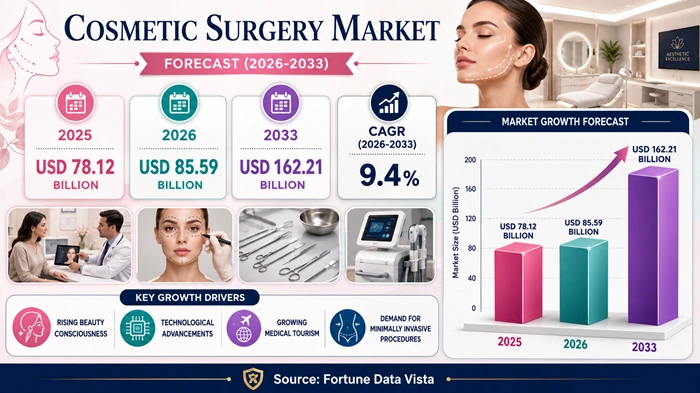
The global cosmetic surgery market size is valued at USD 78.12 billion in 2025 and is predicted to increase from USD 85.59 billion in 2026 to approximately USD 162.21 billion by 2033, growing at a CAGR of 9.4% from 2026 to 2033.
The cosmetic surgery market is witnessing robust and sustained growth as shifting beauty standards, increased social media exposure, and rising disposable incomes combine to drive demand for both surgical and non-surgical aesthetic procedures across all major demographics. No longer limited to celebrities and high-income consumers, cosmetic procedures are now sought by a broad and diverse population spanning multiple age groups, genders, and geographies. Advances in minimally invasive techniques, improved patient safety profiles, and the growing accessibility of cosmetic clinics are further accelerating adoption, making aesthetic enhancement a mainstream healthcare and wellness consideration globally.
AI Impact on the Cosmetic Surgery Industry
Artificial Intelligence Is Revolutionizing Cosmetic Surgery Planning, Outcome Prediction, and Patient Experience — Driving a New Era of Precision Aesthetics and Personalized Care*
Artificial intelligence is reshaping every stage of the cosmetic surgery journey — from initial patient consultation through surgical planning, procedure execution, and post-operative recovery. AI-powered imaging and simulation tools now allow surgeons to generate highly realistic 3D previews of expected surgical outcomes, enabling patients to visualize results before committing to a procedure. This technology is dramatically improving patient satisfaction and informed consent, reducing unrealistic expectations, and increasing overall conversion rates for cosmetic clinics that deploy it effectively. Companies including Canfield Scientific and Crisalix are at the forefront of this AI visualization revolution, offering platforms used by thousands of surgeons worldwide.
Beyond patient communication, AI is also enhancing surgical precision through computer-assisted planning systems that analyze facial geometry, body proportions, and skin characteristics to guide surgeons in designing personalized procedure blueprints. Machine learning algorithms trained on thousands of surgical outcomes are helping physicians anticipate complication risks, optimize incision placements, and recommend procedural combinations most likely to achieve natural-looking, harmonious results for each individual patient. As robotics and AI-guided surgical systems continue to mature, their integration into the cosmetic surgery market is expected to improve procedural consistency, reduce revision rates, and further elevate patient confidence in aesthetic outcomes — all of which support continued market expansion through 2033.
Growth Factors
Social Media Influence, Rising Aesthetic Consciousness, and Technological Innovation in Minimally Invasive Procedures Are the Primary Drivers Fueling Global Cosmetic Surgery Market Growth
The influence of social media platforms — particularly Instagram, TikTok, and Snapchat — on beauty standards and self-perception is one of the most powerful and consistent demand drivers in the cosmetic surgery market today. The constant exposure to digitally filtered images and celebrity aesthetic ideals has created a heightened awareness of physical appearance among consumers of all ages, translating into a growing willingness to pursue surgical and non-surgical enhancements. This "Snapchat dysmorphia" phenomenon — where individuals seek procedures to resemble their filtered digital personas — has generated a significant new wave of cosmetic consultation demand, particularly among consumers under 35, who represent a rapidly growing segment of the overall market.
The remarkable advancement of minimally invasive and non-surgical cosmetic technologies is the second foundational driver of market growth. Procedures such as Botox injections, dermal fillers, laser skin resurfacing, and thread lifts now offer patients meaningful aesthetic improvements with minimal downtime, reduced procedural risk, and significantly lower cost compared to traditional surgical alternatives. This accessibility is broadening the market's reach to first-time patients who might hesitate before committing to a full surgical procedure, generating a funnel of repeat customers who frequently progress to more advanced treatments as their comfort with cosmetic procedures increases. The continued improvement in injectable formulations, energy-based device capabilities, and biodegradable implant materials is keeping the cosmetic surgery industry at the forefront of consumer healthcare innovation.
Market Outlook
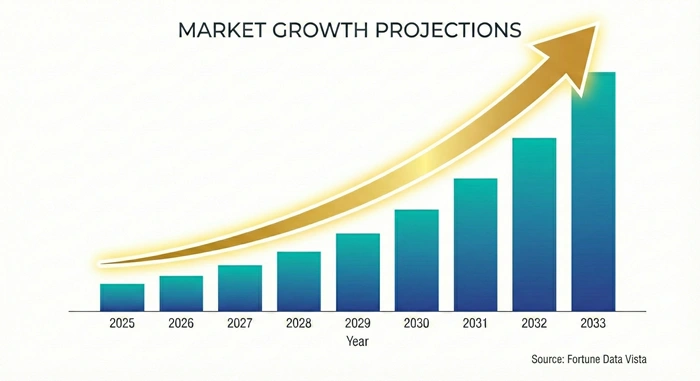
The Cosmetic Surgery Market Is Set for Consistent Double-Digit Growth Through 2033 — Driven by Medical Tourism, Male Aesthetic Demand, and the Global Premiumization of Cosmetic Procedures
The medium-to-long-term outlook for the cosmetic surgery market is strongly positive, with multiple demand trends converging to sustain above-average growth through the forecast period. Medical tourism is playing an increasingly significant role in market expansion, as patients in high-cost healthcare markets such as the United States, the United Kingdom, and Australia travel to destinations including Thailand, Mexico, South Korea, and Brazil to access high-quality cosmetic procedures at a fraction of domestic costs. This cross-border demand dynamic is boosting revenue for clinic operators in medical tourism hubs while simultaneously keeping overall consumer demand elevated globally.
The rapid growth of the male cosmetic surgery segment represents one of the most significant emerging opportunities in the market. Historically dominated by female patients, cosmetic procedures are now being pursued by a growing percentage of male consumers who are increasingly open about their desire for aesthetic improvement in both personal and professional contexts. Procedures including gynecomastia correction, rhinoplasty, eyelid surgery, and Botox injections are recording strong year-on-year growth among male patients across North America, Europe, and Asia Pacific. As gender-related stigmas around male aesthetic procedures continue to dissolve, the male segment is expected to be a meaningful driver of volume and revenue growth for the global cosmetic surgery market through 2033.
Expert Speaks
-
"AbbVie's aesthetics portfolio — anchored by Allergan Aesthetics and the Botox brand — continues to perform exceptionally well as consumer demand for minimally invasive cosmetic procedures grows consistently across global markets. We are investing significantly in next-generation injectable formulations and expanding our commercial presence in emerging markets where aesthetic awareness is accelerating rapidly." — Robert A. Michael, CEO, AbbVie Inc.
-
"At Johnson & Johnson, we see the cosmetic surgery and medical aesthetics space as a high-growth opportunity that aligns perfectly with our MedTech strategy. Our Mentor breast implant platform and our broader aesthetics portfolio are positioned to benefit from both growing consumer demand and continued clinical innovation that is making cosmetic procedures safer and more effective than at any previous point in history." — Joaquin Duato, Chairman & CEO, Johnson & Johnson
-
"Galderma's global growth trajectory in aesthetics reflects a fundamental shift in how consumers think about their appearance and well-being. The demand for our Restylane and Sculptra filler portfolios, combined with the strong performance of our Dysport injectable, confirms that the cosmetic procedures market is expanding consistently across every major geography we serve." — Flemming Ørnskov, CEO, Galderma S.A.
Key Report Takeaways
-
North America dominates the global cosmetic surgery market, holding the largest regional share of approximately 40% in 2025, underpinned by high consumer spending on aesthetic procedures, the presence of world-class cosmetic surgeons, advanced healthcare infrastructure, and the strong commercial footprint of major medical aesthetics companies including AbbVie (Allergan Aesthetics), Cutera, and Cynosure.
-
Asia Pacific is the fastest growing regional market, with South Korea, China, Japan, India, and Thailand collectively driving exceptional demand growth through rising disposable incomes, deep-rooted cultural emphasis on physical appearance, the influence of K-beauty and global social media trends, and a rapidly expanding network of high-quality cosmetic surgery clinics.
-
Female patients represent the dominant consumer segment, accounting for over 85% of global cosmetic surgery market revenue in 2025, as women continue to be the primary demographic seeking both surgical and non-surgical aesthetic enhancement procedures across all geographies and age groups.
-
Non-surgical procedures are the largest revenue-contributing application category, with Botox injections, dermal fillers, and laser skin treatments collectively accounting for the majority of total procedure volume globally, driven by their lower cost, minimal downtime, and growing consumer preference for subtle, natural-looking results over traditional surgical intervention.
-
Cosmetic surgery clinics and medical spas are the most popular end-user setting, commanding the highest patient visit share due to their specialized aesthetic focus, personalized patient experience, competitive pricing relative to hospital settings, and growing availability across suburban and urban markets worldwide.
-
The male aesthetic procedures segment is projected to be the fastest growing demographic category, with an anticipated market share exceeding 20% by 2033 and a CAGR of approximately 12.5% through the forecast period, driven by rapidly dissolving stigmas around male cosmetic enhancement, rising social media engagement among male consumers, and growing corporate and professional incentives for maintained physical appearance.
Market Scope
| Parameter | Details |
|---|---|
| Market Size by 2033 | USD 162.21 Billion | Market Size by 2026 | USD 85.59 Billion | Market Size by 2025 | USD 78.12 Billion | Market Growth Rate from 2026 to 2033 | CAGR of 9.4% | Dominating Region | North America | Fastest Growing Region | Asia Pacific | Segments Covered | Procedure Type, Surgery Type, Gender, Age Group, End User | Regions Covered | North America, Europe, Asia Pacific, Latin America, Middle East & Africa |
Market Dynamics
Drivers Impact Analysis
Rising Aesthetic Awareness, Social Media-Driven Beauty Ideals, and Rapid Advances in Minimally Invasive Technologies Are Collectively Accelerating the Cosmetic Surgery Market
| Driver | ≈ % Impact on CAGR Forecast | Geographic Relevance | Impact Timeline |
|---|---|---|---|
| Social media influence on beauty standards | ~32% | Global — especially North America, Asia Pacific, Europe | Short to Long Term |
| Growing acceptance of cosmetic procedures across demographics | ~28% | North America, Europe, Asia Pacific | Short to Medium Term |
| Technological innovation in non-surgical procedures | ~24% | Global | Medium to Long Term |
| Medical tourism and affordable cosmetic care access | ~16% | Asia Pacific, Latin America, MEA | Medium to Long Term |
Social media's pervasive influence on beauty perception has created a structurally elevated and self-reinforcing demand environment for the cosmetic surgery market. Platforms with billions of active users are continuously presenting highly curated, filtered, and increasingly AI-enhanced images of physical perfection to consumers across every age group and cultural background. This constant visual exposure has normalized cosmetic enhancement as a routine personal care decision rather than an extreme or taboo choice, lowering psychological barriers to seeking consultation and ultimately driving an expanding volume of cosmetic procedure appointments at clinics worldwide.
Simultaneously, rapid technological innovation in minimally invasive and energy-based aesthetic devices is making it possible for cosmetic providers to deliver meaningful improvements in facial and body aesthetics with significantly reduced risk, recovery time, and patient discomfort compared to traditional surgical methods. The FDA approval pipeline for new injectables, laser platforms, ultrasound body contouring devices, and radiofrequency skin tightening technologies continues to be active, consistently introducing new procedural options that attract both first-time patients and existing aesthetic consumers seeking to expand their treatment portfolios. This technology-driven procedural diversification is keeping patient engagement high and supporting sustained revenue growth across the cosmetic surgery market globally.
Restraints Impact Analysis
High Procedural Costs, Risk of Complications, and Regulatory Inconsistencies Across Markets Continue to Constrain Wider Adoption of Cosmetic Surgery Procedures
| Restraint | ≈ % Impact on CAGR Forecast | Geographic Relevance | Impact Timeline |
|---|---|---|---|
| High out-of-pocket cost of surgical procedures | ~38% | Emerging markets, price-sensitive consumers globally | Short to Medium Term |
| Risk of complications and patient safety concerns | ~33% | Global — especially in unregulated markets | Short to Long Term |
| Lack of insurance coverage for elective cosmetic procedures | ~29% | North America, Europe | Medium Term |
The significant out-of-pocket expense associated with cosmetic surgery procedures remains the most powerful barrier to market expansion, particularly in price-sensitive emerging markets across Southeast Asia, Latin America, Africa, and South Asia. Unlike medically necessary healthcare, elective cosmetic procedures are rarely covered by public or private health insurance plans, leaving patients responsible for the full cost of consultation, surgery, anesthesia, and post-operative care. This financial burden limits access to cosmetic procedures among middle and lower-income consumer segments, restricting the total addressable market in regions with lower average disposable incomes.
Patient safety concerns and the risk of complications — ranging from infection and scarring to anesthesia reactions and implant-related issues — continue to deter a meaningful proportion of prospective patients, particularly among those considering their first procedure. High-profile media coverage of botched surgeries and complications from procedures performed in unregulated or informal clinic settings has contributed to persistent anxiety around cosmetic surgery safety standards in certain markets. Regulatory inconsistencies across countries — where some markets have robust licensing, facility accreditation, and product approval frameworks while others operate with minimal oversight — create reputational risks for the broader industry and complicate market expansion in geographies with underdeveloped aesthetic regulatory infrastructure.
Opportunities Impact Analysis
Medical Tourism Expansion, Growing Male Aesthetic Demand, and the Rise of Combination Cosmetic Treatments Represent High-Value Growth Opportunities for the Cosmetic Surgery Market
| Opportunity | ≈ % Impact on CAGR Forecast | Geographic Relevance | Impact Timeline |
|---|---|---|---|
| Medical tourism and cosmetic travel destinations | ~36% | Thailand, Mexico, South Korea, Brazil, Turkey | Medium to Long Term |
| Male cosmetic procedure adoption | ~34% | North America, Europe, Asia Pacific | Short to Long Term |
| Combination treatment and full-facial rejuvenation programs | ~30% | Developed markets globally | Short to Long Term |
Medical tourism dedicated to cosmetic surgery is one of the fastest growing subsectors within the global wellness travel industry, creating a compelling revenue expansion opportunity for cosmetic surgery providers in established medical tourism destinations. Patients from the United States, Canada, the United Kingdom, and Australia are increasingly traveling to South Korea, Thailand, Mexico, Brazil, and Turkey to access board-certified cosmetic surgeons who charge 40–70% less than domestic providers for comparable procedures and facilities. Clinics in these destinations are investing heavily in international marketing, English-language patient coordination services, recovery accommodation partnerships, and internationally recognized accreditation to attract and retain medical tourist patients, generating a virtuous cycle of growth that is expanding the global reach of the cosmetic surgery market.
The systematic expansion of the male aesthetics market represents a second, structurally large opportunity that is still in its early stages of realization. Surveys consistently show that male consumers' openness to cosmetic procedures is growing faster than female openness, driven by changing masculine beauty norms, the influence of male-focused fitness and grooming culture on social media, and growing employer competition in industries where physical presentation is considered professionally relevant. Cosmetic clinic operators and medical device manufacturers who invest in male-specific marketing, procedure customization, and provider training are well-positioned to capture an outsized share of this expanding demographic before it reaches full market maturity.
Segment Analysis
By Procedure Type
Non-Surgical Procedures Lead the Cosmetic Surgery Market in Volume While Surgical Procedures Drive the Majority of Revenue — Creating a Dual-Growth Dynamic That Is Shaping the Industry's Future
Non-surgical procedures hold the largest share in total procedure volume within the cosmetic surgery market, representing approximately 58% of all procedures performed globally in 2025, with a projected CAGR of approximately 10.2% through 2033. The dominance of non-surgical treatments — including Botox, hyaluronic acid fillers, chemical peels, laser resurfacing, and radiofrequency skin tightening — reflects the powerful consumer preference for accessible, affordable, and low-risk aesthetic enhancements that fit easily into busy lifestyles without requiring weeks of downtime. North America is the leading region for non-surgical procedure volume, driven by a highly mature aesthetic consumer base, dense concentration of cosmetic clinics and medical spas, and the widespread availability of FDA-approved injectables and energy-based devices. Key companies dominating the non-surgical segment in this region include AbbVie's Allergan Aesthetics (Botox, Juvederm), Galderma (Restylane, Sculptra, Dysport), and Merz Pharma (Xeomin, Radiesse), all of which invest heavily in continuing medical education and direct-to-consumer marketing to sustain treatment frequency and drive patient retention.
Surgical procedures, while representing a smaller share of total procedure count at approximately 42%, account for the majority of overall revenue within the cosmetic surgery market due to their significantly higher average procedure cost. Procedures including breast augmentation, liposuction, rhinoplasty, abdominoplasty, and blepharoplasty consistently command five-figure fees that generate substantially greater per-procedure revenue than most injectable treatments. Europe is the second-largest market for surgical cosmetic procedures, with the United Kingdom, Germany, France, Spain, and Italy collectively supporting a robust and highly regulated surgical aesthetics industry. Companies including Johnson & Johnson (Mentor implants), Sientra, and Establishment Labs Holdings are the primary competitors in the breast augmentation surgical segment, while diversified medical device players including Stryker and Zimmer Biomet supply the broader surgical procedure equipment and instrument market that supports the global cosmetic surgery industry.
By End User
Cosmetic Surgery Clinics Dominate Patient Volume While Hospitals Remain the Primary Setting for Complex and Revision Surgical Procedures
Cosmetic surgery clinics and medical spas represent the largest end-user segment in the cosmetic surgery market, accounting for approximately 52% of total procedure revenue in 2025 and growing at a CAGR of around 9.8% through 2033. The dominance of this setting reflects consumer preference for the specialized, personalized, and aesthetics-focused care environment that purpose-built cosmetic clinics provide, as well as their typically more accessible pricing and more convenient appointment scheduling compared to hospital-based services. Asia Pacific is the fastest growing region for cosmetic clinic expansion, with South Korea — the world's cosmetic surgery capital by per-capita procedure rate — home to thousands of specialized aesthetic clinics in Seoul's Gangnam district alone. Major clinic chains and aesthetics groups in the region including Hugel, Medytox (South Korea), and Jinbo (China) are rapidly professionalizing the clinical aesthetics market, investing in branded patient experience, technology infrastructure, and international marketing to attract both domestic and medical tourist patients.
Hospitals contribute approximately 31% of total end-user revenue in the cosmetic surgery market, primarily serving patients requiring complex reconstructive and body contouring procedures that demand full surgical facility infrastructure, general anesthesia capabilities, and intensive post-operative monitoring. North America leads hospital-based cosmetic surgery volume, where academic medical centers and large private hospital systems operate dedicated plastic and reconstructive surgery departments staffed by board-certified surgeons who handle both elective cosmetic and medically necessary reconstructive cases. The remaining market share belongs to medical spas and beauty centers, which are the fastest growing sub-segment within the end-user category, driven by the explosive consumer demand for non-surgical body contouring, skin rejuvenation, and wellness-integrated aesthetic services that blur the traditional boundary between healthcare and luxury personal care.
Regional Insights
North America
North America Is the World's Dominant Cosmetic Surgery Market, Powered by High Consumer Spending, Advanced Clinical Infrastructure, and the Presence of the World's Largest Aesthetic Medical Companies
The United States Accounts for Over 90% of North American Revenue, Supported by the Highest Per-Capita Cosmetic Procedure Rate Among Major Developed Economies
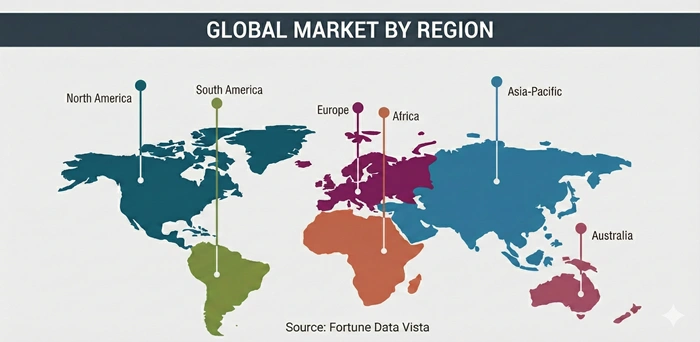
North America holds the largest regional share of the global cosmetic surgery market at approximately 40% of total revenue in 2025, a position of leadership anchored by the United States' unmatched combination of consumer spending power, aesthetic clinical sophistication, and regulatory clarity around cosmetic procedure approvals. The U.S. market benefits from the presence of global aesthetic industry leaders including AbbVie (Allergan Aesthetics), Johnson & Johnson (Mentor), Cutera, Cynosure (Hologic), and Candela Corporation, which collectively invest billions of dollars annually in R&D, clinical training, and market development activities that sustain high procedure volumes and drive continuous procedural innovation. North America is projected to grow at a regional CAGR of approximately 8.8% from 2026 to 2033, reflecting a market that is deepening rather than broadening, with existing aesthetic consumers expanding their treatment portfolios and new consumers entering the market through accessible non-surgical entry points.
Canada is a meaningfully sized secondary market within North America, with a highly cosmetics-aware urban consumer base in cities including Toronto, Vancouver, and Calgary driving consistent demand for both surgical and non-surgical aesthetic procedures. The Canadian cosmetic surgery market is supported by a strong network of board-certified plastic surgeons and dermatologists, and it benefits from the same cultural aesthetic influences — including social media beauty standards and celebrity-driven treatment trends — that shape demand in the U.S. market. Mexico, while serving primarily as a medical tourism destination rather than a domestic consumer market, represents an important part of the North American cosmetic surgery ecosystem, attracting significant inbound patient flows from the United States and Canada seeking high-quality procedures at substantially lower cost in border cities including Tijuana, Monterrey, and Mexico City.
Asia Pacific
Asia Pacific Is the Fastest Growing Regional Market for Cosmetic Surgery, Led by South Korea's Global Aesthetic Dominance and China's Rapidly Expanding Middle-Class Demand
South Korea's K-Beauty Culture, China's Booming Aesthetic Clinic Sector, and India's Rising Disposable Income Are Together Making Asia Pacific the Most Dynamic Cosmetic Surgery Market in the World
Asia Pacific is the fastest growing regional market in the global cosmetic surgery industry, with a projected CAGR of approximately 11.6% from 2026 to 2033, significantly outpacing North America and Europe. The region currently holds approximately 28% of global market share in 2025, driven by South Korea's position as the world's undisputed cosmetic surgery capital — with the highest per-capita procedure rate globally and an internationally recognized aesthetic surgery industry that attracts patients from across Asia, the Middle East, and beyond. South Korean companies including Hugel, Medytox, and Daewoong Pharmaceutical are global leaders in botulinum toxin and dermal filler products, competing directly with Western aesthetic giants in markets across Asia and increasingly in Europe and North America. China represents the largest volume growth opportunity within the region, where a rapidly expanding middle class, surging digital beauty culture, and an estimated 50,000+ licensed cosmetic clinics are collectively driving exceptional demand expansion for both surgical procedures and injectable treatments.
Japan, India, Thailand, and Australia are important secondary contributors to Asia Pacific's cosmetic surgery market growth, each with distinctive demand characteristics that create diverse product and service opportunities for market participants. Japan's sophisticated consumer base favors subtle, natural-looking aesthetic enhancements aligned with cultural preferences for understatement and refinement, driving demand for premium-quality injectables and minimally invasive skin rejuvenation procedures. India's young, digitally engaged, and increasingly brand-aware urban population is fueling rapidly growing demand for entry-level aesthetic procedures including Botox, fillers, and non-surgical nose jobs, supported by a rapidly expanding network of dermatology clinics and aesthetic centers in major metropolitan areas. Thailand combines strong domestic demand with a well-established medical tourism infrastructure that has positioned the country as one of the most competitive cosmetic surgery destinations globally, attracting hundreds of thousands of international patients annually.
Report Customization Available by Region and Country
Maximize Your Competitive Advantage with Our Fully Customized Region-Wise and Country-Wise Cosmetic Surgery Market Reports — Designed to Deliver Precise, Geography-Specific Intelligence for Smarter Business Decisions
This report is available for full customization across all major global regions and individual countries, enabling healthcare providers, medical device manufacturers, clinic operators, investors, and strategic planners to access deeply targeted intelligence specific to the cosmetic surgery market in their geography of interest. Each customized report includes granular country-level market sizing, regulatory landscape analysis, consumer behavior profiling, competitive benchmarking, and opportunity identification tailored to the selected market. Whether you are planning a geographic expansion, evaluating a market entry strategy, or building a country-specific investment case, our customization service ensures your intelligence is as specific and actionable as your business needs demand.
Customized cosmetic surgery market reports are available for all of the following regions and countries, with insights tailored to local regulatory environments, consumer demographics, competitive landscapes, and growth dynamics:
North America
-
U.S. — Largest global cosmetic surgery market analysis, procedure-level volume and revenue data, top clinic and hospital competitive benchmarking, and regulatory framework review (FDA approval pipeline, board certification standards)
-
Canada — Domestic aesthetic market dynamics, medical tourism outflow analysis, top surgeon and clinic competitive mapping, and provincial regulatory environment
-
Mexico — Medical tourism destination analysis, cross-border patient flow data, clinic competitive landscape in border cities, and domestic consumer market development outlook
Europe
-
U.K. — Post-Brexit regulatory landscape for aesthetic devices, top clinic group competitive strategies, NHS vs. private cosmetic market segmentation, and London aesthetic hub market dynamics
-
Germany — Europe's largest aesthetic consumer market analysis, regulatory environment for cosmetic procedures, key clinic and hospital aesthetic department competitive review
-
France — Luxury aesthetic brand positioning, Paris aesthetic market dynamics, leading clinic operator strategies, and regulatory framework for non-surgical procedures
-
Italy — Aesthetic medicine culture and consumer preferences, Milan and Rome market concentration analysis, and domestic vs. imported product demand dynamics
-
Rest of Europe — Spanish, Dutch, and Scandinavian aesthetic market development, Eastern Europe medical tourism opportunity, and regulatory harmonization trends
Asia Pacific
-
China — Rapidly expanding aesthetic clinic market analysis, digital beauty culture demand drivers, regulatory environment for foreign cosmetic device approvals, and key domestic competitor strategies
-
India — Emerging middle-class demand mapping, top metropolitan market analysis, regulatory framework for cosmetic procedures, and clinic sector competitive landscape
-
Japan — Mature aesthetic market segmentation, consumer preference for natural enhancements, and leading domestic and international company strategies
-
South Korea — Global cosmetic surgery capital deep-dive, K-beauty industry linkages, medical tourism patient flow analysis, and leading company competitive profiles
-
Australia — Domestic aesthetic market maturity, medical spa sector growth, regulatory framework, and consumer spending trends in major urban markets
-
Rest of Asia Pacific — Thailand medical tourism opportunity, Southeast Asia market development, and Indonesia, Vietnam, Philippines market entry analysis
Latin America
-
Brazil — World's second-largest cosmetic procedure market, leading surgeon ecosystem, domestic aesthetic culture analysis, and medical tourism inflow dynamics
-
Argentina — Aesthetic procedure adoption trends, economic volatility impact on consumer spending, and medical tourism positioning
-
Rest of Latin America — Colombia, Chile, Mexico cosmetic surgery growth opportunity mapping and regional competitive landscape analysis
Middle East & Africa (MEA)
-
UAE — Premium aesthetic procedure demand, Dubai medical tourism hub analysis, expatriate consumer base profiling, and leading clinic competitive strategies
-
Saudi Arabia — Vision 2030 healthcare expansion impact on aesthetic procedures, growing domestic demand, and regulatory framework for cosmetic surgery practices
-
Rest of MEA — South Africa, Egypt, and Turkey cosmetic surgery market development, medical tourism potential, and regional consumer adoption trends
Top Key Players
-
AbbVie Inc. (Allergan Aesthetics) (United States)
-
Johnson & Johnson (Mentor, Ethicon) (United States)
-
Galderma S.A. (Switzerland)
-
Cutera, Inc. (United States)
-
Cynosure (Hologic, Inc.) (United States)
-
Sientra, Inc. (United States)
-
Establishment Labs Holdings, Inc. (Costa Rica)
-
Merz Pharma GmbH & Co. KGaA (Germany)
-
Candela Medical (United States)
-
Bausch Health Companies Inc. (Canada)
-
Hugel, Inc. (South Korea)
-
Sisram Medical (Alma Lasers) (Israel)
Recent Developments
-
In 2025, AbbVie Inc. (Allergan Aesthetics) received FDA approval for Botox Cosmetic's expanded indication covering chin contouring and neck band improvement, extending the world's best-selling aesthetic injectable into two new high-demand facial areas and significantly broadening its addressable patient population in the U.S. cosmetic surgery market.
-
In 2024, Galderma S.A. completed its initial public offering on the Swiss Exchange (SIX), raising approximately CHF 2.3 billion in one of the largest European healthcare IPOs of the year, proceeds from which are being allocated toward expanding its Restylane and Sculptra filler portfolios and accelerating entry into high-growth Asian markets including China, India, and South Korea.
-
In 2025, Establishment Labs Holdings, Inc. received FDA approval for its Motiva Implants breast augmentation system — ending a decade-long regulatory review — unlocking access to the world's largest cosmetic surgery market and significantly strengthening the company's competitive position against incumbent implant leaders Allergan and Mentor.
-
In 2024, Cynosure (Hologic, Inc.) launched its next-generation PicoSure Pro laser platform for skin rejuvenation and tattoo removal, incorporating advanced pulse modulation technology that delivers measurably superior clinical outcomes for pigmentation correction and skin texture improvement, targeting the rapidly growing medical spa and aesthetic clinic channel across North America and Europe.
-
In 2025, Hugel, Inc. secured regulatory approval for its Letybo botulinum toxin product in multiple new European markets following its earlier U.S. FDA approval, positioning the South Korean injectable manufacturer as the first Asian aesthetic company to achieve major commercial presence in both the U.S. and EU cosmetic injectables markets simultaneously.
Market Trends
Non-Invasive Body Contouring, Prejuvenation Among Younger Consumers, and the Integration of Wellness with Aesthetic Medicine Are the Three Most Impactful Trends Reshaping the Cosmetic Surgery Market
From One-Time Procedures to Ongoing Aesthetic Wellness Journeys — Consumers Are Redefining Their Relationship with Cosmetic Surgery as a Lifestyle Investment Rather Than a Singular Event
Non-invasive and minimally invasive body contouring has emerged as one of the highest-growth procedure categories within the cosmetic surgery market, driven by consumer demand for effective fat reduction and body reshaping solutions that require no surgical incisions, no general anesthesia, and no recovery time. Technologies including cryolipolysis (CoolSculpting), high-intensity focused electromagnetic (HIFEM) muscle stimulation (Emsculpt), and radiofrequency fat reduction (Morpheus8, Exilis) are recording exceptional adoption rates in cosmetic clinics and medical spas globally, attracting a new population of body-conscious consumers who might never seek traditional liposuction but are highly receptive to these lower-risk, lunch-break-friendly alternatives. Device manufacturers are continuously upgrading their platforms to improve treatment speed, comfort, and clinical efficacy, sustaining strong commercial momentum in this rapidly innovating segment.
The "prejuvenation" trend — where younger consumers in their 20s and early 30s begin preventive aesthetic treatments to slow the visible signs of aging before they fully appear — is fundamentally reshaping the age demographics of the cosmetic surgery market and extending the lifetime value of aesthetic patients. This cohort, deeply influenced by beauty content on TikTok and Instagram, is entering the cosmetic treatment ecosystem earlier than any previous generation, often beginning with Botox "baby doses," skin boosters, and preventive laser treatments before graduating to more advanced procedures as they age. This demographic shift is not only expanding total procedure volume but is also building a generation of aesthetically engaged consumers with strong brand loyalty and high treatment frequency — a development that has profound positive implications for the long-term commercial outlook of the global cosmetic surgery industry.
Segments Covered in the Report
-
By Procedure Type
-
Surgical Procedures
-
Non-Surgical Procedures
-
-
By Surgery Type
-
Breast Augmentation
-
Liposuction
-
Rhinoplasty
-
Eyelid Surgery (Blepharoplasty)
-
Abdominoplasty (Tummy Tuck)
-
Others (Facelift, Breast Lift, Hair Transplant)
-
-
By Gender
-
Female
-
Male
-
-
By Age Group
-
18–34 Years
-
35–50 Years
-
51 Years and Above
-
-
By End User
-
Hospitals
-
Cosmetic Surgery Clinics
-
Medical Spas and Beauty Centers
-
-
By Region
-
North America (U.S., Canada, Mexico)
-
Europe (U.K., Germany, France, Italy, Rest of Europe)
-
Asia Pacific (China, India, Japan, South Korea, Australia, Rest of Asia Pacific)
-
Latin America (Brazil, Argentina, Rest of Latin America)
-
Middle East & Africa (UAE, Saudi Arabia, Rest of MEA)
-
❝ Built for Every Level — From Startups to Industry Giants ❞
Here Is Exactly How This Report Works for You
-
For Tier 1 medical device manufacturers, global aesthetics companies, and institutional investors, this report provides a comprehensive competitor revenue analysis covering product-level revenue contributions, geographic market share breakdowns, and a detailed assessment of how geopolitical factors — including regulatory approval timelines, cross-border trade policies on medical devices, and healthcare reimbursement dynamics — are impacting strategic investment decisions and M&A activity in the global cosmetic surgery market.
-
For Tier 2 and Tier 3 clinic operators, regional aesthetics brands, and medical device distributors, the supply-demand dynamics section of this report delivers granular insight into procedure volume trends, device procurement cost pressures, and regional demand-supply imbalances that are directly influencing clinic expansion decisions, product portfolio selection, and pricing strategies — giving your commercial and operational teams a measurable competitive advantage.
-
For startups, medical aesthetics innovators, and new market entrants, this report maps the highest-growth procedure categories, underserved geographic markets, and demographic opportunity segments within the cosmetic surgery market — alongside M&A and partnership activity trends among leading players — providing the evidence base and strategic framework needed to build a compelling investor pitch, identify strategic partners, and execute a differentiated market entry strategy in this high-growth global industry.
Frequently Asked Questions:
Answer: The global cosmetic surgery market was valued at USD 78.12 billion in 2025 and is projected to reach USD 162.21 billion by 2033. It is expected to grow at a CAGR of 9.4% from 2026 to 2033.
Answer: The cosmetic surgery market is primarily driven by increasing social media influence on beauty standards, growing consumer acceptance of aesthetic procedures across all age groups and genders, and rapid technological innovation in minimally invasive treatments. Rising disposable incomes in emerging markets and expanding medical tourism are further contributing to sustained global demand growth.
Answer: North America dominates the global cosmetic surgery market, accounting for approximately 40% of total revenue in 2025. The region's leadership is supported by high consumer spending on aesthetic procedures, a dense concentration of world-class cosmetic surgeons and clinics, and the strong commercial presence of global aesthetic companies including AbbVie, Johnson & Johnson, and Galderma.
Answer: Yes — the male segment is one of the fastest growing demographic categories in the cosmetic surgery market, driven by dissolving social stigmas around male aesthetic enhancement and rising social media engagement among male consumers. Procedures including Botox, rhinoplasty, gynecomastia correction, and eyelid surgery are recording consistent year-on-year growth among male patients across North America, Europe, and Asia Pacific.
Answer: The global cosmetic surgery market is led by AbbVie Inc. (Allergan Aesthetics), Johnson & Johnson (Mentor), Galderma, Merz Pharma, Cutera, Cynosure (Hologic), and Hugel, among others. These companies compete through continuous product innovation, geographic expansion, and strategic partnerships to strengthen their positions across both the surgical and non-surgical segments of the global aesthetic industry.