
Dairy Processing Equipment Market Overview
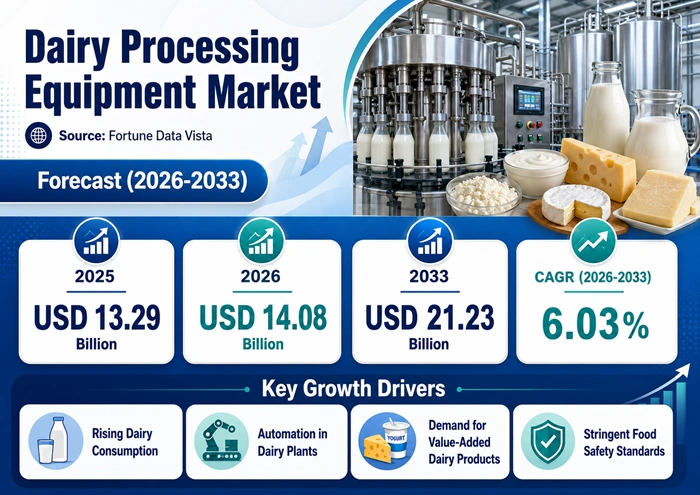
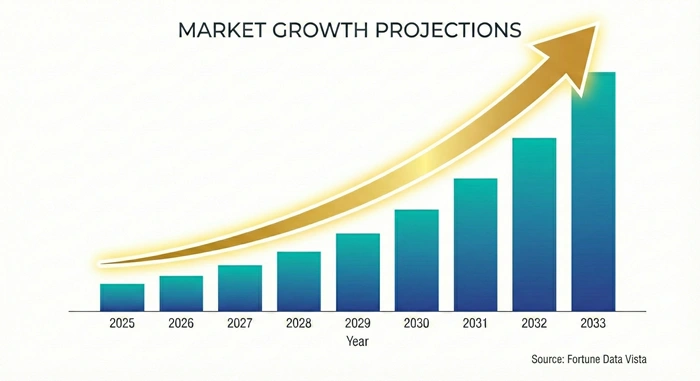
The global dairy processing equipment market size is valued at USD 13.29 billion in 2025 and is predicted to increase from USD 14.08 billion in 2026 to approximately USD 21.23 billion by 2033, growing at a CAGR of 6.03% from 2026 to 2033.
Dairy processing equipment encompasses a broad range of machinery — including pasteurizers, homogenizers, separators, evaporators, and membrane filtration systems — used to transform raw milk into consumable dairy products at industrial scale. Rising global dairy product consumption, accelerating automation and energy efficiency demands from large-scale dairy processors, expanding functional and fortified dairy product categories, and robust investment in dairy infrastructure across emerging economies are all driving consistent revenue expansion in the milk processing equipment sector throughout the forecast period.
AI Impact on the Dairy Processing Equipment Industry
AI-Powered Predictive Maintenance, Automated Quality Control, and Smart Process Optimization Are Transforming the Dairy Processing Equipment Market from Mechanized Production into an Intelligent, Self-Optimizing Manufacturing Ecosystem
Artificial intelligence is making a tangible commercial impact across the dairy processing equipment market by enabling manufacturers and dairy processors to move from reactive to predictive maintenance models. AI-powered condition monitoring systems — using vibration sensors, thermal imaging, and machine learning algorithms trained on equipment failure datasets — can predict mechanical degradation in pasteurizers, separators, and homogenizers days or weeks before failure occurs. This capability allows dairy processing plants to schedule maintenance during planned downtime rather than responding to unexpected breakdowns — reducing unplanned production stoppages that cost major dairy processors millions of dollars annually in lost throughput and product waste.
Beyond maintenance, AI is enabling real-time process optimization in dairy manufacturing lines. Computer vision systems integrated into filling, packaging, and quality inspection stations can detect product defects, contamination indicators, and packaging inconsistencies at line speeds that human inspectors cannot match. Equipment manufacturers including GEA Group, Tetra Pak, and Alfa Laval are actively integrating IoT sensors, digital twin platforms, and AI-driven process control software into their equipment lines — transforming standalone dairy machines into connected components of intelligent manufacturing systems that continuously self-optimize for yield, energy efficiency, and food safety compliance.
Growth Factors
Rising Global Dairy Product Consumption in Emerging Markets and the Accelerating Industry-Wide Shift Toward Automated Energy-Efficient Processing Lines Are the Two Strongest Structural Growth Drivers in the Dairy Processing Equipment Market
Rising dairy product consumption across Asia Pacific, Latin America, and the Middle East is the most commercially powerful structural demand driver in the dairy processing equipment market. Growing middle-class populations in China, India, Indonesia, and Brazil are increasing per-capita dairy consumption as incomes rise and dietary patterns shift toward protein-rich foods — driving investment in new dairy processing capacity across both government-supported cooperative dairy systems and rapidly expanding private dairy company networks. Each new dairy processing plant and every capacity expansion project at an existing facility generates direct equipment procurement demand — making rising consumption volumes the most reliable predictor of dairy machinery capital expenditure.
The accelerating industry-wide transition toward automated, energy-efficient processing lines is the second major structural driver reshaping equipment procurement decisions globally. Dairy processors facing rising energy costs, stricter food safety regulations, labor cost pressures, and sustainability reporting requirements are replacing aging semi-automated or manually intensive equipment lines with fully automated systems that deliver higher throughput, more consistent product quality, lower per-unit energy consumption, and full process data traceability. Equipment suppliers that can offer turnkey automated processing lines with integrated energy recovery systems, CIP (clean-in-place) automation, and digital process monitoring are commanding premium pricing and growing order volumes from both greenfield dairy plant projects and the modernization programs that established dairy processors are running across their aging equipment fleets.
Market Outlook
The Dairy Processing Equipment Market Outlook Through 2033 Is Defined by Cheese and Protein Processing Capacity Expansion, Sustainability-Driven Equipment Upgrades, and Emerging Market Greenfield Investment Creating Large Capital Equipment Demand
The cheese segment's rapid demand growth is creating one of the most commercially significant near-term equipment investment cycles within the dairy processing equipment market. Global cheese consumption is expanding at approximately 3–4% annually — driven by growing western food culture adoption in Asia and the Middle East, expanding foodservice applications, and the surging demand for specialty and artisanal cheese varieties. Each new or expanded cheese production facility requires dedicated curdling, pressing, brining, and aging equipment — creating high-value, complex equipment orders that represent some of the largest individual capital expenditure commitments in the dairy machinery sector.
Sustainability mandates from both regulatory bodies and major food retail customers are driving a significant equipment upgrade cycle in established dairy processing markets across Europe and North America. EU Green Deal requirements for dairy sector carbon footprint reduction, retailer sustainability sourcing standards, and corporate net-zero commitments are compelling dairy processors to invest in heat recovery systems, water recycling technologies, and energy-optimized processing lines that reduce the environmental footprint of dairy manufacturing operations. Equipment manufacturers that can offer certified energy-efficient processing solutions with quantified sustainability credentials — including lifecycle carbon calculations and water usage reduction guarantees — are gaining competitive advantage in equipment replacement cycles across the European and North American market segments that are most actively responding to sustainability-driven procurement criteria.
Expert Speaks
-
"The dairy processing industry is at an inflection point where automation, digitalization, and sustainability are no longer optional upgrades — they are the baseline expectations of dairy processors competing in global markets. Our investment in intelligent processing solutions, predictive maintenance platforms, and energy recovery systems reflects our commitment to helping dairy manufacturers achieve the productivity, food safety, and environmental performance standards that their customers and regulators now demand." — CEO, GEA Group AG
-
"Global dairy consumption continues to grow, particularly in Asia Pacific and Africa, where rising incomes and urbanization are driving strong demand for pasteurized milk, yogurt, and cheese products. The infrastructure investment required to serve this growing demand represents one of the most significant capital equipment procurement cycles in the history of the dairy processing equipment industry — and companies that can deliver complete processing solutions with proven technology, local service capability, and financing flexibility will be best positioned to capture this opportunity." — CEO, Tetra Pak International SA
-
"We see strong momentum in the dairy sector globally — from large-scale cooperative dairy processors in Europe modernizing aging equipment fleets to ambitious greenfield dairy investment programs across South and Southeast Asia. The convergence of food safety standards globalization, sustainability requirements, and automation adoption is creating a consistent multi-year equipment replacement and expansion demand cycle that provides a solid commercial foundation for sustained growth in our dairy processing solutions business." — CEO, Alfa Laval AB
Key Report Takeaways
-
Europe leads the global dairy processing equipment market with approximately 28–29% revenue share in 2025, supported by the world's highest concentration of advanced dairy processing infrastructure including major dairy cooperative networks in Germany, France, Netherlands, and Denmark, strong regulatory standards driving continuous equipment modernization, and the commanding commercial presence of leading equipment manufacturers GEA Group, Alfa Laval, and Tetra Pak that are headquartered or have major operations within the region
-
Asia Pacific is the fastest-growing regional market, projected to expand at approximately 7.14% CAGR through 2033, driven by rapidly expanding dairy consumption in China and India fueling greenfield dairy plant construction, government investment programs supporting dairy cooperative modernization, growing cold chain infrastructure development enabling pasteurized milk distribution to rural populations, and the active expansion of global dairy equipment manufacturers establishing local manufacturing and service capabilities in key regional markets
-
Pasteurizers lead the equipment type segment with approximately 29–30% revenue share in 2025, reflecting their essential role as the entry-point processing step in every dairy manufacturing operation — while homogenizers are the fastest-growing equipment type at approximately 7.34% CAGR, driven by rising demand for consistent-texture dairy products, expanding functional dairy beverage categories, and the growing adoption of high-pressure homogenization technology in premium dairy product manufacturing
-
Automatic operation systems dominate with approximately 59–60% revenue share in 2025, driven by large-scale dairy processor preference for fully automated lines that deliver consistent throughput, reduced labor costs, and complete process data traceability required by food safety management systems — while automatic systems are also the fastest-growing operation type at approximately 6.88% CAGR as semi-automatic and manual equipment operators upgrade to fully automated configurations during equipment replacement cycles
-
Processed milk leads the application segment with approximately 30–31% revenue share in 2025, reflecting milk pasteurization and packaging as the highest-volume dairy processing operation globally — while the cheese segment is the fastest-growing application at approximately 7.63% CAGR, driven by rising global cheese consumption, expanding specialty cheese categories, and significant new cheese processing capacity investment across the United States, Europe, and emerging markets in Asia Pacific and the Middle East
-
Dairy processing plants lead the end-user segment with approximately 68–69% revenue share in 2025, as large-scale industrial dairy processors represent both the highest-value equipment buyers and the primary commercial target for complete processing line solutions from major equipment manufacturers — with the dairy farms segment growing fastest as on-farm milk processing and farm-to-table direct sales concepts expand across Europe and North America, driving small-scale pasteurizer and separator equipment demand
Market Scope
| Parameter | Details |
|---|---|
| Market Size by 2033 | USD 21.23 Billion | Market Size by 2026 | USD 14.08 Billion | Market Size by 2025 | USD 13.29 Billion | Market Growth Rate from 2026 to 2033 | CAGR of 6.03% | Dominating Region | Europe | Fastest Growing Region | Asia Pacific | Segments Covered | Equipment Type, Operation, Application, End User, Region | Regions Covered | North America, Europe, Asia Pacific, Latin America, Middle East & Africa |
Market Dynamics
Drivers Impact Analysis
Rising Dairy Product Demand in Emerging Economies Driving Greenfield Processing Plant Construction and Food Safety Regulatory Pressure Accelerating Equipment Modernization Are the Two Strongest Growth Catalysts in the Dairy Processing Equipment Market
| Driver | ≈ % Impact on CAGR Forecast | Geographic Relevance | Impact Timeline |
|---|---|---|---|
| Rising dairy consumption in emerging markets driving new processing capacity | ~33% | Asia Pacific, Latin America, MEA | Long-term |
| Food safety regulations driving equipment modernization and compliance upgrades | ~27% | Europe, North America, Asia Pacific | Medium to long-term |
| Automation and labor cost reduction driving equipment replacement cycles | ~22% | Global, strongest in North America and Europe | Medium to long-term |
| Cheese and protein ingredient segment capacity expansion | ~12% | Europe, North America, Asia Pacific | Short to medium-term |
| Sustainability mandates driving energy-efficient equipment investment | ~6% | Europe, North America | Medium to long-term |
The emerging market demand driver creates large, discrete capital equipment procurement events — when a new dairy cooperative or private dairy company constructs a new processing plant in India, China, or Brazil, it generates a multi-million dollar equipment order spanning pasteurizers, separators, homogenizers, evaporators, and packaging systems. These greenfield orders represent among the most commercially significant individual transactions in the dairy processing equipment market and are growing in frequency as economic development and dairy consumption growth in the world's most populous nations accelerate investment in domestic dairy processing infrastructure. Government investment programs — including India's National Dairy Development Board programs and China's dairy industry modernization initiatives — are providing financing support that makes large processing plant construction viable for cooperative dairy organizations that could not otherwise fund such capital projects independently.
Food safety and hygiene regulations — including the EU's stringent dairy processing equipment standards, FDA's modernized food safety regulations in the United States, and rapidly tightening food safety frameworks across Asia Pacific and Latin American markets — are creating a non-discretionary equipment modernization cycle that operates independently of market growth conditions. Dairy processors with aging equipment that does not meet current CIP (clean-in-place) standards, temperature control precision requirements, or hygienic design specifications must upgrade or replace non-compliant machinery to maintain their operating licenses and supply agreements with major retail and foodservice customers that conduct supplier audits against international food safety standards. This regulatory compliance-driven replacement demand represents a structurally reliable market segment that provides commercial floor support for dairy equipment manufacturers even in periods when new construction activity is cyclically subdued.
Restraints Impact Analysis
High Capital Equipment Costs Limiting Investment in Price-Sensitive Markets and Skilled Technician Shortages Constraining Equipment Installation and Maintenance Are the Two Primary Barriers in the Dairy Processing Equipment Market
| Restraint | ≈ % Impact on CAGR Forecast | Geographic Relevance | Impact Timeline |
|---|---|---|---|
| High capital cost of complete processing line installations | ~38% | Emerging markets, Small and medium dairy operators | Medium to long-term |
| Skilled technician shortage for equipment installation and maintenance | ~30% | Emerging markets, Rural regions globally | Long-term |
| Resistance to adopting new technologies in established dairy operations | ~20% | Global | Short to medium-term |
| Volatile raw milk supply affecting processing plant utilization | ~12% | Global, highest in climate-vulnerable regions | Medium to long-term |
The capital cost of installing a complete modern dairy processing line — ranging from USD 5 million for a small-scale pasteurization and packaging facility to USD 50–100 million or more for a large-scale integrated dairy plant — represents a significant financial barrier for small and medium dairy operators in both emerging and developed markets. Even with equipment financing options, the debt service burden and payback period calculations can deter investment from dairy cooperatives and independent processors operating on thin margins in competitive dairy commodity markets. Equipment manufacturers including GEA Group and Tetra Pak have developed modular, scalable processing solutions specifically designed to allow smaller operators to start with essential capacity and expand incrementally — a commercial approach that addresses the affordability barrier by reducing the initial capital commitment required to access modern processing technology.
The shortage of technicians with specialized skills in dairy equipment installation, commissioning, calibration, and maintenance is a persistent operational constraint that limits both the speed of market expansion and the effective utilization of installed dairy processing infrastructure in emerging economies. Countries experiencing rapid dairy industry growth — including Vietnam, Ethiopia, and parts of South Asia — often lack the local engineering and technical workforce depth needed to support complex automated dairy equipment operations without reliance on expensive international technical support from equipment manufacturers. This skills gap increases the total cost of ownership for advanced processing equipment and can discourage purchases of the most technically sophisticated systems in favor of simpler, more locally maintainable alternatives — dampening the per-unit value of equipment sold in high-growth emerging markets.
Opportunities Impact Analysis
Membrane Filtration Technology Adoption for High-Value Protein Ingredient Production and Energy Recovery System Integration Creating Sustainability ROI Are the Two Highest-Value Growth Opportunities
| Opportunity | ≈ % Impact on CAGR Forecast | Geographic Relevance | Impact Timeline |
|---|---|---|---|
| Membrane filtration for protein concentration and specialty ingredient production | ~44% | North America, Europe, Australia, New Zealand | Medium to long-term |
| Energy recovery and sustainability-optimized processing line investment | ~36% | Europe, North America | Medium to long-term |
| Emerging market dairy infrastructure greenfield and modernization investment | ~20% | Asia Pacific, Latin America, MEA | Long-term |
Membrane filtration equipment — including ultrafiltration, microfiltration, and nanofiltration systems — represents one of the highest-value growth opportunities in the dairy processing equipment market because it enables dairy processors to produce high-margin protein concentrate, whey protein isolate, lactose-reduced, and specialty ingredient products that command significantly higher price realizations than commodity fluid milk or standard dairy product categories. The global sports nutrition and functional food markets are driving explosive demand for high-purity whey and casein protein ingredients — which require sophisticated membrane filtration processing to achieve the protein concentration levels and purity specifications demanded by supplement manufacturers. Equipment manufacturers including Alfa Laval, GEA Group, and Pall Corporation are among those developing advanced membrane filtration systems specifically engineered for dairy protein concentration applications — a high-value, technically sophisticated market segment where solution capability commands premium equipment pricing.
Energy recovery system integration represents the parallel commercial opportunity that is creating compelling ROI calculations for dairy processors undertaking equipment replacement cycles in energy-cost-sensitive markets. Modern heat recovery systems for pasteurization processes can recover 90–95% of the thermal energy from hot outgoing product to pre-heat incoming cold milk — reducing energy consumption per liter of milk processed by 40–60% compared to systems without heat recovery. For large-scale dairy plants processing 500,000 to 1 million liters of milk daily, these energy savings translate into annual utility cost reductions of hundreds of thousands of dollars — creating measurable, quantifiable payback periods that make energy-efficient equipment investment commercially straightforward to justify. Equipment manufacturers that can document these energy performance guarantees with independently verified operational data are gaining decisive competitive advantages in procurement evaluations at energy-cost-conscious dairy processors across Europe and North America.
Segment Analysis
By Equipment Type
Pasteurizers Lead with Over 29% Revenue Share While Homogenizers Are the Fastest-Growing Equipment Type at 7.34% CAGR as Premium Dairy Product Manufacturing Adoption Accelerates in the Dairy Processing Equipment Market
Pasteurizers hold the leading equipment type position in the dairy processing equipment market, accounting for approximately 29–30% of total equipment type revenue in 2025. Their dominance reflects the fundamental role of pasteurization as the mandatory first processing step in every dairy production operation — required by food safety regulations across virtually all global markets for all commercially produced fluid milk and a wide range of dairy product categories. Europe is the largest regional market for pasteurization equipment, where premium-specification high-temperature short-time (HTST) and ultra-high-temperature (UHT) pasteurization systems from leading manufacturers including GEA Group, Tetra Pak, and Alfa Laval serve the world's most technically demanding dairy cooperative and processor operations.
Homogenizers are growing at the fastest CAGR of approximately 7.34% within the equipment type segment through 2033, driven by rising consumer demand for smooth-texture dairy beverages, expanding functional dairy product categories, and the growing adoption of high-pressure homogenization technology for premium dairy applications. Asia Pacific is the fastest-growing region for homogenizer adoption, where rapidly expanding dairy beverage consumption in China, India, and Southeast Asia is driving investment in homogenization equipment at new and expanding dairy processing plants across the region. Companies including GEA Group, Tetra Pak, and SPX Flow are actively competing for homogenizer supply contracts at major dairy capacity expansion projects in China and India — leveraging their global technology leadership, local service infrastructure, and established relationships with both domestic and multinational dairy processor customers operating in these high-growth markets.
By Application
Processed Milk Leads with Over 30% Application Revenue Share While Cheese Is the Fastest-Growing Application at 7.63% CAGR as Global Consumption Expansion Drives New Processing Capacity Investment in the Dairy Processing Equipment Market
Processed milk holds the commanding application revenue position in the dairy processing equipment market at approximately 30–31% of total application revenue in 2025. As the highest-volume dairy product category globally — consumed across every demographic, geography, and income level — fluid milk processing represents the backbone of dairy plant operations worldwide and the largest single source of continuous equipment utilization across the global dairy processing industry. North America and Europe are the dominant processed milk equipment markets, where large-scale dairy cooperative and processor operations running continuous high-volume milk processing lines require frequent equipment maintenance, replacement, and capacity expansion investments to maintain operational reliability and regulatory compliance.
Cheese processing is growing at the fastest CAGR of approximately 7.63% within the application segment through 2033, driven by global cheese consumption expansion at approximately 3–4% annually across both established Western markets and rapidly developing Asian and Middle Eastern consumer markets. The United States leads global cheese production capacity investment, where major dairy processors including Dairy Farmers of America and Land O'Lakes are investing in new and expanded cheese manufacturing facilities to meet growing domestic and export demand. Europe remains the world's leading cheese producing and exporting region, with companies including Arla Foods, Fonterra, and FrieslandCampina continuously upgrading their cheese processing equipment to accommodate new specialty cheese varieties, automation requirements, and energy efficiency standards that drive ongoing equipment procurement in this high-value dairy product category.
Regional Insights
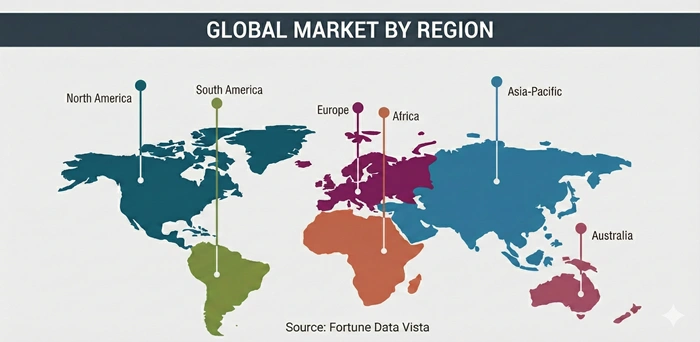
Europe
Europe Commands Approximately 28–29% of Global Dairy Processing Equipment Revenue, Anchored by Advanced Dairy Cooperative Infrastructure, Strict Food Safety Standards, and the Headquarters Presence of GEA Group, Alfa Laval, and Tetra Pak
Europe holds approximately 28–29% of global dairy processing equipment market revenue in 2025, growing at a regional CAGR of approximately 5.46% through the forecast period. The region benefits from the world's most advanced dairy processing industry infrastructure — centered on major cooperative dairy networks in Germany, France, the Netherlands, Denmark, and Ireland — that continuously invests in equipment modernization, energy efficiency upgrades, and capacity expansion to maintain global competitiveness in dairy exports. GEA Group (Germany), Alfa Laval (Sweden), and Tetra Pak (Switzerland/Sweden) — three of the world's four largest dairy equipment manufacturers — are headquartered in Europe, creating a uniquely concentrated center of dairy processing technology innovation, application engineering expertise, and equipment manufacturing capability.
EU food safety regulations, environmental compliance requirements, and corporate sustainability commitments are creating a sustained equipment replacement cycle across European dairy processing operations. The mandatory transition to energy-efficient processing systems, clean-in-place automation upgrades, and digital process monitoring implementations required by EU regulatory frameworks and major retail customer sustainability audits is generating consistent aftermarket equipment demand in addition to new capacity investment. Countries including Germany, France, and the Netherlands represent the most active European equipment procurement markets, where the combination of large dairy cooperative scale, regulatory compliance investment cycles, and continuous modernization programs makes them among the world's most commercially valuable individual country markets for dairy machinery manufacturers.
Asia Pacific
Asia Pacific Is the Fastest-Growing Region in the Dairy Processing Equipment Market at 7.14% CAGR, Driven by China and India's Dairy Consumption Growth, Government Investment Programs, and Greenfield Processing Plant Construction
Asia Pacific is projected to grow at the highest regional CAGR of approximately 7.14% through 2033 within the dairy processing equipment market, establishing it as the most commercially dynamic growth region for dairy machinery globally. China is the largest individual country growth opportunity, where government-supported dairy industry development programs, rapidly expanding private dairy company networks including Mengniu, Yili, and Bright Dairy, and a large middle-class population increasing dairy consumption are driving continuous investment in new and expanded dairy processing capacity. India's dairy sector — anchored by major cooperative networks including Amul (GCMMF) and Nandini — represents one of the world's largest and most rapidly modernizing dairy industries, with government support through the National Dairy Development Board and Animal Husbandry Infrastructure Development Fund financing equipment procurement at both cooperative and private sector dairy processors.
Japanese and Australian dairy markets represent mature, quality-focused segments within the Asia Pacific region, where premium-specification processing equipment from GEA Group, Tetra Pak, and Alfa Laval serves technically demanding dairy processor operations. South Korea's dairy industry is undergoing active modernization driven by rising premium dairy product consumption and food safety regulatory updates. Southeast Asian markets including Vietnam, Indonesia, and Thailand are at earlier stages of dairy industry development but are experiencing the fastest individual growth rates within the region as urbanization, income growth, and cold chain infrastructure development create the commercial conditions for rapid dairy consumption and processing capacity expansion that are generating growing equipment procurement opportunities for international and regional dairy machinery suppliers.
Customization Available for This Report
This report offers comprehensive region-wise and country-wise customization, providing tailored market intelligence on dairy processing equipment demand dynamics, food safety regulatory frameworks, dairy industry investment programs, competitive landscape analysis, and technology adoption trends specifically aligned to your selected geography and market focus.
Customized versions of this report are available for each region and country listed below, offering detailed insights for dairy equipment manufacturers, dairy processors, food industry investors, and agricultural infrastructure planners:
North America
-
U.S. — FDA food safety regulatory framework, dairy cooperative and processor equipment investment analysis, cheese capacity expansion trends, competitive vendor landscape, and market opportunity assessment
-
Canada — CFIA regulatory standards, Canadian dairy cooperative equipment investment patterns, supply management system impact on processing capacity, and competitive market dynamics
-
Mexico — COFEPRIS regulatory requirements, dairy industry modernization trends, IMSS and private sector dairy investment, and market entry opportunity assessment
Europe
-
U.K. — FSA regulatory standards, post-Brexit dairy export infrastructure investment impact, major cooperative equipment procurement trends, and competitive market landscape
-
Germany — BfR food safety regulatory framework, leading cooperative dairy equipment investment analysis, sustainability-driven modernization cycles, and competitive vendor analysis
-
France — ANSES regulatory standards, French dairy cooperative network equipment investment patterns, cheese processing capacity expansion, and competitive market analysis
-
Italy — Minstero della Salute regulatory framework, specialty cheese processing equipment demand, PDO product manufacturing compliance investment, and market dynamics
-
Rest of Europe — Eastern European dairy investment programs, EU Common Agricultural Policy impact on dairy infrastructure, and emerging equipment market opportunity analysis
Asia Pacific
-
China — SAMR food safety regulatory framework, major dairy company equipment investment analysis, domestic vs. international equipment supplier dynamics, and growth opportunity assessment
-
India — FSSAI regulatory standards, NDDB and AHIDF investment program analysis, cooperative vs. private dairy processor equipment demand, and market opportunity assessment
-
Japan — MHLW regulatory standards, premium dairy processing equipment adoption, automation investment trends, and competitive market landscape
-
South Korea — MFDS regulatory framework, dairy modernization investment trends, competitive market dynamics, and growth opportunity analysis
-
Australia — FSANZ regulatory standards, export-oriented dairy processing investment, sustainability-driven equipment upgrades, and competitive market landscape
-
Rest of Asia Pacific — Country-level dairy processing equipment analysis for Vietnam, Indonesia, Thailand, and Malaysia
Latin America
-
Brazil — MAPA regulatory framework, major dairy cooperative and processor equipment investment, private sector dairy expansion, and market opportunity assessment
-
Argentina — SENASA regulatory standards, dairy export-oriented processing investment, market development trends, and commercial opportunity analysis
-
Rest of Latin America — Colombia, Chile, Peru dairy industry investment programs and emerging processing equipment market opportunity analysis
Middle East & Africa
-
UAE — food safety regulatory standards, imported dairy processing technology adoption, halal dairy manufacturing compliance equipment, and competitive market landscape
-
Saudi Arabia — SFDA regulatory requirements, Vision 2030 food self-sufficiency investment programs, major dairy producer equipment procurement, and market opportunity analysis
-
Rest of MEA — Sub-Saharan Africa dairy infrastructure investment, GCC dairy capacity expansion programs, and emerging dairy processing equipment market opportunity analysis
Top Key Players
-
GEA Group AG (Germany)
-
Tetra Pak International SA (Switzerland / Sweden)
-
Alfa Laval AB (Sweden)
-
SPX Flow Inc. (United States)
-
JBT Corporation (United States)
-
Bühler Group (Switzerland)
-
Krones AG (Germany)
-
Pall Corporation — Danaher (United States)
-
IDMC Limited — NDDB (India)
-
Shanghai Triowin Intelligent Machinery Co. Ltd. (China)
-
Feldmeier Equipment Inc. (United States)
-
Paul Mueller Company (United States)
-
Scherjon Dairy Equipment Holland BV (Netherlands)
-
Voran Maschinen GmbH (Austria)
-
Relco LLC (United States)
Recent Developments
-
In April 2026, GEA Group AG announced the launch of its next-generation GEA InsightPartner digital platform — an AI-powered predictive maintenance and process optimization service that integrates sensor data from installed dairy processing equipment to predict maintenance needs and optimize production parameters in real time, with the platform already deployed at pilot dairy processing sites across Germany, the Netherlands, and the United States
-
In February 2026, Tetra Pak International SA unveiled its upgraded Tetra Pak Dairy Automation Suite — a fully integrated line control and data management system covering milk reception, pasteurization, separation, standardization, and packaging operations — designed to help large-scale dairy processors achieve full process transparency, automated regulatory compliance documentation, and measurable energy consumption reductions across their complete processing lines
-
In November 2025, Alfa Laval AB completed the acquisition of a leading European membrane filtration technology specialist, significantly expanding its dairy protein concentration and whey processing equipment portfolio — with the acquisition targeting the rapidly growing high-value dairy protein ingredient segment where membrane filtration technology commands premium pricing and where Alfa Laval sought to deepen its engineering and application expertise
-
In September 2025, SPX Flow Inc. announced a major contract win with a leading Indian dairy cooperative to supply a complete processing line for a new greenfield dairy plant in Rajasthan — including pasteurization, homogenization, separation, and UHT processing equipment — representing one of the largest individual dairy equipment contracts awarded in the Indian market and reflecting the accelerating private and cooperative sector investment in dairy processing capacity
-
In July 2025, Krones AG expanded its dairy equipment service center network in Southeast Asia with the opening of a new regional technical service hub in Vietnam — enabling faster spare parts delivery, local commissioning support, and technician training for dairy processors across Vietnam, Thailand, and Indonesia who are operating Krones filling and processing systems within the region's rapidly expanding dairy manufacturing sector
Market Trends
Two Major Trends Are Redefining the Dairy Processing Equipment Market: The Integration of Complete Digital Processing Line Ecosystems Replacing Standalone Equipment Procurement and the Adoption of Sustainability-Certified Energy-Efficient Systems as a Core Procurement Criterion
The integration of complete digital processing line ecosystems is reshaping how dairy processors evaluate and purchase equipment. Rather than procuring individual pieces of machinery from multiple specialized vendors and integrating them independently, large dairy processors are increasingly preferring single-vendor or tightly integrated multi-vendor complete processing line solutions that come with unified digital control platforms, standardized data interfaces, and integrated process monitoring. Manufacturers including GEA Group, Tetra Pak, and Alfa Laval are positioning themselves as complete dairy processing solution providers rather than individual equipment suppliers — offering end-to-end line design, equipment supply, installation, commissioning, digital monitoring platform deployment, and long-term service agreements as integrated commercial propositions.
The adoption of sustainability-certified, energy-efficient processing systems as a core procurement criterion — rather than a secondary consideration — is the second major trend transforming purchasing dynamics in the dairy processing equipment market. Dairy processors facing carbon reduction commitments, retailer sustainability auditing requirements, and energy cost pressures are actively prioritizing equipment with certified energy performance ratings, heat recovery capabilities, and water reduction technologies. Equipment manufacturers that can deliver independently verified energy consumption benchmarks and quantified sustainability performance credentials alongside technical specifications and pricing are gaining decisive competitive advantages in procurement evaluations — particularly in the European market where sustainability requirements from both regulatory bodies and major food retail customers are now effectively defining the minimum acceptable equipment performance standard.
Segments Covered in the Report
By Equipment Type
-
Pasteurizers
-
High-Temperature Short-Time (HTST) Pasteurizers
-
Ultra-High-Temperature (UHT) Processing Systems
-
Batch Pasteurization Systems
-
-
Homogenizers
-
Single-Stage and Two-Stage Homogenizers
-
High-Pressure Homogenization Systems
-
-
Separators
-
Cream Separators and Clarifiers
-
Bacteria Removal and Standardization Centrifuges
-
-
Evaporators
-
Falling Film and Rising Film Evaporators
-
Multiple-Effect Evaporation Systems for Milk Powder
-
-
Membrane Filtration Equipment
-
Ultrafiltration Systems for Protein Concentration
-
Microfiltration and Nanofiltration Systems
-
-
Others
-
Heat Exchangers, Mixing Systems, and CIP Systems
-
By Operation
-
Automatic
-
Fully Automated Processing Lines with Integrated Process Control
-
-
Semi-Automatic
-
Semi-Automated Processing Lines with Manual Intervention Steps
-
By Application
-
Processed Milk
-
Pasteurized, UHT, and Standardized Fluid Milk
-
-
Yogurt
-
Set Yogurt, Stirred Yogurt, and Drinking Yogurt
-
-
Cheese
-
Natural, Processed, and Specialty Cheese Categories
-
-
Milk Powder
-
Whole Milk Powder, Skim Milk Powder, and Infant Formula Base
-
-
Protein Ingredients
-
Whey Protein Concentrate and Isolate, Casein, and MPC
-
-
Others
-
Butter, Ice Cream Mix, and Lactose Processing
-
By End User
-
Dairy Processing Plants
-
Large-Scale Cooperative and Private Dairy Processors
-
Specialty and Premium Dairy Product Manufacturers
-
-
Dairy Farms
-
On-Farm Pasteurization and Small-Scale Processing
-
Farm-to-Table Direct Sales Processing Operations
-
-
Others
-
Ingredient Manufacturers and Contract Dairy Processors
-
By Region
-
North America (U.S., Canada, Mexico)
-
Europe (U.K., Germany, France, Italy, Rest of Europe)
-
Asia Pacific (China, India, Japan, South Korea, Australia, Rest of Asia Pacific)
-
Latin America (Brazil, Argentina, Rest of Latin America)
-
Middle East and Africa (UAE, Saudi Arabia, Rest of MEA)
❝ Built for Every Level — From Startups to Industry Giants ❞
Here Is Exactly How This Report Works for You
-
For tier 1 global dairy equipment manufacturers, major dairy cooperative and processor capital equipment procurement teams, food industry private equity investors, and institutional infrastructure funds, this report delivers granular competitor revenue and product line analysis for GEA Group, Tetra Pak, Alfa Laval, SPX Flow, and regional equipment challengers — alongside comprehensive regulatory, sustainability, and geopolitical intelligence covering EU food safety regulation evolution, emerging market government dairy investment program timelines, energy efficiency mandate impacts, and competitive technology positioning dynamics that are reshaping market share distribution within the dairy processing equipment market through 2033
-
For tier 2 and tier 3 dairy equipment manufacturers, specialized component suppliers, dairy industry equipment distributors, and mid-size food processing technology companies targeting the dairy sector, this report maps the highest-growth equipment categories including membrane filtration, automated processing lines, and energy recovery systems — with detailed regional market sizing, competitive landscape analysis, and customer segment growth rate data that enables precise commercial opportunity identification and investment prioritization
-
For all decision-makers across the dairy processing equipment value chain — from engineering directors and capital projects teams at dairy processors to commercial strategy executives at equipment manufacturers and venture investors targeting food technology — this report translates complex signals including dairy commodity cycle impacts on capital investment timing, emerging market dairy infrastructure funding programs, sustainability-driven equipment replacement cycles, and digital manufacturing transformation trends into actionable strategic intelligence supporting superior product development, geographic expansion, pricing, and partnership strategy decisions through 2033
Frequently Asked Questions:
Answer: The global dairy processing equipment market was valued at USD 13.29 billion in 2025 and is projected to reach approximately USD 21.23 billion by 2033, growing at a CAGR of 6.03% from 2026 to 2033. This growth is driven by rising dairy product consumption in emerging markets, accelerating automation adoption, food safety regulatory compliance investment, and expanding cheese and protein ingredient processing capacity globally.
Answer: The primary types of dairy processing equipment include pasteurizers, homogenizers, separators, evaporators, and membrane filtration systems — each serving a specific function in transforming raw milk into safe, high-quality dairy products at commercial scale. Pasteurizers are the most widely used equipment category, required for all commercially produced fluid milk globally, while membrane filtration systems are among the fastest-growing categories driven by demand for high-value whey protein concentrate and specialty dairy ingredient production.
Answer: Europe leads the global dairy processing equipment market with approximately 28–29% revenue share in 2025, anchored by the world's most advanced dairy cooperative infrastructure and the headquarters presence of GEA Group, Alfa Laval, and Tetra Pak. Asia Pacific is the fastest-growing regional market at approximately 7.14% CAGR through 2033, driven by China and India's rapidly expanding dairy consumption, government-supported dairy infrastructure investment programs, and greenfield processing plant construction across the region.
Answer: The adoption of automated dairy processing equipment is driven by dairy processor needs to reduce labor costs, ensure consistent product quality at high throughput volumes, achieve complete process data traceability required by food safety management systems, and meet energy efficiency standards demanded by sustainability regulations and corporate environmental commitments. Private equity-backed dairy organizations managing large multi-plant operations are particularly active in standardizing automated processing lines across their facility networks to optimize operational performance and simplify compliance reporting across geographically distributed dairy manufacturing assets.
Answer: The leading companies in the dairy processing equipment market include GEA Group AG, Tetra Pak International, Alfa Laval AB, SPX Flow, and JBT Corporation — which collectively hold the largest global market shares through comprehensive product portfolios spanning all major equipment categories, deep dairy industry application engineering expertise, and well-established global service and spare parts networks. Regional players including Shanghai Triowin Intelligent Machinery in China and IDMC (NDDB) in India are growing their market positions in their respective domestic markets by offering cost-competitive equipment solutions aligned to local regulatory standards and dairy processor operational requirements.