
Dietary Supplements Market Overview
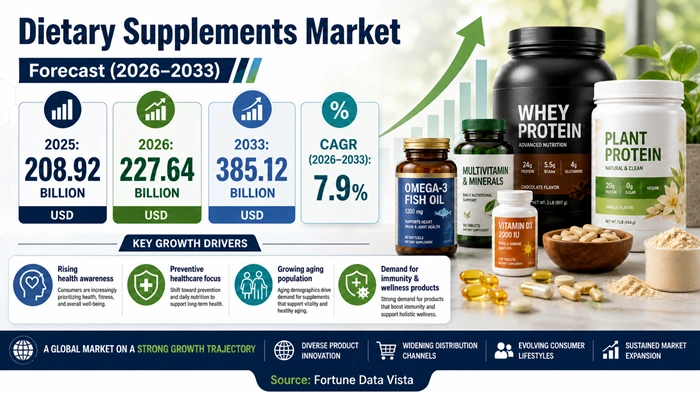
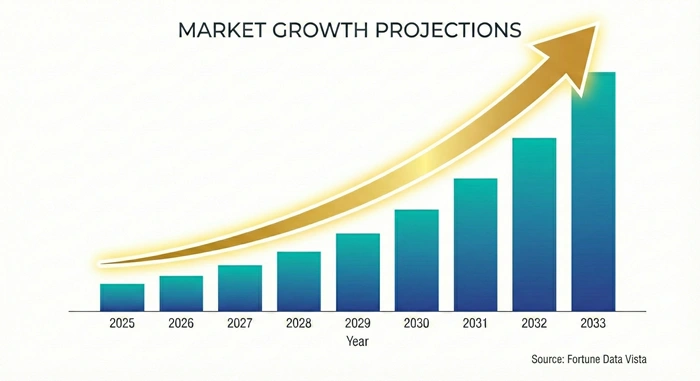
The global dietary supplements market size is valued at USD 208.92 billion in 2025 and is predicted to increase from USD 227.64 billion in 2026 to approximately USD 385.12 billion by 2033, growing at a CAGR of 7.9% from 2026 to 2033.
This remarkable growth reflects a fundamental shift in consumer behavior, where people are increasingly moving away from reactive healthcare toward preventive wellness strategies. Rising awareness about nutritional deficiencies, a growing aging population, expanding e-commerce distribution, and demand for personalized nutrition are all contributing to the sustained expansion of the global dietary supplements industry.
AI Impact on the Dietary Supplements Industry
Artificial Intelligence Is Rewriting the Rules of Nutrition Science — From Formulation Labs to Consumer Shopping Carts*
Artificial intelligence is rapidly transforming how dietary supplement companies operate — from product formulation to consumer targeting. AI-driven platforms now analyze individual health data, genetic profiles, microbiome composition, and lifestyle factors to generate personalized supplement recommendations that were simply not possible a few years ago. Companies like NutriTrack and DNAfit are already demonstrating how AI-backed personalized nutrition can improve adherence, health outcomes, and consumer loyalty. The dietary supplements market is benefiting enormously from this trend, as brands can now develop condition-specific formulations and reach the right consumers with precision marketing.
Beyond personalization, AI is streamlining supply chains, quality control, and regulatory compliance in the supplements industry. Predictive analytics tools help manufacturers forecast demand fluctuations, reduce ingredient wastage, and optimize production schedules. Machine learning algorithms are also being used to monitor adverse event reports and flag safety concerns faster than traditional review processes. As regulatory scrutiny tightens globally, AI-enabled compliance tools are becoming an essential investment for supplement brands that want to remain competitive and trustworthy in a rapidly evolving market.
Growth Factors
A Perfect Storm of Demographics, Lifestyle Changes, and Scientific Awareness Is Fueling Explosive Demand for Nutritional Supplements Worldwide*
Several powerful forces are driving the consistent growth of the dietary supplements market. The global aging population is one of the most significant contributors — older adults represent a major consumer base for bone health, cognitive function, joint support, and immunity-boosting products. According to the World Health Organization, over 2 billion people worldwide suffer from some form of micronutrient deficiency, creating a vast pool of consumers who actively seek supplement support. Rising rates of lifestyle-related conditions such as obesity, diabetes, and cardiovascular disease are also pushing consumers toward preventive nutrition solutions. The growing culture of fitness, particularly among millennials and Gen Z, has significantly expanded demand for protein supplements, amino acids, and sports nutrition products.
The expansion of online retail and direct-to-consumer channels has made dietary supplements more accessible than ever before. E-commerce platforms allow brands to reach consumers in remote regions, offer subscription-based models, and provide personalized health quizzes that drive supplement recommendations. Social media and health influencer marketing have accelerated consumer education and brand discovery, especially among younger demographics. Studies show that over 75% of adults in the United States regularly use some form of dietary supplement, with females and older adults reporting the highest usage rates. The combination of greater product availability, improved scientific literacy, and a growing culture of self-care continues to fuel robust demand across all major global markets.
Market Outlook
Rising Health Consciousness and Innovation in Delivery Formats Are Positioning the Dietary Supplements Market for Long-Term Sustainable Growth*
The outlook for the dietary supplements market remains highly optimistic through 2033 and beyond. North America continues to dominate the global landscape, while Asia Pacific is emerging as the most dynamic growth region thanks to rising incomes, urbanization, and growing health awareness in China, India, Japan, and Southeast Asia. Regulatory frameworks in key markets are gradually becoming more structured, which is likely to boost consumer confidence in supplement quality and safety. Brands that invest in clean-label formulations, sustainable sourcing, and evidence-backed ingredients are expected to capture a disproportionate share of future growth.
Innovation in delivery formats is also reshaping the competitive landscape within the nutritional supplements space. Consumers are showing increasing interest in gummies, liquid supplements, effervescent tablets, and ready-to-drink functional beverages — formats that offer convenience and appeal beyond traditional pills and capsules. The prenatal supplement segment is projected to grow at a CAGR of 11.1% through 2033, driven by maternal health awareness, while infant supplements are anticipated to expand at a CAGR of 12.4% over the same period. Ingredients such as probiotics, adaptogens, omega fatty acids, and nootropics are gaining mainstream acceptance, creating new opportunities for supplement brands to diversify their portfolios and appeal to a wider consumer base.
Expert Speaks
-
"We see a structural shift in how consumers approach health — supplements are no longer an afterthought; they are now an integral part of the daily wellness routine for millions of people globally. At Nestlé Health Science, we are committed to delivering science-backed nutritional solutions that help consumers achieve their specific health goals." — Ulf Mark Schneider, CEO, Nestlé
-
"Abbott's nutritional portfolio is at the forefront of preventive healthcare. We believe the growing body of scientific evidence supporting targeted nutritional supplementation will continue to accelerate market adoption, and we are investing in next-generation formulations that address specific health conditions across all life stages." — Robert B. Ford, CEO, Abbott
-
"At Bayer Consumer Health, we recognize that consumers are becoming smarter, more informed health decision-makers. The demand for high-quality, transparent, and clinically validated dietary supplements will only intensify, and we are positioning ourselves to be the trusted partner in every consumer's health journey." — Bill Anderson, CEO, Bayer AG
Key Report Takeaways
-
North America leads the global dietary supplements market with a dominant revenue share of approximately 36.1% in 2026, supported by high per-capita supplement spending, strong retail infrastructure, and widespread consumer adoption across vitamins, minerals, botanicals, and specialty formulations.
-
Asia Pacific is the fastest-growing region, projected to expand at a CAGR of 9.4% from 2026 to 2033, driven by rapidly rising incomes, urbanization, a large and health-conscious consumer base across China, India, Japan, and Southeast Asia, and growing e-commerce penetration.
-
Senior citizens and aging adults are among the most consistent supplement consumers, accounting for a significant portion of global demand as they seek products for bone density, cognitive health, joint support, and immune system maintenance.
-
The Energy & Weight Management application segment contributes the most revenue, holding approximately 29.4% market share in 2025, fueled by global obesity rates, expanding gym culture, and demand for metabolic support products including thermogenic blends, green tea extract, and L-carnitine-based formulas.
-
Offline distribution channels, particularly pharmacies and specialty stores, remain the dominant sales channel, accounting for around 62.6% of global revenue in 2025, as consumers still prefer expert guidance when purchasing health supplements.
-
The Online distribution channel is the fastest-growing sales channel, projected to expand at a CAGR of 11.4% from 2026 to 2033, as D2C brands, subscription models, and AI-driven personalized supplement platforms continue to gain traction among tech-savvy health consumers.
-
The Vitamins segment is the largest ingredient category, holding approximately 28.2% to 31.9% market share, with Vitamin C and Vitamin D remaining the top-selling SKUs driven by immunity support and bone health benefits.
-
Protein & Amino Acids is the fastest-growing ingredient segment, expected to grow at a CAGR of 11.9% from 2026 to 2033, fueled by the global fitness boom, rising demand for plant-based protein, and expanding sports nutrition applications.
Market Scope
| Parameter | Details |
|---|---|
| Market Size by 2033 | USD 385.12 Billion | Market Size by 2026 | USD 227.64 Billion | Market Size by 2025 | USD 208.92 Billion | Market Growth Rate from 2026 to 2033 | CAGR of 7.9% | Dominating Region | North America | Fastest Growing Region | Asia Pacific | Segments Covered | By Ingredient, By Type, By Form, By Application, By End User, By Distribution Channel | Regions Covered | North America, Europe, Asia Pacific, Latin America, Middle East & Africa |
Market Dynamics
Drivers Impact Analysis
Rising Health Consciousness, Preventive Healthcare Adoption, and Growing Nutritional Awareness Are Creating Sustained Demand Across All Consumer Segments in the Dietary Supplements Market*
| Driver | ≈ % Impact on CAGR Forecast | Geographic Relevance | Impact Timeline |
|---|---|---|---|
| Rising health consciousness & preventive healthcare | ~35% | Global — especially North America, Europe, Asia Pacific | Short to Long Term |
| Growing aging population & geriatric nutrition needs | ~25% | North America, Europe, Japan | Medium to Long Term |
| Increasing prevalence of nutritional deficiencies | ~20% | Asia Pacific, Latin America, MEA | Short to Medium Term |
| Personalized nutrition & technology-driven formulations | ~12% | North America, Europe, South Korea | Medium to Long Term |
| E-commerce expansion & D2C supplement brands | ~8% | Global — especially Asia Pacific, North America | Short to Medium Term |
The primary driver of the dietary supplements market is the global wave of heightened health consciousness that has fundamentally changed consumer purchasing behavior. People across age groups and income levels are now proactively investing in vitamins, minerals, proteins, and botanical supplements as a strategy to prevent illness rather than simply treat it. The COVID-19 pandemic acted as a powerful accelerant for this trend, and the momentum has continued well beyond it. Studies indicate that over 75% of U.S. adults regularly use dietary supplements, with strong usage trends observed across Europe and rapidly emerging markets in Asia.
The aging global population represents another critical long-term driver for the nutritional supplements industry. The share of people aged 65 and above is growing in virtually every developed nation, and this demographic has a high willingness to spend on health products. Older adults are significant consumers of bone health supplements (calcium, Vitamin D), cognitive support products (omega-3s, nootropics), joint support formulations (glucosamine, collagen), and general immune boosters. According to market data, the geriatric population contributes nearly 30% of worldwide supplement sales, and this figure is expected to rise meaningfully through 2033 as global life expectancy continues to improve.
Restraints Impact Analysis
Stringent Global Regulatory Requirements and Persistent Consumer Skepticism About Supplement Efficacy Pose Meaningful Headwinds for Market Expansion*
| Restraint | ≈ % Impact on CAGR Forecast | Geographic Relevance | Impact Timeline |
|---|---|---|---|
| Stringent regulatory requirements & approval processes | ~40% | EU, North America, Japan, Australia | Short to Long Term |
| High consumer skepticism & demand for substitutes | ~30% | North America, Europe | Short to Medium Term |
| Adulteration concerns & quality control challenges | ~20% | Asia Pacific, Latin America, MEA | Medium Term |
| Rising raw material & production costs | ~10% | Global | Short to Medium Term |
Regulatory complexity remains one of the most significant constraints facing the dietary supplements market on a global scale. In the United States, the FDA enforces strict guidelines under the Dietary Supplement Health and Education Act (DSHEA), while in the European Union, the European Food Safety Authority (EFSA) maintains rigorous standards for novel ingredient approvals and health claims. These regulatory frameworks, while important for consumer safety, significantly increase time-to-market and compliance costs for manufacturers — particularly smaller and emerging brands. The EU Novel Foods Regulation has tightened approval processes, limiting the pace at which innovative ingredient formulations can be commercialized.
Consumer skepticism is another notable restraint for the dietary supplement market. Despite growing awareness of the potential benefits of supplementation, a substantial portion of consumers remain skeptical about the effectiveness, safety, and value of dietary supplements compared to whole food nutrition. The market faces competition from functional foods, fortified beverages, and pharmaceutical-grade nutraceuticals that directly address the same health concerns. Additionally, publicized cases of supplement adulteration, mislabeling, and inflated health claims have contributed to trust deficits in certain market segments, prompting more consumers to demand third-party testing certifications and transparent supply chain documentation before purchasing.
Opportunities Impact Analysis
Personalized Nutrition, Emerging Market Expansion, and Innovation in Functional Ingredients Represent the Most Compelling Growth Opportunities for Dietary Supplement Brands Through 2033*
| Opportunity | ≈ % Impact on CAGR Forecast | Geographic Relevance | Impact Timeline |
|---|---|---|---|
| Personalized nutrition & AI-driven supplement platforms | ~35% | North America, Europe, South Korea | Medium to Long Term |
| Untapped growth in Asia Pacific & Latin America | ~30% | China, India, Brazil, SEA | Short to Long Term |
| Innovation in functional ingredients & delivery formats | ~20% | Global | Medium Term |
| Sustainable & clean-label formulation trends | ~15% | North America, Europe | Medium to Long Term |
The growing demand for personalized nutrition presents perhaps the most transformative opportunity in the dietary supplements industry over the next decade. Advances in nutrigenomics, microbiome testing, wearable health technology, and AI-powered analytics are enabling brands to develop highly targeted supplement regimens tailored to individual consumers. This shift from generic multivitamins to condition-specific, genotype-informed formulations is expected to command significant premium pricing and drive strong customer retention through subscription models. Companies that invest early in the technology and data infrastructure required for personalized nutrition are well positioned to capture a disproportionate share of future market growth.
Emerging markets — particularly in Asia Pacific, Latin America, and the Middle East & Africa — represent enormous untapped opportunity for the global dietary supplement market. Rapid urbanization, rising disposable incomes, expanding middle-class populations, and growing digital health literacy are all converging to create favorable conditions for supplement adoption in these regions. China alone accounts for nearly 40% of the Asia Pacific market, while India and Southeast Asian nations are witnessing double-digit compound annual growth in supplement demand. Brands that localize their product formulations, leverage regional distribution partnerships, and invest in digital marketing strategies tailored to local consumer preferences will find significant expansion potential in these high-growth markets through 2033.
Segment Analysis
By Ingredient: Vitamins Segment
Vitamins Continue to Command the Largest Share of the Global Dietary Supplements Market, Driven by Immune Health Awareness, Bone Wellness, and Widespread Nutritional Deficiencies*
The vitamins segment is the undisputed leader in the dietary supplements market, capturing approximately 28.2% to 31.9% of global revenue in 2025–2026, depending on the classification methodology used. This dominance is not incidental — vitamins play a fundamental role in supporting the immune system, facilitating enzymatic reactions, and maintaining cellular health. Among specific vitamins, Vitamin C and Vitamin D have emerged as the top-selling categories, owing largely to well-established clinical evidence linking their consumption to improved immunity, reduced infection severity, and stronger bone density. Post-pandemic consumer behavior has permanently elevated the importance of immune health in supplement purchasing decisions, and vitamins have been the primary beneficiaries of this shift. In North America and Europe, leading companies such as Nature's Bounty, Pfizer's Centrum brand, and Bayer AG's Berocca range have strengthened their market positions through product innovation, clinical research backing, and aggressive retail and digital marketing campaigns.
Asia Pacific is emerging as the fastest-growing regional market for vitamin supplements, projected to expand at a CAGR of 9.4% through 2033. In China and India, government-backed nutrition awareness campaigns and rising middle-class spending power are accelerating vitamin adoption across all age groups. The Protein & Amino Acids sub-segment within ingredients is forecast to grow at an even higher rate — approximately 11.9% CAGR — as sports nutrition and fitness culture drive demand for plant-based proteins, BCAAs, collagen supplements, and creatine-based formulations. Companies like Amway (Nutrilite), Abbott, and DSM Nutritional Products maintain strong positions across multiple vitamin sub-categories in this region, benefiting from established distribution networks and brand credibility built over decades of consumer engagement.
By Form: Tablets Segment
Tablets Dominate Supplement Delivery Format Preferences Globally, While Liquid and Gummy Formats Are Rapidly Gaining Ground Among Younger and Older Demographics*
The tablets segment holds the leading share in the dietary supplements market by product form, accounting for approximately 31.9% to 32.7% of global revenue in 2025–2026. The popularity of tablets is deeply rooted in practical advantages — they are easy to store, carry, and dose accurately. Tablets also allow manufacturers to combine multiple active ingredients in a single delivery vehicle, which is a key benefit for combination products such as multivitamins, bone health formulas, and immune complex supplements. Advancements in tablet technology, including taste masking, bilayer formats for controlled release, and improved bioavailability coatings, have further broadened their appeal among health-conscious consumers. Major brands such as GNC, Pharmavite (Nature Made), and USANA Health Sciences have built strong consumer loyalty in the tablet segment through consistent quality and broad product variety across multiple health benefit categories.
Despite the dominance of tablets, the liquid supplements segment is emerging as one of the most dynamic growth areas, projected to expand at a CAGR of 10.8% from 2026 to 2033. Liquids offer faster absorption, ease of consumption for children and elderly users, and compatibility with personalized dosing — making them particularly suitable for pediatric and geriatric supplement products. The gummies and chewables format is also gaining significant traction, especially among millennials, Gen Z consumers, and parents purchasing supplements for children. North America leads in liquid and gummy supplement adoption, while Asia Pacific is witnessing rapid uptake as brands introduce locally flavored and condition-specific formulations designed for regional taste preferences and health priorities.
Regional Insights
North America: Market Leadership Driven by Strong Consumer Base and Preventive Health Culture
North America Holds the Largest Revenue Share in the Global Dietary Supplements Market, Backed by High Consumer Spending, Established Brands, and a Deep Culture of Preventive Wellness*
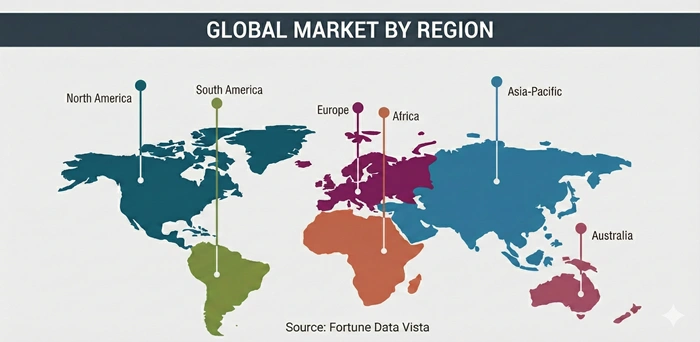
North America remains the dominant region in the global dietary supplements market, commanding approximately 36.1% to 36.8% of global revenue in 2025–2026. The United States alone accounts for approximately 91.4% of the North American market, driven by high per-capita healthcare spending, a well-established supplement retail ecosystem, and a deeply ingrained consumer culture of proactive health management. Factors such as rising obesity rates, high prevalence of lifestyle-related chronic conditions, escalating healthcare costs, and strong regulatory encouragement for preventive nutrition have collectively made the U.S. the world's single largest dietary supplement market. Key companies leading this region include Amway Corp., Abbott Laboratories, GNC Holdings, Nature's Bounty, Herbalife Nutrition, Pharmavite, and NOW Foods, all of which have deep roots in North American retail and online channels.
Canada also contributes meaningfully to the regional market and is projected to grow at a CAGR of 7.6% through 2033, supported by regulatory support from Health Canada's Natural Health Products regulations, growing elderly population demand, and increasing consumer preference for clean-label and organic supplement formulations. The North American dietary supplement industry is further supported by a mature research and development ecosystem, with numerous academic institutions and private sector companies investing in new ingredient discovery, clinical trials, and advanced delivery system technologies. The region is also at the forefront of personalized nutrition adoption, with startups and established brands alike launching AI-driven health platforms that recommend tailored supplement regimens based on individual biomarker data.
Asia Pacific: The Fastest-Growing Region Reshaping the Global Supplements Landscape
Asia Pacific Is Undergoing a Nutrition Revolution Fueled by Rising Incomes, Digital Health Adoption, and Unprecedented Demand for Immune and Wellness Supplements Across China, India, and Southeast Asia*
Asia Pacific has emerged as the fastest-growing region in the global dietary supplements market, projected to expand at a CAGR of 9.4% from 2026 to 2033 — outpacing all other global regions. This dynamic growth is being driven by a convergence of favorable demographic and economic factors, including rapidly rising disposable incomes, widespread urbanization, a growing middle class with greater health awareness, and government-led initiatives promoting preventive healthcare. China is the dominant market in the region, accounting for nearly 39.8% of Asia Pacific's supplement revenue in 2025, with consumers showing particularly strong demand for immunity boosters, vitamins, probiotics, and weight management supplements. Major players including Otsuka Holdings, Suntory Holdings, The Himalaya Drug Company, and international brands like Nestlé Health Science and Herbalife have made significant investments in regional product development and distribution infrastructure.
India and Japan represent two other critical growth pillars within the Asia Pacific dietary supplement market. India is projected to expand at a CAGR of 10.4% through 2033, fueled by a young and increasingly health-conscious population, rising urbanization, and growing awareness of micronutrient deficiencies prevalent in the country. Japan, meanwhile, is expected to grow at a CAGR of 10.2%, driven by a rapidly aging society with high demand for anti-aging, bone health, and cognitive support supplements. The proliferation of e-commerce platforms and rising digital health literacy across the region are making supplements more accessible and discoverable than ever before — even in Tier 2 and Tier 3 cities. As international brands localize their offerings and regional players raise their product quality standards, Asia Pacific is poised to become the most strategically important growth market for the global dietary supplements industry through 2033.
Top Key Players
-
Amway Corporation (United States)
-
Abbott Laboratories (United States)
-
Bayer AG (Germany)
-
Glanbia plc (Ireland)
-
Herbalife Nutrition Ltd. (United States)
-
Nestlé S.A. (Switzerland)
-
Pfizer Inc. (United States)
-
GlaxoSmithKline plc (United Kingdom)
-
Archer Daniels Midland Company (United States)
-
DSM Nutritional Products AG (Netherlands)
-
Nature's Bounty Co. (United States)
-
Otsuka Holdings Co., Ltd. (Japan)
-
GNC Holdings Inc. (United States)
-
Suntory Holdings Limited (Japan)
-
The Himalaya Drug Company (India)
-
NOW Foods (United States)
-
USANA Health Sciences, Inc. (United States)
-
Pharmavite LLC (United States)
Recent Developments
-
In January 2026, The Vitamin Shoppe rolled out AG1, the science-backed foundational nutrition supplement, across more than 640 retail locations and online, significantly strengthening its national distribution partnership and expanding consumer access to premium daily nutrition supplements.
-
In November 2025, ANJAC Health & Beauty (France) completed the acquisition of Slovenian nutraceutical group Health Chain Group (HCG), integrating its PharmaLinea, Hermes Consilium, and ErgoPharma units to expand its clinical nutrition portfolio, enhance global market reach, and increase manufacturing capacity.
-
In July 2025, Amway expanded its strategic partnership with South Korea's HEM Pharma to advance microbiome research and co-develop next-generation probiotic and personalized nutrition products, reinforcing its position at the cutting edge of gut health supplementation.
-
In March 2025, Herbalife Nutrition Ltd. announced strategic acquisitions of Pro2col Health, Pruvit Ventures, and a majority stake in Link BioSciences, significantly accelerating the development of its personalized wellness platform and expanding its portfolio of advanced health supplement solutions.
-
In August 2025, Vitanergy Health US Inc. unveiled three new clean-label, vegan dietary supplements — D3 multivitamin gummies, B-complex gummies with folate, and a Rejuvenate & Glow 4-in-1 capsule — specifically designed to support women's daily nutritional needs and distributed through major online retailers.
Market Trends
From Personalized Formulations to Plant-Based Innovation — the Dietary Supplements Market Is Being Reshaped by Science, Sustainability, and Digital Commerce*
One of the most defining trends reshaping the dietary supplements market is the shift toward evidence-based, personalized nutrition. Consumers are moving away from generic one-size-fits-all multivitamins and increasingly seeking formulations aligned with their specific health concerns, genetic profiles, and lifestyle data. Adaptogens such as ashwagandha and ginseng have experienced remarkable growth — ashwagandha's consumer usage rate jumped from 2% in 2020 to 8% in 2024 — reflecting a broader wellness movement toward stress management, hormonal balance, and mental clarity support supplements. Melatonin usage for sleep quality also rose from 10% to 16% among supplement users over the same period, underlining how specific lifestyle health concerns are reshaping ingredient demand patterns.
A second major trend transforming the market is the growing emphasis on sustainability, clean-label formulations, and transparent supply chains. Modern consumers — particularly millennials and Gen Z — are carefully scrutinizing ingredient sourcing, manufacturing practices, and packaging materials before committing to a supplement brand. Research indicates that over 86% of consumers aged 45 and above are willing to pay a premium for products with sustainable packaging. This is prompting leading supplement brands to adopt blockchain-based ingredient traceability, eco-friendly packaging, organic certifications, and non-GMO labels as core brand positioning tools. The rise of plant-based proteins, vegan capsules, and naturally derived botanical supplements is directly tied to this demand for cleaner, greener, and more transparent products in the nutritional supplements space.
Segments Covered in the Report
-
By Ingredient:
-
Vitamins (Multivitamin, Vitamin A, Vitamin B, Vitamin C, Vitamin D, Vitamin K, Vitamin E)
-
Botanicals
-
Minerals (Calcium, Potassium, Magnesium, Iron, Zinc, Others)
-
Protein & Amino Acids (Collagen, Others)
-
Fibers & Specialty Carbohydrates
-
Omega Fatty Acids
-
Probiotics
-
Prebiotics & Postbiotics
-
Others
-
-
By Type:
-
Over-the-Counter (OTC)
-
Prescribed
-
-
By Form:
-
Tablets
-
Capsules
-
Softgels
-
Powder
-
Gummies
-
Liquid
-
Others
-
-
By Application:
-
Energy & Weight Management
-
General Health
-
Bone & Joint Health
-
Gastrointestinal Health
-
Immunity
-
Cardiac Health
-
Sports Nutrition
-
Skin / Hair / Nails
-
Brain / Mental Health
-
Prenatal Health
-
Others (Beauty Supplements, Anti-Allergies, Eye Health, Insomnia, Anti-aging)
-
-
By End User:
-
Adults (Millennials, Gen X, Gen Z, Boomers)
-
Geriatric
-
Children
-
Infants
-
-
By Distribution Channel:
-
Offline
-
Hypermarkets / Supermarkets
-
Pharmacies / Drugstores
-
Specialty Stores
-
Practitioners
-
Others
-
-
Online (Amazon, Others)
-
Direct Sales / MLM
-
D2C
-
-
By Region:
-
North America (U.S., Canada, Mexico)
-
Europe (Germany, UK, France, Italy, Spain, Russia)
-
Asia Pacific (China, India, Japan, Australia, South Korea, ASEAN)
-
Latin America (Brazil, Argentina, Mexico)
-
Middle East & Africa (GCC Countries, South Africa, Rest of MEA)
-
"Built for Every Level — From Startups to Industry Giants"
Here Is Exactly How This Report Works for You
-
For Tier 1 companies, major investors, and high-level decision-makers, this report delivers in-depth competitor revenue analysis, revenue source breakdowns, and geopolitical risk assessments that help you understand exactly how supply-demand dynamics and international trade policies are impacting supplement market profitability — equipping your leadership team to make confident strategic decisions even in volatile global conditions.
-
For Tier 2 and Tier 3 companies, mid-level businesses, and growing supplement brands, this report provides detailed segment-level and regional growth data that reveals where white-space opportunities exist, which formulation trends are gaining traction fastest, and how established players are structuring their competitive strategies — so you can position your portfolio intelligently and avoid costly market misfires.
-
For startups and emerging players, this report offers actionable market entry intelligence including regulatory landscape analysis, consumer behavior insights, fast-growing distribution channel performance data, and identification of under-served consumer demographics — giving your team the clarity and direction needed to allocate resources effectively, attract investor confidence, and build a differentiated brand position in the competitive dietary supplements industry.
Frequently Asked Questions:
Answer: The global dietary supplements market is valued at USD 208.92 billion in 2025 and is projected to reach USD 385.12 billion by 2033. It is expected to grow at a CAGR of 7.9% from 2026 to 2033, driven by rising health awareness and demand for preventive healthcare nutrition solutions.
Answer: North America holds the largest share of the dietary supplements market, accounting for approximately 36.1% of global revenue in 2026. Asia Pacific is the fastest-growing region, projected to expand at a CAGR of 9.4% through 2033, led by China, India, and Japan.
Answer: The primary growth drivers include rising health consciousness, growing prevalence of nutritional deficiencies, an aging global population, and expanding e-commerce accessibility for supplement products. Personalized nutrition technologies and increasing fitness culture among younger demographics are also accelerating demand for nutritional supplements.
Answer: The vitamins segment holds the largest ingredient share in the dietary supplements market, accounting for approximately 28.2% to 31.9% of global revenue. Vitamin C and Vitamin D are the top-selling categories, supported by strong clinical evidence for immune health and bone wellness benefits.
Answer: Key players in the dietary supplements market include Amway Corporation, Abbott Laboratories, Bayer AG, Nestlé S.A., Herbalife Nutrition Ltd., Pfizer Inc., and GlaxoSmithKline plc. These companies compete through product innovation, clinical research investment, strategic acquisitions, and expansion into high-growth markets across Asia Pacific and Latin America.