
Digital Evidence Management Market Overview
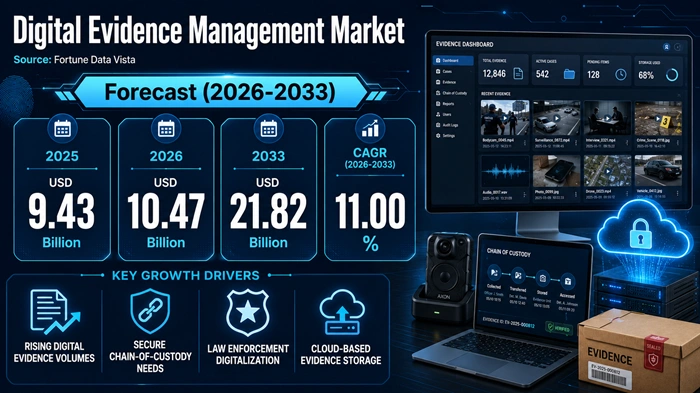
The global digital evidence management market size is valued at USD 9.43 billion in 2025 and is predicted to increase from USD 10.47 billion in 2026 to approximately USD 21.82 billion by 2033, growing at a CAGR of 11.00% from 2026 to 2033.
This steady growth reflects the exploding volume of digital evidence generated from body-worn cameras, dashcams, surveillance systems, and mobile devices that law enforcement and legal organizations must now capture, store, and manage securely. As agencies worldwide transition away from fragmented, paper-based evidence handling toward centralized digital platforms, demand for solutions that preserve chain of custody while enabling efficient collaboration continues climbing rapidly.
AI Impact on the Digital Evidence Management Industry
Artificial Intelligence Is Automating Video Redaction, Enabling Rapid Evidence Search Across Massive Data Volumes, and Strengthening Chain-of-Custody Verification Across the Digital Evidence Management Landscape — Fundamentally Changing How Investigators Process Case Files
Artificial intelligence has become an increasingly essential tool within digital evidence management platforms, particularly through automated video redaction capabilities that can blur faces, license plates, and other sensitive details across hours of body-worn camera and surveillance footage in a fraction of the time manual review would require. This capability has proven especially valuable for agencies facing mounting backlogs of footage that must be redacted before public disclosure or courtroom presentation, since manual redaction previously consumed enormous staff hours that could otherwise be dedicated to active investigations. Law enforcement agencies adopting these AI-powered redaction tools are reporting substantially faster case processing times without compromising evidentiary integrity.
Beyond redaction, AI is also transforming how investigators search through massive volumes of digital evidence, with machine learning algorithms now capable of scanning video footage to identify specific objects, vehicles, or behavioral patterns based on descriptive parameters rather than requiring investigators to manually review every frame. This search capability dramatically accelerates investigations that previously depended on painstaking manual footage review, allowing analysts to focus their attention on the most relevant evidence segments. As these AI-driven analysis and verification tools continue maturing, they are becoming an increasingly important differentiator for platforms competing within the broader digital evidence management market.
Growth Factors
Rising Digital Evidence Volume and Expanding Body-Worn Camera Mandates Continue Driving Sustained Demand
The most significant growth factor supporting the digital evidence management market is the sheer explosion in digital evidence volume generated by smartphones, surveillance cameras, dashcams, and social media platforms, all of which increasingly factor into modern criminal investigations and legal proceedings. As nearly every incident now generates some form of digital footprint, law enforcement agencies and legal teams face growing pressure to adopt centralized systems capable of ingesting, organizing, and securely preserving evidence from dozens of disparate source types without losing critical chain-of-custody documentation.
A second important growth factor is the continued expansion of body-worn camera mandates across police departments worldwide, driven by public demand for greater transparency and accountability in law enforcement interactions. Government funding initiatives supporting body-worn camera deployment have directly fueled corresponding demand for evidence management platforms capable of handling the enormous video storage and retrieval requirements these programs create. This combination of rising evidence volume and expanding camera deployment mandates continues to broaden demand across the digital evidence management market.
Market Outlook
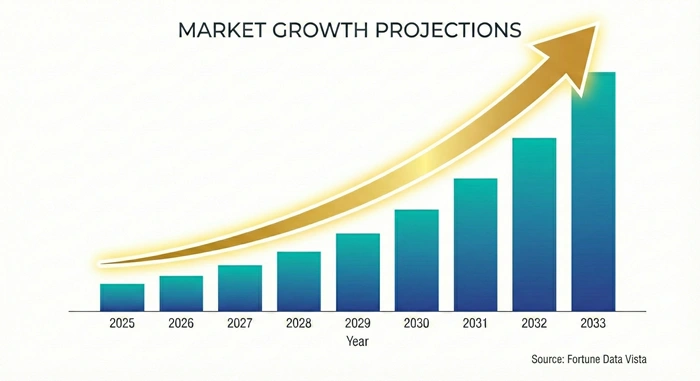
Cloud Migration Acceleration and Growing Cross-Agency Collaboration Point Toward Sustained Growth Through 2033
Looking ahead through the forecast period, the digital evidence management industry is expected to benefit substantially from accelerating migration toward cloud-based deployment models, as agencies increasingly recognize the scalability and remote accessibility advantages cloud platforms offer over traditional on-premise storage infrastructure. This shift is particularly significant for smaller agencies that previously lacked the budget to build and maintain extensive local data storage capacity, since cloud-based solutions allow them to access enterprise-grade evidence management capabilities without substantial upfront infrastructure investment.
At the same time, growing emphasis on cross-agency collaboration and evidence sharing between law enforcement, prosecutors, and courts is expected to drive substantial platform investment, as digital evidence increasingly needs to move securely between multiple stakeholders throughout the legal process. Companies that can offer secure, auditable sharing capabilities alongside robust storage and search functionality are increasingly well positioned to capture this growth. Businesses balancing strong security compliance with intuitive collaboration tools are likely to lead growth within the broader digital evidence management market through 2033.
Expert Speaks
-
"As digital evidence volumes continue exploding, our platforms are increasingly central to how law enforcement agencies maintain both efficiency and evidentiary integrity throughout the investigative process." — CEO, Axon Enterprise Inc
-
"Our continued investment in AI-powered analysis tools reflects what investigators consistently tell us they need to manage growing caseloads without sacrificing accuracy." — CEO, Motorola Solutions Inc
-
"Cloud-based evidence management is transforming how agencies of all sizes can access enterprise-grade capabilities, and we remain committed to expanding that accessibility globally." — CEO, NICE Ltd
Key Report Takeaways
-
North America leads the global digital evidence management market, holding approximately 39% market share in 2025, supported by extensive body-worn camera funding initiatives and strong law enforcement technology adoption
-
Asia Pacific is the fastest-growing region, projected to expand at a CAGR near 14% through 2033, driven by rising government investment in public safety technology and expanding surveillance infrastructure
-
Law enforcement agencies represent the dominant end-user segment, accounting for roughly 62% share, given their central role in generating and processing the largest volumes of digital evidence
-
Video evidence contributes the most to overall demand, reflecting the sheer scale of footage generated by body-worn cameras, dashcams, and surveillance systems
-
Software-based platforms remain the most widely adopted component type, valued for their ability to organize, analyze, and preserve chain of custody across diverse evidence formats
-
Cloud-based deployment will grow the fastest among deployment segments, holding close to 55% market share with a CAGR near 13.5% through the forecast period, driven by scalability and lower infrastructure costs
Market Scope
| Parameter | Details |
|---|---|
| Market Size by 2033 | USD 21.82 Billion | Market Size by 2026 | USD 10.47 Billion | Market Size by 2025 | USD 9.43 Billion | Market Growth Rate from 2026 to 2033 | CAGR of 11.00% | Dominating Region | North America | Fastest Growing Region | Asia Pacific | Segments Covered | Component, Deployment Type, End User, Region | Regions Covered | North America, Europe, Asia Pacific, Latin America, Middle East & Africa |
Market Dynamics
Drivers Impact Analysis
Rising Digital Evidence Volume and Expanding Public Safety Technology Mandates Remain the Two Strongest Forces Behind Market Momentum
| Driver | (≈) % Impact on CAGR Forecast | Geographic Relevance | Impact Timeline |
|---|---|---|---|
| Explosive growth in digital evidence volume from cameras and mobile devices | ~36% | Global | Short to long-term |
| Expanding body-worn camera and surveillance infrastructure mandates | ~27% | North America, Europe, growing in Asia Pacific | Medium to long-term |
| Growing need for secure chain-of-custody preservation and legal compliance | ~22% | Global | Medium-term |
| Rising cross-agency collaboration requirements between law enforcement and courts | ~15% | Global | Short to medium-term |
Explosive growth in digital evidence volume continues to serve as the primary engine behind sustained growth in the digital evidence management market, as nearly every criminal investigation and legal proceeding now involves some combination of video footage, mobile device data, and digital communications that must be properly catalogued and preserved. This growing evidence complexity has translated directly into higher platform adoption among law enforcement agencies seeking to manage increasingly diverse and voluminous case files efficiently.
Expanding body-worn camera and surveillance infrastructure mandates represent the second major driver, as government funding initiatives and public accountability demands push police departments worldwide to deploy more cameras generating substantially more footage that requires proper management. This regulatory and public pressure, combined with growing legal compliance requirements around evidence preservation, continues reinforcing steady demand growth across the broader digital evidence management market.
Restraints Impact Analysis
Data Security Concerns and Interoperability Challenges Continue to Moderate Broader Adoption
| Restraint | (≈) % Impact on CAGR Forecast | Geographic Relevance | Impact Timeline |
|---|---|---|---|
| Persistent data tampering and cybersecurity vulnerability concerns | ~37% | Global | Ongoing |
| Interoperability challenges between disparate evidence sources and legacy systems | ~29% | Global, notable in smaller agencies | Medium-term |
| Budget constraints among smaller law enforcement agencies | ~21% | Emerging markets, rural jurisdictions | Short to medium-term |
| Legal and jurisdictional complexity around evidence sharing across agencies | ~13% | Global | Long-term |
The most persistent restraint facing the digital evidence management market is the ongoing concern around data tampering and cybersecurity vulnerabilities, since any compromise to evidence integrity can undermine entire legal cases and expose agencies to significant liability. This security sensitivity makes many agencies cautious about adopting new platforms until vendors can demonstrate robust, independently verified security protections.
Interoperability challenges between disparate evidence sources represent a second significant restraint, as agencies often must integrate footage and data from multiple camera manufacturers, mobile forensics tools, and legacy storage systems that were never designed to work together seamlessly. Combined with tight budget constraints facing smaller law enforcement agencies, these restraints continue moderating how quickly broader adoption can spread across the global digital evidence management market.
Opportunities Impact Analysis
AI-Powered Analysis Expansion and Growing Cloud Infrastructure Investment Represent the Clearest Paths to Growth
| Opportunity | (≈) % Impact on CAGR Forecast | Geographic Relevance | Impact Timeline |
|---|---|---|---|
| Expanding AI-powered video analysis and automated redaction capabilities | ~39% | Global | Short to medium-term |
| Growing cloud infrastructure investment among smaller agencies | ~33% | Global, strongest in emerging markets | Medium to long-term |
| Increasing demand for secure cross-agency evidence sharing platforms | ~28% | North America, Europe | Short to medium-term |
Expanding AI-powered video analysis and automated redaction capabilities represent one of the most substantial opportunities within the digital evidence management market, as vendors offering these tools help agencies dramatically reduce the manual labor burden associated with processing growing footage volumes. Companies advancing these AI-driven capabilities stand to capture meaningful share as agencies increasingly prioritize efficiency alongside evidentiary accuracy.
Growing cloud infrastructure investment among smaller agencies presents a second substantial opportunity, as cloud-based platforms allow departments with limited technology budgets to access enterprise-grade evidence management capabilities without substantial upfront infrastructure spending. Increasing demand for secure cross-agency evidence sharing platforms further broadens the opportunity landscape, particularly as prosecutors and courts increasingly require digital access to case evidence rather than relying on physical media transfers. Companies pursuing these parallel opportunities are well positioned to capture meaningful growth within the broader digital evidence management market through the forecast period.
Segment Analysis
By Component: Software Solutions
Software Solutions Continue to Anchor the Component Landscape, Valued for Their Central Role in Evidence Organization and Chain-of-Custody Preservation
Software solutions hold the largest share within the component segment of the digital evidence management market, accounting for approximately 58% of total segment revenue in 2025. This dominance reflects the essential role software platforms play in organizing, tagging, and preserving the integrity of digital evidence across formats ranging from body-worn camera footage to mobile device extractions and digital documents. In markets like the United States and the United Kingdom, law enforcement agencies increasingly rely on these platforms to maintain auditable chain-of-custody records that can withstand legal scrutiny in court proceedings. Leading technology providers such as Axon, Motorola Solutions, and NICE continue to dominate this segment through continuous expansion of their evidence management software capabilities.
Growth within this segment remains particularly strong in North America, where extensive body-worn camera funding programs and strong law enforcement technology budgets continue supporting rapid software platform adoption. The region's combination of favorable government funding, established vendor relationships, and rapid AI feature integration has helped software solutions maintain their leading position despite growing interest in integrated hardware-software packages. As evidence complexity continues increasing across investigation types, software solutions are expected to remain the dominant component type within the broader digital evidence management market throughout the forecast period.
By End User: Law Enforcement Agencies
Law Enforcement Agencies Remain the Dominant End-User Segment, Reflecting Their Central Role in Digital Evidence Generation and Processing
Law enforcement agencies account for approximately 62% of end-user revenue within the digital evidence management market, reflecting their position at the center of nearly every criminal investigation that generates substantial digital evidence from body-worn cameras, dashcams, interview recordings, and mobile device extractions. Police departments increasingly depend on comprehensive evidence management platforms to organize case files efficiently while ensuring evidence remains admissible and properly documented throughout lengthy legal proceedings. This consistent, mission-critical demand has made law enforcement agencies the primary customer base for evidence management technology vendors.
Growth among law enforcement end users remains especially strong in Asia Pacific, where expanding government investment in public safety technology continues driving new platform adoption across rapidly modernizing police departments. Companies like Panasonic and Genetec have expanded their regional presence significantly to support this growing institutional demand, often partnering directly with government agencies to deploy comprehensive surveillance and evidence management ecosystems. As law enforcement agencies worldwide continue modernizing their evidence handling processes, this end-user segment is expected to remain the primary demand driver within the broader digital evidence management market.
Regional Insights
North America
Extensive Body-Worn Camera Funding and Strong Technology Adoption Keep North America Firmly in the Lead
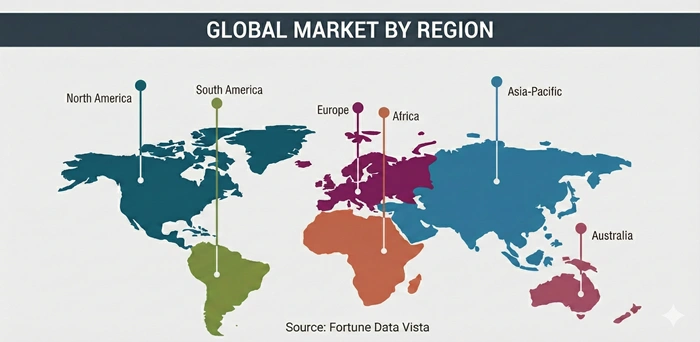
North America commands the leading position in the global digital evidence management market, holding approximately 39% share in 2025, supported by extensive government funding initiatives for body-worn cameras, strong law enforcement technology budgets, and widespread adoption of cloud-based evidence platforms across the region. The United States drives the overwhelming majority of regional demand, backed by sustained federal and state funding programs supporting police technology modernization and a dense concentration of leading evidence management vendors. Companies with strong regional presence include Axon, Motorola Solutions, OpenText, and Genetec, each maintaining deep relationships with law enforcement agencies across the country.
Canada also contributes meaningfully to regional demand, supported by growing public accountability initiatives and steadily expanding body-worn camera deployment across provincial and municipal police forces. The region's combination of strong government funding, established vendor ecosystems, and continuous AI feature innovation ensures North America's leadership position within the digital evidence management market remains firmly intact through the remainder of the forecast period.
Asia Pacific
Rising Government Investment in Public Safety Technology Positions Asia Pacific as the Fastest-Growing Region
Asia Pacific is projected to register the fastest CAGR within the global digital evidence management market through 2033, expanding at a rate near 14% as rising government investment in public safety technology and expanding surveillance infrastructure create substantial new demand across the region. China and India lead much of this regional growth, supported by large-scale smart city and public safety modernization initiatives that increasingly incorporate comprehensive evidence management platforms alongside expanding camera networks. Regional and international technology providers alike have expanded their presence to serve this growing institutional demand, often establishing local partnerships to navigate distinct regulatory environments.
Japan and South Korea contribute further depth to regional growth, both bringing well-established public safety infrastructure that increasingly favors AI-enhanced evidence management platforms to handle rapidly growing surveillance footage volumes. Growing government investment in public safety technology across several Asia Pacific countries continues to accelerate platform adoption among agencies that previously operated with more fragmented, manual evidence handling processes. This combination of rising government investment, expanding surveillance infrastructure, and growing modernization priorities positions Asia Pacific as the clear growth leader within the broader digital evidence management market through the forecast period.
Customization Available for This Report
Region-Specific and Country-Specific Versions of This Report Are Available to Deliver a Sharper, More Localized View of Market Dynamics
This report can be tailored on a region-by-region and country-by-country basis, providing localized market sizing, competitive mapping, and technology adoption trend analysis that a global overview alone cannot fully capture.
Clients seeking a more focused breakdown can request a customized version covering any of the following regions and countries, complete with demand forecasting, competitor landscape review, and adoption trend analysis tied specifically to the digital evidence management keyword focus:
North America
-
U.S. — Detailed review of body-worn camera funding programs and law enforcement technology adoption trends
-
Canada — Coverage of public accountability initiatives and provincial police technology investment
-
Mexico — Analysis of emerging public safety technology modernization trends
Europe
-
U.K. — Review of law enforcement technology adoption and evidence sharing frameworks
-
Germany — Coverage of surveillance infrastructure investment and platform adoption trends
-
France — Insights into public safety technology modernization and adoption patterns
-
Italy — Analysis of regional law enforcement technology investment trends
-
Rest of Europe — Country-level view of emerging demand across Eastern Europe and the Nordics
Asia Pacific
-
China — Coverage of expanding smart city surveillance and public safety technology investment
-
India — Analysis of growing law enforcement modernization and platform adoption trends
-
Japan — Review of established public safety infrastructure and technology adoption trends
-
South Korea — Assessment of surveillance and evidence management platform investment
-
Australia — Insights into public safety technology funding and adoption trends
-
Rest of Asia Pacific — Country-level breakdown covering Thailand, Vietnam, Indonesia, and Malaysia
Latin America
-
Brazil — Coverage of expanding law enforcement technology investment and adoption trends
-
Argentina — Analysis of early-stage public safety technology modernization trends
-
Rest of Latin America — Country-level sizing across Colombia, Peru, and Chile
Middle East & Africa
-
UAE — Review of public safety technology investment and adoption trends
-
Saudi Arabia — Coverage of expanding law enforcement modernization initiatives
-
Rest of MEA — Country-level view of Sub-Saharan Africa public safety technology expansion
Top Key Players
-
Axon Enterprise Inc (United States)
-
Motorola Solutions Inc (United States)
-
NICE Ltd (Israel)
-
OpenText Corporation (Canada)
-
Genetec Inc (Canada)
-
Panasonic Holdings Corporation (Japan)
-
IBM Corporation (United States)
-
Oracle Corporation (United States)
-
Cellebrite DI Ltd (Israel)
-
Hitachi Vantara Corporation (United States)
-
VIDIZMO LLC (United States)
-
Safe Fleet Acquisition Corp (United States)
Recent Developments
-
In 2025, Axon Enterprise expanded its Evidence.com platform with enhanced AI-powered redaction and analysis tools to help agencies process growing volumes of body-worn camera footage more efficiently
-
In 2025, Cellebrite strengthened its Guardian evidence management solution through new features emphasizing ethical handling and secure collaboration among investigative stakeholders
-
In 2026, Motorola Solutions deepened its integration between camera hardware and evidence management software to streamline the digital evidence lifecycle for law enforcement customers
-
In 2025, Genetec expanded its cloud-based evidence management offerings to support smaller agencies seeking enterprise-grade capabilities without significant infrastructure investment
-
In 2025, NICE advanced its investigative platform capabilities through expanded AI-driven analytics designed to accelerate case processing timelines for public safety customers
Market Trends
AI-Driven Automation and Cloud Platform Consolidation Are Reshaping Evidence Handling Standards
One of the clearest trends shaping the digital evidence management market is the rapid adoption of AI-driven automation tools for tasks like video redaction, object detection, and evidence tagging, as agencies seek to manage exploding footage volumes without proportionally expanding staff resources. Technology vendors are racing to expand these automated capabilities, recognizing that efficiency gains from AI integration are becoming an increasingly important competitive differentiator across the industry.
A second significant trend is the growing consolidation of previously fragmented evidence sources onto unified cloud-based platforms, as agencies recognize the operational and cost advantages of managing body-worn camera footage, mobile forensics data, and digital documents through a single centralized system. This trend toward platform consolidation is particularly meaningful for smaller agencies that previously struggled to manage multiple disconnected tools, continuing to support steady expansion across the broader digital evidence management market.
Segments Covered in the Report
By Component
-
Software Solutions
-
Hardware
-
Services
By Deployment Type
-
Cloud-Based
-
On-Premise
By End User
-
Law Enforcement Agencies
-
Legal and Judicial Organizations
-
Government and Public Safety Agencies
-
Corporate Investigation Units
By Region
-
North America (U.S., Canada, Mexico)
-
Europe (U.K., Germany, France, Italy, Rest of Europe)
-
Asia Pacific (China, India, Japan, South Korea, Australia, Rest of Asia Pacific)
-
Latin America (Brazil, Argentina, Rest of Latin America)
-
Middle East & Africa (UAE, Saudi Arabia, Rest of MEA)
❝ Built for Every Level — From Startups to Industry Giants ❞
Here Is Exactly How This Report Works for You
-
For tier 1 companies, investors, and established market leaders, this report delivers detailed competitor revenue analysis, technology adoption trend mapping, and geopolitical risk context that support confident decisions around product expansion, pricing strategy, and long-term positioning within the digital evidence management space
-
For tier 2 and tier 3 companies, startups, and mid-sized technology providers, this report highlights the most commercially promising component categories and underserved regional opportunities, giving you a practical framework to compete against larger established players without overextending limited resources
-
For every decision maker across the value chain, this report explains exactly how government funding trends, regulatory developments, and competitor technology launches are shaping market direction through 2033, equipping you to plan investment and go-to-market decisions with genuine confidence
Frequently Asked Questions:
Answer: The global digital evidence management market was valued at USD 9.43 billion in 2025 and is projected to reach USD 21.82 billion by 2033. This growth is driven largely by rising digital evidence volume and expanding body-worn camera mandates.
Answer: Growth in the digital evidence management market is being driven by explosive growth in digital evidence volume and expanding public safety technology mandates. Growing cross-agency collaboration requirements are further reinforcing this expansion.
Answer: North America currently leads the digital evidence management market with roughly 39% share, supported by extensive body-worn camera funding and strong technology adoption. Asia Pacific is growing the fastest, driven by rising public safety technology investment.
Answer: Law enforcement agencies generate the largest share of revenue in the digital evidence management market, reflecting their central role in digital evidence generation. Software solutions also remain the dominant component type for organizing this evidence.
Answer: Leading companies in the digital evidence management market include Axon Enterprise, Motorola Solutions, NICE, OpenText, and Genetec. These companies compete through continuous innovation in AI-powered analysis, redaction, and cloud-based evidence platforms.