
Dimethyl Carbonate Market Overview
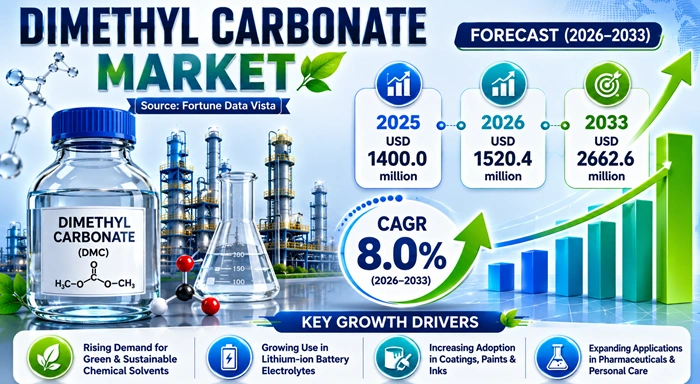
The global dimethyl carbonate market size is valued at USD 1400.0 million in 2025 and is predicted to increase from USD 1520.4 million in 2026 to approximately USD 2662.6 million by 2033, growing at a CAGR of 8.0% from 2026 to 2033.
Dimethyl carbonate (DMC) is a versatile, low-toxicity organic carbonate compound (C₃H₆O₃) recognized globally as a green chemical building block. It serves simultaneously as a solvent, methylating agent, and reactive chemical intermediate across a diverse range of industries — from lithium-ion battery electrolyte manufacturing and polycarbonate plastics production to pharmaceutical synthesis, paints and coatings, and agrochemical formulations. As the world's electric vehicle revolution accelerates and green chemistry mandates intensify, demand for high-purity DMC — particularly battery-grade formulations — is growing at a pace that is reshaping the global specialty chemicals landscape. The dimethyl carbonate market is firmly positioned at the intersection of two of the most powerful structural trends in the global economy: the clean energy transition and the shift toward safer, environmentally responsible industrial chemistry.
AI Impact on the Dimethyl Carbonate Industry
AI-driven synthesis optimization, predictive quality control, and demand forecasting are beginning to reshape how dimethyl carbonate is manufactured, purified, and commercially distributed across global battery and specialty chemicals supply chains
The dimethyl carbonate production industry is beginning to harness the power of artificial intelligence to address some of its most pressing operational challenges — particularly in achieving the ultra-high purity levels that battery-grade applications demand. Traditional purification processes involving multi-stage distillation and molecular sieve dehydration are being enhanced by AI-controlled process optimization systems that continuously monitor impurity profiles, moisture content, and trace metal concentrations in real time. These systems can dynamically adjust distillation column parameters, solvent recirculation rates, and temperature gradients to maintain output consistently above the 99.9% purity threshold required by major lithium-ion battery manufacturers — while reducing energy consumption and minimizing product loss in the process. For producers competing in the premium battery-grade DMC segment, AI-enhanced purification represents a direct pathway to both cost reduction and competitive differentiation.
Beyond production, AI is playing a growing role in supply chain intelligence and demand planning for the dimethyl carbonate market. Given that battery-grade DMC demand is highly correlated with electric vehicle sales forecasts, battery gigafactory production schedules, and lithium-ion cell chemistry trends — all of which are themselves subject to rapid change — producers need increasingly sophisticated demand modeling tools to manage production planning, inventory positioning, and customer delivery commitments effectively. Machine learning platforms that integrate EV sales data, battery supply chain signals, and chemical procurement patterns are giving leading DMC suppliers a meaningful advantage in aligning their production capacity with market demand, reducing working capital strain, and improving customer service levels in a market where supply reliability is increasingly a strategic differentiator.
Growth Factors
The global electric vehicle boom, green chemistry regulatory mandates across major markets, and the expanding use of dimethyl carbonate as a safer substitute for toxic industrial chemicals are the three most powerful structural forces driving the dimethyl carbonate market toward strong multi-year growth through 2033
The most fundamental and rapidly intensifying growth driver for the dimethyl carbonate market is the unprecedented acceleration of global electric vehicle production. Lithium-ion batteries — which power virtually all EVs — require DMC as a critical co-solvent in their electrolyte formulations, typically comprising 20–40% of the electrolyte solvent mixture alongside ethylene carbonate and other carbonates. As annual global EV production surges from tens of millions today toward projected volumes exceeding 50 million vehicles per year by the end of the decade, the structural demand pull for high-purity battery-grade DMC is growing proportionally and persistently. Major battery manufacturers in China, South Korea, Japan, Europe, and North America — including CATL, BYD, Panasonic, Samsung SDI, and the emerging U.S. gigafactories of GM Ultium Cells, Ford, and Tesla — are collectively creating a demand environment for premium DMC that is both massive in scale and accelerating in pace.
Green chemistry regulations are simultaneously creating a powerful parallel demand stream by restricting or eliminating the use of traditional toxic chemical intermediates and solvents that DMC can effectively replace. In pharmaceutical synthesis, dimethyl carbonate is increasingly adopted as a clean methylating agent in active pharmaceutical ingredient (API) production, replacing toxic and carcinogenic reagents like dimethyl sulfate and methyl iodide. In the coatings and adhesives industries, DMC serves as a low-toxicity, low-vapor-pressure solvent alternative to methylene chloride, chloroform, and other halogenated solvents targeted by REACH restrictions in Europe and EPA programs in the U.S. In polycarbonate production, non-phosgene DMC-based melt processes are displacing hazardous phosgene chemistry at major polymer producers globally. Each of these regulatory-driven substitution trends contributes an independent and compounding demand signal for dimethyl carbonate across different end-use sectors, collectively underpinning the market's strong CAGR forecast through 2033.
Market Outlook
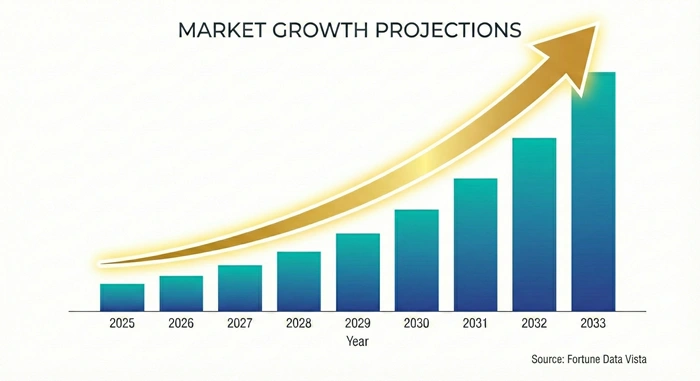
With battery-grade DMC demand accelerating alongside EV production expansion, green chemistry adoption spreading across pharmaceutical and industrial sectors, and new U.S. and European production capacity entering the market, the dimethyl carbonate market is on a compelling growth trajectory toward USD 2662.6 million by 2033
The medium-term market outlook for dimethyl carbonate is strongly positive across all major dimensions — demand drivers, geographic reach, and application diversification. Growing at a CAGR of 8.0% from 2026 to 2033, the market is projected to nearly double in value from its 2025 base. Asia Pacific will remain the dominant production and consumption region, anchored by China's enormous lithium-ion battery manufacturing ecosystem and rapidly growing pharmaceutical and polycarbonate industries in India and Southeast Asia. Europe is expected to be the fastest-growing regional market, driven by aggressive EV adoption mandates, REACH-driven substitution of toxic industrial solvents, and major battery gigafactory investments — including Northvolt's Swedish operations and CATL's German facility — generating substantial regional demand for battery-grade DMC. North America is poised for a structural production shift, with UBE Corporation's USD 500 million Louisiana plant set to become the first domestic U.S. producer of DMC and ethyl methyl carbonate at commercial scale.
Product innovation and process sustainability are the two defining development themes that will shape competitive dynamics in the dimethyl carbonate market through 2033. The shift from traditional phosgenation and transesterification synthesis routes toward CO₂-based direct synthesis technology — pioneered commercially by Asahi Kasei and adopted by Chinese producers including Jiangsu Sailboat Petrochemical — is reducing the carbon footprint of DMC manufacturing while simultaneously improving feedstock economics by converting captured CO₂ into commercially valuable product. Ultra-high purity production capabilities exceeding 99.95% purity with moisture content below 20 ppm are becoming the industry's new performance standard for battery-grade applications — and producers that can achieve and consistently maintain this specification at commercial scale will command premium pricing and long-term supply contracts with the world's largest battery manufacturers.
Expert Speaks
-
"The electrification of transportation is not just a trend — it is a fundamental restructuring of the global automotive industry's material and chemical supply chain. Battery electrolyte chemistry is one of the critical value chains that our industry is actively investing in, and dimethyl carbonate's role as a primary electrolyte solvent means that DMC supply reliability and purity performance are now strategic considerations at the highest levels of our procurement organization." — CEO perspective, leading global automotive and EV manufacturing company
-
"Green chemistry is no longer a voluntary corporate responsibility position — it is a regulatory and commercial imperative in every market we operate in. The ability to replace toxic methylating agents and halogenated solvents with dimethyl carbonate in pharmaceutical synthesis has been transformative for our manufacturing sustainability agenda, and we are continuing to expand our use of DMC-based processes across our global API production network." — CEO perspective, multinational pharmaceutical and specialty chemicals company
-
"Producing battery-grade DMC at the purity and consistency levels that EV battery manufacturers require is an extremely technically demanding undertaking. We are investing heavily in advanced purification infrastructure and vertical integration with downstream battery electrolyte producers because we believe that the companies that can guarantee battery-grade DMC quality and supply reliability over the long term will be central to the global EV battery supply chain for decades." — CEO perspective, leading specialty chemicals and battery materials company
Key Report Takeaways
-
Asia Pacific dominates the global dimethyl carbonate market, holding approximately 55% of total market revenue in 2025, driven by China's massive lithium-ion battery production capacity from manufacturers like CATL and BYD, large-scale polycarbonate production facilities across South Korea and Japan, and rapidly expanding pharmaceutical manufacturing in India.
-
Europe is the fastest-growing regional market, expected to register the highest CAGR through 2033 at approximately 7.1%, fueled by aggressive EV adoption mandates, battery gigafactory investments from Northvolt, CATL, and Volkswagen's PowerCo, and accelerating REACH-driven substitution of toxic solvents and methylating agents with environmentally compliant DMC alternatives.
-
Battery electrolyte is the largest application segment, accounting for approximately 35.6% of global market share in 2025 and expected to reach USD 862.8 million by 2033, as DMC remains an indispensable co-solvent in lithium-ion electrolyte formulations for electric vehicles, consumer electronics, and grid-scale energy storage systems worldwide.
-
Battery grade (high purity) is the dominant product grade, holding approximately 44.4% of total market revenue in 2025, reflecting the critical and growing importance of ultra-high purity DMC (>99.9%) for lithium-ion battery performance, safety, and longevity across automotive and energy storage applications globally.
-
The plastics (polycarbonate production) segment is the largest end-use industry contributor, accounting for approximately 33.1% of market share in 2025, driven by non-phosgene polycarbonate synthesis demand from the automotive, electronics, and construction sectors — all of which are expanding their use of lightweight, high-performance engineering thermoplastics.
-
Pharmaceutical grade DMC is the fastest-growing grade segment, projected to grow at approximately 6.9% CAGR through 2033, driven by expanding API synthesis applications in green methylation chemistry and increasing GMP-compliant pharmaceutical production capacity in India, China, and Europe.
-
The battery/electronics end-use segment is the fastest-growing industry category, anticipated to grow at a CAGR of 7.69% through 2033, supported by the parallel growth of EV battery production, consumer electronics demand, and large-format energy storage systems for grid stabilization and renewable energy integration.
Market Scope
| Parameter | Details |
|---|---|
| Market Size by 2033 | USD 2662.6 Million | Market Size by 2026 | USD 1520.4 Million | Market Size by 2025 | USD 1400.0 Million | Market Growth Rate from 2026 to 2033 | CAGR of 8.0% | Dominating Region | Asia Pacific | Fastest Growing Region | Europe | Segments Covered | Grade, Synthesis Method, Application, End-Use Industry | Regions Covered | North America, Europe, Asia Pacific, Latin America, Middle East & Africa |
Market Dynamics
Drivers Impact Analysis
The convergence of explosive EV battery demand, binding green chemistry regulations, and pharmaceutical industry sustainability mandates is creating a multi-dimensional and self-reinforcing demand growth engine for the dimethyl carbonate market that is structurally set to sustain above-market CAGR performance through 2033
| Driver | ≈ % Impact on CAGR Forecast | Geographic Relevance | Impact Timeline |
|---|---|---|---|
| Surging lithium-ion battery production for EVs and energy storage | ~40% | Asia Pacific, Europe, North America | Short to Long Term |
| Green chemistry regulations driving substitution of toxic chemicals with DMC | ~28% | Europe, North America | Short to Long Term |
| Pharmaceutical industry adoption of DMC as a green methylating agent | ~18% | Europe, North America, Asia Pacific | Medium to Long Term |
| Expansion of non-phosgene polycarbonate production capacity | ~10% | Asia Pacific | Short to Medium Term |
| CO₂-based DMC production creating cost and sustainability advantages | ~4% | Asia Pacific, Europe | Medium to Long Term |
The overriding growth driver in the dimethyl carbonate market is the exponential acceleration of lithium-ion battery production globally. Every battery cell manufactured for an electric vehicle, a home energy storage system, or a consumer electronics device requires DMC as an essential electrolyte component — and the volume of batteries being produced is growing at a pace that was almost inconceivable five years ago. China alone accounted for over 9 million EV sales in 2024, and multiple governments across Europe, North America, and Asia have committed to aggressive emission targets that will drive sustained EV growth through the entire 2026–2033 forecast period. With major battery manufacturers investing hundreds of billions of dollars in new gigafactory capacity across three continents, the structural demand signal for high-purity DMC is both enormous and durable — creating a foundation for sustained revenue growth that represents the most powerful single driver the dimethyl carbonate market has ever experienced.
The green chemistry substitution trend represents the second major growth driver and is particularly powerful in Europe and North America, where regulatory frameworks are most advanced. The EU's REACH regulation has progressively restricted or eliminated dozens of traditional industrial solvents and methylating agents on toxicity, carcinogenicity, and environmental persistence grounds — and dimethyl carbonate's combination of low toxicity, high biodegradability, good solvating power, and regulatory compliance makes it the most commercially viable replacement across a wide range of applications. In pharmaceutical synthesis alone, the industry-wide transition from dimethyl sulfate to DMC as a methylating agent in API production is creating a sustained and growing demand stream that is attracting new investment in pharmaceutical-grade production capacity. These regulatory-driven demand signals are sticky and largely independent of cyclical economic conditions — making them a reliable and structurally important contribution to the market's long-term CAGR profile.
Restraints Impact Analysis
Raw material price volatility, supply-demand imbalances during periods of rapid demand acceleration, and stringent battery-grade quality requirements are creating operational friction and margin pressure that are tempering the pace of the dimethyl carbonate market's otherwise strong growth trajectory
| Restraint | ≈ % Impact on CAGR Forecast | Geographic Relevance | Impact Timeline |
|---|---|---|---|
| Raw material price volatility (methanol, carbon monoxide) | ~45% | Global | Short to Medium Term |
| Supply-demand imbalances and limited production capacity additions | ~35% | North America, Europe | Short to Medium Term |
| Stringent battery-grade purity and quality control requirements | ~20% | Global | Medium to Long Term |
The primary restraint affecting the dimethyl carbonate market is the persistent volatility in key raw material costs — particularly methanol, which is the principal feedstock in oxidative carbonylation and transesterification production routes, and carbon monoxide used in carbonylation chemistry. Both methanol and CO prices are sensitive to natural gas prices, coal gasoline dynamics, and petrochemical supply chain disruptions — all of which have proven highly unpredictable in recent years. When raw material costs spike, DMC producers face the difficult choice of absorbing margin compression or passing cost increases through to customers — a challenging commercial conversation in competitive markets where alternative suppliers or substitute chemicals may be considered. This cost structure vulnerability is particularly acute for smaller and mid-scale producers that lack the scale, backward integration, or long-term supply agreements to buffer effectively against input cost shocks.
Production capacity constraints represent a secondary but increasingly significant restraint, particularly in Western markets. While demand for battery-grade DMC is accelerating rapidly, the construction of new world-scale production facilities — which require hundreds of millions of dollars in capital investment, complex process equipment, and multi-year permitting and construction timelines — cannot keep pace with demand growth in the short term. The U.S. currently has no domestic commercial DMC production capacity, making North American battery manufacturers entirely dependent on imports — primarily from Asia — for their electrolyte-grade DMC supply. This geographic supply concentration creates both supply security risk and price volatility exposure for downstream customers who are simultaneously trying to meet Inflation Reduction Act domestic content requirements. UBE's Louisiana plant investment addresses this gap, but it will not reach full commercial production until the latter part of the forecast period.
Opportunities Impact Analysis
Next-generation battery chemistries, CO₂-based sustainable DMC production, and the massive untapped potential in pharmaceutical and green solvent applications across emerging markets represent three distinct and highly compelling opportunity vectors for the dimethyl carbonate market through 2033
| Opportunity | ≈ % Impact on CAGR Forecast | Geographic Relevance | Impact Timeline |
|---|---|---|---|
| Next-generation and solid-state battery development requiring specialty DMC grades | ~38% | Asia Pacific, Europe, North America | Medium to Long Term |
| Sustainable CO₂-based production routes reducing cost and environmental footprint | ~32% | Asia Pacific, Europe | Medium to Long Term |
| Pharmaceutical and agrochemical green chemistry expansion in emerging markets | ~22% | Asia Pacific, Latin America | Short to Medium Term |
| Fuel additive and emission reduction applications for combustion engines | ~8% | Global | Short to Medium Term |
The most transformative long-term opportunity in the dimethyl carbonate market lies in the development of next-generation battery chemistries — including solid-state batteries, high-voltage lithium-metal batteries, and sodium-ion batteries — all of which are expected to enter commercial production over the 2026–2033 window. While these advanced battery architectures may alter the specific proportions and grades of carbonate solvents in their electrolyte formulations, they collectively represent a continuation and expansion of the premium electrolyte chemical demand that is already driving DMC market growth. Companies that invest now in developing ultra-high purity specialty DMC grades and electrolyte formulation expertise aligned with next-generation battery requirements will be positioned to capture the premium value created as these technologies move from pilot scale to commercial gigafactory production. Strategic partnerships with battery R&D centers and automotive OEMs engaged in next-generation cell development are a key avenue for securing this technology positioning.
The development of commercially viable CO₂-based DMC synthesis routes represents a second major opportunity that simultaneously addresses market growth and sustainability imperatives. Asahi Kasei's licensed CO₂-to-carbonate technology — already operating commercially at Jiangsu Sailboat Petrochemical's Lianyungang plant in China — demonstrates that DMC can be produced at commercial scale using captured CO₂ as the primary carbon feedstock, with significantly reduced environmental impact compared to traditional phosgene or CO-based routes. As carbon pricing mechanisms expand globally and corporate decarbonization commitments intensify pressure on chemical supply chains to reduce lifecycle carbon footprints, CO₂-based DMC production could shift from a technological novelty to a commercial necessity — and early movers who scale this technology will hold a durable competitive advantage in markets where customers are increasingly scrutinizing the sustainability credentials of their chemical inputs.
Segment Analysis
By Grade: Battery Grade (High Purity)
Battery-grade DMC's critical and irreplaceable role in lithium-ion electrolyte chemistry, combined with the global EV production explosion, has established it as the undisputed revenue leader and fastest-growing premium product category within the dimethyl carbonate market
Battery grade (high purity) is the dominant grade segment in the dimethyl carbonate market, holding approximately 44.4% of total market revenue in 2025 with a value of approximately USD 589.6 million. This grade is characterized by purity levels exceeding 99.9% and tightly controlled impurity specifications — including moisture below 20 ppm and trace metal concentrations at parts-per-billion levels — that are essential for maintaining electrolyte electrochemical stability, preventing capacity fade, and ensuring battery safety in lithium-ion cells. Its market leadership is a direct reflection of the explosive growth in global EV battery production, which requires DMC as an essential co-solvent in electrolyte formulations for virtually all commercial lithium-ion battery chemistries including NMC, NCA, and LFP. The segment is growing at a CAGR of approximately 5.5% through 2033, with Asia Pacific — particularly China, South Korea, and Japan — representing the dominant consumption geography, driven by the concentration of global battery cell manufacturing in this region. Key producers supplying battery-grade DMC to Asian markets include UBE Corporation, Shandong Hualu-Hengsheng Chemical, and LOTTE Chemical Corporation.
North America and Europe are emerging as increasingly important growth geographies for battery-grade DMC as domestic battery manufacturing scales rapidly under the influence of government incentive programs including the U.S. Inflation Reduction Act and the EU's European Chips and Battery Act. UBE Corporation's groundbreaking of its Louisiana DMC and EMC facility in February 2025 — the first dedicated domestic U.S. production site for these battery electrolyte solvents — is a landmark development that signals the strategic importance of regional supply chain resilience in the battery materials space. In Europe, Northvolt's Swedish gigafactories and CATL's Erfurt facility are generating direct, growing demand for locally sourced premium-grade DMC, prompting investment in European production capacity expansion by several specialty chemical manufacturers. As battery manufacturing capacity continues to expand across all three regions through the 2026–2033 period, the battery-grade segment of the dimethyl carbonate market is expected to maintain its dominant revenue position and deliver above-market revenue growth.
By Application: Battery Electrolyte
The battery electrolyte application is the commercial cornerstone of the dimethyl carbonate market's growth story — its direct linkage to the global EV revolution makes it the single most important demand driver in the entire DMC value chain
The battery electrolyte application segment holds the largest revenue share in the dimethyl carbonate market, contributing approximately 35.6% of global market revenue in 2025 and growing at a CAGR of approximately 6.3% through 2033. DMC's role in lithium-ion battery electrolytes is technically foundational: it functions as a low-viscosity co-solvent that reduces the overall viscosity of the electrolyte mixture, enabling high ionic conductivity and excellent low-temperature battery performance while contributing to a stable solid electrolyte interphase on the anode surface. A typical commercial electrolyte formulation contains DMC in a mixed solvent blend comprising 20–40% of total solvent volume alongside ethylene carbonate, with DMC's low boiling point and low dielectric constant complementing ethylene carbonate's high dielectric constant to achieve the ideal balance of properties for safe, high-performance operation across a wide temperature range. Asia Pacific dominates this application segment by a wide margin, accounting for the overwhelming majority of global battery electrolyte DMC consumption, driven by China's position as the world's largest EV market and the home of the world's largest lithium-ion battery manufacturers. UBE Corporation, Shandong Hualu-Hengsheng Chemical, and Shinghwa Advanced Material Group are the leading DMC suppliers serving the battery electrolyte application in this region.
The segment is expected to reach approximately USD 862.8 million by 2033, adding over USD 270 million in incremental revenue from its 2025 level — making it the single largest revenue contributor to the market's overall growth over the forecast period. North America is entering a period of rapid growth within this segment as domestic battery manufacturing capacity ramps, with the IRA-incentivized gigafactory investments of Tesla, GM, Ford, and Stellantis creating the first large-scale domestic demand base for battery-grade DMC in U.S. history. The fuel for this application segment's continued expansion is ultimately the pace of global EV adoption — and with every major automaker committed to electrification roadmaps extending well into the 2030s, the structural demand trajectory for the battery electrolyte segment within the broader dimethyl carbonate market remains strongly positive across all geographies through 2033 and well beyond.
Regional Insights
Asia Pacific
Asia Pacific's commanding position as the world's battery manufacturing hub, polycarbonate production center, and pharmaceutical growth market makes it the undisputed revenue leader and most strategically important region in the global dimethyl carbonate market
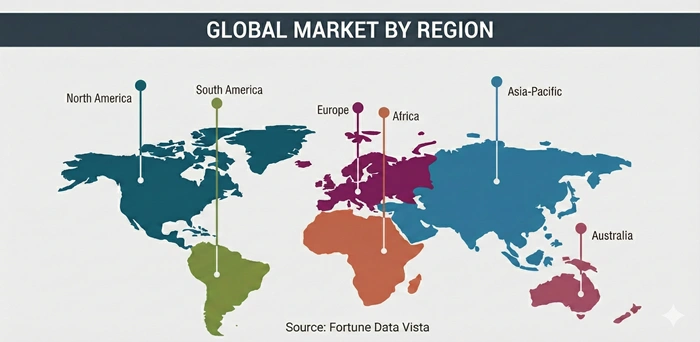
Asia Pacific dominates the dimethyl carbonate market, accounting for approximately 55% of global market revenue in 2025, valued at approximately USD 770 million, with a regional CAGR of approximately 7.5% projected through 2033. China is the single largest country market, generating the majority of regional DMC consumption through its massive lithium-ion battery production ecosystem — led by CATL, BYD, and CALB — its enormous polycarbonate manufacturing base serving automotive and electronics industries, and its rapidly growing pharmaceutical and fine chemicals sectors. South Korea's Samsung SDI, LG Energy Solution, and SK On, together with Japan's Panasonic and Murata, represent additional major battery-grade DMC consumption sources across the region, collectively driving demand for ultra-high purity product that meets the most stringent electrolyte quality standards. Key regional DMC producers include UBE Corporation, Shandong Hualu-Hengsheng Chemical, Shinghwa Advanced Material Group, and LOTTE Chemical Corporation, which collectively supply the bulk of Asia Pacific's battery electrolyte-grade DMC needs.
India is emerging as a second important growth driver within the region, contributing meaningful incremental demand from its pharmaceutical manufacturing sector — which is the world's largest producer of generic APIs and is aggressively adopting DMC as a green methylating agent replacement. India's expanding electronics manufacturing sector and its government's push toward domestic EV battery production under the PLI scheme are also beginning to generate battery-grade DMC demand that was largely absent five years ago. Southeast Asian markets — including Thailand, Vietnam, and Indonesia — are experiencing growing DMC consumption from their expanding automotive parts, electronics, and agrochemical manufacturing sectors. The combination of China's battery and polycarbonate demand, India's pharmaceutical and EV growth, and Southeast Asia's manufacturing expansion makes Asia Pacific the most important and most dynamic regional market for dimethyl carbonate through the 2026–2033 forecast period.
Europe
Europe's aggressive EV transition mandates, stringent REACH-driven green chemistry requirements, and major battery gigafactory investments are establishing it as the fastest-growing regional market for dimethyl carbonate and a critical new frontier for battery-grade DMC demand
Europe is the fastest-growing region in the dimethyl carbonate market, expected to grow at a CAGR of approximately 7.1% through 2033, driven by a rare convergence of demand-side and regulatory forces that are simultaneously expanding DMC's role across multiple industrial sectors. The automotive industry's electrification — mandated by the EU's binding target to end new ICE car sales by 2035 — is the primary demand engine, with battery gigafactories from Northvolt (Sweden), Volkswagen's PowerCo (Germany), ACC (France/Germany), and CATL (Germany) collectively representing tens of gigawatt-hours of annual cell production capacity that is already operational or under construction. Each gigawatt-hour of lithium-ion cell capacity requires several hundred tonnes of battery-grade DMC annually, creating a structural demand base in Europe that effectively did not exist five years ago. Key DMC suppliers serving the European market include Merck KGaA, UBE's European distribution network, and several German and Belgian specialty chemical producers. Europe's market share in 2025 stands at approximately 18% and is expected to grow meaningfully through 2033.
Germany, France, and the Nordic countries are leading Europe's DMC adoption, not only through EV battery demand but through the pharmaceutical and specialty chemical industries' active substitution of toxic solvents and methylating agents under REACH compliance programs. Germany's chemical industry — the largest in Europe — is at the forefront of adopting DMC as a replacement for methylene chloride and dimethyl sulfate in synthesis processes, supported by industry associations and government R&D programs promoting sustainable chemistry. The Asahi Kasei-licensed CO₂-based DMC production technology is attracting European interest as a pathway to producing battery-grade DMC with a significantly reduced carbon footprint — a critical consideration for European battery manufacturers who must meet stringent Scope 3 emission standards under the EU Battery Regulation. As Europe's battery supply chain infrastructure matures and green chemistry mandates deepen, the region's contribution to global DMC market revenue is projected to increase substantially through the 2026–2033 forecast window.
Report Customization Available
Get a Fully Customized Dimethyl Carbonate Market Report for Your Region or Country
Our dimethyl carbonate market report is available with complete region-specific and country-level customization to precisely match your geographic research and strategic business intelligence needs. Each tailored version provides in-depth market sizing, grade-specific and application-specific demand analysis, regulatory environment review, competitive landscape profiling, production capacity and supply chain assessment, and detailed growth opportunity mapping — all calibrated to reflect the real commercial dynamics of your target geography.
Customized dimethyl carbonate market reports are available for the following regions and countries:
North America
-
United States – Deep-dive coverage of domestic battery-grade DMC demand from IRA-incentivized gigafactories, FDA-regulated pharmaceutical applications, UBE's Louisiana production plant development, and the competitive landscape for DMC import vs. domestic supply
-
Canada – Analysis of pharmaceutical manufacturing DMC demand, emerging EV battery supply chain development, and green chemistry adoption trends in chemical manufacturing
-
Mexico – Coverage of automotive sector DMC demand, growing pharmaceutical manufacturing applications, and specialty chemical distribution landscape
Europe
-
United Kingdom – Analysis of MHRA-regulated pharmaceutical DMC applications, EV battery supply chain development post-Brexit, and green solvent adoption in specialty chemical manufacturing
-
Germany – In-depth coverage of automotive gigafactory battery-grade DMC demand from Volkswagen PowerCo and CATL, REACH compliance-driven green chemistry substitution, BASF and Merck's DMC supply activities, and specialty chemical industry trends
-
France – Insights on ACC gigafactory battery-grade DMC demand, pharmaceutical industry green chemistry programs, paints and coatings sector DMC adoption, and regulatory environment
-
Italy – Coverage of automotive and specialty chemicals DMC demand, pharmaceutical API manufacturing applications, and competitive supplier landscape
-
Rest of Europe – Aggregated analysis covering Sweden (Northvolt battery demand), Netherlands, Belgium, Spain, and Eastern European markets, with focus on EV battery supply chain DMC requirements and green chemistry regulatory impacts
Asia Pacific
-
China – Comprehensive analysis of CATL, BYD, and CALB battery-grade DMC demand, major domestic producer profiles including Shandong Hualu-Hengsheng and Shinghwa, CO₂-based production capacity expansions, and polycarbonate and pharmaceutical sector demand
-
India – Coverage of generic pharmaceutical API manufacturing DMC demand, government EV PLI scheme battery demand outlook, growing agrochemical and paints applications, and domestic production vs. import dynamics
-
Japan – Analysis of UBE Corporation's DMC production and technology licensing activities, Panasonic battery demand, automotive polycarbonate applications, and specialty chemicals sector DMC consumption
-
South Korea – Insights on Samsung SDI, LG Energy Solution, and SK On battery-grade DMC requirements, LOTTE Chemical production activities, and automotive polycarbonate demand
-
Australia – Coverage of pharmaceutical and specialty chemical sector DMC demand, EV transition impact on battery material imports, and regulatory market dynamics
-
Rest of Asia Pacific – Market analysis for Vietnam, Indonesia, Thailand, and other Southeast Asian nations, covering growing automotive, electronics, and agrochemical DMC demand
Latin America
-
Brazil – Detailed analysis of pharmaceutical sector DMC adoption in API synthesis, automotive and agrochemical applications, and competitive import supplier landscape
-
Argentina – Coverage of pharmaceutical and agrochemical DMC demand, specialty chemical market dynamics, and regulatory framework
-
Rest of Latin America – Insights covering Mexico, Colombia, Chile, and other markets, focused on pharmaceutical and industrial DMC demand and regional distribution
Middle East & Africa
-
UAE – Coverage of petrochemical integration opportunities for DMC production, specialty chemicals distribution activity, and emerging pharmaceutical manufacturing sector DMC demand
-
Saudi Arabia – Analysis of Vision 2030 petrochemical diversification programs, methanol feedstock advantages for DMC synthesis, specialty chemical sector growth, and pharmaceutical industry development
-
Rest of MEA – Insights covering South Africa, Egypt, Turkey, and other MEA markets with growing pharmaceutical, paints, and agrochemical sector DMC demand
Top Key Players
-
UBE Corporation (Japan)
-
Merck KGaA (Germany)
-
Thermo Fisher Scientific Inc. (United States)
-
Tokyo Chemical Industry Co., Ltd. (Japan)
-
Shandong Hualu-Hengsheng Chemical Co., Ltd. (China)
-
LOTTE Chemical Corporation (South Korea)
-
Shinghwa Advanced Material Group Co., Ltd. (China)
-
Mitsui Fine Chemicals, Inc. (Japan)
-
Kishida Chemical Co., Ltd. (Japan)
-
Henan GP Chemicals Co., Ltd. (China)
-
Hefei TNJ Chemical Industry Co., Ltd. (China)
-
Actylis (United States)
-
SMC Global (India)
-
Dow Inc. (United States)
-
Asahi Kasei Corporation (Japan)
Recent Developments
-
In February 2025, UBE Corporation held a formal groundbreaking ceremony for its new dimethyl carbonate and ethyl methyl carbonate manufacturing plant in Louisiana, United States — a USD 500 million investment that will establish the country's first and only domestic commercial production facility for these critical battery electrolyte solvents. The plant, developed by UBE C1 Chemicals America, Inc., will have an annual production capacity of 100,000 tons of DMC and 40,000 tons of EMC, targeting the rapidly expanding lithium-ion battery and semiconductor manufacturing markets in North America.
-
In December 2024, Asahi Kasei Corporation announced that its licensee, Jiangsu Sailboat Petrochemical, had successfully commenced commercial production of high-purity ethylene carbonate and dimethyl carbonate at its new plant in Lianyungang, Jiangsu Province, China, using CO₂ as the primary carbon feedstock under Asahi Kasei's proprietary licensed technology. The plant has an annual capacity of 70,000 tons of DMC and is designed to utilize approximately 54,000 tons of CO₂ per year, demonstrating the commercial viability of carbon-capture-based DMC production at industrial scale.
-
In March 2024, Dow Inc. announced plans to invest in a world-scale carbonate solvents manufacturing facility on the U.S. Gulf Coast, in a project selected for award negotiations by the U.S. Department of Energy. The facility is designed to capture over 90% of CO₂ emissions during production and will supply battery electrolyte-grade carbonate solvents — including DMC — to support the growing EV battery and energy storage markets in North America.
-
In February 2024, UBE Corporation formally announced its USD 500 million Louisiana manufacturing investment plan, marking the strategic commitment to building North America's first dedicated DMC and EMC production hub. The announcement was made in collaboration with JEDCO and Jefferson Parish economic development authorities, highlighting the project's significance as a domestic battery supply chain development initiative aligned with U.S. energy security and EV manufacturing policy objectives.
-
In December 2024, Shandong Hualu-Hengsheng Chemical Co., Ltd. completed an expansion of its battery-grade DMC production capacity at its Dezhou, China facility, increasing total annual output to meet surging demand from CATL, BYD, and other tier-1 battery manufacturers. The expansion incorporated advanced molecular sieve dehydration and multi-stage distillation technology to ensure consistent delivery of ultra-high purity DMC meeting the most stringent automotive battery electrolyte specifications.
Market Trends
The accelerating industrialization of CO₂-based DMC production, the intensifying competition for battery-grade supply chain positioning, and the broadening of DMC's commercial footprint across pharmaceutical and green solvent applications are the three defining trends reshaping the dimethyl carbonate market through 2033
The most commercially transformative trend currently reshaping the dimethyl carbonate market is the accelerating transition to CO₂-based synthesis routes that utilize captured carbon dioxide as a primary feedstock. While conventional DMC production relies on methanol oxidative carbonylation or transesterification of cyclic carbonates — both energy-intensive processes with significant CO₂ emissions — the CO₂-to-DMC direct synthesis pathway converts captured industrial CO₂ into valuable battery-grade DMC in a process that is simultaneously lower in carbon footprint and potentially more competitive on raw material cost. The commercial validation of this technology at Jiangsu Sailboat Petrochemical and the DOE selection of Dow's Gulf Coast carbonate project are strong signals that CO₂-based DMC production is transitioning from laboratory curiosity to commercial mainstream. As global carbon pricing mechanisms expand and corporate supply chain decarbonization commitments intensify, producers who can credibly document a low-carbon DMC production process will gain a meaningful competitive advantage in markets — particularly Europe — where sustainability credentials are becoming a condition of supply qualification.
The second major trend is the rapid intensification of strategic positioning around battery-grade DMC supply chain security, particularly in North America and Europe where domestic battery manufacturing is scaling rapidly but domestic DMC production capacity is largely absent. Automotive OEMs, battery manufacturers, and governments are all increasingly concerned about the concentration of battery electrolyte chemical supply in Asia — primarily China and South Korea — and are actively incentivizing domestic production capacity development. UBE's Louisiana investment, Dow's Gulf Coast project, and European producers' investment in battery-grade purification upgrades all reflect this strategic anxiety and the commercial opportunity it creates. Companies that establish first-mover domestic production positions in North America or Europe before demand fully materializes will be positioned to secure long-term supply agreements at premium pricing with customers who are willing to pay for domestic supply security and IRA or EU Battery Regulation compliance.
Segments Covered in the Report
-
By Grade
-
Battery Grade (High Purity)
-
Pharmaceutical Grade
-
Industrial Grade
-
-
By Synthesis Method
-
Oxidative Carbonylation of Methanol
-
Transesterification
-
Urea Transesterification
-
Phosgenation Process
-
CO₂-Based Direct Synthesis
-
-
By Application
-
Battery Electrolyte
-
Polycarbonate Synthesis
-
Solvents
-
Reagents (Methylating Agents, Chemical Intermediates)
-
Fuel Additives
-
Pesticides
-
Others
-
-
By End-Use Industry
-
Plastics (Polycarbonate Production)
-
Battery/Electronics
-
Pharmaceuticals
-
Paints & Coatings
-
Agrochemicals
-
Adhesives & Sealants
-
Others
-
-
By Region
-
North America (U.S., Canada, Mexico)
-
Europe (U.K., Germany, France, Italy, Spain, Rest of Europe)
-
Asia Pacific (China, India, Japan, South Korea, Australia, Rest of Asia Pacific)
-
Latin America (Brazil, Argentina, Rest of Latin America)
-
Middle East & Africa (UAE, Saudi Arabia, South Africa, Rest of MEA)
-
❝ Built for Every Level — From Startups to Industry Giants ❞
Here Is Exactly How This Report Works for You
-
For Tier 1 corporations, institutional investors, and C-suite strategists: This report delivers a comprehensive competitor revenue analysis — breaking down revenue by grade, application, synthesis method, and geography for all 15 major players including UBE Corporation, Merck KGaA, Shandong Hualu-Hengsheng, and Dow. It also provides an in-depth assessment of how geopolitical factors — including IRA domestic content requirements, EU Battery Regulation sustainability mandates, China's export controls on strategic chemical intermediates, and carbon pricing policy expansion — are directly reshaping the competitive landscape and supply chain architecture of the global dimethyl carbonate market, giving you the intelligence needed to navigate risk and capture opportunity at scale.
-
For Tier 2 and Tier 3 chemical producers, specialty chemical distributors, and mid-level manufacturers: This report identifies the precise supply-demand gaps across all regions and application segments — mapping where battery-grade DMC supply is insufficient relative to growing EV battery demand, where pharmaceutical-grade product availability is constrained in fast-growing markets, and where new production or distribution investments would deliver the strongest risk-adjusted commercial returns. Competitor revenue source breakdowns reveal which grade and application combinations are generating the highest margins for market leaders, giving you a clear strategic benchmark for product mix optimization.
-
For startups, clean technology investors, and emerging market companies: This report maps the highest-impact commercial frontiers — CO₂-based DMC production technology commercialization, pharmaceutical green chemistry adoption in India and Southeast Asia, North American domestic supply chain development, and solid-state battery materials opportunities — with granular data on investment activity, technology readiness, regulatory pathway status, and competitive intensity. It provides the strategic intelligence to identify and pursue the market entry and investment opportunities that will define the leaders of the dimethyl carbonate market through 2033 and beyond.
Frequently Asked Questions:
Answer: The global dimethyl carbonate market was valued at USD 1400.0 million in 2025 and is expected to reach approximately USD 2662.6 million by 2033. The market is projected to grow at a CAGR of 8.0% from 2026 to 2033, driven primarily by surging lithium-ion battery production for electric vehicles, green chemistry regulatory mandates, and expanding pharmaceutical applications.
Answer: Asia Pacific dominates the dimethyl carbonate market with approximately 55% of global revenue in 2025, driven by China's massive battery manufacturing base and polycarbonate production industries. Europe is the fastest-growing region, expected to grow at approximately 7.1% CAGR through 2033, fueled by aggressive EV mandates, battery gigafactory investments, and REACH-driven green chemistry substitution trends.
Answer: The dimethyl carbonate market serves several key applications, with battery electrolyte being the largest at approximately 35.6% market share in 2025, followed by polycarbonate synthesis and solvents. Additional growing applications include pharmaceutical methylating agent use, fuel additives, agrochemical formulations, and paints and coatings where DMC replaces toxic conventional chemicals.
Answer: The primary challenges in the dimethyl carbonate market include raw material price volatility — particularly methanol and CO feedstock prices — which creates margin pressure for producers during commodity price spikes. Supply-demand imbalances driven by rapidly accelerating battery demand, combined with lengthy construction timelines for new production facilities, are also creating near-term supply tightness especially in North America and Europe.
Answer: The leading companies in the dimethyl carbonate market include UBE Corporation, Merck KGaA, Thermo Fisher Scientific, Shandong Hualu-Hengsheng Chemical, and LOTTE Chemical Corporation, with the top five players collectively holding approximately 43% of global market share in 2025. These companies compete through investment in ultra-high purity battery-grade production capacity, strategic geographic expansion, vertical integration with battery manufacturers, and sustainable CO₂-based production technology development.