
Earthquake Insurance Market Overview
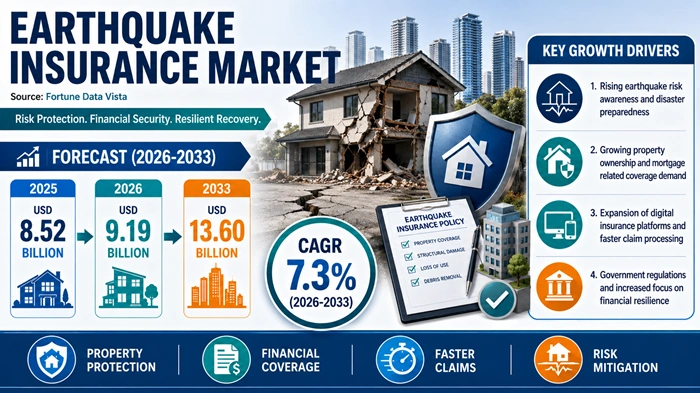
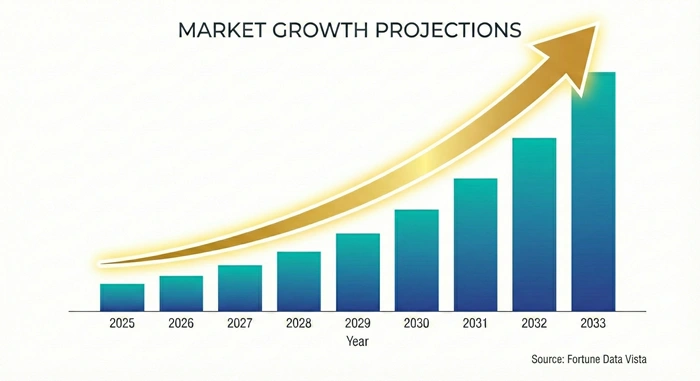
The global Earthquake Insurance market size is valued at USD 8.52 billion in 2025 and is predicted to increase from USD 9.19 billion in 2026 to approximately USD 13.60 billion by 2033, growing at a CAGR of 7.3% from 2026 to 2033. This consistent growth reflects rising awareness of seismic financial risk across both developed and emerging economies, the urbanization of populations into earthquake-prone regions, and increasing government and regulatory emphasis on catastrophe risk coverage for residential, commercial, and infrastructure assets. As climate patterns shift and seismic event frequency remains persistently high globally, the earthquake insurance market is becoming a more critical component of national and individual risk management strategies worldwide.
AI Impact on the Earthquake Insurance Industry
Artificial Intelligence Is Fundamentally Reshaping How Earthquake Risk Is Modeled, Priced, Underwritten, and Settled — Enabling Insurers to Offer More Accurate, Accessible, and Financially Sustainable Seismic Coverage at Scale*
AI is transforming the earthquake insurance market at its most fundamental level: risk modeling. Traditional seismic risk assessment relied on geological surveys, historical loss data, and broad geographic zone classifications to estimate probable earthquake losses — a methodology that produced relatively imprecise pricing and left both insurers and policyholders carrying significant model uncertainty. AI-powered catastrophe modeling platforms now integrate satellite imagery, real-time ground motion sensor data, building structural characteristics, soil liquefaction maps, and historical insurance loss data to produce highly granular, property-level seismic risk assessments that dramatically improve pricing accuracy. Companies including RMS (now Moody's RMS) and AIR Worldwide (now Verisk) are deploying these advanced AI-driven catastrophe models to help insurers price earthquake policies with a level of precision that was unachievable even five years ago.
On the claims side, AI is reducing the time, cost, and friction associated with post-earthquake loss assessment and settlement — a historically slow and contentious process that has undermined policyholder confidence in earthquake coverage. Computer vision systems trained on satellite and aerial imagery can detect structural damage to insured properties within hours of a major seismic event, providing early damage estimates that enable insurers to mobilize claims adjusters, begin settlement processes, and communicate proactively with affected policyholders well before traditional ground-based assessment would be complete. Parametric insurance structures — in which policy payouts are triggered automatically by objective measurements of ground shaking intensity rather than property-level damage assessments — are being powered by AI-integrated seismic monitoring networks that deliver near-instantaneous payout authorization following qualifying events, eliminating the claims adjustment process entirely for parametric policyholders.
Growth Factors
Increasing Seismic Hazard Awareness, Rapid Urbanization Into High-Risk Zones, and Regulatory Mandates for Catastrophe Coverage Are Together Building a Structurally Stronger and Broader Demand Foundation for the Market*
The primary force expanding the earthquake insurance market is the growing recognition — among homeowners, business operators, and governments — of the catastrophic financial consequences that major seismic events can cause when insurance coverage is inadequate or absent entirely. High-profile earthquakes in recent years — including devastating events in Turkey, Morocco, Japan, and the United States — have provided stark, widely reported evidence of the scale of economic loss that follows major seismic events, and the dramatic gap between insured and uninsured losses that characterizes most global earthquake disasters. This "protection gap" awareness is driving both individual purchasing decisions and government policy programs designed to mandate or incentivize earthquake coverage in high-risk jurisdictions.
Urbanization into seismically active zones is amplifying the asset concentration at risk from earthquake damage, and with it the commercial and social justification for comprehensive earthquake insurance market expansion. Cities like Los Angeles, Istanbul, Tehran, Tokyo, Mexico City, and Lima sit directly on or near major active fault systems — and the ongoing growth of these metropolitan areas is steadily concentrating more insured and uninsured property value in zones of high seismic hazard. As real estate values rise and new residential and commercial developments are built in these high-risk urban environments, the insurable exposure base within the earthquake insurance sector is growing organically year after year — even before accounting for any improvement in market penetration rates among the still very large population of uninsured property owners in earthquake-prone regions globally.
Market Outlook
With the Earthquake Protection Gap Widening in Emerging Markets, Parametric Insurance Innovation Accelerating, and Climate-Linked Secondary Perils Adding to Seismic Loss Complexity, the Earthquake Insurance Market Is Entering a Pivotal Decade*
The medium-to-long-term outlook for the earthquake insurance market is shaped by a fundamental tension between enormous untapped demand and the structural challenges of making earthquake coverage financially accessible to the majority of uninsured property owners in high-risk developing markets. In high-income countries with established insurance infrastructure — including the United States, Japan, and New Zealand — earthquake coverage penetration is improving steadily, supported by mandatory or strongly incentivized coverage requirements, well-established insurer and reinsurer capacity, and growing consumer awareness. These markets will continue to generate the majority of global earthquake insurance premium revenue through 2033, driven by rising property values, growing commercial risk awareness, and regulatory developments that broaden coverage requirements.
The most transformative long-term opportunity for the earthquake insurance market lies in addressing the massive protection gap in developing earthquake-prone markets — particularly in the Middle East, South and Southeast Asia, Latin America, and Central Asia, where earthquake insurance penetration remains extremely low despite very high seismic hazard levels. Governments in countries including Turkey, Indonesia, the Philippines, and Pakistan are actively developing national catastrophe insurance programs — often in partnership with the World Bank's disaster risk finance platform — that use parametric structures, risk-pooling mechanisms, and premium subsidy arrangements to make earthquake coverage accessible to lower-income populations and businesses. As these programs scale and build consumer trust, they represent the pathway through which the earthquake insurance sector can unlock its largest long-term volume growth opportunity in the markets where seismic risk is most acute and coverage is most desperately needed.
Expert Speaks
-
"At Berkshire Hathaway, we have observed a meaningful shift in both individual and corporate awareness of earthquake financial risk over the past several years — catalyzed by the devastating economic losses from major seismic events globally that have repeatedly demonstrated how devastating the gap between economic and insured losses can be for communities and businesses. The earthquake insurance market's long-term growth story is compelling precisely because the protection gap in high-risk markets remains so substantial." — Warren Buffett, Chairman & CEO, Berkshire Hathaway Inc.
-
"Zurich Insurance Group sees the expansion of earthquake and catastrophe insurance coverage as both a commercial imperative and a social responsibility. The combination of advanced catastrophe modeling, parametric product innovation, and public-private risk sharing programs is creating a genuine pathway to making affordable, reliable earthquake insurance accessible to far more policyholders in high-risk markets than has ever been possible before — and we are actively investing in all three of these enablers." — Mario Greco, Group CEO, Zurich Insurance Group
-
"Munich Re's involvement in the earthquake insurance and reinsurance market reflects our deep commitment to making risk manageable — whether for individual property owners in California, commercial real estate portfolios in Tokyo, or national governments in earthquake-vulnerable developing economies seeking to build fiscal resilience against catastrophic seismic events. The market's growth trajectory is underpinned by structural demand drivers that we expect to remain powerful throughout the coming decade." — **Joachim Wenning, Chairman of the Board of Management, Munich Re*
Key Report Takeaways
-
North America leads the global earthquake insurance market with the largest regional revenue share in 2025, primarily driven by California's mature and active earthquake insurance sector, where the California Earthquake Authority (CEA) operates as the world's largest publicly managed residential earthquake insurer and continues to expand coverage accessibility across the state's high-density seismic risk zones.
-
Asia Pacific is the fastest-growing regional market for earthquake insurance, expanding well above the global CAGR through 2033, propelled by Japan's extensive mandatory and voluntary earthquake coverage infrastructure, rapidly developing catastrophe insurance markets in China and India, and the expansion of national earthquake insurance programs across the Philippines, Indonesia, and other high-seismic-hazard Southeast Asian nations.
-
Non-life (property) earthquake insurance is the dominant product category, commanding the largest market revenue share as the primary commercial driver of earthquake insurance purchasing among both residential and commercial property owners seeking protection against structural damage, contents loss, and loss of use expenses resulting from seismic events.
-
Commercial buildings represent the largest application segment, generating the highest earthquake insurance premium revenue owing to the substantially higher insured values of commercial real estate portfolios, the sophisticated risk management programs of commercial real estate owners and lenders, and the growing lender-driven mandate for comprehensive earthquake coverage on mortgaged commercial properties in high-risk zones.
-
Parametric earthquake insurance is the fastest-growing product structure, gaining rapid adoption across both commercial and government buyer segments due to its near-instant payout capability following qualifying seismic events, elimination of claims adjustment uncertainty, and suitability for application in developing markets where traditional indemnity-based claims processes are logistically challenging to administer.
-
The residential segment is projected to grow at the fastest rate among property categories over the forecast period, capturing approximately 38.6% market share and growing at a CAGR of approximately 8.2% through 2033, driven by rising consumer awareness campaigns, expanding government-sponsored residential earthquake insurance programs, and growing mortgage lender requirements for earthquake coverage in high-risk residential real estate markets.
Market Scope
| Parameter | Details |
|---|---|
| Market Size by 2033 | USD 13.60 Billion | Market Size by 2026 | USD 9.19 Billion | Market Size by 2025 | USD 8.52 Billion | Market Growth Rate from 2026 to 2033 | CAGR of 7.3% | Dominating Region | North America | Fastest Growing Region | Asia Pacific | Segments Covered | By Product Type, By Coverage Type, By Application, By End-User, By Distribution Channel, By Region | Regions Covered | North America, Europe, Asia Pacific, Latin America, Middle East & Africa |
Market Dynamics
Drivers Impact Analysis
Widening Earthquake Protection Gaps, Post-Disaster Loss Awareness, Regulatory Mandates for Catastrophe Coverage, and Urbanization Into Seismically Active Zones Are Jointly Powering Durable and Broad-Based Demand Growth Across the Earthquake Insurance Market*
| Driver | ≈ % Impact on CAGR Forecast | Geographic Relevance | Impact Timeline |
|---|---|---|---|
| Rising post-event awareness of earthquake financial losses driving coverage uptake | ~2.4% | Global (especially North America, Asia Pacific, MEA) | 2026–2033 (Ongoing) |
| Urbanization concentrating insured asset value in high seismic hazard zones | ~1.8% | Asia Pacific, Latin America, MEA | 2026–2033 (Sustained) |
| Government-mandated or incentivized earthquake coverage programs expanding market penetration | ~1.6% | Asia Pacific, North America, MEA | 2026–2033 |
| Growing lender requirements for earthquake insurance on commercial and residential mortgages | ~1.1% | North America, Europe, Asia Pacific | 2026–2030 |
Major earthquake events in recent years have served as powerful catalysts for accelerating insurance market development in affected regions. Every large, widely reported seismic disaster creates a period of heightened insurance awareness — both among individuals and businesses who realize they are unprotected, and among governments that see firsthand the fiscal cost of funding reconstruction for uninsured populations. This "demand surge" effect following major events has been consistently observed across earthquake-prone markets globally, and the frequency of damaging seismic events means that this awareness-driven demand uplift is a recurring rather than episodic feature of earthquake insurance market growth dynamics. Insurers that invest in product availability, consumer education, and distribution channel readiness are consistently able to capitalize on this post-event demand acceleration to drive meaningful market share gains.
The growing requirement from mortgage lenders for earthquake insurance coverage on financed properties in high-risk zones is embedding seismic coverage into the real estate transaction process in a way that creates structural, non-discretionary demand. When earthquake insurance is required as a condition of mortgage approval or ongoing loan covenant compliance, the purchasing decision is removed from the realm of optional individual risk assessment and becomes a mandatory transaction cost — dramatically improving coverage rates in the targeted property segments. This lender-driven mandate for earthquake coverage is most developed in North America but is gradually emerging as an industry standard in other developed markets where the alignment of real estate finance and catastrophe risk management is strengthening across the earthquake insurance market's most commercially important customer segments.
Restraints Impact Analysis
High Premium Costs, Complex Deductible Structures, Affordability Barriers in Developing Markets, and the Inherent Unpredictability of Seismic Risk Are Creating Meaningful Constraints on Earthquake Insurance Market Penetration and Growth*
| Restraint | ≈ % Impact on CAGR Forecast | Geographic Relevance | Impact Timeline |
|---|---|---|---|
| High premium costs and percentage deductibles deterring residential coverage adoption | ~−2.1% | North America, Asia Pacific | 2026–2033 |
| Reinsurance capacity constraints following large-loss events affecting insurer pricing | ~−1.4% | Global | 2026–2030 |
| Low consumer awareness and affordability barriers in developing market high-risk zones | ~−1.2% | MEA, Latin America, Southeast Asia | 2026–2033 |
| Moral hazard and adverse selection challenges in voluntary insurance markets | ~−0.8% | Global | 2026–2033 |
The single most persistent barrier to broader earthquake insurance adoption globally is the combination of high premium costs and large percentage deductibles that characterize earthquake policies in high-risk zones. Unlike standard homeowners' insurance policies with flat deductibles of a few hundred to a few thousand dollars, earthquake policies typically carry deductibles of 10–25% of the insured property value — a structure that means even insured property owners may face substantial out-of-pocket reconstruction costs following a serious event. When combined with annual premiums that can equal several thousand dollars for properties in high-risk zones like coastal California or the Pacific Northwest, the total cost of earthquake coverage creates significant affordability resistance among middle and lower-income homeowners — limiting coverage rates even in markets with strong awareness of seismic risk.
Reinsurance capacity availability and pricing present a structural volatility challenge for the earthquake insurance market that affects both insurer pricing and long-term market stability. Earthquake risk is highly correlated — a single large event can simultaneously damage thousands of insured properties across a broad geographic area, generating aggregate claims that far exceed what an individual insurer's own risk capital can absorb. Insurers therefore rely heavily on catastrophe reinsurance to underwrite earthquake policies at commercial premium levels, and when major seismic events generate large reinsurance losses, the subsequent reduction in available catastrophe reinsurance capacity and increase in reinsurance premium rates passes through to primary insurer pricing — making earthquake coverage more expensive and potentially less available for new policyholders in the period immediately following a major market loss event.
Opportunities Impact Analysis
Parametric Insurance Innovation, National Catastrophe Pool Development in Emerging Markets, and the Integration of Advanced Catastrophe Modeling With Personalized Pricing Represent the Market's Highest-Potential Growth Frontiers*
| Opportunity | ≈ % Impact on CAGR Forecast | Geographic Relevance | Impact Timeline |
|---|---|---|---|
| Scaling of parametric earthquake insurance products for commercial and government buyers | ~+2.3% | Global | 2026–2033 |
| National earthquake insurance pool development in high-risk developing economies | ~+1.9% | MEA, Southeast Asia, Latin America | 2027–2033 |
| AI-driven personalized pricing enabling broader residential market access | ~+1.4% | North America, Europe, Asia Pacific | 2026–2033 |
| Expansion of earthquake microinsurance for low-income populations in seismic zones | ~+0.9% | Southeast Asia, Africa, Latin America | 2027–2033 |
Parametric earthquake insurance is emerging as one of the most commercially and socially transformative product innovations in the history of the earthquake insurance market. By structuring policy payouts around objectively measured seismic parameters — such as peak ground acceleration or Modified Mercalli Intensity scale readings at specific geographic locations — rather than individual property damage assessments, parametric products eliminate the administrative friction, moral hazard concerns, and claims settlement delays that have historically undermined confidence in traditional indemnity-based earthquake coverage. These products are proving particularly valuable for commercial real estate portfolios, government disaster risk finance programs, and infrastructure owners who need rapid, reliable post-event liquidity — and their growing adoption is expanding the effective market for earthquake risk transfer well beyond the traditional property insurance framework.
The development of national earthquake insurance pools in emerging market countries with high seismic hazard exposure is one of the most promising large-scale market expansion opportunities of the forecast period. Modeled on the success of Turkey's TCIP (Turkish Catastrophe Insurance Pool), New Zealand's EQC, and California's CEA, these national pool structures use risk diversification, government backstop arrangements, and mandatory or strongly incentivized participation requirements to make affordable earthquake coverage accessible to large populations that the private insurance market alone could not serve at commercially viable premium levels. International development finance institutions including the World Bank Group are actively supporting the development of new national catastrophe insurance programs in countries including Indonesia, the Philippines, Bangladesh, and several African nations — creating a structured, government-backed pathway for the earthquake insurance market to expand its geographic footprint significantly through 2033.
Segment Analysis
By Product Type
Non-Life Property Insurance Dominates the Earthquake Insurance Market, While Parametric Insurance Products Are Delivering the Fastest Segment Growth Globally*
Non-life (property) earthquake insurance is the foundational and dominant product category within the earthquake insurance market, accounting for approximately 72.4% of total product-type segment revenue in 2025 and growing at a CAGR of around 7.0% through 2033. This segment encompasses residential dwelling coverage, commercial property protection, business interruption coverage, and engineering and infrastructure insurance against seismic damage — the core products through which property owners in earthquake-prone regions transfer structural and financial loss risk to the insurance sector. North America is the largest regional market for non-life earthquake insurance, where California's highly developed residential and commercial earthquake insurance sector — anchored by the California Earthquake Authority, State Farm, Allstate, and Liberty Mutual — generates the highest single-state earthquake insurance premium volume globally. The segment's sustained growth is driven by rising insured property values in high-risk urban zones, growing commercial real estate lender requirements for seismic coverage, and expanding consumer awareness programs that are steadily improving residential coverage rates in underinsured communities across the United States, Japan, and New Zealand.
Parametric earthquake insurance is the fastest-growing product category within the broader earthquake insurance market, projected to expand at a CAGR of approximately 9.6% through 2033 as the product structure's speed-of-payout advantage, administrative simplicity, and versatility for government and corporate risk management applications drives rapid adoption. Switzerland Re and Munich Re are the leading reinsurance capacity providers for parametric earthquake programs globally, working with primary insurers, governments, and multinational corporations to structure parametric products that deliver reliable financial protection against seismic events across high-risk markets from Japan and the Philippines to Turkey and Chile. Asia Pacific is the fastest-growing region for parametric earthquake insurance adoption, driven by the integration of parametric earthquake coverage into national disaster risk finance programs in Indonesia, the Philippines, and Japan — where the combination of very high seismic hazard, dense population, and strong government commitment to disaster financial resilience creates an ideal market environment for parametric product scaling.
By Application
Commercial Buildings Generate the Largest Earthquake Insurance Revenue, While Residential Applications Are Growing at the Fastest Rate Driven by Consumer Awareness and Regulatory Push*
The commercial buildings application segment holds the dominant revenue position within the earthquake insurance market, representing approximately 46.8% of total application segment revenue in 2025 and growing at a CAGR of around 7.1% through 2033. Commercial property owners — including real estate investment trusts, corporate real estate departments, hospitality chains, office park developers, and retail property companies — maintain comprehensive earthquake insurance programs as a standard component of their property risk management frameworks, driven by the high insured values of commercial buildings, lender covenant requirements, and the significant business interruption exposure that seismic events create for commercial tenants and operations. North America is the largest regional market for commercial earthquake insurance, with the U.S. West Coast commercial real estate sector, Pacific Northwest technology campuses, and California's diverse commercial property base collectively generating enormous annual earthquake insurance premium volumes. Leading commercial earthquake insurance underwriters including Chubb, AIG, Zurich Insurance Group, and FM Global compete intensely for the large commercial account earthquake insurance market in North America, each offering specialized seismic engineering risk assessment, portfolio-level pricing, and comprehensive business interruption coverage designs.
The residential buildings application segment is the highest-growth application category within the earthquake insurance market, projected to expand at a CAGR of approximately 8.2% through 2033, driven by a combination of rising consumer awareness, government-sponsored residential coverage programs, and mortgage lender requirements that are collectively improving residential earthquake insurance penetration rates in previously underserved markets. Asia Pacific is the fastest-growing region for residential earthquake insurance adoption, with Japan maintaining the world's highest residential earthquake coverage rate and China, South Korea, and Australia all reporting meaningful growth in earthquake-specific residential coverage uptake as awareness of seismic financial risk deepens among homeowners in urban high-risk zones. Companies including Tokio Marine, MS&AD Insurance Group, and Sompo Holdings dominate the Japanese residential earthquake insurance market — a sector shaped by Japan's unique system of mandatory government reinsurance backstop for residential seismic losses that enables very high coverage penetration at commercially accessible premium levels.
Regional Insights
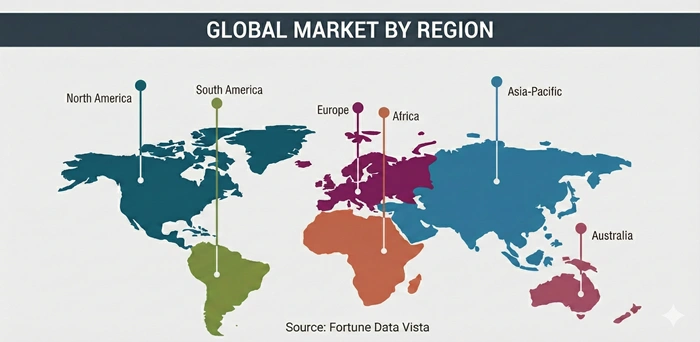
North America
North America Leads the Global Earthquake Insurance Market Through Its Mature, Deep, and Commercially Sophisticated Seismic Coverage Ecosystem Anchored by California's Unique and World-Leading Insurance Infrastructure*
North America holds the dominant position in the global earthquake insurance market, accounting for approximately 38.4% of total revenue in 2025 and growing at a CAGR of approximately 7.0% through 2033. The United States is the primary market driver, with California generating the majority of North American earthquake insurance premium through its combination of very high seismic hazard, enormous insured property values, and a mature insurance market infrastructure supported by the California Earthquake Authority — the world's largest residential earthquake insurer by policy count. The Pacific Northwest states of Oregon and Washington represent a growing earthquake insurance market, as awareness of the Cascadia Subduction Zone's potential for a catastrophic megathrust earthquake is driving increasing residential and commercial coverage adoption. Major earthquake insurers in the North American market include State Farm, Allstate, Liberty Mutual, Nationwide, USAA, GeoVera Insurance, and Palomar Holdings — all of which compete for market share through product design innovation, pricing competitiveness, and distribution channel development across the region's high-risk seismic zones.
Canada's earthquake insurance market is centered on the highly seismic Pacific Coast of British Columbia — particularly the Greater Vancouver metropolitan area — where a growing awareness of the region's significant subduction zone earthquake exposure is driving increasing residential and commercial coverage uptake. Intact Financial Corporation, Aviva Canada, and Desjardins Group are the leading property and casualty insurers in the Canadian market with meaningful earthquake underwriting capabilities. The North American earthquake insurance market is expected to maintain its global revenue leadership position through 2033, supported by continued growth in insured property values across high-risk West Coast markets, expanding coverage requirements from commercial lenders, and growing consumer education efforts that are improving residential coverage penetration in both the U.S. and Canada.
Asia Pacific
Asia Pacific Is the Fastest-Growing Region in the Earthquake Insurance Market, Driven by Japan's Deep Coverage Infrastructure, China's Rapidly Developing Catastrophe Insurance Sector, and National Pool Expansion Across Southeast Asia*
Asia Pacific is projected to expand at the fastest regional CAGR of approximately 8.1% through 2033, growing from a 2025 revenue share of approximately 31.7% to become an increasingly important portion of global earthquake insurance market revenue. Japan is the region's dominant earthquake insurance market by premium volume, supported by a deeply embedded cultural understanding of seismic risk, a government-backed residential earthquake reinsurance system, and the world's highest residential earthquake insurance penetration rate — all of which make Japan the most mature and commercially significant earthquake insurance market outside of the United States. Leading Japanese insurers including Tokio Marine Holdings, MS&AD Insurance Group, Sompo Holdings, and NKSJ Group compete vigorously for market share in Japan's large and sophisticated earthquake insurance market across both residential and commercial segments.
China represents the most significant long-term growth opportunity within the Asia Pacific earthquake insurance market, given the country's vast and growing insured property base, significant seismic hazard across densely populated areas including Sichuan Province, Yunnan Province, and the North China Plain, and still-low earthquake insurance penetration rates that leave most Chinese homeowners and businesses exposed to uninsured seismic loss. The Chinese government is actively developing a national catastrophe insurance framework that is expected to significantly expand earthquake coverage accessibility for residential and commercial property owners in high-risk provinces over the forecast period. South Korea, Indonesia, the Philippines, Australia, and New Zealand each contribute meaningful and growing earthquake insurance premium volumes within the broader Asia Pacific market, and collectively the region's diversity of earthquake hazard levels, economic development stages, and insurance market maturity profiles makes it the most dynamically evolving and commercially compelling regional growth story in the global earthquake insurance sector.
Top Key Players
-
Berkshire Hathaway Inc. (United States)
-
State Farm Mutual Automobile Insurance Company (United States)
-
Allstate Corporation (United States)
-
Liberty Mutual Insurance Company (United States)
-
Zurich Insurance Group AG (Switzerland)
-
Munich Re (Germany)
-
Swiss Re Group (Switzerland)
-
AXA Group (France)
-
Tokio Marine Holdings, Inc. (Japan)
-
MS&AD Insurance Group Holdings (Japan)
-
Chubb Limited (Switzerland / United States)
-
AIG (American International Group) (United States)
-
Nationwide Mutual Insurance Company (United States)
-
Palomar Holdings, Inc. (United States)
-
GeoVera Insurance Holdings (United States)
Recent Developments
-
In 2025, Palomar Holdings announced a significant expansion of its residential and commercial earthquake insurance underwriting capacity in the Pacific Northwest — specifically targeting the rapidly growing insurance demand in Washington and Oregon as awareness of the Cascadia Subduction Zone earthquake risk accelerates among homeowners and commercial real estate operators in the Seattle and Portland metropolitan areas.
-
In 2024, Swiss Re partnered with the Philippine government to structure a sovereign parametric earthquake insurance program covering the National Capital Region (Metro Manila) against major seismic events, providing the Philippine government with rapid post-earthquake fiscal liquidity to fund emergency response and early reconstruction activities — modeled on similar sovereign parametric programs that Swiss Re has developed for other high-seismic-risk governments in Asia Pacific and Latin America.
-
In 2025, Munich Re published its annual Natural Catastrophe Review highlighting the widening global earthquake protection gap — with uninsured losses from major seismic events continuing to represent more than 75% of total economic earthquake losses globally — and announced a strategic initiative to develop new affordable parametric earthquake insurance products specifically designed for residential and SME policyholders in high-hazard, low-penetration markets across the Middle East and Southeast Asia.
-
In 2024, Zurich Insurance Group expanded its commercial earthquake insurance offerings across Latin America by launching enhanced seismic coverage products for large industrial and commercial real estate clients in Mexico, Chile, and Colombia — markets where growing corporate risk management sophistication and stricter lender requirements for earthquake coverage are driving increasing demand for comprehensive, well-structured commercial seismic insurance programs.
-
In 2025, Chubb Limited introduced a new technology-integrated earthquake insurance platform for commercial clients in the United States and Japan, featuring AI-powered property seismic vulnerability assessment, real-time post-event loss estimation, and automated parametric trigger components that enable faster claims settlement for commercial policyholders with properties in high-risk seismic zones.
Market Trends
The Rise of Parametric Structures, Government-Backed National Pool Expansion, and AI-Driven Risk Personalization Are the Three Defining Trends Reshaping the Competitive Landscape of the Earthquake Insurance Market Through 2033*
The most impactful structural trend reshaping the earthquake insurance market is the growing commercial and policy adoption of parametric insurance structures as a complement and in some contexts an alternative to traditional indemnity-based earthquake coverage. The fundamental appeal of parametric earthquake insurance — paying out rapidly based on objective seismic measurements rather than waiting for property-level damage assessment — is proving broadly compelling across a diverse range of buyer segments, from multinational corporations managing global property portfolios to sovereign governments seeking rapid post-disaster fiscal liquidity. As parametric product designs become more sophisticated, index quality improves, and basis risk (the difference between the parametric payout and actual property-level loss) is better managed through smarter trigger design, parametric earthquake insurance is expected to capture an increasing share of the total earthquake risk transfer market through 2033.
The integration of AI-powered catastrophe modeling with personalized property-level risk pricing is beginning to transform earthquake insurance underwriting from a relatively blunt, zone-based pricing approach to a highly granular, property-specific risk assessment process. Advanced AI models that incorporate real-time LiDAR building surveys, soil type and liquefaction risk mapping, structural engineering specifications, and historical local ground motion data can now generate property-level seismic risk scores with a precision that was previously available only through expensive, bespoke engineering assessments. This personalized pricing capability is enabling insurers to offer more competitive premiums to lower-risk properties within broad geographic risk zones — expanding the population of households and businesses for whom earthquake insurance represents an economically attractive proposition, and thereby improving overall market penetration rates across the key residential and commercial segments of the earthquake insurance market.
Segments Covered in the Report
-
By Product Type
-
Non-Life (Property) Earthquake Insurance
-
Life Earthquake Insurance (Death and Disability Coverage)
-
Parametric Earthquake Insurance
-
Bundled/Package Earthquake Coverage
-
-
By Coverage Type
-
Residential Coverage
-
Commercial Coverage
-
Industrial / Infrastructure Coverage
-
-
By Application
-
Residential Buildings
-
Commercial Buildings
-
Infrastructure (Bridges, Utilities, Transport)
-
Natural Resources / Industrial Sites
-
Historical and Cultural Heritage Sites
-
-
By End-User
-
Individual / Homeowners
-
Small and Medium Enterprises (SMEs)
-
Large Corporations / REITs
-
Government and Public Sector
-
-
By Distribution Channel
-
Direct / Online
-
Insurance Agents and Brokers
-
Bancassurance
-
Government-Sponsored Programs / National Pools
-
-
By Region
-
North America (U.S., Canada, Mexico)
-
Europe (Germany, France, UK, Italy, Rest of Europe)
-
Asia Pacific (Japan, China, South Korea, Australia, New Zealand, Rest of Asia Pacific)
-
Latin America (Chile, Mexico, Brazil, Rest of Latin America)
-
Middle East & Africa (Turkey, UAE, Saudi Arabia, Rest of MEA)
-
❝ Built for Every Level — From Startups to Industry Giants ❞
Here Is Exactly How This Report Works for You
-
Whether you are a specialty earthquake insurer entering a new regional market, a reinsurance broker structuring catastrophe capacity solutions, or an InsurTech startup developing parametric seismic risk products, this report provides granular segment revenue forecasts, national market penetration analysis, and competitive positioning intelligence that directly shape your product development strategy, pricing model, and market entry roadmap — giving you a precise, evidence-based understanding of where the USD 13.60 billion earthquake insurance market opportunity lies through 2033.
-
For institutional investors, insurance holding companies, and corporate risk management teams, the report's comprehensive supply-demand analysis reveals precisely how seismic event frequency trends, regulatory mandates for catastrophe coverage, reinsurance capacity dynamics, and national pool development programs across North America, Asia Pacific, and the Middle East are reshaping market growth, premium adequacy, and loss volatility patterns — equipping your leadership with the intelligence needed for confident capital allocation, market entry, and risk portfolio management decisions.
-
The competitor revenue analysis section delivers a detailed breakdown of premium income sources, product portfolio depth, geographic market share, strategic partnership activity, and technology investment strategy for the top 15 companies in the global earthquake insurance industry — providing your business development team with the actionable competitive intelligence needed to identify underserved market segments, develop winning value propositions, benchmark product competitiveness, and understand how geopolitical factors including regulatory change and government program development are shaping competitive dynamics across every major earthquake insurance market globally.
Frequently Asked Questions:
Answer: The global earthquake insurance market is valued at USD 8.52 billion in 2025 and is projected to reach approximately USD 13.60 billion by 2033. This growth trajectory reflects a CAGR of 7.3% from 2026 to 2033, driven by rising seismic risk awareness, urbanization into earthquake-prone zones, and growing government mandates for catastrophe coverage globally.
Answer: The earthquake insurance market's protection gap — where uninsured earthquake losses significantly exceed insured losses globally — persists primarily because high premium costs and large percentage deductibles make coverage financially inaccessible or unattractive for many property owners in high-risk but lower-income markets. Additionally, low awareness of the financial consequences of seismic events and the absence of mandatory coverage requirements in many high-hazard developing economies leaves enormous populations without any seismic financial protection.
Answer: Parametric earthquake insurance pays out automatically based on objective measurements of seismic intensity — such as peak ground acceleration recorded at a specific location — rather than requiring a traditional property damage assessment before settlement is made. This structure is rapidly gaining adoption in the earthquake insurance market because it delivers post-event payouts within days rather than months, eliminates claims adjustment uncertainty, and is well-suited to government and commercial buyers who need immediate post-earthquake liquidity to fund emergency response or business continuity.
Answer: North America leads the earthquake insurance market with approximately 38% of global premium revenue in 2025, anchored by California's mature earthquake insurance infrastructure and the California Earthquake Authority's large residential coverage program. Asia Pacific is the fastest-growing region, expanding above the global CAGR through 2033, driven by Japan's deep coverage ecosystem, China's rapidly developing catastrophe insurance sector, and national earthquake pool expansion across Southeast Asia.
Answer: Earthquake insurance premiums are primarily determined by the seismic hazard level of the property location — including proximity to active fault lines, local soil conditions, and historical ground motion records — combined with the property's structural characteristics such as construction type, age, height, and compliance with current seismic building codes. In the earthquake insurance market, additional pricing factors include the coverage limit requested, the deductible structure chosen, the reinsurance costs faced by the insurer, and the local regulatory environment governing rate adequacy and policy terms.