
Electronic Clinical Outcome Assessment (eCOA) Solutions Market Overview
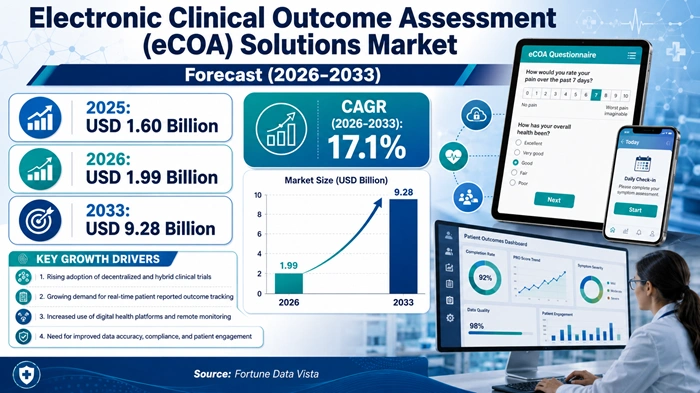
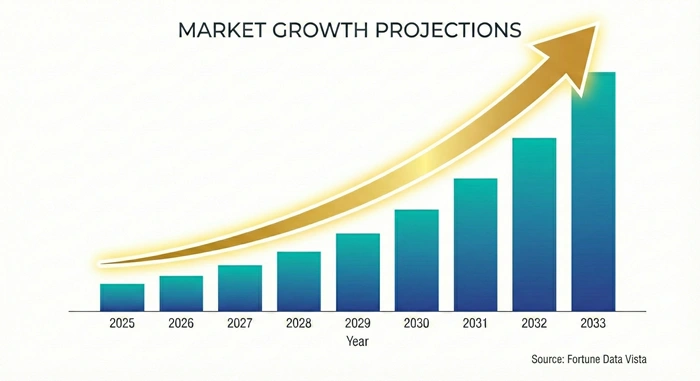
The global electronic clinical outcome assessment (eCOA) solutions market size is valued at USD 1.60 billion in 2025 and is predicted to increase from USD 1.99 billion in 2026 to approximately USD 9.28 billion by 2033, growing at a CAGR of 17.1% from 2026 to 2033.
This exceptional growth trajectory reflects the pharmaceutical and clinical research industries' accelerating transition away from paper-based and manual data collection toward digital, real-time, regulatory-compliant outcome measurement platforms. Increasing adoption of decentralized and hybrid clinical trial models, growing FDA and EMA regulatory support for electronic patient-reported outcomes, and the rising complexity of clinical trial designs across oncology, neurology, rare diseases, and mental health therapeutic areas are collectively driving demand for sophisticated eCOA solutions that improve data accuracy, patient compliance, and trial efficiency at every stage of the clinical development process.
AI Impact on the eCOA Solutions Industry
Artificial Intelligence Is Enabling Adaptive Data Capture, Predictive Compliance Monitoring, Real-Time Patient Engagement Intelligence, and Regulatory-Grade Audit Trail Automation Across the Entire Electronic Clinical Outcome Assessment Solutions Market*
Artificial intelligence is fundamentally transforming the electronic clinical outcome assessment solutions market by moving platforms from passive data collection tools to proactive, intelligent clinical data management systems. Modern AI-integrated eCOA platforms are now deploying natural language processing (NLP) and machine learning algorithms to analyze incoming patient-reported outcome data in real time — flagging incomplete or inconsistent entries, detecting potential protocol deviations, and identifying early signals of patient withdrawal risk before they result in missing data that compromises trial integrity. Platforms from leading vendors including Medidata Solutions (Dassault Systèmes), Signant Health, and IQVIA are embedding AI-driven compliance monitoring modules that automatically send adaptive reminders to patients and site coordinators based on behavioral patterns identified from individual patient diary completion histories — a capability that demonstrably improves diary completion rates and overall eCOA data quality across multi-site global trial operations.
At the clinical data science level, AI is enabling a new generation of outcome intelligence capabilities within the eCOA solutions ecosystem. Machine learning models trained on historical trial datasets are increasingly being used to automatically identify patterns in patient-reported symptom trajectories, quality-of-life scores, and clinician assessment data — generating predictive insights about treatment response variability, endpoint sensitivity, and patient population homogeneity that pharmaceutical companies use to make more informed sample size and endpoint selection decisions during trial design. AI-driven translation validation and cultural linguistic adaptation tools are also accelerating the localization of validated clinical outcome instruments for use in multi-country trials — dramatically reducing the time and cost of preparing regulatory-compliant, culturally adapted eCOA instrument versions for use across diverse patient populations in global Phase II and Phase III clinical studies.
Growth Factors
Accelerating Decentralized Clinical Trial Adoption, Expanding Global Clinical Trial Activity, Rising Regulatory Acceptance of Digital Patient-Reported Outcomes, and Growing Pharmaceutical R&D Investment Are the Core Structural Drivers Fueling the eCOA Solutions Market*
The most powerful structural driver in the electronic clinical outcome assessment solutions market is the global pharmaceutical and CRO industry's accelerating adoption of decentralized and hybrid clinical trial models. Decentralized clinical trials (DCTs) — where patient visits are minimized or eliminated through remote monitoring, telehealth consultations, home nursing, and wearable-enabled data collection — depend fundamentally on eCOA solutions as the primary mechanism for collecting patient-reported outcomes, daily diary entries, symptom severity scores, and quality-of-life assessments without requiring patients to visit a clinical site. The COVID-19 pandemic permanently reshaped pharmaceutical industry norms toward decentralized trial models, and the efficiency gains and patient recruitment and retention improvements delivered by DCT approaches have cemented their role as a permanent feature of the modern clinical development landscape — creating an enduring structural demand tailwind for eCOA solution providers across all therapeutic areas.
The growing acceptance and active regulatory encouragement of electronic patient-reported outcomes by the FDA, EMA, and other major health authorities around the world is the second defining growth driver in the eCOA solutions market. The FDA's 2009 PRO Guidance, subsequent digital health technology guidance updates, and the agency's ongoing Patient-Focused Drug Development initiative have collectively established a clear regulatory framework that validates ePRO-derived data as primary endpoint evidence in drug approval submissions — providing pharmaceutical companies with the regulatory confidence to invest in eCOA platforms for pivotal trial endpoint data collection. The European Medicines Agency's growing acceptance of patient-reported outcome data and its digital transformation of clinical trial oversight are equally important demand stimulants in the European pharmaceutical market, where regulatory-aligned eCOA adoption is becoming a standard requirement for new drug application submissions across major therapeutic areas.
Market Outlook
Strong Pharmaceutical Pipeline Expansion, Growing CRO Outsourcing of eCOA Services, APAC Clinical Trial Volume Growth, and AI-Driven Platform Evolution Are Positioning the eCOA Solutions Market for Sustained and Accelerating Growth Through 2033*
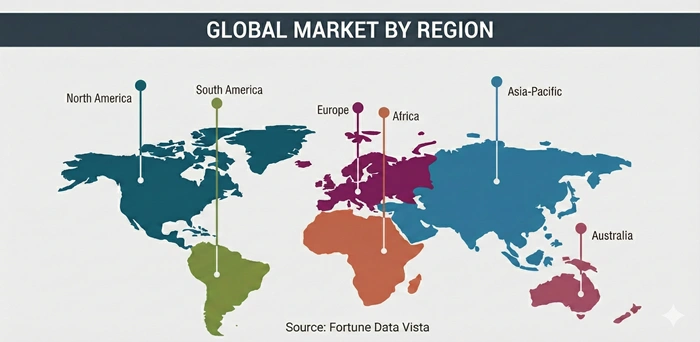
The long-term outlook for the electronic clinical outcome assessment solutions market is exceptionally strong, driven by structural demand fundamentals that align with the pharmaceutical industry's most important strategic priorities — improving trial efficiency, reducing development costs, enhancing regulatory data quality, and expanding patient participation accessibility. North America currently leads the global market, accounting for approximately 41.8% of global revenue in 2025, supported by the world's largest pharmaceutical R&D ecosystem, the highest density of decentralized and hybrid clinical trial programs, and the FDA's active encouragement of electronic outcome data collection in clinical development programs. Europe holds the second-largest market position, where Germany, the UK, France, and Switzerland contribute the largest pharmaceutical industry eCOA procurement volumes through multinational trial programs run by Roche, Novartis, AstraZeneca, Sanofi, and Bayer.
As pharmaceutical pipelines grow increasingly complex — with oncology, gene therapy, rare disease, and cell therapy programs requiring longer-duration, more intensive patient monitoring — the per-trial demand for sophisticated eCOA platforms is expanding. The growing shift toward direct-to-patient drug development models and the FDA's increasing acceptance of real-world evidence (RWE) as regulatory support data are also creating new application areas for eCOA platforms beyond traditional randomized controlled trials — including observational studies, patient registries, post-approval safety surveillance, and value-based contracting outcome measurement. These expanding application boundaries are materially widening the total addressable market for electronic clinical outcome assessment solutions beyond the traditional clinical trial data collection category and into broader healthcare outcome measurement domains.
Expert Speaks
-
"IQVIA is deeply committed to leading the evolution of eCOA technology — combining AI-powered patient engagement intelligence, decentralized trial infrastructure, and regulatory-grade data management into platforms that help pharmaceutical companies run more efficient, more patient-centric clinical trials. The eCOA solutions market is at a transformational inflection point, and our technology investments are focused on ensuring that every patient interaction in a clinical trial generates high-quality, regulatory-ready outcome data that accelerates drug development timelines." — Ari Bousbib, Chairman & CEO, IQVIA Holdings Inc.
-
"Medidata is proud to be at the forefront of transforming how clinical outcome data is captured, managed, and analyzed in the world's most complex pharmaceutical trials. Our eCOA capabilities within the Medidata Rave platform are enabling pharmaceutical sponsors and CROs to deliver dramatically better patient experiences, higher data completion rates, and faster regulatory submissions — and we see the demand for sophisticated, AI-integrated eCOA solutions only accelerating as decentralized and patient-centric trial models become the new norm." — Rouven Bergmann, CFO & Executive VP, Dassault Systèmes (Medidata Solutions)
-
"At Veeva Systems, we are building the next generation of eCOA technology within our Vault ePRO platform — designed from the ground up for the complexity of modern global clinical trials. Patient-reported outcomes are increasingly the definitive endpoint in drug approval applications, and the quality, completeness, and regulatory acceptability of eCOA data directly determines whether trials succeed. We are investing significantly in AI-powered compliance automation, multi-language instrument support, and seamless integration with clinical data management and CTMS workflows to deliver the most trusted eCOA platform in the industry." — **Peter Gassner, CEO, Veeva Systems Inc.*
Key Report Takeaways
-
North America leads the global electronic clinical outcome assessment solutions market with approximately 41.8% of global revenue share in 2025, driven by the world's most advanced pharmaceutical R&D ecosystem, the highest volume of decentralized and hybrid clinical trial programs, active FDA regulatory support for ePRO endpoint data, and the commercial presence of major eCOA solution providers including Medidata (Dassault Systèmes), IQVIA, Signant Health, and Veeva Systems that drive both technology innovation and deep pharmaceutical client relationships.
-
Asia Pacific is the fastest-growing regional market in the eCOA solutions market, expected to grow at a CAGR of approximately 16.3% from 2026 to 2033, fueled by rapidly expanding pharmaceutical clinical trial volumes in China, India, South Korea, and Japan, growing adoption of decentralized trial protocols by regional CROs, increasing government R&D funding for pharmaceutical research, and the rising participation of Asian patient populations in global multi-site clinical studies sponsored by multinational pharmaceutical companies.
-
Pharmaceutical and biotechnology companies are the dominant end-user segment, contributing approximately 56.7% of global eCOA solutions market revenue in 2025, reflecting the pharmaceutical industry's critical reliance on high-quality, regulatory-compliant patient-reported and clinician-reported outcome data as primary endpoints in pivotal clinical trial submissions to FDA, EMA, PMDA, and other major regulatory agencies globally.
-
Electronic patient-reported outcomes (ePRO) is the dominant product segment, accounting for approximately 48.5% of global product revenue in 2025, driven by the pharmaceutical industry's growing use of patient-reported data as primary regulatory endpoints, the FDA and EMA's explicit preference for direct patient voice in drug labeling claims, and the superior data accuracy and real-time completeness advantages of ePRO platforms compared to paper diaries or clinician-transcribed assessment methods.
-
Clinical trials is the dominant application segment, representing approximately 62.4% of global application revenue in 2025 and expected to maintain its dominance through 2033, as increasing trial complexity across oncology, rare diseases, neurology, and mental health therapeutic areas generates growing per-trial demand for multi-modal eCOA platforms capable of supporting complex endpoint measurement requirements in both traditional and decentralized trial settings.
-
Contract research organizations (CROs) are the fastest-growing end-user segment, projected to grow at a CAGR of approximately 16.0% from 2026 to 2033, as pharmaceutical outsourcing of clinical trial operations to specialized CROs accelerates globally — with each CRO engagement requiring dedicated eCOA platform deployment, site training, and data management services that drive proportional eCOA solution demand growth as CRO industry revenue expands.
-
Cloud-based eCOA deployment models are the fastest-growing deployment segment, expected to grow at a CAGR of approximately 17.8% from 2026 to 2033, driven by pharmaceutical companies' preference for scalable, rapidly deployable trial infrastructure that minimizes IT investment requirements and enables seamless global multi-site coordination without the operational complexity of on-premise system installation and maintenance.
Market Scope
| Parameter | Details |
|---|---|
| Market Size by 2033 | USD 9.28 Billion | Market Size by 2026 | USD 1.99 Billion | Market Size by 2025 | USD 1.60 Billion | Market Growth Rate from 2026 to 2033 | CAGR of 17.1% | Dominating Region | North America | Fastest Growing Region | Asia Pacific | Segments Covered | By Component, By Product, By Deployment Mode, By Application, By End User | Regions Covered | North America, Europe, Asia Pacific, Latin America, Middle East & Africa |
Market Dynamics
Drivers Impact Analysis
Rising Decentralized Clinical Trial Adoption, Regulatory Support for Electronic Outcome Data, Growing Pharmaceutical R&D Investment, and Expanding Global Clinical Trial Activity Are the Foundational Forces Propelling the Electronic Clinical Outcome Assessment Solutions Market*
| Driver | ≈ % Impact on CAGR Forecast | Geographic Relevance | Impact Timeline |
|---|---|---|---|
| Accelerating adoption of decentralized and hybrid clinical trial models | ~32% | North America, Europe, Asia Pacific | Short to Long Term |
| Regulatory acceptance and FDA/EMA guidance supporting ePRO endpoints | ~25% | North America, Europe | Short to Long Term |
| Rising global pharmaceutical and biotech R&D expenditure | ~22% | Global | Short to Long Term |
| Expanding clinical trial volumes in Asia Pacific and emerging markets | ~14% | Asia Pacific, Latin America | Short to Long Term |
| Growing pharmaceutical outsourcing to CROs driving eCOA deployment | ~7% | North America, Asia Pacific | Short to Medium Term |
The decentralized clinical trial revolution is the single most important near-term demand driver for the electronic clinical outcome assessment solutions market. As pharmaceutical companies and CROs transition from fully site-based to hybrid and fully decentralized trial architectures, the collection of patient-reported symptoms, functional status assessments, daily symptom diaries, quality-of-life questionnaires, and physician global impressions must be conducted digitally through validated eCOA platforms — because no paper-based or phone-based alternative can provide the data completeness, timestamping accuracy, and regulatory audit trail that modern clinical trial submissions require. The scale of this transition is enormous: an estimated 30–50% of new clinical trial protocols initiated in 2025 and 2026 incorporate at least partial decentralized elements — representing millions of enrolled patients globally who require eCOA platform support for their daily or weekly outcome assessments throughout trial participation.
The second critical driver — strong and growing regulatory guidance supporting electronic outcome data collection — provides the pharmaceutical industry with the confidence to invest in eCOA platforms as primary endpoint data collection infrastructure for pivotal studies that will directly support drug approval submissions. The FDA's Patient-Focused Drug Development initiative and its series of guidance documents on collecting comprehensive and representative clinical outcome assessment data have provided explicit regulatory backing for ePRO-based endpoints in disease areas including oncology, rare disease, mental health, and chronic pain management. This regulatory clarity eliminates the historical uncertainty about whether electronically collected patient outcome data would be accepted in regulatory submissions — removing one of the key adoption barriers that previously caused pharmaceutical sponsors to maintain parallel paper-based data collection as a regulatory risk mitigation strategy.
Restraints Impact Analysis
High Implementation and Validation Costs, Shortage of Skilled eCOA Professionals, Patient Digital Literacy Barriers in Emerging Markets, and Data Security and Privacy Compliance Complexity Are the Primary Challenges Constraining Market Expansion*
| Restraint | ≈ % Impact on CAGR Forecast | Geographic Relevance | Impact Timeline |
|---|---|---|---|
| High implementation, validation, and maintenance costs of enterprise eCOA platforms | ~38% | Emerging markets, small pharma/biotech | Short to Long Term |
| Shortage of qualified eCOA technical and clinical specialists | ~28% | Global — especially emerging markets | Short to Long Term |
| Patient digital literacy gaps and technology access barriers | ~20% | Latin America, MEA, South/Southeast Asia | Short to Medium Term |
| Data privacy regulation complexity (GDPR, HIPAA, country-specific laws) | ~14% | Europe, North America, Asia Pacific | Short to Medium Term |
The high cost of implementing, validating, and maintaining enterprise-grade eCOA platforms represents the most significant commercial restraint for smaller pharmaceutical companies, academic research institutions, and organizations operating clinical trials in resource-constrained settings. Full platform implementation for a global Phase III trial — including instrument licensing fees, platform customization and integration development, 21 CFR Part 11 and Annex 11 validation documentation, site staff training, patient device provisioning (for provisioned device models), and ongoing technical support — can represent a total investment of USD 500000 to USD 2 million per trial before a single patient has entered their first diary assessment. This cost level is readily absorbed by large pharmaceutical companies with substantial trial budgets, but creates meaningful access barriers for small biotechs, academic investigator-initiated trials, and CROs operating cost-competitive outsourcing contracts for smaller pharmaceutical clients.
The shortage of qualified eCOA clinical informatics specialists — professionals with expertise in both clinical outcomes science and digital platform configuration — is a second important restraint. The technical complexity of configuring validated, compliant eCOA platforms for complex trial designs requires specialists who understand regulatory requirements for electronic data capture, clinical outcome measurement theory, patient-facing UX design for clinical trial populations, and software validation methodology — a combination of skills that takes years to develop and that is in genuine short supply relative to the demand generated by the rapidly expanding global clinical trial industry. This talent scarcity increases implementation timelines, elevates service costs, and creates competitive pressure on eCOA solution providers' ability to scale their implementation capacity in proportion to growing market demand.
Opportunities Impact Analysis
Real-World Evidence Collection, Wearable and Sensor Integration, Emerging Market Clinical Trial Expansion, and AI-Powered Adaptive eCOA Platform Development Are Creating Transformative Long-Term Growth Opportunities for the Market*
| Opportunity | ≈ % Impact on CAGR Forecast | Geographic Relevance | Impact Timeline |
|---|---|---|---|
| Expanding eCOA application into real-world evidence and observational studies | ~32% | North America, Europe | Short to Long Term |
| Wearable device and passive sensor integration with eCOA platforms | ~27% | North America, Europe, Asia Pacific | Short to Long Term |
| Clinical trial volume expansion in Asia Pacific and Latin America | ~24% | China, India, Brazil, South Korea | Short to Long Term |
| AI-powered adaptive questionnaire delivery and compliance management | ~17% | Global | Short to Long Term |
The rapid growth of real-world evidence generation as a regulatory and market access tool for pharmaceutical companies is creating a significant expansion of eCOA solution applications beyond traditional randomized controlled trials. Regulatory agencies and payers are increasingly accepting real-world patient-reported outcome data as evidence of comparative effectiveness, disease burden, and treatment value — creating commercial demand for eCOA platforms that can collect validated patient-reported assessments in large-scale observational studies, patient registries, post-approval effectiveness studies, and pragmatic trials conducted in routine clinical practice settings. This opportunity extends the commercial reach of the electronic clinical outcome assessment solutions market far beyond the clinical development phase into the full product life cycle — creating new long-term revenue streams for eCOA platform providers who can extend their offerings from interventional trial support into real-world evidence and patient registry data collection.
The integration of wearable devices, passive activity sensors, and connected biomarker collection devices with eCOA platforms represents one of the most technically exciting and commercially significant innovation opportunities in the market. Wearable-enabled digital biomarkers — including continuous activity data, sleep quality metrics, heart rate variability, and accelerometry-derived functional mobility scores — are increasingly recognized by regulatory agencies as complementary or alternative endpoints to traditional patient-reported questionnaires in certain therapeutic areas, particularly in Parkinson's disease, respiratory conditions, and mobility-limiting rare diseases. eCOA platform providers who successfully build validated, regulatory-compliant integrations with wearable device ecosystems — including Fitbit, Apple Watch, Garmin, and specialized clinical-grade sensors from companies like ActiGraph — will be positioned to capture the high-value intersection of digital biomarker collection and traditional outcome assessment in next-generation hybrid eCOA platform offerings.
Segment Analysis
By Product: Electronic Patient-Reported Outcomes (ePRO)
ePRO Is the Dominant and Most Commercially Impactful Product Segment in the Electronic Clinical Outcome Assessment Solutions Market, Driven by Regulatory Priority for the Patient Voice in Drug Development and the Superior Data Quality of Real-Time Digital Diary Collection*
Electronic patient-reported outcomes (ePRO) hold the commanding lead in the electronic clinical outcome assessment solutions market by product type, accounting for approximately 48.5% of global product revenue in 2025 and growing at a CAGR of approximately 16.8% from 2026 to 2033. The dominance of ePRO within the eCOA product taxonomy reflects both its foundational regulatory importance — the FDA and EMA explicitly prioritize direct patient voice evidence in drug labeling claims and have published extensive guidance on acceptable ePRO validation and implementation methodologies — and its practical superiority over paper diary and clinician-transcribed methods for capturing daily symptom burden, functional status, and quality-of-life data from trial participants. North America leads the ePRO segment, accounting for approximately 42.3% of global ePRO revenue, driven by the FDA's Patient-Focused Drug Development initiative and the pharmaceutical industry's broad adoption of ePRO primary endpoints across oncology, rare disease, and chronic disease pivotal trials. Key market leaders in North American ePRO include Medidata Rave ePRO, Signant Health SmartSignals, IQVIA eCOA, Veeva Vault ePRO, and Clario ePRO.
Asia Pacific is the fastest-growing regional ePRO market, expanding at a CAGR of approximately 17.5% from 2026 to 2033, as multi-national pharmaceutical companies conducting global Phase II and Phase III trials increasingly include Asian patient populations in their programs — requiring culturally and linguistically validated ePRO instrument versions that comply with local regulatory requirements from Japan's PMDA, China's NMPA, and South Korea's MFDS. The growing pharmaceutical and CRO industry presence in China and India is also generating direct ePRO platform demand, as domestic pharmaceutical companies develop their own regulatory submission strategies that increasingly align with FDA and EMA expectations for patient-reported endpoint evidence. Companies including ERT (now Nuvectra), Medidata, and IQVIA have invested in establishing dedicated Asia Pacific operations and local language instrument support capabilities to capture this rapidly growing ePRO demand segment.
By End User: Pharmaceutical and Biotechnology Companies
Pharmaceutical and Biotechnology Companies Drive the Majority of Electronic Clinical Outcome Assessment Solutions Market Revenue, as Their High-Volume, High-Complexity Global Clinical Trial Programs Generate the Greatest Demand for Enterprise-Grade eCOA Platforms*
Pharmaceutical and biotechnology companies remain the dominant end-user segment in the electronic clinical outcome assessment solutions market, contributing approximately 56.7% of global market revenue in 2025 and growing at a CAGR of approximately 16.4% from 2026 to 2033. This dominance is deeply structural — pharmaceutical companies are the primary sponsors of clinical trials globally, and the growing complexity of their drug development programs is driving increasing per-trial eCOA investment. Oncology trials — the largest single therapeutic area in pharmaceutical development — routinely require multi-modal eCOA deployments that simultaneously collect daily patient symptom burden diaries, clinician-reported performance status assessments, caregiver-reported functional observations, and protocol-specified quality-of-life questionnaires using validated instruments such as the EORTC QLQ-C30, FACT-G, EQ-5D, and disease-specific PRO tools. North America leads this segment, commanding approximately 44.1% of pharmaceutical end-user eCOA revenue, with major pharmaceutical sponsors including Pfizer, AbbVie, Bristol-Myers Squibb, Eli Lilly, and Merck & Co. operating extensive eCOA platform deployments across their global trial portfolios.
Europe is the second-largest pharmaceutical end-user market, where global pharmaceutical companies headquartered in Switzerland, Germany, the UK, and France run major European and global trial programs that require EMA-aligned eCOA data collection infrastructure compliant with EU clinical trial regulation (CTR) and Annex 11 data integrity requirements. European pharmaceutical eCOA adoption is also being accelerated by the EU's Clinical Trials Information System (CTIS), which is driving standardization of clinical trial documentation and data management practices across EU member states in ways that favor digital platform adoption over paper-based alternatives. Asia Pacific is the fastest-growing pharmaceutical end-user region for eCOA solutions, where leading Chinese biopharmaceutical companies including BeiGene, Innovent Biologics, and Zymeworks — alongside global multinationals expanding their Chinese R&D operations — are building eCOA-enabled clinical development capabilities designed to support simultaneous regulatory submissions to NMPA, FDA, and EMA.
Regional Insights
North America: The Global Leader in eCOA Solutions
North America Commands the Largest Revenue Share in the Electronic Clinical Outcome Assessment Solutions Market, Supported by the FDA's Leadership in Digital Outcome Data Guidance, the World's Largest Pharmaceutical R&D Ecosystem, and the Deepest CRO Infrastructure Globally*
North America holds the dominant position in the global electronic clinical outcome assessment solutions market, accounting for approximately 41.8% of global revenue in 2025 and expected to maintain a CAGR of approximately 15.9% through 2033. The United States is the primary market driver — home to the largest concentration of pharmaceutical and biotechnology clinical trial sponsors, the world's leading eCOA technology vendors, the FDA's progressive digital health guidance framework supporting ePRO endpoints, and the highest proportion of decentralized and hybrid clinical trial programs of any global market. Key commercial leaders in the North American eCOA market include Medidata Solutions (Dassault Systèmes), IQVIA Holdings, Signant Health, Veeva Systems, Clario (ERT), Oracle Health Sciences, and Merge Healthcare — each of whom maintains major North American commercial operations serving the pharmaceutical and CRO customer base.
Canada contributes meaningfully to North American eCOA market growth, where a growing pharmaceutical research sector and increasing clinical trial activity — supported by Health Canada's progressive digital health technology framework — are driving adoption of validated electronic outcome assessment platforms in both sponsor-initiated and investigator-initiated trial programs. The North American eCOA market is the global leader in platform sophistication — U.S. pharmaceutical companies and CROs consistently deploy the most advanced AI-integrated, wearable-connected, and LIMS-integrated eCOA configurations — generating the highest average contract values and driving the technology innovation agenda that subsequently influences platform development priorities and commercial expectations in European and Asia Pacific markets.
Asia Pacific: The Fastest-Growing Region in eCOA Solutions
Asia Pacific Is the Fastest-Growing and Most Strategically Important Emerging Market for eCOA Solutions, Driven by China's Pharmaceutical R&D Expansion, India's CRO Growth, and the Increasing Inclusion of Asian Patient Populations in Global Clinical Trials*
Asia Pacific is the fastest-growing regional market in the global electronic clinical outcome assessment solutions market, projected to expand at a CAGR of approximately 16.3% from 2026 to 2033, considerably outpacing North America and Europe. The region accounted for approximately 23.6% of global eCOA solutions market revenue in 2025 and is expected to substantially increase its global share over the forecast period as clinical trial volumes, pharmaceutical investment, and CRO infrastructure all scale rapidly across China, India, South Korea, and Japan. China is the primary growth engine — where the National Medical Products Administration's (NMPA) progressive adoption of ICH E6 (R2) Good Clinical Practice guidelines and its growing alignment with FDA and EMA clinical trial standards are creating regulatory conditions that actively favor the adoption of validated electronic outcome assessment platforms in domestic and multi-national trial programs.
India represents the most dynamically growing individual country market within Asia Pacific, driven by the Indian pharmaceutical industry's rapidly expanding clinical trial capacity, the country's large and diverse patient population that supports efficient enrollment for global trials, and the growing investment by multinational CROs including IQVIA, PPD, Parexel, and Labcorp Drug Development in establishing Indian eCOA-enabled clinical operations infrastructure. Japan continues to be a mature but important eCOA market, where PMDA-aligned instrument validation requirements and the Japanese pharmaceutical industry's traditional emphasis on data quality and regulatory documentation create sustained demand for premium validated eCOA platforms from vendors including Medidata, Veeva, and IQVIA who have established dedicated Japanese language and regulatory support capabilities for their platforms. South Korea's growing pharmaceutical sector — anchored by Samsung Biologics, Celltrion, and Hanmi Pharmaceutical — is also generating increasing eCOA adoption as Korean pharmaceutical companies expand their clinical development ambitions into global regulatory submissions.
Top Key Players
-
IQVIA Holdings Inc. (United States)
-
Medidata Solutions Inc. (Dassault Systèmes) (United States / France)
-
Signant Health (United States)
-
Veeva Systems Inc. (United States)
-
Clario (ERT / Bioclinica) (United States)
-
Oracle Corporation (Oracle Health Sciences) (United States)
-
Parexel International Corporation (United States)
-
Kayentis SAS (France)
-
BioClinica Inc. (United States)
-
CRF Health (now Clario) (United States / United Kingdom)
-
YPrime LLC (United States)
-
Clinion (India)
Recent Developments
-
In February 2026, IQVIA Holdings launched IQVIA eCOA Gen 3, a next-generation electronic clinical outcome assessment platform featuring AI-powered compliance monitoring, adaptive patient reminder algorithms, and enhanced multi-language instrument validation tools — a product release that reinforces IQVIA's leadership in providing enterprise-grade eCOA infrastructure for global pharmaceutical and CRO clients conducting complex multi-region clinical trials.
-
In September 2025, Medidata Solutions (Dassault Systèmes) announced the deep integration of its Medidata Rave ePRO platform with the Medidata AI clinical intelligence layer, enabling pharmaceutical sponsors to access real-time ePRO data quality analytics, predictive dropout risk scoring, and adaptive reminder orchestration — combining eCOA data collection and clinical AI insights within a single unified clinical data management environment.
-
In November 2025, Signant Health completed the strategic acquisition of Almac Group's clinical technology services division, significantly expanding Signant's interactive response technology and randomization services capabilities and strengthening its integrated RTSM-eCOA platform offering for pharmaceutical and CRO clients seeking unified clinical technology solutions for complex adaptive trial designs.
-
In April 2026, Veeva Systems released a major update to its Vault ePRO platform incorporating configurable offline data capture functionality for patients with intermittent internet access, enhanced BYOD device compatibility for Android and iOS platforms, and expanded regulatory document integration with Vault RIM for seamless eCOA instrument submission dossier preparation — capabilities designed to accelerate global trial deployment and improve patient accessibility in decentralized and hybrid trial settings.
-
In January 2026, Kayentis SAS announced a strategic partnership with Parexel International to deploy Kayentis MOTUS eCOA technology within Parexel's decentralized clinical trial service offering in Europe and North America — an alliance that expands Kayentis' commercial reach in the North American pharmaceutical market and strengthens Parexel's eCOA technology offering for pharmaceutical clients conducting EU CTR-compliant and FDA-aligned digital clinical trials.
Market Trends
Decentralized Trial Technology Convergence and AI-Powered Adaptive eCOA Platform Intelligence Are the Two Most Transformational Technology Trends Reshaping the Electronic Clinical Outcome Assessment Solutions Market Through 2033*
The most consequential trend reshaping the electronic clinical outcome assessment solutions market is the progressive technological convergence of eCOA platforms with other decentralized trial enablement technologies — including electronic consent (eConsent), electronic health records (EHR), wearable sensor data streams, telehealth visit management, interactive response technology (RTSM / IRT), and electronic trial master file (eTMF) systems. Pharmaceutical companies and CROs are increasingly demanding integrated clinical technology suites that eliminate data silos between eCOA outcome data, clinical event data, biomarker data, randomization data, and electronic source documentation — requiring eCOA vendors to build robust API integration capabilities and to participate actively in unified decentralized trial platform ecosystems. Vendors who can offer seamlessly integrated eCOA-plus-broader-DCT technology stacks — like Medidata's unified Rave platform, Veeva's Vault clinical suite, and IQVIA's integrated clinical technology platform — are gaining significant commercial advantages over point-solution eCOA providers in competitive pharmaceutical and CRO contract selection processes.
The second major trend is the accelerating adoption of AI-powered adaptive features within eCOA platform architecture — moving beyond static questionnaire delivery toward intelligent, personalized patient interaction systems that dynamically adjust reminder frequency, content tone, and communication channel based on individual patient behavioral profiles. Real-time AI analysis of diary completion patterns, response latency distributions, and individual patient communication response history is enabling eCOA platforms to deploy targeted interventions that measurably improve completion rates and data quality at the individual patient level — a capability with direct commercial value to pharmaceutical sponsors whose regulatory submissions depend on endpoint data completeness thresholds. As AI capabilities within eCOA platforms mature, the competitive differentiation between platform vendors will increasingly be determined by the intelligence, adaptability, and clinical validation of their AI-driven patient engagement and data quality management capabilities.
Segments Covered in the Report
-
By Component:
-
Software
-
ePRO Software Platforms
-
Data Management & Analytics Software
-
eCOA Integration Middleware
-
-
Services
-
Implementation & Deployment Services
-
Training & Support Services
-
Consulting Services
-
-
Devices & Wearables
-
Provisioned Devices
-
BYOD (Bring Your Own Device)
-
Hybrid Device Models
-
-
-
By Product:
-
Electronic Patient-Reported Outcomes (ePRO)
-
Electronic Observer-Reported Outcomes (eObsRO)
-
Electronic Clinician-Reported Outcomes (eClinRO)
-
Electronic Performance Outcome (ePerfO)
-
-
By Deployment Mode:
-
On-Premise
-
Web-Hosted & Cloud-Based
-
Hybrid
-
-
By Application:
-
Clinical Trials
-
Oncology
-
Neurology
-
Cardiovascular Diseases
-
Infectious Diseases
-
Rare Diseases
-
Metabolic Disorders
-
Mental Health Disorders
-
Immunology
-
Other Therapeutic Areas
-
-
Observational Studies & Real-World Evidence Generation
-
Patient Management & Registries
-
Other Applications
-
-
By End User:
-
Pharmaceutical & Biotechnology Companies
-
Contract Research Organizations (CROs)
-
Medtech Companies
-
Hospitals & Healthcare Providers
-
Government Organizations
-
Academic & Research Institutes
-
-
By Region:
-
North America (U.S., Canada, Mexico)
-
Europe (Germany, UK, France, Italy, Spain, Netherlands, Rest of Europe)
-
Asia Pacific (China, India, Japan, South Korea, Australia, Rest of Asia Pacific)
-
Latin America (Brazil, Argentina, Rest of Latin America)
-
Middle East & Africa (UAE, Saudi Arabia, South Africa, Rest of MEA)
-
"Built for Every Level — From Startups to Industry Giants"
Here Is Exactly How This Report Works for You
-
For Tier 1 global pharmaceutical companies, multinational CROs, enterprise eCOA platform vendors, healthcare technology investors, and senior clinical operations executives, this report delivers comprehensive competitor revenue analysis segmented by product type, deployment model, and geography; granular assessment of how geopolitical factors — including FDA and EMA digital health guidance evolution, NMPA clinical trial regulatory modernization in China, cross-border data privacy law complexity, and pharmaceutical outsourcing dynamics — are reshaping platform vendor competitive positioning and pharmaceutical sponsor technology procurement decisions; and forward-looking intelligence on which eCOA platform capabilities, AI features, and market segments will generate the greatest commercial value creation through 2033, enabling confident investment, partnership, and portfolio strategy decisions.
-
For Tier 2 and Tier 3 eCOA technology developers, regional CROs, clinical technology service providers, instrument licensing organizations, and healthcare IT companies, this report provides detailed segment-level revenue forecasts, technology adoption lifecycle mapping by therapeutic area and end user type, distribution channel analysis, and supply-demand dynamics intelligence that reveal precisely where the most commercially accessible product gaps and partnership opportunities exist within the growing eCOA solutions market — enabling targeted investment in product development, geographic expansion, and business development strategies aligned with the fastest-growing market segments.
-
For startups building next-generation eCOA technologies, AI clinical research analytics companies, wearable integration specialists, academic clinical informatics programs, and early-stage clinical technology investors, this report delivers actionable intelligence on white-space opportunity mapping within the eCOA solutions market, competitive landscape analysis identifying underserved therapeutic area and geographic niches, regulatory pathway assessment for digital clinical endpoint tools, and geopolitical risk factor analysis — including trade policy impacts on cross-border clinical data flows, country-specific data localization requirements, and pharmaceutical R&D investment cycle dynamics — that enable data-driven decisions about where and how to build differentiated market positions in one of healthcare technology's fastest-growing segments.
Frequently Asked Questions:
Answer: The global electronic clinical outcome assessment (eCOA) solutions market is valued at USD 1.60 billion in 2025 and is expected to reach USD 9.28 billion by 2033. The market is projected to grow at a CAGR of 17.1% from 2026 to 2033, driven by decentralized trial adoption, regulatory support for digital outcome data, and expanding global clinical trial activity.
Answer: The primary drivers of the electronic clinical outcome assessment solutions market include the accelerating global transition to decentralized and hybrid clinical trial models, which rely on eCOA platforms for remote patient-reported outcome collection, and growing FDA and EMA regulatory guidance supporting ePRO-based endpoints in drug approval submissions. Rising pharmaceutical R&D expenditure, increasing CRO outsourcing, and expanding clinical trial volumes in Asia Pacific and emerging markets are also significant demand contributors.
Answer: eCOA stands for electronic clinical outcome assessment — a category of digital technology platforms used to collect patient-reported outcomes (ePRO), clinician-reported outcomes (eClinRO), observer-reported outcomes (eObsRO), and performance outcomes (ePerfO) electronically during clinical trials. These platforms replace paper diaries and manual assessment methods, improving data accuracy, real-time completeness, and regulatory audit trail documentation in both traditional site-based and decentralized trial settings.
Answer: North America dominates the electronic clinical outcome assessment solutions market with approximately 41.8% of global revenue in 2025, anchored by the largest pharmaceutical R&D ecosystem, the FDA's active digital health guidance programs, and the commercial presence of major eCOA platform vendors including IQVIA, Medidata, Signant Health, and Veeva Systems. Asia Pacific is the fastest-growing region, projected at approximately 16.3% CAGR from 2026 to 2033, driven by China's and India's rapidly expanding pharmaceutical and CRO sectors.
Answer: The leading companies in the electronic clinical outcome assessment solutions market include IQVIA Holdings, Medidata Solutions (Dassault Systèmes), Signant Health, Veeva Systems, Clario (ERT), Oracle Health Sciences, Parexel International, Kayentis, YPrime, and Clinion. These vendors compete on platform validation depth, AI-powered compliance features, decentralized trial integration capabilities, global language support, and the strength of their pharmaceutical and CRO customer relationships.