
Energy Storage Market Overview
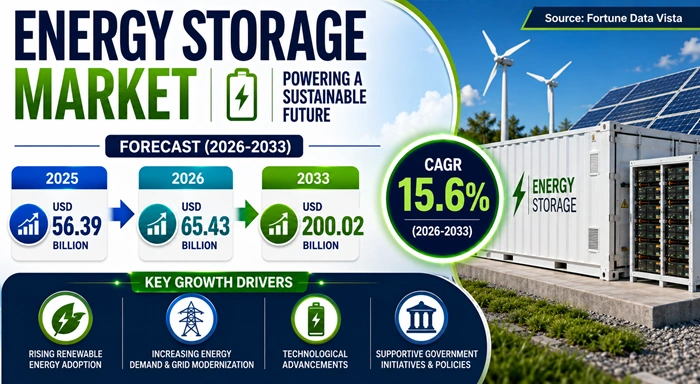
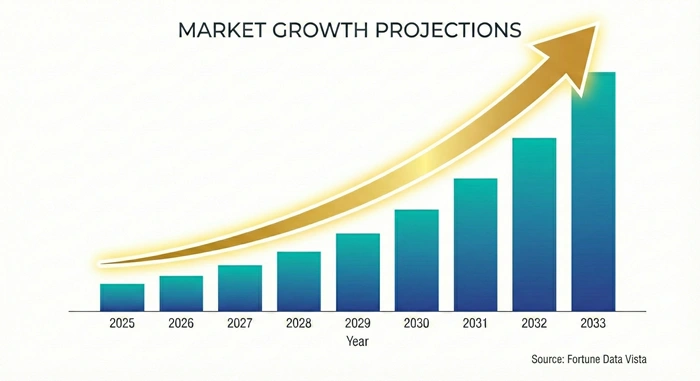
The global energy storage market size is valued at USD 56.39 billion in 2025 and is predicted to increase from USD 65.43 billion in 2026 to approximately USD 200.02 billion by 2033, growing at a CAGR of 15.6% from 2026 to 2033. This extraordinary expansion is driven by the accelerating global transition to renewable energy, surging grid modernization investments, widespread electrification of transportation, and mounting government mandates to decarbonize national power grids across North America, Europe, and Asia Pacific.
AI Impact on the Energy Storage Industry
Artificial Intelligence Is Revolutionizing How Energy Storage Systems Are Designed, Operated, and Optimized Across Grid-Scale, Commercial, and Residential Applications
Artificial intelligence is fundamentally transforming the energy storage sector at every level of the value chain — from battery cell chemistry development to grid-scale dispatch optimization. AI-powered battery management systems (BMS) are now capable of continuously analyzing thousands of electrochemical parameters in real time, dynamically adjusting charge and discharge cycles to maximize cell longevity, thermal performance, and round-trip efficiency. Machine learning models trained on large operational datasets can predict cell degradation patterns months in advance, enabling proactive maintenance scheduling that dramatically reduces unplanned downtime and extends asset lifespans. In grid-scale battery energy storage system (BESS) deployments, AI-driven energy management platforms are optimizing asset dispatch against real-time electricity price signals, frequency regulation markets, and demand response programs — converting storage assets into highly dynamic revenue-generating infrastructure rather than passive backup power sources. These capabilities are making the energy storage market far more commercially attractive to utilities, independent power producers, and corporate energy buyers alike.
On the research and development side, AI-accelerated materials discovery platforms are shortening the timeline for next-generation battery chemistry development. Deep learning models are screening millions of molecular configurations to identify solid-state electrolytes, novel cathode materials, and silicon-anode formulations with superior energy density, cycle life, and thermal stability — tasks that would take decades using conventional laboratory methods. AI-assisted grid planning tools are also enabling utilities and system operators to size, site, and integrate storage assets with unprecedented accuracy, reducing capital waste and improving grid stability outcomes. The combination of smarter software, more capable hardware, and AI-enabled operational intelligence is positioning the energy storage industry for a step-change improvement in both performance and cost-competitiveness through the 2033 forecast horizon.
Growth Factors
Massive Renewable Energy Integration Requirements, Electric Vehicle Fleet Expansion, and National Grid Modernization Programs Are the Three Foundational Growth Pillars of This Market
The global push to integrate renewable energy at scale is the single most powerful demand driver in the energy storage sector. Wind and solar power — the world's fastest-growing electricity sources — are inherently intermittent, generating power only when the wind blows or the sun shines. Grid-scale battery storage systems bridge this gap, absorbing surplus renewable generation during peak production periods and dispatching it during demand peaks or calm weather. As renewable energy penetration rates climb past 30–50% in markets like Germany, the UK, California, and Australia, the requirement for grid-connected energy storage is shifting from optional grid support to an essential grid reliability service. Governments and utilities worldwide are responding by mandating storage alongside new renewable energy capacity, directly translating the renewable energy boom into sustained demand growth for the energy storage market across its entire forecast period.
The electrification of transportation is generating a powerful second wave of growth for energy storage technology and infrastructure. The global EV fleet is expanding rapidly across passenger vehicles, commercial trucks, buses, and two-wheelers — each requiring battery pack technology that benefits from continued innovation and manufacturing scale-up funded by energy storage demand across all applications. Simultaneously, workplace, commercial building, and utility charging infrastructure requires load-balancing storage systems to prevent demand spikes from driving expensive peak power costs. Data center operators — one of the most electricity-intensive and growth-oriented sectors in the global economy — are increasingly deploying behind-the-meter battery storage systems to ensure power reliability, support sustainability commitments, and manage electricity procurement costs. The convergence of electrification, data infrastructure growth, and renewable energy deployment is creating a multi-vector demand structure that makes the energy storage market uniquely resilient to single-sector cyclicality.
Market Outlook
The Energy Storage Market Is Entering a Decade of Structural Expansion, Powered by Policy Mandates, Technology Cost Reduction, and the Emergence of Long-Duration Storage at Commercial Scale
The long-term outlook for the global energy storage industry is exceptionally strong, underpinned by a multi-decade energy transition that is still in its early-to-middle stages in most markets. Lithium-ion battery costs have fallen more than 90% over the past decade and continue to decline, making grid-scale storage cost-competitive with peaking gas plants in a growing number of electricity markets. Government policy frameworks in the United States (Inflation Reduction Act), European Union (Net Zero Industry Act), and China (14th Five-Year Energy Plan) are providing long-term investment certainty for storage developers and deployers. By 2033, energy storage is expected to be a ubiquitous component of power system infrastructure globally — embedded in utility grids, commercial buildings, industrial facilities, EV charging stations, and microgrids — transforming from a niche technology into a mainstream utility asset class.
The emergence of long-duration energy storage technologies — including iron-air batteries, flow batteries, compressed air energy storage, and green hydrogen — is opening entirely new market segments that complement lithium-ion's dominance in short-duration applications. These technologies, capable of storing energy for 8–100 hours rather than the 2–4 hours typical of conventional BESS, are essential for achieving deep decarbonization of power systems that must balance multi-day renewable generation droughts. The commercialization of solid-state battery technology, expected to enter early production around 2028–2030, will further elevate energy density and safety standards across the storage industry. As these technology streams mature alongside continued lithium-ion cost reduction, the energy storage market is positioned to become one of the most capital-intensive and strategically important segments of the entire global energy infrastructure landscape through 2033 and beyond.
Expert Speaks
-
"Battery energy storage is no longer a supplementary grid asset — it is the backbone of the future grid, and our investments reflect our conviction that every new renewable project will require co-located storage to deliver firm, dispatchable clean power." — Elon Musk, CEO, Tesla Inc.
-
"The energy storage revolution is gathering unstoppable momentum, and CATL is committed to providing the technology, scale, and supply chain reliability that utilities and automotive OEMs need to make energy independence a reality for every nation." — Robin Zeng, CEO, Contemporary Amperex Technology Co. Ltd. (CATL)
-
"We see utility-scale and behind-the-meter energy storage as the most important growth market in the clean energy transition, and Fluence's AI-powered platform is designed to extract maximum value from every storage asset our customers deploy." — Julian Nebreda, CEO, Fluence Energy Inc.
Key Report Takeaways
-
Asia Pacific dominates the global energy storage market, commanding the largest regional revenue share in 2025, driven by China's massive grid-scale battery storage deployments, South Korea's advanced battery manufacturing ecosystem, and Japan's longstanding commitment to grid-connected storage and hydrogen energy programs
-
North America is one of the fastest-growing regions, propelled by the U.S. Inflation Reduction Act investment tax credits, FERC interconnection reforms, data center power demand surging past 60 GW, and aggressive state-level renewable portfolio standards in California, Texas, and New York
-
Utilities and grid operators are the largest end-users of energy storage systems, deploying grid-scale battery assets for frequency regulation, peaking capacity replacement, transmission deferral, and renewable energy time-shifting applications across global electricity markets
-
Battery energy storage systems contribute the largest revenue share by technology, accounting for the dominant share of the energy storage market in 2025, driven by the proven performance, rapidly declining cost, and widespread commercial availability of lithium-ion battery packs for both grid-scale and behind-the-meter applications
-
Lithium-ion technology remains the most widely deployed chemistry in commercial and utility-scale storage projects globally, benefiting from decades of manufacturing scale-up, proven cycle life performance, and an extensive global supply chain anchored by leading manufacturers in China, South Korea, and Japan
-
Solid-state batteries and long-duration storage systems are the fastest-growing future segments, with long-duration storage forecast to capture a rapidly growing market share and expand at a high-double-digit CAGR through 2033, as utilities seek cost-effective solutions for multi-hour and multi-day renewable energy balancing requirements
Market Scope
| Parameter | Details |
|---|---|
| Market Size by 2033 | USD 200.02 Billion | Market Size by 2026 | USD 65.43 Billion | Market Size by 2025 | USD 56.39 Billion | Market Growth Rate from 2026 to 2033 | CAGR of 15.6% | Dominating Region | Asia Pacific | Fastest Growing Region | North America | Segments Covered | Storage Type, Technology, Connection Type, Application, End-Use, Region | Regions Covered | North America, Europe, Asia Pacific, Latin America, Middle East & Africa |
Market Dynamics
Drivers Impact Analysis
Accelerating Renewable Energy Deployment, Grid Modernization Investments, and Electrification of Transportation Are the Most Powerful Revenue Drivers Reshaping the Energy Storage Market
| Driver | ≈ % Impact on CAGR Forecast | Geographic Relevance | Impact Timeline |
|---|---|---|---|
| Renewable energy integration requiring grid-scale storage | ~31% | Global | Near to Long-term (2026–2033) |
| Grid modernization and energy transition policy mandates | ~24% | North America, Europe, Asia Pacific | Near to Long-term |
| Rising EV adoption driving battery technology development | ~19% | China, North America, Europe | Medium to Long-term (2027–2033) |
| Data center power demand and behind-the-meter storage | ~14% | North America, Asia Pacific | Near to Medium-term |
| Declining lithium-ion battery costs driving commercial viability | ~12% | Global | Ongoing (2026–2033) |
Renewable energy integration is by far the most structurally significant driver of demand growth in the energy storage market. As the share of variable renewables in national electricity mixes increases — exceeding 40% in several European markets and rapidly approaching this threshold in parts of the United States and China — the need for flexible, fast-responding storage assets becomes mathematically unavoidable. Battery storage systems provide the millisecond-response frequency regulation services that conventional thermal power plants historically delivered through rotational inertia, and their ability to absorb and re-dispatch large volumes of energy in minutes makes them essential tools for system operators managing increasingly complex, decentralized grids. Each additional gigawatt of wind or solar capacity added globally generates proportional demand for complementary storage capacity, creating a durable and self-reinforcing growth mechanism that underpins the market's long-term CAGR.
Government policy frameworks represent an equally critical demand driver, directly translating political climate commitments into commercially deployed storage projects. The U.S. Inflation Reduction Act's standalone storage investment tax credit has unlocked billions of dollars in previously stalled storage project financing. The European Union's storage-inclusive net-zero industry targets, Germany's new grid inertia services market, and China's mandatory storage procurement requirements for new renewable projects are collectively creating an enormous pipeline of committed storage deployments. These policy-driven demand pools are largely insulated from commodity price cycles and interest rate fluctuations, providing the long-duration revenue visibility that project developers and equipment manufacturers need to commit to capacity expansion and technology investment programs.
Restraints Impact Analysis
Supply Chain Concentration Risks, Critical Mineral Price Volatility, and Grid Interconnection Delays Represent the Most Significant Barriers to Faster Energy Storage Market Growth
| Restraint | ≈ % Impact on CAGR Forecast | Geographic Relevance | Impact Timeline |
|---|---|---|---|
| Lithium, cobalt, and nickel supply chain concentration risks | ~−4.2% | Global (especially non-China markets) | Medium to Long-term |
| Grid interconnection queue backlogs delaying project deployment | ~−3.5% | North America, Europe | Near to Medium-term |
| High upfront capital costs for large-scale storage infrastructure | ~−2.8% | Emerging Markets, Tier 2 developers | Ongoing |
| Thermal runaway and safety concerns affecting siting approvals | ~−2.1% | North America, Europe | Near-term (2026–2028) |
| Geopolitical trade tensions impacting battery supply chains | ~−1.8% | United States, Europe | Near-term |
Critical mineral supply chain concentration poses the most systemic risk to the energy storage industry's long-term growth trajectory. Lithium, cobalt, nickel, and manganese — the primary electrochemical materials in lithium-ion batteries — are geographically concentrated in a small number of countries, with China dominating most stages of battery material processing and cell manufacturing. Trade tensions, export restrictions, and geopolitical disruptions affecting these supply chains can rapidly drive up battery material input costs, compress project margins, and delay supply commitments for large storage deployments. Western governments are aggressively pursuing supply chain diversification through domestic mining incentives, bilateral critical minerals agreements, and battery manufacturing subsidies, but these initiatives will take years to meaningfully reduce the current supply chain concentration risk.
Grid interconnection backlogs are creating a second major operational constraint for storage project developers in North America and Europe. In the United States alone, over 2 terawatts of storage and generation capacity sat in interconnection queues at the end of 2025 — a backlog that, if unresolved, could delay commercial operation of thousands of storage projects by three to seven years. FERC's 2026 interconnection reform rulemaking is expected to meaningfully accelerate project processing timelines, but near-term project delays remain a real constraint on deployment velocity. In Europe, similar grid congestion and permitting complexity is slowing the pace at which approved storage projects reach commercial operation, particularly in Germany, France, and Italy where grid upgrade investment has lagged the pace of renewable energy build-out.
Opportunities Impact Analysis
Long-Duration Storage Commercialization, Emerging Market Electrification, and Industrial Decarbonization Applications Represent the Most Transformative Growth Opportunities in the Market
| Opportunity | ≈ % Impact on CAGR Forecast | Geographic Relevance | Impact Timeline |
|---|---|---|---|
| Long-duration energy storage commercialization | ~+5.1% | North America, Europe, Australia | Medium to Long-term |
| Industrial decarbonization and process electrification | ~+4.3% | Global | Medium-term (2027–2033) |
| Emerging market electrification using off-grid microgrids | ~+4.7% | Sub-Saharan Africa, Southeast Asia | Long-term (2028–2033) |
| Vehicle-to-grid (V2G) bi-directional EV charging | ~+3.2% | Europe, North America, Japan | Medium to Long-term |
| Second-life battery repurposing for stationary storage | ~+2.8% | Europe, North America | Near to Medium-term |
Long-duration energy storage — encompassing iron-air batteries, vanadium flow batteries, compressed air systems, and gravity-based storage — represents one of the most commercially compelling opportunities in the energy storage industry. As power grids increasingly need to manage multi-day renewable generation deficits, the 2–4 hour discharge window of conventional lithium-ion BESS becomes insufficient. Technologies capable of storing and dispatching energy over 8–100 hours unlock entirely new use cases — seasonal energy balancing, offshore island electrification, and deep decarbonization of industrial heat — that expand the addressable market for the energy storage sector well beyond current estimates. Multiple long-duration storage technologies are entering early commercial deployment in 2026, with Form Energy, ESS Inc., and Energy Vault among the companies advancing toward utility-scale project delivery.
Emerging market electrification using off-grid and micro-grid storage systems represents an additional enormous opportunity for energy storage technology providers. More than 750 million people globally still lack reliable access to electricity, concentrated in Sub-Saharan Africa, South and Southeast Asia, and parts of Latin America. Solar-plus-storage mini-grids and household-level solar home systems with battery storage are cost-competitive with diesel generation across most of these geographies, and their deployment is accelerating rapidly with support from development finance institutions, philanthropic capital, and commercial investors. As these markets scale and urban electrification expands, they create a durable baseline demand for energy storage systems that complements the high-value utility and industrial segments dominating the energy storage market in developed economies.
Segment Analysis
By Storage Type — Battery Energy Storage Systems (BESS)
Battery Energy Storage Systems Command an Overwhelming Market Majority, Driven by Declining Lithium-Ion Costs, Fast Deployment Timelines, and Universal Application Versatility
Battery energy storage systems are the dominant segment within the global energy storage market, accounting for approximately 61.4% of total market revenue share in 2025. Their leadership reflects the remarkable commercial maturity, application flexibility, and rapidly improving cost-competitiveness of lithium-ion battery technology compared to alternative storage chemistries. BESS deployments span the full spectrum of the energy storage industry — from multi-gigawatt hour grid-scale installations providing peaking capacity and frequency regulation services to utilities, to megawatt-scale commercial and industrial systems providing demand charge management and backup power, to residential rooftop solar-paired batteries providing household energy independence. The segment is growing at a CAGR that significantly outpaces the broader market average, fueled by the extraordinary scale of new renewable energy projects that require co-located storage under emerging regulatory frameworks. Asia Pacific, led by China and South Korea, is the dominant geography for BESS manufacturing and deployment, with CATL, BYD, LG Energy Solution, and Samsung SDI collectively controlling a large share of global lithium-ion cell production capacity.
In North America and Europe, BESS adoption is accelerating sharply as standalone storage project economics improve and policy-driven demand pools expand. The energy storage market in the United States is benefiting from utility-scale BESS projects anchored by long-term capacity contracts and ancillary services agreements, while commercial and industrial BESS adoption is growing strongly in states with high demand charges and time-of-use electricity tariffs. Companies such as Fluence Energy, Tesla Energy, and Powin Energy are the leading BESS integrators in the U.S. market, each deploying increasingly standardized containerized DC-block solutions that reduce installation timelines and balance-of-system costs. European BESS markets are maturing rapidly in the UK, Germany, and Italy, where grid services revenue streams are providing compelling investment returns for storage project developers. The transition toward longer-duration BESS platforms — with 6-hour and 8-hour discharge durations entering commercial deployment — is further expanding the addressable application space for battery storage within the energy storage market through 2033.
By Application — Utility-Scale Grid Storage
Utility-Scale Grid Storage Is the Largest and Most Capital-Intensive Application, Anchoring the Market's Growth as Power Systems Globally Transition Toward Flexible, Renewable-First Architectures
Utility-scale grid storage is the largest application segment in the energy storage market, contributing approximately 47.2% of total market revenue in 2025 and growing at one of the highest CAGRs among all application categories. This application encompasses grid-connected storage systems deployed by utilities, independent power producers, and grid operators for functions including peak shaving, renewable energy time-shifting, frequency regulation, voltage support, and transmission congestion management. The extraordinary growth of this segment reflects the fundamental incompatibility between the intermittent generation profiles of wind and solar power and the 24/7 reliability standards that modern electricity consumers and industrial users expect. Every major power market globally is implementing some form of storage mandate, procurement program, or ancillary services market reform that directly channels capital into utility-scale storage deployments. North America and Asia Pacific are the primary growth markets for utility-scale storage, with China's State Grid Corporation, AES Corporation, NextEra Energy, and Fluence Energy among the most active developers and deployers.
The growing role of utility-scale storage in data center power infrastructure is an emerging sub-application of particular commercial significance within the broader energy storage industry. Data center operators in the United States are deploying multi-megawatt BESS systems to manage grid interconnection constraints, provide uninterruptible power supply (UPS) functionality at grid scale, and support 24/7 renewable power purchase agreement matching requirements. This demand stream is growing in direct proportion to the data center buildout driven by AI infrastructure investment, creating a captive, high-growth customer segment that is relatively insensitive to storage system costs given the catastrophic business consequences of power interruptions. As more hyperscale data centers are co-located with renewable generation and battery storage, utility-scale storage is evolving into a versatile, multi-purpose infrastructure category that extends well beyond its traditional grid services origins.
Regional Insights
Asia Pacific — The Undisputed Global Leader in Energy Storage Deployment
China's Manufacturing Scale, Government-Mandated Storage Procurement, and a Deep Battery Supply Chain Ecosystem Make Asia Pacific the Engine of the Global Market
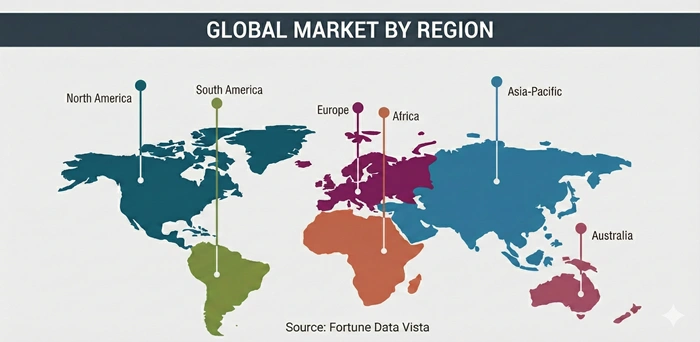
Asia Pacific is the dominant region in the global energy storage market, holding more than 40.6% of global revenue share in 2025 and growing at a CAGR of approximately 17.2% through 2033. China is the overwhelmingly dominant country within the region, accounting for the vast majority of both global battery cell manufacturing capacity and grid-scale storage deployment. The Chinese government's mandatory storage co-deployment requirements for new renewable energy projects, combined with state-owned utility procurement programs for grid-scale BESS, have created the world's largest and most concentrated demand pool for energy storage infrastructure. Leading companies including CATL, BYD, EVE Energy, and CALB are continuously expanding battery production capacity — with CATL's global manufacturing capacity expected to exceed 800 GWh annually by 2027 — sustaining China's position as the world's lowest-cost and highest-volume producer of lithium-ion storage technology. Australia has emerged as the world's third-largest BESS market, with close to 10 GW of BESS expected to be operational in the National Electricity Market by mid-2026, growing at a 150% year-on-year deployment rate that is attracting significant international investment in grid-scale storage projects.
South Korea and Japan contribute meaningfully to Asia Pacific's leadership through their advanced battery manufacturing ecosystems and pioneering residential and commercial storage deployments. LG Energy Solution and Samsung SDI in South Korea supply premium lithium-ion cells to global BESS integrators and automotive OEMs alike, maintaining significant technology and quality advantages over lower-tier Chinese competitors. Japan's energy storage market is driven by its ambitious hydrogen and decarbonization strategy, long-duration storage technology development, and a residential battery market that has been shaped by decades of energy security concerns following the Fukushima disaster. The broader Asia Pacific energy storage market is entering a phase of rapid geographic expansion — with India, Vietnam, the Philippines, and Indonesia increasingly deploying utility-scale BESS as their renewable energy shares grow and grid reliability investment accelerates.
North America — The Fastest-Growing Major Developed Region in the Global Energy Storage Landscape
Policy Tailwinds From the IRA, Data Center Demand Surge, and FERC Reform Are Accelerating North America's Energy Storage Market Growth Beyond Projections
North America holds approximately 27.3% of the global energy storage market share in 2025 and is on track to register a regional CAGR of approximately 16.8% through 2033 — making it one of the fastest-growing developed regions for energy storage deployment globally. The United States is the regional powerhouse, having surpassed 40 GW of cumulative installed storage capacity by the third quarter of 2025 — a milestone that exceeded the Department of Energy's 2017 projections seven years ahead of schedule. The Inflation Reduction Act's standalone storage investment tax credit, which provides a 30% ITC for storage projects without requiring co-located renewable generation, has been transformative in unlocking project financing for a new generation of merchant storage assets. Companies including Fluence Energy, Tesla Energy, AES Corporation, and Powin Energy are the leading BESS deployers in the North American market, each managing multi-gigawatt development pipelines anchored by long-term utility offtake agreements.
California, Texas, and New York collectively account for the majority of U.S. utility-scale storage deployment, driven by aggressive state renewable portfolio standards, capacity market requirements, and retail electricity rate structures that reward flexible storage dispatch. Canada is a growing contributor to North American energy storage demand, particularly in Ontario, British Columbia, and Alberta, where hydropower-rich grids are integrating battery storage to optimize flexibility and support growing wind and solar generation. Mexico's energy storage market is at an earlier stage of development but is accelerating as private renewable energy investment expands despite regulatory complexity. The region's unique combination of strong policy support, large and sophisticated grid infrastructure, deep capital markets, and world-class engineering talent makes North America one of the most commercially attractive destinations for energy storage investment globally through 2033.
Top Key Players
-
Contemporary Amperex Technology Co. Ltd. (CATL) (China)
-
Tesla Inc. (United States)
-
BYD Co. Ltd. (China)
-
LG Energy Solution Ltd. (South Korea)
-
Fluence Energy Inc. (United States)
-
Samsung SDI Co. Ltd. (South Korea)
-
ABB Ltd. (Switzerland)
-
Siemens Energy AG (Germany)
-
AES Corporation (United States)
-
Panasonic Holdings Corporation (Japan)
-
GS Yuasa Corporation (Japan)
-
Powin Energy LLC (United States)
-
Wärtsilä Corporation (Finland)
Recent Developments
-
In April 2026, Fluence Energy Inc. announced a strategic partnership with Microsoft to deploy AI-powered BESS management software across a portfolio of utility-scale storage projects in the United States, combining Fluence's Mosaic software platform with Microsoft Azure's AI infrastructure to optimize real-time energy dispatch and maximize revenue across ancillary services markets.
-
In March 2026, CATL began commercial deliveries from its first European gigafactory in Debrecen, Hungary, with an initial annual capacity of 100 GWh — a milestone that significantly reduces battery supply chain logistics costs for European EV and energy storage customers while reducing exposure to tariff uncertainty.
-
In January 2026, Tesla Energy announced the commissioning of its largest Megapack installation to date — a 3 GWh grid-scale BESS facility in Texas — providing peaking capacity services to ERCOT and demonstrating the commercial maturity of multi-gigawatt hour standalone storage projects at utility scale.
-
In November 2025, AES Corporation completed the acquisition of a 2.1 GWh portfolio of contracted utility-scale battery storage projects across California and Nevada, expanding its operational storage footprint to over 5 GWh and reinforcing its position as one of North America's largest independent storage operators.
-
In September 2025, LG Energy Solution announced a USD 2.8 billion investment in a new lithium iron phosphate (LFP) battery manufacturing facility in Arizona, targeting the rapidly growing U.S. grid-scale and commercial energy storage market and benefiting from Inflation Reduction Act manufacturing tax credits.
Market Trends
Lithium Iron Phosphate Chemistry Dominance and the Rise of AI-Optimized Storage Platforms Are the Two Most Consequential Trends Reshaping the Energy Storage Market in 2026
The most significant technology trend reshaping the energy storage industry in 2026 is the decisive shift toward lithium iron phosphate (LFP) chemistry across both utility-scale and commercial storage applications. LFP's inherently stable electrochemistry makes it dramatically safer than nickel-manganese-cobalt (NMC) formulations — a critical advantage following a series of high-profile BESS thermal runaway incidents that have heightened siting opposition and insurance costs for storage projects. LFP's longer cycle life, lower raw material cost — it contains no cobalt — and rapidly improving energy density are making it the chemistry of choice for grid-scale BESS globally, with China's CATL and BYD leading LFP technology development and cost reduction. In North America and Europe, storage developers are specifying LFP systems almost exclusively for new utility-scale projects, with NMC largely retreating to applications where energy density constraints demand its higher volumetric performance. This chemistry transition is reshaping battery supply chains, raw material procurement strategies, and grid-scale storage system design standards simultaneously.
The second defining trend is the rapid commercialization of AI-powered storage optimization software as a distinct, high-value revenue layer within the energy storage market. As the installed base of grid-scale BESS grows globally, the difference between a storage asset that generates competitive returns and one that underperforms its revenue projections increasingly comes down to the quality of its dispatch optimization software. AI-driven platforms such as Fluence's Mosaic, Wärtsilä's GEMS, and Tesla's Autobidder are demonstrating measurable improvements in storage asset revenue — with well-optimized assets outperforming manually dispatched equivalents by 15–25% in revenue generation across energy and ancillary services markets. This software value layer is becoming a strategically significant competitive differentiator, with energy storage integrators competing as much on software capability as on hardware cost and performance. As V2G technology matures and residential storage networks scale, AI-enabled distributed storage optimization will extend further down the energy storage value chain, creating new recurring revenue streams for software-first energy storage companies.
Segments Covered in the Report
-
By Storage Type
-
Battery Energy Storage Systems (BESS)
-
Pumped Hydroelectric Storage
-
Flywheel Energy Storage
-
Compressed Air Energy Storage (CAES)
-
Thermal Energy Storage
-
Hydrogen Energy Storage
-
Others
-
-
By Technology
-
Lithium-Ion Batteries
-
Lead-Acid Batteries
-
Flow Batteries (Vanadium, Zinc-Bromine)
-
Sodium-Sulfur (NaS) Batteries
-
Solid-State Batteries
-
Others
-
-
By Connection Type
-
On-Grid
-
Off-Grid / Microgrid
-
-
By Application
-
Utility-Scale Grid Storage
-
Behind-the-Meter Commercial & Industrial
-
Residential Storage
-
EV Charging Infrastructure Storage
-
Military & Defense
-
Others
-
-
By End-Use
-
Utilities & Grid Operators
-
Residential Users
-
Commercial & Industrial (C&I) Enterprises
-
Data Centers
-
EV Fleet Operators
-
Oil & Gas / Industrial
-
Others
-
-
By Region
-
North America (U.S., Canada, Mexico)
-
Europe (Germany, UK, France, Italy, Spain)
-
Asia Pacific (China, India, Japan, South Korea, Australia)
-
Latin America (Brazil, Chile)
-
Middle East & Africa (UAE, Saudi Arabia, South Africa)
-
❝ Built for Every Level — From Startups to Industry Giants ❞
Here Is Exactly How This Report Works for You
-
For Tier 1 utilities, global energy companies, and institutional investors, this report delivers granular competitor revenue analysis by geography and application, detailed supply-demand balance modeling across lithium-ion battery supply chains, and geopolitical risk assessments covering critical mineral procurement, tariff exposure, and cross-border investment restrictions — because in a market growing from USD 65.43 billion to USD 200.02 billion by 2033, knowing exactly where supply bottlenecks will emerge and which competitors are best positioned to capture the upside can mean the difference between a transformative investment and a costly miscalculation.
-
For Tier 2 and Tier 3 storage integrators, mid-market project developers, and regional energy companies, this report translates the complex technical and commercial dynamics of the energy storage market into actionable product positioning, market entry, and partnership strategies — identifying the specific technology categories, geographies, and application segments where mid-market players can compete effectively against larger, better-capitalized rivals and build sustainable competitive advantages.
-
For startups, clean energy innovators, and growth-stage investors, the forward-looking technology adoption curves, long-duration storage opportunity assessments, and detailed profiles of how leading companies are monetizing AI-powered storage software contained in this report provide the strategic foundation to identify and invest in the next wave of energy storage market leaders before the technology transitions of 2026–2030 make them household names.
Frequently Asked Questions:
Answer: The global energy storage market is valued at USD 56.39 billion in 2025 and is projected to reach USD 200.02 billion by 2033. It is growing at a CAGR of 15.6% from 2026 to 2033, driven by renewable energy integration, grid modernization, and rising EV adoption.
Answer: Lithium-ion battery technology — particularly lithium iron phosphate (LFP) chemistry — dominates the energy storage market due to its proven performance, declining cost, and wide application versatility across grid-scale, commercial, and residential deployments. Its continued cost reduction and expanding manufacturing scale make it the most commercially deployed storage technology globally.
Answer: Asia Pacific dominates the global energy storage market with more than 40.6% of global revenue in 2025, anchored by China's enormous battery manufacturing capacity and mandatory storage procurement programs. North America is one of the fastest-growing regions, powered by the U.S. Inflation Reduction Act, FERC interconnection reforms, and surging data center power demand.
Answer: The most significant challenges in the energy storage market include lithium-ion battery supply chain concentration in China, creating geopolitical and tariff risk for developers in North America and Europe. Grid interconnection queue backlogs and permitting delays are also constraining the pace at which approved storage projects can reach commercial operation.
Answer: AI is transforming the energy storage market by enabling smarter battery management, predictive maintenance, and real-time dispatch optimization that significantly improves asset revenue and longevity. AI-powered platforms from companies like Fluence, Wärtsilä, and Tesla are demonstrating 15–25% improvements in storage asset revenue compared to manually operated systems across global electricity markets.