
Food Manufacturing Software Market Overview
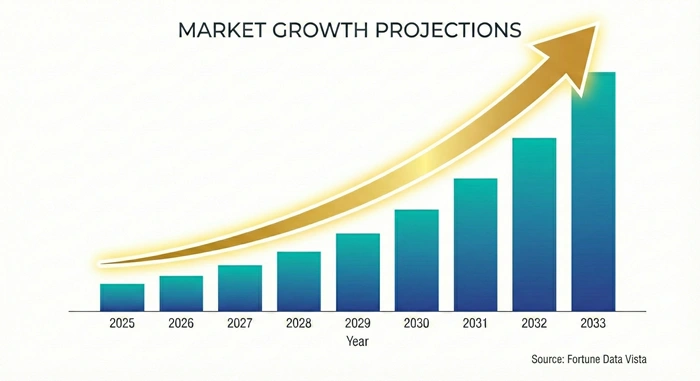
The global Food Manufacturing Software market size is valued at USD 5.24 billion in 2025 and is predicted to increase from USD 5.74 billion in 2026 to approximately USD 9.38 billion by 2033, growing at a CAGR of 9.3% from 2026 to 2033. This robust growth reflects the food and beverage industry's accelerating digital transformation — as manufacturers of every size confront rising food safety regulation, increasingly complex supply chains, growing consumer demand for traceability and clean-label transparency, and relentless pressure to improve operational efficiency and reduce waste. From ERP and MES platforms to quality management and recipe optimization solutions, the food manufacturing software market is becoming an indispensable operational backbone for food producers globally.
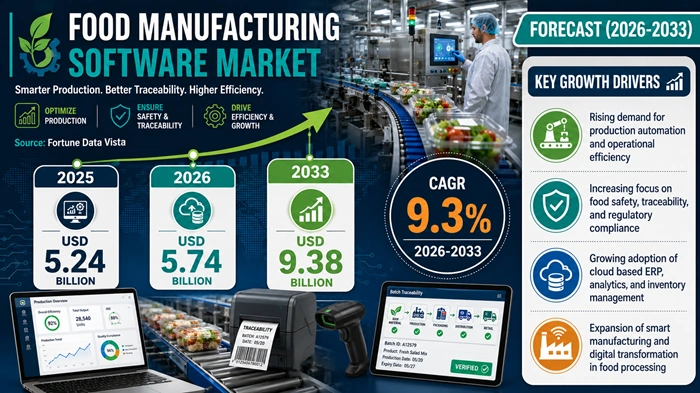
AI Impact on the Food Manufacturing Software Industry
Artificial Intelligence Is Transforming Food Manufacturing Software From a Passive Record-Keeping Tool Into an Active, Intelligent Engine That Optimizes Production, Ensures Compliance, and Predicts Operational Failures Before They Occur*
AI is fundamentally changing what food manufacturing software is capable of delivering. Traditional food production management systems were primarily designed to record what happened — capturing batch records, ingredient consumption, yield data, and quality test results after the fact. AI-powered food manufacturing platforms now analyze these data streams in real time, identifying patterns and predicting outcomes that allow production managers to make proactive decisions rather than reactive corrections. Machine learning models trained on production history can now predict yield deviations, quality failures, and equipment maintenance needs before they cause costly production disruptions or food safety events — delivering a level of operational intelligence that previous generations of food manufacturing software simply could not provide.
On the quality and compliance side, AI-driven computer vision systems integrated with food manufacturing software platforms are enabling real-time automated inspection of product appearance, fill levels, label accuracy, and packaging integrity at production line speeds that human inspectors cannot match. These systems flag non-conforming products immediately, generating digital quality records that integrate directly with the manufacturing software's compliance documentation modules — creating an unbroken, auditable digital thread from raw material receipt to finished product dispatch that satisfies the most demanding food safety regulatory requirements. As food manufacturers face escalating scrutiny from regulators, retailers, and consumers, the ability of AI-integrated software to provide this level of automated quality assurance and documentary compliance is becoming a decisive competitive advantage and investment driver in the food manufacturing software market.
Growth Factors
Tightening Global Food Safety Regulation, the Explosive Growth of Food Traceability Requirements, and the Urgent Need to Reduce Waste and Energy Consumption Are Together Creating an Exceptionally Strong and Durable Demand Foundation*
The single most powerful and consistent driver of the food manufacturing software market is the continuous tightening of food safety regulation across major global markets. The U.S. Food Safety Modernization Act (FSMA), the EU's General Food Law, and equivalent regulatory frameworks in Japan, Australia, China, and Canada are imposing increasingly stringent requirements for documented food safety management systems, hazard analysis and critical control point (HACCP) compliance, traceability record-keeping, and supplier verification — requirements that can only be reliably met through integrated software systems. Manual paper-based food safety documentation has become both commercially risky and legally inadequate for food manufacturers of any significant scale, driving investment in dedicated food manufacturing compliance and quality management software at a consistent and accelerating rate.
Consumer demand for transparency has added a market-pull dimension to this regulatory-push dynamic. Today's consumers — particularly the digitally native millennial and Gen Z demographic cohorts who now represent the majority of grocery shoppers — actively seek products with verifiable provenance, clean-label ingredient transparency, and documented sustainability credentials. Retailers are passing these consumer expectations downstream to their food manufacturing supply chains in the form of traceability requirements, sustainability audit programs, and ethical sourcing standards that manufacturers must document and verify through their software systems. This retail-driven compliance pressure is compelling even mid-sized and smaller food manufacturers to invest in more capable, integrated software platforms that can capture, manage, and report the supply chain transparency data that major retail customers now require as a condition of doing business.
Market Outlook
With Industry 4.0 Integration Accelerating, Cloud Deployment Expanding Market Accessibility, and Supply Chain Resilience Becoming a Strategic Imperative, the Food Manufacturing Software Market Is Positioned for a Decade of Strong and Sustained Expansion*
The medium-to-long-term outlook for the food manufacturing software sector is exceptionally positive, driven by the convergence of regulatory, technological, and commercial forces that are making digital manufacturing management not just an efficiency tool but an operational and regulatory necessity. The implementation of Industry 4.0 technologies across food production — including IoT-connected processing equipment, real-time environmental monitoring systems, automated guided vehicles, and digital twin production modeling — is creating a rapidly expanding volume of machine-generated data that food manufacturers need sophisticated software platforms to collect, process, and act upon. This digital factory evolution is driving investment in more advanced, integration-capable food manufacturing software that can serve as the central intelligence layer connecting all of these new data-generating technologies within the production environment.
Cloud deployment is transforming the accessibility and affordability of sophisticated food manufacturing software for the mid-market and smaller food producers that represent the majority of food manufacturing businesses globally. Software-as-a-Service delivery models are eliminating the large upfront IT infrastructure investment that historically made enterprise-grade food production management software cost-prohibitive for smaller food companies — enabling access to capabilities that were previously available only to large multinationals with substantial IT budgets. As cloud-native food manufacturing platforms continue to add functionality, improve usability, and reduce implementation complexity, the addressable customer base of the food manufacturing software market is expanding rapidly beyond the large enterprise segment into the enormously larger population of mid-market and regional food producers who are only now beginning their digital transformation journeys.
Expert Speaks
-
"At Nestlé, our commitment to digital manufacturing excellence is inseparable from our commitment to food safety, sustainability, and product quality. The software platforms that power our production operations globally are not just IT systems — they are strategic assets that enable us to deliver consistently safe, high-quality products to consumers around the world while meeting the increasingly demanding transparency and traceability expectations of our retail and foodservice customers." — Laurent Freixe, CEO, Nestlé S.A.
-
"Tyson Foods is investing heavily in digital manufacturing capabilities because we believe that the ability to operate our facilities with real-time data intelligence is fundamental to our competitiveness and our ability to meet the food safety and sustainability standards that our customers and regulators demand. Advanced food manufacturing software is not an optional upgrade — it is the foundation of how a modern, responsible food producer must operate." — Donnie King, President & CEO, Tyson Foods
-
"At Unilever, we see food manufacturing digitalization as a critical enabler of both our efficiency improvement agenda and our sustainability commitments. Our deployment of integrated manufacturing software platforms across our global food and home care production network is helping us reduce material waste, improve energy efficiency, and maintain the rigorous quality and food safety standards that our brands and our consumers depend on — and the business case for continued investment in these capabilities is compelling and growing stronger every year." — Hein Schumacher, CEO, Unilever plc
Key Report Takeaways
-
North America leads the global food manufacturing software market with the largest regional revenue share in 2025, driven by the high concentration of large food and beverage manufacturing companies headquartered in the United States and Canada, strict FDA and USDA regulatory requirements for documented food safety management systems, and the region's advanced technology adoption culture among food industry operators.
-
Asia Pacific is the fastest-growing regional market for food manufacturing software, expanding significantly above the global CAGR through 2033, driven by rapid growth in food production and processing capacity across China, India, and Southeast Asia, rising food safety regulatory standards in the region, and a large base of food manufacturers across all tiers beginning their digital transformation programs.
-
ERP (Enterprise Resource Planning) solutions are the most widely deployed software type in the food manufacturing sector, commanding the largest share of software category revenue as the foundational platform through which food manufacturers manage production planning, inventory, purchasing, financials, and compliance documentation within a single integrated system.
-
The large enterprise segment represents the highest-revenue customer tier, generating the majority of food manufacturing software revenue owing to the large IT budgets, complex multi-site production operations, and stringent compliance requirements of major food and beverage multinationals that drive investment in the most comprehensive and high-value software platforms available.
-
Cloud-based deployment is the fastest-growing delivery model, gaining market share from on-premise solutions at an accelerating pace as food manufacturers of all sizes recognize the lower total cost of ownership, faster implementation timelines, and continuous feature update advantages of SaaS-delivered food production management platforms.
-
The quality management and food safety compliance software segment is the highest-growth application category, projected to grow at a CAGR of approximately 10.8% through 2033 with approximately 26.3% market share, driven by tightening global food safety regulation, expanding retailer traceability requirements, and the growing adoption of AI-powered automated quality inspection systems that integrate with compliance documentation platforms.
Market Scope
| Parameter | Details |
|---|---|
| Market Size by 2033 | USD 9.38 Billion | Market Size by 2026 | USD 5.74 Billion | Market Size by 2025 | USD 5.24 Billion | Market Growth Rate from 2026 to 2033 | CAGR of 9.3% | Dominating Region | North America | Fastest Growing Region | Asia Pacific | Segments Covered | By Software Type, By Deployment Mode, By Organization Size, By Application, By End-User, By Region | Regions Covered | North America, Europe, Asia Pacific, Latin America, Middle East & Africa |
Market Dynamics
Drivers Impact Analysis
Escalating Food Safety Regulatory Demands, Digital Transformation Investment in Food Processing, and Consumer-Driven Traceability Requirements Are Together Building an Exceptionally Strong and Durable Growth Foundation for the Food Manufacturing Software Market*
| Driver | ≈ % Impact on CAGR Forecast | Geographic Relevance | Impact Timeline |
|---|---|---|---|
| Tightening global food safety regulations requiring documented digital compliance systems | ~3.1% | Global (North America, Europe, Asia Pacific) | 2026–2033 (Ongoing) |
| Retailer-driven supply chain traceability and transparency requirements | ~2.4% | North America, Europe | 2026–2033 (Sustained) |
| Industry 4.0 adoption generating IoT data that requires advanced software integration | ~2.0% | Global | 2026–2033 |
| Rising labor costs driving automation and software-managed production efficiency | ~1.4% | North America, Europe, Asia Pacific | 2026–2030 |
Food safety regulatory frameworks are evolving rapidly and in a direction that consistently strengthens the business case for investment in the food manufacturing software market. The U.S. Food Safety Modernization Act's preventive controls and traceability rules require food manufacturers to maintain digital records of ingredient sourcing, production process controls, and product distribution that simply cannot be reliably managed through manual systems at scale. In Europe, the EU's General Food Law and Farm-to-Fork Strategy are driving equivalent requirements for verifiable traceability and transparency across the food supply chain. In Asia Pacific, food safety regulation is tightening rapidly in China, India, and Southeast Asian markets as governments respond to food safety incidents and rising consumer expectations — creating new regulatory compliance software demand across one of the world's fastest-growing food manufacturing regions.
The broader Industry 4.0 transformation of food manufacturing is creating a self-reinforcing demand dynamic for sophisticated food production software. As food manufacturers invest in IoT-connected production equipment, automated material handling systems, real-time environmental monitoring sensors, and predictive maintenance platforms, they generate vastly more operational data than legacy systems were designed to manage. This data volume and complexity is compelling investment in more capable, AI-integrated food manufacturing software platforms that can process, contextualize, and act on machine-generated data streams in real time. The more digital a factory becomes, the more essential sophisticated software becomes to operate it effectively — creating a virtuous cycle of technology investment that is steadily elevating the average selling price and strategic importance of food manufacturing software solutions across all customer segments.
Restraints Impact Analysis
High Implementation Costs, Legacy System Integration Challenges, Data Security Concerns, and Resistance to Change Among Small and Mid-Sized Food Manufacturers Are Meaningfully Slowing Broader Market Adoption*
| Restraint | ≈ % Impact on CAGR Forecast | Geographic Relevance | Impact Timeline |
|---|---|---|---|
| High implementation cost and complexity of enterprise food manufacturing software | ~−2.3% | Global (especially SME segment) | 2026–2030 |
| Integration challenges with existing legacy manufacturing systems and equipment | ~−1.7% | Global | 2026–2033 |
| Data security and cybersecurity concerns around cloud-based food production platforms | ~−1.1% | North America, Europe | 2026–2033 |
| Workforce skills gap in operating and maximizing value from advanced manufacturing software | ~−0.8% | Global | 2026–2030 |
The total cost of enterprise-grade food manufacturing software implementation — encompassing software licensing or subscription fees, IT infrastructure, system integration services, data migration, user training, and ongoing support — can represent a very significant capital commitment for food manufacturers, particularly at the mid-market and SME level. Despite the compelling long-term return on investment that well-implemented food manufacturing software consistently delivers, the upfront financial commitment and operational disruption associated with implementation creates a meaningful barrier for smaller food manufacturers operating on thin margins and limited IT resources. This cost sensitivity is one of the primary reasons that software adoption rates remain substantially lower among small and regional food producers compared to large multinational food companies, leaving a significant portion of the total addressable market underpenetrated.
Legacy system integration is a persistent technical challenge that complicates and slows food manufacturing software adoption across all customer tiers. Many food manufacturers operate production environments with a heterogeneous mix of older PLC-controlled processing equipment, proprietary SCADA systems, spreadsheet-based production records, and legacy ERP systems — none of which were designed to communicate with modern, API-connected food manufacturing software platforms. Integrating these disparate systems into a unified digital manufacturing environment requires significant technical effort, custom integration development, and sometimes complete equipment upgrade programs that add substantially to the total cost and timeline of software implementation projects. Software vendors that invest in developing pre-built integration connectors for commonly used food processing equipment brands and legacy systems gain a meaningful competitive advantage in accelerating customer adoption and reducing implementation friction.
Opportunities Impact Analysis
AI-Powered Predictive Analytics, Blockchain-Based Traceability Solutions, and the Rapid Digital Transformation of Asia Pacific's Food Manufacturing Sector Present Transformative Growth Opportunities for the Market*
| Opportunity | ≈ % Impact on CAGR Forecast | Geographic Relevance | Impact Timeline |
|---|---|---|---|
| AI-driven predictive quality and yield optimization capabilities in food manufacturing software | ~+2.8% | Global | 2026–2033 |
| Blockchain integration for end-to-end food supply chain traceability | ~+2.1% | North America, Europe, Asia Pacific | 2027–2033 |
| Digital transformation of food manufacturing SMEs in Asia Pacific and Latin America | ~+1.7% | Asia Pacific, Latin America | 2026–2033 |
| Integration of sustainability measurement and reporting into food production platforms | ~+1.3% | Europe, North America | 2026–2033 |
The integration of AI-driven predictive analytics into food manufacturing software platforms is creating a new value proposition that goes well beyond compliance and record-keeping — positioning these systems as genuine revenue and profit improvement engines. AI-powered yield optimization models that analyze the complex interplay of raw material quality variations, process parameter settings, and environmental conditions to maximize finished product output from every batch are delivering measurable financial value for early adopters — reducing material costs, improving production throughput, and enabling more accurate production planning. As these AI capabilities mature and become embedded in mainstream food manufacturing software platforms, they will transform the investment case for software adoption from a compliance cost to a financial performance driver — expanding the addressable market and accelerating purchasing decisions across food manufacturer segments globally.
The sustainability measurement and reporting opportunity is emerging as a rapidly growing new software capability demand as food manufacturers face increasing regulatory and commercial pressure to measure, reduce, and transparently report their environmental impact. The EU's Corporate Sustainability Reporting Directive and equivalent ESG disclosure requirements in other major markets are mandating food manufacturers to produce credible, audited sustainability data — including Scope 1, 2, and 3 carbon emissions, water consumption, waste generation, and packaging recyclability metrics — that must be generated from operational data within the food manufacturing software market's production management systems. Software vendors that embed robust sustainability data capture, carbon accounting, and ESG reporting capabilities into their food manufacturing platforms are capturing a growing and commercially valuable niche of regulatory-driven technology demand that is expected to become a mainstream software capability requirement across the industry within the forecast period.
Segment Analysis
By Software Type
ERP Solutions Lead the Food Manufacturing Software Market by Revenue, While Manufacturing Execution Systems Are Delivering the Fastest Individual Category Growth Among All Platform Types*
Enterprise Resource Planning (ERP) software holds the dominant position within the food manufacturing software market, accounting for approximately 38.7% of software-type segment revenue in 2025 and growing at a CAGR of around 8.9% through 2033. Food industry ERP systems — which integrate production planning, inventory management, procurement, quality management, financial management, and compliance documentation within a unified platform — serve as the operational backbone of modern food manufacturing businesses, coordinating all business functions from raw material sourcing through to finished product delivery. North America is the leading regional market for food ERP adoption, where major food and beverage companies including Kraft Heinz, ConAgra Brands, and Archer-Daniels-Midland operate SAP, Oracle, and Microsoft Dynamics ERP platforms to manage complex, multi-site manufacturing and distribution operations. Leading food ERP vendors including SAP SE, Oracle Corporation, Microsoft Corporation, and Infor serve the North American food manufacturing market through combinations of enterprise licensing and cloud subscription models, competing on food-industry-specific functionality depth, compliance capability, and total cost of ownership.
Manufacturing Execution Systems (MES) represent the fastest-growing individual software category within the food manufacturing software market, projected to expand at a CAGR of approximately 10.4% through 2033 as food manufacturers recognize the critical role of real-time production floor data capture and control in achieving the levels of quality consistency, traceability, and operational efficiency that modern food production demands. MES platforms bridge the gap between enterprise-level ERP planning systems and plant-floor production equipment — capturing real-time batch execution data, equipment performance metrics, and quality test results that enable production managers to monitor and control operations with a precision that ERP systems alone cannot deliver. Europe is the fastest-growing regional market for food MES adoption, driven by the stringent traceability and documentation requirements of the EU's food safety regulatory framework and the high concentration of sophisticated food and beverage manufacturers across Germany, France, the Netherlands, and the UK who are actively investing in production floor digitalization. Companies including Rockwell Automation, Siemens, and AVEVA are leading providers of food-industry MES solutions in the European market, competing alongside specialist food MES vendors such as Aptean and Plex Systems (now a Rockwell Automation brand).
By Organization Size
Large Enterprises Drive the Majority of Food Manufacturing Software Market Revenue, While the SME Segment Is Emerging as the Most Commercially Exciting Growth Opportunity*
Large enterprises — defined as food manufacturers with annual revenues exceeding USD 250 million — represent the dominant revenue-generating customer segment within the food manufacturing software market, accounting for approximately 56.4% of organization-size segment revenue in 2025 and growing at a CAGR of around 8.6% through 2033. Large food manufacturers' investment in sophisticated ERP, MES, quality management, and supply chain visibility software is driven by the combination of complex multi-site production operations, demanding regulatory compliance environments, rigorous retailer audit requirements, and access to substantial IT investment budgets. North America is the largest regional market for large enterprise food manufacturing software, where multinational food companies including Nestlé, Kraft Heinz, Tyson Foods, Mondelez International, and General Mills maintain comprehensive, globally integrated software platforms from vendors including SAP, Oracle, and industry-specialist providers such as Aptean and Vicinity. These large enterprise deployments generate high per-customer annual software revenue through combinations of enterprise licensing, implementation services, and ongoing support and maintenance contracts that create durable, recurring revenue streams for software vendors.
The SME segment — encompassing food manufacturers with revenues below USD 250 million — is the highest-growth organization-size category within the food manufacturing software market, projected to expand at a CAGR of approximately 10.7% through 2033 as cloud-based SaaS delivery models make enterprise-grade food production management software financially and operationally accessible to smaller food producers for the first time. Asia Pacific is the fastest-growing region for food manufacturing software adoption among SMEs, where tens of thousands of small and medium food processors across China, India, Southeast Asia, and Japan are beginning digital transformation programs driven by a combination of rising food safety regulatory requirements, retailer audit demands, and the competitive necessity of improving production efficiency and reducing waste. Cloud-native food manufacturing software vendors including Aptean, Dassault Systèmes (Iqua), and TraceGains are developing SME-specific product tiers with simplified implementation, modular functionality, and affordable subscription pricing designed to serve this enormous and underserved customer segment across high-growth markets globally.
Regional Insights
North America
North America Leads the Global Food Manufacturing Software Market Through Its Advanced Food Industry Technology Ecosystem, Strict Regulatory Environment, and the Highest Per-Company Software Investment Rate in the World*
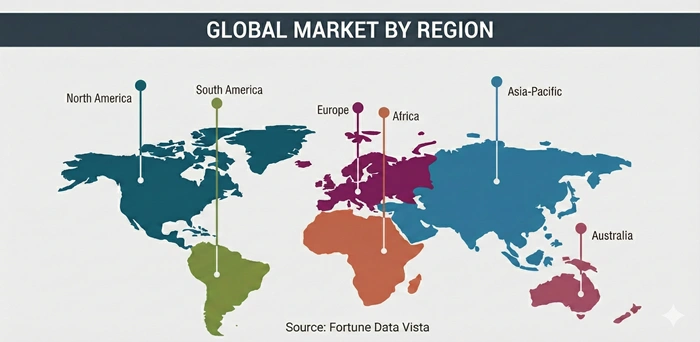
North America holds the dominant position in the global food manufacturing software market, accounting for approximately 36.8% of total revenue in 2025 and growing at a CAGR of approximately 9.0% through 2033. The United States is the primary market driver, home to the world's highest concentration of large food and beverage manufacturing companies — including Nestlé USA, Kraft Heinz, Tyson Foods, ConAgra Brands, and General Mills — each of which operates comprehensive, enterprise-grade manufacturing software platforms across large multi-site production networks. The FDA's FSMA enforcement, USDA regulatory requirements, and growing retailer and foodservice customer demands for food safety documentation and traceability are creating ongoing investment drivers that ensure the North American food manufacturing software market maintains robust growth throughout the forecast period. Leading software vendors serving the North American market include SAP SE, Oracle Corporation, Microsoft Dynamics 365, Infor CloudSuite Food & Beverage, and specialist food industry platforms from Aptean, Vicinity Manufacturing, and ProcessPro.
Canada contributes meaningful additional market demand, particularly from its strong food and beverage processing sector across Ontario, Quebec, and British Columbia, where a combination of CFIA regulatory requirements and growing export-market food safety standards are driving investment in more capable production management and traceability software. The North American market is at the forefront of AI integration in food manufacturing software — with early adopters across the U.S. food industry deploying AI-powered predictive quality, yield optimization, and demand-driven production planning capabilities that are setting new benchmarks for what food production software can deliver. This innovation leadership ensures that North America will remain both the largest revenue market and the primary product development and technology adoption hub for the food manufacturing software market globally throughout the forecast period.
Asia Pacific
Asia Pacific Is the Fastest-Growing Region for Food Manufacturing Software, Powered by China's Massive Food Processing Modernization, India's Booming Food Manufacturing Sector, and Rising Food Safety Standards Across Southeast Asia*
Asia Pacific is projected to deliver the highest regional CAGR of approximately 10.6% through 2033, growing from a 2025 revenue share of approximately 25.4% in the food manufacturing software market. China is the largest and most dynamic growth market in the region, where a combination of strict national food safety standards, rising export quality requirements, and the government's Made in China 2025 industrial modernization agenda are driving large-scale investment in food processing digitalization across the country's vast and rapidly industrializing food manufacturing sector. Leading global software vendors including SAP, Oracle, and Infor are expanding their China food manufacturing customer bases, competing alongside strong domestic ERP and MES vendors such as Yonyou and Kingdee that have deep local market knowledge and food-industry-specific China compliance capabilities.
India represents the second most dynamic growth market in Asia Pacific for food manufacturing software, where rapid growth in packaged food production, expanding domestic retail distribution infrastructure, and tightening FSSAI (Food Safety and Standards Authority of India) regulatory requirements are compelling food manufacturers at all scales to invest in more capable, digitally integrated production management systems. Southeast Asia — encompassing Vietnam, Thailand, Indonesia, Malaysia, and the Philippines — is a growing regional market with an expanding organized food manufacturing sector that is increasingly subject to CODEX Alimentarius food safety standards and the quality requirements of export markets. Japan and Australia maintain sophisticated and well-developed food manufacturing software markets with high per-manufacturer software investment rates, while South Korea's advanced food technology industry contributes further to the Asia Pacific region's overall software market revenue base and growth momentum.
Top Key Players
-
SAP SE (Germany)
-
Oracle Corporation (United States)
-
Microsoft Corporation (United States)
-
Infor (United States)
-
Aptean (United States)
-
Plex Systems (Rockwell Automation) (United States)
-
Dassault Systèmes (France)
-
AVEVA Group plc (United Kingdom)
-
Siemens AG (Germany)
-
TraceGains (United States)
-
ProcessPro (United States)
-
Vicinity Manufacturing (United States)
-
Yonyou Network Technology Co., Ltd. (China)
-
BatchMaster Software (United States)
-
Deacom (ECI Software Solutions) (United States)
Recent Developments
-
In 2025, SAP SE launched a new AI-powered food and beverage industry cloud solution built on its SAP S/4HANA Cloud platform, featuring embedded generative AI production scheduling, automated food safety documentation, and real-time supply chain traceability capabilities specifically designed for the operational and compliance needs of food manufacturers in North America and Europe.
-
In 2024, Aptean made several strategic acquisitions in the food manufacturing software space, including the purchase of Foodware365 — a Netherlands-based food and beverage ERP provider — significantly expanding its European food manufacturing software customer base and adding Dutch and Belgian market-specific compliance and food safety documentation capabilities to its international product portfolio.
-
In 2025, Infor released a major update to its CloudSuite Food & Beverage platform, incorporating new AI-driven demand sensing and production planning features, enhanced lot traceability and recall management capabilities aligned with updated FDA FSMA traceability rule requirements, and expanded integration with IoT-connected food processing equipment from major OEMs.
-
In 2024, Rockwell Automation (through its Plex Systems subsidiary) expanded its smart food manufacturing platform with new embedded sustainability measurement tools, enabling food manufacturers to capture and report scope 1 and scope 2 carbon emissions, water usage, and solid waste generation data directly from production floor operations — supporting compliance with emerging ESG reporting mandates in Europe and North America.
-
In 2025, Oracle Corporation launched a new Oracle Food & Beverage Cloud industry vertical, integrating its ERP, supply chain management, and manufacturing execution capabilities with new AI-powered quality management and food safety analytics features specifically designed to help large food manufacturers manage FSMA compliance, retailer traceability requirements, and ESG reporting obligations from a single, unified cloud platform.
Market Trends
Cloud-Native Platform Consolidation, AI-Powered Production Intelligence, and Integrated Sustainability Reporting Are Defining the Next Competitive Era in the Food Manufacturing Software Market*
The most significant architectural trend reshaping the food manufacturing software market is the consolidation of previously fragmented point solutions — separate ERP, MES, quality management, traceability, and supply chain systems — into unified, cloud-native manufacturing platform suites that provide food manufacturers with a single, integrated data environment across all production management functions. Food manufacturers have historically operated in a complex multi-system landscape where data silos between ERP, quality, and production floor systems created costly reconciliation overhead, compliance documentation gaps, and strategic decision-making delays. The new generation of cloud-native food manufacturing platforms — from vendors including SAP, Infor, Oracle, and Aptean — are eliminating these silos through unified data models, pre-built module integration, and real-time data sharing across all functional areas, delivering the "single source of truth" that food manufacturers need to operate safely, efficiently, and compliantly in today's demanding regulatory and commercial environment.
The integration of sustainability measurement, carbon accounting, and ESG reporting directly into food manufacturing software platforms is transitioning from an emerging differentiator to a rapidly becoming mainstream capability requirement. As the EU's Corporate Sustainability Reporting Directive comes into full enforcement effect and equivalent sustainability disclosure requirements take hold across North American and Asia Pacific markets, food manufacturers need their production management software to automatically capture the operational data — energy consumption, water usage, waste generation, ingredient sourcing, and packaging material metrics — that forms the basis of credible sustainability reporting. Software vendors that embed these capabilities natively within their food manufacturing platforms — rather than requiring separate ESG data collection systems — are delivering a compelling cost and operational efficiency advantage that is increasingly influencing software selection decisions among both large enterprise and mid-market food manufacturing customers globally.
Segments Covered in the Report
-
By Software Type
-
Enterprise Resource Planning (ERP)
-
Manufacturing Execution Systems (MES)
-
Quality Management Systems (QMS)
-
Supply Chain Management (SCM) Software
-
Inventory Management Software
-
Recipe and Formulation Management Software
-
Compliance and Traceability Software
-
-
By Deployment Mode
-
Cloud-Based (SaaS)
-
On-Premise
-
Hybrid
-
-
By Organization Size
-
Large Enterprises
-
Small and Medium Enterprises (SMEs)
-
-
By Application
-
Production Planning and Scheduling
-
Quality Control and Food Safety
-
Inventory and Warehouse Management
-
Regulatory Compliance and Traceability
-
Sustainability and ESG Reporting
-
Procurement and Supplier Management
-
-
By End-User
-
Meat, Poultry, and Seafood Processing
-
Dairy Processing
-
Bakery and Confectionery
-
Beverages (Alcoholic and Non-Alcoholic)
-
Fruits and Vegetables Processing
-
Snacks and Convenience Foods
-
Others
-
-
By Region
-
North America (U.S., Canada, Mexico)
-
Europe (Germany, France, UK, Netherlands, Rest of Europe)
-
Asia Pacific (China, India, Japan, Australia, Rest of Asia Pacific)
-
Latin America (Brazil, Mexico, Rest of Latin America)
-
Middle East & Africa (UAE, Saudi Arabia, South Africa, Rest of MEA)
-
❝ Built for Every Level — From Startups to Industry Giants ❞
Here Is Exactly How This Report Works for You
-
Whether you are a food technology startup developing a next-generation cloud MES platform or a Tier 1 ERP vendor expanding your food and beverage industry vertical, this report delivers granular segment revenue forecasts, deployment model trend analysis, and competitive positioning intelligence that directly inform your product development roadmap, sales strategy, and geographic market entry priorities — giving you a precise, data-driven understanding of where the USD 9.38 billion food manufacturing software opportunity lies through 2033.
-
For food company CIOs, digital transformation leaders, and private equity investors in food technology, the report's detailed supply-demand analysis reveals precisely how food safety regulation evolution, retailer traceability mandates, Industry 4.0 adoption rates, and ESG reporting requirements across North America, Europe, and Asia Pacific are shaping software investment priorities and vendor selection decisions — equipping your team with the commercial intelligence needed to make confident technology investment, vendor partnership, and capital allocation decisions.
-
The competitor revenue analysis section provides a comprehensive breakdown of revenue sources, product portfolio depth, customer segment concentration, geographic market share, and M&A activity for the top 15 companies in the global food manufacturing software industry — delivering the actionable competitive intelligence your business development and corporate strategy teams need to identify partnership opportunities, benchmark software capabilities, understand how geopolitical factors including regulatory change and trade policy are affecting customer buying behavior, and develop winning go-to-market approaches in the market's highest-growth segments.
Frequently Asked Questions:
Answer: The global food manufacturing software market is valued at USD 5.24 billion in 2025 and is projected to reach approximately USD 9.38 billion by 2033. This represents a CAGR of 9.3% from 2026 to 2033, driven by tightening food safety regulation, growing traceability requirements, and accelerating digital transformation across the global food and beverage production sector.
Answer: The food manufacturing software market encompasses a broad range of specialized platforms including ERP systems tailored for food production, Manufacturing Execution Systems (MES), Quality Management Systems (QMS), supply chain and traceability software, recipe and formulation management tools, and compliance documentation platforms. Increasingly, these functions are being consolidated into unified, cloud-native food manufacturing platform suites that provide integrated production intelligence across all functional areas from a single system.
Answer: Cloud adoption is fundamentally democratizing access to advanced food manufacturing software by eliminating the large upfront IT infrastructure investment that historically made enterprise-grade solutions accessible only to large food companies. SaaS-delivered food manufacturing platforms are enabling mid-market and smaller food producers to deploy sophisticated ERP, MES, and compliance software at affordable subscription price points — rapidly expanding the addressable customer base of the food manufacturing software market beyond the large enterprise tier.
Answer: North America dominates the food manufacturing software market with approximately 37% of global revenue in 2025, driven by the high concentration of large food manufacturers, strict FDA and USDA compliance requirements, and the region's leadership in technology adoption within the food industry. Asia Pacific is the fastest-growing region, expanding at a CAGR above 10% through 2033, powered by China's food processing modernization, India's rapidly growing packaged food sector, and tightening food safety regulations across Southeast Asian markets.
Answer: Food manufacturing software provides the digital infrastructure that food manufacturers need to meet modern food safety regulatory requirements — capturing, storing, and reporting batch records, ingredient sourcing data, process control parameters, quality test results, and product distribution records in the auditable digital formats that FDA FSMA, EU General Food Law, and equivalent regulatory frameworks require. Traceability modules within food manufacturing platforms enable manufacturers to perform rapid forward and backward product tracing within minutes — a capability that is essential for managing food safety recalls efficiently and minimizing the scope and cost of safety-related product withdrawals.