
Fuel Management Market Overview
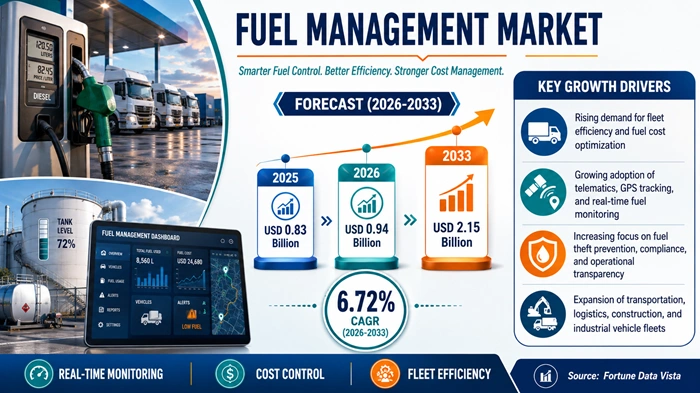
The global Fuel Management market size is valued at USD 0.83 billion in 2025 and is predicted to increase from USD 0.94 billion in 2026 to approximately USD 2.15 billion by 2033, growing at a CAGR of 6.72% from 2026 to 2033. This steady expansion is driven by escalating global fuel costs, growing adoption of IoT and telematics-based monitoring technologies, stringent regulatory emission targets, and the urgent need of fleet operators, governments, and industrial enterprises to monitor, control, and optimize fuel consumption across increasingly complex operational environments. As fuel theft, wastage, and inefficiency remain persistent cost and compliance challenges across transportation, construction, mining, and defense sectors, the fuel management market continues to gain strategic importance as a critical operational efficiency and sustainability investment.
AI Impact on the Fuel Management Industry
Artificial Intelligence Is Transforming Fuel Management From a Reactive Monitoring Function Into a Proactive, Predictive Intelligence Platform That Delivers Real-Time Fuel Optimization, Anomaly Detection, and Operational Cost Reduction at Scale*
AI is redefining what fuel management systems can deliver for fleet operators, industrial facilities, and government agencies. Traditional fuel management relied on manual reconciliation of fuel purchase records, periodic tank gauging, and exception reporting when consumption anomalies were identified — a process that was slow, labor-intensive, and often failed to detect fuel theft or significant inefficiencies until after substantial losses had already occurred. AI-powered fuel management platforms now analyze real-time data streams from fuel sensors, GPS fleet tracking systems, engine telematics, weather data, and route planning systems to identify consumption anomalies, predict maintenance needs, and recommend operational adjustments that reduce fuel waste — delivering continuous, automated fuel intelligence rather than periodic manual review.
On the predictive side, machine learning models embedded in modern fuel management software are enabling fleet and facility managers to forecast fuel demand with remarkable accuracy — optimizing procurement timing, managing storage inventory more efficiently, and reducing both the risk of fuel shortages and the financial cost of holding excessive fuel inventory. AI-driven driver behavior analysis platforms that integrate with fuel management systems can identify and quantify the fuel cost impact of individual driver habits — including excessive idling, harsh acceleration, speeding, and inefficient route choices — enabling targeted driver coaching programs that deliver measurable, sustained fuel efficiency improvements across entire fleets. These AI-powered operational intelligence capabilities are elevating the strategic value and commercial appeal of advanced fuel management solutions across all customer segments.
Growth Factors
Rising Fuel Costs, Tightening Fleet Emission Regulations, the Proliferation of IoT-Connected Fuel Monitoring Technologies, and Growing Pressure to Eliminate Fuel Theft and Waste Are Together Providing Strong and Durable Market Growth Momentum*
The most consistent and commercially significant driver of the fuel management market is the unrelenting pressure that fuel costs exert on the operational economics of transportation, logistics, construction, and energy companies. Fuel represents one of the largest and most volatile operating cost categories for any fleet-dependent or fuel-intensive business — making even modest improvements in fuel efficiency or reductions in fuel wastage and theft directly and significantly impactful on profitability. For large commercial fleet operators managing thousands of vehicles, a 5–10% improvement in fleet-wide fuel efficiency — achievable through comprehensive fuel management system implementation — can translate into millions of dollars of annual cost savings, creating an exceptionally compelling return on investment that is driving consistent technology investment across the fleet management sector.
Regulatory pressure on fleet emissions is an increasingly powerful market driver, particularly in North America and Europe where government authorities are imposing increasingly strict fleet emissions monitoring requirements, carbon reporting mandates, and clean vehicle transition timelines on commercial fleet operators. Meeting these regulatory requirements demands accurate, real-time monitoring of fuel consumption and emissions data that manual systems simply cannot provide at the level of detail regulators require. This regulatory compliance imperative is compelling fleet operators of all scales to invest in integrated fuel management solutions that combine consumption tracking, emissions reporting, route optimization, and maintenance scheduling in a unified platform — driving broader and deeper adoption of fuel management technology across commercial, government, and industrial fleet segments.
Market Outlook
With Fleet Electrification Introducing New Energy Management Complexities, Government Infrastructure Investment Driving Equipment Fleet Expansion, and Emerging Market Industrialization Accelerating Fuel Consumption, the Fuel Management Market Faces a Decade of Compelling and Sustained Growth*
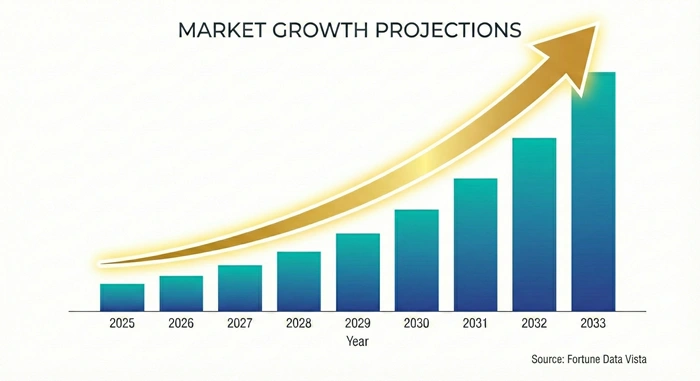
The medium-to-long-term outlook for the fuel management market is defined by two parallel growth dynamics: deepening adoption of sophisticated fuel monitoring and optimization technology in established markets, and the accelerating initial adoption of fuel management systems in rapidly industrializing emerging economies. In North America, Europe, and Japan, the replacement of aging first-generation fuel management hardware with modern IoT-connected, AI-integrated platforms represents a significant upgrade cycle opportunity — as the capability gap between current-generation systems and older installed solutions is large enough to justify substantial reinvestment from existing customers seeking access to real-time analytics, mobile fleet visibility, and automated compliance reporting capabilities.
The growing complexity of mixed fleet energy management — encompassing traditional diesel and gasoline vehicles alongside battery electric vehicles, hydrogen fuel cell vehicles, and hybrid systems — is creating a new and expanding requirement for sophisticated multi-energy fleet management platforms that can monitor, optimize, and report on multiple fuel and energy types simultaneously. Fleet operators transitioning to electrified fleets cannot simply manage charging infrastructure separately from conventional fuel systems — they need integrated energy management platforms that provide a unified view of total fleet energy cost and consumption across all propulsion technologies. This multi-energy management complexity is expanding the functional scope and commercial value of the fuel management market's product offerings, creating new revenue growth opportunities for vendors capable of delivering comprehensive fleet energy management solutions that go beyond traditional liquid fuel management.
Expert Speaks
-
"At ExxonMobil, the efficiency with which our customers manage their fuel consumption is directly linked to both their operational profitability and the collective progress the transportation sector makes toward decarbonization. We see fuel management technology as a critical enabler of both objectives — and the rapid advances in IoT connectivity, data analytics, and AI-driven optimization that are emerging in the fuel management market are making these tools increasingly accessible and impactful for fleet operators across all sectors and scales." — Darren Woods, Chairman & CEO, ExxonMobil
-
"Fleet fuel management is one of the highest-return technology investments available to commercial trucking and logistics operators in today's cost environment. At J.B. Hunt, our investment in telematics and fuel management intelligence has been fundamental to maintaining competitive operating ratios as fuel costs have risen and environmental reporting requirements have tightened — and the technology keeps getting better, more integrated, and more cost-effective every year." — John Roberts, President & CEO, J.B. Hunt Transport Services
-
"The convergence of IoT sensor technology, real-time connectivity, and AI-powered analytics is creating fuel management systems that deliver a level of operational intelligence that would have seemed extraordinary even a decade ago. At Caterpillar, we see our customers in construction, mining, and energy achieving measurable fuel efficiency gains and meaningful reductions in fuel theft through advanced fuel management platforms, and the ROI evidence from these deployments is driving broader and faster adoption across all of our key end-user segments globally." — Jim Umpleby, Chairman & CEO, Caterpillar Inc.
Key Report Takeaways
-
North America leads the global fuel management market with the largest regional revenue share in 2025, driven by the high concentration of large commercial fleet operators, strict EPA fleet emissions reporting requirements, widespread telematics adoption across the U.S. and Canadian transportation sector, and the presence of major fuel management system technology vendors headquartered in the region.
-
Asia Pacific is the fastest-growing regional market for fuel management systems, expanding well above the global CAGR through 2033, driven by rapid industrialization, expanding commercial vehicle fleets in China and India, growing government infrastructure investment driving construction equipment fleet expansion, and increasing fuel cost pressure compelling fleet operators across the region to invest in consumption monitoring and optimization solutions.
-
The transportation and logistics sector is the largest end-use customer segment, generating the majority of global fuel management market revenue owing to the enormous scale of commercial vehicle fleets worldwide, the high proportion of total operating costs represented by fuel in trucking and logistics businesses, and the strong ROI case for fuel monitoring and optimization technology in large-fleet operations.
-
Hardware components (fuel dispensing systems, sensors, and flow meters) represent the largest product segment by revenue, as the physical monitoring and dispensing infrastructure required for fuel management system deployment represents the foundational investment that drives recurring software, connectivity, and services revenue across the market.
-
Cloud-based fuel management software is the fastest-growing deployment model, gaining market share at an accelerating pace as fleet operators of all sizes recognize the operational advantages of real-time, anywhere-accessible fleet fuel data, continuous platform updates, and lower total cost of ownership compared to traditional on-premise fuel management software systems.
-
The construction and mining equipment segment is projected to be the highest-growth end-use category over the forecast period, with approximately 19.4% market share and expanding at a CAGR of approximately 7.8% through 2033, driven by large off-highway equipment fleets' high fuel consumption intensity, remote operation monitoring requirements, and growing adoption of telematics-integrated fuel management for equipment utilization and maintenance optimization.
Market Scope
| Parameter | Details |
|---|---|
| Market Size by 2033 | USD 2.15 Billion | Market Size by 2026 | USD 0.94 Billion | Market Size by 2025 | USD 0.83 Billion | Market Growth Rate from 2026 to 2033 | CAGR of 6.72% | Dominating Region | North America | Fastest Growing Region | Asia Pacific | Segments Covered | By Component, By Deployment Mode, By Application, By End-User, By Technology, By Region | Regions Covered | North America, Europe, Asia Pacific, Latin America, Middle East & Africa |
Market Dynamics
Drivers Impact Analysis
Rising Global Fuel Costs, Regulatory Emission Compliance Mandates, Widespread IoT and Telematics Adoption, and the Persistent Challenge of Fuel Theft Are Providing Durable and Broad-Based Growth Momentum Across the Fuel Management Market*
| Driver | ≈ % Impact on CAGR Forecast | Geographic Relevance | Impact Timeline |
|---|---|---|---|
| Rising fuel costs and price volatility driving fleet efficiency investment | ~2.3% | Global (North America, Europe, Asia Pacific) | 2026–2033 (Ongoing) |
| Regulatory fleet emissions monitoring and reporting requirements | ~1.9% | North America, Europe | 2026–2033 (Sustained) |
| IoT and telematics proliferation enabling real-time fuel consumption monitoring | ~1.6% | Global | 2026–2033 |
| Fuel theft prevention driving fleet and industrial operator investment | ~0.8% | MEA, Latin America, Asia Pacific | 2026–2030 |
The economics of fuel management technology investment are exceptionally compelling for commercial fleet operators. Fuel typically represents 25–40% of total operating costs for road freight and logistics companies — making fuel efficiency optimization one of the most direct and high-leverage pathways to improving operating margins in a sector where profitability is structurally thin. Comprehensive fuel management system deployments that combine real-time consumption monitoring, driver behavior analytics, route optimization, and preventive maintenance scheduling consistently deliver documented fuel savings of 8–15% across large commercial fleets — payback periods that typically range from 6 to 18 months on the system investment cost. This rapid, verifiable ROI is the primary commercial justification driving fuel management investment decisions across the transportation, construction, mining, and logistics sectors globally, and it ensures that demand for effective fuel management market solutions remains robust even in periods of economic uncertainty.
Fleet emission compliance is becoming an increasingly non-negotiable regulatory requirement in major markets. The U.S. Environmental Protection Agency's greenhouse gas reporting programs for transportation fleets, the EU's CO2 emission standards for heavy-duty vehicles, and equivalent regulatory frameworks in Canada, Australia, and Japan are imposing mandatory carbon accounting and reporting requirements on commercial fleet operators that require accurate, continuous fuel consumption data as their foundational input. Fuel management systems that integrate directly with telematics platforms and fleet management software to automate emissions calculation and regulatory reporting are becoming compliance infrastructure — not optional efficiency tools — for fleet operators in regulated markets. This shift from optional investment to compliance necessity is both deepening adoption in existing markets and accelerating the initial adoption cycle in emerging markets where equivalent emission regulations are being introduced.
Restraints Impact Analysis
High Initial System Investment Costs, Complex Integration With Legacy Fleet Infrastructure, Cybersecurity Risks in Connected Fuel Monitoring Systems, and Low Technology Awareness Among SME Fleet Operators Are Constraining Broader Market Penetration*
| Restraint | ≈ % Impact on CAGR Forecast | Geographic Relevance | Impact Timeline |
|---|---|---|---|
| High upfront capital cost of comprehensive fuel management system deployment | ~−1.9% | Global (SME segment, developing markets) | 2026–2030 |
| Complex integration challenges with legacy fleet management and ERP systems | ~−1.4% | Global | 2026–2033 |
| Cybersecurity vulnerabilities in IoT-connected fuel monitoring infrastructure | ~−1.0% | North America, Europe | 2026–2033 |
| Limited technology awareness and adoption capability among small fleet operators | ~−0.7% | Latin America, Africa, Southeast Asia | 2026–2030 |
The upfront investment required for a comprehensive fuel management system — encompassing tank monitoring hardware, dispensing control units, flow meters, RFID driver and vehicle identification systems, on-board vehicle telematics units, and the software and connectivity infrastructure that ties these components together — can represent a substantial capital commitment that creates meaningful adoption barriers for small and mid-sized fleet operators. While the ROI case for fuel management systems is well-established for large commercial fleets, the cost-benefit calculation is more nuanced for smaller fleets where the absolute fuel cost savings may not justify the full investment in enterprise-grade fuel management infrastructure. Vendors addressing this SME barrier through hardware-light, subscription-based deployment models and modular product designs that allow incremental capability addition are finding stronger growth traction in the mid-market and smaller fleet segments.
Connected fuel management systems that integrate real-time IoT sensor data, cloud-based analytics platforms, and telematics interfaces create cybersecurity exposure points that are a growing concern for fleet operators and fuel facility managers. A cyberattack on a connected fuel management system could potentially manipulate dispensing control systems, corrupt consumption records used for regulatory compliance reporting, or expose sensitive fleet operational data — creating both financial and reputational risk for the affected organization. As fuel management market solutions become more deeply connected and data-intensive, the cybersecurity requirements that customers place on vendors are increasing — adding both development cost for software providers and evaluation complexity for enterprise customers, which can slow procurement decision cycles and add to implementation timelines.
Opportunities Impact Analysis
Fleet Electrification Creating Multi-Energy Management Demand, Government Infrastructure Investment Expanding Equipment Fleets, and Emerging Market Fleet Growth Unlocking New High-Volume Adoption Opportunities for the Fuel Management Market*
| Opportunity | ≈ % Impact on CAGR Forecast | Geographic Relevance | Impact Timeline |
|---|---|---|---|
| Multi-energy fleet management demand from electrification transition | ~+2.0% | North America, Europe | 2027–2033 |
| Government infrastructure investment expanding construction equipment fleet demand | ~+1.6% | Asia Pacific, North America, MEA | 2026–2033 |
| Emerging market commercial fleet growth and initial fuel management adoption | ~+1.4% | Asia Pacific, Latin America, Africa | 2026–2033 |
| Carbon offset and sustainability reporting integration driving premium software demand | ~+1.0% | Europe, North America | 2026–2033 |
The transition of commercial vehicle fleets toward electrification is creating a fundamentally new and commercially significant requirement for integrated multi-energy fleet management platforms — representing a major new market development opportunity for fuel management technology vendors. Pure electric vehicles still represent a small fraction of most commercial fleets, but the pace of EV adoption in commercial transportation is accelerating, and fleet operators need energy management platforms that can simultaneously monitor diesel consumption, manage charging infrastructure utilization, track charging costs, and provide a unified per-vehicle and fleet-level energy cost and efficiency analysis. Vendors that extend their fuel management platforms to embrace EV charging management, battery state monitoring, and multi-fuel cost optimization are well-positioned to capture growing share of this emerging multi-energy fleet management market within the broader fuel management market ecosystem.
Emerging market industrialization represents one of the most substantial volume growth opportunities in the global fuel management sector. Across Sub-Saharan Africa, Southeast Asia, Central Asia, and Latin America, rapidly growing commercial vehicle fleets, expanding mining and construction activity, and increasing off-highway equipment deployment are creating enormous new populations of potential fuel management customers — most of whom currently operate without any formal fuel monitoring or management system. As mobile connectivity infrastructure expands in these regions and the cost of basic IoT fuel monitoring hardware continues to decline, cloud-based subscription fuel management solutions designed for emerging market conditions — including offline data capture capability, low-bandwidth connectivity resilience, and local currency pricing — are beginning to find strong commercial traction and represent a significant long-term growth runway for vendors with the product and go-to-market capabilities to serve these markets effectively.
Segment Analysis
By Component
Hardware Components Dominate the Fuel Management Market by Revenue, While Software and Cloud Services Are Delivering the Fastest Growth as Digital Transformation Reshapes the Sector*
The hardware component segment — encompassing automated fuel dispensing systems, underground and above-ground storage tank monitoring equipment, fuel flow meters, RFID-based vehicle and driver identification terminals, and onboard fuel consumption sensors — holds the dominant revenue position within the fuel management market, accounting for approximately 52.6% of component-type segment revenue in 2025 and growing at a CAGR of around 6.3% through 2033. Hardware components represent the foundational physical infrastructure upon which fuel management system capability is built — each installation requiring dispensing control hardware, tank level sensing equipment, and vehicle identification technology before any data capture, analytics, or reporting capability becomes possible. North America is the largest regional market for fuel management hardware, where the combination of extensive commercial trucking infrastructure, large-scale construction and mining equipment fleets, and well-established military and government fleet operations generates strong and consistent demand for high-quality hardware components from vendors including Dover Corporation, Gilbarco Veeder-Root, Franklin Fueling Systems, and Piusi SPA. The hardware segment's sustained revenue dominance will be maintained throughout the forecast period, driven by ongoing greenfield system installations and a significant hardware refresh and upgrade cycle as older first-generation fuel management equipment is replaced with modern IoT-capable monitoring hardware.
The software and services segment is the fastest-growing component category within the fuel management market, projected to expand at a CAGR of approximately 7.9% through 2033 as fleet operators and industrial fuel users recognize the competitive and compliance advantages of advanced analytics, real-time reporting, mobile fleet visibility, and AI-driven optimization capabilities that cloud-native software platforms deliver. Fuel management software platforms that integrate with telematics, ERP, and fleet management systems to provide a unified view of fuel consumption, cost, and efficiency across an entire fleet operation are commanding premium subscription revenues and high customer retention rates — creating attractive recurring revenue business models for leading software vendors. Europe is the fastest-growing region for fuel management software adoption, driven by strict EU fleet emissions reporting requirements that are compelling fleet operators across Germany, France, the UK, and the Netherlands to invest in more capable, analytics-rich software platforms that can automate regulatory compliance reporting while simultaneously delivering operational efficiency insights. Companies including Chevin Fleet Solutions, Geotab, and Triscan Group Limited are among the leading software-focused fuel management vendors competing in the European market.
By End-User
Transportation and Logistics Is the Largest End-Use Segment, While the Construction and Mining Sector Is Growing at the Fastest Rate Within the Fuel Management Market*
The transportation and logistics sector holds the dominant end-user position within the fuel management market, representing approximately 43.8% of total end-user segment revenue in 2025 and growing at a CAGR of around 6.5% through 2033. The transportation sector's dominance reflects the fundamental economics of road freight — where fuel represents the single largest variable cost component, and where even marginal improvements in fuel efficiency at fleet scale translate directly into significant, measurable profitability improvements. Large commercial fleet operators across North America and Europe — including major trucking companies, last-mile delivery networks, bus and coach operators, and government vehicle fleets — have historically been the earliest and most comprehensive adopters of fuel management technology, and continued investment in system upgrades, fleet expansion, and compliance capability enhancement ensures the transportation sector remains the market's largest and most commercially important customer segment. Leading fuel management vendors serving the North American transportation market include Dover Corporation's Syntech Systems, Multiforce Systems, Sokolis Group, and Banlaw, all of which compete on system reliability, software analytics depth, and total cost of ownership for large commercial fleet deployments.
The construction and mining equipment segment is the highest-growth end-use category within the fuel management market, projected to expand at a CAGR of approximately 7.8% through 2033, driven by government infrastructure investment programs globally that are expanding heavy equipment fleet sizes, growing adoption of telematics-integrated fuel management for off-highway equipment utilization optimization, and the very high fuel consumption intensity of large construction and mining machinery that creates compelling cost savings potential from even modest fuel efficiency improvements. Asia Pacific is the fastest-growing region for fuel management adoption in the construction and mining segment, where massive government-funded infrastructure programs in China, India, Indonesia, and the Middle East are deploying enormous fleets of heavy construction equipment in geographically dispersed, remote operating environments where fuel management and remote equipment monitoring are essential operational tools. Companies including Caterpillar, Komatsu, and Hitachi Construction Machinery are integrating fuel management and telematics capabilities directly into their equipment platforms, while specialist fuel management vendors including Banlaw and Fluid Management Technology compete for the aftermarket fuel monitoring and dispensing equipment installed base across construction and mining operations globally.
Regional Insights
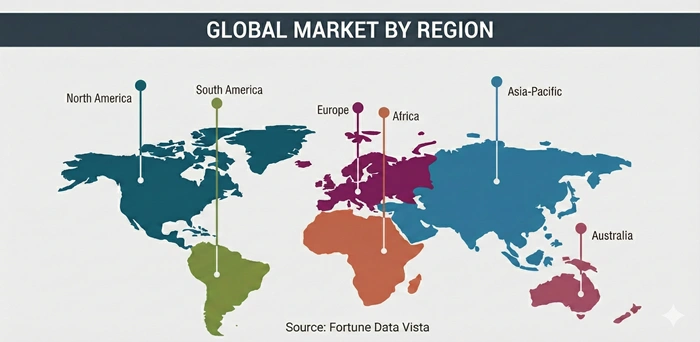
North America
North America Leads the Global Fuel Management Market Through Its Mature Fleet Technology Ecosystem, Strict Emission Compliance Environment, and the Highest Commercial Fleet Fuel Management Penetration Rate Globally*
North America holds the dominant position in the global fuel management market, accounting for approximately 35.2% of total revenue in 2025 and growing at a CAGR of approximately 6.5% through 2033. The United States is the primary market driver, home to the world's most extensive commercial trucking network, enormous government and military vehicle fleets, and a large and diverse construction, mining, and oil and gas equipment fleet base that collectively generates the highest aggregate demand for fuel management hardware, software, and services of any single national market globally. EPA fleet emissions monitoring requirements, U.S. Department of Defense fuel accountability mandates, and state-level fleet sustainability programs are creating consistent regulatory-driven investment in fuel management technology across federal, state, municipal, and commercial fleet operator segments. Major fuel management vendors serving the North American market include Dover Corporation (through its OPW Fuel Management Systems and Syntech Systems brands), Franklin Fueling Systems, Multiforce Systems, Sokolis Group, and Smartflow Technologies.
Canada contributes meaningful market demand, particularly from its oil and gas extraction sector, large government vehicle fleets, and growing construction equipment market driven by infrastructure investment programs across Ontario, British Columbia, and Alberta. The North American market is at the forefront of cloud-based fuel management software adoption, with leading fleet operators deploying next-generation platforms that integrate real-time fuel consumption data with fleet telematics, route optimization, driver performance scoring, and automated emissions reporting in fully connected, AI-augmented fleet management environments. This innovation leadership ensures North America maintains its global revenue dominance and continues to set the technology adoption benchmark that influences product development and deployment strategies across the global fuel management industry.
Asia Pacific
Asia Pacific Is the Fastest-Growing Region for Fuel Management, Powered by China's Massive Commercial Fleet Expansion, India's Rapidly Growing Logistics Sector, and Government-Led Infrastructure Investment Across Southeast Asia*
Asia Pacific is projected to deliver the highest regional CAGR of approximately 7.6% through 2033, growing from a 2025 revenue share of approximately 26.8% in the fuel management market. China is the largest and most dynamic growth market in the region, where the combination of one of the world's largest commercial vehicle fleets, enormous construction equipment deployment driven by government infrastructure programs, and rapidly tightening national fleet emission standards is driving large-scale investment in fuel monitoring and management technology across transportation, construction, and industrial sectors. Chinese domestic fuel management hardware and software vendors are competing actively in the domestic market alongside international companies including Dover Corporation, Piusi SPA, and Chevin Fleet Solutions that are expanding their Asia Pacific presence through local distributor partnerships and regional office investments. India represents the second most significant growth market in Asia Pacific, where rapid expansion of the organized road freight sector, growing government fleet management programs, and the Indian government's aggressive highway and infrastructure construction agenda are creating strong demand for fleet fuel monitoring and cost management solutions.
Southeast Asia — encompassing Vietnam, Thailand, Indonesia, Malaysia, and the Philippines — is a growing regional market for fuel management solutions, driven by expanding commercial trucking activity, growing construction equipment fleets deployed on government-funded infrastructure projects, and the operational complexity of managing large equipment fleets in geographically dispersed, often remote operating environments. Japan and Australia maintain sophisticated, well-penetrated fuel management markets with high per-fleet-operator technology investment levels, contributing meaningfully to the region's overall revenue base. The combination of China's and India's enormous fleet volume growth, Southeast Asia's initial adoption momentum, and Australia's technology upgrade cycle makes Asia Pacific the most commercially exciting regional growth story in the global fuel management market throughout the forecast period.
Top Key Players
-
Dover Corporation (OPW Fuel Management Systems / Syntech Systems) (United States)
-
Gilbarco Veeder-Root (United States)
-
Franklin Fueling Systems (United States)
-
Multiforce Systems (United States)
-
Sokolis Group (United States)
-
Triscan Group Limited (United Kingdom)
-
Chevin Fleet Solutions (United Kingdom)
-
Banlaw (Australia)
-
Piusi SPA (Italy)
-
Fluid Management Technology (United States)
-
Smartflow Technologies (United States)
-
Geotab Inc. (Canada)
-
ASSA ABLOY AB (Sweden)
-
Technotrade LLC (United Arab Emirates)
-
Fleetx Technologies (India)
Recent Developments
-
In 2025, Dover Corporation announced a significant expansion of its OPW Fuel Management Systems product portfolio with the launch of a new cloud-native fuel management platform featuring AI-powered anomaly detection, real-time multi-site tank monitoring, and automated EPA regulatory compliance reporting — targeting large commercial fleet operators and fuel retailers across North America and Europe seeking to upgrade legacy fuel monitoring infrastructure to modern connected-system capabilities.
-
In 2024, Geotab Inc. expanded its integrated fleet fuel management capabilities through the launch of MyGeotab Fuel and Energy — a new platform module that combines traditional liquid fuel consumption tracking with EV charging management, multi-energy cost analytics, and fleet-level carbon emissions reporting — positioning Geotab as a comprehensive multi-energy fleet management solution provider for mixed fleets transitioning toward electrification.
-
In 2025, Chevin Fleet Solutions completed a strategic partnership with a major European telematics provider to integrate real-time vehicle GPS and engine diagnostic data directly into its FleetWave fuel management platform, enabling European fleet operators to access unified fuel consumption, route efficiency, driver behavior, and vehicle health data from a single platform and automate EU fleet emissions compliance reporting.
-
In 2024, Banlaw expanded its remote fuel management technology portfolio for the Australian and international mining market with the launch of its FillSafe Solo product — an advanced standalone fuel dispensing control system featuring biometric driver identification, real-time consumption recording, and satellite data transmission designed for remote off-highway mining and construction sites without reliable cellular connectivity.
-
In 2025, Franklin Fueling Systems strengthened its fuel management technology portfolio through the acquisition of a specialist fuel site automation software company, significantly expanding its digital fuel site management capabilities and adding cloud-based remote monitoring, predictive maintenance, and compliance management features to its already comprehensive hardware and software product offering for fuel retailers and commercial fleet fuel facilities.
Market Trends
Cloud-Native Platform Integration, Multi-Energy Fleet Management, and Predictive Fuel Procurement Are the Defining Trends Reshaping the Competitive Landscape of the Fuel Management Market Through 2033*
The most significant trend reshaping the fuel management market is the accelerating migration from hardware-centric, site-specific fuel monitoring systems to integrated, cloud-native fleet energy management platforms that provide real-time visibility and optimization intelligence across entire fleet operations — regardless of geographic distribution or fleet size. Modern cloud-based fuel management platforms are being designed with open API architectures that enable seamless data exchange with telematics providers, fleet management systems, ERP platforms, and maintenance management software — transforming fuel management from a standalone monitoring function into a fully integrated component of a comprehensive fleet operations intelligence ecosystem. This platform integration trend is raising both the functional value and the switching costs of leading fuel management software solutions, driving premium pricing power and strong customer retention for vendors that execute well on integration breadth and data quality.
The extension of fuel management platforms to support multi-energy fleet management — encompassing battery electric vehicle charging, hydrogen fueling, compressed natural gas dispensing, and hybrid vehicle energy monitoring alongside traditional liquid fuel tracking — is transitioning from a future roadmap item to an increasingly urgent current product requirement for enterprise fleet management software vendors. Fleet operators managing even a small number of EVs alongside a larger conventional fleet need a unified energy management view that allows them to optimize total fleet energy cost and carbon footprint across all vehicle types — and they strongly prefer solutions that extend their existing fuel management platform investment rather than requiring separate, parallel systems for each fuel type. Vendors that deliver credible, well-integrated multi-energy management capability within their fuel management platforms are capturing premium positioning in enterprise fleet procurement evaluations and establishing durable competitive moats in the market's highest-value customer segments.
Segments Covered in the Report
-
By Component
-
Hardware (Fuel Dispensing Systems, Tank Monitoring Equipment, Flow Meters, RFID Identification Terminals, Onboard Fuel Sensors)
-
Software (Fleet Fuel Management Software, Compliance Reporting Platforms, Analytics and Reporting Dashboards)
-
Services (Installation, Integration, Maintenance, Managed Services)
-
-
By Deployment Mode
-
Cloud-Based
-
On-Premise
-
Hybrid
-
-
By Application
-
Fuel Monitoring and Tracking
-
Fleet Management and Route Optimization
-
Fuel Theft Prevention
-
Compliance and Emission Reporting
-
Predictive Maintenance
-
-
By End-User
-
Transportation and Logistics
-
Construction and Mining
-
Oil and Gas
-
Government and Defense
-
Aviation
-
Marine
-
Utilities and Power Generation
-
Others
-
-
By Technology
-
IoT-Based Fuel Monitoring
-
GPS and Telematics Integration
-
RFID-Based Access and Identification Systems
-
Cloud and SaaS Platforms
-
AI and Predictive Analytics
-
-
By Region
-
North America (U.S., Canada, Mexico)
-
Europe (Germany, UK, France, Netherlands, Rest of Europe)
-
Asia Pacific (China, India, Japan, Australia, Rest of Asia Pacific)
-
Latin America (Brazil, Mexico, Rest of Latin America)
-
Middle East & Africa (UAE, Saudi Arabia, South Africa, Rest of MEA)
-
❝ Built for Every Level — From Startups to Industry Giants ❞
Here Is Exactly How This Report Works for You
-
Whether you are a startup developing a next-generation IoT fleet fuel monitoring solution, a Tier 2 fleet management software vendor expanding your fuel management module capabilities, or a large hardware OEM looking to accelerate your cloud-connected product portfolio transition, this report provides granular segment revenue forecasts, technology adoption benchmarks, and competitive intelligence that directly shape your product roadmap, pricing strategy, and regional market entry priorities — giving you a data-driven picture of where the USD 2.15 billion fuel management market opportunity lies through 2033.
-
For fleet operators, infrastructure investors, logistics company CFOs, and private equity investors focused on transportation technology, the report's supply-demand analysis reveals precisely how fuel cost volatility, fleet emission regulations, multi-energy transition complexity, and infrastructure investment programs across North America, Asia Pacific, and the Middle East are shaping fleet operators' fuel management technology investment priorities and vendor selection decisions — enabling confident capital allocation, technology platform evaluation, and long-term fleet strategy planning.
-
The competitor revenue analysis section provides a detailed breakdown of revenue sources, product portfolio positioning, customer segment concentration, geographic market share, M&A history, and platform integration strategy for the top 15 companies in the global fuel management industry — equipping your business development, corporate strategy, and investor relations teams with the competitive intelligence needed to identify white-space partnership opportunities, understand how geopolitical factors including fuel price policy and emission regulation are reshaping customer buying behavior, and develop winning go-to-market strategies in the fuel management market's highest-growth end-user and regional segments.
Frequently Asked Questions:
Answer: The global fuel management market is valued at USD 0.83 billion in 2025 and is projected to reach approximately USD 2.15 billion by 2033. This growth represents a CAGR of 6.72% from 2026 to 2033, driven by rising fuel costs, fleet emission compliance mandates, IoT adoption, and the growing imperative to eliminate fuel theft and wastage across transportation, construction, and industrial fleet operations.
Answer: The fuel management market encompasses a broad range of hardware components — including automated fuel dispensing systems, tank monitoring equipment, flow meters, and RFID vehicle identification terminals — combined with fleet fuel management software, real-time analytics platforms, and professional services including system integration, maintenance, and managed service programs. Increasingly, these components are delivered as integrated cloud-native platforms that provide unified fleet fuel intelligence across multiple sites and vehicle types from a single connected system.
Answer: North America dominates the fuel management market with approximately 35% of global revenue in 2025, driven by the extensive U.S. commercial trucking sector, government fleet programs, and strict EPA emission reporting requirements that create consistent regulatory-driven investment in fuel monitoring technology. Asia Pacific is the fastest-growing region, expanding at a CAGR above 7.5% through 2033, powered by China's massive commercial fleet expansion, India's booming logistics sector, and government infrastructure investment programs that are rapidly increasing construction and mining equipment fleet sizes across the region.
Answer: Fleet electrification is expanding the functional scope and commercial value of the fuel management market by creating demand for multi-energy fleet management platforms that can simultaneously monitor liquid fuel consumption, EV charging costs, hydrogen fueling, and hybrid vehicle energy use within a unified fleet energy intelligence system. Fleet operators transitioning to mixed-energy fleets need integrated energy management platforms — not separate fuel and charging management systems — making multi-energy capability a rapidly growing and competitively important product requirement for leading fuel management software vendors.
Answer: IoT technology is foundational to modern fuel management — enabling the real-time capture of fuel consumption data from dispensing systems, tank sensors, and vehicle onboard diagnostic systems that feeds the analytics, monitoring, and optimization capabilities that deliver meaningful operational and cost value to fleet operators. IoT-connected fuel management systems provide continuous, automated monitoring of fuel levels, consumption rates, dispensing transactions, and vehicle fuel efficiency across entire fleet operations — replacing the manual, periodic monitoring processes that characterized earlier generations of fuel management and delivering the real-time operational intelligence that today's fleet operators and regulators require.