
Fusion Energy Market Overview
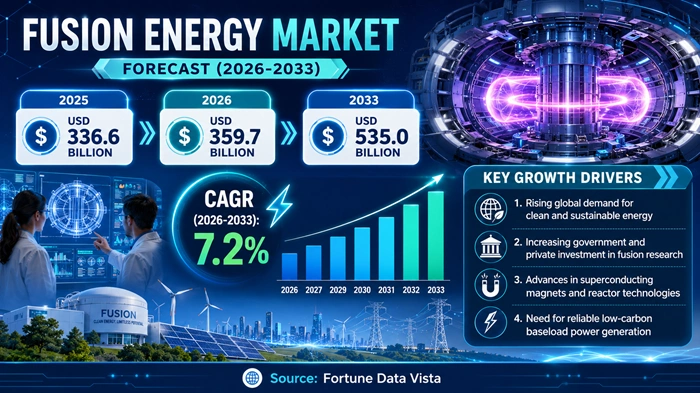
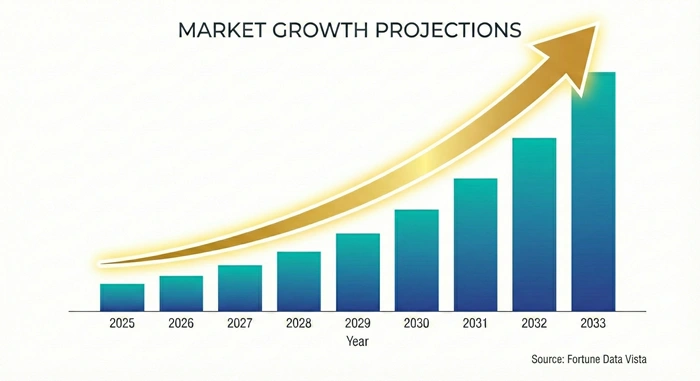
The global fusion energy market size is valued at USD 336.6 billion in 2025 and is predicted to increase from USD 359.7 billion in 2026 to approximately USD 535.0 billion by 2033, growing at a CAGR of 7.2% from 2026 to 2033.
This remarkable growth reflects the accelerating global commitment to clean, virtually limitless energy through nuclear fusion — which replicates the sun's energy-generating process by fusing hydrogen isotopes to produce massive amounts of energy with minimal radioactive waste, no carbon emissions, and access to an essentially inexhaustible fuel supply in the form of deuterium from seawater. With the historic achievement of scientific energy breakeven at the National Ignition Facility in 2022 followed by repeated confirmed ignition milestones, and with private fusion companies now raising billions in venture capital alongside unprecedented government investment, the transition from experimental science to commercial deployment is accelerating at a pace that is beginning to transform the fusion energy market from a long-range scientific aspiration into a credible near-term energy industry.
AI Impact on the Fusion Energy Industry
Artificial Intelligence Is Revolutionizing Plasma Physics Control, Predictive Reactor Maintenance, Fusion Materials Discovery, and Real-Time Adaptive Confinement Management — Dramatically Compressing the Timeline to Commercial Fusion Energy*
Artificial intelligence is arguably the single most transformative force accelerating progress toward commercial fusion energy in the current decade — and its impact on the fusion energy market is already measurable in faster plasma physics discoveries, improved reactor operational efficiency, and compressed experimental timelines at leading fusion research programs globally. Plasma control is the most technically challenging operational problem in fusion reactor engineering — where a plasma at 100–200 million degrees Celsius must be confined, stabilized, and maintained in a precise electromagnetic geometry for extended periods without the plasma touching the reactor walls and extinguishing. Classical control algorithms struggle with the nonlinear, high-dimensional complexity of tokamak and stellarator plasma dynamics — but deep reinforcement learning AI systems trained on millions of simulated plasma configurations are demonstrating the ability to learn plasma control policies that maintain stability across a far wider range of plasma conditions than classical controllers can manage. Google DeepMind's collaboration with Swiss Plasma Center (SPC) at EPFL demonstrated in 2022 that an AI-based plasma control system could autonomously maintain complex plasma shapes in a tokamak — a breakthrough that has been widely cited as a milestone for the fusion energy market's path toward commercially practical reactors.
At the materials science level, AI-powered materials discovery platforms are dramatically accelerating the development of the advanced structural materials needed to build fusion reactors that can survive the intense neutron bombardment, plasma erosion, and thermal cycling of commercial fusion operation. Machine learning models trained on materials property databases are identifying candidate materials for plasma-facing components, breeder blankets, and structural walls that would take decades to discover through traditional trial-and-error experimental approaches — and quantum chemistry simulations guided by AI are predicting the radiation damage behavior of materials under fusion neutron conditions that cannot yet be fully replicated in existing experimental facilities. Companies including Commonwealth Fusion Systems, TAE Technologies, and Helion Energy are all incorporating AI tools into their reactor design workflows — using AI-driven computational modeling to optimize magnet geometries, fuel injection systems, and heat extraction systems in ways that would require years of empirical testing without computational intelligence assistance. The fusion energy market's accelerating investment momentum is directly supported by AI's demonstrated ability to address some of the field's most fundamental engineering challenges.
Growth Factors
Climate Urgency Demanding Carbon-Free Baseload Power, Historic Scientific Breakthroughs Demonstrating Net Energy Gain, Surging Private Sector Investment, and Government Policy Alignment With Fusion Commercialization Timelines Are the Four Primary Forces Driving the Fusion Energy Market*
The most powerful demand driver in the fusion energy market is the global climate crisis and the increasingly urgent need for zero-carbon, dispatchable, baseload electricity that does not depend on weather conditions — a combination of attributes that fusion shares with no other clean energy source. Solar and wind energy, while growing rapidly, are intermittent and require either energy storage infrastructure or backup generation to provide reliable 24/7 power supply — a fundamental constraint that becomes more economically and technically challenging as their grid penetration increases. Fusion offers something that no existing clean energy technology can currently provide: the prospect of continuous, large-scale, carbon-free electricity generation from virtually inexhaustible fuel sources, with minimal land use, no carbon emissions, no long-lived radioactive waste, and no risk of nuclear meltdown. As government net-zero emissions pledges become legally binding targets in many jurisdictions and as the inadequacy of current clean energy portfolios for meeting mid-century climate goals becomes clearer, fusion energy is receiving the political and financial support that positions the fusion energy market for sustained, long-term growth driven by structural energy policy demand.
The second critical growth driver is the succession of scientific and engineering breakthroughs that have, for the first time, demonstrated that fusion reactions can produce more energy than is delivered to the fuel — crossing the threshold of scientific energy gain that fusion researchers had been working toward for six decades. The National Ignition Facility's confirmed ignition achievement in late 2022, followed by repeated improved performance shots, fundamentally changed the investment calculus for fusion energy — demonstrating that the physics of fusion ignition works as theory predicts, and removing the scientific uncertainty that had previously been a barrier to full-scale commercial investment. Private fusion companies including Helion Energy (which signed the world's first fusion power purchase agreement with Microsoft), Commonwealth Fusion Systems (CFS), TAE Technologies, General Fusion, and Tokamak Energy collectively raised over USD 4 billion in private investment between 2021 and 2025 — a wave of venture and strategic capital that reflects investor confidence in fusion's commercialization timeline being measured in years rather than decades, and that is creating a commercially competitive ecosystem of companies racing to achieve the next milestone of net electrical power gain from a fusion system.
Market Outlook
North America's Public-Private Partnership Leadership, Europe's ITER-Centered Scientific Infrastructure, Asia Pacific's Government-Driven National Fusion Programs, and the Emerging Private Fusion Company Ecosystem Are Defining the Global Fusion Energy Market's Trajectory Through 2033*
The long-term outlook for the fusion energy market is extraordinarily positive — driven by both the irreversible political commitment to net-zero emissions that is sustaining government fusion R&D investment globally and by the rapidly maturing private fusion technology ecosystem that is creating a competitive commercial dynamic unprecedented in fusion's history. North America is the dominant regional market, accounting for approximately 36.4% of global revenue in 2025, anchored by the U.S. Department of Energy's Fusion Energy Sciences (FES) program, ARPA-E's fusion innovation grants, national laboratory programs at Lawrence Livermore National Laboratory, Princeton Plasma Physics Laboratory, and MIT's Plasma Science and Fusion Center, and by the world's most advanced private fusion company ecosystem — including Commonwealth Fusion Systems, Helion Energy, TAE Technologies, and Xcimer Energy. The Biden and Trump administrations have both maintained federal funding commitments to fusion research — reflecting bipartisan recognition of fusion's strategic energy security and national competitiveness importance — and the U.S. Department of Energy's Milestone-Based Fusion Development Program, which funds private fusion companies on a competitive results-based model, is providing critical bridge funding that is accelerating commercial fusion development timelines across the U.S. private fusion sector.
Europe occupies a unique and critical position in the global fusion energy market through its central role in the ITER international fusion experiment being built in Cadarache, France — the world's largest tokamak and the most ambitious scientific engineering project in human history, which is scheduled to achieve first plasma in 2025 and to begin deuterium-tritium fusion experiments demonstrating 10-fold energy gain in the early 2030s. ITER's construction has mobilized approximately USD 22 billion in international fusion investment from 35 partner nations including all major global powers — and the scientific and engineering knowledge being generated by the ITER program is creating a foundational knowledge base that the entire global fusion industry will draw upon for commercial reactor design. Asia Pacific — particularly China, Japan, and South Korea — is expected to be the fastest-growing regional market in the fusion energy market through 2033, driven by China's aggressive national fusion research program centered on the EAST and HL-2M tokamaks; Japan's leading role in the ITER project and its domestic JT-60SA stellarator program; and South Korea's KSTAR device, which set world records for sustained high-temperature plasma in 2024.
Expert Speaks
-
"Commonwealth Fusion Systems is building the world's first net-energy fusion device — SPARC — using our proprietary high-temperature superconducting magnet technology that we believe represents a genuine discontinuous improvement in the economics of fusion reactor construction. The fusion energy market is at an inflection point where the scientific case for fusion has been proven and the engineering challenge is now being addressed with the urgency and resource commitment that the global energy transition requires. CFS's recent demonstration of our 20-Tesla REBCO superconducting magnet — the most powerful high-temperature superconducting magnet in history — gives us high confidence that SPARC will achieve net energy gain and that the ARC commercial reactor will be able to deliver fusion power to the grid in the early 2030s." — Bob Mumgaard, CEO, Commonwealth Fusion Systems
-
"Helion Energy is operating on a timeline that most fusion observers would have considered impossibly aggressive a decade ago — with our seventh-generation plasma device, Polaris, targeting net electricity generation in 2024 and our first commercial plant targeting power delivery to Microsoft's grid by 2028. The fusion energy market's investment momentum has fundamentally shifted in the past three years as scientific results from multiple programs including NIF, KSTAR, and CFS have demonstrated that the engineering obstacles to fusion are being overcome on a timeframe that makes commercial fusion power a genuine 2030s prospect rather than an indefinitely deferred future technology. Our 500-million-dollar-plus investment base reflects investor conviction that Helion's field-reversed configuration approach offers a commercially viable path to fusion electricity that can compete on cost with other generation sources." — David Kirtley, CEO, Helion Energy
-
"TAE Technologies' approach to fusion energy is built on a philosophy of building commercially viable clean energy technology at every stage of development — with our FRC plasma device generating revenue from medical particle accelerator applications today while we advance our fusion technology toward the commercialization milestone of net electrical energy. The fusion energy market is growing because governments and corporations are recognizing that the global energy transition cannot be completed with intermittent renewables alone — and that fusion's potential to provide unlimited, dispatchable, carbon-free baseload power makes it one of the most important long-term energy investments in history. TAE's boron-proton fuel cycle approach, which produces helium as its primary reaction product with no neutron emission, would deliver a fusion technology with essentially no radioactive waste and no material degradation from neutron bombardment — a commercial proposition that we believe will prove decisive in the long-term fusion energy market competition." — **Michl Binderbauer, CEO, TAE Technologies*
Key Report Takeaways
-
North America dominates the global fusion energy market with approximately 36.4% of global revenue in 2025, driven by the U.S. DOE's world-leading fusion science investment through the FES program and ARPA-E fusion grants, the world's most advanced private fusion company ecosystem including Commonwealth Fusion Systems, Helion Energy, TAE Technologies, Xcimer Energy, and General Fusion, the historic scientific breakthrough at LLNL's National Ignition Facility that demonstrated fusion ignition and exceeded energy breakeven, and the strategic importance placed on fusion energy leadership in U.S. clean energy and national security policy.
-
Asia Pacific is the fastest-growing regional market in the fusion energy market, projected to expand at a CAGR of approximately 8.1% from 2026 to 2033, driven by China's unprecedented national fusion R&D investment program including construction of the CFETR demonstration reactor targeting 2035 completion, Japan's leading role in ITER and domestic JT-60SA operations, South Korea's record-setting KSTAR plasma performance results, and India's rapidly growing participation in both the ITER project and its own domestic fusion research expansion under the Department of Atomic Energy.
-
Magnetic confinement fusion technology is the dominant segment, accounting for approximately 62.3% of global technology segment revenue in 2025, as tokamak-based systems including ITER, KSTAR, EAST, JET, and the private sector's SPARC and ARC designs represent the most technically mature and best-funded fusion technology approach globally — with the tokamak's decades of scientific data, the entire ITER construction investment, and the superconducting magnet breakthrough making magnetic confinement fusion the dominant commercialization pathway in the near-to-medium term.
-
Electricity generation is the dominant application in the fusion energy market, contributing approximately 71.2% of global application revenue in 2025, as the primary commercial rationale for all major fusion programs — from ITER and DEMO in Europe to CFETR in China to the private sector ARC, Polaris, and Copernicus reactor programs — is the delivery of net electrical power to national grids at competitive cost, replacing fossil fuel and aging nuclear fission baseload generation with a carbon-free, dispatchable alternative.
-
Public sector investment is the dominant funding mechanism, accounting for approximately 76.8% of global investment type revenue in 2025, as national governments through programs including the U.S. DOE FES program, the EU ITER contribution, China's national fusion program, Japan's fusion research funding, and South Korea's National Fusion Research Institute collectively provide the foundational research infrastructure and long-timeline patient capital that private venture investors cannot practically supply for a technology with 10-20 year commercialization horizons.
-
Private sector investment is the fastest-growing investment type, projected to expand at a CAGR of approximately 12.4% from 2026 to 2033, as the post-NIF ignition investment surge continues to attract venture capital, strategic corporate investment, and sovereign wealth fund interest in private fusion companies that are pursuing commercialization timelines significantly more aggressive than government programs — with private fusion companies including CFS, Helion, TAE, General Fusion, and Tokamak Energy collectively having raised cumulative private investment exceeding USD 6 billion as of 2026.
Market Scope
| Parameter | Details |
|---|---|
| Market Size by 2033 | USD 535.0 Billion | Market Size by 2026 | USD 359.7 Billion | Market Size by 2025 | USD 336.6 Billion | Market Growth Rate from 2026 to 2033 | CAGR of 7.2% | Dominating Region | North America | Fastest Growing Region | Asia Pacific | Segments Covered | By Technology, By Application, By Fuel Type, By System Type, By Investment Type, By End User | Regions Covered | North America, Europe, Asia Pacific, Latin America, Middle East & Africa |
Market Dynamics
Drivers Impact Analysis
Climate Policy Net-Zero Mandates, Proven Scientific Breakeven, Surging Private Investment, AI-Accelerated Reactor Development, and Global Energy Security Imperatives Are the Five Core Forces Propelling the Fusion Energy Market*
| Driver | ≈ % Impact on CAGR Forecast | Geographic Relevance | Impact Timeline |
|---|---|---|---|
| Climate policy net-zero mandates requiring clean baseload power | ~30% | Global | Short to Long Term |
| Demonstrated fusion ignition and scientific energy breakeven milestone | ~27% | North America, Europe, Asia Pacific | Short to Long Term |
| Surging private venture and strategic investment in fusion companies | ~22% | North America, Europe | Short to Long Term |
| AI integration accelerating plasma control and reactor design optimization | ~14% | North America, Europe | Short to Long Term |
| Energy security imperatives driving national fusion program acceleration | ~7% | Asia Pacific, Europe | Short to Long Term |
The global energy security crisis — intensified by the Russia-Ukraine war's disruption of European natural gas supply, price volatility in global energy markets, and the growing recognition that dependence on imported fossil fuels represents a fundamental national security vulnerability — is significantly accelerating government commitment to fusion energy as a long-term strategic energy independence solution. Countries across Europe, Asia, and the Middle East have heightened the urgency of their clean domestic energy development programs since 2022 — and fusion's promise of unlimited domestic fuel (deuterium from seawater is available to every coastal nation) and energy independence has been elevated from a long-range aspiration to a near-term strategic priority in national energy planning. The UK's Fusion Strategy, the EU's Fusion Roadmap, Japan's Moonshot Fusion Goal, South Korea's K-DEMO program, and China's CFETR reactor program are all concrete expressions of this energy security-driven government commitment to fusion — and collectively represent sustained multi-decade public investment that provides the foundational market infrastructure upon which both government and private fusion programs are being built.
The achievement of fusion ignition at the National Ignition Facility in December 2022 — and the subsequent improvement of fusion yield to more than twice the laser input energy in subsequent shots — has had a profound and lasting impact on the fusion energy market's investment trajectory by removing the scientific uncertainty that was the primary hesitation factor for institutional and corporate investors considering fusion as a commercial opportunity. Prior to NIF's ignition result, fusion was universally described as "always 30 years away" — a technology that promised unlimited clean energy but had never demonstrated the fundamental scientific feasibility of achieving controlled fusion ignition in a laboratory setting. The NIF ignition result changed this narrative definitively — demonstrating that controlled fusion ignition works as physics predicts, that the engineering of high-performance laser and target systems can achieve the conditions necessary for fusion burn, and that the remaining challenges are engineering rather than scientific unknowns. This shift from scientific uncertainty to engineering challenge has been transformative for the fusion energy market — enabling private investors, corporate strategic partners, and government policymakers to plan against fusion commercialization timelines with a confidence that was not possible before December 2022.
Restraints Impact Analysis
Immense Engineering Complexity and Cost of Fusion Reactor Development, Extended Commercialization Timelines, Tritium Fuel Supply Challenges, and Grid Integration Regulatory Uncertainty Are the Primary Barriers Constraining the Fusion Energy Market*
| Restraint | ≈ % Impact on CAGR Forecast | Geographic Relevance | Impact Timeline |
|---|---|---|---|
| Immense technical complexity and engineering cost of fusion reactor construction | ~40% | Global | Short to Long Term |
| Long commercialization timeline creating investor patience risk | ~28% | Global | Short to Medium Term |
| Tritium fuel supply constraints for DT fusion systems | ~20% | Global | Medium to Long Term |
| Regulatory framework uncertainty for commercial fusion plant licensing | ~12% | North America, Europe | Short to Medium Term |
Despite the transformative scientific progress of recent years, the engineering complexity and capital cost of building fusion reactors remain the most formidable barriers to the fusion energy market's near-term commercial expansion. Even the most optimistically funded and technically advanced private fusion programs — including Commonwealth Fusion Systems' SPARC project and Helion Energy's Polaris device — are multi-billion-dollar development programs requiring sustained investment over many years before the first commercial reactor can be built and connected to a power grid. ITER itself represents a construction cost of approximately USD 22 billion for a single experimental device — providing a sobering illustration of the capital intensity of fusion reactor construction at scale — though proponents note that ITER's cost reflects its status as a first-of-kind international scientific project and that commercial reactors will benefit from learning curve cost reductions, modular manufacturing, and advanced manufacturing techniques that ITER could not access. The capital intensity of fusion development means that only well-capitalized nations, international consortia, and highly funded private companies can participate — limiting the number of active development programs and slowing the competitive dynamic that typically accelerates technology progress.
The supply of tritium — the most efficient fuel for near-term deuterium-tritium fusion reactions — represents a significant near to medium-term constraint on the fusion energy market's ability to scale beyond experimental and demonstration reactors to fully commercial deployment. Tritium is a radioactive hydrogen isotope that is not naturally abundant — it is currently produced primarily as a byproduct of CANDU fission reactor operation in Canada and in Russian reactor systems, with global inventories measured in kilograms rather than the tonnes that commercial fusion deployment would require. The solution to this challenge — breeding tritium from lithium within the fusion reactor blanket — is a core part of all commercial fusion reactor design programs, but the tritium breeding blanket technology has not yet been demonstrated at operational scale in a fusion reactor environment. Until tritium breeding systems are validated in operating fusion devices like ITER and the demonstration reactors that follow, tritium supply will remain a meaningful technical and commercial constraint on the pace at which the fusion energy market can scale toward full commercial electricity generation.
Opportunities Impact Analysis
Commercial Power Purchase Agreements for Fusion Electricity, Hydrogen Production Applications, International Fusion Collaboration Frameworks, and Fusion's Role in Deep Decarbonization of Industrial Processes Are Creating Major Market Development Opportunities*
| Opportunity | ≈ % Impact on CAGR Forecast | Geographic Relevance | Impact Timeline |
|---|---|---|---|
| First commercial fusion power purchase agreements establishing the market | ~35% | North America, Europe | Short to Long Term |
| Fusion hydrogen production for heavy industry decarbonization | ~27% | Europe, Japan, South Korea | Medium to Long Term |
| International fusion collaboration programs generating shared technology development | ~22% | Global | Short to Long Term |
| Grid-scale energy storage and industrial heat fusion applications beyond electricity | ~16% | North America, Europe, Asia Pacific | Medium to Long Term |
The signing of the world's first fusion power purchase agreement — between Helion Energy and Microsoft Corporation in May 2023 — was a landmark commercial milestone for the fusion energy market that demonstrated for the first time that a major technology corporation is willing to contract for fusion electricity delivery on a defined timeline as a core component of its energy procurement strategy. Microsoft's commitment to purchase fusion electricity from Helion's planned first commercial plant — which Microsoft stated was targeted for before 2030 — signals a new commercial reality for the fusion energy market: that large technology corporations with net-zero emissions commitments and very large electricity consumption profiles are willing to commit capital and contractual obligations to fusion electricity procurement as part of their long-term clean energy strategies. This commercial signal from Microsoft is expected to catalyze additional corporate power purchase agreements for fusion electricity from other large technology companies, industrial corporations, and utility operators — progressively building the demand-side commercial foundation that the fusion energy market needs to support the investment in commercial reactor construction that will be required in the 2030s.
Fusion's potential application for hydrogen production — using fusion-generated process heat to drive high-temperature steam electrolysis or thermochemical water splitting — represents an additional and potentially enormous market development opportunity for the fusion energy market beyond its primary electricity generation role. The global hydrogen economy is developing rapidly as a decarbonization pathway for steel production, chemical manufacturing, heavy transport, and aviation — sectors that cannot easily be electrified directly and that require high-temperature process energy that fossil fuels currently supply. Fusion reactors operating at very high plasma temperatures could supply the high-grade thermal energy needed for efficient hydrogen production at very large scale — potentially positioning fusion as the primary long-term supplier of clean hydrogen at cost points competitive with fossil fuel-derived hydrogen with carbon capture. Japan and South Korea — which are both investing heavily in hydrogen economy infrastructure and both have advanced national fusion programs — are natural first markets for fusion-hydrogen integration technology, and their combined interest in both domains is creating policy alignment and research collaboration opportunities that are being actively pursued within the fusion energy market's expanding application development agenda.
Segment Analysis
By Technology: Magnetic Confinement Fusion
Magnetic Confinement Fusion Is the Dominant Technology Segment, Underpinned by the ITER Investment, Decades of Tokamak Scientific Data, and Private Sector Superconducting Magnet Breakthroughs That Are Driving Its Commercialization Ahead of Other Fusion Approaches*
Magnetic confinement fusion (MCF) holds the commanding position in the fusion energy market by technology, accounting for approximately 62.3% of global technology segment revenue in 2025 and growing at a CAGR of approximately 6.8% from 2026 to 2033. Magnetic confinement fusion works by using extremely powerful magnetic fields generated by superconducting coil systems to confine a plasma of hydrogen isotopes at temperatures exceeding 100 million degrees Celsius — holding the hot plasma in a stable configuration long enough for fusion reactions to occur and release energy. The tokamak configuration — a donut-shaped magnetic confinement geometry — is the most scientifically mature and best-funded MCF approach, with 60 years of experimental data from devices including JET (UK), EAST (China), KSTAR (South Korea), and now ITER (France) providing the scientific foundation for commercial reactor design. North America leads the MCF segment with approximately 38.2% of global segment revenue in 2025, where Commonwealth Fusion Systems' SPARC tokamak program — now in full construction phase using CFS's revolutionary REBCO high-temperature superconducting magnets at 20 Tesla field strength — represents the most commercially advanced private MCF development effort globally, targeting net energy gain demonstration by 2025 and a commercial plant by the early 2030s.
Europe is the second-largest regional market for MCF, anchored by the ITER construction project in Cadarache, France — which represents the single largest individual investment in the global fusion energy market and whose scientific results will be foundational for the design of the European DEMO commercial demonstration reactor targeted for the 2040s. UK-based Tokamak Energy is advancing its spherical tokamak program using high-temperature superconducting magnet technology similar to CFS's approach — with its ST40 device having achieved 100 million degree plasma temperature and its ST-HTS commercial prototype targeting delivery of fusion power by the early 2030s. Asia Pacific — particularly China, Japan, and South Korea — is the fastest-growing regional MCF market, expanding at a CAGR of approximately 8.5% from 2026 to 2033, as China's EAST experimental advanced superconducting tokamak continues to set plasma performance records (including a 403-second plasma pulse at 100 million degrees in 2024), China's CFETR demonstration reactor construction accelerates, and Japan's JT-60SA tokamak — the world's largest currently operational superconducting tokamak — begins its experimental program in collaboration with EU fusion scientists.
By Investment Type: Public Sector Investment
Public Sector Investment Remains the Dominant Funding Mechanism in the Fusion Energy Market, Providing the Long-Horizon Patient Capital and World-Class Research Infrastructure Without Which Commercial Fusion Development Could Not Progress*
Public sector investment holds the dominant position in the fusion energy market by investment type, accounting for approximately 76.8% of global investment type revenue in 2025 and growing at a CAGR of approximately 6.5% from 2026 to 2033. Government investment in fusion takes the form of direct national laboratory funding, national fusion research center operation, contributions to international programs including ITER, competitive research grants to universities and industry, and increasingly, milestone-based private fusion company support programs modeled on NASA's Commercial Crew approach. The U.S. Department of Energy remains the world's largest single-country public investor in fusion energy — with the FES program's annual budget growing from USD 560 million in 2020 toward USD 900 million in the mid-2020s, and with ARPA-E's BETHE and HERMES programs providing additional competitive funding to innovative fusion companies pursuing novel approaches outside the mainstream tokamak program. North America leads the public sector investment segment, accounting for approximately 39.1% of global public investment segment revenue in 2025, through the combination of DOE national laboratory programs, ARPA-E grants, and the DOE's Milestone-Based Fusion Development Program that is providing critical results-based funding to private fusion companies including Commonwealth Fusion Systems, TAE Technologies, Helion Energy, and General Atomics.
Asia Pacific is the fastest-growing regional market for public sector fusion investment, expanding at a CAGR of approximately 9.2% from 2026 to 2033 — driven by China's national fusion investment program that is widely estimated to be the largest single-country fusion investment program in the world, Japan's continued ITER contributions combined with its domestic JT-60SA stellarator operations and broader national fusion research institute program, South Korea's National Fusion Research Institute (NFRI) which operates the record-setting KSTAR device and is planning the K-DEMO demonstration reactor, and India's Institute for Plasma Research which has been expanding its SST-1 tokamak program as India increases its ITER contributions and domestic fusion capabilities. Europe's ITER contribution, EUROfusion consortium funding, and national fusion programs in the UK, Germany, France, and Switzerland collectively make Europe the second-largest regional public investor in the fusion energy market — with the EU Horizon program and UK Research and Innovation both providing competitive fusion research grants that are building the scientific talent and technology ecosystem needed to support European commercial fusion deployment in the 2030s and beyond.
Regional Insights
North America: The Dominant Region in the Fusion Energy Market
North America Dominates the Global Fusion Energy Market Through the World's Most Advanced Private Fusion Ecosystem, Historic Scientific Breakthroughs, and the Largest National Government Investment in Fusion Energy Sciences of Any Individual Country*
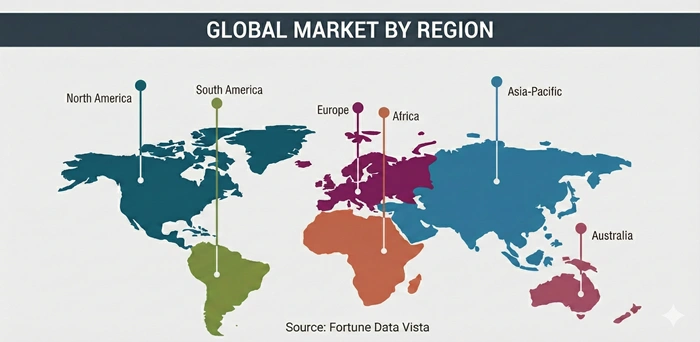
North America holds the dominant position in the global fusion energy market, accounting for approximately 36.4% of global revenue in 2025 and maintaining a CAGR of approximately 6.9% through 2033. The United States is the clear regional market leader — home to a unique concentration of both government fusion research infrastructure and private fusion companies that is unmatched globally. National laboratories including Lawrence Livermore National Laboratory (home of the NIF), Princeton Plasma Physics Laboratory, MIT's Plasma Science and Fusion Center, and General Atomics' DIII-D tokamak collectively represent the deepest concentration of fusion science expertise in the world — while private companies including Commonwealth Fusion Systems, Helion Energy, TAE Technologies, Xcimer Energy, and Longview Fusion Energy Systems are building the commercial fusion deployment capability that will translate this scientific leadership into market revenues.
The U.S. fusion policy environment has strengthened substantially since the NIF ignition breakthrough — with Congress increasing DOE fusion budgets, launching the Milestone-Based Fusion Development Program, and passing the CHIPS and Science Act which includes fusion among its priority clean energy research domains. Canada contributes to North American fusion market leadership through General Fusion's magnetized target fusion program — which is progressing toward its plasma injector demonstration system and remains one of the most commercially distinctive approaches in the global private fusion sector — and through Canada's participation in ITER as a supporting partner nation. North America's leadership in commercial fusion development is expected to translate into the first grid-connected commercial fusion electricity in the early 2030s if leading private programs meet their stated timelines — an achievement that would be a defining market milestone for the global fusion energy market.
Asia Pacific: The Fastest-Growing Region in the Fusion Energy Market
Asia Pacific Is the World's Fastest-Growing Fusion Energy Market, Driven by China's Massive National Program, Record-Setting Korean Plasma Science, Japan's Leading International Role, and India's Expanding Fusion Research Participation*
Asia Pacific is the fastest-growing regional market in the global fusion energy market, projected to expand at a CAGR of approximately 8.1% from 2026 to 2033, and currently accounts for approximately 31.6% of global revenue in 2025. China is the dominant individual country market in the region — with the world's most comprehensive national fusion program centered on the EAST and HL-2M experimental tokamaks, and with construction planning advancing for the Chinese Fusion Engineering Test Reactor (CFETR) — a domestic demonstration reactor targeting commercial-scale tritium-breeding fusion operation in the 2030s and '40s. Chinese fusion companies including Energy Singularity and ENN Energy are also building private sector fusion programs modeled on the U.S. private fusion company model — representing a new dimension of Asia Pacific fusion market development that mirrors the broader global trend toward private sector fusion commercialization.
South Korea's KSTAR device at the National Fusion Research Institute set a world record in 2024 by sustaining plasma at 100 million degrees for 48 seconds in high-confinement mode — the longest sustained high-performance plasma operation ever recorded — demonstrating South Korea's world-class plasma physics capabilities and the extraordinary progress of its national fusion program. Japan's JT-60SA stellarator — the world's largest superconducting tokamak — began operations in late 2023 as a joint Japan-EU project, providing a major new facility for high-performance plasma research that complements the ITER scientific program and advances both nations' commercial fusion readiness. India is the most rapidly developing secondary fusion market in Asia Pacific — with the Institute for Plasma Research expanding its SST-1 superconducting tokamak program and India increasing its financial and technical contribution to the ITER project — positioning India to build the domestic fusion expertise and industrial capacity that will support its participation in the commercial fusion energy market as it develops through the 2030s.
Top Key Players
-
Commonwealth Fusion Systems (CFS) (United States)
-
Helion Energy Inc. (United States)
-
TAE Technologies Inc. (United States)
-
General Fusion Inc. (Canada)
-
Tokamak Energy Ltd. (United Kingdom)
-
Xcimer Energy Inc. (United States)
-
Kyoto Fusioneering Ltd. (Japan)
-
Energy Singularity (China)
-
ENN Energy Holdings (China)
-
Thermo Fisher Scientific (United States)
-
Lockheed Martin Corporation (United States)
-
General Atomics (United States)
Recent Developments
-
In January 2026, Commonwealth Fusion Systems announced the completion of its SPARC tokamak's first plasma-facing component manufacturing milestone — with the production of full-scale high-temperature superconducting REBCO magnet sections achieving the performance specifications required for SPARC's planned 20-Tesla magnetic field, confirming that CFS's magnet technology is ready for integration into the SPARC device and keeping the company on its timeline for SPARC plasma operations in the mid-2020s and first commercial ARC reactor construction thereafter.
-
In November 2025, Helion Energy confirmed that its Polaris seventh-generation fusion device had achieved plasma temperatures exceeding 100 million degrees Celsius in experimental operations — a milestone that Helion stated demonstrated the plasma heating performance necessary to progress toward the net electricity generation goal of its fusion program, and that CEO David Kirtley cited as evidence that Helion remains on track to demonstrate net electrical output from fusion before the end of the decade in support of its power delivery commitment to Microsoft.
-
In September 2025, Tokamak Energy received a significant milestone-based funding tranche from the UK Research and Innovation (UKRI) Fusion Futures program following successful demonstration of its ST40 plasma performance targets — with the funding supporting progression to its ST-HTS commercial prototype development program and reinforcing the UK government's commitment to supporting UK-based private fusion commercialization as part of its national fusion strategy.
-
In March 2026, General Fusion completed a strategic partnership agreement with a major Canadian utility for technical collaboration on grid integration planning for fusion electricity — a landmark commercial relationship for the company that represents one of the first formal utility-fusion developer partnerships focused on the practical grid connection requirements of future commercial fusion power plants, and that positions General Fusion to benefit from utility technical input in its reactor design process.
-
In February 2026, Kyoto Fusioneering secured a multi-year engineering services contract from a European national fusion program for tritium breeding blanket technology development — a strategically important commercial milestone for the Japan-based fusion technology company that validates the commercial market for specialized fusion reactor engineering services and positions Kyoto Fusioneering as a leading supplier of fusion blanket technology to the global fusion energy market's growing project pipeline.
Market Trends
Private Sector Fusion Commercialization Acceleration and the Shift From Experimental Science to Engineering Deployment Are the Two Defining Trends Reshaping the Trajectory and Commercial Dynamics of the Fusion Energy Market*
The most transformative commercial trend in the fusion energy market is the rapid acceleration of private sector fusion commercialization — driven by the post-NIF investment surge, declining superconducting magnet costs enabled by the high-temperature superconductor industry's maturation, and the growing confidence of technology investors, energy companies, and corporate electricity consumers in fusion's near-term delivery timeline. The global private fusion company ecosystem has grown from fewer than ten companies in 2015 to over 40 companies globally in 2026 — collectively having raised over USD 6 billion in private capital and employing thousands of scientists, engineers, and technologists who represent the most concentrated private fusion development talent base in history. This private sector momentum is creating a competitive commercialization dynamic that is fundamentally different from the government-only fusion research environment that characterized the field for its first five decades — and that is expected to deliver the first commercial fusion electricity well ahead of the timelines contemplated by government programs when they were established.
The second defining trend is the shift from plasma physics research toward engineering and systems integration as the primary focus of leading fusion programs — reflecting the field's maturation from scientific feasibility demonstration toward the practical engineering challenges of building operational fusion plants. The NIF ignition result, KSTAR plasma records, and EAST performance milestones have collectively established that the plasma physics of fusion works — shifting the central challenge to the engineering of the systems around the plasma: superconducting magnets, tritium breeding blankets, plasma-facing materials, heat exchangers, tritium handling systems, and grid connection equipment. This engineering shift is expanding the commercial opportunity in the fusion energy market significantly beyond plasma physics companies — creating growing demand for specialized engineering services, advanced materials suppliers, superconductor manufacturers, cryogenic systems providers, and power electronics specialists who are building the supply chain infrastructure that commercial fusion deployment will require.
Segments Covered in the Report
-
By Technology:
-
Magnetic Confinement Fusion
-
Tokamak Systems
-
Stellarator Systems
-
Reversed Field Pinch Systems
-
Compact Tokamak Systems
-
-
Inertial Confinement Fusion
-
Laser-Driven Inertial Confinement
-
Heavy Ion Driven Inertial Confinement
-
Z-Pinch Systems
-
-
Magnetized Target Fusion
-
Other Fusion Technologies
-
-
By Application:
-
Electricity Generation
-
Hydrogen Production
-
Desalination
-
Space Propulsion
-
Industrial Process Heat
-
Research & Development
-
Other Applications
-
-
By Fuel Type:
-
Deuterium-Tritium Fuel
-
Deuterium-Deuterium Fuel
-
Helium-3 Fuel
-
Other Fuel Types
-
-
By System Type:
-
Experimental Reactors
-
Pilot Plants
-
Demonstration Plants
-
Commercial Reactors
-
-
By Investment Type:
-
Public Sector Investment
-
Government Grants
-
National Research Programs
-
International Programs (ITER)
-
-
Private Sector Investment
-
Venture Capital
-
Corporate Investment
-
Public-Private Partnerships
-
-
-
By End User:
-
Utilities & Power Generators
-
Industrial Enterprises
-
Government & Defense
-
Research Institutions & Laboratories
-
Space Agencies
-
-
By Region:
-
North America (U.S., Canada)
-
Europe (Germany, UK, France, Italy, Spain, Rest of Europe)
-
Asia Pacific (China, Japan, South Korea, India, Australia, Rest of Asia Pacific)
-
Latin America (Brazil, Argentina, Rest of Latin America)
-
Middle East & Africa (UAE, Saudi Arabia, Rest of MEA)
-
"Built for Every Level — From Startups to Industry Giants"
Here Is Exactly How This Report Works for You
-
For Tier 1 global energy utilities, multinational technology corporations planning long-term clean energy procurement, sovereign wealth funds and institutional investors in deep energy transition assets, defense contractors involved in plasma physics applications, and senior energy and R&D strategy executives at Fortune 500 companies, this report delivers comprehensive competitor revenue analysis by technology, application, and geography; deep intelligence on how geopolitical factors — including U.S.-China fusion technology competition and export controls on advanced fusion-related materials and technology, EU strategic energy independence policy and its acceleration of European fusion investment, the ITER project's progress milestones and their implications for demonstration and commercial reactor timelines, and private fusion company fundraising dynamics and corporate power purchase agreement development — are reshaping the fusion energy market's competitive landscape and investment thesis, providing the strategic intelligence foundation for confident decisions on early utility partnerships, corporate fusion PPA negotiation strategy, investment portfolio fusion exposure, and long-range energy infrastructure planning.
-
For Tier 2 and Tier 3 specialized engineering companies pursuing fusion supply chain positions, advanced materials manufacturers targeting fusion reactor applications, cryogenic and superconducting systems suppliers, high-performance computing companies serving fusion research programs, and mid-market clean energy technology investors, this report provides granular segment demand forecasts by technology and application, private company development timeline intelligence, technology readiness assessment for specific engineering subsystem markets, and competitive supplier landscape analysis — enabling precise identification of the fusion supply chain segments and technology development windows where innovative engineering companies can build commercially defensible positions that will generate growing revenue as the fusion energy market's commercialization accelerates through the 2026–2033 forecast period.
-
For fusion energy startups, university fusion spinout companies, fusion technology investors at the seed and Series A/B stage, government program managers designing competitive fusion research funding programs, and policy analysts evaluating fusion commercialization strategy, this report delivers actionable competitive white space analysis across the global fusion energy market — identifying the technology approaches, geographic markets, and application domains where differentiated new entrants can build investable business strategies alongside established leaders; detailed profiling of how the market's leading private companies have built their technology platforms, secured funding, and structured commercial relationships; regulatory pathway mapping across key global markets; and forward-looking scenario analysis of how breakthrough milestones from leading programs will reshape the competitive and investment dynamics of the entire fusion energy market ecosystem.
Frequently Asked Questions:
Answer: The global fusion energy market is valued at USD 336.6 billion in 2025 and is projected to reach USD 535.0 billion by 2033, growing at a CAGR of 7.2% from 2026 to 2033. This growth is driven by increasing government and private investment in fusion technology, scientific breakthroughs demonstrating fusion ignition, and the accelerating global demand for clean baseload electricity.
Answer: The fusion energy market is served by multiple approaches including magnetic confinement fusion (tokamaks and stellarators), inertial confinement fusion (laser-driven and heavy ion), and magnetized target fusion — with magnetic confinement fusion dominating at approximately 62.3% of global technology segment revenue in 2025 due to the maturity of tokamak science and the ITER investment. Inertial confinement fusion is the fastest-growing technology segment following the NIF ignition breakthrough.
Answer: The fusion energy market's leading private sector companies include Commonwealth Fusion Systems, Helion Energy, TAE Technologies, General Fusion, Tokamak Energy, Xcimer Energy, Kyoto Fusioneering, and Energy Singularity — collectively having raised over USD 6 billion in private investment. These companies are pursuing commercialization timelines of the 2030s, with Helion Energy's power purchase agreement with Microsoft representing the first commercial fusion electricity contract.
Answer: North America dominates the fusion energy market with approximately 36.4% of global revenue in 2025, driven by the U.S. DOE's world-leading fusion science investment and the world's most advanced private fusion company ecosystem including CFS, Helion, and TAE Technologies. Asia Pacific is the fastest-growing region at approximately 8.1% CAGR from 2026 to 2033, driven by China's CFETR program, South Korea's record-setting KSTAR results, and Japan's JT-60SA operations.
Answer: Several leading programs in the fusion energy market are targeting first commercial electricity delivery in the late 2020s to early 2030s — with Helion Energy's Microsoft PPA targeting before 2030, Commonwealth Fusion Systems' ARC commercial reactor targeting the early 2030s, and Tokamak Energy's ST-HTS prototype also targeting the early 2030s. Government programs including ITER and European DEMO operate on longer timelines, with ITER's D-T fusion experiments beginning in the early 2030s and commercial demonstration reactors targeted for the 2040s.