
Generative AI in Retail Market Overview
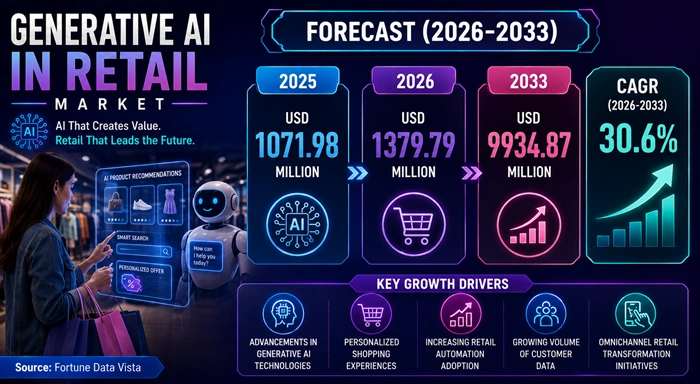
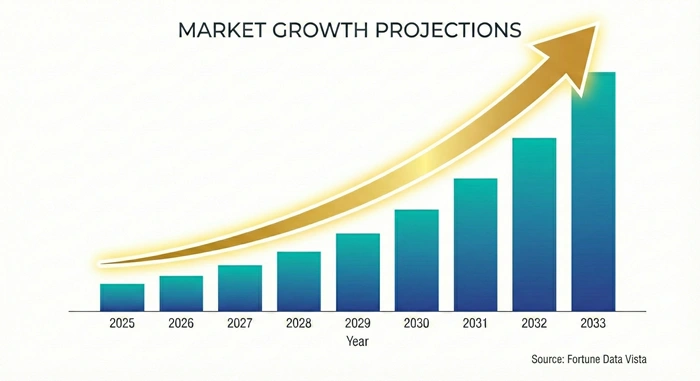
The global generative AI in retail market size is valued at USD 1071.98 million in 2025 and is predicted to increase from USD 1379.79 million in 2026 to approximately USD 9934.87 million by 2033, growing at a CAGR of 30.6% from 2026 to 2033.
Retail has always been an industry that chases the next advantage in understanding and serving customers better — and generative AI is now delivering that advantage in ways that were unimaginable even three years ago. From creating hyper-personalized product recommendations and generating compelling marketing content at scale to optimizing supply chains, generating virtual try-on experiences, and enabling conversational shopping assistants that feel genuinely helpful, AI-powered content and decision intelligence is reshaping how retailers compete. The generative AI in retail market is expanding rapidly as retailers of every scale recognize that early adoption of these capabilities creates measurable, compounding competitive advantages in conversion rates, basket size, customer retention, and operational efficiency.
AI Impact on the Retail Industry
Generative AI Is Redefining What Is Possible in Retail Operations — Enabling Hyper-Personalized Customer Journeys, Intelligent Content Creation at Massive Scale, and Real-Time Decision Intelligence Across Every Layer of the Retail Value Chain
Generative AI is doing something fundamentally different from earlier retail technology waves: it is enabling retailers to create, adapt, and personalize content, products, and customer interactions dynamically and at scale in ways that were previously only achievable through expensive human creative labor or were simply impossible. AI models can now generate thousands of unique product descriptions, marketing copy variants, personalized email campaigns, and visual creative assets in the time it previously took a creative team to produce a handful — and the quality, brand consistency, and conversion effectiveness of AI-generated retail content is rapidly approaching and in some cases exceeding that of human-produced work. Retailers including Walmart, Amazon, ASOS, and Sephora are deploying generative AI across content creation, product discovery, customer service, and visual merchandising to compress creative production timelines, reduce content costs, and deliver customer experiences that feel genuinely personalized to each individual shopper's taste, history, and intent.
On the operational side, generative AI models trained on demand signals, supplier data, weather patterns, and consumer behavior are enabling a new generation of supply chain intelligence that goes beyond predictive analytics into prescriptive optimization — generating specific, actionable supply chain decisions across procurement, inventory positioning, pricing, and promotion that continuously improve as the models learn from retailer-specific data. The integration of generative AI into retail customer service — through large language model-powered virtual shopping assistants that understand natural language product queries, handle returns and complaints conversationally, and proactively recommend complementary products — is reducing customer service operational costs while measurably improving customer satisfaction and net promoter scores. For retailers competing in the most price-sensitive, rapidly changing consumer markets, the generative AI in retail market's tools are becoming core operational infrastructure rather than experimental pilot projects.
Growth Factors
The Convergence of Retailer Demand for Personalization at Scale, Falling Generative AI Model Deployment Costs, and the Competitive Pressure of Digitally Native Pure-Play Retailers Are Accelerating Adoption of Generative AI Across Every Retail Format and Geography
The single most powerful demand driver for the generative AI in retail market is the intensifying commercial imperative for retailers to deliver genuinely personalized shopping experiences across every customer touchpoint — a capability that consumers increasingly expect as standard but that is operationally impossible to deliver at scale without AI. Modern consumers interact with retailers through websites, mobile apps, social commerce, physical stores, email, push notifications, and customer service channels simultaneously, and they expect the product recommendations, promotions, search results, and service responses they receive through each of these channels to reflect their individual preferences, purchase history, and current shopping context. Delivering this level of individualized experience across millions of customers and billions of potential product-customer-context combinations requires generative AI infrastructure — there is no human-staffed alternative that can operate at the speed, scale, and personalization depth that competitive retailers now require, making generative AI adoption a strategic necessity rather than an optional technology investment for retailers serious about long-term customer loyalty and revenue growth.
The rapid democratization of generative AI model access — through cloud-based APIs from OpenAI, Google, Anthropic, and Amazon that allow retailers to deploy sophisticated AI capabilities without building foundation models themselves — is dramatically lowering the barrier to entry for the generative AI in retail market. Retailers who three years ago would have needed multi-year AI research programs and hundreds of machine learning engineers to build competitive generative AI capabilities can now access equivalent capabilities through retail-specialized AI platforms and cloud APIs at a fraction of the cost and deployment timeline. This democratization is simultaneously expanding the addressable customer base for generative AI in retail beyond the largest global retailers to mid-market and regional retailers who are discovering that AI-powered personalization, content generation, and demand forecasting tools are financially accessible and operationally deployable within their technology budgets — a development that is progressively expanding the market's total commercial footprint across retail industry segments.
Market Outlook
The Generative AI in Retail Market Is Entering Its Most Commercially Consequential Growth Phase — Where Early Movers Are Building Durable AI-Powered Customer Experience Advantages and Laggards Face Accelerating Customer Attrition to More Intelligent Competitors
The near-to-medium-term outlook for the generative AI in retail market is exceptional, driven by the compounding nature of AI-powered retail advantages: retailers that deploy generative AI tools earlier accumulate more customer data that improves model performance, generate more optimized content that improves conversion and customer satisfaction, and build AI-powered operational muscle that compounds progressively — widening the performance gap between AI-advanced retailers and those still in early adoption phases. Amazon's decade-long advantage in AI-powered product recommendations, dynamic pricing, and logistics optimization offers a preview of what early generative AI adoption can mean for sustainable competitive positioning in retail — and major incumbents including Walmart, Target, and the leading European and Asian supermarket groups are investing aggressively in generative AI to prevent the same technological displacement from occurring in their market positions.
By 2033, the generative AI in retail market will have moved far beyond its current concentration in marketing content generation and basic personalization — into areas including AI-generated product design (where consumer preference data directly informs new product development), fully conversational commerce (where consumers complete entire shopping journeys through natural language interaction with AI shopping assistants), and autonomous retail operations (where AI systems independently manage procurement, pricing, promotions, and inventory replenishment with minimal human oversight). The retailers who have successfully integrated generative AI at this depth will operate with fundamentally different cost structures, customer relationships, and innovation velocities than those relying on traditional retail operating models — creating a structural divergence in retail industry economics that will define competitive winners and losers through the end of the forecast period and beyond.
Expert Speaks
-
"Walmart is making our most significant technology investment in a generation, and generative AI sits at the center of that investment — powering our search experience, our associate productivity tools, our supply chain decision-making, and increasingly the personalized digital shopping experiences that our 240 million weekly customers expect from us. The retailers who figure out how to deploy generative AI across the full customer journey — not just isolated pilot projects — will have operating advantages that are genuinely difficult for competitors to replicate, and we intend to be among the leaders in the generative AI in retail market." — Doug McMillon, President & CEO, Walmart Inc.
-
"Amazon's investment in generative AI spans our entire retail and technology business, from the AI-powered product discovery experience on Amazon.com and Rufus, our conversational shopping assistant, to the AI supply chain tools that help our selling partners optimize their inventory and pricing. We are in the very early innings of what generative AI will do for the retail industry, and the scale of our customer data, computing infrastructure, and AI research capability gives us a foundation for deploying these capabilities that no other retailer can match — and we are moving fast to build on it." — Andy Jassy, President & CEO, Amazon.com, Inc.
-
"At Salesforce, we work with thousands of the world's leading retailers, and the adoption curve for generative AI in retail has accelerated beyond any technology we have seen in our 25 years serving this industry. Retailers are no longer asking whether to adopt AI — they are asking how to deploy it faster, more broadly, and with better integration across their customer data platforms, commerce engines, and marketing automation systems. The retailers who win the next decade will be those who use generative AI not just to automate existing processes but to create customer experiences and business capabilities that were simply not possible before AI." — Marc Benioff, Chair & CEO, Salesforce, Inc.
Key Report Takeaways
-
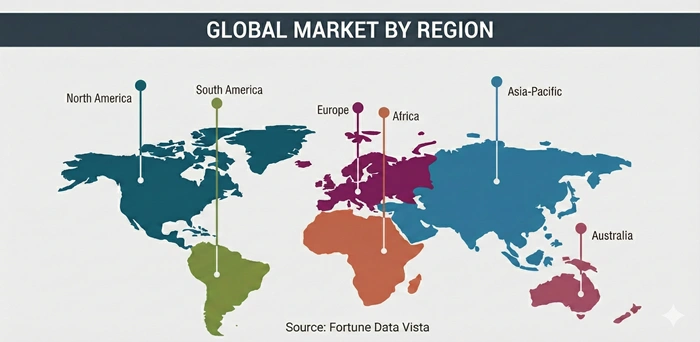
North America leads the global generative AI in retail market, holding approximately 43% of total revenue share in 2025, driven by the United States' position as home to the world's most advanced retail AI ecosystem — encompassing Amazon, Walmart, Target, and a dense network of AI platform companies including Google, Microsoft, Salesforce, and Adobe that are supplying retail-specialized generative AI tools to retailers at every scale, supported by the world's deepest pool of AI engineering talent and the most commercially mature digital retail infrastructure.
-
Asia Pacific is the fastest growing regional market for generative AI in retail, driven by China's hyper-advanced e-commerce ecosystem (Alibaba, JD.com, Pinduoduo), India's explosive retail digitalization acceleration, Japan's manufacturing and retail precision culture embracing AI-driven operations, and the rapidly growing digital retail markets of South Korea, Singapore, and Southeast Asia — regions where mobile-first commerce, digital payments, and high smartphone penetration create the ideal infrastructure for generative AI retail deployment.
-
Supply chain and logistics represents the dominant application segment, contributing approximately 28% of total generative AI in retail market revenue in 2025, as retailers prioritize AI-powered demand forecasting, inventory optimization, supplier communication automation, and logistics route optimization that deliver immediate, measurable cost savings and service level improvements — making this the highest ROI application category for generative AI investment across retail formats globally.
-
Sales and marketing is the fastest growing application segment, projected to capture the largest share gain through 2033, as the ability to generate thousands of personalized marketing content variants, AI-written product descriptions, dynamic pricing recommendations, and individualized promotional offers at virtually zero marginal cost creates an immediate and enormous financial return for retailers who deploy generative AI marketing tools — with measurable improvements in email open rates, ad click-through rates, and conversion rates that create clear attribution for AI investment ROI.
-
Online stores and e-commerce retailers are the dominant end-user segment, accounting for approximately 58% of revenue in 2025, as the digital nature of e-commerce operations creates natural compatibility with generative AI tools that operate in digital content and data environments — from AI-written product listings to personalized homepage experiences to conversational shopping assistants that guide customers through complex product selection decisions.
-
Large language model technology is the fastest growing technology segment within the generative AI in retail market, projected to grow at a CAGR exceeding 38% through 2033, as the deployment of LLM-powered retail applications including conversational commerce, AI customer service agents, dynamic product content generation, and natural language search continues to accelerate across retail organizations that are discovering the broad commercial applicability of language model capabilities across the retail customer journey.
Market Scope
| Parameter | Details |
|---|---|
| Market Size by 2033 | USD 9934.87 Million | Market Size by 2026 | USD 1379.79 Million | Market Size by 2025 | USD 1071.98 Million | Market Growth Rate from 2026 to 2033 | CAGR of 30.6% | Dominating Region | North America | Fastest Growing Region | Asia Pacific | Segments Covered | Application, Technology, Deployment Mode, End User, Enterprise Size | Regions Covered | North America, Europe, Asia Pacific, Latin America, Middle East & Africa |
Market Dynamics
Drivers Impact Analysis
Retailer Demand for AI-Powered Personalization, Democratization of Generative AI Model Access Through Cloud APIs, and the Demonstrable ROI of AI-Driven Retail Operations Are Creating an Exceptionally Strong Commercial Demand Foundation for the Generative AI in Retail Market
| Driver | ≈ % Impact on CAGR Forecast | Geographic Relevance | Impact Timeline |
|---|---|---|---|
| Retailer demand for hyper-personalization at scale across customer touchpoints | ~35% | Global — especially North America, Europe, Asia Pacific | Short to Long Term |
| Democratization of generative AI access through cloud-based APIs and retail AI platforms | ~30% | Global — especially North America, Europe | Short to Medium Term |
| AI-driven supply chain optimization reducing inventory cost and service disruptions | ~22% | Global — especially large retail markets | Short to Long Term |
| Competitive pressure from AI-advanced pure-play e-commerce retailers | ~13% | North America, Europe, Asia Pacific | Short to Medium Term |
The compelling and demonstrable financial return on investment from generative AI retail deployments is the most effective driver of broader adoption across the generative AI in retail market — as retailers who have deployed AI-powered product recommendations, dynamic content generation, and AI customer service tools publish case studies showing measurable revenue uplifts of 10–35%, operational cost reductions of 20–40% in content production, and customer satisfaction improvements that create lasting loyalty advantages. These ROI demonstrations reduce the adoption hesitancy that characterized earlier enterprise AI investment cycles and are accelerating decision timelines from multi-year evaluation processes to months-to-deployment urgency at retailers who feel competitive pressure to match the AI capabilities of digital-first competitors. The self-reinforcing cycle of competitive pressure — where leading retailers' AI-powered experience improvements raise consumer expectations that then force competing retailers to match the new standard — is creating a market dynamic where generative AI adoption is progressively shifting from competitive differentiation to competitive necessity.
The availability of retail-specialized generative AI platforms — including Adobe Firefly for retail visual content, Salesforce Einstein for retail personalization, Google Cloud Vertex AI for retail, and Microsoft Azure AI services with retail partner integrations — is dramatically accelerating the generative AI in retail market by allowing retailers to deploy powerful AI capabilities through pre-configured, retail-specific tool suites without requiring the deep internal AI engineering expertise that building custom models demands. These platforms increasingly offer plug-and-play integration with leading retail technology stacks including Shopify, Salesforce Commerce Cloud, SAP Retail, and Oracle Retail — reducing deployment complexity and time-to-value to timelines that fit within normal retail technology upgrade cycles rather than requiring multi-year transformation programs.
Restraints Impact Analysis
Data Privacy Regulatory Complexity, AI Model Accuracy and Hallucination Risks, and the Integration Challenges of Deploying Generative AI Across Legacy Retail Technology Stacks Are the Primary Brakes on Faster Market Adoption
| Restraint | ≈ % Impact on CAGR Forecast | Geographic Relevance | Impact Timeline |
|---|---|---|---|
| Data privacy regulatory complexity (GDPR, CCPA, and emerging AI regulations) | ~38% | Europe, North America | Short to Medium Term |
| AI model accuracy concerns and hallucination risk in customer-facing applications | ~34% | Global | Short to Medium Term |
| Legacy technology stack integration complexity limiting AI deployment speed | ~28% | Global — especially established large retailers | Short to Medium Term |
Data privacy regulations represent the most significant compliance challenge for the generative AI in retail market, as the deployment of customer data to train personalization models and generate targeted content sits directly at the intersection of consumer data rights legislation — including GDPR in Europe, CCPA in California, and the rapidly expanding landscape of AI-specific regulation including the EU AI Act and emerging data governance frameworks in India, Brazil, and South Korea. Retailers operating across multiple geographies must navigate a patchwork of data protection requirements that differ by country in their rules around consent, data minimization, automated decision-making transparency, and the rights of individuals to opt out of AI-powered profiling — creating compliance costs and operational complexity that can delay or reduce the scope of generative AI retail deployment. This regulatory environment is particularly challenging for international retailers who must maintain AI systems that can dynamically adapt their personalization and data usage practices based on the regulatory jurisdiction of each individual customer interaction.
The accuracy and reliability of generative AI outputs in high-stakes retail contexts — where AI-generated product descriptions that contain errors, AI pricing algorithms that produce irrational outcomes, or AI chatbots that provide incorrect policy information can directly damage customer trust, trigger regulatory scrutiny, and create financial liability — requires retailers to invest in AI governance infrastructure including output quality monitoring, human review workflows, and model performance testing systems that add implementation cost and operational complexity beyond the AI deployment itself. Many established retailers with complex legacy technology ecosystems — built on decades of acquisitions, custom software development, and point-solution integration — find that connecting generative AI tools to the product databases, customer data platforms, order management systems, and commerce engines they need to access creates significant technical integration work that extends deployment timelines and increases project cost and risk.
Opportunities Impact Analysis
Conversational Commerce Powered by LLMs, AI-Generated Virtual Try-On and Visual Merchandising, and Retailer Private AI Models Trained on Proprietary Customer Data Represent the Highest-Value Commercial Opportunities in the Generative AI in Retail Market
| Opportunity | ≈ % Impact on CAGR Forecast | Geographic Relevance | Impact Timeline |
|---|---|---|---|
| Conversational commerce through LLM-powered shopping assistants | ~40% | Global — especially mobile-first commerce markets | Short to Long Term |
| AI-powered virtual try-on, fit recommendation, and visual merchandising | ~32% | North America, Europe, Asia Pacific | Short to Long Term |
| Retailer private AI models fine-tuned on proprietary customer and product data | ~28% | Large retailers globally | Medium to Long Term |
Conversational commerce — where consumers shop through natural language dialogue with AI assistants that understand product queries, make intelligent recommendations, handle ordering, and resolve service issues — represents the single highest-value commercial opportunity in the generative AI in retail market because it addresses the fundamental friction of digital shopping (the difficulty of finding the right product among millions of options through traditional search and filter interfaces) with a solution that mirrors how consumers naturally communicate their shopping intent. Amazon's Rufus conversational shopping assistant, Walmart's Text to Shop feature, and Sephora's AI beauty advisor are early commercial deployments of conversational commerce that are demonstrating measurable improvements in product discovery success rates, basket completion, and customer satisfaction — providing the market validation that is now accelerating investment in conversational commerce capabilities across the global retail industry.
AI-powered virtual try-on technology — enabling consumers to visualize how clothing, eyewear, makeup, furniture, and home décor products will look on their body or in their space using generative AI image synthesis — addresses one of e-commerce's most persistent conversion barriers: the inability to physically try products before purchase. The generative AI in retail market's virtual try-on segment is growing rapidly, driven by deployments from Snap, Google, Amazon, and a growing ecosystem of virtual try-on platform companies including Vue.ai, True Fit, and Perfect Corp that are making the technology accessible to retailers beyond the largest global players. Retailers who have deployed virtual try-on report measurable reductions in return rates (by 20–35% in some apparel and footwear deployments) alongside significant conversion rate improvements — creating a dual financial benefit that makes the investment case for virtual try-on one of the most straightforward in the generative AI retail technology portfolio.
Segment Analysis
By Application
Supply Chain Optimization Dominates Today While AI-Powered Sales and Marketing Is the Segment Transforming Competitive Advantage in the Generative AI in Retail Market Tomorrow
The supply chain and logistics application segment is the largest in the generative AI in retail market, accounting for approximately 28% of total revenue in 2025 and growing at a CAGR of approximately 27.3% through 2033, as retailers prioritize generative AI investments that deliver direct, measurable operational cost reduction through more accurate demand forecasting, automated inventory replenishment, AI-generated supplier communications, and logistics route optimization. North America leads this segment, driven by the extraordinary scale of Walmart and Amazon's AI supply chain investments and the depth of enterprise retail technology adoption across U.S. grocery, general merchandise, and specialty retail chains — companies including Kroger, Target, Home Depot, and Best Buy have all deployed AI demand forecasting and inventory management tools that are generating measurable reduction in overstock and stockout losses. Key AI platform companies active in retail supply chain generative AI include o9 Solutions, Blue Yonder (acquired by Panasonic), Relex Solutions, and Infor — each offering AI-powered retail planning platforms that are incorporating generative AI capabilities for natural language scenario planning, automated replenishment recommendation writing, and AI-generated supplier negotiation content that is reducing procurement cycle times.
The sales and marketing application segment accounts for approximately 24% of generative AI in retail market revenue in 2025 and is projected to grow at the highest application segment CAGR of approximately 35.8% through 2033, driven by the enormous efficiency gains available from AI-powered generation of product descriptions, personalized marketing copy, email campaign content, social media creative, and dynamic promotional offers — tasks that previously required large in-house content teams or expensive agency partners and can now be automated through generative AI at a fraction of the cost and with the ability to produce millions of individualized variants simultaneously. Asia Pacific is the fastest growing region for AI sales and marketing applications in the generative AI in retail market, driven by China's hyper-competitive e-commerce ecosystem where Alibaba, JD.com, and Pinduoduo deploy sophisticated AI-generated marketing personalization at a scale that processes billions of daily user interactions and requires generative AI to remain commercially competitive. Adobe (Firefly and Experience Cloud), Salesforce (Einstein), HubSpot, and Jasper are among the leading technology platforms enabling retailers globally to adopt AI-powered marketing content generation and campaign personalization within their existing marketing technology workflows.
By End User
Online Retailers Lead Generative AI Adoption While Omnichannel Retailers Represent the Most Strategically Sophisticated and Fastest Growing End-User Segment
Online stores and e-commerce retailers represent the dominant end-user segment in the generative AI in retail market, accounting for approximately 58% of total revenue in 2025 and growing at a CAGR of approximately 29.4% through 2033. This dominance reflects the natural compatibility of generative AI tools with digital retail operations — where AI-generated product content, personalized recommendations, and AI-powered search are directly deployable into the digital infrastructure (product information management systems, commerce platforms, customer data platforms) that online retailers already operate. North America and Asia Pacific jointly lead online retailer AI adoption, with Amazon's continuous expansion of AI-powered shopping features, Shopify's integration of generative AI tools into its merchant platform (Shopify Magic), and the AI deployment acceleration across China's major e-commerce marketplaces collectively driving the majority of the segment's current revenue in the generative AI in retail market. Pure-play e-commerce companies including ASOS, Zalando, Wayfair, and Chewy are deploying generative AI in product discovery, visual search, AI-generated styling advice, and automated customer service that are delivering measurable improvements in the key e-commerce performance metrics of conversion rate, average order value, return rate, and customer lifetime value that justify sustained AI investment.
Omnichannel retailers — organizations that serve customers through integrated physical store, e-commerce, and mobile commerce operations — represent approximately 25% of generative AI in retail market revenue in 2025 but are growing at a projected CAGR of approximately 33.7% through 2033, making them the fastest growing end-user segment as major brick-and-mortar retailers including Walmart, Target, Carrefour, and Tesco accelerate their AI investments to bridge the digital experience gap with pure-play online competitors. The omnichannel retail context creates unique and high-value opportunities for generative AI in retail — including AI-powered in-store associate tools that generate real-time product knowledge and customer history insights during customer interactions, AI-generated personalized in-store promotions delivered through mobile apps when customers enter stores, and unified AI customer service that maintains full context of a customer's digital and physical shopping history. Europe is an important growth market for omnichannel generative AI retail, with major European grocery and general merchandise retailers including Carrefour, Tesco, and Lidl investing in AI-powered personalization and supply chain tools that are progressively integrating their digital and physical retail operations.
Regional Insights
North America
North America Dominates the Global Generative AI in Retail Market — Powered by Amazon's AI-First Commerce Platform, Walmart's Massive Technology Investment, and the World's Deepest Enterprise AI Technology Ecosystem
From Rufus to Walmart's Text-to-Shop, North America Is Setting the Global Standard for Generative AI in Retail Deployment Depth and Commercial Innovation
North America holds approximately 43% of global generative AI in retail market revenue in 2025, a dominant position built on the United States' unmatched combination of AI technology supply (from the world's leading AI platform companies including Google, Microsoft, Amazon, Salesforce, and Adobe), world-class retail digital infrastructure, and a culture of technology investment in retail that has made the U.S. the global laboratory for retail AI innovation. The region is projected to grow at a CAGR of approximately 29.8% from 2026 to 2033, with growth driven by the progressive deepening of generative AI deployment beyond early marketing and personalization use cases into supply chain, product development, visual merchandising, and autonomous retail operations. Key North American players including Amazon (Rufus conversational commerce, AI product descriptions), Walmart (Text to Shop, AI supply chain), Target, Kroger, and Home Depot are all publishing measurable results from generative AI deployments that are creating competitive pressure for broader adoption across the North American retail ecosystem — while AI platform companies including Salesforce Commerce Cloud, Adobe Experience Cloud, and Google Cloud Retail AI are supplying the tools that enable mid-market retailers to access equivalent capabilities through managed service models.
Canada represents a growing component of North America's generative AI in retail market, with major retailers including Canadian Tire, Loblaw, and Hudson's Bay Company deploying AI tools that leverage the same cloud AI platforms available to U.S. retailers, supported by a favorable regulatory environment and a digitally sophisticated consumer base that is receptive to AI-powered shopping experiences. Mexico's retail AI adoption is at an earlier stage but growing rapidly as e-commerce penetration expands and leading retailers including Liverpool and Falabella Mexico begin AI personalization and supply chain optimization programs — a development that is progressively integrating Mexico into the broader North American generative AI retail ecosystem and expanding the total regional market opportunity within the forecast period.
Asia Pacific
Asia Pacific Is the Fastest Growing Regional Market for Generative AI in Retail — Driven by China's AI-Powered E-Commerce Superstores, India's Digital Retail Revolution, and Japan's Precision Retail AI Adoption
Alibaba's DAMO Academy, JD.com's AI Supply Chain, and India's Rapidly Digitalizing Retail Ecosystem Make Asia Pacific the Most Commercially Dynamic Growth Region in the Generative AI in Retail Market
Asia Pacific is the fastest growing region in the generative AI in retail market, with a projected CAGR of approximately 34.2% from 2026 to 2033, and currently holds approximately 27% of global market revenue in 2025. China is the dominant country within the region, with Alibaba, JD.com, and Pinduoduo collectively operating AI retail ecosystems of extraordinary scale and sophistication — including Alibaba's AI-powered Taobao search and recommendation engine that handles billions of daily product discovery queries, JD.com's fully AI-managed warehousing and logistics network, and Pinduoduo's AI-driven social commerce algorithm that has driven one of the world's fastest e-commerce growth trajectories. Key regional players including Alibaba (DAMO Academy AI), JD.com, Coupang (South Korea), Flipkart (India), and Sea Limited (Southeast Asia) are among the world's most sophisticated deployers of AI in retail, with generative AI capabilities now being integrated into the recommendation, content, and operational tools that these platforms use to serve hundreds of millions of active users daily.
India represents the most commercially exciting individual growth story within the Asia Pacific generative AI in retail market, combining a massive and rapidly digitizing consumer base with the world's fastest-growing e-commerce market and a technology-savvy startup ecosystem that is building retail AI solutions specifically for Indian consumer behavior and product categories. Indian retail giants including Reliance Retail, Tata CLiQ, and the rapidly expanding verticals of Meesho and Myntra are deploying AI personalization, voice commerce (critical for India's large non-English-speaking consumer base), and visual search tools that are transforming the Indian retail customer experience. Japan, despite its reputation for technology conservatism, is demonstrating strong and accelerating generative AI retail adoption among major retailers including Seven & i Holdings, Aeon, and FamilyMart — who are deploying AI tools in store operations, customer service, and inventory management that leverage Japan's engineering precision culture to achieve operational improvements in retail AI deployment that meet the country's exceptionally high standards for reliability and customer experience quality.
Report Customization Available by Region and Country
Access Precisely Targeted Generative AI in Retail Market Intelligence Through Our Fully Customized Region-Wise and Country-Wise Reports — Designed to Serve the Specific Technology Adoption Dynamics, Competitive Landscapes, and Regulatory Environments of Every Major Retail Market Worldwide
This report is fully customizable by region and country, enabling retailers, AI technology vendors, retail technology investors, consulting firms, and regulatory bodies to access generative AI in retail market intelligence specifically tailored to the competitive dynamics, technology adoption maturity, consumer behavior patterns, and regulatory environment of their target geographies. A customized report delivers country-level market sizing, competitive AI platform analysis, retail sector AI deployment benchmarking, regulatory compliance assessment, and identification of the highest-return generative AI investment opportunities specific to each selected market.
Customized generative AI in retail market reports are available for all of the following regions and countries, offering detailed market analysis, technology adoption benchmarking, competitive landscape profiling, regulatory environment assessment, and strategic growth opportunity mapping tailored to each specific geography:
North America
-
U.S. — Amazon and Walmart generative AI retail leadership profiling, Google Cloud and Microsoft Azure retail AI ecosystem analysis, AI personalization ROI benchmarking, conversational commerce adoption metrics, and U.S. FTC and state-level AI regulatory environment assessment
-
Canada — Canadian retail AI adoption landscape, major retailer AI deployment profiles, regulatory framework for consumer AI in retail, and cross-border AI retail platform dynamics
-
Mexico — Mexican e-commerce AI adoption trajectory, leading retail chain AI investment analysis, regulatory environment, and digital infrastructure readiness assessment for generative AI retail deployment
Europe
-
U.K. — Tesco, Marks & Spencer, and ASOS AI retail deployment profiles; U.K. ICO guidance on AI in retail; generative AI in fashion and grocery retail; and post-Brexit AI regulatory divergence from EU
-
Germany — Zalando AI personalization leadership, Otto Group AI deployment, German consumer AI acceptance, GDPR compliance complexity for retail AI, and EU AI Act implementation impact on German retailers
-
France — Carrefour AI strategy, Decathlon generative AI applications, French consumer AI engagement, CNIL AI guidance, and French retail tech startup ecosystem
-
Italy — Italian retail AI adoption landscape, luxury retail generative AI applications (visual merchandising, product design), key retailer profiles, and Italian regulatory environment
-
Rest of Europe — Nordic retail AI leadership, Eastern European AI in retail development, Benelux retail tech ecosystem, and pan-European AI regulation convergence analysis
Asia Pacific
-
China — Alibaba DAMO Academy and JD.com AI supply chain leadership, Pinduoduo AI social commerce, ByteDance retail AI, MIIT AI regulatory framework, and Chinese consumer AI shopping behavior analysis
-
India — Flipkart, Myntra, Meesho, and Reliance Retail AI deployment profiles; voice and vernacular AI in retail; DPDP Act compliance implications; and Indian retail AI startup ecosystem
-
Japan — Seven & i Holdings, Aeon, and Uniqlo AI retail deployments; Japanese consumer AI acceptance; FSA and METI AI policy implications; and Japanese precision retail operations AI benchmarking
-
South Korea — Coupang AI e-commerce leadership, Lotte and Shinsegae AI deployment analysis, K-Commerce AI trend analysis, and South Korean PIPA compliance for retail AI
-
Australia — Woolworths and Coles AI retail deployment profiles, Australian CDR implications for retail AI personalization, e-commerce AI adoption, and ACCC AI in retail regulatory assessment
-
Rest of Asia Pacific — Southeast Asia generative AI retail development (Shopee, Lazada, Tokopedia), Vietnam and Thailand e-commerce AI growth, and Singapore AI retail innovation hub analysis
Latin America
-
Brazil — Magazine Luiza and Americanas AI deployment profiles, Mercado Libre AI platform analysis, LGPD compliance for retail AI, PIX payment infrastructure AI integration, and Brazilian retail AI startup ecosystem
-
Argentina — Retail AI adoption in inflationary environment, Mercado Libre Argentina operations, key retailer technology investment, and Argentina digital commerce AI development
-
Rest of Latin America — Colombia and Chile retail AI emergence, Rappi AI retail delivery integration, regional fintech and retail AI convergence, and pan-regional compliance considerations
Middle East & Africa (MEA)
-
UAE — Noon.com and Carrefour UAE generative AI deployment, Dubai CommerCity digital retail ecosystem, UAE PDPL compliance for retail AI personalization, and high-income consumer AI shopping behavior
-
Saudi Arabia — Saudi retail AI landscape, Jarir Bookstore and Extra Electronics AI deployment, Saudi Vision 2030 digital retail development, NDMO AI governance framework, and Saudi e-commerce growth trajectory
-
Rest of MEA — South Africa retail AI development (Takealot, Checkers Sixty60), Nigeria e-commerce AI emergence, Kenya M-Pesa retail AI integration, and North Africa digital retail AI adoption
Top Key Players
-
Amazon.com, Inc. (United States)
-
Google LLC (Google Cloud Retail AI) (United States)
-
Microsoft Corporation (Azure AI for Retail) (United States)
-
Salesforce, Inc. (Einstein AI) (United States)
-
Adobe Inc. (Adobe Firefly / Experience Cloud) (United States)
-
SAP SE (Germany)
-
Alibaba Group Holding Limited (China)
-
IBM Corporation (United States)
-
NVIDIA Corporation (United States)
-
Oracle Corporation (United States)
-
Infor Inc. (United States)
-
Vue.ai (Mad Street Den) (India / United States)
Recent Developments
-
In 2025, Amazon expanded Rufus — its generative AI-powered conversational shopping assistant — to all Amazon customers in the United States and selected international markets including the U.K., Germany, and India, reporting that Rufus had completed over 500 million shopping assistance interactions in its first year of broad deployment and was measurably improving product discovery success rates and basket completion for customers who engaged with the conversational interface — representing the largest commercial deployment of generative AI conversational commerce in the global retail market.
-
In 2025, Walmart deployed its AI-powered Text to Shop feature and generative AI product description generation tool across its entire U.S. e-commerce catalog, simultaneously announcing a partnership with Microsoft Azure to accelerate generative AI deployment across store operations, supply chain management, and associate productivity tools — committing over USD 14 billion in annual technology investment with a significant portion directed toward generative AI retail capabilities that Walmart's CEO described as foundational to the company's next decade of competitive strategy.
-
In 2024, Salesforce launched its Einstein Copilot for Commerce, an AI shopping assistant powered by large language models that integrates with Salesforce Commerce Cloud to enable retailers to deploy conversational product discovery, AI-generated personalized promotions, and autonomous customer service resolution across their digital storefronts — reporting that early retailer adopters were achieving average conversion rate improvements of 10–25% and customer service deflection rates of 30–50% that delivered measurable ROI within the first 90 days of deployment.
-
In 2025, Adobe launched the retail-specialized version of Adobe Firefly — its generative AI visual content creation model — with built-in product photography generation, AI virtual try-on integration, and automated lifestyle image creation tools that allow retailers to generate professional-quality product visual content at a fraction of traditional photography costs — announcing major retail customer wins including LVMH, H&M, and Target who are deploying Firefly to dramatically expand the visual content coverage of their e-commerce product catalogs.
-
In 2024, Google Cloud expanded its Vertex AI Search for Retail platform with generative AI-powered search quality improvements, personalized recommendations powered by foundation models, and an AI-generated product description tool that integrates with major retail PIM systems — reporting that retail customers including Carrefour, Levi Strauss, and Shopify Plus merchants using Vertex AI for Retail were achieving average search conversion rate improvements of 35% and significant reductions in zero-result search rates that were previously costing retailers significant lost revenue.
Market Trends
Autonomous AI Retail Operations and the Integration of Generative AI Into Every Layer of the Customer Journey — from AI-Generated Product Discovery to Conversational Checkout — Are the Two Most Transformative Trends Defining the Future of the Generative AI in Retail Market
From Adobe Firefly's AI Product Photography to Amazon Rufus's 500 Million Shopping Interactions, the Generative AI in Retail Market Is Moving from Pilot Project to Core Retail Infrastructure at an Extraordinary Commercial Pace
The most significant trend reshaping the generative AI in retail market is the progressive maturation of AI deployment from isolated use cases — an AI chatbot here, an AI recommendation engine there — into integrated, end-to-end AI-powered customer journey infrastructure where generative AI models are active at every step from the first product discovery query through personalized shopping assistance, AI-generated product visualization, customized checkout incentives, post-purchase communication, and proactive loyalty engagement. This integration depth creates customer experiences that feel genuinely intelligent and personally relevant in ways that rule-based personalization systems could never achieve — and is beginning to create the measurable long-term customer loyalty and lifetime value improvements that justify the significant technology investment required. Retailers like Amazon, Zalando, and Coupang that have achieved this integration depth are reporting customer metrics that clearly outperform competitors still operating with fragmented point-solution AI deployments.
The emergence of retailer private AI models — foundation models fine-tuned on each retailer's proprietary customer behavior data, product catalog, and operational history — represents the next frontier of competitive differentiation in the generative AI in retail market. While cloud-based generative AI APIs provide strong general-purpose capabilities accessible to any retailer, the retailers who invest in fine-tuning AI models on their unique data assets are building AI systems that understand their specific customer base, seasonal patterns, product category dynamics, and brand voice in ways that generic models cannot replicate. Walmart's acquisition of data science talent, Target's internal AI labs, and Alibaba's DAMO Academy foundation model research program are all expressions of this trend — where leading retailers are increasingly viewing proprietary AI model development as a strategic asset that creates durable competitive advantages in customer experience, operational efficiency, and product innovation that are genuinely difficult for competitors to replicate through off-the-shelf AI tool adoption alone.
Segments Covered in the Report
-
By Application
-
Supply Chain and Logistics (Demand Forecasting, Inventory Optimization, Supplier Communication Automation)
-
Sales and Marketing (AI-Generated Content, Personalized Promotions, Dynamic Pricing)
-
Customer Experience and Personalization (Conversational Commerce, AI Recommendations, Chatbots)
-
Product Development and Design (AI-Generated Product Design, Trend Forecasting)
-
Inventory Management and Demand Forecasting
-
Visual Merchandising (AI-Generated Visual Content, Virtual Try-On, AR Shopping)
-
Others (Fraud Detection, Customer Analytics)
-
-
By Technology
-
Large Language Models (LLMs)
-
Computer Vision and Image Generation
-
Generative Adversarial Networks (GANs)
-
Diffusion Models
-
Others (Variational Autoencoders, Multimodal Models)
-
-
By Deployment Mode
-
Cloud-Based
-
On-Premises
-
-
By End User
-
Online Stores and E-Commerce Retailers
-
Physical / Brick-and-Mortar Stores
-
Omnichannel Retailers (Integrated Physical and Digital)
-
-
By Enterprise Size
-
Large Enterprises
-
Small and Medium Enterprises (SMEs)
-
-
By Region
-
North America (U.S., Canada, Mexico)
-
Europe (U.K., Germany, France, Italy, Rest of Europe)
-
Asia Pacific (China, India, Japan, South Korea, Australia, Rest of Asia Pacific)
-
Latin America (Brazil, Argentina, Rest of Latin America)
-
Middle East & Africa (UAE, Saudi Arabia, Rest of MEA)
-
❝ Built for Every Level — From Startups to Industry Giants ❞
Here Is Exactly How This Report Works for You
-
For Tier 1 global retailers, enterprise AI technology platform companies, institutional investors managing retail technology portfolios, and private equity firms evaluating retail AI investment opportunities, this report delivers a comprehensive competitor revenue analysis — including platform-by-platform generative AI retail revenue breakdown by application, deployment model, and end-user segment; AI investment-to-revenue-return benchmarking by retail format; and a detailed assessment of how geopolitical dynamics including U.S.-China AI technology export controls, EU AI Act compliance requirements, and regional data localization regulations are reshaping the competitive positioning and strategic technology procurement decisions of the world's leading retailers within the generative AI in retail market through 2033.
-
For Tier 2 and Tier 3 regional retailers, retail technology startups, mid-market AI platform vendors, and omnichannel commerce technology companies, the supply-demand dynamics section maps the specific ROI thresholds and deployment complexity levels associated with each generative AI retail application — identifying the highest-return, lowest-complexity AI tools that mid-market retailers can deploy within existing technology budgets to close the competitive gap with AI-advanced retailers, along with detailed competitor revenue source analysis that reveals where the most commercially significant AI retail investment is flowing by geography, retail segment, and application category.
-
For venture capital and corporate venture investors evaluating generative AI retail startup opportunities, retail AI platform developers seeking to identify underserved application gaps, and strategic decision-makers at retailers planning their 3-to-7-year AI investment roadmap, this report provides a technology maturity timeline for each generative AI retail application, an analysis of which retail market pain points have the largest unmet AI solution demand, and a forward-looking competitive landscape assessment that identifies the strategic partnership, acquisition, and organic investment opportunities in the generative AI in retail market that offer the highest risk-adjusted return potential between 2026 and 2033.
Frequently Asked Questions:
Answer: The global generative AI in retail market was valued at USD 1071.98 million in 2025 and is projected to reach approximately USD 9934.87 million by 2033. The market is expected to grow at a CAGR of 30.6% from 2026 to 2033, driven by retailer demand for AI-powered personalization, supply chain optimization, and conversational commerce capabilities.
Answer: North America dominates the global generative AI in retail market with approximately 43% revenue share in 2025, led by the United States' advanced retail AI ecosystem anchored by Amazon, Walmart, and a dense supply of enterprise AI platform companies. Asia Pacific is the fastest growing region, projected to grow at a CAGR of approximately 34.2% from 2026 to 2033, driven by China's AI-powered e-commerce scale and India's rapid retail digitalization.
Answer: The generative AI in retail market's key applications include supply chain optimization and demand forecasting, AI-powered sales and marketing content generation, customer experience personalization, conversational commerce through AI shopping assistants, virtual try-on and visual merchandising, and AI-driven product development. Supply chain and logistics is currently the dominant application segment, while sales and marketing is the fastest growing application as retailers discover the enormous content creation efficiency gains that generative AI delivers.
Answer: Generative AI is transforming the retail customer experience by enabling hyper-personalized product recommendations, conversational shopping assistants that help customers find products through natural language dialogue, AI-generated virtual try-on experiences that reduce return rates, and individually tailored promotional offers that are generated in real time based on each customer's shopping context. These capabilities are compressing the gap between what customers want — a shopping experience that feels personally designed for them — and what retailers have historically been able to deliver at scale within practical cost structures.
Answer: The generative AI in retail market faces significant challenges including data privacy regulatory complexity (particularly GDPR and CCPA compliance for AI personalization), AI model accuracy concerns in customer-facing applications where errors can damage customer trust, and legacy technology stack integration complexity that extends AI deployment timelines and increases project cost. Additionally, the investment required to build competitive generative AI retail capabilities — particularly for retailers pursuing proprietary AI model development — creates capital allocation challenges for mid-market retailers competing against AI-advanced large retailers with significantly larger technology budgets.