
Hemostats Market Overview
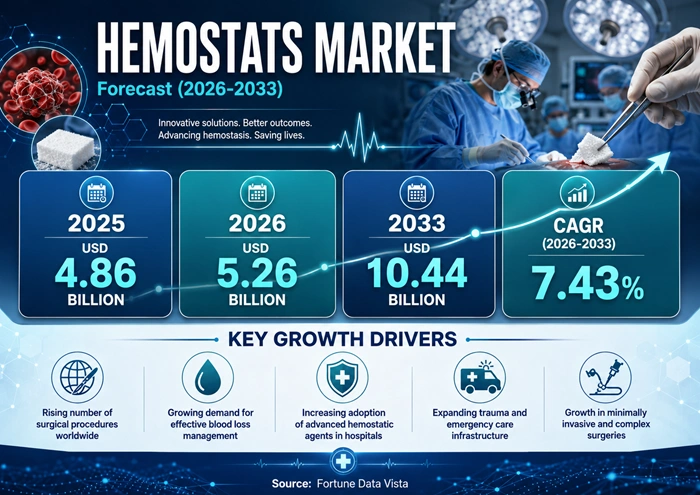
The global hemostats market size is valued at USD 4.86 billion in 2025 and is predicted to increase from USD 5.26 billion in 2026 to approximately USD 10.44 billion by 2033, growing at a CAGR of 7.43% from 2026 to 2033. This robust growth trajectory is fueled by rising surgical procedure volumes globally, increasing incidence of trauma and bleeding disorders, growing adoption of advanced absorbable and active hemostatic agents, and expanding healthcare infrastructure across emerging economies that are rapidly modernizing their surgical and critical care capabilities.
AI Impact on the Hemostats Industry
Artificial Intelligence Is Transforming Hemostasis Management — From Surgical Decision Support to Personalized Bleeding Risk Assessment — and Reshaping How the Hemostats Market Evolves Clinically and Commercially*
Artificial intelligence is beginning to have a meaningful and measurable impact on the hemostats industry. AI-powered surgical planning tools now incorporate bleeding risk prediction models that analyze patient demographics, comorbidities, medications, and lab values to identify which patients are most likely to experience significant intraoperative hemorrhage. Surgeons and anesthesiologists can use these predictive outputs to pre-select the most appropriate hemostatic agent for a given patient and procedure type before the incision is made — shifting hemostasis management from reactive to proactive. This level of evidence-based surgical preparation has direct commercial implications for the hemostats market, as it enables more precise product selection and increases the overall utilization of advanced hemostatic agents in high-risk cases.
In product development, AI is accelerating the discovery and formulation of next-generation hemostatic materials. Machine learning models are being used to screen thousands of biomaterial combinations for their clotting activation potential, biocompatibility, and degradation profiles — a process that previously required years of laboratory experimentation. AI-driven simulation also allows researchers to model how hemostatic sponges, powders, and sealants behave under realistic surgical conditions before committing to clinical trials, reducing development risk and shortening time-to-market for innovative products. Regulatory AI tools are also emerging to assist manufacturers in navigating FDA and CE submission workflows more efficiently, helping companies bring safer and more effective products to market. Together, these capabilities are quietly but powerfully reshaping the competitive and clinical landscape of the hemostats industry.
Growth Factors
Rising Global Surgical Volumes, Increasing Trauma Cases, Growing Prevalence of Bleeding Disorders, and the Expansion of Minimally Invasive Surgery Are the Dominant Forces Driving Hemostats Market Growth Through 2033*
The most consistent and powerful growth driver in the hemostats market is the rising volume of surgical procedures performed globally each year. Cardiovascular surgery, orthopedic joint replacement, spinal surgery, neurosurgery, and oncological resections collectively generate enormous demand for effective intraoperative blood control agents. As global populations age and the burden of conditions requiring surgical intervention grows — including coronary artery disease, cancer, degenerative joint conditions, and spinal deformities — the number of complex surgical procedures being performed continues to rise year over year. Each of these procedures represents a clinical context in which hemostatic agents are either routinely applied or held in reserve for bleeding complications, making the surgical volume trend one of the most durable structural demand drivers for the hemostats industry.
Trauma medicine and emergency care represent a second major growth channel. Road accidents, workplace injuries, military conflict casualties, and other traumatic bleeding events require rapid hemostasis to prevent hemorrhagic shock — the leading cause of preventable death in both battlefield and civilian trauma settings. Advanced hemostatic dressings and combat gauze products derived from the hemostats market are now standard components of trauma bags used by paramedics, emergency medical technicians, military medics, and hospital trauma teams worldwide. Simultaneously, the growth of minimally invasive surgical platforms — including laparoscopic, robotic, and endoscopic procedures — is creating demand for new hemostatic formulations specifically designed for use in confined surgical spaces where traditional mechanical methods are limited, opening new product categories and applications across the hemostats market.
Market Outlook
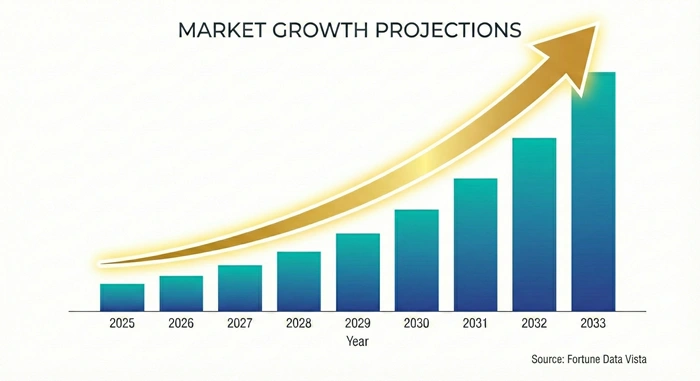
The Hemostats Market Is Poised to Nearly Double in Value by 2033 — Driven by Advanced Biomaterial Innovation, Expanding Ambulatory Surgery, Emerging Market Healthcare Investment, and Strengthening Regulatory Pipelines*
Looking ahead to 2033, the hemostats market is expected to reach USD 10.44 billion, reflecting a sustained CAGR of 7.43% across the forecast period. The expansion of ambulatory surgical centers (ASCs) globally is one of the most important structural forces shaping the market's trajectory. As more surgical procedures shift from traditional hospital inpatient settings to outpatient ASCs — driven by cost efficiency pressures, patient preference, and improved anesthetic techniques — the demand for reliable, single-use hemostatic products that enable faster hemostasis and shorter procedure times grows proportionally. ASC operators prioritize products that reduce intraoperative bleeding time, minimize the risk of return-to-OR events, and support same-day discharge protocols, all of which favor advanced hemostatic agents over traditional suture-based or pressure-based methods.
The pipeline of new hemostatic product approvals is also strengthening market prospects significantly. Bioabsorbable hemostatic agents derived from novel polymer chemistries, plant-based cellulose products, synthetic peptide sealants, and next-generation fibrin sealants are all in various stages of clinical evaluation and regulatory review. Several of these next-generation formulations promise faster clotting activation, reduced inflammatory response, and improved biocompatibility compared to currently approved products — making them commercially attractive to hospitals, ASCs, and military trauma programs seeking the most clinically effective and patient-safe hemostatic solutions available. As emerging markets including India, Brazil, China, and Southeast Asian nations expand their surgical infrastructure and healthcare spending, the geographic breadth of the hemostats market will widen substantially through 2033.
Expert Speaks
-
"Advanced hemostatic agents have become a core component of our surgical product strategy because they directly improve patient outcomes and reduce total procedural costs. Minimizing intraoperative bleeding is not just about safety — it shortens procedure times, reduces blood transfusion requirements, and enables faster patient recovery. We are investing significantly in next-generation hemostatic technologies because the clinical evidence supporting their value is becoming increasingly compelling to hospital formulary committees and surgical specialty societies globally." — CEO, Johnson & Johnson MedTech
-
"The hemostats market is evolving from a commodity segment into a clinically differentiated technology category. Surgeons now expect hemostatic products to be tailored to specific procedure types, tissue environments, and patient risk profiles. Companies that invest in clinical evidence, surgeon education, and procedure-specific product design will win market share. The convergence of biologics and advanced biomaterials in hemostasis management is creating product opportunities that simply did not exist a decade ago." — CEO, Baxter International Inc.
-
"Military and civilian trauma care applications continue to drive meaningful innovation in hemostatic technology. We are seeing increasing interest in prophylactic hemostatic dressings, advanced combat gauze, and injectable hemostatic agents that can be deployed in pre-hospital settings where time to definitive care is uncertain. These products are saving lives in conflict zones and on emergency scenes worldwide, and their clinical validation is also creating momentum for adoption in hospital trauma programs across both developed and emerging markets." — CEO, Becton, Dickinson and Company
Key Report Takeaways
-
North America dominates the global hemostats market, holding approximately 34.96% of global revenue share in 2025, driven by the world's highest surgical volumes, strong FDA regulatory approval pathways for advanced hemostatic products, and broad hospital and ASC adoption of premium-grade passive and active hemostatic agents.
-
Asia-Pacific is the fastest-growing regional market, projected to register the highest CAGR through 2033, fueled by increasing surgical procedure volumes in China, India, Japan, and South Korea, rapidly expanding healthcare infrastructure, growing trauma care awareness, and a broadening pipeline of locally launched hemostatic products.
-
Hospitals and ambulatory surgical centers represent the dominant end-user segment, contributing approximately 89.38% of global revenue, as the vast majority of procedures requiring intraoperative hemostasis are performed in these settings across both developed and emerging healthcare markets worldwide.
-
The passive hemostats segment contributes the most to overall market revenue, accounting for approximately 48.21% of global share in 2026, driven by a broad product portfolio that includes oxidized regenerated cellulose, gelatin sponges, and collagen-based agents that are widely adopted across surgical specialties and approved in most major regulatory markets.
-
Active hemostats — including thrombin-based products and fibrin sealants — are the fastest-growing product type, advancing at a CAGR of approximately 8.9% through 2033, as evidence supporting their superior effectiveness in complex vascular, cardiac, and neurosurgical bleeding scenarios drives increasing adoption across hospitals and specialty surgical centers.
-
The flowable hemostats sub-segment is the fastest-growing future format, expected to expand at a CAGR of approximately 9.2% through 2033, capturing a growing share of minimally invasive and laparoscopic procedures where conformable, injectable hemostatic agents are clinically preferred over rigid sheet or sponge formats; this segment holds approximately 22% market share in 2026.
Market Scope
| Parameter | Details |
|---|---|
| Market Size by 2033 | USD 10.44 Billion | Market Size by 2026 | USD 5.26 Billion | Market Size by 2025 | USD 4.86 Billion | Market Growth Rate from 2026 to 2033 | CAGR of 7.43% | Dominating Region | North America | Fastest Growing Region | Asia-Pacific | Segments Covered | By Product Type, By Form, By Application, By End-User, By Region | Regions Covered | North America, Asia-Pacific, Europe, Latin America, Middle East & Africa |
Market Dynamics
Drivers Impact Analysis
Surging Global Surgical Volumes and Rising Trauma Care Demand Are the Two Strongest and Most Durable Growth Drivers Sustaining Hemostats Market Expansion Through 2033*
| Driver | ≈ % Impact on CAGR Forecast | Geographic Relevance | Impact Timeline |
|---|---|---|---|
| Rising global surgical procedure volumes | ~+37% | Global — concentrated in North America, Europe, Asia-Pacific | Ongoing, long-term |
| Increasing incidence of trauma cases and bleeding disorders | ~+24% | Global — acute in North America, Middle East military markets | Ongoing |
| Growing adoption of minimally invasive surgery requiring new hemostatic formats | ~+20% | North America, Europe, Asia-Pacific | Near to mid-term |
| Expanding ambulatory surgical center infrastructure | ~+13% | North America, Asia-Pacific, Europe | Mid to long-term |
| Rising government investment in trauma and emergency care | ~+6% | Middle East, Asia-Pacific, North America | Mid to long-term |
The hemostats market receives its most consistent demand from the relentless rise in global surgical volumes. With advancing diagnostic capabilities, improved anesthetic safety, and growing access to surgical care across both developed and emerging economies, the number of surgical procedures performed globally each year is increasing steadily. This growth is particularly pronounced in orthopedics, cardiovascular surgery, oncological resections, and complex abdominal procedures — all categories where intraoperative bleeding management is a critical safety consideration. Each surgical specialty is also developing increasingly specialized hemostasis protocols that favor specific product types, creating a diverse and growing demand base across multiple product categories within the hemostats industry.
The global trauma care landscape is equally important. Hemorrhage accounts for a significant percentage of trauma-related deaths, making effective hemostatic agents among the most life-critical products in emergency medicine. The US military's investments in combat hemostasis protocols have directly validated and commercialized products like QuikClot and HemCon — innovations that have since moved into civilian paramedic kits, emergency departments, and hospital trauma bays worldwide. As governments across Asia-Pacific and the Middle East modernize their emergency response and military medical capabilities, demand for advanced hemostatic dressings and agents is growing rapidly in markets that previously relied on basic wound care products. This expanding geographic footprint of sophisticated trauma care is providing the hemostats market with both volume growth and product premiumization opportunities.
Restraints Impact Analysis
High Product Costs, Regulatory Complexity, and Risk of Adverse Tissue Reactions Are the Key Factors Moderating Growth Rates in the Global Hemostats Market*
| Restraint | ≈ % Impact on CAGR Forecast | Geographic Relevance | Impact Timeline |
|---|---|---|---|
| High cost of advanced active hemostatic agents | ~-30% | Emerging markets — Asia-Pacific, Latin America, MEA | Near to mid-term |
| Stringent FDA/CE regulatory requirements for product approvals | ~-27% | Global — particularly challenging for smaller manufacturers | Ongoing |
| Risk of adverse reactions including foreign body response and infection | ~-22% | Global — clinical and liability risk in all markets | Ongoing |
| Competition from surgical techniques that reduce hemostatic product usage | ~-13% | North America, Europe | Mid to long-term |
| Limited healthcare infrastructure in rural emerging markets | ~-8% | Sub-Saharan Africa, South Asia, Southeast Asia | Long-term |
The high cost of advanced hemostatic products — particularly active hemostatic agents such as fibrin sealants, thrombin-based matrices, and synthetic peptide sealants — creates a significant access barrier in cost-sensitive healthcare markets. Hospital formulary committees in emerging economies often favor lower-cost passive hemostatic agents over premium active products, even when clinical evidence supports the latter's superior performance in complex procedures. This price sensitivity limits the penetration of higher-margin products in the most rapidly growing geographic markets, moderating the overall revenue growth rate of the hemostats market relative to the underlying clinical demand that exists in these regions.
Regulatory complexity represents another meaningful restraint. Hemostatic products that incorporate biologics, human-derived fibrin, or novel synthetic materials must navigate multi-stage clinical validation, safety pharmacology studies, and device-drug combination classification challenges that can add years and millions of dollars to the approval timeline. Smaller manufacturers and biotechnology startups with innovative hemostatic technologies often face disproportionate regulatory burdens relative to their financial resources, which can delay market entry and limit competitive diversity. Additionally, clinical complications such as post-surgical adhesion formation, foreign body inflammatory response, and rare but serious thromboembolic events associated with certain hemostatic agents create liability exposure that affects prescribing confidence and can slow adoption in conservative clinical communities. These factors collectively moderate the speed at which the hemostats market can capture its full growth potential.
Opportunities Impact Analysis
Next-Generation Biomaterial Innovation, Emerging Market Expansion, and Military Trauma Applications Are the Three Highest-Value Untapped Growth Opportunities in the Hemostats Market*
| Opportunity | ≈ % Impact on CAGR Forecast | Geographic Relevance | Impact Timeline |
|---|---|---|---|
| Development of next-generation bioabsorbable and synthetic hemostats | ~+40% of opportunity pool | Global — North America and Europe leading innovation | Near to mid-term |
| Expanding healthcare infrastructure in emerging markets | ~+30% of opportunity pool | India, China, Southeast Asia, Middle East, Latin America | Mid to long-term |
| Military and tactical trauma care product demand | ~+18% of opportunity pool | United States, Middle East, NATO countries | Near to mid-term |
| Growing adoption in dental, dermatological, and ENT applications | ~+12% of opportunity pool | North America, Europe, Asia-Pacific | Mid to long-term |
The development of novel hemostatic biomaterials represents the most commercially significant innovation opportunity in the hemostats market. Researchers and companies are actively developing plant-derived cellulose products, recombinant thrombin agents that eliminate human blood-derived components, chitosan-based hemostatic materials, and self-assembling peptide scaffolds that form clotting matrices on contact with wound fluids. These innovations promise superior clinical performance, reduced immunogenicity risk, enhanced biocompatibility, and fully absorbable profiles that eliminate the need for product retrieval — all properties that are increasingly demanded by hospital formularies and regulatory bodies globally. Companies that successfully bring differentiated next-generation hemostatic products to market over the forecast period will capture significant value in premium surgical segments.
Emerging markets represent a parallel expansion opportunity of equally significant scale. As India implements programs to expand surgical centers to tier-2 and tier-3 cities, as China continues to invest in hospital network modernization, and as Southeast Asian governments expand universal healthcare coverage, the volume of surgical procedures requiring hemostasis management will increase dramatically. Local manufacturing partnerships and affordable product formulations designed for emerging market price points are essential strategies for capturing this demand. The dental, dermatology, and ENT segments also offer less-contested niche opportunities — particularly for flowable and topical hemostatic agents in office-based and day-surgery settings — that are growing steadily and remain underdeveloped relative to the dominant surgical specialty segments in the hemostats market.
Segment Analysis
By Product Type: Passive Hemostats
Passive Hemostats Hold the Largest Market Share Across the Hemostats Market — Valued for Their Wide Clinical Acceptance, Diverse Product Portfolio, and Cost-Effective Performance Across Surgical Specialties*
Passive hemostats lead the global hemostats market with approximately 48.21% revenue share in 2026, growing at a CAGR of approximately 6.8% through 2033. Products in this category — including oxidized regenerated cellulose (ORC) sponges and mesh, gelatin-based hemostatic agents, microfibrillar collagen products, and bone wax — work by providing a physical scaffold that mechanically supports natural clot formation without introducing exogenous biochemical clotting factors. Their established safety profile, well-understood degradation characteristics, and widespread regulatory approval across North America, Europe, and Asia-Pacific make them the default choice for hemostasis management in the majority of elective and semi-elective surgical procedures. North America dominates the passive hemostats segment, driven by strong hospital formulary adoption of ORC-based products — most notably Ethicon's SURGICEL family — and extensive surgeon experience and training around gelatin sponge applications from Pfizer Inc. (USA) and Baxter International Inc. (USA). These companies maintain strong competitive positions through extensive clinical evidence libraries, established distribution networks, and ongoing product innovation within the passive category.
Asia-Pacific is the fastest-growing region for passive hemostats, with China, India, and South Korea seeing substantial market expansion as surgical volumes increase and hospitals modernize their standard operating protocols to include advanced hemostatic materials. Local manufacturers in China and India are developing generic-equivalent passive hemostatic products at significantly lower price points, which is accelerating category adoption in cost-sensitive hospital systems while simultaneously putting pricing pressure on multinational brand leaders. Johnson & Johnson MedTech (USA) and Integra LifeSciences (USA) are actively competing in Asia-Pacific through regional distribution partnerships and country-specific pricing strategies to maintain their share in this growing segment of the hemostats market. The strong position of passive hemostats is expected to remain stable through 2033, with ORC and gelatin sponge products retaining dominance while novel plant-derived and synthetic passive formulations gradually expand the product variety available to surgeons globally.
By Application: Cardiovascular Surgery
Cardiovascular Surgery Is the Largest and Most Technology-Intensive Application Segment in the Hemostats Market — Demanding the Highest-Performance Hemostatic Solutions Available Across All Surgical Disciplines*
The cardiovascular surgery application segment represents the largest end-use category in the hemostats market, accounting for approximately 26.8% of total revenue in 2025 and projected to grow at a CAGR of approximately 7.9% through 2033. Cardiac and thoracic surgical procedures — including coronary artery bypass grafting, valve replacement, aortic repair, and heart transplantation — involve heparinized patients operating on a cardiopulmonary bypass circuit, creating extreme intraoperative bleeding challenges that demand the most effective and rapidly acting hemostatic products available. Surgeons performing these procedures have the highest rate of advanced hemostatic agent utilization per procedure among all specialty groups, contributing to the cardiovascular segment's disproportionately high revenue share. Active hemostatic agents — particularly fibrin sealants and thrombin-based matrix products — are the preferred choice in cardiac applications due to their ability to deliver pharmacological clotting enhancement to bleeding surfaces even in the presence of systemic anticoagulation. North America leads this segment in revenue terms, anchored by the high volume of complex cardiovascular procedures performed annually in US hospitals and the strong adoption of premium hemostatic products by cardiac surgery programs at leading academic medical centers.
Asia-Pacific is the fastest-growing regional contributor to the cardiovascular application segment in the hemostats market, driven by rapidly rising rates of coronary artery disease, hypertension, and valvular heart disease across aging populations in China, Japan, and South Korea. The expansion of cardiac surgery programs and catheterization laboratory infrastructure across India and Southeast Asia is also generating significant new demand for advanced hemostatic agents in previously underserved patient populations. Key companies actively competing in the cardiovascular segment include Baxter International Inc. (USA), whose TISSEEL fibrin sealant and FLOSEAL hemostatic matrix are among the most widely used products globally, and Johnson & Johnson MedTech (USA), whose SURGIFLO and SURGICEL products maintain strong positions in cardiac and thoracic operating rooms. As minimally invasive cardiac procedures expand — including transcatheter valve replacements and robotic cardiac surgery — specialized hemostatic formulations adapted for these platforms are emerging as the next frontier of product development in this high-value segment.
Regional Insights
North America
North America Holds the Dominant Position in the Global Hemostats Market — Underpinned by World-Class Surgical Infrastructure, High Product Adoption Rates, and a Robust Regulatory Approval Pathway for Advanced Hemostatic Technologies*
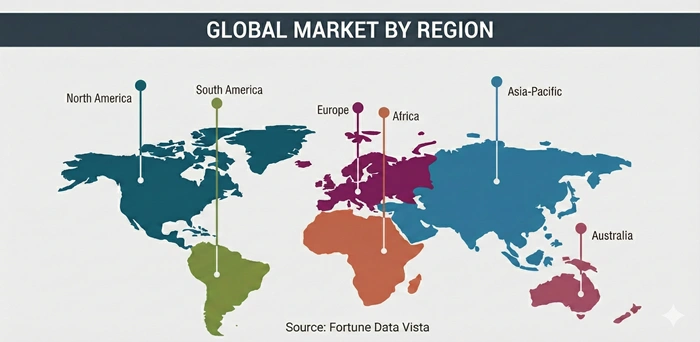
North America accounts for approximately 34.96% of global hemostats market revenue in 2025, with a projected CAGR of approximately 7.2% through 2033, making it the world's most commercially mature and valuable regional market. The United States is the dominant contributor, with a market value of USD 1.91 billion in 2025, driven by the highest per-capita surgical volume among major economies, strong insurance reimbursement for advanced hemostatic products, and a healthcare culture that prioritizes rapid adoption of clinically validated innovations. The FDA's well-defined 510(k) and PMA approval pathways, while rigorous, provide a commercially credible framework that enables innovative hemostatic products to reach the market in a structured and predictable manner — encouraging investment in product development by both established companies and startups. Key players headquartered or heavily active in the North American hemostats market include Johnson & Johnson MedTech (USA), Baxter International Inc. (USA), Integra LifeSciences Corporation (USA), and Pfizer Inc. (USA), all of which maintain extensive distribution networks, hospital formulary relationships, and surgeon training programs across the region.
Canada and Mexico are smaller but growing contributors to North America's regional market, with Canadian hospitals adopting advanced hemostatic agents at an increasing rate as universal healthcare coverage expands procedural access, and Mexico benefiting from growing medical tourism and private hospital network expansion. Military and tactical trauma care is also a significant North American demand vector, with the US Department of Defense driving adoption of advanced hemostatic dressings and injectable agents that are subsequently commercialized into civilian trauma and emergency medicine markets. The region's CAGR of approximately 7.2% reflects a market that is already large but actively expanding as new product approvals broaden the clinical indications for advanced hemostatic agents beyond traditional surgical specialties into dental, dermatological, and ambulatory care settings.
Asia-Pacific
Asia-Pacific Is the Fastest-Growing Region in the Hemostats Market — Powered by Surging Surgical Volumes, Rapidly Improving Healthcare Infrastructure, and Growing Government Investment in Modern Surgical Care Programs*
Asia-Pacific is the fastest-growing region in the hemostats industry, projected to advance at a CAGR of approximately 9.1% through 2033, substantially outpacing the global average. The region generated USD 1.34 billion in revenue in 2025, representing 24.50% of global share — a position that is expected to strengthen significantly by 2033 as surgical procedure volumes and healthcare spending per capita rise across the region's largest economies. China is the largest individual contributor, with a growing pipeline of domestically manufactured hemostatic products complementing imports from multinational leaders as the country's domestic medical device industry matures. Japan is a technologically advanced market where regulatory approvals closely mirror US and European standards, supporting robust adoption of innovative fibrin sealants and advanced matrix hemostats in its high-quality hospital system. India is the fastest-growing national market within the region, with Bharat's Pradhan Mantri Jan Arogya Yojana (PM-JAY) health insurance scheme expanding surgical access to previously underserved populations and driving multi-year growth in procedure volumes that directly benefit the hemostats market. Key regional players and multinationals competing in Asia-Pacific include B. Braun Melsungen AG (Germany), Smith+Nephew plc (UK/USA), and emerging domestic manufacturers across China and India who are gaining share in price-sensitive hospital segments.
South Korea, Australia, and the ASEAN bloc contribute meaningfully to regional revenue, with South Korea's advanced medical device manufacturing sector producing specialized hemostatic products for both domestic use and export. Singapore serves as a key regional distribution hub and Asia-Pacific headquarters for multiple multinational medical device companies. Southeast Asian markets — including Thailand, Malaysia, Indonesia, and Vietnam — are experiencing rapid hospital network expansion and increasing surgical complexity, creating growing hemostats demand that multinationals are addressing through dedicated regional sales teams and local distribution agreements. The combination of demographic growth, healthcare system investment, and rising disease burden across Asia-Pacific provides a sustained and powerful demand foundation that will support the region's above-average growth rate in the hemostats industry throughout the forecast period.
Top Key Players
-
Johnson & Johnson MedTech (United States)
-
Baxter International Inc. (United States)
-
Becton, Dickinson and Company (United States)
-
Integra LifeSciences Corporation (United States)
-
Pfizer Inc. (United States)
-
B. Braun Melsungen AG (Germany)
-
Smith+Nephew plc (United Kingdom / United States)
-
Medtronic plc (Ireland / United States)
-
Stryker Corporation (United States)
-
CSL Behring LLC (United States / Australia)
-
Haemonetics Corporation (United States)
-
Z-Medica LLC (United States)
-
CryoLife, Inc. (United States)
-
Coloplast A/S (Denmark)
-
Grifols, S.A. (Spain)
Recent Developments
-
In January 2025, Johnson & Johnson MedTech received expanded FDA clearance for its SURGICEL FIBRILLAR absorbable hemostat for use in robotic and laparoscopic surgical applications, extending the product's clinical utility into minimally invasive surgical settings where controlling bleeding in confined spaces is particularly challenging.
-
In March 2025, Baxter International Inc. announced the completion of its manufacturing capacity expansion for FLOSEAL Hemostatic Matrix at its Bloomington, Indiana facility, increasing production output by approximately 30% to address growing global demand from cardiovascular and neurosurgery programs, particularly across Asia-Pacific and Latin American markets.
-
In October 2024, Integra LifeSciences Corporation launched HEMOSTASE MPH — a microporous polysaccharide hemostat powder — in markets across Southeast Asia and the Middle East, representing a strategic expansion beyond its established North American and European commercial footprint to capture growing demand for advanced absorbable hemostatic agents in emerging surgical markets.
-
In June 2024, Z-Medica LLC secured a significant US Department of Defense contract renewal for QuikClot Combat Gauze as the preferred hemostatic dressing across all branches of the US military, reinforcing its position as the global leader in tactical and combat hemostasis and providing a platform for expanded civilian emergency medicine commercialization.
-
In February 2025, CryoLife, Inc. completed the strategic divestiture of its BioGlue Surgical Adhesive commercial portfolio to focus resources on cardiac and vascular surgery growth platforms, while the acquiring entity committed to expanding BioGlue distribution into under-penetrated Asia-Pacific and Latin American cardiac surgery markets where structural cardiac disease burden is increasing rapidly.
Market Trends
The Global Hemostats Market Is Being Redefined by Two Pivotal Trends: The Shift Toward Fully Synthetic and Bioabsorbable Hemostatic Formulations and the Rapid Expansion of Hemostasis Into Minimally Invasive Surgical Platforms*
One of the most consequential trends reshaping the hemostats market is the growing clinical and regulatory preference for fully synthetic and recombinant hemostatic products over human blood-derived alternatives. Traditional fibrin sealants rely on pooled human plasma fractions — a supply chain that introduces pathogen transmission risk, batch variability, and ethical concerns that have driven both regulators and hospital procurement teams toward synthetic and recombinant alternatives. Recombinant thrombin products, synthetic polymer sealants such as polyethylene glycol-based compounds, and plant-cellulose-derived passive hemostats are all gaining market share as clinically validated, biologically clean alternatives. This shift is simultaneously a regulatory trend — as agencies increasingly encourage non-biological hemostatic products — and a commercial opportunity for companies investing in biotech-derived or fully synthetic hemostasis platforms.
The rapid expansion of minimally invasive surgery is the second defining trend. Laparoscopic, robotic, and endoscopic procedures now account for a growing majority of elective surgical volume in developed markets, and this shift creates unique hemostasis challenges that traditional sponges and gauze products cannot address effectively. Flowable and injectable hemostatic agents, spray-delivery fibrin sealants, and endoscopic-compatible hemostatic clips are being developed and adopted specifically to address bleeding management in minimally invasive settings. Robotic surgery platforms from Intuitive Surgical are being integrated with hemostatic material delivery instruments, and several companies are developing dedicated hemostatic devices engineered for robotic arm compatibility. These product innovations are expanding the total addressable market for advanced hemostatic agents into the fastest-growing segment of the surgical landscape, reinforcing the hemostats market's long-term growth outlook through 2033.
Segments Covered in the Report
-
By Product Type
-
Passive Hemostats (Oxidized Regenerated Cellulose, Gelatin-Based Agents, Microfibrillar Collagen, Bone Wax)
-
Active Hemostats (Thrombin-Based Products, Fibrin Sealants, Collagen-Thrombin Matrices)
-
Combination Hemostats (Thrombin-Gelatin Matrices, Flowable Combinations)
-
-
By Form
-
Sponge / Sheet
-
Fibrillar / Powder
-
Flowable / Gel
-
Spray / Liquid
-
Gauze / Dressing
-
-
By Application
-
Cardiovascular Surgery
-
Orthopedic Surgery
-
General Surgery
-
Neurological Surgery
-
Dental Surgery
-
Trauma / Emergency Care
-
Others (ENT, Dermatology)
-
-
By End-User
-
Hospitals and Ambulatory Surgical Centers (ASCs)
-
Tactical Combat and Military Trauma Care Centers
-
Dental Clinics
-
Others
-
-
By Region
-
North America (US, Canada, Mexico)
-
Asia-Pacific (China, Japan, India, South Korea, Australia, ASEAN, Rest of Asia-Pacific)
-
Europe (Germany, UK, France, Italy, Spain, Rest of Europe)
-
Latin America (Brazil, Argentina, Rest of Latin America)
-
Middle East & Africa (GCC Countries, South Africa, Rest of MEA)
-
"Built for Every Level — From Startups to Industry Giants"
Here Is Exactly How This Report Works for You
-
This report provides businesses of every scale — from startups developing novel biomaterial hemostatic platforms, to tier-1 medical device multinationals, hospital procurement teams, private equity investors, and healthcare policy planners — with precise hemostats market intelligence covering supply-demand dynamics by product type and geography, detailed competitor revenue breakdowns and pipeline analysis, and a clear-eyed assessment of how regulatory changes, geopolitical trade policies, and raw material supply shifts are impacting product commercialization timelines and profitability across North America, Asia-Pacific, Europe, and emerging markets.
-
For tier 2 and tier 3 hemostatic product manufacturers, contract manufacturers, and regional distributors, this report's granular segment-level market sizing, OEM supply chain mapping, and regional hospital procurement trend analysis are essential tools for identifying which product categories and geographies offer the strongest growth headroom, how to position manufacturing and distribution capabilities to serve underserved emerging market demand, and which established competitors are most vulnerable to displacement by innovative new entrants.
-
Investors and senior executives evaluating M&A transactions, licensing deals, or new product platform investments in the hemostats sector will gain direct strategic value from the full report's competitive positioning matrix, regulatory landscape analysis, emerging market opportunity sizing, and long-term forecast scenarios — providing the comprehensive evidence base needed to make high-confidence capital allocation decisions in one of the healthcare industry's most consistently growing and clinically essential medical device segments.
Frequently Asked Questions:
Answer: The global hemostats market is valued at USD 4.86 billion in 2025 and is projected to grow to USD 5.26 billion in 2026. By 2033, the market is expected to reach approximately USD 10.44 billion, expanding at a CAGR of 7.43% over the 2026–2033 forecast period.
Answer: The hemostats market is primarily driven by rising global surgical procedure volumes across cardiovascular, orthopedic, and oncological specialties, alongside growing trauma care demand and increasing adoption of minimally invasive surgical platforms that require new hemostatic formulations. Expanding healthcare infrastructure in emerging economies and a growing pipeline of novel bioabsorbable and synthetic hemostatic product approvals are further supporting market growth.
Answer: North America dominates the hemostats market with approximately 34.96% of global revenue in 2025, anchored by high surgical volumes, strong product adoption, and an active FDA approval environment for advanced hemostatic agents. Asia-Pacific is the fastest-growing region, projected at a CAGR of approximately 9.1% through 2033, driven by expanding surgical infrastructure in China, India, Japan, and Southeast Asia.
Answer: In the hemostats market, passive hemostats — such as oxidized regenerated cellulose, gelatin sponges, and collagen products — work by providing a physical scaffold that supports natural clot formation without adding pharmacological clotting agents, and they account for approximately 48.21% of the market. Active hemostats, including thrombin-based matrices and fibrin sealants, deliver biochemical clotting factors directly to the bleeding site and are the fastest-growing product category at approximately 8.9% CAGR, particularly valued in complex vascular and cardiac surgical settings.
Answer: The global hemostats market is led by major medical device and pharmaceutical companies including Johnson & Johnson MedTech, Baxter International Inc., Becton, Dickinson and Company, Integra LifeSciences Corporation, and B. Braun Melsungen AG, which collectively hold a significant combined global revenue share across passive, active, and combination hemostatic product categories. Specialty players including Z-Medica LLC and CryoLife, Inc. also hold important positions in the tactical trauma and cardiac surgery segments respectively.