
Home Infusion Therapy Market Overview
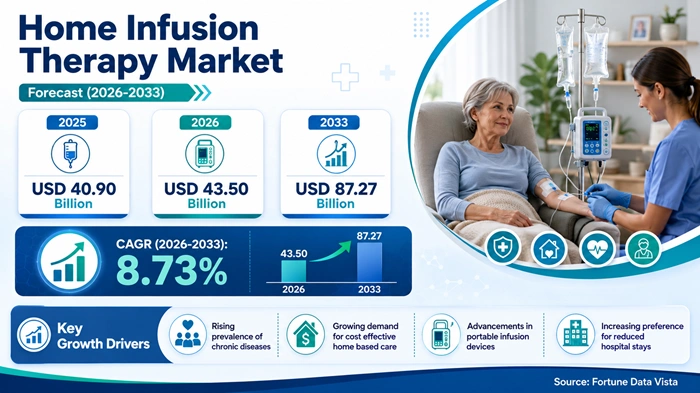
The global home infusion therapy market size is valued at USD 40.90 billion in 2025 and is predicted to increase from USD 43.50 billion in 2026 to approximately USD 87.27 billion by 2033, growing at a CAGR of 8.73% from 2026 to 2033. This strong expansion reflects a healthcare system increasingly oriented toward cost-efficient, patient-centric care models, where receiving intravenous medications and biologics at home is becoming the clinical and financial standard. Rising chronic disease prevalence, aging populations, technological advances in portable infusion devices, and favorable government reimbursement policies are all reinforcing the structural growth of this market.
AI Impact on the Home Infusion Therapy Industry
Artificial Intelligence Is Transforming How Patients Receive, Manage, and Monitor Intravenous Therapies at Home — Raising Safety Standards and Clinical Outcomes Across the Entire Spectrum of Care*
Artificial intelligence is quietly reshaping the landscape of the home infusion therapy industry in meaningful and measurable ways. Smart infusion pumps embedded with AI-driven dosing algorithms are now capable of detecting patient-specific physiological responses and adjusting drug delivery rates in real time, dramatically reducing the risk of over- or under-infusion errors. Machine learning models integrated with electronic health records can also analyze patient history, lab values, and therapy protocols to proactively flag potential drug interactions or catheter-related complications before they occur. Companies like Baxter International and ICU Medical are actively embedding these capabilities into next-generation infusion platforms, setting a new benchmark for what safety and precision in home-based intravenous therapy looks like.
Beyond device-level intelligence, AI is enabling remote monitoring platforms that connect home infusion patients with clinical teams in real time. Telehealth integration with smart pumps allows nurses and physicians to observe infusion delivery metrics, patient vitals, and adherence data without requiring a physical home visit — a model that gained enormous traction during the COVID-19 pandemic and has since become a standard expectation among patients and providers. Predictive analytics tools are also being deployed by specialty pharmacy operators such as Option Care Health and Optum to optimize therapy scheduling, manage supply chain replenishment, and reduce missed-dose events. As AI capabilities mature, the home infusion therapy market stands to benefit from a compounding cycle of improved outcomes, reduced readmissions, and lower per-patient cost of care.
Growth Factors
Surging Chronic Disease Burden, a Growing Geriatric Population, and the Clear Cost Advantages of Home-Based Infusion Care Are Creating Structural, Long-Term Demand Across All Major Markets*
The most powerful demand driver for the home infusion therapy market is the steady and accelerating global rise in chronic disease. According to the World Health Organization, chronic illnesses affect approximately 133 million Americans alone — representing 40% of the total U.S. population. Conditions such as cancer, primary immune deficiencies, congestive heart failure, rheumatoid arthritis, and diabetes all require long-term intravenous or injectable therapies, and an increasing proportion of these treatments are now being shifted to home settings due to documented cost savings and equivalent or superior clinical outcomes. For example, IVIG infusion administered at home costs up to 87% less than hospital outpatient administration — a data point that has been highly influential in driving both patient preferences and payer-driven site-of-care policies.
The growing global geriatric population adds another powerful layer to this demand story. Older adults are disproportionately affected by multiple chronic conditions that require ongoing infusion therapy, and surveys conducted by the American Association of Retired Persons confirm that the overwhelming majority of elderly patients prefer to be treated at home rather than in institutional care settings. More than 80% of U.S. patients approaching the terminal phase of illness actively wish to avoid hospitalization, making home infusion therapy a deeply aligned preference as well as a clinical option. Alongside demographic drivers, the rapid innovation in portable infusion technology — including lightweight electromechanical pumps, wearable delivery devices, and app-connected dosing systems — is making home-based intravenous care safer, simpler, and more accessible than at any previous point in the market's history.
Market Outlook
The Home Infusion Therapy Market Is Entering a Decade-Long Growth Phase Fueled by Structural Healthcare Shifts, Expanding Drug Pipelines, and the Rise of Value-Based Care Models Globally*
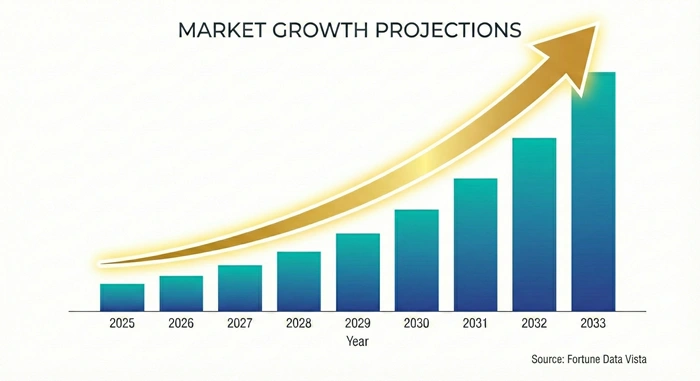
Looking ahead, the home infusion therapy market is well positioned for sustained high growth through 2033 and beyond. The healthcare system's broader shift toward outpatient and home-based care is accelerating under both economic and regulatory pressure. Commercial payers are increasingly implementing site-of-care programs that redirect infusible specialty therapies — from oncology biologics to immunoglobulin therapy — away from expensive hospital outpatient departments and toward home and ambulatory settings. Industry analysts estimate that more than 60% of drugs currently in clinical development are infusion-delivered therapies, a fact that has profound implications for future home infusion demand as this pipeline matures and reaches market.
Strategically, the competitive landscape is evolving rapidly. Private equity-backed infusion center operators are scaling across traditionally hospital-dominated markets, and major national providers like Option Care Health and Optum are expanding their networks to capture patients transitioning out of hospital outpatient settings. Health systems that have invested in home infusion programs report average annual revenues of approximately USD 20 million from those services, making this a strategically important service line for both independent providers and integrated delivery networks. The home infusion therapy market is also benefiting from regulatory improvements such as the Protecting Access to Medicare Act (PAMA) provisions, which extended certain home infusion benefit reimbursements under Medicare Part B — providing a critical policy foundation for market expansion in the U.S. over the forecast period.
Expert Speaks
-
"The shift to home-based infusion is not just a preference trend — it is a structural, system-level change that health systems, payers, and patients all benefit from, and Baxter is committed to providing the technology infrastructure that makes that shift safe, reliable, and scalable." — CEO, Baxter International Inc.
-
"Option Care Health has built its entire strategy around making home infusion therapy accessible to more patients in more communities across America — and the commercial, clinical, and quality outcomes data we are generating continue to validate that this is the right place to invest." — CEO, Option Care Health Inc.
-
"Our infusion therapy business is growing because the evidence keeps compounding — patients do better at home, healthcare systems spend less, and clinical outcomes match or exceed what hospitals deliver; that alignment of patient preference and economic reality is a powerful long-term driver." — CEO, Fresenius Kabi AG
Key Report Takeaways
-
North America dominates the home infusion therapy market with approximately 41.20% regional market share, supported by a dense network of over 11,353 active home health agencies in the U.S., strong Medicare and commercial insurance reimbursement policies, and a large chronically ill patient population actively choosing home-based infusion as their preferred treatment setting
-
Asia Pacific is the fastest-growing region, projected to register the highest CAGR throughout the 2026–2033 forecast period, driven by rapidly rising prevalence of cancer, diabetes, and cardiovascular disease in China, India, and Japan, combined with increasing healthcare infrastructure investment and growing awareness of home care as a cost-effective clinical alternative
-
The drugs segment holds the largest share at approximately 77.54% in 2026, reflecting the robust global pipeline of injectable biologics, the increasing FDA approvals for at-home administration of specialty medications, and the rising volume of home-administered therapies for cancer, immune deficiencies, and chronic infections
-
Anti-infective therapy is the leading indication segment with approximately 25.52% global share, driven by high prevalence of infectious diseases, the critical role of anti-infective protocols in preventing catheter-related complications, and the relative cost-efficiency and ease of administration compared to other therapy types
-
Chemotherapy is the fastest-growing indication segment, projected to expand at the highest CAGR through 2033, as rising global cancer prevalence and growing patient and physician awareness of the clinical equivalence and cost benefits of home-based chemotherapy administration accelerate adoption
-
Infusion pumps are the fastest-growing product sub-segment, driven by innovations in smart pump technology, real-time dose monitoring capabilities, and the expanding use of programmable and portable pump systems for managing diabetes, cancer, and pain management therapies in home environments
-
The services segment is expected to grow significantly through 2033, fueled by the expanding network of specialty pharmacy operators, the rising number of trained home infusion nurses and care coordinators, and the growing volume of patients being discharged from hospital settings with infusion therapy continuation needs
Market Scope
| Parameter | Details |
|---|---|
| Market Size by 2033 | USD 87.27 Billion | Market Size by 2026 | USD 43.50 Billion | Market Size by 2025 | USD 40.90 Billion | Market Growth Rate from 2026 to 2033 | CAGR of 8.73% | Dominating Region | North America | Fastest Growing Region | Asia Pacific | Segments Covered | Product, Indication, Administration, End User, Region | Regions Covered | North America, Europe, Asia Pacific, Latin America, Middle East & Africa |
Market Dynamics
Drivers Impact Analysis
Rising Chronic Disease Incidence, Cost-Efficiency of Home Infusion Services, and Growing Patient Preference for Home-Based Care Are the Three Most Powerful Forces Driving This Market Forward*
| Driver | ≈ % Impact on CAGR Forecast | Geographic Relevance | Impact Timeline |
|---|---|---|---|
| Rising global prevalence of chronic diseases | ~36% | Global, especially North America & Asia Pacific | Near to long-term |
| Cost advantages over hospital-based infusion | ~28% | North America, Europe | Near to mid-term |
| Growing elderly population requiring ongoing therapy | ~22% | North America, Europe, Japan | Mid to long-term |
| Advancements in portable and smart infusion devices | ~14% | Global | Mid to long-term |
The rising burden of chronic illness is the single most impactful driver in the home infusion therapy market. With chronic diseases affecting hundreds of millions of patients globally and requiring multi-year or lifelong therapy cycles, the need for convenient, consistent, and cost-effective infusion delivery solutions has never been greater. Home infusion therapy directly addresses this need by allowing patients with conditions such as cancer, rheumatoid arthritis, primary immune deficiencies, and post-operative infections to receive their prescribed intravenous treatments in the comfort of their own homes. This reduces hospital crowding, lowers infection risk, and significantly cuts the cost per treatment episode — benefits that resonate equally with patients, payers, and health systems.
The economic argument for home-based intravenous care has become increasingly compelling as healthcare systems face mounting cost pressures. Documented studies show that home infusion settings reduce IVIG administration costs by 62–87% compared to medical office and hospital outpatient settings respectively. These savings are driving insurers, hospital discharge planners, and CMS policy makers to actively encourage site-of-care transitions toward home and ambulatory settings. This policy tailwind is particularly strong in the U.S., where CMS reimbursement changes under Medicare Part B have expanded coverage for home infusion therapy services, creating a structural financial incentive for patients, providers, and payers to accelerate adoption across the home infusion therapy market.
Restraints Impact Analysis
Limited Reimbursement Policies in Emerging Markets and the Risk of Infusion-Related Complications at Home Continue to Create Meaningful Barriers to Broader Market Penetration*
| Restraint | ≈ % Impact on CAGR Forecast | Geographic Relevance | Impact Timeline |
|---|---|---|---|
| Limited reimbursement coverage in developing nations | ~40% | India, Southeast Asia, Latin America, MEA | Near to mid-term |
| Risk of catheter-related infections and complications | ~33% | Global | Near to long-term |
| Shortage of trained home infusion nursing professionals | ~27% | Emerging markets, rural North America | Mid to long-term |
One of the most significant structural restraints in the home infusion therapy market is the absence or inadequacy of reimbursement policies in developing nations. In countries like India and China, out-of-pocket healthcare expenditure remains disproportionately high relative to income levels, and formal insurance coverage for home infusion therapy services is either unavailable or extremely limited. This restricts access for the vast majority of patients in these regions, even when the clinical need is clearly established. Without reimbursement structures that recognize the economic and clinical value of home-based infusion, market penetration in lower-income countries will remain constrained regardless of the availability of products and trained providers.
The inherent risk of infection associated with catheter-based home infusion represents another meaningful restraint. According to the U.S. Centers for Disease Control, approximately 1.7 million hospital-acquired infections occur in the U.S. annually, and while home settings generally carry lower infection risk, patients who lack adequate supervision or technical instruction can still experience catheter-related bloodstream infections, line occlusions, or medication errors. These risks make healthcare providers cautious about recommending home therapy for patients with complex regimens or limited caregiver support. Addressing this restraint requires ongoing investment in patient and caregiver education programs, telehealth-enabled nursing supervision, and the development of infusion systems with built-in safety checks — all of which the leading players in the home infusion therapy market are actively pursuing.
Opportunities Impact Analysis
The Expanding Pipeline of Injectable Specialty Drugs, Untapped Emerging Market Potential, and the Rise of Telehealth-Integrated Infusion Platforms Represent the Market's Three Most Compelling Growth Opportunities*
| Opportunity | ≈ % Impact on CAGR Forecast | Geographic Relevance | Impact Timeline |
|---|---|---|---|
| Growing pipeline of injectable specialty biologics | ~40% | Global, led by North America | Near to mid-term |
| Emerging market expansion via affordable platforms | ~35% | India, China, Southeast Asia, Latin America | Mid to long-term |
| Telehealth and remote monitoring integration | ~25% | North America, Europe, Asia Pacific | Near to mid-term |
The pharmaceutical pipeline is arguably the most transformative near-term opportunity for the home infusion therapy market. Industry analysts estimate that more than 60% of drugs currently in development are infusion-delivered therapies, spanning oncology, rare diseases, autoimmune conditions, and gene therapies. As these therapies receive regulatory approval and enter the market, they will almost inevitably drive demand for both home and ambulatory infusion infrastructure. Specialty pharmacy operators and home infusion service providers are investing proactively in expanding their care management capabilities, nursing networks, and cold chain logistics to be ready to administer this next wave of injectable biologics at scale.
Emerging markets represent a parallel opportunity that is gaining momentum. As healthcare infrastructure improves in India, China, Brazil, and Southeast Asia, and as domestic manufacturers introduce more affordable infusion devices, the addressable market for home infusion therapy is expanding beyond its traditional base in high-income countries. Government health programs in these regions are increasingly emphasizing chronic disease management and cost reduction in healthcare delivery — priorities that align directly with home infusion therapy's value proposition. Companies entering these markets with locally relevant pricing strategies and trained clinical support teams stand to capture significant first-mover advantages as healthcare coverage expands and awareness of home-based care grows among patients and clinicians.
Segment Analysis
By Product
The Drugs Segment Continues to Dominate the Home Infusion Therapy Market in Revenue Share, While Infusion Pumps Are Accelerating as the Fastest-Growing Product Category*
The drugs segment holds the largest share within the home infusion therapy market, accounting for approximately 77.54% of total revenue in 2026. This dominant position reflects the enormous volume and high value of injectable medications administered through home infusion channels — from specialty biologics for cancer and autoimmune diseases to anti-infective therapies and immunoglobulins. The U.S. FDA has approved over 100 injectable drugs for clinical use between 2016 and 2022 alone, creating a steadily expanding formulary of therapies eligible for home administration. North America leads this segment in both volume and value, supported by a robust network of specialty pharmacies, strong insurer reimbursement for high-cost biologics at home, and leading companies including Baxter International, Fresenius Kabi, and Option Care Health, which have built sophisticated cold chain logistics and patient management systems to support complex home drug regimens. The drugs segment CAGR is projected to remain consistently high through 2033, driven by new biologic launches and expanding cancer incidence globally.
The infusion pumps sub-segment within the broader devices category is projected to register the highest CAGR within the home infusion therapy market through 2033. Innovations in electromechanical and elastomeric pump designs — now featuring programmable dosing, touch-screen interfaces, smartphone connectivity, and real-time monitoring capabilities — are making infusion pumps safer and simpler to use in home environments. The growing volume of patients with diabetes, cancer, and cardiovascular disease requiring continuous or intermittent drug delivery is driving steady pump adoption. Asia Pacific is emerging as the fastest-growing regional market for infusion pumps, particularly in China and India, where healthcare spending on chronic disease management is rising rapidly and domestic manufacturers are producing competitively priced devices. ICU Medical, Baxter, and Fresenius Kabi are the key global players competing in this space, while local Chinese and Indian manufacturers are beginning to capture mid-market share.
By Indication
Anti-Infective Therapy Leads in Indication Share Globally, While Chemotherapy Is Emerging as the Highest-Growth Indication Segment in the Home Infusion Therapy Market*
The anti-infective indication segment holds the largest share in the home infusion therapy market with approximately 25.52% global share in 2026. This leadership is supported by the high global incidence of bacterial and fungal infections requiring prolonged intravenous antibiotic or antifungal therapy, as well as the critical role of anti-infective agents in preventing catheter-related infections following other infusion procedures. The relative simplicity and lower cost of anti-infective home therapy compared to chemotherapy or immunoglobulin therapy also contributes to its dominance, making it accessible to a broader patient population. North America is the leading region for anti-infective home infusion, where payers routinely reimburse outpatient intravenous antibiotic therapy (OPAT) programs as a cost-effective alternative to extended hospital stays. Companies such as Option Care Health, CVS Health, and Optum are the primary national operators delivering anti-infective home infusion services at scale across the U.S. market.
The chemotherapy segment is the fastest-growing indication within the home infusion therapy market, driven by the massive and accelerating global rise in cancer prevalence. According to the American Cancer Society, approximately 1.8 million new cancer cases were registered in the U.S. alone in a single year, and this figure is rising globally. The growing body of clinical evidence demonstrating that home-administered chemotherapy protocols can deliver equivalent outcomes to hospital-based administration — at significantly lower cost and with substantially higher patient satisfaction — is shifting oncology treatment paradigms. Europe is a key growth region for home chemotherapy infusion, where national health systems in the UK, Germany, and France are actively piloting home-based oncology programs to manage rising cancer patient volumes within constrained hospital budgets. Leading oncology and specialty pharmacy companies including Fresenius Kabi, B. Braun Melsungen AG, and Option Care Health are expanding their home chemotherapy capabilities to capture this fast-growing market segment.
Regional Insights
North America — The Dominant Region in the Global Home Infusion Therapy Market
North America's Mature Home Health Ecosystem, Strong Reimbursement Frameworks, and High Chronic Disease Prevalence Make It the World's Largest and Most Developed Market for Home Infusion Services*
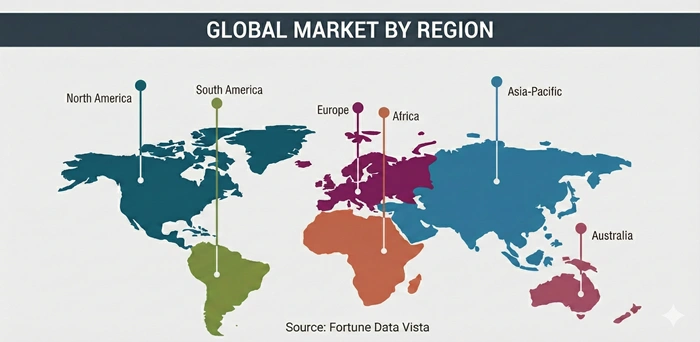
North America dominates the home infusion therapy market with approximately 41.20% global market share, a position built on decades of home health investment, favorable Medicare and commercial insurance reimbursement, and a large, chronically ill patient population actively choosing home-based infusion. The U.S. is the epicenter of this dominance, with over 11,353 active home health agencies operating across the country and approximately 3 million patients receiving home infusions annually — a 300% increase over the past decade. The North American market is expected to grow at a healthy CAGR through 2033, supported by the continued expansion of commercial payer site-of-care programs and the ongoing pipeline of infusible specialty drugs receiving FDA approval. Key players driving North America's market leadership include Option Care Health Inc., Optum Inc., Baxter International Inc., CareCentrix Inc., CVS Health, and Fresenius Kabi.
Canada contributes meaningfully to North America's overall market strength through its publicly funded home care programs and growing elderly population. U.S. health systems with established home infusion programs report average annual revenues of approximately USD 20 million from those services, demonstrating the commercial viability of the model and incentivizing further investment by hospitals and integrated delivery networks. The North American home infusion therapy market also benefits from a mature specialty pharmacy infrastructure, with companies like KabaFusion, PromptCare, and InfuSystem providing highly specialized infusion services that complement the offerings of larger national providers.
Asia Pacific — The Fastest-Growing Region in the Home Infusion Therapy Market
Rapid Growth in Chronic Disease Burden, Expanding Healthcare Infrastructure, and Rising Patient Awareness Are Positioning Asia Pacific as the Most Dynamic Regional Growth Opportunity in Home Infusion Therapy*
Asia Pacific is the fastest-growing region in the home infusion therapy market, projected to register the highest regional CAGR throughout the 2026–2033 forecast period. In 2025, Asia Pacific accounted for approximately 19.00% of global revenue, with China, Japan, and India being the three largest national markets within the region. China's market is valued at USD 3.02 billion in 2026, while Japan stands at USD 1.51 billion and India at USD 1.34 billion — all three recording growth rates well above the global average as healthcare spending expands and awareness of home-based care rises among clinicians and patients. The region's rapidly aging population, high and rising prevalence of cancer and diabetes, and sustained government investment in healthcare access are all reinforcing the structural demand outlook for intravenous home therapy in Asia Pacific.
Japan stands out as one of the region's most sophisticated markets for home infusion therapy, with cultural and policy drivers strongly favoring home-based medical care for elderly patients. South Korea's highly digitized healthcare system is accelerating the adoption of smart infusion technology, while India's home healthcare sector is growing rapidly from a lower base as urban patients gain access to specialty pharmacy services and trained home care nurses. Key players active in the Asia Pacific home infusion therapy market include Terumo Corporation (Japan), Fresenius Kabi, Baxter International, B. Braun Melsungen AG, and a growing cohort of domestic Chinese infusion device manufacturers who are delivering competitively priced products to a large and underserved patient population.
Top Key Players
-
Option Care Health Inc. (United States)
-
Optum Inc. (United States)
-
Baxter International Inc. (United States)
-
Fresenius Kabi AG (Germany)
-
B. Braun Melsungen AG (Germany)
-
ICU Medical Inc. (United States)
-
CVS Health Corporation (United States)
-
Cardinal Health Inc. (United States)
-
McKesson Corporation (United States)
-
CareCentrix Inc. (United States)
-
InfuSystem Holdings Inc. (United States)
-
Terumo Corporation (Japan)
-
Smiths Medical (United Kingdom)
-
Becton Dickinson and Company (United States)
-
KabaFusion (United States)
-
PromptCare (United States)
Recent Developments
-
In January 2024, BrightStar Care announced a strategic collaboration with Paragon Healthcare to deliver high-quality home infusion services across the United States, combining BrightStar Care's established home health network with Paragon's specialty infusion expertise to expand patient access in underserved markets.
-
In October 2023, Baxter International unveiled its next-generation infusion therapy management system designed specifically for home settings, incorporating advanced analytics, live-streaming monitoring capabilities, and enhanced medication safety protocols to improve patient outcomes and regulatory compliance.
-
In June 2023, Yale New Haven Health and CarepathRx announced a formal partnership to expand home infusion service capabilities within Yale's integrated delivery network, enabling patients requiring specialty intravenous therapies to receive care at home rather than in hospital outpatient settings.
-
In August 2023, NeuroNet Pro and WeInfuse joined forces to launch an advanced workflow solution designed to streamline infusion therapy management in neurology practices, targeting the growing patient population requiring neurological infusion therapies including IVIG and natalizumab at home and ambulatory settings.
-
In September 2023, Medtronic introduced a new generation of insulin pump technology specifically adapted for the home infusion therapy environment, featuring AI-driven insulin adjustment algorithms and enhanced integration with continuous glucose monitors to improve glycemic control and reduce hospital readmissions among insulin-dependent patients.
Market Trends
Patient-Centered Care Models and the Deep Integration of Smart Technology into Home Infusion Devices Are the Two Forces Most Fundamentally Reshaping the Future of This Market*
The most defining trend in the home infusion therapy market today is the industry-wide embrace of patient-centered care models. Healthcare providers, payers, and device manufacturers are increasingly designing their service and product offerings around the patient's lived experience — prioritizing ease of use, minimized clinical burden, and seamless integration into daily life. This shift is influencing everything from pump design (lighter, quieter, wearable) to service delivery (telehealth-supervised infusions, app-based adherence tracking, flexible nurse scheduling). Specialty pharmacy operators like Option Care Health are building personalized care management programs that include pharmacist coaching, digital dose reminders, and outcome tracking — capabilities that go far beyond simple drug delivery and establish deeper, longer-term patient relationships that improve both clinical outcomes and commercial retention.
The second major trend is the rapid advancement and adoption of smart infusion technology across the home setting. Next-generation infusion pumps now feature wireless connectivity, automatic dose verification, drug library alerts, and real-time data transmission to cloud-based clinical dashboards — capabilities that were previously only available in hospital-grade equipment. The integration of smartphone applications with home infusion pump systems allows patients to receive real-time updates on their therapy status, while allowing clinicians to monitor and intervene remotely when needed. This technology convergence is not only making home infusion safer but also fundamentally expanding the complexity of therapies that can be safely administered outside of hospital environments — a development that is actively growing the addressable market for home infusion therapy services and devices globally.
Segments Covered in the Report
-
By Product
-
Devices
-
Infusion Pumps (Elastomeric, Electromechanical, Gravity, Others)
-
Intravenous Sets
-
IV Cannulas
-
Needleless Connectors
-
-
Drugs
-
Services
-
-
By Indication
-
Anti-Infective
-
Chemotherapy
-
Hydration Therapy
-
Enteral Nutrition
-
Total Parenteral Nutrition
-
Immunoglobulin Therapy
-
Others
-
-
By Administration
-
Intravenous
-
Subcutaneous
-
Intramuscular
-
Epidural
-
-
By End User
-
Home Care Settings
-
Hospitals & Clinics
-
Specialty Pharmacies
-
-
By Region
-
North America
-
U.S.
-
Canada
-
-
Europe
-
Germany
-
France
-
UK
-
Italy
-
Spain
-
Scandinavia
-
Rest of Europe
-
-
Asia Pacific
-
China
-
India
-
Japan
-
Australia
-
South Korea
-
Rest of Asia Pacific
-
-
Latin America
-
Brazil
-
Mexico
-
Rest of Latin America
-
-
Middle East & Africa
-
UAE
-
Saudi Arabia
-
South Africa
-
GCC Countries
-
Rest of Middle East & Africa
-
-
"Built for Every Level — From Startups to Industry Giants"
Here Is Exactly How This Report Works for You
-
Whether you are a startup developing portable infusion devices, a Tier 2 specialty pharmacy operator expanding your geographic footprint, or a Tier 1 pharmaceutical company evaluating home-based administration for your new biologic — this report gives you segment-level revenue forecasts, regional CAGR breakdowns, and company-level competitive benchmarking that make your investment, partnership, and product strategy decisions faster, sharper, and more defensible; the complete purchased version includes full competitor revenue analysis, revenue source mapping, and pipeline-to-market timing data.
-
Supply and demand dynamics across the home infusion therapy value chain are analyzed in depth, covering drug supply constraints, infusion device component sourcing, specialty nursing workforce availability, cold chain logistics, and payer reimbursement policy shifts — all factors that directly affect your inventory planning, pricing strategy, and go-to-market execution, and which this report equips your commercial and operations teams to navigate with confidence.
-
For investors, senior executives, and strategy leaders operating in an increasingly complex geopolitical environment — where U.S. healthcare policy shifts, EU medical device regulation changes, and trade dynamics affecting pharmaceutical supply chains can materially impact business outcomes — this report delivers actionable intelligence on how these forces are reshaping competitive positioning in the home infusion therapy market, so your leadership team can make high-stakes strategic decisions from a position of informed clarity.
Frequently Asked Questions:
Answer: The global home infusion therapy market is valued at USD 40.90 billion in 2025 and is projected to reach USD 87.27 billion by 2033, growing at a CAGR of 8.73% from 2026 to 2033. This growth is driven by rising chronic disease prevalence, cost advantages over hospital-based care, and advancements in portable infusion technology.
Answer: North America holds the dominant position in the home infusion therapy market with approximately 41.20% market share, supported by a well-developed home health network, strong Medicare and commercial insurance reimbursement, and a large chronically ill patient population. Asia Pacific is the fastest-growing region, fueled by rising cancer and diabetes burden and expanding healthcare infrastructure.
Answer: The primary growth drivers include the surging global prevalence of chronic diseases such as cancer, immune deficiencies, and cardiovascular conditions, combined with the clear cost savings that home infusion therapy offers compared to hospital outpatient administration. Advances in smart infusion pump technology, favorable payer site-of-care policies, and a growing pipeline of injectable specialty drugs are further accelerating market adoption.
Answer: The drugs segment holds the dominant position in the home infusion therapy market with approximately 77.54% share in 2026, driven by a robust pipeline of FDA-approved injectable biologics and specialty medications. Infusion pumps are the fastest-growing product sub-category, benefiting from rapid innovation in smart, portable, and connected pump systems for home use.
Answer: The top companies in the home infusion therapy market include Option Care Health Inc., Baxter International Inc., Fresenius Kabi AG, Optum Inc., B. Braun Melsungen AG, ICU Medical Inc., and CVS Health, among others. These companies compete through network scale, specialty pharmacy capabilities, smart device innovation, and strategic partnerships with payers and health systems.