
Home Medical Equipment Market Overview
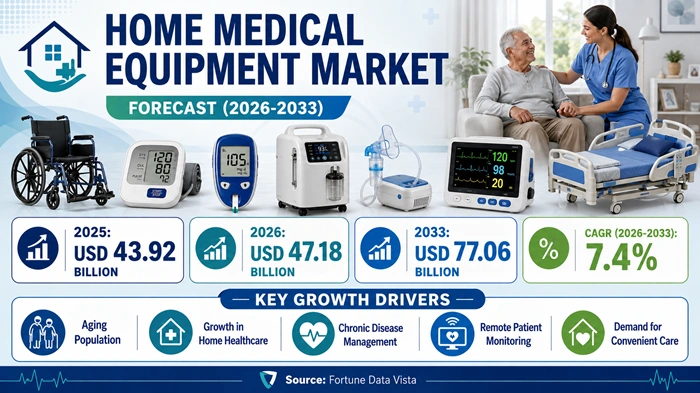
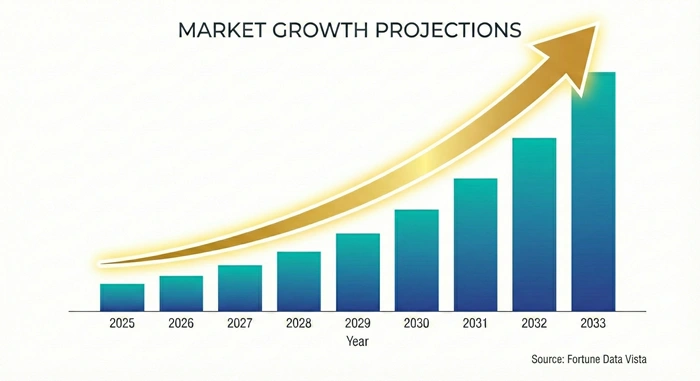
The global home medical equipment market size is valued at USD 43.92 billion in 2025 and is predicted to increase from USD 47.18 billion in 2026 to approximately USD 77.06 billion by 2033, growing at a CAGR of 7.4% from 2026 to 2033.
This market encompasses a wide spectrum of medical devices and therapeutic products designed to support patient care outside of formal hospital settings — from mobility aids and respiratory equipment to remote monitoring devices and chronic disease management tools. The steady aging of global populations, the increasing burden of chronic conditions like diabetes, hypertension, and COPD, and the widespread preference for home-based care over prolonged hospital stays are collectively driving strong and sustained growth across the home medical equipment market. As healthcare systems globally seek more cost-effective care delivery models, home-based medical equipment has evolved from a convenience to a clinical necessity.
AI Impact on the Home Medical Equipment Industry
Artificial Intelligence Is Fundamentally Transforming How Home Medical Devices Are Designed, Personalized, and Connected to Clinical Care Ecosystems
Artificial intelligence is reshaping the home medical equipment landscape from the ground up — not just in product design but in how devices interact with patients, caregivers, and clinical systems in real time. AI-powered continuous glucose monitors and blood pressure devices now go beyond simple readings to detect patterns, predict risk events, and trigger proactive clinical alerts before a patient's condition deteriorates. Remote patient monitoring platforms embedded with machine learning algorithms can process streams of physiological data collected at home and automatically flag abnormal trends for clinician review — reducing emergency hospitalizations and enabling more timely interventions. For companies like Medtronic, ResMed, and Philips, these AI capabilities are becoming central to their product differentiation strategy as the line between a medical device and a digital health platform continues to blur.
Beyond individual devices, AI is transforming the operational infrastructure behind the home medical equipment market. Predictive analytics are being applied to equipment maintenance cycles, helping providers anticipate failures in respiratory therapy devices, infusion pumps, and mobility aids before they impact patient care. AI-driven inventory and logistics platforms are improving the efficiency of home medical equipment delivery and service networks, reducing waste and improving patient satisfaction in a market where timely access to the right device can be clinically critical. As interoperability standards for connected medical devices improve, AI-integrated ecosystems where multiple home monitoring and therapy devices share data seamlessly with an Electronic Health Record (EHR) are becoming commercially viable — representing the next frontier of value creation in this market.
Growth Factors
Demographic Aging, Chronic Disease Prevalence, and Healthcare System Decentralization Are the Three Structural Forces Powering the Home Medical Equipment Market's Growth Trajectory
The most powerful growth driver of the home medical equipment market is the relentless global aging of populations. According to World Health Organization projections, the number of people aged 65 and over will double globally by 2050, with the sharpest increases occurring in Asia Pacific, Europe, and North America. Older adults are disproportionately affected by chronic conditions, mobility limitations, and post-surgical recovery needs — all of which generate sustained demand for durable medical equipment used at home. The preference of elderly individuals to age in place rather than in institutional settings is reinforcing this demand, as family caregivers and healthcare providers seek reliable, easy-to-use medical devices that support independent living while maintaining clinical oversight. This demographic driver is structural, long-duration, and globally consistent.
The rising global burden of chronic disease is equally significant. Conditions like diabetes, COPD, heart failure, sleep apnea, and hypertension require ongoing monitoring and management that cannot be efficiently handled through periodic clinic visits alone. Home-based devices — including blood glucose monitors, continuous positive airway pressure (CPAP) machines, portable oxygen concentrators, and connected blood pressure monitors — enable patients to manage their conditions continuously without requiring repeated hospital admissions. Healthcare systems in both developed and developing markets are actively incentivizing home-based care through reimbursement reforms, telehealth expansions, and discharge-to-home protocols, all of which directly increase the prescription and procurement of home medical equipment. The COVID-19 pandemic further accelerated this structural shift, and the momentum it created has proven durable across most major markets.
Market Outlook
The Home Medical Equipment Market Is Entering a Phase of Digital Convergence, Where Connected Devices, Telehealth Integration, and Value-Based Care Models Are Redefining the Competitive Landscape
The outlook for the home medical equipment market through 2033 is strongly positive, characterized by deepening digital integration, expanding product categories, and broadening geographic access. The integration of Bluetooth, Wi-Fi, and cellular connectivity into virtually all new product categories is transforming traditional standalone devices into nodes within a patient's larger health management ecosystem. Devices that sync with smartphones, cloud platforms, and EHR systems are no longer premium features — they are becoming the baseline expectation among both patients and prescribers. This connectivity shift is driving higher product upgrade cycles and expanding the average revenue per patient relationship for manufacturers and home health distributors alike.
From a geographic perspective, the market is benefiting from simultaneous expansion dynamics in both mature and emerging markets. In North America and Europe, the shift toward value-based care and hospital-at-home programs is increasing the clinical legitimacy and reimbursement coverage of home medical equipment, expanding the addressable patient population. In Asia Pacific, rapid urbanization, rising household incomes, and dramatic improvements in e-commerce and last-mile logistics infrastructure are enabling home medical equipment to reach patient populations that were previously underserved. Companies that can navigate the complex regulatory environments across these geographies, build integrated digital health platforms, and maintain cost-competitive manufacturing will be strongly positioned to capture disproportionate share of the market's growth through 2033.
Expert Speaks
-
"Home-based care is no longer a secondary option — it is fast becoming the primary setting for managing chronic conditions and supporting recovery. ResMed's connected device platform gives clinicians real-time visibility into patient therapy adherence and outcomes at home, and we believe this model of care will become the global standard across sleep, respiratory, and beyond," — Mick Farrell, CEO, ResMed Inc.
-
"At Medtronic, we are investing deeply in home-use monitoring and therapy devices that can communicate directly with our clinical platforms. The ability to close the loop between a patient at home and their care team digitally — in near real time — is the most important transformation happening in the durable medical equipment industry, and it is one we are leading," — Geoffrey Martha, CEO, Medtronic plc.
-
"The home healthcare equipment market is growing because patients want more control over their care journey. Philips is committed to building connected, patient-centric devices that are not only clinically effective but intuitive enough for daily home use without caregiver support — a balance that we believe defines the next generation of the industry," — Roy Jakobs, CEO, Koninklijke Philips N.V.
Key Report Takeaways
-
North America leads the global home medical equipment market, accounting for approximately 38–42% of total global revenue in 2025, driven by high chronic disease prevalence, strong Medicare and insurance reimbursement frameworks, a well-developed home health infrastructure, and rapid adoption of connected monitoring and telehealth-integrated devices by both patients and healthcare providers.
-
Asia Pacific is the fastest-growing region in the home medical equipment market, projected to register a CAGR of approximately 8.5–9.5% from 2026 to 2033, fueled by rapid urbanization, rising middle-class healthcare spending, expanding e-commerce distribution, and growing government investment in community and home-based care programs across China, India, Japan, and Southeast Asia.
-
Geriatric patients are the largest end-user category, accounting for the majority of home medical equipment demand globally, as the aging population increasingly requires mobility aids, respiratory therapy devices, blood pressure and glucose monitors, and rehabilitation equipment to support daily living and manage multiple chronic conditions without hospitalization.
-
Therapeutic and monitoring devices represent the highest-revenue application segment, contributing over 35–38% of market revenue in 2025, driven by strong demand for blood glucose monitors, blood pressure devices, cardiac monitoring equipment, and remote patient monitoring systems that enable continuous health oversight at home.
-
Online channels and direct-to-patient distribution are the fastest-growing distribution pathways, with e-commerce platforms projected to register a CAGR of approximately 10–12% from 2026 to 2033, as patients increasingly prefer the convenience of ordering and receiving home medical equipment through digital platforms, accelerated by the expansion of telehealth prescriptions and home delivery services.
-
Sleep apnea devices represent the fastest-growing product segment within the home medical equipment market, expected to grow at a CAGR of approximately 9–10% through 2033, with a current market share of approximately 14–16%, driven by rising rates of diagnosis, expanding CPAP prescription volumes, and new-generation compact and connected APAP devices that improve patient adherence and clinical outcomes.
Market Scope
| Parameter | Details |
|---|---|
| Market Size by 2033 | USD 77.06 Billion | Market Size by 2026 | USD 47.18 Billion | Market Size by 2025 | USD 43.92 Billion | Market Growth Rate from 2026 to 2033 | CAGR of 7.4% | Dominating Region | North America | Fastest Growing Region | Asia Pacific | Segments Covered | Product Type, Patient Type, Distribution Channel, End-User | Regions Covered | North America, Europe, Asia Pacific, Latin America, Middle East & Africa |
Market Dynamics
Drivers Impact Analysis
Population Aging, Chronic Disease Growth, and Healthcare Decentralization Are Converging to Create the Strongest and Most Durable Demand Environment the Home Medical Equipment Market Has Ever Experienced
| Driver | ≈ % Impact on CAGR Forecast | Geographic Relevance | Impact Timeline |
|---|---|---|---|
| Aging global population and preference for aging in place | ~30% | Global, Dominant in North America, Europe, Japan | Ongoing through 2033 |
| Rising chronic disease burden (diabetes, COPD, heart failure) | ~28% | Global | Ongoing |
| Healthcare system shift toward home-based and value-based care | ~20% | North America, Europe | Near to Long-Term (2026–2033) |
| Telehealth and connected device adoption | ~15% | North America, Asia Pacific | Near to Medium-Term |
| Post-surgical and rehabilitation home care demand | ~7% | Global | Ongoing |
The combination of demographic aging and chronic disease prevalence is creating a demand base for the home medical equipment market that is both large and exceptionally durable. As the global population over 65 expands, the incidence of comorbidities that require continuous home-based monitoring and therapy management rises in parallel. Patients managing diabetes, hypertension, COPD, and heart failure simultaneously — a profile increasingly common in elderly populations — may require three to five home medical devices at any given time, significantly increasing the revenue per patient relationship for manufacturers and distributors. This multi-device patient profile is a commercial characteristic unique to the home healthcare segment and one that underpins the market's strong and sustained growth potential.
Healthcare system reform is amplifying this natural demographic demand. As hospitals globally face capacity pressures, staffing shortages, and rising operational costs, health systems are actively developing programs to shift appropriate care to home settings. In the United States, the Centers for Medicare & Medicaid Services (CMS) has expanded reimbursement for hospital-at-home programs and remote patient monitoring services — directly increasing prescriptions for home medical equipment. In Europe, national health systems in the UK, Germany, and France are similarly investing in community and home-based care pathways. This policy support translates directly into expanded reimbursement coverage for a broader range of home medical devices, reducing the financial barrier for patients and increasing market penetration across income levels.
Restraints Impact Analysis
Reimbursement Limitations, Counterfeit Products, Patient Compliance Challenges, and Regulatory Complexity Are the Key Forces Constraining the Home Medical Equipment Market's Full Growth Potential
| Restraint | ≈ % Impact on CAGR Forecast | Geographic Relevance | Impact Timeline |
|---|---|---|---|
| Limited or inconsistent insurance reimbursement coverage | ~35% | Developing Markets, Parts of Europe | Ongoing |
| Presence of low-quality and counterfeit medical devices | ~25% | Asia Pacific, MEA, Latin America | Ongoing |
| Patient non-compliance and device abandonment | ~20% | Global | Ongoing |
| Complex and varying regulatory approval requirements by region | ~20% | Global | Ongoing |
Inconsistent and often insufficient reimbursement coverage remains one of the most significant structural constraints on the home medical equipment market, particularly in emerging economies and in specialty device categories where payer coverage is not yet standardized. Even in mature markets like the United States, reimbursement rates for certain durable medical equipment categories have been reduced under competitive bidding programs, compressing margins for home health suppliers and in some cases reducing the commercial viability of supplying lower-acuity products to Medicare beneficiaries. In developing markets where out-of-pocket health expenditure remains the dominant payment model, the relatively high cost of branded home medical equipment can be a significant barrier to market penetration.
The proliferation of counterfeit and substandard home medical devices in less-regulated markets — particularly through unregulated online channels in Asia Pacific, the Middle East, and Africa — poses a serious risk to both patient safety and legitimate market development. Substandard blood glucose monitors, blood pressure devices, and pulse oximeters that give inaccurate readings can lead to mismanaged care and erode patient trust in home monitoring technologies broadly. Regulatory authorities in China, India, and the EU are tightening online medical device sales standards, but enforcement remains uneven and the counterfeit segment continues to compete unfairly with certified product manufacturers. Educating patients about device quality standards and reinforcing the value of regulatory-cleared products is an ongoing challenge for the industry.
Opportunities Impact Analysis
Hospital-at-Home Programs, Smart Wearable Medical Devices, and Emerging Market Healthcare Infrastructure Investment Are Opening Significant New Opportunities for the Home Medical Equipment Market
| Opportunity | ≈ % Impact on CAGR Forecast | Geographic Relevance | Impact Timeline |
|---|---|---|---|
| Hospital-at-home and remote patient monitoring expansion | ~35% | North America, Europe, Australia | Near to Long-Term |
| Smart and IoT-connected home medical device development | ~30% | Global | Near to Long-Term |
| Emerging market healthcare access and affordability improvement | ~20% | Asia Pacific, MEA, Latin America | Near to Long-Term |
| Personalized therapy through AI and data analytics integration | ~15% | North America, Europe | Medium to Long-Term |
The hospital-at-home model represents one of the most commercially significant opportunity areas within the home medical equipment market today. Clinically validated hospital-at-home programs — which manage acute conditions like heart failure exacerbations, pneumonia, and post-surgical recovery in the patient's home using remote monitoring technology — require a comprehensive suite of connected medical devices. Companies that build integrated monitoring kits including vital sign monitors, pulse oximeters, infusion therapy systems, and two-way communication platforms are positioning themselves to capture large, multi-device contracts from health systems deploying these programs at scale. With major health systems in the US, Australia, UK, and Canada expanding hospital-at-home capabilities rapidly, this represents a high-value procurement category that is growing faster than most other segments.
Smart wearable medical devices — including continuous glucose monitors, cardiac patch monitors, smart inhalers, and medication adherence devices — represent another transformative opportunity. These devices are blurring the boundary between consumer health technology and clinical-grade home medical equipment, attracting both traditional medical device companies and technology giants who see healthcare as a growth frontier. The convergence of clinical accuracy, consumer design aesthetics, and cellular connectivity in wearable medical devices is expanding the potential user base far beyond traditional patient populations to include health-conscious consumers seeking continuous health monitoring. This expanding addressable market is increasing the total commercial opportunity within the broader home medical equipment landscape.
Segment Analysis
By Product Type
Therapeutic and Monitoring Devices Lead the Home Medical Equipment Market While Sleep Apnea and Respiratory Equipment Surge as the Fastest-Growing Product Category
The therapeutic and monitoring devices segment holds the largest share of the global home medical equipment market, accounting for approximately 35–38% of total revenue in 2025 and growing at a CAGR of approximately 7.6% through 2033. This segment encompasses blood glucose monitors, blood pressure devices, cardiac monitors, pulse oximeters, and remote patient monitoring systems — products with very high prescription volumes due to the mass-market scale of diabetes, hypertension, and cardiovascular disease globally. North America dominates this segment, where Medicare reimbursement for therapeutic devices and the broad availability of direct-to-consumer monitoring products through retail and online channels sustains consistently high volumes. Key companies driving this segment include Omron Healthcare (Japan), Abbott Laboratories (US), Roche Diabetes Care (Switzerland), and Medtronic (US/Ireland), all of which have invested significantly in connected device platforms that sync with patient and provider apps for real-time data sharing. Europe is the second-largest market for this segment, with Germany, France, and the UK leading procurement volumes.
The sleep apnea and respiratory equipment product category is the fastest-growing segment within the home medical equipment market, expected to register a CAGR of approximately 9–10% from 2026 to 2033, driven by expanding diagnosis rates for obstructive sleep apnea (OSA), COPD, and chronic respiratory insufficiency, and by the availability of highly effective home-use CPAP, BiPAP, and portable oxygen concentrator devices. Asia Pacific is the fastest-growing region for this product type, as increasing awareness of sleep disorders combined with growing middle-class healthcare spending in China, India, and Southeast Asia is rapidly expanding the CPAP and oxygen therapy addressable market. ResMed Inc. (Australia/US), Philips Respironics (Netherlands/US), and Fisher & Paykel Healthcare (New Zealand) are the dominant global players in this segment, competing through device innovation, digital connectivity features, and patient support programs that improve treatment adherence and drive positive clinical outcomes.
By Distribution Channel
Retail Pharmacies Maintain Market Leadership While Online Channels Emerge as the Fastest-Growing Distribution Pathway in the Home Medical Equipment Market
Retail pharmacies and dedicated home medical equipment stores collectively represent the largest distribution channel in the global home medical equipment market, accounting for approximately 42–46% of revenue in 2025 and growing at a CAGR of around 6.5% through 2033. This channel's leadership reflects the importance of in-person guidance and product demonstration for devices like mobility aids, blood pressure monitors, hearing aids, and incontinence products, where patients benefit from hands-on support in selecting and fitting the appropriate solution. North America leads this channel, where national pharmacy chains like CVS, Walgreens, and Walmart Health have built extensive home medical equipment sections supported by trained pharmacist and technician staff. Major suppliers to the retail pharmacy channel include Invacare Corporation (US), Drive DeVilbiss Healthcare (US), and Omron Healthcare (Japan), which maintain broad national retail distribution agreements across the US and Europe.
Online and direct-to-patient distribution channels are the fastest-growing distribution pathway in the home medical equipment market, projected to expand at a CAGR of approximately 10–12% from 2026 to 2033, as digital health literacy improves, e-prescription adoption grows, and patients increasingly prefer the convenience of home delivery for medical devices. The growth of telehealth platforms that integrate prescription and fulfillment capabilities has been particularly impactful, enabling clinicians to prescribe home medical equipment digitally and route orders directly to patients through connected e-commerce platforms. Asia Pacific is the most dynamic region for online home medical equipment distribution, with China's vast e-commerce infrastructure and health product e-retail ecosystem making digital channels the dominant procurement pathway for blood glucose monitors, blood pressure devices, and rehabilitation equipment.
Regional Insights
North America
North America Dominates the Global Home Medical Equipment Market, Anchored by Strong Reimbursement Frameworks, High Chronic Disease Rates, and Rapid Connected Device Adoption
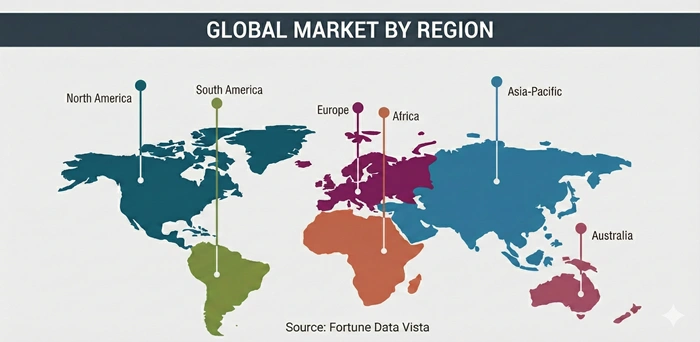
North America holds the largest share of the global home medical equipment market, accounting for approximately 38–42% of global revenue in 2025 and projected to grow at a CAGR of approximately 7.0% from 2026 to 2033. The United States is the dominant market within the region, where an extensive home health infrastructure, well-established Medicare and Medicaid reimbursement for durable medical equipment, and one of the highest per-capita rates of chronic disease globally create ideal conditions for market growth. The US Centers for Medicare & Medicaid Services' expanding coverage of remote patient monitoring and hospital-at-home programs is unlocking new procurement pathways for connected home medical devices beyond traditional durable equipment categories. Leading companies with strong North American operations include Medtronic (Ireland/US), ResMed Inc. (Australia/US), Invacare Corporation (US), Rotech Healthcare (US), and Medline Industries (US), which together serve the majority of the US home health supply chain.
Canada and Mexico contribute meaningfully to North American market growth. Canada's provincial healthcare systems are increasingly funding home-based care programs to reduce hospital bed pressure, creating growth opportunities for respiratory therapy, mobility, and monitoring device suppliers. Mexico's growing middle class and expanding private healthcare sector are driving stronger demand for consumer-grade home monitoring devices and rehabilitation equipment, though reimbursement infrastructure remains less developed than in the US or Canada. The North American home medical equipment market is expected to surpass USD 30 billion by 2033, maintaining its position as the world's single most valuable national and regional market for home-based care products throughout the forecast period.
Asia Pacific
Asia Pacific Is the World's Fastest-Growing Region for the Home Medical Equipment Market, Powered by Demographic Scale, Rising Healthcare Investment, and Digital Commerce Expansion
Asia Pacific is the fastest-growing regional market in the global home medical equipment industry, projected to register a CAGR of approximately 8.5–9.5% from 2026 to 2033, and currently accounts for approximately 28–32% of global revenue in 2025. China is the dominant force within the region — as both a large consumer market and a significant manufacturer of home medical devices — with its aging population, rapidly expanding chronic disease burden, and government investment in community healthcare infrastructure driving multi-year demand growth. Japan, with one of the world's oldest populations, maintains a highly sophisticated home medical equipment ecosystem with strong government subsidy programs for mobility aids, respiratory equipment, and monitoring devices for elderly patients. Key players with strong Asia Pacific operations include Omron Healthcare (Japan), Yuwell (China), A&D Company (Japan), GN Audio/ReSound (Denmark/Asia operations), and Mindray Medical International (China).
India represents the highest-growth national market within Asia Pacific for the home medical equipment market, propelled by a rapidly growing middle class, increasing diabetes and hypertension prevalence, expanding health insurance coverage, and a booming health e-commerce sector that is making home monitoring products accessible to tier 2 and tier 3 city populations for the first time. South Korea and Australia contribute premium-segment demand, with sophisticated consumers adopting connected monitoring platforms, wearable cardiac devices, and advanced sleep therapy equipment. Southeast Asian markets — including Indonesia, Vietnam, Thailand, and the Philippines — are in the early stages of home medical equipment market development, representing significant greenfield opportunity for manufacturers willing to invest in market education and distribution infrastructure.
Report Customization: Region-Wise and Country-Wise Insights
This Report Is Fully Customizable by Region and Country — Enabling Healthcare Organizations, Investors, and Medical Device Companies to Access Precise Market Intelligence Tailored to Their Target Geographies
This report on the home medical equipment market is available with complete region-wise and country-wise customization, providing healthcare manufacturers, distributors, investors, and policy stakeholders with the specific geographic intelligence required for confident strategic decision-making. From evaluating reimbursement policies affecting home medical device procurement in a specific country to benchmarking competitive dynamics in a regional market, our analysts can deliver a fully tailored report version built around your geographic and business priorities.
Customized reports are available for the following regions and countries, each offering detailed market sizing, product-level demand analysis, competitive landscape, reimbursement and regulatory environment review, distribution channel analysis, and growth opportunity identification specific to that geography and the home medical equipment market:
North America
-
U.S. — CMS reimbursement framework analysis, Medicare/Medicaid home medical equipment procurement volumes, competitive profiling of Medtronic, ResMed, Invacare, and Rotech, and hospital-at-home market development assessment
-
Canada — Provincial home care funding programs, respiratory therapy and mobility equipment demand analysis, and digital health integration trends
-
Mexico — Private healthcare sector growth, middle-class medical device adoption trends, and regulatory pathway for imported home medical devices
Europe
-
U.K. — NHS home medical equipment procurement, respiratory and mobility aid reimbursement, and hospital-at-home program expansion analysis
-
Germany — Statutory health insurance HME coverage policies, leading suppliers, and aging population demand forecast by product type
-
France — Home respiratory care market, mobility aid subsidy programs, and connected monitoring device adoption trends
-
Italy — Regional health system home care investment, rehabilitation equipment market, and elderly care infrastructure analysis
-
Rest of Europe — Nordic, Eastern European, and Benelux home medical equipment market dynamics and cross-border distribution
Asia Pacific
-
China — Domestic manufacturing landscape, e-commerce distribution growth, aging population demand drivers, and government home care policy review
-
India — Diabetes and hypertension monitoring device market, expanding health insurance coverage impact, and e-retail channel analysis
-
Japan — Elderly care equipment subsidy system, high-value home monitoring adoption, and domestic vs. imported device competitive dynamics
-
South Korea — Connected home medical device adoption, national health insurance HME coverage, and rehabilitation equipment demand
-
Australia — NDIS-funded home medical equipment demand, hospital-in-the-home program analysis, and connected device adoption trends
-
Rest of Asia Pacific — Southeast Asian market development, Vietnam and Indonesia healthcare infrastructure investment, and regional distribution strategy
Latin America
-
Brazil — Public and private health system home equipment coverage, respiratory and mobility aid market, and e-commerce distribution growth
-
Argentina — Chronic disease management device demand and healthcare system funding review
-
Rest of Latin America — Regional home healthcare infrastructure development and medical device import trends
Middle East & Africa
-
UAE — Premium home medical device demand, digital health adoption, and chronic disease management market overview
-
Saudi Arabia — Vision 2030 healthcare expansion impact on home medical equipment, and aging population projections
-
Rest of MEA — Sub-Saharan Africa community health program development and affordability-driven HME market analysis
Top Key Players
-
Medtronic plc (Ireland)
-
ResMed Inc. (Australia / United States)
-
Koninklijke Philips N.V. (Netherlands)
-
Invacare Corporation (United States)
-
Omron Healthcare, Inc. (Japan)
-
Abbott Laboratories (United States)
-
Rotech Healthcare Inc. (United States)
-
Medline Industries, Inc. (United States)
-
Drive DeVilbiss Healthcare (United States)
-
Fisher & Paykel Healthcare Limited (New Zealand)
-
GN ReSound A/S (Denmark)
-
Yuwell Medical (Jiangsu Yuyue Medical Equipment & Supply Co., Ltd.) (China)
-
A&D Company, Limited (Japan)
-
Ossur hf (Iceland)
-
Permobil AB (Sweden)
Recent Developments
-
2025 — ResMed Inc. expanded its AirSense™ connected CPAP platform with an enhanced AI-powered sleep coaching feature, which uses nightly therapy data to provide personalized guidance to sleep apnea patients, demonstrating the company's commitment to improving long-term treatment adherence through digital health integration.
-
2024 — Medtronic plc received expanded clearance from the U.S. Food and Drug Administration (FDA) for its home-use continuous glucose monitoring (CGM) system integration with its insulin delivery platform, enabling fully automated insulin management for Type 1 diabetes patients in home settings across North America and Europe.
-
2025 — Philips Healthcare completed the divestiture of its sleep and respiratory care business unit, refocusing the company's home medical equipment strategy on connected monitoring, diagnostic imaging, and health informatics platforms, while the divested entity continued operating the CPAP product portfolio as an independent entity.
-
2024 — Invacare Corporation completed a strategic operational restructuring and emerged from Chapter 11 bankruptcy protection, reaffirming its long-term commitment to the home medical equipment market through a stronger balance sheet and a refocused product portfolio centered on manual and power mobility solutions for home care settings.
-
2024–2025 — Omron Healthcare launched the next generation of its validated home blood pressure monitoring series with Bluetooth-enabled dual connectivity for both iOS and Android health platforms, expanding its direct-to-patient digital ecosystem and reinforcing its position as the global leader in consumer-grade home blood pressure management.
Market Trends
Connected Devices, Remote Patient Monitoring Integration, and the Hospital-at-Home Model Are the Three Technology-Driven Trends Most Powerfully Reshaping the Home Medical Equipment Market
The most consequential trend transforming the home medical equipment market today is the shift from standalone devices to networked, data-generating health management platforms. Patients no longer just use a blood glucose monitor or CPAP machine in isolation — they use devices that continuously feed data to apps, cloud platforms, and clinician dashboards, enabling a continuous feedback loop between home care and clinical oversight. This connectivity trend is raising the clinical value proposition of home medical equipment beyond simple convenience, positioning it as a genuine clinical care tool with measurable outcomes impact. Device manufacturers are responding by building subscription-based data service models — charging for software and analytics in addition to hardware — creating new recurring revenue streams that improve business model resilience.
The second major trend reshaping the landscape is the rise of the hospital-at-home concept as a formalized care model. Beyond individual device use by chronic disease patients, hospital-at-home programs deploy multi-device monitoring kits — including vital sign monitors, infusion therapy systems, video consult tools, and point-of-care diagnostic devices — to manage acute illness in the home environment under direct clinical supervision. These programs require medical device companies to move from selling individual units to providing integrated solution bundles, complete with installation, training, remote monitoring support, and outcome reporting. This shift toward bundled home care solutions is driving new go-to-market models in the home medical equipment industry and creating strategic partnerships between device manufacturers, telehealth platforms, and home health agencies that are redefining competition in the sector.
Segments Covered in the Report
-
By Product Type
-
Mobility Aids and Ambulatory Devices (Walkers, Wheelchairs, Crutches, Canes, Power Scooters)
-
Therapeutic and Monitoring Devices (Blood Glucose Monitors, Blood Pressure Monitors, Cardiac Monitors, Pulse Oximeters)
-
Respiratory Equipment (Portable Oxygen Concentrators, Nebulizers, Ventilators)
-
Sleep Apnea Devices (CPAP, BiPAP, APAP Machines)
-
Hearing Aids (Behind-the-Ear, In-the-Ear, Receiver-in-Canal)
-
Rehabilitation Equipment (Exercise Devices, Orthopedic Aids, Neuromuscular Stimulators)
-
Infusion Therapy Devices (Infusion Pumps, IV Sets, Needles)
-
Others (Fall Detection Devices, Personal Emergency Response Systems)
-
-
By Patient Type
-
Geriatric Patients
-
Chronic Disease Patients
-
Post-Operative Patients
-
Disabled Individuals
-
Others
-
-
By Distribution Channel
-
Retail Pharmacies and HME Stores
-
Online Channels (E-Commerce Platforms, Manufacturer Direct)
-
Hospital Pharmacies
-
Direct Sales
-
Others
-
-
By End-User
-
Home Care Settings
-
Hospitals and Clinics
-
Rehabilitation Centers
-
Long-Term Care Facilities
-
-
By Region
-
North America (U.S., Canada, Mexico)
-
Europe (U.K., Germany, France, Italy, Rest of Europe)
-
Asia Pacific (China, India, Japan, South Korea, Australia, Rest of Asia Pacific)
-
Latin America (Brazil, Argentina, Rest of Latin America)
-
Middle East & Africa (UAE, Saudi Arabia, Rest of MEA)
-
❝ Built for Every Level — From Startups to Industry Giants ❞
Here Is Exactly How This Report Works for You
-
Tier 1 medical device manufacturers, large-scale home health distributors, and institutional investors will gain precise competitor revenue benchmarks, product category market share data, and regional demand analysis across the home medical equipment market — enabling smarter portfolio decisions, M&A target identification, and go-to-market strategy refinement backed by comprehensive data on who is winning and why in each major geography and product segment.
-
For mid-level suppliers, healthcare technology startups, and regional distributors, this report maps the direct impact of global supply-demand shifts — including supply chain disruptions for medical-grade components, shifting insurance reimbursement policies, and the growing influence of e-commerce on traditional distribution — on margin structures and competitive access, ensuring your operational and pricing strategies are grounded in current market reality rather than outdated assumptions.
-
Decision-makers evaluating new market entry, product line expansion, or investment in the home medical equipment market will benefit from our in-depth geopolitical impact analysis — covering tariff structures affecting imported medical devices, cross-border regulatory compliance requirements, and the strategic implications of healthcare nationalization trends in key markets — with the full purchased report delivering the granular data needed to make high-confidence decisions in one of healthcare's fastest-growing segments.
Frequently Asked Questions:
Answer: The global home medical equipment market was valued at USD 43.92 billion in 2025 and is projected to reach USD 77.06 billion by 2033. The market is expected to grow at a CAGR of 7.4% from 2026 to 2033, driven by population aging, chronic disease prevalence, and the expansion of home-based care models.
Answer: The primary growth drivers include the aging global population, the rising prevalence of chronic conditions such as diabetes, hypertension, COPD, and sleep apnea, and the global healthcare system shift toward home-based and value-based care delivery. The rapid adoption of connected devices and telehealth integration is further accelerating the pace of market expansion.
Answer: North America holds the dominant share of the home medical equipment market, accounting for approximately 38–42% of global revenue in 2025, supported by strong Medicare reimbursement frameworks and high chronic disease rates. Asia Pacific is the fastest-growing region, projected to grow at a CAGR of 8.5–9.5% from 2026 to 2033, driven by demographic scale, rising healthcare spending, and e-commerce expansion.
Answer: Therapeutic and monitoring devices — including blood glucose monitors, blood pressure devices, and remote patient monitoring systems — represent the largest product segment in the home medical equipment market. Sleep apnea and respiratory equipment is the fastest-growing product category, driven by expanding CPAP and oxygen therapy prescriptions globally.
Answer: Digital connectivity is transforming the home medical equipment market by enabling devices to continuously transmit patient data to clinical platforms, supporting real-time remote monitoring and proactive care management. AI-powered analytics, hospital-at-home program integration, and smart wearable medical devices are collectively creating a new category of clinically connected home care that is expanding both the market's addressable population and its revenue per patient.