
Human Osteoblasts Market Overview
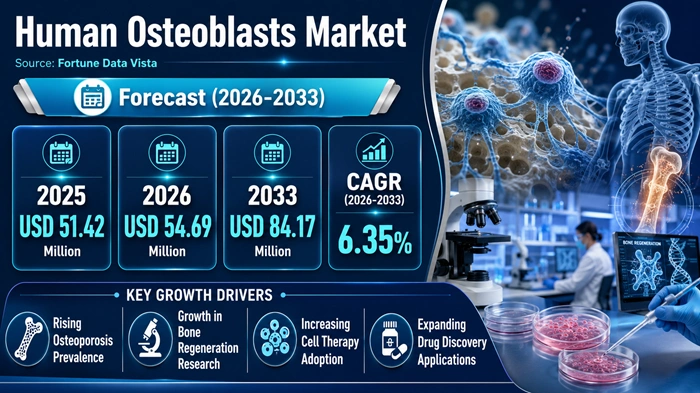
The global human osteoblasts market size is valued at USD 51.42 million in 2025 and is predicted to increase from USD 54.69 million in 2026 to approximately USD 84.17 million by 2033, growing at a CAGR of 6.35% from 2026 to 2033.
This growth reflects rising investment in bone tissue engineering, expanding orthopedic and regenerative medicine research, and growing demand for reliable osteoblast cell cultures used in drug screening and skeletal disease studies. As bone-related disorders such as osteoporosis and osteoarthritis become more prevalent among aging populations worldwide, research institutions and biopharmaceutical companies are increasingly relying on human osteoblast cell lines to advance new treatment approaches.
AI Impact on the Human Osteoblasts Industry
Artificial Intelligence Is Accelerating Cell Culture Optimization, Predictive Bone Biology Modeling, and Research Efficiency Across the Human Osteoblasts Landscape — Fundamentally Changing How Scientists Study Skeletal Cell Behavior
Artificial intelligence is beginning to reshape how researchers work with human osteoblast cell cultures, particularly through machine learning models that can predict optimal culture conditions for maintaining cell viability and functional activity over extended experimental periods. Traditionally, researchers relied on extensive trial and error to determine the right combination of growth factors, media composition, and environmental conditions needed to keep osteoblast cultures healthy and representative of natural bone-forming behavior. AI-assisted modeling tools are now helping laboratories shorten this optimization process considerably, allowing scientists to reach reliable experimental conditions faster and with fewer wasted cell samples.
Beyond culture optimization, AI is also improving how researchers analyze imaging data from osteoblast studies, using pattern recognition to detect subtle changes in cell morphology or mineralization activity that might otherwise require painstaking manual review. This capability is proving especially valuable in drug screening applications, where researchers need to evaluate how different compounds affect osteoblast behavior across large sample sets efficiently. As these AI-driven analytical tools become more widely adopted across academic and pharmaceutical research settings, they are helping accelerate the pace of discovery within bone biology research, indirectly supporting continued expansion of the broader human osteoblasts market.
Growth Factors
Rising Bone Disease Prevalence and Expanding Regenerative Medicine Research Continue to Drive Steady Demand for Osteoblast Cell Products
The most significant growth factor supporting the human osteoblasts market is the steadily rising global prevalence of bone-related disorders such as osteoporosis, osteoarthritis, and age-related skeletal degeneration, which has intensified research focus on understanding bone formation and remodeling processes at the cellular level. As populations across developed nations continue aging, the clinical and research demand for reliable human osteoblast cell cultures used to study these conditions and test potential treatments continues to climb steadily. This sustained research activity has made osteoblast cell products an essential tool for academic institutions, pharmaceutical companies, and specialized research laboratories worldwide.
A second important growth factor is the expanding scope of regenerative medicine and bone tissue engineering research, as scientists increasingly explore how osteoblast cells can be used to develop new therapies for fracture healing, bone grafting, and skeletal reconstruction following trauma or disease. Growing investment in this research area, supported by both public funding bodies and private biotechnology companies, continues to expand the range of applications relying on high-quality human osteoblast cultures. This broadening research base is helping diversify demand beyond traditional basic science applications into more translational and clinically oriented studies within the human osteoblasts market.
Market Outlook
Advances in Cell Line Standardization and Growing Biopharmaceutical Investment Point Toward Sustained Expansion Through 2033
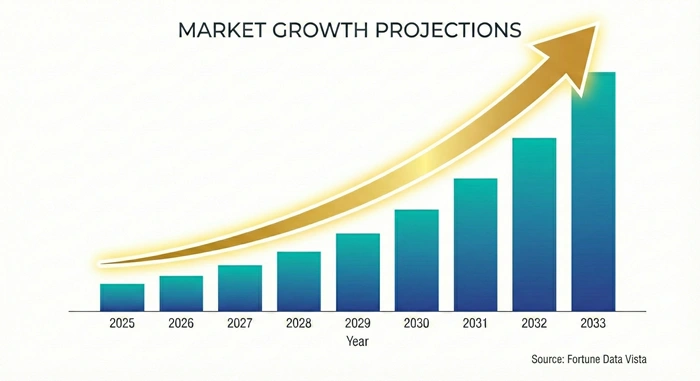
Looking ahead through the forecast period, the human osteoblasts industry is expected to benefit from continued improvement in cell line standardization, as manufacturers work to develop more consistent, well-characterized osteoblast products that reduce variability between research batches. This standardization matters considerably for researchers who need reproducible results across long-term studies, and companies that can reliably deliver high-quality, genetically stable osteoblast cell lines are likely to strengthen their position with academic and pharmaceutical customers seeking dependable research tools.
At the same time, growing biopharmaceutical investment in bone-targeted drug development is expected to create sustained demand for osteoblast-based screening platforms, as companies look to identify new compounds capable of promoting bone formation or slowing bone loss in patients with skeletal disorders. This expanding commercial research activity, combined with continued academic interest in fundamental bone biology, positions the human osteoblasts market for consistent growth through 2033 as both established and emerging biotechnology companies increasingly incorporate osteoblast-based research into their development pipelines.
Expert Speaks
-
"Understanding osteoblast biology at a cellular level is fundamental to developing next-generation treatments for skeletal disorders, and that research foundation continues to expand." — CEO, Thermo Fisher Scientific Inc
-
"Reliable, well-characterized cell products are essential for researchers working on bone regeneration, and we remain focused on delivering that consistency at scale." — CEO, Merck KGaA
-
"The growing intersection between regenerative medicine and orthopedic research is creating meaningful new demand for specialized cell culture tools across our customer base." — CEO, Lonza Group Ltd
Key Report Takeaways
-
North America leads the global human osteoblasts market, holding approximately 38% market share in 2025, supported by strong research infrastructure, high orthopedic research funding, and a well-established biopharmaceutical sector
-
Asia Pacific is the fastest-growing region, projected to expand at a CAGR near 9% through 2033, driven by expanding research infrastructure investment and growing academic focus on musculoskeletal disease research
-
Academic and research institutions represent the dominant customer base, relying heavily on human osteoblast cell products to support fundamental bone biology and skeletal disease studies
-
Orthopedic and musculoskeletal research applications contribute the most to overall demand, reflecting the central role osteoblast cultures play in studying fracture healing and bone remodeling
-
Primary human osteoblast cultures remain the most widely used product type, valued for their close resemblance to natural in vivo bone-forming cell behavior compared to immortalized alternatives
-
Osteoblast cell lines will grow the fastest among product segments, holding close to 30% market share with a CAGR near 8% through the forecast period, supported by growing demand for standardized, reproducible research tools
Market Scope
| Parameter | Details |
|---|---|
| Market Size by 2033 | USD 84.17 Million | Market Size by 2026 | USD 54.69 Million | Market Size by 2025 | USD 51.42 Million | Market Growth Rate from 2026 to 2033 | CAGR of 6.35% | Dominating Region | North America | Fastest Growing Region | Asia Pacific | Segments Covered | Product Type, Application, End User, Region | Regions Covered | North America, Europe, Asia Pacific, Latin America, Middle East & Africa |
Market Dynamics
Drivers Impact Analysis
Rising Bone Disease Research Funding and Expanding Regenerative Medicine Applications Remain the Two Strongest Forces Behind Market Momentum
| Driver | (≈) % Impact on CAGR Forecast | Geographic Relevance | Impact Timeline |
|---|---|---|---|
| Rising prevalence of bone-related disorders driving research investment | ~36% | Global, strongest in North America, Europe | Short to long-term |
| Expanding bone tissue engineering and regenerative medicine research | ~29% | North America, Europe, growing in Asia Pacific | Medium to long-term |
| Growing pharmaceutical investment in bone-targeted drug screening | ~20% | Global | Short to medium-term |
| Increasing academic research funding for musculoskeletal studies | ~15% | Global | Medium-term |
Rising prevalence of bone-related disorders continues to serve as the primary engine behind sustained growth in the human osteoblasts market, as aging populations across developed nations experience increasing rates of osteoporosis and related skeletal conditions that demand deeper scientific understanding. This has translated into steady research funding directed toward studying osteoblast function and bone remodeling processes, creating consistent demand for reliable cell culture products across academic and clinical research settings.
Expanding bone tissue engineering research represents the second major driver, as scientists increasingly explore how cultured osteoblast cells can contribute to developing improved bone grafting materials and regenerative therapies for trauma and skeletal reconstruction. This growing translational research focus is broadening the customer base for osteoblast cell products beyond traditional basic science laboratories into more applied biomedical engineering contexts, reinforcing steady demand growth across the broader human osteoblasts market.
Restraints Impact Analysis
High Cell Culture Costs and Technical Complexity Continue to Limit Broader Research Accessibility
| Restraint | (≈) % Impact on CAGR Forecast | Geographic Relevance | Impact Timeline |
|---|---|---|---|
| High cost of maintaining specialized osteoblast cell cultures | ~35% | Global, notable in smaller research institutions | Short to medium-term |
| Technical complexity requiring specialized laboratory expertise | ~30% | Global | Ongoing |
| Limited availability of standardized, well-characterized cell lines | ~22% | Emerging research markets | Medium-term |
| Ethical and regulatory considerations around human cell sourcing | ~13% | North America, Europe | Long-term |
The most persistent restraint facing the human osteoblasts market is the relatively high cost associated with maintaining specialized cell cultures, since osteoblast cells require carefully controlled growth conditions and specific media formulations that can strain budgets at smaller research institutions. This cost barrier often limits how extensively academic laboratories with constrained funding can incorporate osteoblast-based research into their broader study programs.
Technical complexity represents a second significant restraint, as working with human osteoblast cultures requires specialized laboratory expertise and equipment that not every research facility possesses, particularly in regions where advanced cell culture infrastructure remains underdeveloped. Combined with limited availability of consistently standardized cell lines in some markets, these restraints continue moderating how broadly osteoblast-based research techniques can spread beyond well-resourced academic and pharmaceutical institutions across the human osteoblasts market.
Opportunities Impact Analysis
Standardized Cell Line Development and Expanding Regenerative Medicine Investment Represent the Clearest Paths to Growth
| Opportunity | (≈) % Impact on CAGR Forecast | Geographic Relevance | Impact Timeline |
|---|---|---|---|
| Development of more standardized, reproducible osteoblast cell lines | ~38% | Global | Medium to long-term |
| Growing biopharmaceutical investment in bone-targeted therapeutics | ~34% | North America, Europe | Short to medium-term |
| Expanding research infrastructure investment across emerging economies | ~28% | Asia Pacific, Latin America | Long-term |
The development of more standardized and reproducible osteoblast cell lines represents one of the most valuable opportunities within the human osteoblasts market, since researchers consistently seek reliable, well-characterized products that reduce experimental variability across long-term studies. Companies that can deliver genetically stable, consistently performing cell lines stand to build stronger long-term relationships with academic and pharmaceutical research customers.
Growing biopharmaceutical investment in developing bone-targeted therapeutics presents a second substantial opportunity, as pharmaceutical companies increasingly rely on osteoblast-based screening platforms to identify promising drug candidates for osteoporosis and related conditions. Expanding research infrastructure investment across Asia Pacific and Latin America further broadens the opportunity landscape, as growing academic and biotechnology sectors in these regions increasingly incorporate osteoblast research into their scientific programs. Companies that serve both established and emerging research markets effectively are well positioned to capture meaningful growth within the broader human osteoblasts market.
Segment Analysis
By Product Type: Primary Human Osteoblast Cultures
Primary Human Osteoblast Cultures Continue to Anchor the Product Landscape, Valued for Their Close Resemblance to Natural Bone-Forming Cell Behavior
Primary human osteoblast cultures hold a substantial share within the product type segment of the human osteoblasts market, accounting for approximately 42% of total segment revenue in 2025. Their continued preference among researchers stems from their ability to closely replicate natural in vivo osteoblast behavior, making them particularly valuable for studies examining bone formation, mineralization, and cellular response to experimental treatments. In markets like the United States and Germany, primary cultures remain the preferred choice for foundational bone biology research where accurate physiological representation matters more than long-term culture stability. Leading suppliers such as Lonza, PromoCell, and ScienCell Research Laboratories continue to dominate this segment through consistent sourcing practices and rigorous quality control standards.
Growth within this segment remains particularly strong in North America, where well-funded academic institutions and biopharmaceutical companies continue prioritizing physiologically accurate research models for osteoporosis and bone regeneration studies. The region's dense concentration of research universities and specialized biotechnology firms has helped sustain consistent demand for high-quality primary osteoblast cultures despite their relatively higher cost compared to immortalized alternatives. As drug development pipelines increasingly incorporate more physiologically relevant testing models, primary human osteoblast cultures are expected to maintain a meaningful position within the broader human osteoblasts market throughout the forecast period.
By Application: Orthopedics and Musculoskeletal Research
Orthopedics and Musculoskeletal Research Remains the Dominant Application Segment, Reflecting the Central Role Osteoblasts Play in Bone Health Studies
Orthopedics and musculoskeletal research accounts for approximately 40% of application segment revenue within the human osteoblasts market in 2025, reflecting the fundamental role these cells play in helping researchers understand bone formation, fracture healing, and skeletal disease progression. Researchers studying conditions ranging from osteoporosis to traumatic bone injuries rely heavily on osteoblast cultures to model how bone tissue responds to injury, disease, and potential therapeutic interventions, making this application area a consistent driver of overall product demand.
Regeneration surgery and tissue engineering applications represent a meaningful and growing secondary application segment, supported by expanding research into bone grafting materials and scaffold-based therapies designed to improve surgical outcomes for patients with significant bone loss. North America continues to lead this application category, supported by companies like Thermo Fisher Scientific and STEMCELL Technologies that maintain strong relationships with major research hospitals and academic medical centers. As musculoskeletal and spine research programs continue expanding globally, orthopedic applications are expected to remain the primary demand driver within the broader human osteoblasts market.
Regional Insights
North America
Strong Research Infrastructure and High Orthopedic Research Funding Keep North America Firmly in the Lead
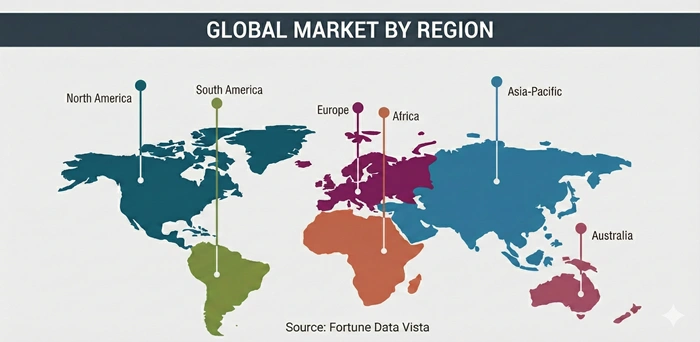
North America commands the leading position in the global human osteoblasts market, holding approximately 38% share in 2025, supported by strong academic research infrastructure, substantial orthopedic research funding, and a well-established biopharmaceutical sector actively investing in bone-related drug development. The United States drives the overwhelming majority of regional demand, backed by a dense concentration of leading research universities and specialized biotechnology companies focused on skeletal disease research. Companies with strong regional presence include Thermo Fisher Scientific, Merck KGaA, STEMCELL Technologies, and ScienCell Research Laboratories, each maintaining deep relationships with academic and pharmaceutical research customers across the country.
Canada also contributes meaningfully to regional demand, supported by growing government investment in musculoskeletal research programs and a steadily expanding academic research base. The region's combination of strong funding availability, advanced laboratory infrastructure, and consistent research output ensures North America's leadership position within the human osteoblasts market remains firmly intact through the remainder of the forecast period.
Asia Pacific
Expanding Research Infrastructure and Growing Academic Investment Position Asia Pacific as the Fastest-Growing Region
Asia Pacific is projected to register the fastest CAGR within the global human osteoblasts market through 2033, expanding at a rate near 9% as expanding research infrastructure investment and growing academic focus on musculoskeletal disease research create substantial new demand across the region. China and Japan lead much of this regional growth, supported by increasing government investment in life sciences research and a growing number of academic institutions building specialized cell biology research capabilities. Regional and international suppliers alike have expanded their presence to serve this growing institutional demand, often establishing local distribution partnerships to improve product accessibility.
India and South Korea are following a similar growth trajectory, with expanding biotechnology sectors and growing research funding supporting increased adoption of osteoblast-based research techniques across academic and pharmaceutical institutions. Growing government investment in life sciences infrastructure across several Asia Pacific countries continues to accelerate research capability development among institutions that previously lacked access to specialized cell culture resources. This combination of infrastructure expansion, growing research funding, and rising academic interest positions Asia Pacific as the clear growth leader within the broader human osteoblasts market through the forecast period.
Customization Available for This Report
Region-Specific and Country-Specific Versions of This Report Are Available to Deliver a Sharper, More Localized View of Market Dynamics
This report can be tailored on a region-by-region and country-by-country basis, providing localized market sizing, competitive mapping, and research trend analysis that a global overview alone cannot fully capture.
Clients seeking a more focused breakdown can request a customized version covering any of the following regions and countries, complete with demand forecasting, competitor landscape review, and adoption trend analysis tied specifically to the human osteoblasts keyword focus:
North America
-
U.S. — Detailed review of academic research funding trends and biopharmaceutical adoption patterns
-
Canada — Coverage of government-funded musculoskeletal research programs
-
Mexico — Analysis of emerging academic research infrastructure investment
Europe
-
U.K. — Review of research institution funding and cell culture adoption trends
-
Germany — Coverage of biopharmaceutical research investment and laboratory infrastructure
-
France — Insights into academic research activity and osteoblast product demand
-
Italy — Analysis of regional research funding and institutional adoption patterns
-
Rest of Europe — Country-level view of emerging demand across Eastern Europe and the Nordics
Asia Pacific
-
China — Coverage of expanding life sciences research investment and institutional growth
-
India — Analysis of growing biotechnology sector research funding and adoption trends
-
Japan — Review of established research infrastructure and academic collaboration trends
-
South Korea — Assessment of biotechnology research investment and laboratory capacity
-
Australia — Insights into musculoskeletal research funding and adoption trends
-
Rest of Asia Pacific — Country-level breakdown covering Thailand, Vietnam, Indonesia, and Malaysia
Latin America
-
Brazil — Coverage of expanding academic research investment and institutional demand
-
Argentina — Analysis of early-stage research infrastructure development trends
-
Rest of Latin America — Country-level sizing across Colombia, Peru, and Chile
Middle East & Africa
-
UAE — Review of research infrastructure investment and academic collaboration trends
-
Saudi Arabia — Coverage of expanding life sciences research funding initiatives
-
Rest of MEA — Country-level view of Sub-Saharan Africa research infrastructure expansion
Top Key Players
-
Merck KGaA (Germany)
-
Thermo Fisher Scientific Inc (United States)
-
Lonza Group Ltd (Switzerland)
-
STEMCELL Technologies Inc (Canada)
-
Takara Bio Inc (Japan)
-
BioIVT LLC (United States)
-
American Type Culture Collection (United States)
-
Cyagen Biosciences Inc (United States)
-
CELLINK AB (Sweden)
-
ScienCell Research Laboratories Inc (United States)
-
ZenBio Inc (United States)
-
PromoCell GmbH (Germany)
Recent Developments
-
In 2025, Lonza expanded its cell culture product portfolio with enhanced osteoblast media formulations, aimed at improving consistency and reliability across long-term bone research studies
-
In 2026, Thermo Fisher Scientific deepened its academic research partnerships to widen access to standardized human osteoblast cell products across university and hospital-affiliated laboratories
-
In 2025, STEMCELL Technologies rolled out improved primary osteoblast culture protocols designed to reduce experimental variability in bone regeneration and fracture healing research
-
In 2026, PromoCell broadened its distribution footprint across Asia Pacific, responding to rising regional demand for specialized human osteoblast cell products among academic institutions
-
In 2025, ScienCell Research Laboratories launched a new line of genetically characterized osteoblast cell lines built specifically for pharmaceutical drug screening and skeletal disease applications
Market Trends
Standardization Efforts and Growing Regenerative Medicine Focus Are Reshaping Research Priorities
One of the clearest trends shaping the human osteoblasts market is the growing emphasis on developing standardized, well-characterized cell products that reduce experimental variability across research studies. As pharmaceutical companies increasingly rely on osteoblast-based screening platforms for drug development, the demand for consistent, reproducible cell lines has intensified, pushing suppliers to invest more heavily in quality control and genetic characterization processes.
A second significant trend is the expanding intersection between osteoblast research and regenerative medicine, as scientists increasingly explore how cultured bone-forming cells can contribute to developing improved therapies for skeletal trauma and degenerative bone conditions. This growing translational research focus is broadening the practical applications for human osteoblast cell products well beyond traditional basic science research, continuing to support steady expansion across the broader human osteoblasts market.
Segments Covered in the Report
By Product Type
-
Primary Human Osteoblast Cultures
-
Cryopreserved Osteoblast Cells
-
Osteoblast Cell Lines
-
Customized Cell Culture Media
By Application
-
Orthopedics and Musculoskeletal Research
-
Regeneration Surgeries
-
Traumatic Injury Studies
-
Neurology and Spine Research
By End User
-
Hospitals
-
Specialty Clinics
-
Academic and Research Institutions
By Region
-
North America (U.S., Canada, Mexico)
-
Europe (U.K., Germany, France, Italy, Rest of Europe)
-
Asia Pacific (China, India, Japan, South Korea, Australia, Rest of Asia Pacific)
-
Latin America (Brazil, Argentina, Rest of Latin America)
-
Middle East & Africa (UAE, Saudi Arabia, Rest of MEA)
❝ Built for Every Level — From Startups to Industry Giants ❞
Here Is Exactly How This Report Works for You
-
For tier 1 companies, investors, and established market leaders, this report delivers detailed competitor revenue analysis, research funding trend mapping, and geopolitical risk context that support confident decisions around product expansion, partnerships, and long-term strategic positioning within the human osteoblasts space
-
For tier 2 and tier 3 companies, startups, and mid-sized cell culture suppliers, this report highlights the most commercially promising product categories and underserved regional opportunities, giving you a practical framework to compete against larger established players without overextending limited resources
-
For every decision maker across the value chain, this report explains exactly how research funding trends, regulatory considerations, and competitor product launches are shaping market direction through 2033, equipping you to plan investment and go-to-market decisions with genuine confidence
Frequently Asked Questions:
Answer: The global human osteoblasts market was valued at USD 51.42 million in 2025 and is projected to reach USD 84.17 million by 2033. This growth is driven largely by rising bone disease research and expanding regenerative medicine applications.
Answer: Growth in the human osteoblasts market is being driven by rising prevalence of bone-related disorders and expanding bone tissue engineering research. Growing biopharmaceutical investment in bone-targeted drug screening is further reinforcing demand.
Answer: North America currently leads the human osteoblasts market with roughly 38% share, supported by strong research infrastructure and high orthopedic research funding. Asia Pacific is growing the fastest, driven by expanding research infrastructure investment.
Answer: Primary human osteoblast cultures generate the largest share of revenue in the human osteoblasts market, valued for closely replicating natural bone-forming cell behavior. Orthopedics and musculoskeletal research also remains the dominant application segment.
Answer: Leading companies in the human osteoblasts market include Merck KGaA, Thermo Fisher Scientific, Lonza Group, STEMCELL Technologies, and Takara Bio. These companies compete through continuous product innovation, strong academic partnerships, and growing investment in standardized cell line development.