
In Vitro Diagnostics Market Overview
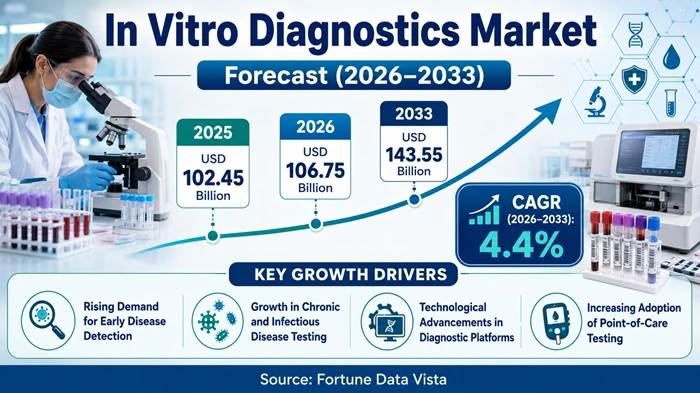
The global in vitro diagnostics market size is valued at USD 102.45 billion in 2025 and is predicted to increase from USD 106.75 billion in 2026 to approximately USD 143.55 billion by 2033, growing at a CAGR of 4.4% from 2026 to 2033.
The in vitro diagnostics industry — which encompasses the reagents, instruments, and software used to perform medical tests on biological samples such as blood, urine, and tissue outside of the human body — has become one of the most essential pillars of modern healthcare delivery globally. Rising rates of chronic and infectious diseases, the aging of global populations, the growing adoption of point-of-care testing platforms, and the progressive integration of artificial intelligence and molecular diagnostics into routine clinical practice are collectively creating a sustained and broad-based demand growth environment for IVD products and services across every major region through the forecast period.
AI Impact on the In Vitro Diagnostics Industry
Artificial Intelligence and Machine Learning Are Fundamentally Transforming the In Vitro Diagnostics Industry by Enabling Faster and More Accurate Test Interpretation, Automating Clinical Laboratory Workflows, and Expanding the Diagnostic Capability of Point-of-Care Platforms That Were Previously Limited by Human Analytical Bandwidth
Artificial intelligence is delivering practical and increasingly significant value across the in vitro diagnostics ecosystem — most impactfully in clinical laboratory automation, diagnostic image and result interpretation, and the development of novel biomarker-based diagnostic assays for complex diseases. AI-powered laboratory information management systems can now process and cross-validate test results from thousands of patient samples simultaneously, flagging anomalous results that require physician review while automatically releasing confirmed routine results — dramatically improving laboratory throughput and reducing the time from sample receipt to clinician-actionable diagnostic report. Machine learning models trained on large retrospective clinical datasets are simultaneously enabling more nuanced interpretation of diagnostic results, identifying patterns in biomarker combinations that correlate with specific disease states more accurately than any single-analyte result can reveal — enabling clinical decision support tools that help physicians make faster and more confident diagnostic and treatment decisions.
The integration of AI image analysis algorithms into digital pathology platforms is creating a particularly transformative impact on oncology diagnostics within the in vitro diagnostics space. AI-powered digital pathology systems — which apply deep learning models to whole-slide tissue images to identify cancerous cells, grade tumor pathology, and detect molecular markers of treatment response — are enabling pathologists to analyze more slides with greater consistency than manual review allows, while simultaneously identifying diagnostic features that human pathologists may not routinely detect. Companies including Roche, Leica Biosystems, and Hamamatsu Photonics are actively commercializing AI-enhanced digital pathology platforms that are progressively integrating into hospital pathology laboratories globally — reducing diagnostic turnaround time for cancer patients and improving the accuracy of treatment-guiding molecular diagnostic interpretations.
Growth Factors
The Rising Global Burden of Chronic and Infectious Diseases, the Rapid Expansion of Point-of-Care Testing Adoption, and the Advancing Precision Medicine Movement That Demands More Comprehensive and Accurate Diagnostic Solutions Are the Primary Forces Sustaining the Growth of the In Vitro Diagnostics Market
The escalating global burden of chronic diseases — including diabetes, cardiovascular disease, cancer, and chronic kidney disease — is the most structurally powerful demand driver in the in vitro diagnostics market, creating continuous and growing demand for the laboratory tests that diagnose these conditions, monitor disease progression, guide therapeutic decisions, and track treatment response. The International Diabetes Federation estimates that over 530 million adults globally are living with diabetes — every one of whom requires regular blood glucose monitoring and periodic HbA1c testing that generates recurring IVD product consumption. Similarly, the global cancer burden — projected to reach 35 million new cases annually by 2050 — is driving growing demand for oncology IVD solutions including tumor biomarker testing, companion diagnostic assays, and liquid biopsy platforms that support targeted therapy selection and treatment monitoring. These chronic disease epidemics create a durable, non-discretionary demand base for the in vitro diagnostics industry that grows with population aging and disease prevalence regardless of short-term healthcare spending cycles.
The rapid expansion of point-of-care testing represents a second major growth driver that is both broadening the addressable market for IVD products and fundamentally changing where and how diagnostics are performed. Point-of-care testing platforms — which deliver clinically validated diagnostic results at or near the patient in emergency departments, physician offices, pharmacies, and patients' homes — reduce the time from sample collection to result from hours to minutes, enabling faster treatment decisions and reducing the burden on centralized laboratory infrastructure. The COVID-19 pandemic dramatically accelerated point-of-care testing adoption across all care settings globally, demonstrating the clinical and operational value of near-patient diagnostics at a scale and speed that permanently shifted healthcare stakeholder attitudes toward IVD decentralization. This POCT adoption acceleration is sustaining above-average growth in the point-of-care segment of the in vitro diagnostics market well beyond the pandemic period.
Market Outlook
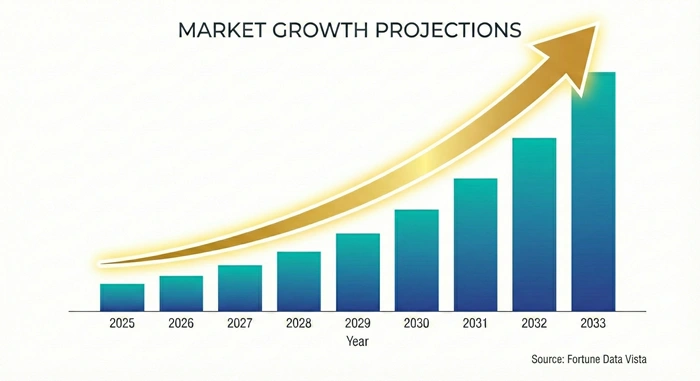
The In Vitro Diagnostics Market Is Projected to Deliver Consistent and Broad-Based Revenue Growth Through 2033, Anchored by the Deepening Integration of Diagnostics Into Preventive Care, the Expansion of Molecular Testing Platforms, and the Growing Contribution of Emerging Market Healthcare Investment to Global IVD Demand
The long-term market outlook for the in vitro diagnostics industry reflects a remarkably resilient demand environment that draws simultaneous positive momentum from demographic trends, disease epidemiology, healthcare infrastructure investment, and diagnostic technology innovation. In developed markets — including North America, Western Europe, and Japan — the primary growth mechanism is the progressive migration of laboratory testing toward higher-complexity molecular and immunoassay platforms that generate higher revenue per test, the expansion of companion diagnostic applications that link IVD products directly to targeted pharmaceutical therapies, and the growing adoption of digital pathology, next-generation sequencing, and AI-enhanced diagnostic solutions that deliver superior clinical value relative to conventional diagnostic methods.
In emerging markets across Asia Pacific, Latin America, and the Middle East and Africa — which collectively contain the majority of the world's population and the fastest-growing healthcare infrastructure investment — the primary growth mechanism is the expansion of healthcare access itself, as improving hospital and laboratory infrastructure brings IVD testing to patient populations that were previously underserved by diagnostic services. Government-funded universal health coverage programs, expanding private hospital networks, and the growing affordability of automated IVD analyzers are progressively closing the diagnostic gap between emerging and developed market healthcare systems — creating the largest geographic expansion opportunity in the global IVD market over the forecast period and sustaining above-market growth rates for IVD companies with strong emerging market commercial presence and distribution networks.
Expert Speaks
-
"Roche's diagnostics division continues to be one of the most strategically important and consistently growing segments of our business, driven by the expanding clinical demand for personalized medicine solutions, companion diagnostics that support our pharmaceutical products, and the progressive digitalization of clinical laboratories that is creating new value from the diagnostic data we help generate. We see the in vitro diagnostics market growing steadily across both developed and emerging markets, and Roche is investing in both product innovation and geographic expansion to capitalize on these long-term opportunities." — Thomas Schinecker, CEO, Roche
-
"Abbott's diagnostics business is performing strongly across all our major platforms — from core laboratory immunoassay and clinical chemistry systems to our rapid diagnostics and molecular testing portfolios — reflecting the broad-based and durable demand for accurate diagnostic solutions that help clinicians make better treatment decisions for their patients. The in vitro diagnostics industry is being transformed by digitalization, AI integration, and the expansion of point-of-care testing, and Abbott's investments in connected diagnostic systems and next-generation testing platforms position us well to lead this transformation." — Robert Ford, CEO, Abbott Laboratories
-
"Danaher's diagnostics platforms — including Beckman Coulter Life Sciences, Cepheid, and Radiometer — are serving powerful long-term demand tailwinds from the growing global burden of infectious disease, cancer, and chronic conditions that require precise, rapid, and reliable diagnostic solutions to guide clinical management. We continue to invest in both organic innovation and strategic acquisitions to expand our presence across the full spectrum of in vitro diagnostics technologies and geographies, and we believe the market's long-term growth outlook remains highly attractive." — Rainer Blair, CEO, Danaher Corporation
Key Report Takeaways
-
North America dominates the global in vitro diagnostics market, accounting for approximately 45% of total global revenue in 2026, underpinned by the United States' highly developed healthcare infrastructure, the world's highest per-capita diagnostic testing rates, strong reimbursement frameworks for IVD products, and the headquarters presence of leading global IVD companies including Abbott, Becton Dickinson, and Thermo Fisher Scientific that drive both product innovation and domestic market revenue.
-
Asia Pacific is the fastest-growing regional market, expanding at a CAGR of approximately 6.5% from 2026 to 2033, driven by rapidly expanding healthcare infrastructure investment across China, India, Japan, and Southeast Asia — combined with rising diagnostic testing awareness, increasing government healthcare spending, and the growing penetration of automated laboratory analyzers and point-of-care testing platforms across hospital and community care settings throughout the region.
-
Hospitals are the dominant end-user segment, contributing approximately 50% of total end-user revenue in 2026, as hospital-based clinical laboratories represent the highest-volume IVD test environment globally — processing inpatient diagnostic orders, emergency department tests, and specialist outpatient clinic testing volumes that collectively generate the majority of IVD product consumption across all major geographies.
-
Reagents and kits are the dominant product segment, holding approximately 65% of total product-based revenue in 2026, reflecting the recurring, consumable-driven nature of IVD product economics — where the installed base of IVD analyzers in hospitals and laboratories generates continuous and growing reagent consumption that produces stable, high-volume recurring revenue for IVD reagent manufacturers independent of instrument capital spending cycles.
-
Molecular diagnostics is the most technologically advanced technology segment, growing at a CAGR of approximately 6.8% from 2026 to 2033 and projected to reach approximately 30% of total technology-based revenue by 2033 — driven by the clinical adoption of PCR, next-generation sequencing, and digital PCR platforms for infectious disease, oncology, and genetic testing applications that deliver superior diagnostic sensitivity and specificity relative to conventional immunoassay methods.
-
Point-of-care testing is the fastest-growing test location segment, projected to expand at a CAGR of approximately 7.5% from 2026 to 2033, as healthcare systems globally accelerate the decentralization of diagnostic testing to bring faster diagnostic results closer to patients in emergency departments, primary care clinics, pharmacies, and home care settings — reducing both time-to-treatment and the administrative burden on centralized laboratory infrastructure.
Market Scope
| Parameter | Details |
|---|---|
| Market Size by 2033 | USD 143.55 Billion | Market Size by 2026 | USD 106.75 Billion | Market Size by 2025 | USD 102.45 Billion | Market Growth Rate from 2026 to 2033 | CAGR of 4.4% | Dominating Region | North America | Fastest Growing Region | Asia Pacific | Segments Covered | Product, Technology, Application, Test Location, End User | Regions Covered | North America, Europe, Asia Pacific, Latin America, Middle East and Africa |
Market Dynamics
Drivers Impact Analysis
The Escalating Global Chronic and Infectious Disease Burden, the Rapid Expansion of Point-of-Care Diagnostics Adoption, and the Growing Precision Medicine Movement Driving Companion Diagnostic and Molecular Testing Demand Are the Three Most Impactful Forces Accelerating Growth in the In Vitro Diagnostics Market
| Driver | ≈ % Impact on CAGR Forecast | Geographic Relevance | Impact Timeline |
|---|---|---|---|
| Rising global burden of chronic and infectious diseases | ~32% | Global | Short to Long-Term |
| Point-of-care testing adoption and healthcare decentralization | ~24% | Global, particularly emerging markets | Short to Long-Term |
| Precision medicine and companion diagnostics growth | ~18% | North America, Europe, Asia Pacific | Medium to Long-Term |
| Aging global population driving diagnostic demand | ~12% | North America, Europe, Japan | Long-Term |
| Emerging market healthcare infrastructure expansion | ~10% | Asia Pacific, Latin America, MEA | Medium to Long-Term |
| AI and digital pathology integration enhancing diagnostic value | ~4% | North America, Europe | Short to Medium-Term |
The chronic disease burden driver operates through an essential and non-discretionary mechanism — patients with diabetes, cancer, cardiovascular disease, and chronic kidney disease require diagnostic tests for the entirety of their disease management lifetime, creating a patient volume base that grows continuously with disease prevalence and survival rates. The global diabetic population requiring regular blood glucose monitoring and HbA1c testing alone represents one of the largest single sources of recurring IVD product demand globally — and with diabetes prevalence continuing to rise across all age groups and geographies, the glucose monitoring and diabetes management diagnostics segment of the in vitro diagnostics market is expected to sustain consistent volume growth well beyond the 2033 forecast horizon. The oncology diagnostics segment is similarly experiencing structural demand growth, as the expansion of targeted therapy portfolios — which require companion IVD tests to identify eligible patient subpopulations — creates a growing link between pharmaceutical innovation and IVD testing volumes that benefits established IVD companies with comprehensive oncology diagnostic portfolios.
The precision medicine driver connects IVD market growth directly to pharmaceutical R&D productivity, as the development of targeted therapies across oncology, immunology, and infectious disease increasingly requires co-developed companion diagnostic tests that identify the specific biomarkers or genetic variants that predict patient response. The FDA's accelerating approval of targeted therapies with companion diagnostic requirements — including PD-L1 testing for checkpoint inhibitor therapy eligibility and EGFR mutation testing for targeted lung cancer treatment — is progressively expanding the number of IVD tests that are clinically mandated by treatment guidelines and reimbursed by healthcare systems, creating durable recurring test volumes for the molecular and immunoassay IVD platforms that deliver these companion diagnostic results.
Restraints Impact Analysis
The Complex and Evolving Global IVD Regulatory Landscape, the High Cost of Developing and Validating New Diagnostic Assays, and the Challenging Reimbursement Environment for Novel IVD Technologies Are the Primary Factors Constraining Faster Growth in the In Vitro Diagnostics Market
| Restraint | ≈ % Impact on CAGR Forecast | Geographic Relevance | Impact Timeline |
|---|---|---|---|
| Complex and evolving global IVD regulatory requirements | ~-30% | Europe (IVDR), Global | Short to Long-Term |
| High cost and timeline burden of IVD assay development and clinical validation | ~-26% | Global | Medium to Long-Term |
| Challenging reimbursement landscape for novel and advanced IVD technologies | ~-22% | U.S., Europe | Medium-Term |
| Skilled laboratory workforce shortage limiting IVD utilization | ~-12% | Emerging markets, rural healthcare settings | Long-Term |
| Data privacy and cybersecurity concerns in connected diagnostic systems | ~-10% | Global | Short to Medium-Term |
Regulatory complexity is the most challenging operational constraint facing IVD companies globally, and the transition to the European Union's In Vitro Diagnostic Medical Device Regulation (IVDR) — which mandated significantly more rigorous conformity assessment requirements than the prior IVD Directive — has created particular disruption for the European in vitro diagnostics market. The IVDR's requirement for notified body review of the majority of IVD tests that were previously self-certified has created a substantial conformity assessment backlog, with many diagnostic tests facing delays in European market authorization that disrupt commercial supply and limit physician access to established diagnostic methods. This regulatory transition burden is particularly acute for smaller IVD manufacturers that lack the regulatory affairs infrastructure and clinical data packages that IVDR compliance demands — creating consolidation pressure that is concentrating European IVD market share in larger, better-resourced manufacturers with established notified body relationships.
Reimbursement challenges represent a persistent and commercially significant restraint for novel IVD technologies — particularly advanced molecular tests, next-generation sequencing-based diagnostics, and AI-enhanced diagnostic platforms that deliver superior clinical value but require new reimbursement pathways that health insurance systems and government payers are slow to establish. In the United States, the absence of comprehensive molecular diagnostic reimbursement through the Clinical Laboratory Fee Schedule for many NGS-based cancer diagnostic tests limits the commercial adoption of advanced genomic testing platforms to healthcare settings where patients can afford out-of-pocket costs or where clinical trial funding is available. This reimbursement gap between the clinical value of advanced IVD technologies and the payer coverage available for these tests is a material commercial constraint that moderates growth in the highest-innovation segments of the in vitro diagnostics industry.
Opportunities Impact Analysis
The Rapid Commercialization of Liquid Biopsy and Next-Generation Sequencing Diagnostics, the Expansion of Home and Self-Testing IVD Platforms, and the Massive Untapped Diagnostic Market in Emerging Economies With Growing Healthcare Infrastructure Investment Are the Largest Growth Opportunities in the In Vitro Diagnostics Market
| Opportunity | ≈ % Impact on CAGR Forecast | Geographic Relevance | Impact Timeline |
|---|---|---|---|
| Liquid biopsy and NGS-based oncology diagnostics commercialization | ~28% | North America, Europe, Asia Pacific | Short to Long-Term |
| Home and self-testing IVD platform expansion | ~24% | North America, Europe, Asia Pacific | Short to Medium-Term |
| Emerging market healthcare infrastructure investment and IVD adoption | ~22% | Asia Pacific, Latin America, MEA | Medium to Long-Term |
| AI and digital pathology enhancing diagnostic accuracy and throughput | ~16% | North America, Europe | Short to Medium-Term |
| Infectious disease surveillance and pandemic preparedness investment | ~10% | Global | Short to Medium-Term |
Liquid biopsy represents one of the most transformative and commercially valuable opportunity areas in the in vitro diagnostics market, offering the potential to detect cancer — and monitor treatment response and resistance — through minimally invasive blood draws rather than surgical tissue biopsies. Companies including Guardant Health, Foundation Medicine (Roche), and Grail are commercializing circulating tumor DNA tests that can detect early-stage cancers through blood-based genomic analysis, with clinical validation data progressively supporting expanded clinical indications and health system adoption. The potential addressable market for liquid biopsy — which could eventually encompass population-level cancer screening programs across multiple cancer types simultaneously — represents one of the largest single revenue opportunity expansions the in vitro diagnostics industry has ever confronted, and the pace of clinical validation and regulatory clearance is accelerating as clinical evidence matures.
The expansion of home and self-testing IVD platforms — accelerated enormously by the COVID-19 pandemic's normalization of home rapid antigen testing — is creating a growing consumer diagnostics market that operates largely independently of the traditional clinical laboratory infrastructure. Home testing platforms for blood glucose, pregnancy, fertility, coagulation monitoring, and sexually transmitted infections are already well-established, and the expanding portfolio of over-the-counter home diagnostic tests for conditions including influenza, RSV, strep throat, and HIV is progressively bringing clinical-quality diagnostic testing into home care settings. As home diagnostic test accuracy, digital connectivity, and clinician result-sharing capabilities improve — enabling home test results to feed directly into electronic health records and telemedicine consultations — the home diagnostics segment of the in vitro diagnostics market is expected to sustain above-average growth rates throughout the forecast period.
Segment Analysis
By Technology: Molecular Diagnostics
Molecular Diagnostics Is the Fastest-Growing and Most Innovation-Rich Technology Segment in the In Vitro Diagnostics Market, Driven by the Clinical Superiority of DNA and RNA-Based Testing Methods Across Infectious Disease, Oncology, and Genetic Testing Applications
Molecular diagnostics holds approximately 26% of total technology-based revenue in the in vitro diagnostics market in 2026, and it is the fastest-growing technology segment — projected to expand at a CAGR of approximately 6.8% from 2026 to 2033. The clinical advantages of molecular testing over conventional immunoassay and culture-based methods — including superior analytical sensitivity, pathogen-level specificity, and the ability to simultaneously detect multiple analytes in a single test run through multiplexed PCR and NGS platforms — are driving progressive migration of high-clinical-value infectious disease, oncology, and genetic testing applications from conventional to molecular diagnostic methods. The COVID-19 pandemic served as a powerful accelerant for molecular diagnostic infrastructure investment globally, with hospitals, clinical laboratories, and public health agencies making substantial investments in PCR and point-of-care molecular testing platforms that are now being leveraged for the broader infectious disease and oncology molecular testing opportunities the in vitro diagnostics market presents. North America is the dominant regional market for molecular diagnostics, with Roche Diagnostics (Switzerland), Abbott Laboratories (USA), Thermo Fisher Scientific (USA), and Becton Dickinson (USA) offering the most comprehensive molecular diagnostic product portfolios across both laboratory-based and point-of-care testing platforms.
Asia Pacific is the fastest-growing regional market for molecular diagnostics, driven by China's major investment in domestic molecular diagnostic manufacturing capability — with companies including BGI Genomics (China) and Sansure Biotech (China) offering competitive molecular diagnostic platforms — and by the rapid expansion of molecular testing infrastructure across India, Japan, South Korea, and Southeast Asia. India's central laboratory sector and government infectious disease surveillance programs are creating growing molecular diagnostic test volumes that are served both by international diagnostic companies operating through Indian subsidiaries and by a growing domestic molecular diagnostics industry. The molecular diagnostics segment benefits from a virtuous innovation cycle — where new clinical applications generate new test volume, which funds continued product development investment, which creates further clinical adoption — making it the most dynamically growing and commercially attractive technology segment in the global in vitro diagnostics ecosystem.
By Product: Reagents and Kits
Reagents and Kits Dominate the In Vitro Diagnostics Market by Revenue Value, Generating Highly Predictable and Growing Recurring Revenue Streams for IVD Manufacturers Through the Installed Base Utilization Model That Underpins IVD Industry Economics
Reagents and kits represent the dominant product segment in the in vitro diagnostics market, accounting for approximately 65% of total product-based revenue in 2026. The recurring consumable nature of IVD reagent economics — where every diagnostic test performed on any installed IVD analyzer requires the consumption of manufacturer-specific reagents, calibrators, and quality control materials — creates highly predictable, growing, and high-margin revenue streams for IVD manufacturers that have established significant instrument installed bases in hospital and clinical laboratory settings. The reagents and kits segment is projected to grow at a CAGR of approximately 4.2% from 2026 to 2033, sustained by the continuous growth of diagnostic test volumes driven by rising chronic disease prevalence, aging populations, and the progressive expansion of molecular and immunoassay testing menus across clinical practice guidelines. North America is the most commercially valuable regional market for IVD reagents, with leading operators including Becton Dickinson (USA), Abbott Laboratories (USA), and Roche Diagnostics (Switzerland) generating substantial reagent revenue through their extensive clinical laboratory instrument installed bases in U.S. hospital and reference laboratory settings.
Europe is a major and stable reagent consumption market, with the European in vitro diagnostics market's mature laboratory infrastructure supporting consistent high-volume reagent demand across immunochemistry, hematology, coagulation, and molecular testing platforms operated by hospital laboratories, independent clinical laboratories, and specialized reference testing centers. Companies including Siemens Healthineers (Germany), bioMérieux (France), and DiaSorin (Italy) hold strong commercial positions in the European reagents market through their established laboratory analyzer installed bases and long-term reagent supply agreements with hospital and clinical laboratory customers. The reagents and kits segment's combination of high volume, high margin, and high customer retention — driven by the incompatibility of competing reagents with installed analyzer platforms — makes it the most commercially stable and defensible revenue source in the global in vitro diagnostics market.
Regional Insights
North America: The Dominating Region
North America Leads the Global In Vitro Diagnostics Market Through the United States' Unmatched Diagnostic Testing Infrastructure, the World's Highest Per-Capita IVD Spending, and the Concentration of Leading Global IVD Companies That Drive Both Market Innovation and Revenue Generation
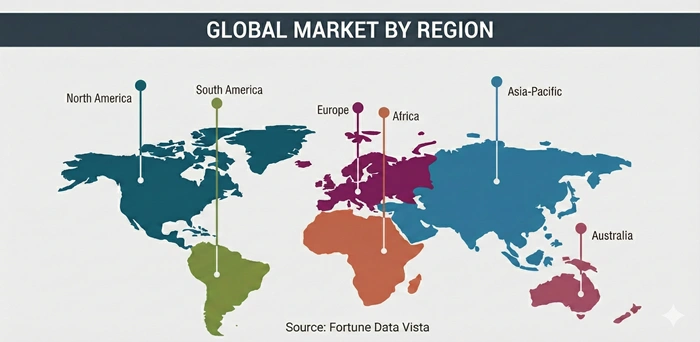
North America holds the largest regional share of the global in vitro diagnostics market, accounting for approximately 45% of total global revenue in 2026, with a regional CAGR of approximately 3.8% from 2026 to 2033. The United States dominates the North American market, supported by the world's highest per-capita diagnostic testing rates, strong federal and private insurance reimbursement frameworks for IVD tests, and the headquartering of leading global IVD companies including Abbott Laboratories (USA), Becton Dickinson (USA), Thermo Fisher Scientific (USA), and Bio-Rad Laboratories (USA) that invest heavily in both domestic and global IVD market development. The U.S. market's scale, sophistication, and reimbursement environment make it the primary commercial battleground for IVD product launches and the most important market for demonstrating clinical utility of novel diagnostic technologies.
The North American in vitro diagnostics market benefits from the region's strong clinical laboratory infrastructure — including a large network of hospital core laboratories, reference testing centers, and independent laboratory chains including Quest Diagnostics and Laboratory Corporation of America — that collectively process hundreds of millions of diagnostic tests annually and represent the most concentrated and commercially significant IVD product distribution channel globally. Canada contributes meaningfully to the regional market through its universal healthcare system's consistent diagnostic service demand and growing investment in point-of-care and community-based diagnostics that are expanding the test volume accessible to IVD manufacturers beyond traditional hospital laboratory settings.
Asia Pacific: The Fastest Growing Region
Asia Pacific Is the Fastest Growing Regional Market in the In Vitro Diagnostics Industry, Driven by China's Massive Healthcare Infrastructure Investment, India's Expanding Diagnostic Services Sector, and the Growing Adoption of Modern IVD Technologies Across Japan, South Korea, and Southeast Asia
Asia Pacific is the fastest-growing regional segment in the in vitro diagnostics market, projected to expand at a CAGR of approximately 6.5% from 2026 to 2033 — the highest regional growth rate globally. China is the dominant national growth market, with its government's substantial healthcare infrastructure investment driving rapid expansion of hospital laboratory capacity and growing adoption of advanced molecular and immunoassay diagnostic platforms across both urban hospital networks and expanding community health center infrastructure. Leading domestic Chinese IVD companies including Mindray Medical International (China), BGI Genomics (China), and Sansure Biotech (China) are developing competitive IVD products that challenge international companies in the domestic Chinese market while also beginning to expand into Southeast Asian and emerging market geographies.
India represents the most exciting emerging market growth opportunity in the Asia Pacific in vitro diagnostics market, with a large and rapidly expanding private diagnostic services sector — led by chains including Dr. Lal PathLabs, SRL Diagnostics, and Metropolis Healthcare — that is driving growing consumption of IVD reagents and instrumentation across a national laboratory network that is progressively upgrading to higher-complexity automated testing platforms. Japan contributes a mature and stable IVD market, with sophisticated hospital laboratory infrastructure and strong adoption of advanced hematology, immunochemistry, and molecular diagnostic technologies served by both international companies and leading domestic IVD manufacturers including Sysmex Corporation (Japan) and Fujifilm Holdings (Japan), whose diagnostic businesses benefit from deep domestic clinical laboratory customer relationships and strong technological positions in specialized IVD niches.
Report Customization by Region and Country
This In Vitro Diagnostics Market Report Offers Complete Region-Wise and Country-Wise Customization — Providing Geography-Specific Market Sizing, Healthcare Infrastructure Analysis, Regulatory Landscape Intelligence, Competitive Mapping, and Strategic Growth Opportunities Tailored Precisely to Every Region and Country You Need to Analyze
This In Vitro Diagnostics Market report is available with full customization by region and country, enabling organizations to access precise, geography-specific insights aligned with their strategic priorities. The report can be configured to deliver the exact regional depth and market intelligence your business requires — covering market sizing, CAGR forecasts, segment breakdowns, healthcare infrastructure landscape, regulatory environment, key player profiles, and actionable strategic opportunities specific to each selected geography.
North America
-
U.S. — Clinical laboratory infrastructure landscape, reimbursement policy analysis, companion diagnostics and molecular testing market sizing, leading domestic IVD company competitive profiles, and key segment forecasts through 2033
-
Canada — Universal healthcare diagnostic demand trends, community diagnostics expansion, provincial laboratory landscape analysis, and market sizing and CAGR forecast
-
Mexico — Healthcare infrastructure development, government diagnostic program investment, growing private laboratory sector, and IVD market opportunity analysis
Europe
-
U.K. — NHS diagnostic testing volumes, UKCA regulatory requirements post-Brexit, molecular diagnostics adoption, and leading IVD company market positions
-
Germany — European IVD manufacturing base analysis, IVDR transition impact, hospital and laboratory diagnostic demand by segment, and competitive landscape
-
France — Healthcare system diagnostic testing trends, bioMérieux domestic market position, reimbursement landscape analysis, and regional growth forecast
-
Italy — Hospital laboratory diagnostic market, DiaSorin competitive positioning, IVD demand by application, and regional market outlook through 2033
-
Rest of Europe — Nordic healthcare innovation, Eastern European laboratory automation growth, and region-wide IVD market development analysis including IVDR compliance impact
Asia Pacific
-
China — Domestic IVD company competitive landscape, government healthcare investment programs, molecular diagnostics market sizing, and international versus domestic company market share analysis
-
India — Private diagnostic chain growth, government health mission diagnostic programs, IVD demand by segment, and market sizing and CAGR forecast
-
Japan — Hospital laboratory landscape, Sysmex and Fujifilm competitive positioning, advanced IVD technology adoption, and regional market analysis
-
South Korea — Healthcare system diagnostic demand, domestic IVD manufacturer landscape, and market sizing and growth outlook
-
Australia — TGA regulatory environment, National Pathology Accreditation program impact, and IVD market sizing and forecast through 2033
-
Rest of Asia Pacific — Southeast Asian hospital infrastructure growth, point-of-care testing adoption, and IVD market opportunity across Vietnam, Indonesia, Thailand, and the Philippines
Latin America
-
Brazil — ANVISA regulatory framework, diagnostic service sector landscape, IVD demand by application, and market sizing and CAGR forecast
-
Argentina — Healthcare diagnostic investment trends, IVD market development, and regional opportunity analysis
-
Rest of Latin America — Regional healthcare infrastructure growth, infectious disease diagnostic demand, and IVD market opportunities across Colombia, Chile, and other markets
Middle East and Africa (MEA)
-
UAE — Healthcare hub investment programs, hospital diagnostic infrastructure, and IVD market sizing and competitive landscape
-
Saudi Arabia — Vision 2030 healthcare investment programs, hospital and laboratory expansion, and in vitro diagnostics market growth forecast through 2033
-
Rest of MEA — African healthcare infrastructure growth, infectious disease diagnostic demand, and long-term IVD market development opportunity across Sub-Saharan Africa and the broader Middle East
Each customized In Vitro Diagnostics Market report delivers targeted intelligence — including country-specific regulatory compliance analysis, healthcare payer and reimbursement landscape assessment, IVD competitive landscape mapping, and market entry and investment strategy guidance — providing decision-makers with the precise information they need to build competitive advantages and maximize returns across their chosen geographies.
Top Key Players
-
Roche Diagnostics AG (Switzerland)
-
Abbott Laboratories (United States)
-
Siemens Healthineers AG (Germany)
-
Danaher Corporation (Beckman Coulter, Cepheid) (United States)
-
Thermo Fisher Scientific Inc. (United States)
-
Becton Dickinson and Company (United States)
-
bioMérieux SA (France)
-
Bio-Rad Laboratories Inc. (United States)
-
Sysmex Corporation (Japan)
-
DiaSorin SpA (Italy)
-
Mindray Medical International Ltd. (China)
-
Ortho Clinical Diagnostics (United States)
Recent Developments
-
In 2025, Roche Diagnostics received U.S. FDA approval for its cobas PURE Integrated Solutions platform — a fully automated, scalable clinical chemistry and immunoassay laboratory system designed for mid-size hospital laboratories that reduces manual sample handling, improves test result turnaround time, and lowers total cost of laboratory ownership — marking a significant expansion of Roche's core laboratory automation portfolio into the mid-tier hospital segment that represents one of the largest underserved laboratory automation opportunities globally.
-
In 2025, Abbott Laboratories expanded its Alinity family of core laboratory analyzers with the launch of new high-sensitivity cardiac troponin and specialty testing modules — extending the clinical capabilities of the Alinity platform into rapid rule-out of acute myocardial infarction in emergency department settings — and announced a major partnership with a leading U.S. health system to deploy connected Alinity laboratory networks that enable real-time diagnostic data sharing across multiple hospital sites.
-
In 2026, Becton Dickinson completed the strategic acquisition of a leading point-of-care molecular diagnostics company — significantly expanding BD's POCT portfolio with a rapid syndromic respiratory testing platform capable of simultaneously detecting influenza A/B, COVID-19, RSV, and other common respiratory pathogens from a single nasal swab in under 30 minutes — strengthening BD's competitive position in the high-growth near-patient molecular diagnostics segment of the in vitro diagnostics market.
-
In 2025, bioMérieux launched a next-generation BIOFIRE Syndromic Trends epidemiological surveillance platform — which aggregates anonymized diagnostic result data from thousands of BIOFIRE FilmArray installations globally to provide real-time infectious disease outbreak surveillance insights to public health authorities — representing a significant expansion of bioMérieux's value proposition beyond in vitro diagnostics products toward integrated infectious disease intelligence services.
-
In 2026, Siemens Healthineers expanded its laboratory diagnostics portfolio through the acquisition of a leading AI-powered digital pathology software company — integrating AI-enhanced whole-slide image analysis capabilities into the Siemens Healthineers pathology platform and positioning the company to compete in the rapidly growing AI digital pathology segment that is progressively being adopted by hospital pathology departments seeking to improve diagnostic throughput and analytical consistency in oncology tissue testing.
Market Trends
The Convergence of Digital Connectivity and Diagnostic Intelligence — Through AI-Powered Laboratory Automation, Liquid Biopsy, and Networked Point-of-Care Testing Ecosystems — Is the Most Commercially Transformative Trend Reshaping the Global In Vitro Diagnostics Market Through 2033
The progressive digitalization of clinical laboratory operations — through laboratory information systems integration, IoT-connected IVD analyzers, cloud-based diagnostic data management platforms, and AI-powered result interpretation tools — is fundamentally changing the operational model of hospital and independent laboratories in ways that benefit established IVD companies with connected diagnostic infrastructure investments. Laboratories that adopt connected, automated IVD platforms can achieve substantially higher testing throughput per square meter of laboratory space, lower reagent waste rates through real-time inventory management, and faster critical value notification to clinical teams — delivering measurable operational and clinical quality improvements that are progressively becoming requirements for healthcare system procurement decisions rather than optional premium features. IVD companies that lead the market in connected laboratory solutions — including Roche, Siemens Healthineers, and Abbott — are building competitive advantages rooted in clinical workflow integration that are difficult for less digitally invested competitors to match.
The emerging liquid biopsy segment — which encompasses blood-based tests for circulating tumor DNA, circulating tumor cells, and other cancer-derived biomarkers — is poised to become one of the most significant new revenue streams in the in vitro diagnostics industry over the forecast period, with regulatory approvals and clinical guideline inclusions progressively expanding the clinical applications and patient populations for which liquid biopsy tests are reimbursed. Early cancer detection programs using multi-cancer early detection blood tests — including Grail's Galleri test and similar platforms in development at major IVD companies — have the potential to generate hundreds of millions of annual blood-based cancer screening tests globally if clinical validation, regulatory clearance, and health system reimbursement align over the coming decade. This pipeline of transformative new testing applications represents both the most exciting long-term growth opportunity and the most important competitive battleground in the global in vitro diagnostics market through 2033 and beyond.
Segments Covered in the Report
By Product:
-
Reagents and Kits
-
Instruments
-
Software and Services
By Technology:
-
Immunoassay
-
Molecular Diagnostics
-
Clinical Chemistry
-
Hematology
-
Microbiology
-
Others
By Application:
-
Infectious Diseases
-
Diabetes
-
Oncology
-
Cardiology
-
Nephrology
-
Autoimmune Diseases
-
Drug Testing
-
Others
By Test Location:
-
Point-of-Care Testing
-
Central Laboratories
-
Home Diagnostics
By End User:
-
Hospitals
-
Clinical Laboratories
-
Home Care
-
Academic and Research Institutes
-
Others
By Region:
-
North America (U.S., Canada, Mexico)
-
Europe (U.K., Germany, France, Italy, Rest of Europe)
-
Asia Pacific (China, India, Japan, South Korea, Australia, Rest of Asia Pacific)
-
Latin America (Brazil, Argentina, Rest of Latin America)
-
Middle East and Africa (UAE, Saudi Arabia, Rest of MEA)
❝ Built for Every Level — From Startups to Industry Giants ❞
Here Is Exactly How This Report Works for You
-
Whether you are a global IVD manufacturer benchmarking your product portfolio and regional commercial strategy against the competitive landscape; a hospital group or laboratory procurement decision-maker evaluating IVD platform investments for core laboratory, molecular, or point-of-care testing needs; or an institutional investor assessing the long-term growth trajectory, margin dynamics, and competitive positioning of leading IVD companies, this report delivers granular revenue forecasts by product, technology, application, test location, end user, and region — combined with detailed competitor revenue analysis, product capability benchmarking, regulatory landscape intelligence, and reimbursement environment assessment that enables confident strategic and capital allocation decisions.
-
This report comprehensively maps the supply-demand dynamics of the global in vitro diagnostics ecosystem — including chronic disease prevalence trends by region driving diagnostic demand, healthcare infrastructure investment by emerging market, IVDR regulatory transition impact on European IVD market structure, companion diagnostic pipeline tied to pharmaceutical product approvals, and how geopolitical factors including U.S.-China healthcare technology competition, supply chain diversification imperatives, and government pandemic preparedness spending are reshaping global IVD sourcing and investment decisions in ways that create both material risks and significant growth opportunities.
-
The full version provides detailed competitor revenue breakdowns by product segment and region, IVD technology platform competitive benchmarking, clinical laboratory procurement trend analysis, liquid biopsy and NGS diagnostics commercialization timeline assessment, and forward-looking opportunity analysis for AI digital pathology, home diagnostics expansion, and emerging market IVD adoption programs — delivering the strategic intelligence needed to capture the full commercial opportunity of one of healthcare's most essential and consistently growing market segments.
Frequently Asked Questions:
Answer: The in vitro diagnostics market is valued at USD 102.45 billion in 2025 and is expected to reach USD 143.55 billion by 2033. It is projected to grow at a CAGR of 4.4% from 2026 to 2033, driven by rising chronic disease prevalence, aging populations, and the expanding adoption of point-of-care and molecular diagnostic testing platforms globally.
Answer: North America dominates the in vitro diagnostics market, accounting for approximately 45% of total global revenue in 2026, anchored by the United States' highly developed clinical laboratory infrastructure, strong IVD reimbursement frameworks, and the presence of leading global IVD companies including Abbott, Becton Dickinson, and Thermo Fisher Scientific. The region's combination of high per-capita diagnostic testing rates, strong innovation investment, and mature healthcare delivery infrastructure sustains its leading position through the 2033 forecast period.
Answer: The key growth drivers in the in vitro diagnostics market include the rising global burden of chronic diseases — particularly diabetes, cancer, and cardiovascular disease — that generate continuous diagnostic testing demand, the rapid expansion of point-of-care testing adoption across hospital, primary care, and home settings, and the growing precision medicine movement that links IVD companion diagnostic testing to targeted pharmaceutical therapies. Emerging market healthcare infrastructure expansion across Asia Pacific, Latin America, and the Middle East and Africa is creating an additional long-term demand growth mechanism as growing populations gain access to diagnostic healthcare services.
Answer: Molecular diagnostics is the fastest-growing technology segment in the in vitro diagnostics market, projected to expand at a CAGR of approximately 6.8% from 2026 to 2033, driven by the clinical superiority of PCR, next-generation sequencing, and digital PCR platforms for infectious disease, oncology, and genetic testing applications. The COVID-19 pandemic permanently accelerated molecular diagnostic infrastructure investment globally, and the installed base of molecular testing platforms is now being leveraged for a growing range of clinical applications that generate expanding molecular IVD test volumes.
Answer: Point-of-care testing is fundamentally reshaping the in vitro diagnostics market by decentralizing diagnostic testing from centralized laboratories to near-patient settings — including emergency departments, primary care clinics, pharmacies, and patients' homes — enabling faster clinical decision-making through results available within minutes rather than hours. The POCT segment is projected to grow at a CAGR of approximately 7.5% from 2026 to 2033, making it the fastest-growing test location segment in the global IVD market, as healthcare systems invest in diagnostic decentralization strategies that improve patient experience and reduce laboratory workflow bottlenecks.