
Inflammatory Bowel Disease Treatment Market Overview
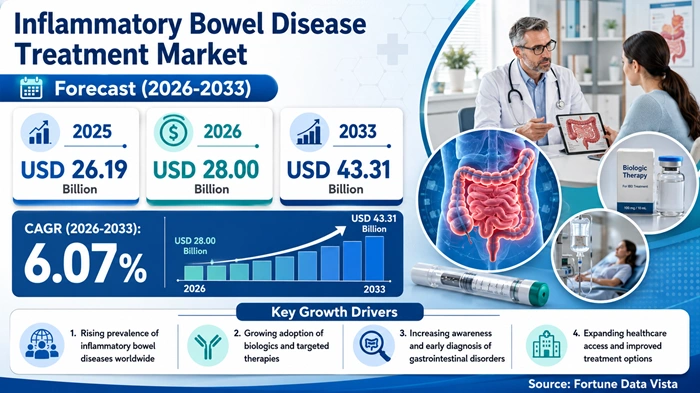
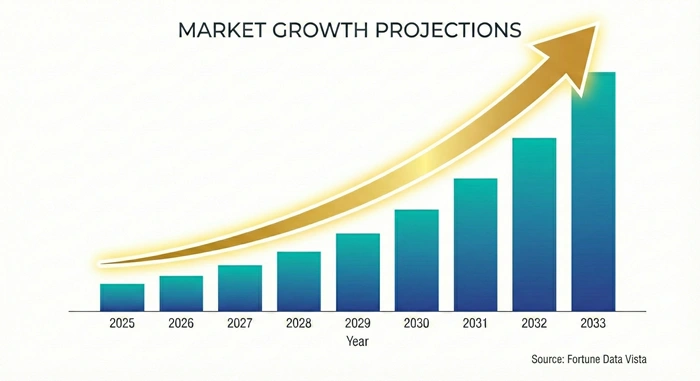
The global inflammatory bowel disease treatment market size is valued at USD 26.19 billion in 2025 and is predicted to increase from USD 28.00 billion in 2026 to approximately USD 43.31 billion by 2033, growing at a CAGR of 6.07% from 2026 to 2033. This growth is underpinned by rising global IBD prevalence — particularly Crohn's disease and ulcerative colitis — growing adoption of biologic therapies, and expanding access to targeted treatments in both developed and emerging markets. As precision medicine reshapes gastroenterology, the IBD treatment landscape is becoming increasingly complex, innovative, and commercially significant.
AI Impact on the Inflammatory Bowel Disease Treatment Industry
Artificial Intelligence Is Transforming IBD Diagnosis, Drug Discovery, and Personalized Treatment Planning — Creating a Smarter, More Precise Future for Inflammatory Bowel Disease Care*
Artificial intelligence is beginning to leave a meaningful imprint on the inflammatory bowel disease treatment industry, particularly in how diseases are diagnosed and how therapies are personalized. AI-powered diagnostic platforms are now capable of analyzing endoscopic images, colonoscopy videos, and histological data with a level of precision that rivals — and in some cases exceeds — experienced gastroenterologists. These tools are identifying subtle signs of disease activity, mucosal healing, and dysplasia that might be missed during conventional review, enabling earlier intervention and more accurate disease staging. Companies like AbbVie and Takeda are investing in AI-assisted clinical trial recruitment and outcome prediction platforms to optimize their drug development pipelines, reducing the time and cost of bringing new IBD therapies to market.
Beyond diagnostics, AI-driven predictive analytics are beginning to transform how treatment decisions are made for individual IBD patients. Machine learning models trained on large patient datasets can now predict which patients are likely to respond to specific biologics — such as anti-TNF agents, IL inhibitors, or JAK inhibitors — based on their genetic profiles, biomarker levels, and disease history. This capability allows clinicians to avoid the costly and sometimes harmful process of trial-and-error prescribing, which has historically been common in IBD management. Digital health platforms integrating AI-based symptom tracking, therapy adherence monitoring, and patient engagement tools are also being developed by pharmaceutical companies and specialty health technology startups alike — all of which are contributing to better long-term outcomes in the inflammatory bowel disease treatment market.
Growth Factors
Rising IBD Prevalence Globally, Rapid Biologic Innovation, and Expanding Access to Targeted Therapies Are the Three Structural Pillars Driving Consistent Growth in This Market*
The most fundamental driver of the inflammatory bowel disease treatment market is the rapidly rising global incidence of IBD. The CDC reported that approximately 3 million adults in the U.S. were diagnosed with IBD in 2023, up from 2.4 million in 2021. Globally, IBD affects over 10 million people, with incidence rates increasing steadily in newly industrialized countries in Asia Pacific, Latin America, and the Middle East — regions where dietary westernization, urbanization, and reduced physical activity are altering gut microbiota and immune system function. This growing and geographically expanding patient base is the foundation of demand growth for Crohn's disease and ulcerative colitis therapies.
The rapid evolution of biologic and targeted small-molecule therapies is the second major growth pillar. The FDA approved biologics at an increased rate of 35% between 2021 and 2023, reflecting a robust pipeline of new molecular entities targeting previously undruggable inflammatory pathways. JAK inhibitors such as tofacitinib and filgotinib, S1P receptor modulators, and selective IL-23 antagonists have dramatically expanded the IBD treatment armamentarium, giving physicians more tools to achieve and sustain remission for patients who fail first-line or second-line therapies. The parallel rise of biosimilars — FDA-approved interchangeable versions of originator biologics like Humira and Stelara — is making high-efficacy biologics accessible to a broader patient population by reducing per-course treatment costs, further expanding the addressable market.
Market Outlook
The Inflammatory Bowel Disease Treatment Market Is Entering an Era of Precision Gastroenterology, Where Personalized Medicine, Treat-to-Target Strategies, and Emerging Market Expansion Will Define the Next Growth Cycle*
The long-term outlook for the inflammatory bowel disease treatment market is strongly positive, driven by multiple converging forces that are deepening both clinical capability and commercial opportunity. The treat-to-target strategy — in which therapy is intensified or modified until objective markers of remission such as endoscopic healing and calprotectin normalization are achieved — is becoming the standard of care in IBD management. This approach inherently increases the volume and value of pharmaceutical interventions per patient, as physicians monitor outcomes more closely and adjust regimens more actively. The growing pipeline of combination biologic regimens, therapeutic drug monitoring tools, and biomarker-guided prescribing protocols are all reinforcing this trend.
Emerging markets represent the most exciting geographic growth frontier for the inflammatory bowel disease treatment market over the next decade. Countries like China, India, Brazil, and Saudi Arabia are investing heavily in healthcare infrastructure, gastroenterology services, and reimbursement coverage for specialty medications — all of which reduce barriers to IBD therapy adoption. In China, IBD cases rose by 8.4% in 2023 alone, and the government's expanding coverage of biologics under national insurance is making advanced therapy accessible to millions of previously untreated patients. Similarly, Brazil's public health system under the Unified Health System (SUS) is broadening biologics coverage, and Saudi Arabia's Vision 2030 initiative is expanding tertiary gastroenterology care across the country. These structural developments are creating a durable, long-cycle growth trajectory for the market.
Expert Speaks
-
"AbbVie's leadership in the IBD market is built on decades of immunology expertise — Skyrizi and Rinvoq are demonstrating that we can keep raising the bar on efficacy, safety, and durability of response, and our pipeline gives us confidence that our position in gastroenterology will only strengthen from here." — CEO, AbbVie Inc.
-
"Takeda's commitment to IBD treatment goes beyond Entyvio — we are actively building the next generation of gut-selective therapies because we believe precision targeting of intestinal inflammation is the future of IBD management and the foundation of better patient lives." — CEO, Takeda Pharmaceutical Company
-
"At Pfizer, we believe our JAK inhibitor portfolio and expanding biosimilar pipeline position us extremely well in the IBD market — as payers continue to prioritize value-based therapy selection, our breadth of options gives us the ability to serve patients across the full severity spectrum." — CEO, Pfizer Inc.
Key Report Takeaways
-
North America dominates the inflammatory bowel disease treatment market with approximately 65.7% global market share in 2024, driven by one of the world's highest IBD prevalence rates, robust Medicare and commercial insurance reimbursement for high-cost biologics, and the presence of leading pharmaceutical companies including AbbVie, Johnson & Johnson, and Pfizer
-
Asia Pacific is the fastest-growing region, projected to register the highest CAGR of approximately 7.6% through the forecast period, driven by rapidly rising IBD incidence in China, India, Japan, and South Korea, coupled with government healthcare investments and growing awareness among clinicians and patients about early diagnosis and advanced therapy options
-
Crohn's disease is the dominant treatment type segment, accounting for approximately 60.4% market share in 2024, reflecting the higher clinical complexity of the condition and its requirement for more advanced and costly therapeutic interventions including combination biologics, immunomodulators, and precision-targeted small molecules
-
The injectable route of administration leads the market with approximately USD 22.4 billion in revenue, as injectable biologics remain the cornerstone of moderate-to-severe IBD management globally, with a strong shift underway from intravenous to subcutaneous formulations that improve patient convenience and therapy adherence
-
Hospital pharmacies hold the largest distribution channel share at approximately 62% in 2024, supported by their centralized role in managing complex biologic infusions, coordinating multidisciplinary IBD care teams, and handling the cold chain and safety monitoring requirements of specialty medications
-
The oral route of administration is the fastest-growing segment, expected to grow at a CAGR of 6.7% through the forecast period, driven by the rising adoption of oral JAK inhibitors, S1P modulators, and next-generation small molecule therapies that offer patients a convenient alternative to injectable biologics
-
Ulcerative colitis is expected to gain market share rapidly through 2033, driven by growing prevalence, expanding access to advanced biologics specifically approved for UC such as vedolizumab and mirikizumab, and increasing physician adoption of treat-to-target strategies for this patient population
Market Scope
| Parameter | Details |
|---|---|
| Market Size by 2033 | USD 43.31 Billion | Market Size by 2026 | USD 28.00 Billion | Market Size by 2025 | USD 26.19 Billion | Market Growth Rate from 2026 to 2033 | CAGR of 6.07% | Dominating Region | North America | Fastest Growing Region | Asia Pacific | Segments Covered | Treatment Type, Drug Class, Route of Administration, Distribution Channel, Region | Regions Covered | North America, Europe, Asia Pacific, Latin America, Middle East & Africa |
Market Dynamics
Drivers Impact Analysis
Rising Global IBD Prevalence, Rapid Approval of Novel Biologics, and Favorable Reimbursement Structures Are the Three Most Impactful Forces Driving the Inflammatory Bowel Disease Treatment Market Forward*
| Driver | ≈ % Impact on CAGR Forecast | Geographic Relevance | Impact Timeline |
|---|---|---|---|
| Rising global incidence of Crohn's disease and ulcerative colitis | ~38% | Global, especially North America & Asia Pacific | Near to long-term |
| Rapid innovation in biologics, biosimilars, and JAK inhibitors | ~30% | North America, Europe | Near to mid-term |
| Favorable reimbursement policies and payer support for advanced therapies | ~20% | North America, Europe, Emerging Markets | Mid to long-term |
| Growing awareness of early IBD diagnosis and treat-to-target strategies | ~12% | Global | Mid to long-term |
The rising global prevalence of inflammatory bowel disease is the most fundamental and persistent driver of this market. CDC data confirms that IBD cases in the U.S. climbed from 2.4 million in 2021 to 3 million in 2023 — a 25% jump in just two years — and global figures are rising at comparable or faster rates in previously low-prevalence regions. The WHO's data linking global urbanization rates, which reached 56.6% in 2023, with rising IBD incidence underscores the systemic nature of this public health challenge. As more patients receive diagnoses — particularly among pediatric and young adult populations — the demand for long-term, evidence-based therapeutic management within the inflammatory bowel disease treatment market grows correspondingly.
The concurrent acceleration of drug innovation is amplifying this demand signal. Leading pharmaceutical companies have spent billions developing biologics that target increasingly specific inflammatory pathways — from the broad immunosuppression of early corticosteroids to the highly targeted IL-23p19 inhibition of mirikizumab and the gut-selective integrin blockade of vedolizumab. The growing availability of FDA-approved biosimilars for blockbuster IBD drugs like Humira, Stelara, and Remicade is making these advanced therapies more cost-accessible to payers and patients — broadening the treatment pyramid by enabling earlier biologic use. This combined effect of new drug approvals and biosimilar-driven cost reduction is expected to sustain above-market-average growth in the inflammatory bowel disease treatment market throughout the 2026–2033 period.
Restraints Impact Analysis
High Cost of Biologic Therapies, Stringent Regulatory Requirements, and Patient Adherence Challenges Continue to Create Meaningful Headwinds for the IBD Treatment Market*
| Restraint | ≈ % Impact on CAGR Forecast | Geographic Relevance | Impact Timeline |
|---|---|---|---|
| High cost of biologic and targeted therapies | ~42% | Low and middle-income countries | Near to mid-term |
| Stringent regulatory requirements and approval timelines | ~33% | Global | Near to long-term |
| Patient non-adherence and treatment discontinuation | ~25% | Global | Near to long-term |
The most significant structural restraint in the inflammatory bowel disease treatment market is the cost of advanced biologic therapies. Annual treatment costs for originator biologics such as adalimumab or vedolizumab can exceed USD 50,000 per patient in the United States, and even higher in some European markets. While insurance coverage and patient assistance programs mitigate this barrier for many U.S. patients, the situation is far more challenging in lower-income countries where public healthcare systems are not equipped to fund these therapies at scale. This cost barrier is actively slowing adoption of the most clinically appropriate treatments in high-growth regions such as South and Southeast Asia, Africa, and parts of Latin America.
Regulatory complexity also poses a meaningful challenge. New biologic and small-molecule therapies for IBD require comprehensive phase III trial evidence across both Crohn's disease and ulcerative colitis populations, and regulatory agencies in the U.S., EU, and Japan have increasingly rigorous post-marketing surveillance requirements. These demands extend timelines and increase compliance costs for pharmaceutical manufacturers. Additionally, patient adherence remains a persistent clinical and commercial problem — particularly for injectable therapies requiring frequent self-administration, which can lead to injection fatigue, missed doses, and treatment discontinuation — all of which reduce real-world outcomes and erode per-patient revenue for the inflammatory bowel disease treatment market participants.
Opportunities Impact Analysis
Emerging Market Expansion, the Rise of Personalized IBD Medicine, and the Growing Biosimilar Ecosystem Represent the Three Most Compelling Growth Opportunities in This Market*
| Opportunity | ≈ % Impact on CAGR Forecast | Geographic Relevance | Impact Timeline |
|---|---|---|---|
| Expansion of IBD therapy access in emerging markets | ~40% | China, India, Brazil, Middle East | Near to mid-term |
| Personalized medicine and precision therapy development | ~35% | North America, Europe, Asia Pacific | Mid to long-term |
| Growing biosimilar adoption enabling broader treatment access | ~25% | Global | Near to mid-term |
Emerging markets represent the single most expansive geographic opportunity for the inflammatory bowel disease treatment market over the 2026–2033 period. China, India, Brazil, and Saudi Arabia are all investing substantially in healthcare infrastructure, specialty gastroenterology services, and reimbursement coverage for biologic therapies — changes that are directly enabling access for millions of previously untreated IBD patients. In China, the NMPA has approved multiple advanced IBD therapies in recent years, and the country's national insurance programs are expanding biologics coverage. In Saudi Arabia, Vision 2030 investments in tertiary healthcare are establishing new gastroenterology centers and accelerating clinical trial activity in the IBD space.
The transition toward personalized or precision medicine in IBD represents a complementary long-term opportunity. Pharmaceutical companies and research institutions are investing in biomarker discovery, pharmacogenomics, and gut microbiome analysis to identify predictors of therapeutic response at the individual patient level. This precision approach has the potential to dramatically reduce the clinical and economic costs of treatment failure, and to accelerate the adoption of newer, more targeted agents by de-risking prescribing decisions for gastroenterologists. Companies that can develop biomarker-linked companion diagnostics alongside their drug candidates will gain significant competitive advantages in the inflammatory bowel disease treatment market, particularly as payers increasingly require evidence of treatment appropriateness before approving high-cost biologics.
Segment Analysis
By Treatment Type
Crohn's Disease Commands the Dominant Revenue Share, While Ulcerative Colitis Is Rapidly Gaining Ground as Treatment Algorithms Evolve and Patient Awareness Improves Globally*
The Crohn's disease segment holds the dominant position in the inflammatory bowel disease treatment market with approximately 60.4% market share in 2024, and is expected to exceed USD 30.8 billion by 2034, growing at a CAGR of approximately 6.7%. This dominance is a direct reflection of the condition's greater clinical complexity — Crohn's disease can affect any segment of the gastrointestinal tract and often penetrates deeper bowel wall layers, necessitating more aggressive and multi-modal pharmacological management. The rising incidence of Crohn's disease among younger patients — with most diagnoses occurring during adolescence or early adulthood — creates a large, long-tenure patient population requiring continuous pharmaceutical management. North America is the leading region for Crohn's disease treatment revenue, supported by early access to advanced biologics, strong insurance reimbursement, and the presence of leading companies including AbbVie, Johnson & Johnson (Janssen), and Takeda, which collectively hold the dominant share of Crohn's biologic prescriptions. The growing use of combination therapy — pairing an anti-TNF agent like infliximab with an immunomodulator — is further elevating per-patient treatment costs and value within this segment.
The ulcerative colitis segment, while currently smaller, is projected to grow at a CAGR of approximately 4.6% through the forecast period, and the segment is gaining momentum as new drug approvals specifically targeting UC expand treatment options. The approval of Eli Lilly's Omvoh (mirikizumab-mrkz) in 2023 — the first and only IL-23p19 antagonist for moderately to severely active UC — marked a major milestone in this segment and exemplified the intensity of pharmaceutical investment in developing UC-specific therapies. The inflammatory bowel disease treatment market for ulcerative colitis is particularly dynamic in Europe, where countries like Germany, France, and the UK report some of the world's highest UC prevalence rates and where national health systems actively reimburse advanced therapies. Companies such as UCB S.A., Ferring Pharmaceuticals, and Takeda are among the key players expanding their UC treatment portfolios in Europe, supported by ongoing phase III trials and accelerating regulatory approval timelines.
By Drug Class
Second-Line Biologic Therapies Dominate the Drug Class Revenue Landscape, While Oral Small Molecules Including JAK Inhibitors Are Emerging as the Fastest-Growing Category in the IBD Treatment Market*
The second-line treatment segment dominates the drug class landscape within the inflammatory bowel disease treatment market, accounting for approximately USD 19.8 billion in 2024, with a projected CAGR of 6.3% through the forecast period. Second-line therapies — primarily biologics such as TNF inhibitors, IL inhibitors, anti-integrin agents, and JAK inhibitors — have become the cornerstone of moderate-to-severe IBD management globally. Approximately 65% of IBD patients in the U.S. received combination therapy involving a biologic plus an immunomodulator in 2023, reflecting the clinical primacy of second-line treatment in achieving and maintaining remission. North America is the leading region for second-line IBD therapy adoption, driven by a step-up prescribing culture, strong payer support for biologics after first-line failure, and the commercial strength of market leaders including AbbVie (Skyrizi, Rinvoq), Takeda (Entyvio), and Johnson & Johnson (Stelara). The growing emphasis on therapeutic drug monitoring and biomarker-guided sequencing of second-line biologics is increasing both the complexity and the commercial value of this treatment category globally.
The JAK inhibitor sub-segment within the broader drug class category is the fastest-growing category in the inflammatory bowel disease treatment market, benefiting from the oral route of administration, the breadth of indication across both Crohn's disease and ulcerative colitis, and the growing body of real-world evidence demonstrating sustained efficacy in patients who have failed anti-TNF therapy. Tofacitinib (Xeljanz) and filgotinib (Jyseleca) are the leading approved agents in this class, and new selective JAK inhibitors with improved safety profiles are in late-stage development. Europe is a dynamic growth market for oral JAK inhibitor adoption, where national guidelines are increasingly incorporating these agents as legitimate second-line options, and where regulators have emphasized the importance of selective JAK1 inhibition to minimize cardiovascular and thrombotic risks. Pfizer, Eli Lilly, Galapagos NV, and AbbVie are the primary competitors in the JAK inhibitor space, and their continued investment in next-generation formulations and combination strategies is expected to sustain strong growth in this drug class segment through 2033.
Regional Insights
North America — The Dominant Region in the Inflammatory Bowel Disease Treatment Market
North America's High IBD Prevalence, Advanced Pharmaceutical Infrastructure, and Robust Insurance Reimbursement Make It the World's Most Commercially Mature and Valuable IBD Treatment Market*
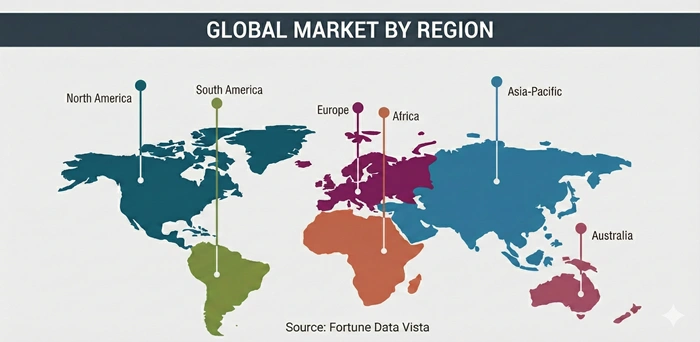
North America dominates the inflammatory bowel disease treatment market with approximately 65.7% global market share in 2024, a position anchored by the U.S. market which alone was valued at approximately USD 16.6 billion in 2024 and is projected to grow at a CAGR of 5.5% through 2034. The U.S. reports some of the highest absolute IBD patient volumes in the world, with approximately 3 million diagnosed adults and a well-established system of gastroenterology specialty centers, IBD clinics, and academic medical centers driving early diagnosis and aggressive management. Strong commercial and government insurance reimbursement — including Medicare Part D coverage of specialty biologics and commercial payer formulary inclusion for key agents — enables broad access to the most advanced and costly therapies available. Key players driving North America's market leadership include AbbVie Inc., Johnson & Johnson (Janssen), Takeda Pharmaceutical, Pfizer Inc., UCB S.A., and Amgen Inc.
Canada contributes meaningfully to North America's dominance through its publicly funded healthcare system and strong research activity in IBD genetics and precision medicine. The U.S. market's momentum is further reinforced by an unusually active clinical trial environment — with dozens of phase II and III studies for new IBD agents ongoing at any given time — which continuously attracts pharmaceutical investment and ensures that approved therapies reach North American patients first. The region also leads in biosimilar adoption for IBD, particularly for adalimumab and infliximab, with payers actively driving formulary switches to biosimilar alternatives that reduce drug spend while maintaining clinical quality — a dynamic that expands total patient volume treated even as it creates pricing pressure on originator manufacturers.
Asia Pacific — The Fastest-Growing Region in the Inflammatory Bowel Disease Treatment Market
Asia Pacific's Rapidly Rising IBD Case Load, Expanding Healthcare Investment, and Government-Driven Biologics Reimbursement Are Creating the World's Most Exciting Regional Growth Story in IBD Therapy*
Asia Pacific is the fastest-growing region in the inflammatory bowel disease treatment market, expected to register the highest CAGR of approximately 7.6% during the 2026–2033 forecast period, starting from a significantly lower base than North America or Europe. China, Japan, South Korea, and India are the region's largest national IBD markets, each growing at above-average rates driven by distinct local dynamics. In China, IBD cases rose by 8.4% in 2023 alone, driven by rapid urbanization and dietary westernization, and the government's expanding insurance coverage for biologics is enabling access for a large and previously undertreated patient population. Japan's highly specialized gastroenterology infrastructure and South Korea's digitally advanced healthcare system are facilitating earlier diagnosis and more consistent adherence to treat-to-target protocols — both of which drive pharmaceutical revenue.
India represents a high-potential emerging sub-market within Asia Pacific for the inflammatory bowel disease treatment market, where IBD awareness among clinicians is growing rapidly and urban patient populations are gaining access to specialty care. The Australian market is also significant, characterized by high per-capita biologics adoption and government PBS (Pharmaceutical Benefits Scheme) coverage for leading IBD therapies. Key players active in the Asia Pacific region include Takeda Pharmaceutical, Pfizer Inc., AbbVie Inc., Dr. Falk Pharma, and a growing roster of local biosimilar manufacturers including Celltrion and domestic Chinese generics producers who are making biologic IBD therapy more affordable at scale. The region's long-term growth is supported by demographic trends, healthcare policy expansion, and an increasingly competitive local pharmaceutical landscape.
Top Key Players
-
AbbVie Inc. (United States)
-
Johnson & Johnson (Janssen Biotech Inc.) (United States)
-
Takeda Pharmaceutical Company Limited (Japan)
-
Pfizer Inc. (United States)
-
UCB S.A. (Belgium)
-
Amgen Inc. (United States)
-
Biogen Inc. (United States)
-
Boehringer Ingelheim International GmbH (Germany)
-
Eli Lilly and Company (United States)
-
Celltrion Inc. (South Korea)
-
Bristol-Myers Squibb Company (United States)
-
F. Hoffmann-La Roche Ltd. (Switzerland)
-
Novartis International AG (Switzerland)
-
Ferring Pharmaceuticals (Switzerland)
-
Dr. Falk Pharma GmbH (Germany)
-
Bausch Health Companies Inc. (Canada)
Recent Developments
-
In May 2025, Teva Pharmaceuticals and Alvotech received FDA approval for SELARSDI (ustekinumab-aekn) as an interchangeable biosimilar to Stelara (ustekinumab), one of the most widely prescribed biologics for both Crohn's disease and ulcerative colitis — a development expected to significantly reduce treatment costs and expand patient access in the U.S. IBD market.
-
In October 2023, Eli Lilly and Company received FDA approval for Omvoh (mirikizumab-mrkz), the first and only IL-23p19 antagonist specifically approved for moderately to severely active ulcerative colitis, available in both intravenous induction and subcutaneous maintenance formulations — a landmark approval in the UC treatment landscape.
-
In November 2023, Teva Pharmaceuticals and Sanofi announced a strategic collaboration to advance TEV '574, an investigational therapy for inflammatory bowel disease, leveraging Sanofi's global clinical and commercial expertise to accelerate development through clinical trials and expand worldwide market potential.
-
In July 2023, Boehringer Ingelheim received FDA approval for the Cyltezo Pen, a new autoinjector device for Cyltezo (adalimumab-adbm), an FDA-approved interchangeable biosimilar to Humira — improving patient convenience for self-administration and strengthening Boehringer's position in the rapidly expanding IBD biosimilar market.
-
In December 2023, AbbVie announced positive phase III results for Skyrizi (risankizumab) in Crohn's disease maintenance therapy, demonstrating superior rates of endoscopic remission compared to placebo — data that reinforced AbbVie's position as the market leader in advanced IBD biologics and supported label expansion efforts in multiple global markets.
Market Trends
The Shift Toward Precision Medicine, Biosimilar Expansion, and Oral Small-Molecule Therapies Are Collectively Redefining the Competitive Landscape and Clinical Direction of the IBD Treatment Market*
The most significant trend reshaping the inflammatory bowel disease treatment market is the rapid transition toward precision medicine and treat-to-target care protocols. Gastroenterologists are increasingly using biomarker panels — including fecal calprotectin, C-reactive protein, and genetic polymorphisms — alongside therapeutic drug monitoring to guide biologic selection, dosing, and sequencing decisions. This shift reduces reliance on empirical trial-and-error prescribing and improves remission rates, but it also increases pharmaceutical revenue per patient by justifying earlier and more sustained biologic use. The integration of digital health tools — including patient-reported outcome apps, remote disease monitoring platforms, and AI-assisted endoscopy interpretation — is further supporting this precision medicine shift, giving both patients and clinicians more actionable data for therapy management decisions.
The concurrent growth of the biosimilar ecosystem and oral small-molecule therapies is reshaping competitive dynamics within the market. As major biologic patents expire — Humira's U.S. patent cliff accelerated biosimilar market entry significantly in 2023 — payers are aggressively promoting biosimilar substitution to reduce drug budgets, which is compressing revenue for originator manufacturers while expanding total patient volume. At the same time, oral JAK inhibitors and S1P modulators are offering patients a needle-free alternative to injectable biologics, improving adherence and quality of life. The combination of biosimilar cost reduction democratizing access to biologic-level efficacy and oral small molecules providing new patient-friendly options is broadening the treatment pyramid in the inflammatory bowel disease treatment market — creating more competitive pressure at the top while expanding the overall market size through greater overall patient engagement.
Segments Covered in the Report
-
By Treatment Type
-
Crohn's Disease
-
Ulcerative Colitis
-
-
By Drug Class
-
Aminosalicylates (Mesalamine, Sulfasalazine, Balsalazide)
-
Corticosteroids (Prednisone, Budesonide, Hydrocortisone)
-
TNF Inhibitors (Infliximab, Adalimumab, Certolizumab Pegol)
-
IL Inhibitors (Ustekinumab, Guselkumab, Mirikizumab)
-
Anti-Integrin (Vedolizumab, Natalizumab)
-
JAK Inhibitors (Tofacitinib, Filgotinib)
-
Other Drug Classes (Antibiotics, Immunosuppressants, Novel Therapies)
-
Combination Therapy
-
-
By Route of Administration
-
Injectable
-
Oral
-
Rectal
-
-
By Distribution Channel
-
Hospital Pharmacy
-
Retail Pharmacy
-
Online Pharmacy
-
-
By Region
-
North America
-
U.S.
-
Canada
-
-
Europe
-
Germany
-
UK
-
France
-
Italy
-
Spain
-
Netherlands
-
Rest of Europe
-
-
Asia Pacific
-
China
-
India
-
Japan
-
South Korea
-
Australia
-
Rest of Asia Pacific
-
-
Latin America
-
Brazil
-
Mexico
-
Argentina
-
-
Middle East & Africa
-
Saudi Arabia
-
UAE
-
South Africa
-
Rest of Middle East & Africa
-
-
"Built for Every Level — From Startups to Industry Giants"
Here Is Exactly How This Report Works for You
-
Whether you are a biotech startup entering the IBD biosimilar space, a mid-level specialty pharmacy operator expanding your gastroenterology service line, or a Tier 1 pharmaceutical company evaluating pipeline investment in next-generation biologics — this report provides granular segment-level revenue forecasts, region-specific CAGR data, and company-level market share breakdowns that enable faster, more confident strategic decisions; the complete purchased version includes full competitor revenue analysis, product-level revenue breakdowns, pipeline mapping, and clinical trial status for all key players in the inflammatory bowel disease treatment market.
-
Supply and demand dynamics across the IBD treatment value chain — from API manufacturing and cold chain biologic distribution to specialty pharmacy dispensing and hospital formulary negotiation — are analyzed in depth in the full report, equipping procurement, commercial, and supply chain teams with the intelligence needed to anticipate drug shortages, manage formulary positioning, optimize pricing strategies, and respond proactively to biosimilar entry events.
-
For investors, senior executives, and strategy leaders navigating the complex intersection of U.S. drug pricing legislation, EU biosimilar regulation, emerging market access policy, and geopolitical risks affecting pharmaceutical supply chains — this report delivers actionable analysis of how each of these forces is impacting competitive positioning, revenue sustainability, and growth opportunity in the inflammatory bowel disease treatment market, giving your leadership team the clarity and confidence to act decisively in an uncertain environment.
Frequently Asked Questions:
Answer: The global inflammatory bowel disease treatment market was valued at USD 26.19 billion in 2025 and is projected to reach USD 43.31 billion by 2033, growing at a CAGR of 6.07% from 2026 to 2033. This growth is driven by rising IBD prevalence globally, rapid innovation in biologic therapies, and expanding biosimilar access.
Answer: North America dominates the inflammatory bowel disease treatment market with approximately 65.7% global share, supported by high IBD prevalence rates, strong insurance reimbursement, and the presence of leading pharmaceutical companies. Asia Pacific is the fastest-growing region, projected to post the highest CAGR through 2033 due to rising case counts and expanding healthcare access.
Answer: Second-line biologics — including TNF inhibitors, IL inhibitors, anti-integrin agents, and JAK inhibitors — are the dominant drug class category, accounting for the largest revenue share in the inflammatory bowel disease treatment market. Oral JAK inhibitors and S1P receptor modulators are the fastest-growing sub-class, driven by patient preference for needle-free administration and expanding clinical evidence.
Answer: Crohn's disease is the larger segment in the inflammatory bowel disease treatment market, holding approximately 60.4% share in 2024, due to its greater clinical complexity and higher average cost per patient. Ulcerative colitis, while currently smaller, is growing at a strong pace as newer biologic approvals such as mirikizumab expand the treatment toolbox for this patient population.
Answer: The leading companies in the inflammatory bowel disease treatment market include AbbVie Inc., Takeda Pharmaceutical, Johnson & Johnson, Pfizer Inc., and UCB S.A., which together held approximately 81.4% of global market share in 2024. Other notable players include Amgen, Biogen, Eli Lilly, Boehringer Ingelheim, and Celltrion, competing across innovator biologics, biosimilars, and small-molecule therapy categories.