
Insulated Packaging Market Overview
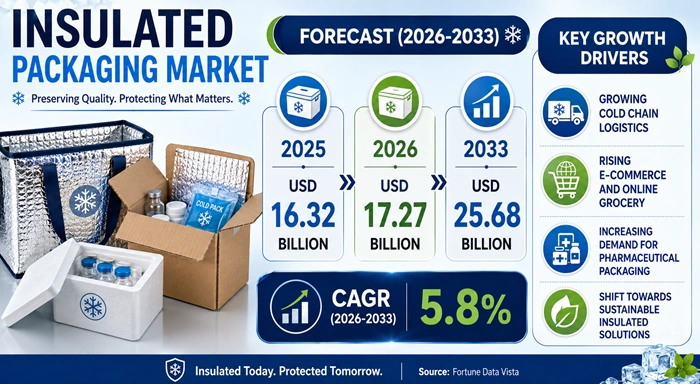
The global insulated packaging market size is valued at USD 16.32 billion in 2025 and is predicted to increase from USD 17.27 billion in 2026 to approximately USD 25.68 billion by 2033, growing at a CAGR of 5.8% from 2026 to 2033.
Insulated packaging encompasses a broad range of thermal protective packaging solutions designed to maintain temperature-sensitive products within defined temperature ranges during storage, transport, and last-mile delivery. From pharmaceutical biologics and vaccine distribution to fresh food, meal kits, and specialty chemicals, the demand for reliable temperature-controlled packaging is expanding rapidly as global cold-chain logistics matures, e-commerce penetration accelerates, and regulatory requirements for pharmaceutical and food safety compliance become more stringent. The sector is evolving quickly, with advanced materials such as vacuum insulated panels, phase change materials, and bio-based aerogel insulation increasingly displacing conventional expanded polystyrene as performance and sustainability priorities intensify simultaneously.
AI Impact on the Insulated Packaging Industry
Artificial Intelligence Is Transforming Thermal Packaging Design, Cold-Chain Monitoring, and Supply Chain Optimization — Enabling More Precise Temperature Management, Reduced Material Waste, and Smarter End-to-End Logistics Across the Insulated Packaging Industry
Artificial intelligence is making a significant and practical impact on the insulated packaging industry by enabling more accurate prediction of thermal performance needs across diverse shipping scenarios. AI-powered packaging design tools can now simulate thousands of temperature exposure profiles — accounting for seasonal climate variations, transit duration, handling delays, and vehicle cargo configurations — to identify the minimum viable insulation specification for any given shipment profile. This optimization capability directly reduces material over-engineering, cutting packaging material costs and weight while maintaining full temperature compliance. For pharmaceutical and life science shippers where regulatory validated packaging profiles are mandatory, AI-driven simulation tools are compressing qualification timelines from months to weeks — a capability that is becoming a genuine commercial differentiator for packaging suppliers competing for contracts in the high-value pharma cold-chain segment.
On the supply chain monitoring side, AI is enabling a new generation of intelligent insulated packaging systems embedded with IoT temperature and humidity sensors that transmit real-time data to cloud platforms where AI algorithms continuously analyze thermal performance, predict remaining protective capacity, and generate automated alerts when at-risk shipments are detected. These systems transform insulated packaging from a passive material solution into an active quality assurance tool — allowing shippers, logistics providers, and receivers to intervene proactively when temperature excursions are likely before product damage occurs. Companies including Pelican BioThermal, Cold Chain Technologies, and Envirotainer are integrating AI-driven monitoring into their premium reusable insulated container systems, creating subscription-based digital service revenue streams that add significant value beyond the hardware itself.
Growth Factors
The Rapid Expansion of Global Cold-Chain Infrastructure, the Explosive Growth of E-Commerce Food and Pharmaceutical Delivery, and Rising Regulatory Demand for Temperature-Controlled Logistics Are the Primary Engines Driving Sustained Growth Across the Insulated Packaging Market
The single most powerful structural driver of the insulated packaging market is the accelerating global expansion of cold-chain logistics. As pharmaceutical companies scale distribution of temperature-sensitive biologics, cell therapies, and vaccines to patients in every corner of the world, and as food manufacturers and retailers extend the geographic reach of their fresh and chilled product ranges through both traditional retail and e-commerce channels, the volume of shipments requiring validated thermal protection is growing consistently and substantially. World Health Organization data indicating that more than 25% of vaccines arrive at their destination degraded due to inadequate cold-chain management is a powerful compliance and quality justification for investment in advanced insulated packaging solutions — and regulatory bodies including the FDA, EMA, and WHO are responding with increasingly detailed guidelines that raise the minimum performance standard for pharmaceutical thermal packaging globally.
The e-commerce boom is a closely related and equally powerful growth driver, particularly through two channels: meal kit delivery services and direct-to-consumer fresh food and grocery delivery. Meal kit companies — including HelloFresh, Blue Apron, and regional competitors in Asia Pacific and Europe — ship billions of individual packages annually, each requiring reliable insulated packaging to maintain food safety across complex multi-stop logistics networks. Similarly, the rapid expansion of same-day and next-day grocery delivery services by Amazon Fresh, Walmart, Instacart, and their international equivalents is creating massive and consistent demand for cost-effective consumer-facing insulated packaging solutions at every price tier. This e-commerce demand channel is unique in its combination of high volume, cost sensitivity, and growing sustainability expectation — creating a strong innovation pull for lighter, more recyclable, and performance-optimized insulated packaging formats.
Market Outlook
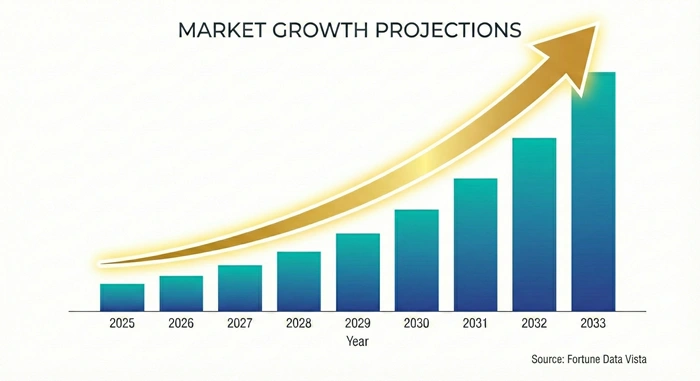
The Insulated Packaging Market Is Positioned for Consistent Mid-Single-Digit Growth Through 2033, Driven by Pharmaceutical Cold-Chain Expansion, Sustainability Material Innovation, and the Growing Maturation of Asia Pacific and Emerging Market Cold-Chain Infrastructure
The long-term growth trajectory for the insulated packaging market is stable, diversified, and supported by multiple industries that are each independently generating increasing volumes of temperature-sensitive shipments. The pharmaceutical sector's shift toward biologics — which are almost universally temperature-sensitive, often requiring 2°C to 8°C or -20°C to -80°C cold chain maintenance — ensures that pharmaceutical cold-chain packaging will remain among the fastest-growing revenue segments within the industry through the entire forecast period. The continued growth of clinical trial logistics, personalized cell and gene therapy shipments, and consumer healthcare cold-chain distribution all add further volume to the pharmaceutical insulated packaging demand base that will not reverse regardless of broader macroeconomic conditions.
Sustainability is simultaneously creating both a growth opportunity and a transitional challenge for the industry. Consumers, retailers, and regulators are applying significant pressure on insulated packaging manufacturers to move away from expanded polystyrene — which remains the dominant insulation material but carries significant end-of-life recyclability challenges — toward paper-based, fiber-based, and bio-polymer alternatives that offer competitive thermal performance with meaningfully better sustainability profiles. Companies that successfully develop and commercialize sustainable insulated packaging materials that meet or exceed the thermal performance of conventional foam are positioned to capture significant market share premium as sustainability-driven procurement gains traction across the retail, food service, and pharmaceutical sectors. This material innovation race is already well underway and will be a key differentiator for market participants through the full forecast period to 2033.
Expert Speaks
-
"Sealed Air's thermal and protective packaging business is growing at an accelerating pace because the cold-chain logistics market is expanding in every direction — pharmaceutical biologics, direct-to-consumer food delivery, and clinical trial distribution are all generating more temperature-sensitive volume than ever before, and our insulated packaging solutions are positioned precisely to serve those growing needs." — Emile Chammas, CEO, Sealed Air Corporation
-
"International Paper's investment in fiber-based insulated packaging innovation reflects our conviction that the market is moving decisively toward sustainable thermal packaging solutions — and our scale in fiber manufacturing gives us a structural advantage in developing insulated formats that meet both the performance requirements of cold-chain logistics and the sustainability expectations of the retail and pharmaceutical sectors." — Andrew Silvernail, CEO, International Paper Company
-
"Sonoco's temperature assurance packaging portfolio is one of our fastest-growing businesses because our customers — particularly in pharmaceutical, biotech, and specialty food — are facing more demanding distribution requirements while simultaneously being asked to reduce their packaging environmental footprint. The innovation challenge of meeting both simultaneously is where we are investing most heavily." — Howard Coker, CEO, Sonoco Products Company
Key Report Takeaways
-
North America leads the global insulated packaging market, accounting for approximately 40% of total global revenue in 2026, driven by a mature and highly sophisticated cold-chain logistics infrastructure, stringent FDA and USDA regulatory requirements for pharmaceutical and food temperature management, and the dominant market presence of leading packaging companies including Sealed Air, Sonoco, and Cold Chain Technologies.
-
Asia Pacific is the fastest-growing regional market, expanding at a CAGR of approximately 8.9% from 2026 to 2033, driven by rapidly expanding pharmaceutical manufacturing capacity in India and China, government-supported cold storage infrastructure investment programs, the explosive growth of e-commerce food delivery in urban centers, and rising consumer demand for fresh and chilled food products across the region.
-
Pharmaceutical and healthcare is the dominant end-user segment, contributing approximately 35% of total market revenue in 2026, reflecting the stringent temperature control requirements of biologics, vaccines, clinical trial materials, and specialty drugs that demand high-performance validated insulated packaging solutions with documented and auditable thermal performance profiles.
-
Expanded polystyrene (EPS) remains the leading insulation technology, holding approximately 42% of total technology-based market revenue in 2026, owing to its established thermal performance, low cost, and widespread manufacturing infrastructure — though its market share is progressively eroding as sustainability-driven buyers shift toward fiber, bio-polymer, and phase change material alternatives.
-
Boxes and containers are the dominant product type, accounting for approximately 45% of total product-based revenue in 2026, as they serve as the primary format for pharmaceutical cold-chain distribution, clinical trial logistics, and premium food delivery applications where structural protection combined with thermal insulation is equally important.
-
Phase change material (PCM) technology is the fastest-growing insulation technology segment, projected to capture approximately 20% market share by 2033 at a CAGR of approximately 9.5% from 2026 to 2033, as pharmaceutical shippers and premium food delivery operators increasingly adopt PCM-based systems for their superior ability to maintain precise temperature ranges over extended transit durations without dry ice or active refrigeration.
Market Scope
| Parameter | Details |
|---|---|
| Market Size by 2033 | USD 25.68 Billion | Market Size by 2026 | USD 17.27 Billion | Market Size by 2025 | USD 16.32 Billion | Market Growth Rate from 2026 to 2033 | CAGR of 5.8% | Dominating Region | North America | Fastest Growing Region | Asia Pacific | Segments Covered | Material, Product Type, Insulation Technology, End-User Industry | Regions Covered | North America, Europe, Asia Pacific, Latin America, Middle East and Africa |
Market Dynamics
Drivers Impact Analysis
The Global Expansion of Pharmaceutical Cold-Chain Logistics, the E-Commerce Revolution in Food Delivery, and Rising Regulatory Compliance Standards for Temperature-Sensitive Shipments Are the Three Most Consequential Drivers Propelling the Insulated Packaging Market Forward
| Driver | ≈ % Impact on CAGR Forecast | Geographic Relevance | Impact Timeline |
|---|---|---|---|
| Pharmaceutical cold-chain expansion for biologics and vaccines | ~30% | Global — highest in North America, Europe | Short to Long-Term |
| E-commerce food, grocery, and meal-kit delivery growth | ~26% | North America, Europe, Asia Pacific | Short to Long-Term |
| Regulatory compliance requirements for thermal packaging | ~18% | North America, Europe | Medium to Long-Term |
| Cold-chain infrastructure investment in emerging markets | ~12% | Asia Pacific, Middle East, Latin America | Long-Term |
| Growth of direct-to-consumer pharmaceutical and wellness delivery | ~8% | North America, Europe | Short to Medium-Term |
| Rising food safety awareness and spoilage reduction initiatives | ~6% | Global | Medium-Term |
The pharmaceutical sector's transition from small-molecule drugs to complex biological medicines is the most structurally significant driver in the insulated packaging market. Biologics — including monoclonal antibodies, vaccines, cell therapies, and mRNA-based medicines — require continuous cold-chain protection from manufacturing through to patient delivery, and even brief temperature excursions can render expensive therapies ineffective or unsafe. As pharmaceutical companies invest hundreds of billions globally in biological drug development and as health systems in both developed and developing countries expand vaccination and biologic therapy access, the volume of temperature-sensitive pharmaceutical shipments is growing at a rate that consistently outpaces overall pharmaceutical market growth — creating a durable and high-value demand foundation for advanced insulated packaging that will not diminish regardless of cyclical economic conditions.
The e-commerce food delivery channel is the second major pillar of demand growth, and it is notable for the consumer-facing visibility it creates for insulated packaging as a product quality assurance tool. When a meal kit delivery arrives with properly chilled ingredients, the consumer directly experiences the value of effective thermal packaging — creating both a quality benchmark that meal kit operators cannot afford to fall below and a marketing opportunity that leading operators actively use to build brand trust. This visibility has driven significant investment in both performance improvement and sustainability innovation within the consumer-facing insulated packaging segment, where retailers are increasingly demanding recyclable and compostable alternatives to conventional foam packaging that align with their own corporate sustainability commitments and the growing consumer preference for minimal-waste delivery packaging.
Restraints Impact Analysis
High Material Costs and End-of-Life Recyclability Challenges for Conventional Insulated Packaging, Combined With the Complexity of Multi-Modal Cold-Chain Logistics, Continue to Create Material Obstacles for Market Participants and Their Customers
| Restraint | ≈ % Impact on CAGR Forecast | Geographic Relevance | Impact Timeline |
|---|---|---|---|
| Limited recyclability of conventional EPS and multi-layer packaging | ~-30% | Europe, North America | Medium to Long-Term |
| High cost of advanced insulation technologies (VIP, PCM) | ~-26% | Emerging markets, SME shippers | Short to Medium-Term |
| Volatile polymer raw material prices | ~-20% | Global | Short-Term |
| Complex regulatory validation requirements for pharma packaging | ~-14% | Global — highest in regulated markets | Medium-Term |
| Environmental regulations restricting EPS in certain markets | ~-10% | Europe, California, select Asia Pacific | Medium-Term |
The most persistent structural restraint in the insulated packaging market is the limited recyclability of expanded polystyrene and multi-layer flexible insulated pouches — the two most widely deployed conventional insulated packaging formats globally. While EPS offers excellent thermal performance at low cost, its low material density makes it economically impractical to collect and transport for recycling, and curbside collection programs in most jurisdictions do not accept it. Multi-layer flexible pouches — combining foil, polyethylene, and reflective layers — face similar challenges as the lamination of dissimilar materials makes mechanical separation and recycling technically difficult and commercially unviable without specialized processing infrastructure. As municipalities and national governments tighten regulations on non-recyclable packaging materials, and as major retail and pharmaceutical shippers face increasing corporate responsibility pressure to eliminate hard-to-recycle packaging from their supply chains, this recyclability limitation is creating structural demand pressure for conventional insulated packaging formats that is increasingly difficult to ignore.
Raw material price volatility presents a separate but significant financial challenge for insulated packaging converters. The primary insulation materials — expanded polystyrene, polyurethane foam, and multi-layer flexible film laminates — are all derivatives of the petrochemical supply chain, making their costs highly sensitive to crude oil and natural gas price movements. During periods of petrochemical price inflation, insulated packaging manufacturers face severe margin compression as they struggle to pass through cost increases to customers who operate on fixed or annually negotiated supply contracts. This financial volatility makes long-term capacity planning and R&D investment decisions more difficult for smaller converters and specialty manufacturers who lack the scale and hedging capabilities of the largest global packaging companies.
Opportunities Impact Analysis
The Rapid Commercial Development of Sustainable Insulated Packaging Materials, the Rise of Reusable Container Programs, and the Expansion of Cold-Chain Infrastructure in Asia Pacific and the Middle East Are Creating Powerful New Revenue Opportunities Across the Insulated Packaging Market
| Opportunity | ≈ % Impact on CAGR Forecast | Geographic Relevance | Impact Timeline |
|---|---|---|---|
| Sustainable fiber and bio-based insulation material development | ~28% | Europe, North America, Asia Pacific | Short to Long-Term |
| Reusable insulated container programs for pharma and food | ~22% | North America, Europe | Short to Medium-Term |
| Cold-chain expansion in Asia Pacific emerging markets | ~20% | China, India, Southeast Asia | Long-Term |
| PCM and VIP technology adoption in premium pharma logistics | ~16% | Global | Short to Medium-Term |
| Smart packaging integration with IoT temperature monitoring | ~14% | North America, Europe, Asia Pacific | Short to Medium-Term |
The development and commercialization of sustainable insulated packaging materials represents the single most transformative opportunity in the industry. Companies including Ecovative Design — with its mycelium-based insulation — Tempack, and a growing number of paper-based thermal packaging innovators are demonstrating that renewable, compostable, and curbside-recyclable materials can provide genuinely competitive thermal performance for a wide range of chilled and frozen shipping applications. As these materials mature commercially, gain performance validation across pharmaceutical and food safety qualification requirements, and achieve cost parity with conventional foam at scale, they will fundamentally reshape the material landscape of the insulated packaging industry — creating a significant market opportunity for first movers while threatening the market position of EPS and polyurethane foam suppliers who fail to adapt.
The shift toward reusable insulated container programs — where packaging is recovered, sanitized, re-conditioned, and returned to use rather than disposed of after a single shipment — is a closely related opportunity that is gaining significant traction in the pharmaceutical and premium food cold-chain segments. Reusable container programs deliver substantial total cost savings over single-use packaging for high-frequency shipping lanes, and they generate significant carbon footprint reductions that support shipper sustainability reporting. Companies including Pelican BioThermal, va-Q-tec, and Softbox Systems have built comprehensive reusable container rental and management programs that serve leading pharmaceutical companies globally — and the continued expansion of biological drug distribution networks is creating consistent new demand for these programs.
Segment Analysis
By End-User Industry: Pharmaceutical and Healthcare
Pharmaceutical and Healthcare Dominates the Insulated Packaging Market as the Highest-Value Segment, Driven by the Stringent Temperature Control Requirements of Biologics, Vaccines, and Specialty Drugs That Demand Validated, High-Performance Thermal Protection
The pharmaceutical and healthcare segment holds the largest share within the insulated packaging market, accounting for approximately 35% of total end-user revenue in 2026. This segment encompasses the full range of temperature-sensitive pharmaceutical shipments — from 2°C to 8°C refrigerated biologics and vaccines, to -20°C frozen plasma products, to -60°C to -80°C ultra-cold mRNA vaccines and cell therapy materials — each requiring specific and precisely validated thermal packaging solutions that can be documented for regulatory compliance. The pharmaceutical cold-chain is among the most technically demanding and commercially high-value application areas for any packaging category, and it generates consistently growing demand that is structurally driven by the global expansion of biological drug portfolios rather than by consumer spending cycles. The pharmaceutical insulated packaging segment within the broader market is projected to grow at a CAGR of approximately 7.2% from 2026 to 2033, sustained by the continuous expansion of biologic drug pipelines, the global rollout of personalized cell and gene therapies, and the increasing geographic complexity of clinical trial logistics. In North America, the leading companies serving the pharmaceutical insulated packaging segment include Pelican BioThermal (USA), Cold Chain Technologies (USA), and Sonoco ThermoSafe (USA) — all of which have built comprehensive validated packaging system portfolios specifically designed to meet FDA and ICH Q10 cold-chain compliance requirements.
Europe is the second-largest pharmaceutical insulated packaging market, with a well-developed regulatory environment under EU GDP (Good Distribution Practice) guidelines that drives consistent demand for validated thermal packaging systems across Germany, Switzerland, the UK, Belgium, and the Netherlands — the continent's primary pharmaceutical distribution hubs. Asia Pacific is the fastest-growing regional market for pharmaceutical insulated packaging, with India and China both significantly expanding their pharmaceutical manufacturing and distribution capacities in alignment with growing domestic healthcare access and international pharmaceutical supply chain diversification strategies. Key regional players including va-Q-tec AG (Germany), Softbox Systems (UK), and Inmark Packaging (USA) serve European and Asia Pacific pharmaceutical cold-chain customers with both single-use validated packaging systems and premium reusable insulated container rental programs that minimize total packaging cost per shipment for high-frequency shipping lanes.
By Material: Paper and Paperboard
Paper and Paperboard Is the Fastest-Growing Material Segment in the Insulated Packaging Market as Sustainability-Driven Demand Pushes Shippers and Retailers to Transition Away From Conventional Foam Toward Curbside-Recyclable Thermal Packaging Alternatives
Paper and paperboard-based insulated packaging is the fastest-growing material segment within the insulated packaging market, projected to expand at a CAGR of approximately 9.1% from 2026 to 2033, capturing approximately 18% of total material-based revenue in 2026. This category encompasses honeycomb board insulation panels, corrugated thermal packaging systems, molded fiber insulation inserts, and paper-laminate flexible insulated pouches — all of which share the critical commercial advantage of being widely accepted in curbside recycling streams, making them directly aligned with the sustainability mandates driving procurement decisions at major retailers, food delivery operators, and pharmaceutical shippers. The shift from EPS to paper-based insulation has been particularly visible in the meal kit and direct-to-consumer food delivery segments, where brands including HelloFresh and Gousto have transitioned significant proportions of their packaging portfolios to paper-based thermal solutions in response to consumer preference surveys, retailer sustainability requirements, and municipal packaging regulations. Key companies leading this transition in the North American market include TemperPack (USA), Lifoam Industries (USA), and Sealed Air's Korrvu and Greenguard product lines (USA) — companies that have invested heavily in developing paper-based insulation systems that can match or approach the thermal performance of conventional foam at competitive price points.
Europe is the most advanced regional market for paper-based insulated packaging adoption, where EU single-use plastics directives, Extended Producer Responsibility frameworks, and major retailer sustainability commitments are creating strong regulatory and commercial mandates for recyclable packaging materials across all product categories including thermal packaging. Germany, the Netherlands, and Scandinavia are particularly advanced in paper-based packaging adoption, with leading European packaging companies including Mondi plc (Austria/UK) and Smurfit WestRock (Ireland/USA) developing innovative fiber-based thermal packaging solutions that target the e-commerce food delivery and pharmaceutical distribution sectors. The transition from EPS to paper and fiber-based alternatives does create technical performance tradeoffs — particularly for applications requiring extended thermal protection durations or ultra-cold temperatures — but ongoing material innovation is progressively narrowing this performance gap and enabling paper-based solutions to serve an expanding range of applications within the overall insulated packaging market.
Regional Insights
North America: The Dominating Region
North America Leads the Global Insulated Packaging Market Through Its Mature Cold-Chain Infrastructure, Stringent Pharmaceutical and Food Safety Regulations, and the Commercial Dominance of the World's Leading Temperature-Controlled Packaging Companies
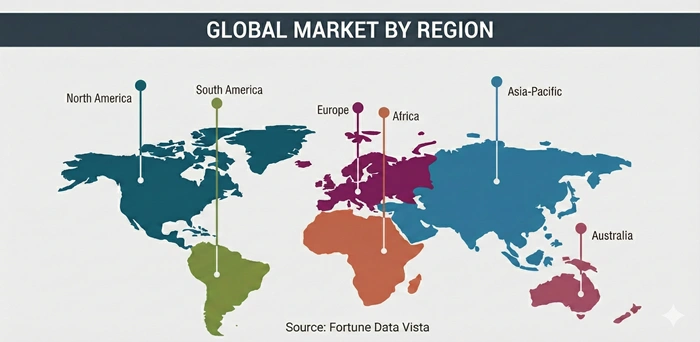
North America holds the largest share of the global insulated packaging market, accounting for approximately 40% of total global revenue in 2026, with a regional CAGR of approximately 5.4% from 2026 to 2033. The United States is the dominant national market, characterized by one of the world's most sophisticated pharmaceutical cold-chain logistics networks, the largest e-commerce food delivery market globally, and FDA regulatory requirements that drive consistent investment in validated insulated packaging systems across the pharmaceutical and medical device sectors. The region benefits from the global headquarters presence of leading insulated packaging companies including Sealed Air Corporation (USA), Sonoco Products Company (USA), Cold Chain Technologies (USA), and Pelican BioThermal (USA) — all of which have built comprehensive product portfolios, distribution networks, and technical service capabilities specifically tailored to the demanding North American pharmaceutical and food cold-chain markets.
Canada adds meaningful market volume, particularly through its large pharmaceutical distribution sector and rapidly growing e-commerce market for fresh food and specialty grocery delivery. The United States e-commerce segment — driven by Amazon Fresh, Walmart Plus, HelloFresh, and a growing ecosystem of DTC food and supplement brands — generates enormous and continuously growing demand for both premium and cost-optimized insulated packaging formats across the consumer and commercial delivery spectrum. North America also leads in the adoption of reusable insulated container programs and PCM-based temperature-assurance packaging for high-value pharmaceutical logistics, reflecting the region's combination of regulatory sophistication, logistics infrastructure maturity, and shipper willingness to invest in premium packaging solutions that minimize product loss and compliance risk.
Asia Pacific: The Fastest Growing Region
Asia Pacific Is the Fastest Growing Regional Market for Insulated Packaging, Driven by Pharmaceutical Manufacturing Expansion in India and China, Government-Backed Cold Storage Investment Programs, and the Explosive Growth of E-Commerce Food Delivery Across the Region's Major Urban Markets
Asia Pacific is the fastest-growing regional segment within the insulated packaging market, projected to expand at a CAGR of approximately 8.9% from 2026 to 2033 — significantly outpacing the global average. China is the dominant national market within the region, characterized by a massive and rapidly expanding pharmaceutical manufacturing sector, the world's largest e-commerce market where fresh food and cold-chain delivery are growing explosively through platforms including JD.com, Meituan, and Alibaba's Ele.me, and significant government investment in national cold-chain infrastructure as part of food safety and public health modernization programs. Key players serving the Chinese insulated packaging market include Amcor plc (Australia), Huhtamaki Oyj (Finland) through its significant Asia Pacific manufacturing and sales operations, and Sealed Air Corporation (USA) through its local Chinese production facilities.
India is the second major growth engine within Asia Pacific, driven by the Indian government's ambitious pharmaceutical manufacturing expansion plans — including the Production Linked Incentive (PLI) scheme that is scaling domestic biologic and vaccine production — and the rapidly growing organized food retail and cold-chain logistics sector. Leading domestic and international players including Snowman Logistics (India) and Coldex Logistics (India) are investing in cold-chain warehousing and distribution network expansion that directly drives demand for validated insulated packaging solutions. Japan, South Korea, and Australia round out the Asia Pacific market as mature, high-value insulated packaging consumers where pharmaceutical, specialty food, and premium e-commerce applications drive consistent demand for advanced thermal packaging technologies including PCM and vacuum insulated panel systems.
Top Key Players
-
Sealed Air Corporation (United States)
-
Sonoco Products Company (United States)
-
Amcor plc (Australia)
-
International Paper Company (United States)
-
Smurfit WestRock plc (Ireland / United States)
-
Cold Chain Technologies LLC (United States)
-
Pelican BioThermal LLC (United States)
-
Huhtamaki Oyj (Finland)
-
Mondi plc (Austria / United Kingdom)
-
Storopack Hans Reichenecker GmbH (Germany)
-
va-Q-tec AG (Germany)
-
Cryopak Industries Inc. (United States)
Recent Developments
-
In 2025, Sealed Air Corporation launched its Cryovac brand paper-based insulated packaging line for e-commerce food and grocery delivery — a proprietary fiber-laminate thermal packaging system designed to replace EPS foam liners in direct-to-consumer fresh food shipping, targeting major meal kit operators and online grocery platforms in North America and Europe seeking to fulfill retailer sustainability packaging commitments.
-
In 2025, Smurfit WestRock completed its landmark merger of Smurfit Kappa and WestRock to create one of the world's largest paper and packaging companies, with the combined entity announcing accelerated investment in sustainable thermal packaging innovation for the food service and cold-chain e-commerce segments — leveraging its global fiber manufacturing scale to develop competitively priced paper-based insulation alternatives to conventional plastic foam formats.
-
In 2026, Pelican BioThermal announced the global rollout of its next-generation Chronos reusable container platform featuring embedded IoT temperature monitoring and AI-driven predictive thermal management — offering pharmaceutical shippers real-time chain-of-custody data alongside the cost and carbon benefits of multi-use container programs for clinical trial and commercial pharmaceutical distribution.
-
In 2025, Mondi plc launched its EcoVantage fiber-based cold-chain packaging system for the pharmaceutical and specialty food sectors in Europe, an engineered paper-honeycomb insulation liner system certified to maintain 2°C to 8°C temperature conditions across 48-hour transit durations — providing a fully recyclable alternative to EPS for the pharmaceutical cold-chain market in European Union markets where sustainability compliance is intensifying.
-
In 2026, Cold Chain Technologies completed a strategic acquisition of a leading PCM manufacturing specialist to vertically integrate phase change material production into its core insulated packaging system portfolio — enabling the company to accelerate PCM-based solution development, reduce material costs for its pharmaceutical shippers, and deliver enhanced temperature performance specifications for ultra-cold and extended-duration shipping applications.
Market Trends
The Accelerating Transition to Sustainable Insulated Packaging Materials and the Integration of Real-Time Temperature Monitoring and Traceability Technology Into Packaging Systems Are the Two Most Transformative Trends Reshaping the Global Insulated Packaging Market Through 2033
The most consequential near-term trend in the insulated packaging market is the accelerating shift from expanded polystyrene and petroleum-based foam to paper, fiber, and bio-based insulation alternatives. Regulatory pressure from the European Union's packaging regulations, Extended Producer Responsibility schemes, and corporate sustainability mandates from major retail and pharmaceutical shippers are all converging to create a structural demand shift that packaging manufacturers cannot ignore. The pace of this transition is faster than the industry anticipated even three years ago — driven by the combination of regulatory deadline pressure, consumer visibility of packaging waste in direct-to-consumer delivery, and the genuinely impressive thermal performance now achievable by advanced fiber and bio-polymer insulation formats. This transition is not simply a material substitution story; it is forcing a comprehensive rethinking of insulated packaging system design, supply chain logistics, and end-of-life management across every end-user sector.
The integration of smart monitoring technology into insulated packaging is the second defining trend, transforming thermal packaging from a passive material barrier into an active data-generating supply chain asset. IoT temperature loggers, RFID tracking chips, and AI-driven thermal performance prediction platforms are increasingly being embedded into or attached to insulated packaging systems — particularly in the pharmaceutical and premium food sectors where documentation of temperature compliance has regulatory or quality assurance significance. As the cost of IoT sensor technology continues to decline and cloud data platform integrations become more standardized across logistics management systems, smart insulated packaging is expected to move from a premium pharmaceutical logistics application toward a mainstream cold-chain requirement across a much broader range of end-user segments and packaging formats within the insulated packaging market.
Segments Covered in the Report
By Material:
-
Plastic Foam
-
Paper and Paperboard
-
Natural Fiber
-
Bio-based Materials
-
Others
By Product Type:
-
Boxes and Containers
-
Pallet Shippers
-
Pouches and Bags
-
Wraps and Rolls
-
Others
By Insulation Technology:
-
Expanded Polystyrene (EPS)
-
Vacuum Insulated Panels (VIP)
-
Phase Change Materials (PCM)
-
Polyurethane Foam
-
Others
By End-User Industry:
-
Food and Beverage
-
Pharmaceutical and Healthcare
-
Chemical and Industrial
-
E-Commerce
-
Others
By Region:
-
North America (U.S., Canada, Mexico)
-
Europe (Germany, U.K., France, Italy, Rest of Europe)
-
Asia Pacific (China, India, Japan, South Korea, Rest of Asia Pacific)
-
Latin America (Brazil, Argentina, Rest of Latin America)
-
Middle East and Africa (UAE, Saudi Arabia, Rest of MEA)
❝ Built for Every Level — From Startups to Industry Giants ❞
Here Is Exactly How This Report Works for You
-
Whether you are a pharmaceutical cold-chain logistics manager evaluating next-generation validated packaging options, an e-commerce food operator seeking sustainable thermal packaging solutions that meet retailer ESG requirements, or an investor assessing the commercial resilience and growth trajectory of the insulated packaging market, this report delivers granular revenue forecasts by material, technology, end-user, and region — combined with competitor revenue breakdowns and strategic positioning analysis that enable confident and precise business decisions.
-
This report comprehensively maps the supply-demand dynamics of the thermal packaging industry — including raw material cost and availability trends, regulatory compliance landscape evolution across major geographies, sustainability policy impacts on material procurement, and how geopolitical factors such as pharmaceutical supply chain nationalization, e-commerce trade regulations, and cold-chain infrastructure investment priorities across Asia Pacific are shaping market strategies and competitive positioning globally.
-
The full version provides detailed competitor revenue analysis, product portfolio and technology investment assessments, reusable container program economics, PCM and VIP technology adoption forecasts by geography, and a forward-looking roadmap for sustainable material transition — giving decision-makers at every level of the insulated packaging market the actionable intelligence they need to navigate the industry's material transition, capture high-growth segments, and build competitive advantages that sustain profitable growth through 2033 and beyond.
Frequently Asked Questions:
Answer: The insulated packaging market is valued at USD 16.32 billion in 2025 and is projected to reach USD 25.68 billion by 2033. It is expected to grow at a CAGR of 5.8% from 2026 to 2033, driven by the expansion of pharmaceutical cold-chain logistics, growing e-commerce food delivery volumes, and increasing regulatory requirements for temperature-controlled shipments.
Answer: North America holds the largest share of the insulated packaging market at approximately 40% of total global revenue in 2026, supported by a mature cold-chain logistics infrastructure, stringent FDA and USDA temperature management requirements, and the strong commercial presence of leading packaging companies including Sealed Air, Sonoco, and Cold Chain Technologies. The United States is the single largest national market within the region.
Answer: Expanded polystyrene remains the dominant insulation material in the insulated packaging market, holding approximately 42% of total material-based revenue in 2026, owing to its established thermal performance and low cost. However, paper and paperboard-based solutions are the fastest-growing material segment, driven by sustainability mandates from retailers, pharmaceutical shippers, and regulators pushing for curbside-recyclable alternatives to conventional foam formats.
Answer: The pharmaceutical and healthcare segment is the dominant end-user in the insulated packaging market, contributing approximately 35% of total revenue in 2026, driven by the stringent temperature control requirements of biologics, vaccines, and cell therapies that must maintain validated cold-chain conditions from manufacturing through patient delivery. Growing biologic drug pipelines, the expansion of personalized medicine, and increasingly detailed GDP regulatory guidelines are all generating consistent incremental demand for advanced validated thermal packaging solutions.
Answer: Sustainability is one of the most significant forces reshaping the insulated packaging market, with major retailers, pharmaceutical companies, and e-commerce operators applying increasing procurement pressure to eliminate expanded polystyrene and replace it with recyclable, compostable, or bio-based insulation alternatives. Companies developing commercially viable sustainable thermal packaging solutions — such as paper-honeycomb, molded fiber, and mycelium-based insulation — are positioned to capture significant market share premium as sustainability-driven procurement becomes a mainstream procurement requirement across the industry's major end-user sectors.