
Intracranial Pressure Monitor Market Overview
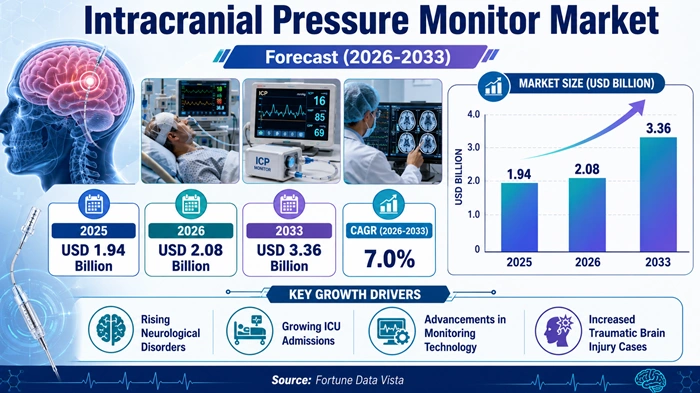
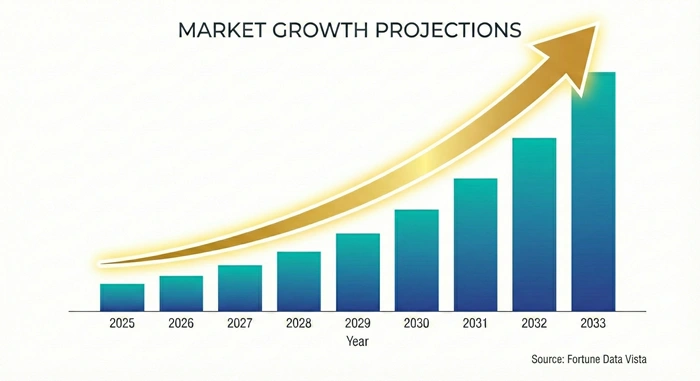
The global intracranial pressure monitor market size is valued at USD 1.94 billion in 2025 and is predicted to increase from USD 2.08 billion in 2026 to approximately USD 3.36 billion by 2033, growing at a CAGR of 7.0% from 2026 to 2033.
The intracranial pressure monitor market is growing steadily as rising rates of traumatic brain injury (TBI), cerebrovascular disorders, and neurocritical care cases place increasing demand on hospitals and trauma centers worldwide for reliable, real-time intracranial pressure (ICP) monitoring solutions. Elevated intracranial pressure is a life-threatening condition associated with severe head trauma, stroke, brain tumors, and infections such as meningitis, making accurate and continuous ICP monitoring an essential component of neurocritical care management. Growing investment in critical care infrastructure, expanding neurology departments in emerging markets, and the shift toward less invasive monitoring technologies are collectively supporting the market's positive growth trajectory through 2033.
AI Impact on the Intracranial Pressure Monitor Industry
Artificial Intelligence and Machine Learning Are Transforming ICP Monitoring from Passive Data Collection to Intelligent, Predictive Neurocritical Care — Improving Clinical Outcomes and Reducing Patient Mortality Rates
Artificial intelligence is beginning to leave a meaningful and measurable impact on the intracranial pressure monitoring landscape, fundamentally changing how clinicians interpret and respond to ICP data in neurocritical care units. Traditionally, ICP monitors provided raw numeric pressure readings that required experienced neurocritical care physicians to manually interpret trends and correlate them with other patient data. Today, AI-powered software layers integrated directly into monitoring platforms can process continuous ICP waveform data in real time, identifying pressure wave patterns — such as plateau waves and B-waves — that indicate deteriorating intracranial compliance and signal impending clinical crises before they become irreversible. This predictive capability has the potential to significantly reduce secondary brain injury and improve survival outcomes for patients with traumatic brain injury, subarachnoid hemorrhage, and other acute neurological conditions.
Beyond real-time alerting, AI is also enabling the development of non-invasive ICP monitoring algorithms that analyze indirect physiological signals — including optic nerve sheath diameter measurements, transcranial Doppler waveforms, and pupillary light reflex data — to estimate intracranial pressure without requiring surgical insertion of a catheter or probe. This is a particularly transformative application because it addresses one of the most significant barriers to broader ICP monitoring use: the risk and resource intensity of invasive catheter-based measurement techniques. Companies and academic institutions developing AI-driven non-invasive ICP estimation tools are attracting substantial research funding and commercial interest, as their success would dramatically expand the population of patients who can be safely and cost-effectively monitored for elevated intracranial pressure in both critical care and emergency department settings.
Growth Factors
Rising Global Incidence of Traumatic Brain Injury, Growing Neurocritical Care Infrastructure, and the Development of Non-Invasive Monitoring Technologies Are the Core Drivers of Intracranial Pressure Monitor Market Growth
The rising global incidence of traumatic brain injury is the single most important demand driver for the intracranial pressure monitoring market. Road traffic accidents, sports-related head injuries, falls among the elderly, and combat-related injuries collectively generate millions of TBI cases annually worldwide, a substantial proportion of which require active ICP monitoring as part of acute neurocritical care management. The World Health Organization has identified road traffic accidents as a leading cause of death and disability globally, and as motor vehicle use continues to expand in developing countries, the volume of severe TBI cases requiring advanced neurological monitoring is projected to grow consistently. This sustained epidemiological demand provides a durable foundation for ICP monitoring device sales and service revenues across all major geographies.
The parallel expansion of neurocritical care infrastructure — particularly the rapid proliferation of dedicated neurological intensive care units (neuro-ICUs) in Asia Pacific, Latin America, and the Middle East — is further amplifying device demand by creating institutional settings where ICP monitoring is a clinical standard of care. In developed markets including the United States, Germany, and Japan, neuro-ICUs are already well-established, and demand growth is driven by technology upgrades and the adoption of next-generation non-invasive monitoring platforms. In emerging markets, the primary driver is greenfield infrastructure buildout — the construction of new hospitals, trauma centers, and critical care facilities that require complete outfitting with advanced neuromonitoring equipment, creating substantial new device procurement opportunities for market participants with established distribution networks in these regions.
Market Outlook
The Intracranial Pressure Monitor Market Is Positioned for Stable, Healthcare-Driven Growth Through 2033 — Supported by Increasing TBI Awareness, Regulatory Progress in Non-Invasive Technologies, and Global Critical Care Investment
The medium-to-long-term outlook for the intracranial pressure monitor market is consistently positive, driven by healthcare system investments in neurocritical care capacity, growing clinical awareness of ICP management best practices, and the progressive regulatory approval of next-generation non-invasive monitoring devices. The global burden of neurological disease is expected to increase significantly over the forecast period as aging populations in developed markets experience higher rates of stroke and neurodegenerative conditions, while developing markets continue to face elevated TBI rates from accidents and violence. This dual demographic and epidemiological pressure creates a broad and persistent demand environment for ICP monitoring solutions across all product categories and price points.
Looking toward 2033, the most significant transformative development in the market will be the mainstream adoption of validated non-invasive ICP monitoring technologies that can safely replace or supplement invasive catheter-based methods in a wide range of clinical scenarios. Regulatory clearance of non-invasive ICP monitors by the FDA and CE Mark authorities has been advancing steadily, and several commercially promising technologies — including optic nerve ultrasound-based systems, near-infrared spectroscopy, and tympanic membrane displacement devices — are in advanced clinical validation stages. Once these technologies achieve broad regulatory approval and clinical acceptance, they will significantly expand the total addressable patient population for ICP monitoring and open substantial new market segments that the invasive intracranial pressure monitor market has not historically served.
Expert Speaks
-
"Medtronic's neurology and neurocritical care portfolio represents one of our most strategically important growth platforms. We continue to invest in expanding our ICP monitoring and brain monitoring product lines because we see a clear and growing unmet need in neurocritical care settings globally, particularly as awareness of the importance of continuous intracranial pressure management in TBI outcomes continues to grow among neurocritical care physicians worldwide." — Geoff Martha, Chairman & CEO, Medtronic plc
-
"At Integra LifeSciences, our neuromonitoring portfolio is at the core of our strategy to improve outcomes for patients with serious neurological conditions. We are seeing increased adoption of our ICP monitoring solutions in both developed and emerging markets as hospitals invest in building world-class neurocritical care infrastructure, and we are committed to bringing clinically meaningful innovations to this market." — Jan De Witte, President & CEO, Integra LifeSciences Holdings Corporation
-
"Natus Medical has always been focused on providing clinicians with the tools they need to make faster, more confident decisions in complex neurological cases. The evolution of ICP monitoring technology — particularly the progress being made in non-invasive approaches — represents an exciting frontier for our business and for patients worldwide who would benefit from earlier and more accessible intracranial pressure assessment." — Jonathan Kennedy, CEO, Natus Medical Incorporated
Key Report Takeaways
-
North America dominates the global intracranial pressure monitor market, accounting for approximately 42% of total revenue in 2025, driven by advanced neurocritical care infrastructure, high rates of traumatic brain injury and cerebrovascular disease, comprehensive reimbursement coverage for ICP monitoring procedures, and the strong market presence of leading companies including Medtronic, Integra LifeSciences, and Natus Medical.
-
Asia Pacific is the fastest growing regional market for intracranial pressure monitoring devices, with China, India, Japan, and South Korea recording above-average annual demand growth driven by rapidly expanding hospital infrastructure, rising road traffic accident rates, growing government investment in critical care capacity, and increasing clinical awareness of neurocritical care monitoring standards.
-
Hospitals are the dominant end-user segment, accounting for over 68% of total intracranial pressure monitor market revenue in 2025, as large general hospitals, academic medical centers, and level-1 trauma centers are the primary settings in which severe TBI and other acute neurological emergencies requiring ICP monitoring are treated.
-
Traumatic brain injury is the leading clinical application driving device demand, representing the largest and most consistently growing application segment as TBI continues to be a major global cause of severe disability and death, requiring continuous and accurate ICP monitoring as a cornerstone of evidence-based acute management protocols.
-
Invasive ICP monitoring via intraventricular catheter remains the clinical gold standard and the most widely used monitoring technique, accounting for the majority of current device revenue due to its superior measurement accuracy and its deep entrenchment in established TBI management clinical guidelines followed by neurocritical care units worldwide.
-
Non-invasive ICP monitoring is the fastest growing future segment, with a projected market share exceeding 28% by 2033 and a CAGR of approximately 10.5% through the forecast period, driven by the progressive regulatory clearance of validated non-invasive technologies, strong clinical demand for safer monitoring options, and mounting hospital pressure to reduce procedure-related complications in vulnerable neurological patients.
Market Scope
| Parameter | Details |
|---|---|
| Market Size by 2033 | USD 3.36 Billion | Market Size by 2026 | USD 2.08 Billion | Market Size by 2025 | USD 1.94 Billion | Market Growth Rate from 2026 to 2033 | CAGR of 7.0% | Dominating Region | North America | Fastest Growing Region | Asia Pacific | Segments Covered | Product Type, Technique, Application, End User | Regions Covered | North America, Europe, Asia Pacific, Latin America, Middle East & Africa |
Market Dynamics
Drivers Impact Analysis
Surging TBI Cases, Expanding Neurocritical Care Facilities, and Growing Clinical Recognition of ICP Management Benefits Are Collectively Driving Consistent Growth in the Intracranial Pressure Monitor Market
| Driver | ≈ % Impact on CAGR Forecast | Geographic Relevance | Impact Timeline |
|---|---|---|---|
| Rising global incidence of traumatic brain injury | ~35% | Global — especially Asia Pacific and North America | Short to Long Term |
| Expansion of neuro-ICU and critical care infrastructure | ~28% | Asia Pacific, Latin America, MEA | Medium to Long Term |
| Growing adoption of advanced non-invasive ICP technologies | ~22% | North America, Europe, Asia Pacific | Medium to Long Term |
| Increasing clinical guideline support for ICP monitoring | ~15% | Global — especially developed markets | Short to Medium Term |
The persistent and growing global burden of traumatic brain injury is creating a consistent, non-discretionary demand stream for ICP monitoring devices that is relatively insulated from typical healthcare budget pressures. Severe TBI requires ICP monitoring as an evidence-based standard of care in neurocritical care settings, making these devices essential rather than optional purchases for trauma centers and neuro-ICUs. As developing countries invest in upgrading their emergency and critical care capabilities, they are increasingly adopting international TBI management guidelines that mandate ICP monitoring for qualifying patients, progressively expanding the institutional addressable market for monitoring devices in regions that previously lacked both the infrastructure and the clinical protocols to support consistent ICP monitoring practices.
Clinical guideline evolution is also playing an important supporting role, as updated TBI management recommendations from bodies including the Brain Trauma Foundation continue to reinforce the evidence base for aggressive ICP monitoring and treatment threshold management. These guidelines carry significant clinical authority and directly influence device procurement decisions at institutional and national levels. Hospitals seeking accreditation as trauma centers and neurological care centers of excellence are motivated to demonstrate compliance with these standards, creating a systematic channel of demand that supports stable revenue growth for established ICP monitoring device manufacturers and their distribution partners across all major markets.
Restraints Impact Analysis
High Procedural Complication Risk, Limited Trained Neurocritical Care Specialists, and Cost Barriers in Emerging Markets Are the Primary Factors Constraining Faster Adoption of ICP Monitoring Solutions
| Restraint | ≈ % Impact on CAGR Forecast | Geographic Relevance | Impact Timeline |
|---|---|---|---|
| Complications associated with invasive ICP catheter insertion | ~36% | Global — all hospital settings | Short to Long Term |
| Shortage of trained neurocritical care specialists | ~34% | Developing markets — Asia Pacific, Latin America, MEA | Medium Term |
| High device and procedure costs limiting emerging market adoption | ~30% | Latin America, MEA, parts of Asia Pacific | Short to Medium Term |
The inherent complications associated with invasive ICP monitoring techniques — including infection, hemorrhage, device malposition, and catheter obstruction — represent a significant clinical and liability concern that limits the frequency of ICP monitoring use in many clinical settings. Intraventricular catheter placement carries a measurable risk of iatrogenic complications that requires careful risk-benefit assessment on a per-patient basis, and this caution effectively restricts ICP monitoring to the most severe cases in many hospitals. This complication profile is one of the most important factors driving clinical interest in non-invasive ICP monitoring alternatives, and it is ultimately a restraint on total device utilization volume that will persist until fully validated non-invasive options achieve mainstream adoption.
The shortage of trained neurocritical care physicians and specialized nursing staff capable of managing ICP monitoring systems is a particularly significant constraint in emerging markets, where rapid hospital infrastructure expansion is not always matched by equivalent growth in qualified specialist workforce. Even when devices are procured, their clinical value is diminished in settings where healthcare professionals lack the training to interpret ICP waveform data accurately, manage monitor-related complications, or integrate ICP data into comprehensive TBI management protocols. Addressing this human capital gap through medical education, simulation training, and clinical training partnerships is a prerequisite for realizing the full market potential for ICP monitoring in high-growth but talent-constrained emerging healthcare systems.
Opportunities Impact Analysis
The Commercial Breakthrough of Non-Invasive ICP Monitoring, Growing Military and Sports Medicine Applications, and Teleneurology Integration Present High-Value Growth Opportunities for the Market
| Opportunity | ≈ % Impact on CAGR Forecast | Geographic Relevance | Impact Timeline |
|---|---|---|---|
| Commercialization of validated non-invasive ICP monitoring | ~40% | Global — led by North America and Europe | Medium to Long Term |
| Sports medicine and military TBI monitoring applications | ~32% | North America, Europe, Australia | Medium Term |
| Teleneurology and remote ICP monitoring integration | ~28% | North America, Europe, Asia Pacific | Medium to Long Term |
The commercial breakthrough of fully validated, clinically accurate non-invasive ICP monitoring devices represents the single largest growth opportunity in the intracranial pressure monitoring industry. Such devices would eliminate the most significant clinical barrier to widespread ICP monitoring by removing the need for invasive neurosurgical procedures, making monitoring feasible for a dramatically broader range of patients — including those in emergency departments, rehabilitation units, sports medicine settings, and even pre-hospital environments where invasive procedures are impractical. Several companies are in advanced stages of clinical validation and regulatory submission for non-invasive ICP monitoring platforms, and successful commercialization of even one or two such technologies would fundamentally reshape market size, competitive dynamics, and the clinical standard of care for TBI management globally.
The growing recognition of chronic traumatic encephalopathy (CTE) and acute TBI in professional and amateur sports is opening a meaningful new application segment for portable and non-invasive ICP monitoring technologies. Sports organizations, military medical services, and occupational health programs are actively seeking on-field and remote monitoring tools that can rapidly assess brain pressure status in athletes and soldiers following head impacts — creating demand for compact, non-invasive ICP monitoring solutions that differ substantially from the stationary hospital-grade devices that currently dominate the market. This emerging application vertical represents both a valuable near-term revenue opportunity and a long-term brand development platform for ICP monitoring technology companies seeking to expand beyond the acute hospital care setting.
Segment Analysis
By Product Type
Invasive ICP Monitors Dominate Current Market Revenue While Non-Invasive ICP Monitoring Devices Represent the Fastest Growing and Most Disruptive Product Segment
Invasive ICP monitors hold the dominant product position in the intracranial pressure monitor market, accounting for approximately 72% of total device revenue in 2025 and projected to grow at a CAGR of approximately 6.2% through 2033. Their dominant position reflects decades of clinical entrenchment as the acknowledged gold standard for accurate intracranial pressure measurement, with intraventricular catheter-based monitoring in particular offering unmatched measurement precision and the added benefit of enabling simultaneous therapeutic cerebrospinal fluid drainage to relieve elevated pressure. North America leads invasive ICP monitor demand, driven by the high volume of severe TBI cases treated annually in U.S. level-1 trauma centers and the comprehensive reimbursement environment that makes advanced ICP monitoring economically viable for hospitals. Medtronic and Integra LifeSciences are the dominant competitive forces in the invasive monitoring segment, maintaining strong market positions through their established product portfolios, extensive clinical training programs, and deep relationships with neurosurgical and neurocritical care departments at major academic medical centers.
Non-invasive ICP monitors currently represent approximately 28% of total product revenue in the intracranial pressure monitor market but are growing at a substantially faster CAGR of approximately 10.5% through 2033 as clinical acceptance of alternative monitoring approaches expands and regulatory progress accelerates. Products in this category include optic nerve sheath diameter ultrasound systems, transcranial Doppler-based estimation platforms, and infrared pupillometry devices that provide clinically useful estimates of intracranial pressure status without any neurosurgical intervention. The Asia Pacific region is the fastest growing market for non-invasive ICP monitoring, where a combination of cost sensitivity, limited neurosurgical specialist availability, and rapidly growing trauma care infrastructure is making non-invasive monitoring approaches particularly attractive for hospitals that need reliable ICP information without the resource intensity of invasive catheter programs. Companies including Natus Medical, Neural Analytics, and Sophysa are among the early competitors developing and commercializing non-invasive ICP monitoring technologies that are gaining growing clinical traction.
By Application
Traumatic Brain Injury Is the Largest Application Segment While Hydrocephalus and Cerebrovascular Conditions Are Driving Meaningful Secondary Demand
Traumatic brain injury represents the largest application segment in the intracranial pressure monitor market, contributing approximately 46% of total market revenue in 2025 and projected to maintain a CAGR of approximately 7.1% through 2033. TBI-related ICP monitoring is classified as a critical care necessity in established clinical guidelines, making device demand within this application largely non-discretionary for hospitals operating trauma and neurocritical care programs. The United States and China are the largest individual country markets for TBI-driven ICP monitoring demand, both experiencing high TBI incidence — the U.S. from sports injuries, falls, and motor vehicle accidents, and China from the world's largest volume of road traffic incidents. Key companies including Medtronic, Integra LifeSciences, and RAUMEDIC are the primary technology providers for TBI-related ICP monitoring systems, competing on catheter accuracy, ease of insertion, infection prevention features, and compatibility with comprehensive neuromonitoring data management platforms used in modern neuro-ICU environments.
Intracerebral hemorrhage and hydrocephalus together account for a meaningful combined share of approximately 32% of total market revenue, representing important secondary application segments that are growing steadily alongside improvements in stroke care infrastructure and the management of congenital and acquired hydrocephalus in pediatric and adult patient populations. Meningitis and other central nervous system infections requiring ICP management contribute a smaller but consistent share of market demand, particularly in tropical and subtropical regions of Africa and South Asia where bacterial meningitis incidence remains elevated. Europe is the leading region for hydrocephalus-related ICP monitoring given its mature neurosurgical infrastructure and high prevalence of elderly patients with normal pressure hydrocephalus — a condition increasingly recognized and treated with ventricular drainage and shunting procedures supported by ongoing ICP monitoring. Codman & Shurtleff (Johnson & Johnson) and DePuy Synthes are prominent providers of ICP monitoring and hydrocephalus management systems within the European neurosurgical market.
Regional Insights
North America
North America Is the World's Leading Intracranial Pressure Monitor Market, Powered by Advanced Neurocritical Care Infrastructure, High TBI Incidence, and the Presence of the World's Foremost Neuromonitoring Technology Companies
The United States Accounts for the Overwhelming Majority of North American Revenue, Supported by Comprehensive Reimbursement Coverage and the World's Highest Density of Level-1 Trauma Centers and Dedicated Neuro-ICU Facilities
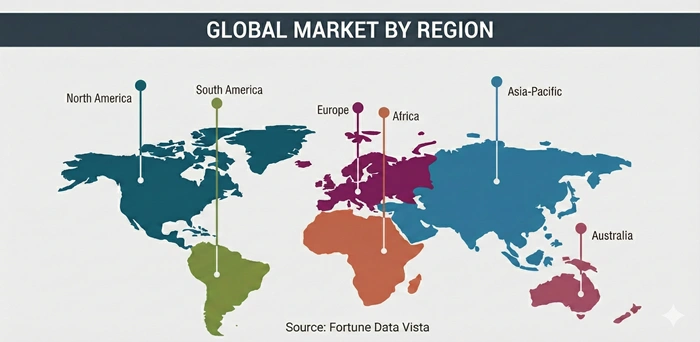
North America holds the largest regional share of the intracranial pressure monitor market at approximately 42% of global revenue in 2025, driven by the United States' world-leading combination of TBI patient volume, mature neurocritical care clinical culture, and a well-developed regulatory and reimbursement environment that supports consistent device adoption across hospital settings. The U.S. Centers for Medicare & Medicaid Services provides reimbursement coverage for ICP monitoring procedures in qualifying clinical scenarios, making it economically viable for hospitals to invest in continuous ICP monitoring programs for severe TBI patients without significant financial risk. Medtronic, Integra LifeSciences, Natus Medical, and Codman Neuro (Johnson & Johnson) are the dominant players in the North American market, collectively commanding a substantial share of total device and consumable revenue through their comprehensive product portfolios, extensive clinical support networks, and strong relationships with the academic medical centers that drive evidence-based adoption of monitoring technologies. North America is projected to grow at a regional CAGR of approximately 6.5% from 2026 to 2033.
Canada contributes meaningful secondary demand within North America, with its publicly funded healthcare system supporting standardized TBI management protocols across provincial trauma networks that require ICP monitoring for severe injury classifications. The Canadian Neurocritical Care Group has been active in promoting evidence-based ICP monitoring guidelines that align with U.S. Brain Trauma Foundation standards, supporting consistent device adoption across the country's major academic trauma centers. Mexico's market is smaller but growing, driven by hospital infrastructure investment in major urban centers and the expansion of private hospital networks in cities including Mexico City, Guadalajara, and Monterrey that are increasingly adopting advanced neurocritical care monitoring standards as they compete for high-acuity patient care.
Asia Pacific
Asia Pacific Is the Fastest Growing Regional Market for Intracranial Pressure Monitoring, Driven by High Road Traffic Accident Rates, Rapid Hospital Infrastructure Expansion, and Growing Government Investment in Critical Care
China and India Together Account for the Majority of Asia Pacific's Demand Growth, Supported by Government Healthcare Programs, Rising Medical Device Imports, and Growing Neurosurgical Training Infrastructure
Asia Pacific is the fastest growing regional market for intracranial pressure monitoring, with a projected CAGR of approximately 9.3% from 2026 to 2033, significantly outpacing North America and Europe. The region currently holds approximately 22% of global market share in 2025 — a figure that is expected to grow as critical care infrastructure development accelerates across China, India, and Southeast Asia. China is the largest market within the region, where the government's substantial investment in national hospital network upgrades, a high volume of road traffic accident-related TBI cases, and the growing number of dedicated neurosurgery departments in tier-2 and tier-3 city hospitals are collectively driving sustained device demand growth. Medtronic, Integra LifeSciences, and Chinese domestic suppliers including Beijing Taini Electronic Technology are among the key companies competing in China's ICP monitoring device procurement market.
India represents the most dynamic growth story within Asia Pacific, combining one of the world's highest TBI burdens with a rapidly expanding private hospital sector that is investing aggressively in neurocritical care infrastructure to serve a growing middle-class patient population with insurance coverage and higher clinical care expectations. Japan and South Korea contribute high-value demand from their technologically sophisticated healthcare systems, where leading academic medical centers are active adopters of advanced neuromonitoring technologies and clinical research in ICP management continues to generate institutional demand for next-generation monitoring platforms. Australia's market, while smaller in volume, is characterized by strong clinical governance standards and public health funding for trauma care that supports consistent ICP monitoring adoption in line with international best practice guidelines across the country's major trauma hospitals and neuro-ICUs.
Report Customization Available by Region and Country
Gain Geography-Specific Neurocritical Care Market Intelligence Through Our Fully Customized Region-Wise and Country-Wise Intracranial Pressure Monitor Market Reports — Tailored to Your Strategic Focus and Commercial Objectives
This report is available for complete customization across all major global regions and individual countries, enabling medical device manufacturers, hospital procurement teams, distributors, investors, and healthcare strategy consultants to access precisely targeted market intelligence specific to the intracranial pressure monitor market in their chosen geography. A customized report delivers country-level market sizing, regulatory approval pathway analysis, hospital infrastructure assessment, clinical adoption trend tracking, and competitive landscape mapping that goes well beyond the scope of a standard global report. Whether your focus is on market entry planning, distribution partnership development, regulatory strategy, or investment due diligence, our customization capability ensures your intelligence is as targeted and actionable as your business decision demands.
Customized intracranial pressure monitor market reports are available for all of the following regions and countries, with detailed market insights, trends, competitive intelligence, and growth opportunities tailored to each specific geography:
North America
-
U.S. — Largest global ICP monitoring market deep-dive, trauma center device procurement analysis, reimbursement landscape, and competitive benchmarking of Medtronic, Integra LifeSciences, and Codman Neuro
-
Canada — Provincial healthcare system demand analysis, TBI management guideline adoption, and key hospital network procurement trends
-
Mexico — Private and public hospital infrastructure investment analysis, import dependency assessment, and medical device regulatory environment for ICP monitors
Europe
-
U.K. — NHS neurocritical care procurement framework, NICE guideline compliance impact on ICP monitoring adoption, and leading supplier competitive strategies
-
Germany — Europe's largest medical device market analysis, hospital-level ICP monitoring adoption rates, and top neuromonitoring technology supplier competitive review
-
France — National neurocritical care infrastructure mapping, regulatory approval environment, and key hospital group procurement strategies
-
Italy — Neurosurgery center ICP monitoring demand, domestic vs. imported device preference analysis, and regional hospital distribution dynamics
-
Rest of Europe — Scandinavian neuromonitoring technology adoption leadership, Eastern European market development, and EU Medical Device Regulation compliance impact
Asia Pacific
-
China — Government hospital investment-driven demand analysis, domestic vs. international supplier competitive dynamics, NMPA regulatory environment, and tier-2/tier-3 city market penetration opportunity
-
India — Private hospital sector expansion and ICP monitor demand, CDSCO regulatory framework, trauma network development, and key distribution partner landscape
-
Japan — Mature neuromonitoring market segmentation, PMDA regulatory pathway, and leading domestic and international supplier strategies
-
South Korea — Advanced neuro-ICU adoption analysis, MFDS regulatory environment, and academic medical center procurement trends
-
Australia — Trauma center ICP monitoring standards, TGA regulatory framework, and leading hospital group procurement dynamics
-
Rest of Asia Pacific — Southeast Asia hospital infrastructure development, Thailand, Indonesia, and Vietnam ICP monitor market entry opportunity assessment
Latin America
-
Brazil — Largest Latin American medical device market, public vs. private hospital demand split, ANVISA regulatory environment, and ICP monitoring adoption trajectory
-
Argentina — Healthcare system dynamics, economic environment impact on medical device procurement, and ICP monitoring market development status
-
Rest of Latin America — Colombia, Chile, Peru neurocritical care infrastructure development and ICP monitor market opportunity analysis
Middle East & Africa (MEA)
-
UAE — Premium hospital sector ICP monitoring demand, Dubai healthcare hub market dynamics, and leading international supplier competitive positioning
-
Saudi Arabia — Vision 2030 healthcare investment impact on neurocritical care infrastructure, government hospital procurement framework, and ICP monitoring technology adoption
-
Rest of MEA — South Africa, Egypt, Kenya neurocritical care infrastructure development and ICP monitor market entry opportunity analysis
Top Key Players
-
Medtronic plc (Ireland / United States)
-
Integra LifeSciences Holdings Corporation (United States)
-
Natus Medical Incorporated (United States)
-
Codman Neuro (Johnson & Johnson / DePuy Synthes) (United States)
-
RAUMEDIC AG (Germany)
-
Sophysa S.A. (France)
-
Spiegelberg GmbH & Co. KG (Germany)
-
Vittamed UAB (Lithuania)
-
HeadSense Medical Ltd. (Israel)
-
Neural Analytics Inc. (United States)
-
Haiying Medical Technology Co., Ltd. (China)
-
Perimed AB (Sweden)
Recent Developments
-
In 2025, Medtronic plc received expanded FDA clearance for its ICP monitoring platform with new software capabilities enabling AI-assisted ICP waveform trend analysis and automated critical pressure threshold alerts, significantly enhancing the platform's clinical decision-support functionality for neurocritical care physicians managing severe TBI patients in U.S. hospital settings.
-
In 2024, Integra LifeSciences Holdings Corporation launched its next-generation Camino Bolt ICP monitoring system, featuring an enhanced optical fiber sensor design that delivers improved measurement accuracy and reduced sensor drift over extended monitoring periods, addressing a key clinical concern that has previously limited the duration of reliable continuous ICP monitoring in severe TBI patients.
-
In 2025, Neural Analytics Inc. announced completion of a pivotal clinical trial for its Lucid non-invasive ICP estimation system, reporting results that demonstrated clinically acceptable correlation with simultaneous invasive ICP measurements — a significant milestone that positions the company for a regulatory submission to the FDA and marks a meaningful step toward commercializing a validated, non-invasive intracranial pressure monitoring technology.
-
In 2024, Natus Medical Incorporated entered into a strategic distribution partnership with a major Japanese medical device distributor to expand commercial access to its neuromonitoring product portfolio across Japan's leading academic medical centers and private hospital networks, accelerating the company's penetration into one of Asia Pacific's most mature and technology-receptive neurocritical care markets.
-
In 2025, RAUMEDIC AG announced a significant expansion of its ICP monitoring catheter manufacturing capacity at its German production facility, driven by growing European and export market demand for its microsensor-based ICP monitoring catheters and a commitment to meeting increasing procurement volumes from hospital systems investing in upgraded neurocritical care monitoring programs.
Market Trends
Non-Invasive ICP Monitoring Technology Advancement and the Integration of Multimodal Neuromonitoring Platforms Are the Two Most Transformative Trends Defining the Future of the Intracranial Pressure Monitor Market
The Shift from Single-Parameter ICP Monitoring to Comprehensive, Integrated Brain Health Surveillance Systems Is Creating a New Standard for Neurocritical Care That Will Reshape Device Procurement and Clinical Practice Through 2033
The development and progressive clinical validation of non-invasive ICP monitoring technologies represents the most consequential trend in the intracranial pressure monitoring field, with the potential to fundamentally disrupt the existing product landscape dominated by invasive catheter-based systems. Multiple technology platforms — including optic nerve sheath ultrasound, near-infrared spectroscopy-based cerebral hemodynamics assessment, and tympanic membrane displacement measurement — are advancing through clinical validation studies with increasing frequency, and regulatory submissions to the FDA and CE Mark authorities are multiplying as device manufacturers gain the clinical evidence needed to support marketing clearance applications. The clinical community's appetite for validated non-invasive alternatives is high, and any device that demonstrates acceptable accuracy with a strong safety profile is likely to see rapid adoption across both developed and emerging market hospital settings.
The evolution toward multimodal neuromonitoring — where ICP data is integrated with simultaneous measurements of cerebral perfusion pressure, brain tissue oxygenation, cerebral blood flow, and electroencephalography in a unified monitoring and analytics platform — is becoming a defining feature of next-generation neurocritical care technology strategy. Leading academic trauma centers and neuro-ICUs are increasingly moving toward data-integrated monitoring environments where ICP is one element of a comprehensive, continuously updated picture of brain physiology rather than a standalone parameter. This shift is driving demand for ICP monitoring devices with open data integration capabilities, standardized communication protocols, and compatibility with hospital clinical information systems — requirements that are reshaping device design priorities and creating competitive differentiation opportunities for vendors who invest in seamless platform connectivity and intelligent data visualization for neurocritical care teams.
Segments Covered in the Report
-
By Product Type
-
Invasive ICP Monitors
-
Non-Invasive ICP Monitors
-
-
By Technique
-
Intraventricular Catheter (Gold Standard)
-
Intraparenchymal Monitoring
-
Epidural Sensor Monitoring
-
Subdural/Subarachnoid Bolt Monitoring
-
Non-Invasive Monitoring (Ultrasound-based, Infrared, Tympanic)
-
-
By Application
-
Traumatic Brain Injury (TBI)
-
Intracerebral Hemorrhage
-
Meningitis
-
Hydrocephalus
-
Others (Brain Tumors, Subarachnoid Hemorrhage, Encephalitis)
-
-
By End User
-
Hospitals (General and Academic Medical Centers)
-
Specialty Neurology and Neurosurgery Clinics
-
Trauma Centers
-
Research and Government Organizations
-
-
By Region
-
North America (U.S., Canada, Mexico)
-
Europe (U.K., Germany, France, Italy, Rest of Europe)
-
Asia Pacific (China, India, Japan, South Korea, Australia, Rest of Asia Pacific)
-
Latin America (Brazil, Argentina, Rest of Latin America)
-
Middle East & Africa (UAE, Saudi Arabia, Rest of MEA)
-
❝ Built for Every Level — From Startups to Industry Giants ❞
Here Is Exactly How This Report Works for You
-
For Tier 1 medical device corporations, hospital group purchasing organizations, and institutional investors, this report delivers a comprehensive competitor revenue analysis — including product-level revenue breakdowns, clinical adoption rate benchmarking by country, and a detailed assessment of how regulatory pathway developments, reimbursement policy changes, and geopolitical factors affecting medical device supply chains are shaping strategic investment and procurement decisions in the global intracranial pressure monitor market.
-
For Tier 2 and Tier 3 medical device companies, regional distributors, and neurocritical care solution providers, the supply-demand dynamics section of this report maps hospital procurement cycle trends, device upgrade timing patterns, and geographic white-space opportunities where invasive ICP monitoring is currently underserved — providing your commercial teams with the market intelligence needed to identify high-priority territories and develop winning distribution and pricing strategies ahead of intensifying competitive pressure from global device market leaders.
-
For startups developing non-invasive ICP monitoring technologies, medtech investors, and research commercialization teams, this report provides a detailed regulatory landscape analysis, competitive patent activity review, clinical validation study status updates, and an assessment of the key commercial partnerships and hospital adoption pathways that will determine which non-invasive ICP monitoring technologies achieve clinical mainstream status and generate the most significant commercial value as the global intracranial pressure monitoring market evolves through 2033.
Frequently Asked Questions:
Answer: The global intracranial pressure monitor market was valued at USD 1.94 billion in 2025 and is projected to reach USD 3.36 billion by 2033. It is expected to grow at a CAGR of 7.0% from 2026 to 2033, driven by rising TBI incidence, expanding neurocritical care infrastructure, and advancements in non-invasive monitoring technologies.
Answer: The intracranial pressure monitor market is primarily driven by the rising global incidence of traumatic brain injury, the rapid expansion of neuro-ICU facilities in developing countries, and growing clinical guideline support for active ICP management in severe TBI patients. Technological advancement in non-invasive ICP monitoring and increasing adoption of AI-powered waveform analysis are further supporting market growth.
Answer: North America dominates the global intracranial pressure monitor market, holding approximately 42% of total revenue in 2025. The region's leadership is driven by advanced neurocritical care infrastructure, high TBI patient volumes, comprehensive reimbursement coverage, and the strong market presence of companies including Medtronic, Integra LifeSciences, and Natus Medical.
Answer: Invasive ICP monitoring involves the surgical insertion of a catheter or probe directly into the skull to measure intracranial pressure with high accuracy — representing the current clinical gold standard used in most neurocritical care settings. Non-invasive ICP monitoring uses indirect physiological measurements to estimate intracranial pressure without surgical intervention, offering a safer and more accessible alternative that is still advancing through clinical validation and regulatory approval processes.
Answer: The global intracranial pressure monitor market is led by Medtronic plc, Integra LifeSciences Holdings Corporation, Natus Medical, Codman Neuro (Johnson & Johnson), RAUMEDIC AG, Sophysa, and Neural Analytics, among others. These companies compete on monitoring accuracy, infection prevention design, non-invasive technology development, and clinical data integration capabilities to strengthen their positions across hospital and trauma center end-user segments worldwide.