
Intranasal Drug Delivery Devices Market Overview
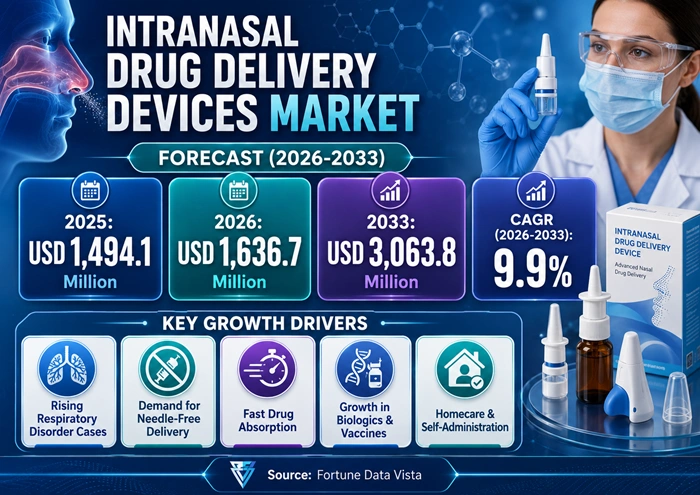
The global intranasal drug delivery devices market size is valued at USD 1494.1 million in 2025 and is predicted to increase from USD 1636.7 million in 2026 to approximately USD 3063.8 million by 2033, growing at a CAGR of 9.9% from 2026 to 2033.
Intranasal drug delivery devices are specialized medical devices designed to administer pharmaceutical compounds directly through the nasal cavity — using the highly vascularized nasal mucosa as an absorption pathway that enables rapid drug entry into systemic circulation, and in some formulations, direct nose-to-brain transport bypassing the blood-brain barrier. These devices encompass metered-dose nasal spray pumps, unit-dose and bi-dose devices, dry powder nasal delivery systems, nasal drop applicators, and nasal gel delivery tools — each engineered for specific drug formulations, dosing requirements, and patient use scenarios ranging from hospital-administered emergency medications to self-managed chronic disease treatments at home. The intranasal drug delivery devices market has experienced strong commercial momentum driven by growing recognition of intranasal administration as a preferred non-invasive alternative to injection for a widening range of therapeutic applications — including allergy treatment, migraine management, hormonal therapies, central nervous system (CNS) drug delivery, and most recently, needle-free intranasal vaccination. The combination of patient-friendly administration, rapid onset of action, avoidance of first-pass hepatic metabolism, and suitability for self-administration is generating sustained research, regulatory approval, and commercial investment across both pharmaceutical companies and device manufacturers globally.
AI Impact on the Intranasal Drug Delivery Devices Industry
Artificial intelligence is reshaping every stage of the intranasal drug delivery devices value chain — from accelerating aerosol formulation design and spray mechanism optimization through AI-powered computational modeling, to enabling smart connected nasal devices capable of digital adherence monitoring, dose confirmation, and real-world patient behavior data collection that pharmaceutical companies and regulators increasingly require
Artificial intelligence is making progressively impactful contributions to device design innovation within the intranasal drug delivery devices market. Computational fluid dynamics (CFD) modeling enhanced by machine learning is enabling device engineers to simulate nasal airflow patterns, droplet deposition trajectories, and drug absorption profiles across diverse patient nasal anatomy profiles far more accurately and rapidly than experimental testing alone. AI-powered simulation tools from vendors including Ansys and Dassault Systèmes allow device developers to optimize spray nozzle geometry, pump actuation force, droplet size distribution, and plume geometry for specific drug-device combinations — reducing physical prototype iterations, shortening development timelines, and improving the clinical performance of final device designs submitted for regulatory approval. This computational efficiency is particularly valuable for novel CNS-targeted intranasal formulations — where precise nasal deposition targeting of the olfactory cleft region requires device geometry optimization that is extremely difficult to achieve through empirical development alone.
At the clinical and commercial stage, AI-enabled smart nasal device platforms are emerging as a commercially significant product category — with sensor-equipped nasal delivery devices capable of detecting actuation events, measuring delivery angle and technique, and wirelessly transmitting usage data to companion smartphone applications and cloud analytics platforms. AptarGroup's Connected Drug Delivery Solutions platform and similar offerings from Aptar Pharma and PARI are early examples of this connected device direction — enabling pharmaceutical company partners to collect real-world adherence data, support patient training programs, and generate digital biomarker evidence for regulatory submissions. As regulatory agencies including FDA increasingly recognize real-world evidence generated by connected devices as supporting data for drug approval applications and post-market surveillance, the commercial demand for AI-capable, connected intranasal delivery devices will grow — expanding the addressable commercial opportunity for device manufacturers and creating a new category of digital health service revenue alongside traditional device hardware sales.
Growth Factors
The accelerating global prevalence of allergic rhinitis, growing adoption of intranasal drug delivery for CNS and migraine therapeutics, expanding needle-free intranasal vaccination applications, the rise of patient-centric self-administration in chronic disease management, and a robust pharmaceutical pipeline of intranasal drug formulations collectively drive sustained and multi-dimensional commercial growth across the intranasal drug delivery devices market through 2033
The most foundational commercial growth driver for the intranasal drug delivery devices market is the extraordinarily high and growing global burden of allergic rhinitis — which affects approximately 400 million people worldwide and remains one of the most undertreated chronic conditions globally, particularly in developing and emerging markets where awareness and specialist access are limited. Nasal corticosteroid spray devices remain the first-line recommended treatment for persistent allergic rhinitis across major clinical guidelines — driving continuous, high-volume demand for metered-dose nasal spray pump devices across both prescription and over-the-counter pharmaceutical markets. The growing prevalence of allergic sensitization driven by urbanization, air pollution, and climate change-driven extension of pollen seasons is expanding the allergic rhinitis patient population globally — creating a structurally growing base demand for the nasal spray pump devices that deliver the cornerstone allergen avoidance and anti-inflammatory treatments. Generic competition in intranasal corticosteroid markets has simultaneously lowered drug costs and expanded patient access — growing the total treatment volume and with it the aggregate device market size in this indication category.
The expanding application of intranasal delivery to CNS therapeutics represents the most commercially dynamic emerging growth driver — with the nose-to-brain delivery pathway offering a compelling solution to the blood-brain barrier challenge that limits the effectiveness of systemically administered CNS drugs. Nasal administration enables direct drug transport from the olfactory epithelium to the brain via trigeminal and olfactory nerve pathways — with several clinical programs demonstrating that intranasal delivery can achieve therapeutically relevant CNS drug concentrations at lower systemic doses than oral or injectable routes. The FDA approval of esketamine (Spravato) nasal spray for treatment-resistant depression — administered via a proprietary nasal delivery device in clinical settings — validated the commercial viability of CNS-targeted intranasal therapy and catalyzed a broad research pipeline of intranasal formulations for neurodegenerative diseases, anxiety disorders, opioid overdose reversal (naloxone), seizure management, and Alzheimer's disease. Each new CNS intranasal drug approval creates dedicated commercial demand for the specialized device platforms designed and validated for that specific drug-device combination — generating a pipeline-driven demand expansion that will strengthen through 2033 as clinical programs in the CNS category mature toward regulatory approval.
Market Outlook
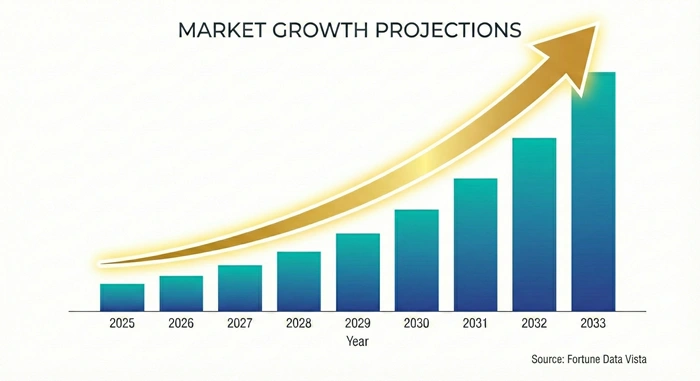
With a trajectory toward USD 3063.8 million by 2033 at a CAGR of 9.9%, the intranasal drug delivery devices market is entering its most commercially dynamic and therapeutically diverse phase — anchored by allergy treatment volumes, CNS drug delivery breakthroughs, intranasal vaccine platform expansion, and growing pharmaceutical industry investment in drug-device combination products requiring specialized nasal delivery device development and regulatory approval
The medium-to-long-term outlook for the intranasal drug delivery devices market is consistently positive and underpinned by structural demand growth from multiple independent therapeutic application categories growing simultaneously. The pharmaceutical industry's growing preference for drug-device combination products — where the delivery device is an integral component of the approved drug product and cannot be substituted — creates inherently durable and defensible commercial relationships between pharmaceutical companies and device manufacturers. Drug-device combination approvals under FDA's 505(b) pathway and equivalent EMA regulatory frameworks lock in specific device platforms for the lifetime of the drug approval — generating long-term, predictable device supply demand that is structurally resistant to the competitive pricing pressure that affects standalone device markets. The growing number of novel intranasal drug products in late-stage clinical development — across CNS, vaccination, endocrine, and pain management therapeutic areas — represents a rich pipeline of future drug approvals that will each generate dedicated commercial demand for the intranasal delivery device platforms validated in their pivotal clinical trials.
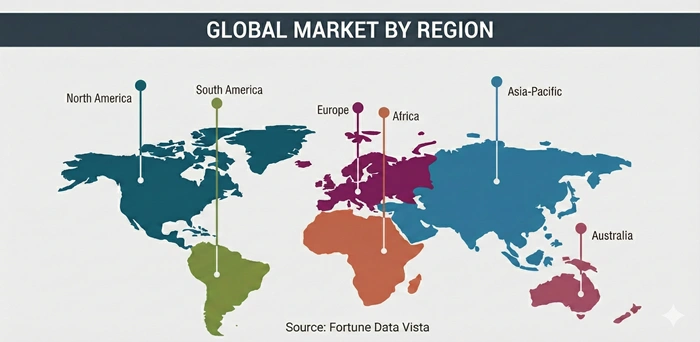
North America will maintain its dominant position in the intranasal drug delivery devices market, supported by the highest per-capita prescription nasal medication usage globally, the world's most active new drug application regulatory environment, and the home market concentration of leading device manufacturers including AptarGroup, 3M Drug Delivery Systems, and Teleflex. Asia Pacific will be the fastest-growing region — driven by rapidly expanding pharmaceutical manufacturing, growing patient access to branded and generic nasal treatments, and government healthcare infrastructure investment across China, India, and Southeast Asia generating large-scale procurement volumes for nasal spray and nasal drop delivery devices. Europe will sustain meaningful growth contribution through pharmaceutical company investment in new intranasal drug product development, high patient acceptance of self-administered nasal therapies, and the active involvement of European device manufacturers including Nemera, H&T Presspart, and Bespak in the innovation pipeline for advanced nasal delivery device platforms.
Expert Speaks
-
"The nose-to-brain delivery pathway is genuinely one of the most exciting frontiers in pharmaceutical drug development right now — and the delivery device is absolutely central to that opportunity. Getting the formulation into the right part of the nasal cavity with the right droplet size, at the right velocity and angle, makes the difference between clinical success and failure for CNS-targeted intranasal drugs. We are investing heavily in intranasal device platform development because we see a major pipeline of CNS therapeutics requiring specialized nasal delivery solutions — and we intend to be the device partner of choice for pharmaceutical companies advancing these programs." — CEO perspective, leading drug delivery device manufacturer with major nasal delivery platform portfolio
-
"Patient adherence is the fundamental challenge in chronic disease management — and intranasal delivery devices designed for intuitive, comfortable, and reliable self-administration are a direct lever for improving adherence outcomes in allergy, migraine, and CNS therapy patient populations. Connected smart nasal delivery devices that can confirm dose delivery and provide real-time adherence feedback to patients and healthcare providers represent a meaningful clinical and commercial advancement that we are actively developing and commercializing. The intersection of drug delivery device innovation and digital health is creating new value propositions that the intranasal drug delivery devices market is only beginning to explore." — CEO perspective, leading pharmaceutical company with major intranasal product portfolio across allergy and CNS therapeutic categories
-
"Needle-free intranasal vaccination is moving from a research concept to a commercial reality faster than many expected — driven by the pandemic-era demonstration of global public appetite for non-injectable vaccine delivery formats and the advancing science of mucosal immunity. Developing the intranasal delivery device platforms that can reliably deliver vaccine formulations to the optimal nasal mucosal absorption sites — across diverse patient age groups and nasal anatomies — is technically demanding but commercially enormously valuable. We see intranasal vaccination devices as one of the most strategically important growth segments in the nasal drug delivery device landscape over the next decade." — CEO perspective, leading biopharmaceutical company with active intranasal vaccine development and delivery platform programs
Key Report Takeaways
-
North America leads the global intranasal drug delivery devices market, holding approximately 39.4% of total revenue share in 2025, driven by the highest per-capita prescription nasal spray usage globally, the most active regulatory pipeline for new intranasal drug-device combination products, extensive healthcare infrastructure supporting both clinical and homecare intranasal drug administration, and the dominant commercial presence of major device manufacturers including AptarGroup, 3M Drug Delivery Systems, and Teleflex across both the U.S. and Canadian pharmaceutical supply chains.
-
Asia Pacific is the fastest-growing regional market, expected to register the highest CAGR through 2033, fueled by rapidly expanding pharmaceutical manufacturing and branded generic drug markets across China, India, Japan, and South Korea, growing patient awareness and access to intranasal allergy treatments, government healthcare expenditure expansion increasing pharmaceutical procurement volumes, and the growing presence of global pharmaceutical companies establishing nasal drug product supply chains and commercial operations in the region.
-
Metered-dose nasal spray devices represent the dominant device type segment, accounting for approximately 48.2% of global intranasal drug delivery devices market revenue in 2025, as metered-dose pump spray technology is the established, regulated standard for intranasal corticosteroid, saline, antihistamine, and nasal decongestant drug delivery — used by the world's largest and most commercially successful intranasal drug products including Flonase (fluticasone), Nasonex (mometasone), and Rhinocort (budesonide) — generating enormous and consistently growing device procurement volumes from global pharmaceutical companies.
-
Allergic rhinitis is the largest indication segment, contributing approximately 35.7% of global revenue in 2025, driven by the extraordinary global disease burden of allergic rhinitis affecting approximately 400 million patients — with nasal corticosteroid and antihistamine spray treatments delivering device demand through both high-volume generic markets and branded prescription therapy segments across developed and developing markets globally.
-
Homecare settings represent the fastest-growing end-user segment, expected to grow at a CAGR exceeding 11.3% through 2033, as self-administered intranasal therapies for allergy, nasal congestion, migraine, and emerging CNS indications expand patient independence from clinical settings — supported by user-friendly device designs optimized for reliable self-use, growing pharmaceutical company patient support programs, and the COVID-19 pandemic-driven acceleration of home-based healthcare across all therapeutic categories.
-
Multidose devices dominate the dose type segment, accounting for approximately 63.8% of global market revenue in 2025, as multidose nasal pump spray systems used in chronic condition management — including allergic rhinitis, nasal polyps, and chronic sinusitis — generate the highest aggregate device procurement volumes through the continuous prescription refill model that characterizes high-adherence chronic disease management.
-
Dry powder nasal delivery devices are the fastest-growing device type sub-segment, anticipated to grow at a CAGR exceeding 12.7% through 2033, driven by the pharmaceutical industry's growing preference for powder formulation intranasal products that offer superior stability, longer shelf life without preservatives, and enhanced olfactory region deposition for CNS-targeted drug delivery — positioning dry powder nasal devices as the leading platform technology for next-generation intranasal CNS drug development programs advancing through clinical trials globally.
Market Scope
| Parameter | Details |
|---|---|
| Market Size by 2033 | USD 3063.8 Million | Market Size by 2026 | USD 1636.7 Million | Market Size by 2025 | USD 1494.1 Million | Market Growth Rate from 2026 to 2033 | CAGR of 9.9% | Dominating Region | North America | Fastest Growing Region | Asia Pacific | Segments Covered | Device Type, Dose Type, Formulation, Indication, End User | Regions Covered | North America, Europe, Asia Pacific, Latin America, Middle East & Africa |
Market Dynamics
Drivers Impact Analysis
Growing global allergic rhinitis and respiratory disease burden, expanding intranasal CNS therapeutic applications, needle-free vaccination platform investment, pharmaceutical industry drug-device combination product strategy, and rising patient preference for non-invasive self-administration are generating compounding and multi-dimensional commercial growth driving the intranasal drug delivery devices market through 2033
| Driver | ≈ % Impact on CAGR Forecast | Geographic Relevance | Impact Timeline |
|---|---|---|---|
| Rising global allergic rhinitis prevalence and nasal corticosteroid treatment adoption | ~28% | Global | Short to Long Term |
| CNS drug delivery pipeline driving demand for specialized nasal delivery device platforms | ~26% | North America, Europe | Short to Long Term |
| Intranasal vaccination and mucosal immunization platform development | ~22% | North America, Europe, Asia Pacific | Medium to Long Term |
| Patient preference for non-invasive self-administration over injection-based therapies | ~16% | Global | Short to Long Term |
| Growing pharmaceutical drug-device combination product regulatory approvals | ~8% | North America, Europe | Short to Long Term |
The sustained and growing global burden of allergic disease represents the most commercially reliable and volume-generating driver for the intranasal drug delivery devices market — because allergic rhinitis, asthma, and related upper respiratory allergic conditions are both rising in prevalence globally and chronically undertreated, meaning that expanding diagnosis and treatment rates translate directly into growing nasal spray device procurement volumes. WHO data indicates that global allergic rhinitis prevalence has increased significantly over the past three decades — correlated with urbanization, air pollution exposure, dietary changes, and the hygiene hypothesis of altered immune system development — with projections indicating continued prevalence growth across both developed and rapidly urbanizing developing markets. The growing over-the-counter availability of intranasal corticosteroid sprays in major markets — following the switch from prescription-only to OTC status for products including fluticasone and budesonide in the United States and European markets — has dramatically expanded patient access and total treatment volume, creating correspondingly larger commercial device demand in the generic drug-device supply chain. Generic pharmaceutical manufacturers globally require validated nasal spray pump devices that are bioequivalence-comparable to reference listed drug products — creating a substantial and growing device market segment serving the generic intranasal pharmaceutical sector.
The emerging CNS drug delivery opportunity is creating an entirely new and commercially significant demand vector for the intranasal drug delivery devices market — one that commands premium device pricing because of the specialized engineering requirements for CNS-targeting nasal delivery and the high clinical value of the therapeutic applications being served. The FDA approval of esketamine (Spravato) intranasal spray for treatment-resistant depression — administered under healthcare supervision using a proprietary device to ensure controlled delivery to the posterior nasal cavity — demonstrated that CNS-targeted intranasal therapy can achieve regulatory approval for severe psychiatric disorders and established a commercial model where the device is a medically controlled, reimbursed component of a supervised treatment session. This precedent has catalyzed investment across multiple CNS intranasal programs — including intranasal insulin for Alzheimer's disease, intranasal diazepam for seizure management, intranasal oxytocin for autism spectrum disorder, and multiple intranasal cannabinoid formulations — each requiring specialized delivery device development and validation. As these clinical programs advance through late-stage trials and approach regulatory submission, the pipeline-driven device demand they will generate represents one of the most commercially exciting growth catalysts in the intranasal drug delivery devices market through 2033 and beyond.
Restraints Impact Analysis
Stringent drug-device combination regulatory requirements creating long development timelines and high validation costs, patient technique variability affecting intranasal drug delivery performance, generic device competition eroding margins in high-volume commodity device segments, and limited cold-chain compatible formulations restricting device deployment in resource-constrained settings are creating meaningful commercial friction moderating the intranasal drug delivery devices market's growth pace
| Restraint | ≈ % Impact on CAGR Forecast | Geographic Relevance | Impact Timeline |
|---|---|---|---|
| Complex drug-device combination regulatory pathway increasing development cost and timeline | ~42% | North America, Europe | Short to Long Term |
| Patient nasal anatomy variability and technique dependence affecting consistent drug delivery | ~33% | Global | Short to Long Term |
| Commodity price pressure in high-volume generic nasal spray device segments | ~25% | Global | Short to Medium Term |
The regulatory complexity of drug-device combination product approval is the most commercially significant restraint in the intranasal drug delivery devices market — because nasal delivery devices intended to deliver prescription pharmaceutical products are regulated as drug-device combination products by FDA (under 21 CFR Parts 3, 4) and EMA (under Regulation (EU) 2017/745), requiring both pharmaceutical quality and medical device standards compliance simultaneously. This dual regulatory framework demands extensive analytical testing of drug-device interactions, stability studies with the specific device-drug system, human factors engineering studies demonstrating safe and effective use by the intended patient population, and in vitro bioequivalence studies including spray pattern, plume geometry, droplet size distribution, and emitted dose uniformity testing — all of which add substantial development time and cost compared to drug or device regulatory pathways followed independently. For pharmaceutical companies developing new intranasal drug products, the device development timeline must be synchronized with clinical development — requiring early device selection commitments and locking device design changes that could affect bioequivalence before clinical trials begin. These constraints favor established device platform vendors with well-characterized regulatory files over new entrants and create high barriers to device platform switching once a drug-device combination product has received regulatory approval.
Patient technique variability in nasal drug self-administration represents a second commercially meaningful restraint — because the volume, velocity, deposition site, and drug absorption achieved by intranasal spray administration vary substantially with the head position, actuation force, breathing pattern, and nasal anatomy of individual patients. Studies have consistently demonstrated that incorrect technique — including failure to shake the device, inadequate priming, incorrect head angle, or breathing in rather than remaining neutral during actuation — can reduce intranasal drug delivery efficiency by 30–60% relative to optimal technique, with significant clinical consequences in therapeutic areas including allergy and CNS drug delivery where dose precision is important. This technique sensitivity creates clinical education requirements that add complexity to pharmaceutical commercial launches, and it motivates ongoing device design innovation aimed at making technique less critical through features including dosage indicators, angle guides, breath-actuated mechanisms, and connected device adherence feedback systems — all of which add cost and development complexity to intranasal device platforms competing in price-sensitive generic drug markets.
Opportunities Impact Analysis
Needle-free intranasal vaccination as a global public health priority creating purpose-built vaccine delivery device demand, the expanding CNS drug delivery pipeline creating high-value device partnership opportunities, connected smart nasal device platforms generating new digital health revenue streams, and Asia Pacific healthcare expansion creating large-volume emerging market opportunities are defining the highest-value commercial frontiers for the intranasal drug delivery devices market through 2033
| Opportunity | ≈ % Impact on CAGR Forecast | Geographic Relevance | Impact Timeline |
|---|---|---|---|
| Needle-free intranasal vaccination platform development creating new high-volume device demand | ~35% | Global | Short to Medium Term |
| CNS-targeted drug delivery device partnership opportunities with pharmaceutical pipeline companies | ~30% | North America, Europe | Short to Long Term |
| Connected smart nasal device platforms generating digital health service revenue | ~22% | North America, Europe, Asia Pacific | Medium to Long Term |
| Asia Pacific generic pharmaceutical market expansion creating large device volume procurement | ~13% | Asia Pacific, Latin America | Short to Medium Term |
Needle-free intranasal vaccination represents one of the most commercially transformative emerging opportunities for the intranasal drug delivery devices market — with the demonstrated public appetite during the COVID-19 pandemic for non-injectable immunization formats accelerating investment in mucosal vaccine delivery platforms that can address both patient comfort preferences and global vaccination coverage challenges. The WHO's global vaccination coverage targets for respiratory pathogens including influenza, respiratory syncytial virus (RSV), and COVID-19 have created policy support for needle-free vaccination alternatives that could improve coverage in needle-phobic populations and reduce the training, cold chain, and sharps disposal requirements associated with injectable immunization campaigns. Multiple clinical programs for intranasal influenza vaccines — including AstraZeneca's FluMist and several next-generation mucosal vaccine candidates — are demonstrating intranasal delivery efficacy and driving demand for the specialized nasal vaccine delivery devices required for their administration. As these programs advance toward regulatory approval and large-scale public health deployment, they will generate procurement volumes for intranasal device manufacturers that dwarf the prescription drug device market in unit volume terms — representing a potentially game-changing demand expansion opportunity for established nasal delivery device manufacturers.
The connected smart nasal device opportunity is simultaneously creating a new and high-margin product category within the intranasal drug delivery devices market — one that extends device manufacturer revenue beyond one-time hardware sales into recurring software subscription, data analytics services, and patient engagement platform businesses. Pharmaceutical companies increasingly recognize that demonstrating real-world drug effectiveness and patient adherence outcomes — not just clinical trial efficacy — is essential for formulary access, reimbursement negotiations, and value-based healthcare contracting. Connected nasal devices that collect objective adherence and technique data provide pharmaceutical companies with commercially valuable real-world evidence capabilities — making device connectivity a strategic priority for pharmaceutical partners that are willing to pay a premium for smart device platforms over commodity alternatives. AptarGroup, Adherium, and Propeller Health (a ResMed company) are among the vendors actively developing connected respiratory and nasal drug delivery device platforms — and as the commercial framework for real-world evidence generation matures and regulatory agencies publish clearer guidance on connected device evidence standards, this smart nasal device segment will grow into a significant and structurally differentiated commercial opportunity within the broader device market.
Segment Analysis
By Device Type: Metered-Dose Nasal Spray Devices
Metered-dose nasal spray devices are the established commercial foundation of the intranasal drug delivery devices market — combining proven regulatory acceptance, broad pharmaceutical application compatibility, manufacturing scalability, and patient familiarity to maintain dominant market share across the largest intranasal drug categories from allergy and congestion treatment to CNS drug delivery and vaccination
Metered-dose nasal spray devices hold the largest share of the intranasal drug delivery devices market, contributing approximately 48.2% of global revenue in 2025 and growing at a CAGR of approximately 9.4% through 2033. These pump-based spray systems deliver precise, reproducible drug doses from multi-use liquid formulation containers — with validated spray pattern, plume geometry, and droplet size characteristics that are central to both in vitro bioequivalence testing for generic drug approvals and clinical dose-response studies for new drug applications. The metered-dose nasal spray device segment encompasses both prescription pharmaceutical devices — including the pump spray systems used for nasal corticosteroids, antihistamines, calcitonin, sumatriptan, and esketamine — and over-the-counter devices for saline nasal rinses, decongestants, and consumer nasal moisturizers. North America leads the metered-dose nasal spray device segment, accounting for approximately 40% of global segment revenue in 2025, driven by the world's largest OTC intranasal product market, the most active generic intranasal drug approval pipeline requiring device qualification, and the home market presence of leading device suppliers including AptarGroup Inc., 3M Drug Delivery Systems, and Teleflex Medical OEM.
Europe is the second-largest metered-dose nasal spray device geography — with UK, German, and French pharmaceutical companies among the most active developers and marketers of branded intranasal pharmaceutical products that drive premium device demand from Nemera, H&T Presspart, and Bespak. Asia Pacific is the fastest-growing region for metered-dose nasal spray devices, growing at a regional CAGR exceeding 11.2% through 2033, as Chinese and Indian generic pharmaceutical manufacturers rapidly scale intranasal drug product lines for domestic and export markets — generating growing procurement demand for validated, regulatory-compliant metered-dose nasal spray pump devices from both international suppliers and domestic device manufacturers including Consort Medical and local Chinese pump producers. The consistent and growing pharmaceutical procurement volumes generated by the metered-dose nasal spray segment — where each drug product approval creates a multi-year, often decade-long device supply relationship — make this segment the most commercially stable and revenue-reliable category within the broader intranasal drug delivery devices market through the forecast period.
By Indication: Allergic Rhinitis
Allergic rhinitis is the foundational commercial demand driver for the intranasal drug delivery devices market — generating the highest sustained device procurement volumes through its extraordinary global patient population, the established clinical gold standard of intranasal corticosteroid therapy, and the expanding OTC availability that is continuously growing the treated patient base and aggregate nasal spray device demand worldwide
The allergic rhinitis indication segment holds the largest revenue contribution in the intranasal drug delivery devices market, accounting for approximately 35.7% of global revenue in 2025 and growing at a CAGR of approximately 9.2% through 2033. Allergic rhinitis affects an estimated 10–30% of adults and up to 40% of children globally — making it one of the most prevalent chronic conditions in the world and the primary clinical indication driving mass-market nasal spray device adoption across all age groups. Intranasal corticosteroid spray therapy remains the most effective first-line treatment for persistent allergic rhinitis across all major international clinical guidelines — including ARIA (Allergic Rhinitis and its Impact on Asthma) guidelines — creating a sustained, guideline-driven prescription and OTC device demand base that grows proportionally with diagnostic rates and treatment adherence. North America is the largest allergic rhinitis intranasal device market, accounting for approximately 38% of global allergic rhinitis device revenue in 2025, supported by high OTC nasal corticosteroid usage following Rx-to-OTC switches for fluticasone propionate (Flonase), budesonide (Rhinocort), and triamcinolone (Nasacort) — generating retail pharmacy volumes that make nasal spray devices a high-turnover consumer health product category. Leading companies competing in the allergic rhinitis intranasal device space include AptarGroup, 3M, Teleflex, Nemera, and H&T Presspart — each supplying the validated nasal pump spray platforms used by the major pharmaceutical brands in this indication category.
Asia Pacific is the fastest-growing regional market for allergic rhinitis intranasal delivery devices, expanding at a regional CAGR exceeding 12.1% through 2033 — driven by rapidly rising allergic rhinitis prevalence linked to urbanization and air quality deterioration across China, India, and Southeast Asia, growing patient access to branded and generic intranasal allergy treatments, and the progressive expansion of OTC nasal spray availability through pharmacy retail channels across the region. India's rapidly growing pharmaceutical sector — which is one of the world's largest producers of generic intranasal corticosteroid drug products for both domestic and export markets — generates substantial component demand for nasal spray pump devices from both international suppliers and emerging domestic manufacturers. As treatment rates for allergic rhinitis improve from their currently low levels in Asia Pacific and Latin American emerging markets — where the majority of allergic rhinitis patients remain undiagnosed or untreated — the commercial device volume expansion opportunity is substantial, reinforcing the allergic rhinitis segment's role as the cornerstone demand driver of the global intranasal drug delivery devices market.
Regional Insights
North America
North America's position as the global leader in intranasal drug innovation, its uniquely large and accessible OTC nasal spray consumer market, the world's most active FDA drug-device combination approval pipeline, and the dominant commercial concentration of leading device manufacturing and platform technology companies firmly establish it as the cornerstone revenue region of the global intranasal drug delivery devices market
North America leads the intranasal drug delivery devices market, accounting for approximately 39.4% of global revenue share in 2025, with a regional CAGR of approximately 9.6% projected through 2033. The United States drives the vast majority of regional revenue — supported by the world's largest OTC intranasal medication market following multiple major Rx-to-OTC switches, the most active FDA drug-device combination product regulatory pipeline generating continuous new intranasal product approvals, and a pharmaceutical industry culture of heavy investment in patient-centric drug delivery innovation that includes intranasal platforms. The home market presence of leading device manufacturers — AptarGroup Inc., 3M Drug Delivery Systems, Teleflex Medical OEM, and West Pharmaceutical Services — creates a commercially and technologically powerful device supply ecosystem that serves both domestic and global pharmaceutical customers from North American development and manufacturing bases. Canada contributes meaningful regional revenue through its large generic pharmaceutical sector, established OTC nasal care market, and growing pharmaceutical R&D investment in intranasal drug programs advancing toward Health Canada approval.
North America is also the world's most commercially active testing ground for next-generation connected and smart nasal delivery devices — with FDA's Digital Health Center of Excellence providing regulatory pathway clarity for connected drug delivery device submissions and major pharmaceutical companies in the United States actively investing in real-world evidence generation strategies that require connected nasal device capabilities. The U.S. market's strong reimbursement environment for novel intranasal therapies — including the established reimbursement framework for Spravato (esketamine) nasal spray for treatment-resistant depression — is setting commercial precedents for CNS-targeted intranasal drug delivery that will support future device-intensive intranasal CNS approvals. North America's combination of market size leadership, innovation investment, and regulatory sophistication will ensure its market dominance in the intranasal drug delivery devices market through 2033 and beyond.
Asia Pacific
Asia Pacific's extraordinary pace of pharmaceutical sector expansion, the world's fastest-growing allergic disease burden driving nasal spray treatment adoption, massive healthcare infrastructure investment creating new clinical and community pharmacy device distribution channels, and the region's growing role as a global pharmaceutical manufacturing hub driving device component demand are establishing it as the most commercially dynamic and fastest-growing region in the global intranasal drug delivery devices market
Asia Pacific is the fastest-growing region in the intranasal drug delivery devices market, expected to grow at a regional CAGR of approximately 11.4% through 2033, driven by the convergence of rising disease burden, expanding healthcare access, growing pharmaceutical manufacturing, and increasing patient awareness creating the ideal conditions for accelerated market growth. China is the single largest country market in Asia Pacific — with domestic pharmaceutical companies including China Resources Pharma, Yangtze River Pharmaceutical Group, and CSPC Pharmaceutical Group actively developing and marketing intranasal drug products, state health insurance expansion increasing patient access to prescription nasal therapies, and a massive OTC pharmacy retail network distributing consumer nasal spray products to the world's largest consumer population. India represents the fastest-growing individual country opportunity — with its world-leading generic pharmaceutical manufacturing sector producing intranasal corticosteroid and antihistamine drug products for domestic and global markets, Jal Jeevan Mission and other public health programs raising healthcare awareness, and a rapidly expanding private hospital and specialty clinic network increasing patient access to prescription intranasal therapies. Key companies with growing Asia Pacific intranasal device market presence include AptarGroup, 3M Drug Delivery Systems, Nemera, H&T Presspart, and BD — alongside emerging regional device manufacturers in India and China developing cost-competitive alternatives for the domestic generic pharmaceutical sector.
South Korea, Japan, and Australia each contribute high-value revenue to the Asia Pacific intranasal drug delivery devices market — with Japan's highly developed pharmaceutical market and strong patient compliance culture driving consistent demand for high-quality nasal spray devices, South Korea's innovative pharmaceutical and biotechnology sector generating intranasal specialty drug development demand, and Australia's well-reimbursed pharmaceutical benefits scheme creating reliable demand for both branded and generic intranasal products across allergy, congestion, and emerging CNS indication categories. Southeast Asia — particularly Indonesia, Thailand, Malaysia, and Vietnam — represents the fastest-growing sub-regional opportunity as expanding pharmacy retail networks, rising middle-class healthcare expenditure, and growing urban allergic disease prevalence combine to create rapidly growing demand for nasal spray OTC and prescription products in markets previously served primarily by injectable and oral drug delivery formats. The long-term commercial growth trajectory of Asia Pacific in the intranasal drug delivery devices market is among the most compelling in the global healthcare device industry — making it the priority geographic investment focus for international device manufacturers and a key growth pillar for the market's overall CAGR through 2033.
Report Customization Available
Get a Fully Customized Intranasal Drug Delivery Devices Market Report for Your Target Region or Country
Our intranasal drug delivery devices market report is available with complete region-specific and country-level customization to meet your exact strategic intelligence and business planning requirements. Each customized report delivers in-depth market sizing, device technology segment analysis, indication-specific demand profiling, pharmaceutical industry partnership landscape review, regulatory environment assessment, competitive landscape profiling of regional and global device manufacturers, and growth opportunity mapping — all specifically calibrated to the commercial dynamics, healthcare infrastructure maturity, and regulatory environment of your chosen geography.
Customized intranasal drug delivery devices market reports are available for the following regions and countries:
North America
-
United States – Detailed FDA drug-device combination approval pipeline analysis, OTC nasal corticosteroid market dynamics, CNS intranasal drug device demand outlook, leading vendor competitive positions including AptarGroup, 3M, and Teleflex, and infrastructure investment impact on nasal delivery device procurement
-
Canada – Health Canada intranasal drug approval environment, Canadian generic pharmaceutical sector device demand, OTC nasal care market dynamics, and international versus domestic device vendor competitive landscape
-
Mexico – COFEPRIS regulatory framework, Mexican pharmaceutical market intranasal product growth, healthcare infrastructure expansion driving clinic and pharmacy device channel development, and international vendor market access strategies
Europe
-
United Kingdom – MHRA drug-device combination regulatory framework post-Brexit, UK pharmaceutical company intranasal R&D pipeline, NHS intranasal therapy reimbursement dynamics, leading device suppliers including Bespak and H&T Presspart, and OTC nasal spray consumer market analysis
-
Germany – BfArM regulatory landscape, German pharmaceutical company intranasal investment, healthcare system reimbursement for novel intranasal CNS therapies, domestic device manufacturer competitive presence, and IVD and combination product regulatory analysis
-
France – ANSM regulatory framework, French pharmaceutical sector intranasal development programs, NEMERA domestic device manufacturing competitiveness, health insurance reimbursement environment for intranasal therapies, and market growth outlook
-
Italy – AIFA drug-device combination approval environment, Italian pharmaceutical sector intranasal product portfolio, hospital and retail pharmacy distribution channel analysis, and international device vendor commercial presence
-
Rest of Europe – Coverage of Netherlands, Sweden, Switzerland, and Spain regarding intranasal pharmaceutical development activity, device regulatory compliance requirements, healthcare system reimbursement frameworks, and regional device manufacturer landscape
Asia Pacific
-
China – NMPA drug-device combination regulatory pathways, domestic pharmaceutical sector intranasal product development, state healthcare insurance expansion impact on nasal therapy access, domestic device manufacturer emergence and competitive dynamics, and international vendor localization strategies
-
India – CDSCO regulatory framework, India's generic pharmaceutical export role driving device demand, Jal Jeevan Mission healthcare access impact, domestic device manufacturing development, and pharmaceutical company intranasal pipeline analysis
-
Japan – PMDA regulatory framework, Japanese pharmaceutical market intranasal product landscape, Astellas and Takeda intranasal pipeline activity, national health insurance coverage for intranasal CNS therapies, and advanced device technology adoption patterns
-
South Korea – MFDS regulatory environment, Korean biopharmaceutical sector intranasal program development, NHIS reimbursement dynamics for intranasal therapies, domestic device supplier emergence, and OTC nasal care market growth
-
Australia – TGA drug-device combination regulatory framework, PBS reimbursement for intranasal therapies, domestic pharmaceutical market dynamics, and international device vendor commercial presence and distribution strategies
-
Rest of Asia Pacific – Coverage of Indonesia, Thailand, Malaysia, Singapore, and Vietnam regarding growing OTC nasal spray markets, healthcare infrastructure investment, pharmaceutical sector expansion driving device demand, and international vendor distribution and partnership strategies
Latin America
-
Brazil – ANVISA regulatory framework for drug-device combination products, Brazilian generic pharmaceutical sector intranasal product growth, healthcare system reimbursement dynamics, and international device vendor market access strategies
-
Argentina – ANMAT regulatory environment, Argentine pharmaceutical sector intranasal product landscape, healthcare system access challenges and opportunities, and international device vendor commercial presence
-
Rest of Latin America – Coverage of Colombia, Chile, and Mexico regarding pharmaceutical market intranasal product adoption, healthcare infrastructure development, and regional device supply chain dynamics
Middle East & Africa
-
UAE – MOH drug-device regulatory framework, Dubai and Abu Dhabi pharmaceutical market intranasal product adoption, healthcare infrastructure investment creating device channel opportunities, and international vendor commercial presence in GCC markets
-
Saudi Arabia – SFDA regulatory environment, Vision 2030 healthcare expansion impact on pharmaceutical and device procurement, intranasal allergy therapy adoption in high-pollen environments, and international device vendor partnership landscape
-
Rest of MEA – Coverage of South Africa, Egypt, Turkey, and Israel regarding intranasal device market development, pharmaceutical industry investment in nasal drug delivery, healthcare system reimbursement frameworks, and device vendor commercial strategies in emerging MEA markets
Top Key Players
-
AptarGroup, Inc. (United States)
-
3M Drug Delivery Systems (United States)
-
Teleflex Medical OEM (United States)
-
H&T Presspart Manufacturing Ltd. (United Kingdom)
-
Bespak (a Consort Medical company) (United Kingdom)
-
Nemera (France)
-
BD (Becton, Dickinson and Company) (United States)
-
West Pharmaceutical Services, Inc. (United States)
-
Gerresheimer AG (Germany)
-
Recipharm AB (Sweden)
-
Aesica Pharmaceuticals (United Kingdom)
-
Biodelivery Sciences International (United States)
-
Kurve Technology (United States)
-
Mystic Pharmaceuticals, Inc. (United States)
-
Glenmark Pharmaceuticals Ltd. (India)
Recent Developments
-
In February 2025, AptarGroup, Inc. launched its next-generation Connected Nasal Spray platform — an electronically enabled metered-dose nasal spray device with integrated dose actuation detection, Bluetooth connectivity, and companion mobile application capabilities for pharmaceutical company patient support programs. The platform was specifically designed for pharmaceutical company CNS and specialty nasal drug product partners seeking real-world adherence evidence to support reimbursement access negotiations and value-based healthcare contracting — establishing AptarGroup as the leading commercial provider of connected intranasal drug delivery device solutions within the intranasal drug delivery devices market.
-
In October 2024, Teleflex Medical OEM announced a major capacity expansion of its intranasal drug delivery device manufacturing operations in Athlone, Ireland — investing EUR 45 million in new automated assembly and quality control infrastructure to increase annual nasal spray pump production capacity by over 30%. The investment was driven by rapidly growing pharmaceutical customer demand for high-volume, validated nasal spray pump device supply from a European GMP-certified manufacturing site, supporting both new drug product launches and generic intranasal drug scale-up programs in the European and North American pharmaceutical markets.
-
In March 2025, Nemera completed the strategic acquisition of Haselmeier GmbH — a German manufacturer of specialty drug delivery device systems — expanding Nemera's drug delivery device portfolio and device engineering capabilities in precision drug delivery applications including specialty intranasal and injectable combination product platforms. The acquisition reinforced Nemera's competitive position as a full-service pharmaceutical device development and supply partner for both branded and generic pharmaceutical company clients across European and global markets, complementing its existing intranasal nasal spray and multi-dose device product lines.
-
In January 2025, H&T Presspart Manufacturing Ltd. received FDA Type II Drug Master File acceptance for its new Series 7 multi-dose nasal spray pump platform — a next-generation device featuring enhanced dose accuracy, reduced actuation force for pediatric and elderly patient use, a new anti-tampering seal system, and a formulation compatibility profile covering a broad range of aqueous and suspension intranasal pharmaceutical formulations. The DMF acceptance significantly accelerated the regulatory submission pathway for pharmaceutical company customers seeking to launch new intranasal drug products using the Series 7 platform in the U.S. market.
-
In November 2024, BD (Becton, Dickinson and Company) announced the commercial launch of its Uniject intranasal vaccine delivery device — a unit-dose, single-use nasal spray device system specifically engineered for intranasal vaccine administration in mass immunization campaign settings, featuring a simplified priming mechanism, validated spray characteristics across a range of vaccine viscosities, and cold-chain compatible packaging designed for field use in resource-constrained global health environments. The launch directly targeted the growing needle-free intranasal vaccination opportunity that WHO and major public health organizations have identified as a priority for improving global immunization coverage in the intranasal drug delivery devices market.
Market Trends
The rapid advancement of nose-to-brain CNS drug delivery devices as a breakthrough pharmaceutical category, the commercialization of connected smart nasal delivery devices for pharmaceutical digital health programs, and the expanding design innovation focus on pediatric and elderly patient-optimized intranasal delivery devices are defining the most commercially and clinically consequential trends reshaping the intranasal drug delivery devices market through 2033
The most commercially transformative trend in the intranasal drug delivery devices market is the convergence of device engineering innovation with the nose-to-brain CNS drug delivery clinical pipeline — creating a new category of high-value, specialized intranasal delivery devices purpose-designed to target drug deposition to the posterior nasal cavity and olfactory region where nose-to-brain drug transport is most efficient. Unlike conventional nasal spray devices designed for anterior nasal cavity deposition in allergy and congestion treatment, CNS-targeting devices require precise geometry control of spray angle, droplet size, and velocity to ensure deposition in the superior nasal cavity — a technically demanding specification that is driving device engineering innovation at companies including Kurve Technology (ViaNase system), Impel Pharmaceuticals (POD technology), and Optinose (bi-directional nasal delivery). The FDA approval of Impel's Trudhesa (dihydroergotamine) using the Precision Olfactory Delivery (POD) device for acute migraine validated the commercial viability of specialized CNS-targeted intranasal delivery devices — setting a commercial and regulatory precedent that is accelerating investment across the broader portfolio of CNS intranasal programs requiring similarly specialized device solutions.
The second defining market trend is the growing emphasis on patient-centric intranasal device design — specifically targeting improved usability and consistent performance for pediatric patients, elderly patients, and other populations for whom standard adult nasal spray device designs present compliance challenges. Pediatric patients represent a significant and growing patient population for intranasal therapy — including intranasal corticosteroids for childhood allergic rhinitis, intranasal midazolam for pediatric seizure management, and intranasal influenza vaccine — and the smaller nasal anatomy, lower actuation force capability, and different usage behavior of pediatric patients require device-specific design adaptations to ensure reliable performance. Similarly, elderly patients — who increasingly represent the largest population segment for nasal allergy therapy, nasal corticosteroid treatment, and emerging intranasal CNS therapies — often experience difficulty with standard nasal spray actuation force requirements and priming procedures. Device manufacturers responding to these patient population requirements are developing actuator redesigns, dose indicators, auto-priming mechanisms, and softer actuator materials specifically optimized for pediatric and geriatric patient use — creating product innovation cycles within the intranasal drug delivery devices market that sustain commercial differentiation and premium pricing opportunity for design-leading suppliers.
Segments Covered in the Report
-
By Device Type
-
Nasal Spray Devices
-
Metered-Dose Nasal Sprays
-
Bi-Dose Nasal Sprays
-
Unit-Dose Nasal Sprays
-
-
Nasal Drops Devices
-
Nasal Inhalers
-
Dry Powder Nasal Delivery Devices
-
Nasal Gels and Ointment Applicators
-
Others (Nasal Nebulizers, Nasal Atomizers)
-
-
By Dose Type
-
Uni-Dose / Bi-Dose Devices
-
Multidose Devices
-
-
By Formulation
-
Liquid Formulation Devices
-
Solid / Powder Formulation Devices
-
Semi-Solid Formulation Devices
-
-
By Indication
-
Allergic Rhinitis
-
Nasal Congestion
-
Migraine
-
Central Nervous System (CNS) Disorders
-
Vaccination and Immunization
-
Others (Pain Management, Hormonal Therapy, Osteoporosis)
-
-
By End User
-
Hospitals and Clinics
-
Homecare Settings
-
Retail and Online Pharmacies
-
Research and Academic Institutions
-
-
By Region
-
North America (U.S., Canada, Mexico)
-
Europe (U.K., Germany, France, Italy, Rest of Europe)
-
Asia Pacific (China, India, Japan, South Korea, Australia, Rest of Asia Pacific)
-
Latin America (Brazil, Argentina, Rest of Latin America)
-
Middle East & Africa (UAE, Saudi Arabia, Rest of MEA)
-
❝ Built for Every Level — From Startups to Industry Giants ❞
Here Is Exactly How This Report Works for You
-
For Tier 1 global pharmaceutical companies, large drug delivery device manufacturers, and institutional healthcar
Frequently Asked Questions:
Answer: The global intranasal drug delivery devices market was valued at USD 1494.1 million in 2025 and is projected to reach approximately USD 3063.8 million by 2033, growing at a CAGR of 9.9% from 2026 to 2033. This growth is driven by the rising global burden of allergic rhinitis, expanding intranasal CNS therapeutic applications, needle-free vaccine delivery platform development, and growing pharmaceutical industry investment in drug-device combination products optimized for nasal administration.
Answer: The intranasal drug delivery devices market encompasses metered-dose nasal spray pumps, unit-dose and bi-dose spray devices, dry powder nasal delivery systems, nasal drop applicators, and nasal gel and ointment delivery tools — each designed for specific drug formulations, dosing requirements, and patient use scenarios. Metered-dose nasal spray devices hold the largest market share at approximately 48.2% of global revenue in 2025, while dry powder nasal delivery devices are the fastest-growing sub-segment driven by their superior stability, preservative-free formulation compatibility, and olfactory region deposition advantages for CNS-targeted drug delivery.
Answer: Allergic rhinitis is the largest indication driving demand in the intranasal drug delivery devices market, accounting for approximately 35.7% of global revenue in 2025, as intranasal corticosteroid spray therapy remains the clinical gold standard for persistent allergic rhinitis management across approximately 400 million patients globally. CNS disorders — including migraine, treatment-resistant depression, and seizure management — represent the fastest-growing indication segment, driven by a rich clinical pipeline of nose-to-brain drug delivery programs that require specialized intranasal delivery device platforms with precise posterior nasal cavity and olfactory region targeting capabilities.
Answer: North America leads the intranasal drug delivery devices market with approximately 39.4% of global revenue share in 2025, anchored by the world's largest OTC intranasal pharmaceutical market, the most active FDA drug-device combination product pipeline, and the home market concentration of leading device manufacturers including AptarGroup, 3M Drug Delivery Systems, and Teleflex. Asia Pacific is the fastest-growing region at a projected regional CAGR of approximately 11.4% through 2033, fueled by rising allergic disease prevalence, rapidly expanding pharmaceutical manufacturing in China and India, growing healthcare access, and increasing patient awareness of intranasal therapy options across the region's large and rapidly growing population.
Answer: The nose-to-brain drug delivery pathway is driving a new wave of specialized device engineering innovation within the intranasal drug delivery devices market — as pharmaceutical companies advancing CNS-targeted intranasal programs for treatment-resistant depression, acute migraine, seizure management, and Alzheimer's disease require precision delivery devices capable of targeting drug deposition to the olfactory and posterior nasal regions where nose-to-brain drug transport occurs. Companies including Impel Pharmaceuticals, Kurve Technology, and Optinose have developed proprietary intranasal device technologies specifically engineered for CNS targeting — with the FDA approval of Impel's Trudhesa and AstraZeneca's Primatene Mist validating commercial intranasal delivery innovation and creating a strong commercial precedent driving broader pharmaceutical investment in this specialized device segment.