
Magnetic Materials Market Overview
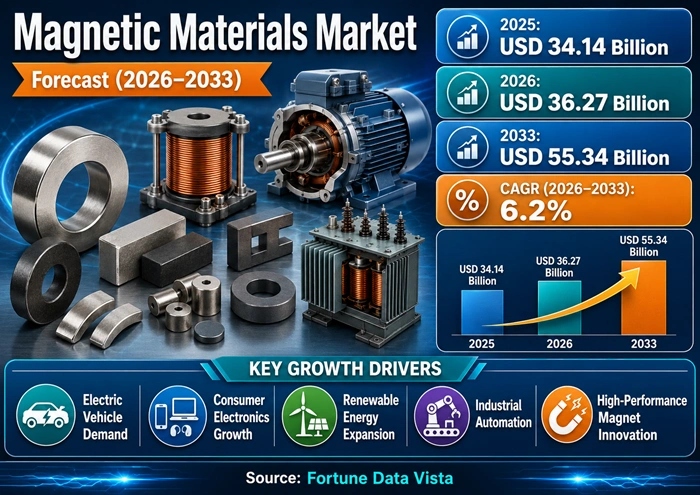
The global magnetic materials market size is valued at USD 34.14 billion in 2025 and is predicted to increase from USD 36.27 billion in 2026 to approximately USD 55.34 billion by 2033, growing at a CAGR of 6.2% from 2026 to 2033.
Magnetic materials are a critical enabling technology across some of the world's most dynamic and rapidly growing industrial sectors — from electric vehicles and wind energy systems to consumer electronics, medical imaging, and advanced industrial automation. The accelerating global transition to clean energy and electric mobility is fundamentally changing the demand profile of the magnetic materials industry, placing rare earth permanent magnets at the center of a multi-decade structural growth story. As manufacturing supply chains invest in electrification, miniaturization, and energy efficiency, demand for high-performance magnetic solutions is growing steadily across both established and emerging applications worldwide.
AI Impact on the Magnetic Materials Industry
Artificial Intelligence Is Accelerating Magnetic Material Discovery, Manufacturing Optimization, and Application Design — Compressing Innovation Timelines and Opening New Performance Frontiers for the Industry
Artificial intelligence is beginning to fundamentally reshape the research and development pipeline for magnetic materials, enabling materials scientists to discover new magnet compositions and microstructures at a pace that would be impossible through traditional experimental approaches alone. AI-driven computational materials science platforms can screen millions of potential material combinations to predict magnetic properties, thermal stability, corrosion resistance, and cost efficiency before a single laboratory sample is synthesized — dramatically shortening the development cycle for next-generation rare-earth-free magnets, high-temperature permanent magnets, and nanostructured soft magnetic composites. This capability is strategically significant because it accelerates the commercialization of magnetic materials that reduce dependence on critical rare earth elements such as dysprosium and terbium, whose supply chains are concentrated in China and subject to significant geopolitical risk.
In manufacturing, AI and machine learning are being applied to optimize sintering processes, powder compaction parameters, and surface treatment protocols in permanent magnet production — reducing energy consumption, improving dimensional consistency, and minimizing material waste in complex rare earth magnet manufacturing operations. AI-powered quality inspection systems using computer vision are replacing manual defect detection in magnet manufacturing, improving yield rates and reducing the cost of quality management in precision magnet production for automotive and electronics applications. The broader digitalization of the magnetic materials supply chain — from rare earth mining and refining through magnet production and motor assembly — is creating new data-driven competitive advantages for manufacturers who invest in AI-powered process intelligence, directly impacting cost efficiency and product performance in the fast-evolving magnetic materials market.
Growth Factors
Explosive Electric Vehicle Adoption, Rapid Renewable Energy Capacity Expansion, and the Proliferation of Smart Electronics Are the Three Foundational Drivers Behind the Magnetic Materials Market's Sustained Growth Momentum
The global electric vehicle revolution is the single most powerful demand driver in the magnetic materials market today. Every battery electric vehicle contains between 2 and 5 kilograms of rare earth permanent magnets — primarily neodymium-iron-boron (NdFeB) magnets — in its traction motors, and the exponential growth in EV production volumes by automakers including Tesla, BYD, Volkswagen, GM, and Hyundai is translating directly into unprecedented and rapidly growing demand for high-performance permanent magnets. Global EV production is expected to grow from roughly 17 million units annually in 2025 to over 50 million units by 2033, creating a structural demand multiplier for NdFeB magnet manufacturing that is reshaping supply chain investment priorities across the rare earth mining, magnet alloy, and motor manufacturing sectors worldwide.
The concurrent global expansion of wind energy generation capacity is adding a second massive demand stream for permanent magnets, as modern direct-drive wind turbines rely on large rare earth permanent magnet generators that eliminate gearboxes, improve reliability, and reduce maintenance costs compared to conventional induction generator designs. Each megawatt of direct-drive wind turbine capacity requires approximately 600–700 kilograms of rare earth permanent magnets, and with global wind energy capacity additions projected to grow significantly through 2033 under national clean energy transition programs in Europe, the United States, China, and India, wind power represents a growing and strategically important consumption vertical for the magnetic materials market. Combined with the expanding use of ferrite and soft magnetic materials in power electronics, industrial motors, MRI machines, and telecommunications infrastructure, these demand vectors are establishing a durable and broad-based growth platform for the global magnetic materials industry.
Market Outlook
The Magnetic Materials Market Is Positioned for Consistent, Demand-Pulled Growth Through 2033 — Driven by Electrification Megatrends, Critical Material Supply Chain Investment, and Next-Generation Magnet Technology Development
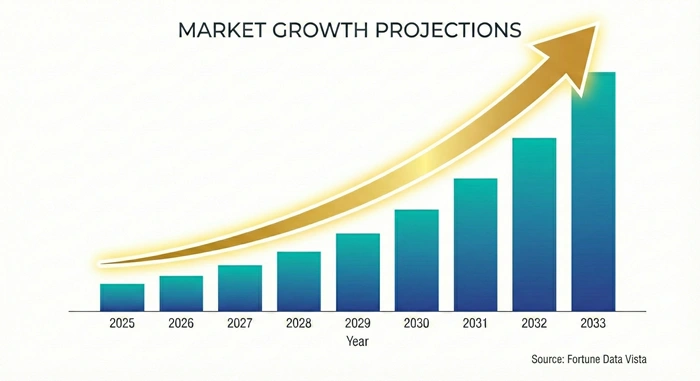
The medium-to-long-term outlook for the magnetic materials market is robustly positive, anchored by the structural alignment between growing magnetic material demand and three of the most powerful macroeconomic megatrends of the coming decade: electrification of transportation, decarbonization of energy, and digitalization of industry. Unlike many commodity markets where demand growth can be disrupted by substitution, demand for high-performance magnetic materials — particularly rare earth permanent magnets — is deeply embedded in the design architecture of the products driving these megatrends and cannot be easily substituted at comparable cost and performance without significant engineering redesign. This structural inimitability provides the magnetic materials industry with a level of demand predictability that supports long-term investment in mine development, processing capacity, and magnet manufacturing scale-up.
Looking toward 2033, the most significant strategic development shaping the magnetic materials market will be the evolution of supply chain geography. China currently dominates both rare earth mining and rare earth magnet manufacturing, controlling approximately 60–70% of global permanent magnet production. This concentration is driving governments and corporations in North America, Europe, Japan, and South Korea to invest heavily in the development of alternative rare earth supply chains — including new mining and processing projects in Australia, Canada, the United States, and Africa — and in magnet manufacturing capacity outside of China. These supply chain diversification efforts, supported by policy incentives including the U.S. Inflation Reduction Act, the EU Critical Raw Materials Act, and Japan's rare earth stockpiling programs, will progressively reshape the competitive geography of the magnetic materials industry through 2033.
Expert Speaks
-
"At Toyota, we are acutely aware that the performance and availability of rare earth permanent magnets are foundational to our ability to scale electric vehicle production globally. We are investing significantly in developing next-generation motor technologies that reduce rare earth content per vehicle and in building partnerships with non-Chinese rare earth suppliers to ensure we have the supply chain resilience needed to achieve our ambitious electrification targets through the remainder of this decade." — Koji Sato, President & CEO, Toyota Motor Corporation
-
"GE Vernova's wind turbine technology roadmap is deeply connected to advances in permanent magnet materials. As we continue to increase the power output and reliability of our offshore and onshore wind platforms, the magnetic materials industry's ability to deliver high-performance, cost-effective permanent magnets at the scale required by global wind energy deployment programs is a critical success factor for the broader energy transition that our business is built to support." — Scott Strazik, CEO, GE Vernova
-
"TDK has been at the forefront of magnetic materials innovation for decades, and we are entering one of the most exciting periods in our company's history as EV, IoT, and renewable energy applications create unprecedented demand for advanced magnetic solutions. Our investments in next-generation NdFeB magnet formulations, soft magnetic composites for power electronics, and manufacturing process innovation position us well to capture the growth opportunities that the global energy transition is creating in the magnetic materials market." — Noboru Saito, President & CEO, TDK Corporation
Key Report Takeaways
-
Asia Pacific dominates the global magnetic materials market, accounting for approximately 52% of total revenue in 2025, driven by China's world-leading rare earth mining and magnet manufacturing ecosystem, Japan's advanced permanent magnet technology industry, South Korea's electronics and EV supply chain demand, and the rapidly growing industrial and clean energy sectors across the broader Asia Pacific region.
-
Asia Pacific is also the fastest growing regional market within the magnetic materials industry, with a projected CAGR of approximately 8.1% from 2026 to 2033, as China, India, South Korea, and Vietnam simultaneously expand their EV manufacturing capacity, renewable energy infrastructure, and consumer electronics production at rates that are generating outsized demand growth for all major magnetic material categories.
-
The automotive sector is the largest and fastest growing application segment, contributing over 32% of total market revenue in 2025 as EV traction motors, power steering systems, regenerative braking components, and advanced driver assistance system (ADAS) sensors all rely heavily on permanent magnets and soft magnetic materials — with EV adoption growth creating a demand multiplier that is expected to sustain above-average revenue growth in this vertical through 2033.
-
Permanent/hard magnets are the dominant magnet type, representing approximately 56% of total magnetic materials market revenue in 2025 due to their critical role in EV motors, wind turbine generators, industrial servo motors, MRI machines, and consumer electronics — with rare earth neodymium-iron-boron (NdFeB) magnets being the highest-value and fastest-growing subcategory within this dominant segment.
-
Rare earth magnets are the highest-value material sub-category, commanding premium pricing and the largest share of total market revenue as their superior magnetic properties — including the highest energy density of any known magnet material — make them irreplaceable in high-performance EV motor and wind turbine applications where space, weight, and efficiency are critical design constraints.
-
The power generation application segment is the fastest growing end-use category after automotive, projected to achieve a market share exceeding 22% by 2033 and grow at a CAGR of approximately 8.5%, driven by the explosive global expansion of wind energy capacity under national clean energy transition programs and the growing deployment of rare earth permanent magnet generators in both offshore and onshore wind turbine platforms.
Market Scope
| Parameter | Details |
|---|---|
| Market Size by 2033 | USD 55.34 Billion | Market Size by 2026 | USD 36.27 Billion | Market Size by 2025 | USD 34.14 Billion | Market Growth Rate from 2026 to 2033 | CAGR of 6.2% | Dominating Region | Asia Pacific | Fastest Growing Region | Asia Pacific | Segments Covered | Type, Material, Application, Form, End User | Regions Covered | North America, Europe, Asia Pacific, Latin America, Middle East & Africa |
Market Dynamics
Drivers Impact Analysis
EV Production Scaling, Wind Energy Capacity Expansion, and Electronics Miniaturization Are the Three Compounding Demand Forces Driving Consistent Revenue Growth Across the Magnetic Materials Market
| Driver | ≈ % Impact on CAGR Forecast | Geographic Relevance | Impact Timeline |
|---|---|---|---|
| Electric vehicle production and rare earth magnet demand | ~38% | Global — especially China, Europe, North America | Short to Long Term |
| Wind energy generation capacity expansion | ~28% | China, Europe, North America, India | Medium to Long Term |
| Consumer electronics miniaturization and IoT device proliferation | ~20% | Asia Pacific, North America, Europe | Short to Medium Term |
| Industrial automation and servo motor deployment | ~14% | Global — especially Asia Pacific, Europe | Medium to Long Term |
The electric vehicle revolution is creating a demand uplift in the magnetic materials market that is qualitatively different from the gradual growth driven by traditional applications. EV production growth is not linear — it is exponential — and every doubling of EV production volume roughly doubles the demand for NdFeB rare earth permanent magnets per production cycle. This exponential scaling dynamic is creating forward-looking supply security concerns that are prompting automakers, magnet manufacturers, and governments to invest proactively in rare earth supply chain capacity, magnet recycling programs, and alternative motor technology development. The supply-demand tension created by this rapid scaling of EV magnet demand is a defining feature of the magnetic materials market through 2033, influencing pricing, investment patterns, and competitive positioning across the entire rare earth and magnet value chain.
Wind energy demand for magnetic materials represents a more gradual but highly volumetric and sustained growth driver, as the global energy transition targets committed to by governments across Europe, North America, Asia, and the Middle East require enormous additions of renewable generating capacity that are directly translating into procurement demand for large-diameter permanent magnet generators. The offshore wind sector is particularly significant for magnetic material demand, as the direct-drive permanent magnet generator architecture preferred for offshore turbines due to its superior reliability in marine environments uses significantly more rare earth magnet material per megawatt of capacity than onshore alternatives. The acceleration of offshore wind development programs in the United Kingdom, Germany, the Netherlands, the United States, China, and Taiwan is creating large, predictable, multi-year procurement programs for rare earth permanent magnets that are driving both demand growth and supply chain investment decisions across the magnetic materials industry.
Restraints Impact Analysis
China's Rare Earth Supply Chain Dominance, Price Volatility of Critical Magnetic Materials, and Environmental Concerns Around Rare Earth Mining Are the Primary Constraints on Faster Market Expansion
| Restraint | ≈ % Impact on CAGR Forecast | Geographic Relevance | Impact Timeline |
|---|---|---|---|
| Geopolitical risk from China's rare earth supply concentration | ~40% | North America, Europe, Japan, South Korea | Short to Long Term |
| Rare earth and magnetic material price volatility | ~32% | Global — all magnet users | Short to Medium Term |
| Environmental and regulatory constraints on rare earth mining | ~28% | Global — especially developing regions | Medium to Long Term |
China's dominance of the rare earth supply chain — encompassing mining, separation, alloy production, and magnet sintering — represents the most strategically significant restraint on the magnetic materials market's growth trajectory outside of China. When China restricts rare earth exports, as it has done periodically during trade disputes, it creates immediate supply disruption and price spikes for the permanent magnet manufacturers and motor producers who depend on Chinese rare earth inputs. The 2023–2025 Chinese export restriction actions on gallium, germanium, and graphite — materials adjacent to rare earths in strategic material supply chains — demonstrated the willingness and ability of Chinese authorities to use material export controls as a geopolitical tool, sending a powerful signal to global EV manufacturers and renewable energy companies that supply chain diversification away from Chinese rare earth dependence is an urgent strategic priority rather than a long-term aspiration.
Rare earth price volatility adds a significant financial planning and margin management challenge for downstream buyers in the magnetic materials supply chain. NdFeB magnet alloy prices fluctuate substantially in response to Chinese production quotas, environmental enforcement actions at Chinese processing facilities, and global demand movements from EV and wind energy procurement programs. This price volatility makes long-term cost planning difficult for motor manufacturers and creates incentives for engineering teams to explore rare-earth-free motor designs — such as induction motors, wound-field synchronous motors, and ferrite magnet motors — that sacrifice some performance efficiency in exchange for greater supply security and cost predictability. While no rare-earth-free alternative has yet displaced NdFeB magnets in high-performance EV traction motor applications, the ongoing investment in alternative motor technologies represents a structural restraint on rare earth permanent magnet demand growth over the longer term.
Opportunities Impact Analysis
Rare Earth Recycling Program Development, Next-Generation Rare-Earth-Free Magnet Commercialization, and Critical Material Supply Chain Localization Are the Most Compelling Growth Opportunities in the Magnetic Materials Market
| Opportunity | ≈ % Impact on CAGR Forecast | Geographic Relevance | Impact Timeline |
|---|---|---|---|
| Rare earth magnet recycling and urban mining infrastructure | ~38% | Europe, North America, Japan | Medium to Long Term |
| Non-Chinese rare earth supply chain development (mining + processing) | ~34% | Australia, Canada, United States, Africa | Medium to Long Term |
| Next-generation rare-earth-free and reduced-RE magnet development | ~28% | North America, Europe, Japan | Long Term |
The development of commercial-scale rare earth magnet recycling programs — recovering neodymium, praseodymium, dysprosium, and other critical magnetic elements from end-of-life EV motors, wind turbines, hard drives, and consumer electronics — represents a strategically vital opportunity that addresses both the supply security concerns and the environmental sustainability challenges of the magnetic materials industry simultaneously. Europe and Japan are the most advanced markets for rare earth recycling program development, supported by regulatory frameworks including the EU Critical Raw Materials Act that mandate minimum recycled content in new magnet production and create policy-driven demand for recycled rare earth inputs. As EV fleets approach end-of-life retirement over the next decade, the volume of recoverable rare earth magnets will grow significantly, creating a substantial new supply source that reduces dependence on primary Chinese rare earth mining.
Government-backed initiatives to develop non-Chinese rare earth supply chains — including the U.S. Department of Defense's investment in domestic rare earth processing facilities, the EU's strategic partnership with rare earth mining projects in Canada, Greenland, and Australia, and Japan's long-running rare earth stockpiling and overseas mine development programs — are creating commercially meaningful new investment and partnership opportunities across the magnetic materials value chain. Companies including MP Materials (United States), Lynas Rare Earths (Australia), and Rainbow Rare Earths (United Kingdom/Africa) are receiving substantial government and private investment to accelerate the development of alternative rare earth supply chains, and their successful scaling would structurally reduce the geopolitical risk premium embedded in the rare earth and permanent magnet supply chain — increasing end-market confidence in magnetic material supply security and potentially accelerating EV and wind energy procurement programs that have been cautious about supply risk.
Segment Analysis
By Type
Permanent Magnets Lead the Magnetic Materials Market in Both Revenue Share and Growth Rate, While Soft Magnetic Materials Provide the Critical Enabling Platform for Power Electronics and Transformer Applications
Permanent (hard) magnets are the dominant segment in the magnetic materials market, accounting for approximately 56% of total revenue in 2025 and projected to grow at a CAGR of approximately 7.1% through 2033. Their dominance is driven by the irreplaceable role of high-performance rare earth NdFeB permanent magnets in EV traction motors, wind turbine generators, industrial servo motors, MRI machines, and premium consumer electronics — all of which are growing at above-average rates. Asia Pacific leads permanent magnet production and consumption globally, with China producing the majority of world sintered NdFeB magnets through companies including Zhong Ke San Huan Hi-Tech, TDK (Magnet Division), and Shin-Etsu Chemical's China operations, while Japan remains a key source of premium-grade permanent magnet technology and intellectual property through companies including TDK Corporation, Shin-Etsu Chemical, and Daido Steel. North America and Europe are the fastest growing regions for permanent magnet manufacturing capacity investment outside of China, as automakers and energy companies fund the development of domestic or allied-nation magnet supply chains to reduce geopolitical exposure.
Soft magnetic materials represent approximately 30% of total magnetic materials market revenue in 2025 and are growing at a CAGR of approximately 5.8% through 2033, with their application set anchored in power transformers, inductors, motors, generators, and electromagnetic shielding components that are foundational to power electronics, grid infrastructure, and wireless communication systems. Silicon steel laminations remain the dominant soft magnetic material by volume, used extensively in power transformers and large electric motor stators, while amorphous and nanocrystalline soft magnetic alloys are gaining adoption in high-frequency power electronics applications where their superior core loss characteristics enable more efficient and compact energy conversion systems. Europe is the leading market for high-performance amorphous soft magnetic alloys, driven by EU energy efficiency regulations that mandate reduced transformer core losses — regulations that are creating a structural shift away from conventional silicon steel toward amorphous and nanocrystalline alternatives in distribution transformer procurement. Major companies including Vacuumschmelze GmbH, Hitachi Metals (Proterial), and Arnold Magnetic Technologies are the leading suppliers of specialty soft magnetic materials for high-performance applications within the broader magnetic materials industry.
By Application
The Automotive Application Segment Leads Market Revenue While Power Generation Is the Fastest Growing End-Use Category in the Magnetic Materials Market
Automotive is the largest application segment in the magnetic materials market, contributing approximately 32% of total revenue in 2025 and growing at a CAGR of approximately 8.3% through 2033 — driven overwhelmingly by the global shift to electric vehicles and the dramatic increase in rare earth permanent magnet demand per vehicle that electrification entails. Beyond EV traction motors, automotive magnetic material demand encompasses power steering motors, regenerative braking systems, fuel injection actuators, transmission components, and ADAS sensor systems — making the total magnetic material content per modern vehicle significantly higher than in previous internal combustion engine generations. China is the dominant country market for automotive magnetic materials, accounting for over 35% of global EV production, and the nation's comprehensive EV supply chain — spanning battery manufacturing, motor production, and vehicle assembly — creates deep, integrated demand for domestic permanent magnet supply. Key automotive magnetic material suppliers including TDK, Shin-Etsu Chemical, and Zhong Ke San Huan are deeply embedded in the Chinese and global EV supply chain, providing application-engineered magnet solutions to Tier 1 motor suppliers serving OEMs from BYD and SAIC to Tesla and BMW.
Power generation represents approximately 20% of total magnetic materials market revenue in 2025 and is projected to be the fastest growing major application segment, with a CAGR of approximately 8.5% through 2033, driven by the structural acceleration of global wind energy capacity additions under energy transition programs. The power generation segment's rapid growth within the magnetic materials market reflects the substantial magnet content per megawatt of direct-drive wind turbine capacity — with offshore wind turbines in particular using large quantities of rare earth NdFeB magnets in their generator systems. Europe is the leading region for wind energy magnetic material demand, supported by the EU's ambitious offshore wind targets and the presence of leading turbine manufacturers including Vestas, Siemens Gamesa, and Goldwind with significant European production and deployment programs. Electronics and industrial automation applications collectively account for the remaining revenue share, with consumer electronics demand for miniaturized hard disk drive magnets, speaker components, and wireless charging systems contributing steady incremental volume growth alongside rapidly growing demand for precision permanent magnets in collaborative robots, servo drives, and automated warehouse equipment.
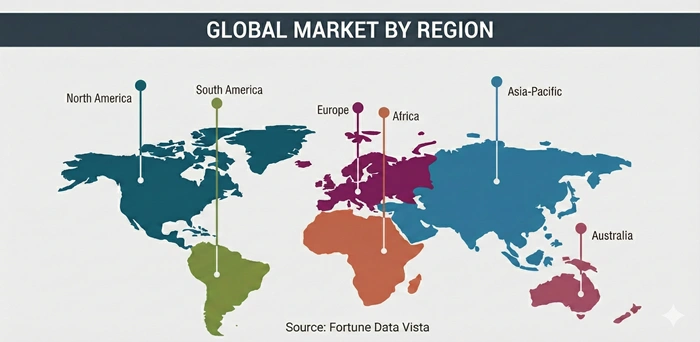
Regional Insights
Asia Pacific
Asia Pacific Is Both the Dominant and Fastest Growing Region in the Global Magnetic Materials Market, Powered by China's Rare Earth Manufacturing Ecosystem, Japan's Technology Leadership, and Rapidly Scaling EV and Clean Energy Demand
China's Vertically Integrated Rare Earth and Permanent Magnet Supply Chain, Combined With Its World-Leading EV Production Volume, Makes It the Single Most Important Country Market for Magnetic Materials Globally
Asia Pacific holds the largest regional share of the global magnetic materials market at approximately 52% of total revenue in 2025, a position of dominance built on China's vertically integrated rare earth mining, processing, alloy production, and sintered magnet manufacturing ecosystem that has no equivalent elsewhere in the world. China controls approximately 60% of global rare earth reserves and produces roughly 85% of global sintered NdFeB magnets — making the country's magnetic materials industry the essential supply foundation for global EV, wind energy, electronics, and industrial automation sectors. The region is simultaneously the fastest growing market, with a projected CAGR of approximately 8.1% from 2026 to 2033, driven by China's massive domestic EV market, Japan's advanced materials technology innovation, South Korea's electronics and EV battery supply chain growth, and India's rapidly expanding manufacturing and clean energy sectors. Key companies including TDK Corporation, Shin-Etsu Chemical, Zhong Ke San Huan Hi-Tech, and Hitachi Metals (Proterial) dominate the regional competitive landscape for high-performance magnetic materials.
Japan remains the world's most important center for permanent magnet technology innovation despite the shift of manufacturing volume to China, with companies including TDK, Shin-Etsu Chemical, and Daido Steel continuing to develop and commercialize the most advanced NdFeB magnet formulations and manufacturing processes globally. South Korea's Samsung, LG, and Hyundai Motor Group are major consumers of magnetic materials for consumer electronics, EV motors, and industrial components, and the Korean government has invested significantly in domestic rare earth processing and magnet manufacturing capability to reduce Chinese supply chain dependence. India is the most dynamic emerging growth market within the Asia Pacific magnetic materials landscape, combining the government's ambitious clean energy and EV adoption targets with large-scale manufacturing sector growth that is generating rapidly expanding demand for motors, transformers, and sensors that rely on advanced magnetic materials.
North America
North America Is the Second Largest Regional Market for Magnetic Materials, with the United States Investing Heavily in Domestic Rare Earth Supply Chain Development and Leading the Transition to Secured, Localized Magnet Manufacturing
U.S. Government Policy Support for Critical Material Supply Chain Localization Is Transforming North America into a Major New Investment Destination for Rare Earth Processing and Permanent Magnet Manufacturing Capacity
North America holds approximately 18% of global magnetic materials market revenue in 2025, with the United States accounting for the overwhelming majority of regional demand from its large automotive, aerospace, defense, electronics, and energy infrastructure sectors. The region is projected to grow at a CAGR of approximately 7.3% from 2026 to 2033 — above the global average — as U.S. government policies including the Inflation Reduction Act's domestic content requirements for EV batteries and motors, the CHIPS Act's electronics manufacturing incentives, and the Department of Defense's critical materials supply chain investment programs create powerful commercial incentives for rare earth and permanent magnet production capacity buildout on North American soil. MP Materials' Mountain Pass rare earth mine in California, neo Performance Materials in Canada, and Noveon Magnetics in Texas represent the emerging nucleus of a U.S.-based rare earth and magnet supply chain that is attracting substantial government and private investment within the global magnetic materials market.
Canada contributes meaningful secondary demand and emerging supply-side significance within the North American magnetic materials landscape, with both rare earth mineral resources and a growing rare earth processing industry supported by the Canadian Critical Minerals Strategy. Mexico's growing automotive manufacturing sector — increasingly focused on EV and hybrid vehicle production for the North American market — is creating expanding demand for permanent magnets and soft magnetic motor components from automotive Tier 1 suppliers operating in Mexican industrial corridors. Key North American magnetic materials market participants including Arnold Magnetic Technologies (United States), Electron Energy Corporation (United States), and neo Performance Materials (Canada) serve the region's advanced defense, aerospace, medical, and industrial markets with specialty magnet solutions that command premium pricing based on performance, security of supply, and application engineering expertise.
Report Customization Available by Region and Country
Access Precision-Targeted Magnetic Materials Market Intelligence Through Our Fully Customized Region-Wise and Country-Wise Reports — Designed to Address the Specific Supply Chain, Regulatory, and Competitive Dynamics of Every Market You Operate In
This report is available for full customization across all major global regions and individual countries, enabling magnetic material manufacturers, rare earth miners, EV and wind energy companies, defense contractors, investors, and policy analysts to access geography-specific market intelligence tailored to their specific strategic needs. A customized report delivers country-level demand sizing, supply chain mapping, regulatory environment analysis, competitive landscape profiles, and strategic opportunity identification specific to the magnetic materials market dynamics of the selected geography. Whether your objective is market entry planning, supply chain localization strategy, investment due diligence, or government policy analysis, our customization service delivers the focused intelligence your decisions require.
Customized magnetic materials market reports are available for all of the following regions and countries, providing detailed insights, market trends, competitive analysis, and growth opportunities tailored to each specific geography:
North America
-
U.S. — Rare earth supply chain localization investment analysis, IRA domestic content impact on magnet demand, defense and aerospace magnetic material requirements, and key competitive landscape including MP Materials, Arnold Magnetic Technologies, and Electron Energy Corporation
-
Canada — Critical minerals strategy impact on rare earth processing capacity, neo Performance Materials competitive positioning, and automotive EV sector magnetic material demand analysis
-
Mexico — Automotive EV manufacturing nearshoring demand analysis, permanent magnet import dynamics, and Tier 1 supplier magnetic component procurement trends
Europe
-
U.K. — Offshore wind program permanent magnet demand, post-Brexit critical material supply security strategy, and defense sector magnetic material requirements
-
Germany — Automotive EV transition magnetic material demand, Vacuumschmelze and specialist magnet manufacturer competitive profiles, and EU Critical Raw Materials Act compliance implications
-
France — Nuclear and defense sector magnetic material requirements, rare earth supply chain diversification policy, and clean energy sector magnet procurement trends
-
Italy — Industrial automation and motor sector magnetic material demand, domestic vs. imported magnet supply dynamics, and EV supply chain development
-
Rest of Europe — Scandinavian offshore wind magnet demand leadership, Eastern Europe EV supply chain development, and EU-wide rare earth recycling program analysis
Asia Pacific
-
China — Global rare earth and magnet manufacturing dominance analysis, export restriction risk assessment, domestic EV and wind energy magnet demand, and competitive landscape of Zhong Ke San Huan, TDK, and Shin-Etsu China operations
-
India — Clean energy transition magnetic material demand, EV manufacturing sector growth, domestic rare earth resource development, and government critical minerals policy
-
Japan — TDK, Shin-Etsu, and Daido Steel technology leadership analysis, rare earth stockpiling program, and automotive and electronics sector magnetic material demand
-
South Korea — Samsung, LG, and Hyundai supply chain magnetic material requirements, domestic magnet manufacturing development, and rare earth supply security strategy
-
Australia — Lynas Rare Earths supply chain significance, mining sector magnetic application demand, and rare earth export market development
-
Rest of Asia Pacific — Southeast Asia EV manufacturing expansion magnetic demand, Vietnam and Thailand electronics sector growth, and rare earth processing development
Latin America
-
Brazil — Rare earth mineral reserve potential, automotive and industrial magnetic material demand, and clean energy sector magnet procurement growth
-
Argentina — Critical mineral resource development, EV battery and motor sector emerging demand, and magnetic materials import dynamics
-
Rest of Latin America — Chile mining sector magnetic application demand, Colombia and Peru infrastructure investment magnetic material requirements
Middle East & Africa (MEA)
-
UAE — Smart city and industrial automation magnetic material demand, renewable energy project magnet requirements, and premium technology sector growth
-
Saudi Arabia — Vision 2030 industrial diversification magnetic material demand, NEOM smart city project requirements, and renewable energy transition magnet procurement
-
Rest of MEA — South Africa platinum group metals and rare earth mining sector, East Africa critical mineral development, and emerging clean energy sector magnetic material demand
Top Key Players
-
TDK Corporation (Japan)
-
Shin-Etsu Chemical Co., Ltd. (Japan)
-
Hitachi Metals, Ltd. (Proterial, Ltd.) (Japan)
-
Daido Steel Co., Ltd. (Japan)
-
Vacuumschmelze GmbH & Co. KG (Germany)
-
Arnold Magnetic Technologies (United States)
-
Electron Energy Corporation (United States)
-
MP Materials Corp. (United States)
-
Zhong Ke San Huan Hi-Tech Co., Ltd. (China)
-
neo Performance Materials Inc. (Canada)
-
Lynas Rare Earths Ltd. (Australia)
-
Ferroxcube International Holding B.V. (Netherlands)
Recent Developments
-
In 2025, TDK Corporation announced a major capacity expansion of its NdFeB sintered magnet production operations in Japan and Vietnam, targeting a 35% increase in output by 2027 to meet rapidly growing demand from EV motor manufacturers and wind turbine generator suppliers, supported by a capital investment program exceeding USD 400 million across its magnetic materials manufacturing network.
-
In 2024, MP Materials Corp. completed the commissioning of its rare earth magnet manufacturing facility in Fort Worth, Texas — the first commercial-scale NdFeB sintered magnet factory in the United States in decades — receiving its first commercial magnet supply contract from General Motors to supply magnets for EV traction motor production, marking a landmark milestone in U.S. critical materials supply chain localization.
-
In 2025, Shin-Etsu Chemical Co., Ltd. announced a strategic partnership with a major European automotive OEM group to develop next-generation low-dysprosium NdFeB permanent magnet formulations for high-temperature EV traction motor applications, leveraging Shin-Etsu's proprietary grain boundary diffusion technology to reduce critical rare earth content by approximately 30% without sacrificing thermal stability performance.
-
In 2024, Vacuumschmelze GmbH & Co. KG launched a new line of amorphous soft magnetic alloy cores specifically optimized for high-frequency power electronics and onboard EV charger applications, responding to growing demand from European EV charger manufacturers for ultra-low-loss soft magnetic components that enable more compact and efficient charging system designs in passenger vehicles.
-
In 2025, neo Performance Materials Inc. completed the acquisition of a rare earth magnet recycling technology company, significantly advancing its capability to recover and reprocess neodymium and praseodymium from end-of-life magnet scrap — positioning neo Performance as a pioneering supplier of recycled rare earth magnet materials to European automotive and electronics customers with documented circular economy supply chain commitments.
Market Trends
The Decoupling of Rare Earth Permanent Magnet Supply Chains from China and the Commercial Emergence of Magnet Recycling Technologies Are the Two Most Structurally Significant Trends Shaping the Magnetic Materials Market's Future
Supply Chain Geopolitics, Clean Energy Technology Demand, and Circular Economy Innovation Are Simultaneously Reshaping the Competitive Landscape of the Global Magnetic Materials Industry Through 2033
The strategic decoupling of critical magnetic material supply chains from Chinese dominance is the most consequential structural trend in the magnetic materials market today. Governments across the United States, European Union, Japan, South Korea, Canada, and Australia have identified rare earth permanent magnets as strategically critical materials and are funding an unprecedented array of new mining development, rare earth processing, and magnet manufacturing projects outside of China. The U.S. Inflation Reduction Act's domestic content rules, the EU Critical Raw Materials Act's sourcing diversification requirements, and Japan's long-established rare earth stockpiling and overseas development programs are collectively mobilizing tens of billions of dollars in new investment across the rare earth-to-magnet supply chain. This trend is not merely a risk management exercise — it is creating entirely new commercial supply chain architectures that will structurally reshape the competitive landscape of the global magnetic materials industry by 2033.
Rare earth magnet recycling is transitioning from a research curiosity to a commercially relevant trend as the volume of end-of-life EV motors, wind turbine generators, and hard disk drives containing recoverable rare earth magnets begins to reach commercially meaningful scale. The rare earth content of end-of-life products represents a high-value urban mining opportunity — recovered neodymium and dysprosium from magnet scrap can be reprocessed into new magnet alloy at significantly lower energy and environmental cost than primary mining and refining. Companies including Cyclic Materials, Noveon Magnetics, and Vacuumschmelze are developing and commercializing magnet recycling processes at increasing scale, and regulatory pressure from the EU's Ecodesign Regulation and end-of-life vehicle directives is creating compliance-driven demand for recycled rare earth content in new magnet production. These intersecting commercial and regulatory forces are expected to establish rare earth magnet recycling as a meaningful supplementary supply stream within the magnetic materials market well before the end of the forecast period.
Segments Covered in the Report
-
By Type
-
Permanent / Hard Magnets
-
Soft Magnets
-
Semi-Hard Magnets
-
-
By Material
-
Rare Earth Magnets (NdFeB, SmCo)
-
Ferrite Magnets (Ceramic Magnets)
-
Alnico Magnets
-
Others (Bonded Magnets, Recycled Rare Earth Magnets)
-
-
By Application
-
Automotive (EV Motors, Power Steering, ADAS)
-
Electronics (Consumer Electronics, Hard Disk Drives, Wireless Charging)
-
Power Generation (Wind Turbines, Hydroelectric Generators)
-
Industrial (Automation, Robotics, Servo Motors)
-
Healthcare (MRI Machines, Medical Devices)
-
Aerospace and Defense
-
Others (Telecommunications, Smart Grid)
-
-
By Form
-
Laminated
-
Powder
-
Solid / Block
-
-
By End User
-
Automotive and Transportation
-
Consumer Electronics
-
Energy and Power
-
Industrial Machinery
-
Healthcare
-
Aerospace and Defense
-
Others
-
-
By Region
-
North America (U.S., Canada, Mexico)
-
Europe (U.K., Germany, France, Italy, Rest of Europe)
-
Asia Pacific (China, India, Japan, South Korea, Australia, Rest of Asia Pacific)
-
Latin America (Brazil, Argentina, Rest of Latin America)
-
Middle East & Africa (UAE, Saudi Arabia, Rest of MEA)
-
❝ Built for Every Level — From Startups to Industry Giants ❞
Here Is Exactly How This Report Works for You
-
For Tier 1 EV manufacturers, wind turbine OEMs, defense contractors, and institutional investors, this report delivers a comprehensive competitor revenue analysis and a detailed supply chain risk assessment — mapping China's rare earth supply concentration exposure, alternative supply chain development timelines, competitor magnet sourcing strategies, and how geopolitical developments including U.S.-China trade restrictions and EU critical material regulations are reshaping procurement decisions and capital allocation across the global magnetic materials market through 2033.
-
For Tier 2 and Tier 3 magnet manufacturers, rare earth processors, and specialty alloy producers, the supply-demand dynamics section maps application-specific demand growth trajectories, material price trend forecasts, and geographic market development opportunities where automotive and renewable energy sector growth is creating the most accessible new procurement relationships — giving your sales and business development teams the intelligence needed to prioritize the highest-value commercial opportunities in the rapidly evolving magnetic materials market.
-
For startups developing rare earth recycling technologies, rare-earth-free magnet solutions, or AI-driven materials discovery platforms, as well as PE investors and corporate development teams evaluating acquisitions in the magnetic materials space, this report provides a detailed technology adoption curve analysis, competitive patent landscape assessment, and mapping of the regulatory, investment, and partnership dynamics that will determine which innovative magnetic material technologies achieve commercial scale and generate the most significant financial returns across the forecast period to 2033.
Frequently Asked Questions:
Answer: The global magnetic materials market was valued at USD 34.14 billion in 2025 and is projected to reach USD 55.34 billion by 2033. It is expected to grow at a CAGR of 6.2% from 2026 to 2033, driven by surging EV adoption, renewable energy expansion, and the growing use of advanced magnetic solutions in industrial automation and consumer electronics.
Answer: The magnetic materials market is primarily driven by the explosive global adoption of electric vehicles — each of which requires substantial quantities of rare earth permanent magnets in traction motors — and the rapid expansion of wind energy capacity that relies on high-performance permanent magnet generators. Additional growth is coming from industrial automation, consumer electronics miniaturization, and healthcare imaging applications that collectively create a broad and diversifying demand base for magnetic material technologies.
Answer: Asia Pacific dominates the global magnetic materials market with approximately 52% of total revenue in 2025, anchored by China's vertically integrated rare earth mining and magnet manufacturing ecosystem and Japan's advanced permanent magnet technology industry. The region is simultaneously the fastest growing market, driven by China's EV production scale, South Korea's electronics sector demand, and India's rapidly expanding clean energy and manufacturing sectors.
Answer: Electric vehicles primarily use rare earth neodymium-iron-boron (NdFeB) permanent magnets in their traction motors because NdFeB magnets offer the highest magnetic energy density of any known magnet material, enabling compact, lightweight motors with the power density needed for competitive EV performance. Some EV manufacturers are exploring ferrite magnets and rare-earth-reduced motor designs to reduce cost and supply chain dependence on Chinese rare earth materials, though NdFeB remains the dominant choice for high-performance EV traction motor applications in the current magnetic materials market.
Answer: Geopolitical concerns about China's dominance of rare earth mining and permanent magnet manufacturing are among the most significant strategic factors shaping investment and procurement decisions in the magnetic materials market, as China's control of approximately 60–70% of global sintered NdFeB magnet production creates supply security risk for EV manufacturers, wind energy companies, and defense sectors in North America, Europe, and allied nations. These concerns are driving substantial government and private investment in alternative rare earth supply chains — including new mining projects in the United States, Australia, and Canada, rare earth magnet recycling programs, and the development of rare-earth-reduced motor technologies — that will progressively reshape the competitive geography of the magnetic materials market through 2033.