
Masterbatch Market Overview
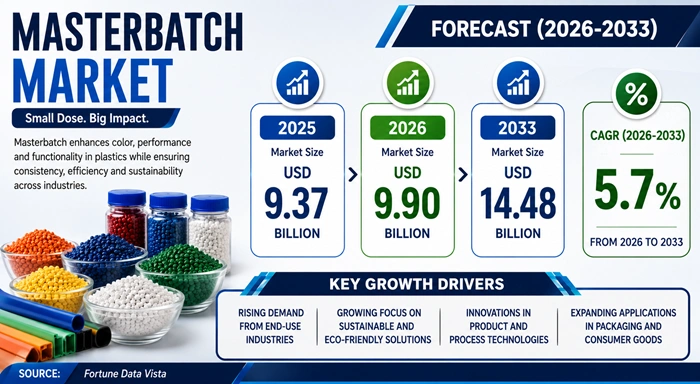
The global masterbatch market size is valued at USD 9.37 billion in 2025 and is predicted to increase from USD 9.90 billion in 2026 to approximately USD 14.48 billion by 2033, growing at a CAGR of 5.7% from 2026 to 2033.
Masterbatch is a concentrated mixture of pigments, additives, or fillers dispersed into a carrier resin, used to impart specific properties — including color, UV stabilization, flame retardancy, antistatic behavior, and enhanced mechanical strength — to finished plastic products during the manufacturing process. It serves as the most efficient and cost-effective way to uniformly incorporate functional characteristics into polymers during extrusion, injection molding, blow molding, and film production. With packaging, automotive, agriculture, and construction industries collectively consuming the vast majority of global plastic production, demand for color and functional masterbatches continues to grow in direct proportion to global plastics usage. As the world accelerates its focus on sustainable materials and high-performance polymers, the masterbatch market is increasingly positioned as a critical enabler of both product quality and environmental performance in plastic manufacturing.
AI Impact on the Masterbatch Industry
Artificial intelligence is reshaping masterbatch formulation, quality control, and supply chain management — enabling faster, smarter, and more sustainable operations for manufacturers across the global plastics additives value chain
AI-driven color matching and formulation tools are among the most immediate and commercially impactful applications of artificial intelligence in the masterbatch sector. Historically, developing a new color masterbatch formulation required skilled colorists to physically test multiple pigment combinations through time-consuming trial-and-error processes. AI-powered spectrophotometric systems can now analyze target color specifications and automatically generate optimal pigment formulas — factoring in carrier polymer type, processing conditions, and lightfastness requirements — in a fraction of the time. This capability reduces formulation development cycles from days to hours, lowers raw material waste, and delivers more consistent color accuracy across large production runs. For masterbatch manufacturers serving fashion-sensitive sectors like consumer packaging and automotive interiors, this speed of formulation response is a genuine competitive differentiator.
Beyond formulation, AI is transforming quality management and process optimization on masterbatch production lines. Real-time sensor arrays combined with machine learning algorithms can monitor dispersion quality, melt flow consistency, and particle size distribution during compounding — detecting process deviations before they result in off-spec product. Predictive maintenance systems are also reducing unplanned downtime on twin-screw extruders and continuous compounding lines, which significantly improves production efficiency and reduces the total cost per kilogram of output. As AI-enabled ERP and supply chain platforms become more accessible, masterbatch producers are also gaining better visibility into raw material pricing trends, customer demand forecasting, and logistics optimization — enabling more agile and profitable business operations across global markets.
Growth Factors
Surging demand from packaging, automotive lightweighting, and agricultural film applications — combined with the global plastics industry's shift toward functional and sustainable additive solutions — is driving the masterbatch market toward consistent multi-year expansion through 2033
The primary growth driver for the masterbatch market is the relentless expansion of the global packaging industry. Packaging accounts for the single largest end-use application of plastics, and masterbatch is integral to virtually every flexible and rigid plastic packaging product — from food-grade films and beverage caps to cosmetic tubes and industrial bags. As e-commerce growth, urbanization, and food safety requirements drive sustained demand for packaged goods worldwide, the consumption of color, white, black, and additive masterbatches for packaging applications grows proportionally. Functional masterbatches — including oxygen-barrier, UV-protective, and antimicrobial formulations for food contact applications — are also gaining strong commercial traction as brand owners seek to extend shelf life and meet increasingly demanding food safety standards across global markets.
Automotive lightweighting is the second major structural growth engine. As automakers globally face tightening CO₂ emission regulations, the replacement of metal components with engineered plastic parts — which are lighter, corrosion-resistant, and more design-flexible — is accelerating. Each plastic component used in automotive interiors, exteriors, and under-hood applications requires color, UV, heat stabilization, and flame-retardant masterbatches tailored to specific performance standards. The continued growth of electric vehicle production is particularly significant, as EVs use substantially more plastic-based components than conventional internal combustion engine vehicles, creating new and growing demand for specialist technical masterbatches. In parallel, agricultural films used for mulching, greenhouse covers, and silage bales rely on UV stabilizer and infrared absorber masterbatches to achieve the multi-season durability required in modern precision farming — adding another large and growing end-use segment to the global masterbatch demand picture.
Market Outlook
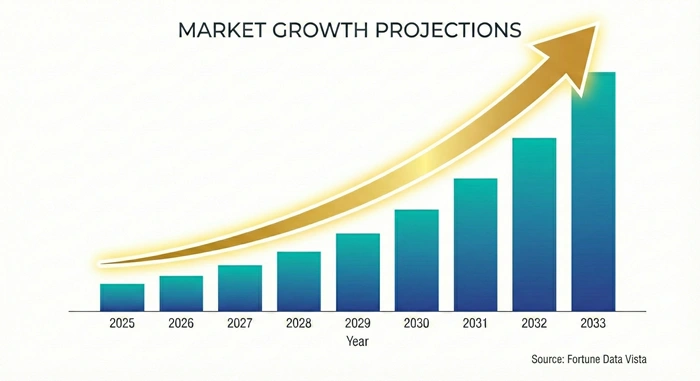
Driven by packaging industry growth, automotive polymer adoption, sustainability mandates, and expanding use in agricultural and construction applications, the masterbatch market is on a steady trajectory toward USD 14.48 billion by 2033 — representing meaningful incremental value creation across all key geographies
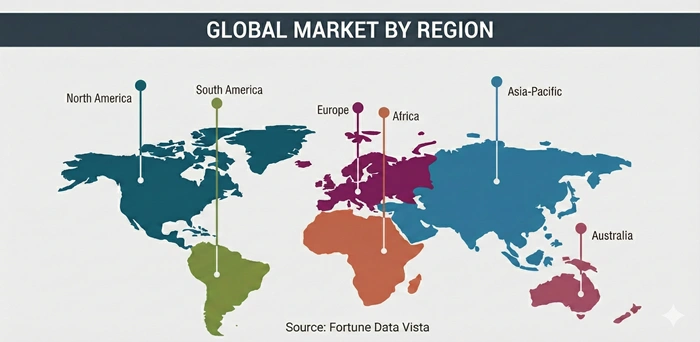
The medium-term outlook for the masterbatch market is constructive and broad-based. Growing at a CAGR of 5.7% through 2033, the market is projected to add approximately USD 4.58 billion in incremental value from its 2026 base. Asia Pacific will remain the most dominant regional market by volume and value, driven by China's massive plastics manufacturing ecosystem, India's rapidly expanding packaging and automotive sectors, and the growth of polymer processing industries across Southeast Asia. North America and Europe will contribute stable, high-value growth — particularly in functional and specialty additive masterbatches for technically demanding automotive, medical, and electronics applications — as manufacturers in these regions focus on premium formulation performance rather than commodity volume.
The sustainability transformation of the plastics industry is creating a distinct set of new opportunities within the masterbatch sector. As brand owners and legislators push for increased use of post-consumer recycled (PCR) content in packaging and consumer goods, specialized color and additive masterbatches designed to stabilize, deodorize, and color-correct recycled polymer streams are seeing fast-growing demand. Biodegradable and compostable polymer masterbatches — designed for use in polylactic acid (PLA) and polyhydroxyalkanoate (PHA) materials — are also emerging as a commercially relevant segment as bioplastics production scales globally. These sustainable innovation streams represent a wave of product development investment that is likely to generate above-average growth rates within the broader masterbatch market through the 2026–2033 forecast period.
Expert Speaks
-
"The global packaging industry is continuing to demand more from its material inputs — greater visual appeal, longer shelf life, and better sustainability credentials — all at lower cost. Masterbatch technology is right at the heart of meeting those demands, and we are accelerating our investment in functional and bio-based additive formulations to ensure our customers remain competitive in an increasingly performance-driven market." — CEO perspective, global specialty chemicals and plastics additives company
-
"Automotive lightweighting is one of the most compelling structural trends in our industry. The shift to electric vehicles and engineered plastic components has fundamentally changed the specification requirements for color and functional masterbatches. We are seeing strong demand for formulations that can meet under-hood thermal performance, exterior UV durability, and interior aesthetic standards simultaneously — and the companies that can deliver that multi-function performance efficiently will lead the market." — CEO perspective, leading polymer compounding and materials company
-
"Sustainability is no longer just a compliance checkbox for our customers — it is a genuine source of competitive differentiation and consumer demand. Masterbatch solutions that enable recycled content compatibility, reduce colorant loading, and support circular economy goals are among the fastest-growing parts of our portfolio. We see this trend intensifying considerably over the next five to ten years." — CEO perspective, multinational packaging and plastics solutions company
Key Report Takeaways
-
Asia Pacific dominates the global masterbatch market, holding approximately 45% of total revenue share in 2025, driven by China's enormous plastics manufacturing base, India's rapidly growing packaging and automotive polymer industries, and the expansion of plastic processing capacity across Southeast Asian nations including Vietnam, Indonesia, and Thailand.
-
Asia Pacific is also the fastest-growing region, expected to register the highest CAGR through 2033 due to rising domestic consumption of plastic products, increasing foreign direct investment in regional polymer manufacturing, and growing demand for color and functional masterbatches in food packaging, agricultural films, and automotive applications.
-
The packaging application segment leads all end-use categories, accounting for over 35% of global masterbatch market revenue in 2025, as virtually all flexible and rigid plastic packaging products — from food-grade films to e-commerce packaging and beverage containers — require color, white, or additive masterbatches to meet aesthetic, functional, and regulatory standards.
-
Color masterbatch is the largest product type by revenue, holding approximately 33.8% of the global market share in 2025, driven by pervasive demand across packaging, consumer goods, and automotive sectors where precise and consistent coloring of plastic components is a basic commercial requirement.
-
Polypropylene (PP) is the dominant carrier polymer, accounting for the largest share of the carrier polymer segment due to PP's widespread use as the base resin in packaging, automotive, consumer goods, and agricultural applications — making it the most frequently specified carrier for color, additive, and filler masterbatches globally.
-
Additive masterbatch is the fastest-growing product type, projected to achieve the highest CAGR through 2033, driven by growing demand for functional plastic performance including UV protection, flame retardancy, antimicrobial properties, anti-fog behavior, and oxygen scavenging — particularly from food packaging, agriculture, and electric vehicle component manufacturers.
-
The agriculture application segment is growing rapidly, supported by expanding adoption of UV-stabilized mulch films, greenhouse covers, and anti-drip films in precision farming across Asia Pacific, the Middle East, and Latin America — where the economic imperative to extend agricultural film service life is creating sustained demand for high-performance masterbatch formulations.
Market Scope
| Parameter | Details |
|---|---|
| Market Size by 2033 | USD 14.48 Billion | Market Size by 2026 | USD 9.90 Billion | Market Size by 2025 | USD 9.37 Billion | Market Growth Rate from 2026 to 2033 | CAGR of 5.7% | Dominating Region | Asia Pacific | Fastest Growing Region | Asia Pacific | Segments Covered | Type, Carrier Polymer, Application, Form | Regions Covered | North America, Europe, Asia Pacific, Latin America, Middle East & Africa |
Market Dynamics
Drivers Impact Analysis
The combined force of global packaging industry expansion, automotive polymer adoption, agricultural film demand, and the accelerating shift toward functional plastic additives is creating a powerful and multi-layered growth engine for the masterbatch market that will sustain momentum well into 2033
| Driver | ≈ % Impact on CAGR Forecast | Geographic Relevance | Impact Timeline |
|---|---|---|---|
| Growth of global packaging industry requiring color and additive masterbatches | ~35% | Global, especially Asia Pacific | Short to Long Term |
| Automotive lightweighting and EV component polymer demand | ~25% | Europe, North America, Asia Pacific | Medium to Long Term |
| Agricultural film applications requiring UV and IR masterbatches | ~18% | Asia Pacific, MEA, Latin America | Short to Medium Term |
| Increasing use of functional/additive masterbatches in technical applications | ~14% | North America, Europe | Medium to Long Term |
| Rising plastics consumption in building and construction sector | ~8% | Asia Pacific, MEA | Short to Medium Term |
The packaging industry's continued growth is the most foundational driver of the masterbatch market at the global level. As consumer lifestyles increasingly revolve around convenience, e-commerce, and single-serve food formats, the volume of plastic packaging produced and consumed annually continues to climb. Brand owners in the food and beverage, personal care, pharmaceutical, and household goods sectors are simultaneously raising the bar on packaging aesthetics — demanding brighter colors, better color-to-color consistency across international production sites, and premium effects including pearlescent, metallic, and fluorescent appearances. These requirements drive growing demand for high-performance color masterbatches with tightly controlled pigment dispersion and batch-to-batch consistency standards that only specialist masterbatch formulations can reliably deliver.
The automotive sector represents the second pillar of masterbatch demand growth, and its influence on the market is deepening as the industry transitions toward electric mobility. Modern electric vehicles contain significantly more polymer-based components than conventional vehicles — including large battery enclosures, structural plastic body panels, interior trim, and cable management systems — all of which require specifically engineered color, UV stabilization, flame-retardant, and anti-static masterbatch formulations. European and North American automakers are increasingly specifying premium technical masterbatches for high-visibility interior applications where color accuracy, light fastness, and scratch resistance must be maintained over multi-year vehicle lifetimes. As global EV production volumes scale dramatically through the forecast period, the automotive segment's contribution to total masterbatch market demand will grow proportionally.
Restraints Impact Analysis
Volatility in raw material prices, environmental pressure on conventional pigments and additives, and the increasing regulatory scrutiny of plastic products are creating meaningful headwinds that are complicating growth strategies for masterbatch producers operating in global markets
| Restraint | ≈ % Impact on CAGR Forecast | Geographic Relevance | Impact Timeline |
|---|---|---|---|
| Raw material price volatility (pigments, carrier resins, additives) | ~45% | Global | Short to Medium Term |
| Regulatory restrictions on plastic packaging and hazardous pigments | ~35% | Europe, North America | Short to Long Term |
| Intense price-based competition from regional and local manufacturers | ~20% | Asia Pacific, Latin America, MEA | Short to Medium Term |
The most significant constraint on the masterbatch market's growth trajectory is the persistent volatility in raw material costs — particularly for titanium dioxide (TiO₂, the primary white pigment), carbon black (the primary black pigment), specialty organic and inorganic color pigments, and carrier polymers including polypropylene and polyethylene. These raw materials account for the majority of manufacturing costs in masterbatch production, and their prices are highly sensitive to crude oil price movements, global supply chain disruptions, and concentration of supply in specific geographies. When raw material prices spike — as they did during global supply chain disruptions — masterbatch manufacturers face a difficult choice between absorbing margin erosion or passing price increases to customers in competitive markets where switching costs are relatively low.
Regulatory pressure represents a growing and longer-term restraint, particularly in Europe and North America. The European Union's push toward a circular economy — including regulations restricting single-use plastics, mandating minimum recycled content in packaging, and tightening restrictions on hazardous substances in plastic articles — is creating compliance complexity for masterbatch manufacturers and their customers alike. Some traditional high-performance pigments and additives are facing phase-out pressure under REACH and similar frameworks. While this creates reformulation challenges in the short term, it also drives demand for compliant alternatives — meaning that the overall constraint is more about transition pace and cost than fundamental demand destruction.
Opportunities Impact Analysis
The global sustainability transformation of plastics, the rise of bio-based and recyclable polymer systems, and growing demand for high-performance functional masterbatches in emerging applications represent three distinct and high-value opportunity streams for the masterbatch market through 2033
| Opportunity | ≈ % Impact on CAGR Forecast | Geographic Relevance | Impact Timeline |
|---|---|---|---|
| Masterbatches compatible with recycled and bioplastic polymers | ~38% | Europe, North America, Asia Pacific | Medium to Long Term |
| Functional additive masterbatches for EV and renewable energy applications | ~30% | Europe, North America, Asia Pacific | Medium to Long Term |
| Growth of masterbatch demand in underpenetrated MEA and Latin American markets | ~22% | MEA, Latin America | Short to Medium Term |
| Antimicrobial and smart functional masterbatches for healthcare and food packaging | ~10% | North America, Europe | Medium to Long Term |
The global sustainability transformation of the plastics industry is creating the largest single opportunity horizon for the masterbatch market in the coming decade. As brand owners and regulators push the adoption of post-consumer recycled (PCR) and mechanically recycled plastic content in packaging and consumer goods, specialized masterbatch formulations are needed to address the inherent variability of recycled polymer streams. Color masterbatches that can achieve consistent, bright color over darker or grayer recycled base resins, combined with odor-neutralizing, UV-stabilizing, and degradation-arresting additive formulations, represent a fast-growing and premium-priced product category. Masterbatch manufacturers that invest early in developing robust recycled-content-compatible portfolios are well positioned to capture significant market share as the circular plastics economy transitions from policy aspiration to commercial reality across Europe, North America, and increasingly Asia Pacific.
Emerging applications in electric vehicle manufacturing, renewable energy infrastructure, and smart consumer electronics are opening additional premium-value opportunity streams within functional additive masterbatches. Solar panel encapsulant films require specialized UV-stabilizing and hydrolysis-resistant masterbatches. Wind turbine blade composites and cable insulation systems require flame-retardant and anti-tracking formulations. Wearable electronics and smart appliances demand masterbatches that combine color aesthetics with anti-static, electromagnetic shielding, and thermal management properties in a single formulation. These niche but fast-growing segments are at an early commercial stage, and the masterbatch producers who develop technically differentiated solutions for them earliest will enjoy strong pricing power and customer loyalty well into the forecast horizon.
Segment Analysis
By Type: Color Masterbatch
Color masterbatch is the revenue cornerstone of the global masterbatch industry — its universal demand across virtually every plastic processing application and its growing premium for brand-differentiating aesthetic performance make it the most commercially important product category in the market
Color masterbatch is the single largest product segment within the masterbatch market, holding approximately 33.8% of global revenue share in 2025. This segment encompasses concentrated pigment dispersions in carrier resins that deliver precise and consistent coloration to plastic products across injection molding, blown film, thermoforming, and fiber spinning processes. Its market leadership reflects the fundamental commercial importance of color in plastic product design — virtually every consumer-facing plastic product, from food packaging to automotive interiors to consumer electronics housings, requires precisely specified coloration that only a well-formulated color masterbatch can reliably deliver at production scale. The segment is growing at a CAGR of approximately 5.9% through 2033, with Asia Pacific — particularly China and India — representing the dominant geographic market due to the massive volume of colored plastic packaging and consumer goods manufactured in these countries. Leading companies in this segment include Clariant AG, Cabot Corporation, and Ampacet Corporation, all of which maintain extensive global color development portfolios serving brand owners across packaging, automotive, and consumer goods sectors.
North America and Europe are significant contributors to the color masterbatch segment's revenue, driven by demand for premium color effects — including special effect pigments, pearlescent, and metallic finishes — that command higher per-kilogram prices and are particularly valued in personal care packaging, luxury goods, and automotive interior applications. The trend toward centralized global color standards by multinational brand owners — who demand exact color matching across manufacturing sites in different continents — is creating a growing opportunity for specialty color masterbatch producers with global technical service networks and color laboratory capabilities. In Europe, regulatory scrutiny of certain azo pigments and heavy-metal-based colorants is accelerating reformulation activity, driving investment in compliant organic pigment systems and creating premium opportunities for masterbatch producers with strong regulatory chemistry competencies.
By Application: Packaging
Packaging's dominant position as the largest application in the masterbatch market reflects the plastics industry's foundational role in global food safety, consumer goods distribution, and brand identity — a role that is only growing in scale and formulation sophistication
The packaging application segment holds the largest end-use share in the masterbatch market, contributing over 35% of global revenue in 2025, and is growing at a CAGR of approximately 6.0% through 2033. This dominance is driven by packaging's status as the largest single consumer of plastic materials globally — encompassing flexible films, rigid containers, bottles, caps, closures, bags, and wrap formats across food and beverage, pharmaceutical, personal care, and industrial goods sectors. Every one of these packaging formats requires masterbatch inputs for coloring, UV protection, antistatic treatment, anti-fog behavior, or oxygen-barrier enhancement. The growing sophistication of food safety requirements — including antimicrobial packaging, active packaging with oxygen scavengers, and high-clarity films for fresh produce — is particularly driving demand for functional additive masterbatches with precisely defined performance profiles. Asia Pacific leads in packaging masterbatch consumption by volume, with China's massive food processing and consumer goods export manufacturing industries generating the highest individual country demand globally. Companies including Clariant, PolyOne (Avient), and Tosaf Group are among the most active suppliers to the packaging segment across all major geographies.
The rapid growth of e-commerce packaging is adding a new and fast-expanding dimension to packaging masterbatch demand. As online retail generates billions of additional shipments annually, the need for durable, aesthetically consistent, and brand-compliant plastic mailers, bags, and protective packaging materials is growing dramatically. In parallel, sustainability pressures are reshaping the technical requirements of packaging masterbatches — with brand owners demanding formulations compatible with mono-material recycling streams, infrared-sortable packaging for automated waste management systems, and home-compostable materials for certain fresh food categories. These evolving requirements are creating a wave of product development activity across the packaging masterbatch segment that is expected to sustain above-average CAGR performance through the forecast period.
Regional Insights
Asia Pacific
Asia Pacific's commanding plastic manufacturing scale, rapidly growing packaging and automotive polymer sectors, and expanding role as the world's largest consumer goods production hub make it the undisputed leader and most dynamic growth engine in the global masterbatch market
Asia Pacific dominates the masterbatch market, accounting for approximately 45% of global revenue share in 2025, and is expected to maintain its leadership position through 2033 with a regional CAGR of approximately 6.1%. China is the single largest country market, driven by its vast plastics processing industry — which encompasses packaging, consumer goods, construction materials, automotive components, and agricultural films — all of which require masterbatch inputs at every stage of production. India is the second largest and fastest-growing country market within the region, powered by rising per-capita plastic consumption, rapid expansion of organized retail packaging, government initiatives supporting domestic manufacturing (Make in India), and growing investment in automotive and agricultural polymer applications. Key masterbatch producers with strong Asia Pacific presence include Cabot Corporation, Clariant AG, Tosaf Group, and numerous large domestic Chinese and Indian producers — including Plastiblends India Ltd. and BASF's regional polymer additives operations.
Southeast Asian markets — including Vietnam, Indonesia, Thailand, and the Philippines — are emerging as increasingly significant contributors to regional demand as plastics processing industries in these countries mature and their domestic packaging and consumer goods sectors expand. Foreign direct investment in regional manufacturing — driven partly by supply chain diversification away from China — is generating new plastic processing capacity across the region that will translate into proportional masterbatch demand growth. Japan and South Korea contribute high-value revenue from technically demanding automotive, electronics, and precision-molded component applications, where functional additive and specialty color masterbatches command premium pricing. The combination of high volume commodity demand and growing premium functional applications makes Asia Pacific a uniquely attractive and diverse growth market for masterbatch producers over the entire 2026–2033 forecast period.
Europe
Europe's strong regulatory environment, premium functional masterbatch demand, and leadership in sustainable plastics innovation make it the most technically sophisticated and high-value regional market for masterbatch globally
Europe holds the second-largest regional share in the masterbatch market, accounting for approximately 23% of global revenue in 2025, with a regional CAGR of approximately 5.1% through 2033. The region's market is characterized by high average selling prices for masterbatch products compared to Asia Pacific, reflecting the technical sophistication and regulatory compliance requirements of European end-use sectors — particularly automotive, food-contact packaging, medical, and electrical & electronics applications. Germany, France, Italy, and the United Kingdom collectively drive the majority of European masterbatch demand, with Germany's automotive and engineering plastics sectors representing the most technically demanding customer base in the region. Leading companies with major European operations include Clariant AG (Switzerland/Germany), BASF SE (Germany), Tosaf Group (Israel/Germany), and A. Schulman (now part of LyondellBasell/Avient) — all of which maintain strong technical service capabilities aligned with the rigorous formulation and documentation requirements of European industrial customers.
Europe's regulatory environment is simultaneously a commercial challenge and a powerful innovation driver for the masterbatch market. The EU's Circular Economy Action Plan, Single-Use Plastics Directive, and packaging waste regulations are driving demand for masterbatches that enable recycled content compatibility, near-infrared (NIR) sortability for packaging waste management systems, and recyclable mono-material design in flexible packaging. Simultaneously, REACH substance restrictions are compelling reformulation of certain traditional pigment and additive systems, creating product development opportunities for manufacturers with strong regulatory chemistry capabilities. European masterbatch producers are generally at the forefront of sustainability-oriented formulation innovation globally, and the premium pricing that sustainable and technically compliant masterbatch products command in this region makes Europe a strategically important market for companies seeking to build high-margin specialty portfolios.
Report Customization Available
Get a Fully Customized Masterbatch Market Report for Your Target Region or Country
Our masterbatch market report is available with complete region-specific and country-level customization to align precisely with your strategic research and business intelligence objectives. Each tailored report delivers in-depth market sizing, type-specific and application-specific demand analysis, competitive landscape profiling, raw material supply chain insights, regulatory environment overviews, and growth opportunity mapping — all calibrated to the real dynamics of your selected geography and industry context.
Customized masterbatch market reports are available for the following regions and countries:
North America
-
United States – In-depth analysis of packaging, automotive, and medical masterbatch demand, EPA regulatory environment, key competitor profiles including Avient and Cabot, and functional additive masterbatch innovation trends
-
Canada – Coverage of packaging film and automotive component masterbatch market, regulatory alignment with U.S. standards, and domestic polymer processing industry landscape
-
Mexico – Analysis of fast-growing automotive manufacturing sector masterbatch demand, export-oriented packaging industry growth, and competitive supplier landscape
Europe
-
United Kingdom – Detailed coverage of post-Brexit regulatory environment, food contact packaging masterbatch standards, key domestic compounders, and sustainability-driven reformulation demand
-
Germany – Focus on automotive, engineering plastics, and electrical & electronics masterbatch demand, REACH compliance landscape, and leading company profiles including BASF and Clariant
-
France – Analysis of packaging and consumer goods masterbatch market, regulatory trends, and key supplier and distributor landscape
-
Italy – Insights on plastics processing industry, packaging and automotive masterbatch demand, and competitive supplier landscape in Southern Europe
-
Rest of Europe – Aggregated analysis covering Netherlands, Belgium, Poland, Spain, and Scandinavian markets, with emphasis on sustainable masterbatch adoption and EU circular economy policy impact
Asia Pacific
-
China – Comprehensive analysis of domestic color and additive masterbatch production, leading Chinese manufacturer profiles, export dynamics, and growing demand from EV and solar energy applications
-
India – Coverage of packaging, agricultural film, and automotive masterbatch demand growth, Make in India policy impact, and leading domestic producer profiles including Plastiblends India
-
Japan – Analysis of high-value engineering plastics and automotive masterbatch market, precision color management standards, and domestic vs. imported masterbatch dynamics
-
South Korea – Insights on automotive, electronics, and flexible packaging masterbatch demand, key producer landscape, and growing functional additive applications
-
Australia – Coverage of packaging and construction sector masterbatch demand, regulatory environment, and competitive import vs. domestic supply landscape
-
Rest of Asia Pacific – Analysis of fast-growing markets in Vietnam, Indonesia, Thailand, and the Philippines, focused on packaging and consumer goods masterbatch demand growth
Latin America
-
Brazil – Detailed analysis of packaging, agricultural, and automotive masterbatch demand, ANVISA regulatory landscape, and leading local and international supplier profiles
-
Argentina – Coverage of domestic plastics processing industry, masterbatch adoption trends, and competitive market dynamics for color and additive formulations
-
Rest of Latin America – Insights covering Colombia, Chile, Peru, and Mexico's masterbatch consumption trends in packaging and agricultural applications
Middle East & Africa
-
UAE – Coverage of packaging and construction masterbatch demand, free trade zone-based distribution landscape, and key regional distributor and manufacturer profiles
-
Saudi Arabia – Analysis of Vision 2030 petrochemicals and plastics downstream investment impact, packaging and agricultural masterbatch demand, and competitive supplier landscape
-
Rest of MEA – Insights covering South Africa, Egypt, Nigeria, and the broader MEA region's growing packaging, agricultural film, and construction polymer masterbatch demand
Top Key Players
-
Clariant AG (Switzerland)
-
Cabot Corporation (United States)
-
Avient Corporation (PolyOne) (United States)
-
BASF SE (Germany)
-
Ampacet Corporation (United States)
-
A. Schulman Inc. (LyondellBasell) (United States)
-
Tosaf Group (Israel)
-
Americhem Inc. (United States)
-
RTP Company (United States)
-
Plastika Kritis S.A. (Greece)
-
Plastiblends India Ltd. (India)
-
Hubron International (United Kingdom)
-
Gabriel-Chemie Group (Austria)
-
Techmer PM (United States)
-
Proquimac PFC S.L. (Spain)
Recent Developments
-
In 2025, Avient Corporation (formerly PolyOne) announced the expansion of its sustainable solutions portfolio with the commercial launch of its next-generation OnColor™ Eco masterbatch line — featuring formulations optimized for use with post-consumer recycled polyethylene and polypropylene streams. The new range was designed to address growing brand owner demand for NIR-sortable, recycled-content-compatible color masterbatches for flexible and rigid packaging applications across North American and European markets.
-
In 2024, Clariant AG completed the strategic divestiture of its Pigments business to SK Capital Partners, allowing the company to sharpen its focus on high-growth specialty masterbatch and additives segments. This transaction allowed Clariant to reallocate R&D and commercial investment toward sustainable masterbatch solutions — including bio-attributed, recyclable, and food-contact-compliant formulations — that align with its long-term specialty performance materials strategy.
-
In 2025, Cabot Corporation announced a significant investment in expanding its carbon black masterbatch production capacity in Asia Pacific, responding to strong demand growth from the automotive and infrastructure cable segments across China and India. The expansion included the installation of new continuous compounding lines with enhanced dispersion technology, designed to meet the increasingly tight quality specifications required by tier-1 automotive and wire & cable manufacturers in the region.
-
In 2024, Tosaf Group launched a new range of antimicrobial masterbatches incorporating zinc-based and silver-ion active ingredients for food contact packaging and healthcare applications, responding to sustained post-pandemic demand for hygiene-enhancing functional plastic formulations. The products were developed in collaboration with major European and North American packaging converters and achieved full compliance with EU food contact material regulations.
-
In 2025, Plastiblends India Ltd. expanded its masterbatch manufacturing capacity at its Daman facility by approximately 15,000 metric tons per annum, reflecting the strong demand growth from India's packaging, agriculture, and consumer goods sectors. The company also announced the launch of a new UV masterbatch line for agricultural mulch film applications, targeting the rapidly growing precision farming market across South and Southeast Asia.
Market Trends
Sustainability-driven reformulation, the rise of functional and smart additive masterbatches, and growing demand for recycled-content-compatible formulations are fundamentally reshaping the competitive landscape and product innovation agenda of the masterbatch market through 2033
The most transformative trend reshaping the masterbatch market over the forecast period is the accelerating industry-wide shift toward sustainable formulations. As plastic packaging regulations tighten globally — particularly in Europe and increasingly in North America and Asia — masterbatch manufacturers are under mounting pressure to develop products that are compatible with recycled polymer streams, free of restricted substances, and designed to support mono-material recyclability. This is driving significant reformulation activity across the industry: conventional white masterbatches based on TiO₂ are being reformulated at lower loading levels to reduce cost and improve NIR sortability; functional additive masterbatches are being reformulated to remove REACH-restricted plasticizers and stabilizers; and entirely new bio-based carrier resins are being developed for use in biodegradable masterbatch formulations compatible with PLA and PHA matrices.
The second major trend is the rapid proliferation of functional and performance additive masterbatches beyond their traditional commodity applications. While UV stabilization, flame retardancy, and antistatic masterbatches have been commercially established for decades, the innovation frontier is now advancing into smart functional categories — including antimicrobial formulations for healthcare and food contact packaging, phase-change thermal management masterbatches for electric vehicle components, anti-counterfeiting masterbatches with embedded fluorescent or IR-responsive markers for brand protection, and oxygen-scavenging barrier masterbatches for extended shelf-life food packaging. These high-value functional segments are attracting significant R&D investment from major producers and command meaningfully higher margins than commodity color and filler masterbatches — making them strategically central to the long-term growth and profitability story of leading masterbatch market participants.
Segments Covered in the Report
-
By Type
-
White Masterbatch
-
Black Masterbatch
-
Color Masterbatch
-
Additive Masterbatch
-
Filler Masterbatch
-
-
By Carrier Polymer
-
Polypropylene (PP)
-
Polyethylene (PE)
-
Polyvinyl Chloride (PVC)
-
Polyethylene Terephthalate (PET)
-
Acrylonitrile Butadiene Styrene (ABS)
-
Other Carrier Polymers (Nylon, Polystyrene, EVA, etc.)
-
-
By Application
-
Packaging
-
Automotive & Transportation
-
Building & Construction
-
Agriculture
-
Electrical & Electronics
-
Consumer Goods
-
Textile
-
Others
-
-
By Form
-
Pellets
-
Powder
-
Liquid
-
-
By Region
-
North America (U.S., Canada, Mexico)
-
Europe (U.K., Germany, France, Italy, Rest of Europe)
-
Asia Pacific (China, India, Japan, South Korea, Australia, Rest of Asia Pacific)
-
Latin America (Brazil, Argentina, Rest of Latin America)
-
Middle East & Africa (UAE, Saudi Arabia, Rest of MEA)
-
❝ Built for Every Level — From Startups to Industry Giants ❞
Here Is Exactly How This Report Works for You
-
For Tier 1 corporations, institutional investors, and strategic decision-makers: This report delivers a granular competitor revenue analysis — breaking down revenue by product type, carrier polymer, application segment, and geography for all 15+ major players including Clariant, Cabot, Avient, and BASF. It also provides a comprehensive assessment of how geopolitical factors — including raw material supply chain disruptions, trade tariff regimes, EU circular economy regulations, and regional manufacturing investment flows — are directly reshaping the competitive dynamics and margin structures of the global masterbatch market, equipping you with the intelligence needed to make higher-confidence strategic decisions.
-
For Tier 2 and Tier 3 masterbatch producers, polymer processors, and mid-level companies: This report identifies specific supply-demand gaps across regions and application segments — pinpointing where demand for particular masterbatch types (recycled-compatible, functional additive, bio-based) exceeds current commercial supply and where new product development or geographic expansion would offer the best risk-adjusted returns. You will also find competitor revenue source analysis that reveals which product and market combinations are generating the strongest margins for leading companies, giving you a clear benchmark for strategic prioritization.
-
For startups, specialty chemical innovators, and emerging market investors: This report maps the highest-CAGR niches within the masterbatch market — including sustainable additive masterbatches, antimicrobial formulations, EV-compatible technical grades, and Asia Pacific growth markets — alongside funding activity, partnership trends, and technology development timelines that define the commercial entry window. It provides the strategic framework to identify, pursue, and capture the most attractive white-space opportunities in the masterbatch market before the competitive field intensifies through 2033.
Frequently Asked Questions:
Answer: The global masterbatch market is valued at USD 9.37 billion in 2025 and is projected to reach approximately USD 14.48 billion by 2033. The market is expected to grow at a CAGR of 5.7% from 2026 to 2033, driven by expanding packaging industry demand, automotive lightweighting trends, and growing adoption of functional additive masterbatches.
Answer: Asia Pacific dominates the masterbatch market, accounting for approximately 45% of global revenue share in 2025, led by China and India's massive plastics processing industries. The additive masterbatch segment is growing at the fastest pace among product types, driven by rising demand for UV stabilization, flame retardancy, antimicrobial, and oxygen-barrier functional formulations across packaging, agriculture, and automotive applications.
Answer: Packaging is the largest application in the masterbatch market, contributing over 35% of global revenue in 2025, as virtually all plastic packaging products require color, white, or functional masterbatch inputs. Automotive, agriculture, building & construction, and electrical & electronics are the other key application segments driving sustained demand growth through 2033.
Answer: The primary challenges in the masterbatch market include raw material price volatility — particularly for TiO₂, carbon black, and carrier polymers — which compresses producer margins during commodity price spikes. Regulatory restrictions on certain pigments and plastic additives, particularly in Europe under REACH and packaging waste directives, are also creating reformulation costs and compliance complexity for global producers.
Answer: The leading companies in the masterbatch market include Clariant AG, Cabot Corporation, Avient Corporation, BASF SE, Ampacet Corporation, and Tosaf Group, which collectively hold a significant share of global market revenue across color, additive, and filler masterbatch categories. These companies compete through investment in sustainable formulation R&D, geographic manufacturing footprint, technical service excellence, and strategic acquisitions in high-growth markets.