
Medical Fluoropolymers Market Overview
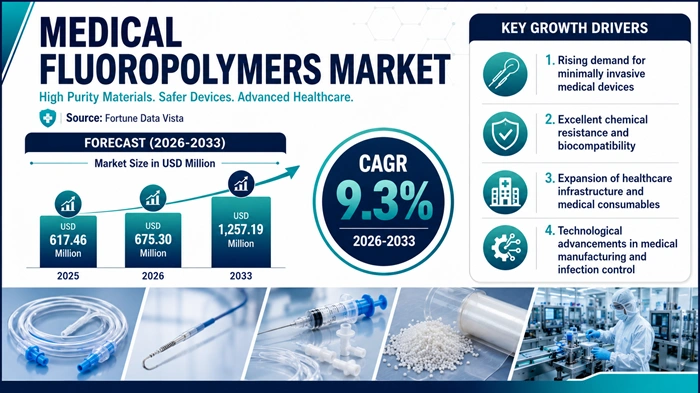
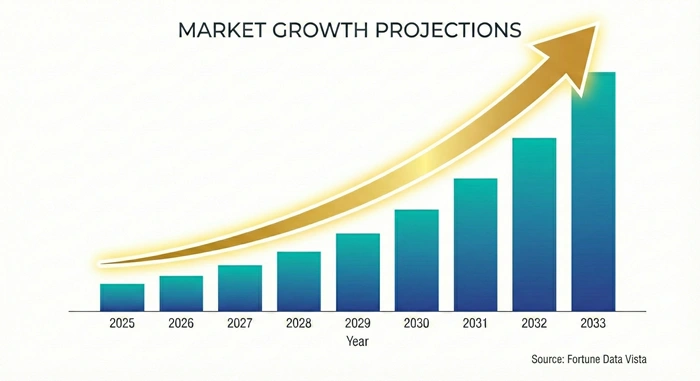
The global Medical Fluoropolymers market size is valued at USD 617.46 million in 2025 and is predicted to increase from USD 675.30 million in 2026 to approximately USD 1,257.19 million by 2033, growing at a CAGR of 9.3% from 2026 to 2033. This growth is fueled by rising demand for high-performance, biocompatible materials across medical device manufacturing, minimally invasive surgery, and advanced drug delivery platforms. As healthcare systems worldwide modernize their infrastructure, fluoropolymers are becoming indispensable components in critical medical applications.
AI Impact on the Medical Fluoropolymers Industry
Artificial Intelligence Is Reshaping How Fluoropolymer Materials Are Designed, Tested, and Deployed Across Next-Generation Healthcare Applications*
AI is transforming the medical fluoropolymers landscape in ways that go far beyond traditional manufacturing efficiency. Machine learning algorithms are now being used to predict material behavior under extreme sterilization cycles and chemical exposure conditions — reducing the time needed for validation by months. Smart manufacturing systems powered by AI are enabling real-time quality monitoring during PTFE and PVDF extrusion, dramatically cutting rejection rates and improving product consistency in catheter and tubing production.
Beyond manufacturing, AI-driven material science platforms are helping R&D teams discover new fluoropolymer formulations with enhanced biocompatibility profiles. Companies like Arkema and Daikin Industries are integrating computational modeling to optimize polymer chain structures for specific medical use cases — including implantable devices and long-term drug delivery systems. This convergence of AI and advanced polymer chemistry is accelerating time-to-market while helping manufacturers navigate increasingly complex regulatory environments such as FDA 21 CFR Part 820 and EU MDR 2017/745.
Growth Factors
Expanding Medical Device Manufacturing, Aging Populations, and a Global Shift Toward Minimally Invasive Procedures Are Collectively Powering Sustained Demand for Medical Fluoropolymers*
The primary engine driving this market is the global surge in demand for advanced medical devices that require materials offering exceptional chemical inertness, thermal stability, and biocompatibility. Fluoropolymers such as PTFE, FEP, and PFA are uniquely suited for catheters, surgical tubing, and implantable components because they resist chemical degradation, reduce friction, and perform reliably across wide temperature ranges. As hospitals in both developed and emerging economies invest heavily in upgrading diagnostic and interventional equipment, the consumption of these specialized polymers is rising steadily.
The growing emphasis on infection prevention and single-use device adoption is another powerful driver. Healthcare systems are transitioning away from reusable instruments toward disposable fluoropolymer-based components that eliminate cross-contamination risk. Simultaneously, the aging global population is increasing the frequency of procedures such as cardiac catheterization, endoscopy, and joint replacement — all of which rely significantly on medical-grade fluoropolymers. Combined with expanding healthcare access in Asia Pacific and Latin America, these trends are creating a robust and diversified growth foundation for the medical fluoropolymers market through 2033.
Market Outlook
With Regulatory Support, Technological Advancement, and Heightened Healthcare Spending, the Medical Fluoropolymers Market Is Positioned for a Decade of Consistent and Diversified Expansion*
The outlook for fluoropolymers in healthcare applications remains exceptionally strong, with multiple structural tailwinds converging over the forecast period. Regulatory agencies including the U.S. FDA and the European Medicines Agency continue to raise performance benchmarks for medical materials — a trend that inherently favors fluoropolymers over lower-grade alternatives. Manufacturers are responding by developing new high-purity and ultra-high molecular weight PTFE variants that meet these evolving standards while offering improved processability for complex device geometries.
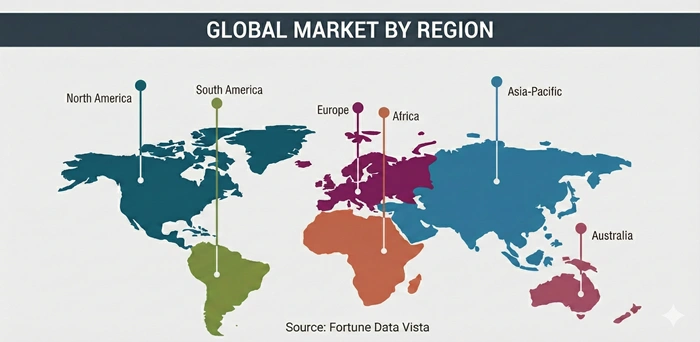
From a geographic standpoint, Asia Pacific is expected to emerge as the fastest-growing regional market, driven by healthcare reform programs in China and India, rising medical tourism, and growing domestic demand for advanced surgical equipment. Meanwhile, North America retains its dominant position owing to concentrated R&D investment, a sophisticated medical device ecosystem, and a well-established regulatory framework that encourages material innovation. The coming years will see the medical fluoropolymers market benefit significantly from sustained investments in pharmaceutical packaging, wearable health technology, and next-generation implantable devices — areas where the unique properties of fluoropolymers are increasingly irreplaceable.
Expert Speaks
-
"At Honeywell, we believe that next-generation fluoropolymer materials will form the backbone of precision healthcare — enabling smarter, safer, and longer-lasting medical devices that meet the rising expectations of both patients and regulators globally." — Vimal Kapur, CEO, Honeywell International Inc.
-
"Advanced fluoropolymer chemistry is directly enabling our customers in the medical device sector to push the boundaries of what's possible in minimally invasive surgery and implantable technology — and we see this as one of our most important growth vectors." — Mark Newman, President & CEO, Chemours Company
-
"The demand for biocompatible, chemically resistant materials in medical applications is accelerating faster than ever before, and 3M's deep expertise in fluoropolymer science positions us well to capture these emerging opportunities across catheters, drug delivery, and diagnostic systems." — William Brown, CEO, 3M Company
Key Report Takeaways
-
North America leads the global medical fluoropolymers market, holding the largest revenue share of approximately 41.23% in 2024, driven by a highly advanced medical device industry, strong FDA regulatory oversight, and robust healthcare infrastructure investment.
-
Asia Pacific is the fastest-growing region, fueled by accelerating healthcare reforms in China and India, rising medical tourism, increasing government spending on hospital modernization, and growing demand for high-performance materials in surgical and diagnostic devices.
-
Large healthcare institutions and medical device OEMs are the dominant end-users, particularly those manufacturing cardiovascular devices, catheters, and surgical instruments, where the unique performance properties of fluoropolymers are non-negotiable.
-
Medical tubing is the leading application segment, accounting for over 37% of global revenue in 2024, as it remains essential across anesthesiology, respiratory care, bio-processing fluid transfer, and diagnostic instruments.
-
PTFE (Polytetrafluoroethylene) is the most widely used product type, commanding over 65% market share in 2024, given its unmatched combination of chemical resistance, non-stick properties, and biocompatibility in critical medical applications.
-
The ETFE (Ethylene Tetrafluoroethylene) segment is emerging as the fastest-growing product type, projected to expand at a CAGR of approximately 9.7% through 2033, owing to its superior wear resistance, radiation tolerance, and suitability for advanced diagnostic and surgical device applications.
-
Drug delivery device applications are set to grow rapidly, gaining meaningful market share through 2033 at an accelerating CAGR, supported by the global push toward precision medicine, implantable drug-release systems, and wearable therapeutic platforms.
Market Scope
| Parameter | Details |
|---|---|
| Market Size by 2033 | USD 1,257.19 Million | Market Size by 2026 | USD 675.30 Million | Market Size by 2025 | USD 617.46 Million | Market Growth Rate from 2026 to 2033 | CAGR of 9.3% | Dominating Region | North America | Fastest Growing Region | Asia Pacific | Segments Covered | By Product Type, By Application, By Processing Method, By End-User Industry, By Material Grade, By Region | Regions Covered | North America, Europe, Asia Pacific, Latin America, Middle East & Africa |
Market Dynamics
Drivers Impact Analysis
Rising Demand for Biocompatible, High-Performance Materials in Modern Medical Devices Is Serving as the Most Powerful Engine of Growth Across All Major Regions*
| Driver | ≈ % Impact on CAGR Forecast | Geographic Relevance | Impact Timeline |
|---|---|---|---|
| Growing demand for minimally invasive surgical devices | ~3.2% | Global (North America, Europe, Asia Pacific) | 2026–2033 (Ongoing) |
| Rising healthcare infrastructure investment in emerging markets | ~2.4% | Asia Pacific, Latin America, MEA | 2027–2033 (Accelerating) |
| Increasing adoption of single-use, infection-resistant medical devices | ~1.8% | North America, Europe | 2026–2030 (Near-term) |
| Stringent regulatory standards favoring high-purity fluoropolymers | ~1.4% | North America, EU | 2026–2033 (Sustained) |
The demand for medical devices requiring biocompatible and chemically inert materials is growing at an unprecedented pace. Fluoropolymers — especially PTFE, FEP, and PFA — are uniquely positioned to meet these needs because they offer a combination of low friction, chemical inertness, and thermal stability that no competing material class can fully replicate. As the number of cardiac, vascular, and orthopedic procedures grows globally, the consumption of medical fluoropolymers in catheters, tubing, and implantable device components is scaling proportionally.
Another significant driver is the transition toward single-use medical devices — a shift accelerated by the global COVID-19 pandemic and sustained by ongoing infection prevention mandates. Hospitals and surgical centers worldwide are replacing reusable stainless steel or silicone components with disposable fluoropolymer alternatives that deliver consistent performance without sterilization overhead. This trend is particularly pronounced in North America and Europe, where regulatory frameworks and insurance systems support premium-grade material adoption, adding durable momentum to the medical fluoropolymers market well beyond 2030.
Restraints Impact Analysis
High Manufacturing Costs and Complex Processing Requirements Continue to Limit Penetration in Cost-Sensitive Healthcare Markets, Particularly in Lower-Income Economies*
| Restraint | ≈ % Impact on CAGR Forecast | Geographic Relevance | Impact Timeline |
|---|---|---|---|
| Elevated production and raw material costs | ~−1.8% | Global (especially Asia Pacific, Latin America) | 2026–2030 |
| Stringent and lengthy regulatory approval timelines | ~−1.2% | North America, Europe | 2026–2033 (Persistent) |
| Competition from alternative materials (PEEK, silicone, PPSU) | ~−0.9% | Global | 2026–2033 |
| Growing regulatory scrutiny on PFAS compounds | ~−0.7% | EU, North America | 2026–2029 (Near-term) |
The high cost of fluoropolymer raw materials and the technical complexity involved in processing them through methods like precision extrusion and injection molding remain notable barriers to broader market adoption. In budget-sensitive healthcare environments — particularly across Southeast Asia, Africa, and parts of Latin America — hospitals and device manufacturers may opt for lower-cost thermoplastics or silicone-based alternatives, even when fluoropolymers would deliver superior long-term performance.
The growing regulatory focus on per- and polyfluoroalkyl substances (PFAS) in Europe and North America is also creating uncertainty for some manufacturers. While the most critical medical-grade fluoropolymers currently enjoy exemptions or transition periods, the overall regulatory climate is pushing companies to invest in reformulation efforts and documentation, adding compliance costs and development timelines. This restraint is particularly relevant for smaller manufacturers who may lack the R&D resources to navigate evolving PFAS directives while simultaneously meeting ISO 10993 biocompatibility requirements.
Opportunities Impact Analysis
Emerging Markets, Advanced Drug Delivery Innovation, and Next-Generation Implantable Device Development Present Compelling and Largely Untapped Opportunities for Market Expansion*
| Opportunity | ≈ % Impact on CAGR Forecast | Geographic Relevance | Impact Timeline |
|---|---|---|---|
| Expanding pharmaceutical packaging and drug delivery applications | ~+2.1% | Global | 2027–2033 |
| Healthcare modernization in China, India, and Southeast Asia | ~+1.9% | Asia Pacific | 2026–2033 |
| Innovation in wearable health tech and implantable biosensors | ~+1.4% | North America, Europe | 2028–2033 |
| Development of radiation-resistant and PFAS-compliant fluoropolymer variants | ~+1.0% | Global | 2027–2033 |
The pharmaceutical packaging and drug delivery segment represents one of the most exciting growth frontiers for medical fluoropolymers. PVDF membranes, PFA-lined containers, and fluoropolymer-coated delivery components are gaining traction in biologics manufacturing, where contamination prevention and chemical compatibility are absolutely critical. As the global biologics and biosimilars market expands, so does the need for the ultra-high purity fluoropolymer materials that support safe drug storage, handling, and delivery.
In parallel, the rapid build-out of healthcare infrastructure across Asia Pacific — particularly in Tier 2 and Tier 3 cities in India and China — is creating enormous volumes of new demand for medical devices and consumables. Local governments are actively incentivizing domestic manufacturing of advanced medical materials, creating a favorable environment for both global fluoropolymer suppliers and regional manufacturers to expand capacity and market reach. These opportunity vectors collectively have the potential to significantly outpace the market's baseline growth projections through the 2026–2033 forecast window.
Segment Analysis
By Product Type
PTFE Continues to Dominate the Medical Fluoropolymers Market, While ETFE Rapidly Gains Ground as the Technology of Choice for Next-Generation Device Applications*
Polytetrafluoroethylene (PTFE) maintains its commanding lead within the medical fluoropolymers product landscape, holding over 65% of global market revenue in 2024. This dominance is rooted in PTFE's unparalleled combination of chemical inertness, low coefficient of friction, and superior biocompatibility — qualities that make it irreplaceable in catheter liners, vascular grafts, surgical sutures, and implantable membranes. North America remains the largest consuming region for PTFE-based medical products, where major manufacturers like W.L. Gore & Associates and The Chemours Company continuously innovate new PTFE formulations for cardiovascular and orthopedic applications. The segment is projected to maintain a CAGR of approximately 9.1% through 2033, sustained by the relentless growth of cardiac and vascular procedure volumes globally.
PVDF (Polyvinylidene Fluoride) is emerging as a strategically important fluoropolymer in the medical fluoropolymers market, particularly in pharmaceutical packaging, drug delivery systems, and membrane filtration for biomedical applications. PVDF's unique piezoelectric properties also make it highly relevant for next-generation biosensor and wearable health monitoring applications. Asia Pacific is the fastest-growing region for PVDF adoption, with companies like Kureha Corporation and Arkema expanding production capacity in China and Japan to meet rising domestic demand from pharmaceutical and medical device manufacturers. The PVDF segment is projected to grow at a CAGR of approximately 9.8% through 2033, outpacing the overall market average.
By Application
Medical Tubing Leads Application Revenue, While Drug Delivery Devices Are Emerging as the Highest-Growth Application Segment Through 2033*
The medical tubing segment is the single largest application within the medical fluoropolymers market, accounting for approximately 37.47% of global revenue in 2024. The extensive use of fluoropolymer tubing across anesthesiology, respiratory care, bio-processing fluid transfer, and diagnostic instruments underscores the segment's critical role in everyday clinical operations. PTFE-lined and FEP tubing products dominate this space due to their flexibility, chemical resistance, and ability to withstand repeated sterilization cycles. In North America, Zeus Industrial Products and Saint-Gobain are the leading suppliers of specialty medical tubing, supporting both domestic OEM production and export markets. The medical tubing segment is expected to grow at a CAGR of approximately 9.6% during the forecast period.
Drug delivery devices represent the most dynamic application opportunity within the broader landscape of medical fluoropolymers. Fluoropolymer coatings and linings are essential for implantable drug reservoirs, transdermal delivery patches, and prefillable syringe systems — enabling precise, controlled release profiles while eliminating material-drug interaction risks. Europe is a particularly active region for drug delivery device innovation, driven by strong pharmaceutical manufacturing clusters in Germany, Switzerland, and the United Kingdom. Companies like Solvay and Arkema supply specialized PFA and FEP grades that meet the stringent purity and biocompatibility requirements for these devices. This application segment is anticipated to post a robust CAGR approaching 10.5% through 2033.
Regional Insights
North America
North America's Leadership in the Medical Fluoropolymers Market Is Built on World-Class Medical Device Manufacturing, Advanced Regulatory Infrastructure, and Concentrated R&D Investment*
North America dominates the global medical fluoropolymers market with approximately 41.23% revenue share in 2024, and this position is expected to be sustained through the forecast period with a CAGR of around 9.3%. The United States is by far the largest individual country market, driven by its advanced healthcare system, high per-capita medical procedure volumes, and the presence of globally leading medical device manufacturers. The U.S. FDA's rigorous material safety standards under 21 CFR Part 820 actively incentivize the adoption of high-performance fluoropolymers over lower-grade alternatives. Companies such as The Chemours Company, W.L. Gore & Associates, and Zeus Industrial Products maintain strong manufacturing and innovation ecosystems in the U.S., reinforcing the region's market leadership in both product development and commercial supply of medical-grade fluoropolymers.
The region is also witnessing strong growth in fluoropolymer applications tied to minimally invasive cardiac and vascular procedures, where precision-grade PTFE and FEP materials are essential. Canada is also contributing meaningfully to regional demand, particularly in pharmaceutical manufacturing, where fluoropolymer-lined processing equipment and drug delivery components are seeing increased adoption. The medical fluoropolymers market across North America is benefiting further from favorable reimbursement policies for advanced medical devices, continued investment in surgical robotics, and a well-funded medical research ecosystem that continuously generates demand for new fluoropolymer-enabled device concepts.
Asia Pacific
Asia Pacific Is the Fastest-Growing Region in the Medical Fluoropolymers Market, Driven by Healthcare Modernization, Government Investment, and a Rapidly Expanding Medical Device Manufacturing Base*
Asia Pacific is emerging as the most dynamic growth region for medical fluoropolymers, projected to expand at a CAGR of approximately 10.2% through 2033, outpacing all other global regions. China and India are the primary growth engines, with both governments actively funding healthcare infrastructure expansion programs that are generating substantial demand for medical-grade polymers, surgical instruments, and diagnostic equipment. China's National Medical Products Administration (NMPA) has been actively streamlining approval pathways for domestically manufactured medical devices, encouraging local fluoropolymer producers such as Dongyue Group to scale up medical-grade production. In India, rising medical tourism and the government's push to develop a domestic medical device manufacturing cluster under "Make in India" initiatives are creating new sourcing demand for high-performance fluoropolymers.
Japan and South Korea further strengthen the region's position through their advanced medical technology industries and strong base of precision component manufacturers. Japanese companies like Daikin Industries — a global fluoropolymer leader headquartered in Osaka — play a critical role in supplying high-purity fluoropolymer resins and dispersions to medical device manufacturers across the Asia Pacific region and globally. The increasing penetration of single-use medical devices in China and Southeast Asia, combined with a growing aging population across the region, is expected to keep Asia Pacific at the forefront of medical fluoropolymers market expansion well into the 2030s.
Top Key Players
-
The Chemours Company (United States)
-
Daikin Industries, Ltd. (Japan)
-
Solvay SA (Belgium)
-
Arkema Group (France)
-
3M Company (United States)
-
W.L. Gore & Associates, Inc. (United States)
-
Saint-Gobain (France)
-
Zeus Industrial Products, Inc. (United States)
-
AGC Inc. (Japan)
-
Dongyue Group Limited (China)
-
Adtech Polymer Engineering Ltd. (United Kingdom)
-
Holscot Fluoropolymers Ltd. (United Kingdom)
-
Honeywell International Inc. (United States)
-
Kureha Corporation (Japan)
-
Gujarat Fluorochemicals Limited (India)
Recent Developments
-
In 2024, The Chemours Company announced a strategic capacity expansion for its Teflon™ PTFE product line, targeting growing medical device applications in Asia Pacific and expanding its distribution partnership network across Southeast Asia to meet surging regional demand.
-
In 2023, Arkema responded to growing regulatory scrutiny by submitting detailed technical feedback to the European Chemicals Agency (ECHA) regarding the PFAS restriction proposal, advocating for specific derogations for essential medical-grade fluoropolymer applications.
-
In 2024, Daikin Industries launched a new series of ultra-high purity PTFE dispersions specifically engineered for pharmaceutical packaging and drug delivery system applications, targeting the growing biologics manufacturing segment in Europe and North America.
-
In 2024, Solvay entered into a long-term supply agreement with a leading European medical device OEM for the provision of specialty PVDF resins used in next-generation implantable biosensor housings and drug-eluting cardiovascular device coatings.
-
In 2025, AGC Inc. completed the commissioning of an expanded fluoropolymer production facility in Japan, specifically adding capacity for medical-grade FEP film and tubing products to support growing OEM demand from both domestic and international medical device manufacturers.
Market Trends
Sustainability Pressures, PFAS Regulatory Evolution, and the Rise of Smart Medical Devices Are Reshaping the Strategic Priorities of Every Major Player in the Medical Fluoropolymers Market*
The most significant trend reshaping the medical fluoropolymers market is the dual pressure of PFAS regulatory evolution and the simultaneous push for sustainable production. In Europe, the REACH regulation's ongoing review of PFAS substances is prompting fluoropolymer manufacturers to proactively invest in cleaner synthesis routes and alternative formulations that retain performance characteristics while reducing environmental persistence. This is not merely a compliance exercise — manufacturers that successfully develop PFAS-compliant, high-performance fluoropolymer grades are positioned to capture significant market share as stricter environmental standards become global norms over the next five to seven years.
Simultaneously, the integration of fluoropolymers into smart and connected medical devices is creating new application categories that did not exist a decade ago. PVDF's piezoelectric properties are being harnessed for wearable biosensors and implantable pressure monitoring devices, while ultra-thin FEP films are enabling miniaturized catheter designs compatible with next-generation robotic surgical platforms. As healthcare delivery continues to shift toward data-driven, personalized care pathways, the demand for precision-engineered medical fluoropolymers with highly specific performance profiles is expected to grow considerably faster than the market's overall baseline rate through 2033.
Segments Covered in the Report
-
By Product Type
-
Polytetrafluoroethylene (PTFE)
-
Ethylene Tetrafluoroethylene (ETFE)
-
Polyvinylidene Fluoride (PVDF)
-
Fluorinated Ethylene Propylene (FEP)
-
Perfluoroalkoxy Alkane (PFA)
-
Fluoroelastomers
-
Others
-
-
By Application
-
Medical Tubing
-
Catheters
-
Medical Bags
-
Drug Delivery Devices
-
Surgical Instruments
-
Implantable Devices
-
Others
-
-
By Processing Method
-
Coating (Exterior Protection, Non-Stick Surface)
-
Extrusion (Film, Tubing)
-
Molding (Blow, Compression, Injection)
-
-
By End-User Industry
-
Healthcare (Diagnostic Instruments, Hospital Equipment)
-
Medical (Medical Implants, Surgical Instruments)
-
Pharmaceutical (Drug Delivery Systems, Pharmaceutical Packaging)
-
-
By Material Grade
-
Enhanced Grade (Carbon-Filled PTFE, Glass-Filled PTFE)
-
High Purity Grade (High Purity Fluoropolymer, Ultra High Molecular Weight PTFE)
-
Standard Grade (Modified PTFE, Virgin PTFE)
-
-
By Region
-
North America (U.S., Canada, Mexico)
-
Europe (Germany, France, UK, Italy, Rest of Europe)
-
Asia Pacific (China, India, Japan, South Korea, Rest of Asia Pacific)
-
Latin America (Brazil, Rest of Latin America)
-
Middle East & Africa (GCC Countries, Rest of MEA)
-
❝ Built for Every Level — From Startups to Industry Giants ❞
Here Is Exactly How This Report Works for You
-
This report equips decision-makers at every level — from startups entering the medical materials space to Tier 1 multinationals managing global portfolios — with precise market sizing, segment-level revenue forecasts, and competitive intelligence that directly inform product strategy, pricing, and geographic expansion decisions. Whether you are evaluating a new manufacturing investment or benchmarking your performance against key rivals, this report gives you the data backbone you need to act with confidence.
-
For investors, mid-level companies, and high-growth enterprises, the report's geopolitical risk analysis and supply-demand mapping provide critical context on how trade policy shifts, PFAS regulatory changes, and raw material price volatility could impact margins and growth trajectories — enabling smarter capital allocation and risk-adjusted planning across the 2026–2033 forecast window.
-
The competitor revenue analysis section — covering sources of revenue, market share breakdowns, and strategic initiatives of the top 15 players — delivers the actionable intelligence that procurement leaders, business development teams, and C-suite executives need to identify white-space opportunities, forge strategic partnerships, and outmaneuver rivals in both established and fast-growing regional markets.
Frequently Asked Questions:
Answer: The global medical fluoropolymers market is valued at USD 617.46 million in 2025 and is projected to reach approximately USD 1,257.19 million by 2033. This growth reflects a CAGR of 9.3% from 2026 to 2033, supported by rising demand for biocompatible materials in advanced medical devices.
Answer: The primary drivers include increasing demand for high-performance, chemically inert materials in minimally invasive surgeries, catheters, and implantable devices. Growing healthcare investments in emerging economies and the global shift toward single-use, infection-resistant medical components are also significantly contributing to market expansion.
Answer: North America currently holds the largest market share, accounting for over 41% of global revenue, driven by its advanced medical device industry and strong regulatory ecosystem. Asia Pacific is the fastest-growing region, propelled by healthcare modernization programs in China and India and rapidly expanding domestic medical device manufacturing.
Answer: PTFE (Polytetrafluoroethylene) leads the medical fluoropolymers market with over 65% revenue share, owing to its exceptional chemical resistance, biocompatibility, and low friction properties. It is extensively used in catheters, vascular grafts, surgical sutures, and implantable device components where material reliability is paramount.
Answer: Growing regulatory scrutiny of PFAS substances — particularly in the EU and North America — is prompting manufacturers to develop cleaner, compliant fluoropolymer formulations while advocating for medical-use derogations. This regulatory environment is accelerating R&D investment in next-generation fluoropolymer chemistries, reshaping long-term competitive strategies within the medical fluoropolymers market.