
Medical Radiation Detection Market Overview
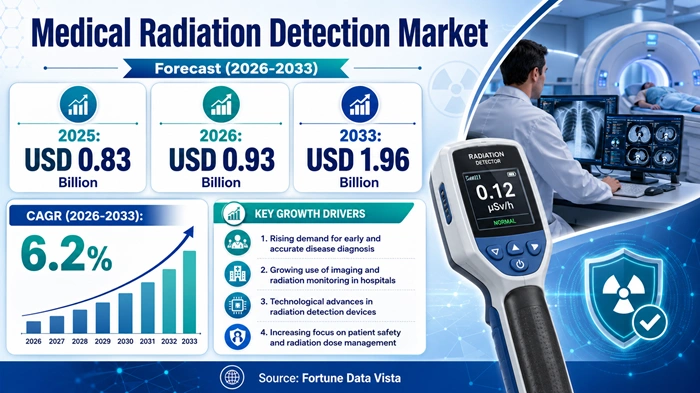
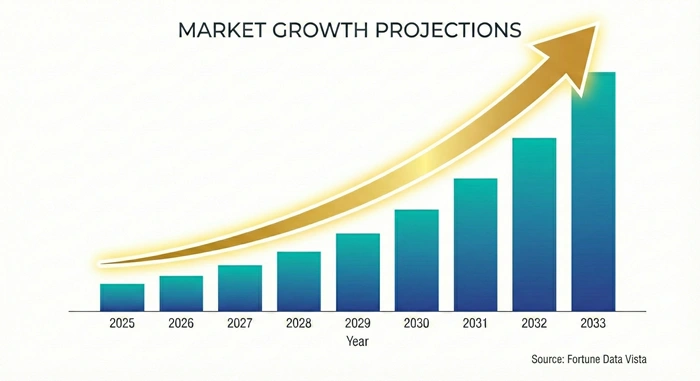
The global medical radiation detection market size is valued at USD 0.83 billion in 2025 and is predicted to increase from USD 0.93 billion in 2026 to approximately USD 1.96 billion by 2033, growing at a CAGR of 6.2% from 2026 to 2033.
This consistent growth trajectory reflects accelerating demand for advanced radiation monitoring, dosimetry, and safety solutions across hospitals, cancer treatment centers, diagnostic imaging facilities, and nuclear medicine departments worldwide. Rising cancer incidence rates, expanding use of radiation-based diagnostic imaging and therapeutic procedures, tightening occupational radiation safety regulations, and continuous innovation in dosimetry sensor technology are collectively driving procurement of new medical radiation detection equipment globally — establishing this market as a structurally resilient segment within the broader medical devices industry.
AI Impact on the Medical Radiation Detection Industry
Artificial Intelligence Is Transforming Real-Time Dose Monitoring Accuracy, Predictive Radiation Exposure Analytics, Smart Alert Management, and Regulatory Compliance Automation Across the Global Medical Radiation Detection Market*
Artificial intelligence is emerging as a defining force of innovation within the medical radiation detection market, enabling a transition from passive dose measurement devices to intelligent, proactive radiation safety management systems that deliver real-time insights and predictive occupational risk intelligence. AI-powered electronic personal dosimeter platforms — such as those developed by Mirion Technologies and Landauer (Fortive) — are now integrating machine learning algorithms that analyze individual radiation worker exposure patterns over time, identifying anomalous dose accumulations, predicting future overexposure risk, and automatically escalating safety alerts to radiation protection officers before regulatory dose limits are approached. These AI-driven early warning capabilities are of particular value in high-dose environments such as interventional radiology suites, nuclear medicine preparation areas, and radiation oncology bunkers — settings where occupational radiation monitoring precision directly impacts both regulatory compliance and long-term worker health outcomes.
At the systems level, AI is enabling a new generation of intelligent radiation area monitoring networks that can distinguish between different radiation source types, map real-time radiation field geometry within clinical spaces, and dynamically adjust shielding and workflow recommendations based on continuously updated exposure data. Thermo Fisher Scientific's radiation monitoring platforms and IBA Worldwide's oncology safety systems are incorporating AI signal analysis modules that dramatically improve the sensitivity, specificity, and response speed of area radiation alarm systems — reducing false-positive alarm rates that historically caused alert fatigue among clinical staff while maintaining or improving true positive detection performance in genuine radiation safety incidents. The integration of AI-driven radiation monitoring platforms with hospital information systems and electronic health records is also enabling the first generation of automated regulatory dose reporting tools — reducing the administrative burden of occupational dose compliance documentation for radiation protection departments in large hospital systems.
Growth Factors
Rising Cancer Incidence Driving Radiation Therapy and Nuclear Medicine Expansion, Increasing Diagnostic Imaging Volume, Tightening Occupational Radiation Safety Regulations, and Technological Advances in Digital Dosimetry Are the Structural Forces Fueling the Medical Radiation Detection Market*
The most fundamental growth driver in the medical radiation detection market is the global escalation of cancer incidence — which is directly increasing the utilization of radiation therapy, nuclear medicine procedures, diagnostic imaging, and interventional radiology, each of which generates demand for radiation detection and safety infrastructure. The WHO estimates that cancer cases will increase by approximately 77% globally by 2050 compared to 2022 levels, driven by aging populations, lifestyle risk factors, and improving cancer detection rates that identify previously undiagnosed malignancies. Every radiotherapy treatment session, nuclear medicine scan, CT examination, and fluoroscopy-guided intervention performed generates ionizing radiation that must be measured, monitored, and managed through validated detection equipment — making the growth in radiation-based medical procedure volumes one of the most direct and reliable demand drivers for medical radiation detection solutions globally.
The second critical growth driver is the tightening of occupational radiation safety regulations by healthcare regulators and nuclear energy authorities across North America, Europe, and Asia Pacific. Regulatory bodies including the U.S. Nuclear Regulatory Commission (NRC), the U.S. Occupational Safety and Health Administration (OSHA), the European Atomic Energy Community (Euratom) through its 2013 Basic Safety Standards Directive, and the International Atomic Energy Agency (IAEA) are progressively strengthening occupational dose limits, monitoring requirements, and documentation standards for healthcare workers exposed to ionizing radiation — driving hospital and clinic procurement of compliant personal dosimetry services, area monitors, and radiation safety equipment. The growing awareness of radiation safety among healthcare workers — accelerated by publicized occupational health studies on cumulative radiation exposure — is also increasing demand for radiation protection training, monitoring upgrades, and safety equipment across a healthcare workforce that operates in an increasingly radiation-intensive clinical environment.
Market Outlook
North America's Dominant Healthcare Infrastructure, Asia Pacific's Rapid Diagnostic Imaging Expansion, and the Growing Clinical Adoption of Nuclear Medicine and Proton Therapy Are Creating Durable Long-Term Growth Pathways for the Medical Radiation Detection Market Through 2033*
The long-term outlook for the medical radiation detection market is stable and positive, supported by structural healthcare demand fundamentals and progressive regulatory reinforcement that are largely insulated from short-term economic volatility. North America leads the global market, accounting for approximately 41.8% of global revenue in 2025, supported by the United States' world-leading diagnostic imaging volume, the largest concentration of radiation oncology centers globally, the highest per-healthcare-worker dosimetry service penetration rate, and the most stringent occupational radiation monitoring compliance requirements — all of which sustain consistently high demand for premium medical radiation detection products and services. Europe holds the second-largest market position, where Euratom's Basic Safety Standards Directive and individual EU member state radiation protection regulations are driving healthcare facility investment in compliant dosimetry, monitoring, and radiation safety equipment.
The Asia Pacific region's long-term growth potential within the medical radiation detection market is exceptional and is expected to result in significant market share gains through 2033. China and India are simultaneously expanding their diagnostic imaging infrastructure at scale — building new CT, PET-CT, and nuclear medicine departments in thousands of hospitals annually — while their manufacturing industries are developing domestic radiation detection and dosimetry technology capabilities that are increasingly competitive with established Western products. The rapid global adoption of proton therapy for cancer treatment — where precise radiation beam monitoring is even more technically demanding than in conventional photon radiotherapy — is creating a premium equipment demand segment within the broader medical radiation detection market that commands high average selling prices and generates strong manufacturer margins. This premium segment growth is expected to contribute disproportionately to market revenue expansion as more than 200 new proton therapy centers are under development globally for commissioning between 2026 and 2033.
Expert Speaks
-
"Mirion Technologies is at the forefront of medical radiation detection innovation — delivering precision dosimetry and monitoring solutions that protect healthcare workers and patients across the full spectrum of radiation medicine applications, from diagnostic imaging to advanced radiation therapy. The medical radiation detection market is experiencing compelling structural growth, and our investment in AI-integrated dosimetry platforms, real-time digital monitoring systems, and connected radiation safety infrastructure is designed to lead this market transformation through the decade ahead." — Thomas Logan, CEO, Mirion Technologies Inc.
-
"Thermo Fisher Scientific's radiation detection and safety portfolio continues to evolve in direct response to the growing complexity and radiation intensity of modern clinical environments. The convergence of radiation oncology, nuclear medicine, and interventional radiology into increasingly integrated hospital workflows demands more sophisticated, more connected, and more intelligent detection and monitoring infrastructure — and we are committed to delivering that through continuous product innovation, digital platform development, and global service excellence in the medical radiation detection segment." — Marc Casper, President & CEO, Thermo Fisher Scientific Inc.
-
"Fortive's Landauer division has built the world's most trusted occupational dosimetry service platform, and we are investing in the next generation of digital monitoring solutions that will serve the rapidly evolving needs of healthcare radiation workers globally. The regulatory environment continues to strengthen around occupational radiation safety, and we see consistent demand for compliant, accurate, and technologically advanced personal and area dosimetry services expanding strongly across North America, Europe, and the rapidly growing Asia Pacific medical radiation detection market." — **Jim Lico, President & CEO, Fortive Corporation*
Key Report Takeaways
-
North America leads the global medical radiation detection market with approximately 41.8% of global revenue share in 2025, driven by the United States' world-leading medical imaging procedure volumes, the largest global concentration of radiation oncology and nuclear medicine facilities, the most stringent occupational radiation monitoring regulatory environment, and the commercial headquarters of key market leaders including Mirion Technologies, Landauer (Fortive), Thermo Fisher Scientific, and Sun Nuclear Corporation that drive both innovation and domestic service revenue.
-
Asia Pacific is the fastest-growing regional market, projected to expand at a CAGR of approximately 6.8% from 2026 to 2033, fueled by rapidly expanding hospital infrastructure, increasing diagnostic imaging and nuclear medicine department installations in China and India, rising cancer incidence generating radiation oncology demand, and growing government enforcement of occupational radiation safety standards across the region's healthcare sector.
-
Hospitals and clinics are the dominant end-user segment, contributing approximately 51.4% of global medical radiation detection market revenue in 2025, reflecting the concentration of radiation-generating diagnostic and therapeutic medical procedures within hospital environments where comprehensive radiation monitoring, dosimetry, and safety systems must be deployed across radiology, nuclear medicine, radiation oncology, interventional cardiology, and emergency departments simultaneously.
-
Passive dosimeters (TLDs and OSLDs) are the dominant product segment, accounting for approximately 38.6% of global product revenue in 2025, driven by their status as the most widely deployed and regulatory-compliant personal dosimetry solution for routine occupational radiation monitoring in hospital and clinical environments — offering cost-effective dose measurement for the large volumes of radiation workers requiring regular exposure tracking.
-
Diagnostic imaging is the dominant application segment, representing approximately 46.8% of global application revenue in 2025, as the expanding global volume of CT, PET-CT, fluoroscopy, nuclear medicine, and interventional radiology procedures continuously drives demand for detector calibration, patient dose management systems, and occupational monitoring for radiologic technologists and physicians operating imaging equipment daily.
-
Electronic personal dosimeters (active dosimeters) are the fastest-growing product type, projected to grow at a CAGR of approximately 7.1% from 2026 to 2033, driven by healthcare facilities transitioning from batch-processing passive dosimetry services to real-time digital dose monitoring that enables immediate alert response, continuous dose tracking, and automated regulatory compliance reporting — capabilities that passive dosimetry fundamentally cannot deliver.
-
Cancer treatment centers are the fastest-growing end-user segment within the medical radiation detection market, expected to expand at a CAGR of approximately 7.4% from 2026 to 2033, as the global oncology infrastructure expands to address rising cancer incidence — with each new radiation therapy facility requiring a comprehensive portfolio of dosimetry, beam monitoring, patient QA measurement, and occupational safety equipment.
Market Scope
| Parameter | Details |
|---|---|
| Market Size by 2033 | USD 1.96 Billion | Market Size by 2026 | USD 0.93 Billion | Market Size by 2025 | USD 0.83 Billion | Market Growth Rate from 2026 to 2033 | CAGR of 6.2% | Dominating Region | North America | Fastest Growing Region | Asia Pacific | Segments Covered | By Product, By Detector Type, By Application, By End User | Regions Covered | North America, Europe, Asia Pacific, Latin America, Middle East & Africa |
Market Dynamics
Drivers Impact Analysis
Rising Cancer Incidence, Expanding Radiation Therapy and Nuclear Medicine Infrastructure, Tightening Occupational Safety Regulations, and Continuous Digital Dosimetry Innovation Are the Four Primary Demand Pillars Driving the Medical Radiation Detection Market*
| Driver | ≈ % Impact on CAGR Forecast | Geographic Relevance | Impact Timeline |
|---|---|---|---|
| Rising global cancer incidence increasing radiation therapy and imaging volumes | ~35% | Global — especially North America, Asia Pacific | Short to Long Term |
| Tightening occupational radiation safety regulations and compliance requirements | ~27% | North America, Europe, Asia Pacific | Short to Long Term |
| Expanding diagnostic imaging infrastructure in emerging markets | ~22% | Asia Pacific, Latin America, MEA | Short to Long Term |
| Technological innovation in digital and real-time dosimetry systems | ~16% | North America, Europe | Short to Long Term |
The most immediate and consistent demand driver in the medical radiation detection market is the direct relationship between radiation-based medical procedure volumes and the demand for detection, monitoring, and safety equipment. Global diagnostic imaging volumes — including CT, nuclear medicine, PET, and fluoroscopy-guided interventional procedures — are growing consistently as populations age, cancer detection programs expand, and healthcare infrastructure scales in emerging markets. In the United States alone, more than 80 million CT scans and over 18 million nuclear medicine procedures are performed annually — each generating measurable ionizing radiation that must be monitored at the patient, staff, and environment levels through calibrated detection equipment. The growing clinical adoption of advanced radiation therapy techniques including stereotactic body radiotherapy (SBRT), stereotactic radiosurgery (SRS), intensity-modulated radiation therapy (IMRT), and proton therapy is creating demand for the most sophisticated beam monitoring, dosimetry, and quality assurance measurement systems available — equipment categories that command the highest average selling prices within the medical radiation detection market.
The regulatory compliance driver is equally powerful and operates across all geographic markets with a growing healthcare sector. In the European Union, the Euratom Basic Safety Standards Directive (BSS) mandates comprehensive occupational radiation monitoring, dose limit enforcement, and workplace radiation environment monitoring for all clinical settings where ionizing radiation is used — creating a permanent, legally enforceable demand foundation for personal dosimetry services and area monitoring equipment across the EU's 27 member states. In Asia Pacific, national radiation protection authorities in China, India, South Korea, Japan, and Australia are progressively strengthening their occupational and environmental radiation safety regulatory frameworks in alignment with IAEA safety standards — generating growing compliance-driven procurement of personal dosimeters, electronic monitoring systems, and radiation safety equipment from the rapidly expanding healthcare workforce operating in radiation environments in these markets.
Restraints Impact Analysis
High Cost of Advanced Detection Equipment, Shortage of Trained Medical Physicists, Complexity of Regulatory Approval Processes, and Radiation Safety Awareness Gaps in Emerging Markets Are the Primary Barriers Constraining Market Growth*
| Restraint | ≈ % Impact on CAGR Forecast | Geographic Relevance | Impact Timeline |
|---|---|---|---|
| High capital cost of advanced digital radiation detection systems | ~40% | Emerging markets, smaller hospitals | Short to Long Term |
| Shortage of qualified medical physicists and radiation safety officers | ~28% | Global — especially emerging markets | Short to Long Term |
| Regulatory approval complexity and device certification timeline length | ~20% | Global | Short to Medium Term |
| Limited radiation safety awareness and compliance enforcement in some markets | ~12% | MEA, South Asia, Latin America | Short to Medium Term |
The high capital investment required for advanced digital radiation detection systems represents a significant barrier to market penetration in resource-limited healthcare settings. Enterprise-grade electronic personal dosimetry platforms, area radiation monitoring networks, and patient QA measurement systems for radiation therapy can represent substantial capital investments that are difficult to justify for smaller community hospitals, rural healthcare facilities, and healthcare providers in emerging markets operating under tight capital equipment budgets. High-end dosimetry systems for radiation therapy quality assurance from leading vendors including Sun Nuclear Corporation, IBA Worldwide, and PTW Freiburg carry price tags of USD 50000 to USD 300000 per system — levels that require significant institutional commitment and are typically accessible only to well-resourced cancer centers and academic medical institutions rather than to the broader community oncology and diagnostic imaging market.
The persistent global shortage of qualified medical physicists — the professionals responsible for radiation safety program management, dosimetry system calibration, and regulatory compliance oversight in clinical environments — is a structural restraint that limits the effective adoption and utilization of advanced radiation detection equipment. The American Association of Physicists in Medicine (AAPM) and the European Federation of Organisations for Medical Physics (EFOMP) have both documented that the supply of trained medical physicists is not keeping pace with the growth in radiation-generating medical procedures — a deficit that is even more acute in emerging markets where medical physics training programs are less developed. This talent shortage creates operational constraints on healthcare facilities' ability to deploy, maintain, and effectively utilize sophisticated radiation detection and monitoring systems — representing both a demand constraint and a service opportunity for vendors who can deliver intuitive, user-friendly systems that reduce the medical physics expertise requirement for routine operation and compliance management.
Opportunities Impact Analysis
Digital Real-Time Dosimetry Platform Transition, Proton Therapy Infrastructure Growth, Emerging Market Healthcare Expansion, and Radiation Dose Management Software Integration Are Creating High-Value Long-Term Opportunities*
| Opportunity | ≈ % Impact on CAGR Forecast | Geographic Relevance | Impact Timeline |
|---|---|---|---|
| Transition from passive to active digital dosimetry platforms | ~34% | North America, Europe, Asia Pacific | Short to Long Term |
| Proton therapy center expansion driving premium detection system demand | ~28% | North America, Europe, Asia Pacific | Short to Long Term |
| Healthcare infrastructure expansion in emerging markets | ~24% | Asia Pacific, Latin America, MEA | Short to Long Term |
| Radiation dose management software and DICOM integration | ~14% | North America, Europe | Short to Medium Term |
The ongoing transition from traditional passive dosimetry systems — including film badges and TLDs — to real-time electronic personal dosimeters represents one of the most commercially significant near-term opportunities in the medical radiation detection market. Healthcare facilities globally are recognizing that passive dosimetry systems — which provide radiation exposure readings only after batch processing cycles of one to three months — are inadequate for modern radiation safety program needs where real-time dose feedback, immediate overexposure alerts, and digital compliance reporting are increasingly required by regulators and preferred by clinical safety managers. The global installed base of passive dosimetry users in healthcare settings represents a massive ongoing transition opportunity for vendors of electronic personal dosimeters — with each converting facility representing a multi-year service contract for wireless dosimeter networks, cloud-based dose data management, and regulatory compliance reporting tools.
The rapid global expansion of proton therapy centers for cancer treatment represents a premium equipment demand opportunity within the broader medical radiation detection market. Each proton therapy installation requires an extensive suite of specialized radiation detection instruments — including Faraday cups, ionization chamber arrays, multilayer Faraday cups for range verification, beam profile scanners, thimble ionization chambers, and patient QA phantom systems — all of which must meet extremely demanding accuracy specifications and undergo regular calibration and verification. With more than 200 proton therapy centers currently under construction globally and the number of operational proton therapy facilities expected to exceed 400 by 2033, the total market for proton therapy-specific radiation detection and dosimetry equipment represents a rapidly growing premium revenue segment that vendors including IBA Worldwide, Sun Nuclear Corporation, PTW Freiburg, and Mevion Medical Systems are actively investing to capture.
Segment Analysis
By Product: Active Dosimeters (Electronic Personal Dosimeters)
Active Dosimeters Are the Fastest-Growing Product Segment in the Medical Radiation Detection Market, Driven by Healthcare Facilities' Shift Toward Real-Time Digital Dose Monitoring That Enables Immediate Safety Alerts and Automated Regulatory Compliance Reporting*
Active dosimeters — particularly electronic personal dosimeters (EPDs) — are the fastest-growing product segment in the medical radiation detection market, projected to grow at a CAGR of approximately 7.1% from 2026 to 2033, outpacing the passive dosimetry segment as healthcare facilities invest in real-time digital monitoring capabilities. EPDs provide immediate display of accumulated dose and dose rate to the wearer, generate audio and visual alarms when preset dose thresholds are approached, and wirelessly transmit dose data to central radiation protection management software platforms for continuous monitoring and regulatory compliance documentation. This real-time safety intelligence capability is transforming occupational radiation safety management — enabling radiation protection officers to monitor all workers simultaneously, respond to individual dose anomalies proactively, and generate automated regulatory dose reports without the delay and manual processing burden of passive dosimetry batch cycles. North America leads the active dosimeter segment, accounting for approximately 43.1% of global segment revenue, driven by the high regulatory compliance standards of U.S. healthcare radiation safety programs and the commercial leadership of Mirion Technologies and Landauer (Fortive) in providing integrated EPD hardware and dose management software platforms.
Europe is the second-largest market for active dosimeters, where the Euratom BSS Directive's real-time dose monitoring requirements for interventional radiology and nuclear medicine workers are creating regulatory compliance demand for EPD upgrades at healthcare facilities currently using passive dosimetry systems. Asia Pacific is the fastest-growing regional market for active dosimeters, expanding at a CAGR of approximately 8.2% from 2026 to 2033, as China, India, and South Korea upgrade their hospital radiation safety programs from legacy passive dosimetry approaches to digital EPD platforms that meet rising national regulatory expectations. Japanese manufacturers including Fuji Electric and domestic Chinese dosimetry companies are competing alongside established global vendors to supply the large volume of EPD units required for Asia Pacific's expanding healthcare radiation worker population — creating a competitive market dynamic that is improving product availability and driving price accessibility in the region's dosimetry market.
By Application: Diagnostic Imaging
Diagnostic Imaging Is the Dominant Application Driving the Medical Radiation Detection Market, as Global CT, Nuclear Medicine, and Fluoroscopy Procedure Volume Growth Generates Consistent and Growing Demand for Dosimetry, Patient Dose Management, and Occupational Safety Systems*
Diagnostic imaging holds the commanding position in the medical radiation detection market by application, contributing approximately 46.8% of global application revenue in 2025 and growing at a CAGR of approximately 6.0% from 2026 to 2033. The global volume of diagnostic imaging procedures using ionizing radiation is expanding rapidly — with CT scanning, fluoroscopy-guided procedures, PET-CT, SPECT, and conventional radiography collectively generating demand for patient dose tracking, physician and technologist occupational monitoring, and imaging room area radiation management solutions across tens of thousands of imaging departments worldwide. The growing awareness of radiation dose management as both a patient safety priority and a regulatory compliance requirement — driven by the American College of Radiology's Dose Index Registry, the Joint Commission's accreditation requirements, and equivalent bodies in Europe and Asia — is generating consistent demand for radiation dose management software, automatic exposure control calibration tools, and patient dose monitoring systems that integrate with PACS and radiology information systems. Leading companies serving the diagnostic imaging segment of the medical radiation detection market include Thermo Fisher Scientific, Landauer, Mirion Technologies, Philips Healthcare, and Agfa HealthCare.
North America leads the diagnostic imaging application segment, accounting for approximately 42.3% of global segment revenue in 2025, driven by the world's highest density of CT scanners per capita, regulatory pressure from the NRC and state radiation control programs for rigorous occupational dosimetry in radiology departments, and the growing adoption of enterprise radiation dose management platforms that centralize dose tracking across multi-site hospital systems. Europe is the second-largest market, where Germany, France, the UK, and Sweden are leading markets for diagnostic imaging radiation safety programs — driven by national radiation protection authority oversight and active participation in European radiation dose reference level programs that track and benchmark CT and fluoroscopy dose performance across participating hospitals. Asia Pacific is the fastest-growing diagnostic imaging application market, with China and India deploying new CT and nuclear medicine imaging facilities at a pace that is generating growing demand for detection and monitoring equipment in a rapidly expanding addressable market that is expected to become the second-largest regional segment in the medical radiation detection market by 2030.
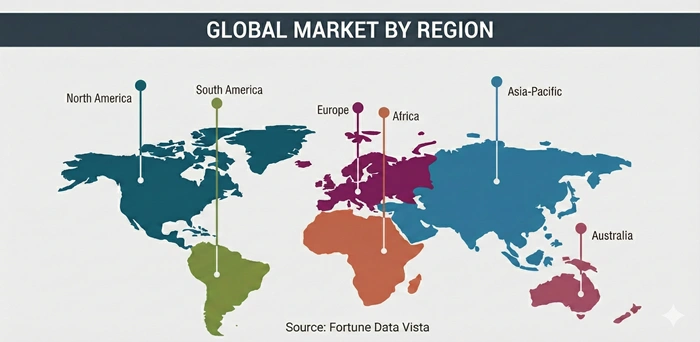
Regional Insights
North America: The Global Leader in Medical Radiation Detection
North America Commands the Dominant Position in the Medical Radiation Detection Market, Anchored by the World's Highest Diagnostic Imaging Volumes, the Most Rigorous Occupational Radiation Safety Regulatory Framework, and the Commercial Headquarters of All Leading System Providers*
North America holds the leading position in the global medical radiation detection market, accounting for approximately 41.8% of global revenue in 2025 and expected to maintain a CAGR of approximately 5.8% through 2033. The United States is the single largest country market globally — where more than 80 million CT scans, 18 million nuclear medicine scans, and an estimated 60 million fluoroscopy procedures are performed annually — generating the highest radiation detection and safety equipment demand of any individual country market worldwide. Key commercial leaders driving North American market performance include Mirion Technologies, Landauer (Fortive Corporation), Thermo Fisher Scientific, Sun Nuclear Corporation, IBA Worldwide's North American operations, Radiation Detection Company (RDC), and Ludlum Measurements — each of whom maintains major North American operations and generates a substantial share of their global revenue from U.S. and Canadian healthcare customers.
Canada contributes meaningfully to North American market growth through its well-funded universal healthcare system, a dense network of diagnostic imaging and cancer treatment centers, and Health Canada's rigorous radiation protection regulatory framework that mirrors NRC standards in setting occupational dose limits and monitoring requirements for healthcare radiation workers. The North American market is the global leader in adoption of the most advanced radiation detection technology configurations — including AI-integrated EPD networks, enterprise dose management software platforms, and proton therapy beam monitoring systems — and consistently generates the highest average product selling prices and most complex multi-year service contract revenue of any regional market in the medical radiation detection industry globally.
Asia Pacific: The Fastest-Growing Region in Medical Radiation Detection
Asia Pacific Is the Fastest-Growing and Most Strategically Important Regional Market for Medical Radiation Detection, Driven by China's and India's Rapid Healthcare Infrastructure Expansion, Rising Cancer Incidence, and Strengthening Radiation Safety Regulatory Frameworks*
Asia Pacific is the fastest-growing regional market in the global medical radiation detection market, projected to expand at a CAGR of approximately 6.8% from 2026 to 2033, decisively outpacing all other global regions. The region accounts for approximately 27.4% of global medical radiation detection market revenue in 2025 and is expected to increase its global share significantly over the forecast period as healthcare infrastructure investment in China, India, South Korea, Japan, and Southeast Asia accelerates. China is the primary regional growth driver — where government healthcare reform programs including the "Healthy China 2030" initiative are funding thousands of new hospital construction and upgrade projects, each incorporating expanded radiology, nuclear medicine, and oncology departments that require comprehensive radiation detection, dosimetry, and safety equipment from both global vendors and China's rapidly developing domestic medical radiation instrument manufacturing sector.
India represents Asia Pacific's fastest-growing individual country market for medical radiation detection, where the government's Ayushman Bharat health insurance program is expanding access to cancer treatment and diagnostic imaging for hundreds of millions of previously underserved citizens — generating enormous growth in radiation-based medical procedure volumes that must be served by expanded detection and monitoring infrastructure. Major cancer center networks including Tata Medical Center, Apollo Hospitals, and Fortis Healthcare are investing in comprehensive radiation safety programs that include digital dosimetry, area monitoring, and patient dose management systems from global vendors including Mirion, Thermo Fisher Scientific, and Landauer. South Korea and Japan maintain the most technologically advanced regional markets for radiation detection equipment within Asia Pacific — with leading domestic manufacturers including Fuji Electric (Japan) and domestic Korean dosimetry companies supplying sophisticated radiation safety products to regional hospital markets, while South Korea's growing proton therapy sector is generating increasing premium detection equipment demand.
Top Key Players
-
Mirion Technologies Inc. (United States)
-
Fortive Corporation (Landauer) (United States)
-
Thermo Fisher Scientific Inc. (United States)
-
Sun Nuclear Corporation (United States)
-
IBA Worldwide (Ion Beam Applications) (Belgium)
-
PTW Freiburg GmbH (Germany)
-
Radiation Detection Company Inc. (United States)
-
Ludlum Measurements Inc. (United States)
-
Fuji Electric Co. Ltd. (Japan)
-
AMETEK Inc. (United States)
-
Bertin Instruments (France)
-
Biodex Medical Systems Inc. (United States)
Recent Developments
-
In January 2026, Landauer (Fortive Corporation) strengthened its global occupational dosimetry services platform by launching an expanded Digital Dose Connect monitoring network across Europe and Asia Pacific — enabling real-time occupational radiation exposure tracking for healthcare professionals through cloud-connected electronic dosimeters integrated with centralized dose management dashboards that automate regulatory compliance reporting for hospital radiation protection programs.
-
In December 2025, Mirion Technologies expanded its medical radiation portfolio by enhancing its INSTADOSE+ digital dosimetry service offering for oncology centers, focusing on real-time dose tracking systems integrated with hospital electronic health record (EHR) infrastructure to improve both patient and staff safety compliance tracking in radiation therapy departments.
-
In November 2025, IBA Worldwide advanced its radiation monitoring integration within its proton therapy systems — launching an upgraded Lynx PT beam monitoring platform with improved spatial resolution and enhanced AI-assisted beam positioning verification — focusing on precision dose delivery accuracy and enhanced patient safety outcomes in cancer treatment centers adopting the latest generation of proton therapy technology.
-
In November 2025, Thermo Fisher Scientific introduced the RadEye PRD-ER upgraded radiation detection instrument for clinical and nuclear medicine laboratory environments, delivering improved sensitivity and selectivity in radiopharmaceutical handling applications — enabling more accurate low-level contamination monitoring in nuclear pharmacy and hot lab environments where worker dose management and contamination control are critical safety priorities.
-
In March 2026, Sun Nuclear Corporation launched the SunPoint Patient Dosimetry platform upgrade — featuring enhanced AI-driven anomaly detection for in-vivo patient dose verification in radiation therapy — allowing radiation oncology centers to identify treatment delivery deviations in real time during active radiotherapy sessions, significantly improving patient safety monitoring capabilities and regulatory compliance for quality assurance programs in external beam radiation therapy departments.
Market Trends
Digital Transformation of Dosimetry Services and the Integration of Radiation Dose Management With Hospital Information Systems Are the Two Dominant Trends Reshaping the Medical Radiation Detection Market Through 2033*
The most consequential operational trend in the medical radiation detection market is the progressive digital transformation of occupational dosimetry services — from periodic batch-processing passive dosimetry systems to continuously networked, cloud-based electronic dosimetry platforms that provide real-time dose data, automated alert management, and digital regulatory compliance reporting to radiation protection programs of all sizes. This digital transition is being accelerated by regulatory pressure, healthcare facility demand for operational efficiency, and the improving cost-effectiveness of electronic personal dosimeter hardware as manufacturing volumes scale. Vendors including Mirion Technologies, Landauer, and Fuji Electric are investing heavily in expanding their cloud dosimetry platform capabilities — building user interfaces, mobile accessibility, API integration with HR and occupational health systems, and AI-driven dose anomaly analytics — to capture the substantial revenue opportunity represented by the global installed base of passive dosimetry users who are candidates for transition to digital platforms over the 2026–2033 forecast period.
The second major trend is the growing integration of radiation dose management software with hospital information technology ecosystems — including PACS, RIS, EMR, and clinical analytics platforms — to create unified patient and staff dose management environments that provide comprehensive radiation safety visibility across entire health system operations. Regulatory guidance from the ACR, JCAHO, and European national radiation protection authorities is increasingly expecting hospitals to demonstrate enterprise-level dose tracking, benchmarking against national dose reference levels, and data-driven optimization of imaging protocols to minimize unnecessary patient radiation exposure. Radiation dose management software platforms including those from Bayer Medrad (Radimetrics), Qaelum, Sectra, and GE HealthCare are driving this integration trend — and the growing commercial maturity of these platforms is creating synergistic demand for the underlying radiation detection hardware, calibration services, and dosimetry infrastructure that feeds the data they require to function effectively.
Segments Covered in the Report
-
By Product:
-
Active Dosimeters
-
Electronic Personal Dosimeters
-
Area Monitoring Dosimeters
-
-
Passive Dosimeters
-
Thermoluminescent Dosimeters (TLDs)
-
Optically Stimulated Luminescence Dosimeters (OSLDs)
-
Film Badges
-
-
Radiation Monitoring Systems
-
Portal Monitors
-
Fixed Area Radiation Monitors
-
-
Radiation Safety Equipment
-
Personal Protective Equipment
-
Lead Aprons
-
Thyroid Shields
-
Lead Gloves
-
-
Mobile Lead Barriers and Shields
-
Radiation Protective Glasses
-
-
-
By Detector Type:
-
Gas-Filled Detectors
-
Ionization Chambers
-
Proportional Counters
-
Geiger-Müller Counters
-
-
Scintillation Detectors
-
Solid Scintillators
-
Liquid Scintillators
-
-
Solid-State / Semiconductor Detectors
-
Thermoluminescence Detectors
-
-
By Application:
-
Diagnostic Imaging
-
X-Ray
-
Computed Tomography (CT)
-
Nuclear Medicine (PET, SPECT)
-
-
Radiation Therapy
-
External Beam Radiotherapy
-
Brachytherapy
-
-
Interventional Radiology
-
Nuclear Medicine
-
Others
-
-
By End User:
-
Hospitals & Clinics
-
Cancer Treatment Centers & Radiation Oncology Centers
-
Diagnostic Imaging Centers
-
Research & Academic Institutes
-
Pharmaceutical & Biotechnology Companies
-
Government & Military Healthcare Facilities
-
-
By Region:
-
North America (U.S., Canada, Mexico)
-
Europe (Germany, UK, France, Italy, Spain, Rest of Europe)
-
Asia Pacific (China, India, Japan, South Korea, Australia, Rest of Asia Pacific)
-
Latin America (Brazil, Argentina, Rest of Latin America)
-
Middle East & Africa (UAE, Saudi Arabia, South Africa, Rest of MEA)
-
"Built for Every Level — From Startups to Industry Giants"
Here Is Exactly How This Report Works for You
-
For Tier 1 global medical device manufacturers, radiation technology conglomerates, healthcare system operators, institutional investors, and senior strategy executives, this report delivers comprehensive competitor revenue analysis segmented by product type, application, and geography; granular assessment of how geopolitical factors — including U.S. export controls on radiation detection technology, Chinese domestic medical device manufacturing policy, Euratom regulatory evolution in Europe, and IAEA global radiation safety standard development — are reshaping competitive positioning and capital allocation decisions in the medical radiation detection market, providing leadership teams with decision-ready intelligence for product portfolio expansion, M&A target evaluation, and geographic market entry strategy.
-
For Tier 2 and Tier 3 radiation detection device manufacturers, regional medical equipment distributors, dosimetry service providers, OEM component manufacturers, and mid-market healthcare technology companies, this report provides detailed segment-level revenue forecasts, technology adoption timelines, end-user procurement behavior analysis, and supply-demand dynamics intelligence that identify precisely where the most commercially accessible product gaps and market entry opportunities exist within the global medical radiation detection market — enabling targeted investment aligned with the fastest-growing segments and most underserved geographic markets.
-
For startups developing novel radiation detection sensor technologies, AI-powered radiation safety software companies, academic research commercialization programs, healthcare technology investors, and new market entrants, this report delivers actionable intelligence on competitive white space within the medical radiation detection market, regulatory pathway assessment for new detection devices and software platforms, geopolitical risk factor analysis covering trade policy, intellectual property environments, and market access dynamics in key global regions, and forward-looking segment forecasts that identify where innovative new entrants can most effectively compete against established market leaders in the rapidly digitizing global radiation safety market.
Frequently Asked Questions:
Answer: The global medical radiation detection market is valued at USD 0.83 billion in 2025 and is projected to reach USD 1.96 billion by 2033. The market is growing at a CAGR of 6.2% from 2026 to 2033, driven by rising cancer incidence, expanding radiation therapy and diagnostic imaging volumes, and tightening occupational radiation safety regulations globally.
Answer: The primary growth drivers in the medical radiation detection market include rising global cancer incidence increasing radiation therapy and nuclear medicine procedure volumes, progressive tightening of occupational radiation safety regulations across North America, Europe, and Asia Pacific, and the transition from passive to real-time digital dosimetry platforms. Expanding diagnostic imaging infrastructure in emerging markets and growing adoption of proton therapy are also significant demand contributors.
Answer: North America leads the medical radiation detection market with approximately 41.8% of global revenue in 2025, supported by the highest diagnostic imaging volumes, the most stringent NRC and OSHA occupational monitoring regulations, and the commercial headquarters of leading vendors including Mirion Technologies and Landauer (Fortive). Asia Pacific is the fastest-growing region at approximately 6.8% CAGR from 2026 to 2033, driven by China's and India's rapid healthcare infrastructure expansion.
Answer: The medical radiation detection market encompasses active dosimeters (electronic personal dosimeters), passive dosimeters (TLDs, OSLDs, film badges), fixed and portable area radiation monitors, and radiation safety protective equipment including lead aprons, thyroid shields, and mobile barriers. Advanced detector types include gas-filled detectors, scintillation detectors, solid-state semiconductor detectors, and thermoluminescence detectors — each suited to specific detection sensitivity, energy range, and clinical environment requirements.
Answer: Key players in the medical radiation detection market include Mirion Technologies, Landauer (Fortive), Thermo Fisher Scientific, Sun Nuclear Corporation, IBA Worldwide, PTW Freiburg, Ludlum Measurements, AMETEK, Fuji Electric, Bertin Instruments, Biodex Medical Systems, and Radiation Detection Company. These companies compete on detection accuracy, regulatory compliance certification, digital platform integration capability, global service network depth, and the comprehensiveness of their product portfolios spanning dosimetry, monitoring, and radiation safety equipment.