
Medical Spa Market Overview
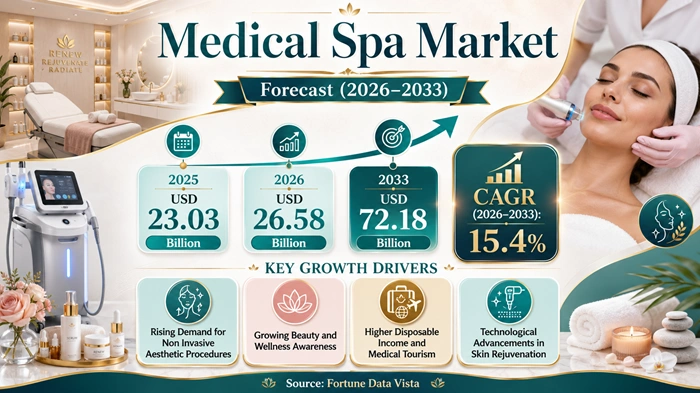
The global medical spa market size is valued at USD 23.03 billion in 2025 and is predicted to increase from USD 26.58 billion in 2026 to approximately USD 72.18 billion by 2033, growing at a CAGR of 15.4% from 2026 to 2033.
Medical spas — also commonly referred to as medspas — bridge the gap between traditional day spas and clinical medical facilities, offering physician-supervised aesthetic and wellness treatments in a comfortable, spa-like setting. Services ranging from botulinum toxin injections, dermal fillers, and laser skin resurfacing to body contouring, chemical peels, and hair removal have found a rapidly growing consumer base globally. Rising disposable incomes, growing acceptance of aesthetic procedures as part of routine self-care, and the increasing availability of minimally invasive treatment options are collectively driving this industry through one of its most dynamic expansion phases.
AI Impact on the Medical Spa Industry
Artificial Intelligence Is Reshaping Patient Consultation, Treatment Personalization, and Operational Management Across the Medical Spa Industry — Raising Service Quality and Enabling Scalable Growth for Multi-Location Operators
Artificial intelligence is finding increasingly practical applications across the medical spa landscape. AI-powered skin analysis tools — typically deployed through tablet or mobile camera interfaces — can assess skin tone, texture, pigmentation, and aging markers in real time, enabling practitioners to build personalized treatment plans before a patient has even sat down for a consultation. These tools not only improve treatment accuracy but also enhance the patient experience by making consultations feel more clinical, credible, and data-driven — a factor that supports premium pricing and builds client trust in the medspa brand.
Beyond the treatment room, AI is transforming how medical spas are managed operationally. Automated appointment scheduling platforms powered by machine learning can predict patient cancellations, optimize staff rosters, and ensure that high-revenue treatment slots are consistently filled. AI-based customer relationship management (CRM) systems analyze individual client treatment histories, purchase patterns, and feedback data to generate targeted outreach campaigns and personalized upsell recommendations. For multi-location medspa operators and franchise networks, these AI-driven management tools are enabling the kind of operational consistency and scalable growth that was previously only achievable by much larger healthcare or hospitality organizations.
Growth Factors
Surging Consumer Demand for Non-Invasive Aesthetic Procedures, Rising Disposable Incomes, and the Growing Social Normalization of Cosmetic Self-Care Are the Dominant Forces Driving Rapid Expansion Across the Medical Spa Market
The most powerful growth driver in the medical spa market is the dramatic broadening of the consumer base for aesthetic and wellness treatments. A decade ago, cosmetic procedures were largely associated with post-surgical recovery or high-income demographics. Today, non-invasive and minimally invasive treatments such as Botox, fillers, laser hair removal, and skin-tightening sessions are marketed as accessible, lunch-break-compatible self-care routines accessible to a wide socioeconomic range of consumers. Social media platforms — particularly Instagram and TikTok — have amplified this normalization by creating highly visible communities around aesthetic self-improvement, driving awareness and demand especially among consumers aged 25 to 45 who represent the industry's fastest-growing customer segment.
Technological advancement in treatment modalities is the second core driver. The development of safer, more effective, and longer-lasting aesthetic treatment technologies — including next-generation laser platforms, radiofrequency body contouring devices, and advanced dermal filler formulations — has significantly expanded the menu of procedures that medspas can credibly offer. These technologies deliver clinically meaningful results with minimal downtime and low complication profiles, making them highly appealing to consumers who want cosmetic improvement without the recovery burden of surgical alternatives. As device manufacturers continue investing in innovation and price competition drives down equipment costs, the range of effective treatments accessible to mid-market medspa operators continues to expand, further broadening the industry's overall service offering and revenue potential.
Market Outlook
The Medical Spa Market Is Set to Sustain Exceptional Double-Digit Growth Through 2033, Supported by the Premiumization of Wellness Culture, the Male Aesthetic Segment's Emergence, and Rapid Expansion Into High-Growth Markets Across Asia Pacific and the Middle East
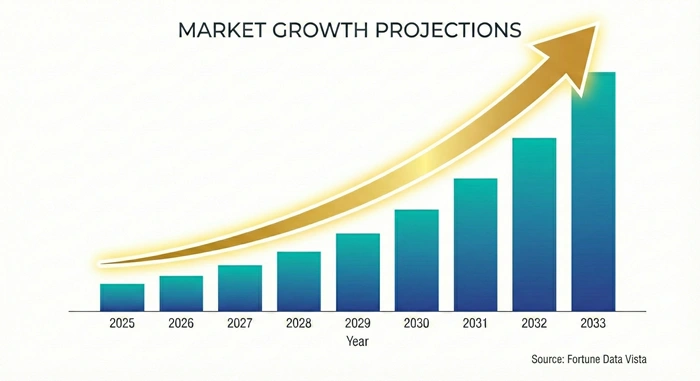
The long-term growth outlook for the medical spa market is remarkably robust, with double-digit CAGR projections sustained by multiple converging demand megatrends. The global wellness economy — valued at trillions of dollars — is increasingly incorporating medical-grade aesthetic services as a premium sub-segment, and consumers are demonstrating a clear willingness to pay significantly for treatments that combine clinical efficacy with luxury service environments. The medspa positioning at the intersection of medicine and wellness resonates strongly with the aspirational lifestyle priorities of urban, high-earning consumer segments across all major world regions, giving the industry a powerful and durable demand foundation.
The emergence of the male aesthetic consumer is an especially noteworthy structural expansion of the addressable market. Men now represent a growing and increasingly loyal segment of medspa clientele, with treatments such as laser hair removal, skin rejuvenation, anti-aging injectables, and body contouring seeing meaningful increases in male uptake across North America, Europe, and increasingly Asia Pacific. Many leading medspa operators and franchise networks have responded by developing male-specific service menus and clinic environments designed to reduce the traditional social barrier to men seeking aesthetic treatment. This demographic expansion, combined with the rapid growth of medical tourism in destinations like Thailand, South Korea, Turkey, and the UAE, is creating new global market vectors that extend the growth trajectory well beyond 2033.
Expert Speaks
-
"The aesthetic medicine and wellness segments have never been more aligned than they are today. We are seeing consumers across all demographics treating their skin and physical well-being as an investment — and medspas are extraordinarily well positioned to serve that growing and loyal client base." — Allergan Aesthetics (AbbVie) President Carrie Strom, speaking on the expanding market for non-surgical aesthetic treatments.
-
"The technology pipeline in aesthetic medicine has never been more exciting. From energy-based body contouring to next-generation biostimulator injectables, the treatments available today deliver results that used to require surgery — and that fundamental shift is what is driving the explosive growth of the medspa sector globally." — Solta Medical CEO (a Bausch Health company), commenting on innovation-driven demand in medical aesthetics.
-
"Johnson and Johnson MedTech's aesthetics portfolio growth reflects something we believe is a permanent behavioral shift — people are actively investing in their appearance and well-being as a core part of their quality of life, and that creates a market opportunity that is both large and highly resilient through economic cycles." — Johnson and Johnson MedTech Aesthetics Leadership, addressing the long-term demand dynamics in non-invasive aesthetics.
Key Report Takeaways
-
North America leads the medical spa market with the largest regional revenue share of approximately 38% in 2026, supported by a highly developed aesthetic medicine culture, high per-capita spending on cosmetic procedures, extensive medspa networks, and the strong presence of leading device manufacturers and injectable product suppliers in the U.S. market.
-
Asia Pacific is the fastest-growing regional market, expanding at a CAGR exceeding 17% from 2026 to 2033, driven by rising disposable incomes in China, India, South Korea, and Japan, as well as the global prominence of South Korea as a medical tourism and aesthetic innovation hub that is reshaping beauty standards and service expectations across the region.
-
Women remain the dominant end-user segment, accounting for approximately 72% of total medspa revenue in 2026, driven by traditionally higher engagement with skin care, anti-aging treatments, and body aesthetic services — though the male segment is growing fastest at a CAGR above 18% from 2026 to 2033.
-
Injectables and fillers are the highest-revenue service type segment, contributing approximately 30% of total market revenue in 2026, owing to the widespread popularity of botulinum toxin and hyaluronic acid-based dermal fillers as accessible, low-downtime treatments that deliver highly visible and fast results for a broad consumer base.
-
Laser-based treatments are the most broadly used procedure category across medspa service menus globally, covering applications from hair removal and skin resurfacing to pigmentation correction and vascular treatment — making laser technology the single most versatile and revenue-generative equipment investment for medspa operators.
-
The body contouring segment is projected to grow the fastest, expected to capture approximately 22% market share by 2033 at a CAGR of approximately 18% from 2026 to 2033, as non-surgical fat reduction and skin-tightening technologies become mainstream consumer offerings with proven clinical outcomes and growing insurance or financing accessibility.
Market Scope
| Parameter | Details |
|---|---|
| Market Size by 2033 | USD 72.18 Billion | Market Size by 2026 | USD 26.58 Billion | Market Size by 2025 | USD 23.03 Billion | Market Growth Rate from 2026 to 2033 | CAGR of 15.4% | Dominating Region | North America | Fastest Growing Region | Asia Pacific | Segments Covered | Service Type, End User, Age Group, Ownership Type | Regions Covered | North America, Europe, Asia Pacific, Latin America, Middle East and Africa |
Market Dynamics
Drivers Impact Analysis
Growing Consumer Acceptance of Aesthetic Procedures as Everyday Self-Care, Combined With Rapid Technological Innovation in Non-Invasive Treatment Modalities, Is Delivering Powerful and Consistent Growth Momentum to the Medical Spa Market
| Driver | ≈ % Impact on CAGR Forecast | Geographic Relevance | Impact Timeline |
|---|---|---|---|
| Social normalization of cosmetic aesthetic procedures | ~28% | Global — highest in North America and Asia Pacific | Short to Long-Term |
| Rising disposable incomes and wellness spending | ~22% | Asia Pacific, Middle East, Latin America | Medium to Long-Term |
| Technological innovation in non-invasive treatments | ~20% | Global | Short to Long-Term |
| Growing male aesthetic consumer segment | ~12% | North America, Europe, Asia Pacific | Medium-Term |
| Medical tourism growth for aesthetic procedures | ~10% | Southeast Asia, Turkey, Middle East | Medium to Long-Term |
| Expansion of medspa franchise and chain models | ~8% | North America, Europe | Short to Medium-Term |
The medical spa market's most consistent growth driver is the deep cultural shift in how consumers across all demographics view aesthetic treatments. What was once considered a luxury reserved for the wealthy or a preparation for major life events has become a regular wellness and maintenance practice for tens of millions of consumers globally. The influence of social media — where flawless skin and defined facial aesthetics are constantly prominent — has created a continuously reinforced desire for aesthetic improvement that translates directly into recurring medspa visits. This behavioral normalization ensures that demand for medical aesthetic services is not tied to specific life events or economic conditions but rather to an ongoing and habitual investment in personal appearance and well-being.
Technological innovation is amplifying this demand by continuously lowering the barriers to treatment entry. The development of next-generation injectable formulations, energy-based device platforms, and combination treatment protocols means that medspa practitioners today can deliver results across a wider range of patient profiles — including darker skin tones, more mature skin, and male physiognomy — with fewer side effects and less treatment downtime than ever before. As device manufacturers introduce new platforms at progressively accessible price points and build robust training and support ecosystems for medspa operators, the ability of small and mid-market medspas to offer advanced, clinically credible treatments continues to improve — driving both new patient acquisition and repeat visit frequency.
Restraints Impact Analysis
Regulatory Complexity, High Equipment and Operating Costs, and the Risk of Unqualified Practitioners Operating Outside Clinical Standards Continue to Create Meaningful Obstacles for the Medical Spa Market's Sustained and Safe Growth
| Restraint | ≈ % Impact on CAGR Forecast | Geographic Relevance | Impact Timeline |
|---|---|---|---|
| Complex and inconsistent regulatory environments | ~-28% | Global — highest in Europe and Asia Pacific | Medium to Long-Term |
| High capital cost of aesthetic equipment and setup | ~-25% | Emerging markets, independent operators | Short to Medium-Term |
| Risk of unqualified practitioners and safety concerns | ~-20% | Developing economies, unregulated markets | Long-Term |
| Economic sensitivity of discretionary spending | ~-15% | Global | Short-Term |
| Consumer trust and reputation management challenges | ~-12% | Global | Medium-Term |
One of the most persistent structural restraints facing the medical spa market is the complex and often inconsistent regulatory landscape across different geographies. In many countries, the legal requirements for who may own and operate a medspa, which procedures require physician oversight, and what qualifications practitioners must hold are unclear, frequently amended, or poorly enforced. This creates both legal risk for serious operators and an unlevel competitive playing field in which unqualified practitioners can undercut established clinics on price while operating outside required safety standards. When adverse events occur at unregulated facilities — as they periodically do — the resulting media coverage can temporarily suppress consumer demand and increase the regulatory scrutiny faced by compliant operators.
High upfront capital costs present a separate but significant barrier, particularly for independent medspa operators entering the market without the support of a franchise network or institutional backing. Professional-grade aesthetic devices — including laser platforms, radiofrequency body contouring systems, and phototherapy units — carry price tags ranging from tens of thousands to hundreds of thousands of dollars each, requiring substantial financing before a new practice can offer a comprehensive service menu. Combined with the costs of qualified clinical staffing, facility fit-out, insurance, and marketing, the total investment required to establish a credible and competitive medspa can be daunting for first-time operators in markets where financing options for medical aesthetic businesses remain limited.
Opportunities Impact Analysis
The Rapid Expansion of Medspa Franchise Networks, the Emergence of Technology-Driven Personalized Aesthetics, and the Untapped Potential of Male and Younger Consumer Segments Are Creating Significant New Revenue Opportunities Across the Medical Spa Market
| Opportunity | ≈ % Impact on CAGR Forecast | Geographic Relevance | Impact Timeline |
|---|---|---|---|
| Franchise and multi-location medspa chain expansion | ~28% | North America, Europe, Asia Pacific | Short to Long-Term |
| AI-powered personalized treatment platforms | ~22% | Global | Short to Medium-Term |
| Male aesthetic consumer market development | ~18% | North America, Europe, Asia Pacific | Medium to Long-Term |
| Medical tourism for premium aesthetic procedures | ~16% | Southeast Asia, Turkey, UAE | Medium-Term |
| Wellness-aesthetic integration and membership models | ~16% | North America, Europe | Short to Long-Term |
The franchise and multi-location medspa business model represents one of the most compelling near-term growth opportunities in the industry. Companies like Ideal Image, LaserAway, and European Wax Center in the United States have demonstrated that the medspa service model can be standardized, replicated, and operated profitably at scale across hundreds of locations — creating substantial enterprise value while delivering consistent patient experiences. As these proven franchise frameworks attract institutional investment and seek international expansion, and as independent medspa operators in new markets look to adopt turnkey operational models, the global proliferation of branded medspa chains is expected to accelerate significantly through the forecast period — raising service standards, consumer trust, and overall market maturation in the process.
The integration of membership-based service models within the medspa industry presents a parallel and equally powerful opportunity. Monthly membership programs — where clients pay a fixed monthly fee in exchange for a bundled package of regular treatments — create recurring, predictable revenue streams for medspa operators while building deep client loyalty and increasing visit frequency. These models have proven highly effective in North America and are now being adapted for European and Asia Pacific markets where aesthetic procedure uptake is growing rapidly. When combined with AI-powered personalization and loyalty reward systems, membership models can transform the financial profile of a medspa business from transaction-dependent to subscription-supported — making the business more predictable, more valuable, and more resilient through economic cycles.
Segment Analysis
By Service Type: Injectables and Fillers
Injectables and Fillers Hold the Largest Revenue Share in the Medical Spa Market Because They Deliver Highly Visible, Fast, and Accessible Results That Appeal to the Broadest Cross-Section of Aesthetic Consumers Globally
The injectables and fillers segment is the dominant service category within the medical spa market, accounting for approximately 30% of total market revenue in 2026. Botulinum toxin treatments — most commonly marketed under brand names like Botox, Dysport, and Xeomin — and hyaluronic acid-based dermal fillers are the most widely performed procedures in the medspa setting globally, valued for their immediate results, minimal discomfort, zero downtime, and highly favorable safety profiles when administered by trained practitioners. Consumer familiarity with these treatments is at an all-time high, driven by years of widespread media coverage, celebrity endorsements, and social media influence that has completely normalized injectable aesthetics as a routine self-care practice. The injectables segment is projected to grow at a CAGR of approximately 15.8% from 2026 to 2033, making it both the largest and one of the fastest-growing service segments within the broader aesthetic medicine landscape. In North America, the dominant providers of injectable products include AbbVie (Allergan Aesthetics), Revance Therapeutics, and Galderma — all of which invest heavily in supporting medspa practitioners through training, certification programs, and co-marketing initiatives that deepen brand loyalty among clinic operators.
Asia Pacific is one of the fastest-growing regional markets for injectable aesthetics, with South Korea leading the continent as both a high-volume domestic market and a global trendsetter in facial aesthetic techniques and product innovation. South Korean aesthetic medicine culture — characterized by a highly educated consumer base, intense competition among providers, and globally influential beauty standards — is driving both domestic demand and the growth of aesthetic medical tourism that brings patients from China, Southeast Asia, Japan, and beyond. In China, the lifting of COVID-era restrictions and the recovery of discretionary spending has unleashed significant pent-up demand for injectable treatments, with domestic Chinese aesthetic medicine chains rapidly expanding their footprints across Tier 1 and Tier 2 cities. Companies including Hugel (South Korea), Bloomage Biotechnology (China), and Sinclair Pharma (UK) are key players competing in the Asian injectable aesthetics market alongside global giants.
By Service Type: Body Contouring
Body Contouring Is the Fastest-Growing Service Segment in the Medical Spa Market, Driven by Consumer Demand for Non-Surgical Fat Reduction and Skin-Tightening Solutions That Deliver Meaningful Results Without Surgery or Downtime
The body contouring segment is the fastest-growing service category within the medical spa market, projected to capture approximately 22% of total service revenue by 2033 at a CAGR of approximately 18% from 2026 to 2033. This segment encompasses a broad range of non-surgical and minimally invasive procedures designed to reduce localized fat deposits, tighten loose skin, and reshape body contours — including cryolipolysis (CoolSculpting), high-intensity focused electromagnetic (HIFEM) muscle stimulation, radiofrequency-based fat and skin treatments, and laser lipolysis. The growing popularity of body contouring treatments is driven by their ability to deliver clinically validated fat reduction results with no surgical incisions, no general anesthesia, and minimal recovery time — a combination that addresses the single most common barrier preventing consumers from seeking surgical body procedures. In North America, leading device manufacturers including InVivo Therapeutics, Cynosure, and Cutera — along with Hologic and BTL Aesthetics — have built extensive practitioner training and device support networks that have helped drive rapid market penetration for body contouring technologies across independent and chain medspa operators.
Europe is a significant and rapidly expanding market for body contouring procedures within the medical spa market, with Germany, the UK, France, and Italy representing the largest individual national markets within the continent. European consumers are showing increasing interest in body aesthetic services as travel, social events, and workplace presentation resume their pre-pandemic importance in social life. The Asia Pacific body contouring market is growing at an even faster pace, particularly in South Korea, Japan, and Australia — countries with both high aesthetic awareness and a strong cultural emphasis on physical presentation. Across all regions, the introduction of combination treatment protocols that stack multiple modalities — for example, pairing radiofrequency skin tightening with HIFEM muscle stimulation — is raising treatment results to new levels and further increasing the average revenue per patient visit for medspa operators active in this segment.
Regional Insights
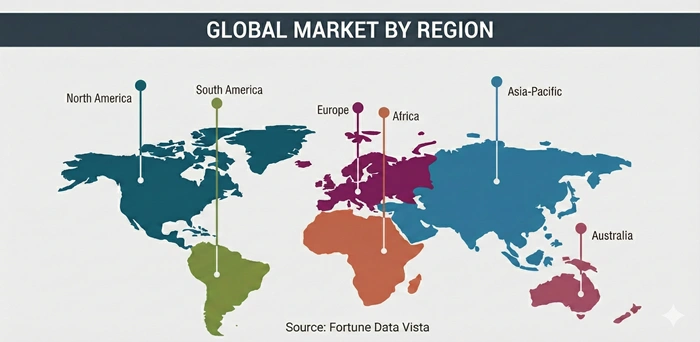
North America: The Dominating Region
North America Leads the Global Medical Spa Market Through a Mature and Well-Capitalized Aesthetic Medicine Industry, High Per-Capita Procedure Volumes, and a Growing Ecosystem of Multi-Location Medspa Networks and Franchise Operators
North America commands the largest share of the global medical spa market, contributing approximately 38% of total global revenue in 2026, with a regional CAGR of approximately 13.8% from 2026 to 2033. The United States is by far the largest national market within the region, home to a vast and well-established network of thousands of independent medspas, rapidly expanding franchise chains, and physician-owned aesthetic clinics that collectively perform millions of procedures annually. High consumer spending power, deeply embedded aesthetic self-care culture, and the continuous marketing investment of major device and pharmaceutical manufacturers drive consistent and growing demand. Key players dominating the North American medical spa landscape include Ideal Image (USA), LaserAway (USA), Skin Spirit (USA), and Hydrafacial (USA) — companies that have built scalable, brand-driven medspa platforms with multi-city or nationwide presence.
Canada is a strong secondary contributor within the region, with urban centers like Toronto, Vancouver, and Montreal hosting active and competitive medspa markets. The North American region is also the epicenter of medspa franchise innovation, with several franchise brands now exploring international expansion into Europe, the Middle East, and Australia. Regulatory clarity around medspa ownership and treatment scope in most U.S. states — despite some ongoing state-by-state variation — provides a more predictable operating environment compared to many other world regions, supporting stronger investment flows and faster scaling of successful medspa business models than is currently possible in less clearly regulated markets globally.
Asia Pacific: The Fastest Growing Region
Asia Pacific Is the World's Fastest Growing Medical Spa Market, Powered by South Korea's Global Aesthetic Leadership, China's Surging Consumer Demand, and the Rapid Rise of Medical Tourism Across the Region
Asia Pacific is the fastest-growing regional segment within the medical spa market, projected to expand at a CAGR of approximately 17.2% from 2026 to 2033 — the highest rate among all world regions. South Korea occupies a uniquely powerful position within this regional market, serving simultaneously as a high-volume domestic market for aesthetic procedures and as the world's most recognized destination for medical aesthetic tourism, attracting hundreds of thousands of international patients annually for procedures ranging from injectables and laser treatments to more advanced aesthetic medicine protocols. The global influence of Korean beauty (K-beauty) standards and South Korean aesthetic medicine expertise is driving the adoption of new treatment modalities and clinical approaches across the entire Asia Pacific region. Regional leaders including Hugel Inc. (South Korea), Medytox Inc. (South Korea), Bloomage Biotechnology (China), and The Bund Medical Group (China) are among the most active companies expanding their clinical, product, and franchise footprints across the region.
China represents the largest single-country growth opportunity within the Asia Pacific medical spa market, with a rapidly expanding middle-class consumer base that is increasingly willing to invest in premium aesthetic and wellness services. The rise of domestic Chinese aesthetic chains — many of which are well-funded, technology-forward, and growing aggressively across Tier 1 and Tier 2 cities — is accelerating the formalization and premiumization of the market. India, while earlier in its aesthetic medicine adoption curve, is emerging as an important growth market given its large and increasingly affluent urban population, growing social acceptance of cosmetic procedures, and expanding availability of trained aesthetic practitioners in major metropolitan centers.
Top Key Players
-
Ideal Image Development Corporation (United States)
-
LaserAway (United States)
-
Skin Spirit (United States)
-
Solta Medical (Bausch Health) (United States)
-
InMode Ltd. (Israel)
-
Cynosure (Hologic) (United States)
-
BTL Aesthetics (United Kingdom)
-
Galderma SA (Switzerland)
-
AbbVie Inc. (Allergan Aesthetics) (United States)
-
Hugel Inc. (South Korea)
-
Medytox Inc. (South Korea)
-
Bloomage Biotechnology Co. Ltd. (China)
-
European Wax Center Inc. (United States)
-
Hydrafacial (BeautyHealth) (United States)
Recent Developments
-
In 2025, AbbVie (Allergan Aesthetics) launched a major expansion of its Brilliant Distinctions loyalty program globally, integrating AI-powered personalized treatment recommendations and partnership rewards with medspa operators across the United States and select European markets — deepening brand lock-in and driving recurring injectable procedure volumes among registered members.
-
In 2025, InMode Ltd. received U.S. FDA clearance for its next-generation IgniteRF body contouring platform, combining radiofrequency-assisted lipolysis with skin tightening in a single minimally invasive procedure — a development that positions the company to capture significant market share in the premium surgical-medspa crossover segment.
-
In 2026, Galderma SA completed a significant expansion of its Aesthetic Injectors Network program across Asia Pacific, onboarding hundreds of new certified medspa and clinic partners in South Korea, China, Australia, and Singapore to accelerate commercial penetration of its Restylane and Sculptra filler product lines in fast-growing aesthetic markets.
-
In 2025, BTL Aesthetics announced a strategic partnership with a leading European medspa franchise network to exclusively deploy its Emsculpt NEO and Exilis ULTRA body contouring platforms across over 200 clinic locations — making it one of the largest single device deployment agreements in the European aesthetic medicine sector.
-
In 2026, Hydrafacial (BeautyHealth) launched its new Syndeo connected device platform globally, enabling cloud-based treatment tracking, provider performance analytics, and personalized treatment recommendation features across its installed base of over 30000 devices in more than 90 countries — marking a significant step in the company's transition from a hardware company to a connected aesthetic services platform.
Market Trends
The Premiumization of the Wellness-Aesthetics Experience and the Rapid Scaling of Technology-Driven Personalized Treatment Platforms Are the Two Most Defining Trends Reshaping the Medical Spa Market for the Forecast Period Through 2033
The most impactful trend reshaping consumer expectations and business models across the medical spa market is the convergence of clinical aesthetic services with premium wellness and hospitality experiences. Consumers — particularly in the high-income segments that drive the majority of medspa revenue — are no longer content with clinical-feeling environments. They expect medspa visits to feel like luxury wellness experiences, combining the clinical credibility of physician-supervised treatments with the sensory comfort, personalized service, and amenity offerings associated with five-star spa environments. This expectation is driving operators to invest significantly in clinic design, branded product lines, staff training in hospitality standards, and ancillary wellness service offerings — from IV therapy and hormone optimization to mindfulness programming — that extend the revenue opportunity and the client relationship beyond a single procedure visit.
Technology personalization is the second defining trend, particularly as AI-powered skin and body diagnostic tools become affordable and practical for individual clinic deployment. Medspas that can offer new patients a comprehensive data-driven skin analysis on their first visit — mapping specific concerns, recommending evidence-based treatment protocols, and tracking measurable improvement across a course of treatment — are achieving meaningfully higher conversion rates, stronger treatment plan compliance, and significantly better client retention than clinics relying on visual assessment alone. As these technologies mature and as consumer awareness of data-driven aesthetics grows — partly driven by digital health monitoring adoption more broadly — personalized treatment platforms will become a standard competitive differentiator that separates high-performing medspa businesses from commodity operators competing primarily on price.
Segments Covered in the Report
By Service Type:
-
Facial Treatments
-
Body Contouring
-
Hair Removal
-
Anti-Aging Treatments
-
Skin Resurfacing
-
Injectables and Fillers
-
Others
By End User:
-
Men
-
Women
By Age Group:
-
Below 30
-
31–50
-
Above 50
By Ownership Type:
-
Individual Owned
-
Group Owned
-
Hospital Owned
By Region:
-
North America (U.S., Canada, Mexico)
-
Europe (Germany, U.K., France, Italy, Rest of Europe)
-
Asia Pacific (China, India, Japan, South Korea, Rest of Asia Pacific)
-
Latin America (Brazil, Argentina, Rest of Latin America)
-
Middle East and Africa (UAE, Saudi Arabia, Rest of MEA)
❝ Built for Every Level — From Startups to Industry Giants ❞
Here Is Exactly How This Report Works for You
-
Whether you are an independent medspa owner planning your next service expansion, a franchise investor evaluating new territory acquisition, or a healthcare-focused institutional investor assessing the medical spa market's long-term return profile, this report delivers precise revenue forecasts by segment and region, competitor revenue analysis, and market entry strategies that enable confident and well-informed capital allocation decisions.
-
This report comprehensively maps the supply-demand dynamics of the medical aesthetic industry — including device technology pipelines, injectable product supply chains, practitioner workforce capacity trends, regulatory changes by region, and how geopolitical factors such as cross-border medical tourism regulations and luxury spending patterns in high-growth economies are impacting operator strategies and investment decisions globally.
-
The full version of this report provides detailed profiling of competitor revenue sources, pricing models, franchise economics, partnership structures, and technology investment priorities — giving decision-makers at every level of the market the actionable intelligence they need to identify the right service segments to prioritize, the right geographies to enter, and the right competitive positioning to adopt in order to grow profitably in one of the world's fastest-expanding consumer healthcare sectors.
Frequently Asked Questions:
Answer: The medical spa market is valued at USD 23.03 billion in 2025 and is projected to reach USD 72.18 billion by 2033. The market is expected to grow at a CAGR of 15.4% from 2026 to 2033, driven by rising aesthetic awareness, growing disposable incomes, and the broadening consumer base for non-invasive cosmetic procedures.
Answer: North America leads the medical spa market with approximately 38% of total global revenue in 2026, driven by a mature aesthetic medicine culture and a well-developed ecosystem of medspa chains and franchise operators. The United States is by far the largest national market within the region, supported by high per-capita consumer spending on cosmetic and wellness services.
Answer: The primary growth drivers include the social normalization of aesthetic procedures through social media influence, rising disposable incomes, and rapid technological innovation in non-invasive and minimally invasive treatment modalities. The emergence of the male aesthetic consumer segment and the growth of medical spa franchise networks are also expanding the total addressable market significantly.
Answer: Injectables and fillers — including botulinum toxin and hyaluronic acid dermal fillers — hold the largest service segment share at approximately 30% of total market revenue in 2026. Their accessibility, minimal downtime, and highly visible results make them the most widely demanded treatments across all consumer demographics.
Answer: The medical spa market is increasingly incorporating AI-powered skin diagnostic tools and personalized treatment planning platforms that allow practitioners to deliver data-driven, measurable aesthetic results tailored to each individual patient. Membership-based service models, smart scheduling systems, and connected device platforms are also transforming how medspas manage client relationships and generate recurring revenue.