
Metabolic Testing Equipment Market Overview
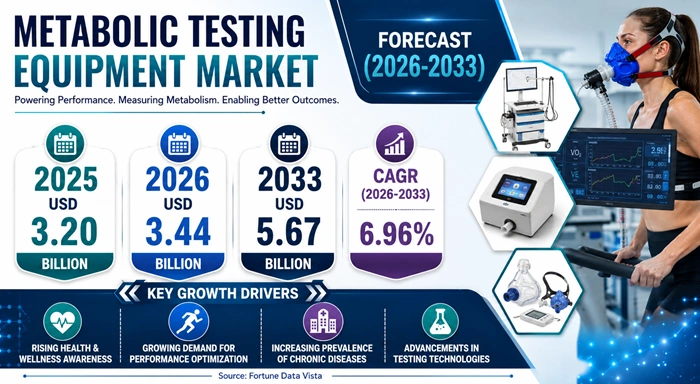
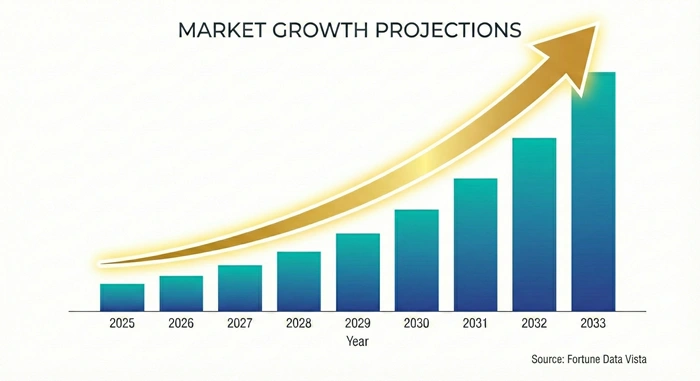
The global metabolic testing equipment market size is valued at USD 3.20 billion in 2025 and is predicted to increase from USD 3.44 billion in 2026 to approximately USD 5.67 billion by 2033, growing at a CAGR of 6.96% from 2026 to 2033.
This consistent growth trajectory reflects the rising global burden of metabolic disorders such as obesity, diabetes, and cardiovascular disease, alongside growing clinical and consumer interest in precise energy expenditure measurement. Expanding use of indirect calorimetry in critical care settings, growing adoption of metabolic analyzers in sports science, and rising healthcare spending across emerging economies are together shaping demand for this specialized diagnostic equipment category.
AI Impact on the Metabolic Testing Equipment Industry
Artificial Intelligence Is Enhancing Diagnostic Precision, Automating Data Interpretation, and Personalizing Metabolic Health Insights — Fundamentally Changing How Clinicians and Athletes Approach Energy Expenditure Analysis
Artificial intelligence is meaningfully improving how metabolic testing equipment captures and interprets physiological data, moving well beyond the basic oxygen consumption and carbon dioxide output readings that defined earlier generations of devices. Modern metabolic analyzers increasingly rely on machine learning models trained on large datasets to identify subtle patterns in gas exchange and heart rate variability that human interpretation alone might miss, allowing clinicians to detect early signs of metabolic dysfunction with greater confidence. This shift is proving especially valuable in intensive care units, where AI-assisted indirect calorimetry systems can continuously adjust nutritional support recommendations based on a patient's real-time metabolic state rather than relying on static formulas calculated once at admission.
Beyond clinical applications, AI is reshaping how sports scientists and fitness professionals use metabolic testing equipment to guide training programs, since algorithms can now process cardiopulmonary exercise testing data almost instantly and generate personalized recommendations around optimal training zones and recovery periods. This has made metabolic testing far more actionable for athletes who previously had to wait days for a specialist to manually interpret raw data. As manufacturers continue embedding smarter software directly into their devices, the overall value proposition of metabolic testing equipment is shifting from simple measurement toward genuinely intelligent, decision-supporting diagnostic tools.
Growth Factors
Rising Chronic Disease Prevalence and Expanding Preventive Healthcare Focus Are Fueling Consistent Demand Across Clinical and Wellness Settings
The most significant growth factor supporting the metabolic testing equipment market is the steadily rising global prevalence of obesity, diabetes, and related metabolic disorders, which has pushed healthcare systems to prioritize accurate diagnostic tools capable of guiding effective treatment plans. Physicians increasingly rely on metabolic analyzers and indirect calorimeters to measure resting metabolic rate and energy expenditure precisely, rather than relying on generalized estimation formulas that often produce inaccurate results for patients with complex health conditions. This growing clinical reliance on precise measurement is expanding equipment purchases across hospitals, clinics, and specialized metabolic disease centers worldwide.
A second important growth factor is the expanding focus on preventive healthcare and personalized wellness programs, which has broadened the customer base for metabolic testing equipment well beyond traditional hospital settings. Fitness centers, sports performance facilities, and corporate wellness programs are increasingly investing in cardiopulmonary exercise testing systems and body composition analyzers to offer clients data-driven insights into their metabolic health and athletic performance. This diversification of end users, combined with growing consumer willingness to pay for personalized health data, continues to support steady expansion of the broader metabolic testing equipment market.
Market Outlook
Portable Device Innovation and Expanding Critical Care Applications Point Toward Sustained, Broad-Based Growth Through 2033
Looking ahead, the metabolic testing equipment industry is expected to benefit considerably from continued innovation in portable and more affordable device formats that make metabolic testing accessible outside traditional hospital and research laboratory settings. As sensor technology becomes more compact and cost-efficient, smaller clinics, home healthcare providers, and even individual consumers are gaining access to metabolic testing capability that was previously reserved for well-funded institutions. This democratization of testing technology is expected to meaningfully expand the addressable market over the coming years, particularly in regions where centralized diagnostic infrastructure remains limited.
At the same time, expanding use of indirect calorimetry systems within intensive care units to guide precise nutritional therapy is emerging as a particularly promising growth avenue, since accurate energy expenditure measurement has been shown to improve patient outcomes in critical care settings. Hospitals investing in advanced critical care infrastructure are increasingly viewing metabolic testing equipment as a standard component of comprehensive patient monitoring rather than an optional add-on. Manufacturers that continue refining both clinical-grade and consumer-facing metabolic testing solutions are well positioned to capture a growing share of this expanding market as adoption spreads across both healthcare and wellness applications.
Expert Speaks
-
"Accurate metabolic measurement is becoming a standard part of critical care protocols, and we are seeing hospitals increasingly recognize the clinical value that precise energy expenditure data provides." — CEO, GE HealthCare Technologies Inc, speaking on the growing role of metabolic testing in intensive care nutrition management
-
"The convergence of wearable sensor technology and clinical-grade metabolic analysis is opening up entirely new use cases that simply did not exist a few years ago." — CEO, Medtronic plc, reflecting on how device innovation is expanding metabolic testing beyond traditional hospital settings
-
"We continue to see strong demand from both healthcare providers and sports science organizations who want reliable, data-driven insight into human metabolism." — CEO, Vyaire Medical Inc, commenting on the broadening customer base for metabolic testing equipment across clinical and wellness applications
Key Report Takeaways
-
North America leads the global metabolic testing equipment market, holding approximately 40% market share in 2025, supported by advanced healthcare infrastructure, strong clinical adoption, and high prevalence of obesity and related chronic disease
-
Asia Pacific is the fastest-growing region, projected to expand at a CAGR near 12% through 2033, driven by rapid healthcare infrastructure expansion and rising awareness of metabolic health across urbanizing populations
-
Hospitals and clinical institutions represent the dominant customer base, relying on metabolic testing equipment to guide treatment planning for chronic metabolic disease and critical care nutrition support
-
Hospitals contribute the most to overall end-use revenue, holding roughly 50% share due to high diagnostic volumes and growing critical care monitoring needs
-
Indirect calorimetry remains the most widely used testing technology, prized for its accuracy in measuring energy expenditure across both clinical and research applications
-
Body composition analyzers will grow the fastest among product segments, holding close to 15% market share with a CAGR near 10.5% through the forecast period, driven by rising consumer interest in personalized fitness and wellness tracking
Market Scope
| Parameter | Details |
|---|---|
| Market Size by 2033 | USD 5.67 Billion | Market Size by 2026 | USD 3.44 Billion | Market Size by 2025 | USD 3.20 Billion | Market Growth Rate from 2026 to 2033 | CAGR of 6.96% | Dominating Region | North America | Fastest Growing Region | Asia Pacific | Segments Covered | Product Type, Technology, End Use, Region | Regions Covered | North America, Europe, Asia Pacific, Latin America, Middle East & Africa |
Market Dynamics
Drivers Impact Analysis
Rising Metabolic Disease Burden and Expanding Critical Care Adoption Stand Out as the Strongest Forces Behind Sustained Market Growth
| Driver | (≈) % Impact on CAGR Forecast | Geographic Relevance | Impact Timeline |
|---|---|---|---|
| Rising global prevalence of obesity and metabolic disorders | ~36% | Global, strongest in North America, Europe | Short to long-term |
| Growing adoption of indirect calorimetry in critical care nutrition | ~28% | North America, Europe, growing in Asia Pacific | Medium to long-term |
| Expanding use of metabolic testing in sports science and fitness | ~20% | Global | Short to medium-term |
| Increasing preventive healthcare and personalized wellness focus | ~16% | Global | Medium-term |
Rising global prevalence of obesity and related metabolic disorders remains the single most powerful driver behind sustained expansion of the metabolic testing equipment market, as healthcare providers increasingly recognize that generalized estimation formulas cannot reliably guide treatment for patients with complex or atypical metabolic profiles. This has pushed hospitals and specialized metabolic clinics to invest in precise diagnostic tools capable of measuring actual resting metabolic rate and substrate utilization, rather than relying on population-based averages that frequently misrepresent individual patient needs.
Growing adoption of indirect calorimetry systems within intensive care units represents the second major driver, since accurate energy expenditure measurement has demonstrated clear value in guiding nutritional therapy for critically ill patients. This clinical validation is encouraging more hospitals to treat metabolic testing equipment as essential infrastructure for comprehensive critical care rather than a specialized add-on reserved for research purposes, steadily expanding the addressable customer base for equipment manufacturers across the broader metabolic testing equipment market.
Restraints Impact Analysis
High Equipment Costs and Limited Reimbursement Coverage Continue to Constrain Broader Adoption
| Restraint | (≈) % Impact on CAGR Forecast | Geographic Relevance | Impact Timeline |
|---|---|---|---|
| High upfront cost of advanced metabolic testing systems | ~38% | Global, notable in smaller healthcare facilities | Short to medium-term |
| Limited insurance reimbursement for metabolic testing procedures | ~30% | North America, parts of Europe | Ongoing |
| Requirement for trained technical staff to operate equipment accurately | ~19% | Global | Medium-term |
| Low awareness of metabolic testing benefits in developing regions | ~13% | Africa, parts of Latin America, South Asia | Long-term |
The most persistent restraint facing the metabolic testing equipment market is the relatively high upfront cost of advanced systems such as cardiopulmonary exercise testing units and clinical-grade indirect calorimeters, which can place these tools out of reach for smaller clinics and healthcare facilities operating with limited capital budgets. This cost barrier is particularly pronounced in developing regions, where healthcare providers often must prioritize more basic diagnostic infrastructure over specialized metabolic testing capability.
Limited insurance reimbursement for many metabolic testing procedures represents a second significant restraint, since patients and providers in several markets must absorb testing costs directly rather than relying on coverage, which discourages routine use outside of clearly justified clinical scenarios. Combined with the specialized technical training required to operate certain metabolic testing equipment accurately, these restraints continue moderating how quickly adoption can spread beyond well-resourced hospitals and specialized research institutions across the broader metabolic testing equipment market.
Opportunities Impact Analysis
Portable Device Innovation and Emerging Market Healthcare Expansion Represent the Clearest Paths to New Growth
| Opportunity | (≈) % Impact on CAGR Forecast | Geographic Relevance | Impact Timeline |
|---|---|---|---|
| Development of affordable, portable metabolic testing devices | ~40% | Global, led by Asia Pacific, Latin America | Medium to long-term |
| Expansion of critical care applications for indirect calorimetry | ~35% | North America, Europe | Short to medium-term |
| Growing sports science and consumer wellness testing demand | ~25% | Global | Long-term |
The development of more affordable, portable metabolic testing devices represents one of the most promising opportunities within this market, as advances in sensor miniaturization and cost efficiency are making metabolic testing capability accessible to smaller clinics and even individual consumers who previously had no practical access to this technology. Manufacturers that successfully commercialize accurate, lower-cost portable systems stand to unlock substantial new demand across previously underserved market segments.
The continued expansion of critical care applications for indirect calorimetry offers a second significant opportunity, given the growing clinical evidence supporting its role in guiding precise nutritional therapy for critically ill patients. Growing demand from sports science organizations and consumer wellness programs further broadens the opportunity landscape, as more people seek personalized data about their own metabolism to guide fitness and health decisions. Companies that can serve both clinical and wellness-focused customer segments effectively are well positioned to capture meaningful growth within the broader metabolic testing equipment market.
Segment Analysis
By Product Type: Metabolic Analyzers
Metabolic Analyzers Continue to Anchor the Product Landscape, Driven by Their Central Role in Real-Time Energy Expenditure Measurement
Metabolic analyzers hold the largest share within the product type segment of the metabolic testing equipment market, accounting for approximately 45% of total segment revenue in 2025. Their dominance reflects their central role in measuring oxygen consumption and carbon dioxide production in real time, providing clinicians and researchers with detailed insight into a patient's metabolic state that simpler diagnostic tools cannot match. In markets like the United States and Germany, metabolic analyzers have become standard equipment in specialized metabolic clinics, weight management centers, and critical care units where precise energy expenditure data directly informs treatment decisions. Leading manufacturers such as COSMED, MGC Diagnostics, and Vyaire Medical continue to dominate this segment through continuous product refinement and strong relationships with hospital procurement teams.
Growth within this segment remains particularly strong in North America, where rising obesity rates and growing clinical emphasis on personalized metabolic assessment continue driving steady equipment purchases across hospitals and specialized clinics. The region's well-established reimbursement pathways for certain metabolic testing procedures, combined with strong clinical research infrastructure, have helped sustain consistent demand for advanced metabolic analyzer systems. As sports science and fitness applications continue expanding the customer base beyond traditional clinical settings, metabolic analyzers are increasingly finding new commercial opportunities that extend well beyond their historical hospital-centered market.
By End Use: Hospitals
Hospitals Remain the Dominant End-Use Segment, Supported by High Diagnostic Volumes and Expanding Critical Care Monitoring Requirements
Hospitals account for approximately 50% of end-use segment revenue within the metabolic testing equipment market in 2025, reflecting both the high volume of metabolic diagnostic procedures performed in these settings and the growing importance of accurate energy expenditure measurement in critical care nutrition management. Intensive care units in particular have become an important growth driver for this segment, as clinical evidence increasingly supports the value of precise metabolic monitoring in guiding nutritional therapy for critically ill patients rather than relying on generalized formulas that often fail to reflect actual patient needs.
Clinics and diagnostic centers represent a meaningful secondary end-use segment, projected to grow at a steady pace as preventive healthcare initiatives encourage more routine metabolic screening outside of hospital settings. North America continues to lead this end-use category overall, supported by companies like MGC Diagnostics and COSMED that maintain strong distribution relationships with major hospital networks across the region. As fitness centers and sports organizations continue investing in metabolic testing capability to serve performance-focused clients, the overall end-use landscape for the metabolic testing equipment market is gradually diversifying beyond its traditional hospital-centric foundation.
Regional Insights
North America
Advanced Healthcare Infrastructure and High Chronic Disease Prevalence Keep North America Firmly in the Lead
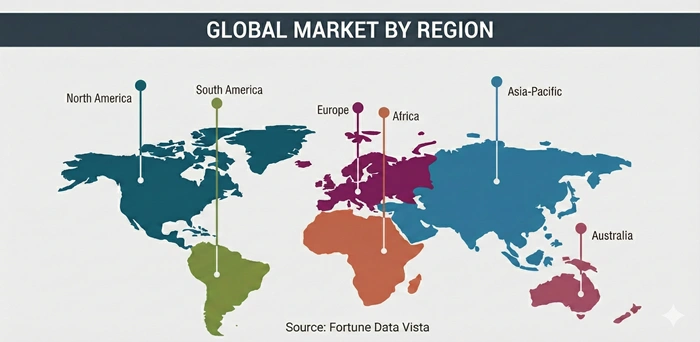
North America commands the leading position in the global metabolic testing equipment market, holding approximately 40% share in 2025, supported by advanced healthcare infrastructure, early adoption of diagnostic technologies, and a high prevalence of obesity and related chronic conditions that continue to drive demand for precise metabolic assessment tools. The United States accounts for the overwhelming majority of regional demand, backed by strong clinical infrastructure, widespread hospital adoption of metabolic testing technologies, and growing preventive healthcare initiatives that encourage routine metabolic screening. Companies with strong regional presence include MGC Diagnostics, COSMED, Vyaire Medical, and KORR Medical Technologies, each maintaining deep relationships with hospital networks and specialized metabolic clinics across the country.
Canada also contributes meaningfully to regional demand, supported by growing public health attention to obesity and metabolic disease management alongside steady investment in hospital diagnostic infrastructure. The combination of strong clinical adoption, favorable research infrastructure, and consistently high chronic disease prevalence ensures North America's leadership position within the metabolic testing equipment market remains firmly intact through the remainder of the forecast period.
Asia Pacific
Rapid Healthcare Expansion and Rising Metabolic Health Awareness Position Asia Pacific as the Fastest-Growing Region
Asia Pacific is projected to register the fastest CAGR within the global metabolic testing equipment market through 2033, expanding at a rate near 12% as rapid healthcare infrastructure expansion and rising urbanization-driven metabolic health awareness create substantial new demand across the region. China leads much of this regional growth, supported by expanding healthcare infrastructure and rising rates of obesity and chronic disease that are pushing hospitals to invest more heavily in advanced diagnostic equipment. Regional and international manufacturers alike have expanded their presence to capture this growing institutional demand, often adapting product offerings to suit more budget-conscious healthcare systems.
India and other emerging markets across the region are following a similar growth pattern, with expanding middle-class populations increasingly seeking access to preventive healthcare services that include metabolic screening. Growing government investment in healthcare infrastructure across several Asia Pacific countries continues to accelerate adoption among hospitals and clinics that previously lacked access to specialized metabolic testing equipment. This combination of infrastructure expansion, rising disease awareness, and improving affordability positions Asia Pacific as the clear growth leader within the broader metabolic testing equipment market through the forecast period.
Customization Available for This Report
Region-Specific and Country-Specific Versions of This Report Are Available to Deliver a Sharper, More Localized View of Market Dynamics
This report can be tailored on a region-by-region and country-by-country basis, providing localized market sizing, competitive mapping, and demand analysis that a global overview alone cannot fully capture.
Clients seeking a more focused breakdown can request a customized version covering any of the following regions and countries, complete with demand forecasting, competitor landscape review, and adoption trend analysis tied specifically to the metabolic testing equipment keyword focus:
North America
-
U.S. — Detailed review of hospital adoption trends and clinical reimbursement dynamics
-
Canada — Coverage of public health initiatives and diagnostic infrastructure investment
-
Mexico — Analysis of expanding private healthcare metabolic testing access
Europe
-
U.K. — Review of NHS-linked diagnostic pathways and clinical adoption trends
-
Germany — Coverage of advanced healthcare facility investment and digital health integration
-
France — Insights into metabolic disease management and testing equipment demand
-
Italy — Analysis of regional healthcare infrastructure and adoption patterns
-
Rest of Europe — Country-level view of emerging demand across Eastern Europe and the Nordics
Asia Pacific
-
China — Coverage of expanding healthcare infrastructure and rising chronic disease rates
-
India — Analysis of growing preventive healthcare access and affordable device demand
-
Japan — Review of established healthcare technology adoption and clinical research activity
-
South Korea — Assessment of digital health integration and equipment manufacturing strength
-
Australia — Insights into metabolic health awareness and clinical adoption trends
-
Rest of Asia Pacific — Country-level breakdown covering Thailand, Vietnam, Indonesia, and Malaysia
Latin America
-
Brazil — Coverage of expanding private healthcare investment and equipment demand
-
Argentina — Analysis of early-stage metabolic testing market development
-
Rest of Latin America — Country-level sizing across Colombia, Peru, and Chile
Middle East & Africa
-
UAE — Review of healthcare infrastructure investment and diagnostic equipment adoption
-
Saudi Arabia — Coverage of expanding chronic disease management initiatives
-
Rest of MEA — Country-level view of Sub-Saharan Africa healthcare access expansion
Top Key Players
-
COSMED srl (Italy)
-
MGC Diagnostics Corporation (United States)
-
Vyaire Medical Inc (United States)
-
KORR Medical Technologies Inc (United States)
-
Parvo Medics Inc (United States)
-
General Electric Company (United States)
-
Medtronic plc (Ireland)
-
CORTEX Biophysik GmbH (Germany)
-
Geratherm Medical AG (Germany)
-
AEI Technologies Inc (United States)
-
OSI Systems Inc (United States)
-
Microlife Medical Home Solutions Inc (United States)
Recent Developments
-
In 2024, COSMED launched its K5 wearable metabolic system, adding advanced wireless connectivity and extended battery life to support field-based metabolic testing for athletes and sports performance teams, with mobile app integration enabling real-time data review
-
In 2024, MGC Diagnostics Corporation partnered with a leading electronic health records provider to embed metabolic testing data directly into clinical workflows, helping hospitals streamline patient monitoring and care coordination
-
In 2024, Vyaire Medical introduced its upgraded Vyntus CPX metabolic cart, featuring enhanced software and a redesigned user interface built specifically for comprehensive cardiopulmonary exercise testing in clinical settings
-
In 2025, Vyaire Medical further expanded its product lineup with a new metabolic testing system that incorporates artificial intelligence to deliver real-time analytics, reflecting the industry's broader shift toward smarter diagnostic tools
-
In 2024, KORR Medical Technologies expanded its distribution footprint into Southeast Asia through new partnerships with regional healthcare equipment distributors, strengthening access to its portable metabolic testing devices across underserved markets
Market Trends
AI-Driven Automation and Portable Device Innovation Are Redefining Expectations Across Clinical and Wellness Applications
One of the clearest trends shaping the metabolic testing equipment market is the growing integration of artificial intelligence into device software, allowing systems to process complex metabolic parameters in real time and deliver more actionable insights to clinicians and fitness professionals alike. This shift is reducing the traditional gap between raw data collection and meaningful interpretation, making metabolic testing far more practical for everyday clinical decision-making rather than a specialized research exercise reserved for a handful of experts.
A second significant trend is the continued push toward automated, user-independent testing systems that reduce reliance on highly trained technicians, making metabolic testing more scalable across a broader range of healthcare and wellness settings. This is paired with growing demand for portable, more affordable devices that extend testing capability into fitness centers, outpatient clinics, and even home healthcare settings that previously lacked access to this technology. Together, these trends are steadily broadening the commercial footprint of the metabolic testing equipment market well beyond its traditional hospital and research laboratory base.
Segments Covered in the Report
By Product Type
-
Metabolic Analyzers
-
Spirometers
-
Cardiopulmonary Exercise Testing Systems
-
Body Composition Analyzers
By Technology
-
Indirect Calorimetry
-
Respiratory Gas Exchange Measurement
-
Bioelectrical Impedance Analysis
-
Dual-Energy X-Ray Absorptiometry
By End Use
-
Hospitals
-
Clinics and Diagnostic Centers
-
Fitness Centers and Sports Organizations
-
Research and Academic Institutions
By Region
-
North America (U.S., Canada, Mexico)
-
Europe (U.K., Germany, France, Italy, Rest of Europe)
-
Asia Pacific (China, India, Japan, South Korea, Australia, Rest of Asia Pacific)
-
Latin America (Brazil, Argentina, Rest of Latin America)
-
Middle East & Africa (UAE, Saudi Arabia, Rest of MEA)
❝ Built for Every Level — From Startups to Industry Giants ❞
Here Is Exactly How This Report Works for You
-
For tier 1 companies, investors, and established market leaders, this report delivers detailed competitor revenue analysis, clinical adoption mapping, and geopolitical risk context that support confident decisions around product expansion, acquisitions, and long-term strategic positioning within the metabolic testing equipment space
-
For tier 2 and tier 3 companies, startups, and mid-sized device manufacturers, this report highlights the most commercially promising product categories and underserved regional opportunities, giving you a practical framework to compete against larger established players without overextending limited resources
-
For every decision maker across the value chain, this report explains exactly how reimbursement policy shifts, chronic disease trends, and competitor product launches are shaping market direction through 2033, equipping you to plan investment and go-to-market decisions with genuine confidence
Frequently Asked Questions:
Answer: The global metabolic testing equipment market was valued at USD 3.20 billion in 2025 and is projected to reach USD 5.67 billion by 2033. Growth is being driven largely by rising metabolic disease prevalence and expanding critical care adoption of indirect calorimetry.
Answer: Growth in the metabolic testing equipment market is being driven by rising global obesity and diabetes rates alongside growing clinical use of precise energy expenditure measurement. Expanding sports science and wellness applications are further broadening demand beyond traditional hospital settings.
Answer: North America currently leads the metabolic testing equipment market with roughly 40% share, supported by advanced healthcare infrastructure and high chronic disease prevalence. Asia Pacific is growing the fastest, driven by rapid healthcare expansion and rising metabolic health awareness.
Answer: Metabolic analyzers generate the largest share of revenue in the metabolic testing equipment market, given their central role in real-time energy expenditure measurement. Hospitals also remain the dominant end-use segment due to high diagnostic volumes and critical care monitoring needs.
Answer: Leading companies in the metabolic testing equipment market include COSMED, MGC Diagnostics, Vyaire Medical, KORR Medical Technologies, and Parvo Medics. These companies compete through continuous product innovation, strong clinical partnerships, and growing investment in portable and AI-enhanced testing technology.