
Online Grocery Market Overview
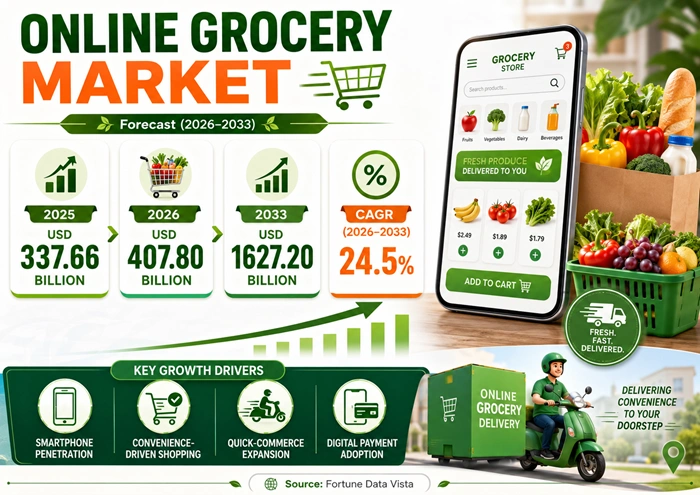
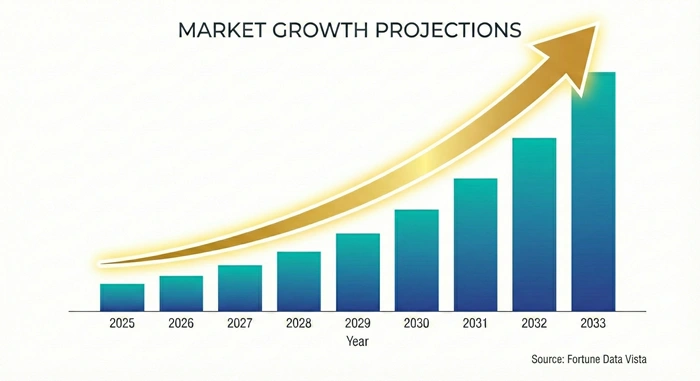
The global online grocery market size is valued at USD 337.66 billion in 2025 and is predicted to increase from USD 407.80 billion in 2026 to approximately USD 1627.20 billion by 2033, growing at a CAGR of 24.5% from 2026 to 2033.
The online grocery market has emerged as one of the fastest-expanding segments within global e-commerce, fundamentally changing the way consumers shop for daily essentials. Driven by widespread smartphone adoption, improving last-mile delivery infrastructure, and a major shift in consumer behavior following the post-pandemic normalization of digital shopping, the demand for online grocery services continues to accelerate across both developed and emerging economies. The growing preference for convenience, contactless purchasing, and time-saving solutions is reinforcing the long-term trajectory of this market.
AI Impact on the Online Grocery Industry
Artificial Intelligence Is Transforming Online Grocery Operations — From Personalized Shopping Experiences to Smarter Supply Chain Management and Predictive Demand Forecasting
Artificial intelligence is reshaping the online grocery market at every stage of the value chain. Retailers are deploying AI-powered recommendation engines that analyze purchase history, browsing behavior, and seasonal trends to suggest highly personalized product selections to individual shoppers. These capabilities not only improve customer satisfaction and basket size but also help platforms optimize their inventory in real time, reducing waste and improving gross margins across perishable product categories where spoilage has traditionally been a major operational challenge.
Beyond the consumer-facing interface, AI is enabling backend transformation through predictive analytics, automated warehouse management, and intelligent route optimization for last-mile delivery. Machine learning algorithms can anticipate demand surges based on weather patterns, promotional calendars, and regional events, allowing online grocery platforms to pre-position inventory closer to demand clusters. Companies such as Amazon Fresh, Walmart Grocery, and Instacart are already deploying AI-driven fulfillment systems that significantly reduce delivery lead times while cutting operational costs — a combination that is proving to be a powerful competitive differentiator in the rapidly evolving digital grocery landscape.
Growth Factors
Rising Smartphone Penetration, Changing Consumer Lifestyles, and Expanding Quick-Commerce Infrastructure Are the Primary Catalysts Driving Online Grocery Market Growth
The proliferation of affordable smartphones and high-speed mobile internet connectivity has dramatically broadened the consumer base for online grocery shopping, particularly in emerging markets across Asia Pacific, Latin America, and the Middle East. Today's digitally connected consumer expects seamless, app-based grocery experiences that allow them to browse, compare, and purchase products within minutes. This shift in purchasing behavior has encouraged major retailers and technology platforms to invest heavily in user-friendly mobile applications, loyalty programs, and personalized promotions that drive repeat purchases and reduce customer churn.
Changing lifestyle patterns — including dual-income households, longer working hours, and urban migration — are creating a structural, long-term demand for time-saving grocery solutions. The rise of quick-commerce (q-commerce) platforms, which promise grocery deliveries in 10–30 minutes, has added a new dimension of urgency and convenience to the market, attracting a younger demographic that values speed above almost all other shopping attributes. This convergence of technology, infrastructure investment, and shifting consumer priorities is building a durable growth foundation for the online grocery market through 2033.
Market Outlook
The Online Grocery Market Is Transitioning from a Convenience-Driven Niche to a Core Channel of Global Food Retail — With Massive Long-Term Value Creation Ahead
The outlook for the online grocery market through 2033 is exceptionally strong, supported by a structural shift in how food and household essentials are purchased globally. As consumer trust in online food quality improves and cold-chain logistics become more accessible, the penetration rate of digital grocery shopping is expected to increase substantially in markets where adoption has historically been slower. Automakers are also entering adjacent categories, further expanding the ecosystem around digital grocery delivery through partnerships and platform integrations.
Looking further ahead, the emergence of autonomous delivery vehicles, drone delivery pilots, and AI-powered dark store networks is expected to dramatically reduce the cost-per-delivery in the online grocery segment, making the channel economically viable even in lower-density suburban and rural markets. Retailers that invest now in building scalable digital infrastructure, robust supplier networks, and strong private-label assortments will be best positioned to capture market share as the global online grocery industry approaches its projected valuation of USD 1627.20 billion by 2033.
Expert Speaks
-
"The shift to online grocery is not a pandemic-era anomaly — it is a fundamental and permanent change in how people shop. At Walmart, we are doubling down on our omnichannel grocery capabilities because we believe that the customer who shops both in-store and online is our most valuable long-term relationship." — Doug McMillon, President & CEO, Walmart Inc.
-
"Amazon's investment in grocery — from Amazon Fresh to our partnership with Whole Foods — reflects our conviction that fresh food is one of the biggest remaining opportunities in e-commerce. Convenience, selection, and speed are table stakes. What will define the next decade is trust, freshness, and personalization." — Andy Jassy, President & CEO, Amazon.com, Inc.
-
"Kroger has been building its digital grocery infrastructure for years, and we are now seeing the results in customer adoption, basket size, and loyalty metrics. The online grocery customer spends more, shops more frequently, and has a longer relationship with us — that is why this channel is central to our growth strategy." — Rodney McMullen, Chairman & CEO, The Kroger Co.
Key Report Takeaways
-
Asia Pacific dominates the global online grocery market, holding the largest regional revenue share of approximately 44% in 2025, powered by massive digital retail ecosystems in China, India, and Japan, combined with deep smartphone penetration and robust quick-commerce infrastructure operated by players like Alibaba, JD.com, and BigBasket.
-
North America is the fastest growing region in the online grocery market during the forecast period, fueled by surging consumer adoption of grocery delivery apps, aggressive retail investments by Walmart, Amazon, and Kroger, and increasing penetration of subscription-based delivery models in U.S. and Canadian urban markets.
-
Residential end users represent the dominant consumer segment, accounting for over 80% of total online grocery market revenue as individual households increasingly replace traditional in-store shopping trips with scheduled or on-demand digital orders for food, beverages, and everyday household essentials.
-
Fresh produce and dairy & eggs collectively contribute the most to application-level revenue, reflecting growing consumer confidence in online handling of perishable goods and the expansion of temperature-controlled last-mile delivery networks across major metropolitan areas globally.
-
Mobile application platforms are the most popular channel for online grocery purchases, with over 65% of global orders placed via smartphone apps in 2025, driven by push notifications, in-app personalization, one-click reordering, and seamless payment integrations that make mobile the preferred shopping interface.
-
Instant delivery (quick-commerce) is projected to be the fastest growing future segment, with an anticipated market share exceeding 38% by 2033 and a CAGR of approximately 29% through the forecast period, driven by urban consumers' escalating demand for sub-30-minute grocery fulfillment and the rapid expansion of dark store networks by platforms such as Getir, Gorillas, and Zepto.
Market Scope
| Parameter | Details |
|---|---|
| Market Size by 2033 | USD 1627.20 Billion | Market Size by 2026 | USD 407.80 Billion | Market Size by 2025 | USD 337.66 Billion | Market Growth Rate from 2026 to 2033 | CAGR of 24.5% | Dominating Region | Asia Pacific | Fastest Growing Region | North America | Segments Covered | Product Type, Business Model, Platform, Delivery Type, End User | Regions Covered | North America, Europe, Asia Pacific, Latin America, Middle East & Africa |
Market Dynamics
Drivers Impact Analysis
Surging E-Commerce Adoption, Expanding Digital Payment Infrastructure, and Post-Pandemic Behavioral Shifts Are Collectively Accelerating Online Grocery Market Growth
| Driver | ≈ % Impact on CAGR Forecast | Geographic Relevance | Impact Timeline |
|---|---|---|---|
| Rising smartphone & internet penetration | ~32% | Asia Pacific, Latin America, MEA | Short to Long Term |
| Consumer demand for convenience & time savings | ~28% | North America, Europe, Urban Asia Pacific | Short to Medium Term |
| Growth of quick-commerce & dark store networks | ~22% | Europe, North America, India, Middle East | Medium to Long Term |
| Expansion of digital payment & subscription models | ~18% | Global — especially Emerging Markets | Short to Medium Term |
The explosive growth of mobile internet access across emerging markets is one of the most powerful structural drivers of the online grocery market. As affordable smartphones reach first-time digital shoppers in countries like India, Indonesia, Brazil, and Nigeria, a new wave of digital grocery consumers is entering the market — consumers who may leapfrog traditional retail entirely and adopt online grocery shopping as their primary purchasing channel from the outset. This demographic dividend is expected to sustain double-digit growth rates in multiple high-population markets well into the 2030s.
Simultaneously, the growing cultural normalization of online grocery shopping in developed markets is extending lifetime customer value significantly. Consumers who adopted digital grocery shopping during the pandemic and continued thereafter now show measurably higher basket sizes, greater category breadth, and stronger brand loyalty than their in-store counterparts. Retailers are capitalizing on this behavioral lock-in through AI-powered personalization, loyalty programs, and subscription delivery models that reduce the frequency of customer churn and build long-term recurring revenue streams within the digital grocery ecosystem.
Restraints Impact Analysis
Food Safety Concerns, High Operational Costs, and Last-Mile Delivery Challenges Continue to Limit the Full Growth Potential of the Online Grocery Market
| Restraint | ≈ % Impact on CAGR Forecast | Geographic Relevance | Impact Timeline |
|---|---|---|---|
| Consumer concerns over freshness & food quality | ~38% | All regions, especially first-time adopters | Short to Medium Term |
| High last-mile delivery costs & thin profit margins | ~35% | North America, Europe, Emerging Markets | Medium to Long Term |
| Lack of cold-chain infrastructure | ~27% | Latin America, MEA, Rural Asia Pacific | Medium Term |
Consumer skepticism about the freshness and quality of perishable items purchased online remains one of the most persistent barriers to new user acquisition in the online grocery market. Many potential customers — particularly in older demographic groups and in markets with strong fresh food traditions — prefer the tactile experience of selecting produce, meat, and seafood in person. Overcoming this perception challenge requires continued investment in quality guarantees, transparent sourcing practices, and customer-friendly return policies that build confidence over time.
The economics of last-mile grocery delivery continue to present a structural challenge for platform profitability. Unlike non-perishable e-commerce, online grocery orders typically involve multiple temperature zones, strict delivery windows, and high order frequency with relatively low average order values. This combination makes unit economics difficult to achieve at scale without significant investment in automated fulfillment infrastructure, dynamic routing optimization, and customer density thresholds that are not yet achievable in low-density markets.
Opportunities Impact Analysis
Private-Label Expansion, Rural Market Penetration, and Subscription Commerce Models Represent the Biggest Untapped Growth Opportunities for Online Grocery Platforms
| Opportunity | ≈ % Impact on CAGR Forecast | Geographic Relevance | Impact Timeline |
|---|---|---|---|
| Private-label product development for higher margins | ~36% | North America, Europe, Advanced APAC | Medium to Long Term |
| Expansion into Tier 2/3 cities and rural markets | ~34% | India, China, Brazil, Indonesia | Medium to Long Term |
| Subscription delivery and loyalty program growth | ~30% | Global — especially urban markets | Short to Long Term |
The development of private-label grocery products represents a transformative opportunity for online platforms to improve profitability while delivering greater value to price-conscious consumers. By sourcing and branding their own staple products — such as dairy, grains, snacks, and cleaning supplies — platforms like Amazon, Walmart, and Flipkart can capture significantly higher margins than they earn on branded third-party products, while simultaneously building a portfolio of exclusive offerings that drive platform stickiness and differentiate their assortment.
The vast, underserved population in Tier 2 and Tier 3 cities across India, China, Indonesia, and Brazil represents one of the most compelling geographic opportunities remaining in the online grocery market. As logistics infrastructure improves and smartphone penetration deepens in these areas, consumer demand for digital grocery solutions is accelerating rapidly. Platforms that invest early in localized assortments, vernacular-language interfaces, and hyperlocal fulfillment partnerships in these markets will be positioned to capture enormous new demand at relatively low customer acquisition costs.
Segment Analysis
By Delivery Type
Instant Delivery Is Redefining Consumer Expectations in the Online Grocery Market — While Scheduled Delivery Remains the Backbone of High-Volume Platform Operations
The instant delivery segment — broadly defined as grocery fulfillment within 10 to 60 minutes — is the single most disruptive force reshaping the online grocery market today. This sub-segment currently accounts for approximately 31% of total market revenue in 2025 and is projected to grow at a CAGR of approximately 29% through 2033, far outpacing the overall market growth rate. Asia Pacific — particularly India and South Korea — is the fastest growing region for instant grocery delivery, driven by hyper-dense urban populations, a cultural preference for fresh daily shopping, and a highly competitive ecosystem of local and global quick-commerce platforms including Zepto, Blinkit, and Coupang. Top companies in the region have built proprietary dark store networks that enable sub-20-minute delivery times at scale, setting a new global benchmark for speed and operational efficiency.
Scheduled delivery remains the dominant volume driver across North America and Europe, where consumers plan their weekly grocery purchases in advance and value the predictability of time-slot booking. This segment benefits from higher average order values, lower per-delivery costs due to consolidated route planning, and strong compatibility with subscription delivery models that build recurring customer relationships. Companies such as Amazon Fresh, Kroger Delivery, and Ocado operate sophisticated scheduled fulfillment systems built around automated customer fulfillment centers (CFCs) and proprietary routing software. As the overall online grocery market expands, the interplay between instant and scheduled delivery will increasingly define competitive positioning, with leading platforms investing in both modalities to capture the full spectrum of consumer needs.
By Business Model
Brick-and-Click Retailers Are Currently Dominating the Online Grocery Market but Pure Marketplace Models Are Growing Rapidly Among Tech-Native Consumers
The brick-and-click business model — where established physical grocery retailers extend their operations into the digital channel — currently holds the largest share of the online grocery market, representing approximately 52% of total revenue in 2025, with a projected CAGR of around 22% through 2033. This dominance reflects the inherent advantages that incumbent retailers possess: established supplier relationships, existing warehouse infrastructure, strong brand recognition, and a loyal existing customer base that they can migrate to digital channels. In North America, Walmart and Kroger are the archetypal examples of this model, leveraging thousands of physical store locations as fulfillment hubs for both click-and-collect and home delivery orders. Their ability to offer same-day pickup at nearby stores while simultaneously building out delivery capabilities has proven to be a powerful hybrid strategy that pure-play digital competitors have struggled to replicate.
Pure marketplace models — operated by platforms that aggregate products from multiple grocery retailers and deliver on their behalf — are gaining significant ground, particularly among tech-native consumers aged 18–35 who prefer a single aggregated digital shopping destination. Platforms such as Instacart in North America and Gorillas and Getir in Europe have built scalable marketplace models that require minimal physical inventory, relying instead on sophisticated real-time fulfillment partnerships with local grocery stores. The pure marketplace CAGR is projected at approximately 27% through 2033, driven by rapid geographic expansion, growing retailer partnership pipelines, and the increasing ability of these platforms to monetize their captive user bases through advertising, premium memberships, and data licensing arrangements.
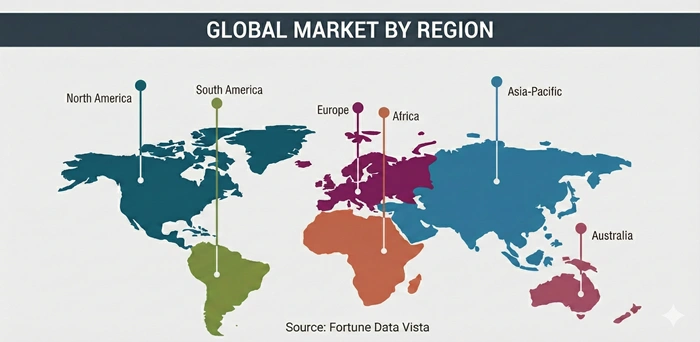
Regional Insights
Asia Pacific
Asia Pacific Commands the Largest Share of the Global Online Grocery Market, Powered by China's Digital Retail Dominance and India's Explosive Quick-Commerce Growth
China, India, and Japan Are Collectively Driving Asia Pacific to a Position of Sustained Long-Term Leadership in the Global Online Grocery Industry
Asia Pacific accounts for approximately 44% of the global online grocery market revenue in 2025, making it the undisputed regional leader by a wide margin. China is the single largest country-level market within the region, driven by the massive scale of Alibaba's Freshippo (Hema) supermarkets and JD.com's 7FRESH chain, both of which combine physical retail with ultra-fast digital fulfillment in a seamless omnichannel model. Japan's mature e-commerce ecosystem and high consumer trust in digital platforms further reinforce the region's dominance. Asia Pacific is projected to grow at a regional CAGR of approximately 26% through 2033, outpacing all other geographies as digital infrastructure deepens across Southeast Asia, South Asia, and the Pacific Rim.
India represents the most dynamic growth story within the Asia Pacific online grocery landscape, with platforms such as Blinkit (owned by Zomato), Zepto, BigBasket (Tata Group), and Swiggy Instamart collectively transforming urban grocery shopping into a near-instant, app-driven experience. The Indian quick-commerce market has grown at extraordinary speed in cities like Mumbai, Bangalore, Delhi, and Hyderabad, where young, digitally native consumers are replacing traditional kirana stores with 10-minute delivery apps. India's rapidly expanding middle class, improving cold-chain infrastructure, and increasing 4G/5G network coverage in Tier 2 cities are creating the conditions for a next phase of growth that extends the online grocery market well beyond metropolitan centers.
North America
North America Is the Fastest Growing Region for the Online Grocery Market, with Walmart, Amazon, and Kroger Competing Aggressively for Digital Market Share
The United States Is Leading North American Growth Through Subscription Delivery Innovation, Automated Fulfillment, and Omnichannel Retail Integration
North America is the fastest growing regional market for online grocery, with a projected CAGR of approximately 27% from 2026 to 2033, underpinned by accelerating consumer adoption, massive retail investment in digital infrastructure, and the rapid expansion of same-day delivery capabilities. The United States dominates regional revenues with a market share of approximately 23% globally in 2025, anchored by the fierce competition between Walmart, Amazon Fresh, Kroger, and Target — all of which are investing billions of dollars annually in expanding their digital grocery capabilities, from automated fulfillment centers to drone delivery pilots. The region benefits from high consumer spending power, strong logistics networks, and increasing employer-paid grocery delivery benefits that are broadening the addressable market.
Canada is emerging as a meaningful secondary growth market within North America, with Loblaw Companies' PC Express platform and Instacart Canada recording strong subscriber growth in major cities. Mexico's rapidly urbanizing population and expanding smartphone user base are opening new growth corridors for international platforms entering the Latin American gateway. Key regional players including Walmart Inc., Amazon.com, The Kroger Co., Albertsons Companies, and Instacart Holdings continue to compete intensely on speed, price, assortment breadth, and subscription value — a competitive dynamic that is simultaneously driving market growth and compressing margins across the North American online grocery market.
Report Customization Available by Region and Country
Gain a Competitive Edge with Our Fully Customized Region-Wise and Country-Wise Online Grocery Market Reports — Tailored to Your Specific Business Geography and Strategic Priorities
This report is available for deep customization across all major global regions and individual countries, enabling market participants to access granular, geography-specific insights that go far beyond what a standard global report can deliver. Each customized version is built around the specific regulatory environment, consumer behavior patterns, key local players, digital infrastructure maturity, and competitive dynamics relevant to the selected market. Whether you need a country-level feasibility assessment, a regional competitive benchmarking study, or a market entry analysis for a specific geography, our customization capability ensures you receive data and analysis that is directly actionable for your business context.
The following regions and countries are available for customization, with each offering detailed market sizing, growth projections, opportunity mapping, segment-level analysis, and top player profiling specific to the online grocery market in that geography:
North America
-
U.S. — Federal and state-level digital commerce regulation, Walmart vs. Amazon vs. Kroger competitive landscape, subscription model penetration, and regional demand-supply dynamics
-
Canada — Provincial grocery retail policy, Loblaw and Instacart market positioning, urban vs. rural online adoption, and cold-chain logistics analysis
-
Mexico — Urban grocery e-commerce growth, cross-border platform expansion, consumer behavior by income segment, and infrastructure investment outlook
Europe
-
U.K. — Ocado technology platform analysis, major supermarket digital strategies, subscription grocery trends, and post-Brexit supply chain implications
-
Germany — Discounter-driven digital grocery models (REWE, EDEKA), regulatory environment, and consumer price sensitivity in online channels
-
France — Drive-through click-and-collect dominance, Carrefour and Casino digital strategies, and urban quick-commerce expansion
-
Italy — Nascent online grocery adoption, key platform entry opportunities, traditional retail disruption analysis, and regional consumer behavior
-
Rest of Europe — Scandinavian digital grocery leadership, Eastern Europe growth potential, and platform expansion opportunities
Asia Pacific
-
China — Alibaba Freshippo and JD.com market dominance, government digital commerce policies, and city-tier demand segmentation
-
India — Quick-commerce platform competitive mapping, Tier 2/3 city expansion opportunities, and key player investment analysis
-
Japan — Mature market dynamics, platform consolidation trends, convenience store integration models, and consumer trust factors
-
South Korea — Coupang's market leadership, ultra-fast delivery infrastructure, and digital grocery penetration by demographic
-
Australia — Woolworths and Coles digital strategies, regulatory environment, and suburban delivery expansion
-
Rest of Asia Pacific — Southeast Asia growth markets (Indonesia, Vietnam, Philippines), platform localization strategies, and infrastructure development
Latin America
-
Brazil — iFood and Rappi competitive landscape, urban e-grocery penetration, mobile payment integration, and infrastructure challenges
-
Argentina — Economic volatility impact on digital grocery adoption, platform strategies, and consumer spending patterns
-
Rest of Latin America — Chile, Colombia, Peru market entry analysis, cross-border platform expansion, and regional growth opportunities
Middle East & Africa (MEA)
-
UAE — Premium online grocery market, Careem Now and Noon Food competitive dynamics, and expat consumer behavior analysis
-
Saudi Arabia — Vision 2030 digital commerce alignment, rapid urbanization impact on online grocery demand, and key platform strategies
-
Rest of MEA — South Africa, Nigeria, and Egypt digital grocery growth potential, mobile-first consumer base analysis, and logistics infrastructure outlook
Top Key Players
-
Amazon.com, Inc. (United States)
-
Walmart Inc. (United States)
-
The Kroger Co. (United States)
-
Alibaba Group Holding Limited (China)
-
JD.com, Inc. (China)
-
Ocado Group plc (United Kingdom)
-
Instacart (Maplebear Inc.) (United States)
-
Target Corporation (United States)
-
Carrefour SA (France)
-
BigBasket (Tata Digital Ltd.) (India)
-
Blinkit (Zomato Ltd.) (India)
-
Tesco plc (United Kingdom)
-
Ahold Delhaize (Netherlands)
Recent Developments
-
In 2025, Amazon.com, Inc. expanded its Amazon Fresh one-hour grocery delivery service to 15 additional U.S. cities and launched an upgraded AI-powered shopping assistant integrated directly into the Amazon Fresh mobile app, enabling personalized meal planning and automated reordering for over 50 million Prime subscribers.
-
In 2024, Walmart Inc. acquired technology startup Symbotic's subsidiary in a strategic deal to accelerate the deployment of AI-powered robotic fulfillment systems across its network of automated grocery distribution centers, targeting 65 new automated facilities by 2026.
-
In 2025, Ocado Group plc signed a landmark agreement with South Korean retail giant Lotte Shopping to develop and operate automated customer fulfillment centers (CFCs) across South Korea, marking a significant step in Ocado's Asia Pacific expansion strategy.
-
In 2024, JD.com, Inc. launched its next-generation 7FRESH smart supermarket concept in 12 new cities across China, integrating real-time inventory management, AI-driven personalization, and 30-minute drone delivery capabilities in select high-density urban zones.
-
In 2025, Instacart (Maplebear Inc.) introduced its Caper Cart AI-enabled smart shopping cart platform to over 600 retail partner locations across North America, blending the in-store and online grocery experience by enabling real-time digital promotions, automatic item scanning, and seamless checkout integration.
Market Trends
Hyper-Personalization Through AI, the Rise of Dark Stores, and the Convergence of Social Commerce and Grocery Shopping Are Reshaping the Online Grocery Market Landscape
From Subscription-Driven Loyalty to AI-Curated Shopping Baskets — Technology Is the Central Force Defining the Next Phase of Online Grocery Market Evolution
Hyper-personalization has become the defining competitive battleground in the online grocery market. Platforms are moving well beyond basic product recommendations, now leveraging real-time behavioral data, dietary preferences, purchase history, and even health app integrations to curate personalized shopping baskets, meal plans, and promotional offers for individual users. This level of customization is dramatically increasing average order values and platform loyalty, as consumers increasingly feel that their preferred online grocery platform "knows them" better than any physical store ever could. AI-generated shopping list suggestions, subscription bundles built around individual household consumption patterns, and dynamic pricing models that reward loyal shoppers are all becoming standard capabilities among leading digital grocery platforms globally.
The dark store model — micro-fulfillment centers located in urban areas that are closed to the public and operated exclusively for online order picking — is emerging as the most efficient and scalable infrastructure paradigm for instant delivery in the online grocery market. Unlike traditional warehouse fulfillment, dark stores are deliberately positioned within 2–3 kilometers of high-density residential clusters, enabling delivery speeds that were previously impossible with conventional logistics networks. This trend is being driven by platforms like Blinkit, Zepto, Getir, and GoPuff, which are collectively operating thousands of dark store locations across major global cities. The model's success is prompting traditional supermarket chains to experiment with hybrid micro-fulfillment formats that combine limited public retail space with dedicated back-of-store picking operations.
Segments Covered in the Report
-
By Product Type
-
Fresh Produce
-
Dairy & Eggs
-
Beverages
-
Snacks & Confectionery
-
Meat & Seafood
-
Bakery & Cereals
-
Others (Household Essentials, Personal Care, Baby Products)
-
-
By Business Model
-
Pure Marketplace
-
Brick-and-Click
-
Direct-to-Consumer (D2C)
-
-
By Platform
-
Websites
-
Mobile Applications
-
-
By Delivery Type
-
Instant Delivery (Quick-Commerce / Q-Commerce)
-
Scheduled Delivery
-
Click-and-Collect
-
-
By End User
-
Residential
-
Commercial (Restaurants, Offices, Hospitality)
-
-
By Region
-
North America (U.S., Canada, Mexico)
-
Europe (U.K., Germany, France, Italy, Rest of Europe)
-
Asia Pacific (China, India, Japan, South Korea, Australia, Rest of Asia Pacific)
-
Latin America (Brazil, Argentina, Rest of Latin America)
-
Middle East & Africa (UAE, Saudi Arabia, Rest of MEA)
-
❝ Built for Every Level — From Startups to Industry Giants ❞
Here Is Exactly How This Report Works for You
-
For Tier 1 grocery retailers, global platform operators, and institutional investors, this report delivers a full competitor revenue analysis covering revenue sources, segment-level contribution breakdowns, and geopolitical risk frameworks — from trade tariff impacts on food imports to digital taxation trends across key markets — enabling data-driven strategic planning and shareholder-ready investment narratives in one of the world's fastest-growing digital commerce categories.
-
For Tier 2 and Tier 3 companies, regional grocery chains, and logistics service providers, the supply-demand dynamics analysis in this report provides granular visibility into cold-chain capacity gaps, last-mile delivery cost pressures, and regional demand-supply imbalances that are directly influencing fulfillment costs, partner selection decisions, and platform pricing strategies — giving your operations and commercial teams a measurable competitive edge.
-
For startups, venture-backed platforms, and new market entrants, this report maps untapped geographic opportunity zones, identifies underserved customer segments across Tier 2 and Tier 3 urban markets, and outlines the M&A and partnership activity landscape — providing the intelligence needed to build a compelling go-to-market strategy, secure investor confidence, and scale efficiently within the rapidly evolving online grocery market.
Frequently Asked Questions:
Answer: The global online grocery market was valued at USD 337.66 billion in 2025 and is projected to reach USD 1627.20 billion by 2033. It is expected to grow at a CAGR of 24.5% from 2026 to 2033.
Answer: The online grocery market is primarily driven by rising smartphone penetration, increasing consumer demand for convenience, and the rapid expansion of quick-commerce delivery infrastructure. Government digital economy initiatives and growing consumer trust in online food purchasing are further supporting long-term market growth.
Answer: Asia Pacific leads the global online grocery market, holding approximately 44% of total revenue in 2025. The region's leadership is driven by China's massive digital retail ecosystem, India's booming quick-commerce segment, and Japan's highly digitized consumer base.
Answer: Instant delivery — also known as quick-commerce — is the fastest growing delivery type in the online grocery market, with a projected CAGR of approximately 29% through 2033. Consumer demand for sub-30-minute grocery fulfillment and the expansion of dark store networks globally are the primary drivers of this segment's growth.
Answer: The online grocery market is led by global players including Amazon.com, Walmart Inc., The Kroger Co., Alibaba Group, JD.com, and Ocado Group. Regional leaders such as BigBasket, Blinkit, and Instacart are also gaining significant market share in their respective geographies.