
Orthopedic Braces and Supports Market Overview
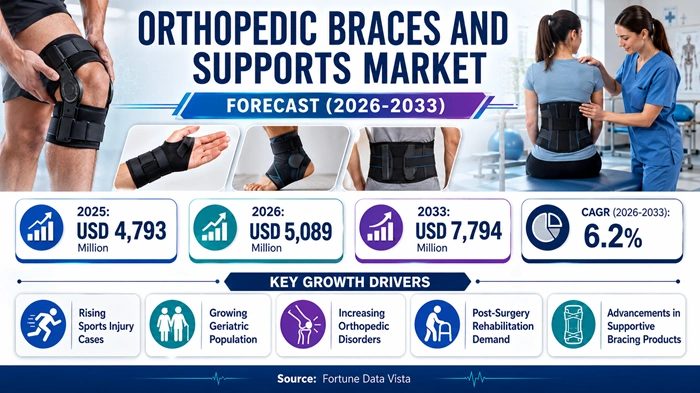
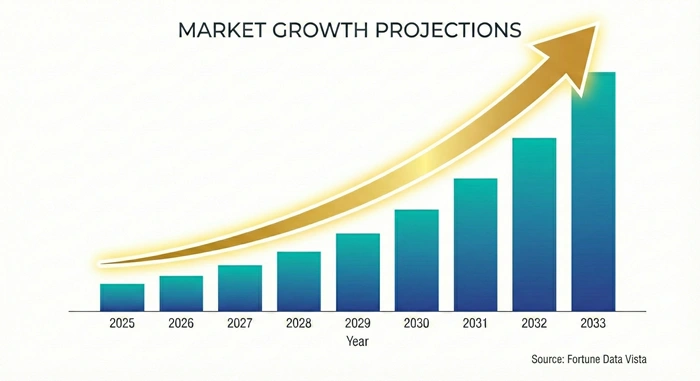
The global orthopedic braces and supports market size is valued at USD 4793 million in 2025 and is predicted to increase from USD 5089 million in 2026 to approximately USD 7794 million by 2033, growing at a CAGR of 6.2% from 2026 to 2033.
This market covers a broad range of external support devices — from knee and ankle braces to spinal supports, elbow stabilizers, and wrist guards — designed to immobilize, correct, or support injured or weakened musculoskeletal structures. The growing global burden of musculoskeletal disorders, the rising incidence of sports injuries, and the aging population's increasing need for mobility support are collectively driving a steady and well-diversified demand base for orthopedic bracing and support products. With innovations in smart materials, 3D printing, and connected rehabilitation technology reshaping product capabilities, the orthopedic braces and supports market is evolving from a commodity segment into a value-added medical device category.
AI Impact on the Orthopedic Braces and Supports Industry
Artificial Intelligence and Smart Wearable Technology Are Transforming Orthopedic Braces from Passive Stabilization Devices into Active, Data-Driven Rehabilitation and Injury Prevention Tools
Artificial intelligence is beginning to meaningfully reshape how orthopedic braces and supports are designed, fitted, and used in clinical and home settings. AI-powered body scanning and biomechanical analysis platforms can now assess a patient's gait, joint alignment, and movement patterns in real time — generating precise measurements that enable the production of custom-fitted braces with far greater accuracy than traditional casting or manual measurement methods. This shift toward AI-guided custom fabrication, particularly when combined with high-speed 3D printing, is reducing the time-to-fit for custom bracing from days or weeks to hours, significantly improving patient convenience and clinical workflow efficiency. Companies investing in these digital fitting technologies are finding that custom fit translates directly into improved patient compliance and better clinical outcomes — a combination that justifies premium pricing and builds brand loyalty.
Beyond product design, AI is being integrated into the braces themselves through embedded inertial sensors and motion analytics platforms. Smart knee braces, lumbar support belts, and ankle stabilizers with embedded accelerometers and gyroscopes can now track joint movement angles, loading patterns, and rehabilitation exercise compliance in real time — transmitting data to clinical dashboards that allow physiotherapists and orthopedic surgeons to monitor recovery remotely. This connected rehabilitation model is reducing the need for frequent in-person follow-up appointments while providing clinicians with objective, continuous data on patient progress that subjective self-reporting cannot match. As healthcare systems embrace digital health and telerehabilitation, the integration of AI and sensor technology into the orthopedic braces and supports market is becoming a genuine competitive differentiator for product manufacturers.
Growth Factors
An Aging Global Population, Rising Sports Participation, and the Expanding Preference for Non-Surgical Musculoskeletal Management Are the Three Foundational Drivers of the Orthopedic Braces and Supports Market
The primary structural driver of the orthopedic braces and supports market is the relentless global aging of populations. Older adults experience significantly higher rates of osteoarthritis, osteoporosis, hip fractures, spinal degeneration, and joint instability — all conditions that generate strong and recurring demand for orthopedic bracing products. The World Health Organization estimates that over 1.7 billion people globally live with musculoskeletal conditions, with lower back pain alone responsible for approximately 26% of all orthopedic clinical visits. As the global population over 65 continues to grow — particularly in Japan, Western Europe, North America, and increasingly China and South Korea — the base demand for mobility support braces, spinal stabilization products, and fall-prevention orthoses expands in parallel. This demographic driver is structural, geographically broad, and will continue strengthening through 2033 and beyond.
The second major growth driver is the rising global participation in sports and physical activity, combined with the increasing recognition of preventive bracing as a legitimate injury management strategy. Sports-related ligament injuries — particularly anterior cruciate ligament (ACL) tears, ankle sprains, and rotator cuff strains — are among the most frequent drivers of knee brace, ankle support, and shoulder orthosis prescriptions. Growing awareness among athletes, coaches, and sports medicine practitioners about the role of prophylactic bracing in preventing re-injury or managing chronic joint instability without surgery is expanding the addressable market for orthopedic supports beyond post-surgical rehabilitation into active performance and prevention settings. This expanding use case is generating demand from younger, physically active demographic cohorts who were not traditional orthopedic brace customers — significantly broadening the market's overall patient base.
Market Outlook
The Orthopedic Braces and Supports Market Is Transitioning from a Commodity Device Industry to a Technology-Driven, Patient-Centric Segment Powered by Smart Materials, Custom Fabrication, and Connected Care
The outlook for the orthopedic braces and supports market through 2033 is one of steady, broad-based growth underpinned by multiple converging demand tailwinds. Healthcare system trends toward non-surgical, outpatient, and home-based musculoskeletal care are strengthening the clinical and economic case for orthopedic bracing as a first-line treatment for a growing range of conditions. In North America, reimbursement reforms that bundle non-surgical orthopedic episodes of care are actively incentivizing the use of high-quality braces that demonstrably reduce hospital admission rates and shorten recovery timelines. In Europe, national health systems seeking to manage healthcare costs are increasingly funding non-invasive orthopedic interventions — including bracing — as a cost-effective alternative to surgical procedures for eligible patients with osteoarthritis, spinal conditions, and post-fracture rehabilitation needs.
Technologically, the market is moving decisively toward smart, connected, and personalized bracing solutions that deliver measurably better clinical outcomes than conventional off-the-shelf products. Advanced thermoplastic and carbon fiber composite materials are producing braces that are lighter, more durable, and more breathable than legacy designs — improving long-term patient compliance. 3D-printed custom orthoses, once limited to specialized clinical settings, are becoming more accessible through point-of-care digital fabrication units in physical therapy practices and orthopedic clinics. The growth of e-commerce distribution is simultaneously improving consumer access to evidence-based orthopedic support products beyond traditional pharmacy and clinic channels. Together, these market evolution factors are expanding both the volume and the average unit value of the orthopedic braces and supports market through the forecast period.
Expert Speaks
-
"At DJO, our focus is on developing orthopedic bracing and rehabilitation solutions that genuinely accelerate patient recovery and reduce the total cost of musculoskeletal care. The shift toward connected, sensor-integrated braces that enable remote monitoring of patient rehabilitation is a trend we are leading — because when patients and clinicians have real-time data, outcomes improve and unnecessary hospital visits are avoided," — Mike Farrell, CEO, DJO Global (Enovis).
-
"Zimmer Biomet is committed to advancing the full continuum of orthopedic care — from surgical implants to the post-operative bracing and rehabilitation devices that determine how well patients recover. We see the orthopedic bracing segment as a strategically important complement to our surgical business, one that is growing meaningfully as patients and payers increasingly seek non-surgical alternatives for managing musculoskeletal conditions," — Ivan Tornos, CEO, Zimmer Biomet Holdings, Inc.
-
"Ossur has built its reputation on functional orthopedic devices that restore mobility and improve lives. The integration of bionic technology, AI-driven motion control, and advanced lightweight materials into next-generation bracing products is creating solutions that go far beyond simple joint stabilization — they actively support movement, prevent re-injury, and help patients return to the activities they love faster and more safely than traditional braces ever could," — Jon Sigurdsson, CEO, Össur hf.
Key Report Takeaways
-
North America leads the global orthopedic braces and supports market, accounting for approximately 38–42% of total global revenue in 2025, driven by high rates of orthopedic injury, a well-established insurance reimbursement framework for durable medical equipment, strong adoption of sports medicine bracing among an athletically active population, and the presence of leading global manufacturers including DJO Global, Zimmer Biomet, and Breg.
-
Asia Pacific is the fastest-growing region in the orthopedic braces and supports market, projected to register a CAGR of approximately 7.5–8% from 2026 to 2033, fueled by a rapidly aging population in China and Japan, rising middle-class healthcare spending, government-funded insurance expansion, rapidly growing sports participation, and increasing investment in local orthopedic device manufacturing across India, South Korea, and Southeast Asia.
-
Geriatric and middle-aged adult patients are the largest end-user group, accounting for the majority of orthopedic brace and support demand globally, as age-related musculoskeletal deterioration — including osteoarthritis, spinal degeneration, and post-fracture recovery — generates sustained, recurring demand for lower extremity, spinal, and mobility support bracing products across all major market geographies.
-
Lower extremity braces and supports represent the largest product segment, capturing approximately 54–58% of total market revenue in 2025, led by knee braces which alone account for the majority of lower extremity segment revenue due to the extremely high global incidence of ACL injuries, knee osteoarthritis, and post-surgical knee rehabilitation cases requiring external support devices.
-
Hospitals and orthopedic clinics are the dominant distribution and procurement channel, accounting for approximately 50–55% of market revenue, as large institutional purchasing programs, integrated care bundles, and the predominance of physician-directed brace prescriptions concentrate the majority of volume procurement through clinical settings rather than retail or direct consumer channels.
-
Smart and connected orthopedic braces represent the fastest-growing product innovation segment, projected to grow at a CAGR of approximately 9–11% from 2026 to 2033, with a current market share of approximately 8–10%, as sensor-integrated braces with motion analytics, remote patient monitoring capabilities, and AI-guided rehabilitation feedback are rapidly transitioning from research-stage prototypes to commercially available clinical products across North America and Europe.
Market Scope
| Parameter | Details |
|---|---|
| Market Size by 2033 | USD 7794 Million | Market Size by 2026 | USD 5089 Million | Market Size by 2025 | USD 4793 Million | Market Growth Rate from 2026 to 2033 | CAGR of 6.2% | Dominating Region | North America | Fastest Growing Region | Asia Pacific | Segments Covered | Product Type, Application, End-User, Age Group, Distribution Channel | Regions Covered | North America, Europe, Asia Pacific, Latin America, Middle East & Africa |
Market Dynamics
Drivers Impact Analysis
Rising Musculoskeletal Disease Burden, Aging Demographics, and the Shift Toward Non-Surgical Orthopedic Care Are the Most Durable and Commercially Significant Drivers Supporting the Orthopedic Braces and Supports Market
| Driver | ≈ % Impact on CAGR Forecast | Geographic Relevance | Impact Timeline |
|---|---|---|---|
| Aging population and rising musculoskeletal disorder prevalence | ~30% | Global, Dominant in North America, Europe, Japan | Ongoing through 2033 |
| Growing sports participation and sports injury incidence | ~25% | North America, Europe, Asia Pacific | Ongoing |
| Healthcare shift toward non-surgical orthopedic management | ~20% | North America, Europe | Near to Long-Term |
| Post-operative rehabilitation brace demand growth | ~15% | Global | Ongoing |
| Rising awareness of preventive bracing | ~10% | North America, Europe, Asia Pacific | Near to Medium-Term |
The aging population trend is the most reliable and enduring driver of the orthopedic braces and supports market. As individuals age, the progressive deterioration of cartilage, bone density, and connective tissue creates growing clinical demand for external support devices that compensate for these structural weaknesses without requiring surgical intervention. Hip fractures — which affect approximately 1.6 million people globally per year — routinely require hip abduction braces during recovery. Knee osteoarthritis, which affects an estimated 250 million people globally, is one of the most common indications for unloader knee braces that shift weight away from the damaged joint compartment, delaying or avoiding total knee replacement surgery. This combination of high disease prevalence, growing senior population numbers, and strong clinical evidence supporting bracing as a cost-effective management tool makes the demographic driver uniquely powerful and self-reinforcing over time.
The global healthcare system's growing preference for non-surgical, cost-effective musculoskeletal care pathways is amplifying this demographic demand from the institutional side. As payers in the United States, Europe, and increasingly Asia Pacific implement value-based care models that reward providers for delivering good clinical outcomes at lower cost, the orthopedic brace emerges as a highly attractive intervention — it is relatively inexpensive compared to surgical alternatives, it reduces hospitalization time, and it can be effectively monitored in outpatient and home settings. CMS bundles for joint replacement episodes in the US, NHS community musculoskeletal services in the UK, and similar programs in Germany and France are all driving increased prescription of high-quality orthopedic bracing as part of evidence-based, non-surgical management pathways. This institutional support for bracing as a frontline treatment is creating significant structural tailwinds for the orthopedic braces and supports market.
Restraints Impact Analysis
High-Quality Brace Costs, Inconsistent Reimbursement Policies, Counterfeit Product Competition, and Low-Cost Import Pricing Pressure Are the Key Forces Restraining the Orthopedic Braces and Supports Market's Full Growth Potential
| Restraint | ≈ % Impact on CAGR Forecast | Geographic Relevance | Impact Timeline |
|---|---|---|---|
| Pricing pressure from low-cost commodity imports | ~35% | Global, Strongest in Emerging Markets | Ongoing |
| Inconsistent insurance and reimbursement coverage | ~28% | Developing Markets, Parts of Europe | Ongoing |
| Patient non-compliance and device abandonment | ~22% | Global | Ongoing |
| Counterfeit and substandard products in unregulated channels | ~15% | Asia Pacific, MEA, Latin America | Ongoing |
The single most significant commercial restraint facing branded orthopedic brace and support manufacturers is the intense pricing pressure generated by low-cost commodity imports — predominantly from Chinese and other Asian manufacturers who produce basic bracing products at substantially lower cost structures than developed-market producers. In the retail and online channels particularly, consumers shopping for basic knee supports, wrist wraps, or ankle stabilizers face a market flooded with inexpensive options that may lack the clinical validation, precise fit, and material quality of premium medical-grade devices. For established brands competing on clinical evidence and product performance, this price commoditization makes it difficult to maintain premium positioning in the mass-market segments — forcing a strategic retreat toward more complex, custom, or technology-differentiated products where low-cost competition cannot readily follow.
Patient compliance with prescribed orthopedic brace use is a persistent and commercially meaningful challenge across all product categories. Orthopedic braces — particularly spinal, cervical, and lower limb devices — can be uncomfortable, inconvenient, and visually conspicuous during prolonged wear, leading to high abandonment rates that reduce clinical effectiveness and generate negative word-of-mouth. Studies consistently show that patients who discontinue brace use before completing their prescribed treatment period experience worse clinical outcomes, which undermines the value proposition of bracing versus more invasive alternatives. The industry's response — lighter materials, improved ergonomic design, and compliance monitoring through smart sensors — is progressively addressing this challenge, but patient adherence remains a genuine restraint on market penetration, particularly for chronic condition management applications requiring months or years of consistent device use.
Opportunities Impact Analysis
Smart Brace Technology, Emerging Market Healthcare Expansion, and 3D-Printed Custom Orthotics Are Opening Significant New Commercial Opportunities for the Orthopedic Braces and Supports Market
| Opportunity | ≈ % Impact on CAGR Forecast | Geographic Relevance | Impact Timeline |
|---|---|---|---|
| Smart and connected brace technology development | ~35% | North America, Europe, Asia Pacific | Medium to Long-Term |
| Emerging market healthcare access expansion | ~30% | Asia Pacific, Latin America, MEA | Near to Long-Term |
| 3D-printed custom orthosis point-of-care fabrication | ~20% | North America, Europe | Medium to Long-Term |
| Sports medicine and preventive bracing market growth | ~15% | North America, Asia Pacific | Near to Medium-Term |
Smart orthopedic bracing represents the most transformative long-term opportunity in the orthopedic braces and supports market. The integration of inertial measurement units, pressure sensors, and wireless connectivity into brace structures is creating a new category of intelligent orthopedic devices capable of providing real-time biomechanical feedback, monitoring rehabilitation exercise performance, and alerting clinicians to abnormal movement patterns that may indicate complications or poor recovery progress. Companies like Össur, DJO Global, and several medical technology startups are actively commercializing sensor-integrated knee and ankle braces that connect to telerehabilitation platforms, enabling supervised home-based recovery programs that reduce costly in-clinic physiotherapy sessions without compromising outcome quality. As wireless health sensor costs continue to fall and digital health reimbursement frameworks mature, the market penetration of smart bracing solutions will accelerate — creating a higher-value product tier within the broader orthopedic braces market.
The combination of 3D printing technology and digital body scanning is creating a significant opportunity to democratize access to custom-fitted orthopedic devices. Traditionally, custom bracing required labor-intensive casting and modification processes that added significant cost and lead time — making custom devices inaccessible for many patients who could clinically benefit from a precise fit. Point-of-care 3D printing systems that can produce a custom-fitted orthosis within hours of a digital scan are increasingly viable for orthopedic clinics, sports medicine centers, and even select retail health settings. This technology is particularly powerful in emerging markets where expensive imported custom devices are out of reach for most patients, but locally fabricated 3D-printed devices using locally produced materials could deliver superior fit and outcomes at competitive price points — significantly expanding the total addressable population for the orthopedic braces and supports market.
Segment Analysis
By Product Type
Lower Extremity Braces Lead the Orthopedic Braces and Supports Market While Spinal Supports Emerge as the Fastest-Growing Product Category Driven by Chronic Back Pain and Smart Rehabilitation Technology
The lower extremity braces and supports segment is the largest product category in the global orthopedic braces and supports market, accounting for approximately 54–58% of total revenue in 2025 and growing at a CAGR of approximately 6.0% from 2026 to 2033. Knee braces form the dominant subcluster within this segment — driven by the very high global incidence of ACL injuries, meniscal tears, and knee osteoarthritis, as well as the large volume of post-surgical knee rehabilitation cases that require structured external support during recovery. North America dominates lower extremity brace procurement, where a deeply embedded sports medicine culture, high ACL injury rates among both professional and recreational athletes, and well-established orthopedic surgeon prescription practices sustain robust and predictable demand. Leading companies active in lower extremity bracing include DJO Global (Enovis), Össur hf (Iceland), Zimmer Biomet (US), Bauerfeind AG (Germany), and Breg, Inc. (US), all of which offer extensive knee brace product lines spanning functional, prophylactic, and rehabilitative application categories.
Ankle and foot braces represent the fastest-growing sub-segment within lower extremity products, propelled by rising ankle sprain rates in sports settings, the growing adoption of custom foot orthoses for biomechanical correction, and the increasing use of ankle-foot orthoses in neurological rehabilitation for stroke and multiple sclerosis patients. The orthopedic braces and supports market in Asia Pacific is seeing particularly rapid growth in lower extremity products, driven by a massive expansion in recreational sports participation across China, India, and South Korea — creating first-generation demand for sports medicine bracing that is scaling very quickly. Hip braces and post-arthroplasty stabilization devices are a smaller but growing sub-category, fueled by the rapidly increasing volume of total hip replacement surgeries in aging populations across North America, Europe, and increasingly Japan and South Korea.
By Application
Post-Operative Rehabilitation and Osteoarthritis Management Are the Largest Applications Fueling the Orthopedic Braces and Supports Market While Preventive Bracing Represents the Fastest-Growing Demand Category
The ligament injury and post-operative rehabilitation application is the largest end-use segment in the orthopedic braces and supports market, collectively accounting for approximately 40–45% of total revenue in 2025 and growing at a CAGR of approximately 6.3% through 2033. Post-surgical brace use following ACL reconstruction, total knee arthroplasty, rotator cuff repair, and spinal fusion procedures generates very high-value, physician-prescribed demand that is strongly supported by clinical protocols and insurance reimbursement frameworks. North America leads this application segment, where the high volume of orthopedic surgical procedures — driven by both injury rates and elective joint replacement volumes among an aging population — creates a large and consistently growing post-operative rehabilitation brace market. Companies like DJO Global, Zimmer Biomet, and Ossur have purpose-built comprehensive post-operative bracing systems for specific surgical procedures, sold directly to hospitals and orthopedic surgery centers through clinical sales forces.
The osteoarthritis management application is equally significant, representing approximately 25–28% of total market revenue and benefiting from the enormous global prevalence of knee, hip, and spinal osteoarthritis. Unloader knee braces — which redirect joint loading away from damaged medial or lateral compartments — have demonstrated clinically meaningful pain reduction and functional improvement in osteoarthritis patients, making them an important conservative management tool that delays or avoids joint replacement surgery. The preventive bracing application is the fastest-growing segment within the orthopedic braces and supports market, driven by growing adoption of prophylactic knee and ankle braces in youth and collegiate sports programs, workplace ergonomic brace programs targeting injury prevention in high-risk occupations, and the growing recognition among active adults that preventive bracing during high-impact activities meaningfully reduces injury risk and long-term joint damage.
Regional Insights
North America
North America Leads the Orthopedic Braces and Supports Market with the World's Largest Sports Medicine Infrastructure, Strong Reimbursement Coverage, and Rapid Adoption of Connected Rehabilitation Technology
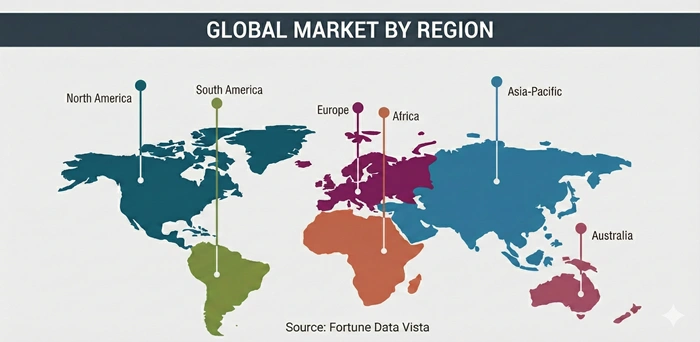
North America holds the largest share of the global orthopedic braces and supports market, accounting for approximately 38–42% of total global revenue in 2025 and projected to grow at a CAGR of approximately 5.8–6.5% from 2026 to 2033. The United States is the dominant national market, supported by an exceptionally strong sports medicine culture, one of the highest rates of ACL and sports injury surgical intervention in the world, a well-established Medicare and private insurance reimbursement framework for durable orthopedic devices, and a mature clinical sales infrastructure connecting manufacturers directly with orthopedic surgeons and physical therapists who prescribe bracing as part of structured rehabilitation programs. The US market benefits enormously from the geographic concentration of major orthopedic device manufacturers — including DJO Global (Enovis), Zimmer Biomet, and Breg, Inc. — whose domestic operational proximity enables rapid product innovation cycles and close clinical partnership with leading orthopedic institutions.
Canada contributes meaningfully to North American market volumes through its publicly funded provincial health systems, which increasingly include non-surgical orthopedic management — including bracing — in their cost containment strategies for musculoskeletal conditions. Mexico is a growing market within the region, with rising private healthcare spending and expanding access to orthopedic care through social insurance programs. North America's orthopedic braces and supports market is expected to surpass USD 3100 million by 2033, maintaining its global leadership position throughout the forecast period even as Asia Pacific grows at a faster rate.
Asia Pacific
Asia Pacific Is the Fastest-Growing Region in the Orthopedic Braces and Supports Market, Fueled by an Aging Population, Rising Sports Participation, and Rapid Expansion of Healthcare Insurance Coverage
Asia Pacific is the fastest-growing regional market in the global orthopedic braces and supports market, projected to register a CAGR of approximately 7.5–8% from 2026 to 2033, and currently accounts for approximately 25–28% of global revenue in 2025. China is the largest and most impactful market within the region — with a rapidly aging population, a government target of over 455,000 joint replacements annually creating significant post-surgical brace demand, and a booming recreational sports sector generating rising volumes of sports injury bracing needs. Japan's super-aged society is driving particularly strong demand for mobility support braces, spinal aids, and fall-prevention orthoses among its elderly population, with significant government health subsidies supporting access to rehabilitation devices. Key regional players include Alcare Co., Ltd. (Japan), Tynor Orthotics Pvt. Ltd. (India), and THUASNE Asia operations, alongside rapidly growing domestic Chinese manufacturers who are increasingly capturing lower-to-mid tier market segments with competitive local pricing.
India and South Korea are the most dynamic growth markets within Asia Pacific. India is experiencing rapid expansion in its private orthopedic care sector, with growing middle-class healthcare spending, rising sports participation rates, and increasing awareness of sports medicine and rehabilitation driving first-generation demand for clinical-grade bracing products. South Korea's advanced healthcare infrastructure, high sports participation rate, and premium consumer preferences are sustaining strong demand for high-quality imported and domestic orthopedic supports. The broader Asia Pacific region's combination of demographic scale, rising healthcare investment, and growing sports culture makes it the most strategically important emerging market in the global orthopedic braces and supports market through 2033.
Report Customization: Region-Wise and Country-Wise Insights
This Report Is Available with Full Geographic Customization — Providing Orthopedic Device Manufacturers, Distributors, Investors, and Healthcare Organizations with Precise, Country-Level Market Intelligence Tailored to Their Strategic Priorities
This report on the orthopedic braces and supports market is available with complete region-wise and country-wise customization, enabling medical device companies, hospital procurement teams, sports medicine distributors, and healthcare investors to access the specific geographic market intelligence needed for confident business planning. Whether the goal is to evaluate insurance reimbursement frameworks for orthopedic devices in a specific country, map competitive dynamics in a regional orthopedic clinic channel, or assess the growth trajectory of sports medicine bracing demand in an emerging market, our research team delivers fully tailored analysis built around your target geography and commercial objectives.
Customized reports are available for the following regions and countries, each providing detailed market sizing, product demand analysis by type and application, competitive landscape assessment, distribution channel review, regulatory environment analysis, and growth opportunity identification specific to that geography and the orthopedic braces and supports market:
North America
-
U.S. — Medicare and private insurance reimbursement framework for orthopedic braces, DJO Global and Zimmer Biomet competitive positioning, sports medicine brace procurement volumes, and connected rehabilitation technology adoption analysis
-
Canada — Provincial health system non-surgical orthopedic management programs, sports injury brace demand, and orthopedic device regulatory environment
-
Mexico — Private healthcare sector growth, Seguro Popular orthopedic access expansion, and import vs. domestic product market dynamics
Europe
-
U.K. — NHS musculoskeletal community services analysis, MHRA regulatory framework, premium orthopedic brace brand positioning, and post-Brexit supply chain dynamics
-
Germany — Statutory health insurance orthopedic device coverage, Bauerfeind and Medi GmbH competitive analysis, and smart rehabilitation technology adoption
-
France — National health system non-surgical orthopedic reimbursement, sports medicine brace demand, and distribution network analysis
-
Italy — Regional health system orthopedic procurement, musculoskeletal disorder prevalence, and growing sports medicine market
-
Rest of Europe — Nordic, Eastern European, and Benelux orthopedic braces market dynamics and cross-border distribution analysis
Asia Pacific
-
China — Domestic manufacturer competitive analysis, government joint replacement program brace demand, sports injury market growth, and healthcare insurance expansion impact
-
India — Private orthopedic sector growth, Tynor Orthotics competitive positioning, rising sports participation demand, and regulatory framework for medical devices
-
Japan — Elderly mobility aid demand, government rehabilitation subsidy programs, Alcare competitive landscape, and smart brace technology adoption
-
South Korea — Premium orthopedic brace demand, sports medicine market development, advanced healthcare infrastructure analysis, and import brand competition
-
Australia — NDIS-funded orthopedic device procurement, sports injury brace market, and tele-rehabilitation adoption trends
-
Rest of Asia Pacific — Southeast Asian orthopedic market development, Vietnam and Thailand healthcare investment, and local manufacturing growth
Latin America
-
Brazil — Public and private health system orthopedic procurement, sports medicine market scale, and orthopedic device import dynamics
-
Argentina — Private healthcare spending on orthopedic devices, growing sports medicine market, and regulatory environment review
-
Rest of Latin America — Regional orthopedic access growth, Colombia and Chile market development, and medical device distribution analysis
Middle East & Africa
-
UAE — Medical tourism-driven orthopedic care demand, premium brace product market, and sports medicine clinic expansion
-
Saudi Arabia — Vision 2030 healthcare investment impact on orthopedic devices, and growing sports participation brace demand
-
Rest of MEA — South African orthopedic market development, sub-Saharan Africa healthcare access trends, and affordable bracing product demand
Top Key Players
-
DJO Global, LLC (Enovis Corporation) (United States)
-
Össur hf (Iceland)
-
Zimmer Biomet Holdings, Inc. (United States)
-
Bauerfeind AG (Germany)
-
Ottobock SE & Co. KGaA (Germany)
-
Medi GmbH & Co. KG (Germany)
-
Breg, Inc. (United States)
-
DeRoyal Industries, Inc. (United States)
-
Thuasne Group (France)
-
Tynor Orthotics Pvt. Ltd. (India)
-
Alcare Co., Ltd. (Japan)
-
Bird & Cronin, Inc. (United States)
-
Essity AB (BSN Medical) (Sweden)
-
Solventum Corporation (formerly 3M Health Care) (United States)
-
United Ortho (United States)
Recent Developments
-
2025 — DJO Global (Enovis Corporation) launched an updated generation of its Empower® Functional Knee Brace line incorporating lightweight carbon fiber construction and integrated motion sensor compatibility, designed to support both post-surgical rehabilitation and sports-related ACL injury management with improved fit precision and real-time activity tracking for clinical monitoring.
-
2024 — Össur hf completed the acquisition of a specialized ankle-foot orthosis manufacturer to strengthen its lower extremity product portfolio for neurological rehabilitation indications, broadening its presence in the stroke and MS rehabilitation segment and reinforcing its position as a comprehensive lower extremity orthopedic device provider in North America and Europe.
-
2025 — Zimmer Biomet Holdings expanded its orthopedic bracing portfolio through a strategic partnership with a digital rehabilitation platform provider, enabling seamless integration between its post-operative bracing products and a telerehabilitation app that allows orthopedic surgeons to remotely monitor patient recovery progress and brace compliance following total knee and hip arthroplasty procedures.
-
2024 — Bauerfeind AG launched a new range of evidence-based sports knee braces with an updated knit structure developed through AI-assisted biomechanical analysis, delivering improved joint stabilization and proprioceptive feedback for athletes managing ligament instability — reinforcing the company's position as a leading premium orthopedic sports support brand across European and North American markets.
-
2024–2025 — Thuasne Group expanded its presence in the Asia Pacific orthopedic braces market through a series of distribution partnerships with regional orthopedic device distributors in South Korea, India, and Australia, supporting the company's strategy to grow its international revenue base beyond Europe and capture growing demand for clinically validated, mid-to-premium range orthopedic supports in high-growth Asian markets.
Market Trends
The Shift Toward Smart Connected Bracing and the Expansion of E-Commerce Distribution Are the Two Most Commercially Significant Trends Reshaping the Competitive Dynamics of the Orthopedic Braces and Supports Market
The most consequential trend reshaping the orthopedic braces and supports market is the transition from passive mechanical support devices to smart, sensor-integrated orthopedic solutions that provide active clinical value beyond simple stabilization. Spinal braces with embedded inertial sensors that track posture and alert patients to poor positioning during daily activities, knee braces with load-measuring capabilities that guide rehabilitation exercise intensity, and ankle braces with movement tracking that feeds physiotherapy progress data to clinical dashboards are all moving from prototype to commercial product at an accelerating pace. This technology integration is raising the average unit value of the market, creating recurring revenue opportunities through software and data service subscriptions, and building deeper, data-driven relationships between brace manufacturers and the clinical professionals who prescribe their products. Companies that successfully build connected orthopedic ecosystems will establish competitive moats that cannot be easily replicated by low-cost commodity producers.
The second defining market trend is the rapid growth of online and direct-to-consumer distribution channels for orthopedic bracing products. E-commerce platforms — from major health product retailers to manufacturer-direct online stores — are capturing a growing share of the orthopedic brace procurement market, particularly for over-the-counter knee sleeves, ankle wraps, back braces, and wrist supports that do not require a clinical prescription. The expansion of online health product marketplaces in Asia Pacific is particularly significant — enabling manufacturers and distributors to reach large populations of sports-active and health-conscious consumers in China, India, and Southeast Asia who would previously have had very limited access to clinical-grade orthopedic support products. This digital distribution expansion is not only growing market volume but also raising consumer expectations around product information transparency, evidence-based claims, and digital customer experience — setting a new competitive standard across the orthopedic braces and supports market.
Segments Covered in the Report
-
By Product Type
-
Lower Extremity Braces and Supports
-
Knee Braces (Functional, Prophylactic, Rehabilitative, Unloader)
-
Ankle and Foot Braces (Ankle-Foot Orthoses, Sports Ankle Supports)
-
Hip Braces (Hip Abduction Braces, Post-Arthroplasty Braces)
-
-
Spinal Braces and Supports
-
Lumbar Braces (Rigid, Semi-Rigid, Soft)
-
Cervical Braces (Soft Collar, Rigid Cervical Orthoses)
-
Thoracic Braces
-
-
Upper Extremity Braces and Supports
-
Elbow Braces (Tennis Elbow, Post-Operative)
-
Wrist and Hand Braces (Carpal Tunnel, Splints)
-
Shoulder Braces (Immobilizers, Slings)
-
-
-
By Application
-
Ligament Injuries
-
Osteoarthritis Management
-
Post-Operative Rehabilitation
-
Fracture Management
-
Preventive Bracing
-
Others
-
-
By End-User
-
Hospitals
-
Orthopedic and Trauma Centers
-
Ambulatory Surgery Centers
-
Home Care Settings
-
Sports and Fitness Centers
-
-
By Age Group
-
Adults
-
Pediatric
-
Geriatric
-
-
By Distribution Channel
-
Retail Pharmacies
-
Online Channels
-
Hospital and Clinic Direct Supply
-
Specialty Orthopedic Stores
-
-
By Region
-
North America (U.S., Canada, Mexico)
-
Europe (U.K., Germany, France, Italy, Rest of Europe)
-
Asia Pacific (China, India, Japan, South Korea, Australia, Rest of Asia Pacific)
-
Latin America (Brazil, Argentina, Rest of Latin America)
-
Middle East & Africa (UAE, Saudi Arabia, Rest of MEA)
-
❝ Built for Every Level — From Startups to Industry Giants ❞
Here Is Exactly How This Report Works for You
-
Tier 1 orthopedic device manufacturers, large hospital procurement organizations, and institutional investors will gain access to precise competitor revenue benchmarks, product segment market share trajectories, and regional demand growth analysis across the orthopedic braces and supports market — enabling smarter portfolio investment decisions, supplier negotiation strategies, and M&A target identification backed by comprehensive data on where market share is shifting and why.
-
For mid-level distributors, sports medicine suppliers, and growth-stage orthopedic bracing brands, this report provides a granular mapping of how global supply chain pressures — including raw material costs for thermoplastics and carbon fiber composites, import tariff dynamics on Asian-manufactured braces, and reimbursement policy changes across key markets — are impacting margin structures and competitive access, ensuring your pricing, sourcing, and market entry decisions are grounded in current commercial reality.
-
Decision-makers evaluating new product launches, geographic market entry, or investment in the orthopedic braces and supports market will benefit from our in-depth analysis of regulatory approval pathways by region, the clinical evidence requirements that determine reimbursement eligibility in major markets, and the competitive strategies of the fifteen largest global players — giving you the intelligence needed to position your business, attract partners, and capture market share in one of healthcare's most consistently growing device segments.
Frequently Asked Questions:
Answer: The global orthopedic braces and supports market was valued at USD 4793 million in 2025 and is projected to reach USD 7794 million by 2033, growing at a CAGR of 6.2% from 2026 to 2033. This steady growth is underpinned by rising musculoskeletal disorder prevalence, aging demographics, and the expanding preference for non-surgical orthopedic management across major healthcare systems worldwide.
Answer: The primary drivers of the orthopedic braces and supports market include the aging global population and its associated rise in musculoskeletal conditions such as osteoarthritis, fractures, and spinal degeneration, along with growing sports participation rates that increase ligament injury incidence across all age groups. The healthcare system's shift toward cost-effective non-surgical orthopedic care and the growing availability of smart, connected bracing technology are further accelerating market growth.
Answer: Lower extremity braces and supports dominate the orthopedic braces and supports market, capturing approximately 54–58% of total revenue in 2025, with knee braces representing the single largest product subcategory driven by high ACL injury rates, knee osteoarthritis prevalence, and large post-surgical knee rehabilitation volumes. Spinal braces are the fastest-growing segment, benefiting from rising chronic back pain prevalence and the adoption of smart sensor-integrated lumbar support devices for rehabilitation programs.
Answer: North America leads the orthopedic braces and supports market with approximately 38–42% of global revenue in 2025, supported by strong insurance reimbursement, high sports injury rates, and the presence of major manufacturers like DJO Global and Zimmer Biomet. Asia Pacific is the fastest-growing region, projected to grow at a CAGR of 7.5–8% from 2026 to 2033, driven by aging populations in China and Japan, expanding healthcare insurance coverage, and rapidly growing sports participation across the region.
Answer: Technology innovation is transforming the orthopedic braces and supports market through the integration of AI-powered biomechanical analysis for custom brace fitting, sensor-embedded smart braces that monitor joint movement and rehabilitation compliance in real time, and point-of-care 3D printing that enables custom orthosis fabrication within hours of a digital body scan. These innovations are shifting the market from commodity passive supports toward premium, data-driven rehabilitation devices that deliver measurably superior clinical outcomes and justify higher pricing.