
Packaging Adhesives Market Overview
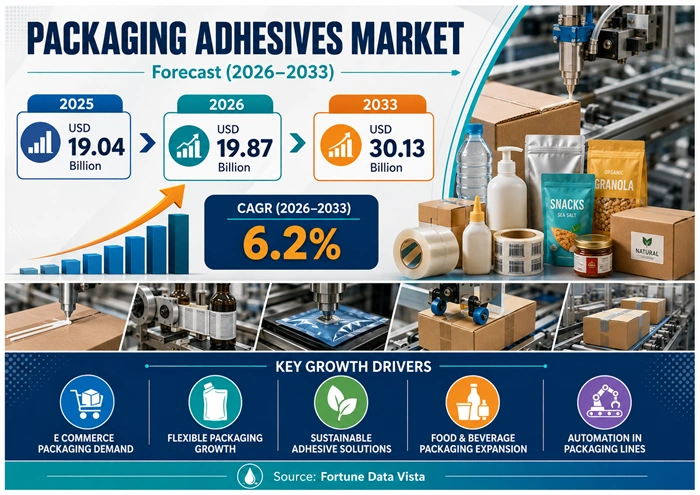
The global packaging adhesives market size is valued at USD 19.04 billion in 2025 and is predicted to increase from USD 19.87 billion in 2026 to approximately USD 30.13 billion by 2033, growing at a CAGR of 6.2% from 2026 to 2033. This steady expansion is fueled by the rising global consumption of packaged goods, accelerating e-commerce activity, growing demand for flexible and sustainable packaging, and the ongoing shift toward eco-friendly adhesive technologies across food, beverage, consumer goods, and pharmaceutical industries worldwide.
AI Impact on the Packaging Adhesives Industry
From Smart Formulation Development to Predictive Quality Control, Artificial Intelligence Is Transforming Every Stage of the Adhesive Value Chain
Artificial intelligence is beginning to reshape how packaging adhesive products are formulated, tested, and deployed across industrial production lines. AI-powered material informatics platforms allow chemists to simulate the molecular behavior of new adhesive formulations digitally — dramatically reducing the time and cost associated with laboratory-based trial-and-error development cycles. Machine learning models trained on thousands of formulation variables can now predict bond strength, temperature resistance, and substrate compatibility before a single gram of adhesive is synthesized. This capability is especially valuable for bio-based and water-based adhesive development, where the interaction between renewable raw materials and diverse packaging substrates introduces significant formulation complexity. As a result, leading adhesive manufacturers are launching new sustainable products faster while maintaining tighter performance specifications than ever before.
On the production floor, AI-integrated quality control systems are reducing adhesive waste and improving coating consistency across high-speed packaging lines. Vision-based inspection systems powered by computer vision and deep learning detect microscopic coating defects, uneven adhesive spread, or seal integrity failures in real time — before defective packages reach downstream processes. Predictive analytics platforms monitor equipment wear and dispensing system performance, enabling maintenance teams to intervene proactively rather than reactively. In the supply chain, AI-driven demand forecasting tools help adhesive manufacturers balance raw material procurement more efficiently, reducing inventory costs while protecting service levels. Collectively, these technologies are making the packaging adhesives industry more precise, more responsive, and more competitive in a rapidly evolving packaging landscape.
Growth Factors
Surging E-Commerce Volumes, Growing Demand for Sustainable Packaging, and Expanding Food & Beverage Production Are the Key Forces Propelling the Market Forward
The exponential growth of global e-commerce is one of the most powerful structural drivers reshaping demand within the packaging adhesives sector. Every parcel, mailer bag, corrugated box, and protective liner used in e-commerce fulfillment relies on high-performance adhesives for bonding, sealing, and lamination. As online retail volumes continue to grow across North America, Europe, and Asia Pacific — driven by evolving consumer habits, expanding rural delivery networks, and the proliferation of same-day delivery platforms — the demand for reliable, fast-setting, and versatile adhesive solutions is rising in direct proportion. The shift toward lighter, flexible packaging formats in e-commerce logistics is also accelerating the adoption of pressure-sensitive adhesives and hot-melt adhesive technologies, both of which are high-growth segments within the packaging adhesives market. This structural demand driver shows no sign of slowing through the 2033 forecast horizon.
Sustainability is reshaping the packaging adhesives landscape with equal force. Regulatory pressure from the European Union's packaging and packaging waste regulations, growing retailer ESG commitments, and rising consumer awareness around single-use plastics are driving packaging manufacturers to adopt recyclable, compostable, and bio-based packaging formats — all of which require specially formulated adhesives that maintain bond integrity through end-of-life recycling streams. The transition away from solvent-based adhesives toward water-based, hot-melt, and UV-curable adhesive technologies is accelerating in response to both environmental regulations and occupational health standards. In the food and beverage segment, increasing demand for extended shelf-life, tamper-evident, and modified atmosphere packaging is creating additional demand for specialized adhesive grades that meet stringent food-contact safety standards.
Market Outlook
The Packaging Adhesives Market Is on a Steady Growth Path, Underpinned by Innovation in Bio-Based Chemistries, Flexible Packaging Adoption, and Pharma-Driven Demand
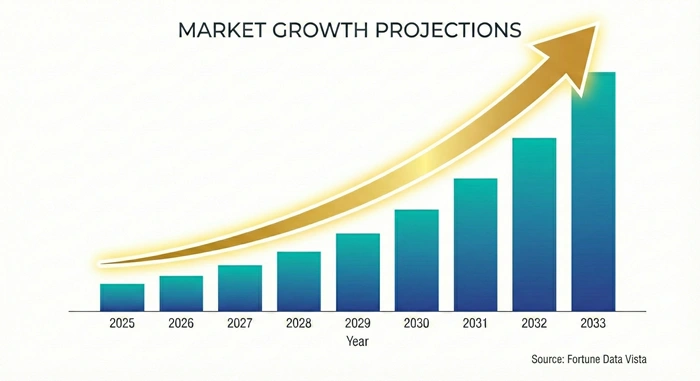
The long-term outlook for the packaging adhesives industry is consistently positive, driven by a convergence of macroeconomic and industry-specific tailwinds. The global pharmaceutical packaging sector is emerging as a particularly fast-growing demand pool, as aging populations, expanding generic drug markets, and increasingly stringent drug safety regulations drive demand for blister packs, medical pouches, and tamper-evident adhesive seals. The personal care and household products segment is contributing additional growth, as premium packaging formats featuring intricate laminations, multi-layer structures, and specialty coatings require advanced adhesive solutions. As consumer goods companies intensify their focus on pack differentiation on retail shelves, the functional and aesthetic demands placed on packaging adhesives are becoming more sophisticated — creating recurring demand for higher-value, application-specific adhesive grades.
Through 2033, the market is expected to maintain its trajectory as manufacturers invest in next-generation adhesive chemistries and application systems. Bio-based adhesives derived from natural polymers such as starch, casein, and vegetable oils are moving into mainstream commercial use, supported by supportive regulatory frameworks and green procurement mandates from large consumer brands. Smart packaging applications — including QR code integration, temperature-indicating labels, and IoT-enabled tracking tags — are creating demand for adhesives with unique electrical and thermal properties. The convergence of performance improvement, sustainability alignment, and application diversification will ensure that the packaging adhesives market remains a stable, high-value growth sector for chemical manufacturers, specialty formulators, and packaging system integrators worldwide.
Expert Speaks
-
"Sustainable packaging is not a trend — it is a market transformation, and the adhesive chemistry underpinning that transformation is central to how we enable our customers to deliver recyclable, lighter, and safer packaging solutions at scale." — Noel Watson, Former CEO, Henkel AG
-
"Flexible packaging is the fastest-growing segment of our adhesives business, and we are committed to developing water-based and hot-melt solutions that not only perform better but support our customers' circular economy pledges." — H.B. Fuller, CEO Jim Owens
-
"The packaging industry's transition to sustainable materials is creating a generational innovation opportunity for adhesive chemists, and we are investing heavily in bio-based and recyclable-compatible adhesive platforms to lead that wave." — Ilham Kadri, Former CEO, Solvay
Key Report Takeaways
-
Asia Pacific dominates the packaging adhesives market, holding the largest regional revenue share in 2025, driven by rapid growth in food processing, consumer goods manufacturing, and e-commerce packaging infrastructure in China, India, Japan, and South Korea
-
North America is one of the fastest-growing regions, supported by surging e-commerce volumes, pharmaceutical packaging demand, and accelerating regulatory-driven adoption of water-based and sustainable adhesive technologies across the United States and Canada
-
Food and beverage manufacturers are the largest end-users of packaging adhesives, requiring high-performance bonding solutions for flexible pouches, carton sealing, label adhesion, and modified atmosphere packaging across a wide range of product categories
-
Flexible packaging is the highest-contributing application segment, accounting for the largest share of the packaging adhesives market in 2025, driven by growing consumer preference for lightweight, resealable, and convenient packaging formats in food, personal care, and healthcare
-
Hot-melt adhesives are the most widely used adhesive technology in packaging applications, offering fast set times, strong bond performance across a wide range of substrates, and compatibility with high-speed automated packaging lines in food, beverage, and consumer goods manufacturing
-
Water-based adhesives are projected to be the fastest-growing technology segment, forecast to capture a growing market share with a high-single-digit CAGR through 2033, as regulatory and sustainability pressures drive manufacturers away from solvent-based formulations and toward safer, lower-VOC adhesive alternatives
Market Scope
| Parameter | Details |
|---|---|
| Market Size by 2033 | USD 30.13 Billion | Market Size by 2026 | USD 19.87 Billion | Market Size by 2025 | USD 19.04 Billion | Market Growth Rate from 2026 to 2033 | CAGR of 6.2% | Dominating Region | Asia Pacific | Fastest Growing Region | North America | Segments Covered | Adhesive Type, Technology, Substrate, Application, End-Use Industry, Region | Regions Covered | North America, Europe, Asia Pacific, Latin America, Middle East & Africa |
Market Dynamics
Drivers Impact Analysis
Growing Flexible Packaging Demand, Expanding Food & Pharma Sectors, and E-Commerce Packaging Needs Are the Strongest Revenue Catalysts in the Packaging Adhesives Market
| Driver | ≈ % Impact on CAGR Forecast | Geographic Relevance | Impact Timeline |
|---|---|---|---|
| Rising demand for flexible packaging in food & beverage | ~27% | Asia Pacific, North America | Near-term (2026–2028) |
| E-commerce packaging growth driving adhesive volume demand | ~23% | North America, Europe, APAC | Near to Medium-term |
| Pharmaceutical packaging expansion and safety regulations | ~18% | North America, Europe | Medium-term (2026–2030) |
| Regulatory shift from solvent-based to eco-friendly adhesives | ~17% | Europe, North America | Near to Long-term |
| Expanding consumer goods and FMCG packaging production | ~15% | Asia Pacific, Latin America | Long-term (2028–2033) |
Flexible packaging adoption is the most immediate and volumetrically significant driver in the packaging adhesives market. Global food and beverage manufacturers are shifting from rigid containers to flexible pouches, stand-up bags, and multi-layer laminates that deliver better shelf life, lower transportation costs, and reduced material consumption. Each flexible packaging unit requires precise adhesive application for lamination bonding, seal integrity, and label adherence, directly converting flexible packaging growth into adhesive demand. In Asia Pacific particularly, the rapid modernization of food processing and retail distribution infrastructure is generating surging flexible packaging consumption volumes that benefit adhesive manufacturers with a strong regional presence.
Pharmaceutical packaging is emerging as an equally important demand driver, distinguished by its non-cyclical, regulation-driven growth profile. As governments worldwide tighten drug serialization, tamper-evidence, and child-resistant packaging mandates, pharmaceutical manufacturers are upgrading their packaging lines to more sophisticated formats — blister packs, unit-dose pouches, cold-seal sterile packaging — all of which require specialized, food-contact-grade or pharmaceutical-grade adhesive formulations. The global aging population and expanding access to generic medicines in emerging markets are sustaining a secular uptrend in pharmaceutical packaging volumes that insulates the packaging adhesives sector from broader economic cyclicality. This makes pharma one of the most structurally attractive growth verticals within the adhesives value chain.
Restraints Impact Analysis
Volatile Raw Material Prices and Tightening Environmental Regulations on Solvent-Based Systems Present the Most Immediate Operational Challenges for Adhesive Formulators
| Restraint | ≈ % Impact on CAGR Forecast | Geographic Relevance | Impact Timeline |
|---|---|---|---|
| Volatility in petrochemical and bio-based raw material prices | ~−3.5% | Global | Ongoing (2026–2033) |
| Stringent VOC regulations phasing out solvent-based adhesives | ~−2.8% | Europe, North America | Near to Medium-term |
| High reformulation costs for recyclable packaging compatibility | ~−2.2% | Global | Medium-term (2026–2029) |
| Complexity in meeting food-contact and pharma safety standards | ~−1.8% | North America, Europe | Ongoing |
Raw material price volatility is the most persistent financial restraint across the packaging adhesives market. Adhesive formulations rely heavily on petrochemical-derived polymers, resins, and solvents — all of which are subject to significant price swings driven by crude oil price movements, supply chain disruptions, and feedstock availability shifts. When raw material input costs spike unexpectedly, adhesive manufacturers face difficult choices between margin compression and price pass-through to customers — neither of which is ideal in a price-competitive market. Bio-based raw material prices present an additional challenge, as agricultural commodity cycles, climate-related supply variability, and limited production scale create their own cost unpredictability for formulators developing sustainable adhesive alternatives.
The regulatory transition away from solvent-based adhesives — driven by VOC emission standards in Europe and North America — while ultimately positive for the market's sustainability profile, creates a short-to-medium-term operational burden for manufacturers and their customers. Reformulating adhesive products to water-based or hot-melt chemistries requires significant R&D investment, application equipment upgrades, and line speed requalification. Many mid-tier packaging companies lack the capital resources to execute these transitions at pace, creating temporary demand disruptions and qualification delays. Additionally, the complex and often country-specific food-contact safety requirements for adhesives used in direct or indirect food packaging applications impose ongoing compliance costs that disproportionately affect smaller adhesive formulators.
Opportunities Impact Analysis
Sustainability-Driven Reformulation Demand, Bio-Based Adhesive Innovation, and Smart Packaging Integration Represent the Highest-Value Growth Opportunities for Market Participants
| Opportunity | ≈ % Impact on CAGR Forecast | Geographic Relevance | Impact Timeline |
|---|---|---|---|
| Bio-based and recyclable-compatible adhesive development | ~+3.8% | Europe, North America | Near to Medium-term |
| Smart packaging and intelligent label adhesive demand | ~+3.2% | North America, Asia Pacific | Medium to Long-term |
| Emerging market food & consumer goods packaging expansion | ~+4.1% | Asia Pacific, Latin America, MEA | Near to Long-term |
| Cold-chain and pharmaceutical packaging growth | ~+2.9% | North America, Europe | Medium-term |
| Growth of e-commerce return packaging and protective mailers | ~+2.5% | Global | Near-term (2026–2028) |
The global imperative to transition toward recyclable and circular packaging is creating a massive reformulation opportunity for adhesive manufacturers. Packaging brands and converters are under intense pressure from retailers, regulators, and consumers to develop packaging structures that can be fully separated, sorted, and recycled at end of life — which requires adhesives that either dissolve cleanly during pulping, separate without contaminating recycling streams, or meet compostability certification standards. Adhesive manufacturers that develop proprietary formulations meeting these criteria will command premium pricing and preferred supplier status with large brand owners. This represents a clear and commercially compelling growth opportunity within the packaging adhesives market for companies with strong R&D capabilities and deep customer relationships.
Emerging markets across Southeast Asia, India, Sub-Saharan Africa, and Latin America represent a high-volume, long-duration growth opportunity that many global adhesive manufacturers are still in the early stages of capitalizing on. Rapid urbanization, expanding middle-class consumption, and modernizing retail and food distribution infrastructure are driving previously informal food systems toward packaged goods — creating baseline demand for packaging adhesives that did not exist a decade ago. Local production partnerships, contract manufacturing arrangements, and distribution agreements are enabling global adhesive leaders to enter these markets while managing capital exposure. For investors and adhesive businesses alike, emerging market penetration is likely to be one of the most value-generative growth strategies through the 2033 forecast horizon.
Segment Analysis
By Technology — Hot-Melt Adhesives
Hot-Melt Technology Commands the Largest Revenue Share Across the Packaging Adhesives Market, Backed by Its Proven Versatility, Speed, and Industrial Scalability
Hot-melt adhesives represent the leading technology segment within the packaging adhesives market, accounting for approximately 39.2% of global revenue share in 2025. Their dominance stems from a combination of performance and operational advantages — fast set times measured in seconds, solvent-free formulation, compatibility with automated high-speed packaging lines, and strong bonding performance across paper, board, film, and plastic substrates. Food and beverage companies, consumer goods manufacturers, and e-commerce logistics operators all rely heavily on hot-melt formulations for carton sealing, case erecting, tray forming, and labeling applications. The segment is growing at a steady CAGR, driven by increasing automation in packaging plants globally and the cost competitiveness of hot-melt systems compared to water-based or UV-curable alternatives. North America and Europe are the primary markets for industrial hot-melt adhesive systems, where Henkel AG, H.B. Fuller, and 3M have established deep application expertise and installed base dominance.
In Asia Pacific, hot-melt adhesive adoption is accelerating sharply as food processing facilities in China, India, and Vietnam invest in automated packaging infrastructure that requires reliable, high-throughput adhesive dispensing systems. The region is growing at one of the fastest rates among geographies for this segment, with domestic adhesive manufacturers such as Huitian New Material Co. and Kangda New Materials gaining market share alongside international leaders. The ongoing development of metallocene-based and reactive hot-melt formulations — which offer superior performance in demanding low-temperature, high-humidity, or high-speed processing environments — is expanding the technology's addressable application space. As more packaging manufacturers globally invest in automation as a response to labor cost pressures, the hot-melt adhesive segment is well-positioned to capture a growing share of the global packaging adhesives market through 2033.
By Application — Flexible Packaging
Flexible Packaging Is the Fastest-Growing Application Vertical, Driving Outsized Adhesive Demand as Brands Prioritize Lightweight, Sustainable, and Consumer-Friendly Pack Formats
The flexible packaging application segment is both the largest and fastest-growing application category in the packaging adhesives industry, holding approximately 44.7% of global application revenue share in 2025. Flexible packaging encompasses stand-up pouches, laminated films, retort pouches, snack bags, and multi-layer barrier structures used extensively in food, personal care, healthcare, and pet food categories. Each of these formats requires adhesive lamination to bond two or more substrate layers together — a process that demands precise adhesive coat weights, high clarity, and bond strength that survives filling, sterilization, and consumer handling. The segment is growing at an above-average CAGR within the broader packaging adhesives market, fueled by rising consumer demand for convenience packaging formats, extended shelf life, and reduced packaging waste. Asia Pacific leads this segment, where the rapid modernization of packaged food retail is driving extraordinary volume growth in flexible packaging conversion.
Solvent-less lamination adhesives and water-based lamination adhesives are the dominant chemistries serving the flexible packaging segment, and both are benefiting from the global regulatory push toward lower-VOC production environments. European and North American flexible packaging converters are increasingly specifying solvent-free lamination adhesives in response to both regulatory requirements and major brand owners' sustainability mandates. Companies such as Bostik (now part of Arkema), Dow Inc., and Henkel AG are among the leading suppliers of flexible packaging lamination adhesives, each investing significantly in recyclable-compatible and bio-based adhesive product lines. The segment's growth is additionally supported by the expansion of e-commerce food delivery, meal kit packaging, and direct-to-consumer personal care brands — all of which rely on flexible packaging formats bonded with high-performance lamination adhesives to protect product integrity during transit.
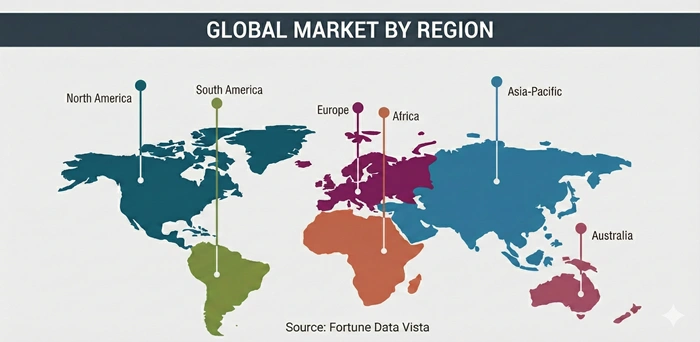
Regional Insights
Asia Pacific — The Dominant Regional Market for Packaging Adhesives
Massive Packaged Goods Consumption Growth, Rapid Food Processing Modernization, and a Dense Manufacturing Base Make Asia Pacific the Clear Market Leader
Asia Pacific is the dominant region in the global packaging adhesives market, capturing more than 38.5% of global revenue share in 2025. The region's leadership is driven by the sheer scale of its packaged goods manufacturing base — China alone accounts for the majority of regional adhesive consumption, supported by its enormous food and beverage, consumer goods, and pharmaceutical packaging industries. India is the fastest-growing country within the region, benefiting from rapid urbanization, a growing middle class, and accelerating modern retail penetration that is steadily replacing loose and informal food distribution with packaged products requiring adhesive-bonded packaging. Key players operating with a strong regional presence include Henkel Asia Pacific, H.B. Fuller Asia, Dow Asia Pacific, and rapidly growing domestic manufacturers such as Huitian New Material and Kangda New Materials. Asia Pacific is expected to maintain a CAGR of approximately 6.8% through 2033, supported by continued capacity expansion in food processing and flexible packaging conversion.
Japan and South Korea, while more mature markets within Asia Pacific, continue to generate strong adhesive demand from their sophisticated electronics, automotive, and premium consumer goods packaging sectors. The region's adhesive market is increasingly moving toward water-based and solvent-less technologies, driven by domestic environmental regulations and alignment with international brand owner sustainability requirements. The growth of e-commerce fulfillment and cold-chain food delivery in major Asia Pacific metropolitan markets is also creating incremental demand for high-performance pressure-sensitive and hot-melt adhesive products. Regional adhesive manufacturers are investing in new production capacity and product development programs specifically tailored to Asia Pacific substrates, packaging formats, and climate conditions — ensuring that the region continues to set the pace for global packaging adhesives market growth through the forecast period.
North America — The Fastest-Growing Developed Market for Packaging Adhesives
E-Commerce Boom, Pharmaceutical Packaging Demand, and Rapid Sustainable Adhesive Technology Adoption Are Powering North America's Market Acceleration
North America holds approximately 24.3% of the global packaging adhesives market share in 2025 and is on track to be among the fastest-growing developed regions through 2033, driven by a combination of structural demand growth and technology transition tailwinds. The United States is the dominant country within the region, accounting for the vast majority of regional adhesive consumption across food and beverage packaging, pharmaceutical manufacturing, e-commerce fulfillment, and personal care product packaging. The e-commerce sector's relentless growth is a particularly powerful demand driver in North America, as online retailers invest in more sophisticated and secure packaging formats to reduce in-transit damage and support customer unboxing experiences. Companies such as Henkel North America, H.B. Fuller, 3M, and Bostik maintain strong regional manufacturing and technical service networks that support the region's diverse packaging adhesive needs. North America is forecast to register a CAGR of approximately 6.5% through 2033.
Regulatory momentum in North America is also serving as a growth catalyst rather than a constraint, as federal and state-level regulations increasingly mandate migration away from PFAS-containing, solvent-based, and non-recyclable adhesive systems toward cleaner alternatives. This regulatory push is accelerating technology upgrades across food packaging, pharmaceutical packaging, and consumer goods labeling applications — driving both volume and unit-value growth in the water-based and hot-melt adhesive categories. The pharmaceutical sector in particular is generating strong and consistent demand for high-specification adhesive products, with the United States' status as the world's largest pharmaceutical market ensuring a high-volume, high-margin demand pool for adhesive formulators. Canada is also contributing meaningful growth, particularly in sustainable packaging applications, where strong corporate ESG mandates from Canadian retailers and brand owners are driving rapid adoption of bio-based and recyclable-compatible adhesive technologies.
Top Key Players
-
Henkel AG & Co. KGaA (Germany)
-
H.B. Fuller Company (United States)
-
3M Company (United States)
-
Dow Inc. (United States)
-
Arkema SA (Bostik) (France)
-
Sika AG (Switzerland)
-
Avery Dennison Corporation (United States)
-
Ashland Inc. (United States)
-
Pidilite Industries Ltd. (India)
-
Jowat SE (Germany)
-
Huitian New Material Co. Ltd. (China)
-
Paramelt BV (Netherlands)
Recent Developments
-
In January 2026, Arkema completed the integration of Bostik's packaging adhesive product lines into its newly organized Adhesive Solutions division, streamlining its global packaging adhesive portfolio and expanding its sustainable lamination adhesive offerings to flexible packaging converters in Europe and North America.
-
In March 2026, Henkel AG announced a strategic investment of EUR 120 million in its Adhesive Technologies division to accelerate the development of water-based and recyclable-compatible packaging adhesive formulations, reinforcing its leadership position in sustainable adhesive chemistry.
-
In November 2025, H.B. Fuller Company completed the acquisition of a specialty flexible packaging adhesive manufacturer in Southeast Asia, significantly expanding its production capacity and distribution reach across the fast-growing Asia Pacific flexible packaging market.
-
In September 2025, Dow Inc. launched a new range of solvent-less lamination adhesives branded under its LLDPE-compatible adhesive platform, specifically designed for recyclable mono-material flexible packaging structures — a direct response to brand owner sustainability commitments across food and personal care packaging.
-
In June 2025, Sika AG announced a partnership with a leading European pharmaceutical packaging converter to co-develop next-generation cold-seal and peel adhesive systems for blister pack and unit-dose sterile packaging applications, targeting the high-growth pharmaceutical packaging segment.
Market Trends
Bio-Based Adhesive Innovation and the Recyclable Packaging Imperative Are the Two Most Transformative Forces Reshaping the Packaging Adhesives Market in 2026
The single most impactful trend reshaping the packaging adhesives market in 2026 is the accelerating migration toward recyclable and circular packaging formats driven by regulatory mandates and major brand owner commitments. The European Union's revised Packaging and Packaging Waste Regulation, effective from 2025, requires all packaging placed on the EU market to be recyclable by 2030 — a mandate that is fundamentally redefining adhesive performance requirements for flexible laminates, paper packaging, and labels. Adhesive formulators are responding with a wave of new products specifically engineered for recyclability: wash-off adhesive labels for PET bottles, repulpable adhesives for paper and board packaging, and solvent-free lamination systems that maintain bond integrity without contaminating plastic recycling streams. These innovations are commanding premium pricing and accelerating the industry's shift away from conventional solvent-based formulations. The trend is not limited to Europe — North American and Asia Pacific brand owners with global operations are driving the same specifications into their regional supply chains, creating a worldwide market transformation.
Smart packaging and label intelligence represent the second major trend creating new adhesive application requirements. The rapid growth of NFC-embedded labels, RFID packaging tags, temperature-indicating strips, and QR-code-activated consumer engagement packaging is requiring adhesive formulators to develop products with new functional properties — including electrical neutrality, resistance to activation by ambient moisture, compatibility with thin-film electronic components, and long-term bond stability under retail and logistics conditions. Simultaneously, the rise of direct-to-consumer personalized packaging — driven by rapid growth in subscription boxes, premium gifting formats, and digitally printed packaging — is creating demand for adhesives that perform reliably with short-run digital printing substrates and variable-data label stock. Together, these trends are elevating the technical complexity and commercial value of packaging adhesives, positioning the industry for sustained innovation investment and margin expansion through 2033.
Segments Covered in the Report
-
By Adhesive Type
-
Hot-Melt Adhesives
-
Water-Based Adhesives
-
Solvent-Based Adhesives
-
Reactive Adhesives
-
Pressure-Sensitive Adhesives
-
Others
-
-
By Technology
-
Lamination Adhesives
-
Sealant Adhesives
-
Cold-Seal Adhesives
-
Pressure-Sensitive Technology
-
UV-Curable Adhesives
-
Others
-
-
By Substrate
-
Paper & Paperboard
-
Plastic Films
-
Aluminum Foil
-
Glass
-
Others
-
-
By Application
-
Flexible Packaging
-
Rigid Packaging
-
Labeling
-
Case & Carton Sealing
-
Folding Cartons
-
Others
-
-
By End-Use Industry
-
Food & Beverage
-
Pharmaceuticals & Healthcare
-
Personal Care & Cosmetics
-
Consumer Electronics
-
E-Commerce & Logistics
-
Industrial Packaging
-
Others
-
-
By Region
-
North America (U.S., Canada, Mexico)
-
Europe (Germany, France, UK, Italy, Spain)
-
Asia Pacific (China, India, Japan, South Korea, Australia)
-
Latin America (Brazil, Argentina)
-
Middle East & Africa (UAE, Saudi Arabia, South Africa)
-
❝ Built for Every Level — From Startups to Industry Giants ❞
Here Is Exactly How This Report Works for You
-
For Tier 1 companies, large investors, and multinational packaging groups, this report delivers granular competitor revenue analysis, revenue source breakdowns by adhesive type and application, and detailed geopolitical risk assessments — equipping senior decision-makers to respond to supply disruptions, raw material tariff shifts, and regulatory changes with confidence, because in the packaging adhesives industry, even a 2% cost movement in a key raw material can determine whether you win or lose a major supply contract.
-
For Tier 2 and Tier 3 manufacturers, mid-level companies, and regional adhesive formulators, this report identifies specific whitespace opportunities by technology, substrate, and end-use vertical — translating complex supply-demand dynamics into actionable market entry and product expansion strategies that help mid-market players compete effectively against larger, better-resourced rivals.
-
For startups, emerging adhesive innovators, and strategic investors, the forward-looking segment CAGRs, technology adoption curves, and detailed profiles of leading company strategies contained in this report remove guesswork from investment decisions — giving you the analytical foundation to back the right adhesive technologies, geographies, and application segments in a market that is quietly but powerfully growing toward USD 30.13 billion by 2033.
Frequently Asked Questions:
Answer: The global packaging adhesives market is valued at USD 19.04 billion in 2025 and is expected to reach USD 30.13 billion by 2033. The market is growing at a CAGR of 6.2% from 2026 to 2033, driven by rising flexible packaging demand and expanding pharmaceutical and e-commerce packaging applications.
Answer: The packaging adhesives market is primarily driven by rapid e-commerce expansion, rising demand for flexible and sustainable packaging, and growing pharmaceutical packaging requirements. Regulatory transitions from solvent-based to water-based and bio-based adhesive formulations are also creating incremental demand for advanced adhesive technologies.
Answer: Asia Pacific dominates the global packaging adhesives market with more than 38.5% of global revenue in 2025, supported by China, India, and Japan's large packaged goods manufacturing and food processing sectors. North America is one of the fastest-growing regions, fueled by e-commerce and pharmaceutical packaging demand.
Answer: Hot-melt adhesives are the most widely used technology in the packaging adhesives market, valued for their fast set times and compatibility with high-speed automated packaging lines. Water-based and solvent-less lamination adhesives are the fastest-growing categories, driven by sustainability regulations and brand owner recyclability commitments.
Answer: Leading companies in the global packaging adhesives market include Henkel AG, H.B. Fuller, 3M, Dow Inc., and Arkema (Bostik), which together account for a significant share of global adhesive revenue. These companies are actively investing in bio-based, recyclable-compatible, and water-based adhesive formulations to align with evolving sustainability and regulatory requirements.