
Photoacoustic Tomography Market Overview
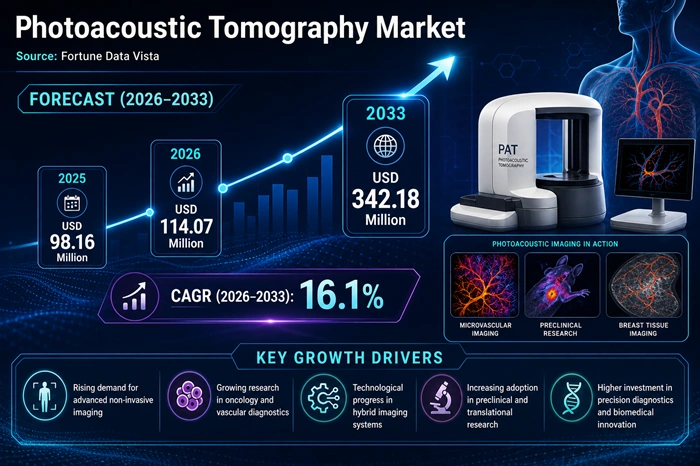
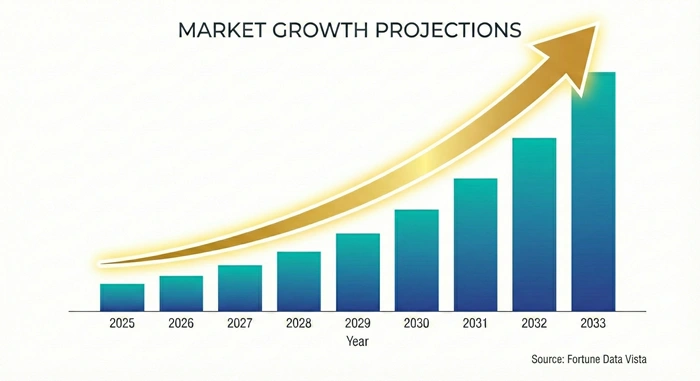
The global photoacoustic tomography market size is valued at USD 98.16 million in 2025 and is predicted to increase from USD 114.07 million in 2026 to approximately USD 342.18 million by 2033, growing at a CAGR of 16.1% from 2026 to 2033.
This strong growth trajectory is being driven by rising chronic disease prevalence, the growing clinical and preclinical need for non-invasive, radiation-free high-resolution imaging, rapid advances in laser and transducer technologies, and the accelerating integration of artificial intelligence into image reconstruction and tissue analysis workflows. Photoacoustic tomography — combining the high optical contrast of laser-based excitation with the deep tissue penetration of ultrasound detection — is increasingly recognized as one of the most promising emerging medical imaging modalities for oncology, cardiovascular research, neurology, and molecular diagnostics.
AI Impact on the Photoacoustic Tomography Industry
Artificial Intelligence Is Fundamentally Transforming Image Reconstruction Speed, Tissue Differentiation Precision, and Real-Time Diagnostic Utility Across the Entire Photoacoustic Tomography Market*
Artificial intelligence is having a profound and accelerating impact on the photoacoustic tomography market, particularly in the areas of image reconstruction, noise reduction, and automated tissue characterization. Traditional PAT image reconstruction algorithms — such as delay-and-sum and time-reversal methods — are computationally intensive and often produce artifacts in deep-tissue imaging scenarios. Deep learning-based reconstruction models, trained on large datasets of paired raw acoustic signals and reference images, are now achieving superior image quality in a fraction of the computational time — enabling near real-time photoacoustic imaging in both preclinical and emerging clinical settings. These AI-enhanced reconstruction systems are dramatically reducing the gap between PAT's theoretical performance potential and what is practically achievable in clinical and laboratory workflow environments.
Beyond reconstruction, machine learning algorithms are being applied to automate the identification and classification of tissue structures — distinguishing malignant from benign tissue regions, quantifying blood vessel oxygen saturation, measuring hemodynamic parameters, and detecting molecular biomarkers with greater consistency than manual analysis. In multispectral optoacoustic tomography (MSOT), AI-powered spectral unmixing algorithms are unlocking molecular-level imaging capabilities that were previously obscured by light scattering — enabling PAT systems to visualize specific chromophores and exogenous contrast agents simultaneously in living tissue. These capabilities are significantly strengthening the value proposition of photoacoustic tomography as a platform technology for precision oncology, drug development, and translational neuroscience research.
Growth Factors
Rising Cancer and Cardiovascular Disease Burden, Rapid Laser and Transducer Technology Advances, and Surging Pharmaceutical R&D Investment in Preclinical Imaging Are the Principal Forces Driving Growth in the Photoacoustic Tomography Market*
The most powerful growth driver in the photoacoustic tomography market is the global escalation of chronic disease — particularly cancer and cardiovascular disease — which is creating urgent demand for advanced, non-invasive imaging technologies capable of providing functional and molecular information that conventional modalities such as CT, MRI, and conventional ultrasound cannot deliver. PAT's unique ability to visualize tumor angiogenesis, tissue hypoxia, hemoglobin oxygenation, and vascular remodeling without ionizing radiation or contrast agent injection makes it exceptionally well suited for oncology applications — from early tumor detection and treatment response monitoring to surgical guidance and molecular therapy assessment. With global cancer incidence projected to reach 35 million new cases annually by 2050, the clinical urgency for more informative imaging tools is intensifying consistently.
The second major growth driver is the rapid maturation of enabling technology components — particularly pulsed laser systems, ultrasound transducer array designs, and signal processing platforms — that are making PAT systems faster, smaller, more affordable, and more capable than at any point in their development history. Advances in tunable nanosecond pulsed lasers and fiber-optic light delivery systems have expanded the spectral range accessible for multispectral photoacoustic imaging, enabling molecular contrast applications that were previously technically challenging. Meanwhile, developments in wide-bandwidth ultrasound transducer arrays, combined with GPU-accelerated signal processing, are enabling real-time three-dimensional PAT imaging in preclinical research settings — a milestone that is significantly expanding adoption among pharmaceutical companies and contract research organizations conducting longitudinal drug efficacy studies.
Market Outlook
Transition From Preclinical to Clinical Adoption, Growing Medical Tourism in Asia Pacific, and Expanding Pharmaceutical R&D Outsourcing Are Creating Long-Term Structural Growth Pathways for the Photoacoustic Tomography Market Through 2033*
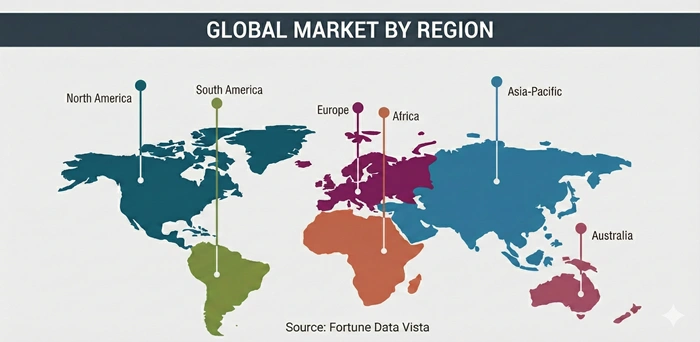
The long-term outlook for the photoacoustic tomography market is exceptionally positive and underpinned by one of the highest CAGRs in the medical imaging sector. North America currently leads the global market, driven by the presence of the most technologically advanced photoacoustic imaging system manufacturers, substantial NIH and DARPA research funding, and leading research institutions such as Stanford, MIT, and Washington University in St. Louis that are pioneering clinical translation of PAT technologies. Europe is the second-largest market, with Germany — home to iThera Medical, one of the global leaders in MSOT technology — and Switzerland contributing significant research and commercial activity. Asia Pacific is the fastest-growing region, where government investment in healthcare modernization in China and India, large patient populations ideal for clinical trials, and growing pharmaceutical R&D activity are collectively creating rapidly expanding demand for advanced preclinical and clinical imaging technologies.
As regulatory pathways for photoacoustic imaging systems mature — particularly following the broader adoption and clinical validation of FUJIFILM's Vevo LAZR systems for preclinical applications and Seno Medical's Imagio system for breast cancer imaging in the United States — the clinical imaging segment is expected to accelerate meaningfully over the 2026–2033 forecast period. The integration of PAT capabilities into hybrid multimodal platforms combining photoacoustic imaging with ultrasound, MRI, or fluorescence imaging is expanding the technology's clinical applicability and making a compelling case for adoption by hospitals and diagnostic centers seeking single-platform solutions for multi-parameter tissue assessment. Manufacturers investing in system miniaturization, regulatory approval acceleration, and robust clinical evidence generation programs will be best positioned to capture the growing clinical segment opportunity.
Expert Speaks
-
"FUJIFILM VisualSonics is at the forefront of bringing photoacoustic tomography into mainstream preclinical and early clinical research. The convergence of laser-based optical contrast with ultrasound imaging depth is genuinely transformative for oncology and cardiovascular research, and we are investing substantially in next-generation systems that make this technology more accessible, faster, and more clinically actionable for researchers and clinicians worldwide." — Kenji Sukeno, President & CEO, FUJIFILM Holdings Corporation
-
"Siemens Healthineers sees photoacoustic-based imaging as a foundational technology for the next generation of precision diagnostic platforms. As AI-powered reconstruction and molecular contrast capabilities mature, we expect photoacoustic tomography to become a standard tool in translational oncology and interventional imaging — and we are actively investing in the research partnerships and technology infrastructure needed to accelerate that clinical transition." — Bernd Montag, CEO, Siemens Healthineers AG
-
"At Thermo Fisher Scientific, the growing adoption of advanced preclinical photoacoustic imaging systems by our pharmaceutical and biotech research customers reflects a broader shift toward functional, real-time, in vivo imaging that provides richer biological insight than traditional endpoint histology. We are expanding our support for photoacoustic imaging workflows as part of our broader commitment to enabling the next generation of drug discovery and development science." — Marc Casper, CEO, Thermo Fisher Scientific
Key Report Takeaways
-
North America leads the global photoacoustic tomography market with approximately 42.1% revenue share in 2026, driven by substantial NIH and government research funding, the presence of leading system manufacturers including FUJIFILM VisualSonics and Seno Medical Instruments, and a concentration of world-class academic and pharmaceutical research institutions actively adopting PAT for preclinical and translational imaging applications.
-
Asia Pacific is the fastest-growing regional market, projected to expand at a CAGR of approximately 18.3% from 2026 to 2033, fueled by healthcare infrastructure modernization in China and India, growing government investment in biomedical research, a large patient population suitable for clinical imaging trials, and rising pharmaceutical R&D outsourcing activity that is driving adoption of advanced preclinical imaging systems across the region.
-
Academic and research institutes are the largest end-user segment, contributing approximately 34.6% of global photoacoustic tomography market revenue in 2025, reflecting the technology's current dominance in preclinical and translational research settings where it is valued for its unique combination of optical contrast, ultrasound depth, and functional imaging capabilities in small animal and ex vivo models.
-
Preclinical and research imaging is the dominant application segment, accounting for approximately 37.9% of global market revenue in 2025, driven by extensive pharmaceutical industry adoption of photoacoustic imaging systems for in vivo drug efficacy studies, tumor vasculature characterization, and longitudinal disease progression monitoring in small animal models.
-
PAT Imaging Systems is the dominant product segment, holding approximately 68.2% of total market revenue in 2025, as complete photoacoustic imaging systems represent the primary capital expenditure item for research institutions and early clinical adopters — with FUJIFILM VisualSonics, iThera Medical, and Seno Medical Instruments as the key commercial system providers globally.
-
Multispectral Optoacoustic Tomography (MSOT) is the fastest-growing technology segment, projected to expand at a CAGR of approximately 18.6% from 2026 to 2033, driven by its unique capability to simultaneously image multiple molecular chromophores and exogenous contrast agents in deep tissue — making it the technology of choice for advanced molecular imaging, pharmacokinetic studies, and translational oncology research.
-
Pharmaceutical and biotechnology companies are the fastest-growing end-user segment, expected to grow at a CAGR of approximately 17.8% from 2026 to 2033, as pharma and biotech R&D organizations increasingly adopt PAT systems for in vivo drug efficacy and safety assessment, biomarker imaging, and early-phase clinical trial support — recognizing the superior biological information content of functional photoacoustic data over conventional anatomical imaging alone.
Market Scope
| Parameter | Details |
|---|---|
| Market Size by 2033 | USD 342.18 Million | Market Size by 2026 | USD 114.07 Million | Market Size by 2025 | USD 98.16 Million | Market Growth Rate from 2026 to 2033 | CAGR of 16.1% | Dominating Region | North America | Fastest Growing Region | Asia Pacific | Segments Covered | By Product Type, By Technology, By Application, By End User, By Imaging Mode | Regions Covered | North America, Europe, Asia Pacific, Latin America, Middle East & Africa |
Market Dynamics
Drivers Impact Analysis
Surging Chronic Disease Prevalence, Advancing Laser and Transducer Technologies, and Growing Pharmaceutical Preclinical Imaging Investment Are the Core Forces Accelerating the Photoacoustic Tomography Market*
| Driver | ≈ % Impact on CAGR Forecast | Geographic Relevance | Impact Timeline |
|---|---|---|---|
| Rising cancer and cardiovascular disease burden | ~33% | Global — especially North America, Europe, Asia Pacific | Short to Long Term |
| Advances in laser technology and ultrasound transducer arrays | ~26% | North America, Europe | Short to Long Term |
| Growing pharmaceutical R&D investment in preclinical imaging | ~22% | North America, Europe, Asia Pacific | Short to Medium Term |
| AI integration into image reconstruction and tissue analysis | ~12% | Global | Short to Long Term |
| NIH, government, and academic research funding programs | ~7% | North America, Europe | Short to Medium Term |
The primary driver sustaining growth in the photoacoustic tomography market is the urgent and expanding global demand for imaging technologies capable of providing functional, molecular-level biological information that conventional imaging modalities cannot deliver. CT and MRI provide excellent anatomical detail but limited functional information about tissue oxygenation, perfusion, and molecular composition. PAT's ability to simultaneously image multiple biological chromophores — including oxyhemoglobin, deoxyhemoglobin, melanin, lipids, and exogenous contrast agents — at both microscopic and macroscopic scales makes it a uniquely powerful tool for cancer research, cardiovascular assessment, and neurovascular imaging. The growing clinical emphasis on early cancer detection and personalized therapy monitoring is directly expanding the demand for systems capable of this level of biological specificity.
Technological advancement in the enabling components of photoacoustic tomography systems is equally important as a growth driver. Modern tunable pulsed laser systems offer higher repetition rates, broader wavelength tunability, and smaller form factors than previous generations — enabling faster multispectral acquisition and more compact system designs. Advances in capacitive micromachined ultrasound transducers (CMUTs) and piezoelectric array designs are expanding the bandwidth and sensitivity of acoustic detection, improving both spatial resolution and imaging depth. The combination of these hardware improvements with GPU-accelerated computing platforms and AI-powered reconstruction software is delivering a step-change improvement in PAT system performance that is accelerating adoption across both established and new application areas within the photoacoustic imaging research community.
Restraints Impact Analysis
High System Costs, Limited Clinical Regulatory Approvals, Deep Tissue Light Scattering Limitations, and Specialized Operator Training Requirements Are the Key Barriers Constraining Faster Market Expansion*
| Restraint | ≈ % Impact on CAGR Forecast | Geographic Relevance | Impact Timeline |
|---|---|---|---|
| High capital cost of complete PAT imaging systems | ~40% | Emerging markets, community hospitals | Short to Long Term |
| Limited regulatory clearance for clinical PAT applications | ~30% | Global — especially outside US/EU | Short to Medium Term |
| Light scattering limitations in deep tissue imaging | ~18% | Global | Medium to Long Term |
| Specialized operator training and workflow integration requirements | ~12% | Global | Short to Medium Term |
The most significant commercial restraint facing the photoacoustic tomography market is the high capital cost of complete clinical and research-grade PAT imaging systems. Complete MSOT and photoacoustic computed tomography systems from leading manufacturers typically carry price tags ranging from USD 100000 to USD 500000 or more for fully configured research platforms — a cost level that limits adoption to well-funded academic institutions, major pharmaceutical research campuses, and large hospital imaging centers with dedicated research mandates. Smaller hospitals, diagnostic imaging centers in emerging markets, and independent research groups frequently cannot justify this capital expenditure, constraining the addressable market size and slowing overall market penetration.
The limited number of regulatory-cleared clinical PAT applications represents a second meaningful restraint. While FUJIFILM VisualSonics' systems have established strong commercial positions in preclinical research, and Seno Medical's Imagio system has received FDA 510(k) clearance for breast imaging in the United States, the broader clinical application landscape for PAT remains largely at the investigational stage — particularly in neurology, dermatology, and cardiovascular imaging. The absence of regulatory approval in many application categories and geographic markets means that the vast majority of current PAT adoption is in research rather than routine clinical use, limiting near-term revenue potential. Additionally, the fundamental physical challenge of light scattering in biological tissue beyond 2–3 cm depth remains an ongoing technical constraint, requiring continued innovation in laser wavelengths, contrast agents, and computational compensation methods.
Opportunities Impact Analysis
Portable and Wearable PAT System Development, MSOT-Driven Molecular Imaging Growth, Expanding Clinical Application Validation, and Asia Pacific Market Penetration Are Creating High-Value Long-Term Growth Opportunities*
| Opportunity | ≈ % Impact on CAGR Forecast | Geographic Relevance | Impact Timeline |
|---|---|---|---|
| Portable and wearable PAT systems for point-of-care applications | ~35% | North America, Europe, Asia Pacific | Medium to Long Term |
| MSOT molecular imaging for personalized oncology and drug development | ~28% | North America, Europe | Short to Medium Term |
| Clinical application expansion and FDA/regulatory approval programs | ~22% | North America, Europe | Medium to Long Term |
| Asia Pacific market penetration via healthcare infrastructure investment | ~15% | China, India, Japan | Short to Long Term |
The development of portable, handheld, and eventually wearable photoacoustic imaging systems represents the most transformative long-term commercial opportunity in the photoacoustic tomography market. Current clinical and research PAT platforms are largely cart-based or tabletop instruments requiring fixed installation — limiting their utility to controlled imaging environments and excluding point-of-care, intraoperative, and ambulatory monitoring applications. Significant academic and industry research is now focused on miniaturizing laser sources, transducer arrays, and signal processing electronics into compact portable form factors. If successfully commercialized, portable PAT systems could expand the addressable market by an order of magnitude — enabling applications in emergency medicine, intraoperative surgical guidance, wearable hemodynamic monitoring, and remote diagnostics in low-resource settings.
The molecular imaging application in precision oncology and pharmaceutical drug development represents a near-term opportunity with immediate commercial traction. MSOT systems equipped with targeted contrast agents — including nanoparticles, molecular probes, and antibody conjugates — can visualize specific molecular targets in living tissue with unprecedented specificity, enabling pharmacokinetic studies, biomarker imaging, and therapy response monitoring at the molecular level. Pharmaceutical companies are increasingly recognizing PAT-based molecular imaging as a valuable translational tool that can reduce drug development timelines and improve clinical trial design — a recognition that is driving direct investment in MSOT system procurement and methodology development. iThera Medical's growing installed base within leading pharmaceutical research organizations globally reflects the early commercial momentum of this opportunity.
Segment Analysis
By Technology: Multispectral Optoacoustic Tomography (MSOT)
MSOT Is the Highest-Growth Technology Segment Within the Photoacoustic Tomography Market, Delivering Unique Molecular Imaging Capabilities That Are Rapidly Expanding Its Adoption in Oncology Research and Drug Development*
Multispectral Optoacoustic Tomography (MSOT) is the fastest-growing technology segment in the photoacoustic tomography market, projected to expand at a CAGR of approximately 18.6% from 2026 to 2033, outpacing both photoacoustic microscopy (PAM) and photoacoustic computed tomography (PACT). MSOT's commercial advantage lies in its ability to simultaneously acquire photoacoustic signals at multiple laser wavelengths, enabling spectral unmixing algorithms to separate and quantify different absorbing molecules within tissue — including endogenous chromophores such as oxygenated and deoxygenated hemoglobin, melanin, and lipids, as well as exogenous contrast agents targeted to specific molecular biomarkers. This multi-wavelength capability transforms PAT from a primarily structural and vascular imaging tool into a genuine molecular imaging platform — a value proposition that is generating strong demand from pharmaceutical R&D organizations, cancer biology laboratories, and translational imaging centers. Europe, particularly Germany — home to iThera Medical GmbH, the global pioneer and commercial leader in clinical and preclinical MSOT systems — accounts for a significant share of global MSOT revenue, with strong adoption in leading research hospitals and pharmaceutical company preclinical centers across the UK, Switzerland, and the Netherlands.
North America is the largest and fastest-growing regional MSOT market, driven by heavy NIH investment in molecular imaging research, a large concentration of preclinical pharmacology organizations, and growing adoption by U.S.-based CROs and CDMOs that offer PAT-based molecular imaging services to pharmaceutical clients. The MSOT segment's growth is being further supported by an expanding library of validated molecular contrast agents specifically designed for photoacoustic excitation, as well as by the growing availability of academic training programs and expert user communities that are accelerating the dissemination of MSOT methodology across the global life sciences research community. iThera Medical GmbH, FUJIFILM VisualSonics (via its LAZR-X series), and several emerging companies are the primary competitive forces in this segment, competing on wavelength range, imaging depth, acquisition speed, spectral unmixing algorithm sophistication, and integrated molecular probe development support programs.
By Application: Oncology & Cancer Imaging
Oncology Is the Dominant and Fastest-Growing Clinical Application in the Photoacoustic Tomography Market, Driven by PAT's Unique Ability to Visualize Tumor Vascularity, Hypoxia, and Treatment Response Without Ionizing Radiation*
Oncology and cancer imaging is both the largest and most strategically important application segment within the photoacoustic tomography market, accounting for a rapidly growing share of global revenue as both preclinical research adoption and early clinical translation accelerate. PAT offers unique oncological imaging capabilities that no other single modality provides — including real-time visualization of tumor neovascularization (the new blood vessel networks that sustain tumor growth), tissue oxygen saturation gradients indicative of tumor hypoxia, response to antiangiogenic and cytotoxic therapies, and — with appropriate contrast agents — molecular receptor expression at the tumor surface. These capabilities make PAT an exceptionally valuable tool for cancer biology research, drug efficacy assessment, and early-stage clinical imaging trials. The oncology application segment is projected to grow at a CAGR of approximately 17.8% from 2026 to 2033, the highest rate among all application categories. North America leads oncology-specific PAT adoption, with major cancer research centers including MD Anderson Cancer Center, Memorial Sloan Kettering, and the NIH National Cancer Institute actively incorporating PAT imaging into translational research programs.
Asia Pacific is the fastest-growing region for oncology PAT applications, driven by China's dramatic increase in cancer research funding, a growing network of national cancer centers equipped with advanced imaging infrastructure, and large patient populations that enable high-volume clinical imaging studies. In clinical practice, Seno Medical Instruments' Imagio system — which combines optoacoustic and conventional ultrasound imaging — is the most advanced commercially deployed clinical PAT platform for oncology, with its FDA clearance for breast imaging evaluation representing a major milestone in the market's transition from purely research-based to clinically relevant applications. Japan and South Korea also represent important oncology PAT application markets, where advanced hospital imaging capabilities and a strong culture of technology adoption in diagnostic medicine are supporting growing interest in PAT-based breast, skin, and thyroid cancer assessment programs.
Regional Insights
North America: The Global Leader in Photoacoustic Tomography
North America Commands the Largest Revenue Share in the Photoacoustic Tomography Market, Supported by World-Class Research Infrastructure, the Highest Concentration of PAT System Manufacturers, and Substantial Government and Private Research Funding*
North America holds the dominant position in the global photoacoustic tomography market, commanding approximately 42.1% of global revenue in 2026 and expected to grow at a CAGR of 15.8% through 2033. The United States drives the vast majority of North American market activity, where NIH-funded research programs, DARPA-supported imaging technology development initiatives, and a dense network of university-based research groups — including Stanford Biophotonics Laboratory, Washington University in St. Louis, and MIT — collectively represent the world's most advanced photoacoustic imaging research ecosystem. Key commercial players headquartered or commercially dominant in North America include FUJIFILM VisualSonics Inc., Seno Medical Instruments Inc., Endra Life Sciences, and InVivo Therapeutics — serving a customer base that spans academic research, pharmaceutical drug development, and emerging clinical imaging applications. The FDA's increasingly active engagement with photoacoustic imaging device regulatory pathways — highlighted by Seno Medical's Imagio clearance — is progressively de-risking clinical adoption for U.S. hospital systems and diagnostic center operators.
Canada contributes meaningfully to North American PAT market activity, particularly through the research strengths of the University of Toronto, University of British Columbia, and the National Research Council's photonics and imaging programs, which have generated multiple PAT system innovations and startup companies. The North American market is also the leading adopter of AI-integrated PAT platforms — where the combination of deep learning image reconstruction, automated tissue classification, and digital workflow integration is driving a premium tier of system demand among sophisticated academic and pharmaceutical research customers. As NIH investment in imaging technology continues — the NIH National Institute of Biomedical Imaging and Bioengineering (NIBIB) has consistently supported PAT research infrastructure over the past decade — North America's lead in both innovation and commercialization within the photoacoustic tomography market is expected to be maintained throughout the 2026–2033 forecast period.
Asia Pacific: The Fastest-Growing Region in Photoacoustic Tomography
Asia Pacific Is the Fastest-Growing Regional Market for Photoacoustic Tomography, Propelled by China's and India's Rapidly Expanding Biomedical Research Investment, Large Clinical Trial Infrastructure, and Growing Healthcare Modernization Programs*
Asia Pacific is the fastest-growing regional market in the photoacoustic tomography industry, projected to expand at a CAGR of approximately 18.3% from 2026 to 2033, significantly outpacing global average growth rates. The region accounts for approximately 19.4% of global photoacoustic tomography market revenue in 2026 and is expected to substantially increase its global share as healthcare and research infrastructure investment accelerates across multiple major economies. China is the dominant national market within Asia Pacific, where the government's 14th Five-Year Plan has allocated substantial funding to biomedical imaging technology development, a growing network of national key laboratories is adopting PAT systems for cancer and cardiovascular research, and a rapidly expanding pharmaceutical industry is creating strong demand for advanced preclinical imaging capabilities. FUJIFILM VisualSonics and iThera Medical have both established direct sales and support operations in China to serve this growing market, competing alongside emerging Chinese domestic photoacoustic imaging technology developers.
India, Japan, South Korea, and Australia represent four additional important growth markets within the Asia Pacific photoacoustic tomography landscape, each with distinct demand profiles. India's rapidly expanding network of research hospitals and government-funded national institutes of technology and biomedical research are driving early-stage PAT adoption, while the country's position as a global clinical research hub is creating demand for PAT systems capable of supporting multi-center oncology imaging studies. Japan and South Korea maintain some of the world's most advanced diagnostic imaging ecosystems — with PAT technology being adopted by leading academic hospitals and research institutes in Osaka, Seoul, and Tokyo for applications in dermatology, thyroid imaging, and cancer drug development. As regional awareness of PAT's unique imaging capabilities grows and as more clinical validation data emerges from Asian research centers, the region's growth trajectory within the photoacoustic tomography market is expected to remain the strongest globally through 2033.
Top Key Players
-
FUJIFILM VisualSonics Inc. (Canada / Japan)
-
iThera Medical GmbH (Germany)
-
Seno Medical Instruments Inc. (United States)
-
TomoWave Laboratories Inc. (United States)
-
Kibero GmbH (Germany)
-
Verasonics Inc. (United States)
-
Endra Life Sciences Inc. (United States)
-
PhotoSound Technologies Inc. (United States)
-
Illumisonics Inc. (Canada)
-
Aspect Imaging Ltd. (Israel)
-
Siemens Healthineers AG (Germany)
-
Bracco Imaging S.p.A. (Italy)
-
Mediso Ltd. (Hungary)
Recent Developments
-
In June 2025, FUJIFILM VisualSonics launched its next-generation Vevo F2 LAZR-X20 photoacoustic imaging system, featuring an intelligent tunable laser platform with expanded spectral range and enhanced chromophore detection sensitivity — a significant product advancement that directly strengthens FUJIFILM's position in preclinical tumor biology and cardiovascular research imaging markets globally.
-
In April 2025, Verasonics Inc. released its Vantage NXT 2.0 research ultrasound platform, eliminating MATLAB dependency and enabling more rapid custom protocol development for photoacoustic imaging research — a significant workflow improvement that accelerates the development and commercialization of PAT-based imaging methodologies for academic and industrial researchers.
-
In January 2025, iThera Medical GmbH secured a strategic collaboration agreement with a leading European oncology research consortium to deploy MSOT imaging systems across five major cancer research centers in Germany, France, and the Netherlands — a landmark deployment that validates MSOT's role as a standard tool in translational oncology research and strengthens iThera Medical's leadership in the clinical MSOT segment.
-
In October 2025, Seno Medical Instruments announced completion of a new multi-center clinical study demonstrating a 35% reduction in unnecessary breast biopsies when the Imagio combined optoacoustic-ultrasound system was used as an adjunct to conventional ultrasound — generating compelling clinical evidence that is expected to support expanded insurance reimbursement coverage for the system across U.S. healthcare networks.
-
In March 2026, PhotoSound Technologies Inc. launched a new commercial line of photoacoustic computed tomography (PACT) systems specifically designed for clinical small animal and translational imaging research, featuring a modular open-architecture design that allows integration with third-party laser sources and fluorescence imaging systems — broadening its competitive positioning in the mid-tier PAT research system market.
Market Trends
Hybrid Multimodal PAT Platform Development and the Miniaturization of Photoacoustic Imaging Systems for Portable Clinical Applications Are the Two Defining Technology Trends Reshaping the Photoacoustic Tomography Market Through 2033*
The integration of photoacoustic imaging with complementary modalities — particularly ultrasound, MRI, fluorescence imaging, and CT — is one of the most significant structural trends reshaping the photoacoustic tomography market. Hybrid PAT-ultrasound platforms, exemplified commercially by Seno Medical's Imagio system, combine the functional and molecular contrast of photoacoustic imaging with the anatomical detail and real-time acquisition speed of conventional ultrasound — creating a multi-parameter imaging system that is clinically more informative than either modality alone. Hybrid PAT-MRI platforms, while currently limited to research environments, are enabling simultaneous structural and functional tissue characterization at resolutions and depths that push the boundaries of in vivo biomedical imaging. The commercial trajectory of hybrid PAT platforms is expected to accelerate as regulatory pathways clarify and clinical validation data accumulates, making multimodal systems a growing share of total photoacoustic tomography market revenue through 2033.
The miniaturization of photoacoustic imaging components — particularly compact fiber-coupled diode laser sources, handheld transducer probe designs, and mobile GPU-based signal processing units — is progressively creating the technological foundation for portable and eventually wearable PAT systems. Academic groups at Stanford, MIT, and the Chinese University of Hong Kong have demonstrated proof-of-concept portable PAT systems capable of in vivo vascular and tissue imaging — signaling that the transition from laboratory instruments to field-deployable clinical tools is advancing rapidly. Point-of-care applications in emergency assessment of peripheral vascular disease, skin lesion characterization, and thyroid nodule evaluation represent the most immediately commercially viable targets for portable PAT. As portable system designs mature and cost structures improve, this trend is expected to be a major driver of market expansion in the second half of the forecast period — particularly in Asia Pacific and emerging markets where imaging infrastructure gaps create strong demand for compact, versatile, and affordable clinical imaging alternatives.
Segments Covered in the Report
-
By Product Type:
-
PAT Imaging Systems
-
PAT Components & Accessories
-
Lasers
-
Ultrasound Transducers
-
Signal Processing Units
-
Software & Image Reconstruction Algorithms
-
-
-
By Technology:
-
Photoacoustic Microscopy (PAM)
-
Photoacoustic Computed Tomography (PACT)
-
Multispectral Optoacoustic Tomography (MSOT)
-
Others
-
-
By Application:
-
Oncology & Cancer Imaging
-
Cardiovascular Imaging
-
Neurology & Brain Imaging
-
Dermatology
-
Preclinical & Research Imaging
-
Others
-
-
By End User:
-
Hospitals & Diagnostic Imaging Centers
-
Academic & Research Institutes
-
Pharmaceutical & Biotechnology Companies
-
Contract Research Organizations (CROs)
-
-
By Imaging Mode:
-
Preclinical Imaging
-
Clinical Imaging
-
-
By Region:
-
North America (U.S., Canada, Mexico)
-
Europe (Germany, UK, France, Switzerland, Rest of Europe)
-
Asia Pacific (China, India, Japan, South Korea, Australia, Rest of Asia Pacific)
-
Latin America (Brazil, Argentina, Rest of Latin America)
-
Middle East & Africa (GCC Countries, South Africa, Rest of MEA)
-
"Built for Every Level — From Startups to Industry Giants"
Here Is Exactly How This Report Works for You
-
For Tier 1 medical imaging companies, life sciences investors, and senior executives at leading healthcare technology firms, this report delivers comprehensive competitor revenue analysis, technology-level market share data, and a rigorous assessment of how geopolitical factors — including U.S.-China technology decoupling, EU medical device regulation changes, and NIH funding policy shifts — are impacting competitive dynamics and investment strategy in the photoacoustic tomography market, equipping your leadership team with the verified intelligence needed to make confident market entry, partnership, and capital allocation decisions.
-
For Tier 2 and Tier 3 imaging system manufacturers, component suppliers, CROs, and mid-market life sciences companies, this report provides granular segment-level revenue forecasts, regional demand trend data, and technology adoption rate analysis that clearly map where the highest-growth application and geographic opportunities exist in PAT — enabling you to align product development investments, distribution partnerships, and clinical evidence generation programs with the most commercially valuable market segments.
-
For startups developing novel PAT technologies, academic spinouts, pharmaceutical imaging teams, and new market entrants, this report delivers actionable intelligence on the regulatory approval landscape for clinical PAT systems across key global markets, a detailed competitive positioning analysis of existing players by technology and geography, and identification of underserved clinical application segments and geographic markets with below-average PAT penetration — providing the strategic foundation to attract investor interest, form strategic partnerships, and establish a differentiated commercial position in the rapidly expanding photoacoustic tomography market.
Frequently Asked Questions:
Answer: The global photoacoustic tomography market is valued at USD 98.16 million in 2025 and is projected to reach USD 342.18 million by 2033. It is expected to grow at a CAGR of 16.1% from 2026 to 2033, driven by rising demand for non-invasive functional imaging in oncology, cardiovascular research, and translational medicine.
Answer: The photoacoustic tomography market is distinguished by the technology's unique combination of optical contrast — which provides molecular and functional tissue information — with ultrasound detection depth and spatial resolution not achievable with purely optical methods. Unlike MRI or CT, PAT uses no ionizing radiation or strong magnetic fields, and unlike conventional ultrasound, it can image tissue oxygenation, hemodynamic parameters, and molecular biomarkers in real time.
Answer: North America leads the photoacoustic tomography market with approximately 42.1% revenue share in 2026, driven by NIH research funding and the presence of leading system manufacturers including FUJIFILM VisualSonics and Seno Medical Instruments. Asia Pacific is the fastest-growing region at a projected CAGR of 18.3% from 2026 to 2033, fueled by rapid biomedical research expansion in China, India, and Japan.
Answer: Oncology and cancer imaging is both the largest and fastest-growing application in the photoacoustic tomography market, expanding at approximately 17.8% CAGR from 2026 to 2033. PAT's ability to visualize tumor angiogenesis, tissue hypoxia, and treatment response without radiation makes it uniquely valuable for cancer biology research and early-stage clinical oncology applications.
Answer: Key players include FUJIFILM VisualSonics Inc., iThera Medical GmbH, Seno Medical Instruments Inc., TomoWave Laboratories, Verasonics Inc., Endra Life Sciences, PhotoSound Technologies, and Illumisonics Inc. These companies compete on imaging system performance, technology platform breadth, regulatory approvals, geographic distribution, and the strength of their application development and customer support programs.